Posted in Habit formation, Hobbies, intentional living, learning, life hacks, lifelong learning, lifestyle, personal development, personal growth, wellbeing

Discover Fun Hobbies That Boost Skills, Wellbeing, and Growth (a guest post by Linda Chase)

Photo from a selection on Unsplash

This week, we have another fantastic article from regular guest contributor Linda Chase. The focus of today’s piece is hobbies which your boost skills and wellbeing and, provide opportunities for personal or professional growth. Linda shares some excellent tips for getting started and maintaining consistency. She also offers thoughtful and honest answers to common hobby related questions. I hope you enjoy reading the piece and that her writing provides you with as much food for thought in relation to different pastimes as it did for me. From here, I’ll leave you in Linda’s capable hands…

Busy professionals juggling work, responsibilities, and a shrinking sense of curiosity often feel the same tension: plenty of interests, but no clear starting point and no desire to add another “should” to the week. The result is drifting into default downtime while the urge for momentum, to feel engaged again, keeps tapping at the door. The right hobbies for adults turn that restless feeling into learning new skills through options that span creative hobbies, physical activities, intellectual hobbies, and lifestyle interests. Choosing well makes free time feel purposeful.

Understanding Hobby Types and Their Payoffs

A useful way to choose a hobby is to sort options into five buckets: creative, physical, intellectual, social, and lifestyle. Each category tends to build a different mix of skills, confidence, and connection. That framing helps you choose based on the outcome you want, not whatever looks trendy.

This matters because hobbies can support mental health, personal growth, and relationships at the same time. Research has found lower depressive symptoms among people with hobby engagement, which makes “fun” a practical investment.

Think of it like building a balanced menu. If work already uses your brain all day, a physical hobby can reset your mood, while a social hobby keeps you from isolating. If life feels scattered, a lifestyle hobby adds structure you can actually look forward to. With clear categories, you can map hobby strengths into real skill pathways that support career momentum.

Turn a Hobby Into a Career Plan With Structured Learning

Once you see how different hobbies pay off in real-life skills, it’s natural to wonder which ones could become something bigger. If you’ve fallen in love with a new hobby or skill, whether it’s something you practice every weekend or can’t stop thinking about, going back to school can help you turn that momentum into a career path. Formal learning can give your passion a clearer direction, strengthen what you already do well, and make your next move feel more achievable.

If you’re starting a business, earning a business management degree can build your skills in leadership, operations, and project management, and a clear reference can help you explore what that coursework looks like. An online degree can also make it easier to keep learning while you balance work, family, and the hobby you’re growing into something more.

Try Beginner-Friendly Hobbies With First-Week Steps

Pick one hobby that fits the skill you want to grow, creative output, social connection, fitness, or career-relevant capability, and commit to a “first-week sprint.” These beginner hobby ideas and practical hobby tips keep the barrier low while still building real momentum you can map to longer-term learning goals.

  1. Run a 7-day “minimum viable hobby” plan: Define a tiny outcome you can finish in one week, one photo set, one stitched item, one song, or one conversation. Block three sessions of 25–40 minutes and write a one-sentence success rule like “I practice even if it’s messy.” This works because repetition beats intensity, and the plan is easy to track if you’re treating hobbies as structured skill-building.
  2. Start sewing basics with a two-seam project: Begin with a low-stakes item like a simple tote, pillow cover, or reusable cloth. Your first week goal is mastering two skills, threading the needle and stitching straight, so you don’t overload yourself with patterns, zippers, and fit. Use scrap fabric to practice three lines a day, then sew the final piece in one sitting so you get a quick win.
  3. Use one photography technique per walk: Take a 15-minute walk and shoot only one subject category, doors, shadows, or hands, to sharpen your eye. On day one, practice exposure by taking three versions of the same shot: darker, normal, brighter. Later in the week, add composition by using the rule of thirds for 10 photos, then review and keep only three; editing your “keepers” teaches faster than saving everything.
  4. Learn a new language by experiencing it first: For the first 3–5 days, listen and read without drilling rules, aiming to recognize repeated phrases you can reuse. The Circe Institute’s idea that the first stage is poetic supports starting with experience over grammar charts, which reduces overwhelm and builds intuition. Finish the week with a 60-second self-introduction you can say from memory, even if the accent isn’t perfect.
  5. Play a musical instrument with a “two-chord + rhythm” target: Choose a single rhythm pattern and two easy chords or notes, then practice switching between them slowly for 5 minutes a day. Add one new element only after you can do 10 clean switches in a row; this prevents the common trap of bouncing between tutorials without mastery. By day seven, record a 30–45 second clip so you can hear progress objectively.
  6. Pick a hobby that doubles as a career skill and document it: If you’re building toward a career plan, select a hobby with transferable outputs, cooking becomes process planning, gardening becomes measurement and iteration, crafting becomes project estimation. Keep a simple log: time spent, what improved, what blocked you, and one “next rep” task. This creates a portfolio-style trail you can use to identify skill gaps and decide what structured learning would accelerate results.

Common Hobby Questions (and Honest Answers)

Q: What if I’m “bad” at the hobby I picked?
A: Being bad is the starting line, not a red flag. Choose one tiny skill to repeat (one stitch line, one photo setting, one chord change) and track reps, not talent. Treat mistakes as data you can adjust next time.

Q: How do I make time for a hobby with a busy schedule?
A: Use a fixed, small appointment like 25 minutes three times a week. Put it next to an existing routine (after dinner, before shower, during lunch) so it has a cue. If you miss a day, restart the next day without “making up” time.

Q: Why does motivation disappear after the first few days?
A: Novelty fades fast, so lean on structure instead of feelings. Many people use adult hobbies as a steady outlet, not a constant thrill, so keep the goal simple and repeatable.

Q: Can I balance hobbies with work without feeling guilty?
A: Yes, if you define your hobby as recovery plus growth, not “extra productivity.” Remember that leisure activities can reduce the stresses of grown-up life, which often supports better focus at work.

Q: What should I do when progress feels painfully slow?
A: Shrink the task and raise the consistency: five minutes, one drill, one page, one sketch. Then do a “reset review” by comparing your first attempt to today’s and writing one specific next step.

Build Lifelong Learning With One Hobby and 30 Days

It’s easy to want a hobby for relief and growth, then get stuck on time, motivation, or slow progress. The way through is the mindset this guide emphasized: treat hobbies as playful practice, small, consistent effort that values learning over perfection, supported by simple self-improvement strategies. Done that way, the lifelong learning benefits stack up quietly, personal growth through hobbies feels earned, and the hobby’s impact on wellbeing shows up in steadier mood and confidence. Pick a hobby you can return to, and let consistency do the teaching. Choose one skill today and run a 30-day experiment, tracking tiny wins daily in a note. That’s how inspiration to start hobbies turns into resilience, health, and momentum that carries into everything else.

Final words…

Last month, I made a commitment to a summer personal curriculum which involved learning macro photography across the months of June, July and August. I created a page of aspects of the topic with a view to dedicating around two hours each week to learning. I started off well and was enjoying finding out about this aspect of photography, however, work took over much of my time in June and early July and my photography hobby has very much taken a back seat. I absolutely love Linda’s idea of developing hobby consistency through tracking my daily wins, and that, along with actually getting my camera out of the cupboard, attaching the lens and beginning to explore what I can do based on the theoretical aspects of the topic, should help me to maintain momentum. I’ll be able to record my wins in my bullet journal and this will help me to celebrate tiny achievements across the remainder of the summer months.

Let me know in the comments which aspects of Linda’s article particularly resonated with you and feel free to also share your hobby ideas and intentions for the next month or so. I love to hear what my readers are focusing on in their free time.

Posted in amateur photography, beginner photography, Bullet journaling, education, goal setting, intentional living, learning, lifelong learning, lifestyle, personal development, personal growth, planner lifestyle, reflective journalling, Setting goals and intentions, wellbeing

Monday Matters: Creating a personal curriculum by starting small (with just one topic)

I’ve seen a lot of YouTube vlogs recently about creating your own personal curriculum, and, as I consider myself very much as a lifelong learner, I was eager to give it a go. However, with limited free time, a variety of goals in progress, and a vision board that identifies my priorities for 2026, I wanted to start really small by focusing on just one subject and a particular element I want to learn more about. If, like me, you already have a busy life but want to carve out some time to learn something new (and enjoy benefits such as enhanced brain function, improved emotional and mental wellbeing, personal growth and increased life satisfaction) read on to find out how I designed my personal curriculum for Summer 2026. Also, if you’re not sure what a personal curriculum even is, I’ve also covered this below too.

What is a personal curriculum?

A personal curriculum is a self-designed and self-lead learning plan that enables you to create your own educational journey, developing your skills and knowledge in an area which interests you. Unlike at school, college or university, you play the role of teacher, selecting your own subjects, assignments and, if you wish, learning objectives. You also get to choose how many topics you will cover (I would suggest no more than two or three to get you started), your methods of learning (e.g. books, videos, movies, podcasts, trips, experiences etc.) and the time scale for completion (e.g. one month, one season, one term or one semester). You can also plan study times around other commitments and think about how deep an understanding you wish to have by the end of your ‘module’.

The topics of your personal curriculum can vary greatly but could include academic subjects such as environmental sciences, philosophy, British Classics, Fine Art or Creative writing, hobbies such as baking, photography, knitting or watercolour painting, practical skills such as budgeting, gardening, basic car maintenance or computer literacy, or personal development such as time management, mindfulness, communication skills, learning a new language, emotional resilience or goal setting.

Choosing my focus for my learning plan

I have many, many hobbies an interests which made it difficult to decide where to start and what I wanted to work on. So, I figured that it might be a good idea to make a list of things I enjoy doing in my spare time. These are what came to mind straight away:

  • Creative journalling and memory keeping
  • bullet journalling
  • walking in nature
  • vegan cookery
  • drawing
  • watercolour painting
  • photography
  • blogging
  • fitness related including yoga, Pilates and Zumba

Some of these topics, I feel like I know quite a lot about already and so I’m happy with my current explorations of them and how much time I dedicate to them. Others, I want to learn more about but tend to explore them every now and then when I feel like getting creative (e.g. watercolour painting and drawing. The topic that I decided that I really want to focus on learning about right now was DSLR photography. However, as I’ve done a beginners course focusing on basic techniques and Photoshop, I wanted to explore a very specific type of photography which would uplevel my skills. I know I would love to concentrate on wildlife photography but I’m very aware that suitable zoom lenses and a camera upgrade would be required and I don’t have the finances for this at the moment (if ever!). What I do have though, is a macro lens which I really haven’t got the hang of yet and a love of photographing insects and flowers so I’ve opted for a module on Macro Photography as a good starting point.

What do I want to learn?

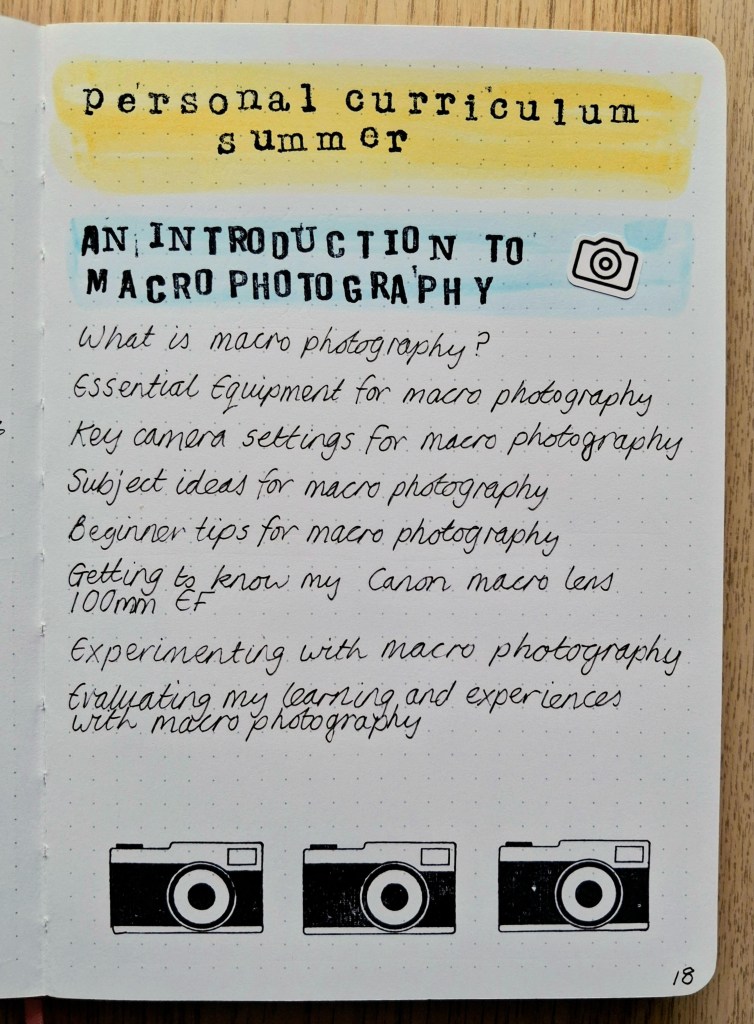
I grabbed a piece of paper and brainstormed all of the things I wanted to learn about the topic of macro photography. Then I worked in my bullet journal to made a spread called An Introduction to Macro Photography finalising my ideas by identifying a rough order of action points. I started with the theory behind this style of photography, including tips and tricks, then moved on to practical experiences and opportunities to evaluate my learning and progress. I kept it pretty simple, using stamps and black ink, but if you wanted to, you could set out learning objectives or expected outcomes at each stage and go to town with the decor.

Photo credit: Laura Jones for Keeping It Creative

Finding resources to support my learning

There are plenty of resources online about macro photography so I made the decision to stick with web-based information for the whole of my ‘module’. I don’t want to buy books on my chosen topic as these can quickly become outdated or might involve equipment which I haven’t got (e.g. the newer mirrorless cameras) and, although I could go to the library, I like the idea of dipping in and out of online resources when I have a spare few minutes and don’t want to carry heavy books around with me.

To ensure I (almost) always have access to the wealth of webpages, blog posts and YouTube videos I’ve come across, rather than writing them down in my bullet journal, I’ve opted to paste the links into Notion so I can click on them whenever I want, and as long as I have my phone or my computer accessible (which is pretty much all of the time), I can do some self study. Now, I’m not an expert on Notion, so it’s not a fancy set up with items pertaining to different aspects of my curriculum but the titles in the links are enough for me to gauge what the pages or videos are about helping me to establish when they might be useful, and that’s enough for me!

When choosing your resources, it’s important to firstly establish what type of learner you are. Learners can be broadly categorised into the following (bear in mind that you’re likely to be more than one type):

  • visual learner – prefers images, diagrams and charts
  • auditory learner – learns best through lectures, discussions and audio materials such as podcasts and audiobooks
  • kinesthetic learners – prefers hands on learning through physical experiences and practical activities
  • linguistic learner – excels in reading, writing and verbal communication
  • logical learners – enjoys solving problems and logical reasoning
  • social learners – thrives in group settings and prefers to learn through collaboration
  • solitary learners – prefers to study alone and is self-motivated to learn, keen to independently reflect on own learning

Should I record my learning?

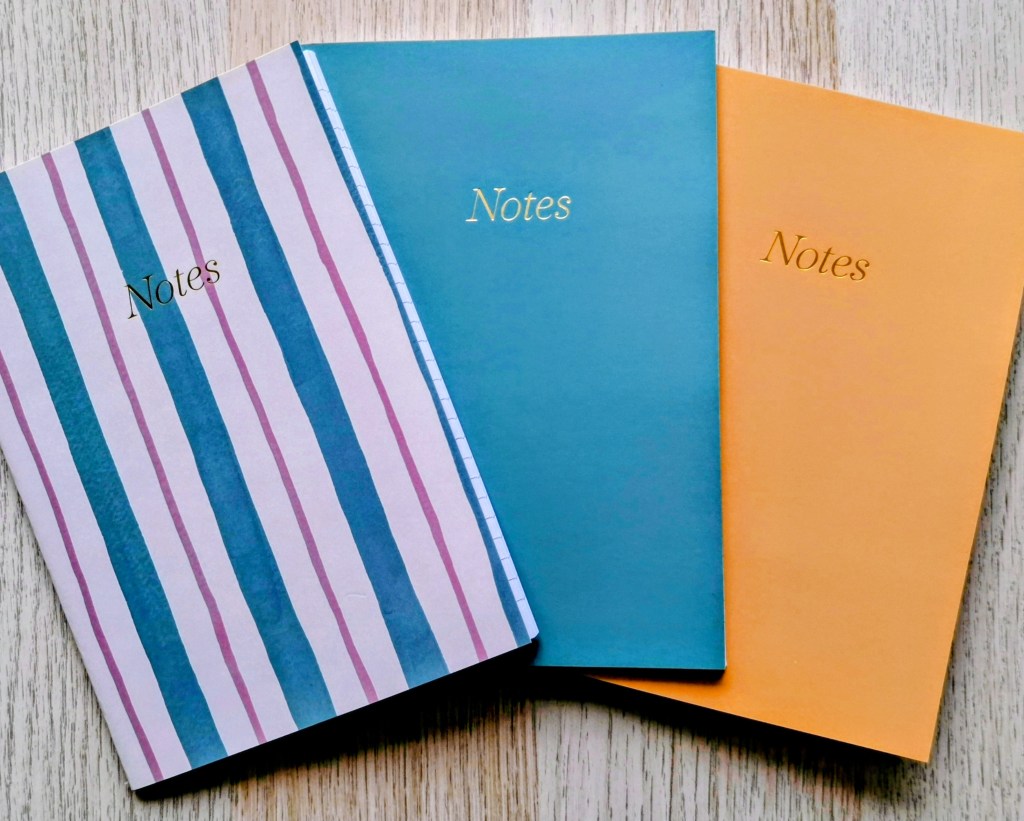
Whether you take notes on what you read or explore is entirely up to you, but for me, writing and journalling is part of the fun, so I absolutely want to do plenty of recording even if it’s just me writing that I spent ages trying to get the perfect shot of a butterfly and just as I fully depressed the shutter it flew off to pastures new and left me feeling a tad frustrated. Also, as a stationery lover, it was the perfect excuse to go notebook shopping! I got three slim notebooks for £3.50 and as long as I ignore (or get over) the fact that the word ‘notes’ is slightly off centre (grrr), I’m sure I’ll enjoy using one of them for my Macro Photography learning!

Photo credit: Laura Jones for Keeping It Creative

Now I just need to decide which design to use. I’m thinking the bright and sunny yellow colour?

Top tips for keeping it fun and interesting

Now you’re no longer studying at school or college, you get to choose exactly what you focus on and the pace of your learning. To ensure you have fun and maintain interest in your personal curriculum, I have the following suggestions and tips which should help:

embrace fluidity Whether your employed, run your own business, or are currently not working, there will be times when you have lots on your plate, times when you have a lighter schedule, times when you’re full of energy and times when you simply need to rest rather than adding more to your to do list. For your personal curriculum to be successful, I think it’s really important to ‘go with the flow’, accepting that your learning can and should flow with the rhythms of life rather than being a rigid set of actions to be completed at a set time or by a set date.

give yourself grace Similarly, if you do carve out a specific time to do a specific activity such as reading a chapter from a book, watching a video or making notes on your learning, if it doesn’t get done, don’t be hard on yourself, instead, spend time considering and questioning why. Maybe you got distracted by social media. Perhaps a more exciting opportunity presented itself that you didn’t want to miss. Or maybe you had low energy that afternoon and didn’t think it was a good time for you.

release perfectionism Strive to do your best with your personal curriculum study rather than demanding flawless results. When you were at school or college, you had particular grades to aim for and may have felt like other people were placing high expectations on you. However, you were probably also told that ‘as long as you try your best, that is all that matters’. Embrace the present and recognise that you are doing the best you can with the energy and resources you have available and that is totally okay.

avoid comparision The term ‘personal curriculum’ is a bit of a buzz word or phrase at the moment and there seem to be plenty of people talking about developing one and often sharing theirs on social media. I’ve seen examples where individuals have picked about four or five topics in a single month and set around six learning objectives or foci for each. Just the thought of doing this, my part time work, housework and spending time with family and friends (which is also a big priority of mine) stressed me out. But, then I came to realise that, although looking at what others are up to can get your creative juices flowing or give you ideas about the scope for your self study, it can also be pretty dangerous for your own wellbeing to compare yourself to others. If, like me, you want to start slowly and dip your toe into setting yourself a personal curriculum, you could try picking a single topic of study and a small part of what might be a vast and open-ended subject. It’s also worth remembering, that these same people who have been sharing their in depth curriculums, might not have done half of what they set out to do, and might be drowning in their own self-directed learning program behind the scenes and wishing they hadn’t set themselves such lofty goals! Remember, learning in your adulthood should be fun and light-hearted and if it stops being these two things, it might be time to reconsider your choices.

Ultimately, when designing your personal curriculum, ‘you do you’ as the saying goes, choosing your own resources and learning styles rather than adopting ideas from others that you’ve seen on social media. And remember, the beauty of learning as an adult, is that you can always tweak bits along the way or completely miss out parts where you feel like you’re not enjoying yourself or that it’s all getting a bit too academic (or formal) for your liking!

Wishing you lots of happiness in your learning, whatever you choose to do,

Posted in intentional living, journalling, lifestyle, mindset, Planning and journaling, reflective journalling, self care, Setting goals and intentions

Why I’m ditching The Five Minute Journal and what I’m trying now

Photo credit: Laura Jones for Keeping It Creative

For the past couple of years now, I’ve been using The Five Minute Journal consistently as a way of recording what I’m grateful for, thinking about how to make my day as good as possible, selecting a positive affirmation and making a note of the main highlights each evening. There are so many positives about this journalling system, which, as the name suggests, can be filled in very quickly using the prompts given. So, you might wonder why I’ve made the decision to stop using it? Today, I’m going to be sharing my main reasons and also talking about what I’ve started using instead.

Why I’m no longer using The Five Minute Journal

As you can see in the photo above, I’ve worked my way through four of The Five Minute Journals lasting six months each. I’ve mainly enjoyed using this guided journal with daily prompts, but a few months ago, I started to think about trying something else. This was mainly because I felt like my practise was getting a bit stale and repetitive and wanted something that I would really look forward to filling in twice a day. Here’s some of the things which have made me fall out of love with it:

The Gratitude section – I found this first bit really difficult to fill in when half asleep in the early morning. I would have preferred to list what I was thankful for in the evening so I could draw from things which had happened during my day.

The ‘What would make today great?’ section – I liked coming up with things that would make a difference to my day but I also felt like I wanted to explain why and the journal did not allow enough space for this. I think I would have preferred it if the section was a little more flexible so that you could maybe write one thing and provide an explanation or 2 or 3 things without going into detail.

The Daily Affirmation section – I liked choosing an affirmation for the day but I did sometimes struggle with coming up with one and had to resort to looking on the Internet for ideas which kind of made the process take a lot longer than five minutes.

Highlights Of The Day section – I continued to enjoy writing my highlights and often found myself writing a fourth one. I would have liked a bit more room to write in more detail for this part but, this would have taken longer than five minutes to complete if it was longer.

What did I learn today? section – For this part, the idea was to write something that the day had taught you about yourself or your situation, so, for example you could write ‘scrolling the news on my phone makes me feel sad’ or ‘sometimes when I feel hungry, I’m actually thirsty and should try drinking water before turning to a snack’. Often, I found this difficult and would end up writing something general that I’d learnt that day such as a new piece of knowledge or some advice that I’d come across. However, I felt that these ‘learnings’ were not really what the section was getting at. I felt like this became a drag and something I dreaded trying to fill in which isn’t how I wanted to feel as filling in the journal is meant to be a positive experience.

Weekly Challenges – these were something I looked forward to, but, I didn’t always have time on the particular day it was presented on and I often ended up forgetting about it when really, it would have been better to do it on an alternative date. Also, I think I would have preferred it if there was a menu of options at the back of the book and you could choose one which suited you at that time.

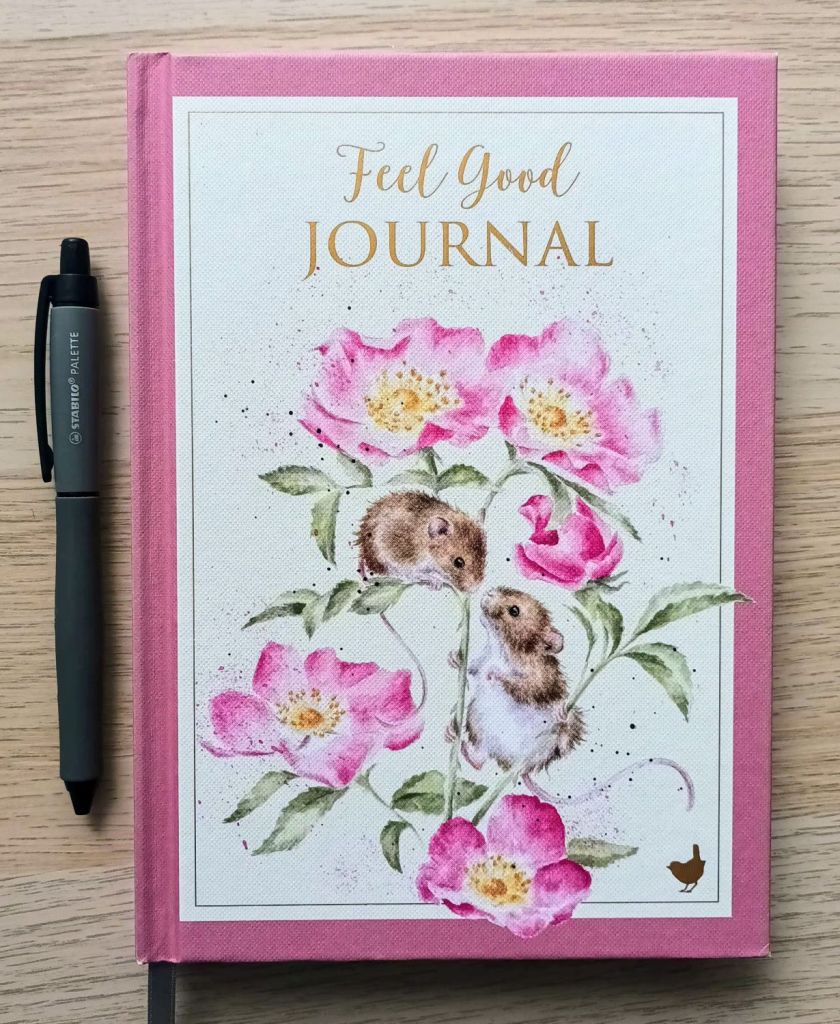
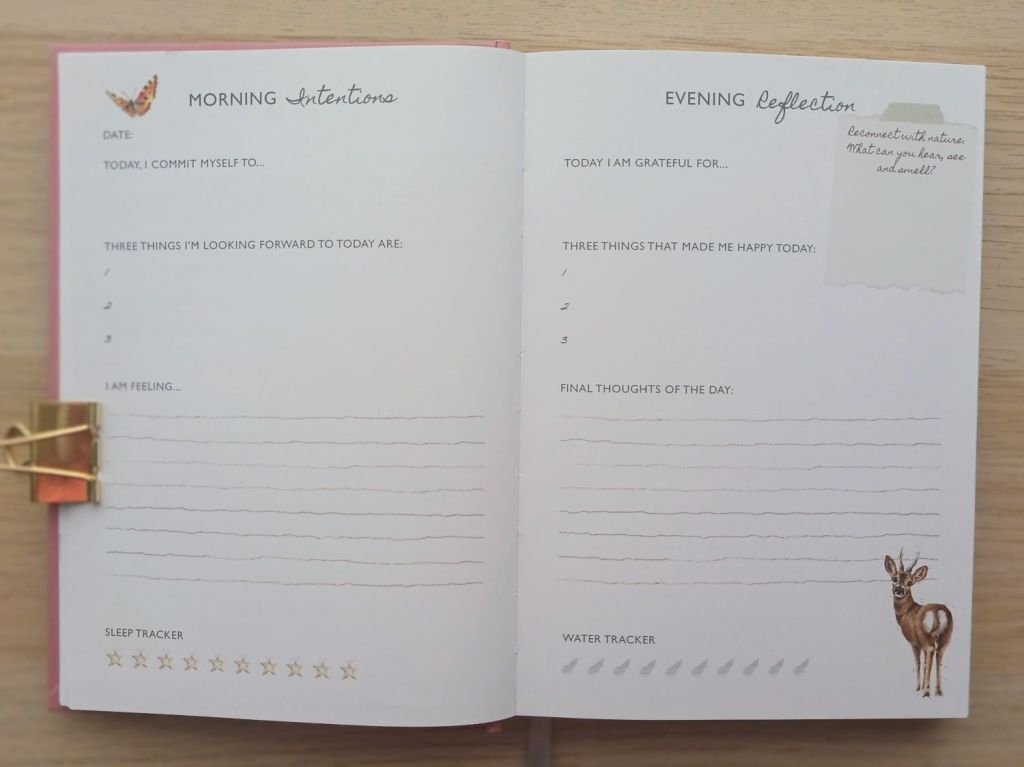
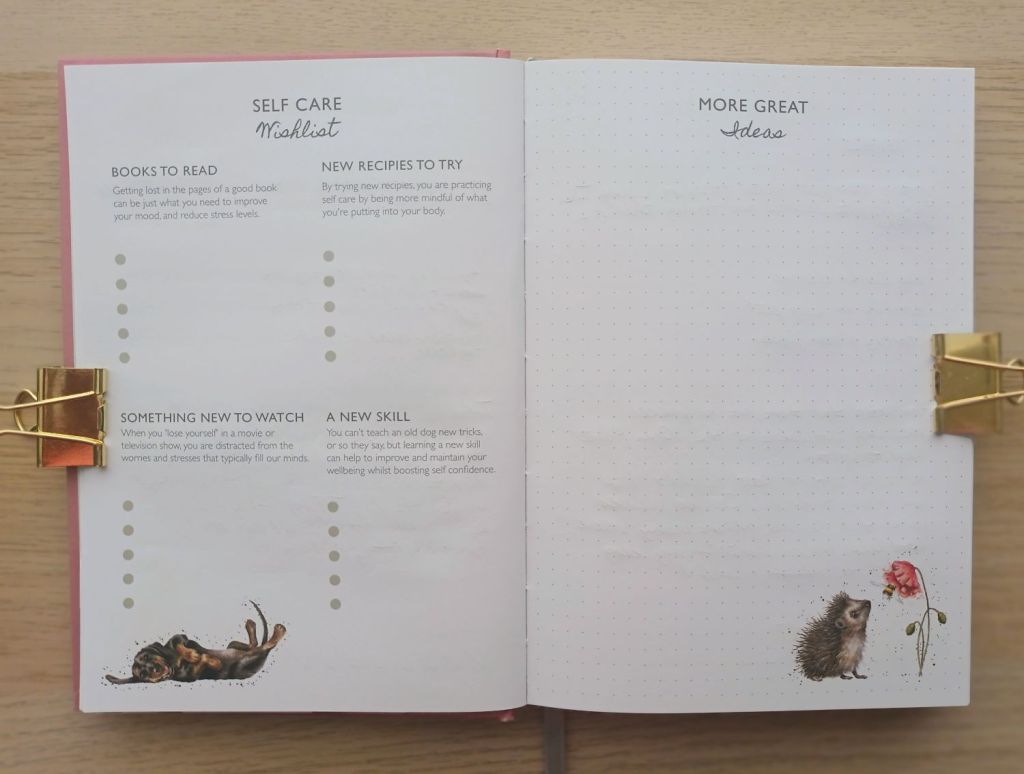
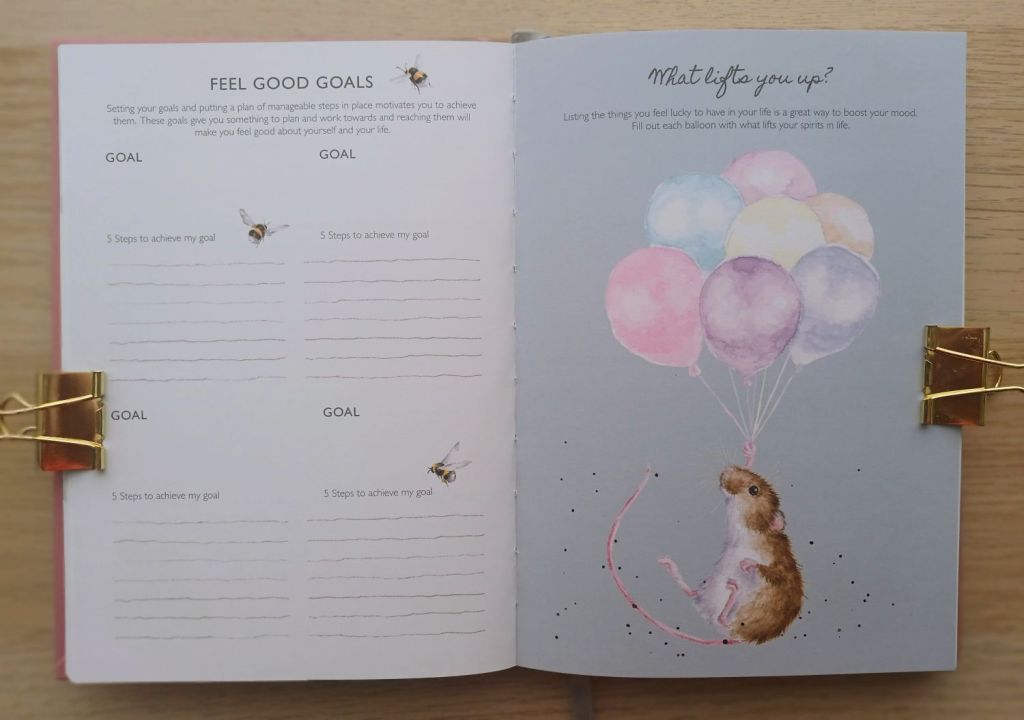
Despite me not wanting to purchase another ‘The Five Minute Journal’, what I didn’t want to do was abandon journalling altogether. And, luckily, I found an alternative journal in a garden centre whilst I was visiting family. My new journal is beautiful to look at, great to write in (much better quality paper) and allows more flexibility with what you can write about. I create a morning and evening entry and I would say it takes me no longer than ten minutes in the morning and no longer than fifteen in the evening. It’s helped me to fall in love with journalling again and I’m really enjoying filling it in. It also has an extra little prompt each day which changes regularly and, every now and then, it has something different on the next page which you can choose to fill in at some point during your day.

My New Journal

Below, is the journal that I’ve just started using partway through this month. I picked it up at Easter time and was really looking forward to getting going with it. I’ve also photographed some pages to give you an idea about the morning and evening prompts and also some of the extra challenges that are dotted throughout the book. You’ll also see that it has some gorgeous illustrations too which definitely adds to the appeal!

Photo credit: Laura Jones for Keeping It Creative

Final words…

Any regular practice in life can sometimes get a little boring and become hard to maintain interest in, so it can really help to shake things up every now and then. I’m interested to know if other journallers have ditched a particular form of journalling and tried something new. Sometimes change can be scary but often, it can also be invigorating too. I would love to hear what you think of my new journal and if it appeals to you too so let me know in the comments.

Posted in art, Bullet journaling, coloured pencil, creativity, goal setting, planner lifestyle, Planning and journaling

Setting up my bullet journal for May 2025: Primrose / primula theme

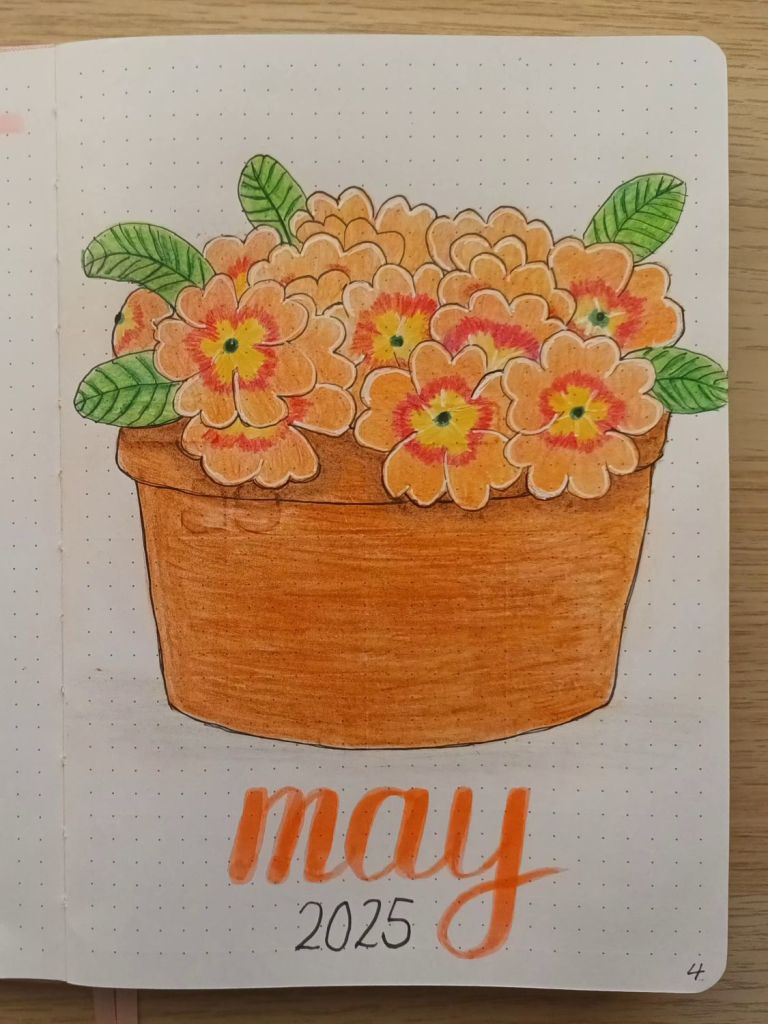
This month, I’ve again taken inspiration from our garden. A few weeks ago, I decided that I wanted to add more colour out the front of the house, so we went to the garden centre to look for a set of six bedding plants that should come back year after year. I opted for primroses (AKA primula) as there was already one out there which pops up each spring and was obviously set before we moved in over a decade ago. After the flowers had settled in – they went a bit floppy when we first installed them – I took some macro photos to use as inspiration for my spreads. It’s taken me ages to sketch out, draw and colour in all of the images but it was such a lovely, mindful activity that I found it really therapeutic. As I write this, it’s the 2nd May and I still haven’t finished all of the decor but I have drawn up my calendar, finances, goals and first weekly so I can actually fill in events and tasks. I hope you like my finished pages and they inspire you to give florals a go to practise your drawing, colouring or maybe painting skills.

Front cover

The calendar was the last page I finished and took me a long while to complete. I used a photograph of a plant pot of primroses for reference which I found on Google. I used mainly my Staedtler Ergosoft coloured pencils and blended a few shades together to get a nice peachy colour. I also used my blending pencil to mix up the colours and to create a smooth appearance. I also used my Sakura Gelly Roll pen in a size 10 to draw lines inside of the Pigma Micron as the actual primroses had a very thin white trim.

Photo credit: Laura Jones for Keeping It Creative

Monthly calendar

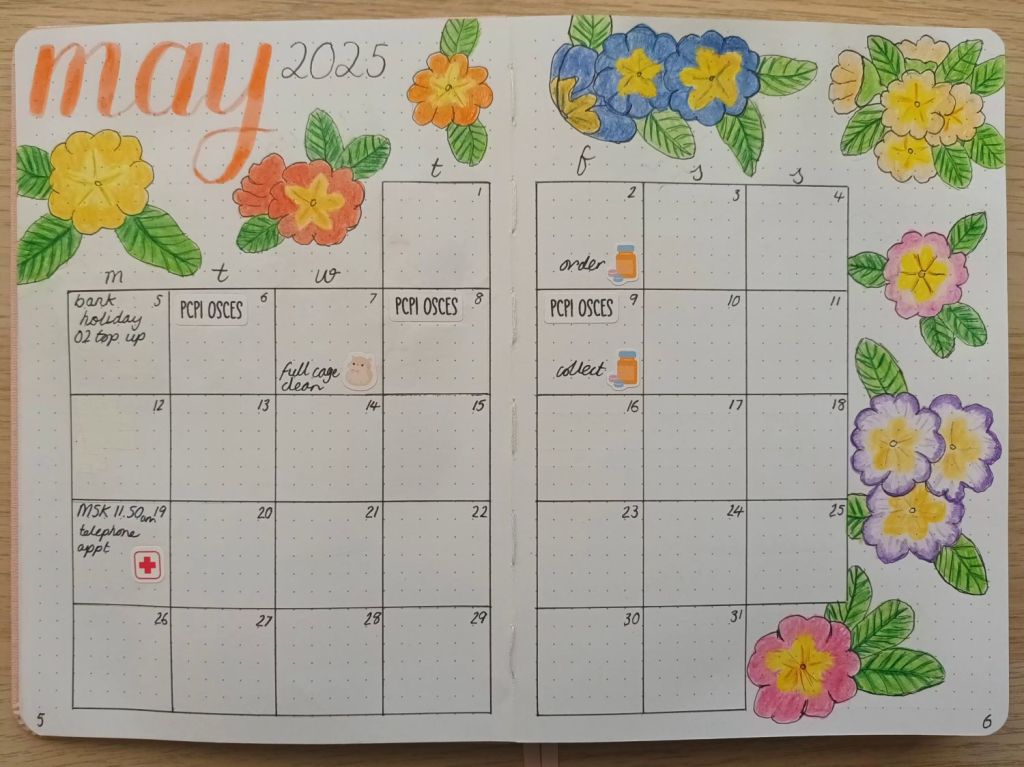
I added the decor to my calendar second, after I did the image for my finances record, and, as it had taken me such as long time to finish that one, I opted for a more sketchy appearance to the primroses you see here. I held my fineliner really lightly and tried to create a slightly wobbly appearance so the plants looked more natural. I’m really happy with how they turned out and the colours look so cheerful. I made good use of lots of my coloured pencils and also used my blending pencil to blend out any harsh lines.

Photo credit: Laura Jones for Keeping It Creative

Finances record

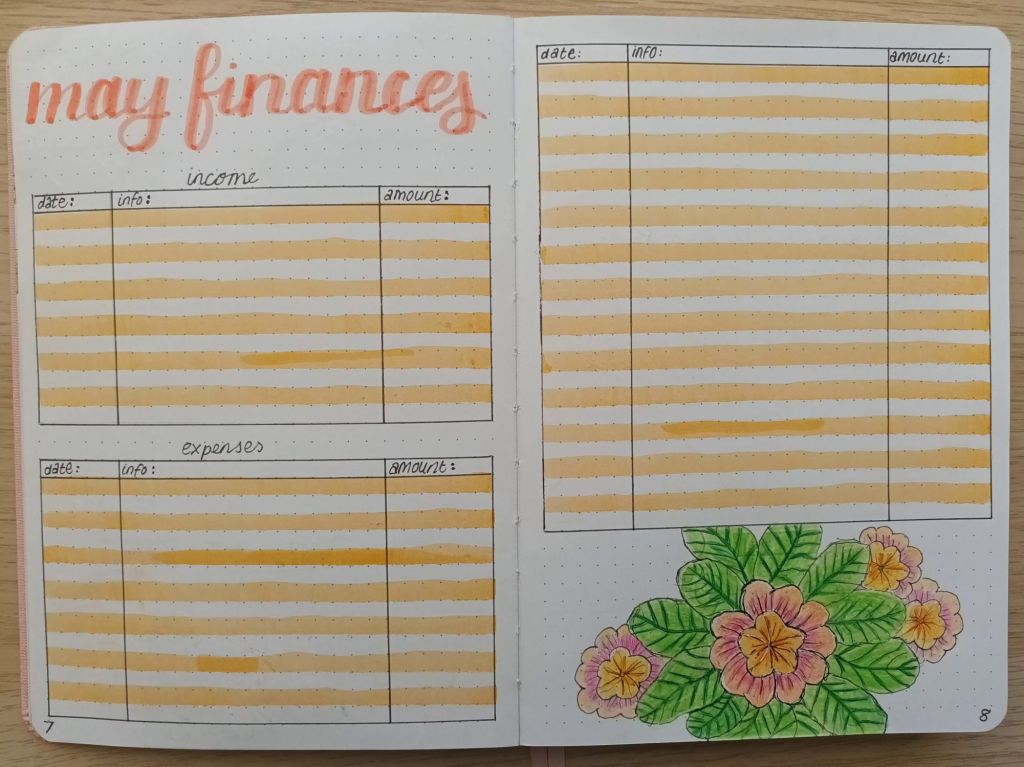
As well as the pack of six small primrose plants, we also purchased a much larger one for our back garden. The flowers are a lovely, pale pink but I didn’t have a coloured pencil which matched so I’ve gone for more of a peachy colour. I initially did just the flower in the centre but decided there were too many leaves and not enough floral bits so I added the other two and made them a little more washed out so the central one stood out.

Photo credit: Laura Jones for Keeping It Creative

Monthly goals

Last month I (yet again), picked far too many goals to be in with any chance of achieving them all. So, for May, I’ve really, really restricted myself and opted for just 5 (go me!). And, I’ve already achieved one of them as I made bread for the very first time yesterday!

Rather than adding some more primrose illustrations, I opted to add some stickers to make the set up much quicker. Some, I’ve made myself and others are from my ever increasing stash (you can never have too many stickers – right?). However, I have just started a new BuJo this month and a not to do goal of mine is to add plenty of my own illustrations straight into my notebook rather than overloading with stickers and making my journal super bulky (my orange one would barely close by the time I finished it!).

Photo credit: Laura Jones for Keeping It Creative

Weekly plan

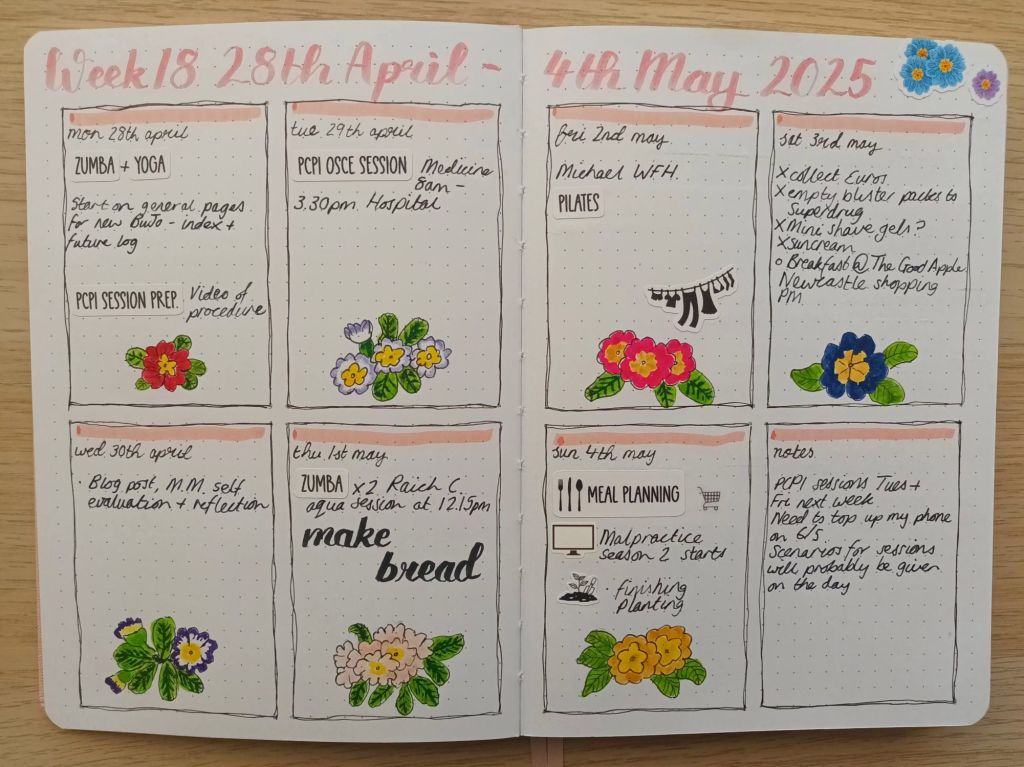
I’ve been using this same style layout for quite a few weeks now and it really works for me. It gives me enough room to write events and add a few to dos underneath each day. I can then add a small illustration at the bottom if I want to, or use the full space for recording. This week, I’ve done some small primrose illustrations but I may not do any next week as I have lots of sessions at the university so I’ll be super busy.

Photo credit: Laura Jones for Keeping It Creative

Final words…

Thank you for taking the time to visit my blog today. I hope you like my finished spreads. I think they look really colourful and provide a great reminder of our new plants and all of the other bright colours of primrose which you can get. The flowers seem to be thriving at the moment but as we haven’t had any rain for weeks, they require daily watering as the soil is getting so dry. I’m hoping they’re going to stay looking good for a least another month and continue to make me smile each time I get in and out of my car!

Wishing you a marvellous May,

Much love,

Posted in art, bullet journal, Bullet journaling, Cricut Design Space, Cricut Joy Xtra, planner girl, planner lifestyle, Planning and journaling, watercolour painting

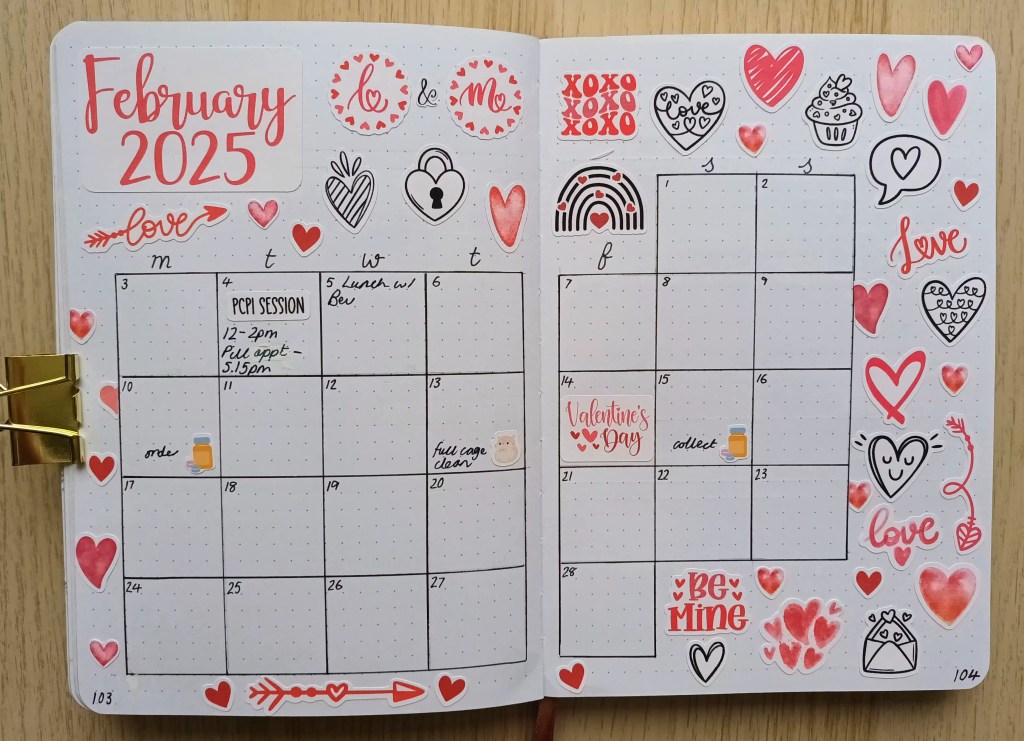
Setting up my Bullet Journal for February 2025: Valentine’s love hearts theme

I tend to do some kind of love theme for February’s theme and this year is no exception. I already knew I wanted to use my watercolours for my cover page, but I also decided to opt for stickers to decorate the rest of the spreads to make it quicker to set up. I’m really pleased with how my pages turned out and I hope you like them too. The photos aren’t wonderful as it was another dreary day here in Sunderland, so I apologise for that but I hope they inspire you anyway.

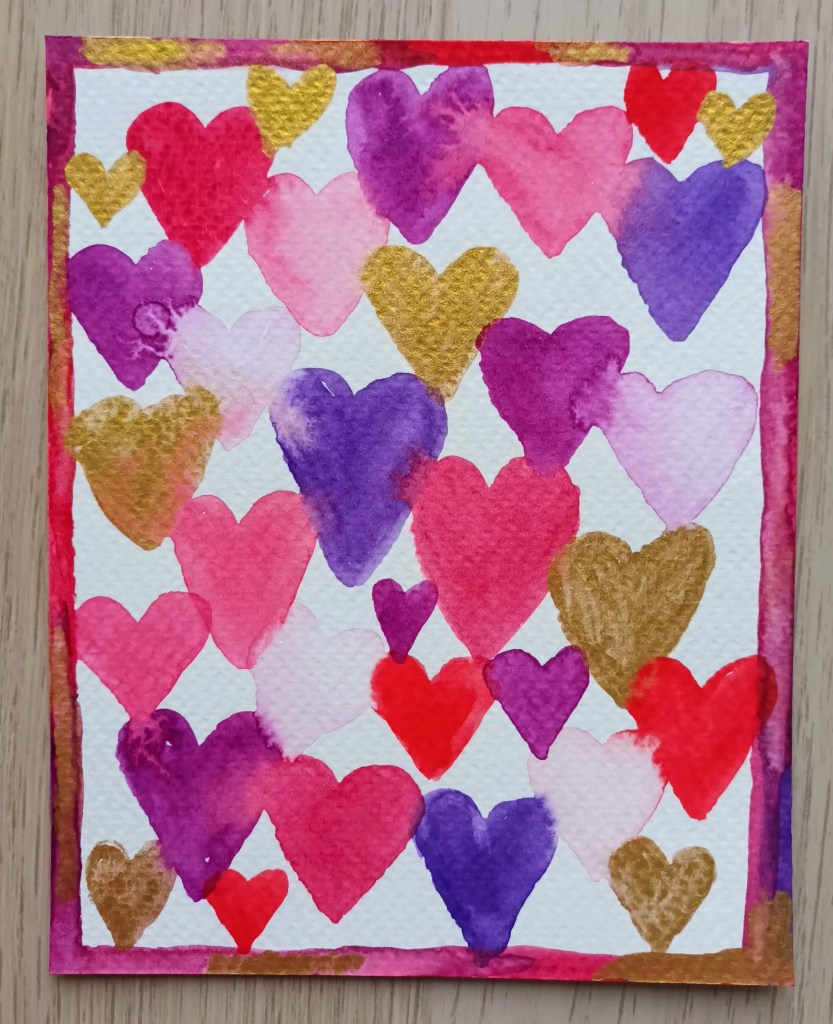
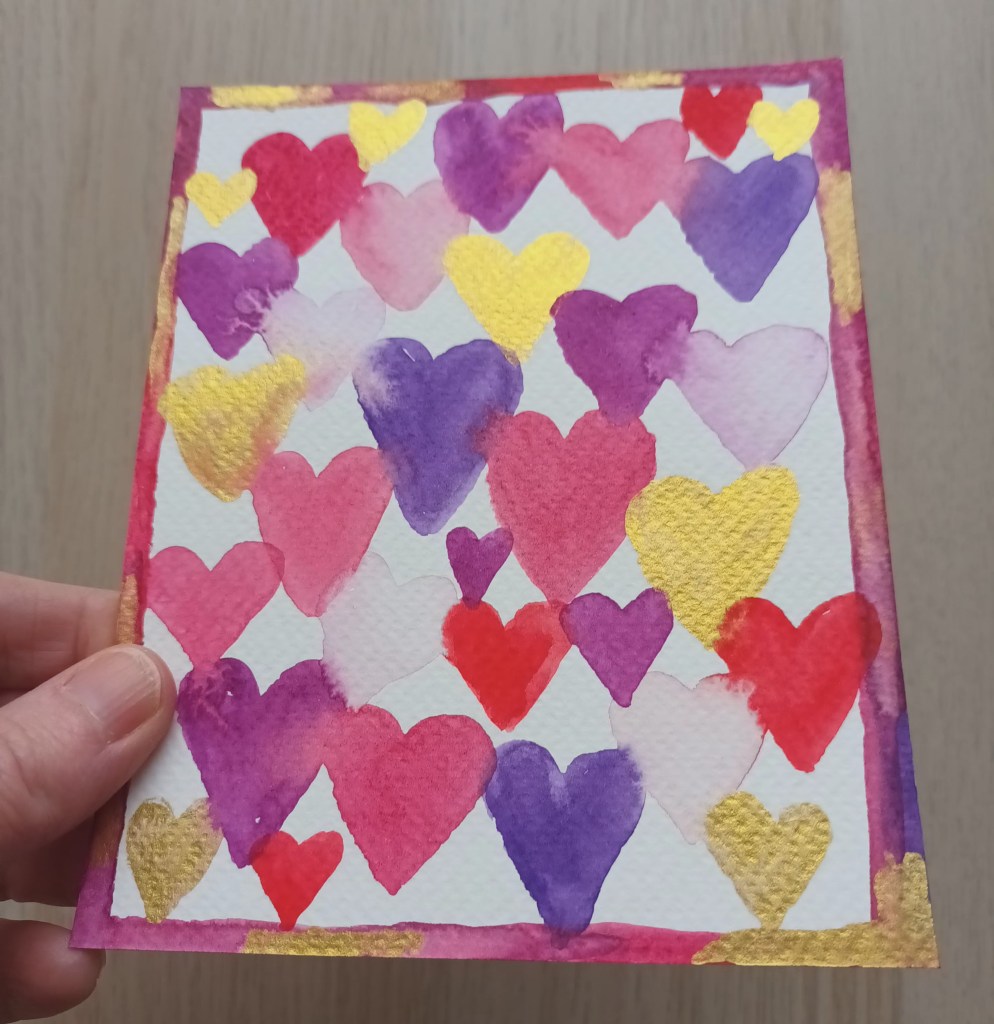
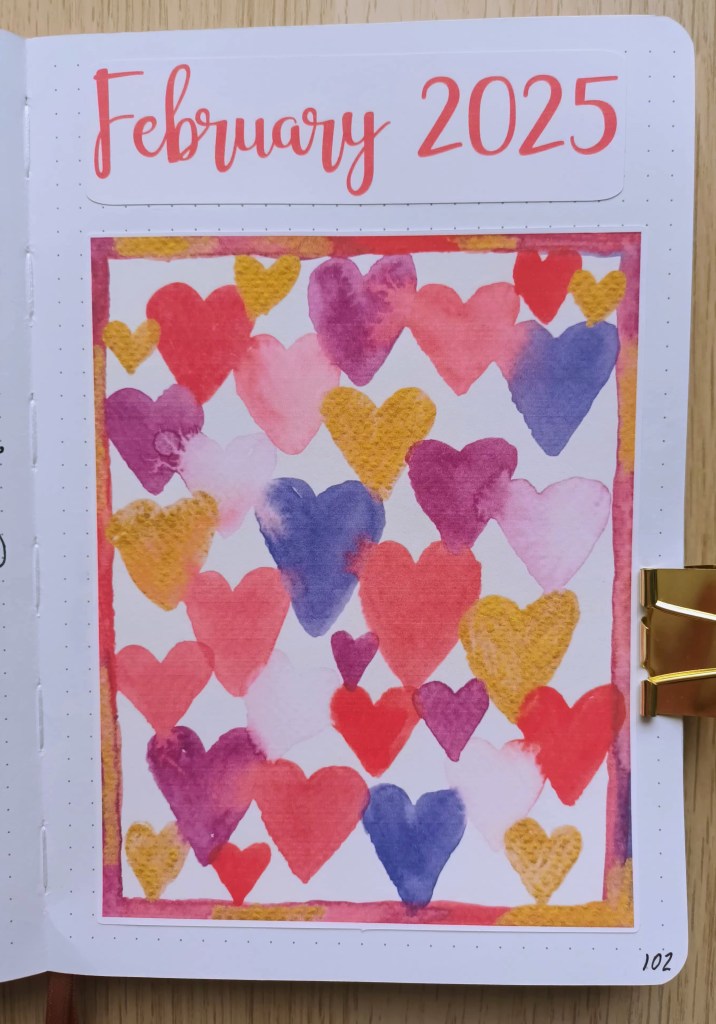
For this month’s front cover, I opted to use the watercolour bleeds technique with a range of red, pink and purple hearts. I watched some tutorials on YouTube to remind myself of the basic techniques and discovered that one of my favourite watercolour artists, Emma Lefebvre had just shared a video called ‘easy Valentine’s ANYONE can paint’. And she was right, her techniques were all super simple and totally do-able. Also, one of the techniques was watercolour heart bleeds – such a good find! I’d already filled my palette with reds, pinks and purples, but in her tutorial, Emma used gold paint as well. I didn’t really need an excuse to get out my metallic paints, although I knew they wouldn’t show up properly on the scanned version that I could stick in my BuJo. Anyway, it turned out okay but I couldn’t fully saturate the colours as it ended up printing with a strange blue background tone which looked just awful! I wish someone would invent a watercolour paper which is super thin but works just as well as the high GSM ones that are available now.

February front cover

Here’s my original watercolour piece as a flat lay and raised to, hopefully, show the metallic gold, followed by my front cover. I again turned the digitized watercolour image into a sticker with an offset. This was easy to do in Cricut Design Space and means that the image looks nicer than it does on standard printer paper.

Photo credit: Laura Jones for Keeping it Creative

Photo credit: Laura Jones for Keeping it Creative

Monthly calendar

Photo credit: Laura Jones for Keeping it Creative

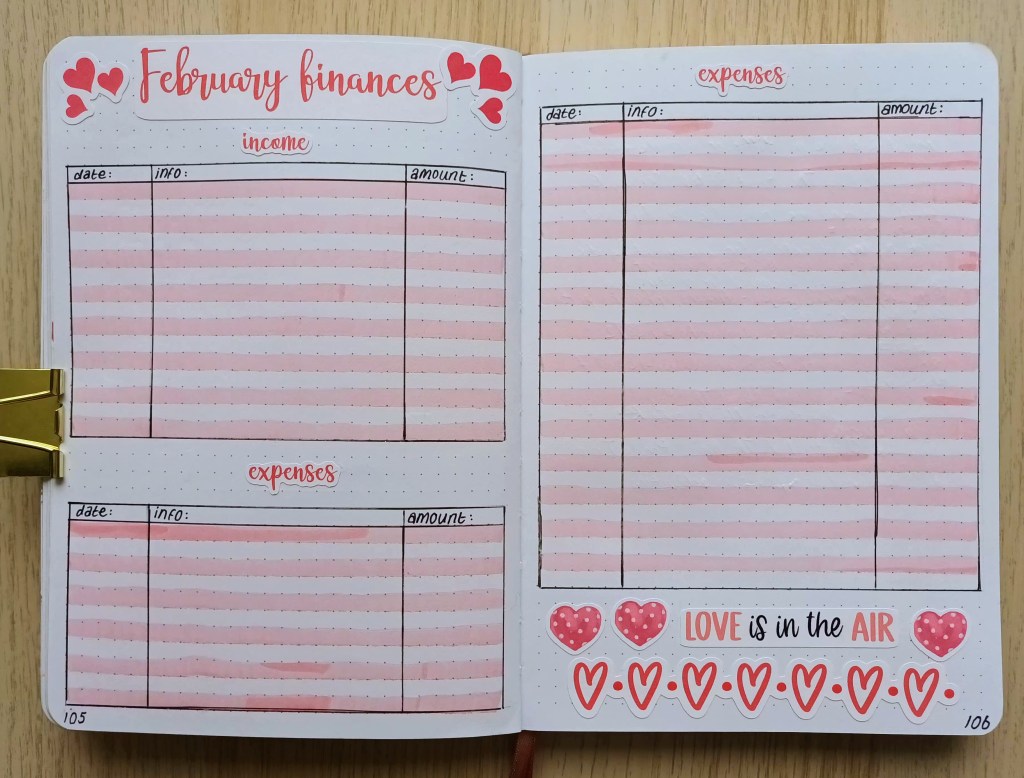
February finances

My usual set up, this time with some pink Tombow to add another colour element. I made the Love is in the air sticker design myself using fonts found in Cricut Design Space. I really like how it turned out!

February goals page

I intend to create a blog post for next week on how I go about choosing goals and how I make them ‘SMART’, so to actually read those, you’ll have to visit by site again! I’ll attach the link here when it’s written so it’s easy to navigate to.

Photo credit: Laura Jones for Keeping it Creative

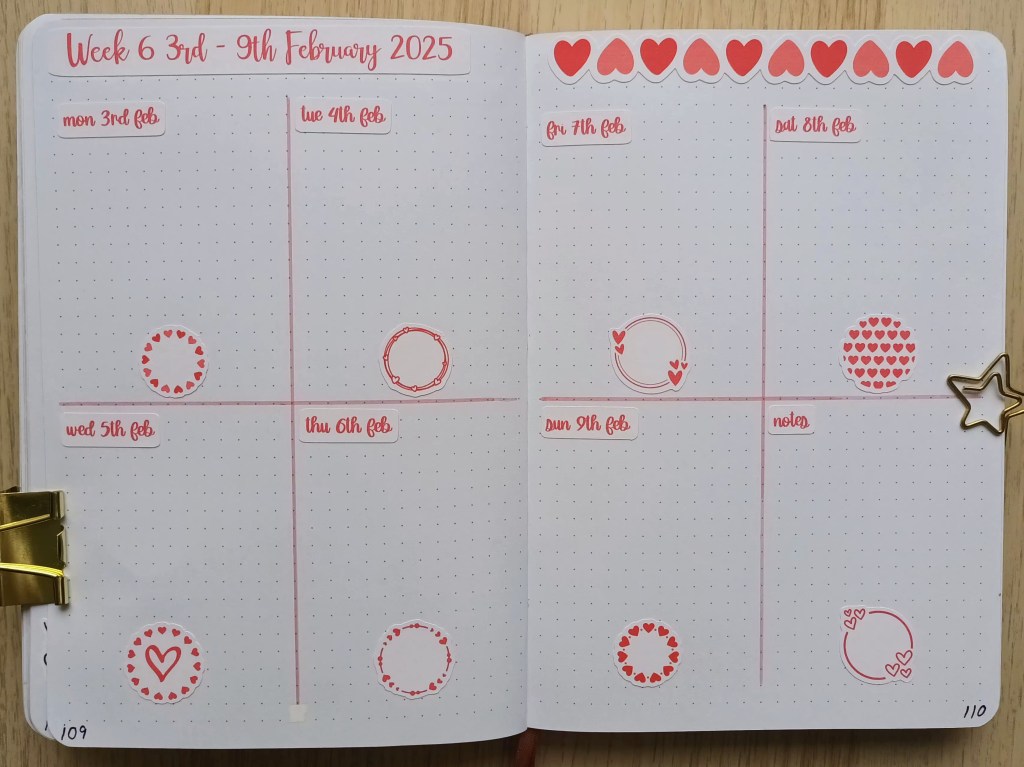
Weekly plans

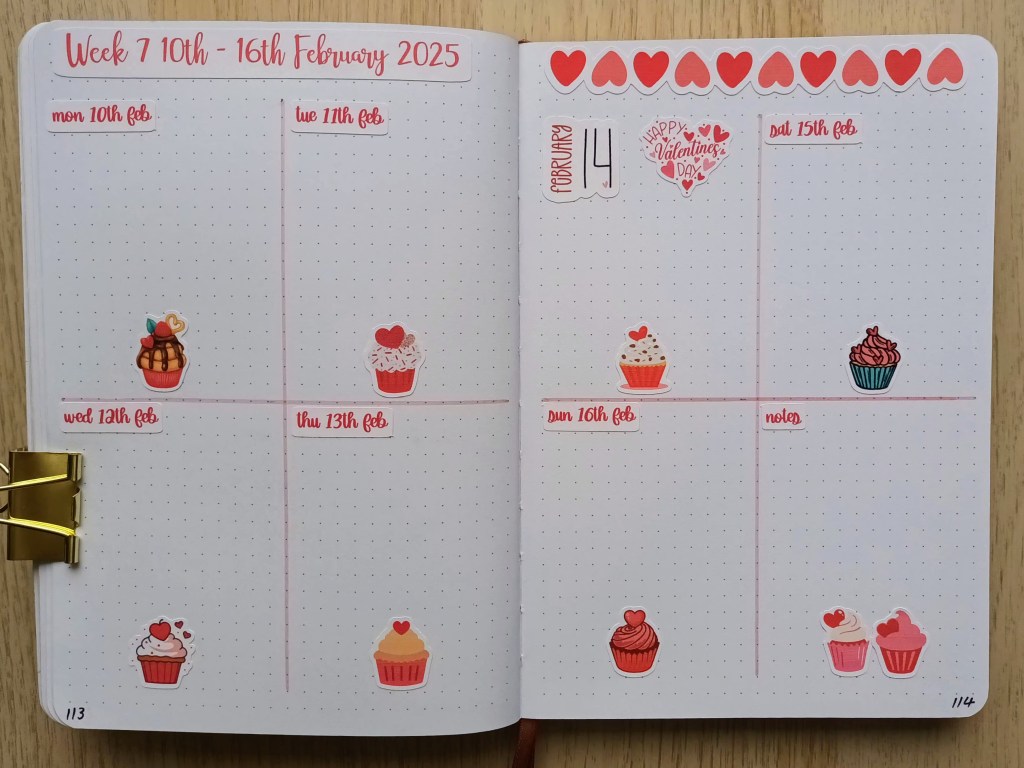
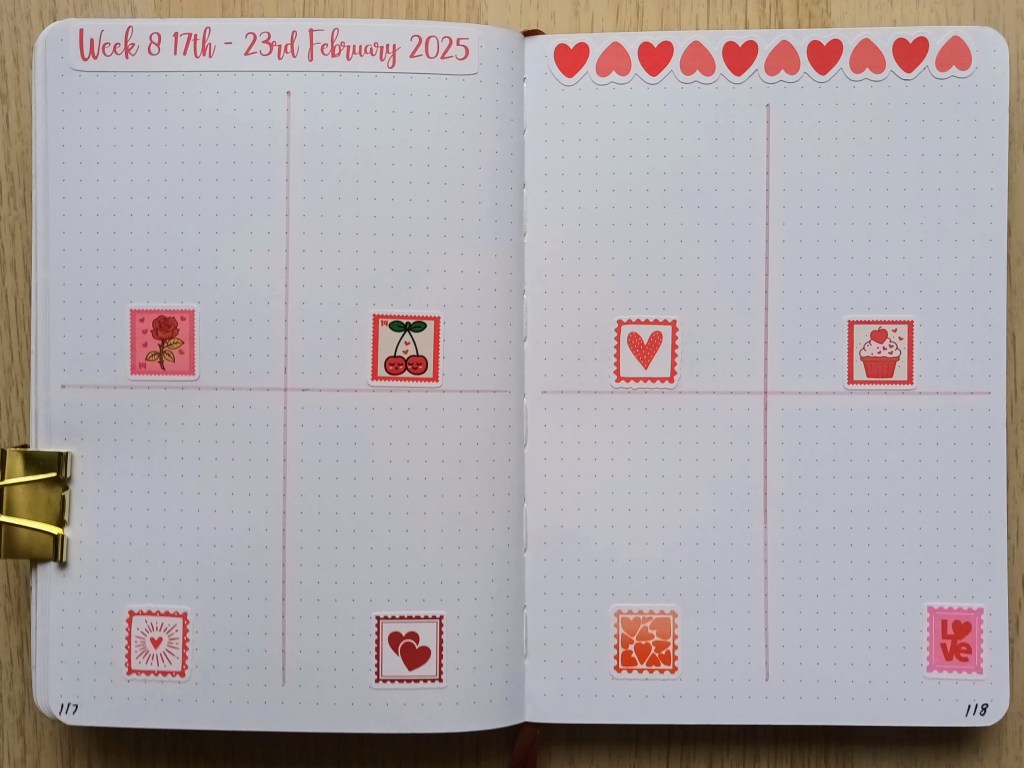
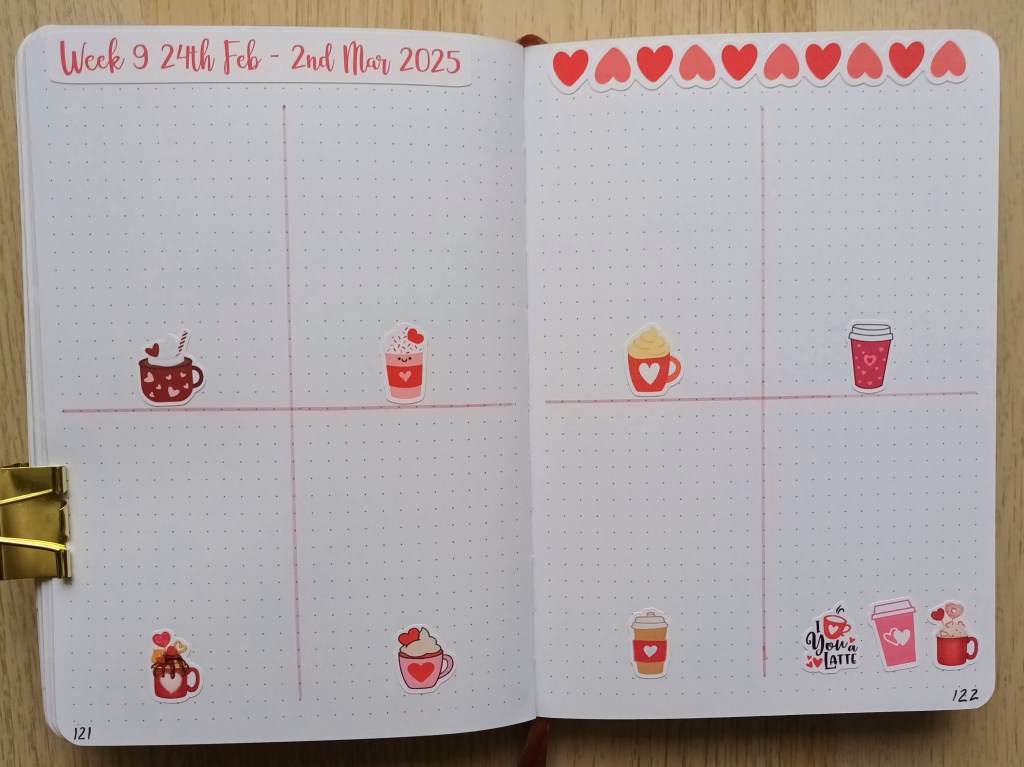
I spent a long while perusing images on Cricut Design Space and came up with 4 different subtopics for the 4 weeks – mini wreaths, cupcakes, postage stamps and Valentine’s drinks. And look at all the hearty content I found!

Final words…

Thank you for visiting my blog to look at my February Bullet Journal set up for 2025. I hope you enjoyed seeing my pages. Many of the sticker images could easily to drawn directly onto the page using black waterproof fineliners and coloured markers. I know some people choose to create watercolour images straight into their bullet journal pages but I find that the paper in Notebook Therapy journals does not take this medium well. The paper is plenty thick enough to hold watercolour with minimum buckling but the paint just doesn’t behave in the same way as it does on proper cold pressed paper designed specifically with that in mind. Perhaps with a better scanner and printer, you can get a printout which looks the same as the original, but I can’t afford to buy a more expensive one and the true cost really comes from the very pricy cartridges. Despite this, I will continue to explore the medium of watercolour as much as I can in the future, but I might not use my art to decorate the pages of my bullet journal as regularly.

Have a wonderful February and I’ll see you back here with more BuJo content next month (which, at the time of writing, starts tomorrow!).