Blog

Posted in goal setting, journalling, life hacks, lifestyle, meditation, Mindfulness, mindset, self care, Setting goals and intentions, wellbeing, wellness

Monday Matters: Discovering joy in every season of the year using The Happiness Year by Tara Ward

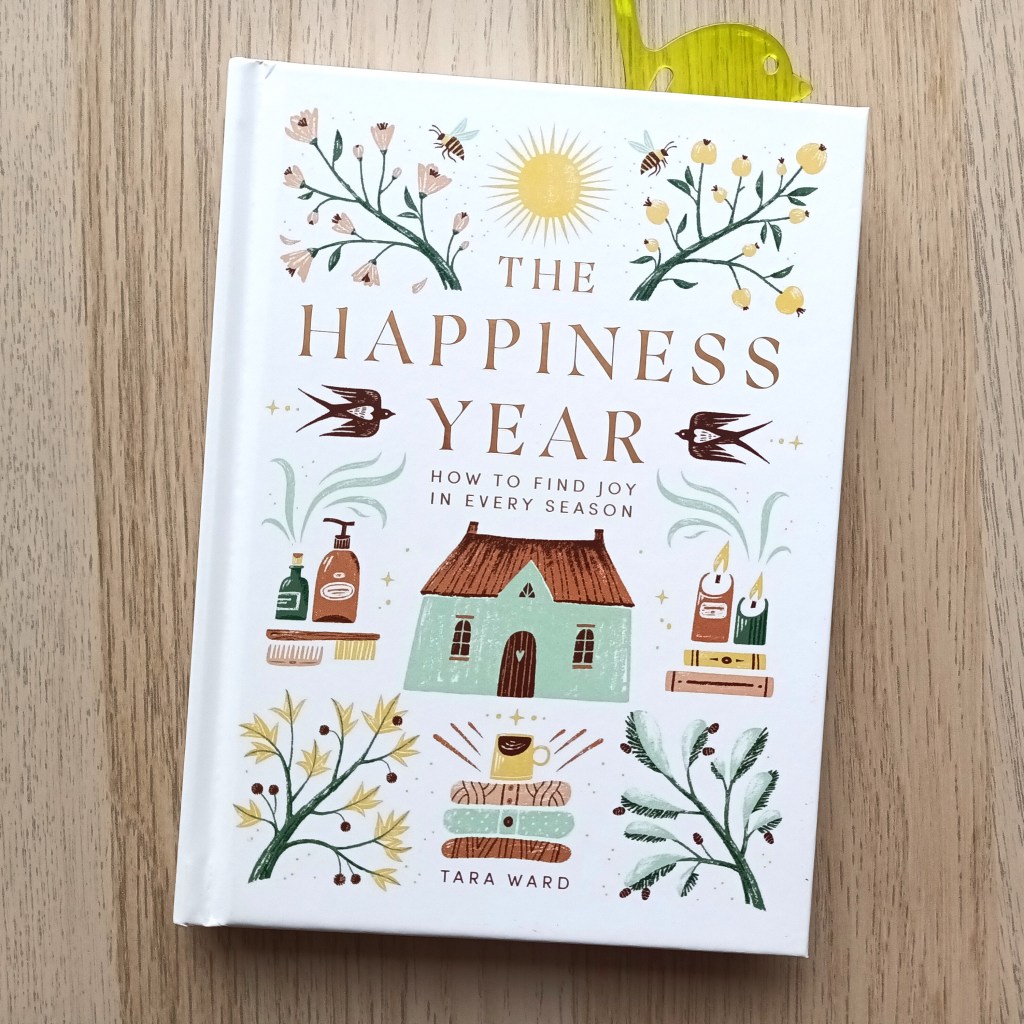
A few months ago, I was looking in the health and wellbeing section at Waterstones and came upon a beautifully illustrated book about finding joy throughout the year by trying out different seasonal activities. At the time, I didn’t purchase it, but I regretted my decision so I ordered it from an online retailer. When it arrived, I added it to the bookcase in my craft room as I was already in the process of reading about 8 different books which is a few too many even by my standards. I pulled it out a few days ago and there are some lovely activities inside in the section which I started with – Spring. I tried out the first exercise this morning and really enjoyed it so I thought I would give a short summary of the book and share that first prompt with you today.

The Happiness Year: How to Find Joy In Every Season by Tara Ward

In the introductory section of the book, Tara discusses the aims of The Happiness Year and also talks about the emotion of happiness and the four positive chemicals that are released into your body when you’re happy – dopamine, oxytocin, serotonin and endorphins (referred to as DOSE throughout the book). She then goes on to explain how to use and enjoy the book.

The remainder of the book is split into four sections – Spring, Summer, Autumn and Winter and there are a collection of exercises provided in each which you can pick and choose from. In combination, they promise to help you in an holistic way – physically, mentally, emotionally and spiritually. Personally, I think I will probably try out all of the different activities and see which I prefer and benefit from the most.

Included within the book, there are journalling and brainstorming activities, meditations, physical exercises, goal setting and planning tasks, plus many more to explore and enjoy. You are also invited to complete them in a way that feels comfortable for you, taking into account individual differences and preferences.

So far, I’ve only read the Spring chapter in depth but I’ve had a good flick through all of the book and I can already see there are many exercises that will appeal.

Exploring your thoughts, feelings and ideas about Spring

As I said earlier, I completed the first activity this morning and I enjoyed it so much that I felt compelled to share it with you. I think this exercise would work well for each of the four seasons, not just Spring. Here’s a step by step explanation of what to do:

  • Take an A4 piece of paper and place it in front of you
  • Write the word SPRING in large letters at the bottom of the page
  • Close your eyes and take three deep, comfortable breaths to focus you in the present moment
  • Open your eyes and look at the word
  • What comes to mind when you think of Spring?
  • Write down everything which comes up for you
  • When you’ve run out of ideas, close your eyes again, breathe deeply and continue thinking about the season
  • Note down any further ideas or images which come to mind
  • When you feel you’ve finished, look over your sheet
  • What jumps out at you the most? Circle any words or phrases which particularly resonate or feel important to you. Are then any surprises?
  • What is the overriding emotion when you look at your words? Write that emotion or emotions at the top of the page.
  • Look through the words and make a list of those which generate feelings of happiness.

I hope you found this a helpful exercise and it reminded you about all of the lovely things which happen in the Springtime. I’ve included my sheet below, how does it compare to yours?

Photo credit: Laura Jones for Keeping It Creative

Final words…

If you enjoy mindful activities such as journalling, setting intentions, exploring the world using your five senses, breathwork, meditation and appreciating the simple things in life, I would definitely recommend checking out The Happiness Year. The book will help you find ways to appreciate and make the most of all of the things that each season has to offer you. You’ll also find a range of self care activities to increase your happiness levels by releasing a good ‘DOSE’ of positive chemicals. Let me know if you try the exercise outlined above and how it made you feel.

Posted in art, bullet journal, Bullet journaling, creativity, Cricut, lifestyle, Planning and journaling, watercolour painting

Setting up my Bullet Journal for April 2024: Houseplants theme

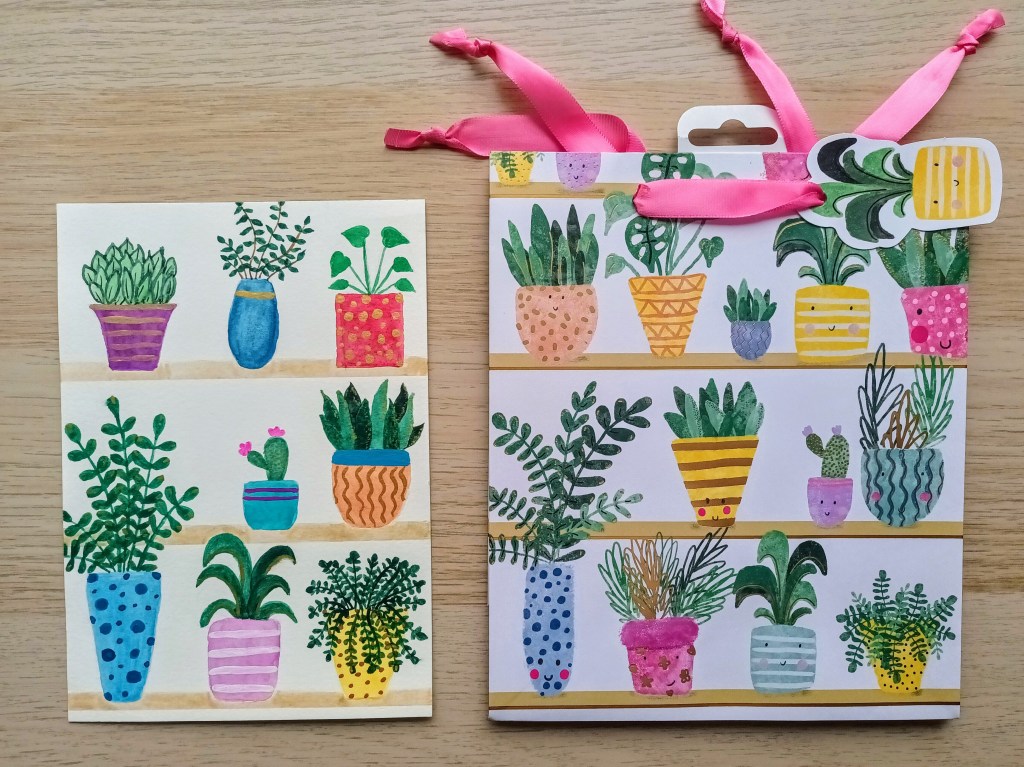
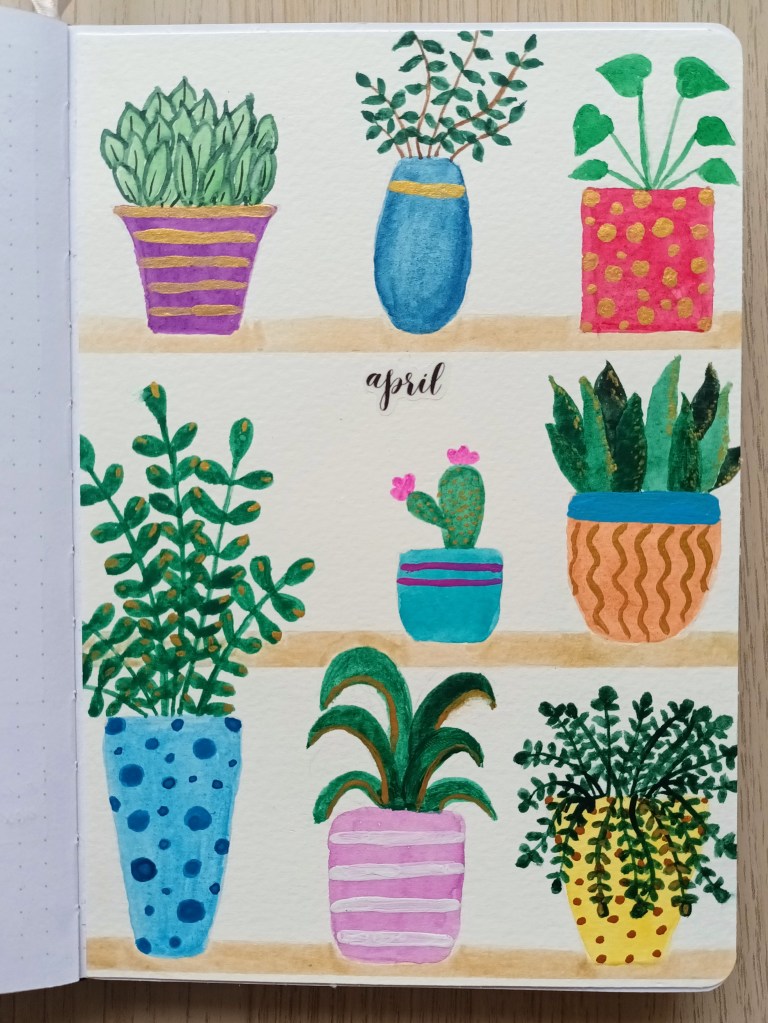
For this month’s BuJo theme, I took inspiration from a cute little gift bag I found in one of my local garden centres. I made stickers to decorate most of my spreads but wanted to do some watercolouring for the front cover. Unfortunately, I’ve been ill with a bad chest infection so, although most of my pages have been set up since the beginning of the month, I was only well enough to work on my painting for the last few days. I was really pleased with the finished design and wanted the gold effects to be seen in my bullet journal so I’ve actually trimmed the watercolour paper and stuck it in. Usually, I wouldn’t do this, but as I’m nearly at the end of my notebook, I’m not so bothered with the bulk it has added.

Photo credit: Laura Jones for Keeping It Creative

The front cover

My finished cover image had to be trimmed down slightly to make it fit in my bullet journal which was a shame but I hadn’t intended to glue it in so I didn’t check the paper size. When I scan my paintings in, it’s easy enough to shrink them to fit so I always use an A5 watercolour piece of paper.

I had great fun mixing the colours for the pots and leaves and I loved using my Finetec palette to add some gold detailing. The shimmering effect is so pretty and I’m excited to open my BuJo each morning to check my schedule for the day. To get the shelves looking super sharp and straight, I applied washi tape to the bottom of each and then used a light sand Tombow marker to colour in. You can probably see that it’s not watercolour but I really don’t mind! The April title is a little sticker I made using a font I found on Canva.

Photo credit: Laura Jones for Keeping It Creative

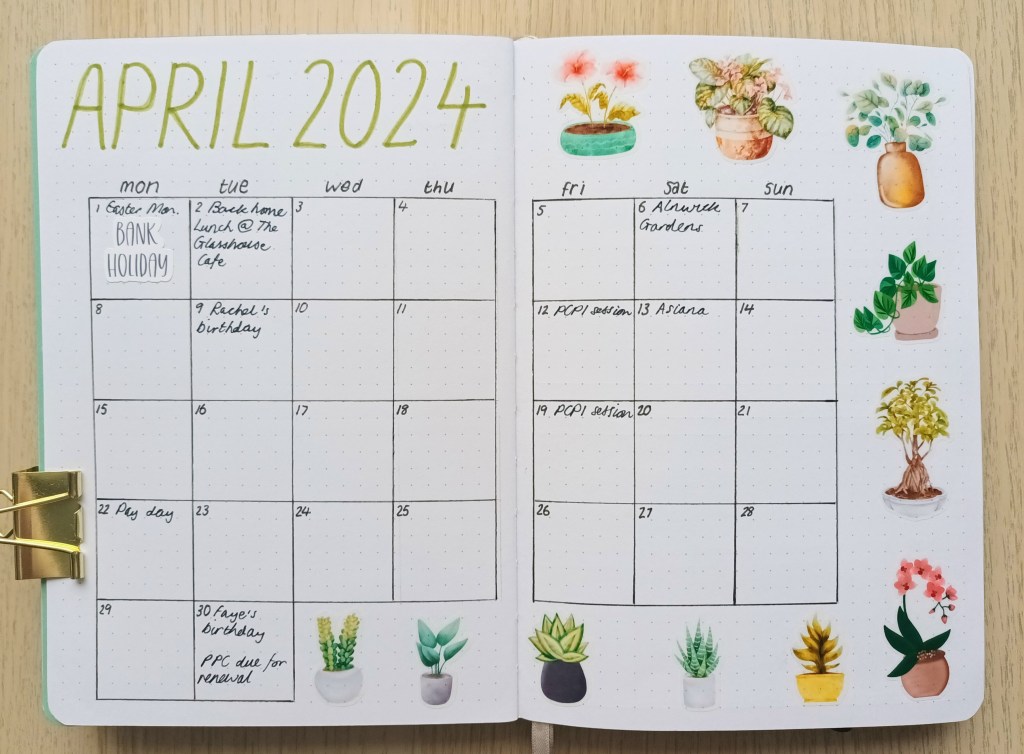
Monthly Calendar pages

Last month, I had another free trial of Canva Pro so I typed in ‘watercolour houseplants’ and chose my favourite images to use as stickers. Cricut have finally fixed the issue with their print and cut sticker offset in Design Space so I was able to print my sticker sheets straightaway without having to reboot my computer. I’m so pleased they eventually sorted the problem as it saves so much time.

Photo credit: Laura Jones for Keeping It Creative

Expenses

I decided to use a mid green Tombow brush pen to highlight every other line in my expenses chart this month. It takes a while to do them, as I use washi tape strips to get the bottom of the lines perfectly straight, but I think it adds more interest to the spread. I left enough room to add three pot plants as decor too.

Photo credit: Laura Jones for Keeping It Creative

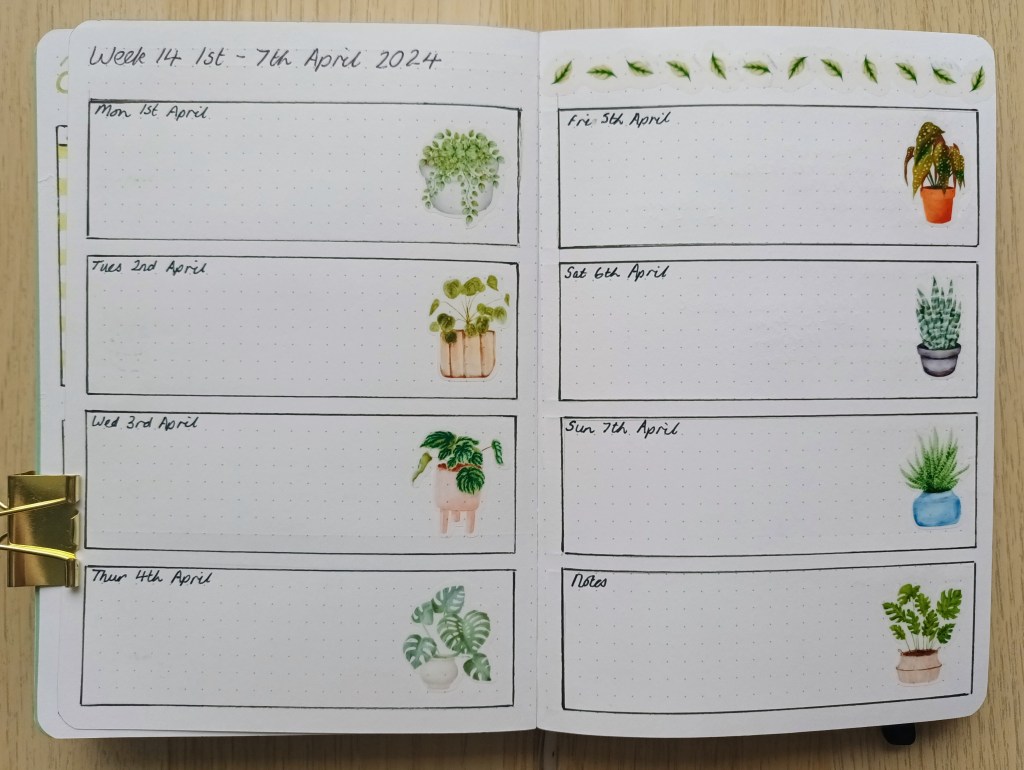
Weekly plans

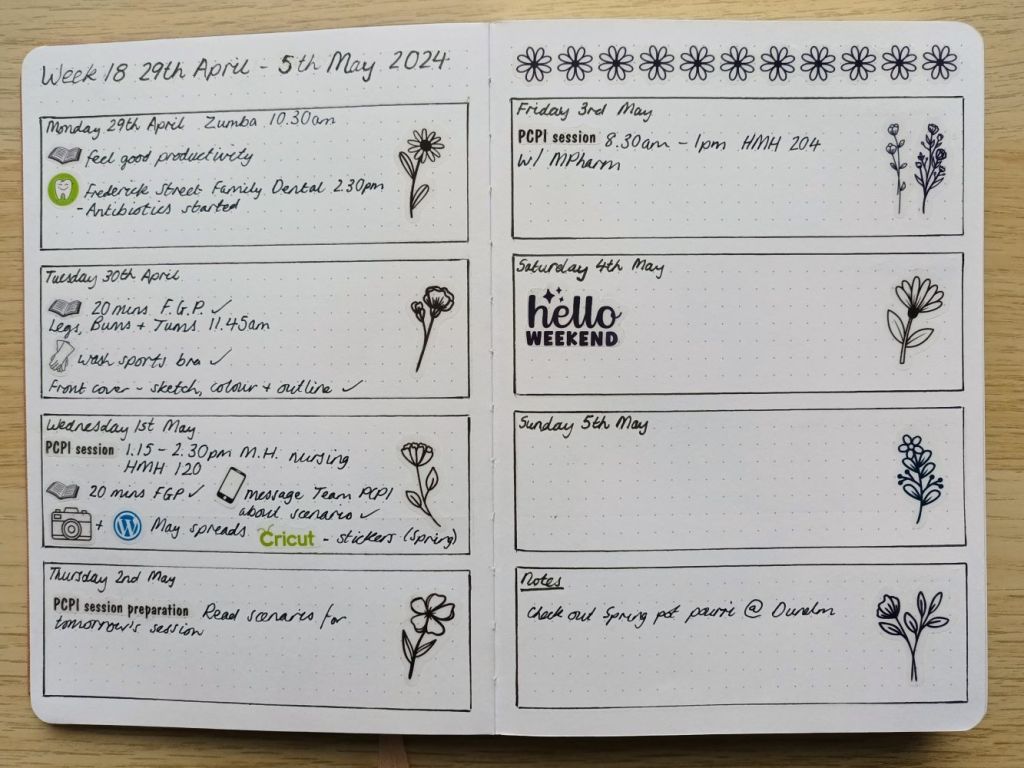
April is another busy month so I wanted plenty of space to record daily events and to do lists but also a little room to add some plant stickers. I decided not to do a Dutch door layout this time but stuck with the horizontal days. I’ve added my running task lists to the pages after my weeklies like I did in March. The leaves across the top were created using a single leaf shape spaced out and in different orientations to make a kind of border to fill the space. I created one for each week and I think it finishes the pages nicely.

Photo credit: Laura Jones for Keeping It Creative

Final words…

Thank you for taking the time to look at my bullet journal pages for this month – I hope you like my chosen theme and my designs. I apologise for sharing them so late but I’ve been feeling completely wiped out for several weeks. I’m still not totally better but I managed to go to Clubbercise yesterday and Zumba today, so my energy levels have certainly improved.

I hope you’re all having a lovely April and that the weather where you are is better than it is here in Sunderland – we’ve had so much rain recently and one of the flower beds in our back garden is completely flooded and has been that way for weeks.

Much love,

Posted in education, learning, personal development, professional development, Setting goals and intentions

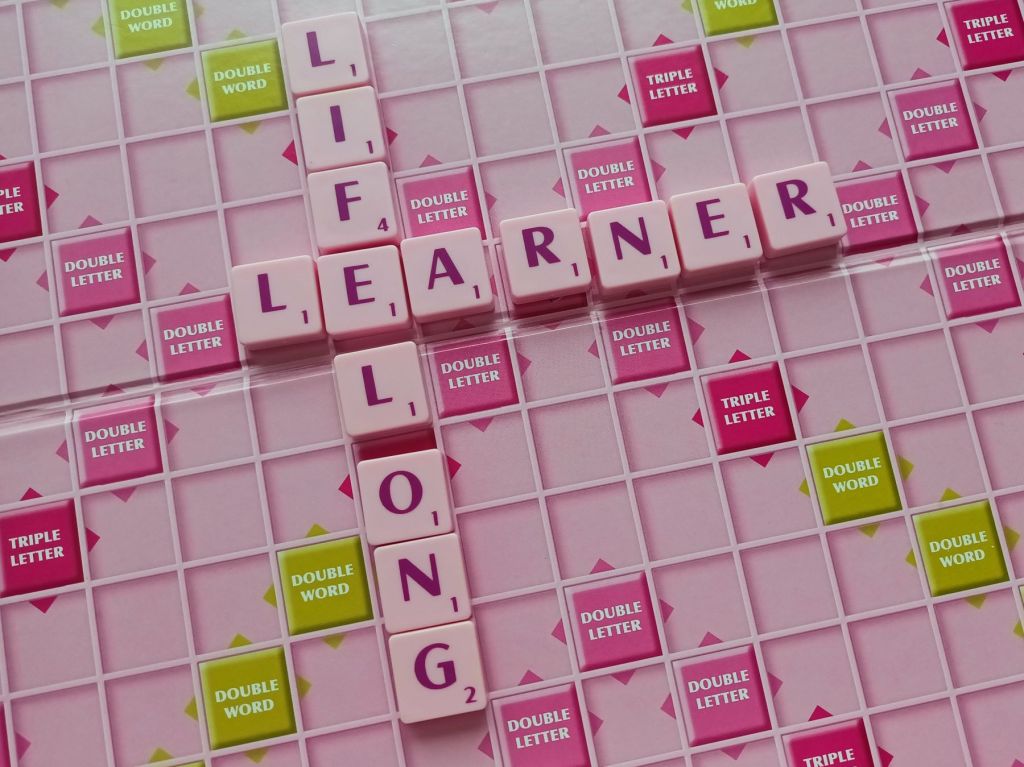
Monday Matters: 7 key benefits of being a lifelong learner (Part 1 of 2)

I left formal education a long time ago now, but I still enjoy learning new things and thrive on deepening my knowledge of subjects which interest me. In today’s post, I plan to discuss some of the many reasons why being a lifelong learner is good for you. Then, in a second blog post, I’ll consider different ways in which you can become a lifelong learner or continue your learning journey long after you finish your formal schooling.

Photo credit: Laura Jones for Keeping It Creative

What is a lifelong learner?

A lifelong learner is an individual who continues to seek out opportunities to expand their knowledge and skills beyond their formal education and throughout life. The learning may be formal such as taking a CPD (Continued Professional Development) course for work, attending an accredited night class which follows a set curriculum e.g. photography for beginners, or working towards a further or higher education qualification in person or via an online platform. On the other hand, it could involve informal learning such as reading a book on a topic you are interested in, watching online videos to improve your DIY skills or chatting with people in a Facebook group focused on a particular hobby or interest e.g. bullet journalling or Syrian hamsters.

The character traits of a person who is a lifelong learner include:

  • showing a curious mind
  • having a thirst for knowledge
  • always seeking new opportunities to grow
  • being an avid reader
  • a tendency to be open-minded about things
  • having the motivation for self study and continued personal development
  • believing it’s never too late to learn something new (you can teach an old dog new tricks!)
  • being a goal setter / goal getter
  • saying yes to new opportunities and things which push them out of their comfort zone
  • recognising that change is an inevitable part of life and often leads to opportunities for personal and professional growth
  • developing daily habits that encourage them to learn such as setting goals each month and writing a plan of action, dedicating twenty minutes each morning to reading a book on a particular topic of interest or scheduling half an hour each evening to learn macrame.

What are some of the benefits of being a lifelong learner?

Being a lifelong learner can bring so many benefits to both your personal and professional life. In fact, research shows that overall, individuals who continually seek out new learning opportunities lead a happier and more fulfilled life so after you’ve read today’s blog post, make sure you look out for part 2 which considers different ways in which you can improve and expand your knowledge and skills.

Seven main advantages of being a lifelong learner:

Sharpens your mind – learning new things stimulates the brain and enhances our cognitive abilities. The benefits of this include improved memory retention, enhanced problem solving skills, longer attention span, better reasoning skills and more effective communication skills. Continued learning also reduces the risk of cognitive decline and age related cognitive disorders such as dementia.

Gives you better job prospects or career opportunities – keeping up-to-date in matters relating to your field and developing useful employment skills (such as communication, teamwork, time management, active listening etc) can increase employability, work efficiency and likelihood of promotion. Also, knowing your stuff can make you feel much more confident in job interviews or one-to-one meetings with your boss.

Can help you stay connected – lifelong learning offers many opportunities to connect with others. For example, you might join an art or craft class where you get to meet and chat to other creatives, become a member of an online community which enables sharing of ideas, experiences and knowledge on a particular topic, or attend a CPD event with others who work in the same professional field. Engaging in social learning can also be a wonderful way to get out there and find your tribe, in other words, people who share commonalities or possess traits you aspire to adopt.

Boosts your confidence and self-esteem – Learning a new skill, refining your existing ones or developing your knowledge in a particular subject area is guaranteed to make you feel good. In fact, research from The New Economic Foundation (NEF) concluded that there are five ways to wellbeing and that one of these, which can give you a sense of achievement and new confidence, is to keep learning.

Better management of physical and mental health conditions – If you visit a health professional and receive a diagnosis of a particular health condition, finding out more about it can really help to improve your understanding and self management. Keeping up-to-date with the latest research, for example, through reading health and wellbeing articles in magazines can also prove to be particularly useful too.

Helps you to keep up with a constantly changing world – Our world is constantly evolving and changing and sometimes it can be difficult to keep up. Being a lifelong learner is essential for keeping yourself informed and making sure you have a relevant skills for both your personal and professional life.

You can share your knowledge and skills with others – Sharing your expertise with others can be incredibly rewarding and also helps you to consolidate your learning. There are so many ways to do this in either a professional or personal capacity including teaching, mentoring, coaching, workshops and training sessions, starting or joining an online or in person group, creating a blog, vlog or podcast, volunteering, writing a book, talking to friends or family about your interests and answering any questions your children ask (or using your research skills to help them find out if you don’t know!). Also, don’t underestimate the power of children seeing you learning and reaping the benefits of your new knowledge and developing skills.

Final words…

The most common reason why people read or follow blogs is to learn something new, so the likelihood is, if you are reading this, you are already a lifelong learner. However, I think it’s important to think about the benefits of continued learning and explore the different options for furthering our knowledge and skills so we make time in our busy days for such activities.

I hope you’ve enjoyed reading this week’s post and don’t forget to look out for Part 2 where I consider different ways of being a lifelong learner.

Posted in art, creativity, lifestyle

Tips to Unlocking the Full Spectrum of Your Creativity – Guest post by Linda Chase

Today, I’m sharing another guest post from Linda Chase where she considers ways in which you can unlock the full range of your creativity. I hope you find the tips useful and, as always, I would love to hear any feedback you have, which I will be sure to pass on to Linda.

Image courtesy of Unsplash

Nowadays, maintaining a steady flow of creativity can be a challenge. However, rejuvenating your creative spirit is not only possible but crucial for personal growth. This article, courtesy of Keeping it Creative, offers practical advice to help you rediscover your creative spark so you can flourish in all your endeavors.

Seek Inspiration from the World

Observation is a powerful tool for creative inspiration. By paying close attention to your environment and experiences, you uncover unique insights and ideas that can transform your creative endeavors. The world around you is a constant source of inspiration, from the intricate patterns of nature to the dynamic expressions of urban life. Engaging with this diversity encourages you to see the ordinary in extraordinary ways, fueling your imagination and enriching your creative output.

Harness the Power of Photography

Expanding your creativity through photography opens new avenues for artistic expression, especially by colorizing your photos to breathe new life into them. Utilizing Photoshop allows for the meticulous editing of old black-and-white photographs, transforming them into vibrant pieces of art. Additionally, specialized tools that add color to black-and-white photos offer the ability to revive cherished family portraits or infuse them with artistic flair, featuring automatically selected colors and customizable settings for a personalized touch.

Foster a Curious Mind

Curiosity is the engine of creativity. By nurturing a constant desire to learn and understand the world in more profound ways, you uncover a wealth of new ideas and possibilities. This relentless pursuit of knowledge keeps your mind active and open to innovation, inspiring you to explore beyond the surface and discover the unseen connections that spark creative thought.

Cultivate a Rich Literary Palette

Broadening your literary horizons is a foundational step toward enriching your creative well. Exposure to a diverse array of genres and styles introduces you to new ideas, perspectives, and sources of inspiration. Each book, article, or poem you engage with adds depth to your understanding and appreciation of the world, thereby expanding your creative potential. This practice encourages you to draw from a vast pool of knowledge, fueling your imagination and pushing your creative boundaries.

Unleash Thoughts Through Writing

Setting aside time for unrestricted writing is a powerful technique to unlock your creative potential. This practice allows thoughts and ideas to flow freely, without judgment or restriction. By writing down whatever comes to mind, you tap into your subconscious, uncovering insights and perspectives that can inspire new creative projects. This unfiltered exploration of thoughts serves as a catalyst for innovation, encouraging you to think outside the box and approach challenges with fresh eyes.

Embrace the Art of Experimentation

Exploring the depths of creativity invites you to venture beyond familiar boundaries and immerse yourself in diverse artistic expressions, igniting a spark of innovation. Experimenting with various mediums is less about acquiring new skills and more about uncovering hidden talents and passions, awakening a sense of discovery. This journey, free from the pursuit of perfection, encourages the creation of unique and groundbreaking ideas, celebrating the freedom to innovate without constraints.

Embrace Unconventional Thinking

Taking risks is integral to the creative process. Stepping out of your comfort zone to explore unconventional ideas can lead to innovative solutions and artistic breakthroughs. The courage to pursue the path less traveled not only distinguishes your creative work but also propels you towards personal and professional growth. It’s in these moments of uncertainty and experimentation that true creativity flourishes, revealing new perspectives and challenging the status quo.

Design Your Creative Sanctuary

Creating a space dedicated to your artistic endeavors is crucial for achieving deep creative work. A focused environment, free from distractions, allows you to immerse yourself fully in the creative process. This sanctuary is not just a physical space but a mental one as well, where you can explore your thoughts and ideas without interruption. Such an environment fosters concentration, facilitating a flow state where creativity can thrive.

As you embark on this journey to rejuvenate your creativity, remember that every step you take is a move toward unlocking your full potential. Embrace the process with an open mind and a willing heart, knowing that creativity is not just a skill, but a way of life. Your renewed creative spirit will not only enrich your life but also inspire those around you.

Don’t miss out on the latest creative strategies. Join the Keeping It Creative community today and get inspired!

Posted in bullet journal, Bullet journaling, creativity, Cricut, Planning and journaling, sticker making

Setting up my Bullet Journal for March 2024: Spring / Easter theme

As Easter falls at the end of March this year, I decided to do an Easter theme for my bullet journal with some Spring elements. I made a list of words associated with both (decorated eggs, chicks, bunnies, tulips, daffodils etc.) and then searched for images on Design Space which I could use to decorate my spreads. I added lots of images to my canvas and used the sticker making function to create a set of kiss cut stickers on a transparent background. I hope you like my pages as much as I do.

Cover page

As I was searching Cricut Design Space for Easter bunnies to use as stickers, I found this cute cut file of a yellow rabbit with flowers and leaves cut from the body. I had some bright yellow cardstock which was perfect as it was relatively thin and wouldn’t add too much bulk in my BuJo. It took me four attempts to get it to work out well as it was quite delicate but I got there in the end! When I placed it on the page, I felt like something was missing so I experimented with placing different coloured papers behind the image and thought this pink colour created a nice contrast.

Photo credit: Laura Jones for Keeping It Creative

The calendar pages

I had great fun making tons of stickers in Cricut Design Space but, unfortunately had lots of issues with the program printing a black line around each of the images. It was so frustrating and I ended up having to bin lots of transparent sticker papers which was costly and such a waste. I resorted to contacting Cricut about it who were very helpful but the problem hasn’t been fixed properly yet.

Anyway, I persevered and I love how the stickers and my pages turned out.

Photo credit: Laura Jones for Keeping It Creative

Finances pages

This is my usual income and expenditure record set up with a cute bit of decoration at the bottom. I’m enjoying using the transparent sticker paper but I have a feeling that Cricut are no longer making it as many of the branches of Hobbycraft are out of stock.

Photo credit: Laura Jones for Keeping It Creative

Weekly plans

Again, I’ve used a simple Dutch Door set up for my weeklies this month. I couldn’t resist adding more stickers to the days though! The decorative eggs along the top are actually a roll of sticker tape from Hobbycraft. Some of them have gold foil on them but the camera hasn’t picked it up.

Photo credit: Laura Jones for Keeping It Creative

I haven’t finished setting up the last two weeklies but I have added the stickers and used Easter chicks for the third week (some real photograph style and others cartoon style) and Easter baskets and Spring blooms for the final week.

Weekly running task list

I’m not sure if I’ve shared my running task lists before but it something I use each week. I add to the list daily and assign tasks to a day of the week or multiple days for longer tasks. This month, I’ve put all of the weekly calendars together and the task lists afterwards but sometimes I’ll put them together. I use the two ribbon bookmarks to mark the pages for easy access.

Photo credit: Laura Jones for Keeping It Creative

Final words…

That’s all of my pages for this month and I’m super happy with how they turned out. I’ve just signed up for another free trial of Canva Pro so I can’t wait to make more stickers using images on there. Although Cricut Design Space has some lovely images, there are some even nicer ones on Canva Pro.

Wishing you a wonderful March filled with lots of lovely Springtime activities,