
Last April, when I picked out a new Notebook Therapy journal to use as my BuJo from May 2024, I also checked out their sticker collections so that I could add to my order to qualify for free delivery. I couldn’t resist the #08: Into the Song set which is… ‘inspired by the tranquil melodies of springtime songbirds and blossoming florals… just as the birdsong fills the air with melody and the blossoms paint the landscape with vibrant hues, our collection brings forth the delicate beauty and timeless charm of nature’s symphony…’. Anyone who follows my blog will know that I love all kinds of birds but particularly tiny woodland species such as wrens, robins, sparrows, tits and finches. And nothing says Spring to me like bird song and blossom. So, for March, I’ve chosen to incorporate the sticker set, but also create a life-like line drawing of a sparrow perched on a blossom covered branch and then shade in the illustration with my various coloured pencil sets (of which I have many!) to add to my monthly cover.
I didn’t want to add much more bulk to my already overstuffed bullet journal, so the Notebook Therapy transfers were perfect. As I’d stuck in a sheet of music as background on the cover page, I opted to do my sketch on quite thin drawing paper and then stick it in. I used a Winsor & Newton fixative spray to stop the colour transferring onto the opposite page. This month, I was also excited to try out a different colour palette which mainly consisted of pinks and browns and it felt good to try something completely new. Plus, I had plenty of pinks and pale browns in my marker collection.
The front cover
I actually found this mock vintage sheet of music as a free download and thought it would look good as a background to my bird sketch. I have no idea what the music is or whether or not it’s an actual song but I like the look it has created and it fit nicely with my colour scheme.
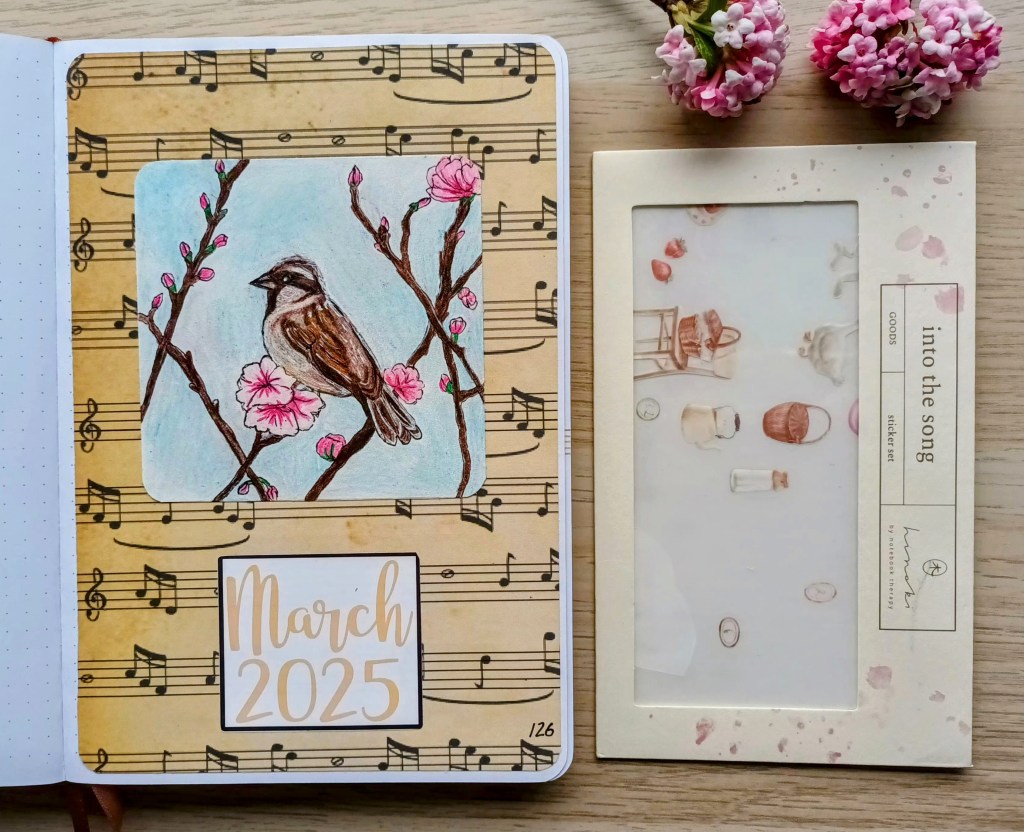
The sparrow drawing is based on a photograph I found online and I used quite a few of the compositional elements in the original image. I spent a while debating which woodland bird to choose and then Googled ‘birds and blossom’ to find examples. I’m really pleased with the finished picture and it didn’t take me as long as I thought it might. I did a basic sketch with pencil and then used a very thin (005) Pigma Micron to draw on the main elements including the branches, buds, open blossom and, of course, the male sparrow. I then went in with the coloured pencils on the branches, blossom and the bird. I created a few highlights using a white gel pen and also used a blending pencil to smudge some of the harsher lines. Rather than adding a blurry background, like the photograph, I just use a single pale blue colour and blur isn’t easy to achieve with coloured pencils. When I was happy with my finished picture, I sprayed it straightaway with fixative as this meant that I couldn’t go back and start altering bits of it as I’m prone to do!
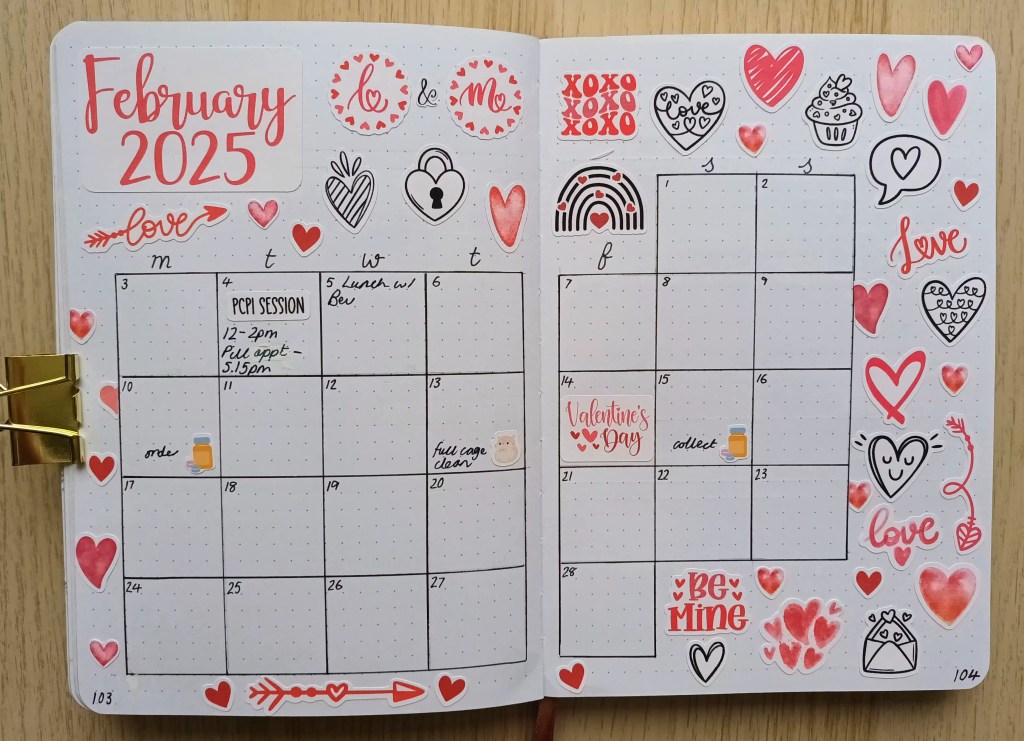
Monthly calendar
I mainly loved decorating my usual calendar style with the transfers but, at times, they were a little bit frustrating. If I pressed one of the other stickers or a bit of the backing whilst rubbing the desired image, there was some transferal of parts of the other image or the backing stuck to a previously transferred image and it pulled it off the page. I started cutting each image out individually but that became too time consuming so I stopped and had to be super careful. I’ve managed to get the hang of it now but I did ruin a few of the pictures. Also, occasionally, there were small bits that didn’t rub on properly which I struggled to correct.
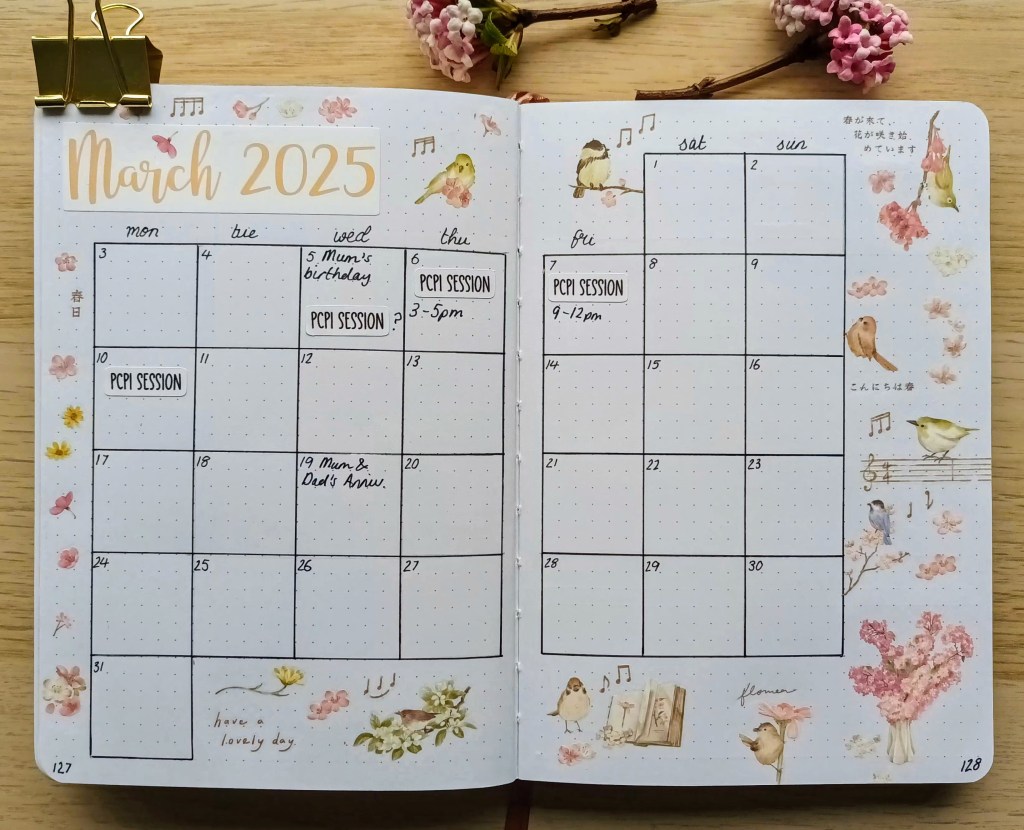
Overall, I would say the transfers look really nice but they definitely take practise and for over £12 for three small sheets, each mistake was quite costly in my opinion! I’ve definitely got the hang of transferring the images now though and would probably buy some more if I see some in the Notebook Therapy collections.
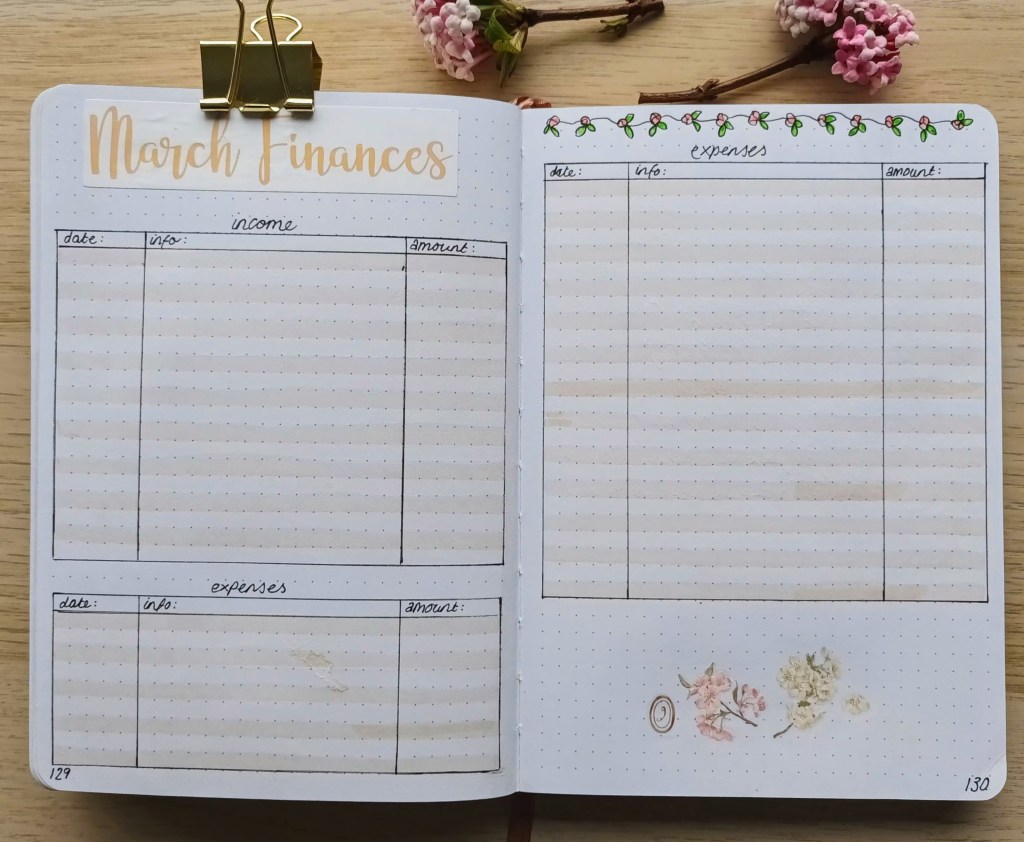
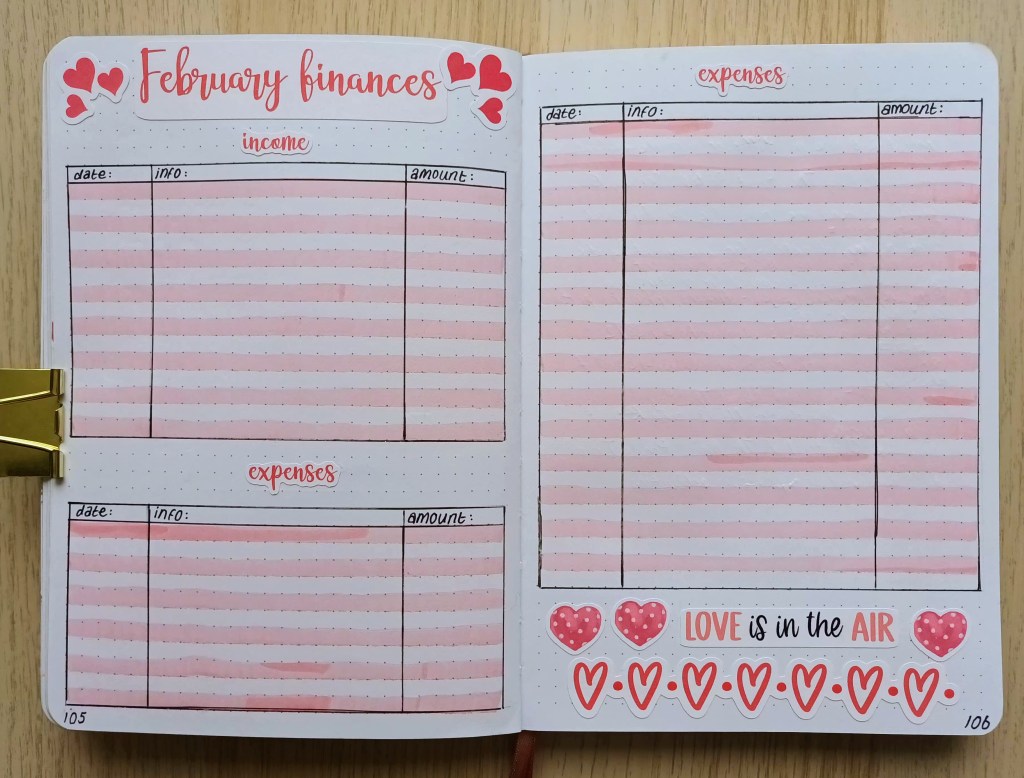
March finances
My usual set up with more transfers and a lovely pale sand Tombow. I added a blossom pattern at the top of the second page but I kind of regret doing it because it doesn’t really go with the delicate transfers. I could have covered it with a border strip sticker but I opted to leave it as it is.
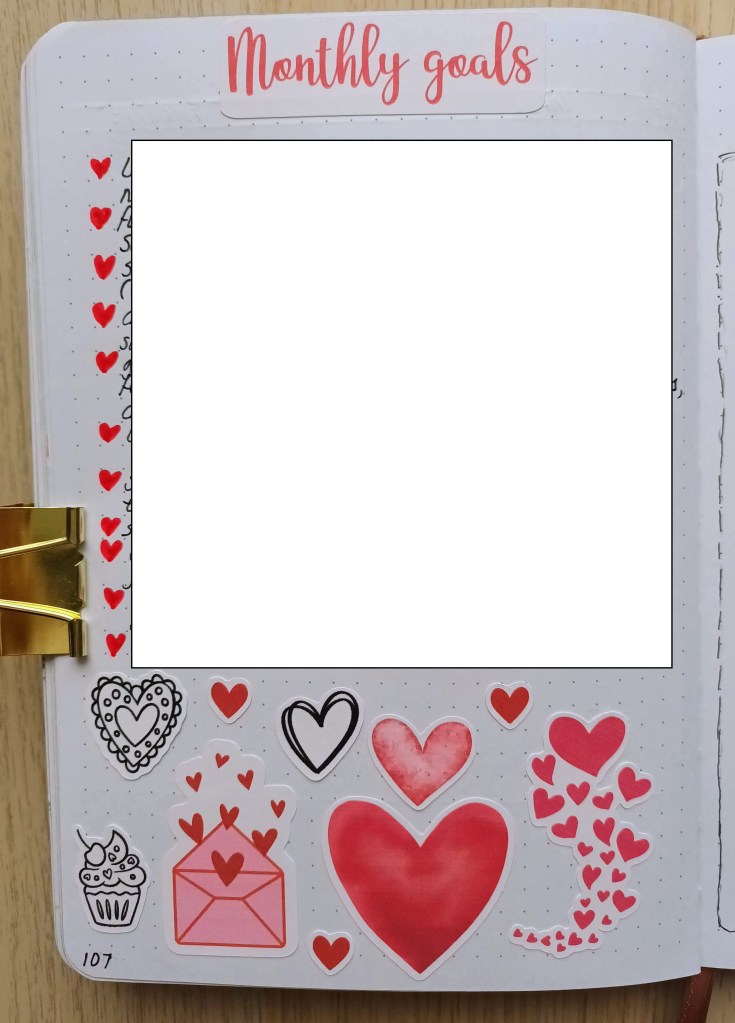
March Goals and Evaluation
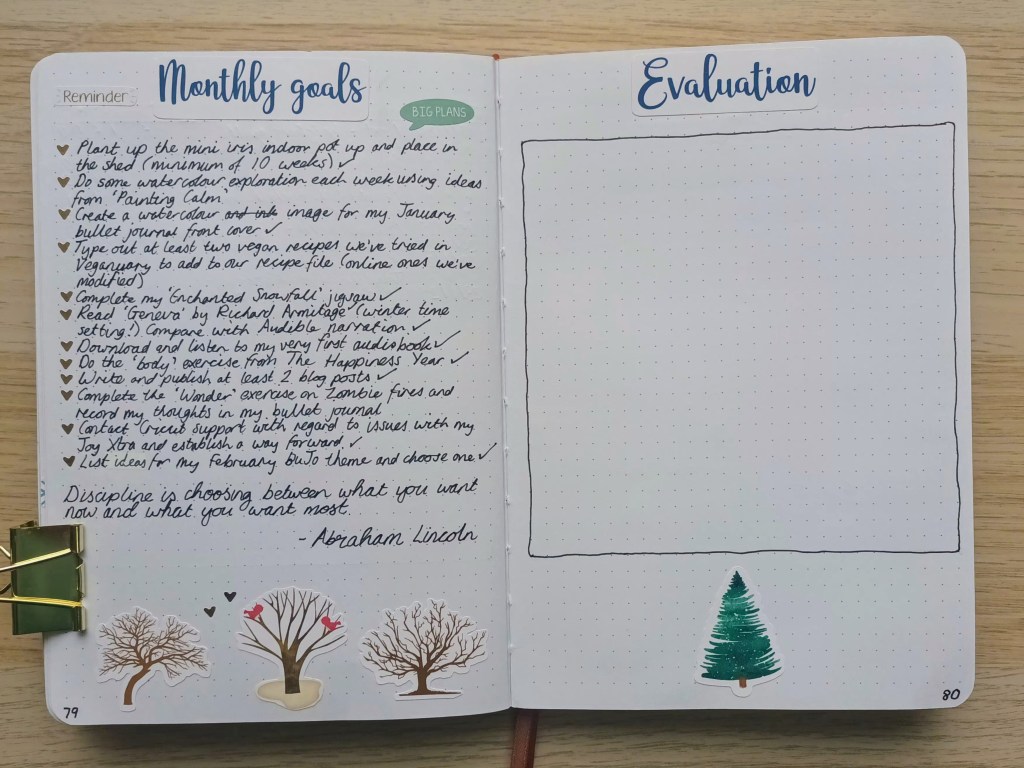
I tried to stick with a small number of goals for March as I found I didn’t meet quite a few of those I set for February and with only a few days of the month left, I’m not going to get them done. I’ve also picked some goals which are not so time consuming too. A combination of transfers and stickers finish off the pages nicely and I loved using the tiny blossom images as bullet points for my list.
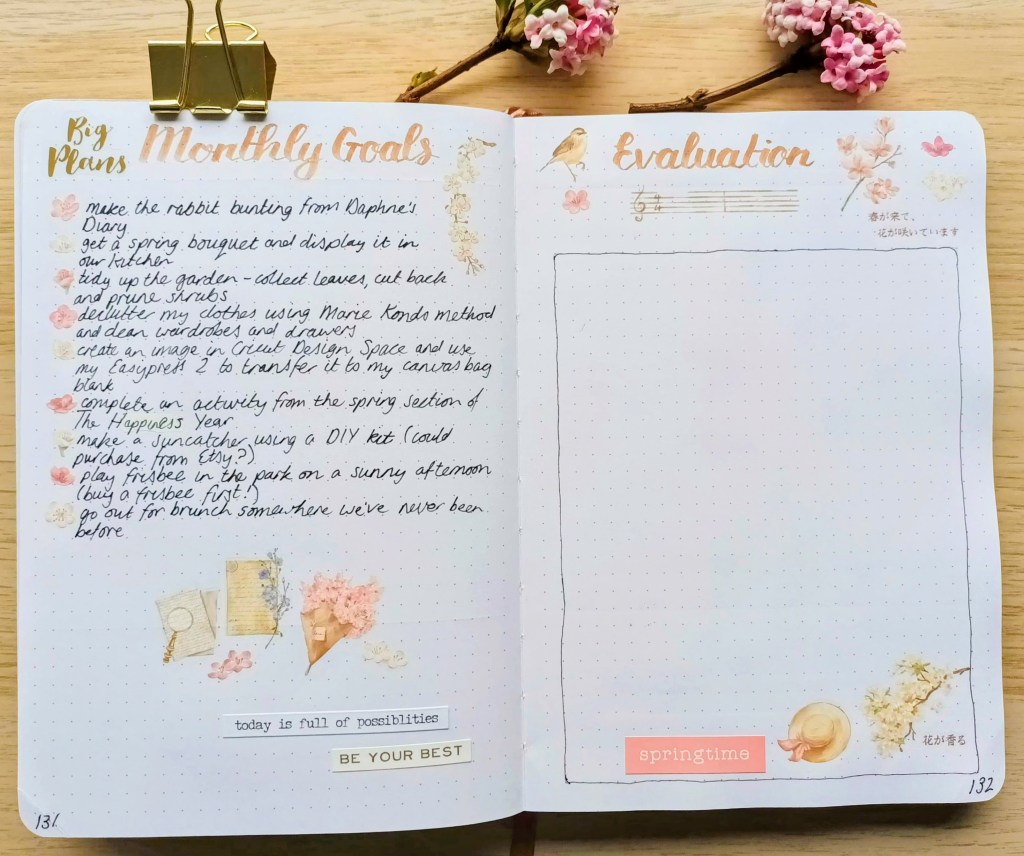
Spring Goals
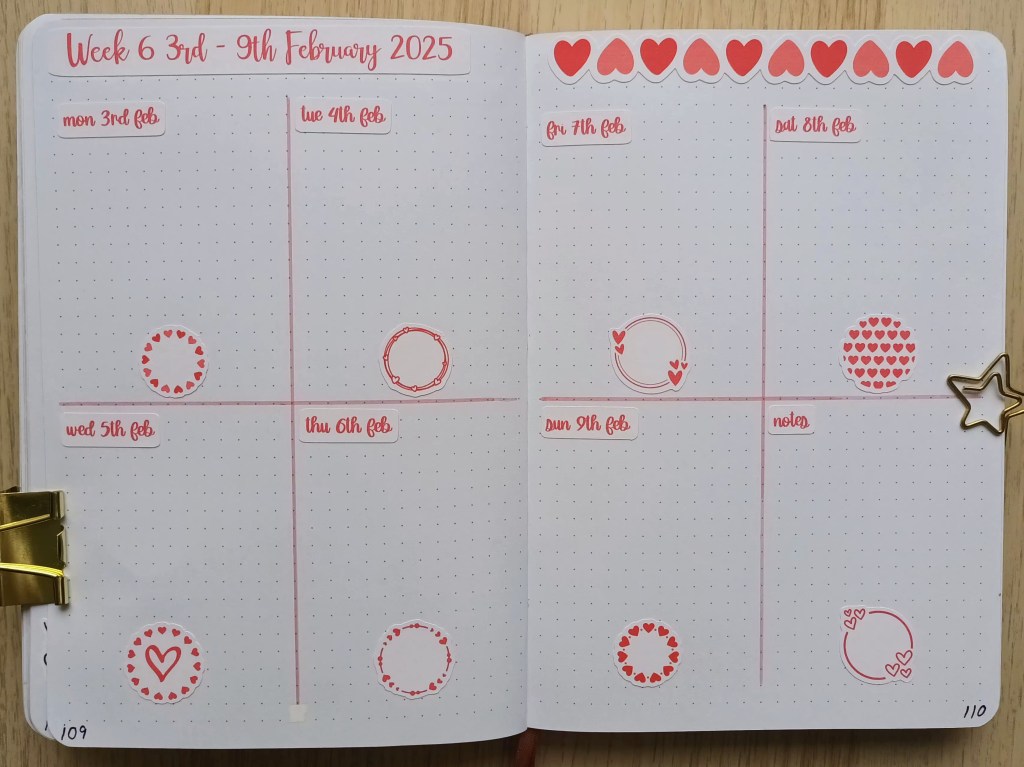
In preparation for next month, I’ve also created a double page spread with my Spring 2025 Bucket list items on. I’ll be sharing this in one of my blog posts for March so keep a look out for it if that is something that you would be interested in seeing and reading about.
Final words…
I hope you’ve enjoyed seeing my pages for March and you like the theme I’ve chosen. I can now tick off one of my February goals which was ‘write and publish three blog posts’ as this is my final one of those!
Although it’s rainy today, we’ve had a few nice days this week showing us that Spring is definitely on its way. We have a host of miniature iris, crocuses and even a couple of daffodils popping out and there are also plenty of chunky tulip stems in our garden too. Whatever the weather brings, my husband and I try to make the most of our days but nothing beats a bit of sunshine to brighten the mood.
Wishing you an amazing March and a wonderful Spring 2025,


 Keeping it creative