We’re all familiar with the concept of a ‘to-do’ list and have likely used them many times in a bid to make our day super productive. We’ve probably tried to make ourselves feel like we’re winning by adding a few things we’ve already finished or got started on so we can quickly tick them off. However, sometimes, we’ll have felt disheartened when we’re approaching bedtime and discover that most of our list needs migrating to tomorrow’s to-dos because we weren’t productive enough, have too much to do, or, we got distracted by other things.
Creating a ‘not to-do list’ can be a wonderful tool to help us identify and eliminate tasks, habits and distractions which prevent us from focusing on what really matters and stop us from being as productive as we would like to be. In a nutshell, a ‘Not to-do list’ is a list of activities you choose to avoid doing so that you can manage your time effectively. This might include things like the following:
anything which distracts you on a regular basis
things which drain your energy
bad habits that you want to remove from your working time
things which don’t currently add value to your life
unnecessary tasks i.e. things which don’t need to be done
other people’s responsibilities
Ideas for items to add to your not to-do list
Your Not to-do list should be highly personalised depending on your own wants and needs but here are some ideas to get you started.
Checking your emails repeatedly throughout the day
Mindlessly scrolling social media
Checking your phone in bed – either last thing at night or before you get up
Drinking coffee after 3pm (when you have work the next day)
Going to bed later than 11pm (Sunday – Thursday)
Spending time thinking about / stressing over things which are out of your control
Reading negative news
Things that are not my responsibility
Doing tasks which would be best delegated to someone else
Multi-tasking (or attempting to)
Saying yes to tasks or events that aren’t a priority right now
Working whilst eating lunch
Spending time with individuals who drain your energy
Forgetting to take regular work breaks
Doing work after 5pm
Procrastinating by watching lots of productivity videos (binge watching) on YouTube
Keeping ideas, thoughts and must dos in your head instead of writing them down and scheduling time to deal with them
Not identifying your top priorities for the day
Eating unhealthy snacks which make you feel sluggish
Making excuses to avoid / put off difficult tasks
Aiming for perfection – forgetting that done is better than perfect
Setting too many goals at once
Final words…
I hope you’ve found today’s post useful and it’s helped you to consider tasks, habits and distractions which prevent you from being as productive as you could be. I would really appreciate it if you took time out from your busy schedule to drop me a comment sharing your top three things to add to your ‘Not to-do list’.
Welcome to another blog post where I share my bullet journal set up for the month. For October, I went for an Autumn vibes theme with lots of stickers featuring autumnal leaves, fungi, hot drinks, squashes, woodland animals and colourful trees. I hope you like my pages which took me a good while to complete!
Front cover
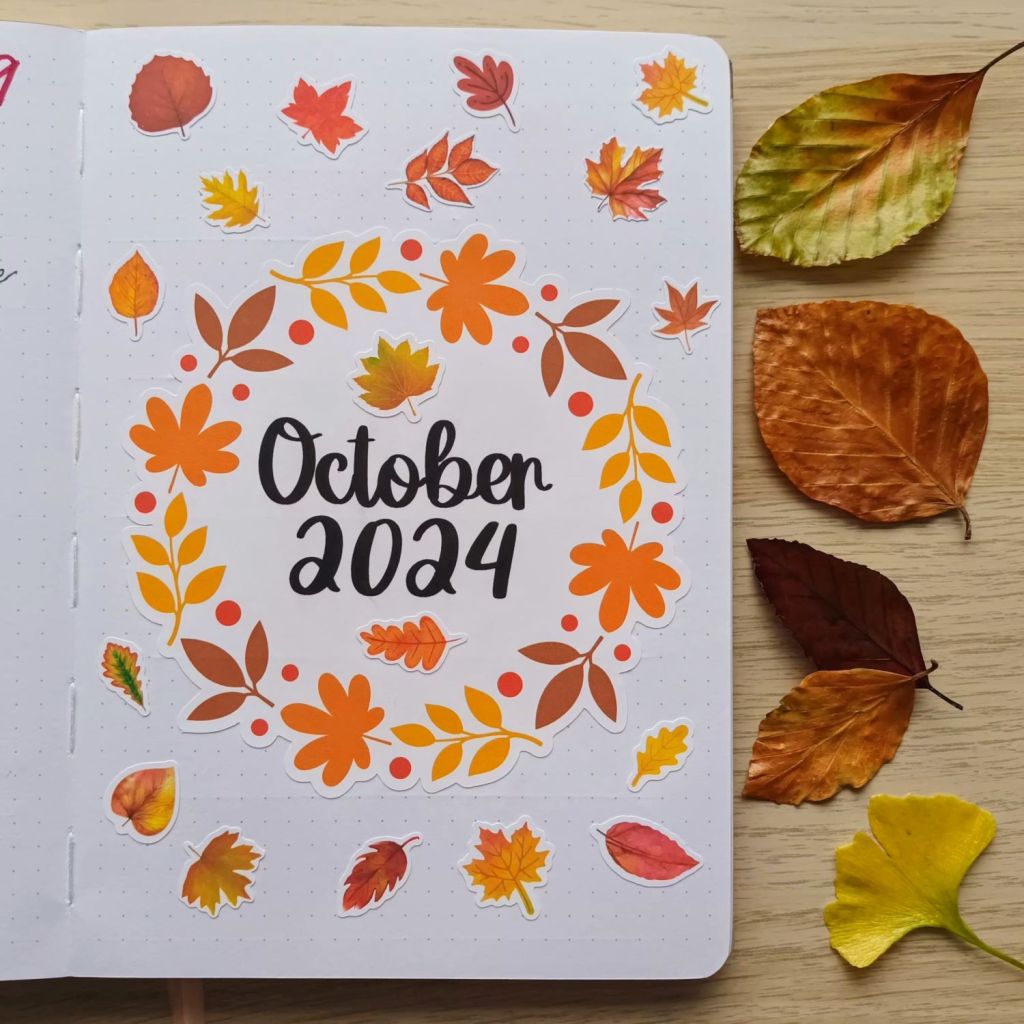
I decided to do an autumn wreath for the cover and was going to do a watercolour design but I decided to look for something on Cricut Design Space in the end. My thought was that creating stickers would be less time consuming than mixing autumnal watercolours to make my own wreath shape and the colours would be more intense. I was certainly correct about the lovely, bright designs but I spent ages sizing images and making sheets of stickers for all of my pages and subthemes. At least I’m pleased with the effects I’ve achieved.
I selected about 4 different wreath designs in Cricut and asked my husband to pick his favourite and here it is with an October 2024 title added in the centre and a few leaves dotted about in the spaces at the top and bottom.
Photo credit: Laura Jones for Keeping It Creative
Monthly calendar
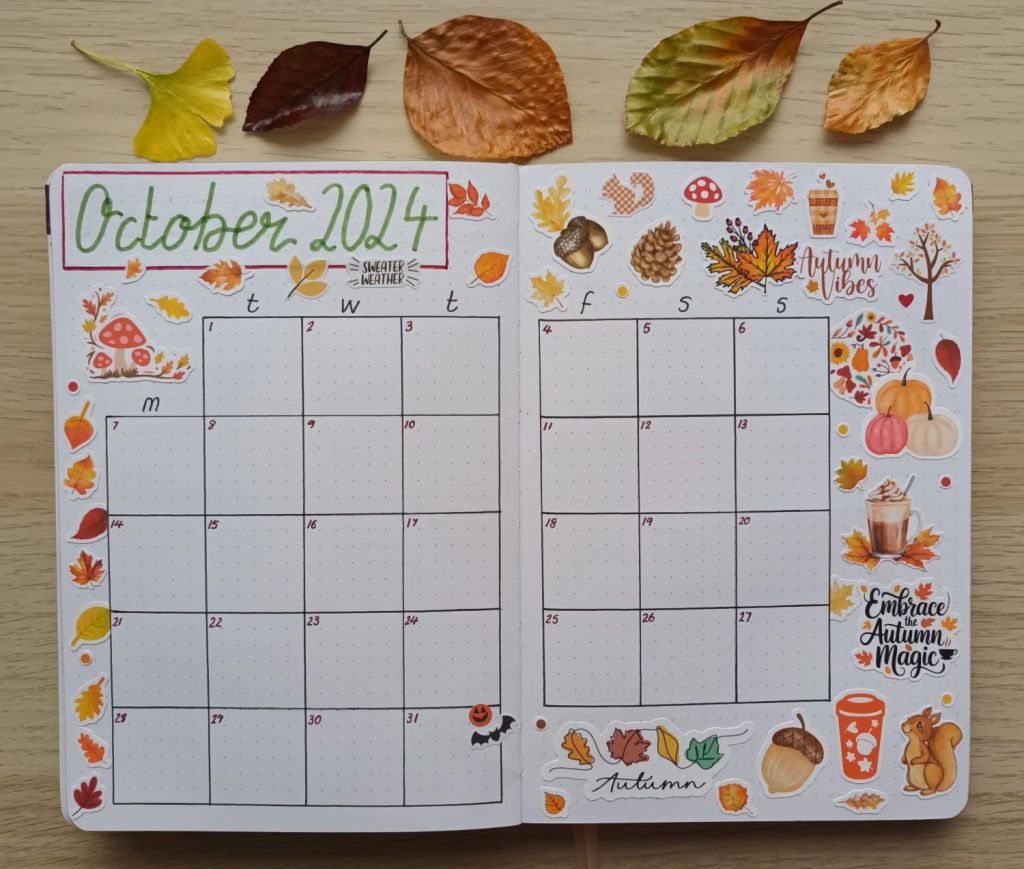
As is usually the case, I wasn’t happy with my lettering on the first attempt so I practised on dot grid paper and stuck in the title I was happiest with. The paper is from Claire Fontaine and I’ve been using it for years to cover up little mistakes in my journals.
I’ve gone back to my usual 6 dot space grid calendar layout this month as I missed it in September. As you can see, I added tonnes of stickers which are mainly from Design Space but a few are from a mini Carpe Diem book I’ve had for quite a while now.
Photo credit: Laura Jones for Keeping It Creative
Finances
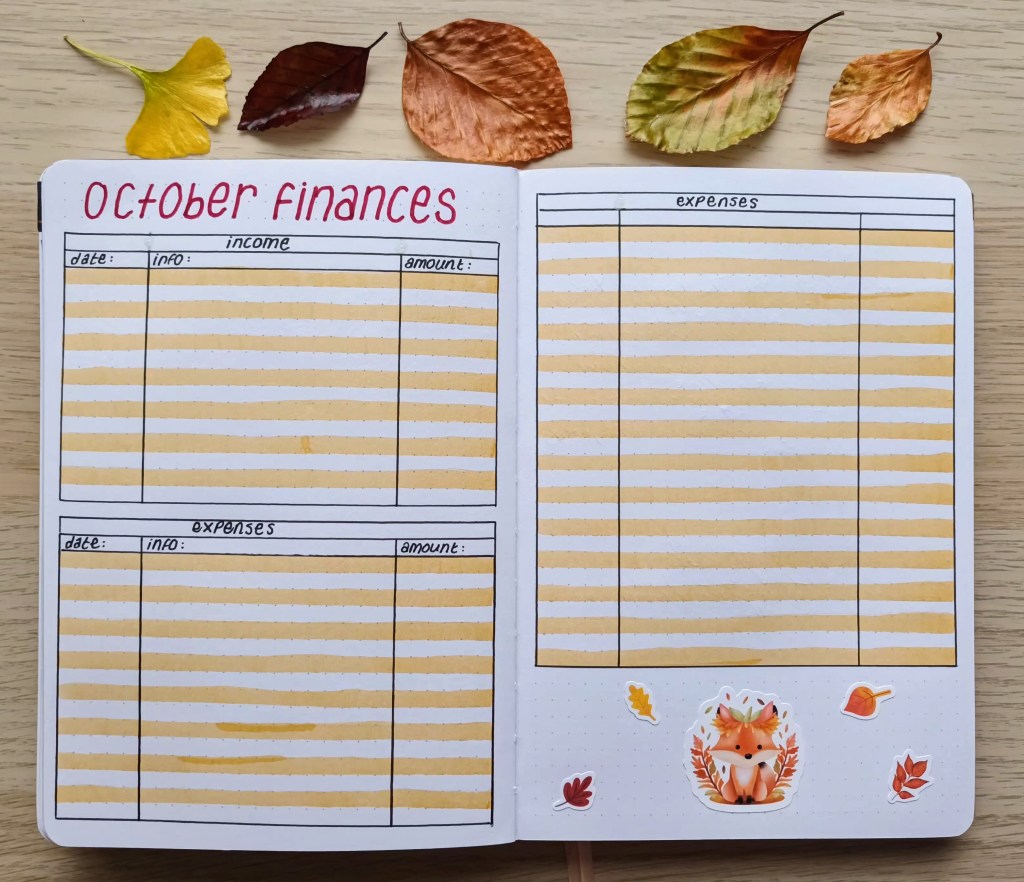
My finances spread is my usual layout with a few autumnal colours, a cute little fox design as some tiny leaves. I like to record my income and spending for each month to keep an eye on my purchases and to check I have a few low or no spend days.
Photo credit: Laura Jones for Keeping It Creative
Monthly goals
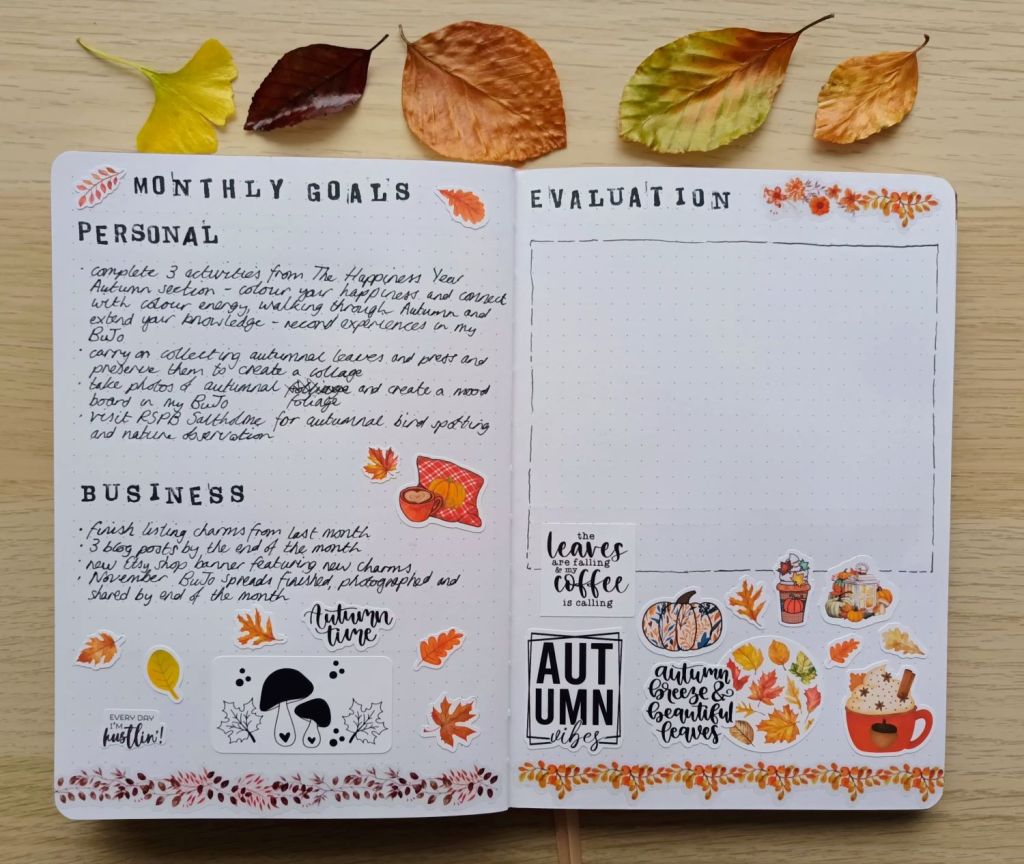
This is a fairly new spread for me and it’s a great way to set myself some small goals which contribute to my longer term goals for the year. This month, I split my goals into personal and business. I’ve got a few more on the list than I wrote last month so lets hope I haven’t taken on too much.
On the adjacent page to the monthly goals I’ve created a bright and colourful evaluation space so I can journal about the progress I’ve made and then summarise at the end of the month. I’ve purposely kept the box quite small so writing isn’t such an onerous task.
Photo credit: Laura Jones for Keeping It Creative
Weekly spreads
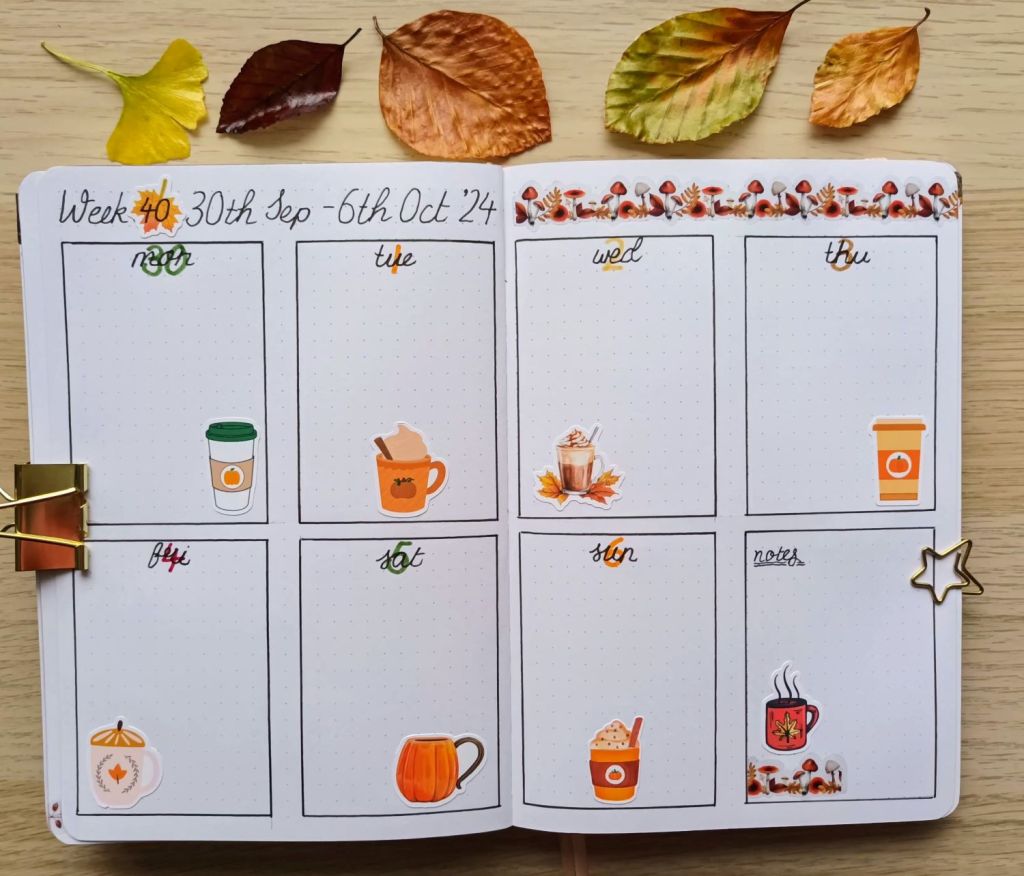
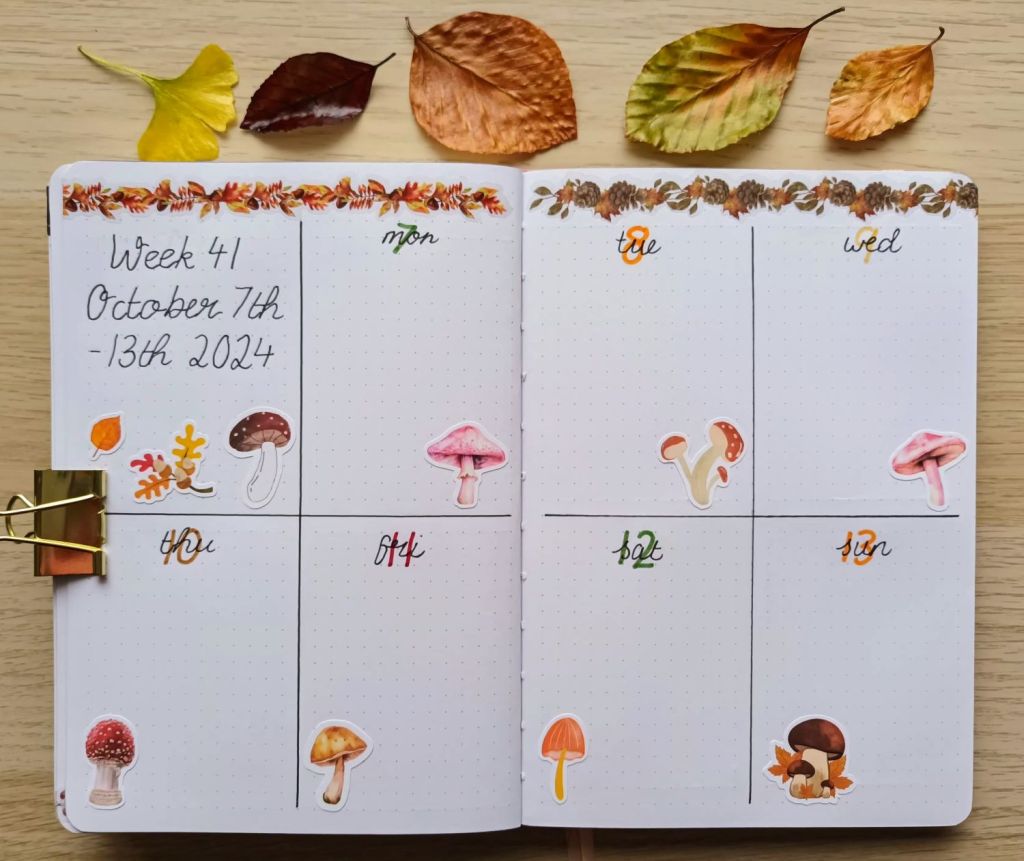
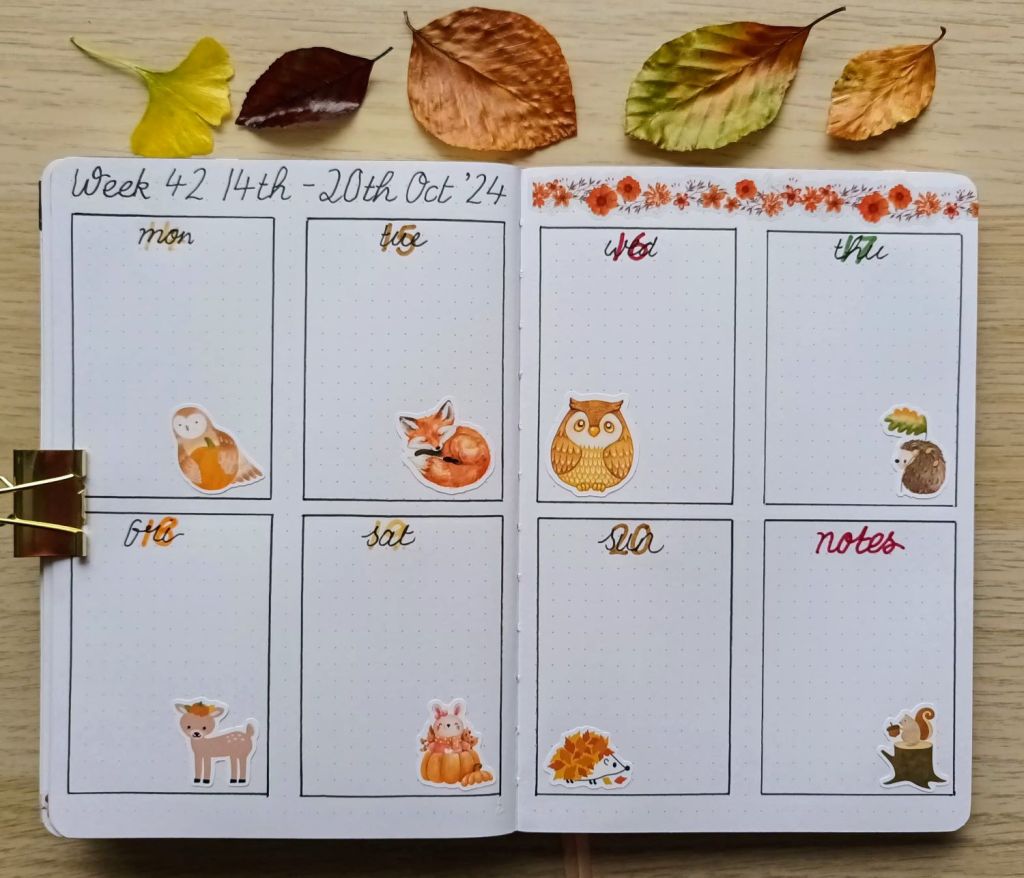
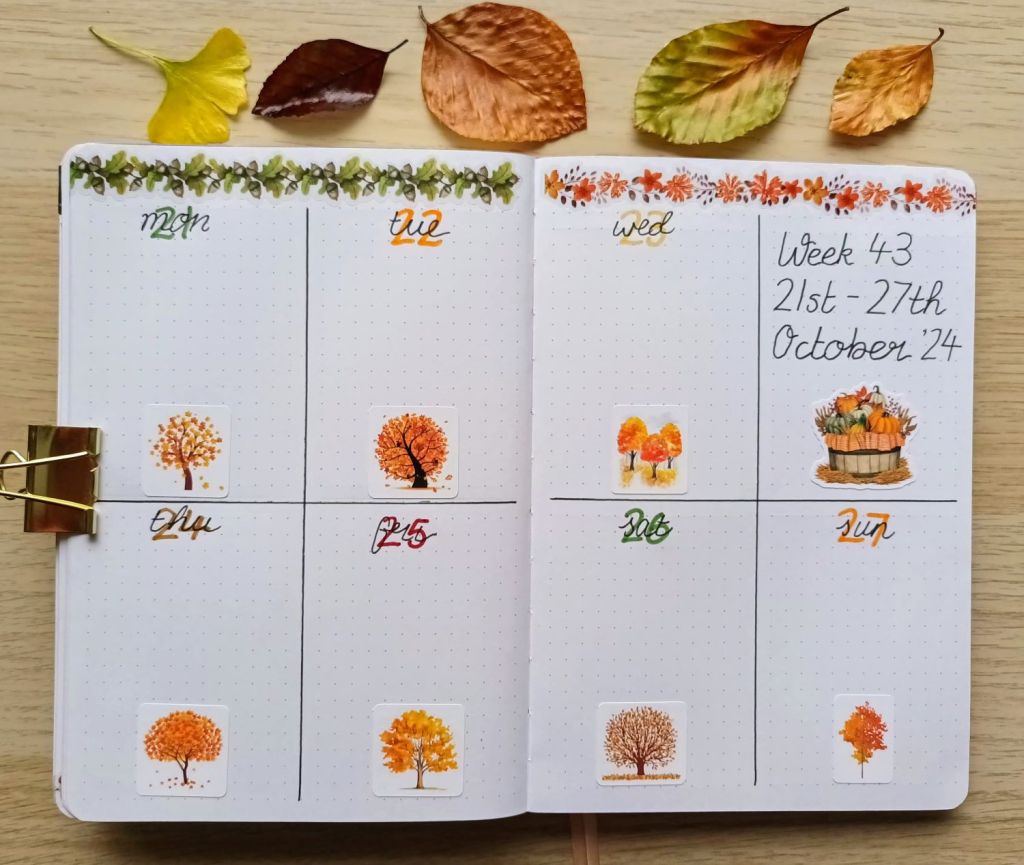
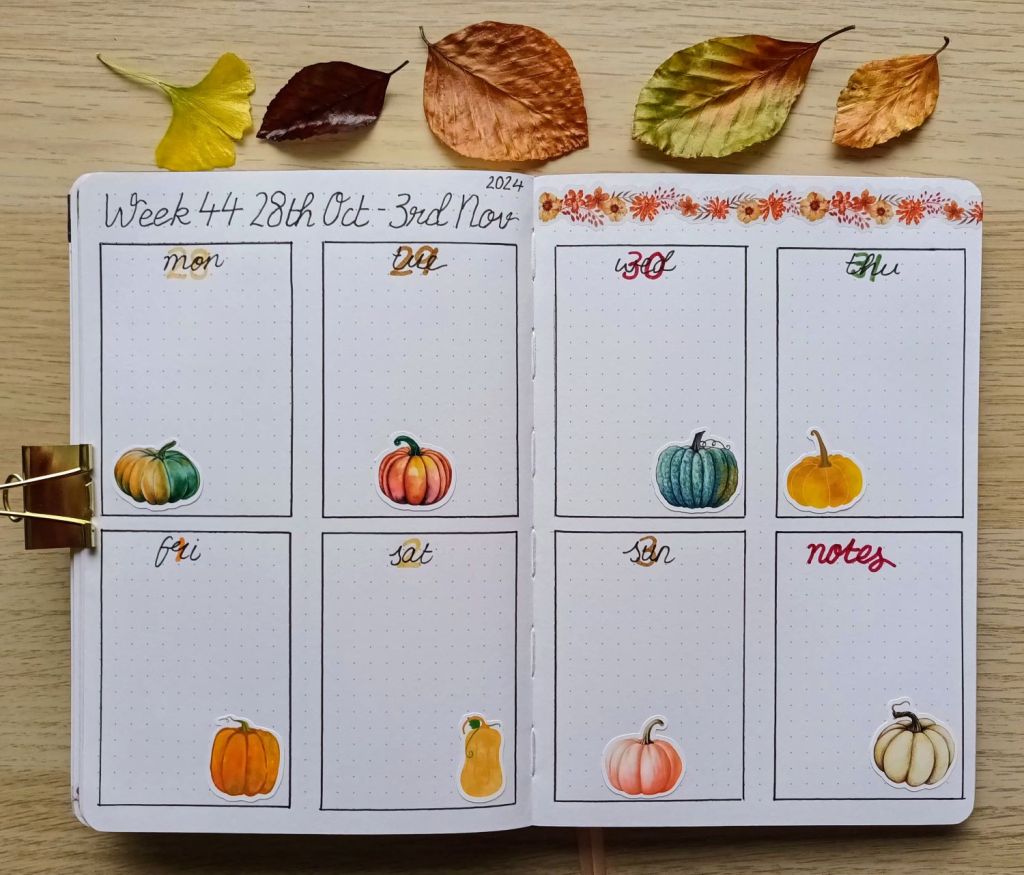
Preparing all of my weekly spreads took quite a while but I’m sure I’ll appreciate the effort I’ve gone to every Monday morning when my pages are ready to write in. I enjoyed choosing a different aspect of autumn for each week but it was a challenge searching for images that I liked which would be suitable for small stickers to decorate each day.
The autumnal border strips that I used at the top of the pages were from The Range and were a cheap, quick and easy way to add decor above the weekly boxes. The stickers have a transparent background so were easy to align with the dot grid.
Photo credit: Laura Jones for Keeping It Creative
Photo credit: Laura Jones for Keeping It Creative
Photo credit: Laura Jones for Keeping It Creative
Photo credit: Laura Jones for Keeping It Creative
Photo credit: Laura Jones for Keeping It Creative
Final words…
I hope you’ve enjoyed looking at my spreads for the month of October and they provided you with some inspiration for your own bullet journal planner. In addition to the ones I’ve shown you, I also create a meal plan each week which I photocopy and attach to our noticeboard in the kitchen. Writing the plan in my bullet journal gives me something to refer back to at a later date and it’s a wonderful record of all of the delicious dishes we’ve enjoyed throughout the season.
Let me know in the comments if you have any exciting plans for the month of October or autumn activities that you’re looking forward to trying.
Today, I’m sharing the second and final part of my mini-series on lifelong learning. In Part 1, I considered the character traits of lifelong learners and discussed the benefits of being a lifelong learner. In Part 2, I’m going to be identifying different habits to adopt for continual learning and also sharing a range of ways to be a lifelong learner. I hope you find both of my posts useful and they help you think about the value of continued learning, your preferred learning styles, plus little tweaks you could make to your daily life and schedule so that learning is both a priority and a joy.
Photo credit: Laura Jones for Keeping It Creative
1. Consider your learning styles
We all have preferred methods of learning and, as adults we can develop our understanding of the different styles, decide which of them work best for us personally, and then use our knowledge to tailor our learning experiences appropriately. Here are some of the most common types of learner:
auditory – learns by listening e.g. through music, lectures, podcasts, and talks
visual – prefers to use visual aids such as pictures, photographs, videos, charts and diagrams, they may also draw their own illustrations to help them remember key information
kinesthetic – learns by doing and often described as ‘hands on’ learners, likes to use different senses to take in the information
reading / writing – learns through seeking out written information in books and magazine articles, prefers to write things down in words rather than using pictures or graphs, also likes to underline key points, colour code information or write notes in the margin when given a handout
logical / analytical – learns by processing data and solving problems, often looks for patterns to connect different aspects of the information in order to make sense of what is being presented
naturalistic – learns through investigating the natural environment, particularly enjoys outdoor and environmental learning opportunities. Enjoys carrying out field studies, watching wildlife documentaries, keeping nature journals with own sketches, photographs, observations etc. and finding out more about different environmental issues such as climate change
interpersonal – this type of learner functions best when they engage in group activities like quizzing one another, becoming involved in discussions or brainstorms and forming study groups
intrapersonal – this type of learner prefers a solitary learning style and finds self study particularly effective
You may find that from the list above, you prefer several of the different learning styles and this can help you to explore particular approaches to learning. However, it’s also important to recognise that some types of learning are more pertinent to particular topics of study or aspects of learning than others. For example, if you want to learn how to play a musical instrument, auditory, visual and kinesthetic (hands on) activities may be more helpful than reading or writing about the skills involved.
2. Identify your passions and interests
As an adult, you have lots of choice in terms of what you’d like to learn about and the skills you’d like to develop. You’re also free to explore and follow your passions and interests in any way you choose or even decide that you’re not as interested in something as you thought you were! Here’s some ideas for identifying specific passions and interests:
reflect on your past experiences and activities you’ve particularly enjoyed – does anything stand out in your memory that you’d like to become involved in or try again?
think about your particular set of skills and abilities – are there any particular ways in which you’d like to put them to good use?
consider your core values – this will help you establish what matters to you in life and then you can create learning experiences which reflect this. There are lots of resources online with lists of core personal values but you might find this article particularly helpful as it adds a little detail to each item on the list
consider favourite topics of conversation with friends and family members or what you like to teach others about
try out new things and discover what sparks your curiosity and interest
write a list of things you’d like to get better at e.g. cooking, gardening, playing guitar, drawing, singing, applying make up – give yourself plenty of time to see what comes up!
3. Read every single day
Developing a habit of reading each and every day is a great way of learning new things. To make it stick, try habit stacking by pairing it with an existing habit of yours. So, for example, part of my morning routine is breakfast, filling in my journal and reading a book or article of my choice for 5, 10 or 20 minutes depending on the time I have available. I also always read a novel on my Kindle each night as soon as I get into bed.
Any form of reading is an opportunity to learn, but varying your reading material is the best way to gain new knowledge and different perspectives. In a month, you might read several novels (choosing different genre such as crime thriller, romance, historical fiction and fantasy), a collection of love poetry, an article in a magazine which is full of self care ideas, a few blog posts on topics that interest you such as a particular creative pursuit or easy vegetables to grow in your garden, the definition of a previously unfamiliar word in a dictionary, a newspaper article about an environmental issue and a few chapters from a non-fiction book about creating a well-organised home.
4. Set realistic and meaningful goals
A great way of setting learning goals and pursuing them is to use the SMART framework. Taking time to identify the specifics and draw up small and achievable steps is crucial if you want to make meaningful progress and enjoy the outcomes of your learning.
5. Manage your time effectively
If you want to make learning a priority, you need to dedicate time to it on a regular basis and ensure it becomes a key part of your routine. Good time management is such an important skill to develop (and might be something you want to learn about first before pursuing your passions and interests). Key ways to manage your time well so you can create opportunities for learning include:
keeping yourself organised – make sure your calendar is up-to-date so you know your commitments and when you might be able to carve out some time for learning
maintain a tidy environment where everything has its place – so you don’t spend precious minutes or hours looking for things you need but can’t find
prioritising – making decisions about the best use of your time today, deciding what’s important for you in your life right now and making those things a priority (don’t forget to add time for breaks too)
scheduling – try ‘time blocking’ by first adding in regular tasks and activities such as eating meals, sleeping, going to work etc. and then fitting in other priorities around these
avoiding time and energy drainers such as scrolling social media, excessively checking your email, phone notifications (especially sounds and pop ups which draw your attention straight away), negativity whether that’s from people, watching the news or doomscrolling
set short term goals for learning that help you take steps towards your long term goals and regularly evaluate your progress to check you’re heading in the right direction
If you want to know more about making time for your current priorities and developing time management skills, I highly recommend ‘Make Time: How to focus on what matters every day’ by Jake Knapp and John Zeratsky.
6. Make use of free online resources
Follow a small number of podcasts, blogs and vlogs on a topic of your choice, hosted by people you find interesting to hear from and schedule some time each week to check in with them and explore new content or older uploads that you might have missed. Also look for online tutorials for beginners (there’s loads to choose from on YouTube or within blogs) or introductory courses so you can give things a go before committing to them financially. Alternatively, to develop your knowledge of a subject in general, you might like to join a group (for example on Facebook) where you can follow interesting topics of conversation, start a thread to discover different opinions or ask a question of someone with a higher level of expertise in the field.
7. Don’t forget to rest
Although making time for learning is important if you want to explore your passions and interests, equally valuable is taking regular breaks for rest and relaxation. This might mean meditating, listening to a favourite album or piece of music, spending time in nature or engaging in creative activities such as drawing, painting or papercrafting. Ensuring you get adequate, quality sleep is also essential for good cognition so be sure to make this a priority too.
Final words…
I hope today’s blog post has given you a few new ideas on how to be a lifelong learner. Ultimately, you are looking to cultivate a growth mind set where you are always looking for opportunities to learn, aren’t frightened to try new and challenging things, seek out new perspectives as a way to see the world in a different way, view mistakes, failures and setbacks as learning opportunities, find value in constructive criticism and believe that, with effort, you are more than capable of developing both your knowledge and abilities in order to reach your full potential.
I wish you well on your various learning journeys and remember every day is a new opportunity to be who you want to be,
This month, it’s time for me to start a new bullet journal and the one I’ve chosen is the Tsuki ‘suzume’ from Notebook Therapy. Suzume is Japanese for sparrow and, as a bird lover, this was the perfect choice for me. The notebook features gold embossing of a sparrow carrying a flower in its beak plus a crescent moon, shooting star and sparkles on the front of the gorgeous pink linen cover. There’s also small details such as the same flower to the spine, plus gold edges to the pages which are really special touches too.
For my theme this time, I’ve chosen a combination of gardening quotes and pretty flowers. I’ve mainly used stickers to decorate my pages but I did take the time to create a hand drawn and coloured in image for my front cover. Hopefully, this month the weather will be a little warmer (and drier) and there will be a few more opportunities to get outside to tend to our flower beds and pots and see our bright blooms appear. We’re also hoping to spend some time relaxing on our garden bench (including after dark looking for our hedgehog visitor) and I might even get to enjoy my morning coffee in the sunshine. Fingers crossed!
My lovely new notebook!
So, here are my pages for the month of May. I hope you enjoy looking at them and I would love to hear your thoughts or questions about any aspect of my set up in the comments below.
Front cover
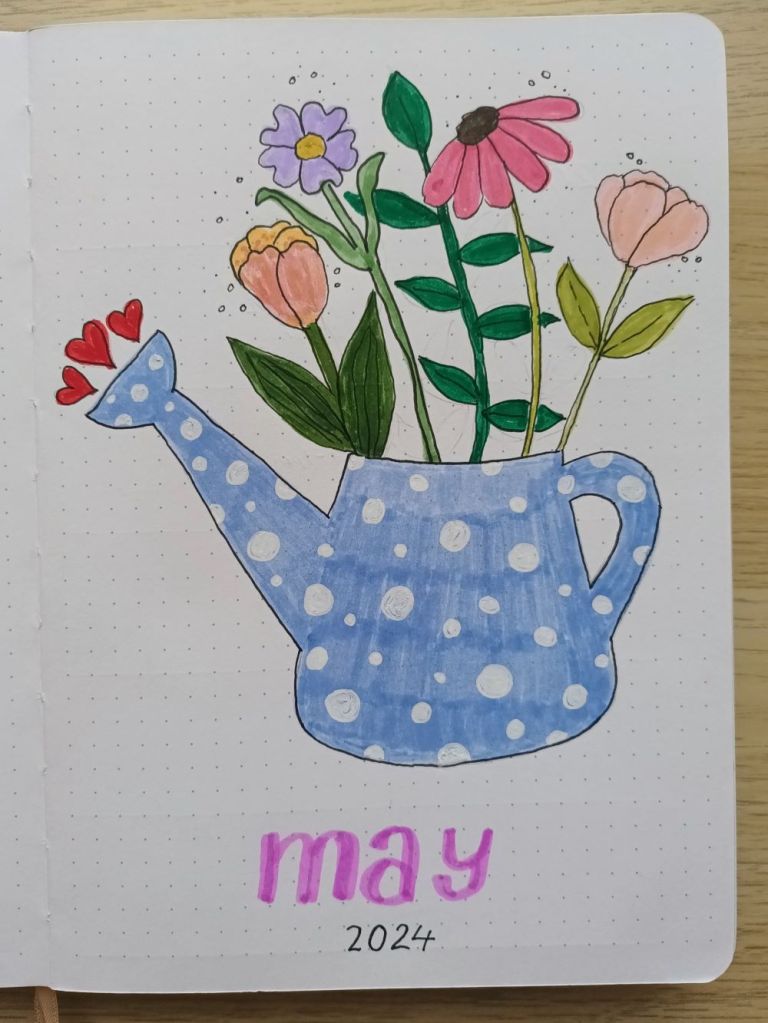
I enjoyed using a combination of Tombow Dual Brush pens and Crayola Supertips to colour in my hand drawn design. I then added the spots to the watering can using a Sakura gelly roll pen to add more interest.
Photo credit: Laura Jones for Keeping It Creative
Month on two pages
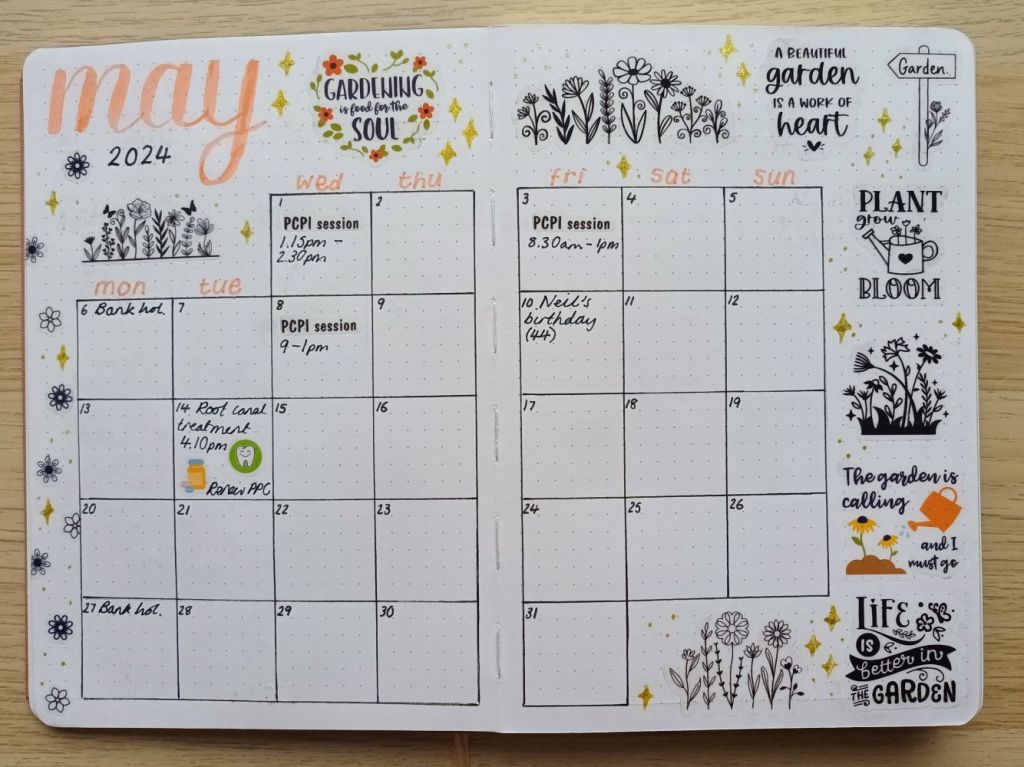
The sticker decor for this page was all created using images from Cricut Design Space and turning them into print and cut images. I couldn’t resist adding a few sparkles using a Uniball Signo gold glitter pen.
Photo credit: Laura Jones for Keeping It Creative
Finances
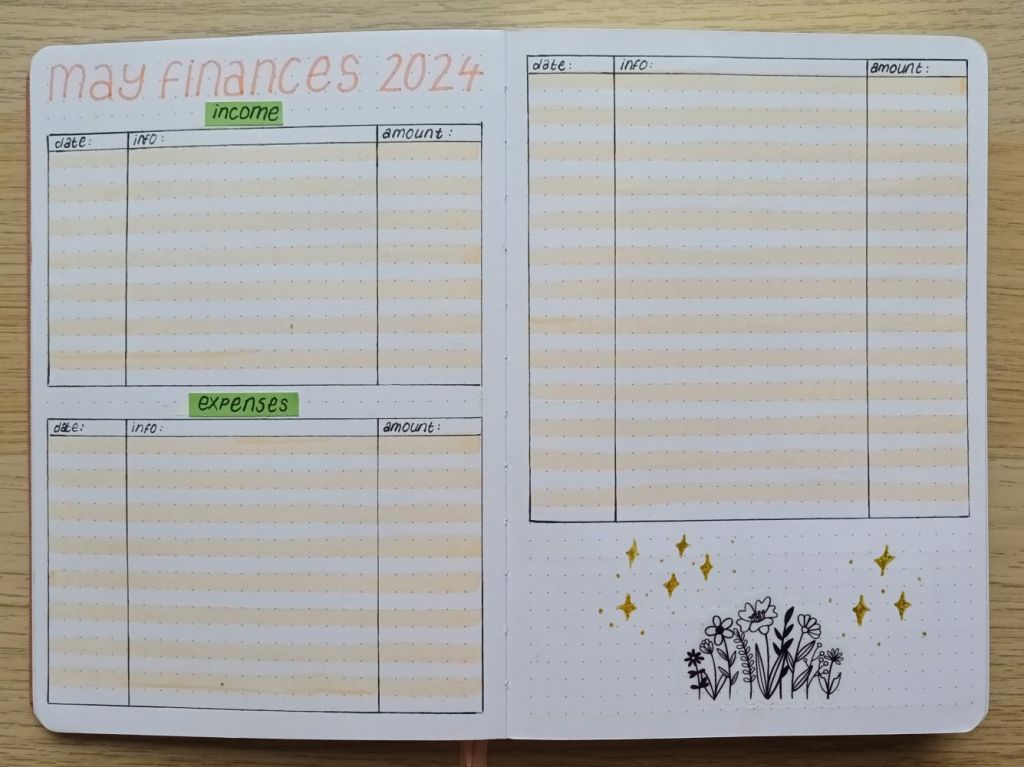
My usual chart to record my incomings and outgoings.
Photo credit: Laura Jones for Keeping It Creative
Weekly plans
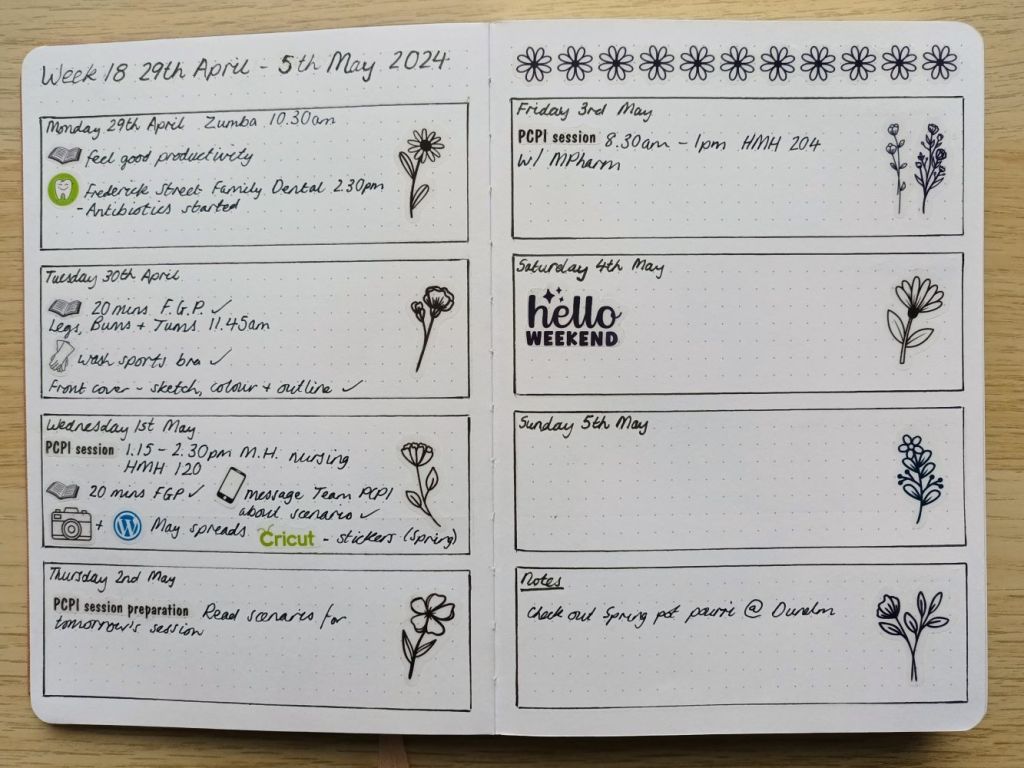
I’ve done the same set up for each of my weeklies and used flower decor throughout. This is for the first week which I’ve already started to fill in. I’ve been busy making tiny icon stickers to use to represent different activities and I’m continuing to add to my collection. This will make my planning process quicker and more visual.
Photo credit: Laura Jones for Keeping It Creative
Final words…
Thank you so much for taking the time to read my blog post and look at my bullet journal spreads today. I appreciate any form of support or encouragement towards my blog whether that’s reading my content, liking my posts, making comments or asking questions – especially as things seem to have gone a little quiet over the last few months (sob!).
Wishing you a joy filled May whatever your plans are for the month. I’m hoping to get the rest of my Spring bucket list ticked off as there are still quite a few items left including a waterfall walk and a bike ride!
As Easter falls at the end of March this year, I decided to do an Easter theme for my bullet journal with some Spring elements. I made a list of words associated with both (decorated eggs, chicks, bunnies, tulips, daffodils etc.) and then searched for images on Design Space which I could use to decorate my spreads. I added lots of images to my canvas and used the sticker making function to create a set of kiss cut stickers on a transparent background. I hope you like my pages as much as I do.
Cover page
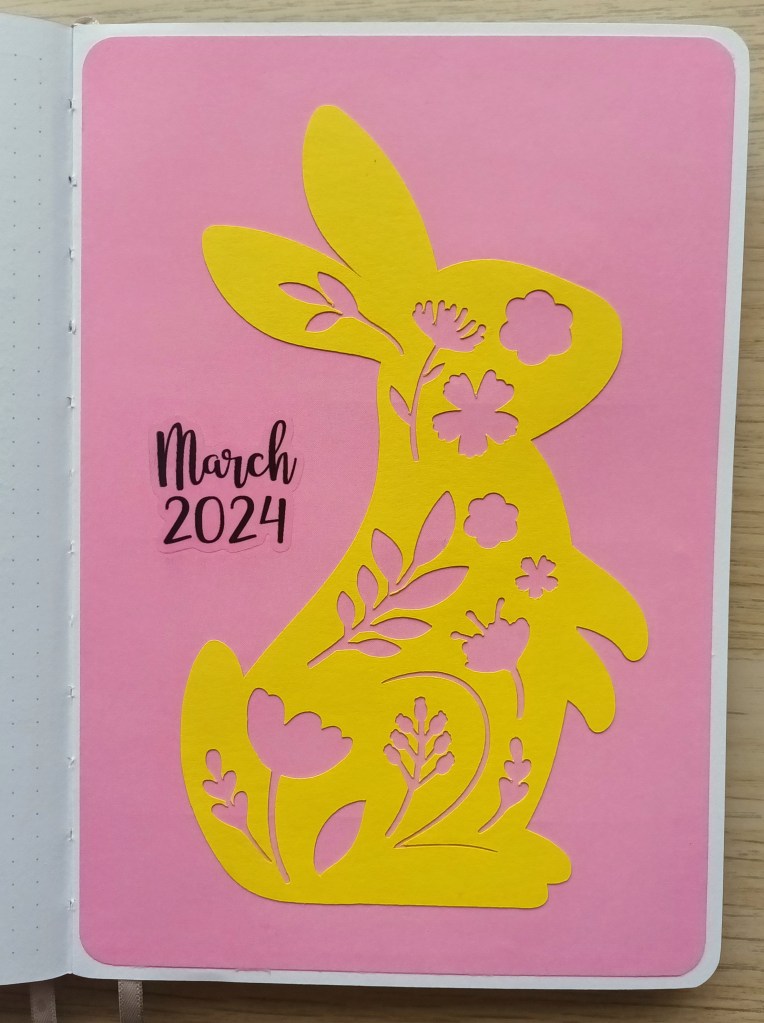
As I was searching Cricut Design Space for Easter bunnies to use as stickers, I found this cute cut file of a yellow rabbit with flowers and leaves cut from the body. I had some bright yellow cardstock which was perfect as it was relatively thin and wouldn’t add too much bulk in my BuJo. It took me four attempts to get it to work out well as it was quite delicate but I got there in the end! When I placed it on the page, I felt like something was missing so I experimented with placing different coloured papers behind the image and thought this pink colour created a nice contrast.
Photo credit: Laura Jones for Keeping It Creative
The calendar pages
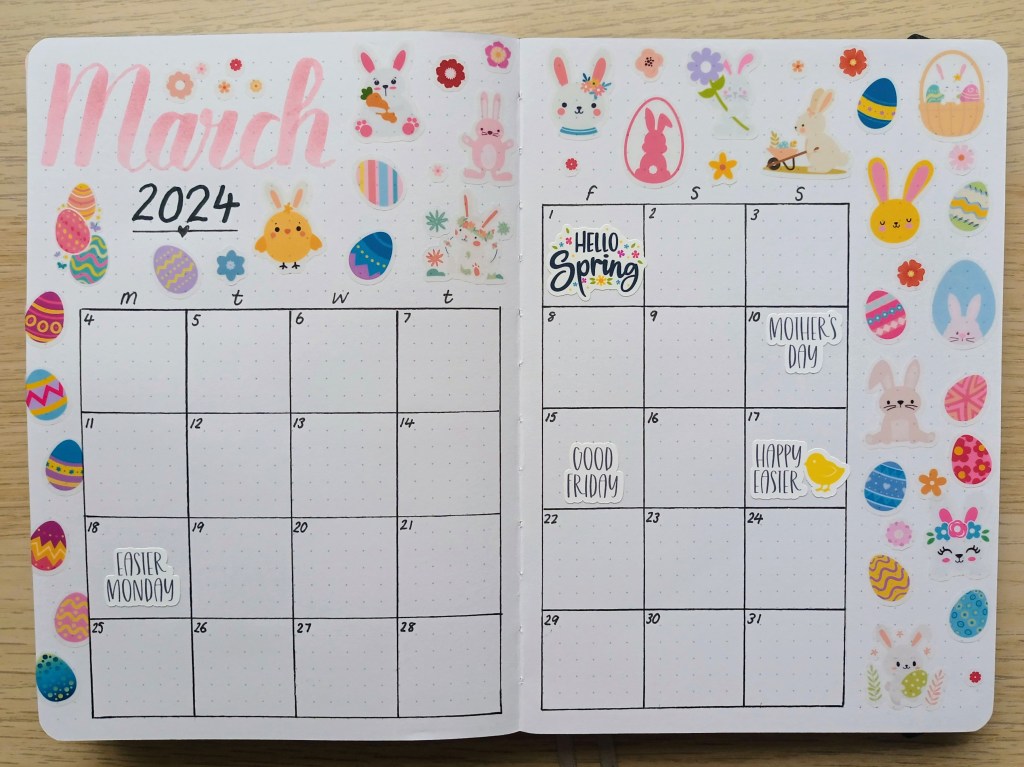
I had great fun making tons of stickers in Cricut Design Space but, unfortunately had lots of issues with the program printing a black line around each of the images. It was so frustrating and I ended up having to bin lots of transparent sticker papers which was costly and such a waste. I resorted to contacting Cricut about it who were very helpful but the problem hasn’t been fixed properly yet.
Anyway, I persevered and I love how the stickers and my pages turned out.
Photo credit: Laura Jones for Keeping It Creative
Finances pages
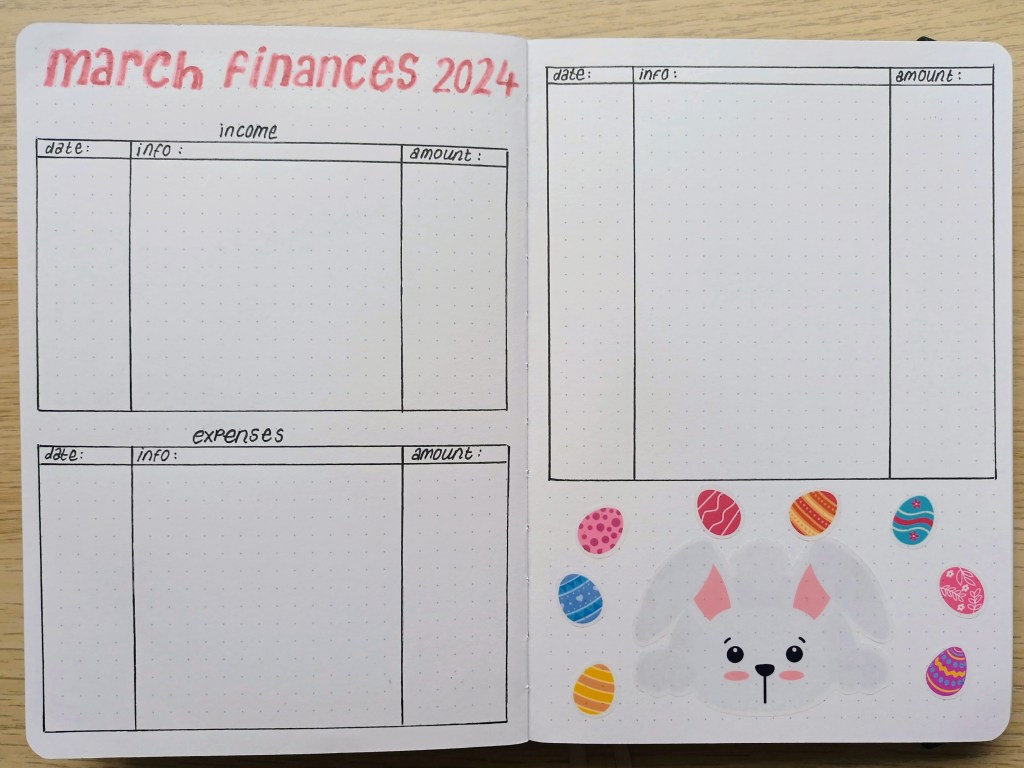
This is my usual income and expenditure record set up with a cute bit of decoration at the bottom. I’m enjoying using the transparent sticker paper but I have a feeling that Cricut are no longer making it as many of the branches of Hobbycraft are out of stock.
Photo credit: Laura Jones for Keeping It Creative
Weekly plans
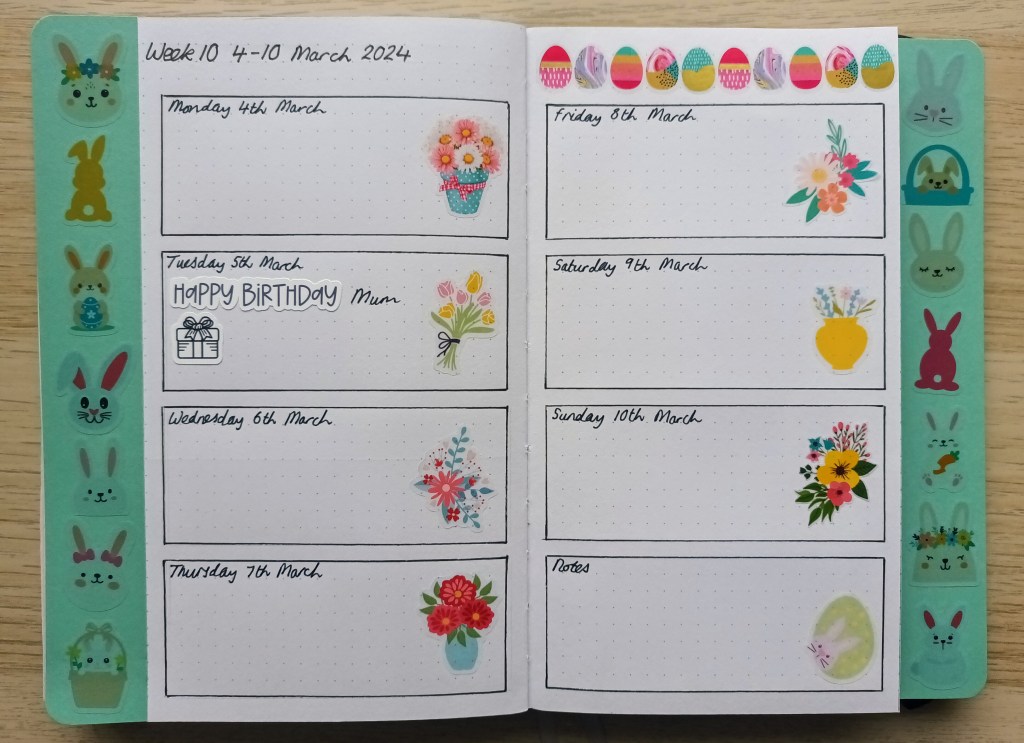
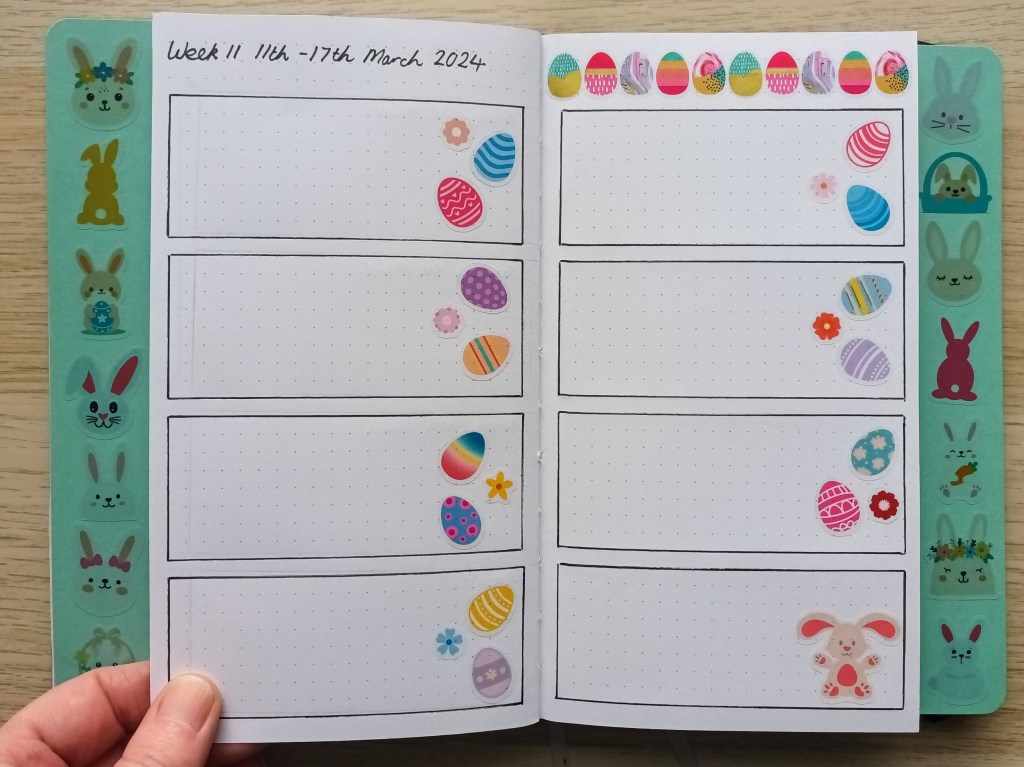
Again, I’ve used a simple Dutch Door set up for my weeklies this month. I couldn’t resist adding more stickers to the days though! The decorative eggs along the top are actually a roll of sticker tape from Hobbycraft. Some of them have gold foil on them but the camera hasn’t picked it up.
Photo credit: Laura Jones for Keeping It CreativePhoto credit: Laura Jones for Keeping It Creative
I haven’t finished setting up the last two weeklies but I have added the stickers and used Easter chicks for the third week (some real photograph style and others cartoon style) and Easter baskets and Spring blooms for the final week.
Weekly running task list
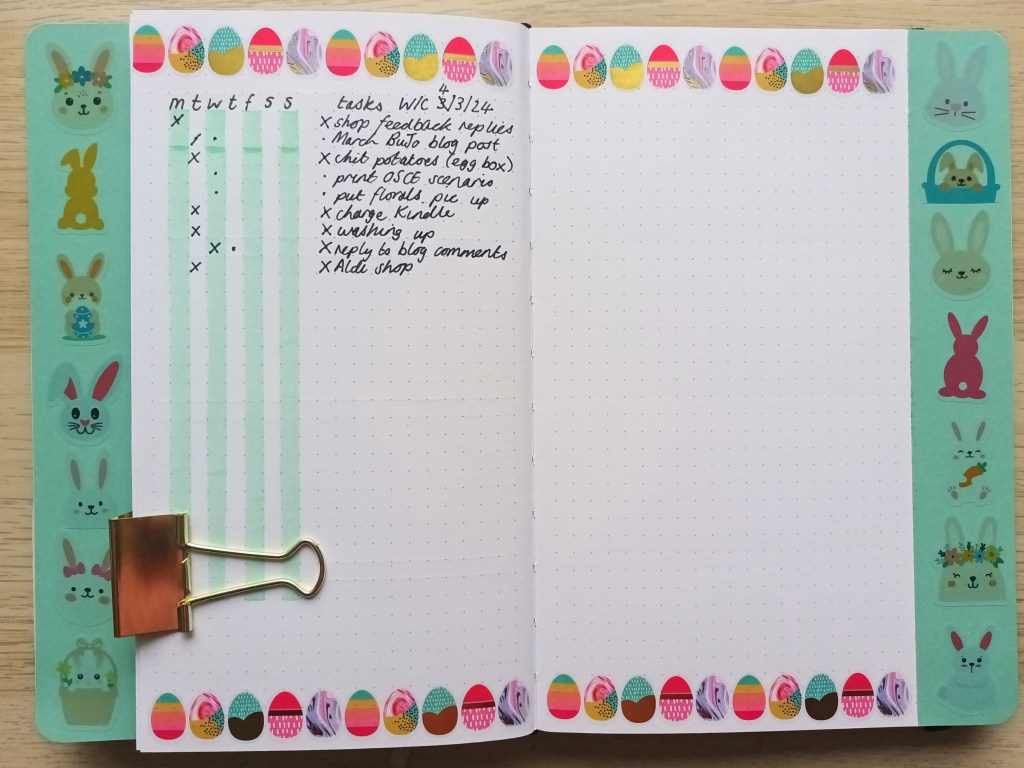
I’m not sure if I’ve shared my running task lists before but it something I use each week. I add to the list daily and assign tasks to a day of the week or multiple days for longer tasks. This month, I’ve put all of the weekly calendars together and the task lists afterwards but sometimes I’ll put them together. I use the two ribbon bookmarks to mark the pages for easy access.
Photo credit: Laura Jones for Keeping It Creative
Final words…
That’s all of my pages for this month and I’m super happy with how they turned out. I’ve just signed up for another free trial of Canva Pro so I can’t wait to make more stickers using images on there. Although Cricut Design Space has some lovely images, there are some even nicer ones on Canva Pro.
Wishing you a wonderful March filled with lots of lovely Springtime activities,