Posted in intentional living, journalling, lifestyle, mindset, Planning and journaling, reflective journalling, self care, Setting goals and intentions

Why I’m ditching The Five Minute Journal and what I’m trying now

Photo credit: Laura Jones for Keeping It Creative

For the past couple of years now, I’ve been using The Five Minute Journal consistently as a way of recording what I’m grateful for, thinking about how to make my day as good as possible, selecting a positive affirmation and making a note of the main highlights each evening. There are so many positives about this journalling system, which, as the name suggests, can be filled in very quickly using the prompts given. So, you might wonder why I’ve made the decision to stop using it? Today, I’m going to be sharing my main reasons and also talking about what I’ve started using instead.

Why I’m no longer using The Five Minute Journal

As you can see in the photo above, I’ve worked my way through four of The Five Minute Journals lasting six months each. I’ve mainly enjoyed using this guided journal with daily prompts, but a few months ago, I started to think about trying something else. This was mainly because I felt like my practise was getting a bit stale and repetitive and wanted something that I would really look forward to filling in twice a day. Here’s some of the things which have made me fall out of love with it:

The Gratitude section – I found this first bit really difficult to fill in when half asleep in the early morning. I would have preferred to list what I was thankful for in the evening so I could draw from things which had happened during my day.

The ‘What would make today great?’ section – I liked coming up with things that would make a difference to my day but I also felt like I wanted to explain why and the journal did not allow enough space for this. I think I would have preferred it if the section was a little more flexible so that you could maybe write one thing and provide an explanation or 2 or 3 things without going into detail.

The Daily Affirmation section – I liked choosing an affirmation for the day but I did sometimes struggle with coming up with one and had to resort to looking on the Internet for ideas which kind of made the process take a lot longer than five minutes.

Highlights Of The Day section – I continued to enjoy writing my highlights and often found myself writing a fourth one. I would have liked a bit more room to write in more detail for this part but, this would have taken longer than five minutes to complete if it was longer.

What did I learn today? section – For this part, the idea was to write something that the day had taught you about yourself or your situation, so, for example you could write ‘scrolling the news on my phone makes me feel sad’ or ‘sometimes when I feel hungry, I’m actually thirsty and should try drinking water before turning to a snack’. Often, I found this difficult and would end up writing something general that I’d learnt that day such as a new piece of knowledge or some advice that I’d come across. However, I felt that these ‘learnings’ were not really what the section was getting at. I felt like this became a drag and something I dreaded trying to fill in which isn’t how I wanted to feel as filling in the journal is meant to be a positive experience.

Weekly Challenges – these were something I looked forward to, but, I didn’t always have time on the particular day it was presented on and I often ended up forgetting about it when really, it would have been better to do it on an alternative date. Also, I think I would have preferred it if there was a menu of options at the back of the book and you could choose one which suited you at that time.

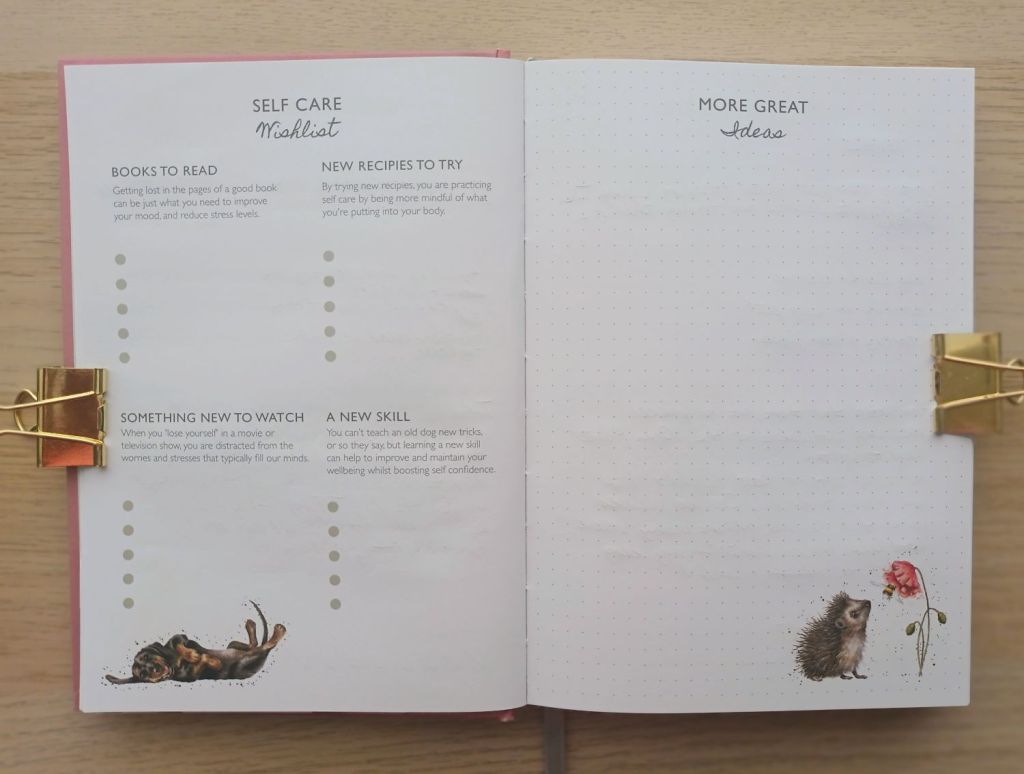
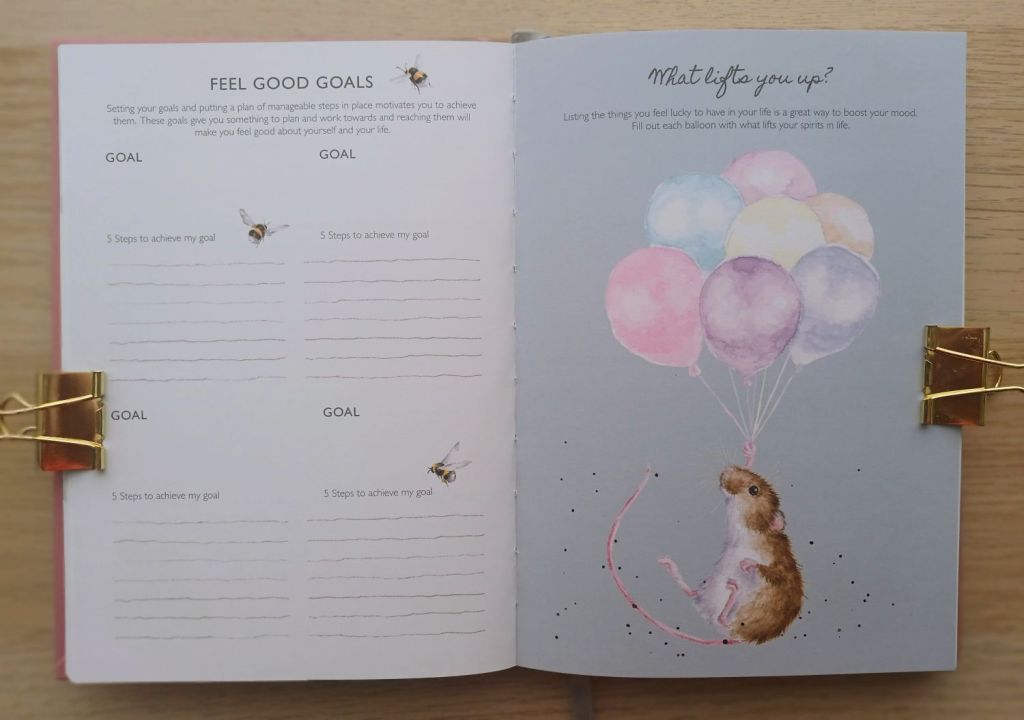
Despite me not wanting to purchase another ‘The Five Minute Journal’, what I didn’t want to do was abandon journalling altogether. And, luckily, I found an alternative journal in a garden centre whilst I was visiting family. My new journal is beautiful to look at, great to write in (much better quality paper) and allows more flexibility with what you can write about. I create a morning and evening entry and I would say it takes me no longer than ten minutes in the morning and no longer than fifteen in the evening. It’s helped me to fall in love with journalling again and I’m really enjoying filling it in. It also has an extra little prompt each day which changes regularly and, every now and then, it has something different on the next page which you can choose to fill in at some point during your day.

My New Journal

Below, is the journal that I’ve just started using partway through this month. I picked it up at Easter time and was really looking forward to getting going with it. I’ve also photographed some pages to give you an idea about the morning and evening prompts and also some of the extra challenges that are dotted throughout the book. You’ll also see that it has some gorgeous illustrations too which definitely adds to the appeal!
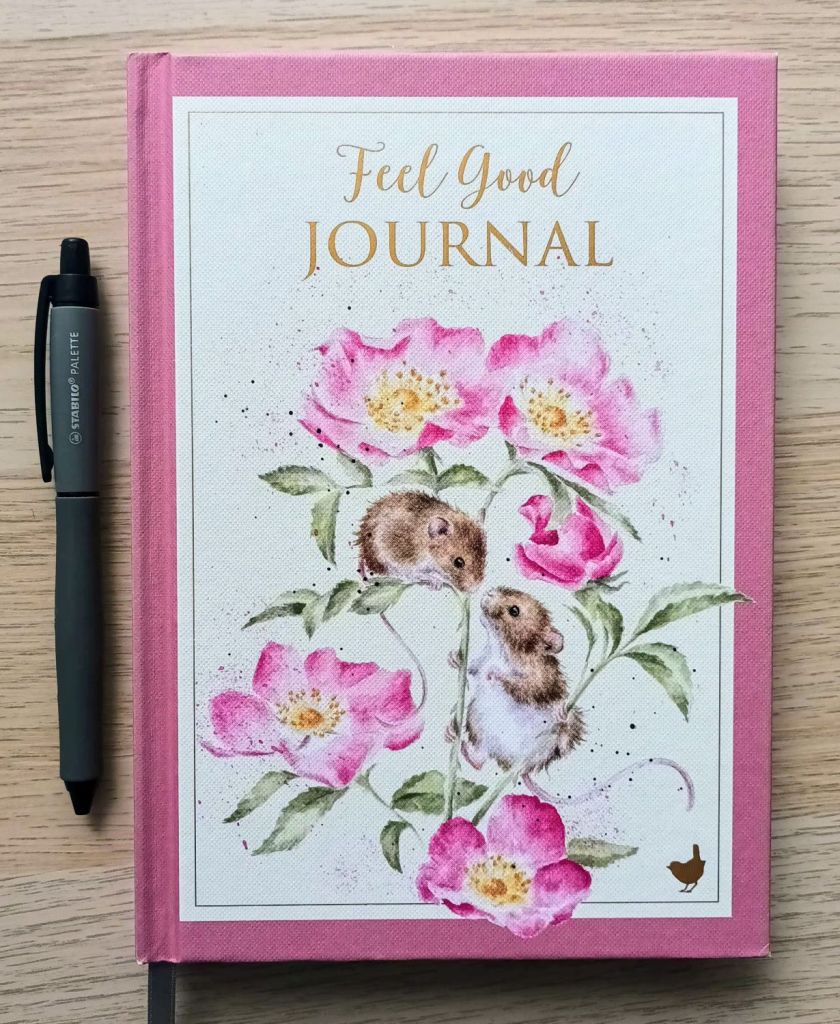
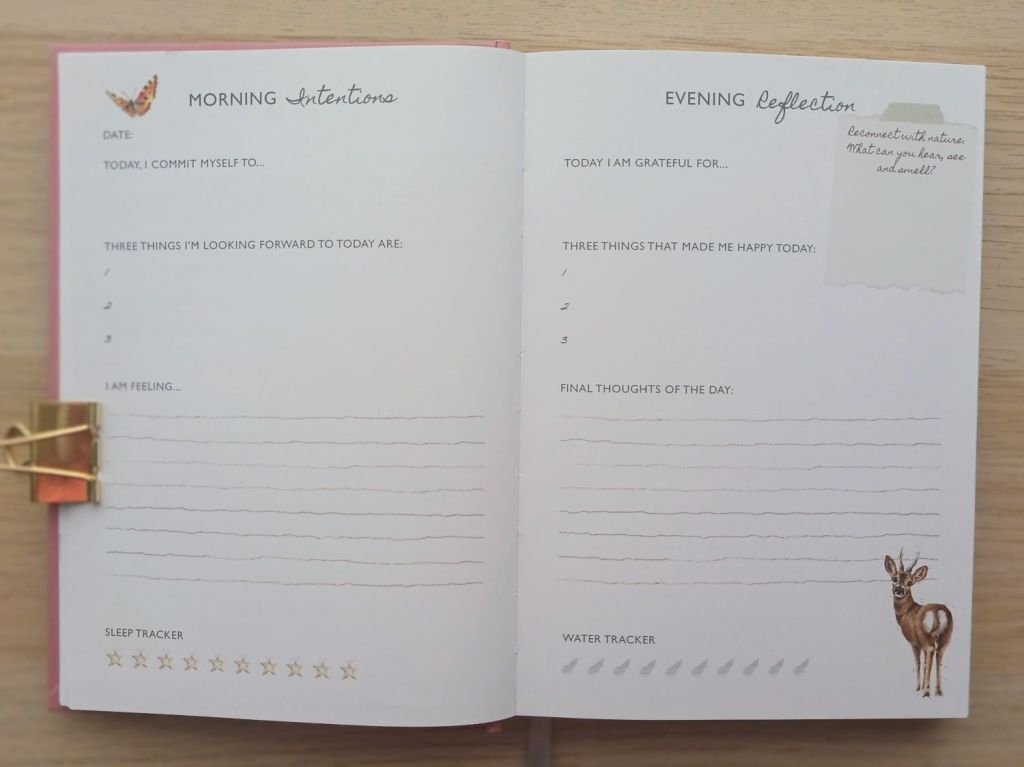
Photo credit: Laura Jones for Keeping It Creative

Final words…

Any regular practice in life can sometimes get a little boring and become hard to maintain interest in, so it can really help to shake things up every now and then. I’m interested to know if other journallers have ditched a particular form of journalling and tried something new. Sometimes change can be scary but often, it can also be invigorating too. I would love to hear what you think of my new journal and if it appeals to you too so let me know in the comments.

Posted in compassion, mental health, physical health, wellbeing, wellness

Monday Matters: The benefits of engaging in small acts of kindness, plus some RAK ideas for you to try this week

Most of us are familiar with the abbreviation RAK i.e. Random Acts of Kindness and are likely to have given or received one or more of these over the course of the year. Kindness from another, whether they’re a complete stranger, an acquaintance or someone much closer has the potential to brighten our day, make us feel good inside, change our mindset, and even restore our faith in humanity. But, as well as this, research shows that helping others is wonderful for our mental health and wellbeing, so it has huge benefits for the giver too. Today, I thought I’d discuss some of the benefits of doing things for others and also list a few easy and low cost RAK ideas that you might like to give a try.

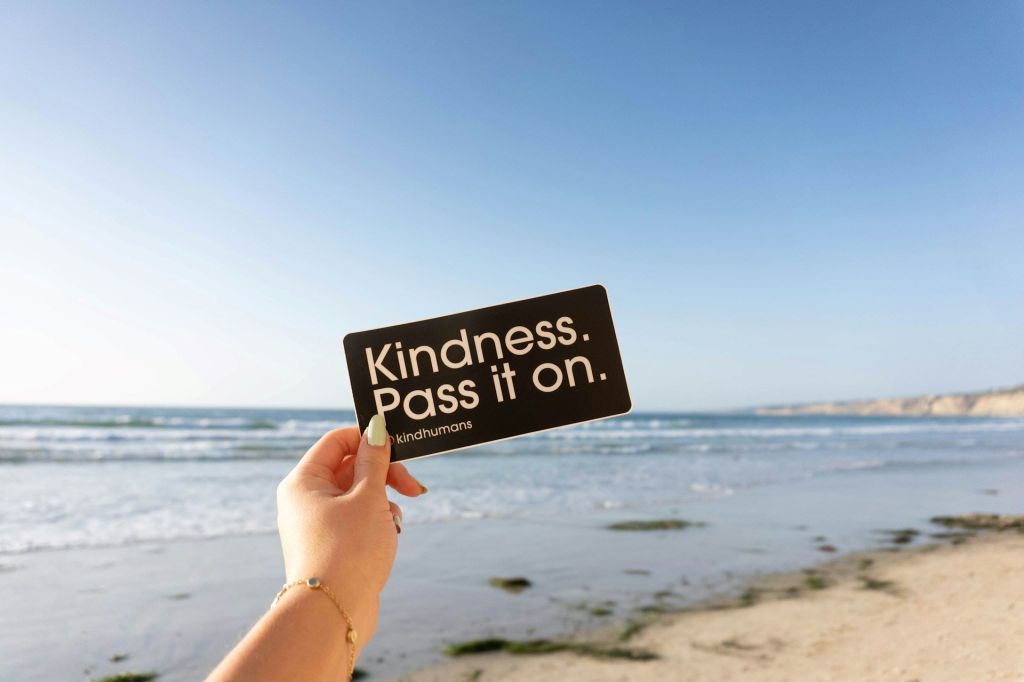
Photo from a selection on Unsplash

Releases positive ‘feel good’ chemicals

Acts of kindness towards others has been scientifically studied and the research shows that not only do they have the potential to make the recipient feel warm and fuzzy inside, they also release dopamine, serotonin and oxytocin (feel good hormones) in the giver, creating feelings of euphoria which have been described as a ‘helpers high’.

Reduces stress levels

On the subject of feel good chemicals, the release of oxytocin (sometimes referred to as the love hormone) has also been shown to counteract the production of stress hormones like cortisol. As well as creating calm, lower stress levels can also help with physical ailments that are often precipitated or aggravated by stress such as headaches, back pain, neckache, stomach complaints, poor immunity, low energy levels and fatigue, sleeplessness or insomnia.

Increases positive emotions and mood

On a similar theme, small acts of kindness towards others can brighten our mood and make us feel much more positive in general. When we regularly engage in good deeds, it increases positive emotions in us such as contentment, happiness and joy. It can also boost our self-esteem and generally make us feel more optimistic.

Reduces negative emotions

In addition, with being filled with positivity will naturally reduce negative emotions and feelings such as anger, sadness, anxiety, depression, discontent and loneliness. Obviously, it’s normal to feel some of the above at times, but kindness towards others can help to put you in a positive frame of mind and stop negativity from taking over.

Creates a chain reaction

When the recipient of your RAK experiences the feelings of happiness it creates, it’s likely to inspire them to do something kind for someone else and this kindness can then be paid forward, creating a chain reaction. Here’s a video you might like to watch which shows a kindness being paid forward – yes, it’s not necessarily a true to real life situation, but I think it provides a heartwarming illustration.

Creates a real sense of belonging and reduces feelings of isolation

Finally, being kind towards our partner, children, other family members, work colleagues, neighbours and even strangers helps us to feel a deep social connection and trust in others. This can lead to better relationships and the belief that we are a key part of the workplace and local community. It can also reduce feelings of social isolation and loneliness in ourselves and the individuals who receive our kind acts.

Some RAK to try today

Some of the RAKs involve a small financial outlay, but there are also many free ideas too. I’ve tried to include a wide mix of suggestions, so hopefully there’s something there for all of my readers.

  • feed the birds in your garden or local park (please avoid giving bread to ducks though as it isn’t healthy for them)
  • buy a treat for your pet and watch them enjoy it
  • hold the door open for someone
  • help a person who is carrying a heavy load
  • buy a bunch of flowers for someone who’s having a hard time
  • thank your server for being attentive when out for a meal
  • go for a nature walk and say ‘good morning’ or offer a friendly ‘hello’ and a smile to everyone you meet
  • donate some unused items to charity
  • compliment someone on their choice of outfit or accessories for the day
  • leave a surprise somewhere for a friend, family member or complete stranger to find e.g. put a post it note in your child’s school lunchbox saying ‘I love you’ or ‘I hope you’re having a nice day’, paint a pebble with a bright rainbow and leave it at the base of a tree in the woods, hide your partner’s favourite chocolate bar in their bag etc.
  • if someone is popping out for lunch and it’s raining, lend them your umbrella
  • put an item or two in a food bank
  • let someone who has a small number of items go before you in the supermarket
  • show your appreciation for a fitness instructor whose classes you particularly enjoy
  • offer to get groceries for an elderly neighbour or someone who is sick
  • donate old magazines to be put in a waiting room e.g. at a doctor’s or dental surgery
  • bake cookies for your work colleagues
  • if someone is new to your gym class, your place of work or somewhere else you go regularly, find opportunities to get to know them and ask them how they’re finding things
  • when out and about for the day somewhere, offer to take a photograph for an individual, couple or family so that they can all be in the shot
  • create a wildlife friendly area in your garden, for example, by scattering wildflower seeds, putting up a bug hotel or allowing leaves to pile up in a corner
  • write a list of things you love about your partner, child, friend or work colleague and share it with them
  • leave a nice comment on a blog post, YouTube video or picture shared on Instagram
  • leave a positive review for a small business who have given particularly good service
  • give a book to a friend you think might enjoy it
  • send a surprise gift in the post to a loved one
  • donate to your favourite charity
  • offer some helpful advice to a member of an online group you belong to
  • let someone out in front of you when driving in heavy traffic
  • call or text a friend you haven’t spoken to in a while
  • send an interesting online article to a friend or family member you think might benefit from or enjoy it
  • offer a lift to someone
  • write a summary about a place you’ve visited on TripAdvisor so that other potential similar visitors know what to expect if they go
  • message an author to say how much you enjoyed their first / latest book
  • post a good news story on social media
  • make a self care package to give to someone you think would benefit from it
  • take part in a community litter pick
  • stop and take time to talk to a neighbour – even if you’re super busy!
  • give up your seat on public transport to someone who needs it more than you
  • volunteer your time for example, to walk a neighbour’s dog, to do some babysitting for a friend of family member, to go to the shops for someone, to help teach someone a skill such as reading, knitting, sewing, crochet or computing

Final words…

As you go about your day today, try to think of at least one way you can make a difference to someone. It doesn’t matter how small your gesture of kindness is or whether it is costly (financially or time wise) or not. One you get started with offering random acts of kindness, you’ll find that more and more opportunities and ideas will present themselves, making it easier and easier by the day.

After giving or receiving a RAK, why not do a short amount of journalling about it in a notebook to explore the positive effects it has had. Alternatively, you could create a short post about it on Facebook, explaining how you felt afterwards and celebrating kindness towards others. You might even prompt someone else to think about what they could do to help another person in their life.

Posted in CBT, compassion, mental health, Mindfulness, psychology, wellbeing, wellness

Are you putting too much pressure on yourself? The unhelpfulness of ‘I should’ and ‘I must’ expectations

As part of my compassion group learning over the last few weeks, we’ve been looking unhelpful and more helpful thinking styles. I’ve previously talked about the psychology of using the term ‘I can’t’ (click here to read this post) when we really mean we find something difficult. In today’s wellbeing post, I’m going to focus on the pressure we put on ourselves using terms such as ‘I should’ and ‘I must’.

At the beginning of the year, I went through a really difficult patch with my mental health. I was suffering from debilitating anxiety and everything was a constant struggle. I was having panic attacks and my mood was very low. I spent a lot of time worrying that I wasn’t going to get better and found it extremely difficult to motivate myself to do anything but cry. I’m pleased to report that I’m now feeling much better and life is good. However, my improved mood and elevated motivation levels did start to cause a few issues with my self talk and my thinking and it is this which today’s post focuses on.

As soon as I started to feel better, I totally went into what is known as ‘drive mode’ and felt like I needed to make up for lost time by doing it all and not stopping. I had finally found the joy in achieving things in my day and my head was full of ideas and thoughts. I was writing huge to do lists and spent my time flitting from activity to activity in a frenzied way from when I got up at 6.00am to when I went to bed at 10pm. My head was filled with talk such as ‘I need to…’, ‘I have to…’ ‘I should…’ and all of the other terms associated with the intense desire to be productive and get a buzz from it.

The therapists in our compassion group helped us to see, however, that constantly being in drive mode and making these unrealistic assumptions of how to live can be really unhelpful. Terms such as I need to, I must, I have to and I should, put undue pressure on ourselves to perform and create expectations of ourselves that are very difficult to keep up with.

The effects of using these rigid terms have been studied by a number of psychologists and was a key part of the work of Albert Ellis. He coined the term ‘musterbation’ which has certainly stuck in my mind since reading about it online! The following quote I found online sums up the effects nicely:

“Musterbation” is a term coined by famed psychologist Albert Ellis to describe the phenomenon whereby people live by a set of absolute and unrealistic demands that they place on themselves, others and the world. For most of us, these rules come out in a series of should statements that we repeat to ourselves over and over again. These “should” and “shouldn’t” statements leave us feeling bad about ourselves because they set up standards that we cannot realistically meet. They also leave us feeling frustrated and hurt by others when they inevitably fail to fulfill our expectations. Recognizing this habit to set rules for yourself, others and the world gives you the opportunity to relieve some of the stress these messages cause. When dealing with “should” statements, it is important to keep in mind that while it may be nice to reach your goals and be treated the way you want all the time, we are human and live in an imperfect world. Therefore, the pressure to be anything all the time is more likely to cause harm than good.

Rowan Center BLOG, 2015.

If you would like to read more of their interesting article click here.

I’m now much more aware of when I’m using these terms (I haven’t stopped using them and I’m very much conditioned to their use, I’m just more mindful of when I do) and I try to reframe my thinking to be more helpful. This is taking time, but I do think it’s a really important step in increasing my good mental health. I’ve also noticed that my husband is fond of saying ‘I’ve got to…’ ‘I need to…’ and the like and so we laugh about it and then help each other to create more compassionate thoughts and beliefs too. Here are some examples and how I’ve re-articulated things:

  • I need to get rid of all of the weeds in the garden this week >>>> it would be great if I found some time this week to do a little bit of weeding as it would make the garden look a little nicer
  • I must take new and improved photographs of my products today >>>> If the lighting is okay today, I might take a few new photos of a couple of my products and upload them to Etsy
  • I really should get all of that washing done whilst the weather is okay >>>> it would be good if I did some washing this week as the basket is getting pretty full. I might do a load tomorrow and hang it out in the sunshine

You’ll notice that I’ve been more gentle and kind with my expectations too as another way of putting less pressure on myself. This is a big part of being more self compassionate which is what our wonderful therapy group is all about.

I hope you’ve found this blog post interesting and helpful. Maybe it’s made you think about the expectations you set and how you might re-frame your thoughts. Perhaps over the next week, you might notice yourself using ‘I must…’, ‘I need to…’ and ‘I should…’ a lot and you might try to be more mindful of what you say or think. It would be great if you let me know in the comments, but remember, you don’t ‘need to’ or ‘have to’, you just might like to or want to!

Much love and kindness.

Posted in Business branding, creativity, Planning and journaling, Selling on Etsy

I made a vision board for my Etsy shop: my brand and its core values in photographs

I don’t know about you, but I love looking at inspirational images and spend many hours each week perusing Pinterest, Google Images and pretty pictures in magazines. I also love using glossy photographs to create my vision board for the year. You can see my board for 2019 which I shared in a previous post here.

A while ago, I spent several days considering brand identity and core values for my Etsy business. My shop has been open for over two and a half years now but I wanted to make sure that my products reflected what my brand was all about. I worked on developing a list of adjectives which describe what I want to be at the core of my business. Then, alongside this, I chose a range of images which reflected my beliefs about what LJ Designs NE is all about. Below is a list of what I came up with (in no particular order of importance!) and a photo story of how I went about making my vision board some weeks later.

  • nature inspired
  • fun
  • fresh
  • creative
  • reflective
  • organised
  • delightful
  • peaceful
  • colourful
  • productive
  • playful
  • simple
  • compassionate
  • efficient
  • friendly
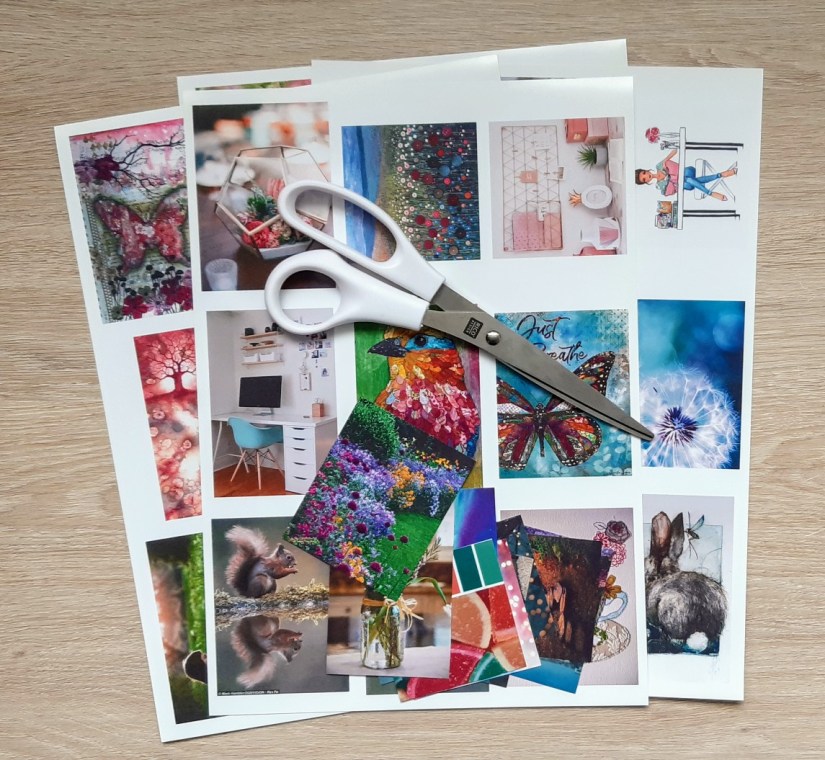
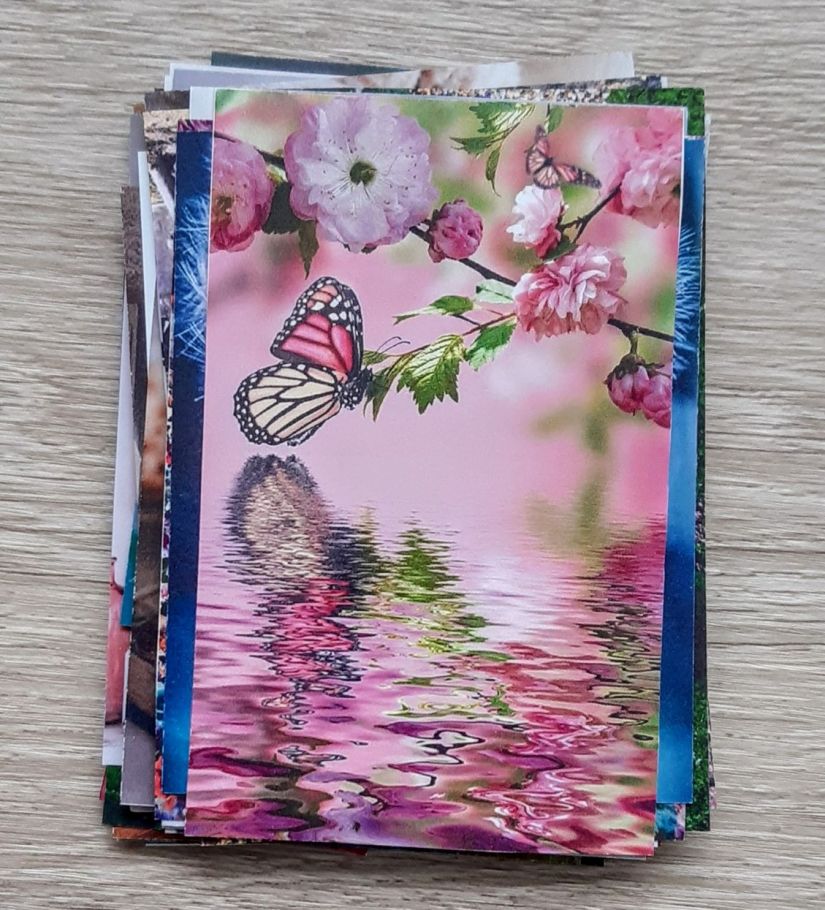
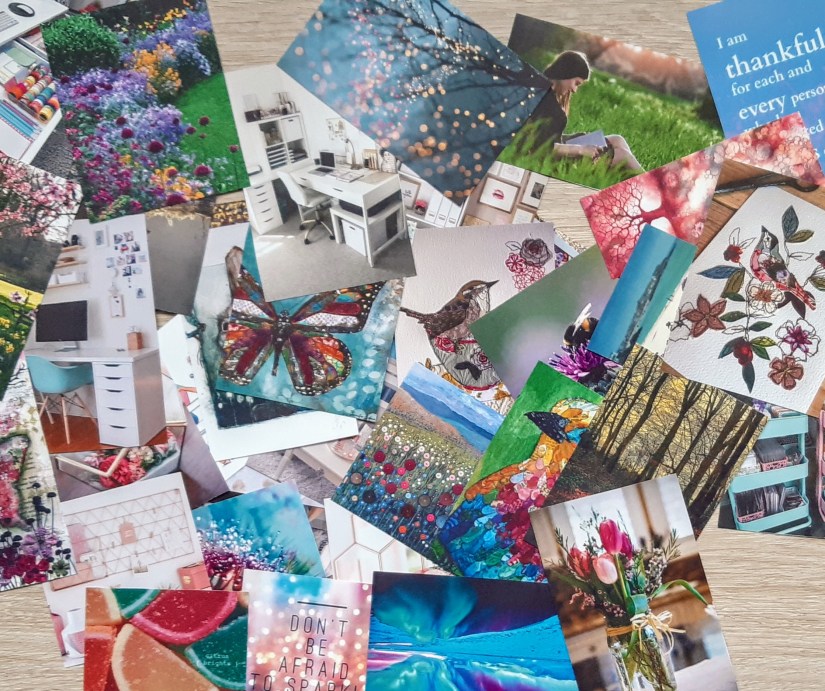
Over 40 images printed on photograph paper. Colour themes, ideas and inspirational messages included.

After spending a good while cutting the above out I had a very sore wrist and a big pile of gorgeous images.

When I’d finished cutting out all of my images, I laid them all out on the floor to see how much room they would need to be displayed. I then popped to The Range and bought an A1 piece of mounting board in a lovely charcoal grey colour and a large Perspex clip frame. I chose a Perspex frame as I’ve had issues with clip frames getting broken in the past and didn’t want a recurrence of this.

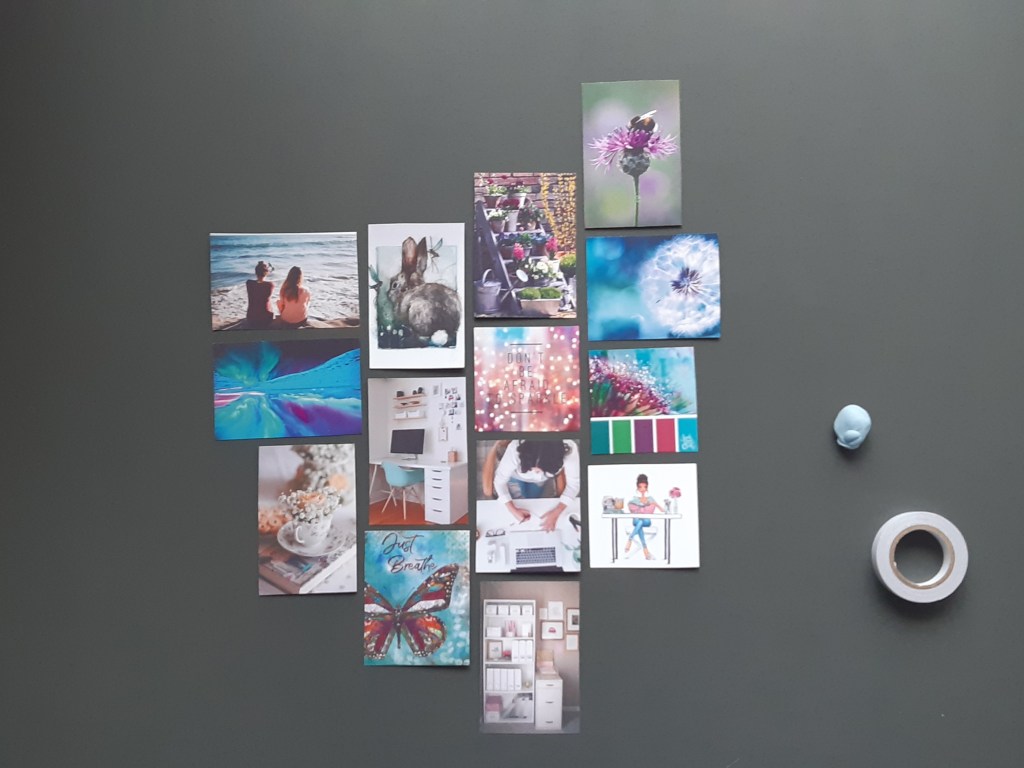
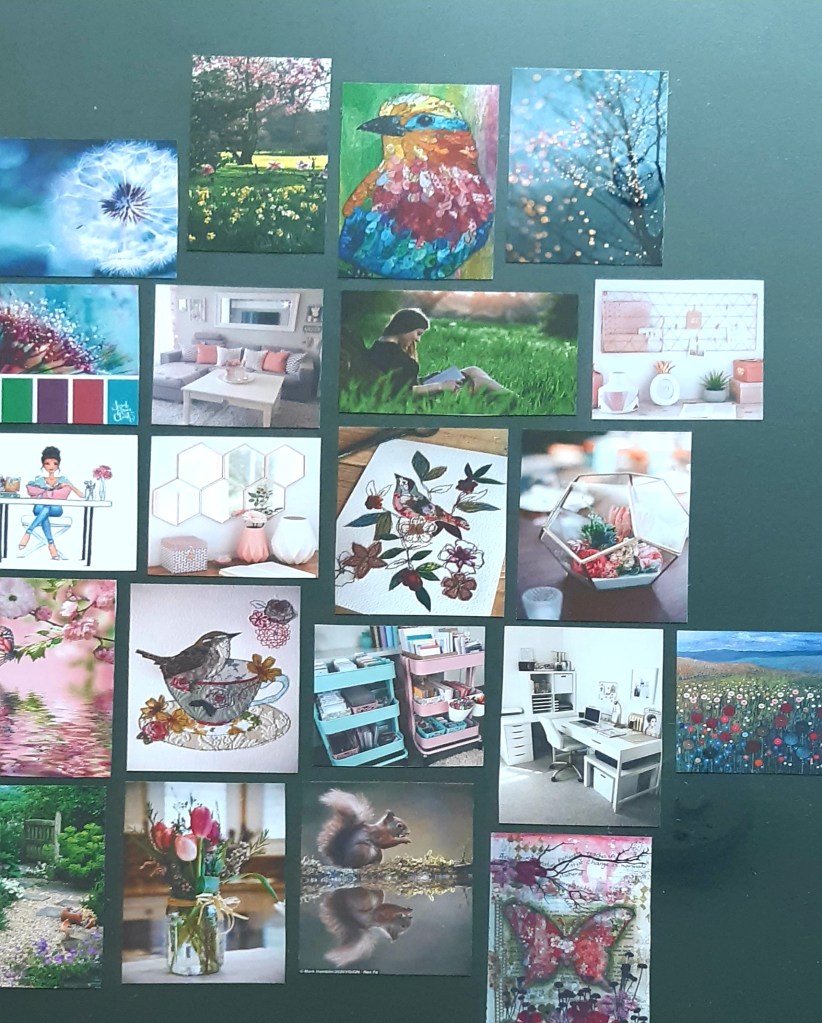
To ensure I was happy with the placement of the pics, I started by placing them onto the board with small pieces of Blu-Tak so I could play with the arrangement a little.

I did have the intention of using double sided tape to adhere the images permanently but in the end, I glued them on with Pritt Stick so that if I put them on a little wonky I could sort them out!

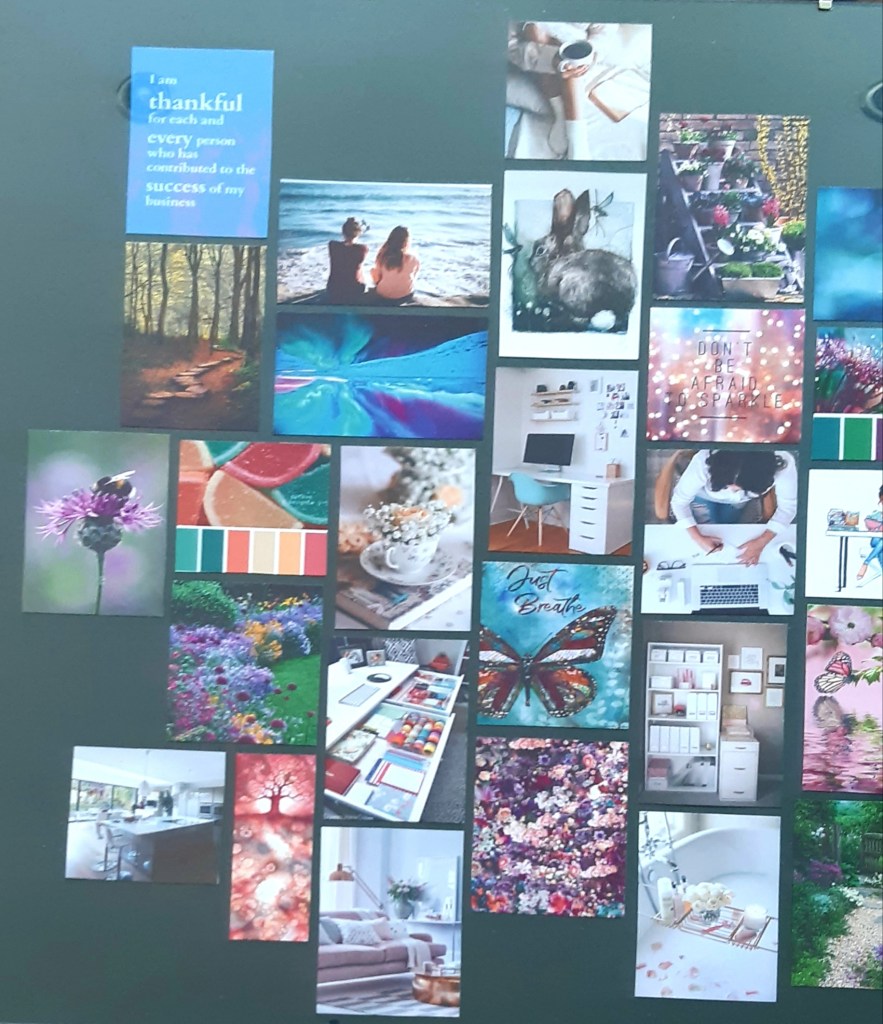
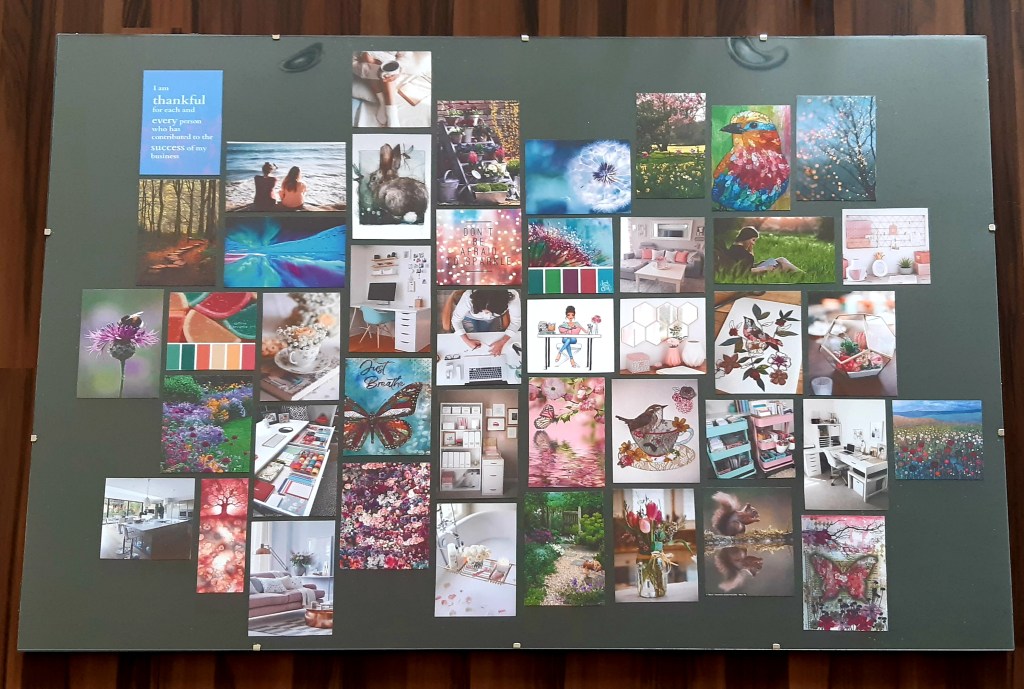
The finished board with all of the images glued on and the Perspex frame clipped in place.

I’m so pleased with how my brand vision board turned out and can’t wait to put it on display in my craft room / office. I hope you find it visually appealing too and agree that it reflects my key ideas about my little Etsy shop.

Have you ever tried a similar process for your handmade business? If not, I thoroughly recommend it. I had great fun and I now have a board full of beautiful pictures to remind me of what’s at the heart of my brand and to inspire me when I’m working in my craft room each day.