Posted in goal setting, life hacks, productivity, self care, Setting goals and intentions

Embrace Your Journey: Living Your Best Life and Achieving Your Goals – Guest post by Linda Chase

Image: Pexels

Today, I’m sharing a second great blog post written by Linda Chase of Able Hire, this time discussing strategies to help you cultivate your best life and meet with success as you make your way towards your hopes and dreams for the future. I’m sure you’ll like the content as much as I did and will pick up some useful tips as you read. Enjoy!


As we navigate through life, we are constantly exploring ways to enhance our journey. The journey to live our best life and achieve our dreams is a continuous process that requires commitment, resilience, and a balanced approach. Here, Keeping it Creative presents eight key strategies you can incorporate right now to help you lead a fulfilled life and accomplish your aspirations.

Build your confidence through fashion

Confidence is a fundamental ingredient for success, and one way to boost it is through your personal style. Fashion can be an expression of your personality, serving as a confidence booster. Dressing in a way that makes you feel good about yourself can have a significant impact on your self-assuredness.

Cultivate resilience

Life is full of challenges, but the way we perceive and respond to these difficulties greatly impacts our growth. Embrace challenges as opportunities for learning and self-improvement. Develop coping strategies, like mindfulness or journaling, to overcome setbacks and bounce back stronger than before.

Embrace Self-Care

In our pursuit of goals, we often neglect our physical, emotional, and mental well-being. Make self-care a priority. Incorporate regular exercise into your schedule, practice mindfulness, and cultivate healthy eating habits. Pursue things that make you happy! If you love art, check out the fun options on Keeping it Creative. These small actions can significantly improve your overall well-being and productivity.

Foster Positive Energy

It’s important to surround yourself with positivity as much as possible wherever you are. If your family, roommates, or coworkers seem stuck in a negative mindset, take time to talk through what is going on and make it right. Then, you can cleanse the space with naturopathic cleaning remedies to reset the energy. You can even smudge with sage if you desire. It is hard to be at your best when you are surrounded by negativity, so take control of the energy around you!

Develop a Growth Mindset

A growth mindset – the belief that you can learn, improve, and evolve – is crucial for personal development. See failures not as dead-ends but as stepping stones towards success. In fact, anxiety and stress can be positive motivators to get out of our comfort zone and do something amazing! Regularly seek out opportunities for growth and learning, and embrace change as a necessary part of the journey.

Stay Curious

Curiosity acts as a catalyst for creativity and innovation, driving us towards our objectives. By committing to daily learning, be it through reading a new book, enrolling in an online course, or delving into a fresh hobby, we stimulate our minds. This practice of maintaining an active and engaged mind is a testament to the power of curiosity in fueling our personal and professional growth.

Network with Like-Minded Individuals

Surround yourself with people who share your values and aspirations. Build a network of supportive, motivating individuals who inspire you to keep moving forward. Exchanging ideas, collaborating on projects, and supporting each other’s journeys can significantly contribute to your overall success.

Keep a Clean Home

The condition of your living environment is a reflection of your mental well-being, and an organised, clean space can positively influence your mood, enhancing productivity and promoting tranquility. Concurrently, setting clear, manageable objectives offers essential direction and focus in your life’s journey. Regularly taking time to declutter and re-organise your physical space is as crucial as periodically reviewing and adjusting your goals for maintaining motivation. Both practices ensure you’re on the right path towards achieving a harmonious mental state and accomplishing your aspirations. Get the most out of your cleaning efforts by taking advantage of resources like Cleaner Digs.

Foster Meaningful Connections

Cherishing our connections with loved ones greatly enhances our overall happiness. It’s essential to prioritise time for gatherings, providing opportunities to fortify bonds and create lasting memories. Embrace technology with a free invitation maker, which simplifies the process of planning both impromptu and scheduled events. You can create invitations by modifying templates and adding your own text.

Search for Joy and Meaning

Living your best life and achieving your goals is a journey of resilience, self-care, growth, curiosity, and supportive networks. By incorporating these eight key strategies into your life, you’re setting yourself up for success. Remember, it’s not about the destination, but the journey, and every step you take towards betterment is a step closer to living your best life and achieving your dreams.


So there you have it, eight wonderful strategies for living your best life and embracing your journey towards your goals. I particularly enjoyed learning more about the effect your physical environment can have on your mental wellbeing. As some of my readers will know, I’m currently in the process of decluttering my craft room and my goal is to have a neat and well-organised space which is a joy to work and craft in. I’ve realised that I would benefit from re-prioritising this aspiration as Linda has reminded me that it’s key to boosting my mood, being more productive and feeling in control.

Both Linda and I would love to hear your thoughts on today’s guest post, especially which points resonated with you the most, so feel free to drop a comment below.

Posted in gardening, goal setting, journalling, lifestyle, Planning and journaling, productivity, reflective journalling, Setting goals and intentions

Monday Matters: 7 Reasons Why You Need to Keep a Garden Planner and Journal

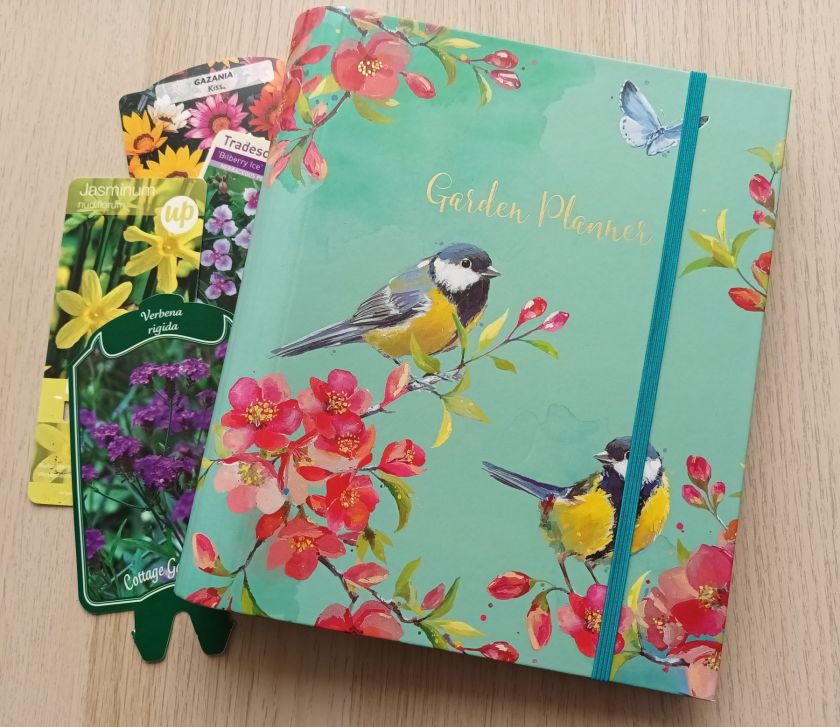
Photo credit: Laura Jones for Keeping It Creative

Over the years, I’ve kept various records of plants we’ve put in our garden, and I’ve saved all of the plastic information cards that come stuck in the pots when you buy them. I’ve also made notes in my bullet journal and even drawn plant ID cards for some of my favourite purchases. However, these resources are in an array of different folders and notebooks and often I can’t locate what I need when I want to check something. So, I decided I would like to keep a garden planner / journal and I found the perfect folder when I visited one of my local garden centres and asked my husband if he would like to buy it to give me for Christmas. Of course, any notebook or file would have done, but as someone who adores beautiful stationery, this one provides the motivation to use it regularly and has lots of different papers and pockets to put things in.

I’ve been using the folder since the very beginning of Spring 2023 and so far I’m finding it a really useful record keeping tool. I’m also hoping that by documenting everything garden related, it will help me to feel a real sense of achievement and begin to recognise that all of our efforts are paying off (even when I feel like it’s a constant battle to keep on top of the weeds or a few of our plants aren’t looking their best).

What is a garden planner and journal?

A garden planner and journal is a paper based or electronic place to store everything related to your outdoor spaces and even your houseplants if you so wish. As well as making you super organised it can provide, for example, a place to keep track of what you’ve planted and where, journal space to evaluate what has worked and what hasn’t, pages to record and plan seasonal tasks, list of to dos (AKA jobs for the weekend!), photo showing different parts of your garden over time so you can see and celebrate your achievements over the months and years. You can customise your records to suit your needs but you might include details of your soil in different parts of the garden, information about your various plants and notes on how well they have done depending on their location, ideas you have collected from magazine and online articles, issues you’ve had with some of your plants such as garden pests or poor growth, labelled sketches of flower beds or the garden as a whole, lists of your seed purchases and even a garden wishlist – the possibilities are endless.

Why should I keep a garden planner and journal?

In a nutshell, keeping a garden planner and journal, which you regularly write in, will make you a better and more efficient gardener and enable you to get so much pleasure from your space no matter whether it’s a few containers on your balcony, a tiny plot or a vast amount of land which keeps you constantly busy. Here are my top seven reasons why you should start a garden planner and journal today:

It helps you remember what’s where

Drawing a labelled sketch of the different parts of your garden such as flower beds, vegetable sections, corner plots, rockery etc helps you to remember exactly what you’ve got and where things are located. It can also provide information such as the particular colour or variety of plants.

I’ve also created a list of containers (size, colour and location helps here), what’s in each and when the plant grows and flower so that I know what’s going to pop up when and also, if it doesn’t come back, I can record and evaluate accordingly.

It’s a good idea to sketch your garden each season so you can see what’s in flower at particular times, which veggies are currently being grown and where your evergreen / deciduous shrubs and trees are. Then you can add in your annuals and assess whether there are any gaps which you want to fill.

You can create and maintain weekly and monthly plans

If you love your garden and want it to look good, you need to regularly dedicate time and energy to gardening. My planner contains weekly overviews for each season where you can record particular jobs that need doing each year and also ‘Jobs for the Weekend’ pages for running task lists. It’s really satisfying ticking them all off and it helps us to see what we still need to do and estimate how long each job will take. These task lists can then be revisited next year.

I like to go on reliable websites like Gardener’s World and RHS plus other UK based sites to look at what I should be doing each month and then handpick jobs specific to our garden. I also follow a few UK YouTube accounts for ideas too. You could even keep a list of useful websites in your journal somewhere too.

A place to log new additions to your garden spaces

All gardeners love going to local garden centres and nurseries to choose new perennials plus annual bedding plants for instant colour. You can record all of these in a list, stating where they were purchased and how much they cost, plus key information front the plant labels. getting new bits and pieces for their garden whether it’s a perennial plant, a new pot, a comfortable bench or chair and cushions, so And your new additions list doesn’t just have to be a space for greenery, you can also record new pieces of furniture such as a gorgeous new bench and bright cushions or a little potting bench, atmospheric solar powered or mains operated lights, new paths or replacement gravel, patio slabs, hanging baskets, rockeries, storage spaces such as a little shed or a box to put soft furnishings over winter, and wildlife friendly pieces such as a pond, bug hotel, hedgehog house or toad abode! Then, when you can’t recall how long you’ve had raised bed, you can check your records instead of trying to establish how long it’s lasted from memory.

A good chart to have in your planner is a record of seeds which you plan to set, when and where e.g. in trays indoors or directly into prepared veg beds or outdoor pots, how many to set (usually dependent on size and desired crop), date to set and germination times. You can also include a section for any notes, so, for example we find that our two courgette seeds for the two large plants we want don’t always germinate so we tend to put a couple in each plug or create more plugs.

You can find examples of seed charts on Pinterest for you to draw up (preferably on gridded paper), or, if you’re pushed for time, you can purchase printables on Etsy.

Helps you track progress over time

The other week I found some photographs of my husband sitting out in our back garden a couple of years after we’d moved into our house. I decided to print them out as there’s a huge difference between how the space looked then and what it looks like now less than 10 years later. The transformation is amazing and if we didn’t have a photographic record, I don’t think we would be able to fully appreciate all that we’ve achieved. You might not have photos from a decade ago (or maybe you do?) but why not start recording now and see how your space has changed in one, two or even ten years?

A useful spot to record successes, challenges + complete failures and reflect on why

We’ve been developing our garden for over ten years now and have had many successes but probably just as many failures. Some of the failures are permanently stuck in my memory, like the fact that every time we have tried to grow lupins, no matter where we got the plants from, the ended up covered in aphids which made my skin crawl! Likewise, some of our complete successes still take pride of place in our flowerbeds such as the beautiful, long lasting and colourful geums. However, there are many more triumphs and disappointments that I wish I’d written down and reflected on. Here’s a list of aspects of gardening which you might like to make a few notes on:

  • garden pests – what specific plants they’ve eaten, when they eat (daytime, night time, particular times of year, following particular weather etc), thoughts about why they eat e.g. slugs and snails love to munch on our dahlia so this year we’ve potted one up, covered the soil in grit and placed it in the front garden porch away from other plants and it’s doing much better
  • plant diseases and treatment e.g. our hollyhocks get rust every year so I inspect them early on and removed infected leaves quickly and dispose of them
  • plants which don’t like the conditions – too dry, too wet, hate clay soil, not enough sun/shade etc and whether they are to be moved or just dug up
  • weather related challenges (e.g. storms, continuous rain, dry spells etc.) and how specific plants coped
  • seed germination failures – dates planted and when replacements set or when new seeds purchased and set
  • weed related issues e.g. we have a huge problem with celandine and it’s a constant battle to get rid of them, I spend 10 minutes every day on their removal and I’m glad when they die back by mid May

I’m sure you probably have many more ideas but hopefully these are enough to get you started.

A place to dream, make wishlists, include inspirational images, identify your short and long term goals and make plans of action

If, like me, you have a beautifully, colourful and well maintained garden on your vision board for the future, it’s a good idea to have a section in your journal to include wishlists, inspiring photographs, goals and action steps and maybe even a written explanation of what you want your dream garden to look like and how you want to feel when in it. You can then check in regularly with this section of your journal and see how well you are progressing with your goals. You can also note down things from your wishlist to look for next time you go shopping to one of your local garden centres.

Final words…

As you start your record keeping, remember that your file doesn’t need to be perfect and will most certainly evolve over time. You might want to start by simply taking a few photos of how your space looks now and then making a few notes of some of the plants which are located in each section. Or, if you like drawing and creating diagrams, you might take some squared paper to draw different parts of your plot and label the names of plants currently growing there. I can also recommend colouring in the plants that are currently in flower so you can see the balance across your plot.

Then, on another occasion, you might make a basic to do list (try Googling garden jobs for June and your specific location) for the month and tick tasks off as you complete them. You could even add a few jobs that are already complete or underway to get some easy and satisfying ticks by the end of the week.

I hope you’ve found today’s post useful and it has inspired you to give this form of planning, record keeping and journalling a go. Let me know what you choose to do first and how you get on.

Posted in CBT, compassion, lifestyle, mental health, Setting goals and intentions, wellbeing, wellness

Monday Matters: Nine ways to make your day amazing

As I shared in a previous post, I’ve started using The Five Minute Journal morning and evening as a way to be more grateful, live with intention, remain positive and just generally have a good day, every day, no matter what. One of the prompts for early morning is to decide on three things that would make today great and list them. At first, when I started using the journal, the temptation was to just write my ‘must do’s’ from my ever lengthening to-do list as a way of being and feeling super productive. However, what I think is much more valuable (and a key idea with the book) is to think about ways in which you can upgrade your day by considering things such as be present (mindfulness), doing things that really matter to you (based on your core values + current goals and intentions) and finding time for or creating habits which give your body and mind what they really need to improve both your physical and mental health and therefore your general wellbeing. So, today, I’m going to share nine ways to improve your day by figuring out your current priorities, doing things that align with your core values, instilling positive habits, re-phrasing self talk and making meaningful progress towards your short term / medium term / life goals, desires and intentions.

Of course, I do realise that, every now and then, events happen in our day which contribute to uncomfortable emotions such as those associated with anger, fear, sadness and disgust and that sometimes, it becomes difficult to remain positive or optimistic. However, I hope that by sharing these suggestions, I will be helping you to learn simple ways to create high vibe states such as peace, joy, gratitude, enthusiasm, optimism, hope and happiness and recognise the effect that these can have on your day. As you create and maintain healthier habits, you should also notice that you spend less time dwelling on negative events and situations and more time celebrating the positives and recognising all that is good in your life.

Today, I’m sharing nine ways to improve your day-to-day but I’m sure, when you think about it, you’ll be able to come up with many more ideas for upgrading from an okay day, to one which leaves you feeling satisfied that you’re living your best life.

Be present

Being present is a state of mindfulness where we slow down and bring awareness to what is right in front of us and what is happening in the current moment. By focusing on the here and now, we’re not dwelling on the past (sometimes referred to as rumination) or worrying about the future. This can help us feel calmer and more relaxed. It can also have a positive impact on our relationships, make it easier for us to manage stress and relieve mental health symptoms such as anxiety and depression.

Bringing you attention to and staying in the current moment is a skill that everyone can develop but it does take a lot of practice and can, at times, be really difficult. However, it’s definitely worth persevering if you want to experience the above benefits. To get started, give this blog post a read.

Consider what really matters and take action

Have you ever sat down and seriously reflected on what really matters to you right now? If you haven’t, I can highly recommend taking some time to do this as it can provide a useful starting point to help you decide where to make changes in your life for the better. I find that the best way to do this is to look at a comprehensive list of personal, professional or core values and make a note of those which particularly resonate most with you. Then, when you’ve selected those which matter the most, you can either continue to make time for these things, think about new habits to work on instilling or work on better aligning your behaviour to fit with your current priorities. So, for example, you might decide that having fun with your partner is really important to you and something you want to make more time for in your relationship. Then, you might list fun activities you’ve enjoyed in the past e.g. going to a comedy show, playing mini golf, spending the day at the seaside paddling in the sea, building sandcastles and eating ice cream, and some you’d like to try in the future e.g. canoeing, a Segway tour, exploring the night sky at an observatory, taking a road trip to somewhere new or go camping.

Get your body moving.

I’m sure you already know the benefits of exercise for your mind and body but adding movement to your day doesn’t necessarily mean hitting the gym for an hour. Here’s some quick and easy ways to raise your pulse rate:

  • check out this webpage for some easy stretches you can do in the morning before you even leave your bed
  • put on your favourite upbeat track and dance around your bedroom / kitchen / living room
  • take a quick power walk around the block in your lunch break
  • find a 10 minute ‘no equipment’ exercise routine on YouTube to have a go at. Add those you enjoy to your favourites.
  • Do some gentle stretching exercises throughout your day to ease tension and improve your circulation, flexibility, blood flow and posture. Try focusing on areas of your body where you typically hold tension such as your neck, shoulders and upper back. The NHS website has plenty of ideas – try searching ‘NHS flexibility’.

Do a little cleaning, tidying or decluttering

Doing a little bit of cleaning, tidying or decluttering each day can provide a real mood boost and a sense of satisfaction when you admire what you’ve achieved. It doesn’t have to be a long or arduous task, but just taking five or ten minutes can make a difference. You might give your kitchen worktops a deep clean, choose just one drawer or shelf in your kitchen to re-organised or decide to check through your make up bag for products which are past their best or haven’t been used in a while. Over time, these short, focused ‘projects’ will help you to create and maintain a home that you’re super proud of and, if you want an easy way to measure your progress, I recommend taking a quick before and after snap on your phone so you can see what a difference you’ve made – you could even store the ‘after’ photos in a digital folder called ‘my lovely home’!

Practice gratitude

I’ve talked about the importance of being grateful for the things and people you have in your life in a number of previous blog post and the benefits of a daily gratitude practice are well documented. The morning part of The Five Minute Journal asks you to record three things that you are grateful for and, I’ve found that I know find it so easy to fill in. I also find myself expressing my gratitude in my thoughts throughout the day on a regular basis. So, for example today, I was a little annoyed that I had to get the washing off the line as it started raining as soon I’d finished hanging it out but I was glad I had to because it rained much heavier whilst I was at my Zumba class. I was also grateful that I’d made the decision to pop on my raincoat to wear to the gym as the rain became torrential before the end of my class.

If you want to start a gratitude practice but you’re not sure how, check out this blog post which gives my best tips as well as discussing the benefits of developing a consistent daily habit.

Learn something new

Making time in your routine to learn something new each day is not only a wonderful workout for your brain, it’s also an effective way of reducing stress and calming your body down. Acquiring new information on a topic of interest or developing your skills in a particular area promotes self- improvement and personal growth and can really boost your self esteem and confidence. What you set out to learn and how you do it is really up to you but it’s a good idea to spend some time quietly thinking about subjects of interest and jotting them down in a notebook e.g. money management, particular hobbies, creative writing and animal welfare, things you’d like to know more about e.g. eco friendly cleaning solutions, a particular country or place you’d love to visit, British history, and skills you’d like to work on e.g. cooking, drawing, leadership, time-management and so on. Once you’ve done this, you can then schedule time for learning and begin to collect a bank of useful resources e.g. books, online articles, videos, in person or online classes etc.

Replace ‘I have to…’ with ‘I get to…’ and consider other aspects of your self talk

On the subject of being grateful for what you have, another way you can work on altering your mindset in a positive way is to begin to notice when ‘I have to…’ pops into your head and change it to ‘I get to…’ So, rather than saying ‘I have to go to work’, you would rephrase it as ‘I get to go to work’ focusing on the fact that you have the opportunity rather than it being an obligation.

In a similar vein, statements such as ‘I need to…’, ‘I have to…’ or ‘I should…’ can create pressure and an expectation to perform, whereas better self talk could include ‘I would like to…’, ‘I might…’ or ‘it would be good if…’ e.g. rather than ‘I need to get that washing up done because it’s piling up’ you could say ‘It would be good if I did the washing up now so that the kitchen is clean and tidy for making dinner’. (Find out more by reading this blog post from a few years back.)

Find time for things you love

I believe that setting aside time to do something you love each day is super important if you want to feel a sense of satisfaction with your life. Again, writing down activities you enjoy or get value from and recording a short explanation of why can help. Here’s some examples from my personal list to give you some ideas:

  • bird watching
  • nature walks
  • reading health and wellbeing magazines
  • watching psychological thrillers on TV (or reading them on my Kindle)
  • playing card and board games
  • making sweet treats such as flapjack, cookies or cupcakes
  • doing 1000 piece jigsaws
  • playing Angry Birds 2, Candy Crush and Word Cookies on my tablet
  • hand lettering with my brush pens
  • painting my nails
  • using my watercolours

Avoid distractions and information overload

My final tip for making the most of your time and having a great day, is to minimise sources of distraction and develop ways to prevent information overload. I would say that the most common source of distraction and productivity killer comes from modern technology and presents itself in the form of notifications such as text messages, emails or social media happenings (such as tweets, status updates on Facebook, Instagram stories and photo shares, YouTube video postings and so on) and often a combination of all three. I don’t consider myself an expert on avoiding such distractions but this is what I’m trying at the moment:

  • two email addresses – one for work related emails for my Etsy shop, blog and university work with notifications for messages from actual people (rather than organisationd) going to my Fitbit watch during the day, the other for all other emails such as those from businesses with notifications turned off. If I’ve placed an online order and want to track progress, I just use the search facility to find the relevant information.
  • keep my phone in another room whilst I’m working (whether that’s on my shop, my blog, gardening, housework etc)
  • turning off social media notifications and then setting aside a small amount of time each day to ‘check in’
  • avoiding looking at my phone during my 5 minute Pomodoro Technique breaks

In terms of information overload, there are some useful tips contained in this blog post including how to consider the type of content you wish to engage depending on your current priorities.

Final words…

I’ve found The Five Minute Journal really useful in helping me to decide what my priorities are for that particular day and in thinking about what would turn my week days and weekend days from just okay or average to great or amazing. Whether you use this journal system or not, spending a few minutes each morning in mindful contemplation in relation to the above can make such a difference to your day.

I hope you have taken away something useful from your reading and I would love to hear any thoughts or additional ideas you may have in the comments.

Posted in compassion, lifestyle, manifestation, Setting goals and intentions

Monday Matters: An introduction to Manifesting Your Goals and Aspirations

Over the last few months, I’ve read a couple of books on the topic of manifestation – ‘Make It Happen – Manifest the life of your dreams’ by Jordanna Levin and ‘Manifest – 7 Steps to Living your Best Life by Roxie Nafousi. I found both of them really interesting and learnt a lot about the theories behind manifestation and things to work on to maximise your chances of creating the life of your dreams or your best life as mentioned in the titles. Today, I hope to provide a summary of the concept and my key take aways from both books so you can use the ideas to work on your goals for 2023.

Both authors talk about the success they’ve had with manifesting everything they’ve wanted in their lives so far and the steps they’ve taken to get there. They also discuss some of the struggles they’ve had in the past and how they’ve overcome them through the power of manifestation and making changes to their thoughts, feelings and attitude.

What is meant my manifestation?

There are various dictionary definitions available online, but, in short, to manifest is to make something happen. In today’s post though, I want to explore the idea that I believe was first discussed in detail by television writer, producer and author Rhonda Byrne in her documentary film and related book The Secret back in 2006 where she explained that ‘Manifesting is about breathing life into your goals through action, emotions and belief’.

Levin adds to this in her book by introducing her ‘Manifestation Equation’ which is states that:

Thoughts + Feelings + Actions + Faith = Successful Manifestation

and is based on four laws – The Law Of Attraction, The Law Of Vibration, The Law Of Action and The Law of Rhythm.

Whilst Nafousi, in her first of two books on the subject, describes manifesting as ‘a meeting of science and wisdom’ and ‘a philosophy to live by and a self-development practice to help you live your best life’.

Finding clarity

The first step of manifesting is to get clear on what you want you want from your life. As Nafousi states ‘…you can’t get to where you want to go if you don’t know where it is you are headed’. A helpful practice for this is to create a vision board filled with your intentions. This can be done digitally on your computer, or physically as a display, and commonly includes inspiring pictures and/or words representing your dreams and aspirations. If you prefer written methods, you might like to write a list in a special manifestation journal and expand on your intentions for each. Another option to try, is following a guided visualisation meditation specifically for manifestation, where you consider what you ideal life would look like and even more importantly, what it would feel like if you already had what you desire. There’s a range available online, some for a small cost and others free. You might also want to think about the kind of person you want to be or take time to explore your core values. Jordanna has two free PDF resources for this which include a comprehensive list of core values and a long list of personality traits. I found both to be extremely useful. Finally, using a Wheel of Life to explore where you are right now and where you wish to be in the future can also help you make plans and set intentions or goals.

Whatever methods you use to set your intentions, it’s recommended that you work on a small number – a maximum of five at a time can help to keep them powerful. Also, the advice is to write them in positive language, keep them short and to the point and use present tense e.g. I am well-organised and productive, I have a happy and healthy relationship with my partner, I feel full of vitality etc.

Take action

As well as thinking about and visualising what you want in your life, you should also be prepared to take action in order to make progress towards those things. As Levin says when describing the Law Of Action – ‘you must do the things and perform the actions necessary to achieve what you are setting out to do’. You play a vital role towards creating your future so you must work to make it happen! So, for example if you want to be happy and fulfilled at work, you might start by considering you current job situation and how you feel about it. You could then take some time to journal about what aspects you enjoy and which leave you feeling dissatisfied. Having considered this, it might lead to you identify potential changes you could make or help you to realise that it is time to move on and try somewhere else or a different role. You would then have to think about and perform the necessary actions to move things on.

Raise your vibration

The scientific principle known as the Law of vibration states that everything in the universe (objects, thoughts, emotions etc.) has energy and a vibrational frequency ( from high to low). With regard to manifesting, according to this law, we need to vibrate at a similar frequency to the things we are trying to attract and the best way to do this is to work on raising our vibe. High vibration emotions include unconditional love, joy, peace, gratitude, hope and optimism, whilst particularly low vibration emotions include jealousy, anger, fear and despair. But how can we work on raising our vibration so we resonate more of these positive emotions? Here’s some of what I learnt from my reading:

Let go of fear and doubt

One of a number of ways of working on raising our vibe is to let go of fear and doubt. If you believe that you are not worthy of what you want or that you are not capable of taking action and making changes then you are unlikely to manifest those things. On the other hand, if you have faith in your abilities and are optimistic about the future, you are ready to receive everything you desire because you believe you are worthy of it. This happens because our subconscious has the power to drive us towards our dreams but also has the power to hold us back.

Our fears and doubts show up in a number of different guises including worries and insecurities, limiting beliefs, feelings of unworthiness and a lack of trust in the universe to provide for us. These can not only sabotage our chances of manifesting, they can also stop us from being aspirational with our dreams and wishes too.

Of course, ridding ourselves of fears and doubts is not something that can be done overnight, especially as many of us have been accumulating them over many years. It takes constant work and commitment (what some practitioners call deep work). Self development is achieved over time and with perseverance. It might also involve working with a therapist, life coach or mentor. who can guide you on the way and teach you new techniques for managing your thoughts and emotions and working on limiting beliefs. The main ways forward include:

  • exploring your thoughts and considering more realistic or alternative ways of looking at things (focusing on positive and empowering choices)
  • being careful about our choice of language e.g. replacing if with when, talking about what we want rather than what we don’t want, choosing positive words such as I can…, I will… etc rather than negative statements such as I can’t…, It’s too hard etc.
  • using positive mantras to repeat e.g. Life supports me in every possible way. I am thankful for the endless opportunities that come my way. Today I am the best version of myself. I’ll achieve everything I set out to do.
  • practice visualisation – imagine what it would look like and what it would feel like if you were living a life in alignment with what you desire. This can be done as a meditation or if you prefer creative writing, you could journal what your day would be like if you were living your best life.
  • cultivate self love and compassion – be kind to yourself and value your wellbeing. Celebrate achievements but also be patient and forgive yourself when needed. Believe in yourself and your ability to have success. Treat yourself as you would a good friend, offering support and encouragement.

Live in alignment

Another part of taking action is to align your behaviour with what you wish to manifest. It’s no good creating your vision on a board or just sitting there thinking about what you want for your like, you need to be proactive in your journey. As you work on banishing your fears and doubts, you will start to develop confidence in your abilities and this is when you can really push yourself and step out of your comfort zone. |Nafousi has this to say:

‘To manifest change, we must first create change. We must do something different, we must challenge our fears and doubts, we must act as our future self would act and we must show the universe how ready and willing we are to step into our power.’

A good way to do this is to behave the way your future self would. So, for example, if you want to be a tidy and well-organised person, you need to act like one. This could include regularly decluttering, making sure you have a place for everything and putting things away in that place when you’ve finished using them, creating a schedule for your day or writing to do lists to make sure you maximise your time, having a good sleep routine so you wake up feeling refreshed and ready to have a productive day, making tidying a priority and a habit which you see as important and of value. It could also include spending time researching and implementing habits of tidy and well-organised people and maybe asking for help and advice from friends who always have a neat and tidy home.

If you’re not sure what steps to take or changes you might need to make, Jordanna Levin’s book has chapters on different aspects of life which are full of ideas and exercises to try.

Develop an attitude of gratitude

Whilst you strive to manifest your intentions, it’s also important to be grateful for what you already have. As I’ve shared in several previous blog posts, gratitude is all about being thankful and showing appreciation for all of the things we have. Nafousi splits gratitude into three categories which I found particularly helpful – gratitude for the self, your life and the world. So, you can appreciate things about yourself such as your health, your ability to listen to others and your crafting skills. You can be thankful for what you have in your life such as a supportive partner, a beautiful home and a job you love. And, finally, you can feel grateful universal things such as good weather, connection with others and the wonder of nature.

Gratitude is a high-vibe emotion which is wonderful for your physical and mental health, your relationships, self esteem and sleep. Being grateful for things as they are now shows the world that when you do manifest something you what you want for yourself and your life, you will be super appreciative of it.

Gratitude journalling is something I do every day as part of my Five Minute Journal practice and it something that I feel really helps to develop those high vibe emotions we want to increase. I identify three things each morning to write about and then reflect on the highlights of my day (and what made these things possible) and what I’ve learnt in the evening. It doesn’t take long and it has the potential to make a huge difference to your life.

Use sources of envy to inspire you

When I was young, there seemed to be limited sources of envy. You might feel jealous of a school friend who got 10 out of 10 in her spelling test or your best mate who had pretty much every toy in the Argos catalogue / went on super expensive holidays / had a bedroom the size of the ground floor of your house or a garden full of expensive play equipment. Nowadays though, you can go on social media and be envious of the perfect lives of not only your friends, work colleagues and acquaintances, but also people you’ve never met who have the perfect Instagram feed / the energy to get up at 5 am and be super productive until 8pm / the healthiest body with flawless skin / the tidiest and most well-organised home with all the latest gadgets bought with their huge and effortless income – you get the idea. As Nafousi says in her first book ‘Social Media is a playground for comparison and a fertile land for envy to grow in’. She offers a few tips on how to manage things. One suggestion is to become more mindful of the content you engage with so that you choose only to read / explore content which you relate to, makes you feel good or inspires you in some way. You should also continue to work on removing your fears and doubts which are holding you back, some of which may present as envy and jealousy. Another potentially powerful idea is to recognise thoughts and feelings associated with low vibe emotions such as these and turn them into inspiration. So, rather than believing that they have things that you can’t have (scarcity mindset), you have the opportunity to reframe and choose to believe that you could have the same for yourself if you work hard (an attitude of abundance).

Trust that the universe has got your back

As part of your manifesting journey, you will meet challenges, difficulties and obstacles along the way. You have several choices when these tests turn up: 1) you could admit defeat, become impatient and decide you’re never going to get to where you want to be, believe you’ve failed, believe that other people have all the luck and let envy creep in basically, letting fear and doubt rule, or, 2) you could use these situations and obstacles in a more positive way to build your inner strength, resilience, courage and self belief to keep going and trust in the manifesting process. You might need to take action by do a bit of problem solving, trying different approaches, working things out by journalling how you feel, or using positive affirmations to remind yourself that you can and you will, but ultimately, if you have faith in yourself and the universe to provide for you then you can absolutely get there.

Final words…

Today’s blog post contains just a small part of what I’ve learnt about manifesting. If you want to find out more, then I particularly recommend Manifest: 7 Steps to Living Your Best Life by Roxie Nafousi as a succinct introduction and her more recent book Manifest: Dive Deeper to further your knowledge. Jordanna Levin’s book Make It Happen: Manifest the life of your dreams provides a much more indepth look into manifestation and also has lots of exercises to try. It also focuses on different aspects of life which you may want to work on as part of your manifesting journey.

I hope you have found the topic matter of manifestation interesting and something which is worth exploring further. As always, I would love to hear your thoughts or related comments.

Posted in goal setting, journalling, lifestyle, Planning and journaling, reflective journalling, Setting goals and intentions

Monday Matters: Using my new Five Minute Journal to promote happiness and personal growth

I first came across The Five Minute Journal when watching YouTube vloggers sharing their relaxing yet productive morning routines. I was interested to find out more about the journal, so I checked out a few video walkthroughs and found that many people were saying it was a life changing practise for them and one which really helped improve their mental health.

As someone who will try anything to improve my health and wellbeing, I decided to give it a go (even though I felt that the journal was quite expensive). I’ve been using it for nearly two weeks now, and I’m really enjoying it and benefitting from the quiet thinking time it provides first thing in the morning and last thing at night. So, today, I thought I’d share my thoughts on The Five Minute Journal, my experiences of using it and ways in which it’s helping me.

Photo credit: Laura Jones for Keeping It Creative

What is The Five Minute Journal?

The Five Minute Journal is a product created by Intelligent Change and is one of a small number of tools which promises to positively change your life in just five minutes a day. The company claim that you will love the journal for five very particular reasons:

  • It’s the simplest thing you can do to be happier – due its focus on positivity, structured approach whilst keeping it simple and easy to stay consistent
  • It’s built on proven psychology – it’s better to focus on positive behaviour traits and creating simple but effective routines
  • It’s a journal for people who don’t write journals – it takes just five minutes a day and so is ideal for time pressed individuals who have always loved the idea of keeping a journal but have, in the past, tended to make excuses for not doing so.
  • It’s a snapshot of your positive experiences – it’s a wonderful record of all things positive in your life and just flipping back to a certain day should help evoke the feelings that accompanied the memories.
  • It’s a commitment you can stick to – as well as the five minute promise, the book is also full of tips and ideas at the beginning which help you to get started and stay committed to the process

Key features of the book

The Five Minute Journal is a hard back book with a linen cover and comes in an original natural linen covered or a choice of five other colours namely royal blue, earth green, blush pink, bold black and sunshine yellow. I opted for the pink colour but from my research, it looks like the original colour is the most popular choice.

The book consists of over 260 pages, with approximately 30 pages explaining how the journal works at the beginning, 6 months worth of daily journalling pages and 11 ruled pages for notes at the back. The pages are a cream colour and feel like good quality. Having used a ball point pen and not being happy with my handwriting, I have since tried a few different pens out on the note pages at the back with no bleed through so I will be converting to a finer nibbed liquid ink which I use in my bullet journal.

As part of the introductory pages, you are invited to create a written commitment which encourages you to think about your reasons for wanting to keep the journal, a reward which you could give yourself if you stick with writing for 5 days, a promise to yourself if you don’t manage 5 consecutive days and your own ideas of how you can ensure you practise daily. In addition to this, you identify one of your biggest current challenges in life, an identity statement that remedies the challenge, major obstacles to writing on a daily basis and actions you can take to overcome these obstacles.

Each page in the daily journalling section of the book consists of a space to write the date, followed by a motivational quote or a weekly challenge (once every seven days or so) and then a section for morning and night time entries. In the morning, you are advised to write as soon as you wake up as it is the perfect opportunity to set a positive tone for the day. The day time section prompts you to write 3 things you are grateful for, 3 things that would make the day great and one daily affirmation

My thoughts on the process so far

I found the introductory pages to be really useful and made sure I read them all before starting to fill in the daily entries. As well as an explanation of how the journal should be used, it gave tips including:

  • write your morning entry as soon as you wake up, even if you can think of excuses not to (e.g. feeling sleepy, might make you late for work etc)
  • write your evening entry just before you go to sleep (even if you’re feeling super tired, have a headache or need to get up really early in the morning and should be having an early night etc)
  • write things that you are grateful for, even if you don’t yet have them in your life (e.g. I’m grateful to be in a loving and healthy relationship with my perfect partner – law of attraction style)
  • try choosing different areas of your life to focus on each day or week if you get stuck e.g. relationships, an opportunity that you have, something great that happened or you saw yesterday, something simple nearby you e.g. the pen you’re holding, your comfortable bed, your cosy pajamas etc.
  • get specific with your gratitudes e.g. I’m grateful for my friend x as she encourages me to eat healthily and take some daily exercise etc.
  • when writing about things that would make your day great, choose things you have control over, e.g. rather than writing ‘a warm and sunny day’ you could write ‘wearing warm clothes and taking a walk in nature’ or ‘finding time to exercise’
  • use the daily affirmation to re-affirm something you already know or repeat something you really want for yourself e.g. I listen to my body and give it what it needs, I take time for rest and relaxation after a busy day, I have the power to create the life I want, I hold the key to my own happiness etc
  • use the highlights of the day section to find the positives and special moments you experienced e.g. listening to the birds sing in the garden, coffee, cake and catch up with a good friend, enjoying a brisk walk on the beach, trying out a recipe you found in your magazine and really enjoying the dish etc
  • use the ‘What did I learn today?’ section as an opportunity for reflection e.g. ‘taking five minutes to do some stretches first thing helps to wake up my body’ ‘I sleep much better if I avoid social media after 8pm’, ‘I get so much more work done if I keep my desk neat and tidy’ etc

When I first started the journal, I did exactly what it said in the guidance and filled in the morning section whilst still in bed. However, now, I like to take my journal downstairs sometimes (usually during the week) so I can look in my bullet journal to see what commitments I have that day. This makes it easier for me to fill in the ‘What would make my day great?’ section. For example, I might put ‘taking some time to rest and recharge after working on a blog post all morning’ or ‘keeping myself hydrated throughout the day whilst talking to the students’ etc. Things I might not have thought of if I hadn’t taken some time to think.

In terms of my night time entries, where it suggests completion just before going to sleep, I find it better if write mine in bed prior to reading my Kindle. This is because quiet reading whilst lying down often makes me feel incredibly tired (even to the point of dropping off and whacking myself in the face with my Kindle), so I’d rather fill it in when I’m still properly awake. This is working really well for me and I still drift off with a mind relatively empty of thoughts.

At the beginning of the journal, it invites you reward yourself if you manage to write for 5 consecutive days. I really wanted a sunrise alarm clock/lamp so I researched them online and picked one out on Amazon that was relatively inexpensive but had really good reviews. I’m pleased to say I now have the item on my bedside cabinet and I absolutely love it. Plus, it stops me needing to use my phone as my alarm (or as a light if I get up to pop to the loo) which, in turn, means I don’t get tempted to check the various notifications which have appeared overnight before even getting out of bed.

Afexoa Sunrise Alarm Clock

Although I managed to keep up the practice for 5 full days, I’m now on Day 13 and I’ve forgotten to fill in my night time entry a couple of times already. Once, I was drifting off to sleep and remembered and filled it in straightaway but last night, when I got up, I realised I hadn’t done yesterday’s night time section. Rather than chastising myself for forgetting, I simply filled last night’s in first thing this morning and reflected on possible reasons why I’d not remembered to do it – it was on my bedside cabinet under my Kindle but we went to bed quite late and I was very tired (and feeling a little under the weather).

I’m so far really enjoying using my journal but I have found parts of it more challenging to fill in. For me, the gratitude part is easy as I’ve previously done a daily gratitude pages in my bullet journal. I’m also used to identifying activities to fit in to my day that are focused on ‘me time’ so I always have plenty of ideas for this. Creating a daily affirmation is often quite difficult so I’m in the process of creating a page full of encouraging mantras which I’ve found on Pinterest to help me. Writing three highlights for the day is my favourite part of the journalling progress and I always have plenty to write – sometimes I find there’s not enough room here! Finally, jotting down something I’ve learnt that day (the original journal had the question ‘How could I have made today better?’) is probably the hardest part as I’m not used to doing this kind of reflection. I do get something written each time but it takes me quite a while.

Although it’s known as ‘The Five Minute Journal’, I reckon it currently takes me a lot longer to complete – probably at least 10 minutes in the morning and another 10 just before bed. I’m sure as I continue with the process, ideas will pop into my head during the day which I could incorporate into my entries and this will things quicker and easier. If not, I think the process is still really beneficial and well worth persevering with.

I also found that it was a good idea to refer back to my journal throughout the day to re-check my daily affirmation and to remind myself of my three ideas for what would make my day great. I might try making a quick note of these in my BuJo in future to see if that helps further.

The Main Benefits of keeping The Five Minute Journal for me so far

Having used The Five Minute Journal for nearly two weeks now, I can really see how beneficial it is for my health and wellbeing. Here’s what I’ve found so far:

  • it helps me set the tone for the day and encourages me to end it on a high note
  • it allows me to think about ways in which I can bring more joy to my day rather than focusing wholly on my ever expanding to-do list
  • it helps me to set some intentions for the day and then check back in with myself to see how I got on with them
  • it helps me find the good in every day, even if I have a super busy (and exhausting) or particularly stressful day, there are plenty of positives if you dig deep to find them
  • it’s great for personal development as I spend time reflecting on what I’ve learnt and how this can help me live an even better life
  • the ‘what have I learnt today?’ section has helped me reflect on good and bad habits – for example, doing a mindful activity such as my jigsaw helps me to relax and unwind after a busy day (plus it helps me to rest my voice after talking to different groups of students), whereas ruminating over the feedback I gave and ways in which I could have made it even better is pointless and unhelpful
  • the daily emails that I signed up for have help me learn different ways to approach filling in the pages so that it doesn’t become a repetitive process
  • some of the daily quotes really resonate with me and they all make you think or are a good reminder of things you can do to control your own happiness levels
  • the weekly challenge was a really great way of trying something new and exploring how it made me feel – I’ve only completed one so far but I enjoyed it and it made me feel really good afterwards. I’ve flicked forward to see what’s next and I can’t wait to try it!
  • daily affirmations are helping me to feel better about myself as a person and also increase my confidence, resilience and motivation to take on new challenges
  • although it takes me a bit longer than 5 minutes to fill it in, I do find that it is an incredibly worthwhile practice and that my entries will get better and faster with time

Final words…

I hope you’ve enjoyed finding out about The Five Minute Journal and reading my initial experiences of using it to promote happiness and personal growth. Let me know in the comments if it sounds appealing of if you’ve given a similar style of journalling a go before.