Posted in compassion, lifestyle, manifestation, Setting goals and intentions

Monday Matters: An introduction to Manifesting Your Goals and Aspirations

Over the last few months, I’ve read a couple of books on the topic of manifestation – ‘Make It Happen – Manifest the life of your dreams’ by Jordanna Levin and ‘Manifest – 7 Steps to Living your Best Life by Roxie Nafousi. I found both of them really interesting and learnt a lot about the theories behind manifestation and things to work on to maximise your chances of creating the life of your dreams or your best life as mentioned in the titles. Today, I hope to provide a summary of the concept and my key take aways from both books so you can use the ideas to work on your goals for 2023.

Both authors talk about the success they’ve had with manifesting everything they’ve wanted in their lives so far and the steps they’ve taken to get there. They also discuss some of the struggles they’ve had in the past and how they’ve overcome them through the power of manifestation and making changes to their thoughts, feelings and attitude.

What is meant my manifestation?

There are various dictionary definitions available online, but, in short, to manifest is to make something happen. In today’s post though, I want to explore the idea that I believe was first discussed in detail by television writer, producer and author Rhonda Byrne in her documentary film and related book The Secret back in 2006 where she explained that ‘Manifesting is about breathing life into your goals through action, emotions and belief’.

Levin adds to this in her book by introducing her ‘Manifestation Equation’ which is states that:

Thoughts + Feelings + Actions + Faith = Successful Manifestation

and is based on four laws – The Law Of Attraction, The Law Of Vibration, The Law Of Action and The Law of Rhythm.

Whilst Nafousi, in her first of two books on the subject, describes manifesting as ‘a meeting of science and wisdom’ and ‘a philosophy to live by and a self-development practice to help you live your best life’.

Finding clarity

The first step of manifesting is to get clear on what you want you want from your life. As Nafousi states ‘…you can’t get to where you want to go if you don’t know where it is you are headed’. A helpful practice for this is to create a vision board filled with your intentions. This can be done digitally on your computer, or physically as a display, and commonly includes inspiring pictures and/or words representing your dreams and aspirations. If you prefer written methods, you might like to write a list in a special manifestation journal and expand on your intentions for each. Another option to try, is following a guided visualisation meditation specifically for manifestation, where you consider what you ideal life would look like and even more importantly, what it would feel like if you already had what you desire. There’s a range available online, some for a small cost and others free. You might also want to think about the kind of person you want to be or take time to explore your core values. Jordanna has two free PDF resources for this which include a comprehensive list of core values and a long list of personality traits. I found both to be extremely useful. Finally, using a Wheel of Life to explore where you are right now and where you wish to be in the future can also help you make plans and set intentions or goals.

Whatever methods you use to set your intentions, it’s recommended that you work on a small number – a maximum of five at a time can help to keep them powerful. Also, the advice is to write them in positive language, keep them short and to the point and use present tense e.g. I am well-organised and productive, I have a happy and healthy relationship with my partner, I feel full of vitality etc.

Take action

As well as thinking about and visualising what you want in your life, you should also be prepared to take action in order to make progress towards those things. As Levin says when describing the Law Of Action – ‘you must do the things and perform the actions necessary to achieve what you are setting out to do’. You play a vital role towards creating your future so you must work to make it happen! So, for example if you want to be happy and fulfilled at work, you might start by considering you current job situation and how you feel about it. You could then take some time to journal about what aspects you enjoy and which leave you feeling dissatisfied. Having considered this, it might lead to you identify potential changes you could make or help you to realise that it is time to move on and try somewhere else or a different role. You would then have to think about and perform the necessary actions to move things on.

Raise your vibration

The scientific principle known as the Law of vibration states that everything in the universe (objects, thoughts, emotions etc.) has energy and a vibrational frequency ( from high to low). With regard to manifesting, according to this law, we need to vibrate at a similar frequency to the things we are trying to attract and the best way to do this is to work on raising our vibe. High vibration emotions include unconditional love, joy, peace, gratitude, hope and optimism, whilst particularly low vibration emotions include jealousy, anger, fear and despair. But how can we work on raising our vibration so we resonate more of these positive emotions? Here’s some of what I learnt from my reading:

Let go of fear and doubt

One of a number of ways of working on raising our vibe is to let go of fear and doubt. If you believe that you are not worthy of what you want or that you are not capable of taking action and making changes then you are unlikely to manifest those things. On the other hand, if you have faith in your abilities and are optimistic about the future, you are ready to receive everything you desire because you believe you are worthy of it. This happens because our subconscious has the power to drive us towards our dreams but also has the power to hold us back.

Our fears and doubts show up in a number of different guises including worries and insecurities, limiting beliefs, feelings of unworthiness and a lack of trust in the universe to provide for us. These can not only sabotage our chances of manifesting, they can also stop us from being aspirational with our dreams and wishes too.

Of course, ridding ourselves of fears and doubts is not something that can be done overnight, especially as many of us have been accumulating them over many years. It takes constant work and commitment (what some practitioners call deep work). Self development is achieved over time and with perseverance. It might also involve working with a therapist, life coach or mentor. who can guide you on the way and teach you new techniques for managing your thoughts and emotions and working on limiting beliefs. The main ways forward include:

  • exploring your thoughts and considering more realistic or alternative ways of looking at things (focusing on positive and empowering choices)
  • being careful about our choice of language e.g. replacing if with when, talking about what we want rather than what we don’t want, choosing positive words such as I can…, I will… etc rather than negative statements such as I can’t…, It’s too hard etc.
  • using positive mantras to repeat e.g. Life supports me in every possible way. I am thankful for the endless opportunities that come my way. Today I am the best version of myself. I’ll achieve everything I set out to do.
  • practice visualisation – imagine what it would look like and what it would feel like if you were living a life in alignment with what you desire. This can be done as a meditation or if you prefer creative writing, you could journal what your day would be like if you were living your best life.
  • cultivate self love and compassion – be kind to yourself and value your wellbeing. Celebrate achievements but also be patient and forgive yourself when needed. Believe in yourself and your ability to have success. Treat yourself as you would a good friend, offering support and encouragement.

Live in alignment

Another part of taking action is to align your behaviour with what you wish to manifest. It’s no good creating your vision on a board or just sitting there thinking about what you want for your like, you need to be proactive in your journey. As you work on banishing your fears and doubts, you will start to develop confidence in your abilities and this is when you can really push yourself and step out of your comfort zone. |Nafousi has this to say:

‘To manifest change, we must first create change. We must do something different, we must challenge our fears and doubts, we must act as our future self would act and we must show the universe how ready and willing we are to step into our power.’

A good way to do this is to behave the way your future self would. So, for example, if you want to be a tidy and well-organised person, you need to act like one. This could include regularly decluttering, making sure you have a place for everything and putting things away in that place when you’ve finished using them, creating a schedule for your day or writing to do lists to make sure you maximise your time, having a good sleep routine so you wake up feeling refreshed and ready to have a productive day, making tidying a priority and a habit which you see as important and of value. It could also include spending time researching and implementing habits of tidy and well-organised people and maybe asking for help and advice from friends who always have a neat and tidy home.

If you’re not sure what steps to take or changes you might need to make, Jordanna Levin’s book has chapters on different aspects of life which are full of ideas and exercises to try.

Develop an attitude of gratitude

Whilst you strive to manifest your intentions, it’s also important to be grateful for what you already have. As I’ve shared in several previous blog posts, gratitude is all about being thankful and showing appreciation for all of the things we have. Nafousi splits gratitude into three categories which I found particularly helpful – gratitude for the self, your life and the world. So, you can appreciate things about yourself such as your health, your ability to listen to others and your crafting skills. You can be thankful for what you have in your life such as a supportive partner, a beautiful home and a job you love. And, finally, you can feel grateful universal things such as good weather, connection with others and the wonder of nature.

Gratitude is a high-vibe emotion which is wonderful for your physical and mental health, your relationships, self esteem and sleep. Being grateful for things as they are now shows the world that when you do manifest something you what you want for yourself and your life, you will be super appreciative of it.

Gratitude journalling is something I do every day as part of my Five Minute Journal practice and it something that I feel really helps to develop those high vibe emotions we want to increase. I identify three things each morning to write about and then reflect on the highlights of my day (and what made these things possible) and what I’ve learnt in the evening. It doesn’t take long and it has the potential to make a huge difference to your life.

Use sources of envy to inspire you

When I was young, there seemed to be limited sources of envy. You might feel jealous of a school friend who got 10 out of 10 in her spelling test or your best mate who had pretty much every toy in the Argos catalogue / went on super expensive holidays / had a bedroom the size of the ground floor of your house or a garden full of expensive play equipment. Nowadays though, you can go on social media and be envious of the perfect lives of not only your friends, work colleagues and acquaintances, but also people you’ve never met who have the perfect Instagram feed / the energy to get up at 5 am and be super productive until 8pm / the healthiest body with flawless skin / the tidiest and most well-organised home with all the latest gadgets bought with their huge and effortless income – you get the idea. As Nafousi says in her first book ‘Social Media is a playground for comparison and a fertile land for envy to grow in’. She offers a few tips on how to manage things. One suggestion is to become more mindful of the content you engage with so that you choose only to read / explore content which you relate to, makes you feel good or inspires you in some way. You should also continue to work on removing your fears and doubts which are holding you back, some of which may present as envy and jealousy. Another potentially powerful idea is to recognise thoughts and feelings associated with low vibe emotions such as these and turn them into inspiration. So, rather than believing that they have things that you can’t have (scarcity mindset), you have the opportunity to reframe and choose to believe that you could have the same for yourself if you work hard (an attitude of abundance).

Trust that the universe has got your back

As part of your manifesting journey, you will meet challenges, difficulties and obstacles along the way. You have several choices when these tests turn up: 1) you could admit defeat, become impatient and decide you’re never going to get to where you want to be, believe you’ve failed, believe that other people have all the luck and let envy creep in basically, letting fear and doubt rule, or, 2) you could use these situations and obstacles in a more positive way to build your inner strength, resilience, courage and self belief to keep going and trust in the manifesting process. You might need to take action by do a bit of problem solving, trying different approaches, working things out by journalling how you feel, or using positive affirmations to remind yourself that you can and you will, but ultimately, if you have faith in yourself and the universe to provide for you then you can absolutely get there.

Final words…

Today’s blog post contains just a small part of what I’ve learnt about manifesting. If you want to find out more, then I particularly recommend Manifest: 7 Steps to Living Your Best Life by Roxie Nafousi as a succinct introduction and her more recent book Manifest: Dive Deeper to further your knowledge. Jordanna Levin’s book Make It Happen: Manifest the life of your dreams provides a much more indepth look into manifestation and also has lots of exercises to try. It also focuses on different aspects of life which you may want to work on as part of your manifesting journey.

I hope you have found the topic matter of manifestation interesting and something which is worth exploring further. As always, I would love to hear your thoughts or related comments.

Posted in goal setting, journalling, lifestyle, Planning and journaling, reflective journalling, Setting goals and intentions

Monday Matters: Using my new Five Minute Journal to promote happiness and personal growth

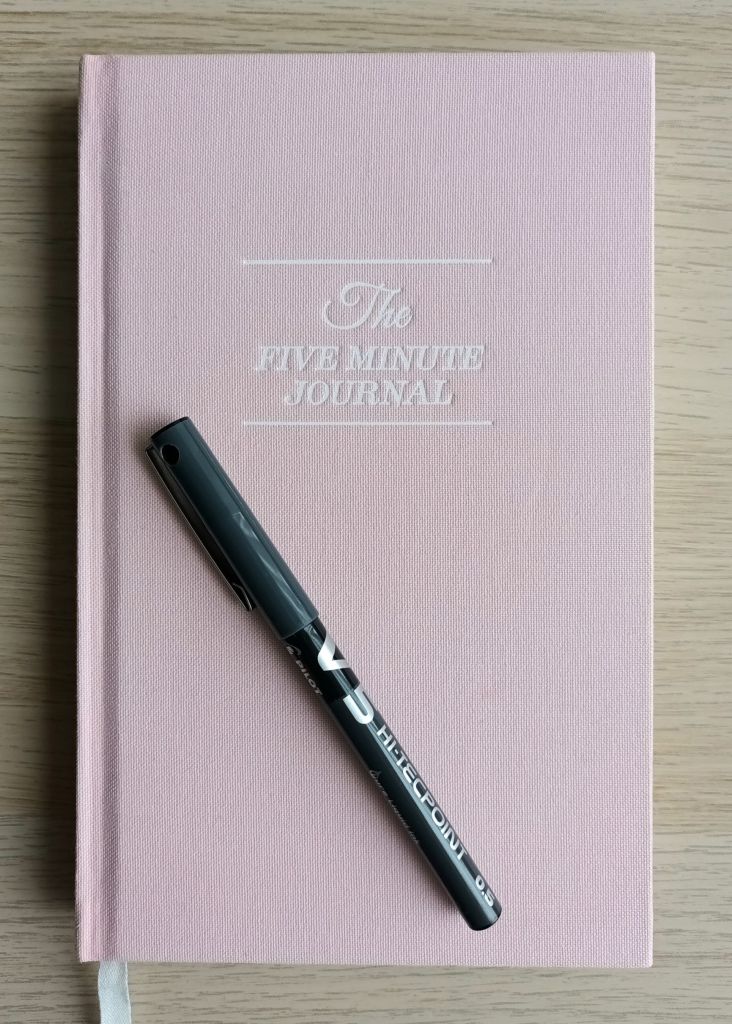
I first came across The Five Minute Journal when watching YouTube vloggers sharing their relaxing yet productive morning routines. I was interested to find out more about the journal, so I checked out a few video walkthroughs and found that many people were saying it was a life changing practise for them and one which really helped improve their mental health.

As someone who will try anything to improve my health and wellbeing, I decided to give it a go (even though I felt that the journal was quite expensive). I’ve been using it for nearly two weeks now, and I’m really enjoying it and benefitting from the quiet thinking time it provides first thing in the morning and last thing at night. So, today, I thought I’d share my thoughts on The Five Minute Journal, my experiences of using it and ways in which it’s helping me.

Photo credit: Laura Jones for Keeping It Creative

What is The Five Minute Journal?

The Five Minute Journal is a product created by Intelligent Change and is one of a small number of tools which promises to positively change your life in just five minutes a day. The company claim that you will love the journal for five very particular reasons:

  • It’s the simplest thing you can do to be happier – due its focus on positivity, structured approach whilst keeping it simple and easy to stay consistent
  • It’s built on proven psychology – it’s better to focus on positive behaviour traits and creating simple but effective routines
  • It’s a journal for people who don’t write journals – it takes just five minutes a day and so is ideal for time pressed individuals who have always loved the idea of keeping a journal but have, in the past, tended to make excuses for not doing so.
  • It’s a snapshot of your positive experiences – it’s a wonderful record of all things positive in your life and just flipping back to a certain day should help evoke the feelings that accompanied the memories.
  • It’s a commitment you can stick to – as well as the five minute promise, the book is also full of tips and ideas at the beginning which help you to get started and stay committed to the process

Key features of the book

The Five Minute Journal is a hard back book with a linen cover and comes in an original natural linen covered or a choice of five other colours namely royal blue, earth green, blush pink, bold black and sunshine yellow. I opted for the pink colour but from my research, it looks like the original colour is the most popular choice.

The book consists of over 260 pages, with approximately 30 pages explaining how the journal works at the beginning, 6 months worth of daily journalling pages and 11 ruled pages for notes at the back. The pages are a cream colour and feel like good quality. Having used a ball point pen and not being happy with my handwriting, I have since tried a few different pens out on the note pages at the back with no bleed through so I will be converting to a finer nibbed liquid ink which I use in my bullet journal.

As part of the introductory pages, you are invited to create a written commitment which encourages you to think about your reasons for wanting to keep the journal, a reward which you could give yourself if you stick with writing for 5 days, a promise to yourself if you don’t manage 5 consecutive days and your own ideas of how you can ensure you practise daily. In addition to this, you identify one of your biggest current challenges in life, an identity statement that remedies the challenge, major obstacles to writing on a daily basis and actions you can take to overcome these obstacles.

Each page in the daily journalling section of the book consists of a space to write the date, followed by a motivational quote or a weekly challenge (once every seven days or so) and then a section for morning and night time entries. In the morning, you are advised to write as soon as you wake up as it is the perfect opportunity to set a positive tone for the day. The day time section prompts you to write 3 things you are grateful for, 3 things that would make the day great and one daily affirmation

My thoughts on the process so far

I found the introductory pages to be really useful and made sure I read them all before starting to fill in the daily entries. As well as an explanation of how the journal should be used, it gave tips including:

  • write your morning entry as soon as you wake up, even if you can think of excuses not to (e.g. feeling sleepy, might make you late for work etc)
  • write your evening entry just before you go to sleep (even if you’re feeling super tired, have a headache or need to get up really early in the morning and should be having an early night etc)
  • write things that you are grateful for, even if you don’t yet have them in your life (e.g. I’m grateful to be in a loving and healthy relationship with my perfect partner – law of attraction style)
  • try choosing different areas of your life to focus on each day or week if you get stuck e.g. relationships, an opportunity that you have, something great that happened or you saw yesterday, something simple nearby you e.g. the pen you’re holding, your comfortable bed, your cosy pajamas etc.
  • get specific with your gratitudes e.g. I’m grateful for my friend x as she encourages me to eat healthily and take some daily exercise etc.
  • when writing about things that would make your day great, choose things you have control over, e.g. rather than writing ‘a warm and sunny day’ you could write ‘wearing warm clothes and taking a walk in nature’ or ‘finding time to exercise’
  • use the daily affirmation to re-affirm something you already know or repeat something you really want for yourself e.g. I listen to my body and give it what it needs, I take time for rest and relaxation after a busy day, I have the power to create the life I want, I hold the key to my own happiness etc
  • use the highlights of the day section to find the positives and special moments you experienced e.g. listening to the birds sing in the garden, coffee, cake and catch up with a good friend, enjoying a brisk walk on the beach, trying out a recipe you found in your magazine and really enjoying the dish etc
  • use the ‘What did I learn today?’ section as an opportunity for reflection e.g. ‘taking five minutes to do some stretches first thing helps to wake up my body’ ‘I sleep much better if I avoid social media after 8pm’, ‘I get so much more work done if I keep my desk neat and tidy’ etc

When I first started the journal, I did exactly what it said in the guidance and filled in the morning section whilst still in bed. However, now, I like to take my journal downstairs sometimes (usually during the week) so I can look in my bullet journal to see what commitments I have that day. This makes it easier for me to fill in the ‘What would make my day great?’ section. For example, I might put ‘taking some time to rest and recharge after working on a blog post all morning’ or ‘keeping myself hydrated throughout the day whilst talking to the students’ etc. Things I might not have thought of if I hadn’t taken some time to think.

In terms of my night time entries, where it suggests completion just before going to sleep, I find it better if write mine in bed prior to reading my Kindle. This is because quiet reading whilst lying down often makes me feel incredibly tired (even to the point of dropping off and whacking myself in the face with my Kindle), so I’d rather fill it in when I’m still properly awake. This is working really well for me and I still drift off with a mind relatively empty of thoughts.

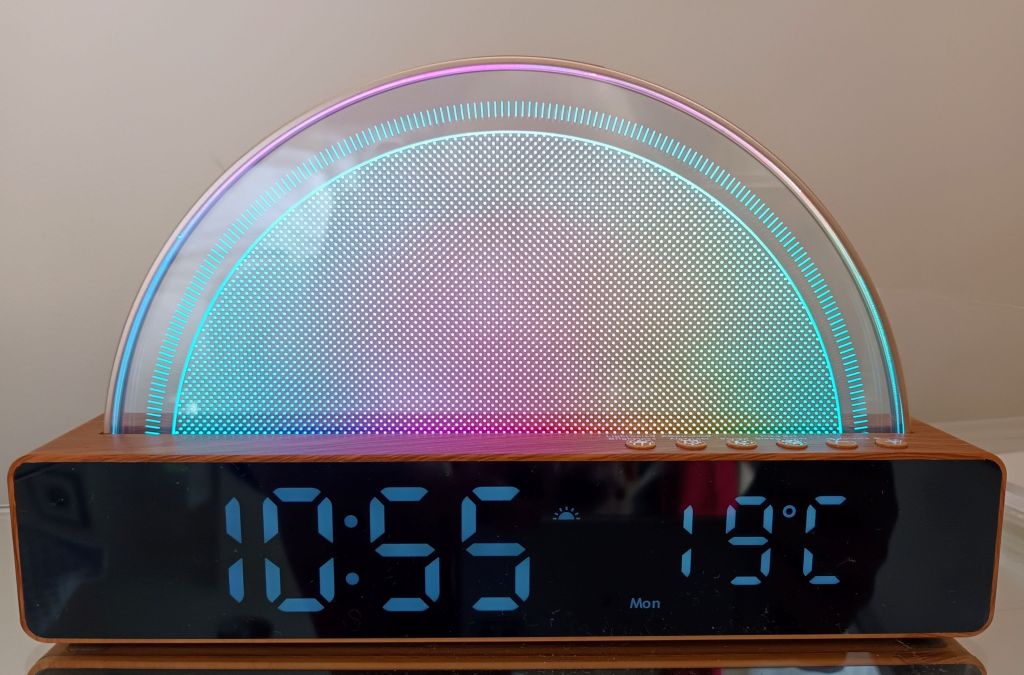
At the beginning of the journal, it invites you reward yourself if you manage to write for 5 consecutive days. I really wanted a sunrise alarm clock/lamp so I researched them online and picked one out on Amazon that was relatively inexpensive but had really good reviews. I’m pleased to say I now have the item on my bedside cabinet and I absolutely love it. Plus, it stops me needing to use my phone as my alarm (or as a light if I get up to pop to the loo) which, in turn, means I don’t get tempted to check the various notifications which have appeared overnight before even getting out of bed.

Afexoa Sunrise Alarm Clock

Although I managed to keep up the practice for 5 full days, I’m now on Day 13 and I’ve forgotten to fill in my night time entry a couple of times already. Once, I was drifting off to sleep and remembered and filled it in straightaway but last night, when I got up, I realised I hadn’t done yesterday’s night time section. Rather than chastising myself for forgetting, I simply filled last night’s in first thing this morning and reflected on possible reasons why I’d not remembered to do it – it was on my bedside cabinet under my Kindle but we went to bed quite late and I was very tired (and feeling a little under the weather).

I’m so far really enjoying using my journal but I have found parts of it more challenging to fill in. For me, the gratitude part is easy as I’ve previously done a daily gratitude pages in my bullet journal. I’m also used to identifying activities to fit in to my day that are focused on ‘me time’ so I always have plenty of ideas for this. Creating a daily affirmation is often quite difficult so I’m in the process of creating a page full of encouraging mantras which I’ve found on Pinterest to help me. Writing three highlights for the day is my favourite part of the journalling progress and I always have plenty to write – sometimes I find there’s not enough room here! Finally, jotting down something I’ve learnt that day (the original journal had the question ‘How could I have made today better?’) is probably the hardest part as I’m not used to doing this kind of reflection. I do get something written each time but it takes me quite a while.

Although it’s known as ‘The Five Minute Journal’, I reckon it currently takes me a lot longer to complete – probably at least 10 minutes in the morning and another 10 just before bed. I’m sure as I continue with the process, ideas will pop into my head during the day which I could incorporate into my entries and this will things quicker and easier. If not, I think the process is still really beneficial and well worth persevering with.

I also found that it was a good idea to refer back to my journal throughout the day to re-check my daily affirmation and to remind myself of my three ideas for what would make my day great. I might try making a quick note of these in my BuJo in future to see if that helps further.

The Main Benefits of keeping The Five Minute Journal for me so far

Having used The Five Minute Journal for nearly two weeks now, I can really see how beneficial it is for my health and wellbeing. Here’s what I’ve found so far:

  • it helps me set the tone for the day and encourages me to end it on a high note
  • it allows me to think about ways in which I can bring more joy to my day rather than focusing wholly on my ever expanding to-do list
  • it helps me to set some intentions for the day and then check back in with myself to see how I got on with them
  • it helps me find the good in every day, even if I have a super busy (and exhausting) or particularly stressful day, there are plenty of positives if you dig deep to find them
  • it’s great for personal development as I spend time reflecting on what I’ve learnt and how this can help me live an even better life
  • the ‘what have I learnt today?’ section has helped me reflect on good and bad habits – for example, doing a mindful activity such as my jigsaw helps me to relax and unwind after a busy day (plus it helps me to rest my voice after talking to different groups of students), whereas ruminating over the feedback I gave and ways in which I could have made it even better is pointless and unhelpful
  • the daily emails that I signed up for have help me learn different ways to approach filling in the pages so that it doesn’t become a repetitive process
  • some of the daily quotes really resonate with me and they all make you think or are a good reminder of things you can do to control your own happiness levels
  • the weekly challenge was a really great way of trying something new and exploring how it made me feel – I’ve only completed one so far but I enjoyed it and it made me feel really good afterwards. I’ve flicked forward to see what’s next and I can’t wait to try it!
  • daily affirmations are helping me to feel better about myself as a person and also increase my confidence, resilience and motivation to take on new challenges
  • although it takes me a bit longer than 5 minutes to fill it in, I do find that it is an incredibly worthwhile practice and that my entries will get better and faster with time

Final words…

I hope you’ve enjoyed finding out about The Five Minute Journal and reading my initial experiences of using it to promote happiness and personal growth. Let me know in the comments if it sounds appealing of if you’ve given a similar style of journalling a go before.

Posted in goal setting, life hacks, lifestyle, Planning and journaling, productivity, Setting goals and intentions

Monday Matters: A guide to the Pomodoro Technique and how it’s helping me to increase my productivity

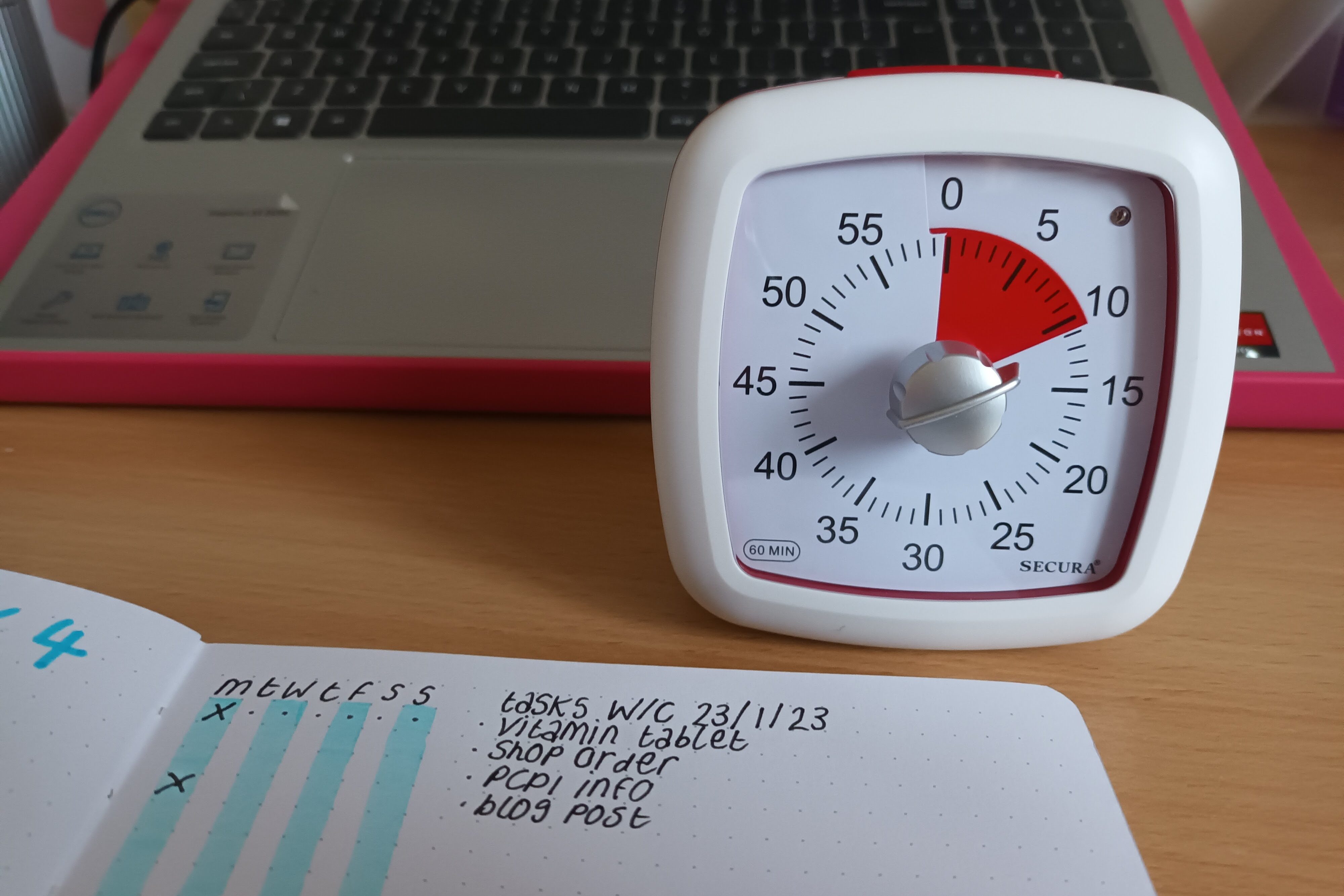
It’s been over two months now since I bought a countdown timer from Amazon to use for the Pomodoro Technique which aims to increase productivity. I already felt that I got plenty done each day but I loved the idea of breaking down work into intervals, having regular breaks and knowing how long I’d been hard at it for. I’ve been consistently using the time management method, apart from a week off for Christmas and I thought I’d share what it is and how I feel it’s helping me.

Those of you who have never heard of this technique may be wondering if it is named after a particular person, but you might be surprised to know that pomodoro is actually Italian for tomato. What does a tomato have to do with productivity? Read on and you’ll find out!

What is The Pomodoro Technique?

The Pomodoro Technique is a time management method which was developed by Italian Francesco Cirillo in the late 1980s. At this time, Cirillo was a university student and was struggling to stay focused on his studies. He challenged himself and posed the question ‘Can you stay focused for two minutes without distraction?’. To check if he could, he grabbed his countdown timer from the kitchen which was red and shaped like a pomodoro, or, in English, a tomato. He set the timer, and after two minutes of focused activity, the timer rang and he had achieved his mission. After this, he considered why the use of a timer had worked and he experimented with gradually upping the time and reducing it when it became too much. In the end, he decided that 25 minutes was perfect and that a short break (5 minutes) was required before continuing.

Cirillo carried on experimenting and came up with some basic principles. The timer was an important part but only one element of the method. He suggests the following:

  • Pick one task you want to work on.
  • Set your timer for 25 minutes and place it somewhere highly visible (so you can see how much time remains).
  • When the buzzer goes off, have a 5 minute break.
  • Repeat this with 3 more periods of 25 minutes and 5 minute breaks.
  • Mark each pomodoro with an X when you’ve completed it (this could be on a mini whiteboard, a post-it note or in your planner.
  • After 4 ‘pomodoros’ (work periods of 25 minutes and 5 minute breaks), take a longer break of 20-30 minutes.
  • Once your longer break is finished, go back to step 1.

But what if I have a really long project or lots of short tasks to do?

For complex projects, you should break things down into smaller actionable steps. This will help you avoid overwhelm and ensure you make good progress towards your end goal.

Any tasks which will take less than one pomodoro should be combined with other quick tasks. This might include a range of admin such as book a hairdressers appointment, reply to an email, making a shopping list for the supermarket and reviewing your bank statement.

If you finish your chosen task before the pomodoro timer rings, you should continue to use the rest of your time in a productive manner e.g. by going over what you’ve just learned, making a list of next steps, reading up on a related topic etc.

What should I do during my 5 minute breaks?

When the timer goes off, it’s sometimes tempting to continue working, especially if you’re in a flow state. However, taking breaks is really important if you want to stay productive. What you do during your short breaks is up to you but here are some suggestions that you might find helpful. For me, taking time away from screens such as my computer or my phone is super important and gives my eyes a good rest.

  • Do a short guided meditation
  • Get out in the garden and reap the benefits of fresh air
  • Do some stretches
  • Put on an upbeat track and dance about your kitchen / living room or anywhere with some space to move
  • Take a quick walk for a serotonin hit
  • Drink some water, squash or a flavoured tea
  • Sit in a comfy chair and read a good book
  • Do a mindful activity such as a spot of doodling, a word puzzle, jigsaw or some colouring in.
  • Listen to some music – trying closing your eyes so you really tune in.
  • Watch birds in your garden.

How is the Pomodoro Technique working for me so far?

So far, I’ve found the method to be incredibly effective. I bought my timer hoping that it might help in some small way but I didn’t realise how beneficial it would be as it’s such a simple idea. Here are some of the advantages I’ve experienced so far:

  • Makes it easy for me to get started. When you have a big project to do, it’s easy to get overwhelmed by its size and this can often lead to procrastination AKA putting things off. Contrary to popular belief, for most people, procrastinating is less about laziness and lack of self control, and more about fears of failure or feelings of self doubt. Knowing that I can do things in baby steps where I only have to do 25 minutes before being allowed a break is all the encouragement I need to get started.
  • Increasing my awareness of time. Using the timer makes you really aware of time going by and this encourages you to really focus in on your chosen tasks.
  • One thing at a time. The method encourages you to work on one specific task or a group of related tasks at one time and this helps to prevent the urge to multitask or context switching (where you jump from one task to another) which studies show is detrimental to productivity.
  • Great for avoiding distractions. In some ways, 25 minutes feels like plenty of time but if you don’t use it wisely, it can soon be gone. Because of this, I’ve taken steps to avoid anything which might interrupt my work flow. Depending on the type of work I’m doing, this might include putting my mobile phone in another room, adopting pen and paper methods for recording, switching off notifications and playing background music to block out other sounds.
  • Encourages me to plan my day. Before you start work, you’re encouraged to plan your tasks in advance. This helps you to decide what you want to get done, at what time and how long you think an activity is likely to take. At the end of your working day, you can evaluate your progress and consider if you overestimated or underestimated how much time tasks took. This can then inform your future planning.
  • Ensures I take regular breaks. Taking regular mental breaks from your work helps you to stay focused and remain efficient and productive during your 25 minute time blocks. If you’re working at a desk, it’s really beneficial to get up and move around as this improves your circulation and helps to combat fatigue.
  • Helps me maintain motivation. Seeing the time counting down on the timer in front of you is great for ensuring you work at a good pace. Also, after each session, I mark my progress in my bullet journal and this in itself makes me feel good and gives me the encouragement I need to keep going.
  • Encourages me to be self-evaluative. On days when I feel like I haven’t been super productive, despite using the Pomodoro Technique, I always question why. Common culprits include distractions from notifications or social media (especially if I’m researching something online), working in an untidy environment (meaning I can’t find things I needed) not taking my 5 minute break (or unconsciously extending them), deviating from my plan when I get back to work (because I found something else much more appealing, or when taking a break, engaging in something which didn’t allow me to relax and recharge (e.g. reading news articles online). When I’ve established what the issues are, I can develop strategies to combat them.

Final words…

I hope you have found today’s blog post useful, especially if you are looking for ways to beat procrastination, become more time savvy, and generally work more productively each day. If you want to know even more about the Pomodoro Technique you will find Francesco Cirillo’s book available in e-book format or paperback on Amazon. Also, feel free to ask any questions you may have in the comments and if you already use the Pomodoro Technique, let me know how it’s working out for you.

Posted in Bullet journaling, lifestyle, Planning and journaling, Setting goals and intentions

Monday Matters: Choosing your Word Of The Year and setting some related intentions

Photo credit: Laura Jones for Keeping It Creative

A few days ago, I watched a YouTube video from content creator and maker Emma at Plan Inspire Create. It was all about selecting a word of the year, thinking about different meanings for the word and setting some intentions for the year based on the term. As I was watching, I was aware that we are almost half way through January, which might seem a little bit late for such an activity but, then I thought about the fact that there are still eleven and a half months remaining, so plenty of time to set intentions and live by the selected word. Today I’m going to share tips for choosing your word and ways in which you can set aims with regard to different aspects of your life. I’ll share my word of the year and the bullet journal spreads where I explore the term in depth.

Choosing your word

Personally, my ideal word, ‘create’ popped into my head straight away and I was brimming with ideas to bring into fruition. However, if you’re in need of some inspiration, you may want to look at lists and select words which seem appealing. A good way of doing this is to pop on Pinterest and search ‘Word of the Year’. It’s important not to rush the process as there are likely to be a number of words which resonate and feel like they might be the one. When I need help deciding, I create a list of words which have potential and then take time to consider each one before making my choice.

After choosing my word, I used letter stamps and one of my new embossing powders (which I got from my lovely friend Bev) to create shiny letters which I then cut out individually. I also used smaller letter stamps to create a ‘Word of the year’ title. These are going to be used in a dedicated bullet journal spread where I explore what the word means and my intentions for living by it. This will create a record which I can refer back to regularly. I’ve already shared my vision board for the first quarter of the year and this shows some of the ways I’m focusing on being creative too.

Look how many times I used my chosen word in the above paragraphs and you’ll see why I selected it!

Considering different meanings of your word

Emma recommended a website called WordHippo which has a ‘thesaurus and word tools for your creative needs’. I found it really useful for considering different meanings for my word and synonyms too. I copied down the particularly relevant definitions/contexts and also made a note of similar words to use in my BuJo spreads. I was amazed by how much information I took from the site.

Create

  • To bring into existence
  • To design with a new shape or form
  • To be creative or imaginative
  • To start or establish
  • To cause or bring about through action
  • To take the first step into something

I created a list of synonyms and used Word It Out to make a word cloud:

I love creating word clouds and I like to print them and stick them in my bullet journal.

Setting some intentions relating to your chosen word

To help you set intentions you can refer to the segments of The Wheel Of Life or The Wheel Of Wellness as your categories or create your own based on the areas of your life that you feel need most work. I decided to combine ideas from both wheels and create a few of my own titles. The following should help you with setting up yours based on your chosen word. You might also find information from WordHippo useful too.

Health and fitness

  • Continue to eat a balanced diet, keep up with getting plenty of active minutes each day and maintain a good sleep routine so that I have plenty of energy for creative persuits.
  • Practice self care to maintain good mental health e.g. engage in mindful activities and find ways to relax each evening and on weekends.

Financial

  • Set aside some money each month for creative projects.
  • Try to use the craft materials I already have rather than buying new things.
  • Continue to make myself available for PCPI work so I have income to use for creative resources.

Family and friends

  • Meet regularly with Bev so we can share the results of our creative endeavours, celebrate our achievements, offer praise, encouragement and ideas.

Contribution / giving

  • Post regularly on my blog sharing motivational and inspirational content related to my bullet journal, living your best life and being productive
  • Continue to consider how I’m making a difference to the students I work with – find ways to record experiences in my journal

Physical environment

  • Make tidying and organising my craft room a priority so I know where materials and tools are and have room to work on creative activities.
  • Use my garden journal to identify tasks for the different months, record new plants and include photos to document changes over time.

Social connection

  • Create opportunities to connect with others through shared passions e.g. animal welfare, nature, crafting, blogging, fitness, bullet journalling
  • Be open to all types of PCPI work and consider how my roles are helping others in their chosen profession

Passion

  • Continue to choose a highlight for my day so that I have dedicated time each week to focus on journalling, blogging and particular creative projects I’m currently working on.
  • Make time to regularly think about my progress towards goals and how I am living my life in a way that reflects my word of the year and my personal values.

Emotional

  • Create balance between the different aspects of my life and regularly check in with how I’m feeling.
  • Remember that my energy levels are lower at certain times of year and ensure that I don’t take on too much to retain emotional wellness.
  • Assess how I’m coping with changes and any challenges.

Marriage

  • Find opportunities for new experiences with my husband. Harness the power of firsts to create happy memories together.
  • Find a different vegetarian/vegan recipe each week and enjoy the experience of creating dishes together in the kitchen.

Final words

I hope that today’s blog post has been helpful and encouraged you to take steps to create a life you love. If you prefer to work with images more than words, you could even create a vision board of pictures which represent how you would like to instill your word of the year. Let me know in the comments if you’ve chosen a word for 2023 and what it is.

Wishing you everything you hope for,

Posted in bullet journal, Bullet journaling, lifestyle, Planning and journaling, productivity, Setting goals and intentions

Monday Matters: How to create and use a vision board so it actually works

My vision board for the start of 2023

I’ve created quite a few vision boards over the last few years and some of them have worked better than others. Often, I find I have manifested some of the things I’ve visualised for myself, whilst other dreams have been forgotten or have not totally come into fruition. Before I create a new board in my bullet journal, I always reflect on the previous one, thinking about which of my desires and goals have been met, which I’ve made progress towards and which either didn’t come true or are no longer in line with what I want for my life. Today, I thought I’d share some of my best tips for creating a vision board and ways in which you can use yours as an effective tool for manifestation.

What is a vision board?

In brief, a vision board is a visual representation of goals you want to work towards to create your ideal life. This can include inspiring images, text which states what you desire for yourself and also messages to yourself such as affirmations and motivational phrases and words. Vision boards can be created in a range of different formats and some of these are discussed a little later.

What do we mean by manifestation?

Put simply, manifestation is the act of materialising or bringing into fruition you deepest wishes, desires and dreams, so they become your true reality. So, for example, you might wish to be a more organised person and this could be shown in your home and work systems, the way you manage your time, the plans you put in place, your goals and priorities, your decision making skills, your self awareness and ability to evaluate your situation etc. There are a number of ways of manifesting the above and creating a vision board can be a really geat tool if you use it properly and effectively.

Where to begin

Before you even start creating your vision board, you need to get clear on what you want to prioritise for yourself right now and in the future. A good way to do this is to schedule some time to quietly think about and evaluate your current life with a view to considering plans to work towards a few goals and small changes that will help you on your way towards your dream life. The following journalling prompts and questions which I’ve collected from a range of sources and created myself will encourage this. You don’t need to answer them all, but they should help you orientate your thinking and ease you into contemplation, evaluation and reflection mode. I recommended writing down some or all of your responses (preferably on paper rather than using a tech device) as part of the process because this enables you to slow down and carefully consider things.

  • What did I do last year that made me happy? Why did these things make me feel this way?
  • In which ways was I successful in 2022? Which goals did I meet? How did I effectively deal with problems which came my way?
  • What was my greatest accomplishment of the year? How has thinking about this helped with my self worth and feelings of purposefulness?
  • What challenges did I face last year? What did I learn as a result?
  • What kind of self care activities did I regularly engage in? (if any) Which of these would I like to continue with or do more of? Which new self care activities might I like to try in 2023?
  • What did I spend too much time and energy on in 2022? As a result, what would I like to do differently in 2023? How might I go about this? Do I need to learn something new or create some sort of plan of action?
  • What is a new skill I learnt last year? Which skill / skills would I like to learn or develop in 2023?
  • Name 5 of your core values e.g. positivity, helping others, social connection, looking after the environment, growth, adventure etc. Am I living in alignment with these? What changes would I like to make in relation to my values and beliefs?
  • Do I feel in control of my life right now or do I feel like others are controlling it for me? Are there any changes I wish to make as a result of my answer?
  • When do I feel most fulfilled? Why?
  • What do I want to leave behind in 2022? This could be anything – an attitude, a toxic relationship, poor self image, negative thinking, lack of self compassion, saying ‘yes’ when you really want to say no, being overworked and underpaid etc
  • What do I want to take forward into 2023? (What do I want to continue doing? How do I want to continue being? Which goals do I want to continue to work towards? etc)
  • What new practices / attitudes / ways of being / skills etc do I want for myself for 2023? How might I implement these? (e.g. do some self development reading, work with a therapist, change up my routines, attend a class or do some distance learning, place more emphasis / importance on something etc)
  • What limiting beliefs am I holding on to? Why? How can I work on changing my beliefs about myself / others / the world? (This might be something that you need help and support with, in which case, seeking out therapist or life coach can be really helpful)
  • What does success look and feel like to you? Why?
  • If you change one thing about your working life to make it better, what would it be? What impact do you feel this would have?
  • How do you respond to criticism? Do you feel this is helpful / unhelpful or could be improved in some way?
  • What qualities do you admire in other people?
  • Is there a skill you have always wanted to master? What could you do to make a start with this?
  • What bad habits would you like to break?
  • What new habits would you most like to instill?
  • What would you like to be doing in 5 years time? Why?
  • Who could support you in working towards the different goals you are considering?

Another activity which you might like to try is filling in a ‘wheel of life’ or ‘life balance wheel’ to assess how balanced the different aspects of your life are. There are lots of resources online for this, including blanks which you can print off. Commonly used categories are:

  • Career / business
  • Health/fitness
  • Spirituality
  • Fun & recreation
  • Finances
  • Giving / contribution
  • Personal growth and development
  • Significant other / marriage / romance
  • Physical environment (home/office)
  • Family & friends

The category names can be tweaked to make them personal to you, so, for example, I would have marriage as a category, would choose business rather than career and have physical environment labelled with home / workspace. The idea is that you evaluate the aspects and give yourself a score out of 10 for each. This is mine from 2018 and it’s amazing to see how things have changed for me since then.

My wheel from the end of 2018 which I found in an old Bullet Journal

My new Wheel of Life!

When you’ve finished your wheel of life, you should see some categories that might benefit from a little bit (or a lot!) of work in order to level them up. For example, in mine, upgrading of the physical environment part of my life is my priority and I’m going to start with the part of my home that I spend most time in.

Personally, I prefer to work on tweaking things for the better rather than having grand ideas which are miles away from my current life. So, for example, if one of my current desires for myself was to have a healthy body and mind, I would think about things I could put in place to work towards this with small and achievable being the key words such as exercising for 30 minutes each day, making sure I eat at least 5 fruit and vegetables, having a balanced plate for my meals and doing at least half an hour of mindful activity each afternoon or evening or scheduling in other regular self care activities. This makes more sense than choosing what for me would be unreasonable goals such as losing loads of weight (unmeasurable), being a size 8 (not going to happen anywhere in the near future if ever,), eating a diet with no foodie treats (unmanageable) and spending two hours in the gym every day of the week (too high expectations).

One little word

Another idea you could try is to use a word to orientate you for the year / month / quarter. This was a tradition coined by Ali Edwards and is described on her website as ‘a word to focus on, to live with, to investigate, to write about, to craft with, and to reflect upon as I go about my daily life’. There are literally hundreds of words you could choose and if you want some inspiration, you’re welcome to check out my Pinterest board.

Vision board format

There are lots of different ways of making a vision board and some may be more appealing to you than others, so start asking yourself a few questions about what would work best for you and would be highly visible each day. Ideas include:

  • A vision board Pinterest board on your computer
  • A large A3 / A2 wall display which can easily be seen in a room of your choice
  • A collection of pictures and words added to a blank page in Canva and then used as your desktop on your personal/work laptop
  • Pictures and words surrounding the mirror where you do your hair/make up each day
  • An A4 sheet stuck onto your fridge with a magnet
  • A double page spread in your notebook or bullet journal

Whatever style you choose, it definitely needs to be one that you’re going to look at on a daily basis. It’s no good creating a vision board in a beautiful notebook and then placing it on a shelf to collect dust – that’s not going to help you manifest anything!

Collect your words and pictures

When you’ve become clear about what you want for yourself right now and have decided on an appropriate format, you can start to collect images and words which reflect this. There are a few different ways you can do this – you could get together some wellbeing related magazines, flick through them and cut out words and images which resonate or you could use Google or Pinterest and search for words and images related to your core values and ways of living you want to move towards. So, for example, if you want to increase the time you spend outdoors in nature, you might search for ‘woodland’, ‘outdoors’, ‘countryside’ or ‘walks in nature’ and then collect images that are the most visually appealing to you. I find it’s best to choose one image and a few words to represent each of your visions. You could even add an affirmation for each such as ‘I am a tidy and well-organised person’, I always take time to look after myself’, ‘I can do anything I put my mind to’, I dream. I believe, I receive. Personally, I like to type out words and phrases on my laptop, but an alternative method is to use letters and phrases from magazines in a kind of ransom note style!

Whilst collecting your words and pictures, try to avoid picking too many things to work on as this is the fastest route to overwhelm and lack of clarity. For my last vision board, I chose just five things to work on and a few mindsets which will help me progress. I selected two motivational images for ‘tidy and organised’ as this is my number one priority and what I want to spend the most time on. As you can see from my vision board at the start of today’s post, I print my photos on glossy photo paper (using my Canon Selphy) and try to choose images which really pop and little bits of décor here and there to try to make my board attractive to look at. If you love the way your vision board turned out, you’re much more likely to want to look at it every day and it’s more likely to inspire you to take action to reach your goals.

A few hints and tips to ensure your vision board works

For a vision board to be classed as working, it needs to be helping to motivated you to work towards your goals and to provide inspiration to keep you heading in the right direction. As I said earlier, I’ve had mixed success with mine through the years and have definitely learnt what helps and what hinders me in making progress. Here’s some tips and tricks which will hopefully help you manifest effectively:

Focus on one thing at a time. Take a look at your vision board and decide which item you are most drawn to right now. This could be something you feel would be easy to implement as a great way to get you started or it could be something which you believe would have most impact. For example, if I had a tidy and well organised craft room, it would certainly make it easier to do my current creative craft project and find and make a start on one of my sewing kits. You can still do things which contribute towards achieving your other goals but try to make one element your priority for the next few weeks or month.

Devote time (at least 5 minutes every day) to look at and think about your vision board. You could also try closing your eyes to visualise what you want for yourself and how you would feel / act / think if a particular vision became your reality. Research shows that visualisation is a powerful tool for manifestation.

Ensure that any goals you set as a result of your vision for the next month / quarter / year are SMART. Make them:

  • Specific
  • Measurable
  • Achievable
  • Realistic
  • Timely

Use the acronym to help you flesh out each of your goals and identify some steps to success. This might take a while – another reason why it’s best to work on one aspect of your vision board at a time.

To help you to instill new habits and or break old ones, try reading up on habit formation. I’m currently reading James Clear’s Atomic Habits and making notes on what I’ve learnt but there are plenty of online resources available too.

Schedule in time to reflect on what’s working, what’s not and your progress each week. If things aren’t working, consider why not and then think of new things you could try. How could you increase your progress? Might you need to create smaller steps and celebrate the tiny achievements to spur you on? Will scheduling in blocks of time each day to work towards your current focus help?

Try creating a ‘highlight‘ each day which will lead you towards your goal. This is a method discussed in the book Make Time by Jake Knapp & John Zeratsky and involves choosing a single activity to prioritise and protect in your daily calendar. When you are engaging in activity for your daily highlight, try to rid your space of distractions so you can really focus on the task at hand.

Don’t be afraid to make updates as you go. You can add things, remove things, tweak things or even start again from scratch if necessary. It’s your vision board and if you decide that one of your images just isn’t inspiring you or that a motivational quote someone shared on Instagram is perfect for your needs – make the necessary changes and hopefully reap the rewards!

When motivation does dwindle, go back and look at your journalling that you did at the beginning of the progress and re-read the answers you wrote to particularly pertinent questions. This should provide you with your ‘reasons why’ and help you to get back on track.

Final words…

I hope that today’s blog post has encouraged you to have a go at creating a vision board for yourself which will help you work towards your goals and desires and ultimately work on designing a life which matches your core values and helps you manifest the aspirations you have for yourself. Wishing you lots of success with meeting your goals for 2023.