Posted in Anxiety management, Bipolar disorder, compassion, depression management, grief, life hacks, mental health, productivity, Uncategorized, wellbeing

Monday Matters: How writing a ‘done list’ can improve your wellbeing during periods of physical and/or mental illness

Welcome to my first blog post of 2025. Happy New Year to you all, and a special hello to my new followers! I hope you had a wonderful Christmas and are excited for what this year will bring.

My husband and I both enjoyed the festive period, which this year (make that last year!) was a double celebration as my brother and his partner got married a few days after Santa had been. The wedding was a joyous occasion and a great a chance to chat with family I hadn’t seen in a while too.

Whilst on the way back home, and with my husband doing the driving, I made the most of being in the passenger seat by reflecting on 2024 and thinking about what I would like to achieve in 2025. I also started to mentally compose a to-do list full of chores and more pleasurable activities to make the most of the remaining three days of the holiday. Little did I know that something would scupper my plans…

Bloody COVID-19 strikes again!

By the time we got back, we both had a bit of a sore throat, which I assumed was just a bit of dehydration from the long car journey. By New Year’s Eve, we felt absolutely dreadful, and so my husband did a test (just in case), and I’m sure you can all guess how that turned out! Needless to say, we’ve barely had the energy for basic self care, nevermind any chores, fun activities or creative pursuits.

We did, however, manage to  psych ourselves up enough to take a quick shower each day, despite how exhausted we were and, despite the fact that the powerful water raining down and massaging in my shampoo and conditioner brought actual pain to my scalp! – random covid symptom or what?????? And I’m so glad we did because this idea for a blog post was born – in fact, some of my best content and general epiphanies come to me whilst showering (anyone else??). 

Basically, I was busy thinking about how annoying it was that I was too exhausted to do anything and that being ill was a giant waste of time, and then I recalled that during my worst bipolar depressions, I still achieved a few things each day and tried my best to be kind to myself and celebrate small wins. To help me do this, I created something that I call a ‘done list’ and, although my illness was physical rather than mental on this occasion, I realised the same technique could be used to make myself feel better.

As everyone goes through ups and downs in life, I thought I’d share how my done list works. You might not need to apply the technique now, but it’s a lovely, self compassionate activity which you can store in your physical or metaphorical toolbox to use when needed such as when you’re sick or struggling with low mood. It can also be used when you’re not feeling under the weather, as a celebration of how productive you’ve been in general or as you work towards your goals for the week / month / year and so on.

In fact, as I sat on the sofa (on day 3 of COVID-19), soothing my throat with a warm drink, I actually started mentally creating one to help my husband and I feel a sense of achievement because I realised we actually did something that day despite feeling like crap.

So what’s a done list?

A done list, as the name suggests, is basically a list of things you’ve achieved that hour / day / week / fortnight / month / different time frame of your choosing, which can be tailored to how you’re feeling – both physically and mentally. So, for example, your list could look something like this:

Today’s done list

  • got out of bed (before 10am too!)
  • got dressed
  • brushed my teeth and washed my face
  • planned 3 things to do
  • made and ate a sandwich (even though I didn’t feel hungry)
  • worked on my jigsaw
  • watched TV for 1 hour (and managed to follow the storyline of the drama)

Or, if you’re not feeling too bad (in a bit more pain than usual, or a little tired maybe and not 100%), could include more taxing items such as those found in the list below:

Things I’ve done this week

  • washed the car
  • tidied my craft room
  • decluttered 20 items from craft room!
  • made 3 meals from scratch
  • 5 gentle workouts (2 x 20 mins yoga and 3 x 30 mins Pilates)
  • created a journalling page using my crafting stash

As you can see from the above, you can include super-minute achievements (or what would considered to be when well) or more ambitious ‘done’ items at other times. These ‘done’ tasks make a good record of how you’ve spent your time and can help you realise that, yes, you might be on top form, but you did make some progress or make a dent in your mental to do list (or physical one if you wrote a list when feeling productive and then things changed e.g. illness, upsetting life event, overwhelm etc).

If you’re still at work, but it’s been a struggle not to phone in sick, you could even include things that you achieved as part of your job, like biting your tongue at a comment made by a colleague or being assertive and saying no to your boss or team leader!

What are the main benefits of creating a ‘done list’?

These are the main benefits I’ve found of creating a done list, but you may be able to come up with more:

  • a visual reminder of what you’ve achieved in the chosen timeframe – the smaller the items are, the longer your list can be!
  • boosts your motivation to do more things (be careful not to do too much though as the last thing you want to do is make yourself feel worse)
  • acknowledges your small wins during difficult times

Final words…

I apologise if this is not new content and I’ve already written about a ‘done list’ before – I did trail through my posts in a bid to find out, and couldn’t pinpoint anything but I still have ‘COVID brain’. Hopefully I’ve shared something helpful which has given you a new string to your ‘wellbeing bow’, particularly if you have recurrent issues with your physical or mental health like I do. Doing a ‘done list’ can also be a great record of what you’ve achieved over a period of time, so can be a really useful tool for measuring productivity too. However you use it, I’m pretty sure it’ll make you feel a little more upbeat about things and your lists may even bring a smile to your face at a later date if you keep them in your planner and happen to flip back!

Thank you for reading and I wish you and your loved ones a happy and healthy 2025,

Posted in bullet journal, Bullet journaling, creativity, goal setting, planner girl, planner lifestyle, Planning and journaling, productivity

Setting up my Bullet Journal for November 2024: Autumn plaid theme

My gorgeous new bullet journal notebook

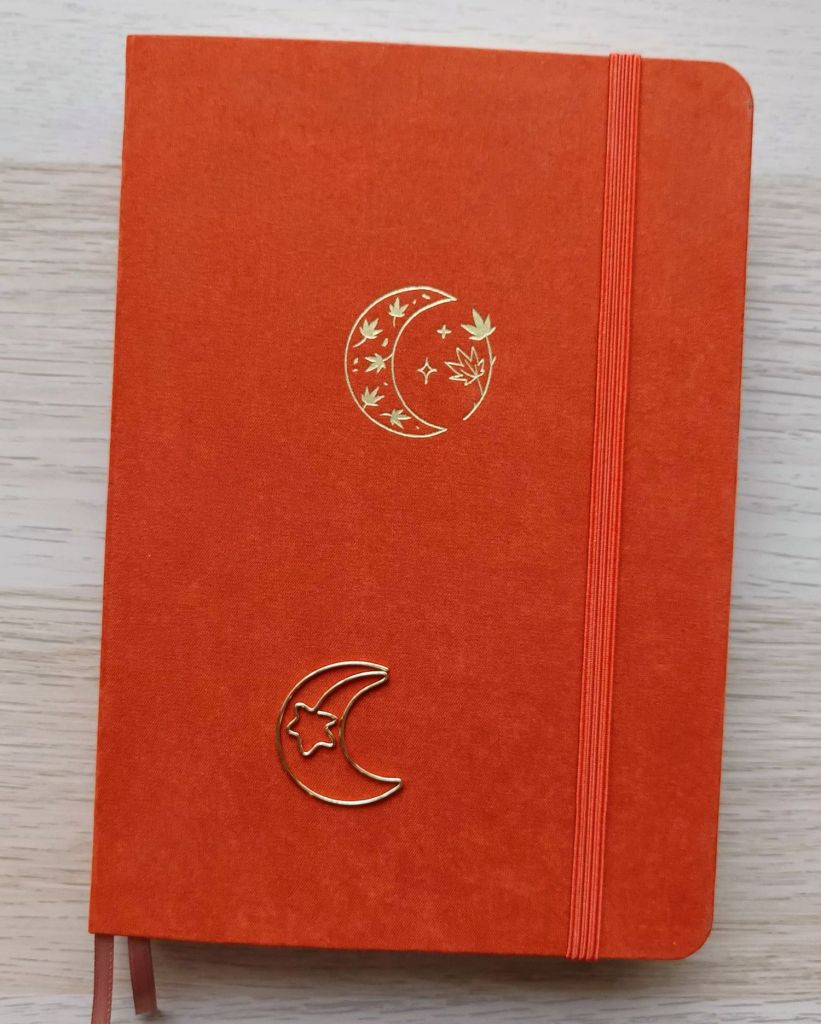
This month, I’ve moved into a brand new bullet journal and again, I chose one from Notebook Therapy. Part of the Maple Journey collection, this one is a soft burnt orange velvet cover featuring a gold moon design to the front and pearl gold gilded edges to the pages. I’d forgotten how long it takes for notebooks to arrive from there, so I didn’t receive it until almost the end of October, hence me being so late sharing my pages.

I decided to try something different for November and picked out some digital papers with autumn plaid designs to use as a background for my different pages. Although printing on full sheets of A4 paper used up almost all of my ink, I was really pleased with the quality of patterns and the way they were all different but matched together perfectly.

The front cover

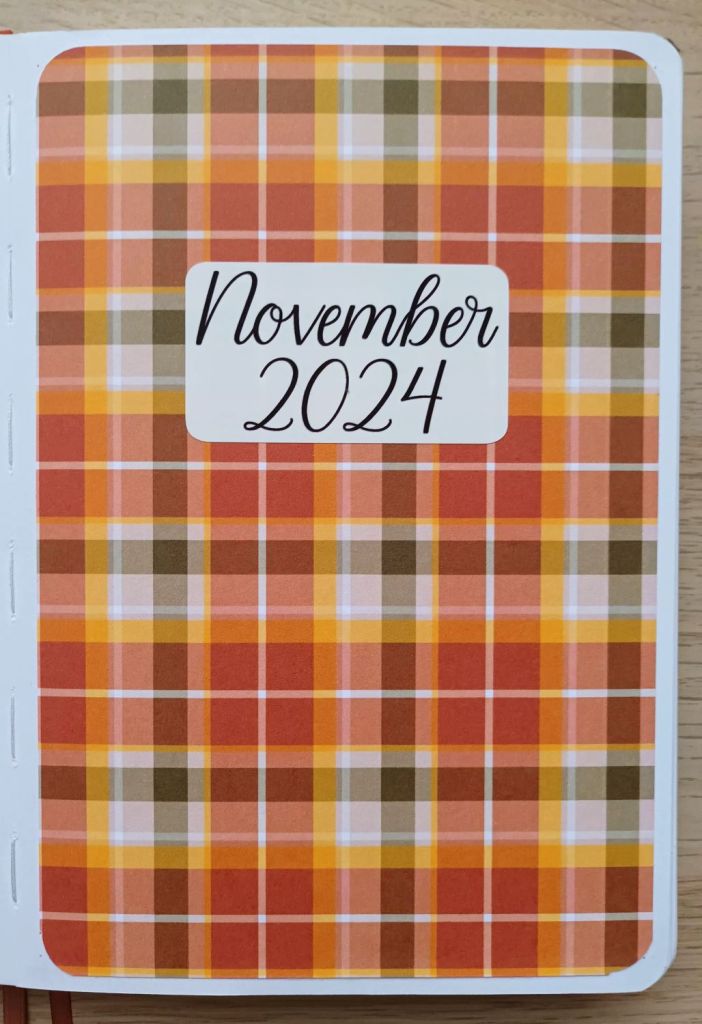
I kept the front cover really simple so that most of the plaid pattern is on display. I made a page of stickers for all of the titles I needed for the month, including the month and year to place centrally.

Photo credit: Laura Jones for Keeping It Creative

Monthly calendar

This is my usual size of monthly calendar but to ensure the plaid design was seamless behind it, I used my dot grid paper pad from Claire Fontaine, to draw up the grid and then trimmed it using my paper cutter and some scissors. Again, I left the rest of the page untouched so plenty of the patterned background is displayed.

Photo credit: Laura Jones for Keeping It Creative

November finances

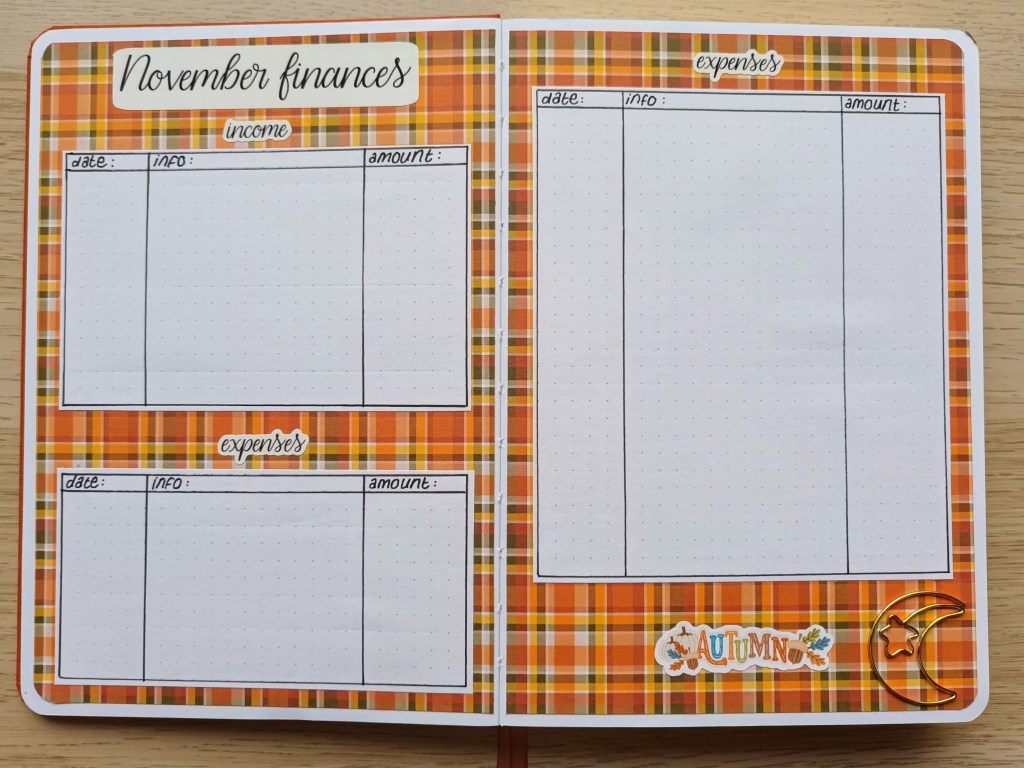
Again, I used my paper pad to draw up the tables and stuck them over the top of pages covered with a plaid design. The titles and the small autumn sticker were made using Cricut Design Space my Joy Xtra. I haven’t used a Tombow brush pen to separate the lines this month as it’s so time consuming and I didn’t want the washi I use to damage the printed plaid paper.

Photo credit: Laura Jones for Keeping It Creative

Monthly goals

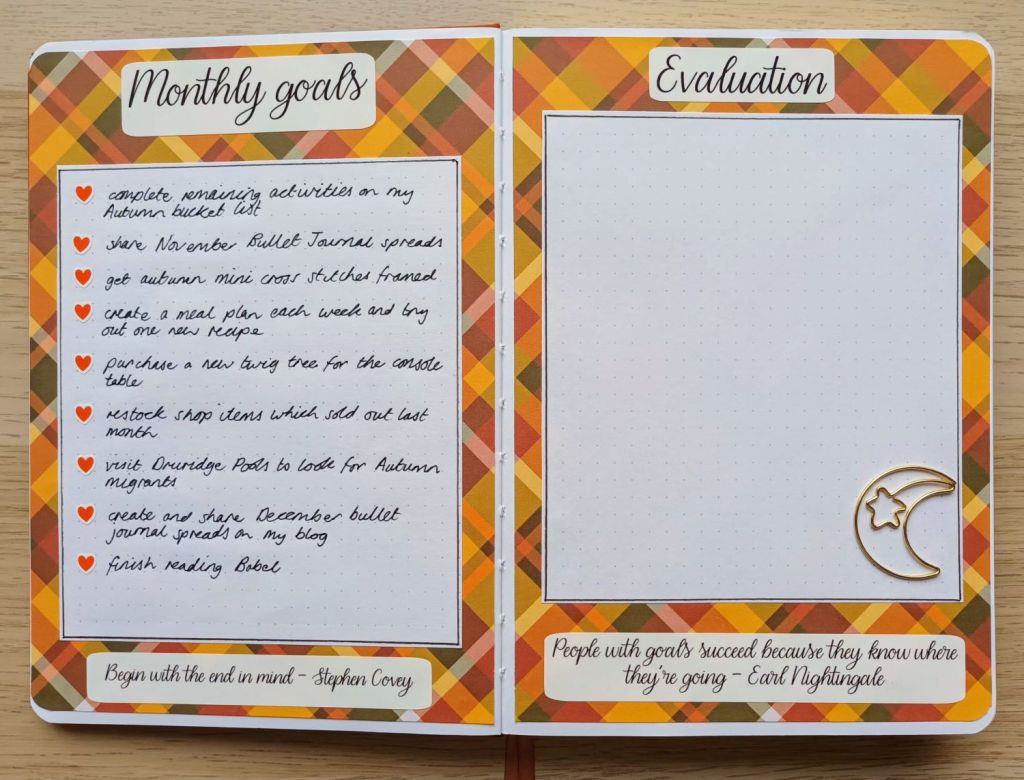
I enjoyed using my monthly goals spread in October so decided to do another one this month. The tiny heart stickers were made in Cricut Design Space and printed on white vinyl sticker paper.

Photo credit: Laura Jones for Keeping It Creative

Weekly plan

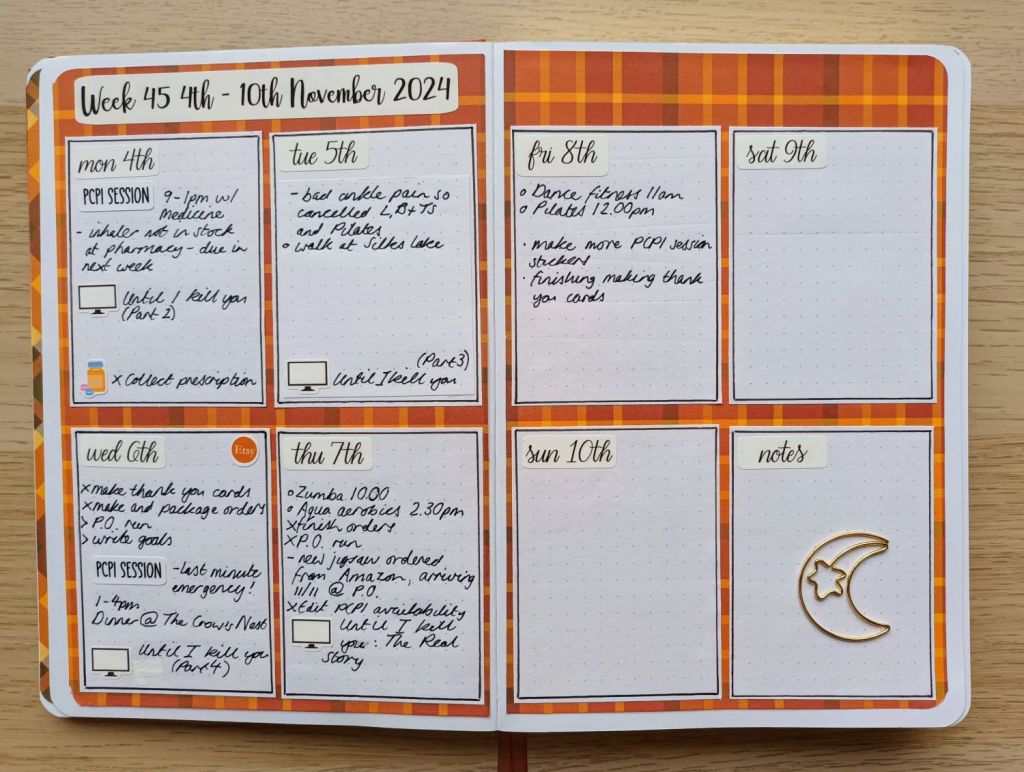
I’ve only had time to set up my first weekly for the month but I’m going to use the same layout for each week. I find that this set up gives me enough space to write in any events, plus a few to-dos each day.

Photo credit: Laura Jones for Keeping It Creative

Final words…

I’ve kept today’s post relatively short but if you have any questions about my November spreads, I’ll be more than happy to answer them. I was hoping that, by using pre-made papers, setting up for the month would be super quick, but, I spent ages searching on Etsy for different digital plaid designs before I settled on my favourite!

I hope you all have a lovely November and are able to make the most of the final month of autumn,

Posted in goal setting, intentional living, life hacks, mindset, productivity

Monday Matters: How writing a Not to-do list can revolutionise your days

We’re all familiar with the concept of a ‘to-do’ list and have likely used them many times in a bid to make our day super productive. We’ve probably tried to make ourselves feel like we’re winning by adding a few things we’ve already finished or got started on so we can quickly tick them off. However, sometimes, we’ll have felt disheartened when we’re approaching bedtime and discover that most of our list needs migrating to tomorrow’s to-dos because we weren’t productive enough, have too much to do, or, we got distracted by other things.

Creating a ‘not to-do list’ can be a wonderful tool to help us identify and eliminate tasks, habits and distractions which prevent us from focusing on what really matters and stop us from being as productive as we would like to be. In a nutshell, a ‘Not to-do list’ is a list of activities you choose to avoid doing so that you can manage your time effectively. This might include things like the following:

  • anything which distracts you on a regular basis
  • things which drain your energy
  • bad habits that you want to remove from your working time
  • things which don’t currently add value to your life
  • unnecessary tasks i.e. things which don’t need to be done
  • other people’s responsibilities

Ideas for items to add to your not to-do list

Your Not to-do list should be highly personalised depending on your own wants and needs but here are some ideas to get you started.

  • Checking your emails repeatedly throughout the day
  • Mindlessly scrolling social media
  • Checking your phone in bed – either last thing at night or before you get up
  • Drinking coffee after 3pm (when you have work the next day)
  • Going to bed later than 11pm (Sunday – Thursday)
  • Spending time thinking about / stressing over things which are out of your control
  • Reading negative news
  • Things that are not my responsibility
  • Doing tasks which would be best delegated to someone else
  • Multi-tasking (or attempting to)
  • Saying yes to tasks or events that aren’t a priority right now
  • Working whilst eating lunch
  • Spending time with individuals who drain your energy
  • Forgetting to take regular work breaks
  • Doing work after 5pm
  • Procrastinating by watching lots of productivity videos (binge watching) on YouTube
  • Keeping ideas, thoughts and must dos in your head instead of writing them down and scheduling time to deal with them
  • Not identifying your top priorities for the day
  • Eating unhealthy snacks which make you feel sluggish
  • Making excuses to avoid / put off difficult tasks
  • Aiming for perfection – forgetting that done is better than perfect
  • Setting too many goals at once

Final words…

I hope you’ve found today’s post useful and it’s helped you to consider tasks, habits and distractions which prevent you from being as productive as you could be. I would really appreciate it if you took time out from your busy schedule to drop me a comment sharing your top three things to add to your ‘Not to-do list’.

Posted in goal setting, life hacks, lifelong learning, personal growth, productivity, Setting goals and intentions

Monday Matters: 7 ways to be a lifelong learner (Part 2 of 2)

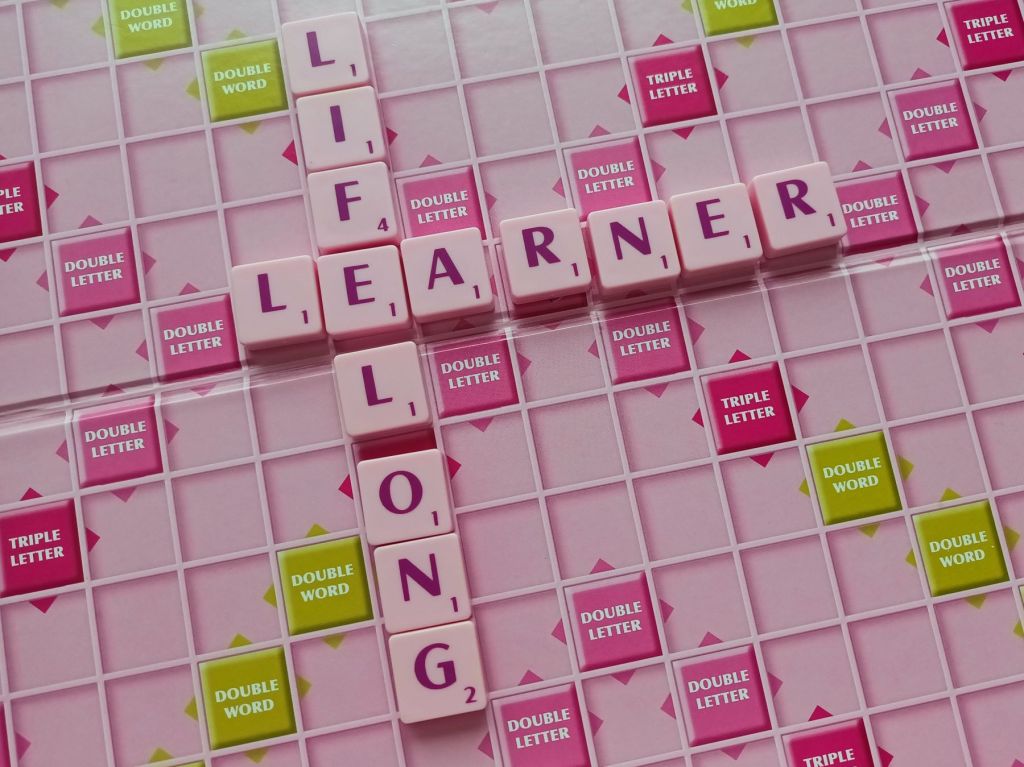
Today, I’m sharing the second and final part of my mini-series on lifelong learning. In Part 1, I considered the character traits of lifelong learners and discussed the benefits of being a lifelong learner. In Part 2, I’m going to be identifying different habits to adopt for continual learning and also sharing a range of ways to be a lifelong learner. I hope you find both of my posts useful and they help you think about the value of continued learning, your preferred learning styles, plus little tweaks you could make to your daily life and schedule so that learning is both a priority and a joy.

Photo credit: Laura Jones for Keeping It Creative

1. Consider your learning styles

We all have preferred methods of learning and, as adults we can develop our understanding of the different styles, decide which of them work best for us personally, and then use our knowledge to tailor our learning experiences appropriately. Here are some of the most common types of learner:

  • auditory – learns by listening e.g. through music, lectures, podcasts, and talks
  • visual – prefers to use visual aids such as pictures, photographs, videos, charts and diagrams, they may also draw their own illustrations to help them remember key information
  • kinesthetic – learns by doing and often described as ‘hands on’ learners, likes to use different senses to take in the information
  • reading / writing – learns through seeking out written information in books and magazine articles, prefers to write things down in words rather than using pictures or graphs, also likes to underline key points, colour code information or write notes in the margin when given a handout
  • logical / analytical – learns by processing data and solving problems, often looks for patterns to connect different aspects of the information in order to make sense of what is being presented
  • naturalistic – learns through investigating the natural environment, particularly enjoys outdoor and environmental learning opportunities. Enjoys carrying out field studies, watching wildlife documentaries, keeping nature journals with own sketches, photographs, observations etc. and finding out more about different environmental issues such as climate change
  • interpersonal – this type of learner functions best when they engage in group activities like quizzing one another, becoming involved in discussions or brainstorms and forming study groups
  • intrapersonal – this type of learner prefers a solitary learning style and finds self study particularly effective

You may find that from the list above, you prefer several of the different learning styles and this can help you to explore particular approaches to learning. However, it’s also important to recognise that some types of learning are more pertinent to particular topics of study or aspects of learning than others. For example, if you want to learn how to play a musical instrument, auditory, visual and kinesthetic (hands on) activities may be more helpful than reading or writing about the skills involved.

2. Identify your passions and interests

As an adult, you have lots of choice in terms of what you’d like to learn about and the skills you’d like to develop. You’re also free to explore and follow your passions and interests in any way you choose or even decide that you’re not as interested in something as you thought you were! Here’s some ideas for identifying specific passions and interests:

  • reflect on your past experiences and activities you’ve particularly enjoyed – does anything stand out in your memory that you’d like to become involved in or try again?
  • think about your particular set of skills and abilities – are there any particular ways in which you’d like to put them to good use?
  • consider your core values – this will help you establish what matters to you in life and then you can create learning experiences which reflect this. There are lots of resources online with lists of core personal values but you might find this article particularly helpful as it adds a little detail to each item on the list
  • consider favourite topics of conversation with friends and family members or what you like to teach others about
  • try out new things and discover what sparks your curiosity and interest
  • write a list of things you’d like to get better at e.g. cooking, gardening, playing guitar, drawing, singing, applying make up – give yourself plenty of time to see what comes up!

3. Read every single day

Developing a habit of reading each and every day is a great way of learning new things. To make it stick, try habit stacking by pairing it with an existing habit of yours. So, for example, part of my morning routine is breakfast, filling in my journal and reading a book or article of my choice for 5, 10 or 20 minutes depending on the time I have available. I also always read a novel on my Kindle each night as soon as I get into bed.

Any form of reading is an opportunity to learn, but varying your reading material is the best way to gain new knowledge and different perspectives. In a month, you might read several novels (choosing different genre such as crime thriller, romance, historical fiction and fantasy), a collection of love poetry, an article in a magazine which is full of self care ideas, a few blog posts on topics that interest you such as a particular creative pursuit or easy vegetables to grow in your garden, the definition of a previously unfamiliar word in a dictionary, a newspaper article about an environmental issue and a few chapters from a non-fiction book about creating a well-organised home.

4. Set realistic and meaningful goals

A great way of setting learning goals and pursuing them is to use the SMART framework. Taking time to identify the specifics and draw up small and achievable steps is crucial if you want to make meaningful progress and enjoy the outcomes of your learning.

5. Manage your time effectively

If you want to make learning a priority, you need to dedicate time to it on a regular basis and ensure it becomes a key part of your routine. Good time management is such an important skill to develop (and might be something you want to learn about first before pursuing your passions and interests). Key ways to manage your time well so you can create opportunities for learning include:

  • keeping yourself organised – make sure your calendar is up-to-date so you know your commitments and when you might be able to carve out some time for learning
  • maintain a tidy environment where everything has its place – so you don’t spend precious minutes or hours looking for things you need but can’t find
  • prioritising – making decisions about the best use of your time today, deciding what’s important for you in your life right now and making those things a priority (don’t forget to add time for breaks too)
  • scheduling – try ‘time blocking’ by first adding in regular tasks and activities such as eating meals, sleeping, going to work etc. and then fitting in other priorities around these
  • avoiding time and energy drainers such as scrolling social media, excessively checking your email, phone notifications (especially sounds and pop ups which draw your attention straight away), negativity whether that’s from people, watching the news or doomscrolling
  • set short term goals for learning that help you take steps towards your long term goals and regularly evaluate your progress to check you’re heading in the right direction

If you want to know more about making time for your current priorities and developing time management skills, I highly recommend ‘Make Time: How to focus on what matters every day’ by Jake Knapp and John Zeratsky.

6. Make use of free online resources

Follow a small number of podcasts, blogs and vlogs on a topic of your choice, hosted by people you find interesting to hear from and schedule some time each week to check in with them and explore new content or older uploads that you might have missed. Also look for online tutorials for beginners (there’s loads to choose from on YouTube or within blogs) or introductory courses so you can give things a go before committing to them financially. Alternatively, to develop your knowledge of a subject in general, you might like to join a group (for example on Facebook) where you can follow interesting topics of conversation, start a thread to discover different opinions or ask a question of someone with a higher level of expertise in the field.

7. Don’t forget to rest

Although making time for learning is important if you want to explore your passions and interests, equally valuable is taking regular breaks for rest and relaxation. This might mean meditating, listening to a favourite album or piece of music, spending time in nature or engaging in creative activities such as drawing, painting or papercrafting. Ensuring you get adequate, quality sleep is also essential for good cognition so be sure to make this a priority too.

Final words…

I hope today’s blog post has given you a few new ideas on how to be a lifelong learner. Ultimately, you are looking to cultivate a growth mind set where you are always looking for opportunities to learn, aren’t frightened to try new and challenging things, seek out new perspectives as a way to see the world in a different way, view mistakes, failures and setbacks as learning opportunities, find value in constructive criticism and believe that, with effort, you are more than capable of developing both your knowledge and abilities in order to reach your full potential.

I wish you well on your various learning journeys and remember every day is a new opportunity to be who you want to be,

Posted in life hacks, lifestyle, productivity, self care, Setting goals and intentions

Monday Matters: 7 benefits of a clutter free and well-organised home environment plus some tips for getting started with decluttering

Photo from a selection on Canva Pro

One of my current goals, which has been ongoing for quite a while now, is to declutter, tidy and organise my craft room / office, in a way which makes it a pleasant and distraction free environment and consequently a productive place to work and get creative. It’s an enormous job because a) I have soooo much stuff and b) it’s packed into what, in house buying terms, would be described as the box room / box bedroom. I did get started with the process, but then, I found other easier and more preferable projects and activities to do, and now, even the thought of ‘it’ is overwhelming and enough to put me off.

My knowledge and experience of tackling large projects tells me that taking it one tiny step at a time and making a list of tasks to work from (and tick off) would be helpful but I’m sure any of you who have ‘lots of stuff’ can relate and sympathise with me when I explain that pretty much anything and everything else is getting prioritised instead. To give myself the idiomatic ‘kick up the backside’, the idea of writing this blog post was born, to hopefully be a good reminder of the main benefits of a clutter-free and organised space even though I’m pretty sure you can guess a few of them. This might also help with the absorbing of information and fingers crossed with taking action. Clutter-free, super-organised readers can read and then polish their halos plus maybe leave a tip or two in the comments to help me and others. If today’s post has motivated you or helped you feel less alone in having a less than immaculate home environment I would love it if you dropped a comment below to generally make me and others feel better.

Without further ado, here are, what I consider to be the main benefits of a clutter free and well-organised space whether it’s your whole home, a room within your house or just a small area, such as your pantry or the junk drawer. I hope you find the following useful and that, fingers crossed, it gives you the incentive to take that first baby step and then keep going.

Reduced stress and anxiety

Being in an environment full of clutter causes sensory overload, heightened stress levels and feelings of shame and embarrassment (especially if you have visitors). The opposite is true of a clutter free and well-organised home. You’ll find yourself calmer, more relaxed and in control. You’ll likely feel a sense of pride when you look at your environment and what you’ve achieved and are able to maintain, and, you’ll also be much happier showing visitors in – even those who are unexpected! Plus you won’t be needing to apologise for the mess anymore or spend frantic hours trying to hide clutter in random, out of sight places.

Boosts productivity and creativity

A neat and tidy work environment means fewer distractions and plenty of space in which to work. This generally leads to better concentration levels, deeper focus and improved productivity. It also helps to free your mind of mental clutter and provides the space for innovative thoughts and letting your creative juices flow.

So much easier to find things

When you have fewer possessions and every item has a specific home, it makes it much easier to find something when you need it saving you a lot of time and energy. On the other hand, if you’re house is in disarray, it can become extremely frustrating and time consuming to locate the item you need. Often, when I’m struggling to find something, I get myself so worked up that I end up in tears. Aldo, searching places that the item might be reminds me of how much stuff I actually have (and creates feelings of guilt) and brings to mind how, in the past, I’ve bought things to try to make myself feel better when I’ve been depressed.

Rids your home of allergens

As someone who is asthmatic and has a dust allergy, this one is a huge plus for me. Keeping a tidy and uncluttered home makes it much quicker and easier to clean and remove dust, moulds and mildew. Plus, less stuff in general helps with airflow and ventilation. This is good news for anyone with respiratory conditions or other allergies which many people have.

Improved sleep

A neat, tidy and clutter free bedroom creates a sanctuary in which to seek comfort and relaxation ready for a restful night’s sleep. It also provides a peaceful and calming space in which to enjoy a slow start to your morning routine, rather than being immediately overwhelmed by stuff as soon as you open your eyes.

More time for hobbies and socialising with family and friends

A clutter-free and organised home environment is so much quicker and easier to clean and keep tidy. Less time on household chores leaves you with more time to engage in your favourite hobbies and more opportunites to socialise with family and friends. It also means that you can happily invite people round to enjoy your home with you.

Better relationships with those you share your home with

When researching today’s blog post, I came across a range of articles and studies which discussed how mess and clutter can affect relationships and even completely destroy them. This can be due to the clutterer struggling with psychological issues as a result of their stuff, leading to feelings such as stress, anxiety, overwhelm, shame, depression and low self worth. Or, the clutter can cause conflict between individuals living in the home creating feelings of anger, resentment and frustration as well as being a source of arguments and ill feeling.

On the other hand, a tidy and clutter free home environment creates a harmonious and happy house, where all occupants can relax and feel comfortable. A well-organised home also reflects personal qualities such as a sense of control, high self worth, confidence, purposefulness, self love, resourcefulness and resilience, which, together with teamwork and authentic conversation with regard to belongings can result in a much more amicable and loving relationship with your partner or housemates.

Tips for getting started with decluttering

  1. Make a commitment – before you start, you need to be prepared to put in the required time and energy for decluttering. Creating a clutter free and organised home doesn’t happen overnight, it takes a huge commitment which is why it’s good to consider the benefits discussed above. Tidying and decluttering needs to be a priority in your life and something you put your heart and soul into. The tip below should really help to get clear in your mind about what the benefits are for you personally.
  2. Think about and visualise your overall goal – imagine what your tidy home would look like and how it would feel to be there. Visualise yourself walking through your house when you’ve met your goal. Consider exactly how you would spend your time at home. Sketch or write about the improvements you’ve made and ask yourself why it feel the way it now does – a key to manifesting a clutter free and organised home is to imagine you already have exactly what you desire.
  3. Start small – set tiny goals such as tackling one box, one drawer, one shelf, a single pile of papers. Work on one room at a time and make a note of places to work on which will really make a difference – so for example your desk space in your office or craft room, the main counter in your kitchen or the coffee table in your living room.
  4. Allocate an amount of time to the job – you might decide you have 5 or 10 minutes, an hour or a whole afternoon (starting small is good if you’re feeling overwhelmed) . Set a timer and turn on do not disturb mode on your phone.
  5. Take before and after photographs – want a visual reminder of how much progress you’ve made? Take a quick snap on your phone of what the area looked like before and what it looks like at the end of your allocated amount of time. Repeat before and after each decluttering and tidying session.
  6. Get support from an expert Once you’ve got started with the process and have seen some of the impact you can have, you might want to get help from a professional declutterer or a celebrity who has created a home you admire. So, for example Marie Kondo has developed the Spark Joy method for tidying where you work on categories of items in your home in the order suggested, whilst Stacey Solomon has her TV series ‘Sort Your Life Out’ plus her ‘Tap to Tidy’ book full of advice and tips. You don’t need to actually invite Kondo or Stacey Solomon to your home – just make use of their skillset.
  7. Enlist help from family or others in your social circle – if you find decluttering overwhelming, you might want to enlist the help of a family member or friend, even if they’re just there to help you gather things together, make decisions about where to store things or to offer moral support. And if they can’t be there physically, use them as an accountability partner asking them to regularly check in to see how you’re getting on and what progress has been made.
  8. Donate, sell or recycle what you can. This will help you reduce waste (and feel good about your impact on the environment), make a little extra cash or help someone in need (just because it doesn’t spark joy for you, doesn’t mean it won’t for others).
  9. Find a specific home for each and every item – the key to keeping your home neat and tidy is to have a specific storage location for every single item. That way, you’ll know exactly where to put it when you’ve finished with it or where to display the object in your home. Try to keep most things out of sight in drawers, cupboards and boxes as this will make it easy to clean surfaces.
  10. Don’t strive for perfection As you embark on your decluttering journey, be kind to yourself and celebrate small achievements and elements of progress along the way, rather than expecting everything to be perfect before moving on to the next task. Decluttering is a process and can take a lot of time (often much longer than you think), so little and often is the way to go. Also, slightly lowering your expectations can help you to feel like you’re getting there.

I hope you’ve found today’s blog post useful and have picked up a few tips as you’ve read. I’m sure you can see how beneficial a clutter free and well-organised home is for your mental and physical health and how it can make for a happier living space overall.

Additionally, I’m thinking about doing another piece at some point in the future that focuses specifically on decluttering and organising craft supplies, as this, for me, is the area that needs most work. Let me know in the comments if you would find this helpful too.

Happy decluttering, tidying and organising,