Posted in art, bullet journal, Bullet journaling, creativity, lifestyle, Planning and journaling, watercolour painting

Setting up my Bullet Journal for January 2024: Watercolour winter scene and snowflakes theme

Happy New Year everyone! I hope you’re all having a good 2024 so far. I’m very late sharing my bullet journal spreads for this month for several reasons – one, we were away for Christmas and so I didn’t get out my paints until NYE, and two, the print and cut hack for making stickers using the Cricut Joy doesn’t work anymore and so I’ve resorted to purchasing the Cricut Xtra which is due to arrive today, the 4th January, with a view to creating some text stickers for my spreads.

Anyway, I hope you like the theme and the watercolour bits and pieces which I had great fun creating. On to the pages…

Front cover

Having chosen the theme, I did a bit of Googling, looking for winter scene watercolour painting and I found this gorgeous design on a blog post from way back in 2014. This inspired my front cover but I changed the colours up a bit. The trees were painted first using Intense Green (AKA phthalo green) mixed with a small amount of Payne’s Grey and Vandyke brown and a tiny bit of grey. When that was completely dry, I created the snowy ground using very watered down grey. Then, after drying, I mixed a range of blues for the sky. Whilst still wet, I used coarse salt sprinkles to create the snowy effect. Finally, I used white gouache for the snow on the trees and then paint flicks to give the idea of falling snow.
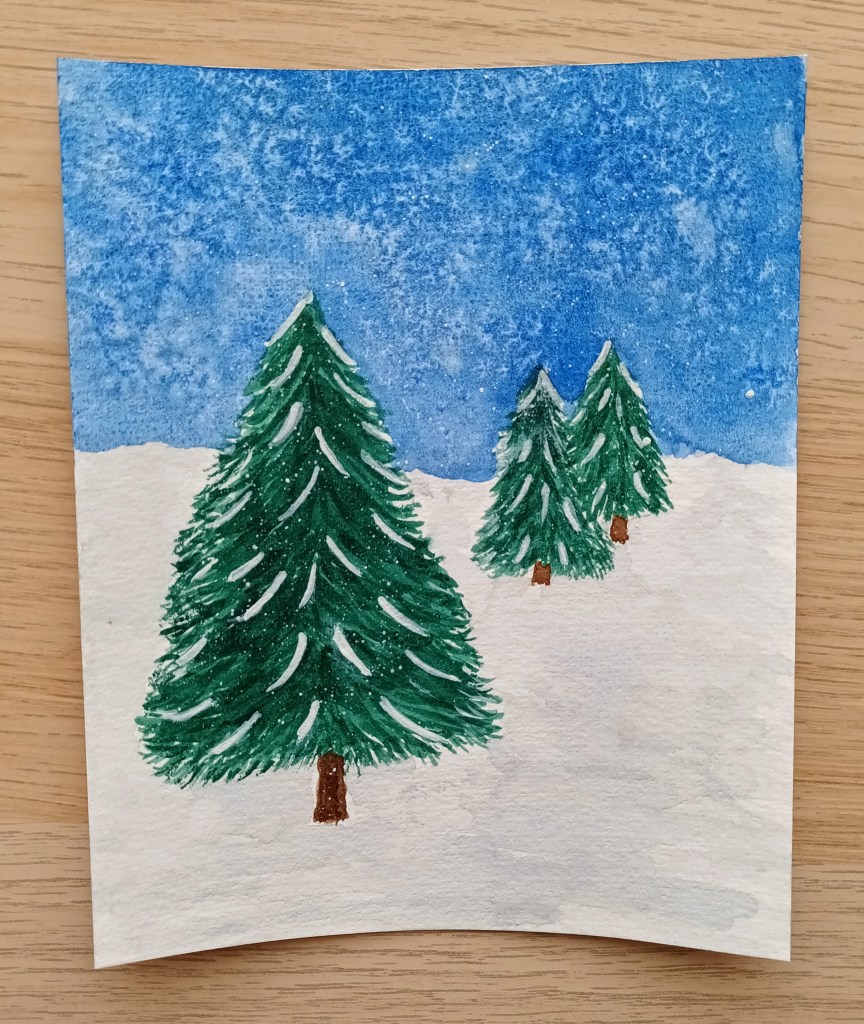
Photo credit: Laura Jones for Keeping It Creative

The original watercolour was then scanned in using my printer and I pasted it into an MS Publisher A5 page and added the January 2024 title. The colours never look the same as the original, but I’m still happy with how it turned out.
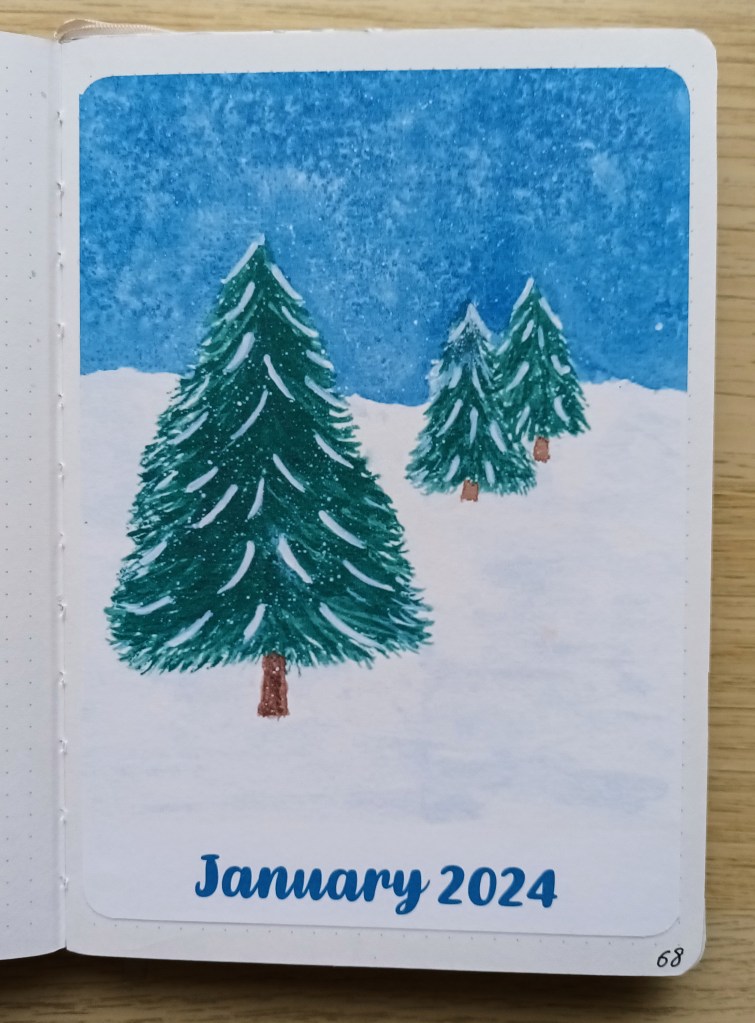
Photo credit: Laura Jones for Keeping It Creative

The calendar

My husband and I had a go at creating a blue background with salt sprinkles on New Years Eve! We enjoyed experimenting, and it was a great, relaxing activity to do in the evening and helped us to stay awake to see in the new year. Again, the piece was scanned in and this time, it was used to cover the whole page. I then cut out the calendar shape using some dot grid paper which I then positioned in a location on the pages which was close to where it would have been if I could see the dot grid. The titles were created using Cricut Design Space and printed when my machine eventually arrived!

When I’d finished it, I felt like something was missing so I used Design Space again to make lots of snowflake stickers in different sizes. I’ve done a snowflake theme in January previously, but this one looks very different so I don’t feel like I’m repeating designs.
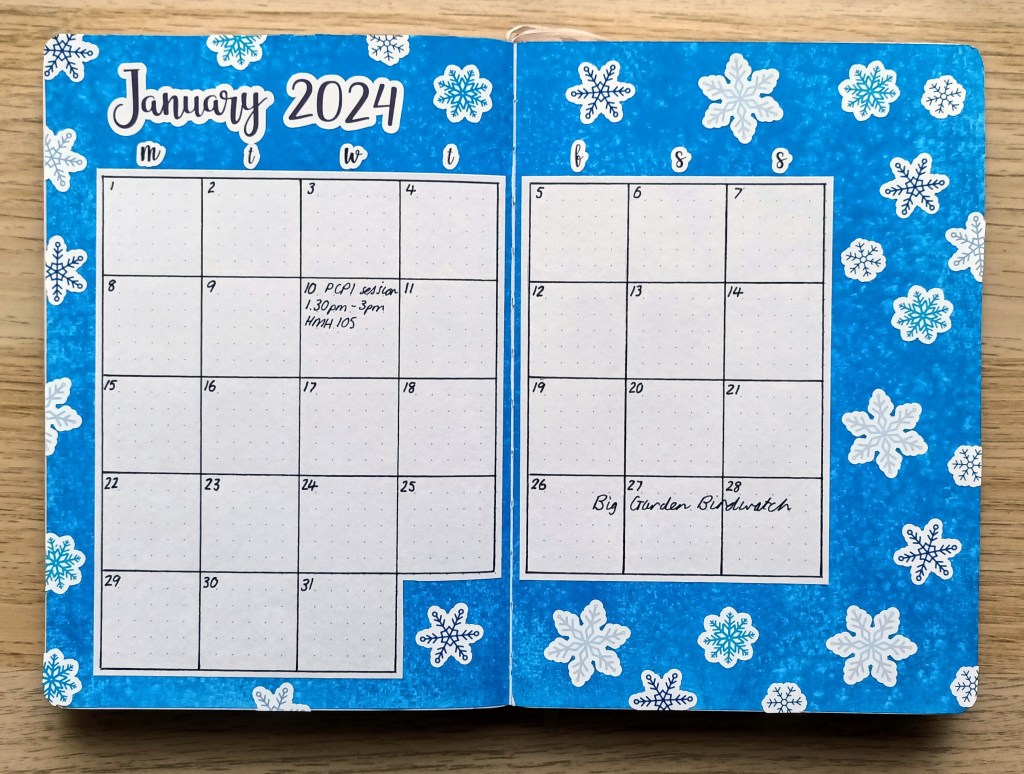
Photo credit: Laura Jones for Keeping It Creative

Finances spread

My finances record is still working really well so I’ve kept to the same layout but changed the decor to go with my theme for January. I love the little watercolour scene I found on Design Space to make into a sticker!
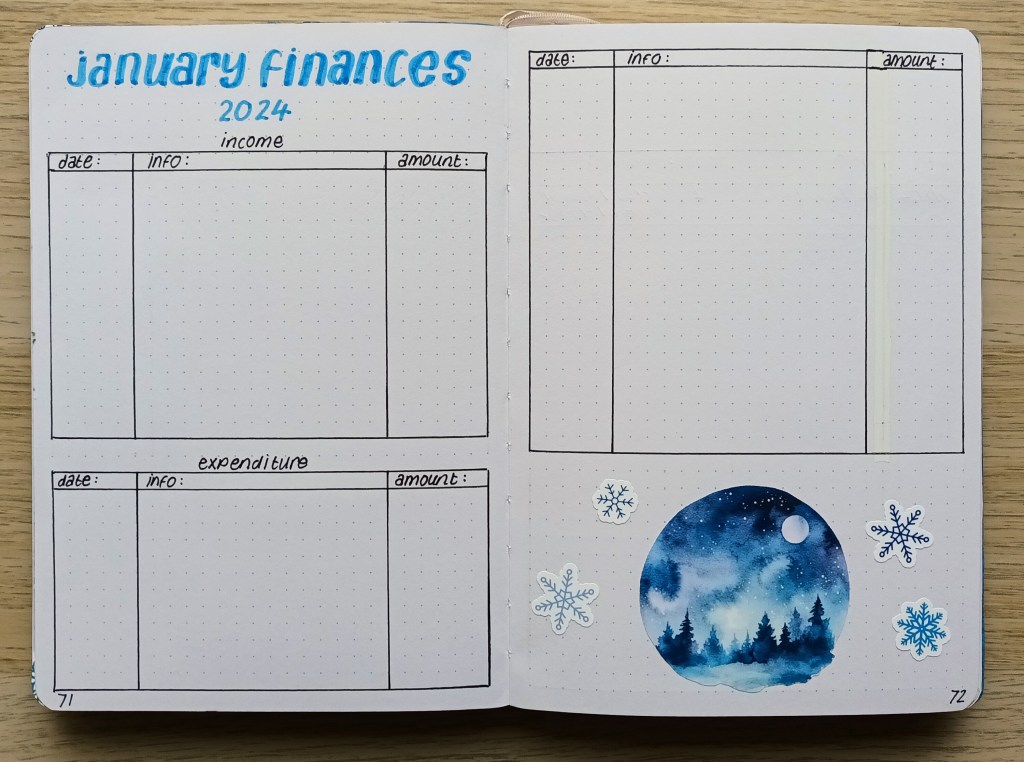
Photo credit: Laura Jones for Keeping It Creative

TV watched record

I create one of these every quarter or so to record the series that I’ve watched on TV. This time, I’ve added a date column so I can see, at a glance, when we started watching each series. There’s already some great stuff on TV for January and we’re loving the black comedy / drama of season 2 of The Tourist. The genres are taken from IMDB.
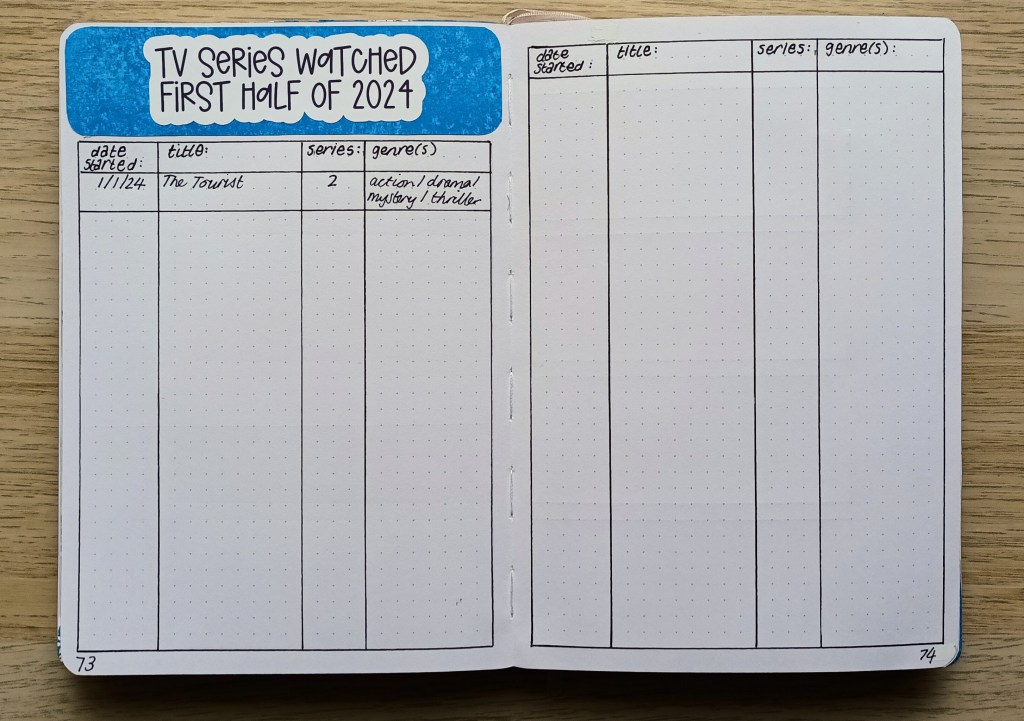
Photo credit: Laura Jones for Keeping It Creative

Weekly Plans

I went for another Dutch door layout this month and used a second print out of my watercolour background to create page borders to either side. I couldn’t resist adding some more snowflake stickers.
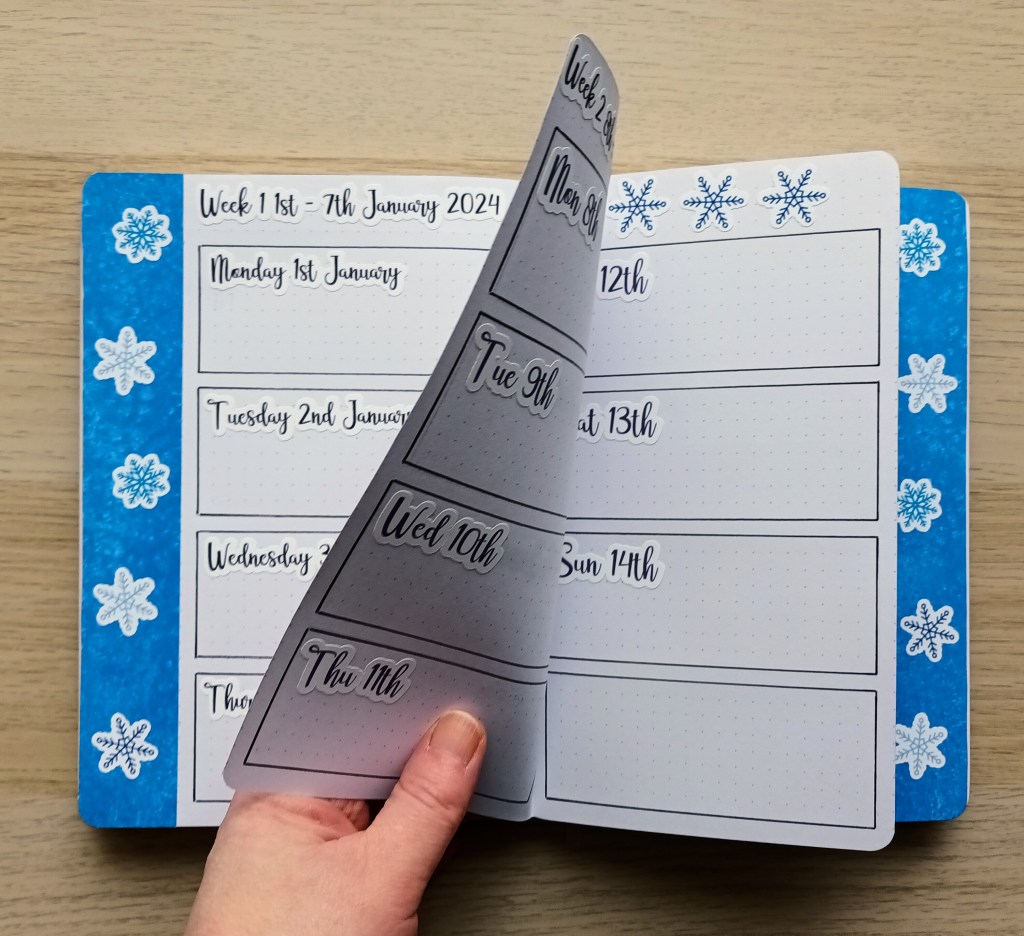
Photo credit: Laura Jones for Keeping It Creative

Veganuary meal planning

My husband and I have been doing Veganuary, where you go vegan for the month of January for quite a few years now. We try to create a meal plan each week as this helps when we go shopping. We also try to do more homemade meals which are packed with nutritious veggies.
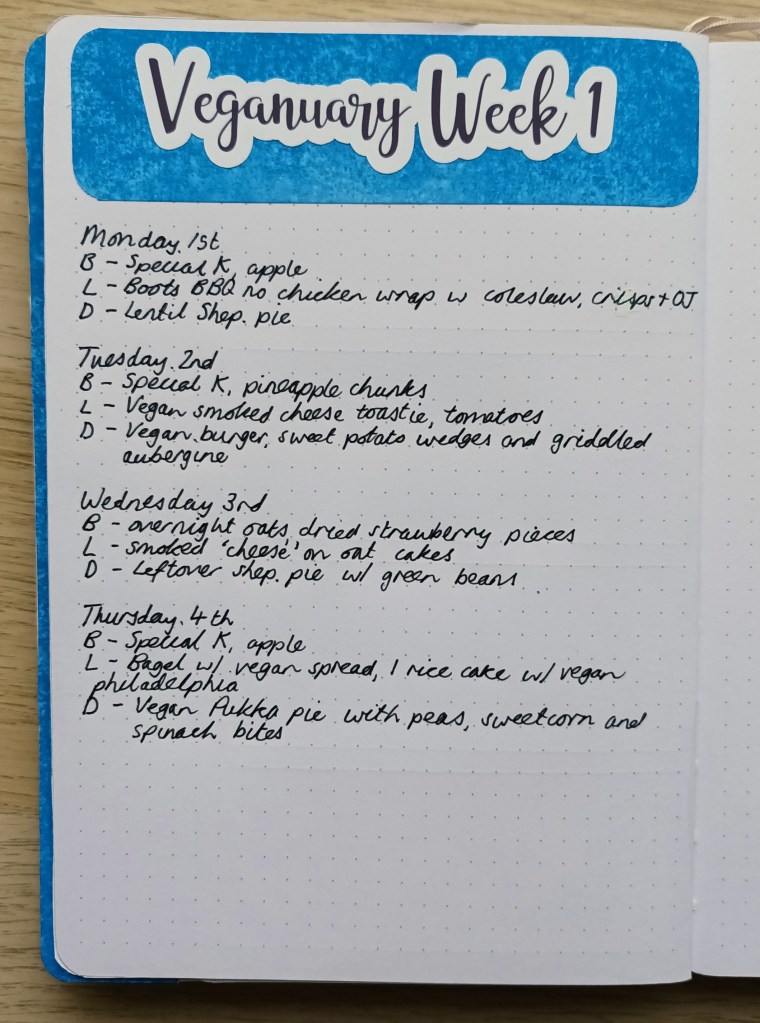
Photo credit: Laura Jones for Keeping It Creative

Final words…

I hope you’ve enjoyed looking at my spreads for this month. At the moment, January is proving to be more wet than snowy and our little garden is looking a bit soggy and flooded. I must say, I love pretty winter scenes with snow and sparkling frost but it’s not so much fun trying to drive in such conditions so I have mixed feelings about the weather at this time of year.

Wishing you a fantastic 2024,

Posted in wellness

Writing as therapy and ideas for getting it all down on paper

We all find ourselves struggling at times and in different ways – maybe you have a really difficult decision to make, or maybe you’re finding it hard to fit it all in and still make time for yourself. Or perhaps, you’re having issues with a colleague at work or a family member and it’s getting you down. Or maybe, the cold and miserable weather has made you completely demotivated and you struggle to even get out of your cosy, warm bed in the morning.

Whatever you’re finding hard at the moment, and most of us can identify at least one thing, a technique which you might find really useful is to have a go at writing it down. There are lots of different approaches that you can try depending on your particular needs, but the act of writing has been shown to be really beneficial for improving your mental health. And, of course, all you need is a pen and some paper or a notebook (and perhaps a quiet space to sit).

As you write, you may find solutions or alternative ways of thinking popping into your head and this is your inner wisdom helping you work through your problems or look at things from another perspective.

All you need is notepaper or a notebook and a pen.

Freewriting

Freewriting is a really simple technique where you just write whatever comes into your mind. Start with a blank piece of paper and just get out whatever is in your head. Try not to worry about spelling, grammar or punctuation, focusing instead on just keeping the writing flowing.

When you’ve finished your writing, try spending a few mindful minutes focusing on your breathing or thinking about how you currently feel.

Writing about your emotions

This is a good one to try if you’re feeling uncomfortable emotions such as upset, angry or frustrated. It can help you distance yourself from the emotion in order to rationalise your thoughts or empathise with yourself. Spend time journaling about how you are feeling and why. Don’t judge yourself in any way. Just record your thoughts and this will help you process them, rather than trying to avoid them by doing something else or, trying to switch them off.

Start a gratefulness diary

At the end of a busy day, just before you start to wind down and go to bed, spending a short time writing one or two things that you are grateful for can be a great mood booster. They can be simple things such as having an umbrella when it started to rain or a relaxing bath to soothe your aching muscles. Whatever made you happy or made your day that little bit easier write it down. You can choose the form in which you write, from a simple list to a random explosion of colour with little doodles for each one depending how creative you want to get!

Write a letter to yourself

This is one that I tried a while ago and I often come back to it and re-read what I wrote. First of all, you need to think about how you are feeling right now and what issues and difficulties are present in your life. Then, take a step back from your problems and write to yourself as someone who loves you unconditionally for who you are and shows kindness and compassion in their thoughts and understanding towards what you are going through. you don’t need to add in any solutions or advice but it might be helpful to offer support in the form of understanding and acceptance that things will improve.

Putting the day to rest

When you’ve got lots on your mind and are feeling really stressed, it can be difficult to quieten down your thoughts and relax at the end of your day. This can make sleep extremely difficult as you lie in bed analysing or worrying about what’s ahead. Putting the day to rest is a journaling activity which you can do for about 20 minutes each evening, not literally right before bed, but as a way of recording your thoughts and feelings so that you can switch off more easily. Here’s how it works:

  • Try to do this activity at the same time each evening – write it on your planner or set a reminder on your phone.
  • Use pen and paper rather than a laptop to avoid the glaring light of electronic devices.
  • Start by reflecting you your day – what are you general feelings about how it went?
  • Next, write down the main points of your day and identify what went well, what troubled you etc.
  • Write a to do list of anything which didn’t get done but is a priority.
  • Think forward to tomorrow – what is scheduled? How do you feel about it? etc.
  • Make a note of anything you are unsure about with regard to your day tomorrow and schedule some time to find out in the morning.
  • When you go to bed, if you start to think about things from your day or for tomorrow, remind yourself that you have already dealt these thoughts.
  • If new thoughts arise then you are already in bed, note them down on a piece of paper to be dealt with in the morning.

Ask yourself questions

As a keen bullet journalist, I use this technique regularly to help me to find ways to live my best life. I create a page with a question as a title and then list possible answers. Again, if you want to try this and like getting creative, you could add little doodles to your answers. Here’s some examples of interesting and thought provoking questions you might choose to ask:

  • How can I treat myself?
  • How can I get more organised?
  • What makes me happy?
  • What do I want to achieve this month?
  • How can I improve my relationship with …?

Brain dump

A brain dump is simply a page where you write words and short phrases to get down on paper all of those random thoughts that pop into your head throughout your day when you’re trying to focus on a particular task or activity. In this way, you can get back to the matter in hand and return to your random thought or piece of inspiration when it is no longer a distraction and you have time to further process it.


I hope you have enjoyed reading my suggestions and found them useful. Let me know if you try any of them or if you use any other useful therapeutic writing activities to help with the stresses and strains of life.