Posted in art, Bullet journaling, coloured pencil, creativity, goal setting, planner lifestyle, Planning and journaling

Setting up my bullet journal for May 2025: Primrose / primula theme

This month, I’ve again taken inspiration from our garden. A few weeks ago, I decided that I wanted to add more colour out the front of the house, so we went to the garden centre to look for a set of six bedding plants that should come back year after year. I opted for primroses (AKA primula) as there was already one out there which pops up each spring and was obviously set before we moved in over a decade ago. After the flowers had settled in – they went a bit floppy when we first installed them – I took some macro photos to use as inspiration for my spreads. It’s taken me ages to sketch out, draw and colour in all of the images but it was such a lovely, mindful activity that I found it really therapeutic. As I write this, it’s the 2nd May and I still haven’t finished all of the decor but I have drawn up my calendar, finances, goals and first weekly so I can actually fill in events and tasks. I hope you like my finished pages and they inspire you to give florals a go to practise your drawing, colouring or maybe painting skills.

Front cover

The calendar was the last page I finished and took me a long while to complete. I used a photograph of a plant pot of primroses for reference which I found on Google. I used mainly my Staedtler Ergosoft coloured pencils and blended a few shades together to get a nice peachy colour. I also used my blending pencil to mix up the colours and to create a smooth appearance. I also used my Sakura Gelly Roll pen in a size 10 to draw lines inside of the Pigma Micron as the actual primroses had a very thin white trim.
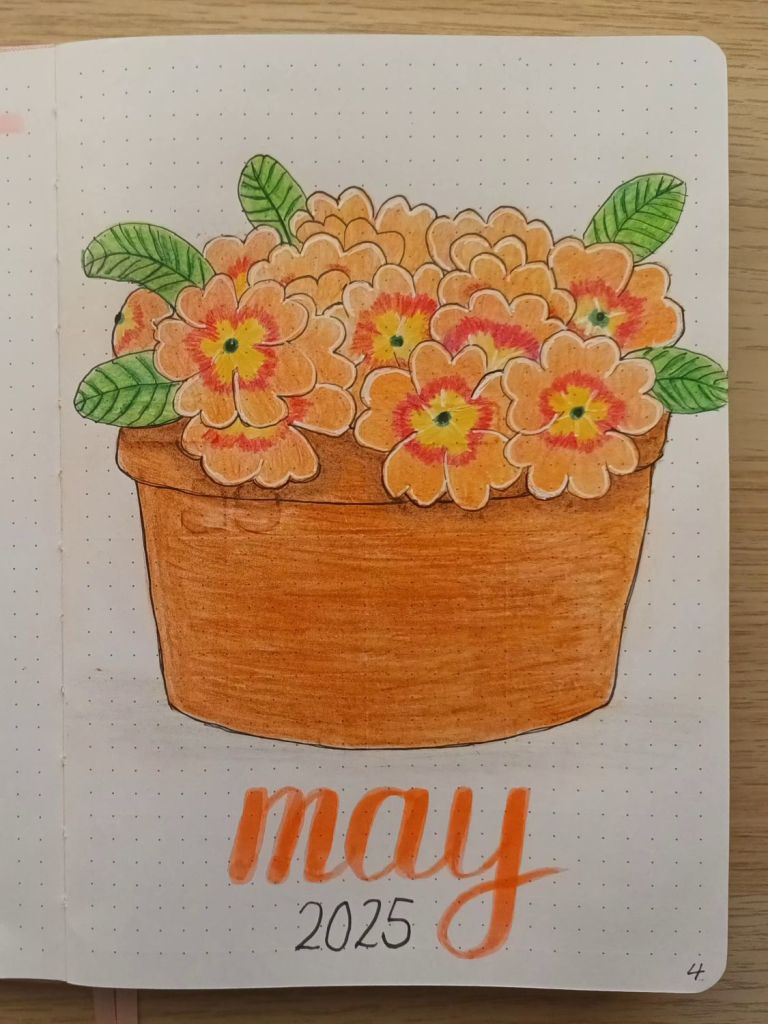
Photo credit: Laura Jones for Keeping It Creative

Monthly calendar

I added the decor to my calendar second, after I did the image for my finances record, and, as it had taken me such as long time to finish that one, I opted for a more sketchy appearance to the primroses you see here. I held my fineliner really lightly and tried to create a slightly wobbly appearance so the plants looked more natural. I’m really happy with how they turned out and the colours look so cheerful. I made good use of lots of my coloured pencils and also used my blending pencil to blend out any harsh lines.
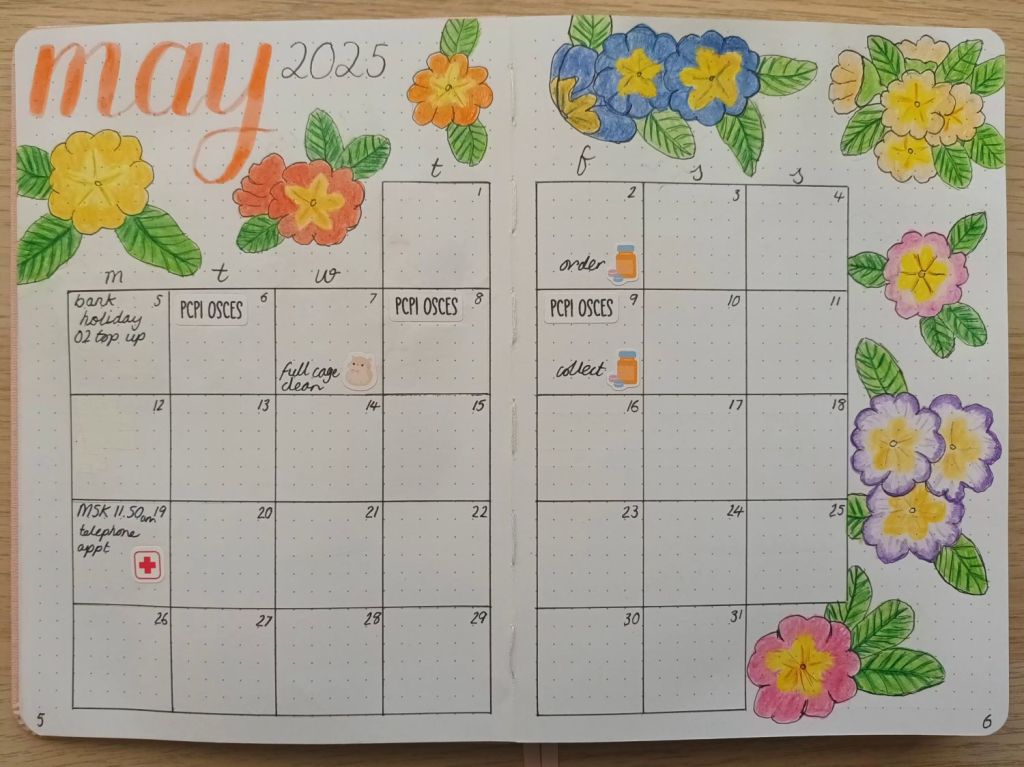
Photo credit: Laura Jones for Keeping It Creative

Finances record

As well as the pack of six small primrose plants, we also purchased a much larger one for our back garden. The flowers are a lovely, pale pink but I didn’t have a coloured pencil which matched so I’ve gone for more of a peachy colour. I initially did just the flower in the centre but decided there were too many leaves and not enough floral bits so I added the other two and made them a little more washed out so the central one stood out.
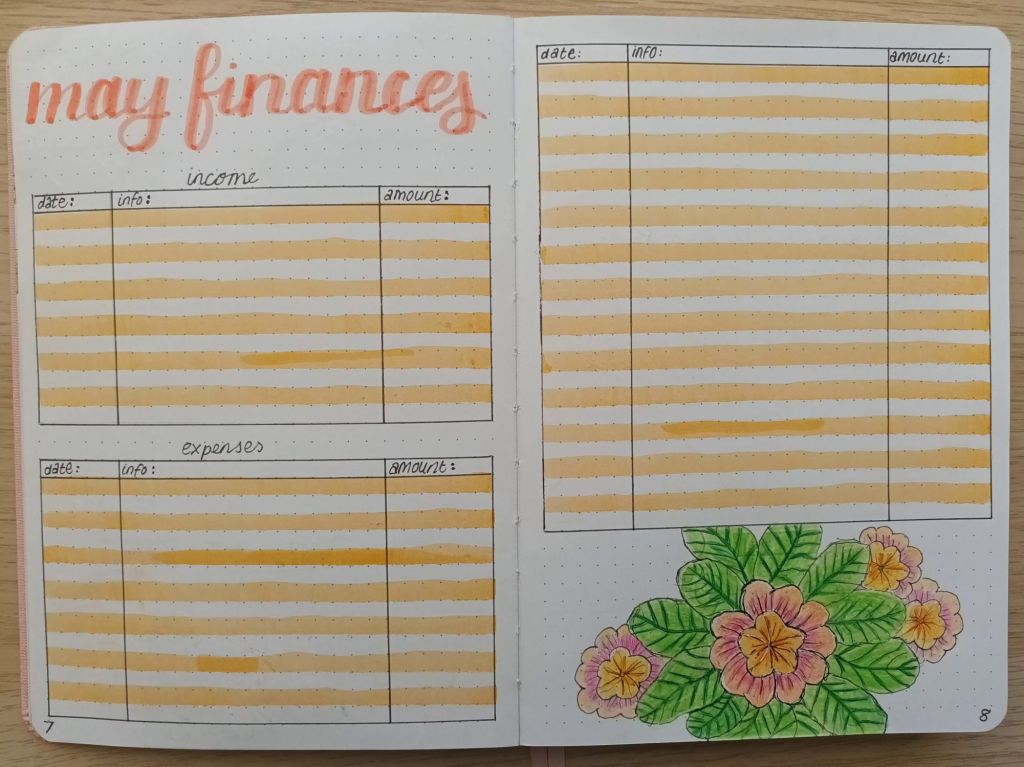
Photo credit: Laura Jones for Keeping It Creative

Monthly goals

Last month I (yet again), picked far too many goals to be in with any chance of achieving them all. So, for May, I’ve really, really restricted myself and opted for just 5 (go me!). And, I’ve already achieved one of them as I made bread for the very first time yesterday!

Rather than adding some more primrose illustrations, I opted to add some stickers to make the set up much quicker. Some, I’ve made myself and others are from my ever increasing stash (you can never have too many stickers – right?). However, I have just started a new BuJo this month and a not to do goal of mine is to add plenty of my own illustrations straight into my notebook rather than overloading with stickers and making my journal super bulky (my orange one would barely close by the time I finished it!).

Photo credit: Laura Jones for Keeping It Creative

Weekly plan

I’ve been using this same style layout for quite a few weeks now and it really works for me. It gives me enough room to write events and add a few to dos underneath each day. I can then add a small illustration at the bottom if I want to, or use the full space for recording. This week, I’ve done some small primrose illustrations but I may not do any next week as I have lots of sessions at the university so I’ll be super busy.
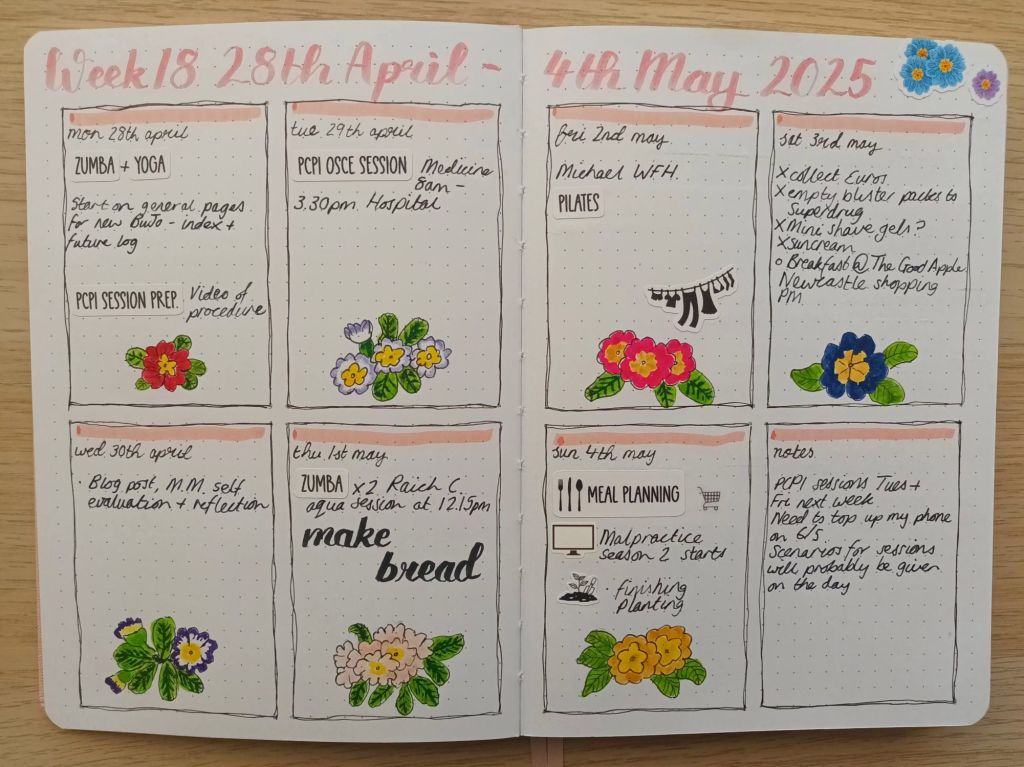
Photo credit: Laura Jones for Keeping It Creative

Final words…

Thank you for taking the time to visit my blog today. I hope you like my finished spreads. I think they look really colourful and provide a great reminder of our new plants and all of the other bright colours of primrose which you can get. The flowers seem to be thriving at the moment but as we haven’t had any rain for weeks, they require daily watering as the soil is getting so dry. I’m hoping they’re going to stay looking good for a least another month and continue to make me smile each time I get in and out of my car!

Wishing you a marvellous May,

Much love,

Posted in amateur photography, Anxiety management, bird spotting, lifestyle, wellbeing, wellness, wildlife

Monday Matters: Wildlife Watching for Wellbeing

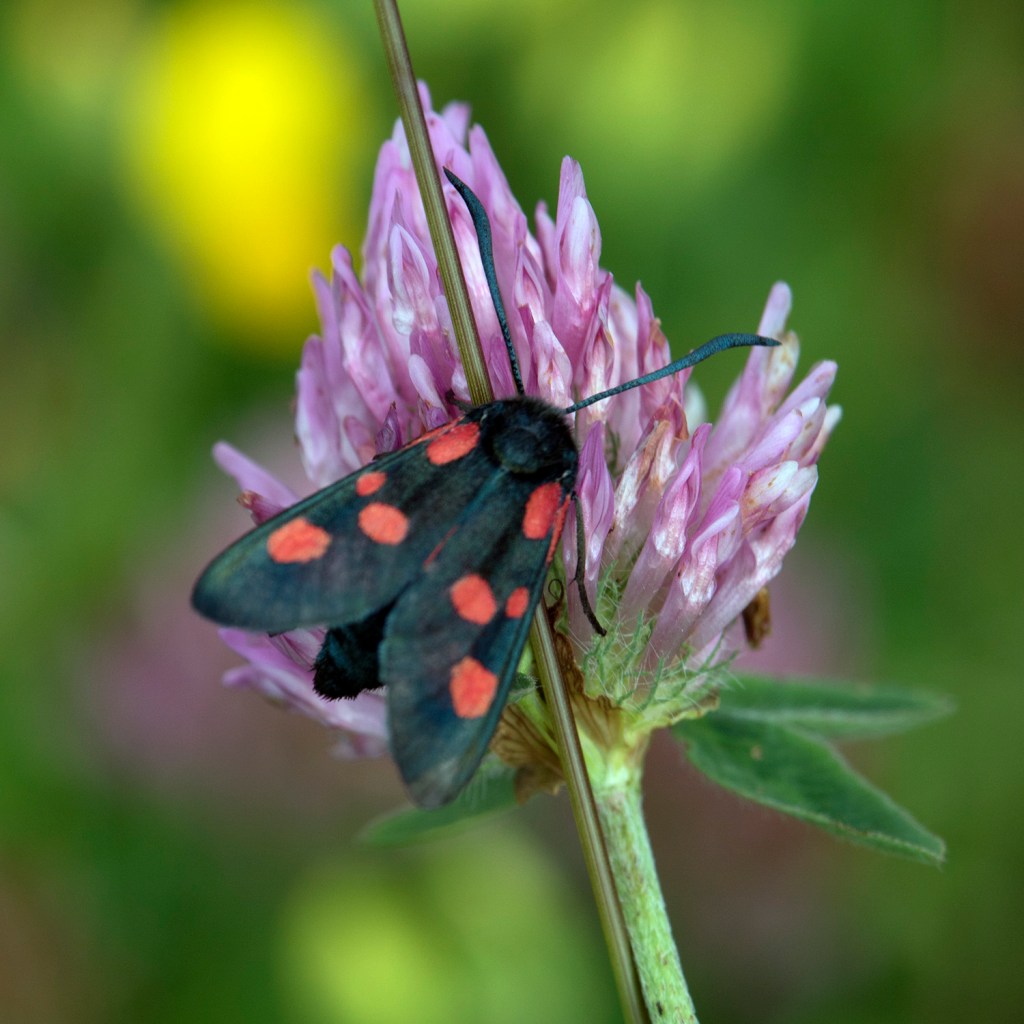
Six spotted burnet moth

Over the past month or so, I’ve taken a real interest in watching wildlife and found it to be amazing for my general wellbeing. It’s such a calm and relaxing activity and the perfect way to engage in some mindfulness as it encourages you to be in the moment and really study the action with your five senses whether that’s watching a blackbird taking a bath, listening to the screeching sound of swifts zipping around the sky or quietly observing butterflies sunning themselves in a wildflower meadow whilst feeling the warmth of the day on your skin.

Today, I thought I’d share some of the benefits of wildlife watching that I’ve particularly enjoyed and also include some of my photographs which I’m pretty proud of as I took them in manual mode on my DSLR. I hope you enjoy the post and that, ultimately, it whets your appetite for wildlife viewing this summer season and beyond.

Learning about what’s out there in my locality

Quietly observing in our garden and other local settings such as parks, forest, woodland, heathland, meadow or the coast, I’ve been able to see and enjoy all of the different wildlife and begin to learn more about them. I now know that greenfinch have started visiting our feeders and that, despite us having an overhanging conifer trimmed significantly by a tree surgeon, there are still plenty of birds nesting in what remains, albeit in slightly closer proximity to each other! In my quest to photograph butterflies this summer, I’ve learnt why we have much fewer individuals this season (poor weather at the start of summer) and where I’m most likely to spot different species. I’ve also observed the six spotted burnett moth in tall grasses at the cost, and discovered where their favourite places to land are.

Learning something new each day not only helps with personal growth but it also develops a sense of accomplishment which I believe is essential for wellbeing. There’s nothing better than sitting down at the end of the day, (whether busy or more relaxed) and recalling something new that you didn’t know yesterday.

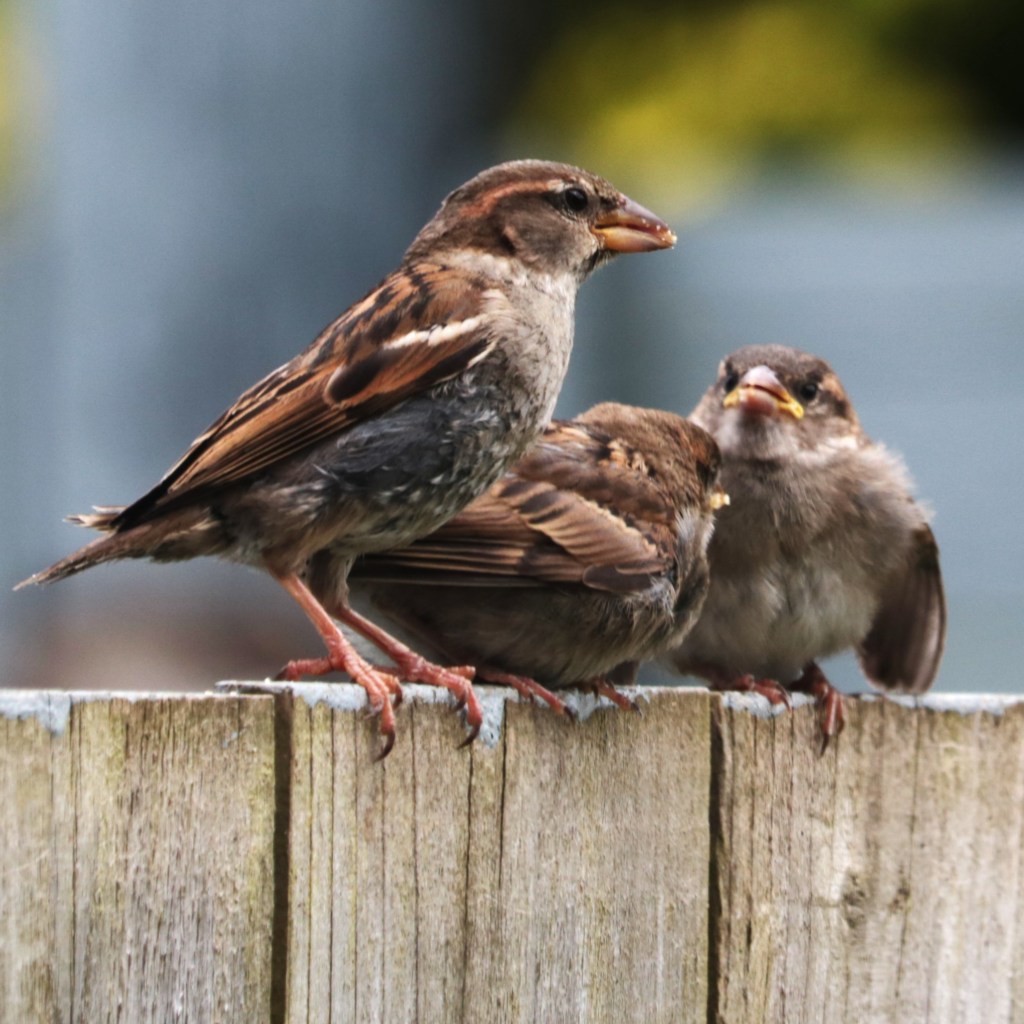
Female sparrow and her young on our garden fence

Expressing gratitude

I find there’s something to be grateful for every day of the week (in fact I write 3 things in my The Five Minute journal each morning), but I’m always especially excited when I witness something new or go somewhere a bit different in my quest to explore wildlife in the North East of England and beyond. I’ve just started reading Hannah Stitfall’s recently published book, Wild Treasures, where she documents a year of watching wildlife in her home county of Cornwall – a place I have visited and loved many times as a child and throughout my adult years. However fruitful (or not) her trips to wild places have been, you get a really sense of how lucky she feels to have these opportunities on her doorstep, and I must agree – we have so many amazing natural spaces throughout the UK that are just waiting to be explored.

I often find my wildlife spots end up being recorded in my highlights of the day or as part of my morning gratitude writing, whether that’s mentioning our plans for an exciting day out exploring nature and the wildlife it has to offer, or recalling the feeling of a good spot.

Opportunities to practise using my zoom lens

I’ve had my zoom lens for a long time now and I’ve often been frustrated by its limitations in terms of getting close up shots of birds (it’s really not powerful enough and I would need to invest in one of the huge ££££ lenses which I’ve seen used in hides). However, I’ve now discovered that it works really well for insect, plant and flower photography when placed at a distance of 0.85m from the subject. I’ve built a collection of macro shots which are pretty good for an amateur and I’m enjoying adding these to my journals and sharing them on Instagram.

Again, this chance to explore and develop my skills (with both the photography and the use of Photoshop to edit my images) has been a real boost to my wellbeing, including when I add my photographs to social media and use them in my creative journals and show them off.

Small white butterfly at Ryhope cliffs

Enjoying the beauty of all that nature has to offer

As I mentioned earlier, we have some wonderful natural spaces across the UK and I thoroughly enjoy exploring the flora and fauna of different places. Sometimes, I’ll visit familiar places such as the coast, where at this time of year, I can see razorbills, kittywakes (and their young) reed buntings and meadow pipits and mammals such as grey seals and even dolphins! On other occasions, we’ll go further afield to favourite locations and places on my must visit list. Wherever I go, alone or with my husband, I tried to stay in the moment and really appreciate the beauty on offer as I look out for the wildlife to be spotted.

Mindfulness and its many benefits

I’ve talked about mindfulness and the many benefits in various previous blog posts. For some people, mindful activity is all about meditation, but it’s much more than this, practising mindfulness involves being in the present moment and developing a quiet awareness of your immediate environment, and I’m sure you can see how wildlife watching fits in with this. There are too many benefits to list here but a few include reducing anxiety and depression, lowering blood pressure, improving sleep, lowering stress levels and better ability to manage long term illness and chronic pain.

Improved physical health

Although I love watching wildlife from my own back garden (or via the kitchen window as I wash up!), there are so many more opportunities in the North East of England and further afield. As well as the chance to breathe in fresh, clean air, as I explore the natural environments, for me, my travels often include a brisk walk too. Adding in an uphill trek, a saunter across various fields, beaches or heathland on our way to more remote locations, offers a wonderful and more relaxing way to exercise which is completely different in experience to my gym sessions and various classes. Also, whilst your focus is on looking at the stunning views and watching out for various fauna, you’re often barely aware of what a good workout you’re having at the same time!

A sense of community

One of my absolute favourite ways to watch wildlife is to go to a nature reserve (especially one which has some bird hides) and take my binoculars for close up viewing and my DSLR camera for recording my spots. We’re lucky to have a number of locations within an hour and a half’s drive including Rainton Meadows (managed by Durham Wildlife Trust), Hauxley Nature Reserve (Northumberland Wildlife Trust) and RSPB Saltholme. When we visit, there are always plenty of others walking around the reserves or observing birds from the various hides and sharing these spaces develops a really sense of belonging, especially as you know that we’re collectively there for similar purposes – exploring the beauty that nature has to offer, enjoying the peace and quiet, looking out for different species and ultimately hoping to spot something new.

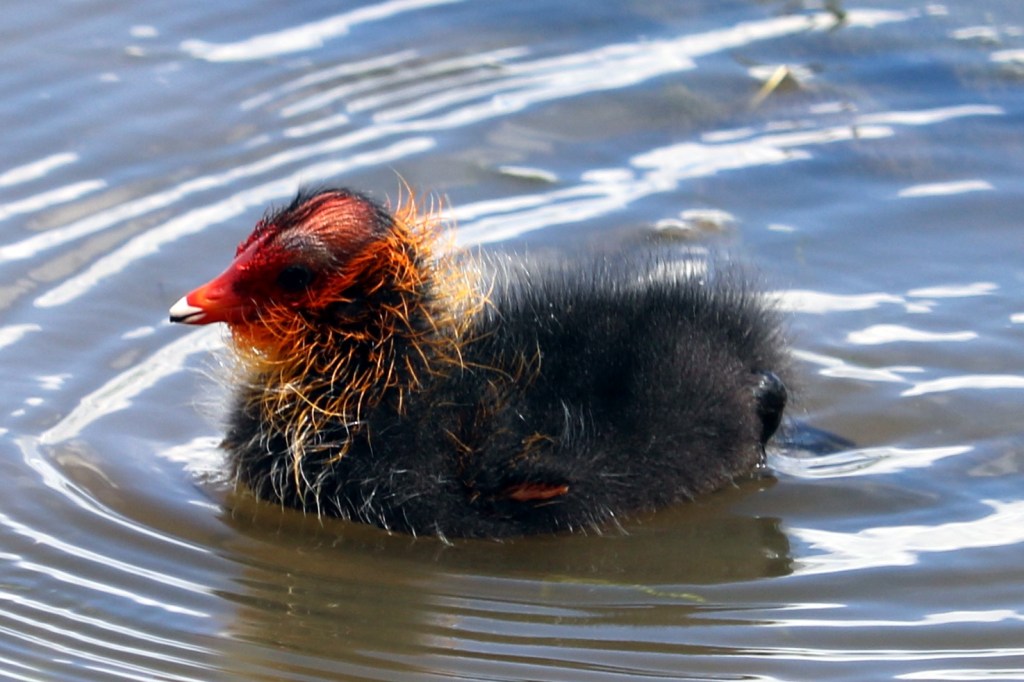
Coot chick at RSPB Saltholme

Wherever you live in the UK, I guarantee there are wild spaces on your doorstep to be explored and shared with other locals. Even in London, there are vast parks across the city offering peace, quiet, wildlife and the chance to get away from the busyness of the place and most people there have the same objective.

Final words…

Although I haven’t covered them here, there are various scientific studies done which offer proof of the mental health benefits of wildlife watching, especially bird spotting. It’s no surprise, then, that many of us turned to walking in the great outdoors during the pandemic to reduce our stress levels and find pleasure in nature. I wonder how many of you still make the time to visit natural spaces as part of your routine each week now there are no restrictions on your activity choices? I would love to hear if wildlife spotting is as valuable to you as it is to me to maintain good wellbeing and general happiness. I’d also be over the moon if you’ve found benefit from reading today’s post and it has encouraged you to find time in your busy weekly calendar for this perfect mindful self-care activity.

Posted in goal setting, journalling, life hacks, lifestyle, meditation, Mindfulness, mindset, self care, Setting goals and intentions, wellbeing, wellness

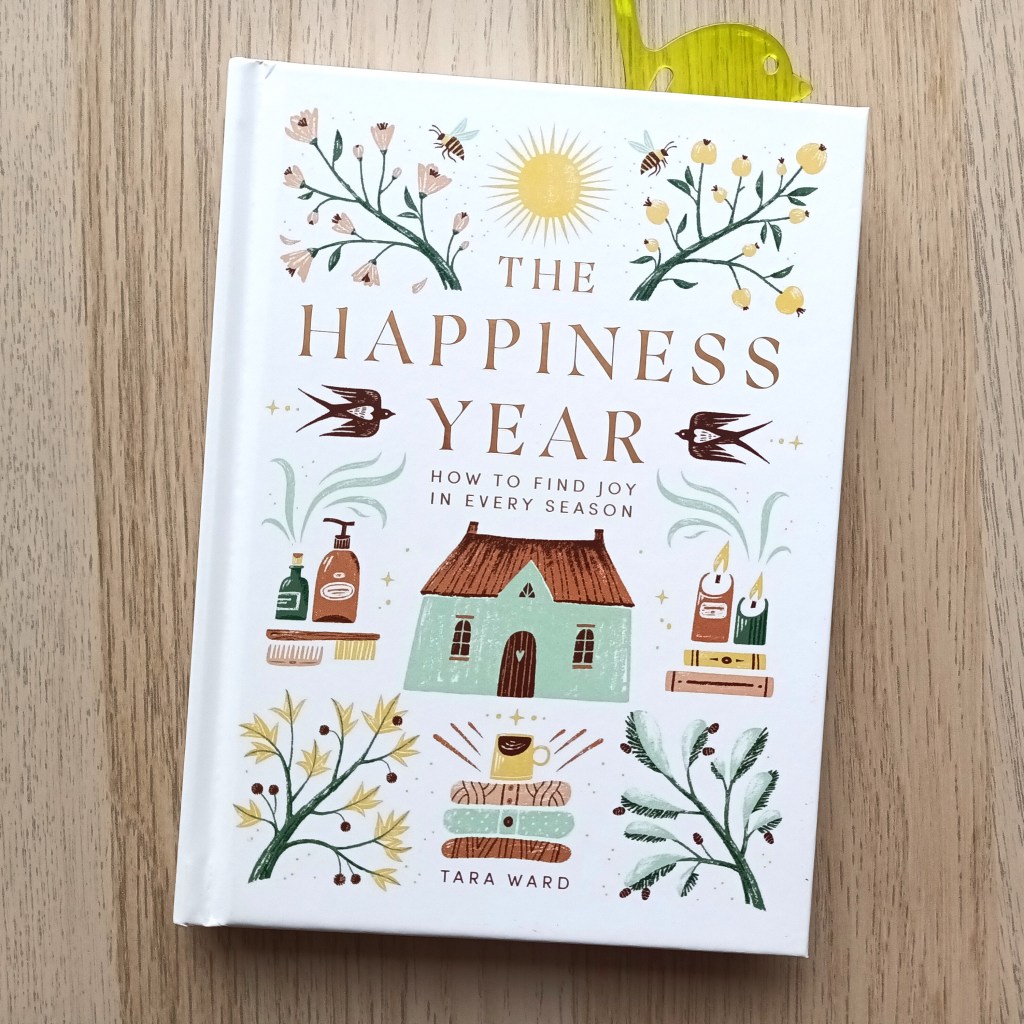
Monday Matters: Discovering joy in every season of the year using The Happiness Year by Tara Ward

A few months ago, I was looking in the health and wellbeing section at Waterstones and came upon a beautifully illustrated book about finding joy throughout the year by trying out different seasonal activities. At the time, I didn’t purchase it, but I regretted my decision so I ordered it from an online retailer. When it arrived, I added it to the bookcase in my craft room as I was already in the process of reading about 8 different books which is a few too many even by my standards. I pulled it out a few days ago and there are some lovely activities inside in the section which I started with – Spring. I tried out the first exercise this morning and really enjoyed it so I thought I would give a short summary of the book and share that first prompt with you today.

The Happiness Year: How to Find Joy In Every Season by Tara Ward

In the introductory section of the book, Tara discusses the aims of The Happiness Year and also talks about the emotion of happiness and the four positive chemicals that are released into your body when you’re happy – dopamine, oxytocin, serotonin and endorphins (referred to as DOSE throughout the book). She then goes on to explain how to use and enjoy the book.

The remainder of the book is split into four sections – Spring, Summer, Autumn and Winter and there are a collection of exercises provided in each which you can pick and choose from. In combination, they promise to help you in an holistic way – physically, mentally, emotionally and spiritually. Personally, I think I will probably try out all of the different activities and see which I prefer and benefit from the most.

Included within the book, there are journalling and brainstorming activities, meditations, physical exercises, goal setting and planning tasks, plus many more to explore and enjoy. You are also invited to complete them in a way that feels comfortable for you, taking into account individual differences and preferences.

So far, I’ve only read the Spring chapter in depth but I’ve had a good flick through all of the book and I can already see there are many exercises that will appeal.

Exploring your thoughts, feelings and ideas about Spring

As I said earlier, I completed the first activity this morning and I enjoyed it so much that I felt compelled to share it with you. I think this exercise would work well for each of the four seasons, not just Spring. Here’s a step by step explanation of what to do:

  • Take an A4 piece of paper and place it in front of you
  • Write the word SPRING in large letters at the bottom of the page
  • Close your eyes and take three deep, comfortable breaths to focus you in the present moment
  • Open your eyes and look at the word
  • What comes to mind when you think of Spring?
  • Write down everything which comes up for you
  • When you’ve run out of ideas, close your eyes again, breathe deeply and continue thinking about the season
  • Note down any further ideas or images which come to mind
  • When you feel you’ve finished, look over your sheet
  • What jumps out at you the most? Circle any words or phrases which particularly resonate or feel important to you. Are then any surprises?
  • What is the overriding emotion when you look at your words? Write that emotion or emotions at the top of the page.
  • Look through the words and make a list of those which generate feelings of happiness.

I hope you found this a helpful exercise and it reminded you about all of the lovely things which happen in the Springtime. I’ve included my sheet below, how does it compare to yours?

Photo credit: Laura Jones for Keeping It Creative

Final words…

If you enjoy mindful activities such as journalling, setting intentions, exploring the world using your five senses, breathwork, meditation and appreciating the simple things in life, I would definitely recommend checking out The Happiness Year. The book will help you find ways to appreciate and make the most of all of the things that each season has to offer you. You’ll also find a range of self care activities to increase your happiness levels by releasing a good ‘DOSE’ of positive chemicals. Let me know if you try the exercise outlined above and how it made you feel.

Posted in Anxiety management, GAD, wellbeing, wellness

Monday Matters: 13 grounding and self soothing exercises for managing symptoms of anxiety

Back when I was struggling with depression and anxiety, I learnt a number of grounding techniques to help me focus, keep calm or distract myself from my thoughts and feelings. Today, I want to share some of the ones I found most helpful and a few others which I’ve found online whilst researching today’s post, so that you can use them during difficult times. The exercises are best learnt when you’re experiencing good mental health so you can easily bring them to mind when you most need them.

What are grounding exercises?

Grounding exercises are techniques you can use to help with the feelings, thoughts and worries associated with anxiety. They help to manage your symptoms by providing a focus away from uncomfortable thoughts, memories and worries, by bring your attention to the present moment. There are quite a number of different types of exercises, so, I’ve picked a selection which of physical and mental techniques, plus some which are self soothing in nature.

Mental grounding techniques

Describe a daily routine

Choose something you do every day as part of your routines, for example, washing your face. Go through each step, in order and describe what to do as though you are giving instructions to someone else – First, turn on the hot tap at your bathroom sink. Keep running the water until it becomes quite warm. Put the plug in and fill the basin… and so on.

Play a memory game

Look at a detailed photograph, a painting on the wall or a page in a magazine. Turn over the image or look away from it and describe everything you remember in as much detail as possible. You can check to see how close you were to the features of the original but don’t worry if there were inaccuracies in your account!

Describe your surroundings

Spend a few minutes exploring your environment using all of your senses. Now describe your surroundings in as much detail as possible. For example, the wall to my left is painted a cream colour but there’s a sticky looking mark about three quarters of the way up, maybe where a poster has been displayed. The ground is very muddy and there are different colours of autumn leaves trodden into the path. The window is open and I can hear someone talking in the distance but I’m not sure what they are saying.

Create a category list

This is one I used to play in bed when I couldn’t sleep because of anxious thoughts. Choose a category or two e.g. flowers, things found at the beach, creative hobbies, places in the UK I’ve been to before etc. List as many items in the chosen category as you can. Repeat for another category.

Recall your favourites

Focus on your favourites and make a mental or physical list of them e.g. favourite ice cream flavour, favourite animal, favourite fragrance etc.

The 5, 4, 3, 2, 1 method

This one is incredibly popular and you may have read or heard about it before. It’s a simple technique that involves using your senses and is a great example of using mindfulness to calm yourself down:

Name 5 things you can see (a red cushion, a pile of leaflets, clouds in the sky)

Name 4 things you can hear (footsteps, birds singing, someone typing, a door banging)

Name 3 things you can feel (your hair against your neck, the hard seat you’re sitting on, a rough piece of skin on your hand, your soft jumper)

Name 2 things you can smell (fresh coffee, your hand cream, someone’s perfume)

Name 1 thing you can taste (a mint in your mouth, a sip of water, or, if nothing, something you would like to taste right now!)

Physical grounding techniques

Take a short and slow walk

Move with precision, feeling each part of your foot touching the ground, count your steps or notice the rhythm of your movements, do you sometimes feel off-balance, do you move your arms as you walk, does the ground feel hard or slightly soft. You can also try doing this barefoot.

Move your body

Perform simple actions such as stamping your feet, swinging your arms, marching, jumping on the spot, balancing on one leg etc. Explore how your body feels whilst doing each exercise and how you feel afterwards.

Alternatively, stretch different parts of your body and focus on how you feel. Mindful movements can combine to create what can be described as a moving meditation. This website provides some examples of stretches suitable for beginners who are in good physical health. If you have any physical health concerns, please get advice from your doctor before doing any form of exercise.

Put your hands in water

Fill up the sink with your choice of warm or cold water. Submerge your hands. Focus on the temperature. How does it feel on different parts of your hand. Does it feel the same on your fingers, palms and backs of your hands. Try moving your fingers under the water and explore how it feels. Now try the opposite end of the temperature scale. Compare with how it felt before. Alternate between warm and cold and explore how your hands feel.

Explore objects

Pick up and touch different items in your environment name them and describe how they feel e.g. cold, rough, spiky, soft etc. Next, describe the colour or colours – use precise names where you can such as turquoise and magenta rather than blue and pink.

Self-soothing grounding techniques

Enjoy a warm bath

Take a hot bath with bubbles, a scent that you love and a temperature that feels pleasant for you. Lie back, close your eyes and think about how the water feels against your skin. Now do the same for the bubbles. Inhale and enjoy the fragrance as lie there. Bathing mindfully like this will help to take your mind off your current anxieties and stresses.

Make a warm or cold drink to savour

Depending on the time of year, or your personal preferences, choose a soothing drink. Feel the warmth or coldness of the mug or class. Take a sip and think about how it feels and tastes in your mouth. When you swallow, can you feel the drink as it goes down? What effect is the drink having on your body?

Focus on your breath

Sitting quietly, with your eyes closed and focusing on your breathing is a great way to create a feeling of calm and relaxation. There are many different techniques for this, but personally, I prefer to keep it simple. This webpage on the getselfhelp website is a comprehensive written guide that provides instructions and advice to get you started. I recommend trying the method out a few times when you’re feeling okay, so you can get used to it and then it will come more easily to you during more difficult moments.

Final words…

I hope you’ve found the above ideas helpful and that you will give some of them a go to help with the symptoms of anxiety. You might like to print out some of the ideas or make a note of those which particularly appeal so that you are able to refer to them when needed. These are just some of the techniques for grounding yourself in the present moment and you’ll find others online or in books on anxiety management if you want to further your knowledge on the subject.

If you want to know more about the different aspects of anxiety before learning how to manage your symptoms, then I would recommend seeking the help of a professional who is trained in talking therapies. I do know, though, that the wait for such services can be lengthy so it’s good to speak to your doctor about your difficulties as soon as you can.

Posted in lifestyle, mental health, Mindfulness, Planning and journaling, reflective journalling, wellbeing, wellness

Monday Matters: 4 Ways to Destress after a Busy Day

Photo from Unsplash

Most of us lead very busy lives and it can be incredibly difficult to switch off and relax in the evening in preparation for a good night’s sleep. Today, I’m sharing four excellent ways to wind down after a stressful or busy day. The following activities are great for your mental health and wellbeing and I’m going to be offering lots of different options to choose from depending on your preferences.

Do a journalling activity

After a busy or particularly stressful day, it can often be super difficult to calm our mind. Your head can be full of all kinds of clutter in the form of thoughts (both positive and negative), ideas or feelings. Maybe you’re busy analysing or deconstructing everything that has happened and going through things that were said. Perhaps you’re worrying about your mounting to do list and what didn’t get crossed off today because of x,y and z which took priority. Or, you might be looking towards tomorrow, thinking about the events in your diary or how you can be super productive and get more done whilst making it a calmer, less stress inducing day. If any of the above apply, you might be wondering if you will ever be able to switch off and sleep tonight. This is where getting your thoughts and feelings out of your head and onto paper can be super helpful. Just ten minutes of free flow or structured journal writing can make all the difference.

I learnt the following method for putting the day to rest when I was teaching, when every day was a busy day and I was really struggling to relax and sleep.

Putting the day to rest activity

  • Set aside 20 minutes in the early evening (I used to do this at 7.30pm)
  • Sit down somewhere quiet
  • Think about your day today and how it has gone, what you did and how you feel about it
  • Write it down in bullet points or free writing if you prefer
  • Write down anything you didn’t get done off your to-do list
  • Think about tomorrow – do you have any particular events coming up? what are looking forward to? are there any worries you have about what’s happening?
  • Write down a loose or structured plan for your day depending on your own needs (you can always modify this as you learn what works best for you.
  • When it comes to later evening and bedtime, if thoughts about today or tomorrow pop into your head, remind yourself that you’ve already evaluated your day and planned for tomorrow, so you don’t need to think about it any more.
  • If new thoughts come into your head at bedtime, jot them down on a piece of paper or on a notepad.

Other types of prompt based journalling might also work for you and there are some lovely ones on the market which can be used before bed. I’m a big fan of The Five Minute Journal but there are plenty of much cheaper options if this doesn’t fit with your budget. How much you want to write is up to you but it’s good to develop a consistent practice which becomes a positive habit to end your work time or day with.

Try a Mindful or Meditative Practice

Any type of activity that requires a high level of concentration and uses different senses is great for helping you to forget about the busyness of your day. Here’s some ideas for mindful and meditative activities which you might like to try:

  • Meditation – this can simply be sitting quietly and focusing on your breathing or using a guided practice. I recently found this account on YouTube that has some lovely ones with different foci that you mind find helpful. When choosing a guided session, it’s important to find someone who’s voice you find soothing and relaxing so you might like to try out a few to establish your preferences.
  • Crafting – there are so many different crafting options such as papercrafting, watercolour painting, knitting, sewing, crochet, model making and so on – why not give a few beginner projects a go to see which you prefer.
  • Some kind of puzzle e.g. a jigsaw, wordsearch, crossword etc. – great for keeping your mind active
  • Games – this could be something on your computer that you play by yourself such as Angry Birds, Candy Crush, Word Cookies or Patience, or one you play with others such as Boggle, Yahtzee, Gin Rummy, Scrabble or Jenga.
  • Enjoy a scented bubble bath and use your senses to fully appreciate the experience.
  • Cook a meal from scratch – measure out your ingredients with care, fully engaged with chopping / dicing / peeling etc, smell the different flavours as the dish cooks, taste the mixture to check the seasoning and so on. Mindfully enjoy the results at your dining table. Share your experience with others.
  • Watch something engaging on TV – comedy, drama, nature, historical interest or reality. Whatever you enjoy, give it your full attention and leave your phone or tablet in another room so you don’t get distracted. If you’re anything like me at this time of year, you’ll want to get your PJs on and snuggle under a warm blanket with your feet up for this one!

Read a book or magazine

Spending time reading a novel, information book, or favourite magazine is a great way to unwind and get yourself all relaxed and ready for bed. I love Psychologies magazine, as it’s full of positive ideas, and I can learn new ways of managing mental health and wellbeing at the same time.

Some people argue that you shouldn’t read in bed, but I find reading a few chapters of my Kindle novel (or for about 30 minutes) helps me to drift off really quickly. Try reading just before bed and reading in bed to see which works best for you.

Spend quality time with a loved one

Arranging an after work activity to do with a co-worker, friend, family member or partner can also help us destress. This could involve going out for an after-work drink, doing an evening class, watching a film at the cinema, seeing a comedy show or visiting a new or favourite restaurant. Alternatively, you might plan something fun to do together at home such as making popcorn to eat whilst watching a film, playing a board game or learning something new such as massage or reflexology.

Spending time with a pet is also great way to destress and calm the mind. This could include something you know they enjoy such as throwing a ball for your dog to catch at your local park (depending on the time of year), stroking your cat as they sit curled up on your knee, or watching your hamster as they zip around the house in their exercise ball.

Final words…

So there you have it, four ways to take yourself out of work/busy mode and into a relaxed state for the evening. I hope today’s post has given you food for thought and you’ll try one or two of the activities listed to see how they help. If you have any other preferences for your wind down routine, let me know in the comments.