Posted in goal setting, intentional living, lifestyle, Mindfulness, nature, wellbeing, wellness

Easy and fun ways to make the most of your summer

For the last week or so, it’s felt like summer has finally arrived in the North East of England with better weather, more sunshine, warm breezes and the chance to wear some of my new seasonal outfits whilst sitting out in the garden. Although I struggle when (if!) it gets really hot due to my very fair skin burning super easily, I love it when it gets up to around 22 degrees C (around 72 degrees Fahrenheit) especially on days when I can just sit and relax outdoors.

Every season, I create a personal bucket list full of activities, including things I always enjoy at that time of year, and new things I’d like to try (harnessing the power of firsts as advised by Meik Wiking in his book The Art of Making Memories). This year, I’m also taking part in the monthly bingo challenges being run by Kelseyleigh over at My Abiding Journal, which is currently providing even more ideas for making the most of my summer.

So, today, I thought I’d share this year’s summer bucket list and also some further suggestions to help you make the most of the summer months whether you want adventures, experiences, opportunities to relax and recharge or a combination of all three. I hope my post gives you some new ideas or provides helpful reminders about maximising your days throughout the season. I would love to hear about your plans for the summer in the comments and if you’re excited about trying something new in 2026 feel free to share so others can take inspiration from you.

Summer 2026 Bucket List

I like to start planning my summer towards the end of spring by creating a bucket list in my bullet journal. For me, the season begins on June 1st so you’ll see I have a few items ticked off already. The cupcakes I made were vegan strawberry ones and although I think I would slightly modify the recipe if I made them again, I had such fun with my afternoon of baking and the cupcakes tasted great too.

It’s not too late to create your own summer bucket list for 2026 and you don’t have to make it super decorative like I have. Just a plain piece of paper or a page in a journal will do. You don’t have to get everything on your list ticked off but it helps to have something to work towards and provide inspiration.
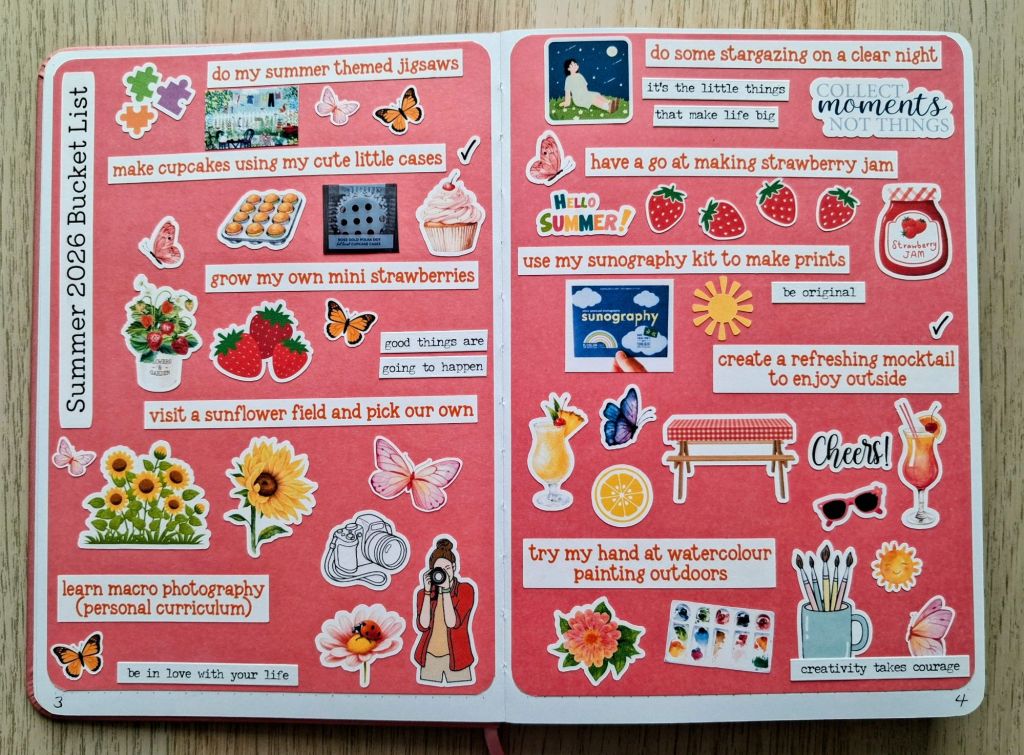
Photo credit: Laura Jones for Keeping it Creative

I’ve just signed my husband and I up for strawberry picking on Sunday and I’m excited to try this for the first time at a farm in Northumberland where we enjoyed visiting a pumpkin patch a few years ago. I’m going to take my DSLR camera with me to record our time there.

Bingo boards

There are loads of seasonal bingo boards available online which you could use, or you could have a go at making your own. I found this lovely example, which is good for spotting various signs of the season, and most of the items can be observed in the UK. It was created by Haley Post at MyMoonstoneKitchen, whose content I really enjoy on YouTube. Her printable can be found on Patreon as a free download if you sign up as a (free) member.
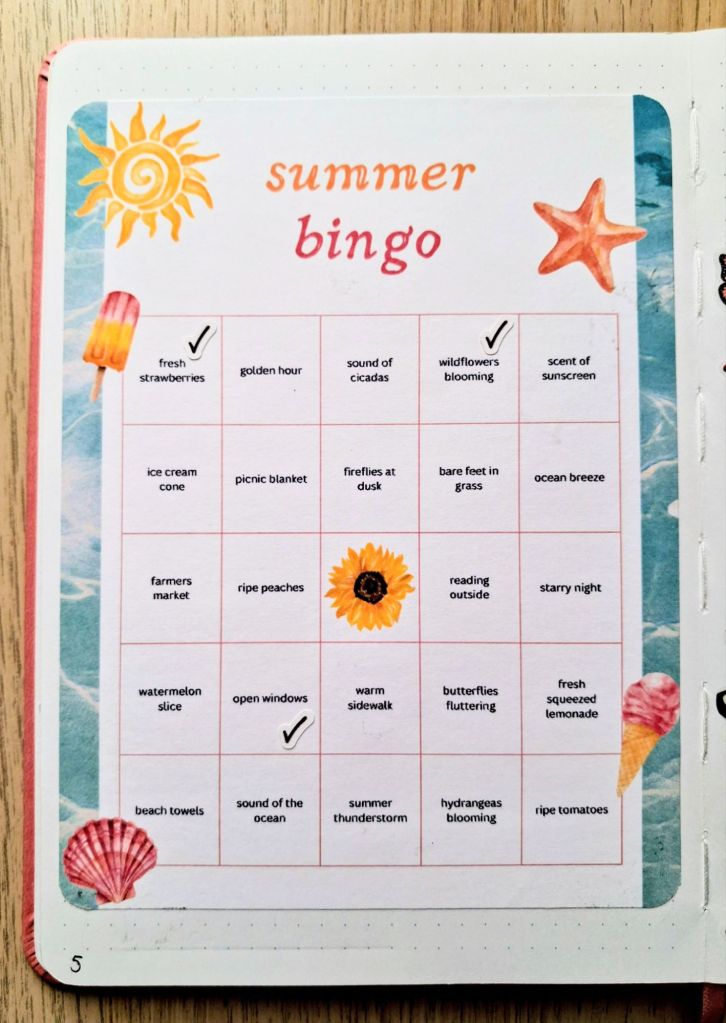
Photo credit: Laura Jones for Keeping It Creative

The monthly bingo boards I’m having fun with are available if you become a paid member of My Abiding Journal on Patreon and you can see glimpses of them on Kelseyleigh’s Monthly Journalling livestreams too. I stick mine in my monthly highlights journal and add photos or a description to say how I’ve completed the items I have checked off. Although some of the activities are perhaps more aimed at people in the USA with the creator being based there, it still offers plenty of food for thought and you can always tweak a few of the ideas if they don’t suit.
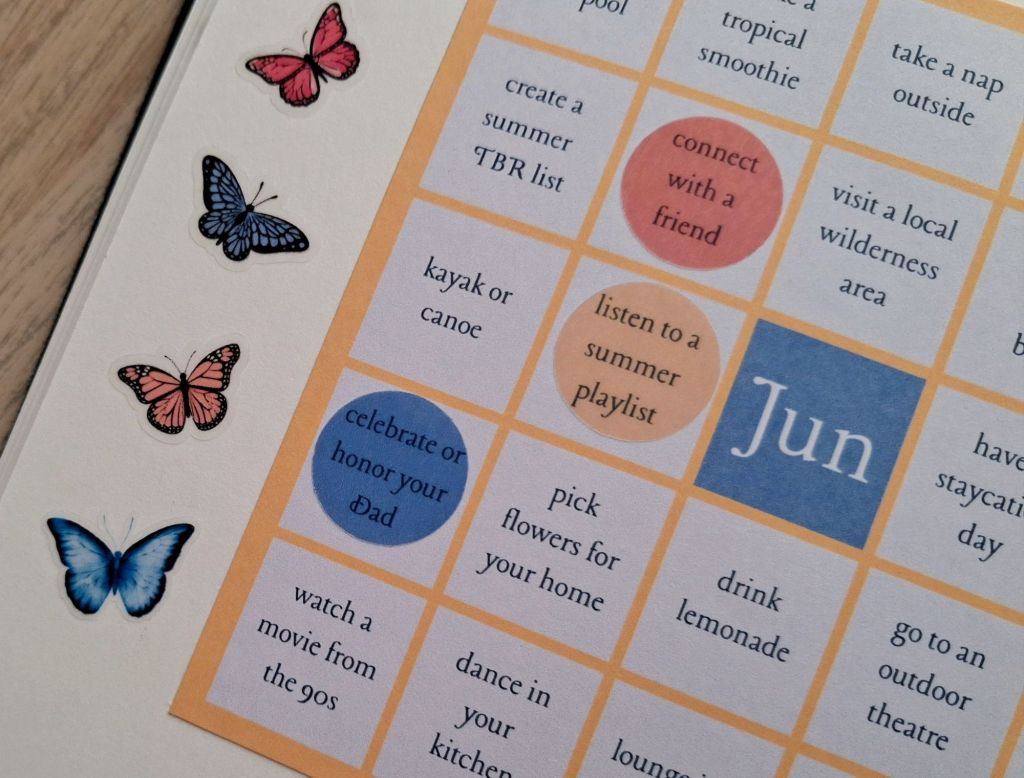
Photo credit: Laura Jones for Keeping It Creative

A Summer Reading Challenge

This summer, I thought it would be fun to set myself a little reading challenge to help me try to diversify my reading and choose some books that I wouldn’t ordinarily pick. I generally go for psychological thrillers and police procedural crime novels, but I wanted to push myself to opt for something different during the summer months. So, having explored various 2026 summer reading bingo boards and reading challenges I found online for ideas, these are my chosen categories:

  • A book originally published in another country
  • A historical fiction book to be listened to on Audible
  • A children’s classic that I’ve never read before
  • A modern classic
  • A book published this year by an author whose work I’ve never read before
  • A memoir
  • A collection of poetry

I decided on 7 books for the challenge and I’m already on my second book which is Land by Maggie O’Farrell. Set in Ireland, it’s a historical novel which spans the years directly before and after the great hunger. I’m enjoying it so far and I’m glad I chose it as my audio book as the narrator is Irish actor Dane Whyte O’Hara which adds to the atmospheric and lyrical prose and enhances the reading experience wonderfully.

The first book was the children’s classic The Velveteen Rabbit and I found it available for free as an audio edition read by Richard Armitage. It was such a sweet little story and I listened to it to wind down after a busy day.

Seasonal eating

One of my favourite foods is in season in the UK in the summertime, and that’s strawberries which I like to enjoy in salads, with ice cream or yogurt, and, more recently in cupcakes! This year we’ve bought our own little plant, but, as it’s an alpine variety, we’ll only get mini fruits from it (as long as the flowers get pollinated!). I can see some tiny yellow fruits on the plant but I’m not sure if that guarantees they’ll turn into red strawberries or not. There’s also lots of flowers but I’m yet to spot a bee on any of them!

Other fruits we love to eat in the summer include watermelon, peaches, nectarines, cherries, pineapple, raspberries, plums and juicy tomatoes, most of which are grown in the UK. Eating locally grown produce (or at least from the UK) means that they retain their nutritional content, taste better and are better for the environment (less food miles). This recipe for watermelon, green bean, halloumi and mint salad is a favourite of ours and we even have own homegrown mint leaves to add this year.

In the summer, there are lots of vegetables that thrive here in the sunshine including peas, beans, courgettes, aubergines, peppers, lettuce and potatoes. When it’s a hot day, one of our favourite meals to create is a poke bowl (pronounced poh kay). This often includes layers of lettuce or spinach, cooled roasted veggies such as pepper, aubergine, butternut squash and broccoli, a protein source such as chickpeas and coucous, sweet potato chunks or cooled salad potatoes for the carbs. We then drizzle on salad dressing and enjoy our bowl al fresco at our outdoor table and chairs.

And, of course, as well as eating seasonal produce, you can also make some amazingly tasty fruity drinks too. Our current favourite is a refreshing ‘Cinderella’ mocktail which we found a recipe for last summer. It uses a combination of citrus flavours, sweetened with a small amount of grenadine syrups and, once shaken, is topped up with the spice of fizzy ginger ale. Here’s the ingredients to make two glasses full:

  • 150ml orange juice
  • 150ml pineapple juice
  • 60ml lemon juice
  • 3 teaspoons grenadine
  • 1/2 litre ginger ale (or soda water if you prefer)

Add the orange juice, pineapple juice, lemon juice and grenadine to a cocktail shaker (or give it a good stir in a glass) and shake until combined. Divide into two tall glasses and add some ice. Top up with ginger ale. Enjoy!

Embracing the outdoors

Summer is the perfect time to connect with nature and enjoy spending lots of time outdoors. Being in natural environments improves our mental, physical and emotional wellbeing and is known to reduce stress and enhance our mood. I’ve been trying to spend as much time as I can in the garden this year and my husband and I have treated ourselves to a mini tabletop firepit which is perfect for sitting out in the late evening.

  • Have fun playing an outdoor game – my husband and I purchased a bright orange frisbee last year and we took it to a large outdoor space at a National Trust place we go to regularly. We both had smiles on our faces for the entire time, even though the wind kept lifting it and sending it off in the wrong direction! And it was fantastic exercise too. Other lovely outdoor games include bowls, badminton, quoits, croquet, throw and catch or even trying to get a ball or beanbag in an empty bucket.
  • Tend to your garden – summer is not the time for digging, moving plants or completely overhauling the garden but a few gentle maintenance activities such as hoeing a few weeds, deadheading spent flowers, checking on the progress of home growing fruit or vegetables helps to keep things progressing and looking good. It’s also important to do some early morning or early evening watering which allows the water to penetrate the soil and get to deep roots. Established plants should be watered deeply every few days or so, whereas seedling or delicate plants may require daily watering, especially during spells of hot weather. And, don’t forget to take time to observe your achievements and appreciate your hard work.
  • Take a hike – There are so many beautiful places to explore in the UK including the lake district, the highlands of Scotland, Snowdonia in Wales, The Peak District in Derbyshire and surrounding areas, the South West coastal path. It’s best to avoid walking during the hottest part of the day (11am – 3pm) but an early morning or evening trek can be wonderful. Also, remember to take plenty of rest breaks to look at the stunning scenery and always carry plenty of water to take sips from throughout your walk.
  • Go somewhere new and take a self-guided walking trail (you can find lots of these online or at a tourist information place) – depending on your preferences, this could be a historic tour of a nearby town or village, a nature walk through woodland, forest or around a lake or you could even follow a path around a nature reserve spotting birds from various hides. Just remember to dress appropriately for the weather, wear comfortable shoes and use sun protection.

Relax, reset and recharge

Just because the days are longer in the summer, doesn’t mean you have to fill every waking moment with tasks and adventurous activities. It’s also important to find time to rest and just be, especially when temperatures are particularly high and the Sun is blazing. Here are some ways to recharge and build wellbeing related activities into your routine:

  • Enjoy an analogue hobby outdoors – do some reflective journalling, read a book, sketch some of the flowers in your garden or at a local park, grab your paints and have a go at watercolour painting
  • Sit or lie outside (either in the sun with SPF on, or in the shade of a parasol or tree) and simply be. Try doing a mini meditation or other mindful activity such as using your senses to appreciate the here and now (take off your shoes and feel the grass beneath your feet, close your eyes and notice the different sounds around you, look up and watch the clouds moving and changing shape). I lay back on one of our reclining chairs a few days ago and I set the timer on my Fitbit for 20 minutes. I closed my eyes and relaxed for the whole time and those 20 minutes felt like a really long time. It was so good to just do nothing for a while – even though there was someone getting noisy building work done further down the street!
  • Pack a picnic and head to a local park, the coast, a lake or riverside. Depending on your preference, you could take a picnic rug or research somewhere nearby which has picnic benches available.
  • Give forest bathing a go – this restful, nature based activity was first developed in Japan but is now really popular in other cultures. This article from The National Trust provides a good introduction and also explains the wellbeing benefits.

Final words…

I hope you’ve enjoyed reading today’s blog post and it’s help you to come up with some lovely ways to make the most of Summer 2026. Although some of the activities will incur at least a small cost, there are also free suggestions if you’re living on a tight budget.

As I write these last few sentences of today’s blog post, it’s gone really dark and there are rumbles of thunder in the distance. And rather than thinking how awful the weather has turned, I’m excited to tick off an item on the summer bingo board – summer thunderstorm!

Wishing you your best summer yet!

Posted in gardening, goal setting, journalling, lifestyle, Planning and journaling, productivity, reflective journalling, Setting goals and intentions

Monday Matters: 7 Reasons Why You Need to Keep a Garden Planner and Journal

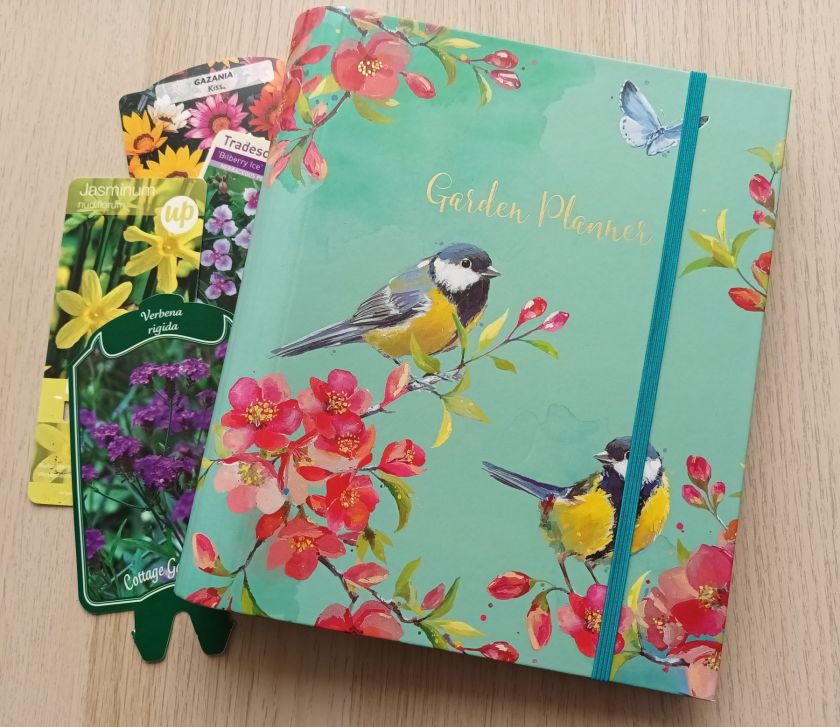
Photo credit: Laura Jones for Keeping It Creative

Over the years, I’ve kept various records of plants we’ve put in our garden, and I’ve saved all of the plastic information cards that come stuck in the pots when you buy them. I’ve also made notes in my bullet journal and even drawn plant ID cards for some of my favourite purchases. However, these resources are in an array of different folders and notebooks and often I can’t locate what I need when I want to check something. So, I decided I would like to keep a garden planner / journal and I found the perfect folder when I visited one of my local garden centres and asked my husband if he would like to buy it to give me for Christmas. Of course, any notebook or file would have done, but as someone who adores beautiful stationery, this one provides the motivation to use it regularly and has lots of different papers and pockets to put things in.

I’ve been using the folder since the very beginning of Spring 2023 and so far I’m finding it a really useful record keeping tool. I’m also hoping that by documenting everything garden related, it will help me to feel a real sense of achievement and begin to recognise that all of our efforts are paying off (even when I feel like it’s a constant battle to keep on top of the weeds or a few of our plants aren’t looking their best).

What is a garden planner and journal?

A garden planner and journal is a paper based or electronic place to store everything related to your outdoor spaces and even your houseplants if you so wish. As well as making you super organised it can provide, for example, a place to keep track of what you’ve planted and where, journal space to evaluate what has worked and what hasn’t, pages to record and plan seasonal tasks, list of to dos (AKA jobs for the weekend!), photo showing different parts of your garden over time so you can see and celebrate your achievements over the months and years. You can customise your records to suit your needs but you might include details of your soil in different parts of the garden, information about your various plants and notes on how well they have done depending on their location, ideas you have collected from magazine and online articles, issues you’ve had with some of your plants such as garden pests or poor growth, labelled sketches of flower beds or the garden as a whole, lists of your seed purchases and even a garden wishlist – the possibilities are endless.

Why should I keep a garden planner and journal?

In a nutshell, keeping a garden planner and journal, which you regularly write in, will make you a better and more efficient gardener and enable you to get so much pleasure from your space no matter whether it’s a few containers on your balcony, a tiny plot or a vast amount of land which keeps you constantly busy. Here are my top seven reasons why you should start a garden planner and journal today:

It helps you remember what’s where

Drawing a labelled sketch of the different parts of your garden such as flower beds, vegetable sections, corner plots, rockery etc helps you to remember exactly what you’ve got and where things are located. It can also provide information such as the particular colour or variety of plants.

I’ve also created a list of containers (size, colour and location helps here), what’s in each and when the plant grows and flower so that I know what’s going to pop up when and also, if it doesn’t come back, I can record and evaluate accordingly.

It’s a good idea to sketch your garden each season so you can see what’s in flower at particular times, which veggies are currently being grown and where your evergreen / deciduous shrubs and trees are. Then you can add in your annuals and assess whether there are any gaps which you want to fill.

You can create and maintain weekly and monthly plans

If you love your garden and want it to look good, you need to regularly dedicate time and energy to gardening. My planner contains weekly overviews for each season where you can record particular jobs that need doing each year and also ‘Jobs for the Weekend’ pages for running task lists. It’s really satisfying ticking them all off and it helps us to see what we still need to do and estimate how long each job will take. These task lists can then be revisited next year.

I like to go on reliable websites like Gardener’s World and RHS plus other UK based sites to look at what I should be doing each month and then handpick jobs specific to our garden. I also follow a few UK YouTube accounts for ideas too. You could even keep a list of useful websites in your journal somewhere too.

A place to log new additions to your garden spaces

All gardeners love going to local garden centres and nurseries to choose new perennials plus annual bedding plants for instant colour. You can record all of these in a list, stating where they were purchased and how much they cost, plus key information front the plant labels. getting new bits and pieces for their garden whether it’s a perennial plant, a new pot, a comfortable bench or chair and cushions, so And your new additions list doesn’t just have to be a space for greenery, you can also record new pieces of furniture such as a gorgeous new bench and bright cushions or a little potting bench, atmospheric solar powered or mains operated lights, new paths or replacement gravel, patio slabs, hanging baskets, rockeries, storage spaces such as a little shed or a box to put soft furnishings over winter, and wildlife friendly pieces such as a pond, bug hotel, hedgehog house or toad abode! Then, when you can’t recall how long you’ve had raised bed, you can check your records instead of trying to establish how long it’s lasted from memory.

A good chart to have in your planner is a record of seeds which you plan to set, when and where e.g. in trays indoors or directly into prepared veg beds or outdoor pots, how many to set (usually dependent on size and desired crop), date to set and germination times. You can also include a section for any notes, so, for example we find that our two courgette seeds for the two large plants we want don’t always germinate so we tend to put a couple in each plug or create more plugs.

You can find examples of seed charts on Pinterest for you to draw up (preferably on gridded paper), or, if you’re pushed for time, you can purchase printables on Etsy.

Helps you track progress over time

The other week I found some photographs of my husband sitting out in our back garden a couple of years after we’d moved into our house. I decided to print them out as there’s a huge difference between how the space looked then and what it looks like now less than 10 years later. The transformation is amazing and if we didn’t have a photographic record, I don’t think we would be able to fully appreciate all that we’ve achieved. You might not have photos from a decade ago (or maybe you do?) but why not start recording now and see how your space has changed in one, two or even ten years?

A useful spot to record successes, challenges + complete failures and reflect on why

We’ve been developing our garden for over ten years now and have had many successes but probably just as many failures. Some of the failures are permanently stuck in my memory, like the fact that every time we have tried to grow lupins, no matter where we got the plants from, the ended up covered in aphids which made my skin crawl! Likewise, some of our complete successes still take pride of place in our flowerbeds such as the beautiful, long lasting and colourful geums. However, there are many more triumphs and disappointments that I wish I’d written down and reflected on. Here’s a list of aspects of gardening which you might like to make a few notes on:

  • garden pests – what specific plants they’ve eaten, when they eat (daytime, night time, particular times of year, following particular weather etc), thoughts about why they eat e.g. slugs and snails love to munch on our dahlia so this year we’ve potted one up, covered the soil in grit and placed it in the front garden porch away from other plants and it’s doing much better
  • plant diseases and treatment e.g. our hollyhocks get rust every year so I inspect them early on and removed infected leaves quickly and dispose of them
  • plants which don’t like the conditions – too dry, too wet, hate clay soil, not enough sun/shade etc and whether they are to be moved or just dug up
  • weather related challenges (e.g. storms, continuous rain, dry spells etc.) and how specific plants coped
  • seed germination failures – dates planted and when replacements set or when new seeds purchased and set
  • weed related issues e.g. we have a huge problem with celandine and it’s a constant battle to get rid of them, I spend 10 minutes every day on their removal and I’m glad when they die back by mid May

I’m sure you probably have many more ideas but hopefully these are enough to get you started.

A place to dream, make wishlists, include inspirational images, identify your short and long term goals and make plans of action

If, like me, you have a beautifully, colourful and well maintained garden on your vision board for the future, it’s a good idea to have a section in your journal to include wishlists, inspiring photographs, goals and action steps and maybe even a written explanation of what you want your dream garden to look like and how you want to feel when in it. You can then check in regularly with this section of your journal and see how well you are progressing with your goals. You can also note down things from your wishlist to look for next time you go shopping to one of your local garden centres.

Final words…

As you start your record keeping, remember that your file doesn’t need to be perfect and will most certainly evolve over time. You might want to start by simply taking a few photos of how your space looks now and then making a few notes of some of the plants which are located in each section. Or, if you like drawing and creating diagrams, you might take some squared paper to draw different parts of your plot and label the names of plants currently growing there. I can also recommend colouring in the plants that are currently in flower so you can see the balance across your plot.

Then, on another occasion, you might make a basic to do list (try Googling garden jobs for June and your specific location) for the month and tick tasks off as you complete them. You could even add a few jobs that are already complete or underway to get some easy and satisfying ticks by the end of the week.

I hope you’ve found today’s post useful and it has inspired you to give this form of planning, record keeping and journalling a go. Let me know what you choose to do first and how you get on.

Posted in bullet journal, gardening, Planning and journaling

Useful gardening spread ideas for your bullet journal

As I was setting up my bullet journal spreads for June 2020, I decided that I would really like to begin to record key information about our garden including new plants, veggies we’re growing this year, plants which are thriving and which are not and why, plus sketches of our front and back spaces. I debated creating a separate garden journal but in the end I decided just to dedicate some pages each month within my planner so that everything about my life and our home and garden is all in one place. Before deciding on some layouts for my gardening spreads, I trawled Instagram, Pinterest and various websites for ideas. I found some really great spreads and took inspiration from them to set up my own.

I decided that over the next couple of months, I would like to create the following:

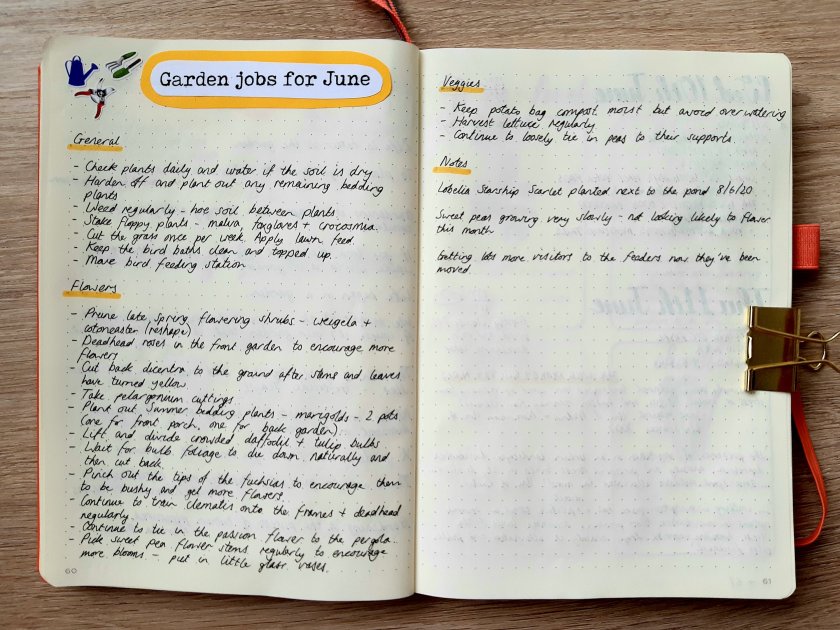
  • Jobs for each month – split into general tasks, flowering plant care, veggies and notes.
  • Information cards for new plants and our potted herbs
  • Photos of our actual plants in flower each month
  • Gardening quotes and motivationals
  • Wildlife spotted in the garden – with sketches
  • Plants to encourage wildlife
  • Birds in the garden – sketches and info
  • Aerial drawings of our different planting / garden areas

Garden tasks

There are lots of jobs for us to do in June but we’ve ticked off quite a few of them already. We certainly won’t be needing to water the garden or mow the lawn right now as it’s very wet out there because we’ve had rain showers for the last week or so. I intend to create one of these spreads each month using information collated from various websites.

I finished off the information cards for all of the plants that we’ve bought so far and also created some for our garden herbs. I’m hoping to get a few more different herbs soon so I’ve left some room for those on the spread too. The layout of these pages was inspired by the work of Emma at http://emusing-emma.blogspot.com who shared her houseplant information cards which she produced in her BuJo (direct link here). Make sure you check out her website if you love looking at ideas for your own bullet journal.

Information cards for different plants

I showed the beginnings of this type of spread in my June plans but I have since added some more drawings and information. I’ve also created some cards for the herbs we have in our containers. Again, my inspiration for these layouts was from Emma over at http://emusing-emma.blogspot.com/ The specific bullet journal spreads can be seen if you check out this link but I think all of her blog is well worth a look if you are like me and enjoy using a bullet journal and also love to get creative.

Garden related quotes and motivationals

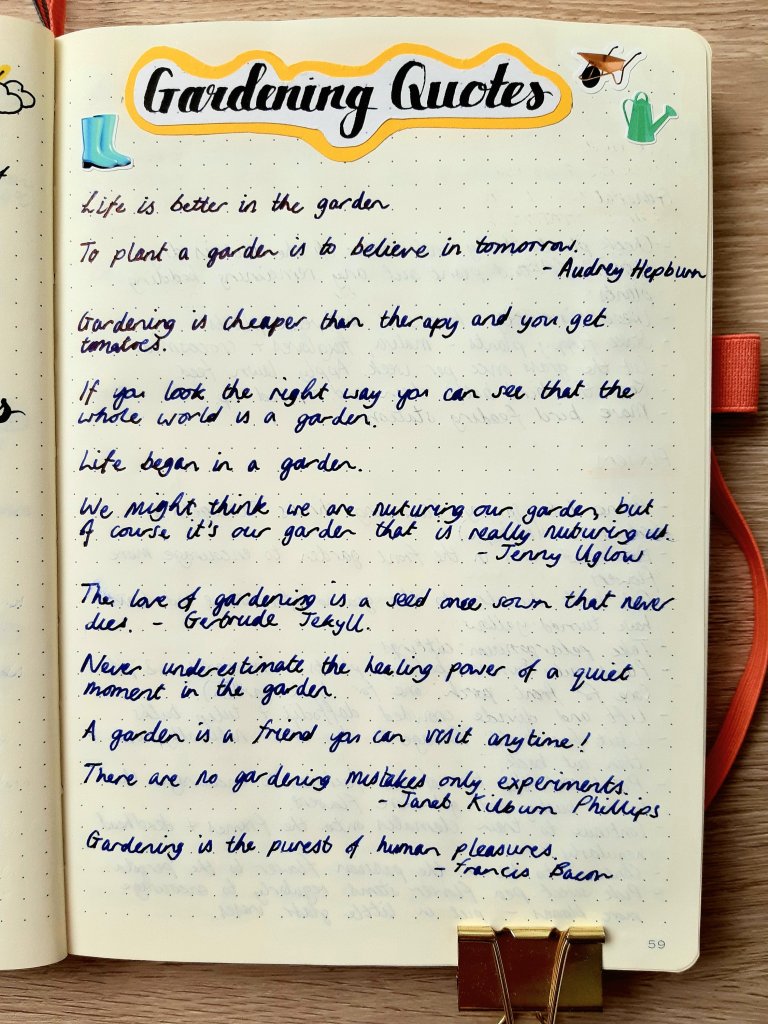
I’ve recently written a blog post about the health benefits of gardening and the opportunity to practise mindfulness whilst you are spending time in your outdoor space. As part of the article, I included some quotes about gardening. I found some more quotes whilst I was perusing the internet so I decided to handwrite some of them in my BuJo. These were written with my lovely left handed Lamy fountain pen which flows beautifully!

Wildlife friendly planting

We’re really keen to encourage wildlife into our garden and already have a bird feeding station, two bird baths, a bug hotel which my husband made and a small pond. We also like to have lots of plants which attract bees and butterflies so I decided to create a spread of wildlife friendly shrubs and flowers. We have some of these already but I have red valerian on my wishlist for the front garden.

Bird’s Eye View’ of our garden areas

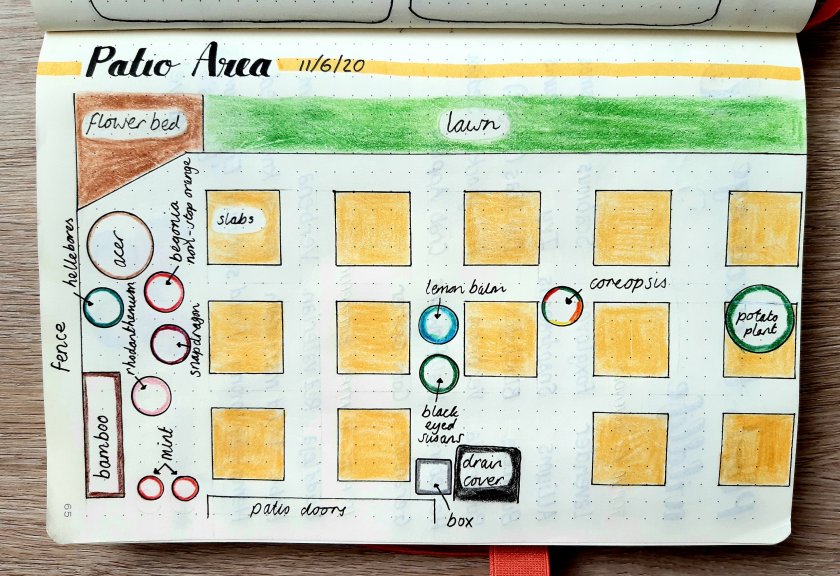
This is the first of my aerial view sketches of areas of our outside space. Just this one section took me a while to draw and add some colour and it’s not even to scale! I decided to use coloured pencils to shade around the outside of the shapes denoting our containers so that I could remember which of our pots we used for each of the plants. I’m going to aim to have all of my garden sections drawn out in my BuJo by the end of next month – let me know if you want to see the rest and I’ll do my best to take some decent photos when we have some brighter weather.

Wildlife spots

These pages are going to have little sketches of minibeasts which have been spotted in our garden and key information about them collected from a variety of sources. My spread is completely blank at the moment as I want to capture the bugs with my macro lens and at the moment, it’s too wet and drizzly to go out!

Birds in the garden

We get plenty of birds in our garden, particularly in the Springtime so I thought I’d create some pages in which to include sketches of our visitors and some information about them. I decided to do the actual drawings in my sketchbook and then transfer the pictures over to my bullet journal by scanning them on my scanner and then printing them off. This has lots of benefits – it means I can make several attempts at them if necessary, I can use decent quality drawing paper and I won’t end up getting pencil smudges in my BuJo. I’m yet to start my sketches yet but hope to be able to share some soon. As I’m typing a goldfinch has just landed on our sunflower seed feeder. It’s the first one I’ve actually seen visit our feeding station this year. We have two seed feeders containing niger seeds and a tiny seed mix specifically for finches and typically, it hasn’t gone for either of those – maybe collecting tiny seeds is too much effort in the pouring rain!

Do you keep a garden journal or do you just keep the little plant label information things from the pots like we’ve done previously? Have you got a dedicated notebook or do you prefer to produce spreads in your main planner? I would love to hear about the kinds of records you keep and if they’ve particularly helped you with your garden.

Happy gardening!