Posted in goal setting, intentional living, lifestyle, Mindfulness, nature, wellbeing, wellness

Easy and fun ways to make the most of your summer

For the last week or so, it’s felt like summer has finally arrived in the North East of England with better weather, more sunshine, warm breezes and the chance to wear some of my new seasonal outfits whilst sitting out in the garden. Although I struggle when (if!) it gets really hot due to my very fair skin burning super easily, I love it when it gets up to around 22 degrees C (around 72 degrees Fahrenheit) especially on days when I can just sit and relax outdoors.

Every season, I create a personal bucket list full of activities, including things I always enjoy at that time of year, and new things I’d like to try (harnessing the power of firsts as advised by Meik Wiking in his book The Art of Making Memories). This year, I’m also taking part in the monthly bingo challenges being run by Kelseyleigh over at My Abiding Journal, which is currently providing even more ideas for making the most of my summer.

So, today, I thought I’d share this year’s summer bucket list and also some further suggestions to help you make the most of the summer months whether you want adventures, experiences, opportunities to relax and recharge or a combination of all three. I hope my post gives you some new ideas or provides helpful reminders about maximising your days throughout the season. I would love to hear about your plans for the summer in the comments and if you’re excited about trying something new in 2026 feel free to share so others can take inspiration from you.

Summer 2026 Bucket List

I like to start planning my summer towards the end of spring by creating a bucket list in my bullet journal. For me, the season begins on June 1st so you’ll see I have a few items ticked off already. The cupcakes I made were vegan strawberry ones and although I think I would slightly modify the recipe if I made them again, I had such fun with my afternoon of baking and the cupcakes tasted great too.

It’s not too late to create your own summer bucket list for 2026 and you don’t have to make it super decorative like I have. Just a plain piece of paper or a page in a journal will do. You don’t have to get everything on your list ticked off but it helps to have something to work towards and provide inspiration.
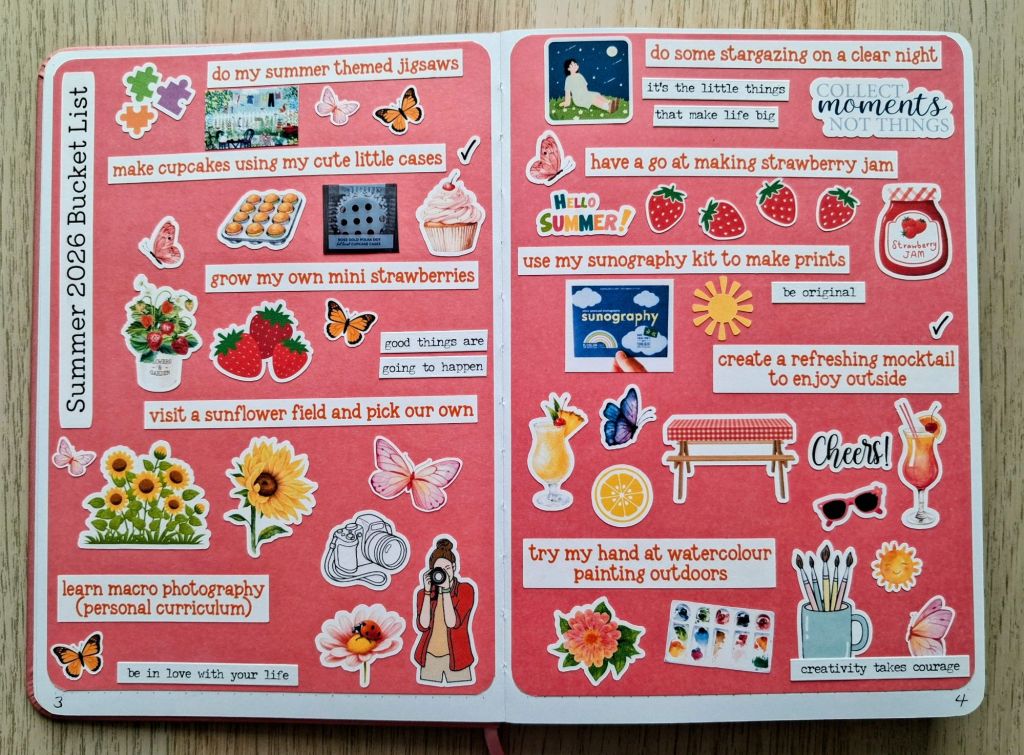
Photo credit: Laura Jones for Keeping it Creative

I’ve just signed my husband and I up for strawberry picking on Sunday and I’m excited to try this for the first time at a farm in Northumberland where we enjoyed visiting a pumpkin patch a few years ago. I’m going to take my DSLR camera with me to record our time there.

Bingo boards

There are loads of seasonal bingo boards available online which you could use, or you could have a go at making your own. I found this lovely example, which is good for spotting various signs of the season, and most of the items can be observed in the UK. It was created by Haley Post at MyMoonstoneKitchen, whose content I really enjoy on YouTube. Her printable can be found on Patreon as a free download if you sign up as a (free) member.
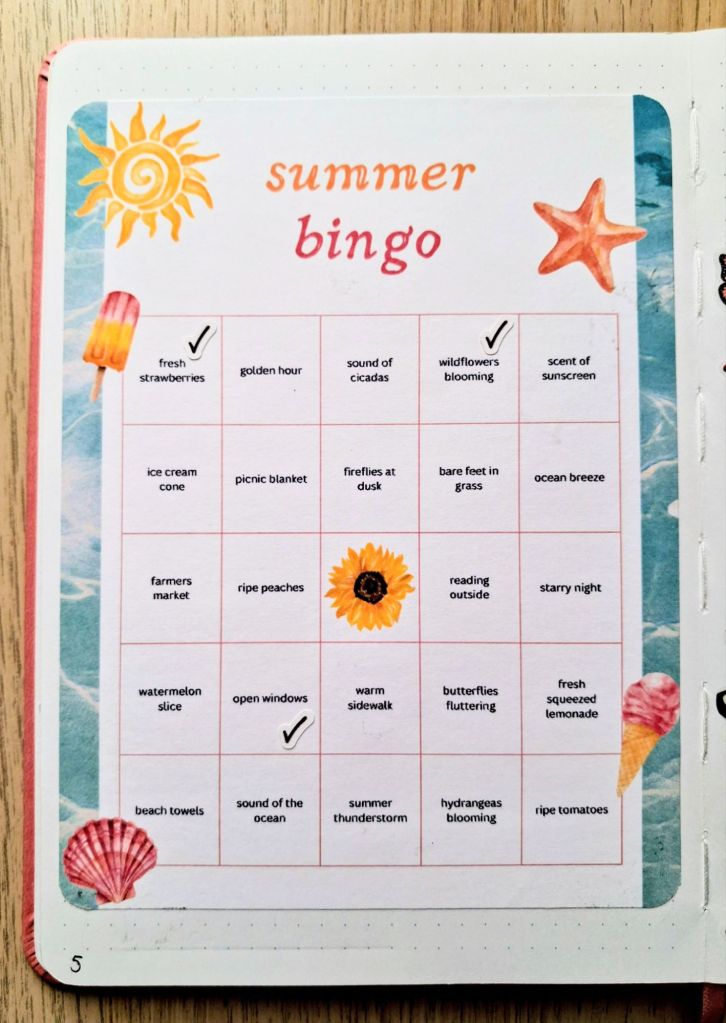
Photo credit: Laura Jones for Keeping It Creative

The monthly bingo boards I’m having fun with are available if you become a paid member of My Abiding Journal on Patreon and you can see glimpses of them on Kelseyleigh’s Monthly Journalling livestreams too. I stick mine in my monthly highlights journal and add photos or a description to say how I’ve completed the items I have checked off. Although some of the activities are perhaps more aimed at people in the USA with the creator being based there, it still offers plenty of food for thought and you can always tweak a few of the ideas if they don’t suit.
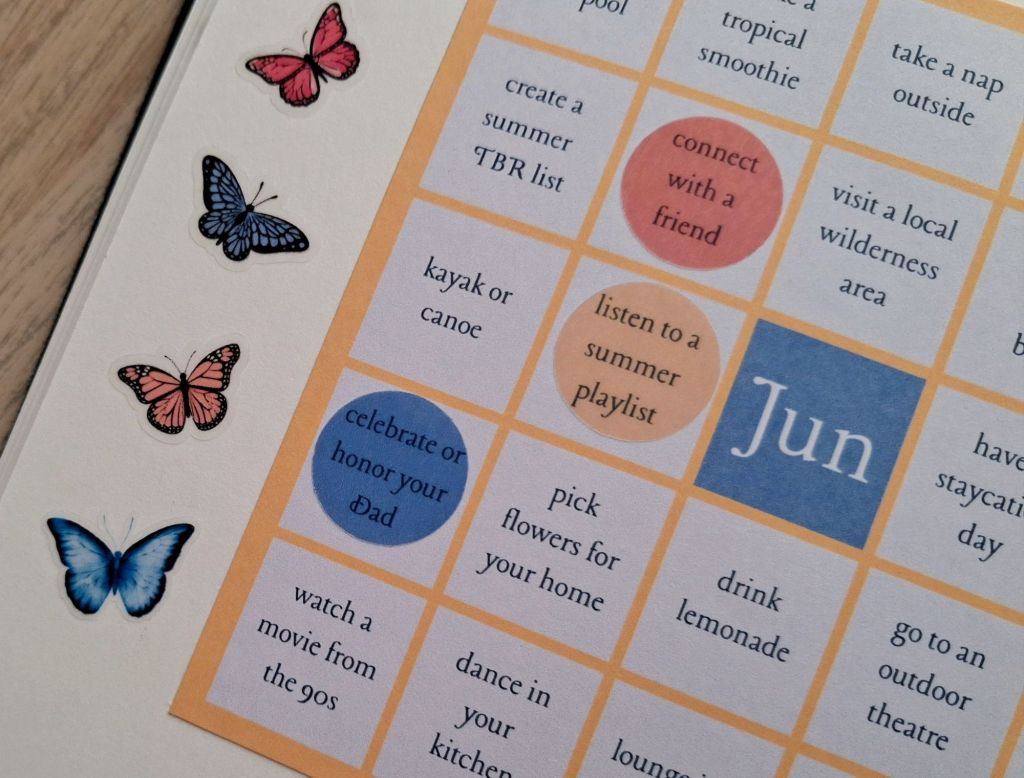
Photo credit: Laura Jones for Keeping It Creative

A Summer Reading Challenge

This summer, I thought it would be fun to set myself a little reading challenge to help me try to diversify my reading and choose some books that I wouldn’t ordinarily pick. I generally go for psychological thrillers and police procedural crime novels, but I wanted to push myself to opt for something different during the summer months. So, having explored various 2026 summer reading bingo boards and reading challenges I found online for ideas, these are my chosen categories:

  • A book originally published in another country
  • A historical fiction book to be listened to on Audible
  • A children’s classic that I’ve never read before
  • A modern classic
  • A book published this year by an author whose work I’ve never read before
  • A memoir
  • A collection of poetry

I decided on 7 books for the challenge and I’m already on my second book which is Land by Maggie O’Farrell. Set in Ireland, it’s a historical novel which spans the years directly before and after the great hunger. I’m enjoying it so far and I’m glad I chose it as my audio book as the narrator is Irish actor Dane Whyte O’Hara which adds to the atmospheric and lyrical prose and enhances the reading experience wonderfully.

The first book was the children’s classic The Velveteen Rabbit and I found it available for free as an audio edition read by Richard Armitage. It was such a sweet little story and I listened to it to wind down after a busy day.

Seasonal eating

One of my favourite foods is in season in the UK in the summertime, and that’s strawberries which I like to enjoy in salads, with ice cream or yogurt, and, more recently in cupcakes! This year we’ve bought our own little plant, but, as it’s an alpine variety, we’ll only get mini fruits from it (as long as the flowers get pollinated!). I can see some tiny yellow fruits on the plant but I’m not sure if that guarantees they’ll turn into red strawberries or not. There’s also lots of flowers but I’m yet to spot a bee on any of them!

Other fruits we love to eat in the summer include watermelon, peaches, nectarines, cherries, pineapple, raspberries, plums and juicy tomatoes, most of which are grown in the UK. Eating locally grown produce (or at least from the UK) means that they retain their nutritional content, taste better and are better for the environment (less food miles). This recipe for watermelon, green bean, halloumi and mint salad is a favourite of ours and we even have own homegrown mint leaves to add this year.

In the summer, there are lots of vegetables that thrive here in the sunshine including peas, beans, courgettes, aubergines, peppers, lettuce and potatoes. When it’s a hot day, one of our favourite meals to create is a poke bowl (pronounced poh kay). This often includes layers of lettuce or spinach, cooled roasted veggies such as pepper, aubergine, butternut squash and broccoli, a protein source such as chickpeas and coucous, sweet potato chunks or cooled salad potatoes for the carbs. We then drizzle on salad dressing and enjoy our bowl al fresco at our outdoor table and chairs.

And, of course, as well as eating seasonal produce, you can also make some amazingly tasty fruity drinks too. Our current favourite is a refreshing ‘Cinderella’ mocktail which we found a recipe for last summer. It uses a combination of citrus flavours, sweetened with a small amount of grenadine syrups and, once shaken, is topped up with the spice of fizzy ginger ale. Here’s the ingredients to make two glasses full:

  • 150ml orange juice
  • 150ml pineapple juice
  • 60ml lemon juice
  • 3 teaspoons grenadine
  • 1/2 litre ginger ale (or soda water if you prefer)

Add the orange juice, pineapple juice, lemon juice and grenadine to a cocktail shaker (or give it a good stir in a glass) and shake until combined. Divide into two tall glasses and add some ice. Top up with ginger ale. Enjoy!

Embracing the outdoors

Summer is the perfect time to connect with nature and enjoy spending lots of time outdoors. Being in natural environments improves our mental, physical and emotional wellbeing and is known to reduce stress and enhance our mood. I’ve been trying to spend as much time as I can in the garden this year and my husband and I have treated ourselves to a mini tabletop firepit which is perfect for sitting out in the late evening.

  • Have fun playing an outdoor game – my husband and I purchased a bright orange frisbee last year and we took it to a large outdoor space at a National Trust place we go to regularly. We both had smiles on our faces for the entire time, even though the wind kept lifting it and sending it off in the wrong direction! And it was fantastic exercise too. Other lovely outdoor games include bowls, badminton, quoits, croquet, throw and catch or even trying to get a ball or beanbag in an empty bucket.
  • Tend to your garden – summer is not the time for digging, moving plants or completely overhauling the garden but a few gentle maintenance activities such as hoeing a few weeds, deadheading spent flowers, checking on the progress of home growing fruit or vegetables helps to keep things progressing and looking good. It’s also important to do some early morning or early evening watering which allows the water to penetrate the soil and get to deep roots. Established plants should be watered deeply every few days or so, whereas seedling or delicate plants may require daily watering, especially during spells of hot weather. And, don’t forget to take time to observe your achievements and appreciate your hard work.
  • Take a hike – There are so many beautiful places to explore in the UK including the lake district, the highlands of Scotland, Snowdonia in Wales, The Peak District in Derbyshire and surrounding areas, the South West coastal path. It’s best to avoid walking during the hottest part of the day (11am – 3pm) but an early morning or evening trek can be wonderful. Also, remember to take plenty of rest breaks to look at the stunning scenery and always carry plenty of water to take sips from throughout your walk.
  • Go somewhere new and take a self-guided walking trail (you can find lots of these online or at a tourist information place) – depending on your preferences, this could be a historic tour of a nearby town or village, a nature walk through woodland, forest or around a lake or you could even follow a path around a nature reserve spotting birds from various hides. Just remember to dress appropriately for the weather, wear comfortable shoes and use sun protection.

Relax, reset and recharge

Just because the days are longer in the summer, doesn’t mean you have to fill every waking moment with tasks and adventurous activities. It’s also important to find time to rest and just be, especially when temperatures are particularly high and the Sun is blazing. Here are some ways to recharge and build wellbeing related activities into your routine:

  • Enjoy an analogue hobby outdoors – do some reflective journalling, read a book, sketch some of the flowers in your garden or at a local park, grab your paints and have a go at watercolour painting
  • Sit or lie outside (either in the sun with SPF on, or in the shade of a parasol or tree) and simply be. Try doing a mini meditation or other mindful activity such as using your senses to appreciate the here and now (take off your shoes and feel the grass beneath your feet, close your eyes and notice the different sounds around you, look up and watch the clouds moving and changing shape). I lay back on one of our reclining chairs a few days ago and I set the timer on my Fitbit for 20 minutes. I closed my eyes and relaxed for the whole time and those 20 minutes felt like a really long time. It was so good to just do nothing for a while – even though there was someone getting noisy building work done further down the street!
  • Pack a picnic and head to a local park, the coast, a lake or riverside. Depending on your preference, you could take a picnic rug or research somewhere nearby which has picnic benches available.
  • Give forest bathing a go – this restful, nature based activity was first developed in Japan but is now really popular in other cultures. This article from The National Trust provides a good introduction and also explains the wellbeing benefits.

Final words…

I hope you’ve enjoyed reading today’s blog post and it’s help you to come up with some lovely ways to make the most of Summer 2026. Although some of the activities will incur at least a small cost, there are also free suggestions if you’re living on a tight budget.

As I write these last few sentences of today’s blog post, it’s gone really dark and there are rumbles of thunder in the distance. And rather than thinking how awful the weather has turned, I’m excited to tick off an item on the summer bingo board – summer thunderstorm!

Wishing you your best summer yet!

Posted in bird spotting, nature, wildlife

A real life example of how a negative can lead to a number of positives to be grateful for

I talk about the importance of being grateful for things in your life regularly and today I want to tell a story which illustrates how something negative, in this case me being poorly yesterday, can lead to a number of positives and experiences for which I am hugely grateful. I hope you enjoy reading and it helps to show how we should be thankful for the little things rather than dwelling on the not so good.

Yesterday, I had a dodgy stomach with pain and bloating and although I tried to keep myself busy to keep my mind of the symptoms, I took myself off to bed and read my book later in the afternoon. I was really productive in the morning, but by lunchtime, I was feeling less enthusiastic. I also remembered that I had two fitness classes booked to make up for the fact I couldn’t do Pilates the week before.

At mid-day, I went to the gym for my legs, bums and tums class, as I would be charged £4 for non attendance or late cancellation, but in the end decided to go back home as doing stomach crunches and other tummy exercises wasn’t really a good idea and I didnt want to feel worse. I told several of my friends from the class on my way out and they sympathised and told me that they hoped I was better soon and had made the right decision to head home. I also saw the instructor who asked me if I was okay and told me to curl up on the settee for the rest of the day. I left the gym feeling grateful for the kind words of friends I’ve made in my classes and less guilty that I was missing my regular fitness class.

Before going home, I popped to the Sainsburys next door to pick up a few bland items for my lunch, namely some rice cakes and cheese and a tiny but indulgent caramel flavoured dessert. There were no small trolleys to be found in their usual location in the trolley park by the building, so I needed to go off searching for one. I saw an elderly man who was wondering what to do about the lack of smaller trolleys. I asked him if that is what he was after and told him to wait there as I could spy some across the car park. I hot footed it there and grabbed two before quickly wheeling them across the tarmac, passing one to the grateful gentleman with a smile. As he entered the supermarket, I heard him telling his wife about my good deed and, despite wanting to get home quickly, I felt good that I’d had a positive impact on his day.

But the best surprising positive of my day was yet to come!

As I’d spent most of the day indoors, I told my husband that I was going to sit outside on our back garden bench and get some fresh air. By this time, it was 8 o’clock and therefore dark but I love to sit and enjoy the peace and quite out there, whatever hour it is. In the late evening, we sometimes spot one of the frogs from our tiny wildlife pond and have seen other small creatures such as a mouse or a shrew. My husband said he would join me shortly and when he did, I enjoyed our chat about all sorts of things without any distractions such as our phones or tablets. However, all of a sudden, he paused and said really quietly “what on earth is that perched on top of the parasol?”. It was difficult to see with it being dark but I had brought a torch out with me and I shone it on the grass so it lit up the night a little. We were shocked, and amazed to see that it was a little tawny owl looking straight at us! It didn’t stay long as the torch light scared it but we watched it as it took flight, showing us its beautiful wing span in the moonlight. It was a wonderful experience for us, with us both being nature, wildlife and bird lovers and it made me so happy. It was a lovely end to our day and I was beaming inside about it for hours afterwards.

If I hadn’t been ill yesterday, none of these events would have happened and my day would probably have been relatively uneventful. I had so many highlights to write in my Five Minute Journal and I will remember our opportunity to see a tawny owl close up for a long time to come. I hope you enjoyed the story of my day and it has reminded you to keep looking for the positives however big or small they are.

Posted in bird spotting, bird watching, lifestyle, nature, wildlife

My new favourite phone app: Merlin Bird ID

My husband and I are keen birdwatchers and we love going to our local nature reserves and nearby woodland with out binoculars. Over the years, we’ve built up our knowledge of different woodland, coastal and wetland birds are able to recognise all of the most common varieties by sight. However, what we’ve always found slightly more difficult to do, certainly with woodland birds, is to identify them by sound alone. This is because, most of them have several different songs and a repertoire of calls. So, imagine our delight, when we discovered an app that was capable of recording all of the nearby birds and identifying them within seconds! Today, I thought I’d introduce you to the app we’ve been using for almost a week and explain a little bit about how it works.

Merlin Bird ID

Created by the Cornell Lab of Ornithology, Merlin Bird ID is a tool for beginner and intermediate bird watchers which uses a huge database to provide information and identification of literally thousands of different bird species. It is able to recognise birds by photograph or sound, can provide suggestions of IDs based on information you input and supplies details of species which are common to your geographical location. The basic app is free and once you’ve downloaded it and shared and confirmed your email address, then downloaded a pack specific to the country you are in, you’re good to go.

Basic Bird ID button

If you click on the Start Bird ID button, it will ask you five questions about a particular bird you observed. It asks for your location which you can either name, choose current location or select from a Google Map pop up. You then say when you saw the bird (using the calendar), how big it was, the main colours (choosing 1-3), and what it was doing from a choice of options. This particular aspect of the app is very similar to the RSPB bird identifier on their website. Having answered the questions, it will provide suggestions for you to look through and even includes a sound button too.

Photo ID

In this part of the app, you can upload a photo of take a snap of a bird and then zoom in so it fills the frame. From this information, the visual database will try to identify the particular bird. I’ve only tried this once using an image from my phone gallery of a male reed bunting. Although my photo wasn’t particularly good and includes bushes and wire fencing, the app was still able to guess correctly!

Sound ID

This is obviously the feature that I’m enjoying using the most. The instructions say to ‘get as close to the bird as you can, hold still and press record’. The pack that I’ve downloaded includes as database of 867 birds, including a number which are not native to the UK but that you might spot at a centre with bird enclosures such as my local wetlands trust site or a Birds Of Prey place.

What’s great about this aspect of the app is that it is able to identify multiple birds in one recording (it pops up on the screen as soon as it has ID’d each bird) and it highlights in yellow the specific birds it can hear at that time. Also, when you end the recording, it lists all the species that were identified and allows you to read more about them. So far, we’ve often been able to guess most of the birds ourselves but we were excited to see that one of the individuals which we struggled to identify was a nuthatch.

Another plus point of this part of the app is that it includes a red dot next to a bird which is rare in the location or an orange semi circle to identify it as being unusual. This is really cool and it’s so exciting when you spot something a bit different.

Explore birds

This part of the app is great if you want to develop your knowledge of particular types of birds. You can view a range of lists with photos such as waterfowl, shorebirds, finches, warblers etc. You can then select a species by clicking on it to find out more. I haven’t used this part of the app yet but I can imagine it’s especially good if you are a beginner birdwatcher.

Final words…

Although we’ve only been using the app for a week, we’ve both being really enjoying trying it out. It’s super easy to use, seems really accurate and includes a wealth of useful information. I imagine the sound recordings might fill your phone storage up pretty quickly but you can easily delete the recordings when you have done with them.

Let me know in the comments if this kind of app appeals and if you plan to download it to use on your phone. I would also love to hear if you find it useful during trips out in nature.

Happy birding,

Posted in bird feeding, bird spotting, bird watching, conservation, gardening, nature, wildlife

Monday Matters: The simple joy of feeding and watching garden birds in wintertime

Winter is a difficult time for birds due to the shortage of food sources, long and cold nights and shorter days. By nightfall, they need to have eaten enough to give them energy to keep warm and survive until morning when the process of searching for food starts all over again. Providing food sources in your garden is a great way to help nature and feel as though you are making a difference.

Photo credit: Amee Fairbank Brown for Unsplash

I like to think that our garden is a wildlife friendly as possible and I’m always in search of new ideas to keep visitors happy and well fed. I know that many of my readers are nature and wildlife lovers too, so this week, I thought I’d explain how feeding and observing birds in your garden helps to boost your mental health and also share my top tips for looking after birds in wintertime.

Whether you sit outside all wrapped up with a warm drink or you observe through the window, watching the birds feeding and exploring your garden can have a huge impact on your mental health and wellbeing. Here’s some benefits that we can all enjoy:

Watching the birds is a mindful and meditative activity which makes you feel calm and relaxed. Whether indoors or outside, you are required to sit very still and quiet, away from distractions such as your mobile phone (and all of the must-read notifications which constantly pop up!). If you can, and the weather allows, I recommend wrapping up in your biggest coat with hat, gloves and chunky scarf (plus optional coffee, milky tea or hot chocolate), so you can sit in your garden. This way, you can be totally immersed in nature and use more of your senses, so, as well as observing what’s going on, you can also listen to the various sounds of the birds and other noises in your immediate environment or further away. During this time, you may also become aware of different sensations such as a gentle breeze on your face, the chill of your cold ears, the warmth of your mug seeping through your gloves or the supportiveness of your choice of seat. And, because you are involved in all of this sensory exploration, you’re not thinking about your never-ending to-do list and all of the other stresses of the modern world.

Getting outdoors in the wintertime ensures you get some much-needed fresh air and a dose of vitamin D from a natural source. Fresh air can improve your wellbeing in lots of ways including clearing your airways and lungs, strengthening your immune system, improving your digestion and giving you more energy (which also helps to sharpen your mind). Vitamin D is essential for boosting your brain and immune system and strengthening your bones. Obviously, the amount of sunlight changes from day-to-day, but personally, I think getting out in nature provides a mood boost even on the dullest of days.

Bird feeding and watching can give you a real sense of achievement. From learning to identify the birds you spot and beginning to recognise their various calls and songs, to attracting different species to your garden or yard as you increase your feeding options and even developing the skills to use binoculars or take photographs using a DSLR camera. There’s so many opportunities and I guarantee it’ll boost your self-esteem too.

Something else which will make you feel good about yourself is knowing that you’re doing your bit for wildlife conservation in your local area. Creating a haven for birds in your garden and generally making it a wildlife friendly zone is a great way to help on an individual basis.

Above all, bird watching can be absolutely fascinating and great fun. When you stop what you’re doing and really look at the birds, it’s so interesting to see their comings and goings and how they behave. You might first see a little dunnock flicking its tail as it shuffles along the ground, hoovering up crumbs fallen from the feeders. A short time later, you might spot a visiting blue tit carefully extract one single seed and then take it back to the safety of their chosen branch to enjoy in peace and comfort. Watching a solitary blackbird as it traverses your lawn will show you how it tilts it head to listen carefully for worms underground and then uses its sharp beak to extract its prize from the earth. You might also see how it defends its territory by chasing away other small birds from its garden of choice. Whichever birds your garden attracts, I can almost guarantee they’ll provide good entertainment and bring you feelings of joy!

And if you don’t have a garden, watching and feeding birds in your local park is also great too – just be careful about the kind of food you provide, for example pre-mixed bird seed is a good source of nutrients for garden/woodland birds, whereas white bread isn’t a particularly health option for them. If you combine your bird spotting with a nice brisk walk you can really maximise the health benefits of your time outdoors!

Top tips for bird feeding and watching

Get a basic field guide

Whether you’re new to bird watching or have a little experience, a basic field guide for garden birds is a great resource. This will provide pictures of common and slightly more obscure garden visitors as well as information about what makes each of them unique. This might include size, body shape, plumage colours and patterns, tail shape, length and patterning, and other defining characteristics. Many of them will also discuss geographic range, migratory patterns of specific birds, breeding patterns and behaviours to look out for.

Be patient – birds are careful and cautious customers

When you first start to create a haven for birds, you’ll need to be very patient. Birds have evolved to be incredibly careful as it maximises their chance of survival. A few years ago we replaced our bird bath as the current one which was coated metal got a hole in it (we thought that over enthusiastic birds were flicking most of the water out each day!). This time we’d chosen a weighty ceramic version in a shiny mid grey which we excitedly placed in the garden in the same spot as the previous one. However, despite the fact that my husband and I thought the new bath looked smart and attractive, it was several weeks before any of our feather friends showed even a slight interest in it and at least a month before they would actually linger and have a wash in it!

Keep an observational journal

Anyone who knows me or regularly reads my blog will know I love journalling and memory keeping. I like to make my own traveler’s notebook inserts and use them to record anything and everything. However, I’ve recently picked out a garden journal for my husband to get me for Christmas and I thought it would be a nice idea to record my garden bird spots in it, particularly any unusual observations. For example, one snowy January, I saw a group of redwings perching in the ivy on our bottom fence and a few weeks later, my husband spotted a nocturnal bird poking its long beak into the snow in search of food. It turned out it to be a woodcock – our first sighting, and so far, our last! Your journal could simply be a place to record the name of the bird and when you saw it, but you could also get creative adding photographs, sketches or even watercolour paintings.

Think about meal provision for all – cater for picky eaters and those who aren’t as fussed

Some birds, such ss goldcrests, are quite picky eaters, and feed mainly on small insects and spiders. Others, such as blackbirds will include a large range of foods in their diet such as worms, spiders, berries, dried fruits, sunflower hearts, oatmeal and suet pellets. I’ve even seen the ones who visit out garden grabbing the odd water louse from our wildlife pond! If you look at different bird mixes available, they usually suggest which individuals they’re designed to attract. Over time, you could add different feeders – we have seed feeders, fat balls, peanuts (inside a mesh feeder to prevent whole nuts from being extracted) and a wooden table for birds who prefer open feeding and a place for kitchen scraps and fruit.

Go heavy on fatty foods

Talking of different types of food, birds need plenty of high fat stuff during cold winter weather so that they are able to maintain their fat reserves to keep them warm during frosty nights. This can include pre-made fat balls, suet cakes and bars or you can make your own – check out these instructions on the RSPB website. Warning: fat from cooking is bad for birds because the consistency of it makes it prone to smearing on feathers which can destroy waterproofing and insulating qualities.

Supplement with kitchen scraps

Feeding garder birds doesn’t have to be an expensive hobby. Many kitchen scraps that get thrown away can provide a suitable meal. We tend to stick with seed mixes, peanuts and fat balls but this information from the RSPB has given my husband and I food for thought!

Adjust to the demand

When you first start feeding the birds, you may only have a small number of customers visiting your garden or you may find that limited species choose to come. Always adjust the quantity of food to the demand. Also, try to put the provisions out at the same time each day so that the visitors can learn your feeding routine.

Maintain good hygiene

It’s really important to regularly clean your bird feeders, drinking containers and bird tables to keep them disease free. If you don’t maintain good hygiene standards you may be doing the visiting birds more harm than good. Check out this online resource from the RSPB which has lots of tips on keeping your birds healthy.

Provide water as well as food

Water is vital to a bird’s survival so you should make sure you provide drinking and bathing facilities for your feathered friends. This could be via a purpose-built bird bath, a water tray, shallow pot or a hanging water dispenser. For bathing, birds only need a small depth of water as the purpose it to get their feathers wet rather than drenching themselves. During the depths of winter, when it gets super cold, you might need to check on the receptacles to see if they are frozen and then gently defrost them. Be sure not to use really hot water or you might crack the container.

Consider planting for birds

Although late Autumn and the depths of winter aren’t usual time for planting, if you want to attract birds to your garden across the seasons and for years to come, it’s worth thinking about the plants you choose. Native wildflowers, sunflowers, asters, black eyed susans, echinacea (or anything else which has tasty seeds inside) dense bushes and those which produce fruit (e.g. ceanothus, privet and blackberry) shrubs with berries (e.g. cotoneaster) and trees such as birch or cherry. We haven’t got room for any trees in our garden but there are a few hanging over our plot which get plenty of visitors – I’m sure some of them sit in them watching and waiting for us to add fresh supplies.

Once your plants become established, you should find that even if they get attacked by garden pests such as greenfly or blackfly, the birds should help to keep them at bay for you. For example, we have a rose bush and every year the underside of the leaves gets covered. However, we never use pesticide on it (or indeed any of our garden plants) because a) it’s bad for ecology and biodiversity and b) sparrows and blue tits are regularly seen picking the bugs off. Also, by eliminating green and black fly (AKA aphids), you’re depriving ladybirds of their favourite meal too!

Invest in a wildlife pond

We only have a small garden but, about four years ago we decided to get a mini pond for wildlife. We have at least one resident frog in there but it’s also popular with blackbirds too – they love bathing in there and drinking the water (there are lots of water hoglouse in there and we think they pick them out of the water and gobble them up too!). Our night-time visiting hedgehogs also love to wash down the biscuits we put out for them (that is if a visiting mouse hasn’t stolen them before they arrive!).

Final words…

When I used to volunteer for the RSPB and worked with schools exploring nature, the teacher’s used to often ask me when it was important to feed the birds. My advice was that food can become scarce at any time of year, depending on the weather conditions, so it’s best to put something out all year but then ramp up the provisions to include a wider variety of options during the wintertime.

I hope today’s post has encouraged you to give bird watching and feeding a go this wintertime. If it has, let me know how you get on. One final idea is to take a few photos of your feeding provision each year so you can see how your garden develops over time. My husband and I love looking at images taken over the years – even if they’re just quick snaps of different spaces. All too often, we’ve forgotten how tiny some of our plants were when we first set them and how big they’ve grown!

Posted in beginner photography, lifestyle, mental health, nature, wellbeing

Our Wetlands Trip plus 13 Reasons Why You Need More Nature

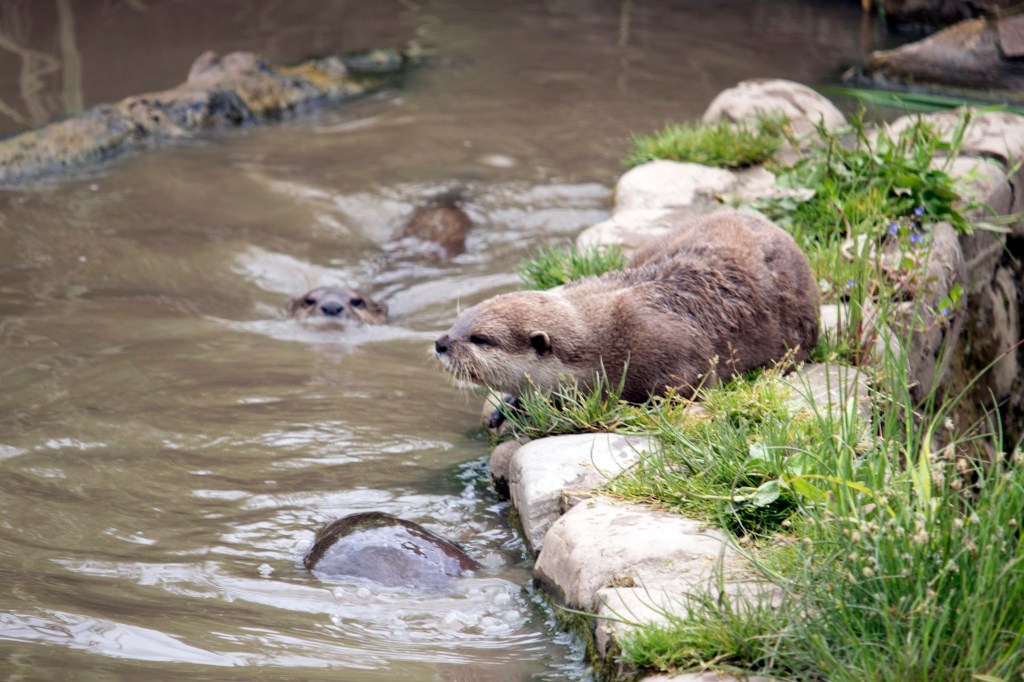
Last weekend my husband and I went to our local Wetland Centre for the afternoon. We enjoyed a picnic in the sunshine, lots of bird spotting and a good, long walk. I also took my DSLR camera and got some nice shots of more common species and non-native varieties of bird, plus a few of the cute little family of Asian short-clawed otters . Although there were quite a few groups of visitors due to it being the weekend, the reserve includes 103 acres of open spaces and wetlands so we were able to find peace and quiet to enjoy our surroundings and explore. We had an amazing time and left the place feeling super calm and relaxed.

This week is World Wellbeing Week and it serves as a reminder of the importance of taking time to look after our physical and mental health. Connecting with the natural world, especially in spaces where there is water, is a key way of doing this, and although you may not have a Wetland Centre on your doorstep, we’re all able find ways to appreciate the outdoors.

A quick reminder of the key benefits of getting out in nature

  • Walking is a great form of exercise and reduces risk of obesity
  • Better energy levels
  • The chance to disconnect and slow down
  • Improved creativity due to lower stress and anxiety levels
  • Better air quality – less pollution
  • Reduces anxiety
  • A calm space where there are less triggers which may cause low mood or upset
  • Lowers blood pressure and makes us less tense
  • If the Sun is out, we can soak up vitamin D which is important for our general health
  • Lowers depression – boosts serotonin levels and promotes feeling of wellbeing
  • Increases our ability to heal
  • Helps with cognitive functioning – memory, processing, recall etc.
  • Being outside is great fun!

Photos

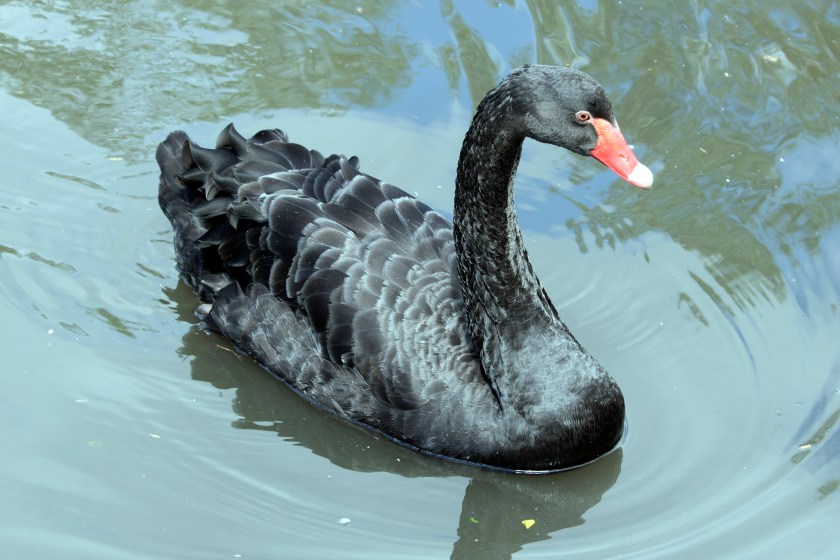
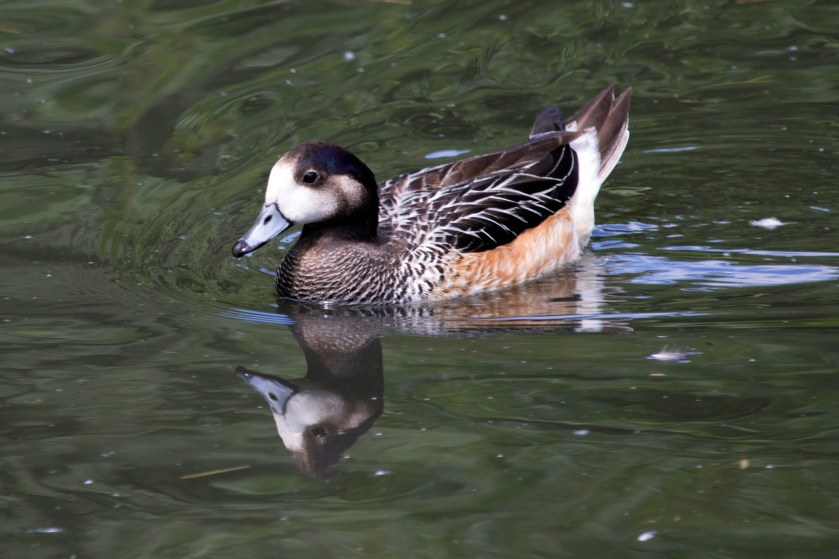
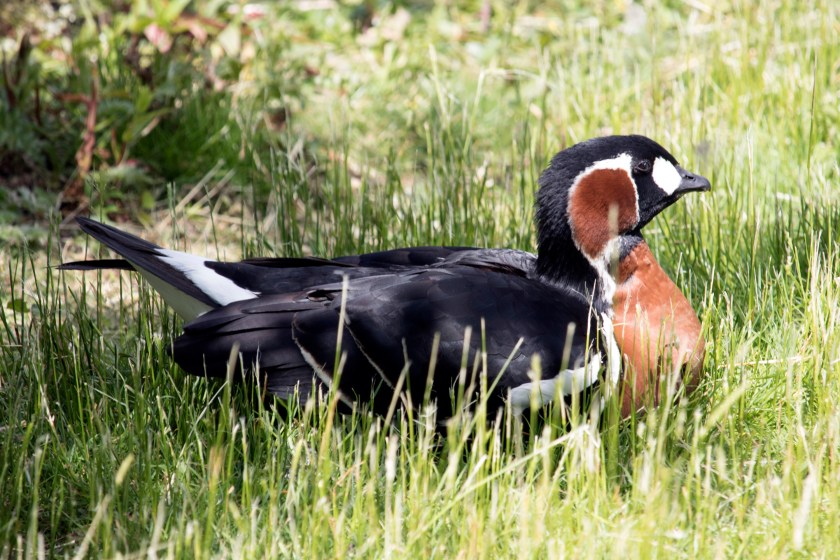
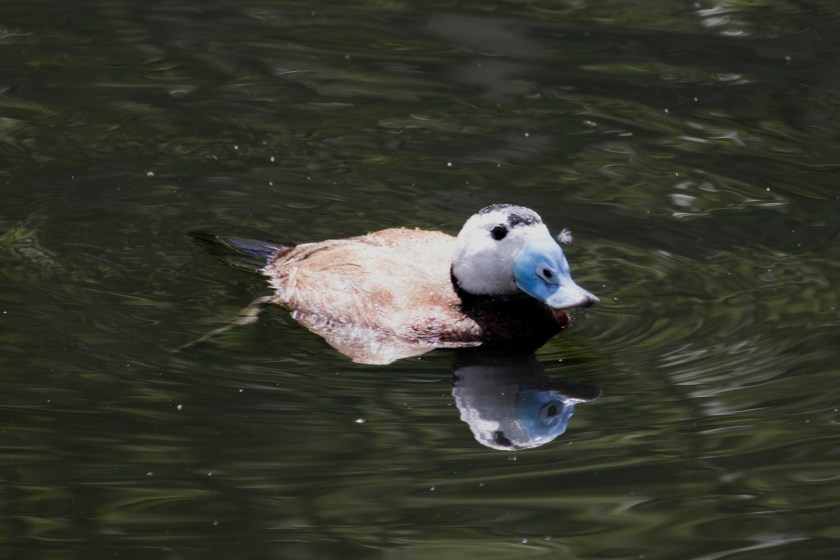
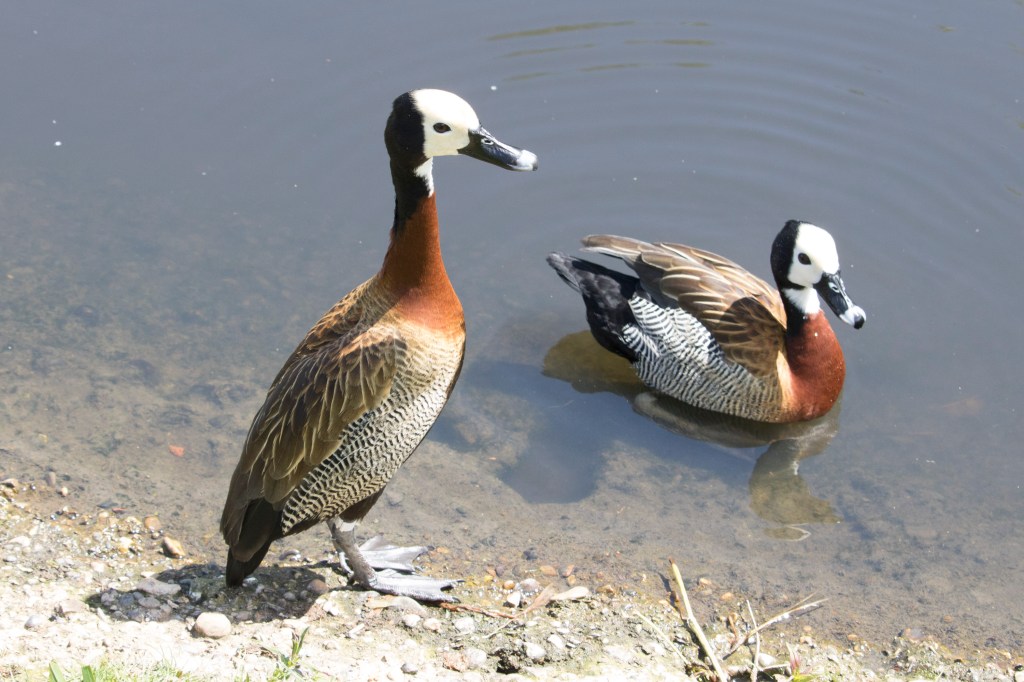
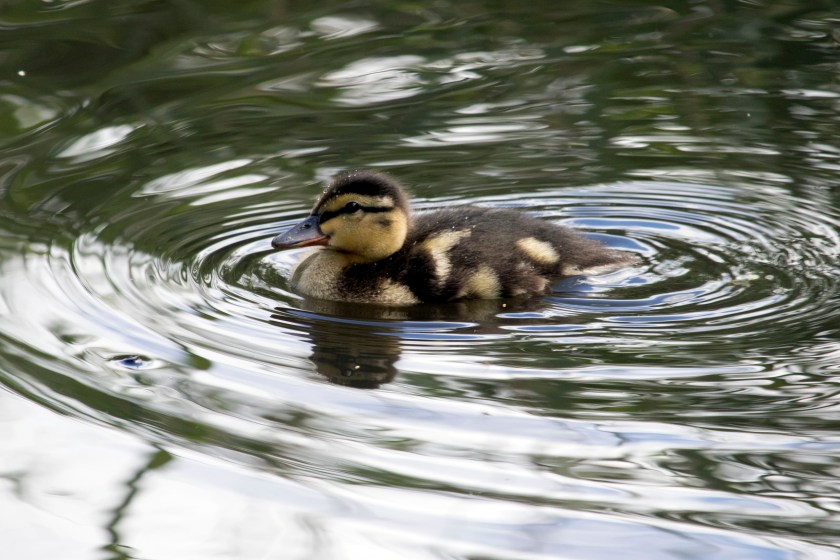
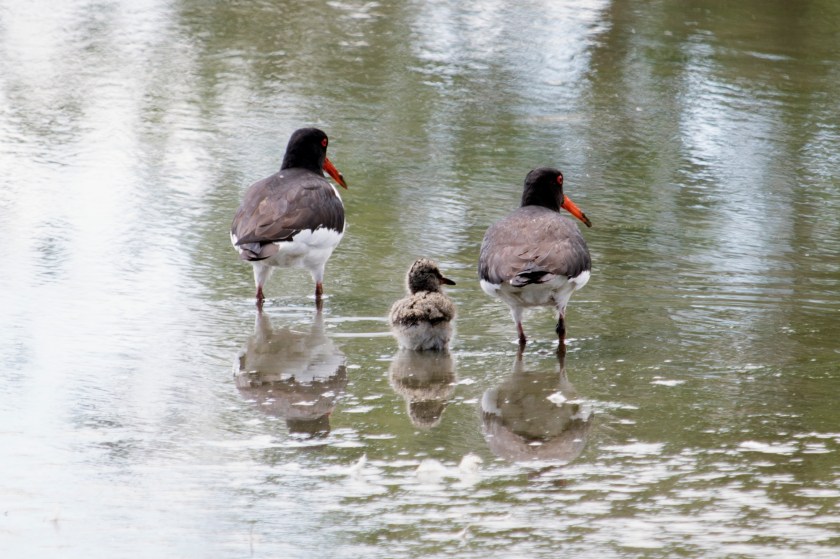
As I said, I took lots of photos with my DSLR camera on our way around the extensive grounds, Some turned out better than others, especially as a few of the birds observed from the hides were quite far away. I also tried to take some shots of the meadows but unfortunately it was a little too breezy. I’ve since printed a collection of them ready to do some journalling of our day but I thought I’d share a few of my favourites on here. I’ll let the images speak for themselves but will pop the species names underneath as a caption.

black swan
Female Chiloe widgeon
Red breasted goose
White-headed duck
White-faced whistling ducks
Puna teal duck
Mallard duckling – nothing different but super cute!
Avocets
Not a great photo but sweet little oystercatcher chick with mummy and daddy!
A little glimpse of the Asian short-clawed otter family

Final words

I hope my post has been a good reminder of the benefits of time spent in nature and that it’s prompted you to explore places and spaces that are available in your local area. You can either choose to mindfully soak up the atmosphere or create a photographic account of your time, or, as I did, combine the two. Let me know what your favourite nature space is where you live and what you particularly love about it.