Today, I’m sharing a second great blog post written by Linda Chase of Able Hire, this time discussing strategies to help you cultivate your best life and meet with success as you make your way towards your hopes and dreams for the future. I’m sure you’ll like the content as much as I did and will pick up some useful tips as you read. Enjoy!
As we navigate through life, we are constantly exploring ways to enhance our journey. The journey to live our best life and achieve our dreams is a continuous process that requires commitment, resilience, and a balanced approach. Here, Keeping it Creative presents eight key strategies you can incorporate right now to help you lead a fulfilled life and accomplish your aspirations.
Build your confidence through fashion
Confidence is a fundamental ingredient for success, and one way to boost it is through your personal style. Fashion can be an expression of your personality, serving as a confidence booster. Dressing in a way that makes you feel good about yourself can have a significant impact on your self-assuredness.
Cultivate resilience
Life is full of challenges, but the way we perceive and respond to these difficulties greatly impacts our growth. Embrace challenges as opportunities for learning and self-improvement. Develop coping strategies, like mindfulness or journaling, to overcome setbacks and bounce back stronger than before.
Embrace Self-Care
In our pursuit of goals, we often neglect our physical, emotional, and mental well-being. Make self-care a priority. Incorporate regular exercise into your schedule, practice mindfulness, and cultivate healthy eating habits. Pursue things that make you happy! If you love art, check out the fun options on Keeping it Creative. These small actions can significantly improve your overall well-being and productivity.
Foster Positive Energy
It’s important to surround yourself with positivity as much as possible wherever you are. If your family, roommates, or coworkers seem stuck in a negative mindset, take time to talk through what is going on and make it right. Then, you can cleanse the space with naturopathic cleaning remedies to reset the energy. You can even smudge with sage if you desire. It is hard to be at your best when you are surrounded by negativity, so take control of the energy around you!
Develop a Growth Mindset
A growth mindset – the belief that you can learn, improve, and evolve – is crucial for personal development. See failures not as dead-ends but as stepping stones towards success. In fact, anxiety and stress can be positive motivators to get out of our comfort zone and do something amazing! Regularly seek out opportunities for growth and learning, and embrace change as a necessary part of the journey.
Stay Curious
Curiosity acts as a catalyst for creativity and innovation, driving us towards our objectives. By committing to daily learning, be it through reading a new book, enrolling in an online course, or delving into a fresh hobby, we stimulate our minds. This practice of maintaining an active and engaged mind is a testament to the power of curiosity in fueling our personal and professional growth.
Network with Like-Minded Individuals
Surround yourself with people who share your values and aspirations. Build a network of supportive, motivating individuals who inspire you to keep moving forward. Exchanging ideas, collaborating on projects, and supporting each other’s journeys can significantly contribute to your overall success.
Keep a Clean Home
The condition of your living environment is a reflection of your mental well-being, and an organised, clean space can positively influence your mood, enhancing productivity and promoting tranquility. Concurrently, setting clear, manageable objectives offers essential direction and focus in your life’s journey. Regularly taking time to declutter and re-organise your physical space is as crucial as periodically reviewing and adjusting your goals for maintaining motivation. Both practices ensure you’re on the right path towards achieving a harmonious mental state and accomplishing your aspirations. Get the most out of your cleaning efforts by taking advantage of resources like Cleaner Digs.
Foster Meaningful Connections
Cherishing our connections with loved ones greatly enhances our overall happiness. It’s essential to prioritise time for gatherings, providing opportunities to fortify bonds and create lasting memories. Embrace technology with a free invitation maker, which simplifies the process of planning both impromptu and scheduled events. You can create invitations by modifying templates and adding your own text.
Search for Joy and Meaning
Living your best life and achieving your goals is a journey of resilience, self-care, growth, curiosity, and supportive networks. By incorporating these eight key strategies into your life, you’re setting yourself up for success. Remember, it’s not about the destination, but the journey, and every step you take towards betterment is a step closer to living your best life and achieving your dreams.
So there you have it, eight wonderful strategies for living your best life and embracing your journey towards your goals. I particularly enjoyed learning more about the effect your physical environment can have on your mental wellbeing. As some of my readers will know, I’m currently in the process of decluttering my craft room and my goal is to have a neat and well-organised space which is a joy to work and craft in. I’ve realised that I would benefit from re-prioritising this aspiration as Linda has reminded me that it’s key to boosting my mood, being more productive and feeling in control.
Both Linda and I would love to hear your thoughts on today’s guest post, especially which points resonated with you the most, so feel free to drop a comment below.
Last month, I met up with a few of my close friends for lunch and a good catch up. We had a lovely afternoon and there was so much to talk about. We reminisced about old times when we all worked together, talked about our recent holidays and plans for future breaks, shared what we’d been up to over the summer (and how fast the months were flying by) and commented on how children are so different from when we were young. As is often the case when the conversation is flowing, we spent some time chatting about current affairs local and national news. Sitting there listening and very occasionally contributing to the discussion, I realised that I knew much less about most of the topics than anyone else in our group. They seemed to know every detail about a particularly harrowing subject and had formed lots of opinions about all that they had read and heard. When I returned home, I mentioned this to my husband and considered why I was much less informed. I came to the conclusion that the main reason is that I firmly believe that over-consumption of news, particularly of the negative kind, seriously impacts my mental health and so I tend to avoid watching and reading too much. Today, I’d like to share what I have learnt from my online reading on this interesting and thought-provoking topic and present some strategies for avoiding ‘doomscrolling’ and managing your news consumption in general.
The concept of ‘doomscrolling’ and issues with easy access to news media
The term ‘doomscrolling’ came into regular use during the Coronavirus pandemic and is the act of spending an excessive amount of time reading and consuming large quantities of negative news online. This, coupled with 24 hour news channels on the TV, sensationalist headlines being so easily accessible and the negativity bias of media outlets can mean that the news is seriously harming your health and wellbeing. Some of the detrimental effects include:
increased anxiety levels
difficulty concentrating, completing tasks or relaxing
worsening symptoms of depression
elevated stress levels and trouble sleeping
obsessive worry and fear
gut and stomach problems
muscle tension and pain
poor productivity levels
feelings of helplessness or paranoia
So, why do people involve themselves in ‘doomscrolling’ and excessive negative news consumption?
According to my research there are several main reasons why people engage in this kind of behaviour:
having a natural negativity bias that makes them pay more attention to bad news than good news
wanting to feel in control and prepared for potential threats in a world that seems chaotic and uncertain
being addicted to the dopamine rush that comes from getting new information, even if it is negative
because they wrongly believe that they are keeping themselves safe by doing so
What strategies can I try to prevent ‘doomscrolling’ and over consumption of negative news media?
Limit your time Set a time limit for your news consumption and stick to it
Make use of mobile apps and your phone settings Use apps or tools that block or limit your access to social media or news sites
Look for the good news Seek out positive or uplifting stories that balance out the negative ones
Consider better alternatives Choose to engage in activities that make you happy, such as hobbies, exercise, meditation, or spending time with loved ones
Seek help or support Talk to a therapist or a trusted friend if you feel overwhelmed by the news or your emotions
Final words…
I hope you’ve found today’s post thought provoking and useful. Remember, staying informed is important in terms of feeling involved, knowledgeable and connected to others and is a valuable way to learn and grow. However, taking care of yourself is of equal importance so make sure you control your news consumption rather than letting it control you!
Last week, I caught up with a lot of pages in my creative traveller’s notebook journal. I’d had photos and bits and pieces printed for a while and wanted to get them stuck in with typed and handwritten sections of memory keeping and decorative stickers. I’m impressed with how much I got done and for today’s Monday Matters, I’ve decided to share some simple ways in which I ensure I stay focused on the task in hand, concentrate well and improve my productivity levels. So, here’s some tips for better concentration which you can apply today:
Keep hydrated
Throughout the day, I make sure I always have a large bottle of water or squash on my desk to sip from. Keeping myself hydrated helps to prevent headaches, lethargy and decreased alertness – all of which can negatively affect mental performance and workflow. Having a large drink container means I only need to refill during longer breaks and I don’t get thirsty in the middle of tasks.
Eat a healthy diet
We all know that too many junk foods (those which lack nutrients, vitamins and minerals and are high in salt, sugar and fat), are bad for your general health but did you know that they can play havoc with your energy and concentration levels too?
According to my research, the best types of food for improved concentration are:
foods high in omega -3 (I’m trying to snack on chopped walnuts whilst working but I really don’t like them! haha)
foods high in antioxidants e.g. berries, tomatoes and vegetables such as broccoli, cauliflower and cabbage are particularly good and help improve brain function
foods which provide a dopamine boost such as bananas, avocado, spinach, tomatoes, nuts, seeds and chickpeas are great for increased motivation, better mood and improved attention levels
a moderate amount of caffeine, for example from green tea, a small amount of dark chocolate or one or two cups of coffee per day (maximum) can increase mental alertness
foods high in Vitamins B6 and B12 which improve cognitive function – I get my B6 and B12 from fortified oat and soya milk, wholegrain cereal, eggs, nuts and seeds but none vegetarian sources include lean meat and oily fish.
foods high in fibre such as veggies, fruits, whole grains, nuts, seeds and beans which all help to keep blood sugar levels stable preventing spikes and dips in energy
Get some exercise
Exercise is a great stress buster, mood improver and mindful activity, all of which can help with concentration. After a good workout (following the initial tiredness), our mind feels sharper and our cognition improves too. I do yoga, Pilates, Legs, Bums and Tums and Zumba each week but I also make sure I fit in a walk each day, preferably in nature as I find it really calming. I also take mini exercise breaks between working sessions which might involve dancing to a favourite upbeat tune, doing some basic stretches or completing a five minute low impact fat burning exercise such as high knees, modified jumping jacks and oblique crunches.
Work to improve your sleep
At the moment, I generally enjoy a really good night’s sleep and wake up feeling refreshed and ready to start my day. However, in the past, I’ve really struggled with insomnia and know the effect that tiredness can have on both the body and mind. Sorting your sleep out takes commitment but is vital if you want to stay alert and productive during the day. A good place to start is to ensure you find a restful and relaxing activity to do just before bed. However, if you’re really struggling with poor sleep this in depth post should help too.
Take regular breaks
I’ve shared before how I use The Pomodoro Technique to help me take regular breaks during my working day. Taking a short break enables you to rest and recharge ready to continue your task or start a new one. Just make sure that what you do during your break isn’t something just as taxing and mental exhausting as your work related task. Here’s a few ideas:
stretch your legs
grab a refreshing drink
re-fuel with a healthy snack
do a mini meditation
close your eyes and listen to a favourite piece of music (I prefer classical)
tend to your houseplants
declutter your workspace
read a few pages of a book or magazine
close your eyes and do some deep breathing
go outside and explore your environment using your senses
do some doodling
find a new recipe to try (extra points if it’s a healthy one!)
Identify your priorities for the day
Each evening, I like to sit down with my bullet journal and evaluate my day. I then take five minutes to decide what my priorities should be for tomorrow. This could be particular tasks such as shop orders or preparation for a session at the university, but equally, might be wellbeing activities such as enjoying a brisk walk after breakfast or spending some time tending to the garden to get me motivated to do some focused work.
Eliminate distractions
Modern life and technology provide constant sources of distraction which can seriously affect our concentration levels and work rate. However, most of these things are completely within our control and we can choose to do something about them. Here’s a few ideas to get you started:
turn off your email notifications
choose a time (after lunch) to check and deal with emails
put your phone in another room
leave your laptop turned off and adopt pen and paper methods for a while
create a work plan for the next day in the early evening
remember your priorities for the day – work on them first and exclusively at the beginning of your working day
adopt a social media ban habit between set hours of the day
tidy your desk up each evening and between task so you have a tidy environment to work in
Slow down
It might seem counter-intuitive, but slowing down can really help you focus better and get more done. My favourite way to do this is through my morning routine, where I get up early, have a leisurely and mindful breakfast whilst curled up on the settee and then fill in my Five Minute Journal. After that, I do some quiet reading, usually of some kind of self-help type of book but sometimes I choose a beautifully descriptive memoir that I’m currently reading called Twelve Moons. Other ways of intentionally slowing down include:
leaving gaps in your plan for the day to do something relaxing such as sitting out in the garden and feeling the sun or a gentle breeze on your face, working on a puzzle such as a wordsearch or jigsaw, or reading a magazine.
making time for a hobby or a special interest each day, for example, you might read, paint, draw or learn how to play a musical instrument
eating at the dining table and be really mindful of what your eating and how it smells and tastes (leave your phone in another room)
having ‘tech free’ time each day – no phone, laptop, tablet, TV or radio. Enjoy the break and use the time to think or journal about how things are going for you right now
practicing gratitude – this could be as part of your morning routine or something to do before bed
Remember multi-tasking is a myth
It’s a modern belief that being able to multi-task (doing two or more tasks at once) is a desirable quality that leads to better results through an increase in productivity. However, various studies by psychologists have found that our brains are not capable of working on multiple tasks at the same time and what we actually do is quickly switch our attention and focus from one task to another. The negative effects of this include higher stress levels, lack of focus, mental blocks which hamper progress, fatigue, poor problem solving skills and mistakes. The better option, is to select one task at a time, eliminate distractions and cultivate ‘deep work’ which science professor Cal Newport defines as peak concentration that lets you learn hard things and create quality work quickly.
Final words…
I hope you’ve found today’s tips useful and they’ve given you some ideas for simple changes you could make to your working day to aid your concentration and focus. Some of the points may resonate with you more than others and I would suggest you give one or two of these a try first. You should also know, that even though I have good awareness of strategies for aiding productivity, I do have days where I break my own rules and consequently get much less done. However, if I feel like I haven’t achieved a great deal, I will usually sit down in the evening to reflect on why and make plans to do better tomorrow. And, even more importantly, I’ll remember to be kind and self-compassionate by not berating myself for the lack of progress with my to-do list.
What’s your best strategy for improving your focus and concentration? How does it help? Let me know in the comments.
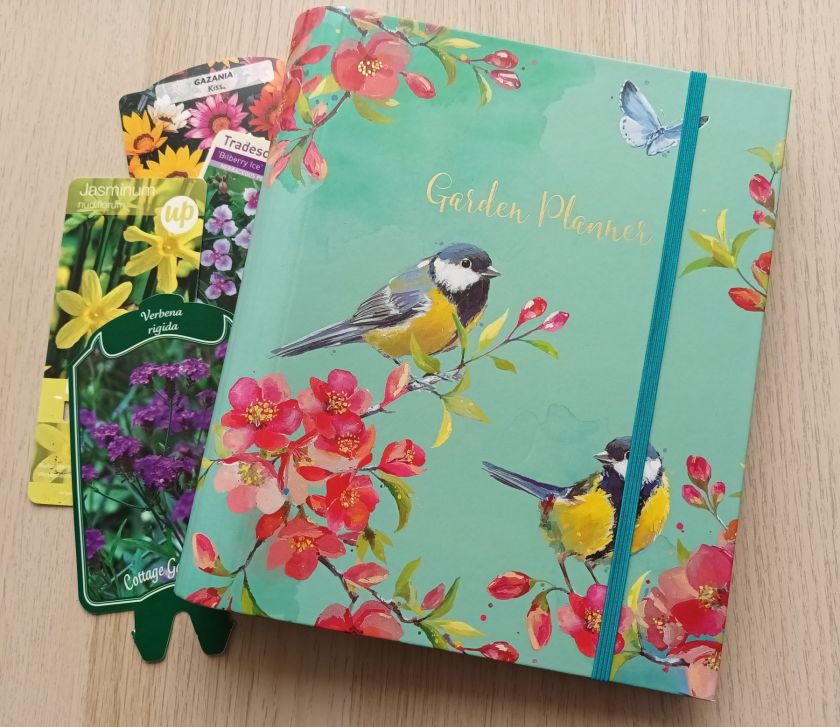
Over the years, I’ve kept various records of plants we’ve put in our garden, and I’ve saved all of the plastic information cards that come stuck in the pots when you buy them. I’ve also made notes in my bullet journal and even drawn plant ID cards for some of my favourite purchases. However, these resources are in an array of different folders and notebooks and often I can’t locate what I need when I want to check something. So, I decided I would like to keep a garden planner / journal and I found the perfect folder when I visited one of my local garden centres and asked my husband if he would like to buy it to give me for Christmas. Of course, any notebook or file would have done, but as someone who adores beautiful stationery, this one provides the motivation to use it regularly and has lots of different papers and pockets to put things in.
I’ve been using the folder since the very beginning of Spring 2023 and so far I’m finding it a really useful record keeping tool. I’m also hoping that by documenting everything garden related, it will help me to feel a real sense of achievement and begin to recognise that all of our efforts are paying off (even when I feel like it’s a constant battle to keep on top of the weeds or a few of our plants aren’t looking their best).
What is a garden planner and journal?
A garden planner and journal is a paper based or electronic place to store everything related to your outdoor spaces and even your houseplants if you so wish. As well as making you super organised it can provide, for example, a place to keep track of what you’ve planted and where, journal space to evaluate what has worked and what hasn’t, pages to record and plan seasonal tasks, list of to dos (AKA jobs for the weekend!), photo showing different parts of your garden over time so you can see and celebrate your achievements over the months and years. You can customise your records to suit your needs but you might include details of your soil in different parts of the garden, information about your various plants and notes on how well they have done depending on their location, ideas you have collected from magazine and online articles, issues you’ve had with some of your plants such as garden pests or poor growth, labelled sketches of flower beds or the garden as a whole, lists of your seed purchases and even a garden wishlist – the possibilities are endless.
Why should I keep a garden planner and journal?
In a nutshell, keeping a garden planner and journal, which you regularly write in, will make you a better and more efficient gardener and enable you to get so much pleasure from your space no matter whether it’s a few containers on your balcony, a tiny plot or a vast amount of land which keeps you constantly busy. Here are my top seven reasons why you should start a garden planner and journal today:
It helps you remember what’s where
Drawing a labelled sketch of the different parts of your garden such as flower beds, vegetable sections, corner plots, rockery etc helps you to remember exactly what you’ve got and where things are located. It can also provide information such as the particular colour or variety of plants.
I’ve also created a list of containers (size, colour and location helps here), what’s in each and when the plant grows and flower so that I know what’s going to pop up when and also, if it doesn’t come back, I can record and evaluate accordingly.
It’s a good idea to sketch your garden each season so you can see what’s in flower at particular times, which veggies are currently being grown and where your evergreen / deciduous shrubs and trees are. Then you can add in your annuals and assess whether there are any gaps which you want to fill.
You can create and maintain weekly and monthly plans
If you love your garden and want it to look good, you need to regularly dedicate time and energy to gardening. My planner contains weekly overviews for each season where you can record particular jobs that need doing each year and also ‘Jobs for the Weekend’ pages for running task lists. It’s really satisfying ticking them all off and it helps us to see what we still need to do and estimate how long each job will take. These task lists can then be revisited next year.
I like to go on reliable websites like Gardener’s World and RHS plus other UK based sites to look at what I should be doing each month and then handpick jobs specific to our garden. I also follow a few UK YouTube accounts for ideas too. You could even keep a list of useful websites in your journal somewhere too.
A place to log new additions to your garden spaces
All gardeners love going to local garden centres and nurseries to choose new perennials plus annual bedding plants for instant colour. You can record all of these in a list, stating where they were purchased and how much they cost, plus key information front the plant labels. getting new bits and pieces for their garden whether it’s a perennial plant, a new pot, a comfortable bench or chair and cushions, so And your new additions list doesn’t just have to be a space for greenery, you can also record new pieces of furniture such as a gorgeous new bench and bright cushions or a little potting bench, atmospheric solar powered or mains operated lights, new paths or replacement gravel, patio slabs, hanging baskets, rockeries, storage spaces such as a little shed or a box to put soft furnishings over winter, and wildlife friendly pieces such as a pond, bug hotel, hedgehog house or toad abode! Then, when you can’t recall how long you’ve had raised bed, you can check your records instead of trying to establish how long it’s lasted from memory.
A good chart to have in your planner is a record of seeds which you plan to set, when and where e.g. in trays indoors or directly into prepared veg beds or outdoor pots, how many to set (usually dependent on size and desired crop), date to set and germination times. You can also include a section for any notes, so, for example we find that our two courgette seeds for the two large plants we want don’t always germinate so we tend to put a couple in each plug or create more plugs.
You can find examples of seed charts on Pinterest for you to draw up (preferably on gridded paper), or, if you’re pushed for time, you can purchase printables on Etsy.
Helps you track progress over time
The other week I found some photographs of my husband sitting out in our back garden a couple of years after we’d moved into our house. I decided to print them out as there’s a huge difference between how the space looked then and what it looks like now less than 10 years later. The transformation is amazing and if we didn’t have a photographic record, I don’t think we would be able to fully appreciate all that we’ve achieved. You might not have photos from a decade ago (or maybe you do?) but why not start recording now and see how your space has changed in one, two or even ten years?
A useful spot to record successes, challenges + complete failures and reflect on why
We’ve been developing our garden for over ten years now and have had many successes but probably just as many failures. Some of the failures are permanently stuck in my memory, like the fact that every time we have tried to grow lupins, no matter where we got the plants from, the ended up covered in aphids which made my skin crawl! Likewise, some of our complete successes still take pride of place in our flowerbeds such as the beautiful, long lasting and colourful geums. However, there are many more triumphs and disappointments that I wish I’d written down and reflected on. Here’s a list of aspects of gardening which you might like to make a few notes on:
garden pests – what specific plants they’ve eaten, when they eat (daytime, night time, particular times of year, following particular weather etc), thoughts about why they eat e.g. slugs and snails love to munch on our dahlia so this year we’ve potted one up, covered the soil in grit and placed it in the front garden porch away from other plants and it’s doing much better
plant diseases and treatment e.g. our hollyhocks get rust every year so I inspect them early on and removed infected leaves quickly and dispose of them
plants which don’t like the conditions – too dry, too wet, hate clay soil, not enough sun/shade etc and whether they are to be moved or just dug up
weather related challenges (e.g. storms, continuous rain, dry spells etc.) and how specific plants coped
seed germination failures – dates planted and when replacements set or when new seeds purchased and set
weed related issues e.g. we have a huge problem with celandine and it’s a constant battle to get rid of them, I spend 10 minutes every day on their removal and I’m glad when they die back by mid May
I’m sure you probably have many more ideas but hopefully these are enough to get you started.
A place to dream, make wishlists, include inspirational images, identify your short and long term goals and make plans of action
If, like me, you have a beautifully, colourful and well maintained garden on your vision board for the future, it’s a good idea to have a section in your journal to include wishlists, inspiring photographs, goals and action steps and maybe even a written explanation of what you want your dream garden to look like and how you want to feel when in it. You can then check in regularly with this section of your journal and see how well you are progressing with your goals. You can also note down things from your wishlist to look for next time you go shopping to one of your local garden centres.
Final words…
As you start your record keeping, remember that your file doesn’t need to be perfect and will most certainly evolve over time. You might want to start by simply taking a few photos of how your space looks now and then making a few notes of some of the plants which are located in each section. Or, if you like drawing and creating diagrams, you might take some squared paper to draw different parts of your plot and label the names of plants currently growing there. I can also recommend colouring in the plants that are currently in flower so you can see the balance across your plot.
Then, on another occasion, you might make a basic to do list (try Googling garden jobs for June and your specific location) for the month and tick tasks off as you complete them. You could even add a few jobs that are already complete or underway to get some easy and satisfying ticks by the end of the week.
I hope you’ve found today’s post useful and it has inspired you to give this form of planning, record keeping and journalling a go. Let me know what you choose to do first and how you get on.
In our current society, information overload has become a real issue for many, if not all of us and one which can seriously impact our mental and physical health and general wellbeing. In today’s Monday Matters, I’m going to consider what is meant by the term, discuss ways in which an information-rich environment can affect us and present 5 ways you can make it easier to deal with.
Put simply, information overload is when we are faced with so much information (much of it irrelevant to us) that our brains become overstimulated and we find it impossible to fully process it all. If I were to make a list of all of the types of information we’re bombarded with every day for most of us it would include texts, emails, news articles, search engine results, news broadcasts, advertisements: online – via banners, pop ups, game and social media interruptions, on TV, radio and on billboards, notifications from social media, the stuff we read as we mindlessly scroll through the aforementioned social media, telephone calls, radio shows, TV programmes, blog articles, discussions in meetings, with customers, colleagues or other acquaintances – the list goes on and you’re probably exhausted after reading just this sentence. All of this can lead to feelings of overwhelm, stress, inadequacy, anxiety, confusion, exhaustion and a general lack of control. It can also result in physical health symptoms such as headaches, increased blood pressure, vision problems and insomnia. It can affect our work quality, decision making, memory, efficiency, self esteem, confidence and sleep.
With that list of unwanted side effects of information overload, it’s pretty vital that we find ways to cope with and control what we consume each day. Hopefully the following tips will help.
Make your morning routine tech free
When I say tech free, I don’t mean giving up on using your alarm clock to wake up, lights to see clearly, or your heating to keep yourself warm, but avoiding the use of communication devices such as your phone, tablet, laptop and TV can help make your morning routine both mindful and productive but also a relaxing and stress free one. On my best days, I will wake up using my new Sunrise alarm clock (so I don’t immediately have to pick up my phone) and fill in my 5 minute journal. I’ll then make myself a healthy breakfast of wholewheat cereal with soya milk, a piece of fruit, a glass of squash to take my morning medications and my first cup of coffee of the day. Whilst eating and drinking, I try to focus on being mindful, showing gratitude for what I’m consuming, thinking about the nutritional content and how this will fuel my body, and not allowing anything to distract me from the process. Next, whilst I’m finishing my coffee, I begin reading, highlighting and completing journalling tasks in my current non-fiction book. At the moment I’m reading Manifest by Roxie Nafousi and I have the hardback edition which feels good in my hands and makes it much easier to mark important points, annotate or complete tasks. My reading lasts for around 20 minutes and is another quiet, slow and relaxed element of my routine. Finally, I’ll get myself ready in the usual way by showering, brushing my teeth, washing my face and doing my skincare before starting on my tasks for the day.
As I said earlier, the above is followed on my best days when my morning routine is a mindful and relaxing start to my day. However, on some days (thankfully not very often since evaluating and making changes), I will pick up my phone, check notifications from in the night, view the content from these, look through my emails, go on YouTube to see if there’s any new videos from vloggers I subscribe to and then watch the content, check the news, pop on Facebook to wish friends or family members a happy birthday (and then start looking at my feed) before taking a second to breathe and think about all of the ideas, things on my to do list and random stuff which is filling my mind from all of the information I’ve already consumed before I’ve even finished my coffee (which I’ve probably barely even tasted!). So, which routine would you prefer to give you a good start to your day?
Of course, I’m not saying that my personal routine would suit everyone, and I’m conscious that some of you will have responsibilities towards others or an early work start, but I think we can all benefit from a calmer, more peaceful and mindful start to our day.
Think about the content you wish to engage with and why
There are certain types of information which we have little or no control over. For example you might tire of listening to your boss and other members of senior management talking about targets or sending you long-winded emails, your colleagues might frustrate you by regularly interrupting you from your flow of work to ask questions etc. but you can’t really tell them that you’re going to ignore them for a week and stop attending meetings because you’re trying to feel less overwhelmed by all of the information you consume (well you could but I’m pretty sure you would be waving bye bye to your job pretty soon). However, outside of work, we can generally make choices and set boundaries which help to limit our exposure to information. Here’s some ideas to think about:
Focus on your current interests Choose content from a reliable source which is relevant to your current interests. For example, you might read non-fiction texts and watch videos about watercolour painting because it’s something you enjoy doing in your free time and want to get better at. You might search for Pinterest content which shows Spring outfit and fashion ideas because you want some ideas on how to update your wardrobe. Or, you might search online for exercise ideas from qualified instructors which focus on building core strength because you’ve heard it will help to improve your posture and make you more toned.
Consider your goals Think about your current aspirations, desires and goals to help you decide what kind of information will benefit you in the long term. For example, if you want to work on creating a vegetable garden so you can enjoy your homegrown produce in your meals, you will probably want to read articles in magazines or online from from reputable sources such as Gardener’s World or RHS. You might also plan to watch YouTube videos for planting tips or buy a comprehensive guide to making the most of your plot. The key is to live in alignment with your current priorities whilst making choices which reflect you values and beliefs.
Ignore information and media content which doesn’t make you feel goodThink about the effect certain information has on your mood. For example, if reading and watching local or national news makes you feel sad, angry, frustrated or anxious, try to limit your exposure or try avoiding it for a while and see how you feel (if there’s anything major happening in the world or your local community, you’re certain to hear about it somewhere and then you can find out more if you need to). If looking at your friend’s social media feed makes you feel inadequate and as though your life is uninteresting and uneventful, try giving it a miss for a while. Similarly, if you follow content creators on YouTube who always appear to be super-organised, productive and well put together and it makes you feel like your life is an absolute mess or that you’re a domestic slattern, it might be time to unsubscribe.
Remember, social media is designed to be addictive The designers of social media platforms and the teams running them want you to spend hours scrolling and thrive on the fact that you keep coming back for more. That’s why it’s so hard to cut down or stop. In their book Make Time, Jake Knapp and John Zeratsky refer to these apps, and other sources of ever updating information, as infinity pools, which provide constant distraction from what we would actually like to focus our time on each day. If you struggle with productivity issues or decisions about what to prioritise in your life, their book is well worth a read. For now, try spending a little time reflecting on your current social media usage, asking yourself questions such as:
How do I feel after using (insert S.M. platform)? Why?
What times of day do I find myself using S.M.?
How much of my time per day / week is spent on S.M.? (Some mobile phones can track this for you and compare your usage over consecutive weeks)
What impact does my S.M. usage have on my mental health? Do I feel more connected with others who share my interests or inspired by the content I consume? Alternatively, does it leave me with feelings of isolation, inadequacy, dissatisfaction, loneliness (and anything else that makes you uncomfortable)?
Would I describe my social media habits as unhealthy? e.g. is it the first thing I think about when I wake up or do I scroll just before or in bed and end up not being able to sleep?
Make a plan to take control of the information you choose to consume before it takes control of you!
Turn off your notifications and alerts
One of the easiest and most effective ways to reduce the volume of information that comes your way is by turning off notifications and alerts from the various social media platforms and apps you use. Again, you should think about whether the notifications and alerts are a distraction or are useful for you. So, for example, I have a star gazing app and I quite like the messages I’m sent a few times a week which tell me about particular celestial bodies that can be viewed that night and opening the app shows us where to find them in the sky. I also get an alert which reminds me to fill in by Bipolar mood tracker each evening as it’s important for me to see what affect different events or activities have on my mood and wellbeing. Of my two email accounts, one is for professional and important stuff like work related opportunities, Etsy shop sales or messages from customers etc., whilst the other is for all the random marketing emails from various shops and companies which I don’t want to be notified of throughout the day. For online orders that I’ve placed, I’ve found there is the option on Yahoo Mail to received notifications of dispatch and delivery information. I’m not quite sure how it works but I presume it searches for key words within the emails.
The second thing you can do is go into your phone settings and set up a ‘do not disturb’ when you are busy (which you turn off at a time of your choosing) and a sleeping schedule which means that after a selected time in the evening and before a chosen time in the morning, your phone does not send notifications of any kind. You can alter this so that alarms can still go off if you need any reminders. For example, I have an alarm set to remind me to take my evening medications and another one to remind me to book my exercise class for the next week when it gets to 10.15pm (annoyingly, if I don’t book straightaway the class fills up with 1 minute of going live!).
Take a break (away from social media)
I’ve discussed before how I use the Pomodoro technique to be productive during the day but one of the most important aspects of the method is taking regular breaks. It’s tempting to check in with social media at these times but I make a point of doing something different so I’m not still looking at a screen and I don’t end up losing track of time. Some ideas for activities to do in your break include:
get outside or open a window and inhale some fresh air
do a mini meditation
listen to some music with your eyes closed or have a little boogie
make a hot or cold drink
enjoy a healthy snack
read a book or magazine
do some doodling / colouring in
do some stretches
declutter your workspace
Do a brain dump
If you feel like you’re drowning in thoughts, feelings, ideas and to-dos, it’s a good idea to get it all out on paper. This is the idea behind a ‘brain dump’, where you free write everything that is currently on your mind onto a blank sheet in a format of your choosing – in long hand, note form, spider diagram style etc. and it can be a powerful way to relieve stress. When you’ve finished, you can decide what to do with all the information – do you need to add something to your calendar or schedule in a time to explore further? might you need to add a few things to your to do list for the next week? would you benefit from talking to someone about how you’re feeling? maybe you need to seek out some positive news stories or make plans for a self care day or a weekend away?
Final words…
I hope you have found today’s tips helpful and feel inspired to try some of them as a way to improve your health and wellbeing. If you do give any of the suggestions a go, I would love to hear how you get on. I know that it can be tempting to consume as much information as you can through the fear of missing out (FOMO) but remember that a lot of what’s out there is neither useful, helpful, relevant or worthy of your time so try and adopt the joy of missing out (JOMO) approach instead!