Posted in depression, depression management, life hacks, mental health, self care, wellbeing, wellness

Monday Matters: 7 practical ways to combat the winter blues

This morning I got up earlier than usual as I wanted to get a few things done before heading to do some work at the university. It was still quite dark as sunrise was not until 7.43am today and I switched on a little set of battery-operated candles I’ve recently bought (a bargain at £7.99 for three at various heights and including batteries from Festive Lights Store on Amazon) to bring some gentle light into the bedroom. They’re dinky enough to have on my bedside cabinet so are within easy reach – no having to pull back the duvet for me!

Although I’d enjoyed a good night’s sleep and managed to rouse myself pretty easily, I’ve noticed that I don’t jump out of bed raring to go like I did during the spring and summer months. I think many of us will acknowledge that we find it more difficult to get out of bed on dark mornings and, depending on our occupations or daily schedules we might also find that the lack of exposure to natural daylight during the autumn / winter months can dampen our mood somewhat. Even if we haven’t been diagnosed with Seasonal Affective Disorder (SAD for short, rather aptly), most of us will agree that limited sunlight has some sort of effect on our health and wellbeing. In today’s blog post, I want to share some practical tips for combating what I’m going to call the ‘winter blues’ and the associated symptoms which may be present at this time of year and continue until springtime.

Photo credit: Amin Hasani for Unsplash

Signs of the winter blues

The symptoms of ‘winter blues’ will generally be quite mild. They may have an impact on your life, to a small extent, but should not make your days feel like a constant struggle. Please seek medical advice if you are displaying many of the signs of depression as you may need professional help. Signs of ‘winter blues’ which are commonly experienced by individuals include:

  • being less active than usual
  • sleeping for longer and still struggling to get up in the morning
  • showing signs of lethargy – lacking energy and feeling sleepy during the day
  • having poorer concentration skills than usual (you might be easily distracted, tasks might take you much longer to complete or you might find them more difficult, you might also struggle to attentively listen to someone when they’re talking or not fully comprehend what they’re saying)
  • having an increased appetite (often craving carbohydrates such as cakes, sweets and biscuits) which may cause weight gain
  • finding yourself wanting more stimulating drinks such as coffee or energy drinks because you feel like you need a caffeine boost
  • being less enthusiastic about activities you usually enjoy
  • rejecting social invitations (e.g. due to lack of energy or your body telling you that you need to stay at home and chillax. Some people will say they like to hibernate for the winter!)

What’s the difference between Winter blues and Seasonal Affective Disorder?

Winter blues:

  • not a clinical diagnosis
  • a mental state which comprises of feelings of sadness and lower energy levels during the coldest and darkest months of the year (when compared to the lighter, brighter, warmer and sunnier months)
  • doesn’t have much impact on day-to-day functioning (you can still carry out usual tasks or you can go to work or school as normal)
  • generally happens in the winter time and possibly some of autumn too
  • can be managed by making a few lifestyle changes such as those suggested below

Seasonal Affective Disorder:

  • a clinical diagnosis made by a medical professional such as your GP or your psychiatrist
  • affects day-to-day functioning and can make life a struggle usually during the autumn and winter months but can also occur in the summertime – S.A.D. has a seasonal pattern of some sort
  • takes its toll on many aspects of life including relationships, work, school or home life, sense of worth and sleep patterns
  • sometimes referred to as ‘winter depression’
  • requires professional help such as a talking therapy or medication such as anti-depressants

Practical tips to help you cope with the winter blues

Try to stay active Exercise is known to boost your mood so it’s important to stay active even if you feel like curling up under a blanket or sitting in front of the fire for the day. Doing a workout each day will also help to improve your energy levels during the daytime and make you tired in the evening so you can enjoy a better night’s sleep. This could be a 15-30 minute walk, a gym class such as Zumba, spinning or flow yoga or a home-based exercise such as following a routine on YouTube. Anything which gets your heart pumping is good. You could even put on some music and dance around the room!

Get outside Going out for some fresh air, especially on bright days can help you get more light. Taking a walk in nature e.g. in woodland or your local park can be particularly mood boosting. I like to look for signs of autumn or winter such as changing leaves, glistening spiders webs, amazing fungi, conkers acorns and beech nut shells, wildlife such as jays, squirrels and nuthatches, brightly coloured berries, morning frosts, snowfall, icicles, early flowers such as snowdrops and crocuses. Just make sure you wrap up really warm on particularly cold days – remember there’s no bad weather, just bad clothing!

Eat healthily At this time of year, it can be tempting to comfort eat high calorie, sugary or fatty foods to give yourself a quick energy boost or to try to make yourself feel better in some way. Most of us crave carbs during the colder months and this often takes the form of junk foods, fatty snacks such as crisps, biscuits and cakes or high volumes of less healthy ‘white’ foodstuffs such as white bread, white pasta, white rice and white potatoes. However, it’s always important to try to maintain a balanced diet for a healthy body and mind (including stable mood). You can still eat foods which are high in carbohydrates but make sure they’re ones which are better for you. Examples of foods which are more healthy but also carb rich include quinoa, brown rice, buckwheat, pulses such as kidney beans, lentils and chickpeas, wholegrain oats, bananas, sweet potatoes, squashes, apples, carrots, broccoli and avocado.

During the autumn and winter seasons, we love to create homemade soups, stews, risottos and vegetable bakes. We also create lots of dishes with pulses such as lentils, beans and chickpeas. These are also comforting and warming foods but without a high calorie content. If we find recipes online, we tend to modify them in some way, so I type them out with the changes we made and add them to our recipe folder. We’ve found some really great veggie and vegan dishes this Autumn and most of them are pretty quick to make.

Keep yourself warm Research shows that feeling cold (and wet if you get caught in the rain) can cause your mood to dip so it’s important to try to keep yourself warm and cosy. With the current increasing energy prices, I appreciate that you might feel that this is very difficult and expensive at the moment. Try to make good use of blankets in the home and, when you can, get yourself moving to generate some heat in your body. I tend to get really cold when I’m sat at my laptop for long periods of time and in the past, I’ve resorted to a small heater but now I’m trying to remember to get up and move about at regular intervals. When you go outside, add lots of layers, hats, scarfs and gloves. You can also get thermal tops and leggings to wear under your clothes. I got mine from an outdoor clothing shop and they’re great for really cold days when I’m going to be outside for long periods of time.

Stay social It might be tempting to stay at home all the time during the dark and cold months but isolation isn’t good for your mental health. Why not meet a friend at a cafe and enjoy an autumn or winter special drink such as a Pumpkin spice latte, Apple crisp macchiato, Caramel apple spice, Peppermint Mocha, Gingerbread latte or Black Forest Hot chocolate? Or how about arranging a meal out in a traditional pub with homecooked food and maybe even an open fire? Try to say yes to some of the events you are invited to, even if you don’t feel like going, you may find that you really enjoy it when you get there.

Try something new Trying out a new hobby or having a go at some autumn or winter crafts can stimulate the mind, provide new and interesting challenges, give a really sense of achievement and boost your self-esteem and confidence. Mindful activities can also be great for relieving stress, reducing negative self-talk and generally creating a more positive mindset. I picked up a winter fox mini cross stitch kit and a ‘make your own reindeer’ felt sewing kit at Hobbycraft last week for less than £7 and they’ll keep me busy for hours. Also, when I’ve finished them, I can add them to my Christmas displays each year and remember what fun I had making them. There are lots of autumn and winter craft ideas on Pinterest too – why not create a board full of them and pick something different which requires minimal materials and will make a lovely display for your home or room?

I’m still working on developing my drawing and watercolour skills and something I want to try this year is sketching and painting different squashes. I’m then going to use the designs for my November theme. My husband and I have also enjoyed completing Christmas doodle challenges in the past too and we might give it a go again this year. I’m also doing December Daily for the second time – I’ve bought my album, page protectors and Christmas papers and stickers as well. In the new year, I’ll probably still have quite a bit of journalling to finish off and I’m hoping to finally get some of the jigsaws done which I’ve had for a while.

Boost your vitamin D levels Some of you will be aware that the biggest natural source of vitamin D is sunlight. It’s no surprise then, that our levels tend to dip in the darker autumn / winter months. Deficiency in this essential vitamin can cause fatigue, symptoms of depression and muscle pain so if you find yourself struggling with the winter blues, it’s important to find ways to raise your levels. When the weather allows, try to spend some time each day in the sunshine (about 30 minutes is good). This could mean going out for a walk, wrapping up and sitting in the garden to enjoy a tea or coffee, or working next to a brightly lit window at home or in the office. Eating foods which are rich in vitamin D can also help. Fatty fish and seafood are one of the best sources but if you’re vegetarian or vegan like my husband and I are, you’ll find most plant-based milk alternatives, orange juice, some vegetarian or vegan yogurts, many ready-to-eat cereals and tofu are usually fortified with vitamin D. Finally, if you still think you could do with a top up, as a last resort, you could also take a vitamin D supplement, especially on dark and dismal days.

Final words…

If after reading today’s post, you identify with many of the symptoms of S.A.D. in the link, I recommend seeking professional health from your GP (or psychiatrist if you are under a mental health team). As I explained earlier, Seasonal Affective Disorder can be quite severe and can seriously impact on your day-to-day functioning. Also, because it can occur from early autumn right through to the springtime, potentially it could last for over five months, which, as I know well myself, is a long time to be struggling with depression for.

For those of you that relate to the ‘winter blues’ symptoms, I hope you will consider trying out some of the self-management suggestions and that they help you to cope more effectively. If you have any further suggestions or have tried and tested methods that you personally use, it would be great if you could share them in the comments to support others who find this time of year a little challenging.

Posted in Health and Nutrition, life hacks, lifestyle, meditation, mental health, self care, wellbeing, wellness

Monday Matters: Wheel Of Wellness – Physical – Part 2: Sleep

For the second part of the Physical element of The Wheel Of Wellness I will today be looking at the importance of quality sleep to maintain good physical and mental health. I’ve previously published a couple of blog posts on the topic of sleep namely 5 ways to get better sleep tonight and 5 things to do in the evening to ensure a restful night’s sleep and a productive next day which you may like to have a read of as well. Many people have issues with their sleep for one reason or another and if you’re one of them, you might want to prioritise this area of the wellness wheel and spend some time learning about the effect that sleep (or lack of) affects your body and your life and pick up some tips on how to manage this aspect of your physical health.

Why is sleep so important?

Sleep has a huge impact on our health and wellbeing throughout our lives. Anyone who has ever had difficulty sleeping will know that the quality and quantity of our slumber dramatically affects our mind, body, general quality of life and our safety. While you are sleeping, your body is actively working and preparing you for the next day.

The following is a list of the basic functions of sleep which illustrate the importance of a good night’s kip:

  • physical restoration
  • mood regulation
  • cleaning the brain of toxins
  • information processing and memorization (committing things to memory for later recall, the storing of visual, auditory or tactical information)
  • strengthening the immune system

In children and teens, sleep also supports growth and development.

In addition, further benefits of quality sleep include:

  • better heart health
  • stress reduction
  • generally makes you feel more alert throughout the day
  • can help you lose weight (you’re less likely to crave high sugar or junk foods)
  • reduced risk of anxiety and depression
  • improved appearance – healthy, glowing skin (versus dark circles under eyes, dehydrated complexion, breakouts and redness from lack of sleep, plus comments from friends and family along the lines of “you look like ****)
  • better concentration (hopefully leading to improved productivity)
  • better decision making
  • stronger immune system (so less likely to get ill / feel run down etc)
  • boosted creativity (better ideas and use of imagination)
  • better motoric response (including quicker reactions)
  • enhanced sporting performance
  • reduced risk of high blood pressure, coronary heart disease, stroke and obesity
  • better emotional regulation (meaning amongst other things that you’re more likely to get along with others and less likely to become overwhelmed by your feelings)

Sleep and wakefulness is controlled by two biological processes: Sleep Homeostasis, commonly known as ‘sleep pressure’ and The Circadian rhythm, otherwise known as ‘the body clock’.

What is sleep pressure?

Sleep pressure is basically, the brain’s desire and need for sleep. The more time you’ve been awake for, the greater the sleep pressure. When you wake up in the morning, you should have very little need for sleep (if you’ve had a good night) so sleep pressure is very low. As we get on with our day, the sleep pressure begins to grow so that by evening time sleep pressure is much higher, making us feel sleeping and in need of our beds! By morning, following a good night’s sleep, our sleep pressure will have reset and be back to little or no desire for further sleep.

In order to make sure that we have the right amount of sleep pressure present by bed time, we should really make sure that we get up and go to bed at the same time each day. However, I know that a lot of people will have a lie in on a weekend, which tends to make it difficult to switch off and sleep on a Sunday night (especially if Sunday night dread is at play). Taking naps should also be avoided as this can reduce sleep pressure too. If you absolutely must have a nap, tried to take it before 3pm and make sure it lasts for less than one hour.

What is meant by the term Circadian rhythm AKA our ‘body clock’?

Like all living things, humans have a circadian rhythm which is the brain’s way of aligning the body with the environment. Our sleep/wake cycle follows this 24 hour rhythm. During the day, exposure to light helps us to feel alert, awake and active. As night/darkness falls our internal body clock starts to produce melatonin, a hormone which promotes sleep.

You can help promote a healthy circadian rhythm by seeking natural light (sunshine) during the day, getting some daily exercise, avoiding caffeinated drinks after mid-day, limiting light before bed and having a set bed time / wake up routine which prepares the body for sleep at night and encourages wakefulness first thing in the morning. I’ll discuss some of these in more detail later.

Creating the right bedroom environment

It’s really important to create a comfortable and relaxing environment in your bedroom to help you fall asleep quickly and easily. We invested in a ‘posturepedic’ mattress which is pocket sprung with a latex top. We’ve had it for years and it’s still completely supportive and so comfortable. Every time we go on holiday, we always look forward to being back in our own bed! The best sheets and pillowcases we’ve found for softness and durability are bamboo ones. An added bonus for us is that they’re breathable and hypoallergenic too.

Your bedroom should also be nice and dark as the absence of light sends a signal to your body that it’s time to get some rest. A nice thick pair of curtains or light blocking blinds are essential for this (we have blinds and lined curtains which allow just enough morning light to help us wake up). Some people also like to wear a sleep mask to block out light and these are also good for shift workers who are in bed during the day.

Other essentials for a calm and relaxing space include as little clutter as possible and a quiet environment to minimise distractions. Just the right room temperature – not too hot and not too cold is also helpful for inducing sleep (experts recommend around 18.3 degrees Celsius / 65 degrees Fahrenheit is ideal). Some people also swear by lavender as a soothing and sedating scent but I find it sets my allergies off which is certainly not sleep inducing!

Sleep experts also suggest that your bedroom should be strictly for two purposes only – sleeping and sexual activity. This means it should not be used for:

  • eating, drinking or smoking
  • dealing with bills, reading letters or any form of paperwork
  • using technology or looking at screens e.g. TV, mobile phone, laptop, tablet etc.

I also like to read fiction books on my Kindle Paperwhite in bed but I do find that as long as the screen is pretty dim, I become really sleepy after a couple of chapters. If you feel that reading certain books stimulate your brain too much, bedtime reading may be best avoided.

Diet and sleep

Most people know that caffeine isn’t good for sleep due to the stimulants it contains so if you have trouble sleeping, it’s best not to drink coffee or other caffeinated drinks such as cola, sports and energy drinks for at least 4 hours before bed. Having a large meal before bed is also likely to keep you awake as your body will still be digesting the food. Also, you may find yourself suffering from indigestion or acid reflux if you eat or drink too late. If you do find yourself craving a late evening snack a small amount of nuts, a banana or a small bowl of oatmeal with berries should be safe to eat.

Alcohol is well known to cause a slowing of brain activity and make you feel relaxed and sleepy but beware that the consumption of alcoholic beverages, especially in excess has been shown to cause poor quality sleep and shorter duration so you may find yourself waking up repeatedly in the night or not feeling very refreshed in the morning. Night-time drinking may also result in acid reflux too!

A good daily routine to help you sleep

Throughout the day, it’s important to get as much natural light as you can. This could include working next to a window, taking regular outdoor breaks during the day e.g. sitting in the garden with your morning cuppa and having an al fresco lunch. Obviously this is more difficult during the Winter months but even short walks outside, maybe with a nice, hot drink can make all the difference.

Exercise (or being active) including aerobic workouts, resistance training and yoga during the day can also help with sleep. Just make sure you don’t do anything which elevates your pulse rate for at least 3 hours before bed.

In the evening time, it’s a good idea to do relaxing activities which can calm the body and the mind. This could include listening to some soothing music, reading a book, doing some meditation, writing in your journal to help put the day to rest (see my 5 ways to get better sleep tonight for an explanation of how), enjoy a warm bath or hot shower.

If you regularly struggle to sleep, something you should definitely try is avoiding using electronic devices for at least an hour before bed. This is helpful for two reasons – one, a lot of online content can be mentally or emotionally stimulating (including emails) and two, the light that these devices emit can affect your body clock by increasing alertness and delaying the release of melatonin. If you must use your phone, at least set the blue light filter or night time mode to come on after around 7pm.

What if I find myself wide awake in bed?

After approximately 20 minutes of lying awake (estimate this, do not use your clock), you should get up out of bed and leave the bedroom. Either do something boring or something really relaxing (not something stimulating (no looking at your phone!) until you start to feel tired, and then go back to bed. If you’re not asleep after another estimated 20 minutes, get up again and repeat the process. If this happens regularly, spend some time during the day assessing what you think might be causing the problem and try making some changes to your routine.

A word about sleep disorders

There are a number of sleep disorders which can seriously affect the quality of your sleep. Some of the common ones are:

  • Sleep walking / talking
  • Nightmares / night terrors
  • Sleep apnoea (obstructed airway)
  • Sleep paralysis (a temporary inability to move that occurs right after falling asleep or waking up)
  • Hypnogogia / Hypnopompia (hallucinations occurring as you wake up or fall asleep)

If you suspect that you may be struggling with any of the above, it’s really important to speak to your GP who can offer medical advice or make a referral to a sleep specialist.

Final thoughts…

If you are struggling with your sleep right now you have my completely sympathy as I’ve had real issues with insomnia in the past. However, it’s usually quite easy to identify the contributing factors which are preventing a good night’s sleep. Finding solutions to the problems is a little more difficult but I hope this blog post has given you some ideas. Remember that quality sleep is vital to your wellbeing and it’s worth investing time and energy into this aspect of your physical health.

Posted in life hacks, lifestyle, self care

Practical Tips for Coping with the Summer heat

The summer is now in full swing and we’ve recently seen plenty of sunshine. The hottest day this year so far in the UK was recorded on Saturday 17th July, with the temperature reaching 28C in Sunderland and even higher further south. Some people love the sun and cope really well with the heat and high humidity. Others find it more difficult, including those with very fair skin like myself, some people with long term health conditions and the elderly. With this in mind, today’s post gives some practical suggestions on how to cope when it gets a little too hot for your liking.

Keep yourself hydrated

The usual advice is to drink eight glasses (2 litres) of water per day. However, in the height of summer, we tend to sweat more so this should be increased by at least half a litre (two extra glasses). You should also ensure that you drink at regular intervals throughout the day. Signs of dehydration include excessive thirst, dry mouth, dizziness or light-headedness, fatigue, not needing the loo very often and dark coloured urine. Try not to let it get to this stage by carrying a bottle of water with you and taking regular sips. And if you’re not keen on water, trying making some fruity sugar free squash instead (our favourite is cherries and berries).

Choose your outfit with care

If you know you’re going to be out in the sun a lot, choose an outfit which is light coloured and loose fitting so that cool air has better access to your skin. To keep the sun off your face (and protect your hair and scalp), opt for a peaked cap or wide brimmed hat – again it’s best if this is a light colour because they reflect light and heat whereas dark colours absorb them.

Avoid the mid-day sun

The sun is strongest between 11am and 3pm so try to seek shade between these times. This could include using a parasol when out in the garden or sitting under a tree when enjoying a picnic. We like to take fold up chairs with us when we go out in the car so we can position them somewhere shady as picnic benches are generally in full sun.

Don’t overexert yourself

Avoid doing any intense workout during times when the temperature is high. If you must exercise outdoors, for example running or bike riding, try to do it early morning or early evening when it’s not so hot. Other vigorous activities such as moving furniture or heavy gardening are best left for another time too.

Stay cool indoors

If there’s a nice cool breeze, throw open your windows to let it in. Try to create what is known as a cross breeze by opening a windows on both sides of the house and leaving doors open to allow the air to circulate. For extra impact, trying using a fan or two as well. Closing the curtains or blinds in rooms that face the sun is helpful too.

Repurpose your hot water bottle

I found this tip online last week. You fill your hot water bottle with the usual amount of liquid but use cold water instead. Then, you pop it in the freezer a few hours before bed. You can either pop the bottle in your bed before you get in it or you can place it under your feet to help to regulate your body temperature. I wouldn’t recommend snuggling it like I do my hot water bottle though as it might be a bit too intense!

Go for cold meal options at home

Having hot meals which are done in the oven can make your home hot and the person cooking them. Cold meals such as salads are a much better option. There are so many different ones to choose from and it’s a good idea to make a meal ideas list and also to download some new recipes to try.

Apply ice or cold water

If you’re feeling uncomfortably hot, a great way to cool yourself down is to apply ice or cold water to your body’s cooling points. You’re probably already aware of your wrists as a good part of your body to hold under running cold water but other places to apply ice or something else cold include your neck, the inside of your elbows or knees,, the tops of your feet and your inner ankle. For a longer term cooling sensation, you could try using an ice pack (wrapped in a thin cloth) or a cooling gel pad, or you could plunge your feet into a bowl of cold water. A cool shower during the day can also help but it’s not a good idea to take a cold shower any time before bed as it can increase your energy levels which is unlikely to help you doze off!

Final words…

I hope you’ve found these tips for coping with the soaring temperatures helpful. If you have any further ideas, I would love to hear them in the comments. Of course, it goes without saying that however much you love or dislike the sun, you should always ensure that you use appropriate sun protection to stop yourself getting burnt. The recommended level in the UK is now a minimum of SPF 30 with at least 4-star UVA protection but this will obviously be higher in other countries. And don’t forget to apply it liberally and regularly too.

Keep cool and enjoy the rest of the summer!

Posted in Bullet journaling, life hacks, lifestyle, Mindfulness, productivity

Monday Matters: 8 wonderful benefits of listening to music

Photo credit: Lee Campbell for Unsplash

Back in October of last year, I found my mental health deteriorating, and, once again, started to have difficulties with anxiety and depression. I’m now (thankfully) feeling much better and my improved wellbeing has enabled me to start blogging again. Whilst I was struggling, the main focus of life was on doing any little thing I could either to distract myself from how I was feeling or to improve my mood. I found music was a huge help and so, for today’s Monday Matters post, I want to focus on the benefits of listening to music. The following are applicable whatever your musical preferences and can be utilised whether you are finding things difficult at the moment or feeling happy, content and positive, like I am currently. Let’s get started..

1. Elevates your mood

Whatever our taste in music, I expect we can all name at least one song which, when it starts to play, is able to shift our mood in a matter of seconds, making us want to turn the radio up, jump to our feet and start dancing around the room or burst into song. It may be the tempo, the lyrics or the sparking of a happy memory which uplifts us. Whichever of these it is that gets us going, scientific research proves that these tunes promote the release of a neurotransmitter known as dopamine into our bodies and it is this which is responsible for making us feel so good. If you do find yourself singing or dancing along to the music too, you will be doing yourself the extra favour of encouraging happy hormones known as endorphins to flood your body as well!

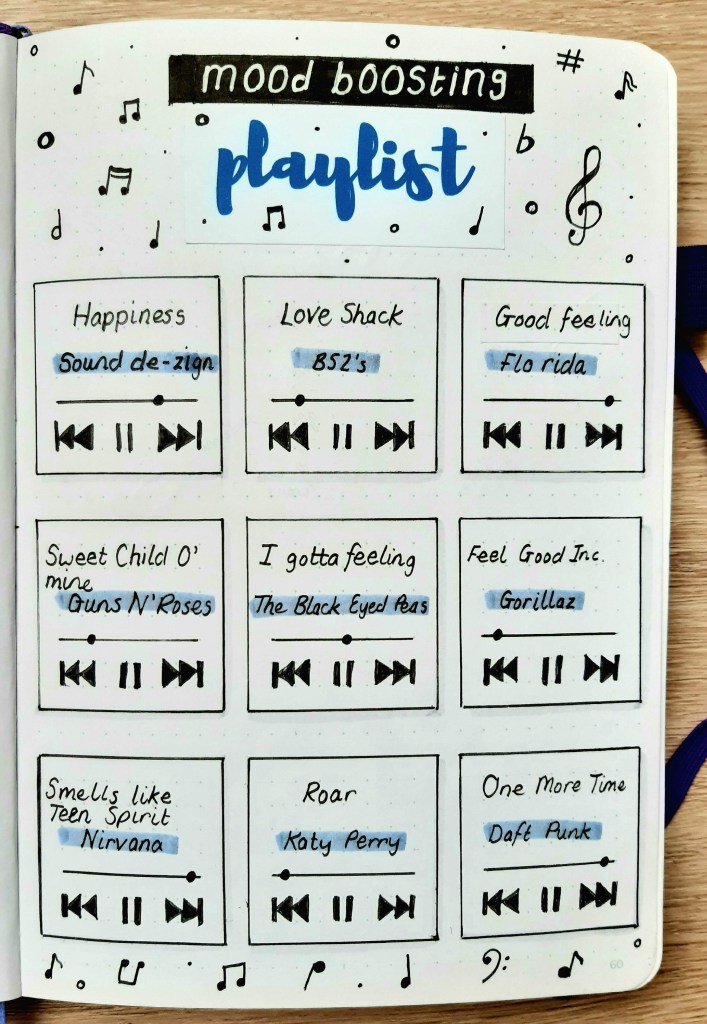
Making a playlist for times when you are feeling a little low or even depressed can be really useful. This can either be on your phone, your IPod or even in your bullet journal so you can seek out those songs on Spotify, YouTube or whatever is your music player of choice. Having them written down is particularly helpful for those times when you are struggling as, at that time, you may not be able to recall songs which are able to make you feel more upbeat.

The following page was inspired by one created by @sunshine_journal_ on Instagram.

A page from by current bullet journal. Photo credit: Laura Jones for Keeping It Creative

2. Improves your workout

According to my Fitbit app, which has just this second provided me with an activity tip (it must have somehow known I was writing this blog post):

‘Listening to music can help exercise feel easier, and even boost your speed. Songs with 120-140 beats per minute appear to have the biggest motivating effect’

Source: Fitbit app info.

Clicking through to the information, which was written back in 2017, I learnt that music can increase your speed, make you feel more powerful, make exercising feel easier (wahoo!), boost your mood and help to keep you motivated. When I was battling with my mental illness, I didn’t have the energy to do my Zumba workouts but I did make sure that I went for at least one long walk per day and my playlist helped to put at least a little bit of a spring in my step. Now I’m back to good health, the music is really motivating and some of the track make me want to break into a run (luckily I haven’t acted upon the urge as I don’t wear my sports bra whilst pounding the streets or the paths of my local park and don’t want to be off to the doctors with detached boob syndrome which I’m sure would be the resulting affliction lol!).

Here’s a list of some of my motivational music, many of which I copied into iTunes from some old CD singles which I believe I purchased whilst at uni many moons ago:

  • Choose Life – PF Project feat. Ewan McGregor
  • Forever – Dee Dee
  • Another Chance – Roger Sanchez
  • Alone – Lasgo
  • Beautiful – Matt Darey Feat. Marcella Woods
  • Treat Infamy – Rest Assured
  • The Night Train – Kadoc
  • The Silence – Mike Koglin
  • Kickstarts – Example
  • In For The Kill – La Roux

They’ve been put into a playlist on my old Apple iPod, aptly called ‘On The Go’ as I couldn’t work out how to give them my own title.

3. Boosts your concentration levels when working or studying

When I’m struggling with anxiety and depression, it becomes very difficult for me to concentrate on the simplest of tasks and even harder to be motivated to do things in the first place. Studies have shown that particular types of music can be really useful in encouraging productivity and creativity. Some tunes can also be quite therapeutic, reducing stress levels so that you are able to concentrate better. Personally, I prefer instrumental music as many lyrics can be more of a distraction than a help. Whilst conducting online research for today’s blog post, I discovered that the best types of musical accompaniment were suggested to be the following (one of them may surprise you like it did me!) :

  • classical music
  • ambient music
  • nature sounds
  • between 50 and 80 BPM (Beats per minute)
  • video game music!

You can find many different collections of classical music for work or study on YouTube but I like to create my own playlists as there’s nothing worse than a tune coming on that you simple don’t like. My absolute favourite has to be Fur Elise by Beethoven, but, my musical choices are often dependent on the type of task I’m working on.

Ambient music is a genre that is generally identifiable as being atmospheric and environmental in nature. According to online definitions, it is gentle and largely electronic with no persistent beat. One of my favourite pieces of ambient music is Porcelain by Moby and, although mostly tracks are instrumental, this one does have minimal lyrics. If your chosen music does have words, I think it is best to have the song on at a low volume so they don’t distract you.

I love listen to the sounds of nature in my local park or in the garden on a fine day. When you’re working or studying, apps such as ‘Calm’, ‘Sleep sounds’ or other relaxation and meditation focused packages, are great for providing nature sounds such as rain on leaves, Autumn woods, water flow, coral reef and wind in pines. I’m not sure how much of the Calm app is accessible for free ordinarily because I’m currently making use of an extended free trial but the sleep sounds app has lots free to use (my phone is Android but I expect there are iPhone Apps too).

According to my research, music at 50-80 BPM is good for stimulating the left side of the brain for information processing and problem solving. Again, collections of tracks can be found on YouTube but I would definitely recommend you create your own playlist of music you love. For sparking your creative juices, more upbeat, faster music is suggested (more BPM).

Who knew that music created to accompany video games could help boost your output? I certainly didn’t. The ones that I play tend to get on my nerves and I mute them but apparently they’re designed to enhance your gaming experience by stimulating your senses and blocking out other stimuli which may distract you. One game that both my husband and I always have the music on for though, is Angry Birds 2 but I’ve never thought of listening to it when working or studying – that is, until now (I may just have it playing in the background as I type away on this blog post!).

4. Calms the mind and relaxes the body

Some music can be really soothing when you are feeling overwhelmed, anxious or uptight. According to a number of studies, listening to calming tracks can help you relax by slowing your breathing and heart rate, lowering blood pressure and reducing levels of stress hormones such as cortisol and epinephrine (AKA adrenaline). Try searching for ‘peaceful music’, ‘soothing music’ or ‘music for relaxation’ on YouTube (I found some wonderful extended compositions by talented Norwegian musical artist Peder B. Helland whose videos also contain beautiful imagery), create your own playlist or check out some of the music on apps such as Calm.

5. Great for mindful listening

Music can be a great part of your daily mindfulness practice. Mindfully listening grounds us in the present moment and, by paying attention to what’s going on currently, you won’t be focusing on ruminating about the past or worrying about things in the future. Mindfulness is obviously a huge topic which I couldn’t possibly cover in this blog post but with regard to mindful listening to music, you can start with really paying attention to the piece, noticing its melody, rhythm, tone or lyrics and tuning in to how it makes you feel or what emotions it evokes. And of course, if your mind wanders off, as with all mindfulness practices, gently and kindly bring it back to the music without berating yourself for losing your attention or starting to think things such as ‘I can’t do this’ or ‘why do I have the concentration skills of a goldfish?’!

6. Combats isolation and feelings of loneliness

Many of us will be struggling with feelings of isolation and loneliness right now due to the effects of local lockdowns and social distancing as the result of Coronavirus. Studies have shown, however, that listening to music can combat these by triggering the release of a hormone called oxytocin which plays a key part in cultivating empathy, trust and compassion for others and creates a sense of belonging and connection.

7. Brings back happy memories

Sometimes, when you hear a song on the radio, it evokes happy memories and has the ability to transport you right back to the time when you first heard it or to a particular occasion (e.g. your wedding day, a night out with friends in your early 20s, or a family get together. Adding these to a playlist can evoke fond memories or help you recall and remember happier periods of your life when you’re feeling down. Research has shown that just replaying music helps us reconnect with the feelings we were experiencing at the time.

Talking of memory, there’s also scientific evidence that listening to music can help us retrieve memories and is also good at helping us to lay down new ones. For this reason, music can be wonderful resource for elderly relatives or those who have dementia.

8. Helps you to process difficult emotions and heal from heartache and grief

I’m sure most, if not all of us have experienced the heartache that goes with losing a loved one at some point in our lives. Although music doesn’t have the capacity to make the feelings of emotional anguish or grief go away, it can certainly help us process and make sense of things. Seeking out and listening to tracks where the lyrics seem to be describing our situation perfectly is something many of you will have found yourself doing automatically. In the past, following the breakdown of a romantic relationship, I would always find myself reaching for CDs of sad songs and having a good cry. I wasn’t sure that choosing such tunes was helpful, but according to my research, it definitely can be. In fact, listening to music which matches our mood (either in terms of tempo or lyrics), whether that be sadness, anger, excitement or joy, benefits us by activating our limbic system (the section of our brain which is directly related to emotional processing).

Final thoughts…

I hope you have found this music focused post helpful in some way and that is has encouraged you to think about using songs and instrumental pieces to benefit your mental health and wellness. Let me know in the comments if any of what I’ve said resonates with you.

Happy listening!

Posted in creativity, life hacks, lifestyle, Mindfulness, wellbeing

Monday matters: 7 mindful hobbies for stress reduction and relaxation

Hobbies are a great way to focus on the present, reduce stress and anxiety levels, leaving you feeling calm and relaxed and with a wonderful sense of achievement. What’s more, they’re an excellent form of mindfulness which is proven to benefit you in a number of ways both mentally and emotionally. Here’s some hobbies that I currently enjoy, have tried and loved in the past and one that I would love to try in the future.

Zentangles

I had a go at producing some Zentangles quite a few years ago when they were featured in a magazine (I think in Breathe). I found information from the article that I’d cut out in one of my journals a few days ago but I couldn’t actually find the patterns that I did. I do remember that I found them really relaxing to do and was pleased with the results so I decided to give them another go.

The Zentangle method was created in 2003 by an American couple called Maria Thomas and Rick Roberts. They describe it as an ‘easy-to-learn, relaxing, and fun way to create beautiful images by drawing structure patterns’ which they call tangles. The three and a half inch tangles are drawn on a small square of paper, and are made using a combination of dots, lines, simple curves and orbs. You have no idea what your finished piece will end up like as you focus on the process rather than worrying about the results. To find out more about the method and to see some beautiful examples visit the official website. For now, here’s some from a complete beginner (me!):

My first attempt at Zentangle in a long time. Photo credit: Laura Jones for Keeping it creative.

Birdwatching

I love birdwatching in my own garden, whilst out for nature walks and from various hides in local reserves and parks. It’s such a relaxing activity yet one which requires plenty of concentration and patience. Although our back garden is relatively small, we have a range of feeders in a little wildlife area and have recently purchased a new covered table which the birds are just starting to take to. We also have a small pond, several bird baths, plenty of shrubs, plus a fence covered in ivy which is full of spiders and their webs. Our space has recently become really popular with a range of small and larger birds and we even had a sparrow hawk visiting last month!

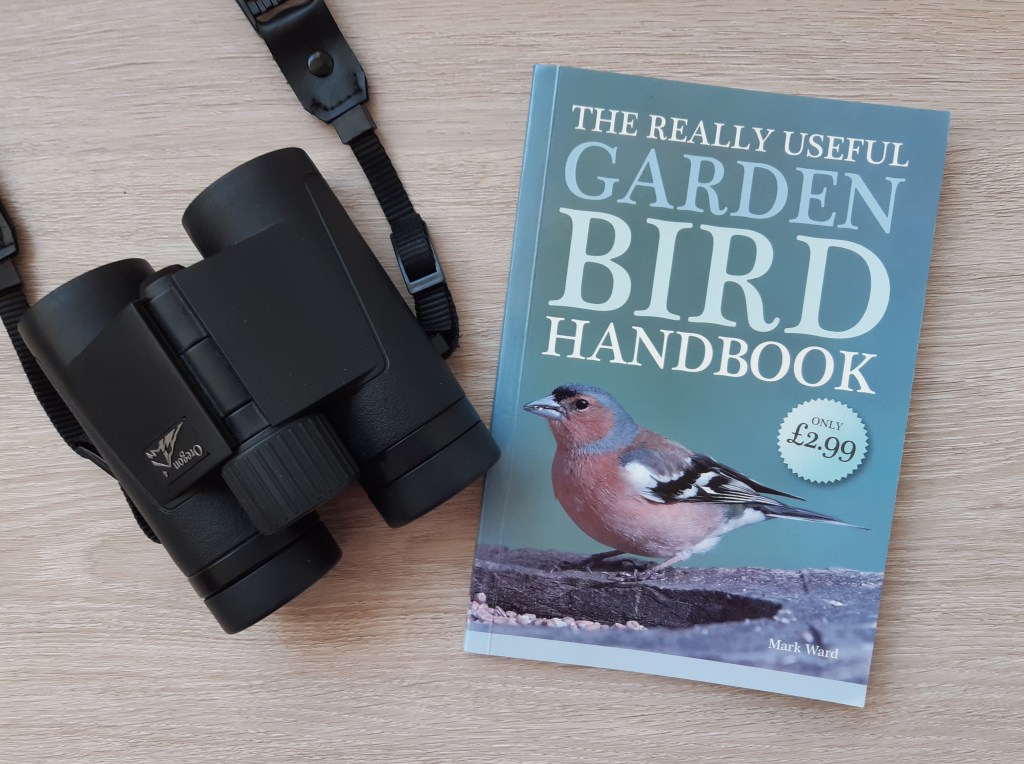
I bought a pair of binoculars last year so I could see birds up close when I visit the hides in nature reserves across the North East but you really don’t need to have any equipment to enjoy birding – just your eyes and your ears, making it a cheap as well as mindful hobby.

Photo credit: Laura Jones for Keeping it Creative

Journalling

Mindful journalling is all about the act of expressing your thoughts and feelings on paper and is a wonderful tool for reflecting, evaluating and processing all that is going on in your life. Done regularly, journalling has many benefits including stress reduction, improved mood, emotional regulation, more self confidence, better immunity, a sharper memory, increased productivity and the ability to empathize with others.

I’ve been journaling for a long time now and it has become a part of my daily routine and something I would really miss if I stopped doing it. I mainly tend to put pen to paper in the evening as I like to reflect on my day, record what I grateful for and write about what I’m looking forward to the next day or what I’m anxious about (click here to see my previous post which describes the ‘putting the day to rest’ technique in detail).

I do sometimes do some journalling in the morning as a way of starting my day on a positive and creative note and find the book ‘Five Minutes in the Morning – A Focus Journal’ provides some great prompts to help me decide what to write about. I managed to pick it up really cheaply in my local bookshop but it’s also available on Amazon as an ebook which you could use if you bought a special notebook to write in.

Photo credit: Laura Jones for Keeping it Creative

The journal is split into different sections, each with a particular focus and considers topics such as the power of writing, creating clarity, considering what’s important in your life, developing an attitude of abundance, solving problems and challenges, productivity and goal setting. It’s up to you how you use the book, you could either work through each prompt in order or you could just pick and page at random and see what you find.

Another book that I really love for prompt ideas is ‘Mindful Journaling’ by Tara Ward. The focus of this book is on exploring mindfulness in a variety of ways and then recording and evaluating your experiences of doing the different tasks. Recently, I completed an activity where you put something in front of you that you would like to eat and reflect on how the food stuff reached your bowl or plate and all of the processes involved in sourcing the ingredients and creating the product. I chose some Crunchy Nut Cornflakes and had so much to write about and it made me eat them much more mindfully afterwards too.

Photo credit: Laura Jones for Keeping it Creative

Sketching

I used to hate drawing as I thought I was no good at it but recently I’ve started to really enjoy developing my skills. My favourite things to draw are plants and other aspects of nature such as leaves, berries and fruit. I always really take my time and focus in on the outline shape of the objects and then add detail carefully. Apparently this style of drawing is known as a ‘Zen method’ which is all about observing and following the contours of the object with your eyes whilst letting your hands draw. You can find out more in renowned Dutch artist Frederick Franck’s book ‘Zen seeing, Zen drawing’ which I have neither seen or read but it sounds like it is focused on mindful drawing as a meditative technique for observing and discovering the world around you.

My first attempt at still life fruit sketching! Photo credit: Laura Jones for Keeping it Creative

Watercolour painting

As those of you who follow my blog will know, I got into watercolouring about 9 months ago and have enjoyed experimenting with different techniques including creating washes, wet on dry and wet on wet methods. Now I’ve learnt the basics, I’ve started to try out my skills on creating actual art pieces. This is my first try at wet on wet poppies and adding stems using wet on dry. In order to create my piece I spent some time looking at photographs of poppies and the work of other watercolour artists. I then really focused on the process of mixing colours, getting the right consistency of pigment to water and then allowing the colours to blend on the page. I wasn’t concerned about the finished look but I think it turned out well, for a beginner anyway!

Photo credit: Laura Jones for Keeping it Creative

Pottery

I’ve done two ceramics courses at a local wellbeing centre and found them to be amazingly beneficial. I met some wonderful, like-minded people who I got on really well with and involving myself in playing with the clay to explore different techniques and then designing and making my own pieces was so relaxing. The sessions were three hours long and in that time, I found that my mind was fully focused on the tasks at hand and the level of concentration required helped me to switch off from my anxious thoughts and feelings. Most weeks, we also got some of our freshly fired work back and it was so exciting to see our pieces at various stages of the making process and celebrate what we had achieved as we developed our skills.

Obviously, at the moment, there are no ceramics classes available which you can attend due to lockdown restrictions still being in place but it is certainly something I would recommend looking into in the future if you enjoy getting creative with your hands.

Flower arranging

This is a mindful activity that I would love to have a go at in the future as I imagine it’s really interesting to learn the various techniques involved and you can produce some stunning pieces to decorate your home and bring you joy. There are loads of free video tutorials and tips available online from florists and expert flower arrangers if you want to discover the basics or if you sign up to Skillshare you can do a full online course at home. I know my local college usually offer beginner’s floristry sessions but it may be a while before they are able to start them up again.

Photo credit: James Coleman, Unsplash

Do you do any of the activities I’ve listed already or do you have other favourites? Have you found you have more time to do hobbies because of the lockdown restrictions?