Posted in gardening, goal setting, journalling, lifestyle, Planning and journaling, productivity, reflective journalling, Setting goals and intentions

Monday Matters: 7 Reasons Why You Need to Keep a Garden Planner and Journal

Photo credit: Laura Jones for Keeping It Creative

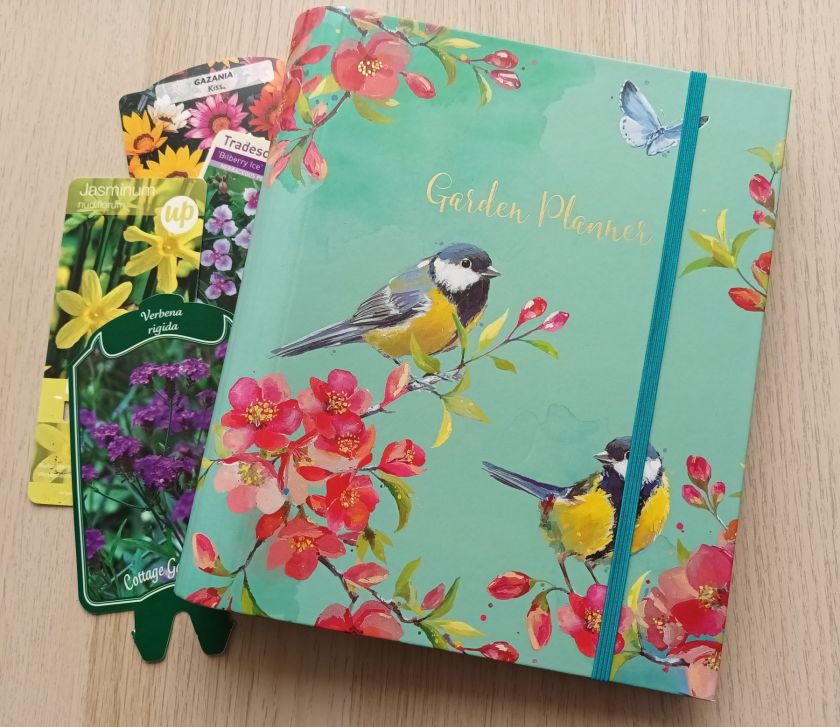
Over the years, I’ve kept various records of plants we’ve put in our garden, and I’ve saved all of the plastic information cards that come stuck in the pots when you buy them. I’ve also made notes in my bullet journal and even drawn plant ID cards for some of my favourite purchases. However, these resources are in an array of different folders and notebooks and often I can’t locate what I need when I want to check something. So, I decided I would like to keep a garden planner / journal and I found the perfect folder when I visited one of my local garden centres and asked my husband if he would like to buy it to give me for Christmas. Of course, any notebook or file would have done, but as someone who adores beautiful stationery, this one provides the motivation to use it regularly and has lots of different papers and pockets to put things in.

I’ve been using the folder since the very beginning of Spring 2023 and so far I’m finding it a really useful record keeping tool. I’m also hoping that by documenting everything garden related, it will help me to feel a real sense of achievement and begin to recognise that all of our efforts are paying off (even when I feel like it’s a constant battle to keep on top of the weeds or a few of our plants aren’t looking their best).

What is a garden planner and journal?

A garden planner and journal is a paper based or electronic place to store everything related to your outdoor spaces and even your houseplants if you so wish. As well as making you super organised it can provide, for example, a place to keep track of what you’ve planted and where, journal space to evaluate what has worked and what hasn’t, pages to record and plan seasonal tasks, list of to dos (AKA jobs for the weekend!), photo showing different parts of your garden over time so you can see and celebrate your achievements over the months and years. You can customise your records to suit your needs but you might include details of your soil in different parts of the garden, information about your various plants and notes on how well they have done depending on their location, ideas you have collected from magazine and online articles, issues you’ve had with some of your plants such as garden pests or poor growth, labelled sketches of flower beds or the garden as a whole, lists of your seed purchases and even a garden wishlist – the possibilities are endless.

Why should I keep a garden planner and journal?

In a nutshell, keeping a garden planner and journal, which you regularly write in, will make you a better and more efficient gardener and enable you to get so much pleasure from your space no matter whether it’s a few containers on your balcony, a tiny plot or a vast amount of land which keeps you constantly busy. Here are my top seven reasons why you should start a garden planner and journal today:

It helps you remember what’s where

Drawing a labelled sketch of the different parts of your garden such as flower beds, vegetable sections, corner plots, rockery etc helps you to remember exactly what you’ve got and where things are located. It can also provide information such as the particular colour or variety of plants.

I’ve also created a list of containers (size, colour and location helps here), what’s in each and when the plant grows and flower so that I know what’s going to pop up when and also, if it doesn’t come back, I can record and evaluate accordingly.

It’s a good idea to sketch your garden each season so you can see what’s in flower at particular times, which veggies are currently being grown and where your evergreen / deciduous shrubs and trees are. Then you can add in your annuals and assess whether there are any gaps which you want to fill.

You can create and maintain weekly and monthly plans

If you love your garden and want it to look good, you need to regularly dedicate time and energy to gardening. My planner contains weekly overviews for each season where you can record particular jobs that need doing each year and also ‘Jobs for the Weekend’ pages for running task lists. It’s really satisfying ticking them all off and it helps us to see what we still need to do and estimate how long each job will take. These task lists can then be revisited next year.

I like to go on reliable websites like Gardener’s World and RHS plus other UK based sites to look at what I should be doing each month and then handpick jobs specific to our garden. I also follow a few UK YouTube accounts for ideas too. You could even keep a list of useful websites in your journal somewhere too.

A place to log new additions to your garden spaces

All gardeners love going to local garden centres and nurseries to choose new perennials plus annual bedding plants for instant colour. You can record all of these in a list, stating where they were purchased and how much they cost, plus key information front the plant labels. getting new bits and pieces for their garden whether it’s a perennial plant, a new pot, a comfortable bench or chair and cushions, so And your new additions list doesn’t just have to be a space for greenery, you can also record new pieces of furniture such as a gorgeous new bench and bright cushions or a little potting bench, atmospheric solar powered or mains operated lights, new paths or replacement gravel, patio slabs, hanging baskets, rockeries, storage spaces such as a little shed or a box to put soft furnishings over winter, and wildlife friendly pieces such as a pond, bug hotel, hedgehog house or toad abode! Then, when you can’t recall how long you’ve had raised bed, you can check your records instead of trying to establish how long it’s lasted from memory.

A good chart to have in your planner is a record of seeds which you plan to set, when and where e.g. in trays indoors or directly into prepared veg beds or outdoor pots, how many to set (usually dependent on size and desired crop), date to set and germination times. You can also include a section for any notes, so, for example we find that our two courgette seeds for the two large plants we want don’t always germinate so we tend to put a couple in each plug or create more plugs.

You can find examples of seed charts on Pinterest for you to draw up (preferably on gridded paper), or, if you’re pushed for time, you can purchase printables on Etsy.

Helps you track progress over time

The other week I found some photographs of my husband sitting out in our back garden a couple of years after we’d moved into our house. I decided to print them out as there’s a huge difference between how the space looked then and what it looks like now less than 10 years later. The transformation is amazing and if we didn’t have a photographic record, I don’t think we would be able to fully appreciate all that we’ve achieved. You might not have photos from a decade ago (or maybe you do?) but why not start recording now and see how your space has changed in one, two or even ten years?

A useful spot to record successes, challenges + complete failures and reflect on why

We’ve been developing our garden for over ten years now and have had many successes but probably just as many failures. Some of the failures are permanently stuck in my memory, like the fact that every time we have tried to grow lupins, no matter where we got the plants from, the ended up covered in aphids which made my skin crawl! Likewise, some of our complete successes still take pride of place in our flowerbeds such as the beautiful, long lasting and colourful geums. However, there are many more triumphs and disappointments that I wish I’d written down and reflected on. Here’s a list of aspects of gardening which you might like to make a few notes on:

  • garden pests – what specific plants they’ve eaten, when they eat (daytime, night time, particular times of year, following particular weather etc), thoughts about why they eat e.g. slugs and snails love to munch on our dahlia so this year we’ve potted one up, covered the soil in grit and placed it in the front garden porch away from other plants and it’s doing much better
  • plant diseases and treatment e.g. our hollyhocks get rust every year so I inspect them early on and removed infected leaves quickly and dispose of them
  • plants which don’t like the conditions – too dry, too wet, hate clay soil, not enough sun/shade etc and whether they are to be moved or just dug up
  • weather related challenges (e.g. storms, continuous rain, dry spells etc.) and how specific plants coped
  • seed germination failures – dates planted and when replacements set or when new seeds purchased and set
  • weed related issues e.g. we have a huge problem with celandine and it’s a constant battle to get rid of them, I spend 10 minutes every day on their removal and I’m glad when they die back by mid May

I’m sure you probably have many more ideas but hopefully these are enough to get you started.

A place to dream, make wishlists, include inspirational images, identify your short and long term goals and make plans of action

If, like me, you have a beautifully, colourful and well maintained garden on your vision board for the future, it’s a good idea to have a section in your journal to include wishlists, inspiring photographs, goals and action steps and maybe even a written explanation of what you want your dream garden to look like and how you want to feel when in it. You can then check in regularly with this section of your journal and see how well you are progressing with your goals. You can also note down things from your wishlist to look for next time you go shopping to one of your local garden centres.

Final words…

As you start your record keeping, remember that your file doesn’t need to be perfect and will most certainly evolve over time. You might want to start by simply taking a few photos of how your space looks now and then making a few notes of some of the plants which are located in each section. Or, if you like drawing and creating diagrams, you might take some squared paper to draw different parts of your plot and label the names of plants currently growing there. I can also recommend colouring in the plants that are currently in flower so you can see the balance across your plot.

Then, on another occasion, you might make a basic to do list (try Googling garden jobs for June and your specific location) for the month and tick tasks off as you complete them. You could even add a few jobs that are already complete or underway to get some easy and satisfying ticks by the end of the week.

I hope you’ve found today’s post useful and it has inspired you to give this form of planning, record keeping and journalling a go. Let me know what you choose to do first and how you get on.

Posted in bullet journal, Bullet journaling, creativity, gardening, Planning and journaling

Setting up my Bullet Journal for June 2023: Gardening theme

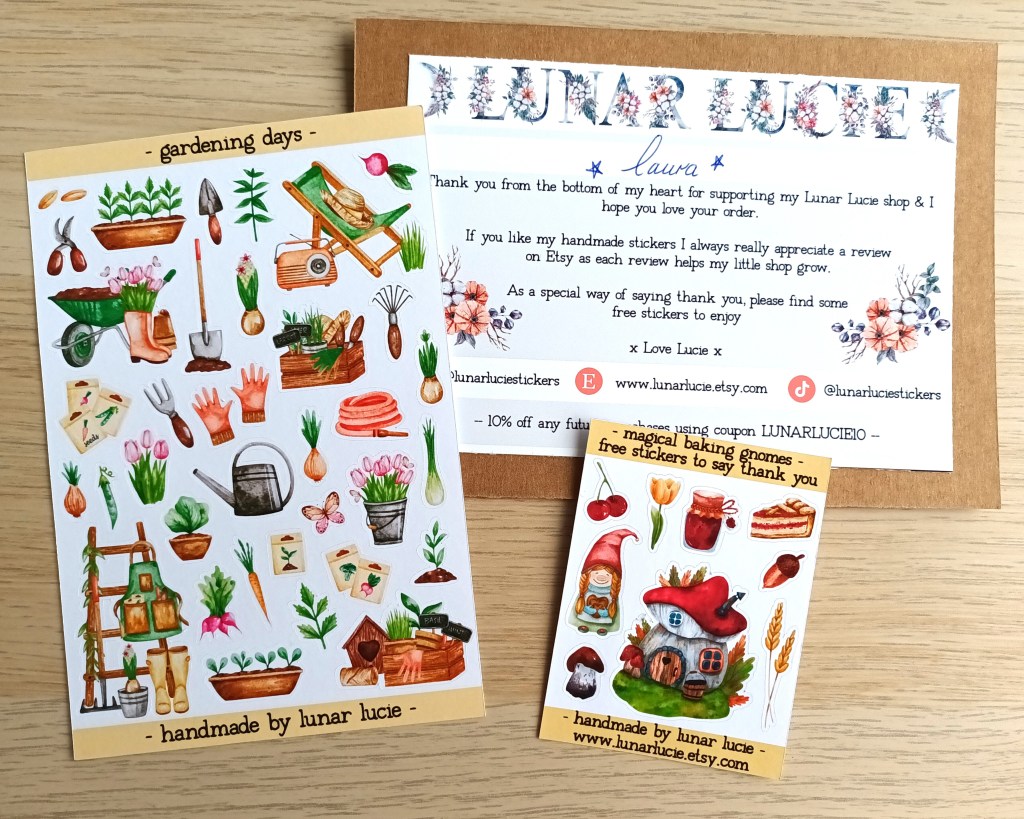
At the moment, my husband and I are busy working on our garden to get it looking neat, tidy and full of colour for the summer. I’ve recently started keeping a gardening journal which includes before photos of the front and back gardens, lists of jobs for the weekend, planting plans and records of seeds set and plants added to the borders. I wanted my theme for June to be bright and cheerful, with easy to set up pages so I decided to order some deco stickers from Etsy for the month. So far, I’ve picked out one sheet of watercolour garden related images and have used them to decorate the cover page and my calendar. I also used some icon stickers for my first weekly spread and will decide if I want to order further stickers to decorate or if I want to do some basic sketches for the rest of the weeks.

If you’re looking to create decorative but quick pages for your bullet journal, stickers and washi can be great options but obviously do incur an extra cost. They’re also great choices if you’re not keen on drawing or need to save time. You can literally type your chosen theme into Etsy, filter to UK sellers only if you need the sticker sheets quickly, select a design sheet which suits your personal style, and then, as soon as they arrive you can get to work planning out where to put them in your spreads. I found that the most frustrating part was creating my grids and lettering and then having to wait for what felt like ages for delivery but the sheet was made to order so had a lead time of two weeks.

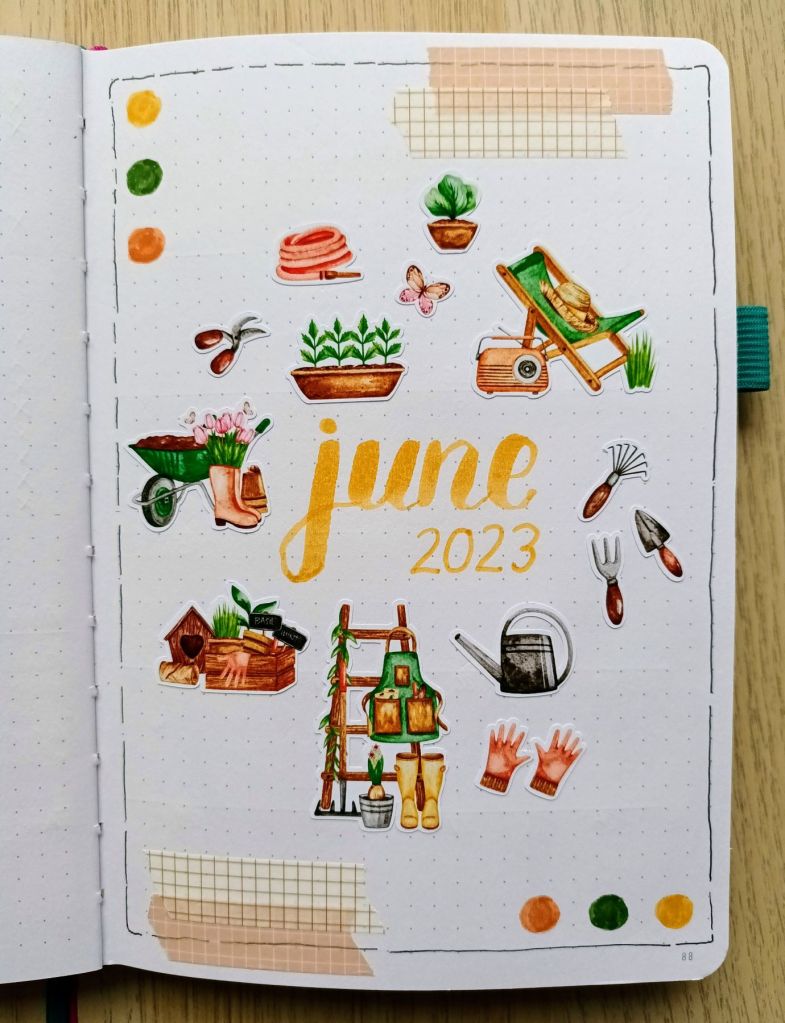
My front cover

I used one of my new Tombows in 991 to add the title to the centre of the page and then created a loose border using a 0.4 pigma micron pen. I then added stickers around the title and placed washi plus some circles to fill in the spaces at the top and bottom.

Photo credit: Laura Jones for Keeping It Creative

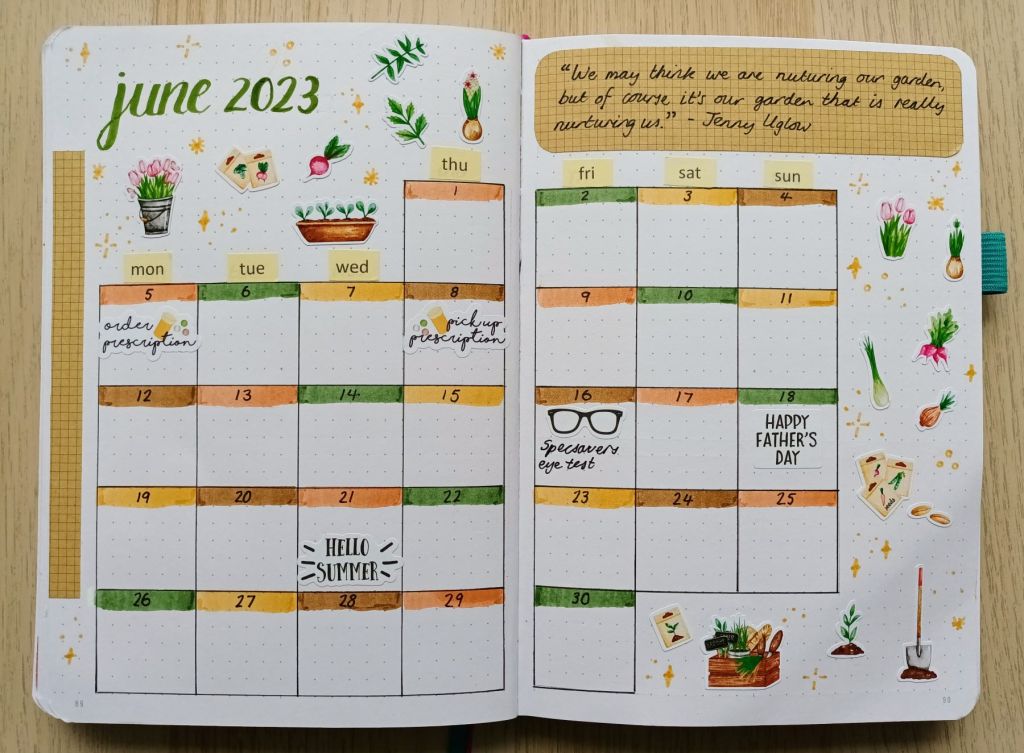
Calendar pages

This is my usual 6×6 grid space calendar layout and I chose four Tombow Dual Tip pens which I tried to match to the stickers. I knew that the colours might not be exact as they can differ on your screen to IRL but I didn’t mind as long as they were close. As I was running short on stickers by the time I’d finished the cover page I added a quote on some kraft grid sticker paper and matched it with a strip on the edge and then used various sparkles to fill in the gaps.

Photo credit: Laura Jones for Keeping It Creative

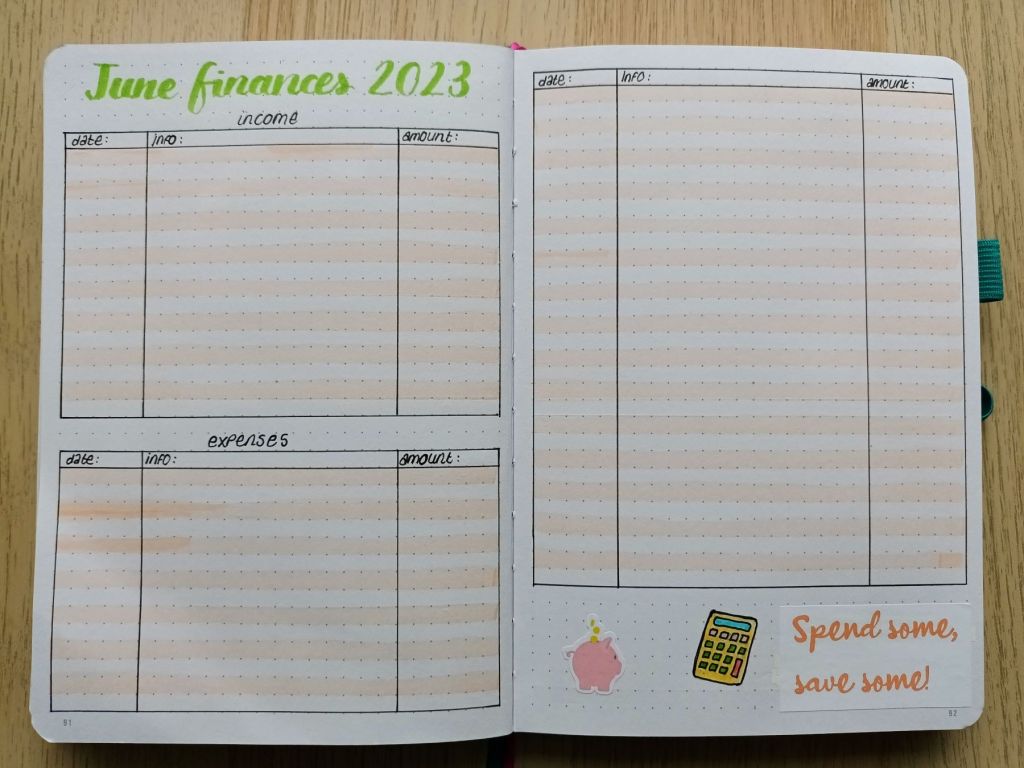
Finances

The layout of my finances spread works really well for me so I use the same design each month. There was a little space at the bottom to add a small amount of decoration using a piggy bank sticker from EllenBeeMakes on Etsy, a hand drawn little calculator and some words which I printed on sticker paper.

Photo credit: Laura Jones for Keeping It Creative

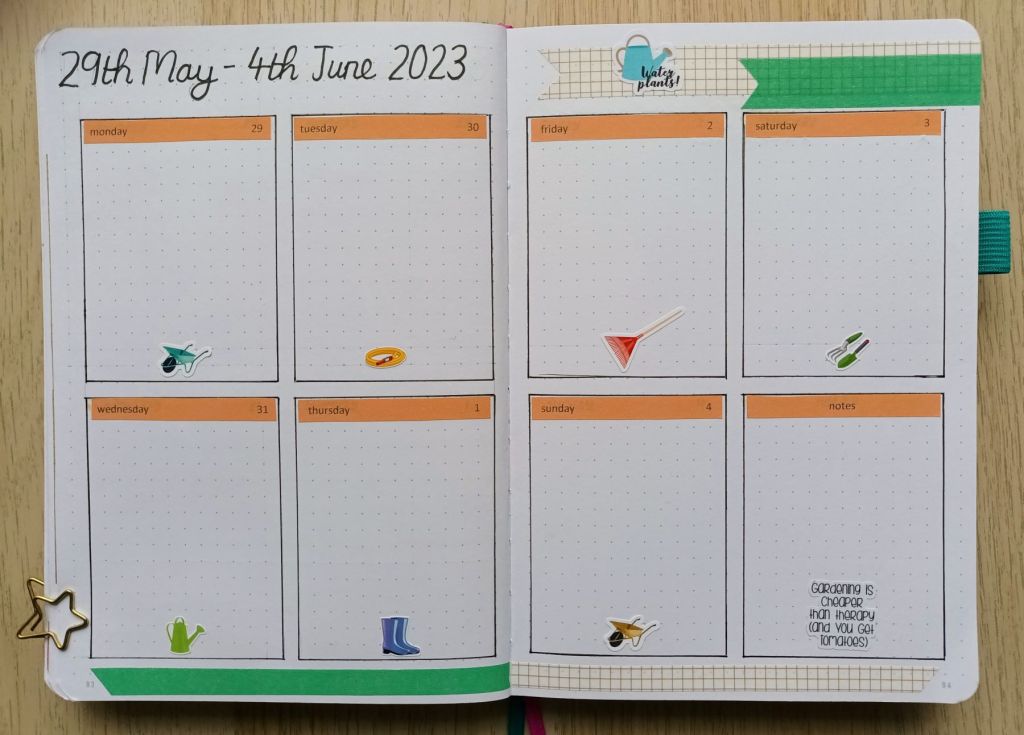
Weekly calendar and rolling weekly to do list

I decided to do a double page weekly for the first calendar page as I have quite a lot planned and needed more room to write. This means that my rolling weekly task list is over the page but I don’t mind flipping back and forth.

Photo credit: Laura Jones for Keeping It Creative

Final words…

I hope you’ve enjoyed looking at my spreads for the month of June. I don’t regularly use stickers to decorate my pages as it would be fairly costly but it is an effective way of setting up quickly and painlessly. I still managed to mess up a few times – once by smudging pen (the joys of being a leftie) and again by dripping cherries and berries squash on one of the pages (planning is thirsty work!) but my white Posca paint pen and some washi fixed those pretty well. Overall, I’m pleased with how everything turned out and I’m looking forward to using my pages.

My lovely stickers which are now all used!

Wishing you a lovely June,

Posted in bird feeding, bird spotting, bird watching, conservation, gardening, nature, wildlife

Monday Matters: The simple joy of feeding and watching garden birds in wintertime

Winter is a difficult time for birds due to the shortage of food sources, long and cold nights and shorter days. By nightfall, they need to have eaten enough to give them energy to keep warm and survive until morning when the process of searching for food starts all over again. Providing food sources in your garden is a great way to help nature and feel as though you are making a difference.

Photo credit: Amee Fairbank Brown for Unsplash

I like to think that our garden is a wildlife friendly as possible and I’m always in search of new ideas to keep visitors happy and well fed. I know that many of my readers are nature and wildlife lovers too, so this week, I thought I’d explain how feeding and observing birds in your garden helps to boost your mental health and also share my top tips for looking after birds in wintertime.

Whether you sit outside all wrapped up with a warm drink or you observe through the window, watching the birds feeding and exploring your garden can have a huge impact on your mental health and wellbeing. Here’s some benefits that we can all enjoy:

Watching the birds is a mindful and meditative activity which makes you feel calm and relaxed. Whether indoors or outside, you are required to sit very still and quiet, away from distractions such as your mobile phone (and all of the must-read notifications which constantly pop up!). If you can, and the weather allows, I recommend wrapping up in your biggest coat with hat, gloves and chunky scarf (plus optional coffee, milky tea or hot chocolate), so you can sit in your garden. This way, you can be totally immersed in nature and use more of your senses, so, as well as observing what’s going on, you can also listen to the various sounds of the birds and other noises in your immediate environment or further away. During this time, you may also become aware of different sensations such as a gentle breeze on your face, the chill of your cold ears, the warmth of your mug seeping through your gloves or the supportiveness of your choice of seat. And, because you are involved in all of this sensory exploration, you’re not thinking about your never-ending to-do list and all of the other stresses of the modern world.

Getting outdoors in the wintertime ensures you get some much-needed fresh air and a dose of vitamin D from a natural source. Fresh air can improve your wellbeing in lots of ways including clearing your airways and lungs, strengthening your immune system, improving your digestion and giving you more energy (which also helps to sharpen your mind). Vitamin D is essential for boosting your brain and immune system and strengthening your bones. Obviously, the amount of sunlight changes from day-to-day, but personally, I think getting out in nature provides a mood boost even on the dullest of days.

Bird feeding and watching can give you a real sense of achievement. From learning to identify the birds you spot and beginning to recognise their various calls and songs, to attracting different species to your garden or yard as you increase your feeding options and even developing the skills to use binoculars or take photographs using a DSLR camera. There’s so many opportunities and I guarantee it’ll boost your self-esteem too.

Something else which will make you feel good about yourself is knowing that you’re doing your bit for wildlife conservation in your local area. Creating a haven for birds in your garden and generally making it a wildlife friendly zone is a great way to help on an individual basis.

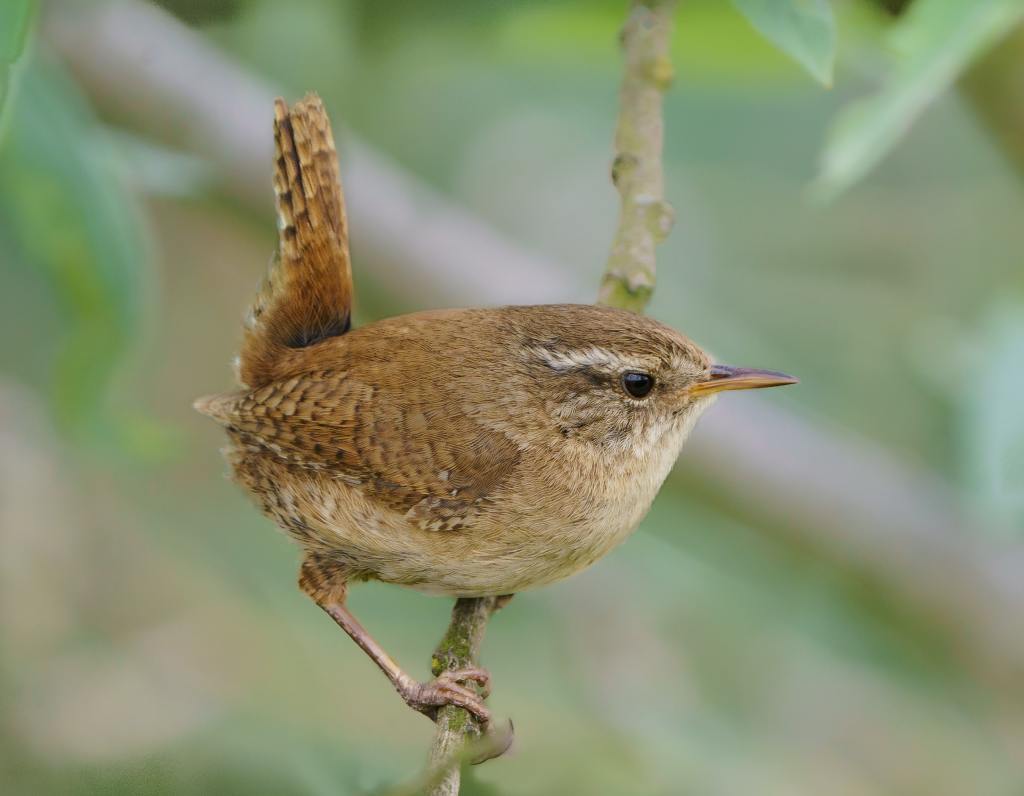
Above all, bird watching can be absolutely fascinating and great fun. When you stop what you’re doing and really look at the birds, it’s so interesting to see their comings and goings and how they behave. You might first see a little dunnock flicking its tail as it shuffles along the ground, hoovering up crumbs fallen from the feeders. A short time later, you might spot a visiting blue tit carefully extract one single seed and then take it back to the safety of their chosen branch to enjoy in peace and comfort. Watching a solitary blackbird as it traverses your lawn will show you how it tilts it head to listen carefully for worms underground and then uses its sharp beak to extract its prize from the earth. You might also see how it defends its territory by chasing away other small birds from its garden of choice. Whichever birds your garden attracts, I can almost guarantee they’ll provide good entertainment and bring you feelings of joy!

And if you don’t have a garden, watching and feeding birds in your local park is also great too – just be careful about the kind of food you provide, for example pre-mixed bird seed is a good source of nutrients for garden/woodland birds, whereas white bread isn’t a particularly health option for them. If you combine your bird spotting with a nice brisk walk you can really maximise the health benefits of your time outdoors!

Top tips for bird feeding and watching

Get a basic field guide

Whether you’re new to bird watching or have a little experience, a basic field guide for garden birds is a great resource. This will provide pictures of common and slightly more obscure garden visitors as well as information about what makes each of them unique. This might include size, body shape, plumage colours and patterns, tail shape, length and patterning, and other defining characteristics. Many of them will also discuss geographic range, migratory patterns of specific birds, breeding patterns and behaviours to look out for.

Be patient – birds are careful and cautious customers

When you first start to create a haven for birds, you’ll need to be very patient. Birds have evolved to be incredibly careful as it maximises their chance of survival. A few years ago we replaced our bird bath as the current one which was coated metal got a hole in it (we thought that over enthusiastic birds were flicking most of the water out each day!). This time we’d chosen a weighty ceramic version in a shiny mid grey which we excitedly placed in the garden in the same spot as the previous one. However, despite the fact that my husband and I thought the new bath looked smart and attractive, it was several weeks before any of our feather friends showed even a slight interest in it and at least a month before they would actually linger and have a wash in it!

Keep an observational journal

Anyone who knows me or regularly reads my blog will know I love journalling and memory keeping. I like to make my own traveler’s notebook inserts and use them to record anything and everything. However, I’ve recently picked out a garden journal for my husband to get me for Christmas and I thought it would be a nice idea to record my garden bird spots in it, particularly any unusual observations. For example, one snowy January, I saw a group of redwings perching in the ivy on our bottom fence and a few weeks later, my husband spotted a nocturnal bird poking its long beak into the snow in search of food. It turned out it to be a woodcock – our first sighting, and so far, our last! Your journal could simply be a place to record the name of the bird and when you saw it, but you could also get creative adding photographs, sketches or even watercolour paintings.

Think about meal provision for all – cater for picky eaters and those who aren’t as fussed

Some birds, such ss goldcrests, are quite picky eaters, and feed mainly on small insects and spiders. Others, such as blackbirds will include a large range of foods in their diet such as worms, spiders, berries, dried fruits, sunflower hearts, oatmeal and suet pellets. I’ve even seen the ones who visit out garden grabbing the odd water louse from our wildlife pond! If you look at different bird mixes available, they usually suggest which individuals they’re designed to attract. Over time, you could add different feeders – we have seed feeders, fat balls, peanuts (inside a mesh feeder to prevent whole nuts from being extracted) and a wooden table for birds who prefer open feeding and a place for kitchen scraps and fruit.

Go heavy on fatty foods

Talking of different types of food, birds need plenty of high fat stuff during cold winter weather so that they are able to maintain their fat reserves to keep them warm during frosty nights. This can include pre-made fat balls, suet cakes and bars or you can make your own – check out these instructions on the RSPB website. Warning: fat from cooking is bad for birds because the consistency of it makes it prone to smearing on feathers which can destroy waterproofing and insulating qualities.

Supplement with kitchen scraps

Feeding garder birds doesn’t have to be an expensive hobby. Many kitchen scraps that get thrown away can provide a suitable meal. We tend to stick with seed mixes, peanuts and fat balls but this information from the RSPB has given my husband and I food for thought!

Adjust to the demand

When you first start feeding the birds, you may only have a small number of customers visiting your garden or you may find that limited species choose to come. Always adjust the quantity of food to the demand. Also, try to put the provisions out at the same time each day so that the visitors can learn your feeding routine.

Maintain good hygiene

It’s really important to regularly clean your bird feeders, drinking containers and bird tables to keep them disease free. If you don’t maintain good hygiene standards you may be doing the visiting birds more harm than good. Check out this online resource from the RSPB which has lots of tips on keeping your birds healthy.

Provide water as well as food

Water is vital to a bird’s survival so you should make sure you provide drinking and bathing facilities for your feathered friends. This could be via a purpose-built bird bath, a water tray, shallow pot or a hanging water dispenser. For bathing, birds only need a small depth of water as the purpose it to get their feathers wet rather than drenching themselves. During the depths of winter, when it gets super cold, you might need to check on the receptacles to see if they are frozen and then gently defrost them. Be sure not to use really hot water or you might crack the container.

Consider planting for birds

Although late Autumn and the depths of winter aren’t usual time for planting, if you want to attract birds to your garden across the seasons and for years to come, it’s worth thinking about the plants you choose. Native wildflowers, sunflowers, asters, black eyed susans, echinacea (or anything else which has tasty seeds inside) dense bushes and those which produce fruit (e.g. ceanothus, privet and blackberry) shrubs with berries (e.g. cotoneaster) and trees such as birch or cherry. We haven’t got room for any trees in our garden but there are a few hanging over our plot which get plenty of visitors – I’m sure some of them sit in them watching and waiting for us to add fresh supplies.

Once your plants become established, you should find that even if they get attacked by garden pests such as greenfly or blackfly, the birds should help to keep them at bay for you. For example, we have a rose bush and every year the underside of the leaves gets covered. However, we never use pesticide on it (or indeed any of our garden plants) because a) it’s bad for ecology and biodiversity and b) sparrows and blue tits are regularly seen picking the bugs off. Also, by eliminating green and black fly (AKA aphids), you’re depriving ladybirds of their favourite meal too!

Invest in a wildlife pond

We only have a small garden but, about four years ago we decided to get a mini pond for wildlife. We have at least one resident frog in there but it’s also popular with blackbirds too – they love bathing in there and drinking the water (there are lots of water hoglouse in there and we think they pick them out of the water and gobble them up too!). Our night-time visiting hedgehogs also love to wash down the biscuits we put out for them (that is if a visiting mouse hasn’t stolen them before they arrive!).

Final words…

When I used to volunteer for the RSPB and worked with schools exploring nature, the teacher’s used to often ask me when it was important to feed the birds. My advice was that food can become scarce at any time of year, depending on the weather conditions, so it’s best to put something out all year but then ramp up the provisions to include a wider variety of options during the wintertime.

I hope today’s post has encouraged you to give bird watching and feeding a go this wintertime. If it has, let me know how you get on. One final idea is to take a few photos of your feeding provision each year so you can see how your garden develops over time. My husband and I love looking at images taken over the years – even if they’re just quick snaps of different spaces. All too often, we’ve forgotten how tiny some of our plants were when we first set them and how big they’ve grown!
Posted in bullet journal, Bullet journaling, creativity, gardening, Planning and journaling, productivity, TN journaling

Spring is coming! Pretty, practical and creative journal spreads you must try

Spring officially starts on Saturday 20th March but there are already so many signs that the season is on its way. It’s a pretty chilly 3 degrees here in Sunderland today (warm coat and scarf weather), but last weekend, the temperatures rose to highs of 13 and it felt like Summer had arrived (never mind Spring) when my husband and I took a coastal walk in the bright sunshine and under cloudless blue skies! The warmer conditions have meant that lots of things are starting to pop up in the garden including early flowerers such as daffodils and tulips. One of our regular hedgehog visitors has even been tempted out of hibernation which is pretty early in comparison to previous years. There might still be lots of worries with regard to Covid around at the moment, but I think its super important to celebrate the small stuff and remind ourselves that there’s still lots to be grateful for right now and plenty to look forward to in the not too distant future. With that in mind, today I’m sharing some practical and pretty journal spreads, for your BuJo or your TN inserts, that I’ve created this week and really encourage you to try.

Spring flowers collage spread

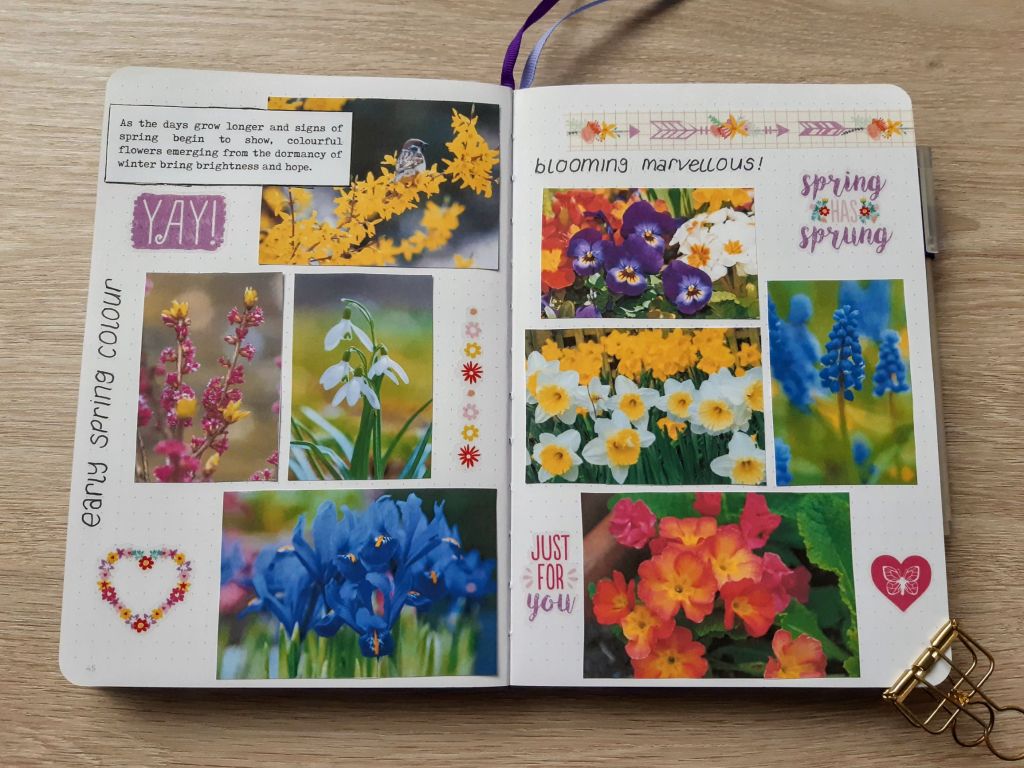
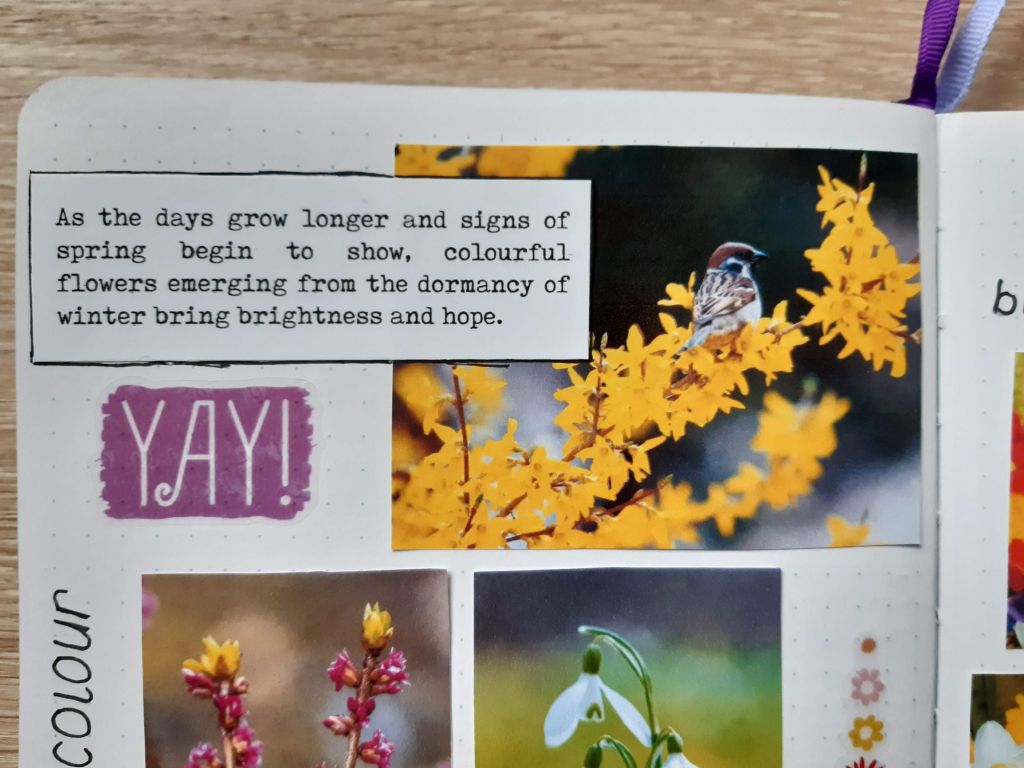
This bright and colourful collage spread was created using pictures printed from Google images following a search for early Spring blooming flowers. They depict shrubs and bulbs which we actually have in our garden but most of which are not yet out. I copied the text in the left hand corner of page one of the double spread from an article which I found on the Woodland Trust website as I thought it was particularly fitting for the theme. The stickers are some I had left over from the Blooming Lovely collection and I discovered I had matching washi tape in my stash too. Both of these pages make me feel happy every time I look at them and I revisit it most days.

A pretty quote page

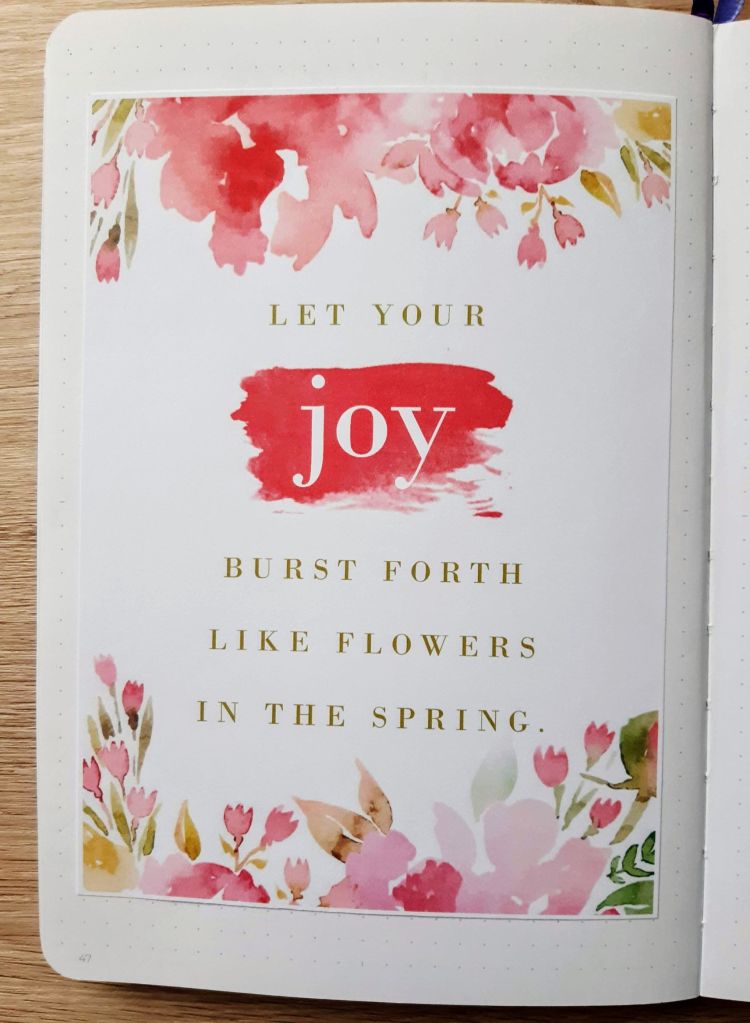
This was a free printable from https://www.bluemountain.com/blog/ I’ve printed it twice and put one copy in my bullet journal and a slightly larger version on the wall in my craft room. I found the quote by typing ‘spring quotes and sayings’. There’s lots to choose from and as long as you’re just printing them for personal rather than commercial use, you can add them to any of your journals or a prominent place in your home!

Garden jobs for Spring

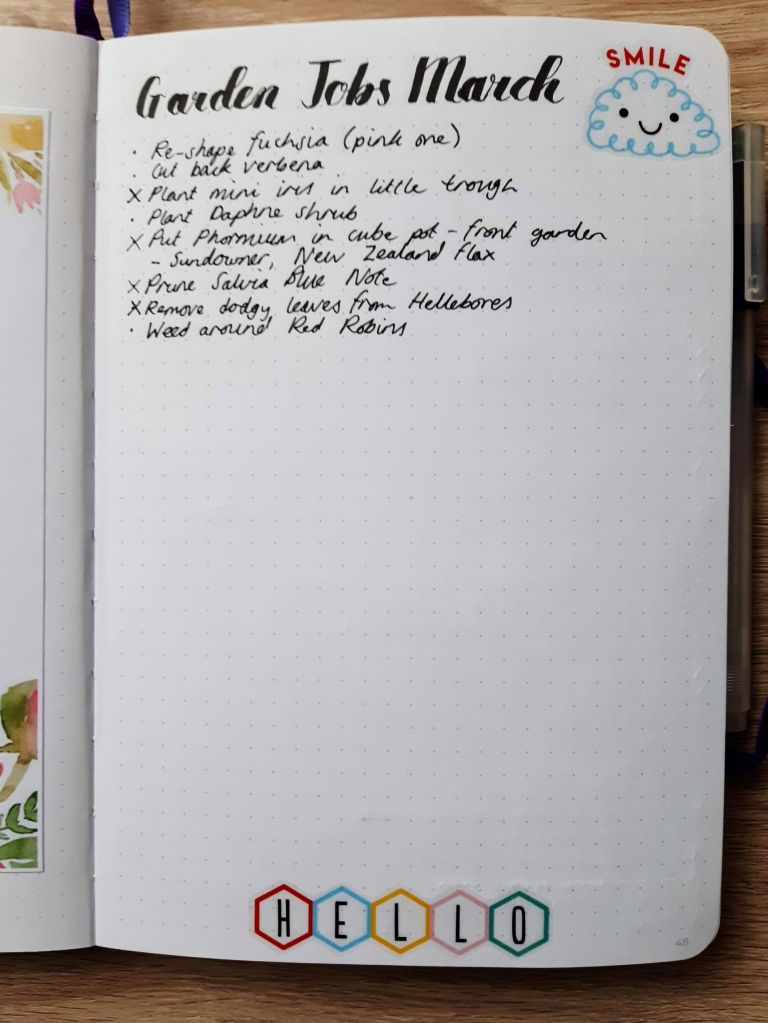
This spread is purely practical, although I did add a few cute stickers! My husband and I sat down and listed some garden jobs that we would like to get done this month as a useful reference to see what needs doing and to see how much we’ve achieved. There’s not much on it yet, but by the end of the month, I reckon the list will be much longer (hopefully with lots crossed off!).

Time spent in nature

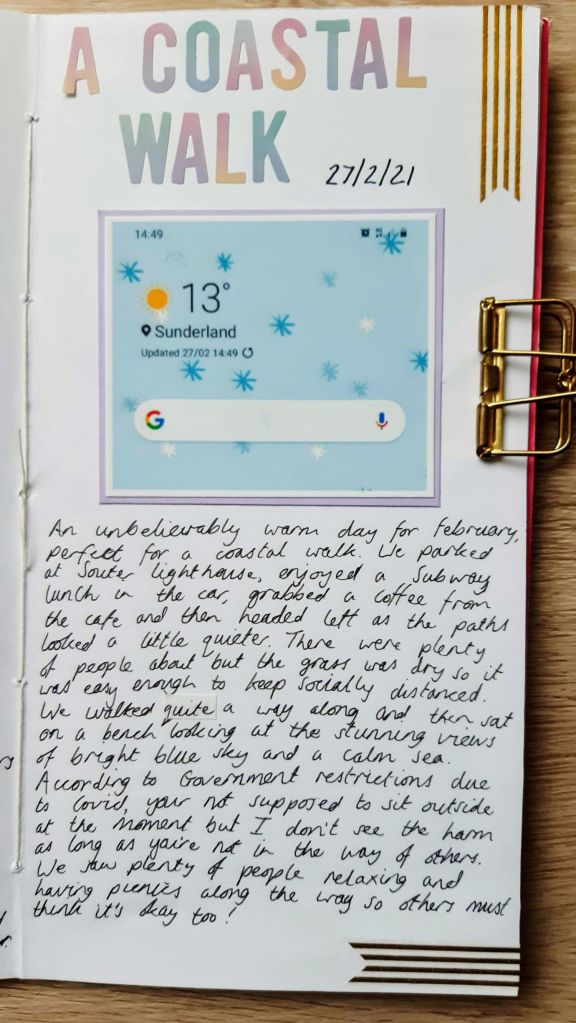
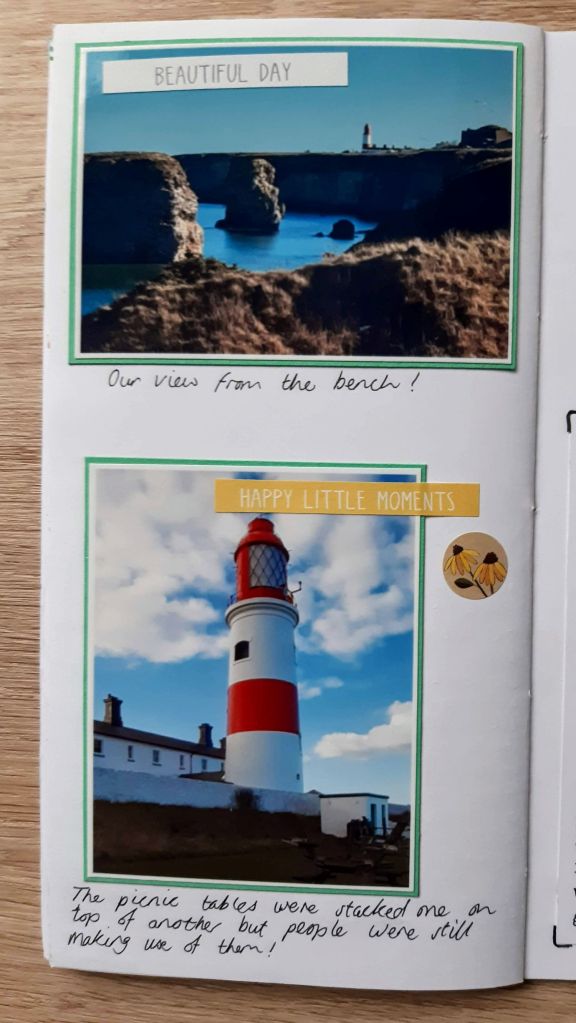
I love to document days out which my husband and I enjoy and, even though we’re limited to the local area at the moment, due to lockdown, we still go out for a walk each day. Last weekend, as I said earlier, it was really warm so we headed to our local coast. It was really busy there but as we’d had lots of sunshine, the grass was dry enough to walk on and it was easy to keep socially distant from others. I took a screenshot of the temperature on my phone as we couldn’t believe how warm it was for the end of February!

Shoots and leaves

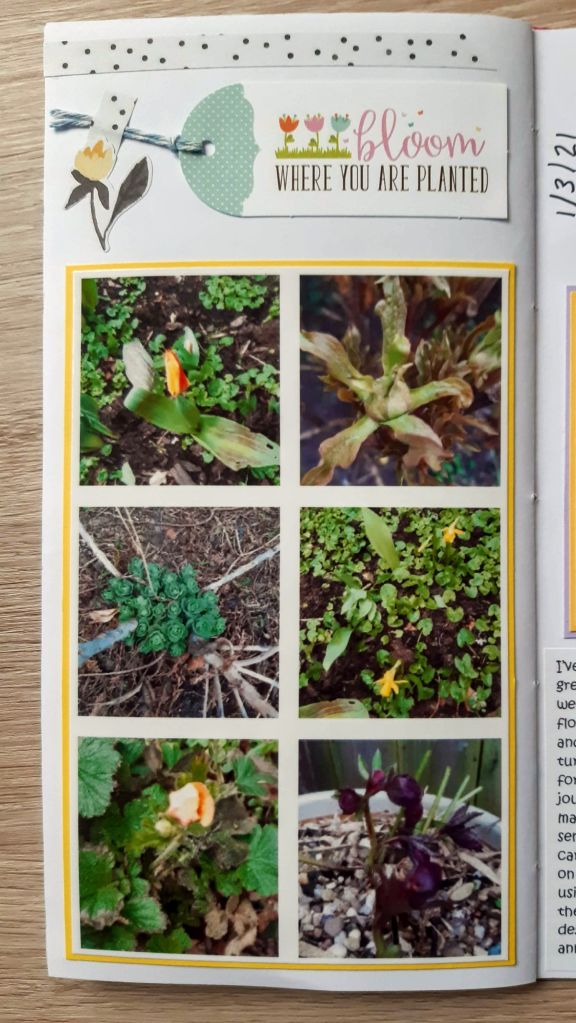
There’s lots starting to emerge in the garden and so I took my phone out there and snapped a few signs of growth. It’s exciting to see things popping up even if some of them are weeds! The photos aren’t wonderful as I wanted them to just be quick pics but it will be good to compare how things look now with how they look in a few month’s time.

Plant and flower factfiles

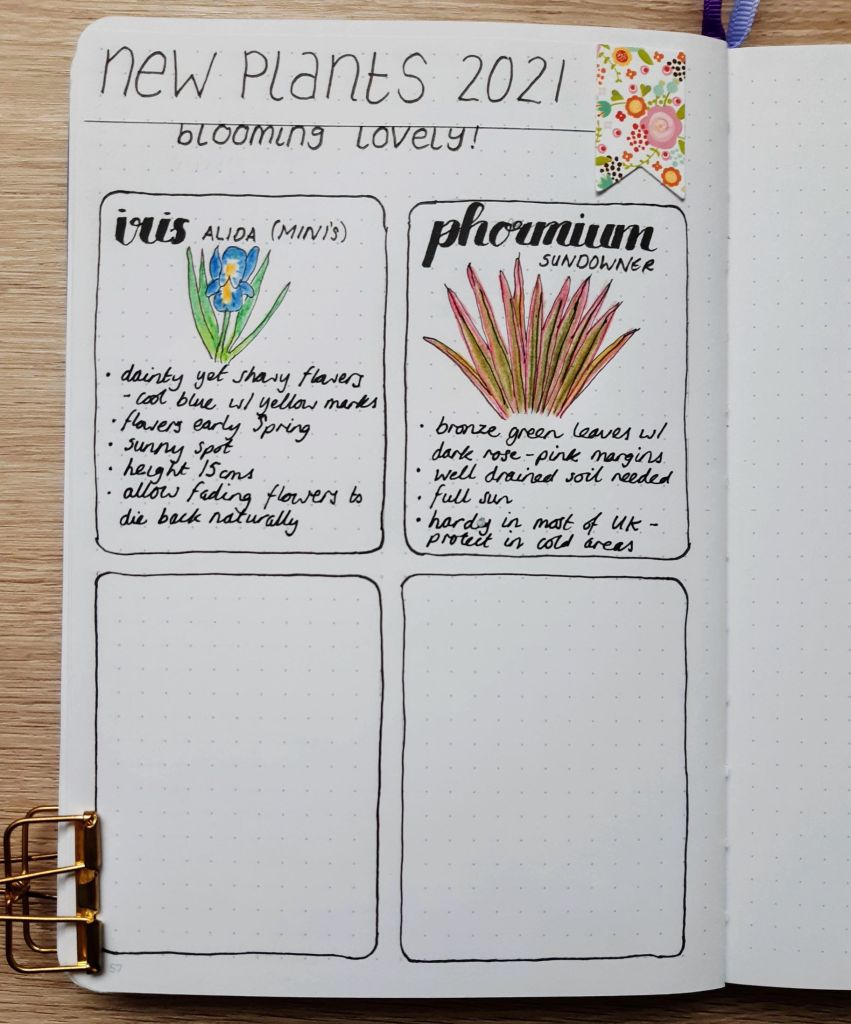
This is something I started doing as part of last year’s garden related spreads. Basically, it’s just info from the plastic card you get stuck in the pots when you buy a plant or details which are included on the seeds or bulbs packet. It’s handy to know the exact variety you have and what they will look like when they come into bloom. Also, doing a little sketch of them is quite relaxing and therapeutic too! I messed up the lettering on the page so have stuck a piece on I cut from a page at the back of my journal. IRL, you can’t see it as badly as you can at the bottom of the header as you can in the photo.

Final words…

I hope you are tempted to have a go at at least one of these spreads – I guarantee they will make you smile when you look back over them if you do. I would love it if you would take the time to add your thoughts or your own ideas in the comments below. And, as always, if you’ve created any Spring spreads and shared them online, leave the link and I’ll be sure to check them out.

Posted in bullet journal, creativity, gardening, Planning and journaling

Setting up my bullet journal for July: Meadow flowers and grasses theme

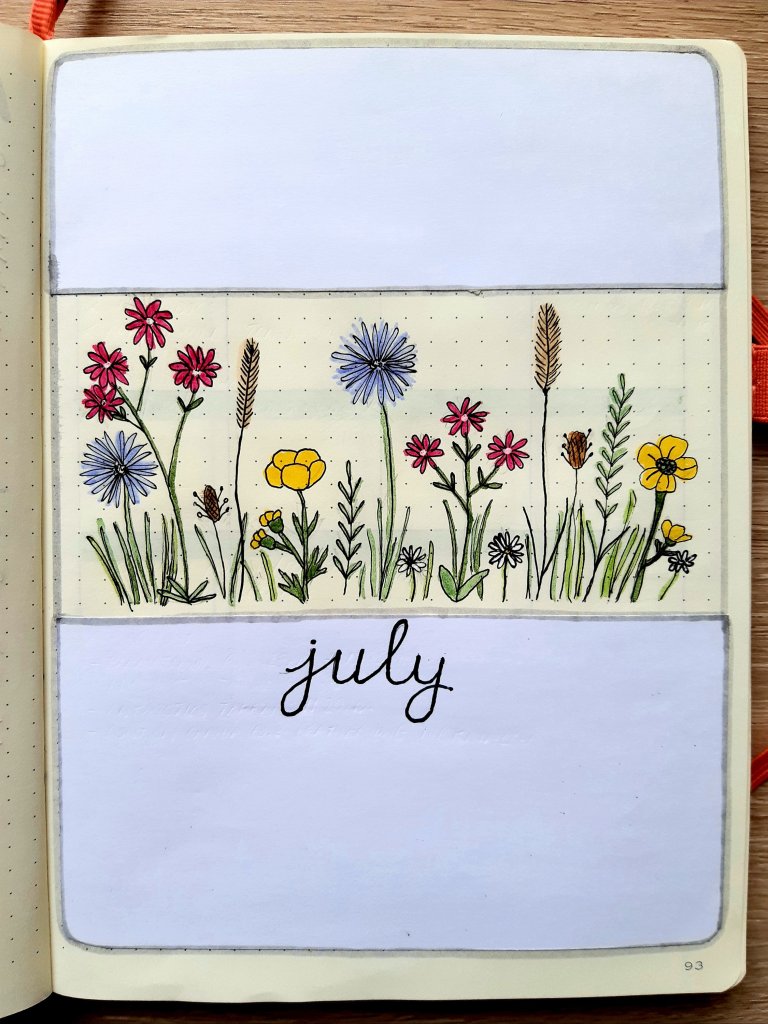
This month, my husband and I went to a local place called Rainton Meadows which is a nature reserve run by Durham Wildlife Trust. It’s somewhere we go regularly for walks and to spot the variety of flora and fauna there. There’s so much to see, including a variety of water birds on the wetland areas, woodland birds from the new hide, ponies grazing on the grass, dragonflies around the water, along with butterflies and stunningly beautiful wild flowers in the meadows. For my July BuJo spreads, I decided to take inspiration from my visit to the reserve and the flowers and grasses we saw. I did want to take some my grassy and wild flower finds home with me so I could do some observational drawing but unfortunately, it started to rain heavily just before we left and we had to run back to the car. I had, however, taken plenty of photographs and was able to find line drawn images online to help me with my sketching. So, here are my pages for July. I hope you like them.

During lockdown, I’ve been addicted to watching plan with me videos on YouTube and I came across a vlogger who had done something similar to the idea I had in my head for my meadow and I took inspiration from her layout for my cover page. I had intended to have a go at creating a watercolour painting but I liked the effect of her designs with felt tip markers and fineliners so I decided to have a go.

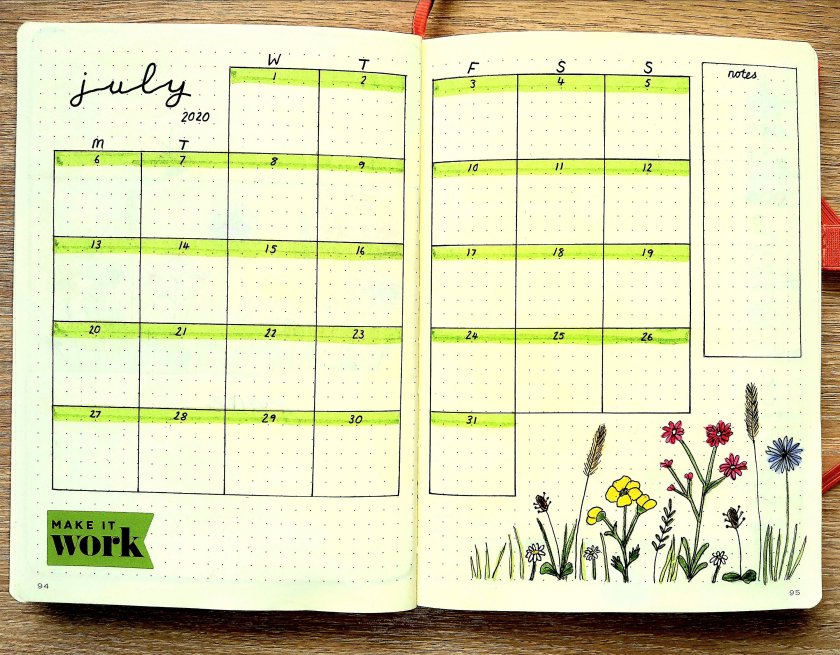
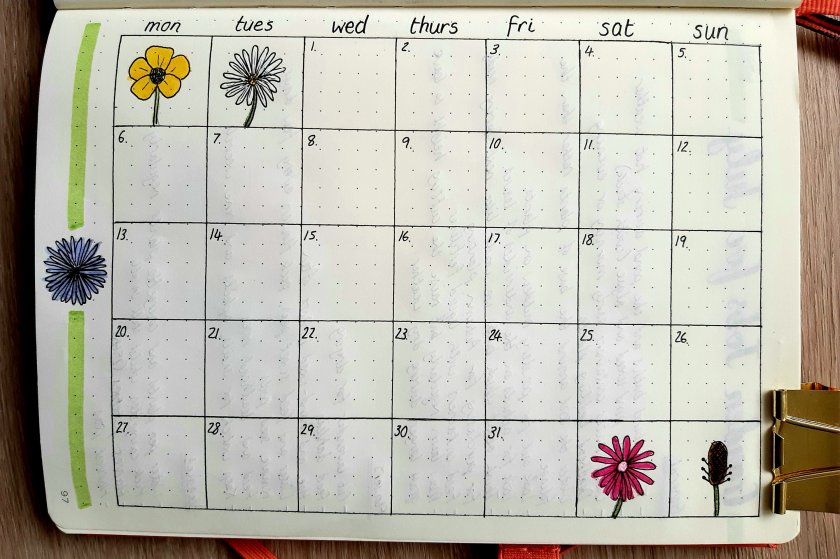
For my calendar page, I stuck with a two-page spread as I like plenty of room to write down when I have published as blog post and any appointments or birthdays. I did a mini meadow in the bottom right hand corner and used one of the grass colours to for my boxes. The ‘make it work’ sticker is from a Happy Planner sticker booklet and I thought it finished that side of the page off nicely, whilst reminding me to keep going and find pleasure in life despite the restrictions due to Covid.

I kept my exercise trackers the same as June but changed the colours and added floral decoration to my workout chart. I found they worked really well for me last month and I was motivated to keep up with filling them in each morning and night.

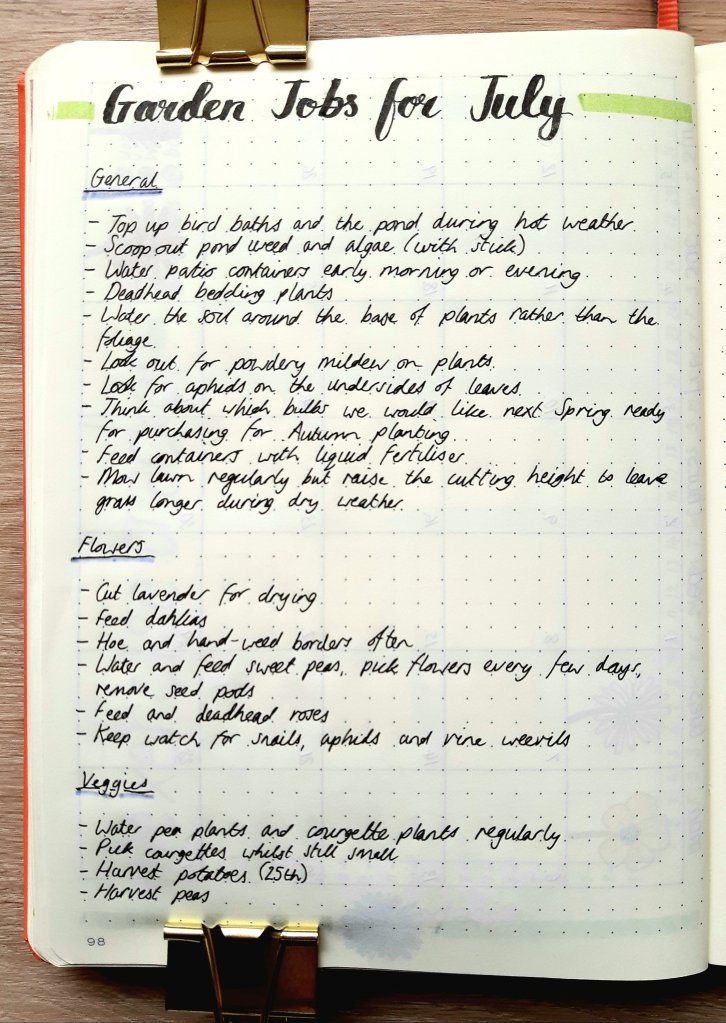
Finally, I created a Garden Jobs for July double page spread so that I know what to focus on for the next month. I used the Gardener’s World and RHS websites for this as they both contain really helpful advice.

I would love to know what theme you have chosen for your bullet journal spreads for July. Let me know in the comments and add a link to your blog if you have one so that I can take a look.

Wishing you a wonderful July,