Hi everyone. Hope you’re all well and enjoying the beginnings of Autumn. We’ve finally got some okay weather this morning so I’ve been able to take some bright enough photographs of my BuJo set up for next month and thought I would share them with you.
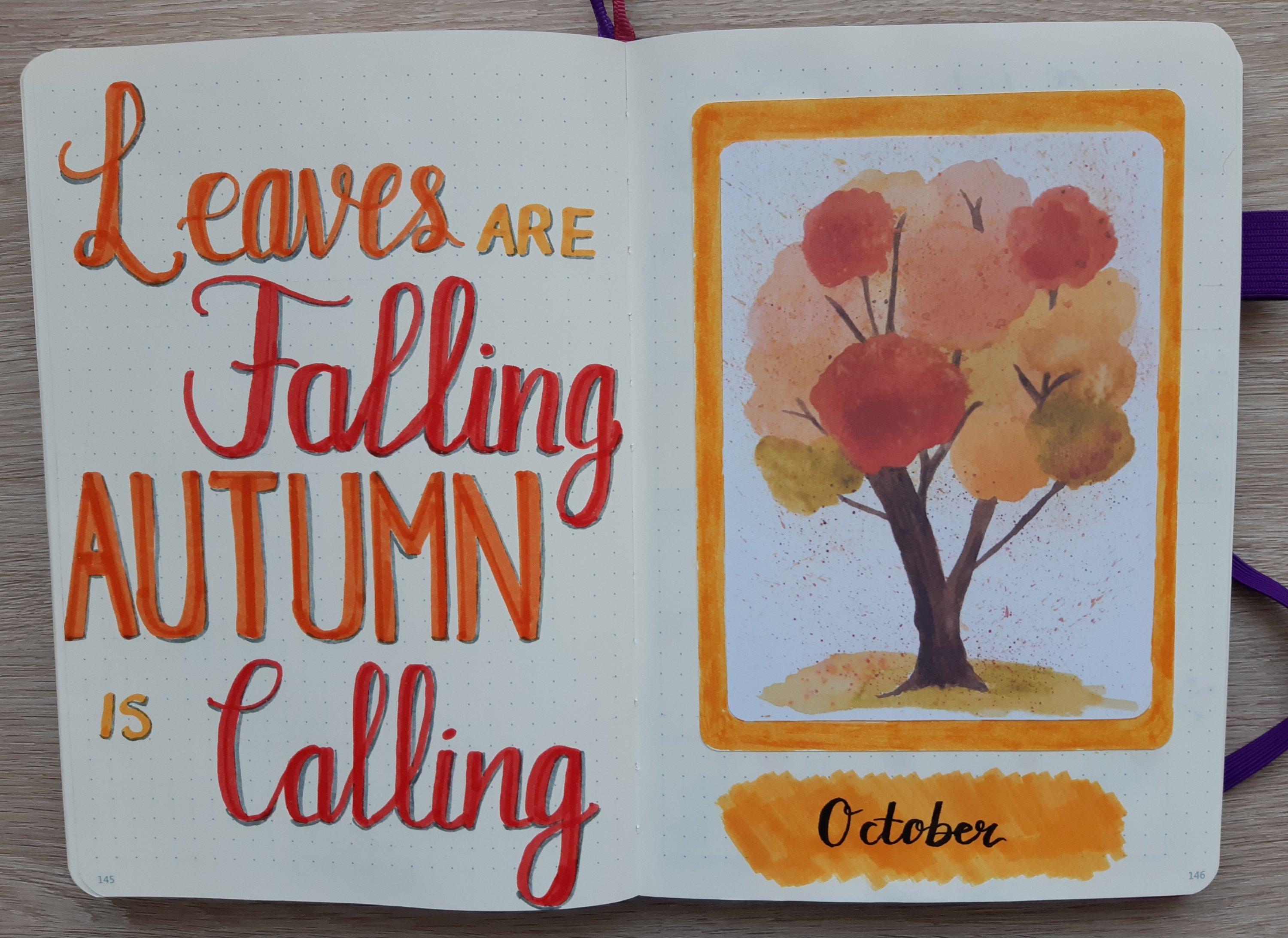
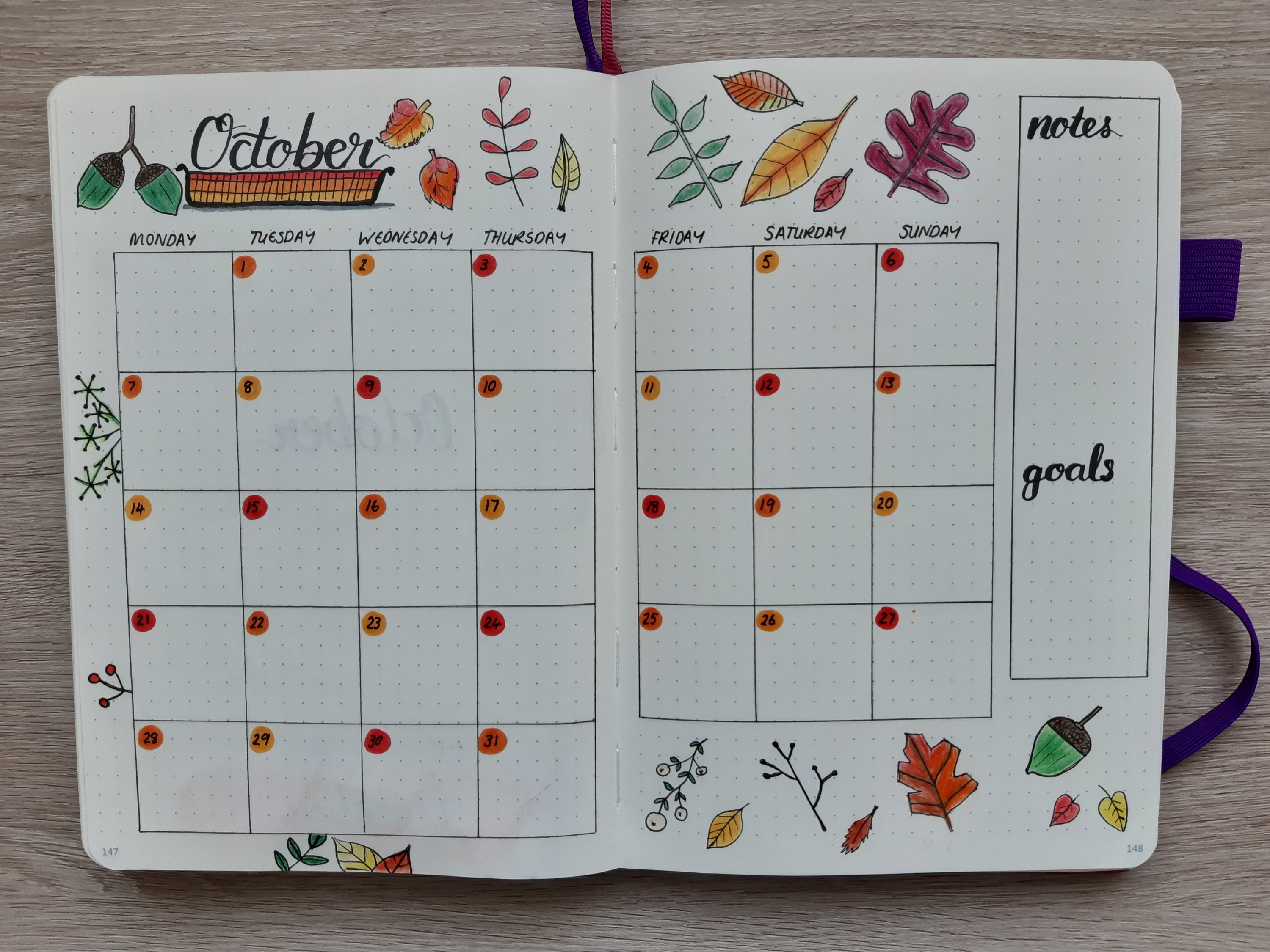
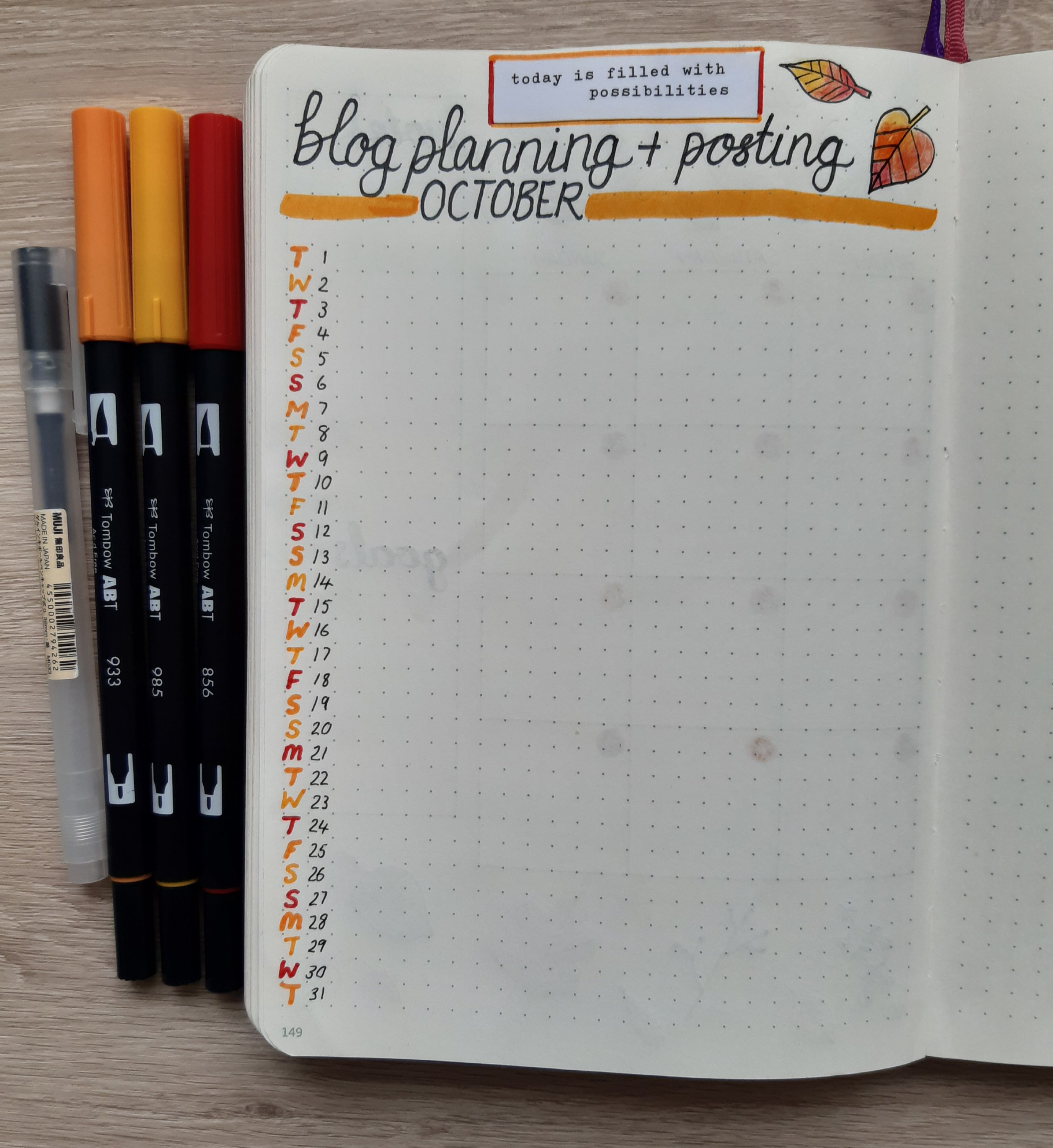
I decided to keep my spreads relatively simple and to a minimum this time as I found that I was tracking far too much in September and couldn’t keep up with it all and got quite overwhelmed. I’ve just done a quote page, a cover page which features a little watercolouring piece that I did, a double page monthly calendar and a planning page for my blog.
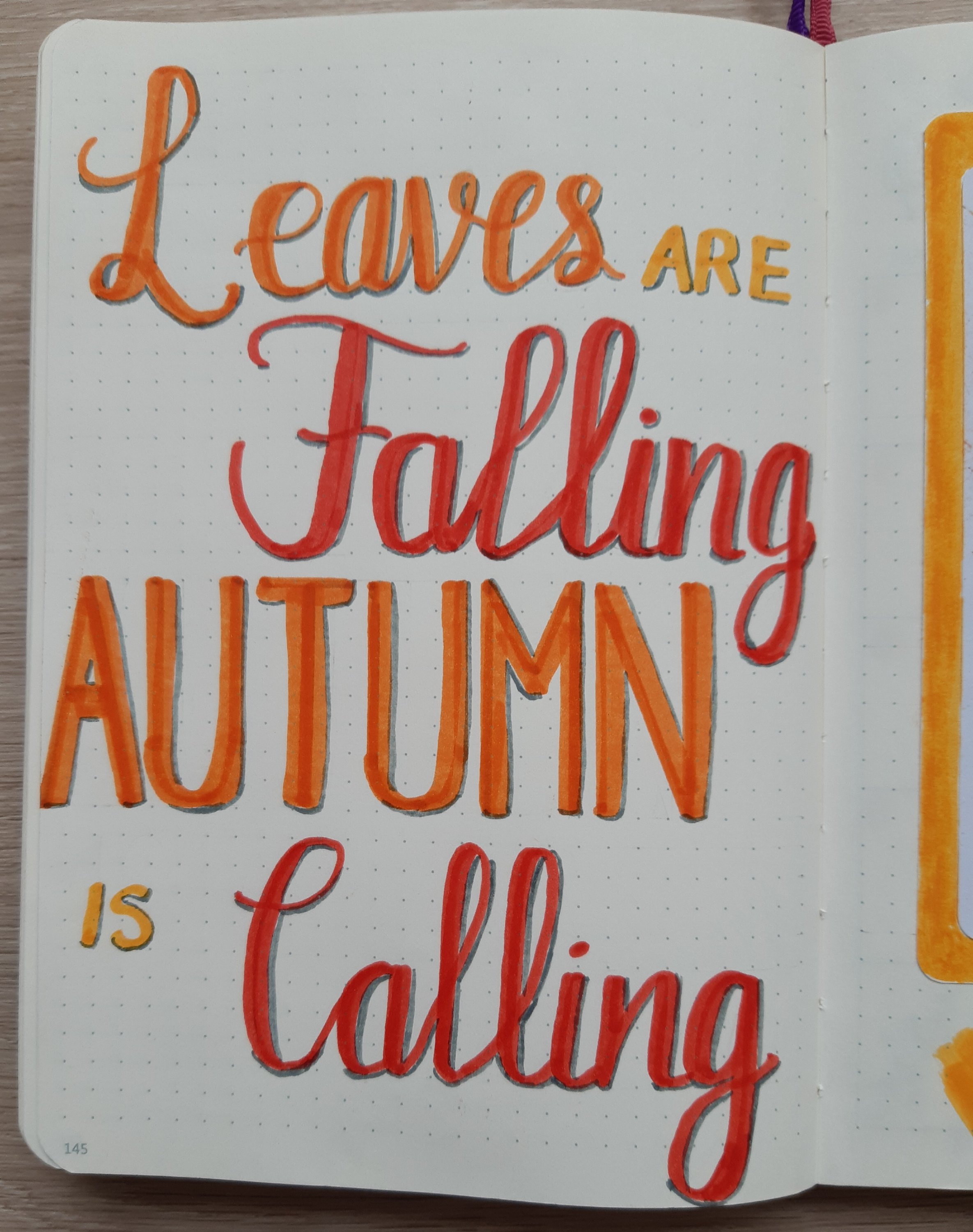
For my quote, I chose a simple Autumnal reference and as I was writing it, I had a vague feeling I’d used it before. I checked back in one of last year’s Bujo and there it was. I figured it didn’t matter and that I must really love it!
3 bright and juicy Crayola supertips plus a drop shadow using the grey tip of my Tombow dual brush pen
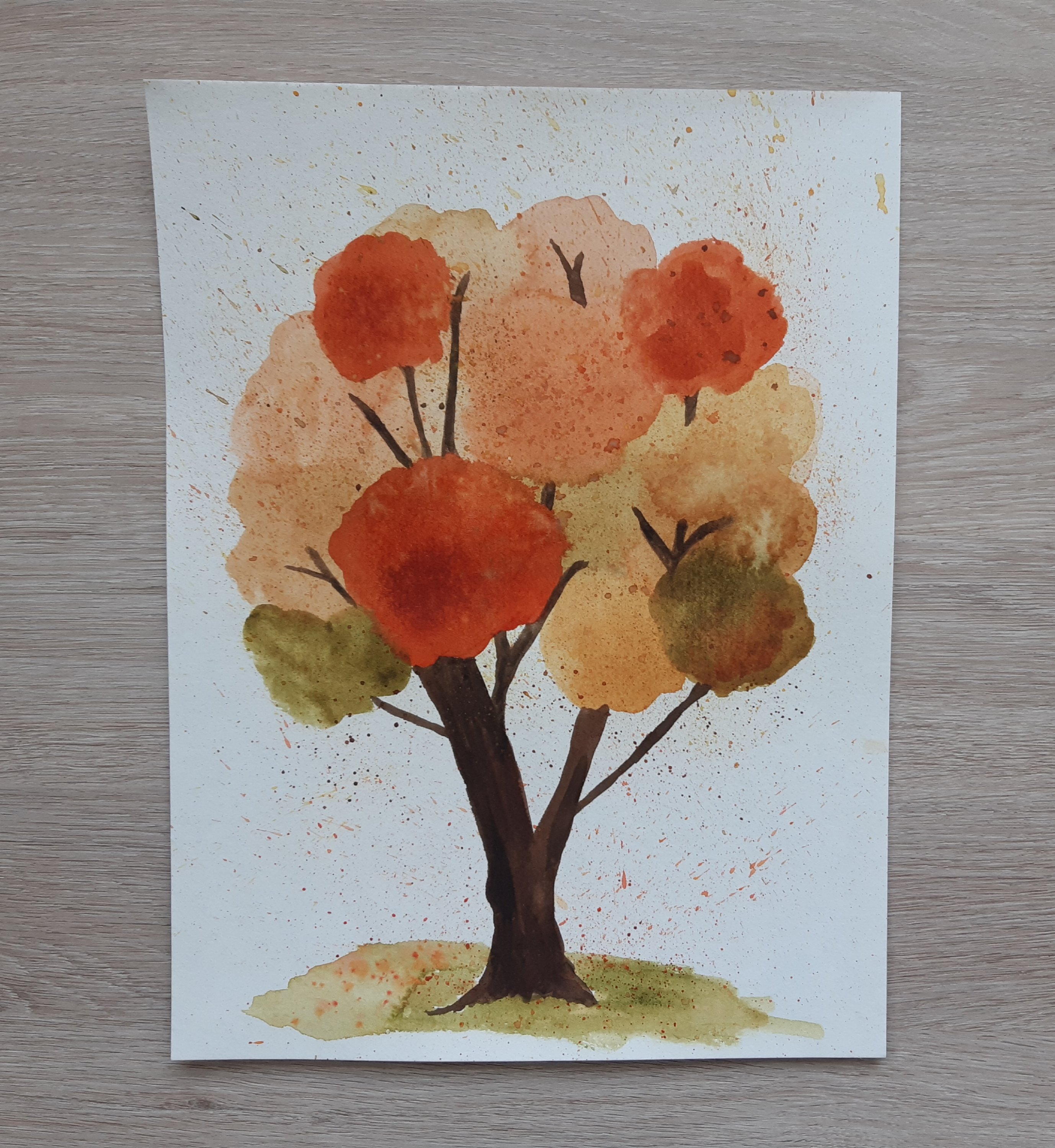
This watercolour was created using my new Daley Rowney Aquafine Travel Set. I followed an online tutorial and although the results don’t look the same as those done by the professional artist that created the step by step, I’m pleased with the results as I’m a total beginner. If you want to have a quick look at the tutorial, you can find it here.
Autumn tree produced on an A4 sheet from a watercolour pad
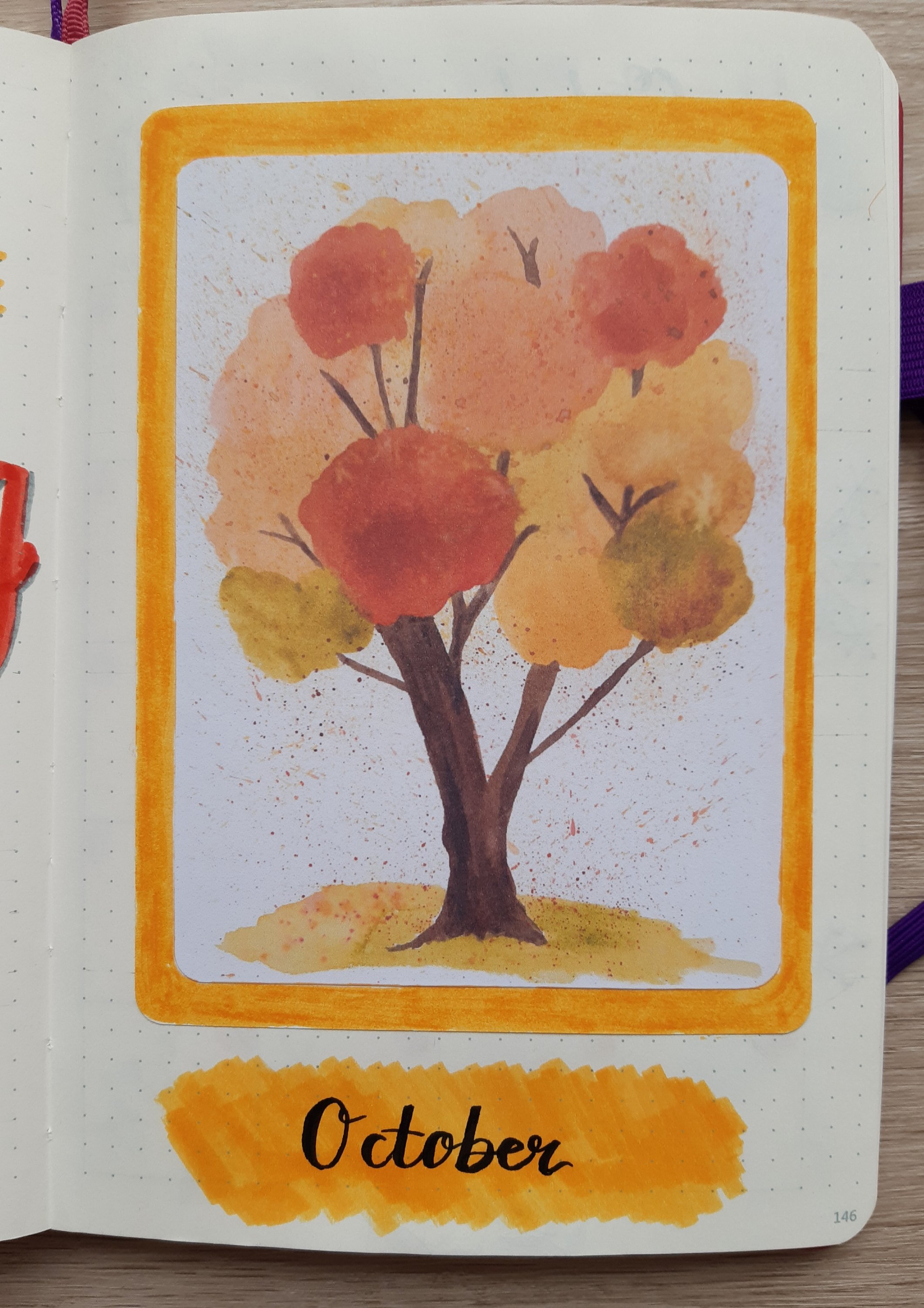
I then spent about two hours working out how to scan the image into a format that I could shrink to stick into my BuJo. After much perseverance (and a glass of wine which was most helpful ha ha!) I got it sorted. I ended up sticking a piece of paper over a mistake I made with my brush lettering but I think it looks okay now I’ve made it into a border for my picture.
October cover page
And here’s the two pages together. I think the bright colours look lovely. What do you think?
For my monthly calendar, I chose to decorate with some Autumn leaves and berries. I’m not wonderful at drawing but I think it looks okay. I used coloured pencils to shade them in but the only problem I seem to have it that when I write on the next few pages of my notebook the colour transfers. I’m not sure if there’s a solution to this, maybe I press on too hard? If anyone has any ideas, I would be grateful to hear them.
And finally, my blog planning page. On here I’m going to record days when I’m planning, reading researching as well as the titles of my actual posts.
I hope you’ve enjoyed looking at my spreads for October. I would love to hear about your chosen themes for the month and what you have planned for the Autumn. Let me know in the comments if you get the chance.
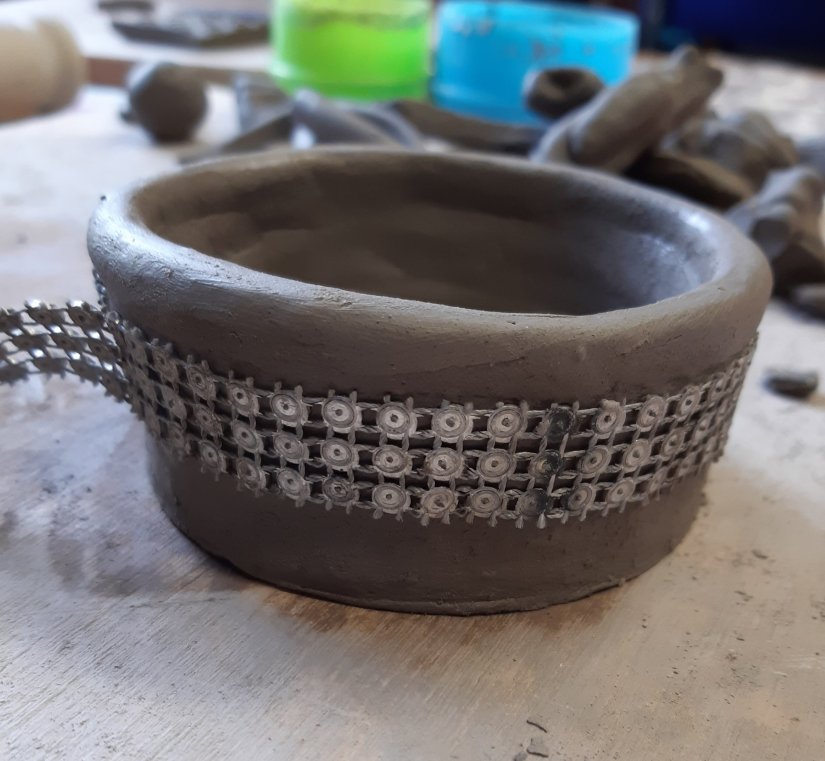
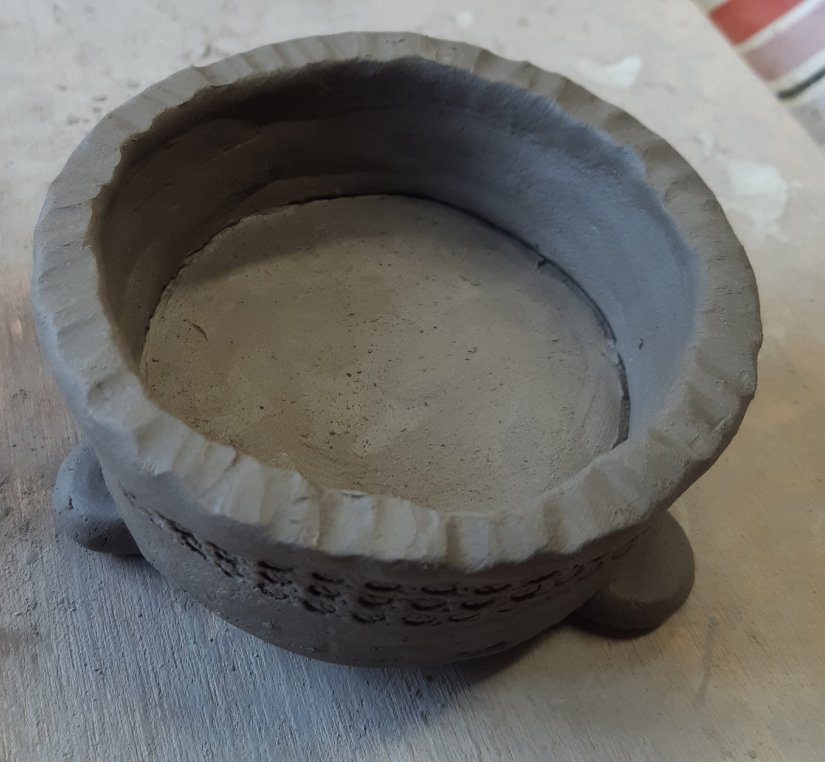
The finished pot, ready to be air dried and then fired in the kiln in about one week’s time
At the beginning of the month, I started a ceramics for beginners class. Working with clay is something I’ve been wanting to try for a while and I was so excited to find a fully funded course where I could develop the basic skills, have fun working on some exciting projects and meet some lovely people who enjoy getting creative.
Following on from week one which was our enrolment, paperwork and getting to know you session, we spent the second session learning the skills involved in creating a pinch pot, making spirals and using a press to form tiles. This week, we actually got to make a finished product that we could put in the kiln and then glaze. I decided to try my hand at making a small plant pot to put a potted succulent inside.
In order to make a nice and even pot, I decided to create a circular base and build up coils around the circumference. The previous week we’d learnt the score and slip technique which is used to join pieces of clay together. Click here to see a great tutorial I found online which shows this technique in action to make a simple clay pot.
The photograph below shows the circular piece which I created with a pastry cutter and the first rolled length of clay for the sides. After making these pieces, I then score lines around the edge of the base and along the thin roll of clay for my first layer. After the scoring, you dip your clay covered fingers in water and wet both pieces. The two pieces of clay are then pushed together. This creates a good join.
Scoring lines made using a plastic modelling tool
After making and adding each coil of clay, I blended them in to the base using my fingers to create smooth sides. This took me a long time but I was determined to get a good looking pot by the end of the three hour lesson!
Two coils of clay smoothed into the base to build up the sides
Four coils blended
By the time I’d made four thin sausages of clay of the same width, scored and slipped each and blended them, I’d had enough of that technique and decided it was time to have some fun with adding texture. used a jewelled strip, wrapped it around gently pressed it in. I repeated this several times until I was happy with the effect.
Attaching a jewelled strip around the outside
Finally, I created further texture around rim of the pot using a piece of metal dowel to make small dimples and added a trio of little feet (which I made prior to constructing the pot) to the design.
With added texture and some small feet added using the score and slip technique
And here’s my finished pot, ready to be left to air dry before going in the kiln. I’m quite pleased with the results as it’s the first pot I’ve ever made. I’m looking forward to glazing it in a few week’s time and just need to decide on a colour.
My finished pot!
Have you ever had a go at making anything with clay? If so, what did you make and did you enjoy it? I found it to be a wonderful and relaxing experience. I only used half of the clay that I was given for the session so the tutor wrapped some up in cling film for me to use at home. I’ve just ordered some modelling tools and I have plenty mark making craft materials in my stash to experiment with.
I hope you’ve enjoyed reading about my ceramic pot making experiences. Watch this space to see how it looks when it’s been glazed and re-fired. Hopefully I’ll be able to find the perfect potted succulent that fits inside.
Hi guys. Hope you’re all well. This may seem like a bit of a random post from me but the idea for it came to me yesterday after I had a bit of a stationery mishap. Basically, I attended my first class of beginner’s ceramics which I recently signed up for and after finishing the vast amount of paperwork required for the course funding, I accidentally drew a great big line of black ballpoint pen across the left boob area of my light mint green top! I let out a shriek of horror as I know that this kind of pen has a tendency to stain.
When I returned home, I got to work Googling stain removal solutions and I’m excited to report that the pen is now gone and my top is saved. So, I thought, why not do a blog post for the rest of you stationery addicts out there who may, in the future, need a little support with getting pen out of your best clothes.
Please note however, that these are ideas collected from the internet and that I can’t accept responsibility if they don’t work or if they cause further damage to your garments. My aim here is to share what’s worked for others in the hope that you might be able to rescue your much loved items in a similar way.
Ballpoint pen
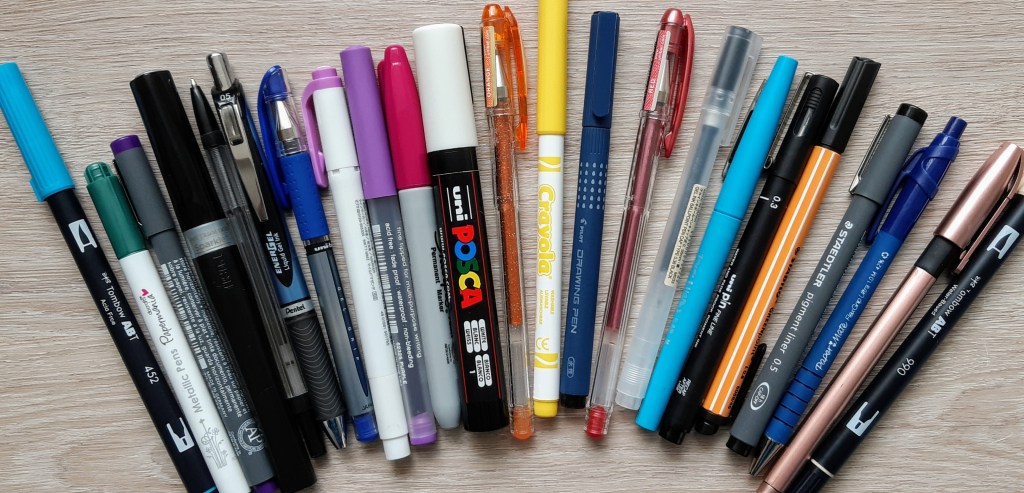
Stains made with this popular and usually cheap pen can be very difficult to remove. That’s why it’s best to tackle the offending mark as soon as possible. Start by determining the pen type as not all of those which have a ball contain the same type of ink. Traditional ballpoints like Bic and Papermate Flexgrip, use a fast drying oil-based ink which needs to be removed using some kind of solvent. Water-based inks, such as a Pentel roller ball, are fairly easy to remove. Whereas, gel pens are highly pigmented and, again tend to be pretty hard to get out of clothes and furnishings.
The most fabric friendly way to remove oil based ink, is using an alcohol based product. You can often find many of these in your home such as aerosol hairspray, rubbing alcohol, hand sanitiser or wipes. I used a little bottle of Body Shop hand gel which I keep in my handbag. Place the garment over an absorbent material such as a clean cloth, a number of paper towels or white napkins. Thoroughly saturate the area with the pen stain, wait around 5 minutes (probably panic about your precious garment if you’re anything like me) and then use a clean, dry cloth to blot out the stain (I used more paper towels here as this was all I had available to me). Repeat with more solvent and further areas of cloth if necessary. Wash the area with detergent or if you can see the stain has completely gone already, you can just launder as normal.
For water-based pens, if you tackle the mark straightaway, you can simply use soap and warm water to get the stain out with a gentle rub. If, however, the stain has been on the item for longer, and has set. You can use an old toothbrush to add a little friction to rub the stain out. I think this one would be useful on more hardwearing fabrics such as denim jeans.
Gel ink, according to manufacturers, if almost impossible to remove, but the best way to have a go at getting it out, is using normal detergent, stain removing gel (e.g. Vanish) or liquid hand soap. Add a small amount and rub the stain directly, rinsing with running water. Then try to blot out the rest of the ink between two piles of paper towels, white napkins or several clean clothes.
Felt tips and markers
Like the ballpoint pens, it’s important to establish what kind of ink you’re working with. If they’re washable, then the stain should come out with a standard wash but more highly pigmented and marker pens might benefit from the same alcohol based treatment which can be used for ballpoints. If the pen states that it contains permanent ink, the stain will be very difficult to get out but, according to a leading detergent specialist, it’s not completely impossible.
The trick is to treat permanent marker stains with products that can break down the oils and alcohols in the ink, exposing the colourants, and allowing you to treat the discolouration in much the same way you would any other stain – through washing! Alcohol is a solvent and is very effective and efficient at breaking down oils and other alcohols found in marker pens.
Persil.com/uk (for further info and a step by step click here)
Highlighter pens
According to my perusal of the Internet, you can try one of three methods. The first two involve using alcohol such as hand sanitiser or hairspray and the third involves using cows milk. As I’m aspiring to be vegan one day, I’ve transitioned to plant based milk and so I have no idea if this works and don’t have such stuff in my fridge but I’ve seen a variety of sites which recommend it. Apparently, you dip the stain in a bowl of the stuff and rub gently with your fingers, then rinse with plain water. Repeat if you still see a stain and then wash as normal. If anyone knows why milk works and if plant based does the job too I would love to hear from you in the comments as I’m a regular user or highlighters such as mildliners and often get covered in them with being a leftie!
Well, I think I’ve covered the main types of pen here but feel free to make further suggestions in the comments of other tricky pens or methods you’ve tried which have worked (or sob about the ones which didn’t!). Hope this post helps you and if not I’m really sorry! Remember, I can’t take responsibility if your favourite garment is wrecked I’m afraid.
Bye for now, Laura (a self confessed stationery addict) xx
I don’t know about you, but I love looking at inspirational images and spend many hours each week perusing Pinterest, Google Images and pretty pictures in magazines. I also love using glossy photographs to create my vision board for the year. You can see my board for 2019 which I shared in a previous post here.
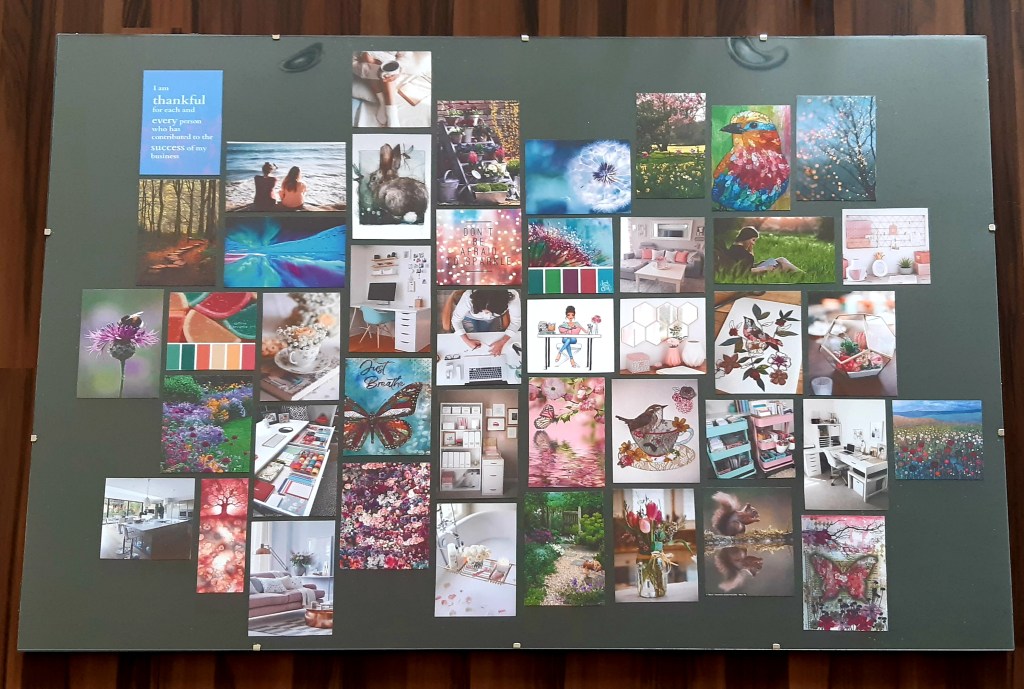
A while ago, I spent several days considering brand identity and core values for my Etsy business. My shop has been open for over two and a half years now but I wanted to make sure that my products reflected what my brand was all about. I worked on developing a list of adjectives which describe what I want to be at the core of my business. Then, alongside this, I chose a range of images which reflected my beliefs about what LJ Designs NE is all about. Below is a list of what I came up with (in no particular order of importance!) and a photo story of how I went about making my vision board some weeks later.
nature inspired
fun
fresh
creative
reflective
organised
delightful
peaceful
colourful
productive
playful
simple
compassionate
efficient
friendly
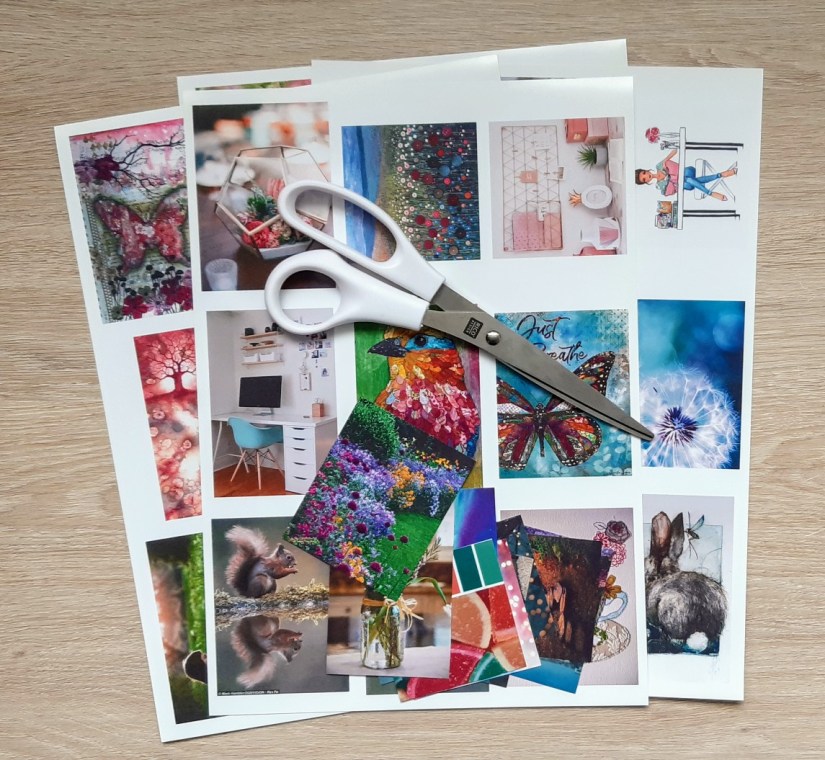
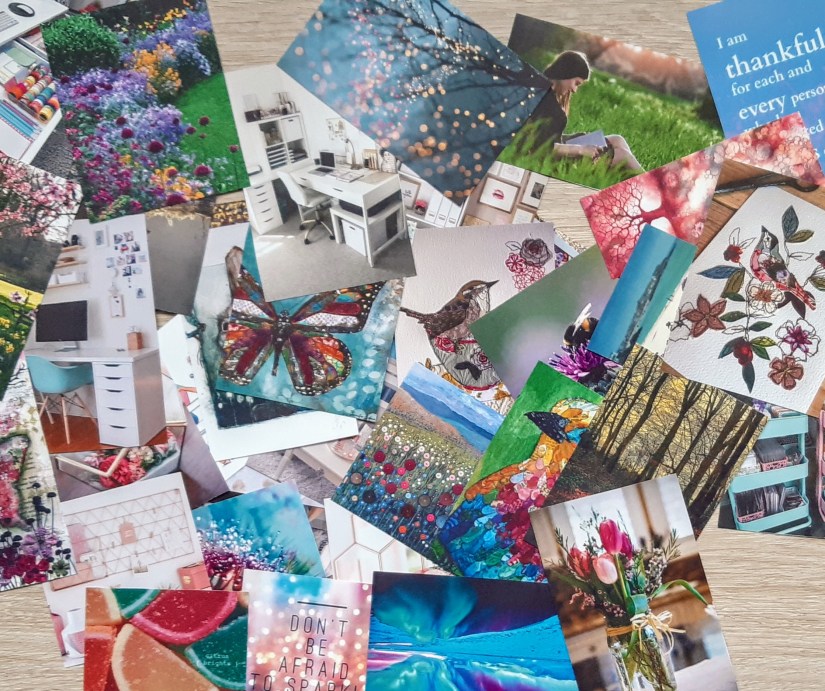
Over 40 images printed on photograph paper. Colour themes, ideas and inspirational messages included.
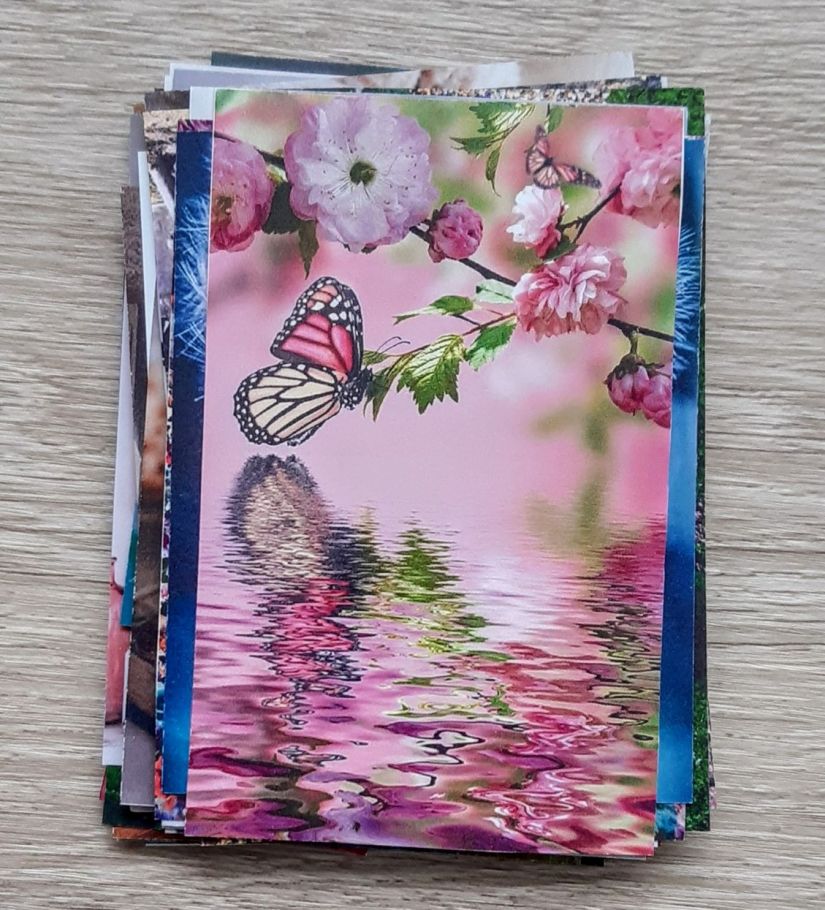
After spending a good while cutting the above out I had a very sore wrist and a big pile of gorgeous images.
When I’d finished cutting out all of my images, I laid them all out on the floor to see how much room they would need to be displayed. I then popped to The Range and bought an A1 piece of mounting board in a lovely charcoal grey colour and a large Perspex clip frame. I chose a Perspex frame as I’ve had issues with clip frames getting broken in the past and didn’t want a recurrence of this.
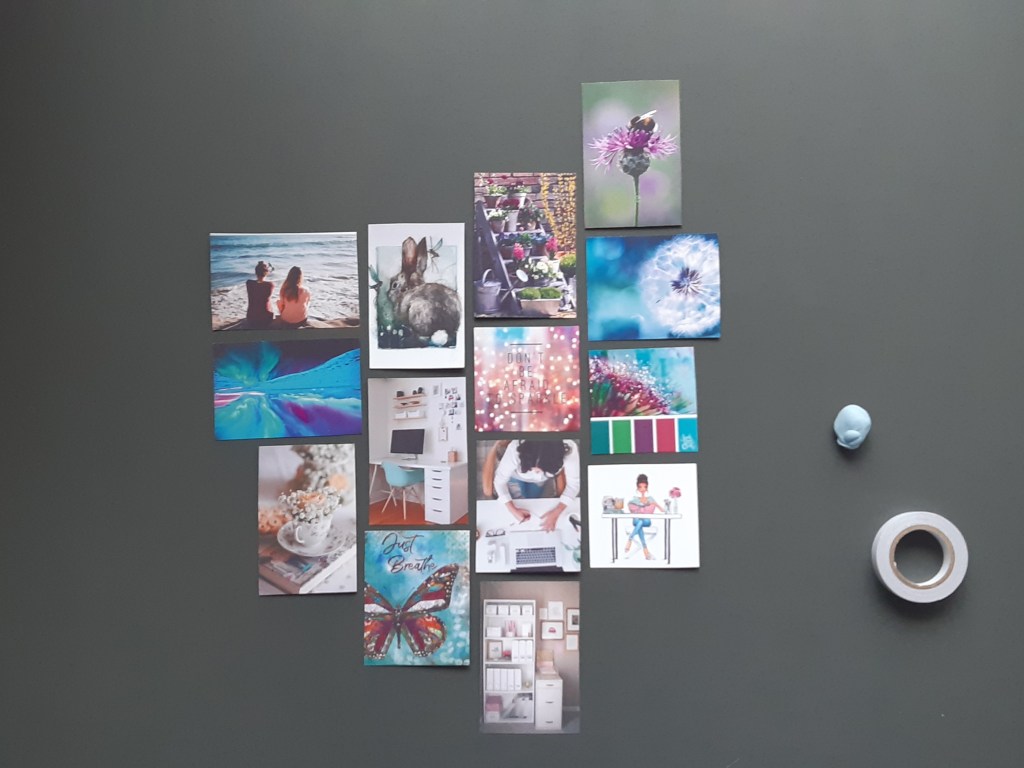
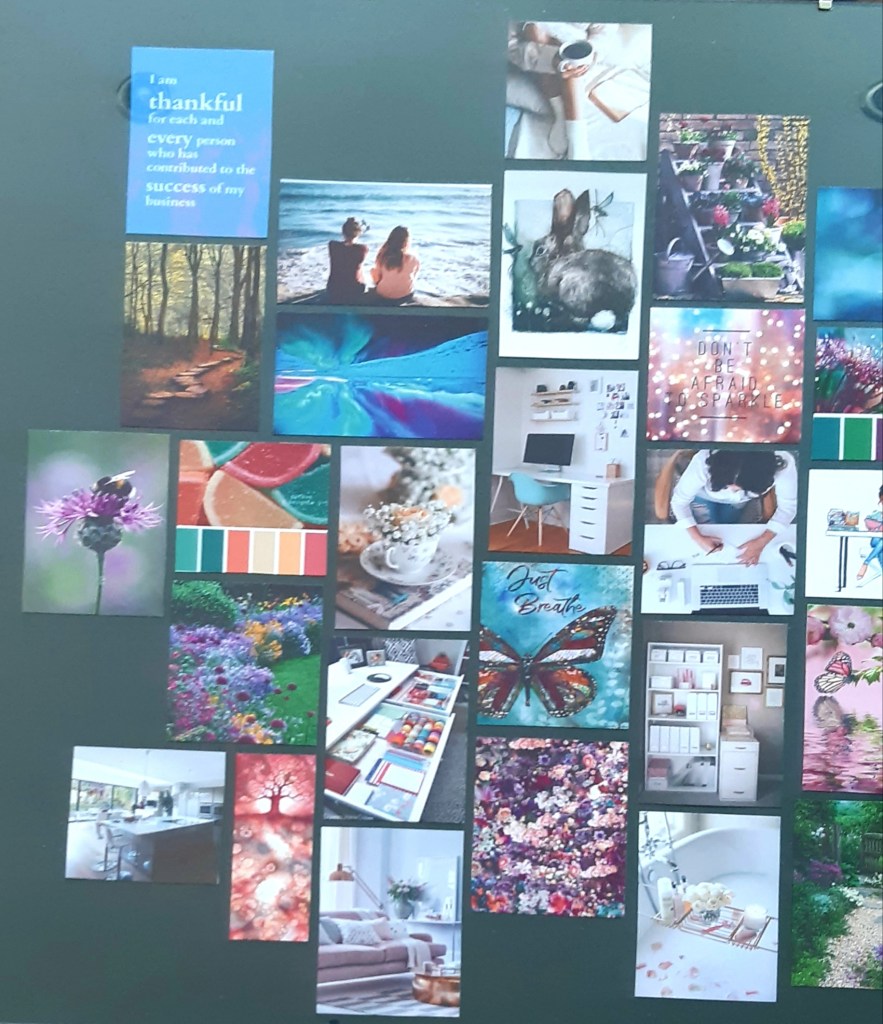
To ensure I was happy with the placement of the pics, I started by placing them onto the board with small pieces of Blu-Tak so I could play with the arrangement a little.
I did have the intention of using double sided tape to adhere the images permanently but in the end, I glued them on with Pritt Stick so that if I put them on a little wonky I could sort them out!
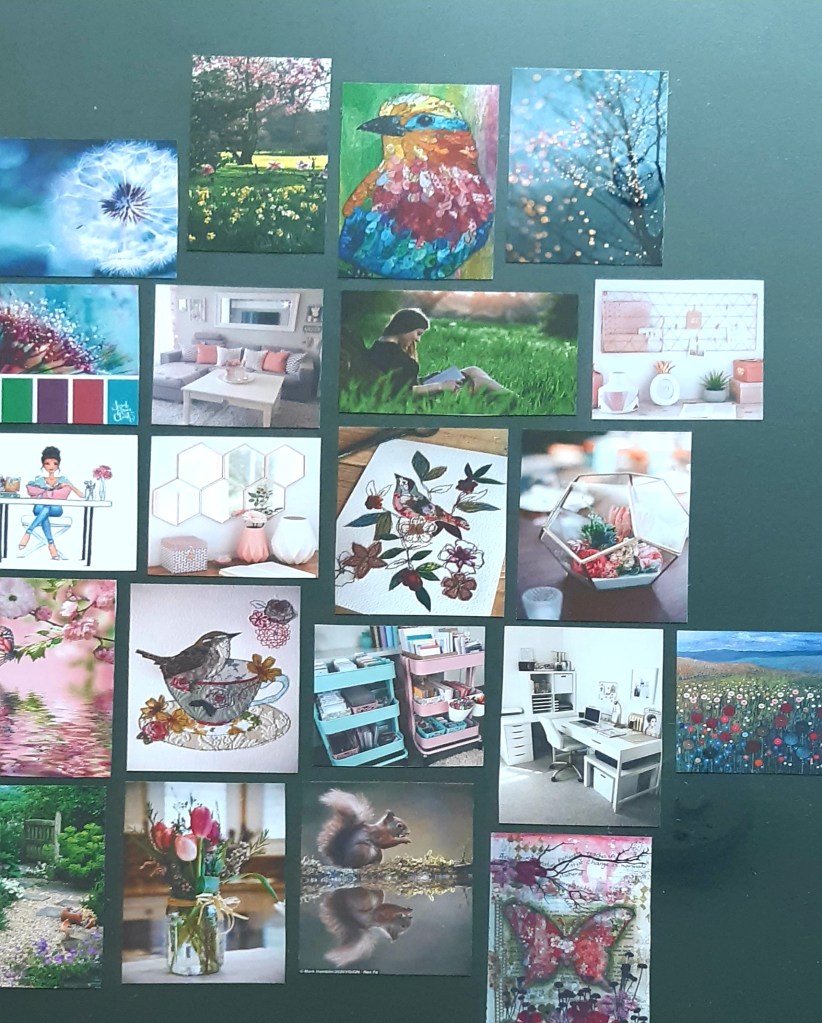
The finished board with all of the images glued on and the Perspex frame clipped in place.
I’m so pleased with how my brand vision board turned out and can’t wait to put it on display in my craft room / office. I hope you find it visually appealing too and agree that it reflects my key ideas about my little Etsy shop.
Have you ever tried a similar process for your handmade business? If not, I thoroughly recommend it. I had great fun and I now have a board full of beautiful pictures to remind me of what’s at the heart of my brand and to inspire me when I’m working in my craft room each day.
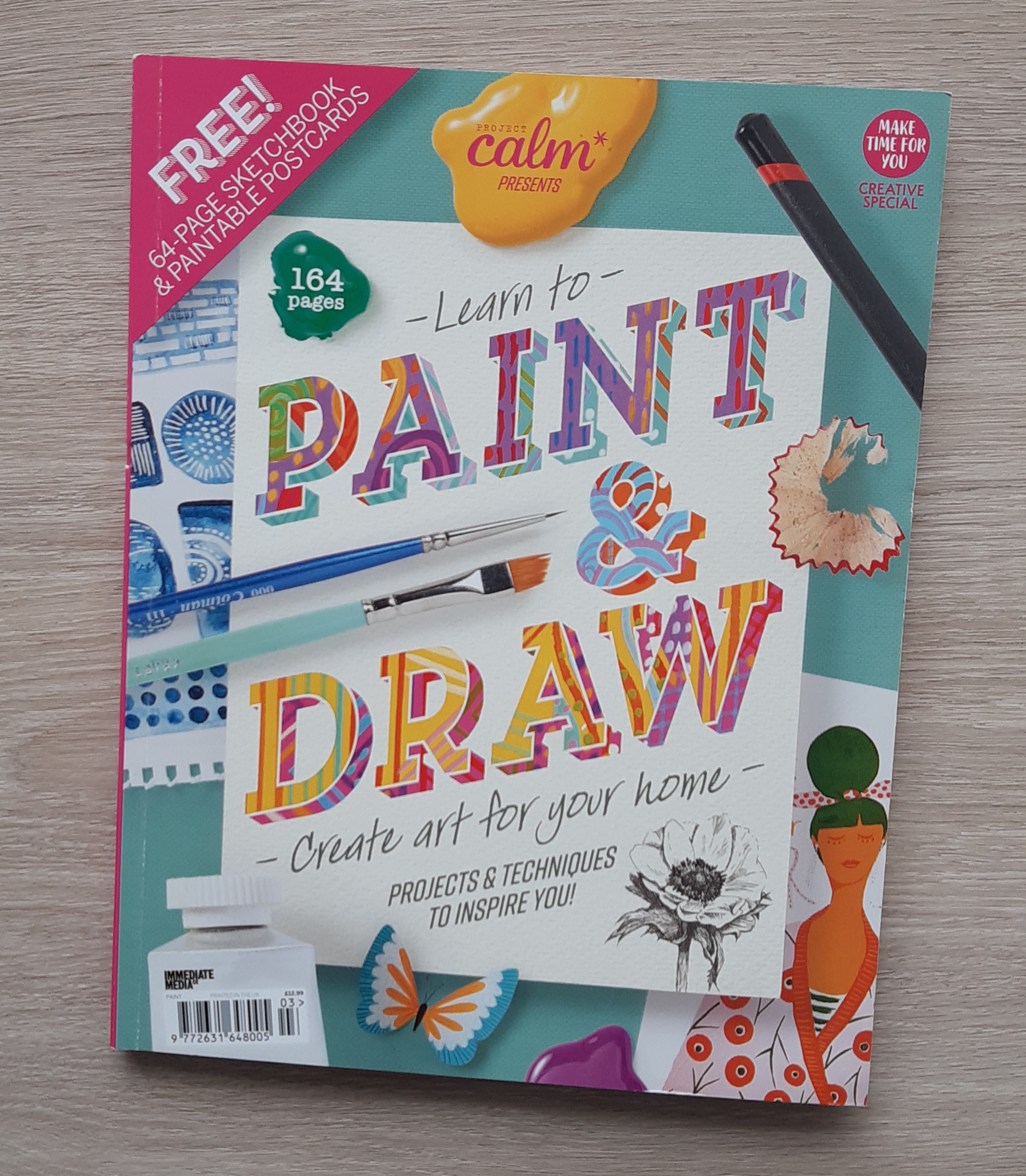
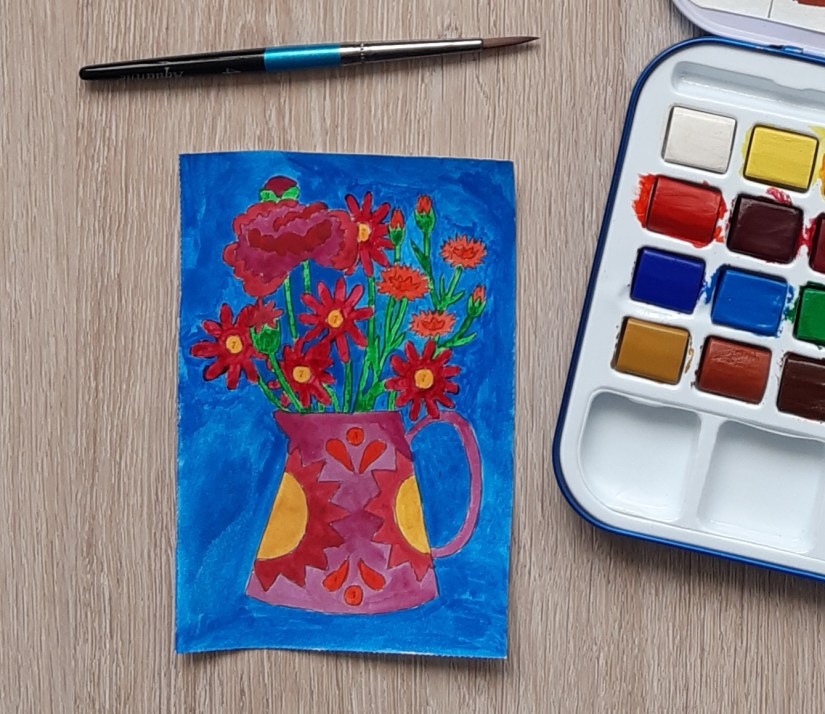
In my last blog post, I talked about my new Daler Rowley watercolours. Yesterday, I put them to good use on a simple painting project which I found in a magazine. The magazine, pictured below, is a creative special from the makers of Project Calm which includes ‘a carefully curated collection of wonderful creative projects for you to try at home using easy to find art supplies. Following a quick flick through the pages, I decided it looked like the perfect mag to provide inspiration and some easy projects to get me started with my watercolours and also some cheap Gouache paints that I picked up in TKMaxx a few weeks ago.
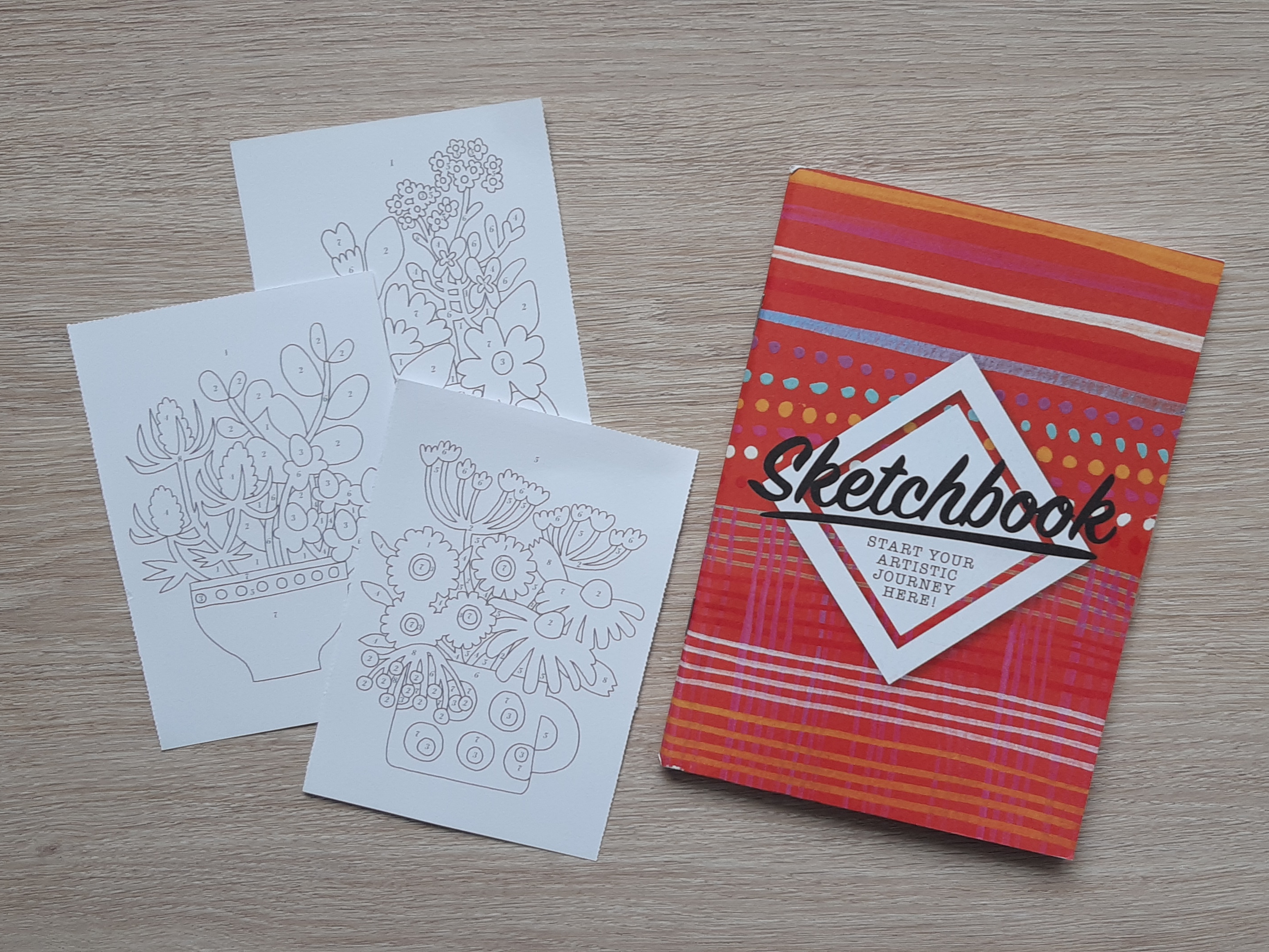
The magazine, which retails at £12.99 and can be purchased from Sainsburys and probably a host of other retailers, includes artists stories, information about useful art tools and supplies, a range of projects, plus a 64 page sketchbook and paintable postcards.
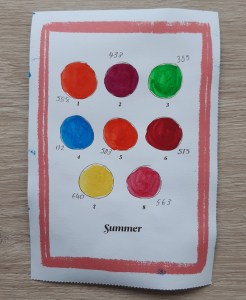
I decided to start with one of the postcards. The idea is you choose seasonal paint colours to fill a floral, paint by numbers, image. I decided to choose the summer one and therefore selected bright and intense colours for my design. On the reverse of the postcard, you add samples of your chosen colours and this becomes your palette.
My chosen colour palette
To be honest, this seemed like a good idea in theory, but in reality, you were unable to see the samples whilst painting on the front and you needed to carefully select the colours you chose for the paint by numbers system if you wanted a good looking image where the stems of the flowers were a green colour! I remedied the samples situation by taking a quick shot on my phone to refer to as I painted.
Although the results aren’t perfect, mainly because I could have done with a much tinier brush to keep within the lines, I did enjoy the process and found it very therapeutic. We all need some ‘me time’ and for me personally, nothing beats a little relaxing creative project.
I hope you enjoyed this quick post and it has inspired you to indulge in some creative me time or spend a few minutes doing something you find relaxing. On that note, I would love to hear about your favourite way to spend your ‘me time’ and why? Let me know in the comments.





 Keeping it creative