As Easter falls at the end of March this year, I decided to do an Easter theme for my bullet journal with some Spring elements. I made a list of words associated with both (decorated eggs, chicks, bunnies, tulips, daffodils etc.) and then searched for images on Design Space which I could use to decorate my spreads. I added lots of images to my canvas and used the sticker making function to create a set of kiss cut stickers on a transparent background. I hope you like my pages as much as I do.
Cover page
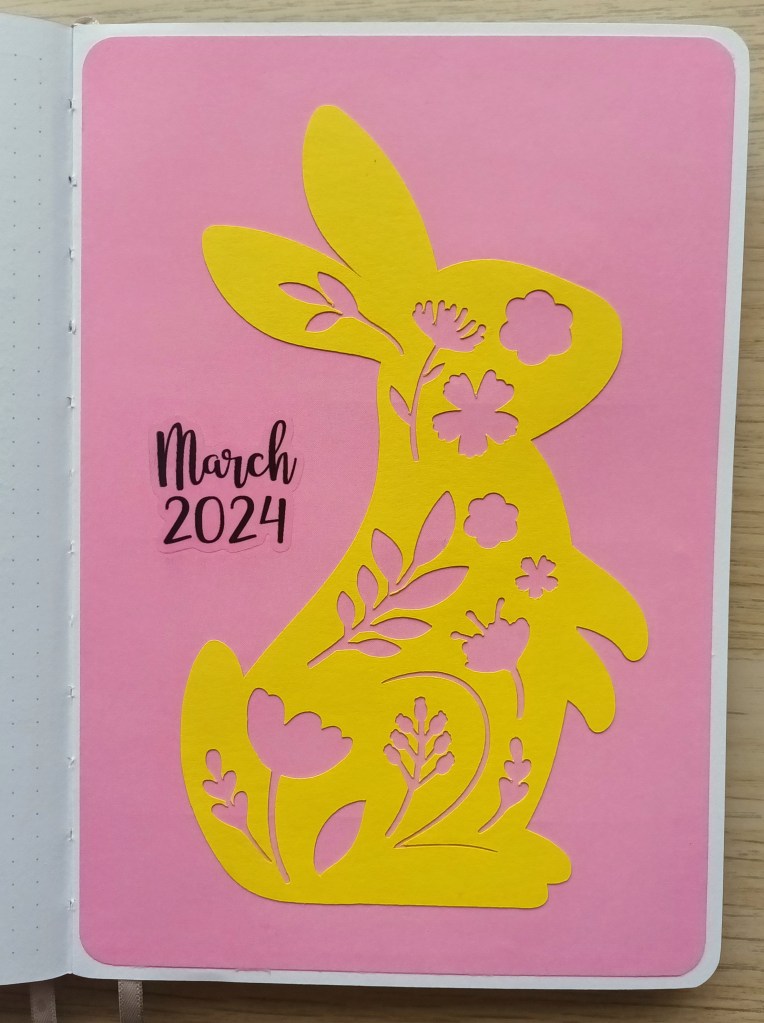
As I was searching Cricut Design Space for Easter bunnies to use as stickers, I found this cute cut file of a yellow rabbit with flowers and leaves cut from the body. I had some bright yellow cardstock which was perfect as it was relatively thin and wouldn’t add too much bulk in my BuJo. It took me four attempts to get it to work out well as it was quite delicate but I got there in the end! When I placed it on the page, I felt like something was missing so I experimented with placing different coloured papers behind the image and thought this pink colour created a nice contrast.
Photo credit: Laura Jones for Keeping It Creative
The calendar pages
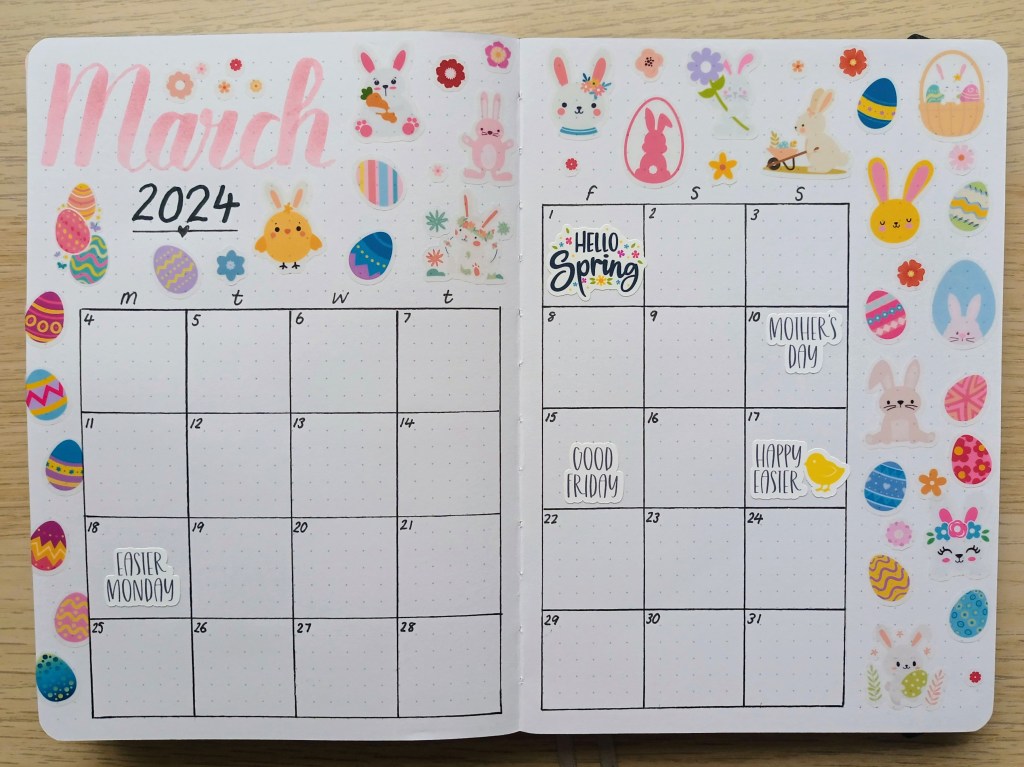
I had great fun making tons of stickers in Cricut Design Space but, unfortunately had lots of issues with the program printing a black line around each of the images. It was so frustrating and I ended up having to bin lots of transparent sticker papers which was costly and such a waste. I resorted to contacting Cricut about it who were very helpful but the problem hasn’t been fixed properly yet.
Anyway, I persevered and I love how the stickers and my pages turned out.
Photo credit: Laura Jones for Keeping It Creative
Finances pages
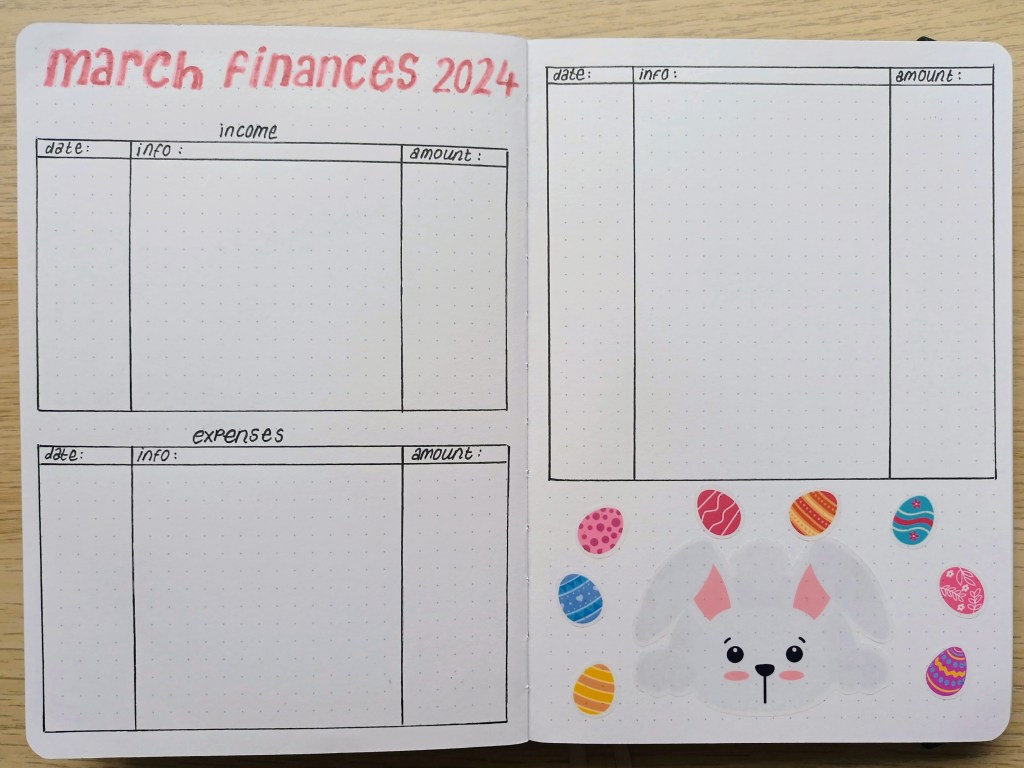
This is my usual income and expenditure record set up with a cute bit of decoration at the bottom. I’m enjoying using the transparent sticker paper but I have a feeling that Cricut are no longer making it as many of the branches of Hobbycraft are out of stock.
Photo credit: Laura Jones for Keeping It Creative
Weekly plans
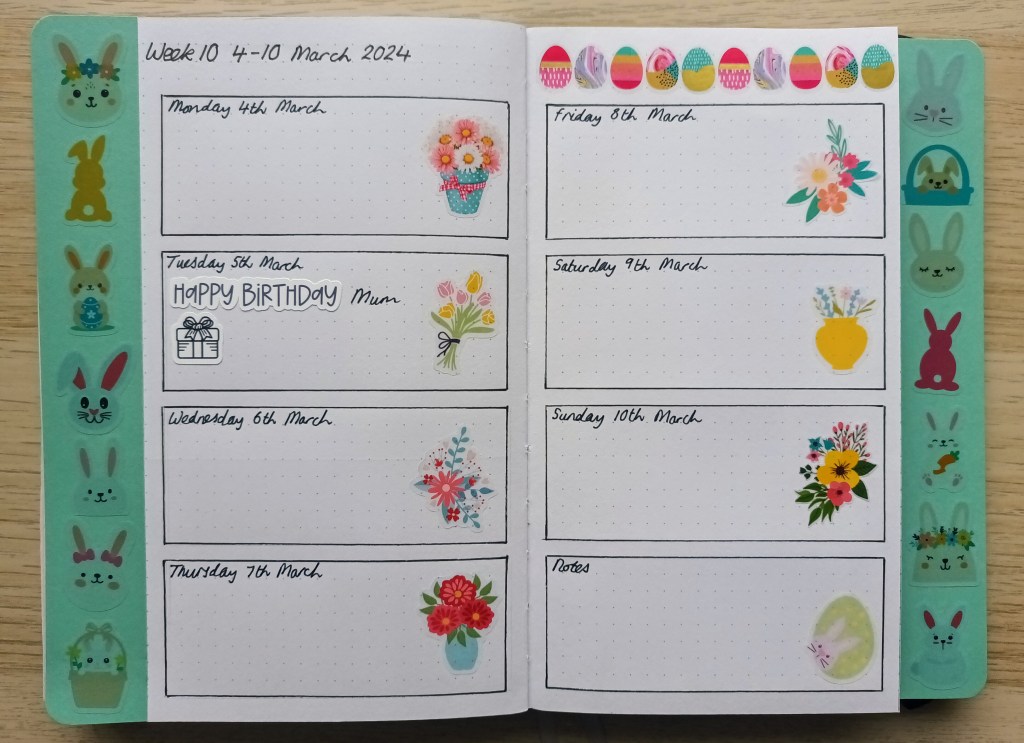
Again, I’ve used a simple Dutch Door set up for my weeklies this month. I couldn’t resist adding more stickers to the days though! The decorative eggs along the top are actually a roll of sticker tape from Hobbycraft. Some of them have gold foil on them but the camera hasn’t picked it up.
Photo credit: Laura Jones for Keeping It CreativePhoto credit: Laura Jones for Keeping It Creative
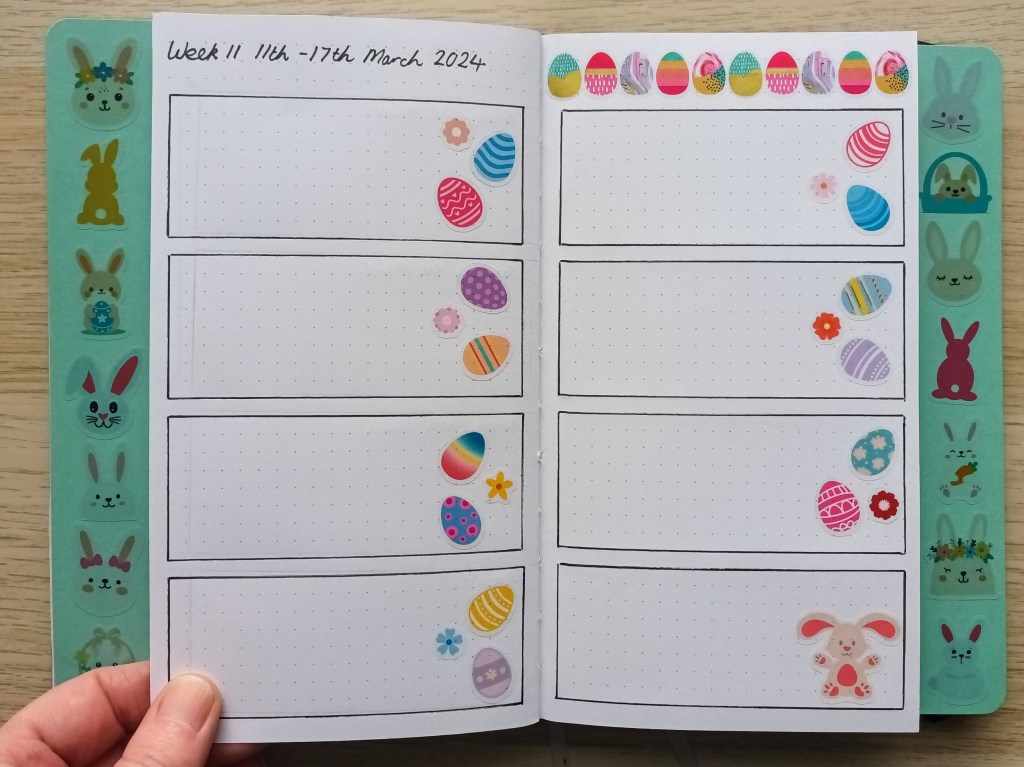
I haven’t finished setting up the last two weeklies but I have added the stickers and used Easter chicks for the third week (some real photograph style and others cartoon style) and Easter baskets and Spring blooms for the final week.
Weekly running task list
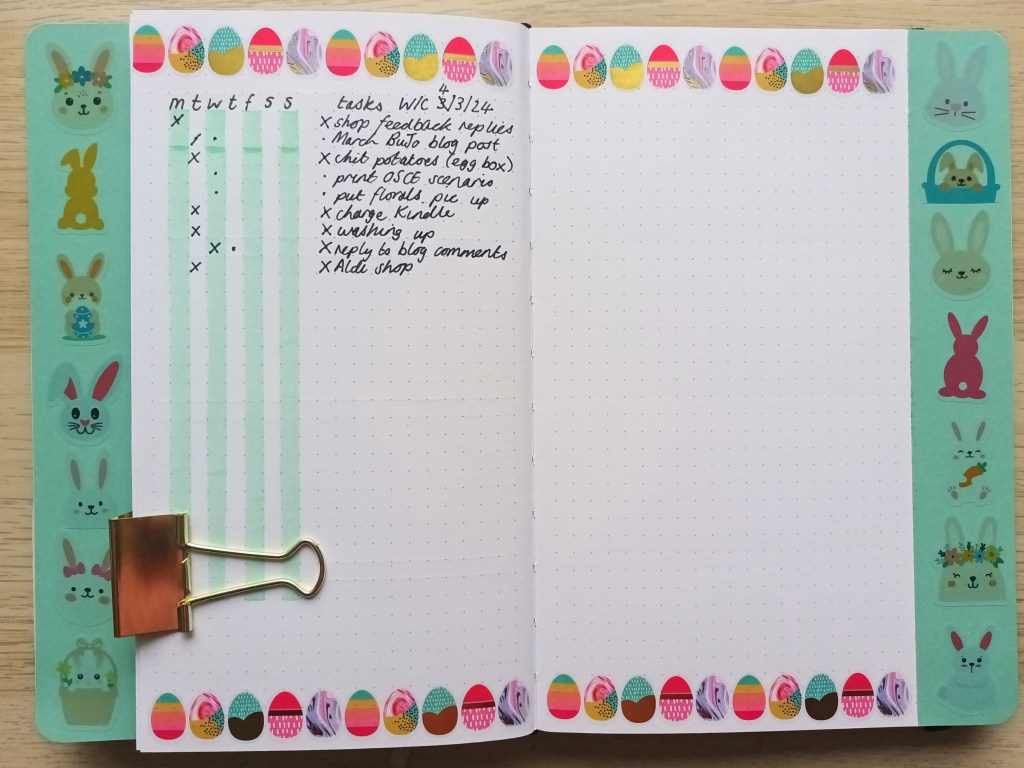
I’m not sure if I’ve shared my running task lists before but it something I use each week. I add to the list daily and assign tasks to a day of the week or multiple days for longer tasks. This month, I’ve put all of the weekly calendars together and the task lists afterwards but sometimes I’ll put them together. I use the two ribbon bookmarks to mark the pages for easy access.
Photo credit: Laura Jones for Keeping It Creative
Final words…
That’s all of my pages for this month and I’m super happy with how they turned out. I’ve just signed up for another free trial of Canva Pro so I can’t wait to make more stickers using images on there. Although Cricut Design Space has some lovely images, there are some even nicer ones on Canva Pro.
Wishing you a wonderful March filled with lots of lovely Springtime activities,
For Autumn 2023 and Winter 23/24, I have thoroughly enjoyed and benefitted from creating my own personalised bucket lists and adding my seasonal ideas to a two page spread in my bullet journal for inspiration and reference. For each of the seasons, I also handmade and stitched a pretty TN wide size notebook to go in my TN journal where I added photographs, text, a variety of stickers, ephemera and tip ins to record my achievements over the months. I’ve found the bucket lists a great way to plan in some interesting and exciting activities, set some goals and ensure my husband and I make the most of each season of the year. So, today, I’m sharing my bucket list for Spring 2024, in the hope that you will be inspired to create your own and live your life to the full.
What is a bucket list?
A bucket list is a number of items that a person would like to achieve, experience or bring into fruition over a given time frame. This could be over a lifetime, a year, or, as with mine, during a specific season. There are many benefits of creating and working towards things on your bucket list including:
Helping you to reflect on what is important to you as an individual and what you really want from life
Offers you a number of things to look forward to over the chosen time frame, increases your excitement levels
Providing you with a visual reminder and the focus and motivation you need to move towards your goals
Creating a sense of accomplishment
Pushes you out of your comfort zone which is really good for your personal growth
You can create one which is just for you, or you could make plans with your partner, a close friend or even sit down as a family to come up with some ideas together.
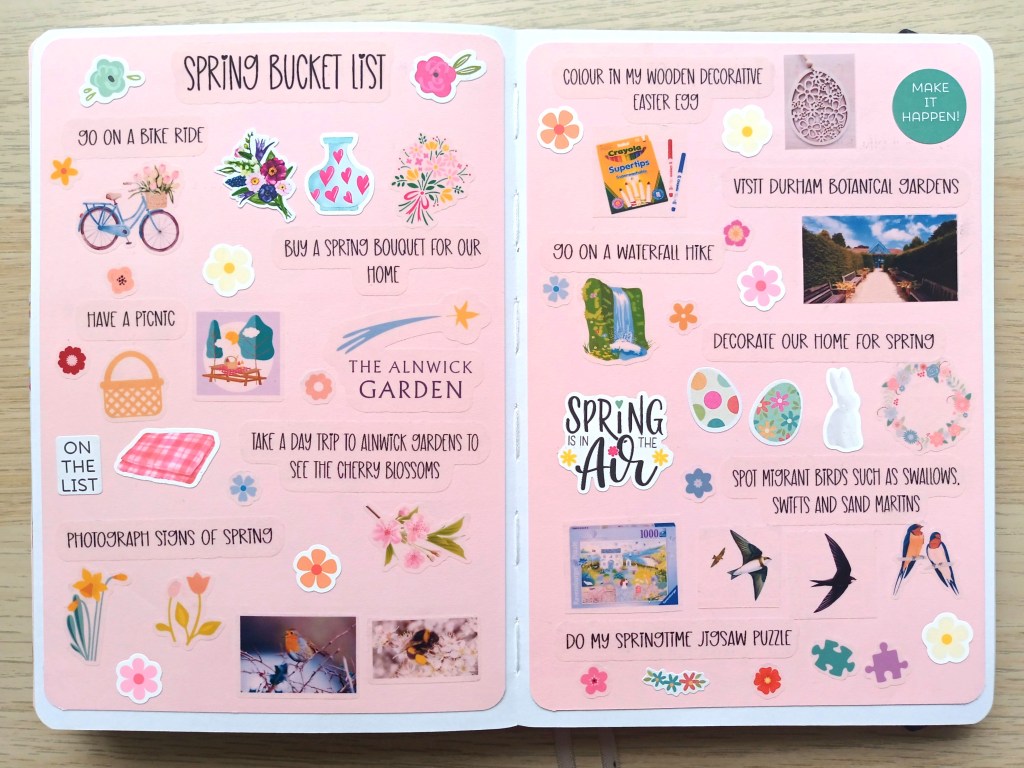
My Spring 2024 Bucket List
Here’s my bucket list for this season in my bullet journal. The words and images were all made into stickers using Cricut Design Space and I’m really pleased with how it turned out. I’ve included a little ceramic bunny I purchased, the wooden egg which I got in the Hobbycraft sale last year and the jigsaw I picked out which I can’t wait to get started with. I’m yet to make the handstitched notebook but I have lots of floral papers which will be suitable for the cover.
Photo credit: Laura Jones for Keeping It Creative
So, how do I get started with my Spring seasonal bucket list?
There’s plenty of seasonal bucket list inspiration online but I like to spend some time in quiet contemplation first. That way, what I add to my list is all about what I want rather than what others believe would make a good Springtime.
Consider your core values and what really matters– Spend some time thinking about what is most important to you in your life or what you wish to focus on more. You might want more fun and adventure, better balance between work, rest and play, opportunities to develop your creativity, new experiences or the chance to learn a new skill. You might want to experiment more in the kitchen, spend lots of time in nature or plan some different day trips to places in your local area. Living in alignment with your personal values is key to improved psychological wellbeing which includes your general happiness levels and outlook.
Think about the particular season you are making plans for– consider the weather associated with Springtime and any particular holidays or events which take place during the season. So, for example, in Spring, the temperature is starting to rise during the day but the evenings are still pretty cool. In Britain, the weather can be calm and dry, but, showers are also pretty common and it can often be a bit breezy. Buds and blossom begin to appear and early blooms such as snowdrops, crocuses, iris and daffodils begin to pop up in the flower beds. Spring is also the time for observing and listening to wildlife too. Bumblebees and butterflies start to make an appearance and hibernating animals such as bats and hedgehogs can be seen from dusk into the night. You might find frogspawn in ponds and watch tiny froglets appear in a matter of weeks. Birds are noisier and livelier as they pair off and start to nest and spring visitors such as swifts, swallows and house martins begin to arrive.
Mother’s Day and Easter both fall in the Springtime and there are, of course, a few Bank Holidays to look forward to. And if you want to find out about events specific to your town or city this website is a great source of information.
Write down every idea that comes to mind – Make a list of potential ideas, big and small, inexpensive and more costly, time consuming and quick. This could include a visit to Pinterest and other sites to look at bucket list ideas and inspirational images.
Refine your list – Having written a long list, it’s time to decide which items are the best fit for your values and priorities. Try to choose some activities which you enjoy each year and are somewhat traditional, but also make sure you include some which are completely new and will push you out of your comfort zone.
Choose a place to store your list – Having a finalised record of your bucket list is important if you want your aspirations to become a reality. Depending on your personal preferences, you might choose to put your list in your planner or journal or have a digital document in Notion of Microsoft Word. There’s even a website and online community dedicated to bucket lists! And, if you relish every opportunity to get creative, like I do, you can make a physical copy of your list with fancy lettering, motivational phrases, sketches, stickers and inspirational images. You might even find you’re excited to share it with your friends and family too.
Remember things can change – Your finished bucket list is a set of items that you hope to experience this Spring but, it’s not a list of commitments or things that you must do or achieve over the time period. You may find that priorities or circumstances change and that some of the items become less important or need to be put on hold for another year. You might also learn of some new opportunities as the season progresses which you want to add to your list or replace an item with.
Previous Bucket Lists
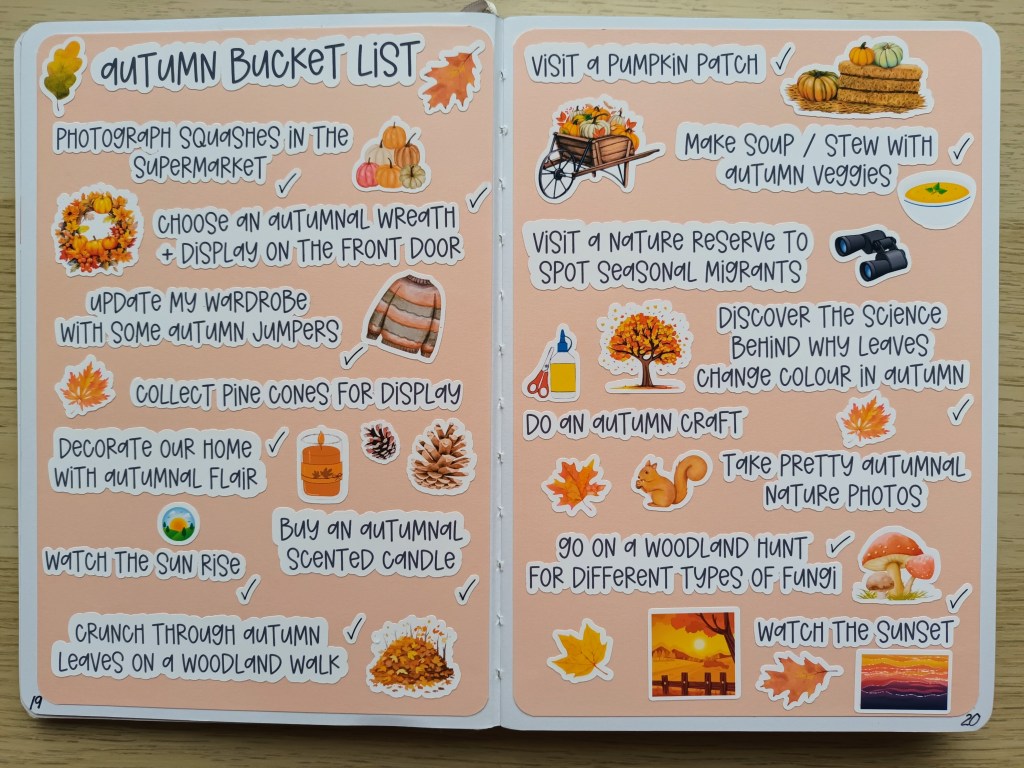
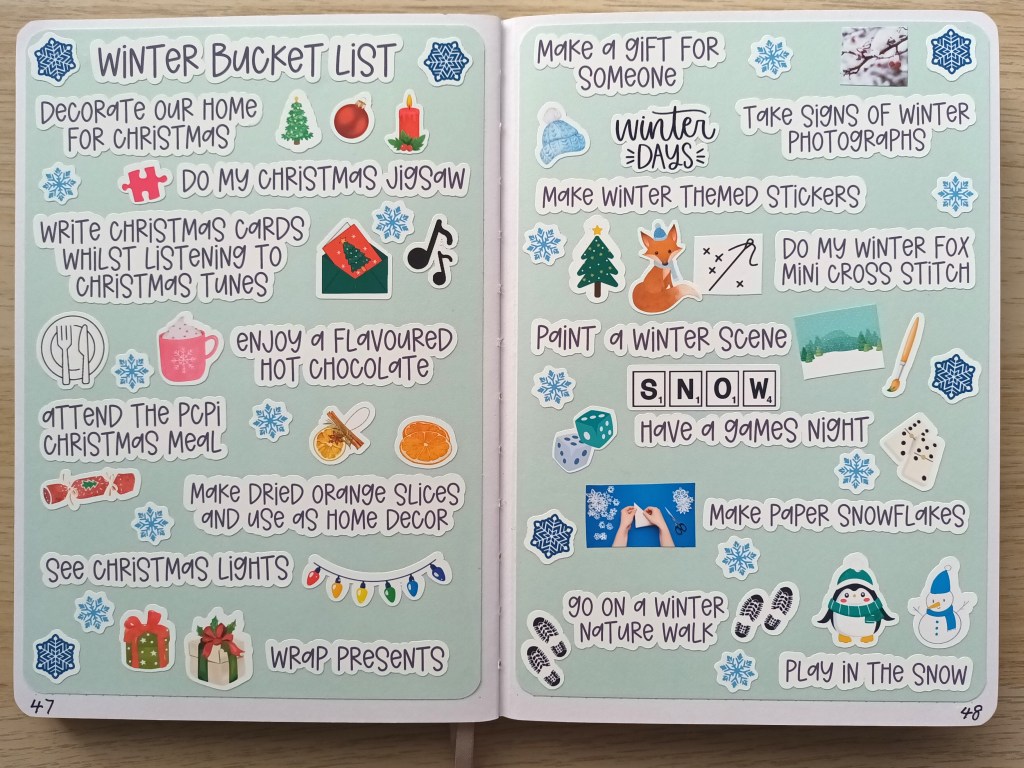
I think I’ve previously shared my Autumn and Winter bucket lists but thought readers might like to see them again for examples of the kinds of thing you could add and how you might decorate a spread in your notebook or bullet journal.
I achieved everything on my Autumn one but didn’t get to play in the snow over the Winter time as it was mostly wet and often quite mild. I still included all of the items in my Traveler’s Notebook journal. but I wrote a few lines about the weather and the impact it had on the season.
Photo credit: Laura Jones for Keeping It CreativePhoto credit: Laura Jones for Keeping It Creative
Final words…
Creating a bucket list for the season is a wonderful way to plan in some interesting, fun and different activities for the coming months. I also enjoyed making stickers to go with the items on my list but if you prefer, you could have a go at drawing and colouring in some little pictures instead.
Let me know a couple of items that you want to add to your list for Spring 2024. I’m looking forward to hearing your ideas and hope you thoroughly enjoy creating some new memories.
This morning, I’ve been doing a little bit of work on my general blog pages (about me page, FAQs etc.) to check that they’re up to date. When reading my bio on my home page, I noticed that it said that I share my home with my husband and my little hamster Millie. Unfortunately, hamsters only live for up to one to two years of age and she passed away several months ago now. Both of us were upset at our loss and it was sad to see her decline over the last few weeks of her life. To us, she was not just ‘our hamster’, she was a much loved member of the family, and her funny antics and personality provided us with so much joy. Today, I want to share some tips for coping with pet loss, because, whether your pet was small or large, they’re sure to have left a big hole in your life and much sadness. I also want to discuss some ways in which you can support family members or friends who have experienced a recent loss.
Tips for coping when your pet dies
Accept your emotions, feelings and thoughts without judgement
Following your loss, all kinds of strong emotions and feelings may come up. For example, at different times, you might experience sadness, anxiety, disbelief, shock, anger, guilt and regret. You could also find that your thoughts are completely preoccupied with your loss, leaving you unable to think of anything else. Whatever you experience, try to simply be aware of the different emotions, feelings and thoughts as they come and go, accepting them as a normal part of the grieving process. Remember, as well, to be compassionate and kind to yourself in a way that you would be towards a loved one who was experiencing such as loss.
Surround yourself with supportive friends and family
As you come to terms with your loss, it’s good to seek out friends and family members who you know will be supportive, rather than diminishing how you are feeling. This could include someone who has lost a pet in the past or has a cherished pet (or pets) of their own. You might also turn to individuals who are good listeners and often have the ability to make you feel better with their words or gestures.
On the other hand, some people will struggle to understand your intense feelings of sadness and may not offer the empathy you need or could even seem dismissive of the situation. Rather than getting angry, frustrated or upset with them, try to accept that they just don’t get it, brush them off, and find others, possibly outside of your social circle, who do recognise your suffering.
Embrace your memories
Talk and think about fond memories of your pet with family members and understanding friends. Look back over photographs and videos of fun times and reminisce over your own and shared experiences. And if difficult emotions arise, just accept them and know that it’s okay to be upset.
We have a cute video of Millie playing in her digging tower where we are waiting in anticipation of her emerging out of the bottom covered in wood-shavings. We never tire of watching her appear, and the video even has audio of me encouraging her to dig her way out! We also have photos of many of our hamsters when they were little babies and some moments where they’re enjoying a snack or exploring. Most of them are a little on the blurry side as they very rarely stay still but they’re still lovely reminders of our furry friends throughout the years and we have treasured memories of each and every one of them.
Try seeking out online or in person support
There are a range of support groups available online and this includes websites specifically dedicated to pet loss such as the Blue Cross organisation which has a Facebook community and trained volunteers you can speak with. You can also seek the help of a therapist who can offer counselling and coping strategies.
I’ve been a part of the ‘hamsters’ group on Facebook for many years now. It has over 6K members and there’s always someone on there to offer a kind word following the loss of your furry friend or when you need some emotional support regarding difficult decisions with regard to ailing hamsters.
Practice self-care as you mourn your loss
Although it might be difficult, try to look after yourself as best you can during your period of mourning. This can include eating a balanced diet, getting some exercise each day, trying to ensure you get a good night’s sleep, keeping up with basic hygiene and even pampering yourself a little such as with a massage, manicure, bubble bath or a new haircut.
Try journalling
Journalling about your pet and your loss can be a great way to explore how you are feeling and is also a lovely way to help you remember how unique and special they were. You could do some free writing to explore your thoughts but, if you’re unsure what to write, this website has some great journalling prompts to choose from.
Don’t rush to replace your pet
Although it might be tempting to get another pet straight away, it is usually better to mourn your old pet first and wait until you are emotionally ready to welcome a new animal into your home. There’s no right time to get a new pet, but experts suggest that you should wait until you have worked through your grief adequately enough to be able to look forward to a new addition rather than still be in the process of deeply mourning your loss.
Ways to support someone who has recently lost their pet
Send a sorry for your loss card to let them know that you care and are thinking about them.
Be a good listener when they talk about their feelings, emotions and ways in which their loss is affecting them. Think about supportive things you might say in reply – maybe that you were sorry to hear about x, or that your here for them if they want to talk. Also, knowing what not to say is just as important. Phrases such as ‘he was old anyway’, ‘she’s in a better place now’ or ‘you can get another one’ might be well meaning but they’re also dismissive at the same time.
Let them know that it’s normal to be upset and it is okay to cry, feel sad or even become lonely or a little depressed. It’s important to allow time to grieve and heal – and it takes as long as it takes.
Remind them to be self-compassionate and encourage them to look after their basic needs. You could also offer support with this such as getting some shopping in for them, making a nutritious meal to take around or doing some errands. Ask them if there’s anything you can do and make suggestions so that they know that the offer off help isn’t just something to say.
Check in with them regularly after your initial conversation. Text or phone them to ask them how they are getting on and if they need anything.
Help them to seek out further support by looking into dedicated websites for pet loss or by finding leaflets or books on the topic. Some resources are specifically aimed at particular pet owners, for example The Kennel Club offers advice on coping with losing your dog.
Final words…
If you have found and are reading today’s blog post because your pet has recently died, I am so very sorry for your loss. Losing a beloved pet can be a very difficult time as they are very much a part of the family. I hope you find the above suggestions useful and they help you to cope with your grief. Remember that, if needed, there are therapists available who are trained to support people through any type of grief, including pet loss, and they will help you talk through your feelings, normalise your emotions and any difficulties you are experiencing and offer coping strategies.
For the month of February, I decided to do some more watercolour painting. There’s lots of tutorials online for loose watercolour roses, so I thought I’d give it a try and then use my new skill to create a front cover. I searched for easy and beginner tutorials but I used more than ten A5 sheets of watercolour paper developing my technique so it definately wasn’t a breeze for me and my perfectionist self!
For the rest of my spreads I made stickers using my Cricut Joy Xtra. I would love to turn my watercolour images into stickers but I’m not sure how easy it is to do, so, for now, I’m just using pictures from Cricut Design Studio which I subscribe to. I hope you like my finished pages and I look forward to seeing everyone else’s themes and approaches on WordPress, YouTube and Instagram.
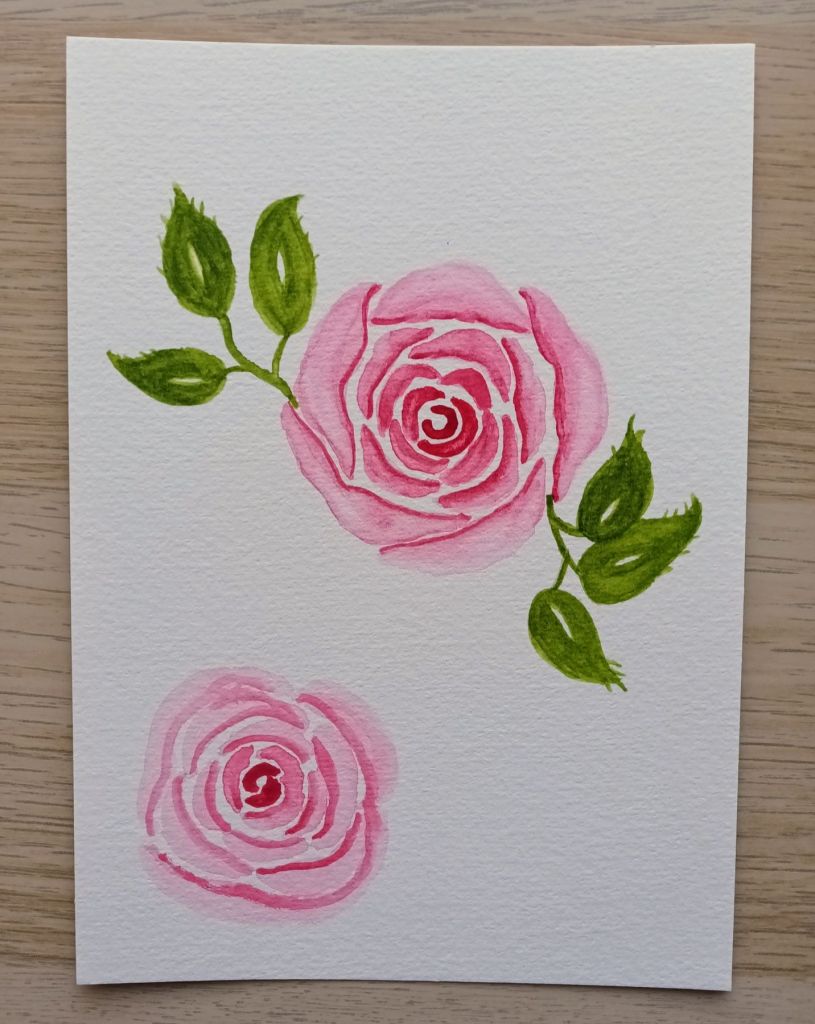
Watercolour rose
My intention for the front cover was to paint three roses in different colours – pink, red and peach, and add leaves. However, every time I attempted the final piece, I would create two lovely roses that I was happy with and one which went completely wrong! In the end, I decided to do just one rose to place in the centre of my page. In a bid to save watercolour paper, I used a piece that I’d already practised on. Unfortunately, I didn’t watch where I was putting the leaves and had to fix my mistake with a carefully placed title on my cover page as you will see shortly!
Photo credit: Laura Jones for Keeping It Creative
Front cover
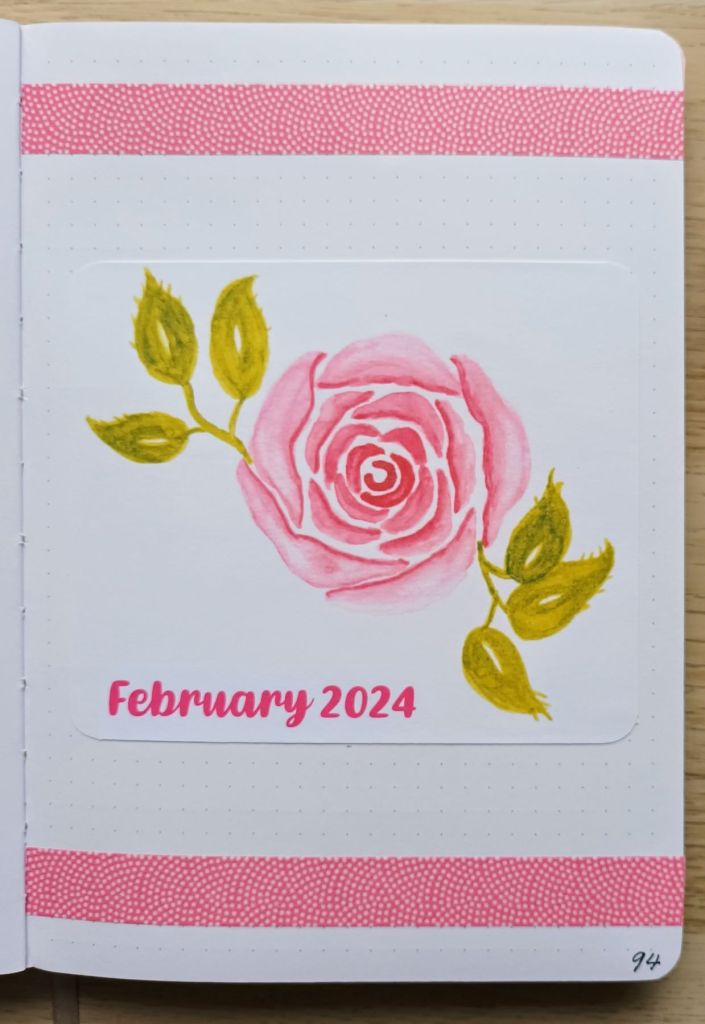
After my painting session, I scanned my artwork and printed it using my Canon Pixma printer. The colours aren’t quite the same but they look okay. I added the image to a page in MS Publisher and hid the top part of the other rose by adding a title using a text box with white background. As I eventually opted for just one rose and some leaf decoration, I had some space at the top and bottom of the page. I found a washi tape that worked perfectly. This one is from MT which are always superb quality.
Photo credit: Laura Jones for Keeping It Creative
The monthly calendar
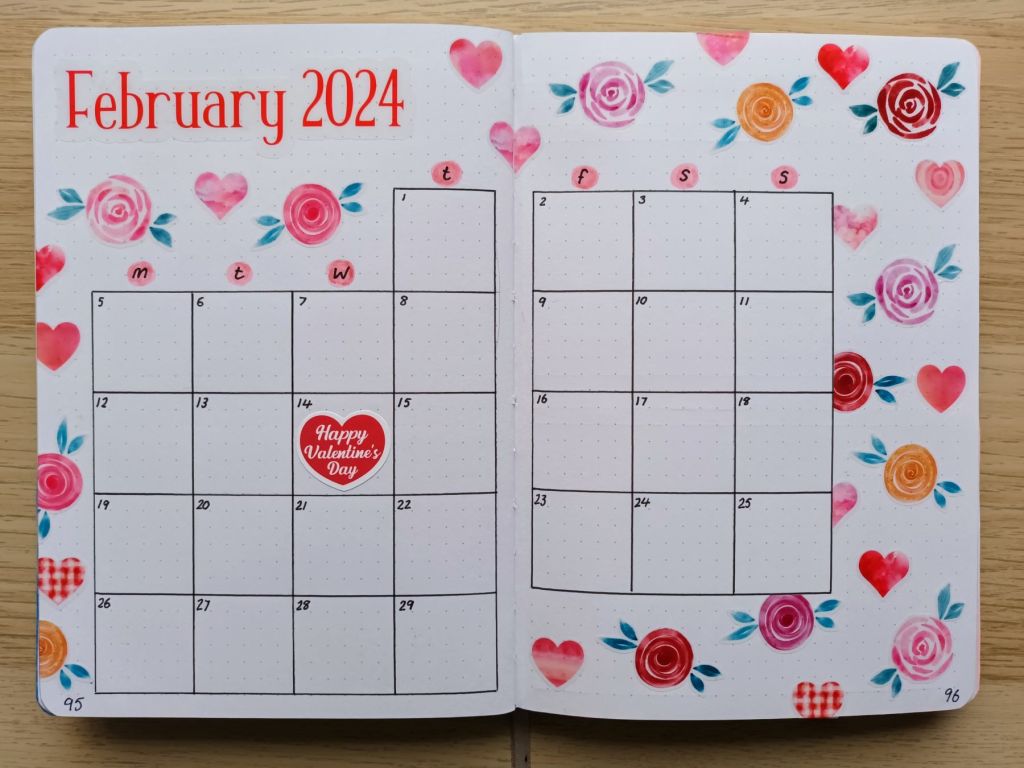
When I popped to Hobbycraft the other week, they were having a 20% off Cricut consumables sale so I treated myself to some transparent sticker paper to use with my Cricut Joy Xtra. Unfortunately, when I got to the till, I discovered that the product I had chosen was one of the only items that wasn’t part of the offer – typically eh! Needless to say, I bought it anyway. I love how bright and colourful this double page turned out and it was super quick to create all of the stickers as both the roses and the hearts had a white border offset on them already!
Photo credit: Laura Jones for Keeping It Creative
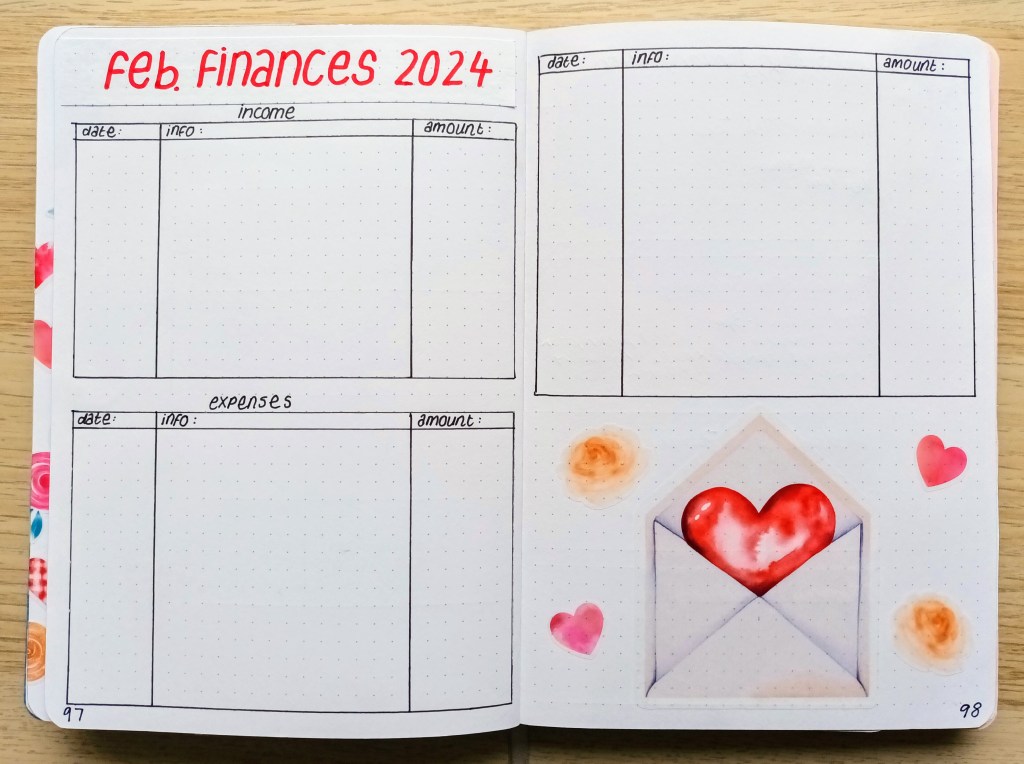
Finances record
I absolutely loved the watercolour heart envelope so I made it into a large sticker. Of course, it means that I’ll have to try not to have too many expenses for February or I’ll run out of room to record them!
Photo credit: Laura Jones for Keeping It Creative
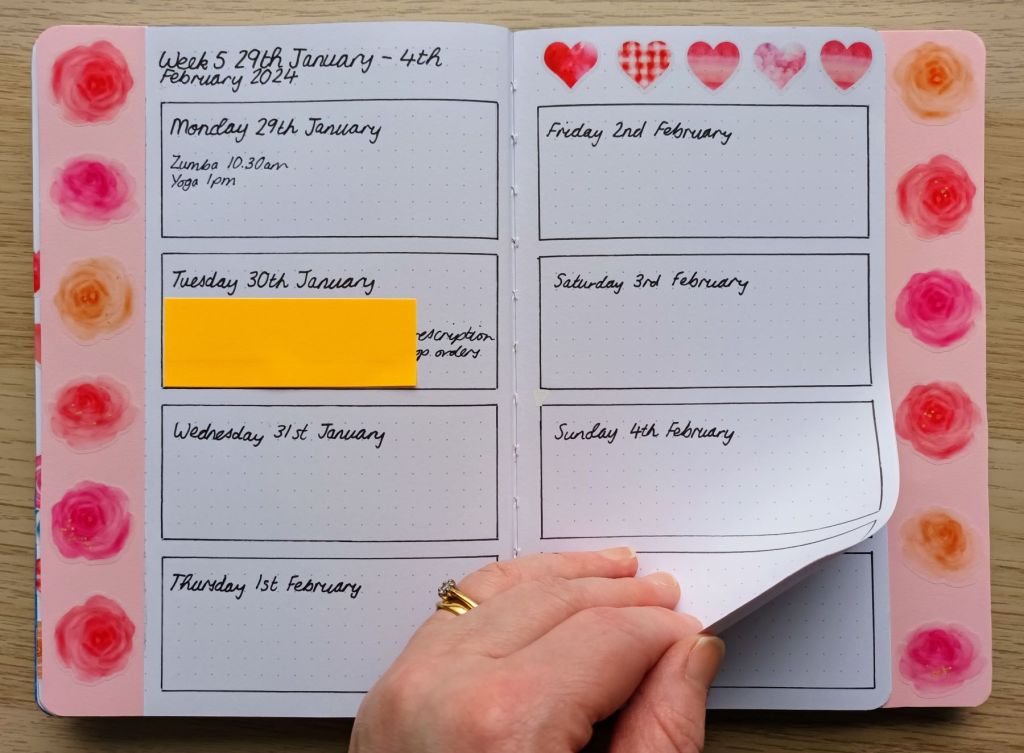
Weeklies
I opted for a Dutch door layout again this month but there was still plenty of room for the stickers I created. My daily events are recorded in the boxes on this double page and then overleaf, I have a running task list.
Photo credit: Laura Jones for Keeping It Creative
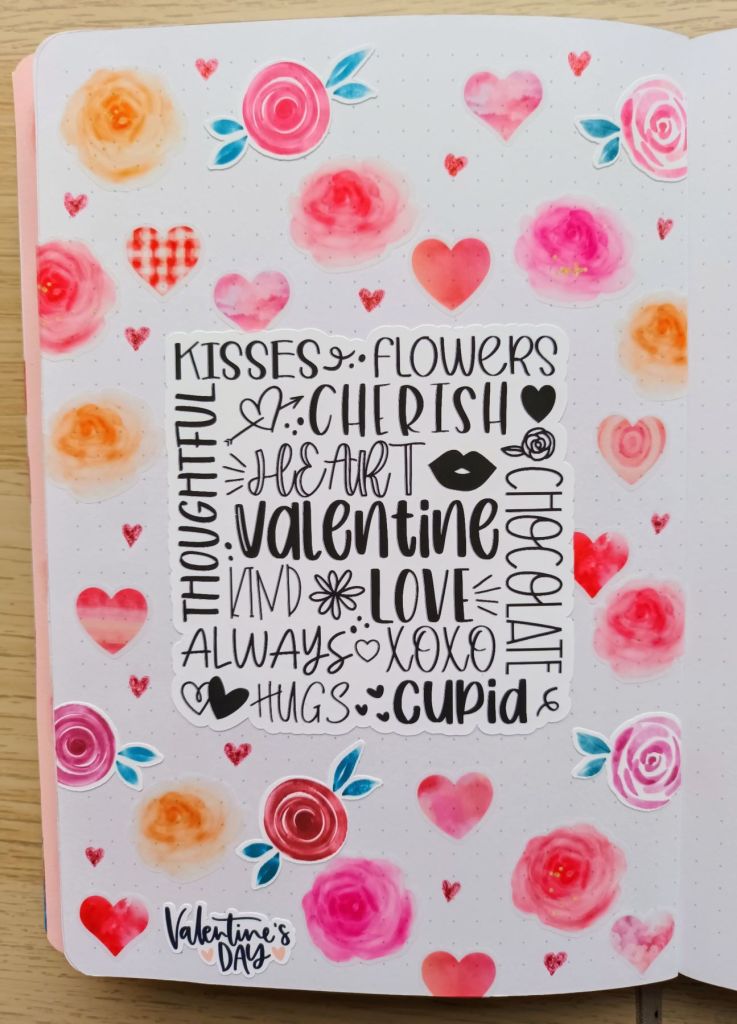
A Valentine’s mood board
This is another decorative spread which I think turned out really nice. I found the middle image on Cricut Design Space but when I’d printed and cut it, I had no idea what do do with it! Then I though, I know, I’ll make a kind of mood board which makes me smile every time I see it.
Photo credit: Laura Jones for Keeping It Creative
Final words…
Thank you for taking the time to look at my bullet journal spreads for February. The pages took me quite a while to create, but I’m pleased with how they all turned out. I hope you like them too and they’ve given you some inspiration for your own BuJo.
Wishing you a happy and healthy February and a month filled with self love and kindness,
Back when I was struggling with depression and anxiety, I learnt a number of grounding techniques to help me focus, keep calm or distract myself from my thoughts and feelings. Today, I want to share some of the ones I found most helpful and a few others which I’ve found online whilst researching today’s post, so that you can use them during difficult times. The exercises are best learnt when you’re experiencing good mental health so you can easily bring them to mind when you most need them.
What are grounding exercises?
Grounding exercises are techniques you can use to help with the feelings, thoughts and worries associated with anxiety. They help to manage your symptoms by providing a focus away from uncomfortable thoughts, memories and worries, by bring your attention to the present moment. There are quite a number of different types of exercises, so, I’ve picked a selection which of physical and mental techniques, plus some which are self soothing in nature.
Mental grounding techniques
Describe a daily routine
Choose something you do every day as part of your routines, for example, washing your face. Go through each step, in order and describe what to do as though you are giving instructions to someone else – First, turn on the hot tap at your bathroom sink. Keep running the water until it becomes quite warm. Put the plug in and fill the basin… and so on.
Play a memory game
Look at a detailed photograph, a painting on the wall or a page in a magazine. Turn over the image or look away from it and describe everything you remember in as much detail as possible. You can check to see how close you were to the features of the original but don’t worry if there were inaccuracies in your account!
Describe your surroundings
Spend a few minutes exploring your environment using all of your senses. Now describe your surroundings in as much detail as possible. For example, the wall to my left is painted a cream colour but there’s a sticky looking mark about three quarters of the way up, maybe where a poster has been displayed. The ground is very muddy and there are different colours of autumn leaves trodden into the path. The window is open and I can hear someone talking in the distance but I’m not sure what they are saying.
Create a category list
This is one I used to play in bed when I couldn’t sleep because of anxious thoughts. Choose a category or two e.g. flowers, things found at the beach, creative hobbies, places in the UK I’ve been to before etc. List as many items in the chosen category as you can. Repeat for another category.
Recall your favourites
Focus on your favourites and make a mental or physical list of them e.g. favourite ice cream flavour, favourite animal, favourite fragrance etc.
The 5, 4, 3, 2, 1 method
This one is incredibly popular and you may have read or heard about it before. It’s a simple technique that involves using your senses and is a great example of using mindfulness to calm yourself down:
Name 5 things you can see (a red cushion, a pile of leaflets, clouds in the sky)
Name 4 things you can hear (footsteps, birds singing, someone typing, a door banging)
Name 3 things you can feel (your hair against your neck, the hard seat you’re sitting on, a rough piece of skin on your hand, your soft jumper)
Name 2 things you can smell (fresh coffee, your hand cream, someone’s perfume)
Name 1 thing you can taste (a mint in your mouth, a sip of water, or, if nothing, something you would like to taste right now!)
Physical grounding techniques
Take a short and slow walk
Move with precision, feeling each part of your foot touching the ground, count your steps or notice the rhythm of your movements, do you sometimes feel off-balance, do you move your arms as you walk, does the ground feel hard or slightly soft. You can also try doing this barefoot.
Move your body
Perform simple actions such as stamping your feet, swinging your arms, marching, jumping on the spot, balancing on one leg etc. Explore how your body feels whilst doing each exercise and how you feel afterwards.
Alternatively, stretch different parts of your body and focus on how you feel. Mindful movements can combine to create what can be described as a moving meditation. This website provides some examples of stretches suitable for beginners who are in good physical health. If you have any physical health concerns, please get advice from your doctor before doing any form of exercise.
Put your hands in water
Fill up the sink with your choice of warm or cold water. Submerge your hands. Focus on the temperature. How does it feel on different parts of your hand. Does it feel the same on your fingers, palms and backs of your hands. Try moving your fingers under the water and explore how it feels. Now try the opposite end of the temperature scale. Compare with how it felt before. Alternate between warm and cold and explore how your hands feel.
Explore objects
Pick up and touch different items in your environment name them and describe how they feel e.g. cold, rough, spiky, soft etc. Next, describe the colour or colours – use precise names where you can such as turquoise and magenta rather than blue and pink.
Self-soothing grounding techniques
Enjoy a warm bath
Take a hot bath with bubbles, a scent that you love and a temperature that feels pleasant for you. Lie back, close your eyes and think about how the water feels against your skin. Now do the same for the bubbles. Inhale and enjoy the fragrance as lie there. Bathing mindfully like this will help to take your mind off your current anxieties and stresses.
Make a warm or cold drink to savour
Depending on the time of year, or your personal preferences, choose a soothing drink. Feel the warmth or coldness of the mug or class. Take a sip and think about how it feels and tastes in your mouth. When you swallow, can you feel the drink as it goes down? What effect is the drink having on your body?
Focus on your breath
Sitting quietly, with your eyes closed and focusing on your breathing is a great way to create a feeling of calm and relaxation. There are many different techniques for this, but personally, I prefer to keep it simple. This webpage on the getselfhelp website is a comprehensive written guide that provides instructions and advice to get you started. I recommend trying the method out a few times when you’re feeling okay, so you can get used to it and then it will come more easily to you during more difficult moments.
Final words…
I hope you’ve found the above ideas helpful and that you will give some of them a go to help with the symptoms of anxiety. You might like to print out some of the ideas or make a note of those which particularly appeal so that you are able to refer to them when needed. These are just some of the techniques for grounding yourself in the present moment and you’ll find others online or in books on anxiety management if you want to further your knowledge on the subject.
If you want to know more about the different aspects of anxiety before learning how to manage your symptoms, then I would recommend seeking the help of a professional who is trained in talking therapies. I do know, though, that the wait for such services can be lengthy so it’s good to speak to your doctor about your difficulties as soon as you can.



 Keeping it creative