
Posted in mental health, Mindfulness, mindset, psychology, self care, wellbeing, wellness

Monday Matters: 8 ways to instantly boost your mood

Sometimes, no matter how positive you feel when you wake up, particular events, issues, frustrations and even certain people’s attitudes can put a dampener on things and leave you feeling deflated. You probably wish you hadn’t let these parts of your day affect you as much as they have but it’s a natural part of life to experience ups and downs. When low mood strikes, there are a number of ways in which you can help yourself to feel better. Today, I’m sharing 8 tried and tested ideas which I’ve found helpful and I promise none of them include eating a gigantic bar of chocolate or any other highly calorific item!

Get out in nature

If you’ve been following my blog for a while, you’ll know that I’m a big fan of getting out in nature, whether that’s spending some time in my garden, heading to my local woodland park or even going to the beach to walk on the sand or paddle in the sea. It doesn’t have to be for long – just a few minutes of fresh air can make the world of difference to how you feel.

Listen to some upbeat tunes (even better, dance and sing too)

I first wrote about the benefits of listening to music back in 2021 and, as part of the post, I shared a page I’d created in my bullet journal with a mood boosting playlist. Musical taste is incredibly personal but choosing some upbeat songs to boogie, sing and listen along to can put you in a much better frame of mind. Here’s some ideas for uplifting tracks to find on YouTube, Apple Music or whatever happens to be your favourite resource to listen to through headphones or to blast out through your speakers (if it won’t disturb anyone):

  • Can’t Stop The Feeling By Justin Timberlake
  • I Got a Feeling By The Black Eyed Peas
  • Happy By Pharrell Williams
  • 22 By Taylor Swift
  • Walking On Sunshine By Katrina & The Waves
  • Song 2 By Blur
  • Love Shack By B-52s
  • Roar By Katy Perry
  • Sweet Child O’ Mine by Guns N’ Roses
  • Good Feelin’ By Flo Rida
  • Watermelon Sugar By Harry Styles
  • Dance Monkey By Tones And I
  • Groove Is In The Heart By Deee-lite
  • Blinding Lights By The Weeknd
  • Havana By Camila Cabello Feat. Young Thug

Whatever your favourite style of music, jot down an uplifting songs list or create a track list on your device and keep it in a memorable location (either on paper or digitally) to refer to when you need it.

Get moving

On the subject of moving our body, as an alternative to dancing along to your favourite tracks, you could also explore other forms of exercise in a bid to boost your mood. Any type of physical activity that raises your heart rate has been shown to release endorphins in the body. These hormones and neurotransmitters, which have been described as ‘a natural high’, will have you feeling better in minutes. Here’s some fun / invigorating summer time activities to try:

  • Spend some time in your garden pulling weeds, breaking up compacted soil in your borders, cutting your lawn, deadheading faded blooms, pruning bushes and shrubs, checking for hidden pests and watering thirst plants with a heavy watering can.
  • Get your bike out of the garage, dust it off and head to a trail of your choice. I like to go to the coast as it’s a straight stretch of cycle path which is wide enough for if I get the wobbles but if you search ‘easy bike rides near me’ you can explore different options available to you in your locality.
  • Play a game or do a physical activity that you used to enjoy as a kid – frisbee, bouncing a ball off a wall / bat / the ground,
  • Clean and or tidy your desk / room / house, then sit back and enjoy the feeling that comes with a neat and dust free space.
  • Take a brisk walk around the block and see if you can notice anything new or different – maybe someone in your immediate area has painted their fence, changed their car, got a new pet, weeded their driveway etc. Maybe the council has added a new sign, planted some young trees or mown the grass in another street. If you can’t see anything that’s changed, maybe you could think of some changes you would like to make if you were in charge!

Soak up some sunshine

Sunlight is a natural source of Vitamin D which has been scientifically proven to regulate your mood. If it’s a nice day, get your sunglasses and some sun protection on and feel the warmth on your skin. I like to sit on our bench or one of our patio chairs in the garden and close my eyes for some mindful listening to accompany the experience. This is a great way to get into a meditative state as it gives you something to focus on and minimises the change of your mind wandering towards the major or minor irritations I mentioned previously. In the summer, there’s generally lots of daytime sounds whether it’s someone mowing the lawn, children laughing, birds tweeting or even distant traffic noises.

What a video of something cute or funny

Open up YouTube on your phone or computer and search for cute or funny videos of, plus the name of your favourite pet or animal. Anyone who’s been following my blog for a while is likely to know my animal of choice is a Syrian hamster, but I can guarantee that there are videos out there to suit all whether that’s woodland birds, different pets or even more unusual choices like sealions, squirrels, polar bears or hedgehogs.

Dig out your photograph albums

Looking back at old photographs (and/or journals if you do memory keeping like I do) is a great way to bring to mind happy memories of exciting life events, people in your life (past and present) and places you’ve been. And if you’re one of those people who rarely print your images off, why not flick through those on your phone and select some to add to an album later. Taking time on your own to quietly sit and view several years worth of photographs can be very therapeutic, as can sharing them with loved ones either in person or by contacting them via phone, WhatsApp, email or even letter (pretty paper optional!).

Practise gratitude

Grab a piece of paper or your journal and make a list of five small things you’re grateful for in your life right now. Research shows that a consistent gratitude practice has so many health and wellbeing benefits so give it a try starting today and see how it makes you feel. Check out this blog post to learn more.

Make a list of things you love about yourself

Whilst you’ve got a pen and paper to hand, here’s another positive exercise to try. Write a title ‘Things I love about myself’ at the top of the page and then make a list of your best qualities. This could include physical aspects such as your smile, your lovely, long locks, your clear skin and healthy looking nails, your character traits, e.g. kindness, good analytical skills, reliability, optimism and so on, and things you’re really good at like cooking, motivating yourself, helping others, solving problems etc. Once you written as much as you can right now, try displaying your list somewhere so you can refer to it when you need a mood boost, or add to it when something comes to mind.

Inhale an uplifting scent

If you know anything about aromatherapy, you’ll probably be aware that some scents are thought to be uplifting and mood boosting. I have a few little essential oil bottles which I got from the Body Shop in strawberry, raspberry and exotic which I love to inhale at any given opportunity. My scents of choice are fruity smells but below are a list of classic options which I collected from various websites via Google.

  • vanilla
  • peppermint
  • jasmine
  • citrus scents including orange, lemon and grapefruit
  • juicy fruits like peaches, pear and pineapple
  • relaxing scents like lavender, ylang, ylang and chamomile
  • spicy scents such as ginger, cinnamon and clove
  • fresh forest options such as pine and eucalyptus

Of course, it’s important to experiment and see which you prefer (and think about the mood you want to create such as uplifting or relaxing) but these should get you started with that. As you learn more about aromatherapy, you might like to try combining scents to create your perfect mood booster!

Final words…

I hope you’ve found today’s post beneficial and the ideas will motivate you to be pro-active next time you find yourself in a funk or stressed by particular events in your day. If I haven’t shared your favourite way to uplift your mood, or relax when tensions are high, feel free to add it in the comments as it may help someone else to manage their mood in the future along with my ideas.

Thanks for reading and I’ll be back with another wellbeing post very soon,

Posted in goal setting, journalling, life hacks, lifestyle, meditation, Mindfulness, mindset, self care, Setting goals and intentions, wellbeing, wellness

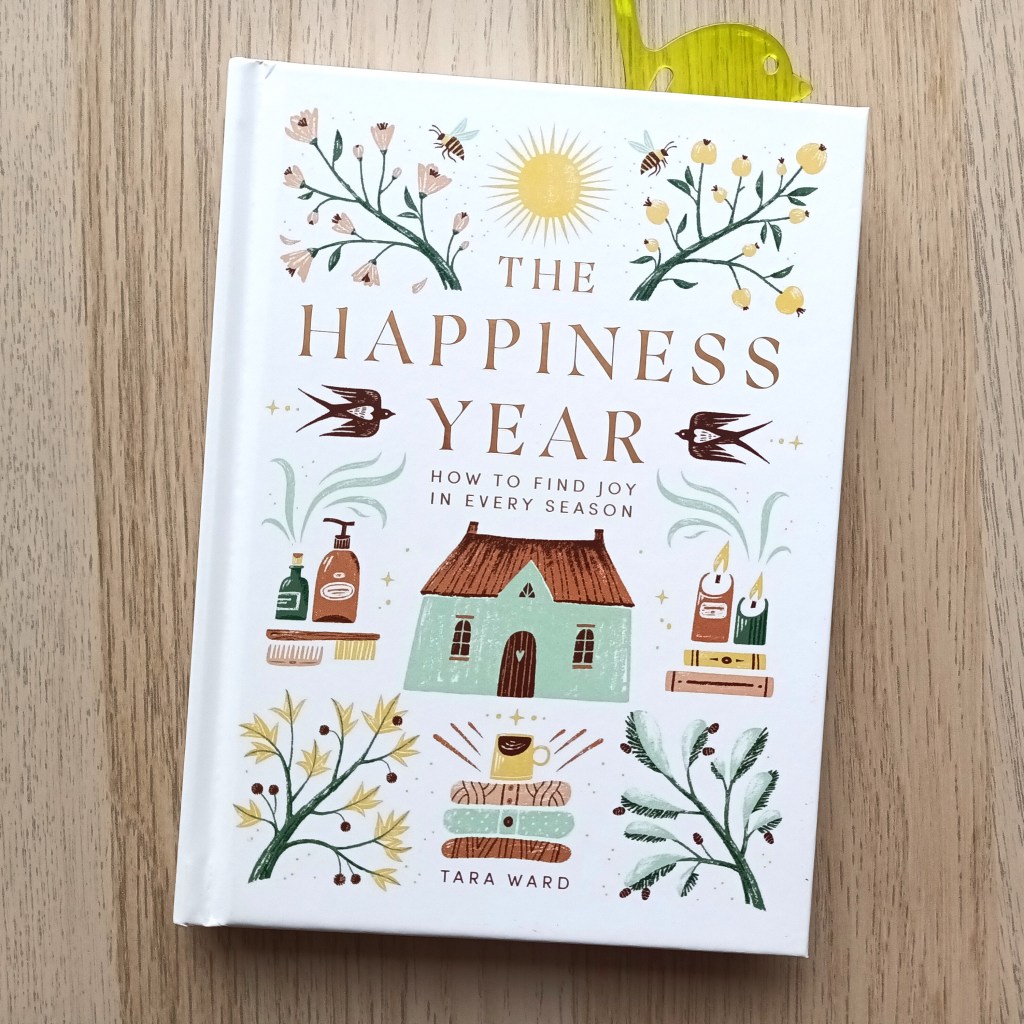
Monday Matters: Discovering joy in every season of the year using The Happiness Year by Tara Ward

A few months ago, I was looking in the health and wellbeing section at Waterstones and came upon a beautifully illustrated book about finding joy throughout the year by trying out different seasonal activities. At the time, I didn’t purchase it, but I regretted my decision so I ordered it from an online retailer. When it arrived, I added it to the bookcase in my craft room as I was already in the process of reading about 8 different books which is a few too many even by my standards. I pulled it out a few days ago and there are some lovely activities inside in the section which I started with – Spring. I tried out the first exercise this morning and really enjoyed it so I thought I would give a short summary of the book and share that first prompt with you today.

The Happiness Year: How to Find Joy In Every Season by Tara Ward

In the introductory section of the book, Tara discusses the aims of The Happiness Year and also talks about the emotion of happiness and the four positive chemicals that are released into your body when you’re happy – dopamine, oxytocin, serotonin and endorphins (referred to as DOSE throughout the book). She then goes on to explain how to use and enjoy the book.

The remainder of the book is split into four sections – Spring, Summer, Autumn and Winter and there are a collection of exercises provided in each which you can pick and choose from. In combination, they promise to help you in an holistic way – physically, mentally, emotionally and spiritually. Personally, I think I will probably try out all of the different activities and see which I prefer and benefit from the most.

Included within the book, there are journalling and brainstorming activities, meditations, physical exercises, goal setting and planning tasks, plus many more to explore and enjoy. You are also invited to complete them in a way that feels comfortable for you, taking into account individual differences and preferences.

So far, I’ve only read the Spring chapter in depth but I’ve had a good flick through all of the book and I can already see there are many exercises that will appeal.

Exploring your thoughts, feelings and ideas about Spring

As I said earlier, I completed the first activity this morning and I enjoyed it so much that I felt compelled to share it with you. I think this exercise would work well for each of the four seasons, not just Spring. Here’s a step by step explanation of what to do:

  • Take an A4 piece of paper and place it in front of you
  • Write the word SPRING in large letters at the bottom of the page
  • Close your eyes and take three deep, comfortable breaths to focus you in the present moment
  • Open your eyes and look at the word
  • What comes to mind when you think of Spring?
  • Write down everything which comes up for you
  • When you’ve run out of ideas, close your eyes again, breathe deeply and continue thinking about the season
  • Note down any further ideas or images which come to mind
  • When you feel you’ve finished, look over your sheet
  • What jumps out at you the most? Circle any words or phrases which particularly resonate or feel important to you. Are then any surprises?
  • What is the overriding emotion when you look at your words? Write that emotion or emotions at the top of the page.
  • Look through the words and make a list of those which generate feelings of happiness.

I hope you found this a helpful exercise and it reminded you about all of the lovely things which happen in the Springtime. I’ve included my sheet below, how does it compare to yours?

Photo credit: Laura Jones for Keeping It Creative

Final words…

If you enjoy mindful activities such as journalling, setting intentions, exploring the world using your five senses, breathwork, meditation and appreciating the simple things in life, I would definitely recommend checking out The Happiness Year. The book will help you find ways to appreciate and make the most of all of the things that each season has to offer you. You’ll also find a range of self care activities to increase your happiness levels by releasing a good ‘DOSE’ of positive chemicals. Let me know if you try the exercise outlined above and how it made you feel.

Posted in Anxiety management, GAD, wellbeing, wellness

Monday Matters: 13 grounding and self soothing exercises for managing symptoms of anxiety

Back when I was struggling with depression and anxiety, I learnt a number of grounding techniques to help me focus, keep calm or distract myself from my thoughts and feelings. Today, I want to share some of the ones I found most helpful and a few others which I’ve found online whilst researching today’s post, so that you can use them during difficult times. The exercises are best learnt when you’re experiencing good mental health so you can easily bring them to mind when you most need them.

What are grounding exercises?

Grounding exercises are techniques you can use to help with the feelings, thoughts and worries associated with anxiety. They help to manage your symptoms by providing a focus away from uncomfortable thoughts, memories and worries, by bring your attention to the present moment. There are quite a number of different types of exercises, so, I’ve picked a selection which of physical and mental techniques, plus some which are self soothing in nature.

Mental grounding techniques

Describe a daily routine

Choose something you do every day as part of your routines, for example, washing your face. Go through each step, in order and describe what to do as though you are giving instructions to someone else – First, turn on the hot tap at your bathroom sink. Keep running the water until it becomes quite warm. Put the plug in and fill the basin… and so on.

Play a memory game

Look at a detailed photograph, a painting on the wall or a page in a magazine. Turn over the image or look away from it and describe everything you remember in as much detail as possible. You can check to see how close you were to the features of the original but don’t worry if there were inaccuracies in your account!

Describe your surroundings

Spend a few minutes exploring your environment using all of your senses. Now describe your surroundings in as much detail as possible. For example, the wall to my left is painted a cream colour but there’s a sticky looking mark about three quarters of the way up, maybe where a poster has been displayed. The ground is very muddy and there are different colours of autumn leaves trodden into the path. The window is open and I can hear someone talking in the distance but I’m not sure what they are saying.

Create a category list

This is one I used to play in bed when I couldn’t sleep because of anxious thoughts. Choose a category or two e.g. flowers, things found at the beach, creative hobbies, places in the UK I’ve been to before etc. List as many items in the chosen category as you can. Repeat for another category.

Recall your favourites

Focus on your favourites and make a mental or physical list of them e.g. favourite ice cream flavour, favourite animal, favourite fragrance etc.

The 5, 4, 3, 2, 1 method

This one is incredibly popular and you may have read or heard about it before. It’s a simple technique that involves using your senses and is a great example of using mindfulness to calm yourself down:

Name 5 things you can see (a red cushion, a pile of leaflets, clouds in the sky)

Name 4 things you can hear (footsteps, birds singing, someone typing, a door banging)

Name 3 things you can feel (your hair against your neck, the hard seat you’re sitting on, a rough piece of skin on your hand, your soft jumper)

Name 2 things you can smell (fresh coffee, your hand cream, someone’s perfume)

Name 1 thing you can taste (a mint in your mouth, a sip of water, or, if nothing, something you would like to taste right now!)

Physical grounding techniques

Take a short and slow walk

Move with precision, feeling each part of your foot touching the ground, count your steps or notice the rhythm of your movements, do you sometimes feel off-balance, do you move your arms as you walk, does the ground feel hard or slightly soft. You can also try doing this barefoot.

Move your body

Perform simple actions such as stamping your feet, swinging your arms, marching, jumping on the spot, balancing on one leg etc. Explore how your body feels whilst doing each exercise and how you feel afterwards.

Alternatively, stretch different parts of your body and focus on how you feel. Mindful movements can combine to create what can be described as a moving meditation. This website provides some examples of stretches suitable for beginners who are in good physical health. If you have any physical health concerns, please get advice from your doctor before doing any form of exercise.

Put your hands in water

Fill up the sink with your choice of warm or cold water. Submerge your hands. Focus on the temperature. How does it feel on different parts of your hand. Does it feel the same on your fingers, palms and backs of your hands. Try moving your fingers under the water and explore how it feels. Now try the opposite end of the temperature scale. Compare with how it felt before. Alternate between warm and cold and explore how your hands feel.

Explore objects

Pick up and touch different items in your environment name them and describe how they feel e.g. cold, rough, spiky, soft etc. Next, describe the colour or colours – use precise names where you can such as turquoise and magenta rather than blue and pink.

Self-soothing grounding techniques

Enjoy a warm bath

Take a hot bath with bubbles, a scent that you love and a temperature that feels pleasant for you. Lie back, close your eyes and think about how the water feels against your skin. Now do the same for the bubbles. Inhale and enjoy the fragrance as lie there. Bathing mindfully like this will help to take your mind off your current anxieties and stresses.

Make a warm or cold drink to savour

Depending on the time of year, or your personal preferences, choose a soothing drink. Feel the warmth or coldness of the mug or class. Take a sip and think about how it feels and tastes in your mouth. When you swallow, can you feel the drink as it goes down? What effect is the drink having on your body?

Focus on your breath

Sitting quietly, with your eyes closed and focusing on your breathing is a great way to create a feeling of calm and relaxation. There are many different techniques for this, but personally, I prefer to keep it simple. This webpage on the getselfhelp website is a comprehensive written guide that provides instructions and advice to get you started. I recommend trying the method out a few times when you’re feeling okay, so you can get used to it and then it will come more easily to you during more difficult moments.

Final words…

I hope you’ve found the above ideas helpful and that you will give some of them a go to help with the symptoms of anxiety. You might like to print out some of the ideas or make a note of those which particularly appeal so that you are able to refer to them when needed. These are just some of the techniques for grounding yourself in the present moment and you’ll find others online or in books on anxiety management if you want to further your knowledge on the subject.

If you want to know more about the different aspects of anxiety before learning how to manage your symptoms, then I would recommend seeking the help of a professional who is trained in talking therapies. I do know, though, that the wait for such services can be lengthy so it’s good to speak to your doctor about your difficulties as soon as you can.

Posted in lifestyle, mental health, Mindfulness, Planning and journaling, reflective journalling, wellbeing, wellness

Monday Matters: 4 Ways to Destress after a Busy Day

Photo from Unsplash

Most of us lead very busy lives and it can be incredibly difficult to switch off and relax in the evening in preparation for a good night’s sleep. Today, I’m sharing four excellent ways to wind down after a stressful or busy day. The following activities are great for your mental health and wellbeing and I’m going to be offering lots of different options to choose from depending on your preferences.

Do a journalling activity

After a busy or particularly stressful day, it can often be super difficult to calm our mind. Your head can be full of all kinds of clutter in the form of thoughts (both positive and negative), ideas or feelings. Maybe you’re busy analysing or deconstructing everything that has happened and going through things that were said. Perhaps you’re worrying about your mounting to do list and what didn’t get crossed off today because of x,y and z which took priority. Or, you might be looking towards tomorrow, thinking about the events in your diary or how you can be super productive and get more done whilst making it a calmer, less stress inducing day. If any of the above apply, you might be wondering if you will ever be able to switch off and sleep tonight. This is where getting your thoughts and feelings out of your head and onto paper can be super helpful. Just ten minutes of free flow or structured journal writing can make all the difference.

I learnt the following method for putting the day to rest when I was teaching, when every day was a busy day and I was really struggling to relax and sleep.

Putting the day to rest activity

  • Set aside 20 minutes in the early evening (I used to do this at 7.30pm)
  • Sit down somewhere quiet
  • Think about your day today and how it has gone, what you did and how you feel about it
  • Write it down in bullet points or free writing if you prefer
  • Write down anything you didn’t get done off your to-do list
  • Think about tomorrow – do you have any particular events coming up? what are looking forward to? are there any worries you have about what’s happening?
  • Write down a loose or structured plan for your day depending on your own needs (you can always modify this as you learn what works best for you.
  • When it comes to later evening and bedtime, if thoughts about today or tomorrow pop into your head, remind yourself that you’ve already evaluated your day and planned for tomorrow, so you don’t need to think about it any more.
  • If new thoughts come into your head at bedtime, jot them down on a piece of paper or on a notepad.

Other types of prompt based journalling might also work for you and there are some lovely ones on the market which can be used before bed. I’m a big fan of The Five Minute Journal but there are plenty of much cheaper options if this doesn’t fit with your budget. How much you want to write is up to you but it’s good to develop a consistent practice which becomes a positive habit to end your work time or day with.

Try a Mindful or Meditative Practice

Any type of activity that requires a high level of concentration and uses different senses is great for helping you to forget about the busyness of your day. Here’s some ideas for mindful and meditative activities which you might like to try:

  • Meditation – this can simply be sitting quietly and focusing on your breathing or using a guided practice. I recently found this account on YouTube that has some lovely ones with different foci that you mind find helpful. When choosing a guided session, it’s important to find someone who’s voice you find soothing and relaxing so you might like to try out a few to establish your preferences.
  • Crafting – there are so many different crafting options such as papercrafting, watercolour painting, knitting, sewing, crochet, model making and so on – why not give a few beginner projects a go to see which you prefer.
  • Some kind of puzzle e.g. a jigsaw, wordsearch, crossword etc. – great for keeping your mind active
  • Games – this could be something on your computer that you play by yourself such as Angry Birds, Candy Crush, Word Cookies or Patience, or one you play with others such as Boggle, Yahtzee, Gin Rummy, Scrabble or Jenga.
  • Enjoy a scented bubble bath and use your senses to fully appreciate the experience.
  • Cook a meal from scratch – measure out your ingredients with care, fully engaged with chopping / dicing / peeling etc, smell the different flavours as the dish cooks, taste the mixture to check the seasoning and so on. Mindfully enjoy the results at your dining table. Share your experience with others.
  • Watch something engaging on TV – comedy, drama, nature, historical interest or reality. Whatever you enjoy, give it your full attention and leave your phone or tablet in another room so you don’t get distracted. If you’re anything like me at this time of year, you’ll want to get your PJs on and snuggle under a warm blanket with your feet up for this one!

Read a book or magazine

Spending time reading a novel, information book, or favourite magazine is a great way to unwind and get yourself all relaxed and ready for bed. I love Psychologies magazine, as it’s full of positive ideas, and I can learn new ways of managing mental health and wellbeing at the same time.

Some people argue that you shouldn’t read in bed, but I find reading a few chapters of my Kindle novel (or for about 30 minutes) helps me to drift off really quickly. Try reading just before bed and reading in bed to see which works best for you.

Spend quality time with a loved one

Arranging an after work activity to do with a co-worker, friend, family member or partner can also help us destress. This could involve going out for an after-work drink, doing an evening class, watching a film at the cinema, seeing a comedy show or visiting a new or favourite restaurant. Alternatively, you might plan something fun to do together at home such as making popcorn to eat whilst watching a film, playing a board game or learning something new such as massage or reflexology.

Spending time with a pet is also great way to destress and calm the mind. This could include something you know they enjoy such as throwing a ball for your dog to catch at your local park (depending on the time of year), stroking your cat as they sit curled up on your knee, or watching your hamster as they zip around the house in their exercise ball.

Final words…

So there you have it, four ways to take yourself out of work/busy mode and into a relaxed state for the evening. I hope today’s post has given you food for thought and you’ll try one or two of the activities listed to see how they help. If you have any other preferences for your wind down routine, let me know in the comments.

Posted in lifestyle, self care, wellbeing, wellness

Monday Matters: Ten ways to get yourself ready for the winter season

Photo credit: Alex Padurariu for Unsplash

According to some reading I did online, the date that winter starts depends on whether you are referring to the astronomical or meteorological winter. The astronomical calendar identifies the season in the UK as beginning on Friday 22nd December in 2023, but personally, I follow the meteorological definition which cites winter as beginning on the 1st December each year. Whichever date marks the beginning of winter for you, I think we can all agree that wintery weather is coming as fast as Christmas is creeping up on us. Whether you dread the icy cold temperatures, or look forward to cosying up in front of the fire in a thick jumper and chunky socks, I think today is the perfect time to talk about getting ourselves ready for the chilly season before it hits. Here’s my top 10 ways to get winter ready.

Check over your winter wear

Get out your super thick winter coat, your hats, scarves and gloves and check them over to see what condition they’re in. Do any of them need replacing? Are there perfectly serviceable items from last year that you didn’t wear which might need donating to charity or given to a friend who will show them more love? Are they washed (or spot cleaned if necessary) and ready to wear?

My husband and I have a small woven basket next to the front door to store our favourite accessories in so we can grab them and go without having to go upstairs to retrieve them before heading out. Other items are kept in drawers and our wardrobes tucked away until needed.

Think layers

As well as outer wear, what you put on underneath is super important too. For winter walks, I recommend searching out some base layers from an outdoors shop. Thermal vests are also a good option to keep you toasty. Longer socks (thermal or wool ones) can keep your feet and legs warm, whilst fleece lined items can be worn under your coat. Layered clothing is always the best idea for winter outings as you can always strip some of them off if you get too hot. There’s nothing worse than going out and feeling really cold, and then struggling to get yourself warm again when you return home.

Evaluate your footwear

Another key part of your winter wear, which I feel needs its own section, is your footwear. For indoors, I recommend cosy slippers with a good sole (IMO not those big, squishy, novelty ones where you’re in danger of falling down the stairs / slipping on the floor when you move around) or socks with gripper treads AKA non-slip soles. For outside, a decent pair of wellingtons is good for light, short walks in snowy conditions or torrential rain (not very comfy on long or difficult walks IMO), walking shoes and boots with good grip / extra traction for extensive walking in all kinds of weather, or, more dressy boots for days and nights out where you don’t plan on walking too far or the weather isn’t too bad (I still like mine to have some sort of grip on the soles). Personally, all of the above, apart from slippers are essentials for me, but it does, of course, depend on the types of weather you get in your location and what you intend to be doing in the winter months.

Make plans for warming meals

On super chilly days, I always crave warming meals such as soup, stew and wholesome pies plus hot favourites such as vegetable lasagne, butternut squash risotto and cauliflower cheese. Before the temperatures really drop, I like to spend time doing some meal planning in my bullet journal. This includes picking out some new recipes to try (both online and in recipe books and magazines, and also listing pantry essentials such as lentils, wholewheat pasta, canned soups, porridge oats, cocoa, plain flour etc. and seasonal fruit and vegetables (such as cranberries, pomegranates, satsumas, sweet potatoes, kale, broccoli and winter squash, which are really handy to reference when we create our weekly shopping lists.

In January, my husband and I take part in Veganuary, where you go vegan for the month (and potentially beyond) and, although it’s easier to find plant based options in the supermarkets these days, we still like to do some extra meal planning and search for some appropriate or adaptable recipes. There are loads of options on the Veganuary website but quite a few of the choices are spicy and I’m not good with this kind of food.

Choose some seasonal scents for your home

There are so many gorgeous scents to choose from this winter and you can also mix and match between a range of different fragranced items including candles, room sprays, pot pourri, reed diffusers and wax melts. Popular seasonal scents include cinnamon, pine, cedarwood, eucalyptus, juniper berries, sweet orange, clove and vanilla. I like to choose vegan options made of soy wax rather than those of animal origin and M&S have a great selection which smell wonderful. I also like purchasing from local small businesses on Etsy.

Protect and nourish your skin

There are two main things that dry your skin out in the winter time, one is the central heating and the other is the harsh weather. The central heating reduces the humidity in the air and affects how much moisture is present for the skin to absorb. Also, weather such as rain, wind and icy conditions zaps moisture from exposed areas of skin like your face, neck and hands, causing redness, dryness and other types of irritation.

At this time of year it helps to choose a richer moisturiser for face, hands and body. You should also try to make sure you apply it straight after washing or bathing. I also like to apply a thick layer of emollient cream to my hands and feet and then wear cotton gloves or socks overnight to really give the moisturiser time to be absorbed fully. Other ingredients which are super effective include shea butter, cocoa butter, rosehip oil and jojoba oil.

Using a humidifier in the home can also add moisture back into the air so it isn’t so dry. And don’t forget to hydrate from the inside too with plenty of fluids throughout the way.

Top up your Vitamin D

During the winter, natural light is in shorter supply and The Sun isn’t so strong. Also many of us spend more time indoors during the colder months. This can cause deficiencies in vitamin D which is important for healthy bones, a strong immune system, calcium absorption, brain health and our happiness levels. To ensure you’re getting enough of this important vitamin, you will need to make changes to your diet. This can involve making sure you eat foods which are rich in Vitamin D such as fish, seafood, eggs and fortified items such as cereal, plant based milks, some types of bread and even fruit juices. If you’re after a plant-based food, mushrooms are the best source. It’s also recommended that you take a daily multivitamin or vitamin powder (which you add water to). If you’re concerned you may have a vitamin deficiency, always consult your doctor or other medical professional for advice.

Equip your car

My husband and I were talking the other day about how much we hate driving in the dark. Unfortunately this, and misty or frozen windscreens are unavoidable at this time of year. Although it’s extremely difficult to avoid driving in the darkness, you can prepare for winter driving in other ways. Creating a kit which includes items such as de-icer, a scraper, small shovel, microfibre cloth, pocket torch and windscreen snow cover will be super useful for different kinds of weather. I also recommend having a warm, fleecy blanket and thick waterproof coat in the boot of your car, just in case.

The AA website has lots of extra winter advice which I’ve found really useful, so have a read through all of the information on this page to get yourself really clued up.

Be ready for potential power cuts

We’re all super reliant on technology these days but what’s the first thing you would need if your electricity went off due to a power cut? Candles (the unscented kind this time) and battery operated lights including a torch and maybe some of those little push on, push off LED lights. Again, creating a kit for use during an unplanned loss of power can be a great way to prepare. Your emergency kit might include wax candles (plus something to light them with) and/or battery operated varieties, LED push on lights, a small night light (for bedroom, landing or in the bathroom), a battery operated or wind up torch, spare batteries for the torch and any other battery operated items in your kit, a supply of bottled water, ready to eat food and the phone number of the Electricity Distribution Network Operator (DNO) – in the UK, this is the easy to remember 105 number but it’s best to have it written down in case you forget. You might also want to have things to keep you warm too such as a hot water bottle, handwarmers, a sleeping bag and a supply of blankets.

The Met Office website has additional information that you might find useful. Just remember to take the time to read it before you actually need it! If you’re not in the UK, I’m sure there will be similar information for your locality online.

Create a winter bucket list

This September, I created an autumn bucket list. I made a two page spread in my bullet journal with items from the list and pictures to go with them. I then ticked off when I had achieved something. I also made an Autumn TN insert in which I’ve created pages with photographs, journalling, autumnal patterns, ephemera, and other decorative elements to show how I’ve achieved things from the list. I’ve enjoyed all of the above so much that I decided to repeat the process for the winter season. I’m really looking forward to getting started. Obviously, this is not a winter essential, but it’s great if you enjoy getting creative or you want to plan some new and different experiences for yourself and your family. I added stickers to mine made with my Cricut Joy.

Photo credit: Laura Jones, Keeping It Creative

Final words…

Whilst researching bits and pieces for today’s blog post, I also came across lots of useful information for older people on Age UK. There’s so much advice to read that I thought I’d just share the link for interested readers. One of the most important tips is to make sure you or your older relatives get yearly jabs such as the flu vaccine. Contrary to popular belief, the jab does not give the person flu, but has the potential to cause mild cold symptoms afterwards so maybe some basic over the counter cold medication could be purchased in preparation.

I hope you’ve found today’s blog post beneficial and it has given you some ideas on getting yourself and your home ready for winter. I look forward to hearing from you in the comments about whether or not you’re looking forward to the season and what your favourite things are about wintertime.