Posted in CBT, compassion, lifestyle, mental health, psychology, wellbeing

Monday Matters: The psychology of optimism and how to become a glass half full kind of person

Photo by Brett Jordan on Pexels.com

When I was struggling with anxiety and depression at the end of last year and the beginning of this one, I found myself being very negative and developing a very pessimistic view of the future. I was convinced things (I) would never get better and spent a lot of time wallowing in self pity and believing I couldn’t make myself well no matter how hard I tried. Now I’m feeling well, I’m happier and full of optimism and any challenges I face don’t feel like mountains that I’m unable to climb. I’ve always known that being optimistic is a key part of wellbeing but how can we remain that way all of the time, even when things are a little (or a lot) shitty? Today’s Monday Matters post looks at the psychology of optimism and how we can foster it no matter what life throws at us.

What is optimism?

According to the Oxford dictionary, optimism is ‘a feeling that good things will happen and that something will be successful; the tendency to have this feeling’. The exact opposite of this is ‘pessimism’ which is described as ‘a feeling that bad things will happen and that something will not be successful; the tendency to have this feeling’. Further to this, an optimist is ‘a person who always expects good things to happen or things to be successful’, whereas a pessimist is someone who ‘always expects bad things to happen’. I do think these are oversimplified definitions, however, as most people realistically know that over time, good and bad things will happen to us all and that it is our reaction to events and thoughts and feelings which can be described as mainly optimistic or pessimistic.

Why are some people optimists and others pessimists?

Early research into the subject tends to suggest that an optimistic or pessimistic view is largely an inherited biological trait, but more recent works have shown that environmental factors can influence us too. In other words, we are born one way or the other but our life experiences can impact on us too so, for example, we may learn to have a positive outlook from our childhood if we have an optimistic parent who encourages associated traits such as self belief, resilience and acceptance. Conversely, being surrounded by pessimists who believe they are hard done to, always see the worst in a situation and have a tendency to be negative overall can influence our thoughts and feelings about life too.

So, even if you are a ‘glass half empty’ type of person, it is possible to learn to be more optimistic or reduce pessimism by working on challenging and changing your thought processes. This does mean that if you have always been described as an optimistic, there is a chance that, with certain life experiences, you may develop a more pessimistic view (sometimes temporarily) but there are many ways of of combating this.

What are the benefits of being optimistic?

There are so many benefits of being of being an optimistic person in terms of physical and mental health. Optimists:

  • have healthier lifestyles, for example they exercise more, have a balanced diet, are less likely to smoke or binge drink and just generally make better choices with regard to their health
  • have better quality relationships with family, friends, partner or co-workers
  • have more life satisfaction, happiness and high levels of psychological and physical wellbeing
  • are good problem solvers and tend to strive for what they want as they believe themselves to be capable of high levels of achievement
  • are more motivated
  • have better self esteem
  • are generally more successful
  • accept their failures and learn from them
  • have a better immune system
  • have lower cortisol levels (stress hormone)
  • actively pursue their goals
  • recover from physical illnesses more quickly
  • take less time to recover from surgery
  • less likely to have a stroke or cardiovascular diseases
  • have lower blood pressure
  • emerge from difficult circumstances with less distress than pessimists
  • see setbacks as temporary events caused by circumstances
  • are more likely to engage in health related self care activities such as regular check ups

How can we learn to be more optimistic?

The idea of learned optimism is a concept developed by a leading American psychologist called Martin Seligman.

learned optimism involves developing the ability to view the world from a positive point of view.

Seligman

He believes that the positivity associated with being an optimist can and should be cultivated and that being optimistic is a key part of good health and wellbeing. So, pop on your positivity glasses and read my suggestions on how to train or rewire your brain.

Shift your focus – instead of thinking about what you can’t control, focus on what you can instead. In any situation, there are things that can’t be changed and things that can. If you spend your time obsessing over the former, you will quickly become stressed and frustrated. However, if you look at what you do have control over, you can control the controllables and forget about the rest.

See setbacks as temporary – it’s not the end of the world if something goes wrong or doesn’t go the way you expected, it’s something to be learnt from. Resolve to come back better and stronger!

Regain your sense of control – focus on what you can do to improve a situation and believe in your ability to make things better rather than focusing on the barriers. This is in contrast to ‘learned helplessness’ associated with pessimism.

Watch out for unhelpful phrases – talk such as ‘I never…’, ‘I can’t…’, ‘I always mess up…’ etc is not helpful and can create a negative mindset. Try to catch yourself saying them and come up with some alternatives which are more positive – ‘I might be able to…’, ‘I could…’ etc.

Think about the company you keep – some people seem to complain about everything and never have a positive word to say. After so many minutes of talking to them, you might find you start being negative too. It’s almost like the pessimism is contagious. Conversely, spending time with a optimist, can encourage feelings of optimism and make life seem much more rosy. I’m not saying cull everyone from your life who isn’t a ‘glass half full’ kind of person, but you might want to think about who you spend most of your time with.

Avoid overgeneralising – After something has gone wrong for you, have you ever found yourself thinking or saying that the world is conspiring against you, or everyone has got it in for you? Remember that one set back in one aspect of your life does not mean that everything is going wrong. Neither does it mean that you are unlucky or any of those other things that might pop into your head or out of your mouth!

Take a balanced approach – In every situation there are positives and negatives. Unfortunately, the society that we live in often encourages us to focus on the more negative side and ignore the many positives. I like to do some gratitude journaling each evening to focus on the positives in my day. I might also have a few negatives that become problems to work on solving, but I try not to dwell on what I can’t change or those minor irritations which we all have.

How can we stay optimistic during tough times?

As I said earlier, when I was struggling with my mental health for so many months, I found it very difficult to be optimistic in relation to the present moment and the future. But there are ways of remaining positive, even during periods of difficulty. So, what could I have done differently? Some of my online reading has suggested that optimism doesn’t require you to brush aside anxious and negative feelings, but rather to accept them whilst being hopeful about what the future will bring. Obviously, this is easier said than done when you are consumed with difficult emotions, but the idea is that you work super hard to acknowledge that things are difficult right now, but try to hold on to the belief that things won’t always be like this. Here’s some ideas of ways that this can be made easier (not easy of course, but having an I can get through this attitude is a big part of it):

  • try to practise self compassion – accept that things are a struggle right now, but also remind yourself that you’ve got through difficulties before and you can do so again
  • disrupt the negative thought cycle – focus on the breath, change your environment (go for a walk in nature), confide in someone you trust about how you are feeling and seek a fresh perspective
  • jot down some coping statements e.g. I can take this one day at a time, this is frightening and I can handle it, I am a resilient person and I can get through this etc.
  • practise gratitude – even when things are hard, there’s always small things to be grateful for – the friend who texted to say she’s thinking of you, the tranquillity as you sit drinking your coffee in your sunny garden, your warm coat on a chilly day etc. At certain times, it might be difficult to focus on the positives, but it’s not completely impossible and taking the time to be grateful has been shown to really help.

Final words…

I hope today’s Monday Matters has been helpful in some way and that you will give at least one of the ideas a go. Lockdown is beginning to ease now but there is still a little uncertainty around about the future making things difficult. As I type this, I’m feeling positive and optimistic, yet whilst I was unwell, things looked bleak. So, it just goes to show that things can and will get better.

Take care until next time,

Posted in art, creativity, lifestyle, mental health, Planning and journaling, watercolour painting

Currently… life update March 2021

I haven’t done one of these updates for a while (it was last March in fact!) so thought I might spend an hour or two composing one this afternoon. There have been quite a few changes since the last one so here goes:

Currently adjusting…

to a new mental health diagnosis. Yesterday, I had an appointment with the mental health team and psychiatrist to discuss issues that I had been having for an almost six month period. Basically, last year, I met with the team as I thought I had cyclothymic disorder which is a mild form of bipolar. However, it felt nothing like a mild illness, with me being very depressed since mid September 2021 and only getting better a few weeks ago. My appointment lasted two hours and it was really helpful as I had a long chat with a member of the team and then a video call with the psychiatrist who is working from home. I’ve now been diagnosed with Bipolar 2 and will be embarking on a completely new treatment plan which doesn’t involve anti-depressants – one of which I’ve been on for over 20 years! So now, I have a new condition to read up on and get my head around. Well, I say a new condition, but really I’ve had it for around 24 years and have only just been correctly diagnosed.

Currently buying…

nothing but the essentials. I have so many clothes, accessories and crafty bits and bobs that I really don’t need anything but food, drink and a few toiletries right now. In fact, I’m about to embark on a huge declutter of stuff as the wardrobe is fit to burst and my craft room has enough materials to last a lifetime and beyond.

Currently enjoying…

seeing glimpses of Spring. Things are starting to pop up in the garden, the birds are singing and the weather is starting to improve – today I went out without my coat on for the third time this year! Although I hate too much sunshine with having very fair skin, I love putting on my sunglasses and going out for relaxing walks or spending time in the garden. when the weather gets milder.

Currently learning…

all about productivity and organising stuff using a very popular method. Although I’ve not read the book, I’ve been able to use information from various infographics and YouTube videos to learn about the Getting Things Done Method by David Allen. I’m hoping to implement the main ideas shortly to help me get super organised and work efficiently throughout the week so I have the weekends totally free to spend time with my husband or on personal projects. If you want to learn the basics, I recommend you check out this YouTube channel as Emma provides a series of videos which talk you through GTD and shares real examples of how she follows the principles.

Currently making…

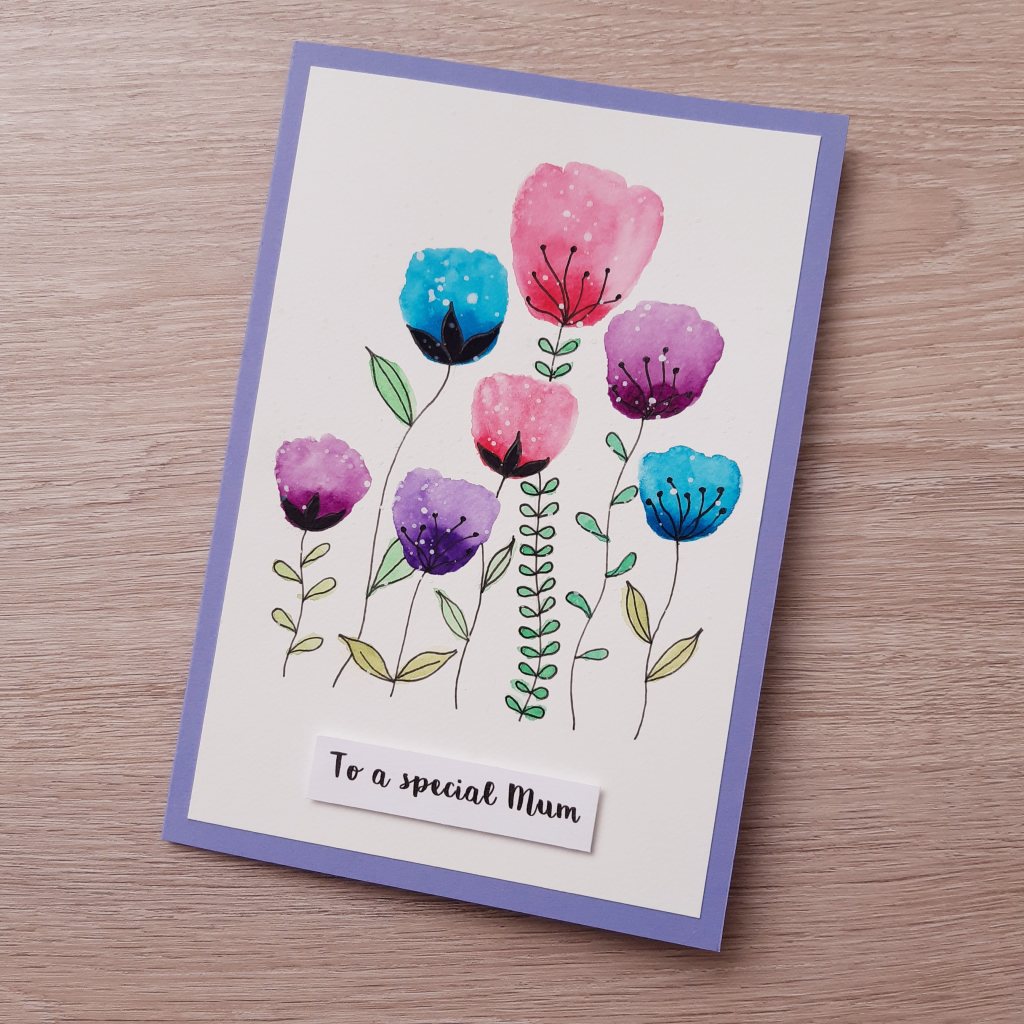
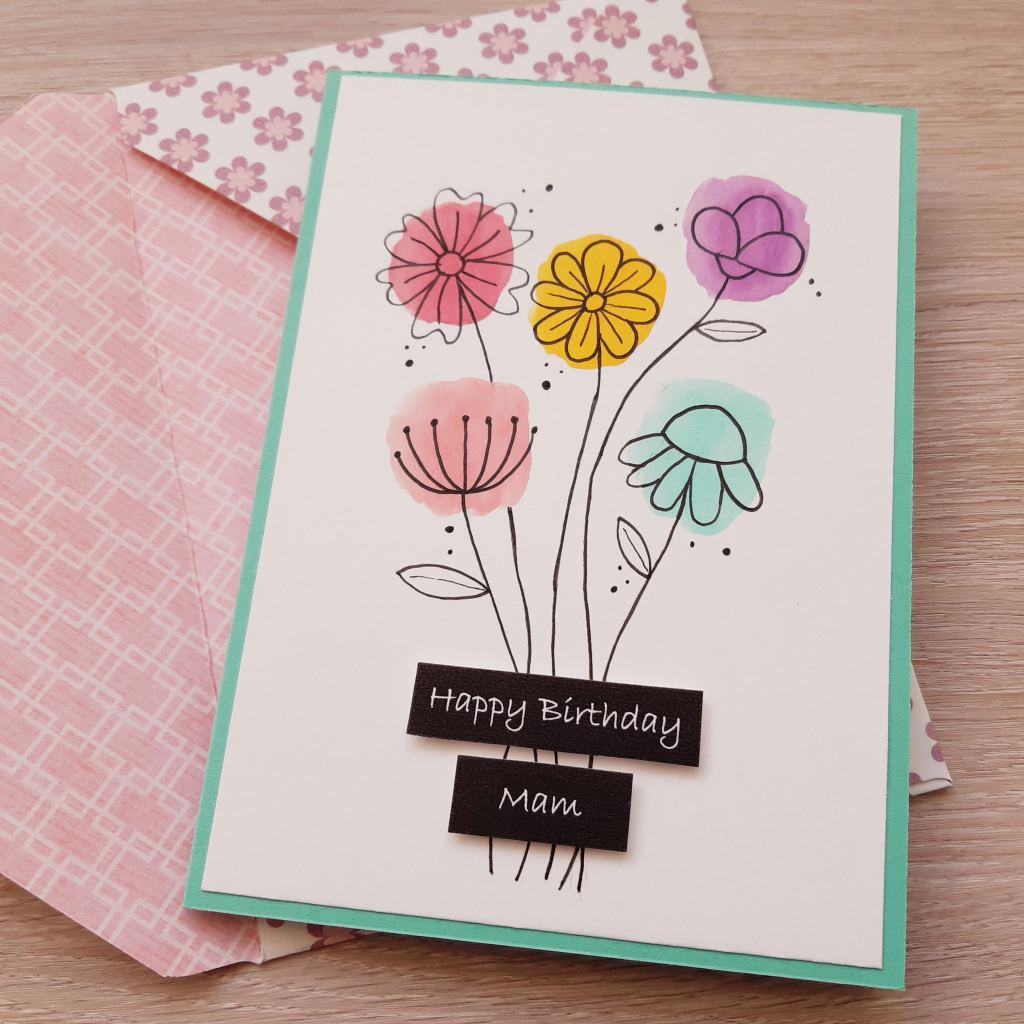
watercolour paintings to be used as designs for greetings cards. It all started when I couldn’t find a nice card for my dad for his birthday so I created a variegated watercolour wash using some of his favourite colours and then added some gold paint flecks to give it some sparkle. Then I started looking at tutorials on YouTube and Pinterest, had a go at some of them, and now I’m hooked on making my own unique cards. I even made my own envelopes using the We R Memory Keepers 1,2, 3 punch board!

Currently pinning…

a range of watercolour tutorials to give me ideas for cards and front cover designs for my monthly bullet journal set ups. I’m now using a Scribbles That Matter journal so the pages are nice and thick, although often I do the painting on hot pressed watercolour paper and then scan, print and stick it in. If you want to see some of my pins, you can check my Pinterest here.

So, that’s a mini update on me and my life currently. I hope you enjoyed reading about what I’m up to. I might do life updates more regularly in future, particularly if my new treatment plan for Bipolar 2 helps to keep me well. And if anyone reading has Bipolar disorder and writes about how it affects them in their blog, I would really love it if you dropped the link in the comments so I can check out your experiences and see if I can pick up any tips on managing the condition. Until next time, keep safe and well.

Posted in CBT, compassion, lifestyle, mental health, Mindfulness

Monday Matters: The beginner’s guide to self-compassion

Photo credit: kaboompics.com for Unsplash

A few months ago, I wrote a blog post which explored different ways to practise self love and gave some ideas for bullet journal spreads you might like to try. Today’s writing is an extension of this them and focuses on self-compassion. I hope you find it both interesting and useful.

What is self-compassion?

Self-compassion is all about showing yourself warmth, love, kindness and understanding, especially during difficult times. It’s about accepting ourselves as we are, learning to be less self-critical and avoiding judgement. It’s about being mindful of our different emotional states and the situations we find ourselves, recognising that we all make mistakes, that no-one is perfect and that we all struggle at times so we’re not alone in our suffering.

Why should I practice self-compassion?

There has been a lot of recent research into the benefits of being self-compassionate and how it can work wonders on our wellbeing. Individuals who practise self-compassion have been shown to be much happier, more optimistic, grateful for what they have, and enjoy better relationships with their loved ones. They’ve also been shown to have lower stress levels as they avoid being judgemental towards themselves, others and situations, recognise and accept that we all find things hard at times and, through mindfulness, become more in tune with their thoughts and emotions. Self-compassionate people are also likely to have a higher level of resilience as they are easily able to bounce back from difficulties and can accept and learn from their mistakes.

Self-compassion is also a great antidote for perfectionist tendencies, which I, for one, have always struggled with, right from childhood and I’m sure many of my readers will have too.

How can I bring self-compassion to my life?

Today, I’m going to share with you some simple ways to bring self-compassion into your life so that you can start being easier on yourself and show yourself the love and kindness you would demonstrate to someone else you care about.

Notice and reframe your critical self-talk

I’ve spoken before about the negative ways in which we tend to talk to ourselves before in my blog post about self love. We can be so good at saying unkind and unhelpful things such as “I’m such an idiot”, “Other people are so much better than me”, “No-one likes me” and “I’m just no good at…” etc. And, as you can imagine, this critical inner voice can destroy our self confidence and lead to feelings of worthlessness and depression.

So how can we put the lid on this damaging talk? The very first step is to start noticing when you are being self-critical. Take the time to examine the situations in which you use negative self talk, the exact words you use and the tone of voice that you adopt. You could even try keeping a little notebook of examples to reflect on. Now consider how you could reframe things in a more positive way. Focus on being self-compassionate, non-judgemental, supportive and mindful of the situation. If you find this difficult, think about what a really compassionate friend would say to you. Changing how we talk to ourselves might be hard at first but it will get easier with time and practise so keep working on your skills and congratulate yourself on your efforts.

Write yourself a letter

This is a great exercise to do if you are going through a difficult time or are struggling to accept something which has caused you mental pain. Start your letter by outlining the situation that you find yourself in and how it has or is affecting you. Next, go on to identify your thoughts and feelings and what you were hoping for or needing to make things easier. Now offer a message of common humanity which will remind you that you are not alone and encourage you to feel connected to others e.g. ‘we all make mistakes’ or ‘everyone has times when they feel…’ etc. Finally, offer yourself some guidance and positive encouragement like you would to a friend who needs your support. Sign your letter with a loving message and add some stickers, washi tapes or little drawings of something nice if you would like to. When you have finished your letter, you can either read it out loud to yourself straight away or put it away somewhere special for when you need to show yourself some compassion.

Start a self-compassion journal

Keeping a journal is a great way to reflect on how you are feeling and what is happening for you right now. I like to spend about ten minutes each evening writing down my thoughts. What I chose to write about differs each day but might include:

  • what I have achieved today
  • what I learnt today
  • ways in which I am proud of myself
  • things I’m grateful for
  • anything I found challenging today and why
  • what I’m looking forward to tomorrow
  • anything I’m feeling apprehensive about

You can finish your writing by adding some kind, understanding and sympathetic words to yourself. For example, ‘most people would get annoyed in that situation and it’s okay that you lost your temper’ or ‘things were difficult today, but hopefully you’ll have a better day tomorrow’ etc.

Use affirmations

Another great way of showing yourself loving kindness it to write your own personal affirmations and practise saying them to yourself each day. I like to create a decorative spread of them in my bullet journal every few months – it is a great way of practising my brush lettering too. Here are some examples:

  • I am enough
  • I talk to myself with love and kindness
  • I’m proud of myself and my achievements
  • I accept my flaws because no one is perfect
  • I’m doing my best and that is enough

Engage in self-soothing activities

If you know you’ve had a difficult day, your week isn’t going quite as planned or you’re finding yourself in a negative mood, you can help to make yourself feel much better by engaging in some self soothing activities.

Here’s some examples of things I like to do:

  • take a walk in nature and use my senses to explore the immediate environment
  • get under the duvet and read a good book
  • do some drawing or colouring in
  • listen to a guided meditation
  • make a collage in my bullet journal of things I love
  • do some watercolour painting
  • mindfully eat a bar of my favourite chocolate
  • watch a funny film
  • paint my nails

If you would like to read more about using self soothing for emotional regulation, you can check out this blog post I wrote last year.

I hope today’s blog post has helped to develop your understanding of self-compassion and how important it is. Let me know which of the activities I suggested appeal to you the most and if you try some of them, be sure to share how you got on.

Posted in lifestyle, mental health, Mindfulness, wellbeing, wellness

Monday Matters: Introducing Friluftsliv and how to reap the benefits of this popular Norwegian practice

Photo credit: Scott Goodwill for Unsplash

If you are a regular reader of my blog, you will know how much I love the great outdoors and how enjoyable I find spending time in nature. It’s really beneficial for my mental health and I try to make getting outside a big part of my daily self care routine. I’m sure most of you have heard of the Danish concept of Hygge (hue-gah) which is loosely translated as a feeling of peaceful cosiness and makes you think of soft and snuggly blankets, a flickering fire or the soft glow of candles. But, you may not have heard of the idea of Friluftsliv, and neither had I until last week. In a nutshell, it’s all about living an outdoorsy life and is a popular practice in Norway, which incidentally is consistently ranked as one of the happiest countries in The World. Today’s Monday Matters introduces you to Friluftsliv and considers some ways in which you can adopt its principles into your life wherever you may live.

The term Friluftsliv, which is apparently pronounced free-loofts-liv, was coined by writer Henrik Ibsen back in 1859 and is made up of the Norwegian words for free, air and life and can loosely be translated as open-air living. Although it might be difficult to remember the name, the concept is luckily a lot easier to grasp. Not only is Friluftsliv about spending time outdoors, it’s also about being mindful of our personal experiences, feeling a connection with the natural world and appreciating all that it has to offer no matter what the season or what the weather brings. The benefits of all three of these have been widely studied and are known to be wonderful for our physical and mental wellbeing.

Having been mainly stuck inside for most of our time due to lockdown restrictions, many of us are now experiencing a strong desire to go out on long walks, sit in the sunshine and enjoy the fresh air of our outdoor spaces both near and far in any way we can. Now that we can drive to a range of locations and facilities in parks and other green spaces are starting to open up, it’s becoming a little easier to relax and enjoy nature. Obviously, we still have to be aware of others and stick with the social distancing recommendation of two metres where possible but we are able to find moments of peace and quiet now.

Photo credit: Toomas Tartes for Unsplash

You might not have immediate access to fjords, mountains and rural hideouts but we can all incorporate elements of Friluftsliv in our lives and feel its rejuvenating effects. Here are some ideas that you might like to try:

Find out what your local area has on offer

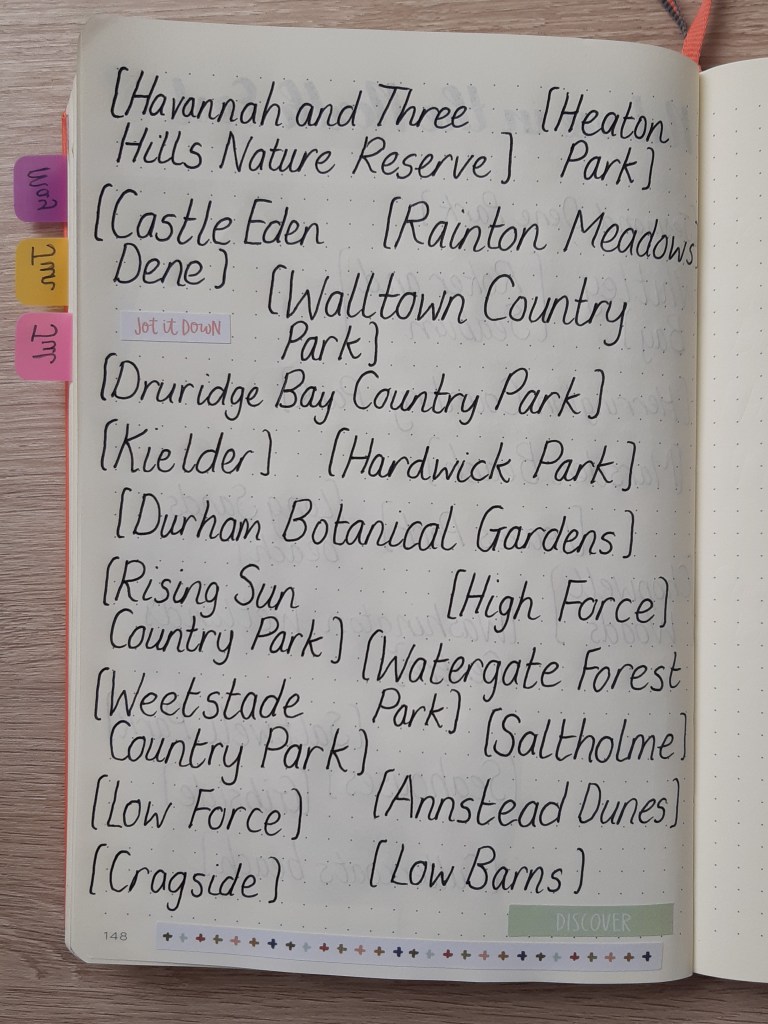
If you type in search terms such as ‘nature reserves’ or ‘places to walk’ and the name of your local area into Google you should be able to find lots of opportunities to enjoy the great outdoors. I started by search in Tyne And Wear and then expanded to the whole of the North East of England and wrote down a range of ideas in my bullet journal. Some of the places we have been to many times before, whilst others might be good for the future. I just wrote the name down for now but will of course need to check out any facilities and if they are currently open as there are still social distancing measures in place.

Be in the moment

One of the key elements of Friluftsliv is mindfulness and there are so many benefits of being in the moment and forgetting all about the stresses and strains of modern day life. As you enjoy your chosen outdoor space, try bringing your attention to your breathing, noticing the sensations as you inhale and exhale, thinking about the processes involved and the key part that trees play. Next, explore your immediate environment using your senses. Maybe you can hear birdsong or trickling water, perhaps you can feel a gentle breeze ruffling your hair or the smell of damp leaves. Really take the time to appreciate all that nature has to offer us. Perhaps find a spot to sit to a while and observe all of the different colours. Maybe you will have the chance to watch different birds and animals as they go about their daily lives. You might like to try going back to this same location at different times of year and noticing changes in the seasons. As you really concentrate on what is happening right now, you’re likely to be filled with a sense of calm and peacefulness. Just let it wash over you and enjoy the simple pleasures of life.

Photo credit: Kalen Emsley for Unsplash

All weather experiences

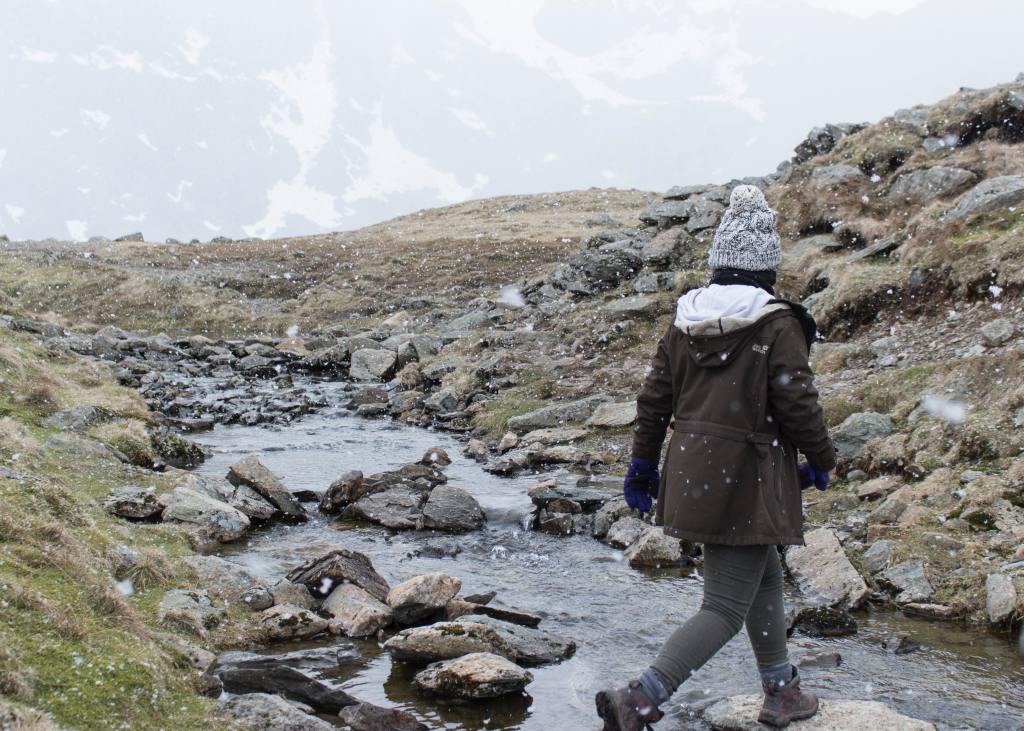
The UK has very changeable weather and you never know quite what to expect. It’s approaching the end of July and as I write this it is raining really heavily. You might think that it’s ‘stopping in’ weather and you could describe it as ‘a miserable day’ but as long as you dress appropriately, a nice walk can really help to lift the spirits. I’m not suggesting you take yourself out in the middle of a thunderstorm or a harsh gale, but a little rain, the crunch of snow underfoot in winter or a chilly wind in Spring or Autumn is perfectly fine with the right clothes and accessories. I’ve lost count of how many knitted hats and scarves I have in my drawer and I love wearing them all. I’ve also got plenty of sun hats and caps too to protect myself from The Sun and they’re all chosen for their bright and cheery colours and patterns.

Photo credit: Matt Heaton for Unsplash

Enjoy a nature holiday

As I mentioned in one of my earlier posts, our holiday abroad for this year has been postponed until next year but that doesn’t mean we can’t enjoy a nice break here in the UK. We’ve been to some amazing places in the countryside and some of our favourites have been staying in log cabins in forests and woodland. The idea of going camping (or glamping) also really appeals as I love the idea of being surrounded by nature. There are also self catering cottages in more rural locations which can be used as a base for walking holidays.

Photo credit: Michael D. Beckwith for Unsplash

Take up a new outdoor hobby

There are lots of hobbies you might like to consider that encourage you to go outdoors. I love taking my camera out and about with me to capture signs of the seasons such as Autumnal berries, squirrels gathering nuts for the winter, blackbirds searching for tasty worms on our lawn, blue tits collecting nesting materials and new buds developing on the trees. Sometimes I just absorb nature and use my senses to explore, whilst at other times I like recording my finds in photographs. I also often take my binoculars out and about with me so I can do a little birdwatching either at nature reserves or in woodland areas. Hiking or cycling are some other great pursuits as you can enjoy the psychological benefits and have a wonderful workout too.

Photo credit: Steve Harris for Unsplash

Picnics and alfresco dining

We like to take any chance we can in the Spring and Summer to enjoy picnics by the coast, at a nature reserve or in a country park or garden. The car boot always has a folded blanket and a couple of folding chairs in so we’re always prepared whether there are purpose build benches or not. We’ll often take a book or magazine with us too for when we’ve finished eating. Our garden patio also has a table and chairs with a parasol so that we can eat our lunch or dinner outside when it is fine.

Try a little skychology

I love looking at the ever changing sky during the day, first thing when the Sun is rising, in the evening at Sunset and at night to see the twinkling stars. Skychology is a relatively new term which recognises that looking up and noticing what’s going on up there has the potential to make you feel calm, connected and present. My husband I regularly sit out in the garden after dark (sometimes with a glass of wine) and find it really peaceful. In fact, much to our excitement, we actually spotted an inquisitive hedgehog one night and have started putting out food in the form of special biscuits which we picked up in a local garden centre. We’ve seen at least two different ones now (one was much smaller) and we were amazed how noisy they are when they’re eating and wandering around. The little one snuffled its way to our wildlife pond for a thirsty drink too!

Photo credit: Diego PH for Unsplash

Snatches of outdoor time

I’m lucky enough to work from home and can sit at my dining table for a direct view of our garden and can pop outside for a quick stretch whenever I want. I can also go out for a walk around the block or drive to a local park or a woodland area. But, if we make it a priority, we can all find a little time to spend outdoors at least a few times a week if not every day. Maybe just enjoying your morning cup of coffee or your breakfast in your garden first thing or taking a stroll through your local park when you finish work. For me, finding time to get outdoors is so vital for my wellbeing that it has become part of my daily routine.

Digital detox

Finally, it’s also a really good idea to take a break from social media and your phone for a while to encourage complete relaxation. If you can’t bear to leave your smart devices at home, try burying them in the bottom of your bag and avoid looking at them for a few hours. A lot of quite remote places have no signal anyway!

Final words…

I hope you’ve enjoyed learning about Friluftsliv and are keen to incorporate elements of it into your life. Let me know in the comments how you plan to embrace nature in the future or what you enjoy doing in the great outdoors. There’s so many wonderful things to see out there that once you start, you’ll soon crave your nature fix every day!

Bye for now,

Posted in lifestyle, mental health, wellbeing, wellness

Monday Matters: 6 Ways to Ensure a Positive Social Media Experience

Photo credit: Georgia de Lotz for Unsplash

The negative effects of social media are well documented and there’s a lot of evidence from a variety of studies about it being detrimental to our wellbeing causing issues such as anxiety, depression, loneliness and low self esteem. However, I believe it is perfectly possible to have a positive and rewarding experience online if you moderate the time you spend and are mindful of how you engage. Today’s Monday Matters post focuses on things to consider and strategies to adopt to help you get benefit from social media whilst sheltering yourself from the more negative aspects of exposure.

Limit your time

I think most of us will agree that we spend far too long on social media each day and that a lot of that time is taken over by mindless scrolling. A study I found online suggested that 30 minutes a day is ample time to spend catching up on various platforms yet a different study found that the average is nearly two hours! If you think social media is taking up too much of your precious time then it probably is and it might be a good idea to schedule a specific time to check in. So, for example, you could decide 6.30pm until 7pm is a good time but make sure you check in again and decide if this amount and time is working for you.

It’s also a good idea to avoid social media later in the evening as it can affect the quality of your sleep. The light on your phone or tablet has been shown to reduce melatonin, the hormone that controls your sleep cycle. Also, some online content can cause something called ‘cognitive arousal’ which basically means you get wound up when you should be winding down!

Try turning off your notifications

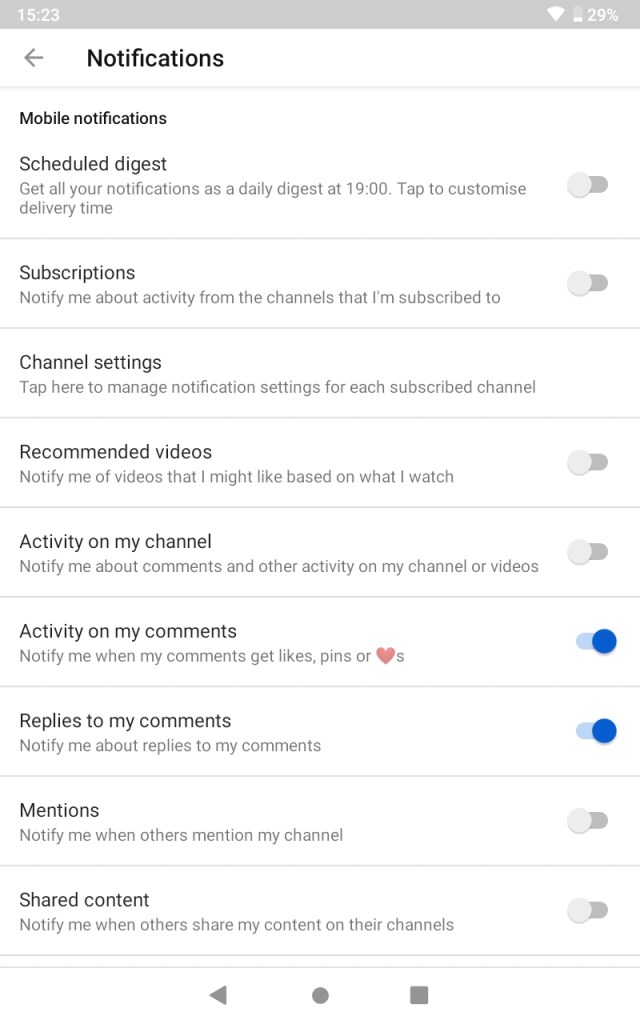
A good idea for controlling the time spent is to turn off your notifications for the different platforms, as I find, when they pop up on your phone or tablet, particularly if the notification is accompanied by a sound, that’s often all that’s needed to send you down the social media rabbit hole! For example, I recently changed my notifications for YouTube as I was getting so many messages about new videos on channels I subscribe to and suggested videos I should watch that I was totally developing FOMO (Fear Of Missing Out) syndrome. Now, the only time I’m notified is if someone likes or loves a comment I left or replies to it. I may even turn the likes and loves off at some point too!

A screen shot of my current YouTube settings

Be wary of emotive language

Since starting my own business, I’ve become super aware of the use of emotive language to get you to click. You may be familiar with ‘click bait’ which can be defined as ‘content whose main purpose is to attract attention and encourage visitors to click on a link to a particular web page’ but there are more subtle ways of getting you to click too. Just two minutes on Pinterest and you will see pins containing phrases such as ‘Must have…’ ‘…you’ll definitely want to bookmark’, ‘…beyond brilliant’, ‘How I tripled my blog traffic…’, ’31 lazy ways…’ etc etc. Again, this plays on your FOMO to make you want to click and save the pins for later. I wrote a blog post about avoiding Pinterest some while ago and my time away was due to the fact that I felt it was having a detrimental effect on my wellbeing and making me feel really overwhelmed.

I’ve recently become really aware of how my local newspaper use language on Twitter to get you to check out their webpage. A lot of their tweets start with ‘Shocking’, ‘Exclusive’, ‘Disgusting’ and other similar emotive words and when you click to find out more, it’s just the same old stuff that you really didn’t need to know about. I know they have to sell their stories, but again, it’s another way of getting you to spend time interacting with content that has the potential to wind you up or makes you feel overly anxious or get you feeling down about the state of the world or your locality.

We can all do without too much negative press right now and in my opinion, reducing your exposure or at least being wary of its affect should be a top priority, particularly if you are prone to anxiety or depression or are currently struggling with your mental health. There are a lot of articles online and in magazines about the affect of watching too much Coronavirus news and The WHO (World Health Organisation) have some great advice related to social media and news in relation to mental health.

Be mindful of your personal experiences

To have a happy social media experience, I think it’s really important that you are mindful of how much time you are spending and the effect that it has on your mood and your general productivity levels. If you often find yourself feeling a little bit rubbish, lacking in motivation, tired or completely down, then you may need to evaluate what you’re looking at and why it’s making you feel like this. For example, if looking at beautiful bullet journal spreads on Instagram leaves you feeling like your own BuJo is completely inadequate and that you are rubbish at drawing, lacking in creativity or doing it all wrong, then maybe it’s time to take a break or stop the mindless scrolling – remember the most popular content will be at the top of your feed and as the platform is mainly about aesthetic beauty you’re going to see flawless images which are likely to be highly edited. On the other hand, if you are left feeling highly motivated, creative or on a high, then you might consider social media to be a good mood booster and a wonderful way of helping you to be productive.

Stop the comparison

We all have issues with comparing ourselves to others at times, often in an unfavourable way, but social media often makes things worse, particularly for young people. Not only are you exposed to a huge volume of information from different posters but what you’re seeing is often only half of the picture (or maybe even less) and often heavily edited to show things in the best light. The ability to follow, like and love may also contribute to feelings of self doubt or worthlessness as you reflect on why others have more followers than you or why some friends are getting more likes and loves.

In order to break the comparison habit I think the first step is to recognise that you are doing it and then to realise that it isn’t helpful and is likely to be having a really big effect on you mentally and not in a good way either. When you begin to realise this, you can start to make changes to what you choose to view and your perception of the content that you consume.

A lot of what is presented on social media is advertising and presents an amazing lifestyle, glossy hair and flawless make up coupled with a perfect body, bang on trend outfits and stylish accessories to match. The danger with this is that we start to beat ourselves up as we don’t meet the same standards. What I try to do is reflect on how ads work and remember that they are very good at persuading you to want what is presented and feel that you are incomplete until you have it. I like to assess how clever they are and how far from reality they are. I’m not saying that I don’t get swayed by adverts, we all do but I think being more mindful helps.

It’s also good to remember that what you see online is in digital format and is often altered using filters, photo editors and Photoshop. In fact, the photograph may have been taken literally hundreds of times until the right angle and best lighting conditions are achieved too. So basically, what you are seeing is not really as it seems. The people in these images may seem full of confidence and joy but underneath they might be struggling with lack of self esteem and loneliness or finding aspects of their life really difficult right now.

Evaluate what you get out of being present on social media

There are lots of benefits of using social media such as keeping in touch with friends, being part of an online community, learning new things, hearing a range of perspectives on a topic, keeping you informed, getting help and advice, and fun or entertainment. In fact, being present on social media has been shown to help people feel more connected and useful as they feel they are positively impacted on the lives of others. It’s a good idea to sit down and think about what you personally get out of your experience and the impact it has on your life.

If there are particular apps that you feel aren’t doing you any favours, don’t be frightened to delete them or take a break until you are in a better headspace or in a different mood. I know that my social media experience depends a lot on how I’m coping day-to-day and if I’m struggling with anxiety and depression, I tend to keep my distance from Facebook, Instagram and Pinterest as they only make me feel worse. When I’m feeling happy and in a good place mentally, I enjoy looking at a range of content and it makes me feel motivated to make changes and improve my life. However, I still need to be mindful as I can start to feel overwhelmed and try to change too much all at once in a bid to get a perfect life (which by the way is completely unobtainable)!

Final thoughts

Social media plays a big part in our modern lives and there’s no changing that. Having a happy experience is all about developing your awareness of the positive and negative aspects and being mindful of how your time online is affecting your wellbeing. I hope today’s post has given you some things to think about and will bring about some changes for the good if you feel that is what is required.

Happy surfing!