Posted in Bipolar disorder, depression, depression management, lifestyle, mental health, wellbeing, wellness

Monday Matters: Wheel Of Wellness – Occupational

For today’s blog post on The Wheel Of Wellness I’ll be focusing on the Occupational segment. This section is all about finding meaningful ways to occupy your time whether that be doing a job you enjoy and get personal satisfaction from, volunteering your time and services for a particular cause such as a charity, helping the community in some way (either in person or online), raising a family or simply being a good partner / friend / mum or dad / sibling / pet owner etc.

When we think of the term ‘occupation’, our thoughts tend to turn to our job or the way we earn a living. However, some of us, myself included, are currently classed as unemployed (for whatever reason), in education, or are retired, but we still occupy our time in a number of useful ways. So, throughout today’s article, I’ll be talking about occupation in the broadest sense i.e. as a way of spending time, particularly in a manner that is useful for ourselves, our family and friends or our wider community.

Occupational wellness

To maintain occupational wellness, it’s important to consider how what we do impacts on our general health – both physically and mentally. Does your work leave you feeling good about yourself and as though you’re really making a difference or do you dread each and every week, feel constantly exhausted, dissatisfied and undervalued? If you volunteer your time for a good cause, does your line manager thank you regularly and encourage you to recognise the impact you’re are having both on yourself and the organisation or do you feel unappreciated and as though it is a struggle to think of the benefits? If, like me, you’re a blogger, do you get a buzz when someone likes your post, follows you or leaves a nice comment or do you feel like you invest too much time on your writing and have lost your spark? For those of you who are retired, have you adjusted to your circumstances, and are you happy with how you structure your days, or do you feel like you would benefit from making changes which support both your physical and mental health? Whatever you current situation, do you feel well motivated, happy and purposeful or is there room for improvement in this area of your wellness?

My own experience of occupational wellbeing (and lack of)

(N.B. these paragraphs may be triggering for individuals who are currently struggling with their mood in some way or have a diagnosis of Bipolar Disorder)

Before my diagnosis of Bipolar disorder, when I was teaching, there were periods of time in my work when I felt on top of the world, superior to most of my colleagues and as though I was making such a difference to the pupils and the school as a whole that I was a complete asset. At other times, I felt demotivated, dreaded each week, struggled to get out of bed and get things done and found my work-life completely unbalanced and unmanageable – drowning both at home and at work. For the rest of the time, I was satisfied with the way my career was going, felt I was becoming better and better at my job and was, along with most of my colleagues making a real difference. I also felt that I was able to manage my workload and had the ability to say ‘no’ when necessary. The swings in mood I was experiencing were exacerbated by occupational / work-related stress but were also heavily affected by a mental health condition that I was unaware I had.

At the time, during a period of severe depression, I was convinced the solution was to give up my job and career and that following handing in my notice, everything would be perfect. I was devastated that this was the answer as I’d wanted to be a primary school teacher from my early childhood but, I was making myself ill and it just couldn’t continue. However, I soon realised that although some aspects of my situation had improved (less stress, better work-life balance, more time for self care for example), my mood swings (although not as severe) continued and I had highs, extreme lows and periods of balance. When I was stable, I would set goals for myself and filled my time in productive ways. I would wake up feeling good and ready to get on with things. When I was depressed, I completely lost my confidence, had extreme anxiety and felt like I was a waste of space and no use to anyone. When I was high (shortly after a depressive episode), I slept very little, was brimming with ideas for what I wanted to do and achieve, flitted from project to project often leaving them half unfinished, spent money on all sorts of items as everything looked attractive and definitely on my want/need list and basically felt like I could take on the world. This eventually caused burn out and resulted in another bout of depression or physical unwellness.

Fast forward a good few years and, although I still have mental health difficulties, a correct diagnosis, medication for my illness, a range of therapies and help from my support worker have put me in a much better place and I’m currently able to manage my moods more easily and occupy my days in useful ways that leave me satisfied and feeling like I’m making a difference (however small). I’m also able to add in mindful and calming activities into my day and can recognise when I need to take breaks and when I might be doing too much.

As some of you who read my blog posts regularly will know, I’m continually working on my physical and mental health in a number of effective ways and I even have paid work lined up with my local university for next month which will make full use of my skillset whilst offering me the opportunity to take a break during any future periods of mental ill health. I also have the chance to work and socialise with other individuals who have physical and/or mental health difficulties so I will feel less alone. For the first time since I resigned from teaching, I feel like my occupational wellness is getting to where it should be.

Asking yourself questions to consider your occupational wellness

I think it’s really important to reflect on the different aspects of your life regularly and consider how things are going. Asking questions can be hugely beneficial. Of course, the assessment questions you ask yourself will differ depending on your current life situation but below I’ve shared some examples which you can pick and choose from depending which are most relevant. You might want to spend some time thinking and considering your answers but another good idea is to make notes or do some journalling so you can deep dive into how things are for you, and evaluate if your needs are being met. This kind of activity is great for self care and building self awareness.

Again, I’ve tried my best to include everyone here but I apologise in advance if you feel like most or all of the questions aren’t relevant to you. If this is the case, you are more than welcome to drop a comment explaining why and I’ll rack my brains and see if I can create a few tailor made question ideas.

  • How would you rate your current happiness and life satisfaction? Why?
  • What is it about your current role or the way you occupy your time that makes you want to get up in the morning?
  • What does an average week / work week look like to you? Does this support your physical and mental health? Why? Why not?
  • Do you feel like your current employment / routine offers opportunities to expand your skills and use your strengths? Why? Why not?
  • If you are a student, do your chosen subjects interest you and are you learning well? Does your degree choice suit you and are you getting the help and support you need to learn? Are you able to study independently? Have you found the right balance between studying and enjoying life?
  • What are your career / life aspirations?
  • What do you feel is important in your life right now? Does your occupation / lifestyle reflect this? If there are areas for improvement, what changes do you think you could make?
  • Do you feel that you’re currently achieving balance between your work and leisure time? Are there any ways you could tweak things?
  • What opportunities do you currently have to use your individual gifts, skills and talents (try making a list of them first if you’re unsure what they are) in order to gain purpose, happiness and enrichment in your life?
  • Does how you currently occupy your time support your physical health? Why? Why not?
  • Does how you currently occupy your time support your mental health? Why? Why not?
  • Can you identify one change you could make to your life right now that would have a positive impact on your physical or mental health? (this could be asking for help rather than taking on all of the responsibility yourself, or simple putting your foot down and saying no!)
  • Social connection is considered important for wellbeing (even during periods of low mood). Can you name the ways you connect with others on a regular basis? Do these connections help or hinder your mental health? Are there any changes you’d like to make in this area to improve your wellbeing? Do you shy away from social situations during periods of depression / anxiety or low mood? Can you think of ways to remain socially connected that seem management during difficult times?
  • How do you manage your work related / family stress and responsibilities? If you struggle in this area, can you think of ways to improve?
  • What’s your current attitude towards life / work? Does this support your health or not? Why?

What about if I’m struggling with depression right now and feel pretty useless?

As someone with bipolar disorder, I have plenty of experience of depressive episodes and recognise the daily struggles. However, what I’ve learnt is that, if you feel like you’ve achieved nothing with your day, it tends to make you feel much worse. For this reason, creating a structure or plan for your time can really help. This might include going to your local recovery college to learn something new, identifying small and achievable tasks to do on each day of the week or planning activities which you know (either now or in the past) have given you a little mood boost such as going for a walk in nature, meeting a friend for coffee or doing something mindful such as colouring in, working on a jigsaw or doing some word puzzles. Then, by bedtime, you can celebrate all of your achievements no matter how tiny they are. And don’t forget, even something like getting out of bed and getting dressed shouldn’t be dismissed! Check out my post on Behavioural Activation if you want more help with making a daily plan.

Final words…

I hope you’ve found today’s blog post interesting or helpful in some way and it has made you think about your occupational wellbeing. I’ve tried to include something for everyone no matter what your current situation as I know my readers are all individual and at different stages of their lives. Let me know in the comments if a question or idea has particularly resonated with you as I love to hear the opinions and thoughts of others.

Until next time, take care.

Posted in depression management, mental health, wellbeing, wellness

Monday Matters: The Wheel Of Wellness – Environmental

Today as part of my Wheel Of Wellness series, I’ll be looking at the environmental segment. Environmental wellness encompasses your immediate physical environments, such as your home, your workspace and social spaces, and the wider environment including nature and how well we look after The World around us.

Dictionary definitions

The online Oxford dictionary defines ‘environment’ in several ways:

  1. the surroundings or conditions in which a person, animal, or plant lives or operates.
  2. the natural world, as a whole or in a particular geographical area, especially as affected by human activity.

Today, I’ll be focusing on both of these including creating an atmosphere conducive to a particular activity, such as working, studying, playing or winding down, or a particular mood e.g. productive, restful, cosy, energising, calming etc and enjoying and looking after our natural world.

Built environments

Built environments are spaces created by humans where we live, work and socialise. This can include our home, our office or workspace, cafes, shops, restaurants, workout places such as the gym, fitness rooms and swimming baths, medical settings such as the doctors, hospital or therapy room, and spaces where we get pampered such as the hairdressers and beauty salons.

Our workspace

If like me, you work from home, you can set your workspace up in a way that makes you as efficient and productive as possible, so that everything you need is at hand and you know exactly where to find it. Some essentials for the perfect home working environment include:

  • somewhere quiet where you can focus
  • a sturdy desk and a comfortable and supportive chair – the desk should feel solid and unmoving and your chair should encourage good posture
  • plenty of storage which is appropriate for your needs – e.g. filing cabinet, magazine files, drawers, labelled boxes, small storage containers etc
  • plenty of natural light and task lighting for dull days

I also like to have some art on the walls and a number of my cross stitch pieces framed in my craft room too. This makes the space visually appealing and celebrates my artistic achievements as well. Motivational bits and pieces adorn my personal vision board along with messages such as ‘make everyday count’, ‘you are someone’s reason to smile’ etc. I also have a business vision board on the wall above my Ikea unit which is full of pictures and text related to what matters to me and my goals.

Creating a tidy, well organised space is also something I’m working really hard on but I’m finding this quite difficult due to the volume of craft supplies and the fact that my craft room is very multipurpose (any tips in the comments will be gratefully received on this one!!!).

If you don’t work at home, your workspace is generally dictated by your employer but most places allow you to customise things, e.g. by adding photos of family or friends. You can also ask for resources which make your desk set up as comfortable as possible including an ergonomic keyboard, gel wrist supports, a foot rest or a more supportive chair if you have issues with back pain etc.

With regard to social spaces, you will know yourself which cafes you feel comfortable in and which are suitable for your needs whether you are studying, working, relaxing or catching up with friends or family. The same goes for other public spaces, you evaluate them and make decisions based on the environment and how suitable it is for you personally.

A welcoming and restful home environment

Most, if not all of us, want our home to be a haven where we feel safe, comfortable and able to relax and unwind. Beyond that, the place we live should ideally suit our individual needs and those of our family. Here’s some ideas for making your home personal to you:

  • minimise clutter to create a restful environment (more on this later)
  • choose your favourite colours and patterns you like for decor
  • think about your lighting needs – soft lighting for evenings, task lighting for day time use
  • add plants to cleanse the air and provide other health benefits
  • choose supportive cushions to make your sofa more comfortable (again you can select those which spark the most joy)
  • invest in a mattress for your bed which provides comfort and support and choose pillows which suit how you sleep
  • add cosy throws and/or blankets in your living room and bedroom for chillier times of year
  • depending on summer weather and temperatures, think about fans or air conditioning to make your space more comfortable
  • use curtains and blinds to control the light and the temperature and allow privacy
  • choose pictures and art work which makes you smile or fills you with joy
  • think about how you want your home to smell – add scented candles, incense sticks, diffusers etc in your favourite scents (be careful that these don’t set off any allergies you may have though – I found wax melts to be too potent and they were irritating my throat and my nose!)

Sources of stress in your home environment

It’s important to take steps to minimise the effects of the following stress inducing factors even if you can’t completely control them.

Messy home, messy mind A disorganised and cluttered home is a huge source of stress and can have a really bad impact on your mental health (see below)

Noise pollution e.g. traffic, noisy neighbours, dogs barking, noisy commercial premises etc. can have a dramatic effect on your health and wellbeing. Tips to deal with unavoidable noise pollution include placing a bookcase along a wall which is adjacent to a neighbour to reduce sound from next door, soundproofing windows to block out traffic noise, cover up unwelcome noises by putting on the radio or playing some peaceful sounds e.g. ocean waves, crackling fire, gentle rain etc. During the Summer hanging windchimes next to your window use ear plugs in bed. You should also make sure you are considerate towards your neighbours so they offer the same in return e.g. apologising in advance for disturbance caused by DIY, keeping the volume of the TV, radio and music as low as possible, if you’re having a party or some other form of get together, let your neighbours know in advance and keep the noise to a minimum, if you are a dog owner, talk to your neighbour to fins out how he/she behaves when you are out. Finally, check out your local council website if you want to make a complaint about nuisance noise.

Work stress If you work from home, it’s important to have a dedicated space for work which is not the same place you use for relaxation. This creates not only a physical separation, but also and mental separation too. You should also make sure you start and finish work at a reasonable time and schedule in breaks.

The negative impact of a cluttered home

The word clutter refers to items or collections of things which are strewn about the home in an untidy state. Clutter is generally made up of stuff we haven’t sorted out which has got in a mess, things which don’t have a home so are left lying about and anything you’re keeping which doesn’t bring value to your life. As well as not being great to look at, clutter can have a negative effect on your mental and physical health, and your relationships with others. Here’s some of the key problems:

  1. Clutter promotes confusion – in other words, you feel like you can’t think clearly, focus or make decisions
  2. Clutter causes stress – it diverts your attention away from what you want to be focusing on, it clouds your thought processes, makes you feel anxious and full of guilt about the situation/mess you find yourself in
  3. Clutter can cause accidents – if you have items all over your house there are lots of trip hazards, surfaces covered in stuff can also mean that things get knocked off and broken, you could also end up standing on things and breaking them too!
  4. Clutter makes you eat more – a study found that people who live in a cluttered environment tend to overeat or binge eat more than those who have a well organised home
  5. Clutter affects your mood – a house in chaos can make you feel drained and unhappy, it can even make you feel like a failure. A well ordered home, however, makes you feel full of pride and creates feelings of ease and happiness.
  6. Clutter steals your time – if your house in full of stuff which is left lying about you’ll spend time thinking about things every time you look at them. you’re also likely to lose things and spend time each day searching through the mess e.g. for lost car keys, important papers that need your attention and anything that wasn’t put away when you’d finished with it.
  7. Clutter affects your relationships – Clutter can make communication with family members more difficult as it constantly distracts you, leading to poor concentration and an inability to interpret facial expressions and emotions of those around you. It can also make you feel more isolated as feeling ashamed of the state of your home can stop you from invited friends and family round.

Keeping your home clean and tidy during periods of low mood or depression

During periods of low mood or depression, you may lack the energy or motivation to keep up with day-to-day chores. However, having a messy and unclean home will only make you feel worse. At these times, pushing yourself to do a few small tasks each day can really help to boost your mood and give you a sense of achievement. You might find my post on behavioural activation useful to help you set some very small goals each day. Here’s a few tips:

  • keep up with small tasks so they don’t become big ones e.g. wash the breakfast dishes and wipe out the sink rather than letting things pile up and feel unmanageable, wipe the bathroom sink and shower out after each use, vacuum a room each day rather than trying to do the whole house at once and not being able to face it
  • use the Behavioural Activation method to set small goals each day – you might want to do this with a family member or friend so they can offer you support and encouragement
  • when planning your behavioural activation tasks, think about the best time of day to do each one, evaluate how you feel after completing each chore and use this to set future goals e.g. if you became overwhelmed with dusting the furniture in your bedroom, just focus on cleaning one item
  • remember you are unwell right now so you should lower your standards a lot and celebrate every tiny achievement, if something doesn’t get done, it will keep for another day
  • ask for help – if you’re really struggling, don’t be ashamed if you need to ask for help from a family member or friends – two sets of hands are usually better than one

Time in nature

Time spent in green spaces interacting with natural elements such as air, water and sunlight as well as getting up close to plants and wildlife helps nurture our minds and bodies. Here’s some ideas for enjoying nature:

  • Use Google maps to locate nearby nature reserves or parks – enjoy a stroll and maybe do some bird spotting too
  • have a brisk woodland walk and watch the sun as it peeps through the trees
  • feel the sand between your toes at the beach and listen to the sound of the waves
  • spend some time in the sunshine to elevate your energy levels and boost your mood (wear sunscreen as appropriate)
  • go for a wildflower walk (we like using the Seek app to identify our finds)
  • feel the cool breeze on your face in the back garden as you relax and read your favourite magazine
  • spend an hour or two gardening – try creating a multisensory space using grasses, herbs and other scented plants
  • try foraging – check out The Woodland Trust’s guide

Not only does being out in nature allow for a slower pace, it also helps you to feel connected to something larger than yourself.

Caring for the environment (being green or eco friendly)

Green symbolises our natural environment and planet Earth and the terms ‘being green’ or ‘eco friendly’ mean living your life in a sustainable way, ensuring our activities recognise that nature needs to be looked after and that it is important to conserve our resources. Here’s some ideas:

  • reduce waste – e.g. avoid plastic single use bags, use a reuseable bottle or cup for beverages on the go, check out love food hate waste for some great tips
  • recycle – make good use of your recycling bin for glass, plastic, paper and cardboard and also, try to choose products which come in less packaging, avoiding none recyclable plastic if possible
  • conserve water – if possible shower rather than a bath and limit the time you spend in there, wait until your laundry bin is full before doing a wash, turn off the tap whilst brushing your teeth, water your plants early morning or late in the evening to give your garden a good drink and prevent evaporation, install a water butt to collect rainwater, run the dishwasher when full or wash small amounts of dishes by hand, only boil what you need for your hot drinks, saucepan or stock jug, try steaming your veggies (it retains more of the nutrients as well as saving water) check your plumbing regularly for leaks
  • save energy – turn off lights when not needed, draught proof windows and doors, wash at 30 degrees, take a 4 minute shower (not so easy if like me you have long hair and need to shave your legs but at least try to cut down), avoid using your tumble dryer, swap your bath for a shower, seek out advice about insulating your home and make some changes
  • repurpose things you no longer want or need – search ‘creative recycling’ on Pinterest (a few years ago my husband turned an old wooden CD storage crate into a really great bug hotel by filling the different sections with pine cones, dried leaves, chopped up bits of bamboo, collections of twigs from the garden and pieces of wood offcuts with holes drilled in)
  • upcycle – this is where you reuse objects or material in a way that adds value or makes something higher quality. Check out these tips for beginners
  • shop in charity shops – find one off pieces or nearly new things at a fraction of the price, give money to a good cause and help the environment all at the same time

Final thoughts…

I hope you have enjoyed reading today’s post and it’s helped you consider your environmental wellness. Personally, I would like to focus on dealing with clutter in my home as I know it is having a detrimental effect on my mental health. I’m also aware that I need to start small so that I don’t become overwhelmed and make myself feel worse. Let me know in the comments if anything has struck a cord with you and it has given you some ideas going forward.

Posted in Bipolar disorder, depression management, lifestyle, mental health, wellbeing, wellness

Monday Matters: Wheel of Wellness – Financial

This week, in my series of posts on The Wheel of Wellness, I’ll be focusing on the financial segment. This aspect is all about living within your means and learning to manage your finances both in the short term and long term. I’ll be considering the impact that some mental health conditions may have on your money and will also be sharing some tips for managing your finances effectively, particularly if some of your issues are related to your mood.

What is finance?

Finance is concerned with the management of money and, on a personal level, includes activities such as spending, saving, investing, borrowing and budgeting. It’s about meeting your short and long term financial needs and living within your means, in other words, spending no more money than you have. To help you manage your finances, it’s important to become ‘financially literate’ which basically means having a good relationship with money and become well educated on the various aspects of finance.

Mood disorders and your finances

Most people dislike talking about money but it’s important that you develop your understanding of the different aspects of finance so you can keep yourself financially well. If, like me, you live with depression and/or bipolar disorder you will understand that managing your finances can be a source of distress, particularly during periods of mental illness. Although we all have different experiences, when depressed, you may find yourself struggling to make money decisions or deal with aspects of your finances. You might also try to make yourself feel better by spending money buying nice things. You could find yourself unable to work or have to take time off when you’re unwell and this can also make things hard. During times of mania or hypomania (very elevated or elevated mood) you may find yourself having frenzied spending sprees or making expensive purchases which you / your family can’t afford.

For example, during periods of hypomania, I tend to buy lots of things to fix problems e.g. neat or cute matching storage containers to create order and look good at the same time, the latest kitchen gadgets which I’ve spotted online, new blankets/cushions for our sofa to replace ones which are slightly past their best but we can manage with just fine etc. Also, everything in the shops seems to develop a rosy glow and is heightened in attractiveness and I have to stop myself buying it all. When I watch craft videos on YouTube, I need to have those exact pens in those colours shown, particular stickers or ephemera because it all looks so pretty or a certain gadget / crafty resource so that I can make similar things to those demonstrated. Then, when I get depressed, I get upset because my craft room is bursting at the seams with all of the things I’ve bought and I have no motivation to make anything or use any of my supplies.

Money management tips

If you think you would benefit from increasing your financial wellbeing, you might like to consider the tips I’ve put together below. Some are general tips related to learning more about your personal finances and budgeting, whilst others are specifically targeted at those of you who find that your mental health has a direct influence on your money management.

Know what your current financial status is

Spend some time getting to know your current money situation. Make a note of what is in your savings account, your current account and your ISA if you have one. Also, become familiar with your debts e.g. how much is left to pay on your mortgage?, what do you owe on any loans you may have? do you owe any friends or family some money? etc. Learn how much income you / your household have coming in each month and so on. You could create a spread in your bullet journal such as me and my money or create an e-record on your mobile phone.

Examine your cash flow

When you know how much you earn each month or how much you receive in benefits, find out how much you typically spend and on what. Try creating a tracker for income and expenditure for a month to get a better idea of your incomings and outgoings. You could also consider looking at your spending habits at different times e.g. when depressed, manic or hypomanic or when your mood is stable (neither high nor low).

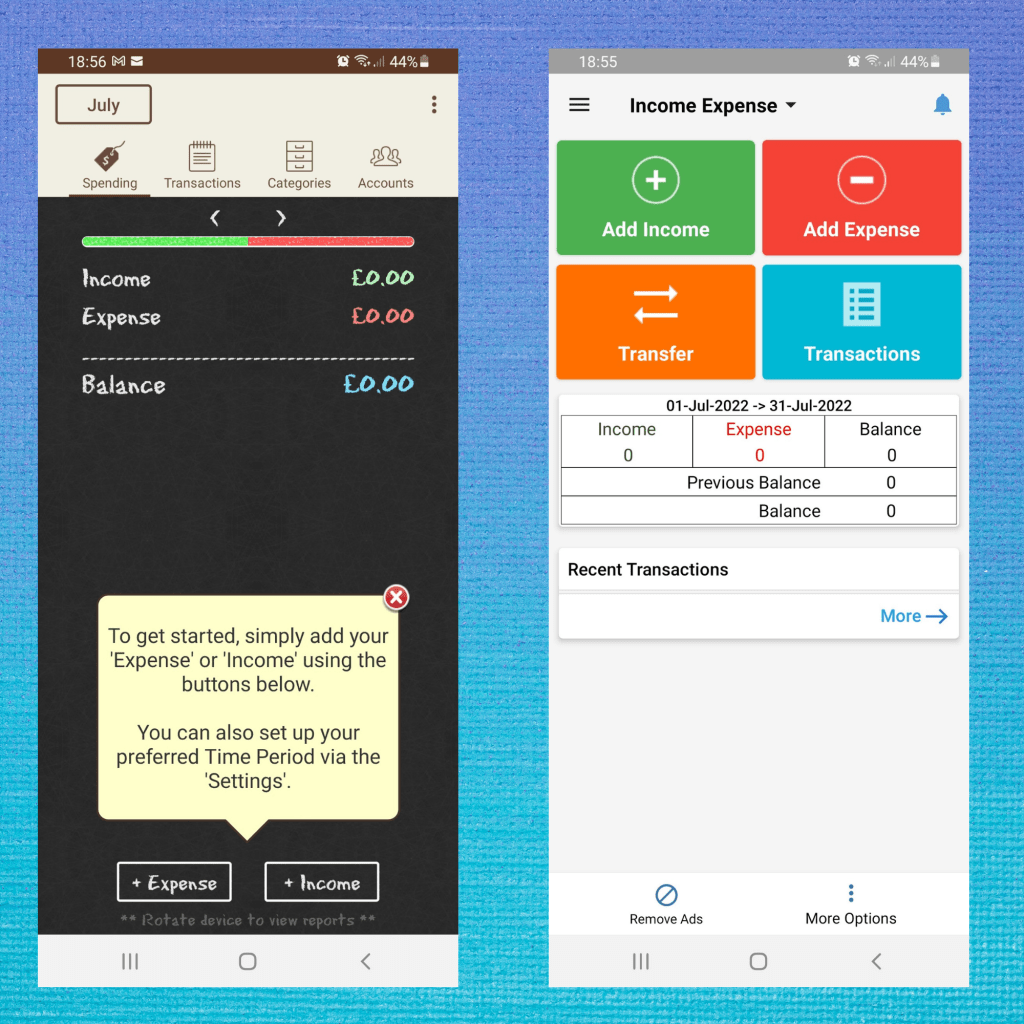
You could do a paper version of this in your bullet journal or a notebook as shown below or you can use a free app which calculates your spending and deducts the money you from your monthly income. I found a couple of Android apps which were really easy to use by doing a quick search on Google Play.

Source: Laura Jones for Keeping It Creative blog

If recording your expenses seems a little overwhelming right now, you could start by look at your monthly bank statements to see where your money is going each month. Although it won’t identify exactly what you purchased, it will tell you the name of the shop or business for each transaction.

Create a monthly budget

This is definitely something to do when you’re feeling well as it can be quite time consuming and requires good concentration and forethought. Once you’ve examined your cash flow situation you’ll know what your income is like and the kinds of things you purchase each month or each quarter. You’ll also know if you’re spending more or less than you have coming in and how much you are able to save (or not).

A monthly budget is a plan for how you will spend your money each month. It’s a popular way to manage your finances as lots of recurring expenses such as mortgage, rent, mobile phone etc. occur on a monthly basis. If you know what your income is each month, you can make sure you spend less than you have coming in. That way you can try to save a small amount of money with a view to creating an emergency fund for any unplanned spends.

There’s lots of information and advice online from money experts about how to create and stick to a budget but the key steps are outlined below:

  1. Calculate your monthly income – only consider consistent sources, not one off things like selling unwanted stuff on Ebay or money you get for your birthday
  2. Track your spending (see above)
  3. Consider your financial goals – this could be something like saving up for a deposit on a house, your wedding or a new car but could also be something small like reining in the amount you spend on clothes each month so you can put money aside for a holiday.
  4. Create your budget – make a list of all of the things you spend money on each month and allocate an amount to each category. This could include spending more or less on your favourite hobbies, cutting down on eating out and takeaways etc. A popular rule for creating a budget is the 50/30/20 rule where you allocate 50% of your income to needs, 30% towards wants and 20% towards savings.
  5. Continue tracking your expenses and refine your budget as and when necessary – do your spending habits align with your budget? have your financial goals changed? etc.

Identify your triggers

If your spending varies depending on how you feel, you might want to track your spending and your mood at the same time. Then, you can identify your triggers. For example, you may self soothe by shopping for little (or larger) treats in attempt to make yourself feel better when you’re depressed. You might overspend when you’re feeling high because each purchase comes with a little thrill or you have boundless energy for a frenzied shopping spree. Once you know your triggers, you can create a plan for managing them or seek advice and support from a professional.

Take steps to manage your spending

If you know your spending tends to get a little out of control during periods of mental illness, try to create a plan when you’re feeling well and maybe share it with close family and friends. This could include:

  • leaving your debit / credit card at home and drawing out a limited amount of cash for your shopping
  • shop with a friend or family member who can rein in your spending. You may argue against their recommendations, but ask them to persevere!
  • get rid of your credit card altogether so you can’t spend money you haven’t got
  • ask you ‘shopping partner’ to encourage you to think it over before making a decision to purchase. Is the urge to buy still there is a few days time or after you’ve slept on it? Most overspending is caused by impulse purchasing which you are likely to regret later!
  • if you think you might be about to have an online shopping spree, try to distract yourself with something else which makes you feel good such as reading a book, doing some work in the garden or tending to your houseplants, having a relaxing bath or doing some yoga

Set up direct debits

During periods of difficulty you may have little energy or motivation to pay bills or manage your finances. Setting up direct debits (instructions for your bank to authorise payment when they’re due) for your monthly and quarterly bills such as your broadband, mobile phone, energy, council tax etc. makes things easier and safer and ensures you don’t forget to pay and become in arrears.

Seek medical help

If you feel your money issues are related to your mental health e.g. spending to cheer yourself up when depressed or going on manic spending sprees when you feel high, try talking to your GP, CPN or psychiatrist. Your GP should be able to refer you to the mental health team or your psychiatrist may tweak your medication or advise you upon therapy which may help to manage your symptoms.

Get free professional advice

If you live in the UK and are currently in debt you can get free advice from a number of places such as Step Change, Turn2Us, National Debtline and most people’s favourite money saving expert Martin Lewis. You can also seek our information of different benefits which may be available to you. Bipolar UK is a good source of advice and their website also has a selection of stories about money issues and a section dedicated to finances in their forum.

Ask for help from a loved one

Depending on the severity of your issues, you may just need to ask for help from your partner or a trusted friend. You can ask them to monitor your spending and intervene when necessary e.g. helping you to organise pay your bills when you’re depressed or look after your credit and debit cards during periods of mania or hypomania. You can also ask them to look out for changes in your behaviour related to spending during periods of mental illness.

Check out supportive webpages and sites

There’s a wealth of information available online relating to finances and there’s some particularly useful bits and pieces about money and mental health. Here’s some I found following a quick search:

Coping with financial worries and debt

If you have money worries right now you may struggle to control your emotions and have feelings of guilt, shame, stress, embarrassment and exhaustion. This can lead to low mood and worsening of your mental health. You may be tempted to bury your head in the sand and hope that things will get better at some point but, although it might be really difficult and overwhelming, you should try to take control and find a way forward (easier said than done I know). Many people are currently struggling with managing their finances but there’s lots of help out there in the community and online so you’re definitely not alone. Also, remember the saying a problem shared is a problem halved. If you thought a good friend was having money issues you would want him or her to reach out and not feel ashamed of their situation so try to be self compassionate and seek some help and support.

Final words…

Ultimately, managing your personal finances depends on all kinds of factors including your income streams and how steady they are, your employment status e.g. student, self employed, unemployed etc, your current non-negotiable monthly outgoings such as your mortgage or rent payments, your savings and how much you wish to increase them by if at all, any benefits you are entitled to, your dependents and your financial goals. However, if you dedicate some time to assessing your cash flow by examining your income and expenditure then you will become better educated with regard to your current situation and this will help you to manage your budget. By learning about the link between mental health and money you can identify your own issues and seek help with them, either from resources online, friends and family or professionals.

I hope you’ve found the information contained within today’s post helpful and it has encouraged you to think about getting on top of your finances if you feel it’s an area of your wellbeing that you might like to work on.

Posted in Health and Nutrition, life hacks, lifestyle, meditation, mental health, self care, wellbeing, wellness

Monday Matters: Wheel Of Wellness – Physical – Part 2: Sleep

For the second part of the Physical element of The Wheel Of Wellness I will today be looking at the importance of quality sleep to maintain good physical and mental health. I’ve previously published a couple of blog posts on the topic of sleep namely 5 ways to get better sleep tonight and 5 things to do in the evening to ensure a restful night’s sleep and a productive next day which you may like to have a read of as well. Many people have issues with their sleep for one reason or another and if you’re one of them, you might want to prioritise this area of the wellness wheel and spend some time learning about the effect that sleep (or lack of) affects your body and your life and pick up some tips on how to manage this aspect of your physical health.

Why is sleep so important?

Sleep has a huge impact on our health and wellbeing throughout our lives. Anyone who has ever had difficulty sleeping will know that the quality and quantity of our slumber dramatically affects our mind, body, general quality of life and our safety. While you are sleeping, your body is actively working and preparing you for the next day.

The following is a list of the basic functions of sleep which illustrate the importance of a good night’s kip:

  • physical restoration
  • mood regulation
  • cleaning the brain of toxins
  • information processing and memorization (committing things to memory for later recall, the storing of visual, auditory or tactical information)
  • strengthening the immune system

In children and teens, sleep also supports growth and development.

In addition, further benefits of quality sleep include:

  • better heart health
  • stress reduction
  • generally makes you feel more alert throughout the day
  • can help you lose weight (you’re less likely to crave high sugar or junk foods)
  • reduced risk of anxiety and depression
  • improved appearance – healthy, glowing skin (versus dark circles under eyes, dehydrated complexion, breakouts and redness from lack of sleep, plus comments from friends and family along the lines of “you look like ****)
  • better concentration (hopefully leading to improved productivity)
  • better decision making
  • stronger immune system (so less likely to get ill / feel run down etc)
  • boosted creativity (better ideas and use of imagination)
  • better motoric response (including quicker reactions)
  • enhanced sporting performance
  • reduced risk of high blood pressure, coronary heart disease, stroke and obesity
  • better emotional regulation (meaning amongst other things that you’re more likely to get along with others and less likely to become overwhelmed by your feelings)

Sleep and wakefulness is controlled by two biological processes: Sleep Homeostasis, commonly known as ‘sleep pressure’ and The Circadian rhythm, otherwise known as ‘the body clock’.

What is sleep pressure?

Sleep pressure is basically, the brain’s desire and need for sleep. The more time you’ve been awake for, the greater the sleep pressure. When you wake up in the morning, you should have very little need for sleep (if you’ve had a good night) so sleep pressure is very low. As we get on with our day, the sleep pressure begins to grow so that by evening time sleep pressure is much higher, making us feel sleeping and in need of our beds! By morning, following a good night’s sleep, our sleep pressure will have reset and be back to little or no desire for further sleep.

In order to make sure that we have the right amount of sleep pressure present by bed time, we should really make sure that we get up and go to bed at the same time each day. However, I know that a lot of people will have a lie in on a weekend, which tends to make it difficult to switch off and sleep on a Sunday night (especially if Sunday night dread is at play). Taking naps should also be avoided as this can reduce sleep pressure too. If you absolutely must have a nap, tried to take it before 3pm and make sure it lasts for less than one hour.

What is meant by the term Circadian rhythm AKA our ‘body clock’?

Like all living things, humans have a circadian rhythm which is the brain’s way of aligning the body with the environment. Our sleep/wake cycle follows this 24 hour rhythm. During the day, exposure to light helps us to feel alert, awake and active. As night/darkness falls our internal body clock starts to produce melatonin, a hormone which promotes sleep.

You can help promote a healthy circadian rhythm by seeking natural light (sunshine) during the day, getting some daily exercise, avoiding caffeinated drinks after mid-day, limiting light before bed and having a set bed time / wake up routine which prepares the body for sleep at night and encourages wakefulness first thing in the morning. I’ll discuss some of these in more detail later.

Creating the right bedroom environment

It’s really important to create a comfortable and relaxing environment in your bedroom to help you fall asleep quickly and easily. We invested in a ‘posturepedic’ mattress which is pocket sprung with a latex top. We’ve had it for years and it’s still completely supportive and so comfortable. Every time we go on holiday, we always look forward to being back in our own bed! The best sheets and pillowcases we’ve found for softness and durability are bamboo ones. An added bonus for us is that they’re breathable and hypoallergenic too.

Your bedroom should also be nice and dark as the absence of light sends a signal to your body that it’s time to get some rest. A nice thick pair of curtains or light blocking blinds are essential for this (we have blinds and lined curtains which allow just enough morning light to help us wake up). Some people also like to wear a sleep mask to block out light and these are also good for shift workers who are in bed during the day.

Other essentials for a calm and relaxing space include as little clutter as possible and a quiet environment to minimise distractions. Just the right room temperature – not too hot and not too cold is also helpful for inducing sleep (experts recommend around 18.3 degrees Celsius / 65 degrees Fahrenheit is ideal). Some people also swear by lavender as a soothing and sedating scent but I find it sets my allergies off which is certainly not sleep inducing!

Sleep experts also suggest that your bedroom should be strictly for two purposes only – sleeping and sexual activity. This means it should not be used for:

  • eating, drinking or smoking
  • dealing with bills, reading letters or any form of paperwork
  • using technology or looking at screens e.g. TV, mobile phone, laptop, tablet etc.

I also like to read fiction books on my Kindle Paperwhite in bed but I do find that as long as the screen is pretty dim, I become really sleepy after a couple of chapters. If you feel that reading certain books stimulate your brain too much, bedtime reading may be best avoided.

Diet and sleep

Most people know that caffeine isn’t good for sleep due to the stimulants it contains so if you have trouble sleeping, it’s best not to drink coffee or other caffeinated drinks such as cola, sports and energy drinks for at least 4 hours before bed. Having a large meal before bed is also likely to keep you awake as your body will still be digesting the food. Also, you may find yourself suffering from indigestion or acid reflux if you eat or drink too late. If you do find yourself craving a late evening snack a small amount of nuts, a banana or a small bowl of oatmeal with berries should be safe to eat.

Alcohol is well known to cause a slowing of brain activity and make you feel relaxed and sleepy but beware that the consumption of alcoholic beverages, especially in excess has been shown to cause poor quality sleep and shorter duration so you may find yourself waking up repeatedly in the night or not feeling very refreshed in the morning. Night-time drinking may also result in acid reflux too!

A good daily routine to help you sleep

Throughout the day, it’s important to get as much natural light as you can. This could include working next to a window, taking regular outdoor breaks during the day e.g. sitting in the garden with your morning cuppa and having an al fresco lunch. Obviously this is more difficult during the Winter months but even short walks outside, maybe with a nice, hot drink can make all the difference.

Exercise (or being active) including aerobic workouts, resistance training and yoga during the day can also help with sleep. Just make sure you don’t do anything which elevates your pulse rate for at least 3 hours before bed.

In the evening time, it’s a good idea to do relaxing activities which can calm the body and the mind. This could include listening to some soothing music, reading a book, doing some meditation, writing in your journal to help put the day to rest (see my 5 ways to get better sleep tonight for an explanation of how), enjoy a warm bath or hot shower.

If you regularly struggle to sleep, something you should definitely try is avoiding using electronic devices for at least an hour before bed. This is helpful for two reasons – one, a lot of online content can be mentally or emotionally stimulating (including emails) and two, the light that these devices emit can affect your body clock by increasing alertness and delaying the release of melatonin. If you must use your phone, at least set the blue light filter or night time mode to come on after around 7pm.

What if I find myself wide awake in bed?

After approximately 20 minutes of lying awake (estimate this, do not use your clock), you should get up out of bed and leave the bedroom. Either do something boring or something really relaxing (not something stimulating (no looking at your phone!) until you start to feel tired, and then go back to bed. If you’re not asleep after another estimated 20 minutes, get up again and repeat the process. If this happens regularly, spend some time during the day assessing what you think might be causing the problem and try making some changes to your routine.

A word about sleep disorders

There are a number of sleep disorders which can seriously affect the quality of your sleep. Some of the common ones are:

  • Sleep walking / talking
  • Nightmares / night terrors
  • Sleep apnoea (obstructed airway)
  • Sleep paralysis (a temporary inability to move that occurs right after falling asleep or waking up)
  • Hypnogogia / Hypnopompia (hallucinations occurring as you wake up or fall asleep)

If you suspect that you may be struggling with any of the above, it’s really important to speak to your GP who can offer medical advice or make a referral to a sleep specialist.

Final thoughts…

If you are struggling with your sleep right now you have my completely sympathy as I’ve had real issues with insomnia in the past. However, it’s usually quite easy to identify the contributing factors which are preventing a good night’s sleep. Finding solutions to the problems is a little more difficult but I hope this blog post has given you some ideas. Remember that quality sleep is vital to your wellbeing and it’s worth investing time and energy into this aspect of your physical health.

Posted in Bipolar disorder, creativity, depression management, lifestyle, mental health, Mindfulness, wellbeing, wellness

Monday Matters: Wheel Of Wellness – Intellectual

In today’s Monday Matters I’ll be considering the intellectual element of the Wheel Of Wellness. This segment is all about keeping your brain active, exploring creativity and finding different ways to expand your knowledge and skills in various areas. It also includes finding ways to challenge yourself and ensuring you do activities which stimulate each area of the brain e.g. speaking and listening, problem solving, fine motor tasks and using and developing your skills of observation etc.

What do we mean by intellectual?

Sometimes when we use the term intellectual, we’re referring to individuals who come across as ‘brainy’, clever or highly educated as demonstrated by their thought processes, reflections, use of vocabulary, problem solving and factual knowledge etc. However, the term can also refer to ways in which you can stimulate your mind.

Today’s blog post is not about trying to develop a superior intellect or the knowledge of a Mastermind contestant, but more about keeping the different areas of your brain active and becoming a lifelong learner. Good mental fitness is very beneficial for your general health and wellbeing, and, as you get older, it can help to prevent signs of dementia or, at the very least, slow down cognitive decline.

Great ways to keep your brain active and expand your mind

Puzzles The term puzzle might make you think of a box of pieces that you join together to make a picture but a jigsaw is just one type of puzzle. In fact, the term is used to defined any activity that requires mental effort and has a definite ending. This can include paper puzzles such as crosswords, wordsearches, spot the difference and sudoku, board games such as Cluedo and Scrabble, guessing games such as I spy and charades and online games such as Candy Crush, Word Cookies and my favourite Angry Birds 2! Puzzling takes lots of concentration and mental effort which is great for improving both your physical and mental health. Here’s 5 benefits for you:

  • improves your problem solving skills which can then be applied at home or work
  • a wonderful stress reliever
  • reduces your risk of mental diseases such as Alzheimer’s
  • slows mental aging
  • a good form of entertainment and can be great fun!

If you are currently struggling with anxiety or depression, puzzles are a great way to distract yourself from negative thoughts, rumination and general worry about your problems. During my last period of depression, I used to dedicate a lot of time to doing jigsaws, wordsearches, arrow words and online games as it provided respite from thoughts that I wasn’t going to get better and feelings of hopelessness and helplessness.

Learn to play a musical instrument There are so many benefits of learning to play a musical instrument that I could write a full blog post on it. According to my research, playing music uses both sides of the brain so you’re giving it a really good workout. Attentiveness, fine motor movements, memory and creativity are all required and as you get better at playing, you’ll become more confident, not just with regard to your instrument of choice, but also in general too. Setting and working towards goals and celebrating your achievements is bound to make you more positive and after a while, you will probably want to share you learning with others and impress them with your new skills – presenting a great opportunity to socialise with friends, family and even work colleagues.

In this month’s Happiful magazine, I also read that new research has found that learning a musical instrument (in the study they looked at the impact of piano practice) can protect against dementia in those over 60 as it strengthens white matter in the brain.

Read plenty of books, magazines and newspaper articles Being a regular reader is great exercise for the brain and both fiction and non-fiction have many benefits.

Fiction books can help improve your memory, vocabulary, empathy and emotional intelligence, analytical skills and tolerance of others. They can also be a huge source of pleasure and relaxation, alleviating stress and helping us to get a good night’s sleep.

Reading non-fiction books and articles (including blog posts) is a great way to improve your knowledge on a variety of topics which interest you. Whether you want to find out more about gardening, read about an interesting bird you spotted on a woodland walk, improve your understanding of a historical event or explore self help strategies for good mental health there are books and articles on every subject imaginable. And, if you join your local library, you can have access to a range of learning materials for free.

Many people also like to read a daily or weekly newspaper to keep themselves informed. Both the paper and online versions provide a source of global, national and local news, weather updates, the latest health and wellbeing advice, technological advances, entertainment and sports. You can even personalise the homepage on your computer so that news articles on particular topics appear first.

Learn a new skill Learning a new skill is a great way to fire up your brain. There are endless opportunities available for free online or you could try taking a class at your local college or doing a distance learning course. Here’s some examples which you might like to try:

  • flower arranging
  • photography
  • a foreign language
  • drawing
  • ceramics
  • watercolour painting
  • basic car repairs
  • Tai Chi
  • embroidery
  • good sleep hygiene
  • knitting
  • basic first aid
  • mindfulness
  • cooking on a budget
  • swimming
  • yoga
  • aromatherapy
  • Microsoft Office for beginners

As part of our course homework for last week, we were asked to have a go at learning something new. I chose something which I’ve been meaning to give a go for a long time which is developing the skills involved in creating wavy hair using a curling wand (which I purchased nearly a year ago and have barely tried out). My hairdresser showed me some of the basic techniques but it’s not so easy when you’re trying to do it on your own hair as you can’t see the back and you need to swap hands for each side meaning that for half of the styling process, you’re using your non-dominant hand for the wrapping. I found a few super helpful YouTube videos which used the same or a similar wand and have watched them a few times to get some tips. For next week’s session, I’m going to go to college with wavy hair to show off my new skill!

Try new things Trying something new is a great way to grow as a person. You might go to a restaurant you’ve never visited before, find a new recipe to have a go at, take a different fitness class, put on a different radio station, try listening to a different genre of music or go on a day trip to a place which a friend has recommended to you. You never know, you might discover a new favourite or create an amazing memory.

I took the opportunity to try out a new kind of exercise whilst I had access to all of the fitness classes for free. I’ve now discovered that I really enjoy doing pilates and although it’s a relatively gentle form of exercise, it’s great for toning your core muscles.

Ask questions This is something my husband and I do regularly as part of our thirst for new knowledge and greater understanding. For example, there are some swifts that come back every year and nest in one of the roofs we can see from our back bedroom. They’re fascinating birds and, being nature lovers, we always want to find out more about them. Some of the questions we’ve searched on Google this year include: When do swifts arrive in the UK? How many eggs do swifts have in a clutch? What do swift eggs look like? Do swifts pair for life?

You can also learn a lot from asking questions of friends, family, work colleagues and various acquaintances. You might want to get a different opinion or perspective or you might want to find out about something they seem to be somewhat of an expert in or at least know more about than you.

Try out a new hobby New hobbies are great for enhancing your skill set. Also, they present new challenges which can be wonderful for boosting your confidence and self esteem. Here’s a few hobbies that might appeal:

  • birdwatching
  • geocaching
  • upcycling
  • origami
  • gardening
  • calligraphy
  • scrapbooking
  • martial arts
  • astronomy
  • archery
  • camping

Keep a ‘things I want to learn’ list in your bullet journal or notebook Every time you think of something you’d like to know more about, write it down so you don’t forget. It might not be top of your to do list right now, but making a note can be a good reference for the future. When you’re ready, you can then pick something out to focus on and set some learning goals.

Watch documentaries If you’re a visual or auditory learner, documentaries are a great source of education. You can find out about anything you’re interested in, including wildlife, nature, different cultures, living with particular health conditions, environmental issues, technology, crime, history, arts and media, science, religion and current affairs. In the UK, Panorama and Dispatches are popular documentary programmes which tackle the latest issues, whilst Horizon focuses on a variety of subjects related to science and philosophy. I also find anything that Sir David Attenborough narrates to be both fascinating to listen to and incredibly informative.

Get creative Every one of us has the potential to be creative as long as regularly find the time to develop our skills. You might think that creativity is all about making a piece of art work or writing a story or poem, but you can be creative in many different ways. Here’s some examples:

  • developing a new storage system for all of your cleaning supplies and tools at home
  • finding an alternative solution to a problem at work
  • create a capsule wardrobe for your holiday abroad
  • choose a colour scheme for your living room and have fun choosing complementary soft furnishings
  • learn how to make bread dough and then have fun turning pieces into different animals
  • try styling your hair in a different way
  • create a costume for a fancy dress party
  • take a landscape photo and then recreate the scene as a watercolour painting
  • choose a new theme for your bullet journal spreads and have a go at designing different pages for the month

Final words…

Although as adults there are things that we feel we must learn to get by in life and to progress in our jobs or career, we should also make time to learn about things that particularly interest us. I love trying out different art techniques and a few years ago (before COVID struck), I joined a beginner’s ceramics course. I had so much fun and met some lovely people there and, even though we were given specific assignments, e.g. to make a pinch pot, our creations were all completely different and unique to us. Quite a few of us signed up for the intermediate class too to develop our skills further and try out different techniques. It was so exciting to see our finished projects when they’d been glazed and fired and we all felt a huge sense of achievement by the end of the course.

I would be really interested to know if you consider yourself a lifelong learner and, if you do, what you’d like to find out about next, which kind of hobby appeals the most, or which skills you particularly want to develop in the future.