Posted in lifestyle, mental health, wellbeing, wellness

Monday Matters: Wheel of Wellness – Emotional

This week, as part of my series on the Wheel of Wellness, I’ll be covering the emotional segment. This section of the wheel is all about your feelings and includes how well you are able to identify, manage and engage with your emotions and how successfully you can deal with any emotional challenges which arise from time to time.

In the Oxford Dictionary online, emotion is defined in two ways:

  1. a strong feeling derived from one’s circumstances, mood or relationships with others.
  2. instinctive or intuitive feeling as distinguished from reasoning or knowledge.

Assessing your emotional wellness

The following are some signs of good emotional wellbeing that you can use to assess your current health in the area.

  • you feel good about yourself and who you are
  • you have feelings of contentment most of the time
  • you treat others well, showing them compassion and understanding (if you do this, you are most likely to treat yourself well, if you are critical of others, you will likely have a tendency to be harsh and critical towards yourself)
  • you feel you have a good support network e.g. you have friends / family or colleagues that you are able to open up to and a sense that there are people in your life who care about you
  • you are able to rest and relax (including being able to wind down for good sleep)
  • you are able to assert yourself, recognising that your opinions are valid and being able to say no when you need to without feeling guilty
  • you consider yourself to be someone who manage stress well
  • awareness of the main signs of poor emotional health – anger (which presents itself in various ways, including irritability, short temper, being argumentative), feeling hopeless (feeling low / depressed, helpless, worthless, seeing small things as ‘the end of the World’, not being able to see things are capable of change etc), losing interest in activities you used to enjoy, becoming socially distant, poor levels of productivity, blaming others for your mistakes and failings and repeatedly having trouble in relationships (friends, family and romantic partners)
  • flexibility – you are able to change and adapt well to different circumstances
  • you are able to name and embrace all of your emotions (such as sadness, anger, joy, fear, excitement etc) as a natural part of who you are (rather than suppressing or ignoring them
  • you lead a purposeful life (do you feel that you use your strengths to your advantage to make a difference?) (see my post on Occupational wellness for more on this)
  • you are grateful for many things in your life (particularly for people and situations in your life rather than just your possessions)
  • you value your experiences more than you value your possessions
  • you regularly engage in self-care activities such as doing activities which make you happy, using breathing techniques to help you stay calm or calm yourself when anxious, practising mindfulness, journalling about how you are feeling, showing yourself plenty of compassion, developing a regular meditation practice, scheduling ‘me time’ into your day, do something altruistic and explore how you feel as a result.

Some ideas for improving your emotional health

  1. Make sure you’ve got the basics right – eat healthily with occasional treats, get enough quality sleep, move your body on a daily basis and use vices in moderation (e.g. alcohol, social media, junk food etc). If you think you need to make changes in one or more of these areas, try setting yourself small, achievable targets and celebrate all of your achievements.
  2. Try CBT. If you think you need to learn more about your emotions and how they affect you, CBT (cognitive behavioural therapy) is really beneficial for many people. There are plenty of books on the subject but it’s best if you work through your particular issues with a trained therapist.
  3. Make use of self help resources. A book that I’m currently reading which I’m finding super useful is ‘Why has Nobody Told Me This Before’ by Dr Julie Smith. I spend around half an hour reading each morning after breakfast and I always have a Mildliner highlighter pen at hand to mark up anything which especially resonates with me. The website https://www.getselfhelp.co.uk/ has lots of resources which might prove to be useful too.
  4. Develop a daily reflective journalling habit – spending 5 or 10 minutes each evening recording how you feel your day went is a great way to record events and interactions with others and explore how they affected you emotionally. When you’ve finished writing, spend a few minutes considering what you wrote thinking about the decisions you made, whether the experience was positive or negative, what you can learn from what happened and what you might do differently next time.
  5. Become familiar with ‘Unhelpful thinking styles’ and use them to identify and rationalise particular thoughts you have. Type the above phrase into Google or YouTube to learn about them and consider which particularly resonate with you. Once you know about them, you’ll start to recognise them cropping up in your day-to-day life. You can then begin to challenge them and create more helpful alternatives (a trusted friend or therapist can help with this too).
  6. Be realistic when you’re not feeling 100% – There will be certain times of the year when you’re not feeling quite yourself, maybe you’re feeling under the weather, perhaps you’re stressed out at work or you’re planning an event or holiday which is taking up lots of your time and making you feel super busy. Or, like me, you might have a mood disorder which causes you periods of difficulty. Whatever the cause, it’s important to look after yourself during these times (ramp up the self care and self compassion) and definitely lower the expectations you place on yourself. Also, don’t be afraid to say no if you feel like something will be too much for you right now.
  7. Start a self-care routine for your emotions – this could include meditation, mindful movements or stillness, yoga, Pilates, stretches or different breathing exercises to calm your body and your mind. If you keep a bullet journal like me, a great idea is to create a page of self-care ideas (with pictures/doodles if you want) as a reminder of all of the things you can try.
  8. Remember some things are outside of your control – there are many things in life that happen to you which you can’t change e.g. the loss of a loved one, a global pandemic, a health diagnosis etc, but we can choose how we respond to those circumstances, e.g. by being kind, self-compassionate, hopeful and accepting.
  9. Reach out – if you’re feeling lonely, down or isolated, seek out supportive family members, friends, colleagues, online or in person support groups to let people know that you are struggling. Also, try to find out what is going on in your local community so you can seek out social connections. If the thought of social interactions makes you feel anxious right now, try to choose one of the options that feels easiest such as inviting a friend over for coffee or chatting to someone via text message or on the phone.
  10. Set clear boundaries and learn to say no. If you say yes to things that you really don’t feel like doing or you don’t have time for, it can lead to feelings of anger, resentment or overwhelm. In her book which I mentioned above, she explains about ‘people pleasing’ “We say yes when actually what we want and need is to say no. We feel resentful of being taken advantage of but unable to change it by asking for anything different. On the other hand, having clear boundaries makes you feel in control and is a way of showing yourself respect. Being assertive can be difficult for some of us, especially during periods of mental illness, so it’s a good idea to develop your skills when your mood is stable. Only say yes to what matters to you the most such as a get together with close family and friends, learning opportunities or new challenges at work which will further develop your skills or increase your knowledge (but not too far from your comfort zone!). There’s a wealth of information online about assertiveness (some better than others) so if you need help in this area or want to know more about what it means to be assertive, try checking out NHS resources such as this one which includes a very useful download, worksheets and information on www.getselfhelp.co.uk and this article from lifehack.org. Again, qualified CBT therapists can help with assertiveness too.
  11. Read up on emotional resilience – emotional resilience is the ability to adapt to stressful situations and cope with life’s ups and downs. You can learn about it and develop the associated skills in books, online, with a therapist or through doing a course at a local recovery college like I did.
  12. Go outside – studies have shown that being in nature has powerful effects on our mind, body and soul. There’s lots of ways to fit in some time outdoors including taking a walk in your lunchbreak, enjoying your morning coffee in the garden or wandering through your local park or woodland at the end of a busy day.

Final words…

Thank you for taking the time to read today’s blog post. I hope you have found it useful and are thinking about trying some of the ideas I mentioned. Let me know in the comments if you think your emotional health is quite strong or if you feel it’s an area you need to work on. As always, if you have any questions or anything to add, please do get in touch.

Posted in Bipolar disorder, depression, depression management, lifestyle, mental health, wellbeing, wellness

Monday Matters: Wheel Of Wellness – Occupational

For today’s blog post on The Wheel Of Wellness I’ll be focusing on the Occupational segment. This section is all about finding meaningful ways to occupy your time whether that be doing a job you enjoy and get personal satisfaction from, volunteering your time and services for a particular cause such as a charity, helping the community in some way (either in person or online), raising a family or simply being a good partner / friend / mum or dad / sibling / pet owner etc.

When we think of the term ‘occupation’, our thoughts tend to turn to our job or the way we earn a living. However, some of us, myself included, are currently classed as unemployed (for whatever reason), in education, or are retired, but we still occupy our time in a number of useful ways. So, throughout today’s article, I’ll be talking about occupation in the broadest sense i.e. as a way of spending time, particularly in a manner that is useful for ourselves, our family and friends or our wider community.

Occupational wellness

To maintain occupational wellness, it’s important to consider how what we do impacts on our general health – both physically and mentally. Does your work leave you feeling good about yourself and as though you’re really making a difference or do you dread each and every week, feel constantly exhausted, dissatisfied and undervalued? If you volunteer your time for a good cause, does your line manager thank you regularly and encourage you to recognise the impact you’re are having both on yourself and the organisation or do you feel unappreciated and as though it is a struggle to think of the benefits? If, like me, you’re a blogger, do you get a buzz when someone likes your post, follows you or leaves a nice comment or do you feel like you invest too much time on your writing and have lost your spark? For those of you who are retired, have you adjusted to your circumstances, and are you happy with how you structure your days, or do you feel like you would benefit from making changes which support both your physical and mental health? Whatever you current situation, do you feel well motivated, happy and purposeful or is there room for improvement in this area of your wellness?

My own experience of occupational wellbeing (and lack of)

(N.B. these paragraphs may be triggering for individuals who are currently struggling with their mood in some way or have a diagnosis of Bipolar Disorder)

Before my diagnosis of Bipolar disorder, when I was teaching, there were periods of time in my work when I felt on top of the world, superior to most of my colleagues and as though I was making such a difference to the pupils and the school as a whole that I was a complete asset. At other times, I felt demotivated, dreaded each week, struggled to get out of bed and get things done and found my work-life completely unbalanced and unmanageable – drowning both at home and at work. For the rest of the time, I was satisfied with the way my career was going, felt I was becoming better and better at my job and was, along with most of my colleagues making a real difference. I also felt that I was able to manage my workload and had the ability to say ‘no’ when necessary. The swings in mood I was experiencing were exacerbated by occupational / work-related stress but were also heavily affected by a mental health condition that I was unaware I had.

At the time, during a period of severe depression, I was convinced the solution was to give up my job and career and that following handing in my notice, everything would be perfect. I was devastated that this was the answer as I’d wanted to be a primary school teacher from my early childhood but, I was making myself ill and it just couldn’t continue. However, I soon realised that although some aspects of my situation had improved (less stress, better work-life balance, more time for self care for example), my mood swings (although not as severe) continued and I had highs, extreme lows and periods of balance. When I was stable, I would set goals for myself and filled my time in productive ways. I would wake up feeling good and ready to get on with things. When I was depressed, I completely lost my confidence, had extreme anxiety and felt like I was a waste of space and no use to anyone. When I was high (shortly after a depressive episode), I slept very little, was brimming with ideas for what I wanted to do and achieve, flitted from project to project often leaving them half unfinished, spent money on all sorts of items as everything looked attractive and definitely on my want/need list and basically felt like I could take on the world. This eventually caused burn out and resulted in another bout of depression or physical unwellness.

Fast forward a good few years and, although I still have mental health difficulties, a correct diagnosis, medication for my illness, a range of therapies and help from my support worker have put me in a much better place and I’m currently able to manage my moods more easily and occupy my days in useful ways that leave me satisfied and feeling like I’m making a difference (however small). I’m also able to add in mindful and calming activities into my day and can recognise when I need to take breaks and when I might be doing too much.

As some of you who read my blog posts regularly will know, I’m continually working on my physical and mental health in a number of effective ways and I even have paid work lined up with my local university for next month which will make full use of my skillset whilst offering me the opportunity to take a break during any future periods of mental ill health. I also have the chance to work and socialise with other individuals who have physical and/or mental health difficulties so I will feel less alone. For the first time since I resigned from teaching, I feel like my occupational wellness is getting to where it should be.

Asking yourself questions to consider your occupational wellness

I think it’s really important to reflect on the different aspects of your life regularly and consider how things are going. Asking questions can be hugely beneficial. Of course, the assessment questions you ask yourself will differ depending on your current life situation but below I’ve shared some examples which you can pick and choose from depending which are most relevant. You might want to spend some time thinking and considering your answers but another good idea is to make notes or do some journalling so you can deep dive into how things are for you, and evaluate if your needs are being met. This kind of activity is great for self care and building self awareness.

Again, I’ve tried my best to include everyone here but I apologise in advance if you feel like most or all of the questions aren’t relevant to you. If this is the case, you are more than welcome to drop a comment explaining why and I’ll rack my brains and see if I can create a few tailor made question ideas.

  • How would you rate your current happiness and life satisfaction? Why?
  • What is it about your current role or the way you occupy your time that makes you want to get up in the morning?
  • What does an average week / work week look like to you? Does this support your physical and mental health? Why? Why not?
  • Do you feel like your current employment / routine offers opportunities to expand your skills and use your strengths? Why? Why not?
  • If you are a student, do your chosen subjects interest you and are you learning well? Does your degree choice suit you and are you getting the help and support you need to learn? Are you able to study independently? Have you found the right balance between studying and enjoying life?
  • What are your career / life aspirations?
  • What do you feel is important in your life right now? Does your occupation / lifestyle reflect this? If there are areas for improvement, what changes do you think you could make?
  • Do you feel that you’re currently achieving balance between your work and leisure time? Are there any ways you could tweak things?
  • What opportunities do you currently have to use your individual gifts, skills and talents (try making a list of them first if you’re unsure what they are) in order to gain purpose, happiness and enrichment in your life?
  • Does how you currently occupy your time support your physical health? Why? Why not?
  • Does how you currently occupy your time support your mental health? Why? Why not?
  • Can you identify one change you could make to your life right now that would have a positive impact on your physical or mental health? (this could be asking for help rather than taking on all of the responsibility yourself, or simple putting your foot down and saying no!)
  • Social connection is considered important for wellbeing (even during periods of low mood). Can you name the ways you connect with others on a regular basis? Do these connections help or hinder your mental health? Are there any changes you’d like to make in this area to improve your wellbeing? Do you shy away from social situations during periods of depression / anxiety or low mood? Can you think of ways to remain socially connected that seem management during difficult times?
  • How do you manage your work related / family stress and responsibilities? If you struggle in this area, can you think of ways to improve?
  • What’s your current attitude towards life / work? Does this support your health or not? Why?

What about if I’m struggling with depression right now and feel pretty useless?

As someone with bipolar disorder, I have plenty of experience of depressive episodes and recognise the daily struggles. However, what I’ve learnt is that, if you feel like you’ve achieved nothing with your day, it tends to make you feel much worse. For this reason, creating a structure or plan for your time can really help. This might include going to your local recovery college to learn something new, identifying small and achievable tasks to do on each day of the week or planning activities which you know (either now or in the past) have given you a little mood boost such as going for a walk in nature, meeting a friend for coffee or doing something mindful such as colouring in, working on a jigsaw or doing some word puzzles. Then, by bedtime, you can celebrate all of your achievements no matter how tiny they are. And don’t forget, even something like getting out of bed and getting dressed shouldn’t be dismissed! Check out my post on Behavioural Activation if you want more help with making a daily plan.

Final words…

I hope you’ve found today’s blog post interesting or helpful in some way and it has made you think about your occupational wellbeing. I’ve tried to include something for everyone no matter what your current situation as I know my readers are all individual and at different stages of their lives. Let me know in the comments if a question or idea has particularly resonated with you as I love to hear the opinions and thoughts of others.

Until next time, take care.

Posted in lifestyle, Planning and journaling

Currently… life update August 2022

As I haven’t posted yet this month due to being on holiday, I thought I’d do a quick and easy life update. I think this kind of journalling is great to look back on so you can see how things have changed and even if you don’t have a blog, it’s nice to do an analogue record in a journal or notebook.

Currently eating…

lots of fresh and juicy fruit such as strawberries, raspberries, pears, mangoes, grapes and watermelon. I always try to make sure I get at least 5 portions of fruit and veg each day and I also have one as part of my breakfast and something as a snack later in the day.

Also, whilst in Amsterdam, we had an ‘all you can eat’ breakfast at the hotel on a couple of the days. When perusing the offerings, I found some overnight oats which had been made with soya milk. There were two portions left and it was the perfect opportunity to try them. I mixed a little strawberry jam into mine but, to be honest, they were nice enough just plain. Since returning home, we’ve made some for our breakfast quite a few times and we’ve now managed to get the consistency just right. I can totally recommend them as a tasty and filling start to a busy day.

Currently drinking…

iced coffee. I haven’t yet made it myself but I’ve enjoyed it a few times in different cafes. I have a shot of caramel syrup in mine and they’ve been really nice to have as a cooling refreshment during the hot days we’ve been having as an alternate to my usual hot drinks.

Currently watching…

lots of great dramas on TV. I’m particularly enjoying Shetland, Van Der Valk and The Secrets She Keeps (on catch up) as I love police and psychological stuff. It’s nice to settle down to an hour or too of great television each evening before bed.

Currently reading…

C.L. Taylor’s latest book The Guilty Couple which I’m really enjoying so far. Again, psychological thrillers are my favourite kind to read. I’ve just created a huge TBR list in my bullet journal and I have 13 fiction and 5 non-fiction self help style lined up so they should last me the rest of 2022.

Currently listening to…

the Wet Leg album on You Tube to see if I want to buy it as a download for my iPod. I love their first two singles Chaise Longue and Wet Dream a lot and I enjoy listening to them on the radio and singing along.

Currently pinning…

desk organisation ideas. I’m trying to decide what I want available on the desk in my craft room and what I want to put away so that I have plenty of space to work. I’m also trying to establish how to keep things neat and tidy. I always find really good ideas on Pinterest to pin.

Currently enjoying…

Looking at all of the flowering plants which are in full bloom in our garden. We have lots of different colours out there at the moment and it’s a really bright and cheerful space to sit out in. I wish the weeds didn’t grow quite as fast though!

Currently creating…

journal layouts which document our holidays to Scotland and Amsterdam and pages of images of my recent purchases and why I love them. I’ve just started a new TN insert and I think it will probably be full by the time I’ve finished. For the travel stuff, I like to include photographs, receipts, daily itineraries, food menus, leaflet cuttings etc and decorate with coloured and patterned papers, washi tape, stickers and ephemera.

Final words…

So that’s a mini update on my life right now which I hope you enjoyed reading. I would love to hear what you’re up to in the comments. I’m going to schedule in more posts like this one as it’s really interesting to revisit and see how my focus has changed over time. I’ve only done two ‘currently’ posts since I launched my blog over four years ago but I think at least every six months would be good for the future.

Posted in art, bullet journal, Bullet journaling, creativity, goal setting, lifestyle, Planning and journaling, productivity

My new slightly later than mid year BuJo and Setting up for August – birthday balloons theme

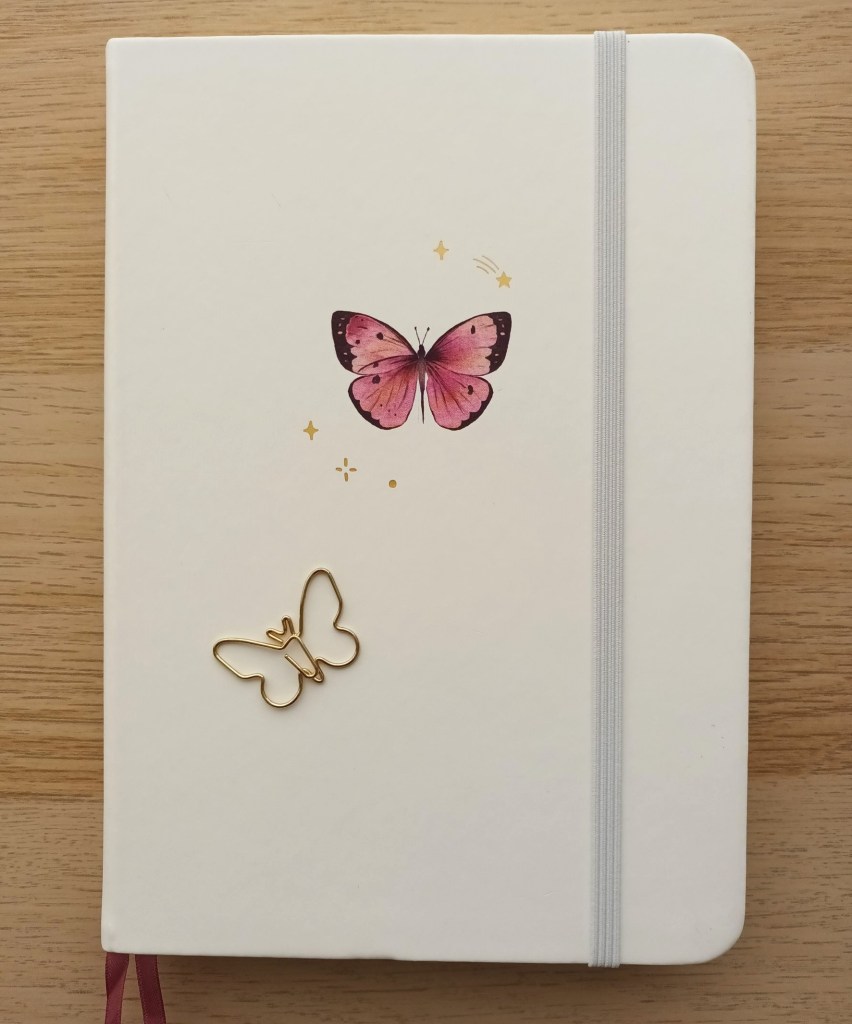
I’ve just finished my previous bullet journal and I’m excited to be moving in to a brand new notebook. This one is again from Notebook Therapy but the cover is white vegan leather with a beautiful butterfly on the front and gilded edges to the pages. I’m already wondering how long it will stay mark free for!

As we’re off on holiday shortly I’m going to keep this post picture heavy with minimal explanation. If you want to know anything about the spreads you can always ask in the comments.

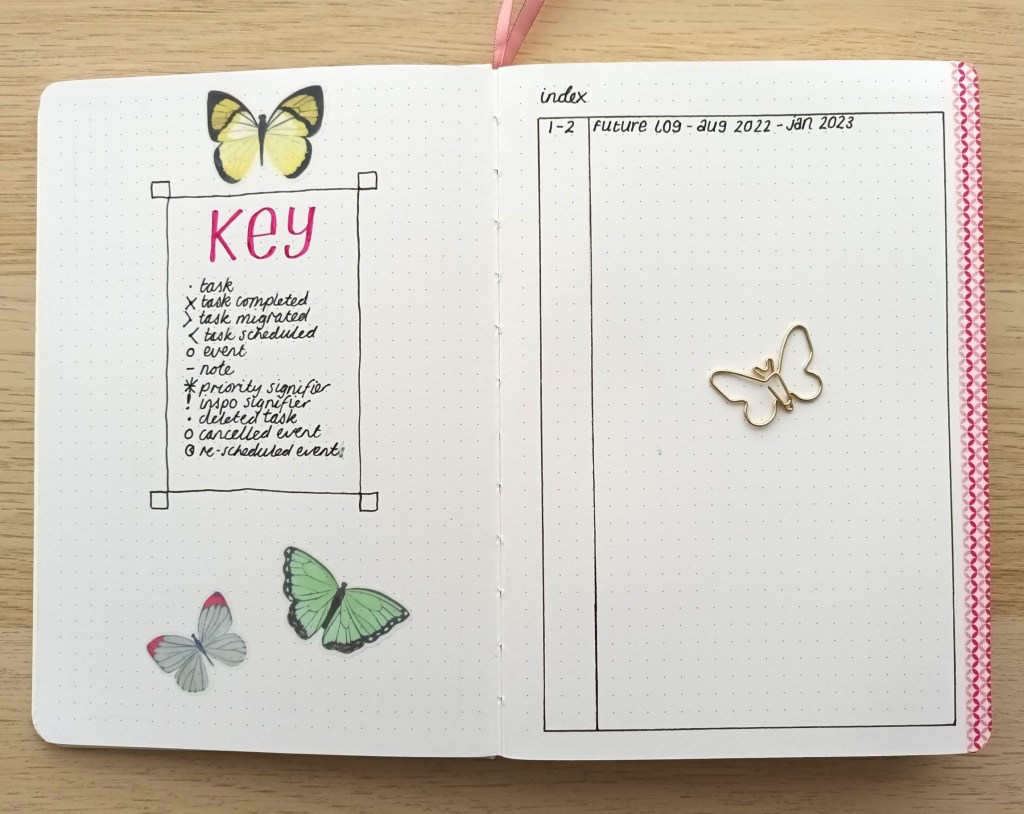
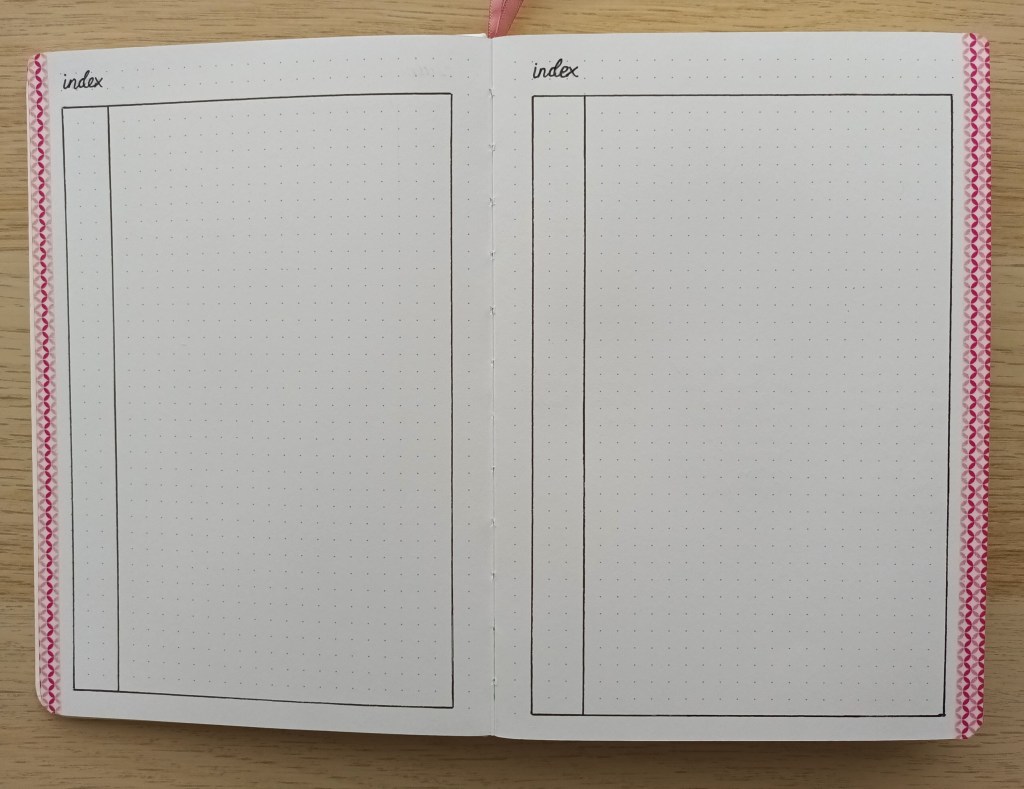
Key and index pages

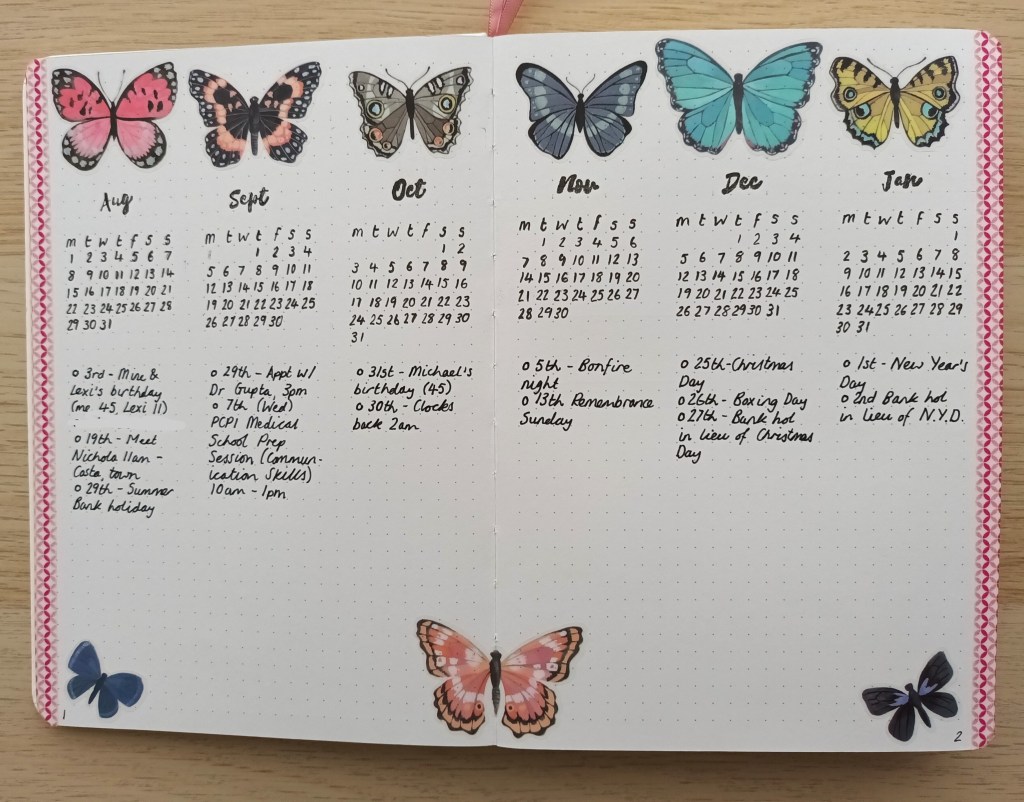
Future log

Photo credit: Laura Jones for Keeping It Creative blog

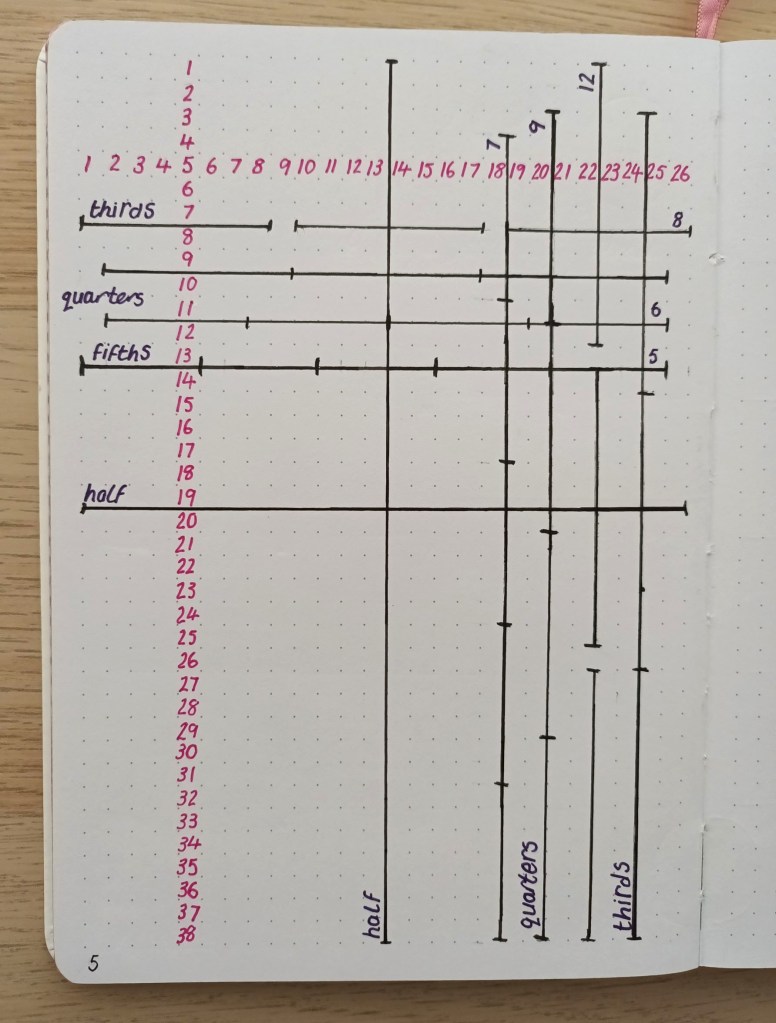
Grid spacing cheat sheet

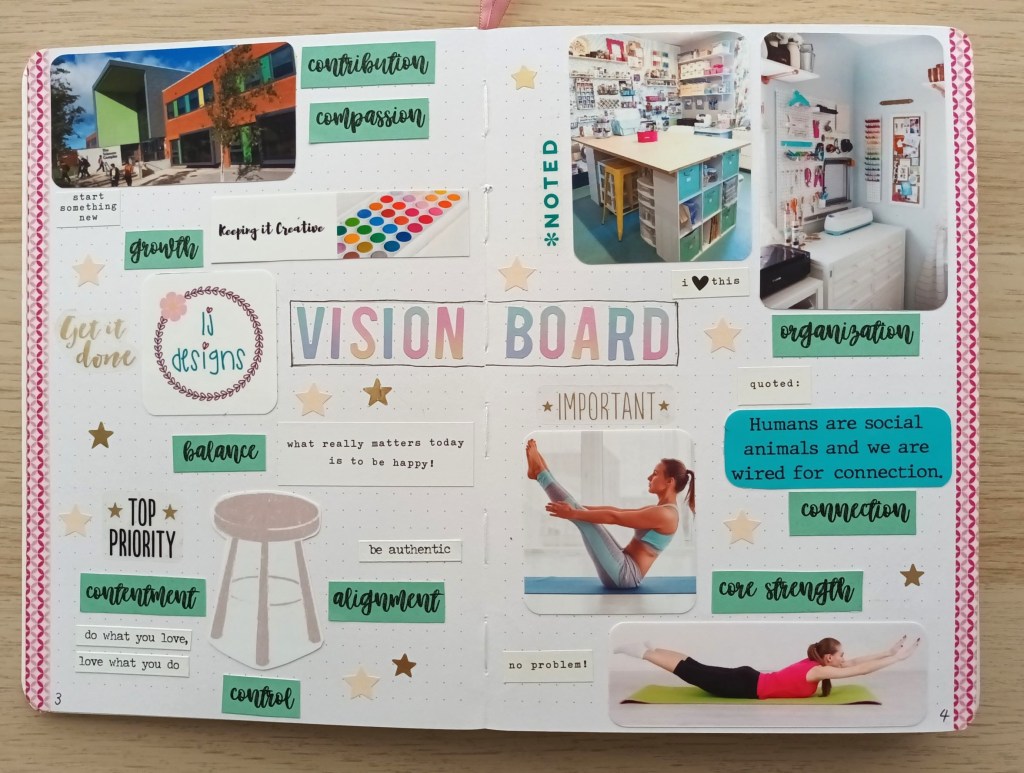
Vision board

I love how my vision board turned out. Some of the goals are ongoing from earlier in the year, some are new aspirations.

Photo credit: Laura Jones for Keeping It Creative blog

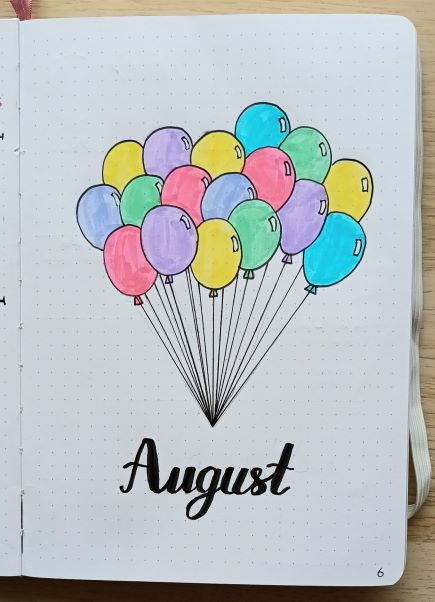
August front cover

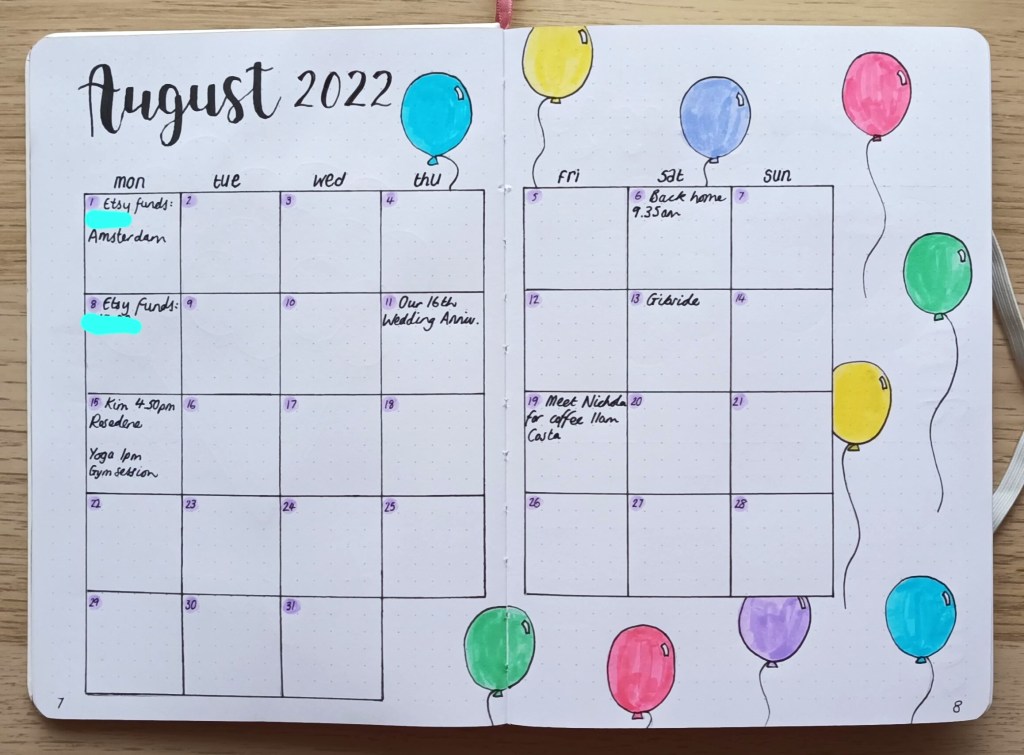
For my theme for August, I went for birthday balloons as my niece and our share our birthdays on the 3rd August. I completed my cover page on return from our holiday to Amsterdam. To make it quicker and easier, I used a tracing paper balloon shape to create the balloons but slightly altered them when I inked them in for a hand-drawn look. I used a 0.3 Pigma micron for each balloon and a 0.1 for the strings.

Photo credit: Laura Jones for Keeping It Creative blog

August calendar pages

I haven’t managed to get chance to do the front cover page yet but it will feature lots of colourful balloons in the colour palette used for the calendar.

Photo credit: Laura Jones for Keeping It Creative blog

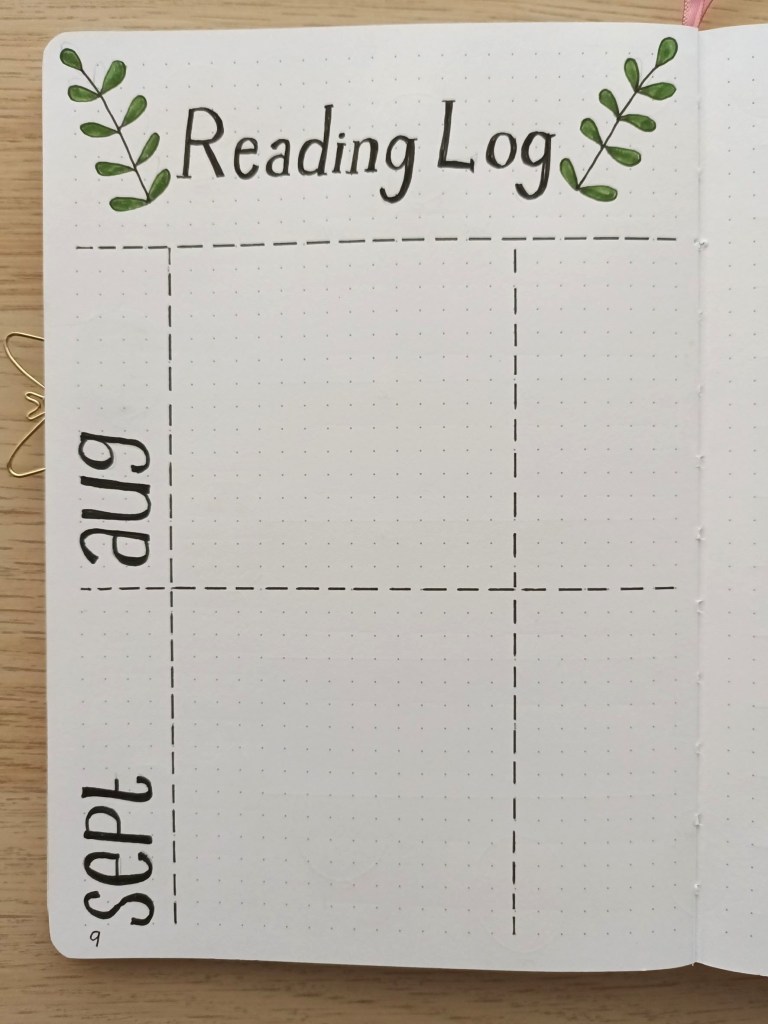
Reading log

A space for me to record books read in August and September and rate them out of 5 hearts.

Photo credit: Laura Jones for Keeping It Creative blog

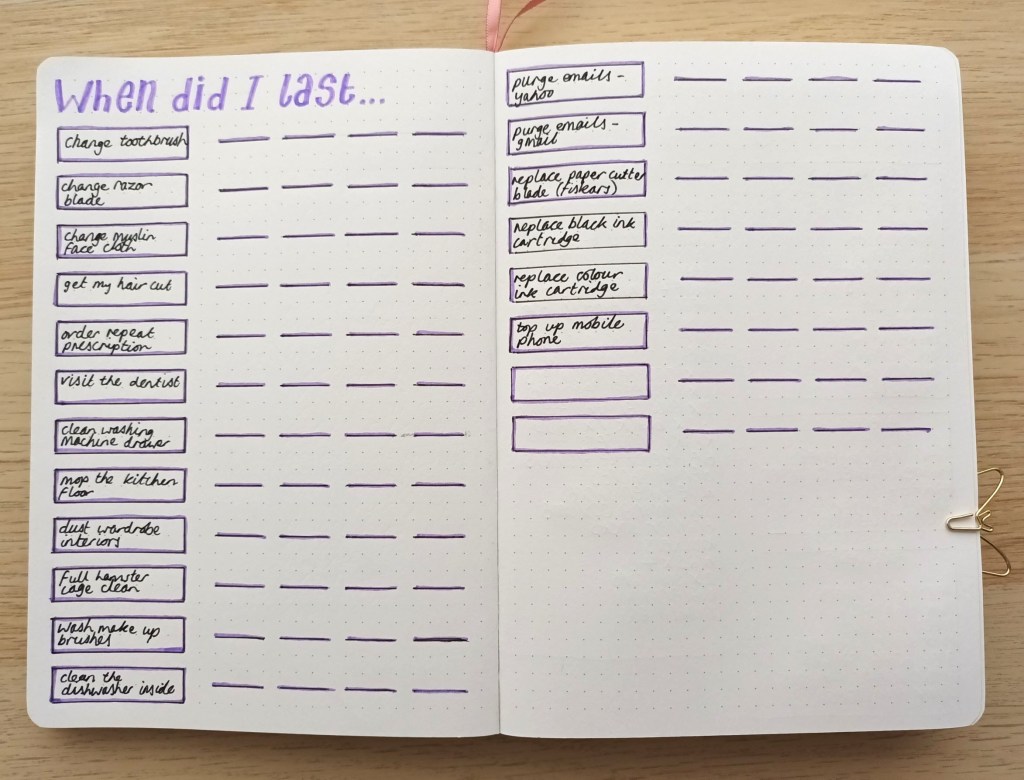
When did I last? spread

I found this really useful in my previous bullet journal, particularly for stuff that doesn’t get done that often so I’ve created a slightly more compact version.

Photo credit: Laura Jones for Keeping It Creative blog

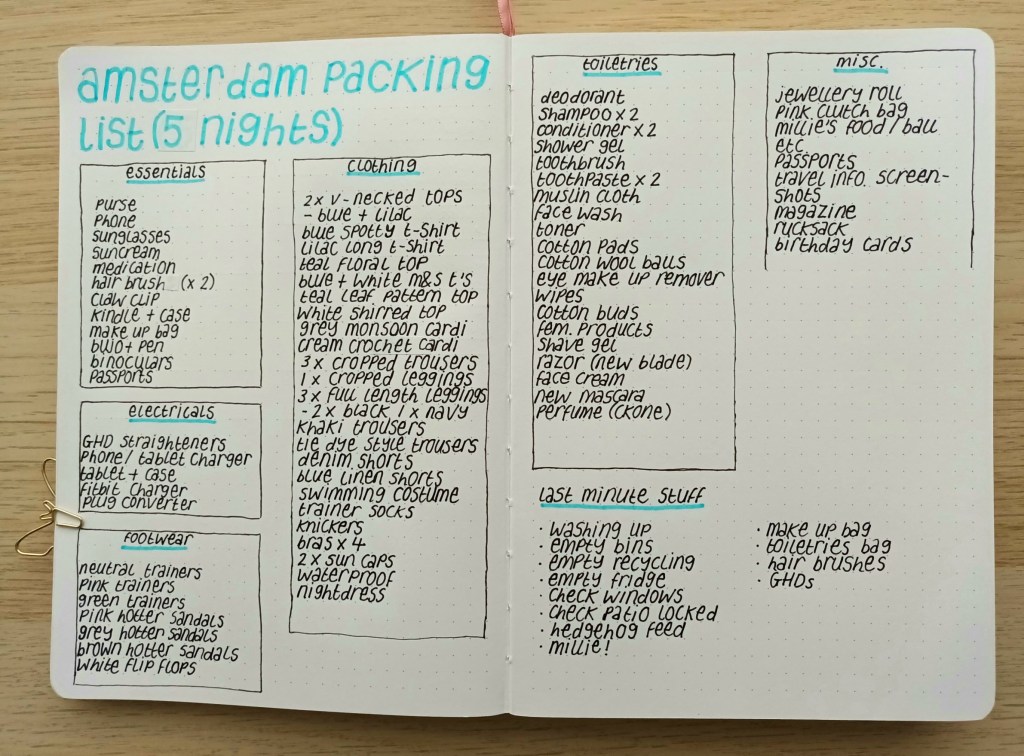
Packing list

I do one of these every time we go away and refer back to previous ones each time. Obviously things depend on the season where we’re going and how long for but there are some items I take on each holiday. The lists help me feel more organised and mean I don’t forget things.

Photo credit: Laura Jones for Keeping It Creative blog

Final words…

I hope you’ve enjoyed looking at my new bullet journal and my spreads. I always find it exciting to start a new notebook but at the same time I worry about making mistakes (which I inevitably do!). However, then you have the opportunity to get creative with how you fix the problem(s). Wishing you all a wonderful August.

Posted in Bipolar disorder, depression management, lifestyle, mental health, wellbeing, wellness

Monday Matters: Wheel of Wellness – Financial

This week, in my series of posts on The Wheel of Wellness, I’ll be focusing on the financial segment. This aspect is all about living within your means and learning to manage your finances both in the short term and long term. I’ll be considering the impact that some mental health conditions may have on your money and will also be sharing some tips for managing your finances effectively, particularly if some of your issues are related to your mood.

What is finance?

Finance is concerned with the management of money and, on a personal level, includes activities such as spending, saving, investing, borrowing and budgeting. It’s about meeting your short and long term financial needs and living within your means, in other words, spending no more money than you have. To help you manage your finances, it’s important to become ‘financially literate’ which basically means having a good relationship with money and become well educated on the various aspects of finance.

Mood disorders and your finances

Most people dislike talking about money but it’s important that you develop your understanding of the different aspects of finance so you can keep yourself financially well. If, like me, you live with depression and/or bipolar disorder you will understand that managing your finances can be a source of distress, particularly during periods of mental illness. Although we all have different experiences, when depressed, you may find yourself struggling to make money decisions or deal with aspects of your finances. You might also try to make yourself feel better by spending money buying nice things. You could find yourself unable to work or have to take time off when you’re unwell and this can also make things hard. During times of mania or hypomania (very elevated or elevated mood) you may find yourself having frenzied spending sprees or making expensive purchases which you / your family can’t afford.

For example, during periods of hypomania, I tend to buy lots of things to fix problems e.g. neat or cute matching storage containers to create order and look good at the same time, the latest kitchen gadgets which I’ve spotted online, new blankets/cushions for our sofa to replace ones which are slightly past their best but we can manage with just fine etc. Also, everything in the shops seems to develop a rosy glow and is heightened in attractiveness and I have to stop myself buying it all. When I watch craft videos on YouTube, I need to have those exact pens in those colours shown, particular stickers or ephemera because it all looks so pretty or a certain gadget / crafty resource so that I can make similar things to those demonstrated. Then, when I get depressed, I get upset because my craft room is bursting at the seams with all of the things I’ve bought and I have no motivation to make anything or use any of my supplies.

Money management tips

If you think you would benefit from increasing your financial wellbeing, you might like to consider the tips I’ve put together below. Some are general tips related to learning more about your personal finances and budgeting, whilst others are specifically targeted at those of you who find that your mental health has a direct influence on your money management.

Know what your current financial status is

Spend some time getting to know your current money situation. Make a note of what is in your savings account, your current account and your ISA if you have one. Also, become familiar with your debts e.g. how much is left to pay on your mortgage?, what do you owe on any loans you may have? do you owe any friends or family some money? etc. Learn how much income you / your household have coming in each month and so on. You could create a spread in your bullet journal such as me and my money or create an e-record on your mobile phone.

Examine your cash flow

When you know how much you earn each month or how much you receive in benefits, find out how much you typically spend and on what. Try creating a tracker for income and expenditure for a month to get a better idea of your incomings and outgoings. You could also consider looking at your spending habits at different times e.g. when depressed, manic or hypomanic or when your mood is stable (neither high nor low).

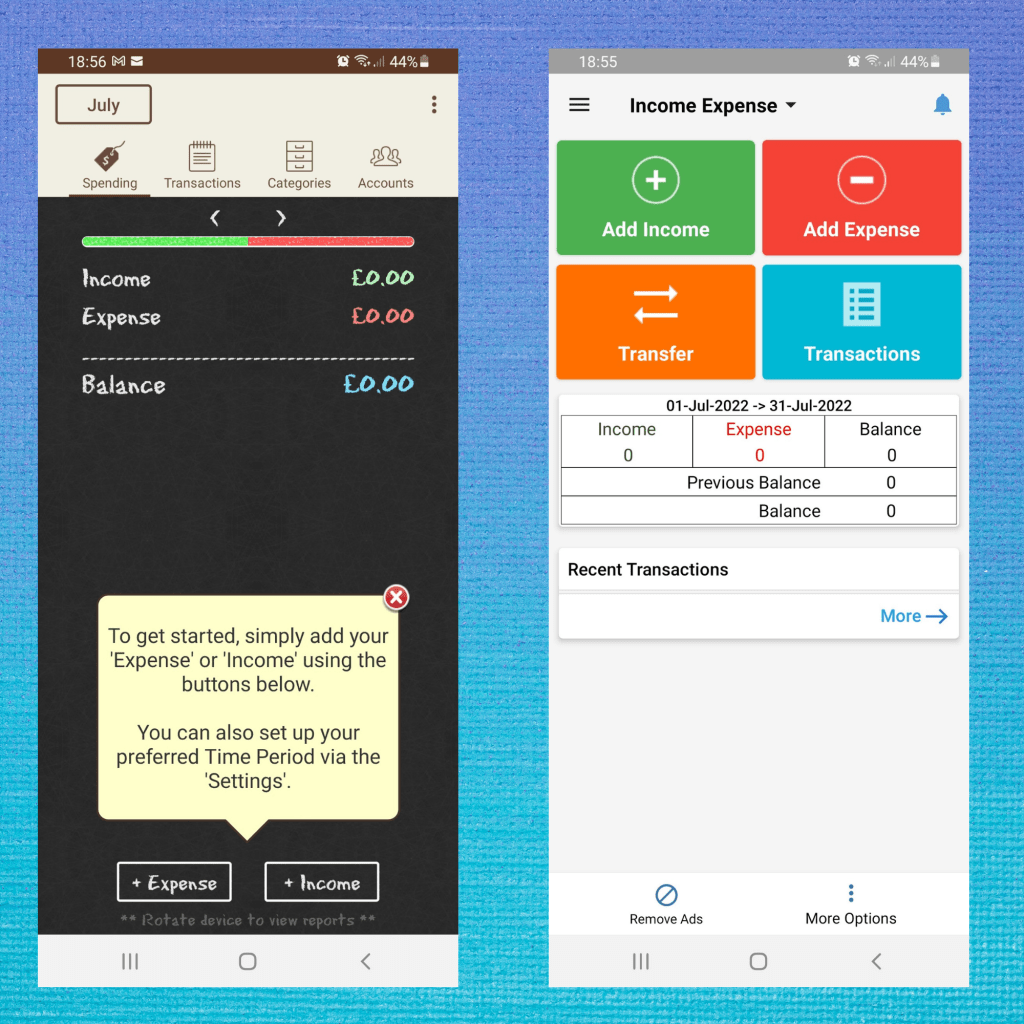
You could do a paper version of this in your bullet journal or a notebook as shown below or you can use a free app which calculates your spending and deducts the money you from your monthly income. I found a couple of Android apps which were really easy to use by doing a quick search on Google Play.

Source: Laura Jones for Keeping It Creative blog

If recording your expenses seems a little overwhelming right now, you could start by look at your monthly bank statements to see where your money is going each month. Although it won’t identify exactly what you purchased, it will tell you the name of the shop or business for each transaction.

Create a monthly budget

This is definitely something to do when you’re feeling well as it can be quite time consuming and requires good concentration and forethought. Once you’ve examined your cash flow situation you’ll know what your income is like and the kinds of things you purchase each month or each quarter. You’ll also know if you’re spending more or less than you have coming in and how much you are able to save (or not).

A monthly budget is a plan for how you will spend your money each month. It’s a popular way to manage your finances as lots of recurring expenses such as mortgage, rent, mobile phone etc. occur on a monthly basis. If you know what your income is each month, you can make sure you spend less than you have coming in. That way you can try to save a small amount of money with a view to creating an emergency fund for any unplanned spends.

There’s lots of information and advice online from money experts about how to create and stick to a budget but the key steps are outlined below:

  1. Calculate your monthly income – only consider consistent sources, not one off things like selling unwanted stuff on Ebay or money you get for your birthday
  2. Track your spending (see above)
  3. Consider your financial goals – this could be something like saving up for a deposit on a house, your wedding or a new car but could also be something small like reining in the amount you spend on clothes each month so you can put money aside for a holiday.
  4. Create your budget – make a list of all of the things you spend money on each month and allocate an amount to each category. This could include spending more or less on your favourite hobbies, cutting down on eating out and takeaways etc. A popular rule for creating a budget is the 50/30/20 rule where you allocate 50% of your income to needs, 30% towards wants and 20% towards savings.
  5. Continue tracking your expenses and refine your budget as and when necessary – do your spending habits align with your budget? have your financial goals changed? etc.

Identify your triggers

If your spending varies depending on how you feel, you might want to track your spending and your mood at the same time. Then, you can identify your triggers. For example, you may self soothe by shopping for little (or larger) treats in attempt to make yourself feel better when you’re depressed. You might overspend when you’re feeling high because each purchase comes with a little thrill or you have boundless energy for a frenzied shopping spree. Once you know your triggers, you can create a plan for managing them or seek advice and support from a professional.

Take steps to manage your spending

If you know your spending tends to get a little out of control during periods of mental illness, try to create a plan when you’re feeling well and maybe share it with close family and friends. This could include:

  • leaving your debit / credit card at home and drawing out a limited amount of cash for your shopping
  • shop with a friend or family member who can rein in your spending. You may argue against their recommendations, but ask them to persevere!
  • get rid of your credit card altogether so you can’t spend money you haven’t got
  • ask you ‘shopping partner’ to encourage you to think it over before making a decision to purchase. Is the urge to buy still there is a few days time or after you’ve slept on it? Most overspending is caused by impulse purchasing which you are likely to regret later!
  • if you think you might be about to have an online shopping spree, try to distract yourself with something else which makes you feel good such as reading a book, doing some work in the garden or tending to your houseplants, having a relaxing bath or doing some yoga

Set up direct debits

During periods of difficulty you may have little energy or motivation to pay bills or manage your finances. Setting up direct debits (instructions for your bank to authorise payment when they’re due) for your monthly and quarterly bills such as your broadband, mobile phone, energy, council tax etc. makes things easier and safer and ensures you don’t forget to pay and become in arrears.

Seek medical help

If you feel your money issues are related to your mental health e.g. spending to cheer yourself up when depressed or going on manic spending sprees when you feel high, try talking to your GP, CPN or psychiatrist. Your GP should be able to refer you to the mental health team or your psychiatrist may tweak your medication or advise you upon therapy which may help to manage your symptoms.

Get free professional advice

If you live in the UK and are currently in debt you can get free advice from a number of places such as Step Change, Turn2Us, National Debtline and most people’s favourite money saving expert Martin Lewis. You can also seek our information of different benefits which may be available to you. Bipolar UK is a good source of advice and their website also has a selection of stories about money issues and a section dedicated to finances in their forum.

Ask for help from a loved one

Depending on the severity of your issues, you may just need to ask for help from your partner or a trusted friend. You can ask them to monitor your spending and intervene when necessary e.g. helping you to organise pay your bills when you’re depressed or look after your credit and debit cards during periods of mania or hypomania. You can also ask them to look out for changes in your behaviour related to spending during periods of mental illness.

Check out supportive webpages and sites

There’s a wealth of information available online relating to finances and there’s some particularly useful bits and pieces about money and mental health. Here’s some I found following a quick search:

Coping with financial worries and debt

If you have money worries right now you may struggle to control your emotions and have feelings of guilt, shame, stress, embarrassment and exhaustion. This can lead to low mood and worsening of your mental health. You may be tempted to bury your head in the sand and hope that things will get better at some point but, although it might be really difficult and overwhelming, you should try to take control and find a way forward (easier said than done I know). Many people are currently struggling with managing their finances but there’s lots of help out there in the community and online so you’re definitely not alone. Also, remember the saying a problem shared is a problem halved. If you thought a good friend was having money issues you would want him or her to reach out and not feel ashamed of their situation so try to be self compassionate and seek some help and support.

Final words…

Ultimately, managing your personal finances depends on all kinds of factors including your income streams and how steady they are, your employment status e.g. student, self employed, unemployed etc, your current non-negotiable monthly outgoings such as your mortgage or rent payments, your savings and how much you wish to increase them by if at all, any benefits you are entitled to, your dependents and your financial goals. However, if you dedicate some time to assessing your cash flow by examining your income and expenditure then you will become better educated with regard to your current situation and this will help you to manage your budget. By learning about the link between mental health and money you can identify your own issues and seek help with them, either from resources online, friends and family or professionals.

I hope you’ve found the information contained within today’s post helpful and it has encouraged you to think about getting on top of your finances if you feel it’s an area of your wellbeing that you might like to work on.