Posted in goal setting, life hacks, lifelong learning, personal growth, productivity, Setting goals and intentions

Monday Matters: 7 ways to be a lifelong learner (Part 2 of 2)

Today, I’m sharing the second and final part of my mini-series on lifelong learning. In Part 1, I considered the character traits of lifelong learners and discussed the benefits of being a lifelong learner. In Part 2, I’m going to be identifying different habits to adopt for continual learning and also sharing a range of ways to be a lifelong learner. I hope you find both of my posts useful and they help you think about the value of continued learning, your preferred learning styles, plus little tweaks you could make to your daily life and schedule so that learning is both a priority and a joy.

Photo credit: Laura Jones for Keeping It Creative

1. Consider your learning styles

We all have preferred methods of learning and, as adults we can develop our understanding of the different styles, decide which of them work best for us personally, and then use our knowledge to tailor our learning experiences appropriately. Here are some of the most common types of learner:

  • auditory – learns by listening e.g. through music, lectures, podcasts, and talks
  • visual – prefers to use visual aids such as pictures, photographs, videos, charts and diagrams, they may also draw their own illustrations to help them remember key information
  • kinesthetic – learns by doing and often described as ‘hands on’ learners, likes to use different senses to take in the information
  • reading / writing – learns through seeking out written information in books and magazine articles, prefers to write things down in words rather than using pictures or graphs, also likes to underline key points, colour code information or write notes in the margin when given a handout
  • logical / analytical – learns by processing data and solving problems, often looks for patterns to connect different aspects of the information in order to make sense of what is being presented
  • naturalistic – learns through investigating the natural environment, particularly enjoys outdoor and environmental learning opportunities. Enjoys carrying out field studies, watching wildlife documentaries, keeping nature journals with own sketches, photographs, observations etc. and finding out more about different environmental issues such as climate change
  • interpersonal – this type of learner functions best when they engage in group activities like quizzing one another, becoming involved in discussions or brainstorms and forming study groups
  • intrapersonal – this type of learner prefers a solitary learning style and finds self study particularly effective

You may find that from the list above, you prefer several of the different learning styles and this can help you to explore particular approaches to learning. However, it’s also important to recognise that some types of learning are more pertinent to particular topics of study or aspects of learning than others. For example, if you want to learn how to play a musical instrument, auditory, visual and kinesthetic (hands on) activities may be more helpful than reading or writing about the skills involved.

2. Identify your passions and interests

As an adult, you have lots of choice in terms of what you’d like to learn about and the skills you’d like to develop. You’re also free to explore and follow your passions and interests in any way you choose or even decide that you’re not as interested in something as you thought you were! Here’s some ideas for identifying specific passions and interests:

  • reflect on your past experiences and activities you’ve particularly enjoyed – does anything stand out in your memory that you’d like to become involved in or try again?
  • think about your particular set of skills and abilities – are there any particular ways in which you’d like to put them to good use?
  • consider your core values – this will help you establish what matters to you in life and then you can create learning experiences which reflect this. There are lots of resources online with lists of core personal values but you might find this article particularly helpful as it adds a little detail to each item on the list
  • consider favourite topics of conversation with friends and family members or what you like to teach others about
  • try out new things and discover what sparks your curiosity and interest
  • write a list of things you’d like to get better at e.g. cooking, gardening, playing guitar, drawing, singing, applying make up – give yourself plenty of time to see what comes up!

3. Read every single day

Developing a habit of reading each and every day is a great way of learning new things. To make it stick, try habit stacking by pairing it with an existing habit of yours. So, for example, part of my morning routine is breakfast, filling in my journal and reading a book or article of my choice for 5, 10 or 20 minutes depending on the time I have available. I also always read a novel on my Kindle each night as soon as I get into bed.

Any form of reading is an opportunity to learn, but varying your reading material is the best way to gain new knowledge and different perspectives. In a month, you might read several novels (choosing different genre such as crime thriller, romance, historical fiction and fantasy), a collection of love poetry, an article in a magazine which is full of self care ideas, a few blog posts on topics that interest you such as a particular creative pursuit or easy vegetables to grow in your garden, the definition of a previously unfamiliar word in a dictionary, a newspaper article about an environmental issue and a few chapters from a non-fiction book about creating a well-organised home.

4. Set realistic and meaningful goals

A great way of setting learning goals and pursuing them is to use the SMART framework. Taking time to identify the specifics and draw up small and achievable steps is crucial if you want to make meaningful progress and enjoy the outcomes of your learning.

5. Manage your time effectively

If you want to make learning a priority, you need to dedicate time to it on a regular basis and ensure it becomes a key part of your routine. Good time management is such an important skill to develop (and might be something you want to learn about first before pursuing your passions and interests). Key ways to manage your time well so you can create opportunities for learning include:

  • keeping yourself organised – make sure your calendar is up-to-date so you know your commitments and when you might be able to carve out some time for learning
  • maintain a tidy environment where everything has its place – so you don’t spend precious minutes or hours looking for things you need but can’t find
  • prioritising – making decisions about the best use of your time today, deciding what’s important for you in your life right now and making those things a priority (don’t forget to add time for breaks too)
  • scheduling – try ‘time blocking’ by first adding in regular tasks and activities such as eating meals, sleeping, going to work etc. and then fitting in other priorities around these
  • avoiding time and energy drainers such as scrolling social media, excessively checking your email, phone notifications (especially sounds and pop ups which draw your attention straight away), negativity whether that’s from people, watching the news or doomscrolling
  • set short term goals for learning that help you take steps towards your long term goals and regularly evaluate your progress to check you’re heading in the right direction

If you want to know more about making time for your current priorities and developing time management skills, I highly recommend ‘Make Time: How to focus on what matters every day’ by Jake Knapp and John Zeratsky.

6. Make use of free online resources

Follow a small number of podcasts, blogs and vlogs on a topic of your choice, hosted by people you find interesting to hear from and schedule some time each week to check in with them and explore new content or older uploads that you might have missed. Also look for online tutorials for beginners (there’s loads to choose from on YouTube or within blogs) or introductory courses so you can give things a go before committing to them financially. Alternatively, to develop your knowledge of a subject in general, you might like to join a group (for example on Facebook) where you can follow interesting topics of conversation, start a thread to discover different opinions or ask a question of someone with a higher level of expertise in the field.

7. Don’t forget to rest

Although making time for learning is important if you want to explore your passions and interests, equally valuable is taking regular breaks for rest and relaxation. This might mean meditating, listening to a favourite album or piece of music, spending time in nature or engaging in creative activities such as drawing, painting or papercrafting. Ensuring you get adequate, quality sleep is also essential for good cognition so be sure to make this a priority too.

Final words…

I hope today’s blog post has given you a few new ideas on how to be a lifelong learner. Ultimately, you are looking to cultivate a growth mind set where you are always looking for opportunities to learn, aren’t frightened to try new and challenging things, seek out new perspectives as a way to see the world in a different way, view mistakes, failures and setbacks as learning opportunities, find value in constructive criticism and believe that, with effort, you are more than capable of developing both your knowledge and abilities in order to reach your full potential.

I wish you well on your various learning journeys and remember every day is a new opportunity to be who you want to be,

Posted in goal setting, journalling, life hacks, lifestyle, meditation, Mindfulness, mindset, self care, Setting goals and intentions, wellbeing, wellness

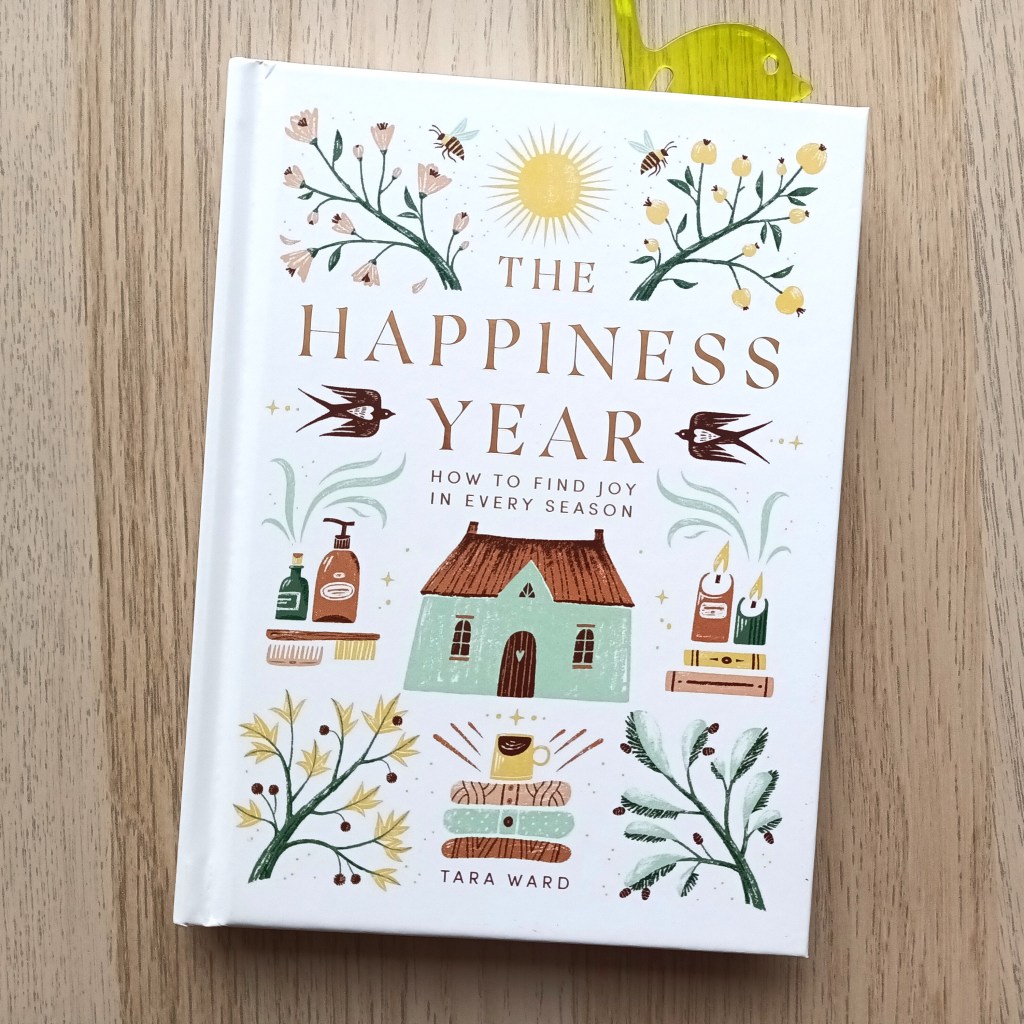
Monday Matters: Discovering joy in every season of the year using The Happiness Year by Tara Ward

A few months ago, I was looking in the health and wellbeing section at Waterstones and came upon a beautifully illustrated book about finding joy throughout the year by trying out different seasonal activities. At the time, I didn’t purchase it, but I regretted my decision so I ordered it from an online retailer. When it arrived, I added it to the bookcase in my craft room as I was already in the process of reading about 8 different books which is a few too many even by my standards. I pulled it out a few days ago and there are some lovely activities inside in the section which I started with – Spring. I tried out the first exercise this morning and really enjoyed it so I thought I would give a short summary of the book and share that first prompt with you today.

The Happiness Year: How to Find Joy In Every Season by Tara Ward

In the introductory section of the book, Tara discusses the aims of The Happiness Year and also talks about the emotion of happiness and the four positive chemicals that are released into your body when you’re happy – dopamine, oxytocin, serotonin and endorphins (referred to as DOSE throughout the book). She then goes on to explain how to use and enjoy the book.

The remainder of the book is split into four sections – Spring, Summer, Autumn and Winter and there are a collection of exercises provided in each which you can pick and choose from. In combination, they promise to help you in an holistic way – physically, mentally, emotionally and spiritually. Personally, I think I will probably try out all of the different activities and see which I prefer and benefit from the most.

Included within the book, there are journalling and brainstorming activities, meditations, physical exercises, goal setting and planning tasks, plus many more to explore and enjoy. You are also invited to complete them in a way that feels comfortable for you, taking into account individual differences and preferences.

So far, I’ve only read the Spring chapter in depth but I’ve had a good flick through all of the book and I can already see there are many exercises that will appeal.

Exploring your thoughts, feelings and ideas about Spring

As I said earlier, I completed the first activity this morning and I enjoyed it so much that I felt compelled to share it with you. I think this exercise would work well for each of the four seasons, not just Spring. Here’s a step by step explanation of what to do:

  • Take an A4 piece of paper and place it in front of you
  • Write the word SPRING in large letters at the bottom of the page
  • Close your eyes and take three deep, comfortable breaths to focus you in the present moment
  • Open your eyes and look at the word
  • What comes to mind when you think of Spring?
  • Write down everything which comes up for you
  • When you’ve run out of ideas, close your eyes again, breathe deeply and continue thinking about the season
  • Note down any further ideas or images which come to mind
  • When you feel you’ve finished, look over your sheet
  • What jumps out at you the most? Circle any words or phrases which particularly resonate or feel important to you. Are then any surprises?
  • What is the overriding emotion when you look at your words? Write that emotion or emotions at the top of the page.
  • Look through the words and make a list of those which generate feelings of happiness.

I hope you found this a helpful exercise and it reminded you about all of the lovely things which happen in the Springtime. I’ve included my sheet below, how does it compare to yours?

Photo credit: Laura Jones for Keeping It Creative

Final words…

If you enjoy mindful activities such as journalling, setting intentions, exploring the world using your five senses, breathwork, meditation and appreciating the simple things in life, I would definitely recommend checking out The Happiness Year. The book will help you find ways to appreciate and make the most of all of the things that each season has to offer you. You’ll also find a range of self care activities to increase your happiness levels by releasing a good ‘DOSE’ of positive chemicals. Let me know if you try the exercise outlined above and how it made you feel.

Posted in Bullet journaling, goal setting, life hacks, lifestyle, Planning and journaling, Setting goals and intentions, wellbeing

Monday Matters: A guide to creating your own seasonal bucket list for Spring 2024

For Autumn 2023 and Winter 23/24, I have thoroughly enjoyed and benefitted from creating my own personalised bucket lists and adding my seasonal ideas to a two page spread in my bullet journal for inspiration and reference. For each of the seasons, I also handmade and stitched a pretty TN wide size notebook to go in my TN journal where I added photographs, text, a variety of stickers, ephemera and tip ins to record my achievements over the months. I’ve found the bucket lists a great way to plan in some interesting and exciting activities, set some goals and ensure my husband and I make the most of each season of the year. So, today, I’m sharing my bucket list for Spring 2024, in the hope that you will be inspired to create your own and live your life to the full.

What is a bucket list?

A bucket list is a number of items that a person would like to achieve, experience or bring into fruition over a given time frame. This could be over a lifetime, a year, or, as with mine, during a specific season. There are many benefits of creating and working towards things on your bucket list including:

  • Helping you to reflect on what is important to you as an individual and what you really want from life
  • Offers you a number of things to look forward to over the chosen time frame, increases your excitement levels
  • Providing you with a visual reminder and the focus and motivation you need to move towards your goals
  • Creating a sense of accomplishment
  • Pushes you out of your comfort zone which is really good for your personal growth

You can create one which is just for you, or you could make plans with your partner, a close friend or even sit down as a family to come up with some ideas together.

My Spring 2024 Bucket List

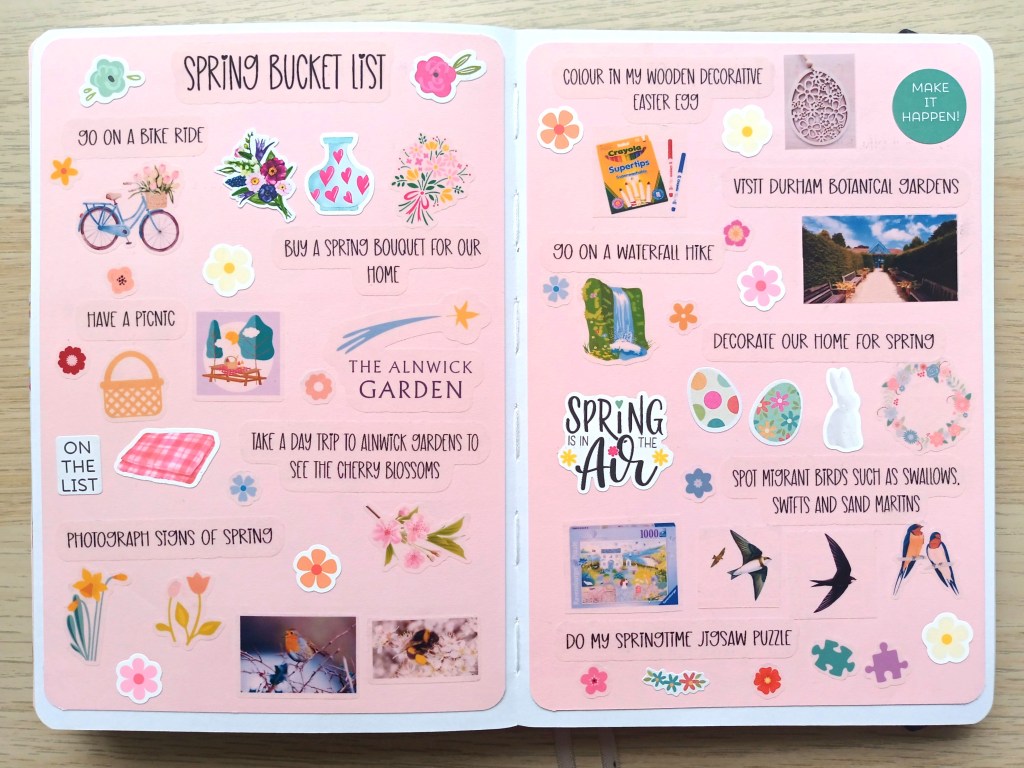
Here’s my bucket list for this season in my bullet journal. The words and images were all made into stickers using Cricut Design Space and I’m really pleased with how it turned out. I’ve included a little ceramic bunny I purchased, the wooden egg which I got in the Hobbycraft sale last year and the jigsaw I picked out which I can’t wait to get started with. I’m yet to make the handstitched notebook but I have lots of floral papers which will be suitable for the cover.

Photo credit: Laura Jones for Keeping It Creative

So, how do I get started with my Spring seasonal bucket list?

There’s plenty of seasonal bucket list inspiration online but I like to spend some time in quiet contemplation first. That way, what I add to my list is all about what I want rather than what others believe would make a good Springtime.

Consider your core values and what really matters – Spend some time thinking about what is most important to you in your life or what you wish to focus on more. You might want more fun and adventure, better balance between work, rest and play, opportunities to develop your creativity, new experiences or the chance to learn a new skill. You might want to experiment more in the kitchen, spend lots of time in nature or plan some different day trips to places in your local area. Living in alignment with your personal values is key to improved psychological wellbeing which includes your general happiness levels and outlook.

Think about the particular season you are making plans for – consider the weather associated with Springtime and any particular holidays or events which take place during the season. So, for example, in Spring, the temperature is starting to rise during the day but the evenings are still pretty cool. In Britain, the weather can be calm and dry, but, showers are also pretty common and it can often be a bit breezy. Buds and blossom begin to appear and early blooms such as snowdrops, crocuses, iris and daffodils begin to pop up in the flower beds. Spring is also the time for observing and listening to wildlife too. Bumblebees and butterflies start to make an appearance and hibernating animals such as bats and hedgehogs can be seen from dusk into the night. You might find frogspawn in ponds and watch tiny froglets appear in a matter of weeks. Birds are noisier and livelier as they pair off and start to nest and spring visitors such as swifts, swallows and house martins begin to arrive.

Mother’s Day and Easter both fall in the Springtime and there are, of course, a few Bank Holidays to look forward to. And if you want to find out about events specific to your town or city this website is a great source of information.

Write down every idea that comes to mind – Make a list of potential ideas, big and small, inexpensive and more costly, time consuming and quick. This could include a visit to Pinterest and other sites to look at bucket list ideas and inspirational images.

Refine your list – Having written a long list, it’s time to decide which items are the best fit for your values and priorities. Try to choose some activities which you enjoy each year and are somewhat traditional, but also make sure you include some which are completely new and will push you out of your comfort zone.

Choose a place to store your list – Having a finalised record of your bucket list is important if you want your aspirations to become a reality. Depending on your personal preferences, you might choose to put your list in your planner or journal or have a digital document in Notion of Microsoft Word. There’s even a website and online community dedicated to bucket lists! And, if you relish every opportunity to get creative, like I do, you can make a physical copy of your list with fancy lettering, motivational phrases, sketches, stickers and inspirational images. You might even find you’re excited to share it with your friends and family too.

Remember things can change – Your finished bucket list is a set of items that you hope to experience this Spring but, it’s not a list of commitments or things that you must do or achieve over the time period. You may find that priorities or circumstances change and that some of the items become less important or need to be put on hold for another year. You might also learn of some new opportunities as the season progresses which you want to add to your list or replace an item with.

Previous Bucket Lists

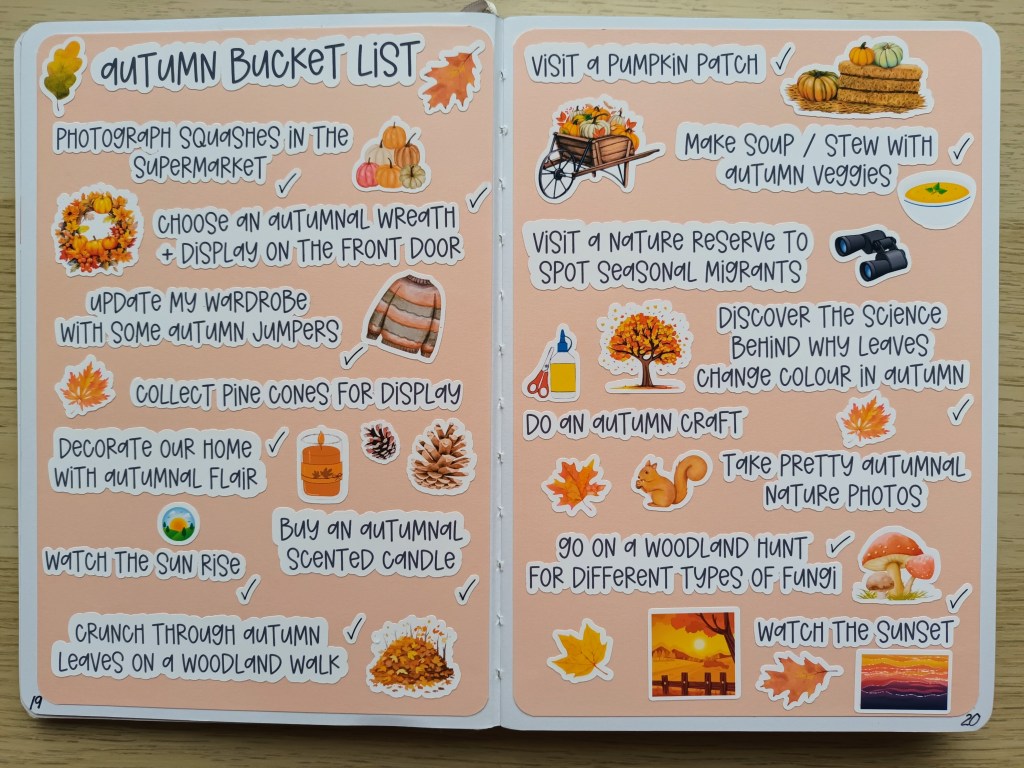
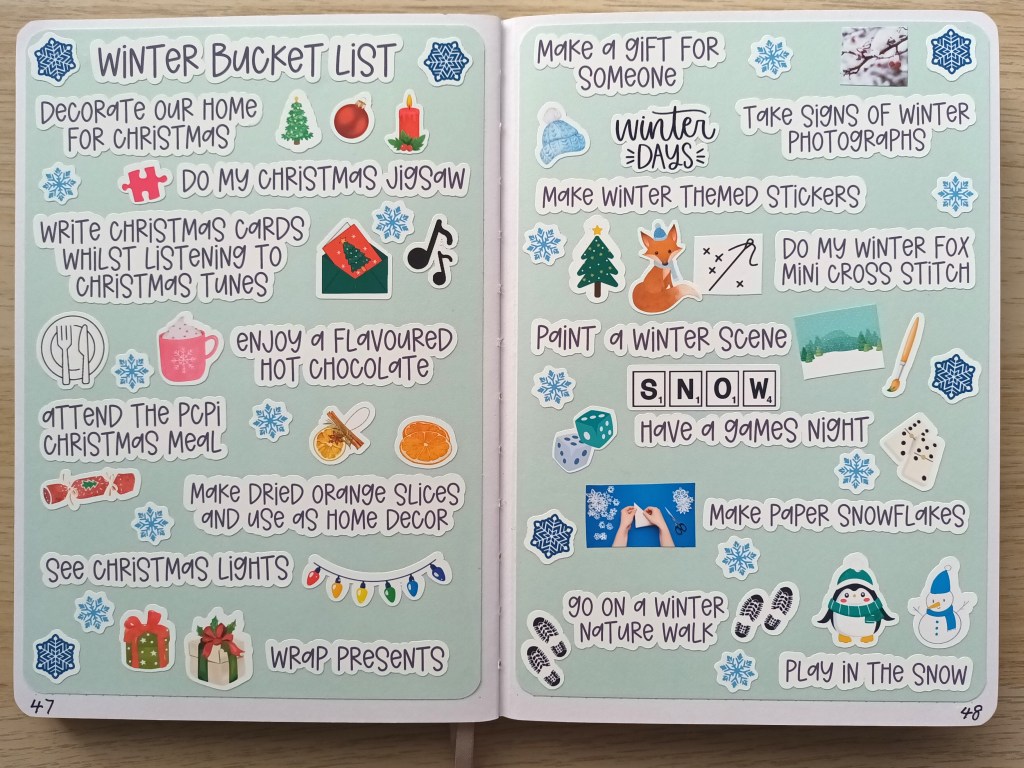
I think I’ve previously shared my Autumn and Winter bucket lists but thought readers might like to see them again for examples of the kinds of thing you could add and how you might decorate a spread in your notebook or bullet journal.

I achieved everything on my Autumn one but didn’t get to play in the snow over the Winter time as it was mostly wet and often quite mild. I still included all of the items in my Traveler’s Notebook journal. but I wrote a few lines about the weather and the impact it had on the season.

Photo credit: Laura Jones for Keeping It Creative

Final words…

Creating a bucket list for the season is a wonderful way to plan in some interesting, fun and different activities for the coming months. I also enjoyed making stickers to go with the items on my list but if you prefer, you could have a go at drawing and colouring in some little pictures instead.

Let me know a couple of items that you want to add to your list for Spring 2024. I’m looking forward to hearing your ideas and hope you thoroughly enjoy creating some new memories.

Posted in fitness, goal setting, lifestyle, mindset, Planning and journaling, wellbeing

Monday Matters: 4 tips for getting started on your fitness journey and staying motivated

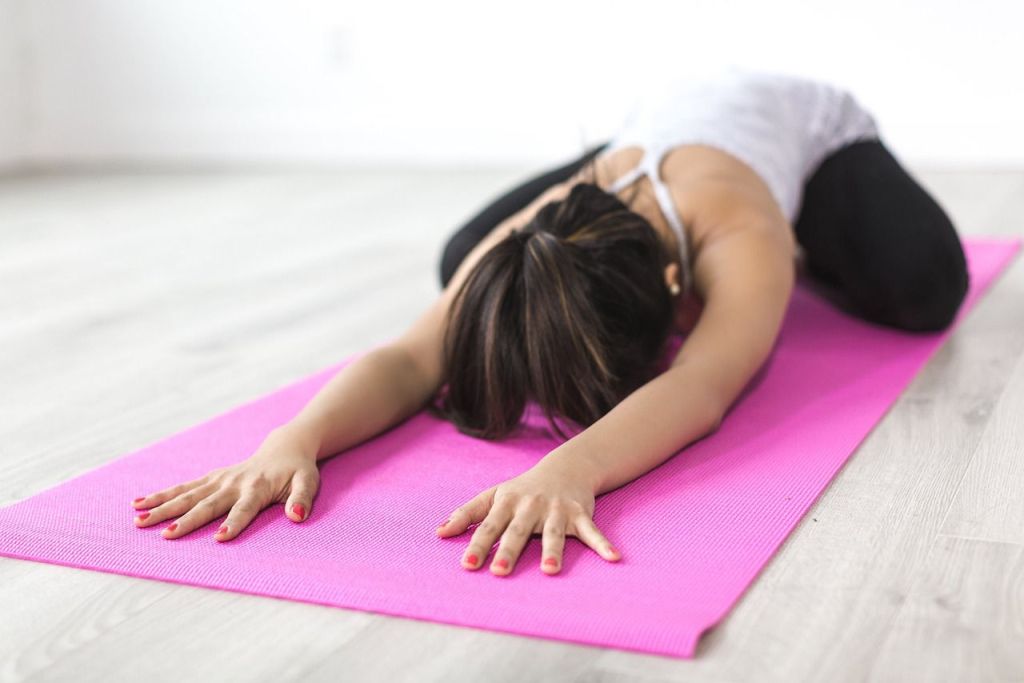
Image from Pixabay

Many of us, as part of our new year’s resolutions each year, set goals to get fit. We start off with good intentions, joining the gym or attending exercise classes but oftentimes, our motivation isn’t maintained and by February, our workouts have dwindled and other priorities have come to the fore. As someone who has been a member of a local gym for over a year and a half, with a routine that includes at least seven workouts per week, I thought I’d share a small number of tips to help you get started with your fitness journey and maintain the motivation to keep going. So, let’s get started…

Set clear goals

Some people set the vague goal ‘get fit’ without considering what that statement means to them, how they’re going to do it and why. A much better approach is to use the S.M.A.R.T. goals system. I wrote a really comprehensive blog post on this quite a while ago which includes some useful questions to consider to get you thinking about why the goal is important, what your life will look like when you reach your goal and how you will go about working towards it. I also provide an example, which, whilst not fitness related, should help you with goal setting and goal getting.

Using your bullet journal or a dedicated notebook for the particular goal or goal getting in general can provide a useful record of your intentions, how far you’ve come so far or a space to record your experiences, successes and difficulties along the way. It can also help with accountability.

Creating a vision board which focuses on your fitness goals and includes motivational images and positive phrases or quotes can also help towards manifesting the fitness lifestyle you desire. This can be created digitally and used as your screensaver on your computer or can be paper-based and maybe created using images and words cut out of health, fitness and wellbeing magazines.

Consider any clothing and equipment required

If you’re serious about increasing your fitness levels, purchasing some dedicated workout gear and some basic equipment can really help in terms of motivation. I got a number of outfits for my gym sessions and my weekend walks and I spent quite a while choosing items in my favourite colours which fit beautifully and make me feel confident and well supported. This included sports bras for my aerobic sessions, moisture wicking tops which don’t expose my skin during downward facing dog and leggings which are fitted but not too tight as to feel uncomfortable or roll down during my exercise routines. I also got several pairs of hiking shoes for winter walks and lots of layers for warmth whilst out in the countryside. I didn’t get everything straightaway but have built up my collection based on my changing needs as I try and love different forms of exercise.

As I practise Iyengar yoga, I’ve invested in a mat, blocks, bricks and a belt for my practice. I also use some of this equipment in my Pilates and legs, bums and tums classes too so figured it was a good investment. Although the gym provides bits and pieces for the sessions, I find having my own things beneficial and it also means, if I miss a class, I can find a workout on YouTube to do some exercise at home.

Create an active lifestyle

If getting fit and staying fit are important to you, you’ll need to create an active lifestyle where exercise becomes a key part of your daily routine and something which you enjoy and thrive on. Yes, there will be days when you don’t feel like it and have to push yourself to get your exercise gear on and do a session, or times when you recognise the need to have a rest if you feel under the weather or think you might have over-exerted yourself, but on the whole, you’ll feel motivated and ready to go. A huge part of this involves choosing forms of exercise that you love and make you feel good. For example, when I started exercising, I would go to the gym at least 3 times a week to work on the cardio machines and the resistance training machines. My routine gave me a good full body workout, but I much preferred the social element of going to classes, getting chatting to various others who enjoyed exercise and fitness and developing friendships over the weeks. I now go to at least one class everyday and use the gym occasionally. I still do activities which work my whole body and I have maintained my motivation for different forms of exercise over several years now.

Sometimes, on busy days, when I’m working at the university or I have other plans, I have to cancel one or more of my classes. However, I will always make time to fit in exercise, even if it’s just 20 minutes of stretching at home or a face paced walk in nature or around the block.

Having a back-up plan for when you haven’t got time to do an hour long class or your usual hour and a half in the gym can really help and writing it down in the aforementioned notebook or journal can keep you consistent. This could include having a bank of videos saved on YouTube that you dip into or a selection of infographics showing stretch routines on Pinterest. You might also schedule in an early morning walk as part of your routine for that day or plan a long hike for the weekend when you don’t have so many other commitments.

Cultivate a positive mindset

A positive mindset can help you celebrate your progress and achievements, assess and overcome any setbacks and maintain motivation. Rather than focusing on what you didn’t achieve in a given week, celebrate the workouts you did do and how you felt afterwards. Look for signs of improved strength, flexibility and stamina and write down these wins in your notebook or journal. Draw up a list of rewards such as new fitness gear, a fun activity that you haven’t done for ages or have been meaning to try e.g. canoeing, surfing, bowling, kite flying, frisbee etc. or a pretty decorative item for your home.

“Studies have shown that if you have a ‘growth mindset’ – the belief that your abilities and skills can be improved – then you will have more effective workouts.

Put simply – it’s positive thinking. Believe you can, and you will.” (Why your mindset matters article on Metro.co.uk.)

Final words…

I hope you’ve found today’s blog post beneficial and it has given you some beginner friendly ideas for starting out on your fitness journey and keeping up the good work. When you begin, you might like to try out lots of different exercise options and then modify your routine based on your preferences. I’ve found I love dance based aerobic classes like zumba and clubbercise, but also enjoy more mindful practices like yoga and Pilates too. In the future, I would like to include more targeted upper body exercises to increase my strength in this area, but for now, I’m happy with the way things are progressing in terms of my general fitness and core strength.

Let me know in the comments if you plan on working on fitness and exercise related goals for 2024 and what you’ve taken away from today’s article to help you on your journey. Alongside your plans, you might like to consider dietary tweaks too in a way which compliments your fitness lifestyle and ensures better physical and mental health overall, for now and in the future.

Posted in finances, goal setting, life hacks, money management

Monday Matters: Should you do a ‘No spend November’ challenge next month?

Last week, I was talking to my other half about what an expensive month October has been for me. Firstly, it’s my husband’s birthday on Halloween, and, although I haven’t bought him too many presents, I like to get him something that he really wants and at least a couple of surprises as well. Secondly, an incident occurred with my much loved and well used Kindle. In our house, we have quite a lot of plants and we have an issue with tiny, little compost flies, which, as their name suggests, tend to live in the soil of our plants but also like to venture out around our rooms, gravitating towards anything they like the look of. One landed on the screen of my Kindle when I was reading and I whacked it with my hand. Unfortunately, my wedding and engagement rings also hit the screen and fractured it in several places in the very centre, causing the backlight to shine through. So, because I read my kindle on a daily basis, I had to purchase a replacement straightaway and that was an unexpected expense (well, obviously I could have managed for the time being but I love reading so…). Finally, my craft room tends to get a little cold in the autumn and winter months so I have added to my collection of jumpers to keep me warm.

My husband suggested that I do a ‘no spend November’ and I thought, “Ooooh, that has a nice ring to it, surely he hasn’t just made that up?” and sure enough, I Googled it, and it is already an actual thing. I read up on the basic premise as obviously the month can’t be entirely expense free (I’m pretty sure HSBC won’t be impressed if we don’t bother paying our mortgage next month and it won’t be much fun if we let the cupboard go bare and have nothing to eat!) and so I thought I’d share what I learnt in case you want to know more or join me in the challenge.

Let’s get to it…

What is ‘No spend November’?

Basically, ‘No spend November’ is a way of saving money by only purchasing things that are absolutely necessary. The goal of the challenge is to save more, make better spending decisions and to live more simply throughout the month. It’s considered an ideal time to reign in your spending as you’ll avoid buying unnecessary ‘bargains’ during the Black Friday period and it will help you to save a little (or maybe even a lot) for the festive period.

You can plan for the challenge to last the whole month, or you can identify a shorter period of no spend time in November – say for a week or a fortnight. You could also choose certain days of the week as no spend days such as weekends or Fridays. If you found it fun or helpful, you could also repeat the challenge at another time, such as when trying to save up for a holiday or a special event.

Essentials to continue to spend money on

Obviously, no spend doesn’t literally mean no money coming out of your bank account, but it does mean keeping costs to just the absolute essentials. What you class as essential will be very personal to you and will differ for each individual doing the challenge. Here’s what you might include but might include:

  • rent or mortgage payments
  • utilities such as gas, electric, Internet
  • taxes e.g. council tax
  • groceries
  • childcare
  • insurance payments such as health, life, car etc
  • phone top ups or phone bill
  • fuel or other car expenses
  • memberships that are on direct debit
  • things that absolutely need to be fixed straight away such as a broken washing machine or things that fall in to complete disrepair and need replacing
  • newspapers and magazines (except free ones)

For me, my gym subscription is an essential as it is a key part of my routine and going to classes and talking to others is one of the ways I keep myself well mentally as well as physically.

Non-essentials you might choose NOT to spend money on

Again, this differs from person to person, but some examples include:

  • takeaways
  • coffee shop coffee
  • cake from a cafe
  • meals out
  • craft supplies
  • hobbies
  • branded toiletries and cosmetics
  • entertainment (try visiting free events or go for a walk in your local park)
  • branded groceries or premium selections at the supermarket
  • clothing
  • shoes
  • impulse purchases
  • seasonal decor items
  • lunch from a sandwich shop – make your own packed lunch!
  • books – borrow some from the library instead, read some already purchased novels on your Kindle or re-read favourites

Reasons why you might choose to do a ‘No Spend November’ challenge

  • you overspent last month and so want to have a light spend month
  • you really want to assess your finances and become more in control of your money
  • you want to save money ready for the festive period itself
  • you like to choose Christmas gifts during the month of December
  • you plan to class Christmas gifts for family and friends as part of your essential spending
  • you want to be more intentional with your spending
  • you would like to do more home cooking and having a takeaway free month will facilitate this
  • you want to cut down on luxury items such as expensive toiletries and make up items in favour of choosing simple products like supermarket and chemist own brand items
  • You are a creative crafts type and want to encourage yourself to complete projects you are already working on or use materials you already own such as stickers, papers, yarns, fabrics etc
  • You have a debt to pay off and having a no spend month seems like an ideal way to do it

Reasons why you might not want to do a ‘No Spend November’

  • You have plenty of money for essentials and luxuries so saving and cutting down on spending doesn’t really feel like a priority right now
  • You have a list of items you want to get in the Black Friday sales and you know you are capable of sticking to that list and not buying things on impulse
  • You’re already pretty pleased with the state of your finances and you rarely purchase luxury items anyway
  • You want to try the challenge but at a different time of year, for example January of next year
  • You don’t see the point of the challenge for you personally
  • You feel totally unprepared for such as challenge and know that you won’t keep up with it so why start!

A few tips for a successful ‘No Spend November’

  • Record your why – why have you decided to do the challenge? what do you hope to get out of doing it?
  • Make two lists – one of essentials that you will spend money on and the other non-essentials or luxury items which you agree not to buy
  • Let others know that you are doing the challenge – explain to your partner, tell the kids and explain why the challenge is important to you, tell your friends so they don’t wonder why you are saying no to big night’s out and coffee catch ups.
  • Make a meal plan each week and then create a shopping list based on it
  • Create a picnic of homemade and home-prepared items for your free days out e.g. cheese and tomato sandwiches, chopped vegetables such as carrot or cucumber sticks with hummus for dipping, crisps from a multipack or decanted from a large bag, homemade scones, cakes or a traybake
  • record your expenses and see how they compare to other months – write down how much you think you’ve saved
  • plan some fun nights and days in – maybe have a pamper day or a games night, suggest friends come around for tea / coffee and each bring a sweet treat
  • make a list of things you were tempted to buy during the month and journal about why
  • seek out alternatives to more expensive grocery items e.g. supermarket own brand, budget range items etc

Final words…

So, who’s going to join me for a ‘No Spend November’ and who’s horrified by the idea? If you would like to curb your spending, I would love to hear what category of non-essentials has the most negative impact on your finances and which items you will struggle not to spend on. Let me know in the comments. Mine has to be craft related items or coffees from cafes I think although I may prove myself wrong when I start doing the challenge. Also, I think I may have to identify Christmas presents for others as essential if I see something that is just perfect when I’m out and about!