Welcome to my first blog post of 2025. Happy New Year to you all, and a special hello to my new followers! I hope you had a wonderful Christmas and are excited for what this year will bring.
My husband and I both enjoyed the festive period, which this year (make that last year!) was a double celebration as my brother and his partner got married a few days after Santa had been. The wedding was a joyous occasion and a great a chance to chat with family I hadn’t seen in a while too.
Whilst on the way back home, and with my husband doing the driving, I made the most of being in the passenger seat by reflecting on 2024 and thinking about what I would like to achieve in 2025. I also started to mentally compose a to-do list full of chores and more pleasurable activities to make the most of the remaining three days of the holiday. Little did I know that something would scupper my plans…
Bloody COVID-19 strikes again!
By the time we got back, we both had a bit of a sore throat, which I assumed was just a bit of dehydration from the long car journey. By New Year’s Eve, we felt absolutely dreadful, and so my husband did a test (just in case), and I’m sure you can all guess how that turned out! Needless to say, we’ve barely had the energy for basic self care, nevermind any chores, fun activities or creative pursuits.
We did, however, manage to psych ourselves up enough to take a quick shower each day, despite how exhausted we were and, despite the fact that the powerful water raining down and massaging in my shampoo and conditioner brought actual pain to my scalp! – random covid symptom or what?????? And I’m so glad we did because this idea for a blog post was born – in fact, some of my best content and general epiphanies come to me whilst showering (anyone else??).
Basically, I was busy thinking about how annoying it was that I was too exhausted to do anything and that being ill was a giant waste of time, and then I recalled that during my worst bipolar depressions, I still achieved a few things each day and tried my best to be kind to myself and celebrate small wins. To help me do this, I created something that I call a ‘done list’ and, although my illness was physical rather than mental on this occasion, I realised the same technique could be used to make myself feel better.
As everyone goes through ups and downs in life, I thought I’d share how my done list works. You might not need to apply the technique now, but it’s a lovely, self compassionate activity which you can store in your physical or metaphorical toolbox to use when needed such as when you’re sick or struggling with low mood. It can also be used when you’re not feeling under the weather, as a celebration of how productive you’ve been in general or as you work towards your goals for the week / month / year and so on.
In fact, as I sat on the sofa (on day 3 of COVID-19), soothing my throat with a warm drink, I actually started mentally creating one to help my husband and I feel a sense of achievement because I realised we actually did something that day despite feeling like crap.
So what’s a done list?
A done list, as the name suggests, is basically a list of things you’ve achieved that hour / day / week / fortnight / month / different time frame of your choosing, which can be tailored to how you’re feeling – both physically and mentally. So, for example, your list could look something like this:
Today’s done list
got out of bed (before 10am too!)
got dressed
brushed my teeth and washed my face
planned 3 things to do
made and ate a sandwich (even though I didn’t feel hungry)
worked on my jigsaw
watched TV for 1 hour (and managed to follow the storyline of the drama)
Or, if you’re not feeling too bad (in a bit more pain than usual, or a little tired maybe and not 100%), could include more taxing items such as those found in the list below:
Things I’ve done this week
washed the car
tidied my craft room
decluttered 20 items from craft room!
made 3 meals from scratch
5 gentle workouts (2 x 20 mins yoga and 3 x 30 mins Pilates)
created a journalling page using my crafting stash
As you can see from the above, you can include super-minute achievements (or what would considered to be when well) or more ambitious ‘done’ items at other times. These ‘done’ tasks make a good record of how you’ve spent your time and can help you realise that, yes, you might be on top form, but you did make some progress or make a dent in your mental to do list (or physical one if you wrote a list when feeling productive and then things changed e.g. illness, upsetting life event, overwhelm etc).
If you’re still at work, but it’s been a struggle not to phone in sick, you could even include things that you achieved as part of your job, like biting your tongue at a comment made by a colleague or being assertive and saying no to your boss or team leader!
What are the main benefits of creating a ‘done list’?
These are the main benefits I’ve found of creating a done list, but you may be able to come up with more:
a visual reminder of what you’ve achieved in the chosen timeframe – the smaller the items are, the longer your list can be!
boosts your motivation to do more things (be careful not to do too much though as the last thing you want to do is make yourself feel worse)
acknowledges your small wins during difficult times
Final words…
I apologise if this is not new content and I’ve already written about a ‘done list’ before – I did trail through my posts in a bid to find out, and couldn’t pinpoint anything but I still have ‘COVID brain’. Hopefully I’ve shared something helpful which has given you a new string to your ‘wellbeing bow’, particularly if you have recurrent issues with your physical or mental health like I do. Doing a ‘done list’ can also be a great record of what you’ve achieved over a period of time, so can be a really useful tool for measuring productivity too. However you use it, I’m pretty sure it’ll make you feel a little more upbeat about things and your lists may even bring a smile to your face at a later date if you keep them in your planner and happen to flip back!
Thank you for reading and I wish you and your loved ones a happy and healthy 2025,
Today I’m sharing some easy self-help strategies to enable you to create a life which is both calmer and more positive. I hope you find the tips useful and they motivate you to make a change or two going forward.
Be kind to yourself
Showing self-compassion, practising self-care and giving yourself grace when you make mistakes or are struggling with the stresses of modern day living is an important and helpful first step to take in developing a more positive life. If a good friend of yours was finding things difficult right now, you would offer them support and encouragement, sympathy and well wishes, yet when we find ourselves in a similar situation do we behave in the same way? Here’s a few ways to be kind to ourselves (and they don’t need to be reserved for when we are down or struggling with our mental health either):
Forgive yourself often – for making mistakes, not being perfect, not being super productive etc. Whatever you beat yourself up about, STOP!
Keep yourself hydrated – this simple act of self-care is important and will help you feel your best throughout the day
Listen to your body – if it needs rest, a day off, a holiday, a break from chores, a lie in etc. provide exactly that.
Explore how you’re feeling mentally and why – try a spot of journalling or talk to a close friend, then, if need be, take appropriate steps to remedy the situation.
Eat well – eating a balanced diet full of fresh produce, wholegrains and all of the vitamins and minerals you need is a great way to look after yourself. Yes, you shouldn’t deny yourself the occasional treat, but eating a predominately healthy diet will help you maintain good energy levels, restful sleep and better mood.
Get some exercise – you don’t need to lift weights at the gym or pedal the exercise bike for hours each week, do something you enjoy whether it’s yoga, pilates, a walk in the countryside or playing outside with your dog. Exercise releases feel good hormones as well as keeping you in good shape.
Celebrate your achievements – think about what you’ve achieved this week / month / year and give yourself a pat on the back. Even better, treat yourself to some kind of reward such as a bunch of flowers, a new notebook or something else that’s been on your wishlist for a while.
Be kind to others
Small acts of kindness towards others can have an enormous impact on both on the giver and receiver. Just something simple like holding a door open for someone who has their hands full or letting someone who is only buying one item go before you in the queue for groceries is enough for benefits such as brighter mood, lower stress levels, feelings of connection and belonging to the community and improved self-esteem and confidence.
Release your inner creativity
No matter how busy your day is, there’s always at the very least a small window of opportunity to get creative (try putting your phone in another room for half an hour!). Whether it’s doing some colouring in and choosing colours which complement each other, developing a poem about your experiences, doing some seasonal doodling in your bullet journal or creating a mood board for your living room, anything which uses your imagination or original ideas to make something is a boost to your creative side. And even if you don’t see yourself as the creative type, trying out different expressive activities will help you develop this part of yourself which I promise is lurking inside somewhere! Engaging in creative pursuits is wonderful for bring calmness and tranquility as well as a sense of achievement. It’s also a lovely way to practice self care.
Develop an attitude of gratitude
I write about gratitude in a lot of my wellbeing posts here on my blog but it is with good reason. Being grateful for what you have and celebrating ways in which you are very lucky has proven health benefits such as being better able to cope with adversity, enjoying improved sleep and immunity, building stronger relationships with others (particularly if you show gratitude for family and friends) and generally feeling much more positive and happy. Feeling gratitude and expressing your appreciation for things in your life is a very spiritual practice, creating a feeling of ease and contentment.
Be more mindful
Mindfulness is all about paying more attention to the present moment, focusing on your current thoughts and feelings and what is going on around you right now. Some examples of how this might manifest itself in your life include:
meditation and breathwork
paying full attention to the little things you do each day as part of your routines such as taking a shower, brushing your teeth, eating your breakfast, making your bed, brushing your hair or getting dressed. This will help you to change the focus from rumination about the past or worrying about the future
taking a walk in nature and becoming really conscious of your immediate surroundings – use your five senses to explore the environment
working on one thing at a time – avoid trying to multi-task (which is a complete myth anyway as you can read here)
eat mindfully – really pay attention to what you’re eating, how it tastes, how it feels in your mouth, how it is making you feel (this is also good for making sure your eat slowly and stop when you start to feel full and satisfied)
use the 5,4,3,2,1 grounding technique to bring you back to the present moment (this is particularly useful if you start to become anxious about something)
do some journalling – writing your thoughts, feelings and experiences in a journal is a great way to slow down and become aware of how things are for you right now
try movement meditation – most of us associate meditation with sitting or lying very still and focusing on the breathe. However, this is just one example of how to meditate. Check out this article for seven popular styles of movement which are meditative in their nature.
Start a slower and more relaxing morning routine
Your morning routine has the power to set you up for a calm, happy and productive day or leave you stressed out, tired and wanting to go back to bed. For a gentle start to your day, try the following tips:
prepare for your day the night before – check your planner to see what you have scheduled for tomorrow, write a list of intentions for the next day or choose your priorities from your to do list, choose your outfit and check to see if it needs ironing or unfolding to let the creases drop, if you are going out somewhere, pack your bag ready.
wake up early – plan to get up at a time which gives you the opportunity to get ready without rushing (this might involve going to bed earlier or other tweaks to your evening routine to encourage restful sleep)
open your curtains or blinds to let natural light in, or, during winter, use a sunrise simulation lamp to mimic the effects.
try journalling – this could be completing the morning entry of The Five Minute Journal like I do, doing morning pages or making note of a few things or people you are grateful for
avoid reaching for your phone – checking our phones as soon as we get up is an automatic reaction for most of us but it has been shown to have negative effects on the brain. Issues include heightened stress and anxiety levels, poor performance levels at work, lack of productivity as well as loss of our precious time. Instead, eat your breakfast mindfully and slowly, take yourself outside to get some morning light, do some gentle stretches or record your thoughts, feelings or daily gratitudes.
choose a slow living activity to put you in the right mindset – read a chapter from a motivational book, listen to a podcast, make a nutritious breakfast, savour your morning coffee (rather than downing it when it’s too hot or going cold), sit outside and watch the sunrise, close your eyes and focus on your breathing or flick through your favourite magazine. Make the most of rising early before you start to tackle your to do list or head off to work.
Final words…
I hope you’ve found the above tips useful and are motivated to try some of them. I know that making lifestyle changes can be quite difficult and require time and commitment. You might want to try to transform many aspects of your current life but doing too much at once will most definitely lead to overwhelm and the temptation to give up. I recommend choosing one thing to focus on and, where possible, enlist the help and support of your partner or a close member of the family or a good friend. I also encourage you to regularly evaluate and reflect on how things are going for you and consider if the small change you’ve made is having the desired effect. This will help you to refocus and serve as a good reminder of why you started.
This morning I got up earlier than usual as I wanted to get a few things done before heading to do some work at the university. It was still quite dark as sunrise was not until 7.43am today and I switched on a little set of battery-operated candles I’ve recently bought (a bargain at £7.99 for three at various heights and including batteries from Festive Lights Store on Amazon) to bring some gentle light into the bedroom. They’re dinky enough to have on my bedside cabinet so are within easy reach – no having to pull back the duvet for me!
Although I’d enjoyed a good night’s sleep and managed to rouse myself pretty easily, I’ve noticed that I don’t jump out of bed raring to go like I did during the spring and summer months. I think many of us will acknowledge that we find it more difficult to get out of bed on dark mornings and, depending on our occupations or daily schedules we might also find that the lack of exposure to natural daylight during the autumn / winter months can dampen our mood somewhat. Even if we haven’t been diagnosed with Seasonal Affective Disorder (SAD for short, rather aptly), most of us will agree that limited sunlight has some sort of effect on our health and wellbeing. In today’s blog post, I want to share some practical tips for combating what I’m going to call the ‘winter blues’ and the associated symptoms which may be present at this time of year and continue until springtime.
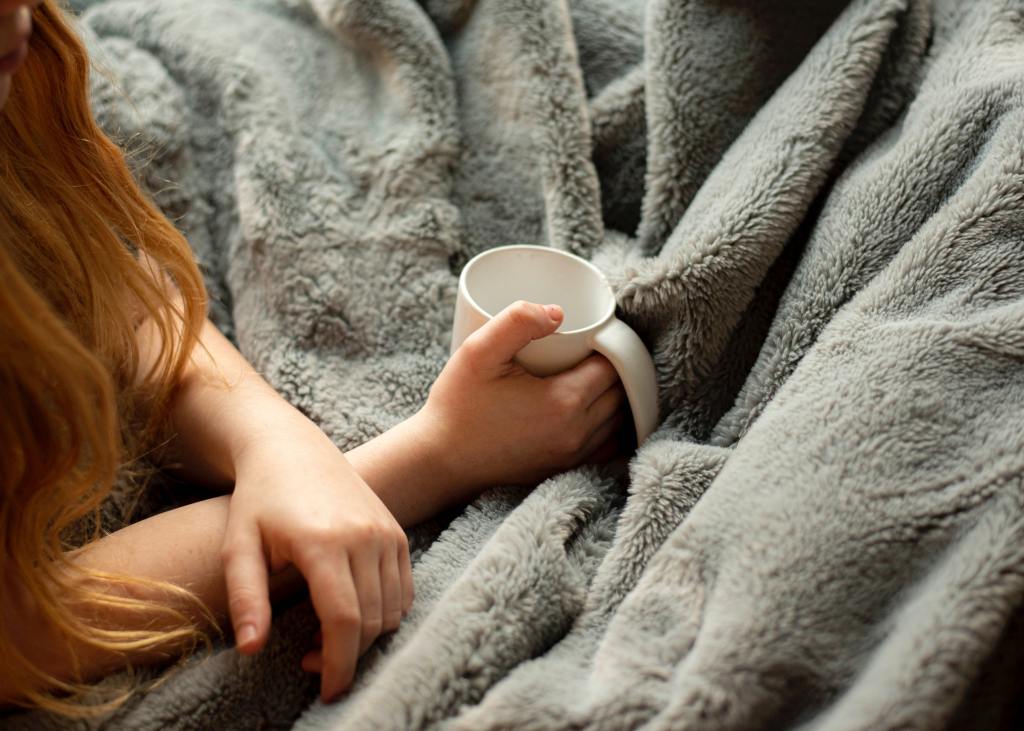
Photo credit: Amin Hasani for Unsplash
Signs of the winter blues
The symptoms of ‘winter blues’ will generally be quite mild. They may have an impact on your life, to a small extent, but should not make your days feel like a constant struggle. Please seek medical advice if you are displaying many of the signs of depression as you may need professional help. Signs of ‘winter blues’ which are commonly experienced by individuals include:
being less active than usual
sleeping for longer and still struggling to get up in the morning
showing signs of lethargy – lacking energy and feeling sleepy during the day
having poorer concentration skills than usual (you might be easily distracted, tasks might take you much longer to complete or you might find them more difficult, you might also struggle to attentively listen to someone when they’re talking or not fully comprehend what they’re saying)
having an increased appetite (often craving carbohydrates such as cakes, sweets and biscuits) which may cause weight gain
finding yourself wanting more stimulating drinks such as coffee or energy drinks because you feel like you need a caffeine boost
being less enthusiastic about activities you usually enjoy
rejecting social invitations (e.g. due to lack of energy or your body telling you that you need to stay at home and chillax. Some people will say they like to hibernate for the winter!)
What’s the difference between Winter blues and Seasonal Affective Disorder?
Winter blues:
not a clinical diagnosis
a mental state which comprises of feelings of sadness and lower energy levels during the coldest and darkest months of the year (when compared to the lighter, brighter, warmer and sunnier months)
doesn’t have much impact on day-to-day functioning (you can still carry out usual tasks or you can go to work or school as normal)
generally happens in the winter time and possibly some of autumn too
can be managed by making a few lifestyle changes such as those suggested below
a clinical diagnosis made by a medical professional such as your GP or your psychiatrist
affects day-to-day functioning and can make life a struggle usually during the autumn and winter months but can also occur in the summertime – S.A.D. has a seasonal pattern of some sort
takes its toll on many aspects of life including relationships, work, school or home life, sense of worth and sleep patterns
sometimes referred to as ‘winter depression’
requires professional help such as a talking therapy or medication such as anti-depressants
Practical tips to help you cope with the winter blues
Try to stay activeExercise is known to boost your mood so it’s important to stay active even if you feel like curling up under a blanket or sitting in front of the fire for the day. Doing a workout each day will also help to improve your energy levels during the daytime and make you tired in the evening so you can enjoy a better night’s sleep. This could be a 15-30 minute walk, a gym class such as Zumba, spinning or flow yoga or a home-based exercise such as following a routine on YouTube. Anything which gets your heart pumping is good. You could even put on some music and dance around the room!
Get outside Going out for some fresh air, especially on bright days can help you get more light. Taking a walk in nature e.g. in woodland or your local park can be particularly mood boosting. I like to look for signs of autumn or winter such as changing leaves, glistening spiders webs, amazing fungi, conkers acorns and beech nut shells, wildlife such as jays, squirrels and nuthatches, brightly coloured berries, morning frosts, snowfall, icicles, early flowers such as snowdrops and crocuses. Just make sure you wrap up really warm on particularly cold days – remember there’s no bad weather, just bad clothing!
Eat healthily At this time of year, it can be tempting to comfort eat high calorie, sugary or fatty foods to give yourself a quick energy boost or to try to make yourself feel better in some way. Most of us crave carbs during the colder months and this often takes the form of junk foods, fatty snacks such as crisps, biscuits and cakes or high volumes of less healthy ‘white’ foodstuffs such as white bread, white pasta, white rice and white potatoes. However, it’s always important to try to maintain a balanced diet for a healthy body and mind (including stable mood). You can still eat foods which are high in carbohydrates but make sure they’re ones which are better for you. Examples of foods which are more healthy but also carb rich include quinoa, brown rice, buckwheat, pulses such as kidney beans, lentils and chickpeas, wholegrain oats, bananas, sweet potatoes, squashes, apples, carrots, broccoli and avocado.
During the autumn and winter seasons, we love to create homemade soups, stews, risottos and vegetable bakes. We also create lots of dishes with pulses such as lentils, beans and chickpeas. These are also comforting and warming foods but without a high calorie content. If we find recipes online, we tend to modify them in some way, so I type them out with the changes we made and add them to our recipe folder. We’ve found some really great veggie and vegan dishes this Autumn and most of them are pretty quick to make.
Keep yourself warm Research shows that feeling cold (and wet if you get caught in the rain) can cause your mood to dip so it’s important to try to keep yourself warm and cosy. With the current increasing energy prices, I appreciate that you might feel that this is very difficult and expensive at the moment. Try to make good use of blankets in the home and, when you can, get yourself moving to generate some heat in your body. I tend to get really cold when I’m sat at my laptop for long periods of time and in the past, I’ve resorted to a small heater but now I’m trying to remember to get up and move about at regular intervals. When you go outside, add lots of layers, hats, scarfs and gloves. You can also get thermal tops and leggings to wear under your clothes. I got mine from an outdoor clothing shop and they’re great for really cold days when I’m going to be outside for long periods of time.
Stay social It might be tempting to stay at home all the time during the dark and cold months but isolation isn’t good for your mental health. Why not meet a friend at a cafe and enjoy an autumn or winter special drink such as a Pumpkin spice latte, Apple crisp macchiato, Caramel apple spice, Peppermint Mocha, Gingerbread latte or Black Forest Hot chocolate? Or how about arranging a meal out in a traditional pub with homecooked food and maybe even an open fire? Try to say yes to some of the events you are invited to, even if you don’t feel like going, you may find that you really enjoy it when you get there.
Try something new Trying out a new hobby or having a go at some autumn or winter crafts can stimulate the mind, provide new and interesting challenges, give a really sense of achievement and boost your self-esteem and confidence. Mindful activities can also be great for relieving stress, reducing negative self-talk and generally creating a more positive mindset. I picked up a winter fox mini cross stitch kit and a ‘make your own reindeer’ felt sewing kit at Hobbycraft last week for less than £7 and they’ll keep me busy for hours. Also, when I’ve finished them, I can add them to my Christmas displays each year and remember what fun I had making them. There are lots of autumn and winter craft ideas on Pinterest too – why not create a board full of them and pick something different which requires minimal materials and will make a lovely display for your home or room?
I’m still working on developing my drawing and watercolour skills and something I want to try this year is sketching and painting different squashes. I’m then going to use the designs for my November theme. My husband and I have also enjoyed completing Christmas doodle challenges in the past too and we might give it a go again this year. I’m also doing December Daily for the second time – I’ve bought my album, page protectors and Christmas papers and stickers as well. In the new year, I’ll probably still have quite a bit of journalling to finish off and I’m hoping to finally get some of the jigsaws done which I’ve had for a while.
Boost your vitamin D levels Some of you will be aware that the biggest natural source of vitamin D is sunlight. It’s no surprise then, that our levels tend to dip in the darker autumn / winter months. Deficiency in this essential vitamin can cause fatigue, symptoms of depression and muscle pain so if you find yourself struggling with the winter blues, it’s important to find ways to raise your levels. When the weather allows, try to spend some time each day in the sunshine (about 30 minutes is good). This could mean going out for a walk, wrapping up and sitting in the garden to enjoy a tea or coffee, or working next to a brightly lit window at home or in the office. Eating foods which are rich in vitamin D can also help. Fatty fish and seafood are one of the best sources but if you’re vegetarian or vegan like my husband and I are, you’ll find most plant-based milk alternatives, orange juice, some vegetarian or vegan yogurts, many ready-to-eat cereals and tofu are usually fortified with vitamin D. Finally, if you still think you could do with a top up, as a last resort, you could also take a vitamin D supplement, especially on dark and dismal days.
Final words…
If after reading today’s post, you identify with many of the symptoms of S.A.D. in the link, I recommend seeking professional health from your GP (or psychiatrist if you are under a mental health team). As I explained earlier, Seasonal Affective Disorder can be quite severe and can seriously impact on your day-to-day functioning. Also, because it can occur from early autumn right through to the springtime, potentially it could last for over five months, which, as I know well myself, is a long time to be struggling with depression for.
For those of you that relate to the ‘winter blues’ symptoms, I hope you will consider trying out some of the self-management suggestions and that they help you to cope more effectively. If you have any further suggestions or have tried and tested methods that you personally use, it would be great if you could share them in the comments to support others who find this time of year a little challenging.
For today’s blog post on The Wheel Of Wellness I’ll be focusing on the Occupational segment. This section is all about finding meaningful ways to occupy your time whether that be doing a job you enjoy and get personal satisfaction from, volunteering your time and services for a particular cause such as a charity, helping the community in some way (either in person or online), raising a family or simply being a good partner / friend / mum or dad / sibling / pet owner etc.
When we think of the term ‘occupation’, our thoughts tend to turn to our job or the way we earn a living. However, some of us, myself included, are currently classed as unemployed (for whatever reason), in education, or are retired, but we still occupy our time in a number of useful ways. So, throughout today’s article, I’ll be talking about occupation in the broadest sense i.e. as a way of spending time, particularly in a manner that is useful for ourselves, our family and friends or our wider community.
Occupational wellness
To maintain occupational wellness, it’s important to consider how what we do impacts on our general health – both physically and mentally. Does your work leave you feeling good about yourself and as though you’re really making a difference or do you dread each and every week, feel constantly exhausted, dissatisfied and undervalued? If you volunteer your time for a good cause, does your line manager thank you regularly and encourage you to recognise the impact you’re are having both on yourself and the organisation or do you feel unappreciated and as though it is a struggle to think of the benefits? If, like me, you’re a blogger, do you get a buzz when someone likes your post, follows you or leaves a nice comment or do you feel like you invest too much time on your writing and have lost your spark? For those of you who are retired, have you adjusted to your circumstances, and are you happy with how you structure your days, or do you feel like you would benefit from making changes which support both your physical and mental health? Whatever you current situation, do you feel well motivated, happy and purposeful or is there room for improvement in this area of your wellness?
My own experience of occupational wellbeing (and lack of)
(N.B. these paragraphs may be triggering for individuals who are currently struggling with their mood in some way or have a diagnosis of Bipolar Disorder)
Before my diagnosis of Bipolar disorder, when I was teaching, there were periods of time in my work when I felt on top of the world, superior to most of my colleagues and as though I was making such a difference to the pupils and the school as a whole that I was a complete asset. At other times, I felt demotivated, dreaded each week, struggled to get out of bed and get things done and found my work-life completely unbalanced and unmanageable – drowning both at home and at work. For the rest of the time, I was satisfied with the way my career was going, felt I was becoming better and better at my job and was, along with most of my colleagues making a real difference. I also felt that I was able to manage my workload and had the ability to say ‘no’ when necessary. The swings in mood I was experiencing were exacerbated by occupational / work-related stress but were also heavily affected by a mental health condition that I was unaware I had.
At the time, during a period of severe depression, I was convinced the solution was to give up my job and career and that following handing in my notice, everything would be perfect. I was devastated that this was the answer as I’d wanted to be a primary school teacher from my early childhood but, I was making myself ill and it just couldn’t continue. However, I soon realised that although some aspects of my situation had improved (less stress, better work-life balance, more time for self care for example), my mood swings (although not as severe) continued and I had highs, extreme lows and periods of balance. When I was stable, I would set goals for myself and filled my time in productive ways. I would wake up feeling good and ready to get on with things. When I was depressed, I completely lost my confidence, had extreme anxiety and felt like I was a waste of space and no use to anyone. When I was high (shortly after a depressive episode), I slept very little, was brimming with ideas for what I wanted to do and achieve, flitted from project to project often leaving them half unfinished, spent money on all sorts of items as everything looked attractive and definitely on my want/need list and basically felt like I could take on the world. This eventually caused burn out and resulted in another bout of depression or physical unwellness.
Fast forward a good few years and, although I still have mental health difficulties, a correct diagnosis, medication for my illness, a range of therapies and help from my support worker have put me in a much better place and I’m currently able to manage my moods more easily and occupy my days in useful ways that leave me satisfied and feeling like I’m making a difference (however small). I’m also able to add in mindful and calming activities into my day and can recognise when I need to take breaks and when I might be doing too much.
As some of you who read my blog posts regularly will know, I’m continually working on my physical and mental health in a number of effective ways and I even have paid work lined up with my local university for next month which will make full use of my skillset whilst offering me the opportunity to take a break during any future periods of mental ill health. I also have the chance to work and socialise with other individuals who have physical and/or mental health difficulties so I will feel less alone. For the first time since I resigned from teaching, I feel like my occupational wellness is getting to where it should be.
Asking yourself questions to consider your occupational wellness
I think it’s really important to reflect on the different aspects of your life regularly and consider how things are going. Asking questions can be hugely beneficial. Of course, the assessment questions you ask yourself will differ depending on your current life situation but below I’ve shared some examples which you can pick and choose from depending which are most relevant. You might want to spend some time thinking and considering your answers but another good idea is to make notes or do some journalling so you can deep dive into how things are for you, and evaluate if your needs are being met. This kind of activity is great for self care and building self awareness.
Again, I’ve tried my best to include everyone here but I apologise in advance if you feel like most or all of the questions aren’t relevant to you. If this is the case, you are more than welcome to drop a comment explaining why and I’ll rack my brains and see if I can create a few tailor made question ideas.
How would you rate your current happiness and life satisfaction? Why?
What is it about your current role or the way you occupy your time that makes you want to get up in the morning?
What does an average week / work week look like to you? Does this support your physical and mental health? Why? Why not?
Do you feel like your current employment / routine offers opportunities to expand your skills and use your strengths? Why? Why not?
If you are a student, do your chosen subjects interest you and are you learning well? Does your degree choice suit you and are you getting the help and support you need to learn? Are you able to study independently? Have you found the right balance between studying and enjoying life?
What are your career / life aspirations?
What do you feel is important in your life right now? Does your occupation / lifestyle reflect this? If there are areas for improvement, what changes do you think you could make?
Do you feel that you’re currently achieving balance between your work and leisure time? Are there any ways you could tweak things?
What opportunities do you currently have to use your individual gifts, skills and talents (try making a list of them first if you’re unsure what they are) in order to gain purpose, happiness and enrichment in your life?
Does how you currently occupy your time support your physical health? Why? Why not?
Does how you currently occupy your time support your mental health? Why? Why not?
Can you identify one change you could make to your life right now that would have a positive impact on your physical or mental health? (this could be asking for help rather than taking on all of the responsibility yourself, or simple putting your foot down and saying no!)
Social connection is considered important for wellbeing (even during periods of low mood). Can you name the ways you connect with others on a regular basis? Do these connections help or hinder your mental health? Are there any changes you’d like to make in this area to improve your wellbeing? Do you shy away from social situations during periods of depression / anxiety or low mood? Can you think of ways to remain socially connected that seem management during difficult times?
How do you manage your work related / family stress and responsibilities? If you struggle in this area, can you think of ways to improve?
What’s your current attitude towards life / work? Does this support your health or not? Why?
What about if I’m struggling with depression right now and feel pretty useless?
As someone with bipolar disorder, I have plenty of experience of depressive episodes and recognise the daily struggles. However, what I’ve learnt is that, if you feel like you’ve achieved nothing with your day, it tends to make you feel much worse. For this reason, creating a structure or plan for your time can really help. This might include going to your local recovery college to learn something new, identifying small and achievable tasks to do on each day of the week or planning activities which you know (either now or in the past) have given you a little mood boost such as going for a walk in nature, meeting a friend for coffee or doing something mindful such as colouring in, working on a jigsaw or doing some word puzzles. Then, by bedtime, you can celebrate all of your achievements no matter how tiny they are. And don’t forget, even something like getting out of bed and getting dressed shouldn’t be dismissed! Check out my post on Behavioural Activation if you want more help with making a daily plan.
Final words…
I hope you’ve found today’s blog post interesting or helpful in some way and it has made you think about your occupational wellbeing. I’ve tried to include something for everyone no matter what your current situation as I know my readers are all individual and at different stages of their lives. Let me know in the comments if a question or idea has particularly resonated with you as I love to hear the opinions and thoughts of others.
Today as part of my Wheel Of Wellness series, I’ll be looking at the environmental segment. Environmental wellness encompasses your immediate physical environments, such as your home, your workspace and social spaces, and the wider environment including nature and how well we look after The World around us.
Dictionary definitions
The online Oxford dictionary defines ‘environment’ in several ways:
the surroundings or conditions in which a person, animal, or plant lives or operates.
the natural world, as a whole or in a particular geographical area, especially as affected by human activity.
Today, I’ll be focusing on both of these including creating an atmosphere conducive to a particular activity, such as working, studying, playing or winding down, or a particular mood e.g. productive, restful, cosy, energising, calming etc and enjoying and looking after our natural world.
Built environments
Built environments are spaces created by humans where we live, work and socialise. This can include our home, our office or workspace, cafes, shops, restaurants, workout places such as the gym, fitness rooms and swimming baths, medical settings such as the doctors, hospital or therapy room, and spaces where we get pampered such as the hairdressers and beauty salons.
Our workspace
If like me, you work from home, you can set your workspace up in a way that makes you as efficient and productive as possible, so that everything you need is at hand and you know exactly where to find it. Some essentials for the perfect home working environment include:
somewhere quiet where you can focus
a sturdy desk and a comfortable and supportive chair – the desk should feel solid and unmoving and your chair should encourage good posture
plenty of storage which is appropriate for your needs – e.g. filing cabinet, magazine files, drawers, labelled boxes, small storage containers etc
plenty of natural light and task lighting for dull days
I also like to have some art on the walls and a number of my cross stitch pieces framed in my craft room too. This makes the space visually appealing and celebrates my artistic achievements as well. Motivational bits and pieces adorn my personal vision board along with messages such as ‘make everyday count’, ‘you are someone’s reason to smile’ etc. I also have a business vision board on the wall above my Ikea unit which is full of pictures and text related to what matters to me and my goals.
Creating a tidy, well organised space is also something I’m working really hard on but I’m finding this quite difficult due to the volume of craft supplies and the fact that my craft room is very multipurpose (any tips in the comments will be gratefully received on this one!!!).
If you don’t work at home, your workspace is generally dictated by your employer but most places allow you to customise things, e.g. by adding photos of family or friends. You can also ask for resources which make your desk set up as comfortable as possible including an ergonomic keyboard, gel wrist supports, a foot rest or a more supportive chair if you have issues with back pain etc.
With regard to social spaces, you will know yourself which cafes you feel comfortable in and which are suitable for your needs whether you are studying, working, relaxing or catching up with friends or family. The same goes for other public spaces, you evaluate them and make decisions based on the environment and how suitable it is for you personally.
A welcoming and restful home environment
Most, if not all of us, want our home to be a haven where we feel safe, comfortable and able to relax and unwind. Beyond that, the place we live should ideally suit our individual needs and those of our family. Here’s some ideas for making your home personal to you:
minimise clutter to create a restful environment (more on this later)
choose your favourite colours and patterns you like for decor
think about your lighting needs – soft lighting for evenings, task lighting for day time use
add plants to cleanse the air and provide other health benefits
choose supportive cushions to make your sofa more comfortable (again you can select those which spark the most joy)
invest in a mattress for your bed which provides comfort and support and choose pillows which suit how you sleep
add cosy throws and/or blankets in your living room and bedroom for chillier times of year
depending on summer weather and temperatures, think about fans or air conditioning to make your space more comfortable
use curtains and blinds to control the light and the temperature and allow privacy
choose pictures and art work which makes you smile or fills you with joy
think about how you want your home to smell – add scented candles, incense sticks, diffusers etc in your favourite scents (be careful that these don’t set off any allergies you may have though – I found wax melts to be too potent and they were irritating my throat and my nose!)
Sources of stress in your home environment
It’s important to take steps to minimise the effects of the following stress inducing factors even if you can’t completely control them.
Messy home, messy mind A disorganised and cluttered home is a huge source of stress and can have a really bad impact on your mental health (see below)
Noise pollution e.g. traffic, noisy neighbours, dogs barking, noisy commercial premises etc. can have a dramatic effect on your health and wellbeing. Tips to deal with unavoidable noise pollution include placing a bookcase along a wall which is adjacent to a neighbour to reduce sound from next door, soundproofing windows to block out traffic noise, cover up unwelcome noises by putting on the radio or playing some peaceful sounds e.g. ocean waves, crackling fire, gentle rain etc. During the Summer hanging windchimes next to your window use ear plugs in bed. You should also make sure you are considerate towards your neighbours so they offer the same in return e.g. apologising in advance for disturbance caused by DIY, keeping the volume of the TV, radio and music as low as possible, if you’re having a party or some other form of get together, let your neighbours know in advance and keep the noise to a minimum, if you are a dog owner, talk to your neighbour to fins out how he/she behaves when you are out. Finally, check out your local council website if you want to make a complaint about nuisance noise.
Work stress If you work from home, it’s important to have a dedicated space for work which is not the same place you use for relaxation. This creates not only a physical separation, but also and mental separation too. You should also make sure you start and finish work at a reasonable time and schedule in breaks.
The negative impact of a cluttered home
The word clutter refers to items or collections of things which are strewn about the home in an untidy state. Clutter is generally made up of stuff we haven’t sorted out which has got in a mess, things which don’t have a home so are left lying about and anything you’re keeping which doesn’t bring value to your life. As well as not being great to look at, clutter can have a negative effect on your mental and physical health, and your relationships with others. Here’s some of the key problems:
Clutter promotes confusion – in other words, you feel like you can’t think clearly, focus or make decisions
Clutter causes stress – it diverts your attention away from what you want to be focusing on, it clouds your thought processes, makes you feel anxious and full of guilt about the situation/mess you find yourself in
Clutter can cause accidents – if you have items all over your house there are lots of trip hazards, surfaces covered in stuff can also mean that things get knocked off and broken, you could also end up standing on things and breaking them too!
Clutter makes you eat more – a study found that people who live in a cluttered environment tend to overeat or binge eat more than those who have a well organised home
Clutter affects your mood – a house in chaos can make you feel drained and unhappy, it can even make you feel like a failure. A well ordered home, however, makes you feel full of pride and creates feelings of ease and happiness.
Clutter steals your time – if your house in full of stuff which is left lying about you’ll spend time thinking about things every time you look at them. you’re also likely to lose things and spend time each day searching through the mess e.g. for lost car keys, important papers that need your attention and anything that wasn’t put away when you’d finished with it.
Clutter affects your relationships – Clutter can make communication with family members more difficult as it constantly distracts you, leading to poor concentration and an inability to interpret facial expressions and emotions of those around you. It can also make you feel more isolated as feeling ashamed of the state of your home can stop you from invited friends and family round.
Keeping your home clean and tidy during periods of low mood or depression
During periods of low mood or depression, you may lack the energy or motivation to keep up with day-to-day chores. However, having a messy and unclean home will only make you feel worse. At these times, pushing yourself to do a few small tasks each day can really help to boost your mood and give you a sense of achievement. You might find my post on behavioural activation useful to help you set some very small goals each day. Here’s a few tips:
keep up with small tasks so they don’t become big ones e.g. wash the breakfast dishes and wipe out the sink rather than letting things pile up and feel unmanageable, wipe the bathroom sink and shower out after each use, vacuum a room each day rather than trying to do the whole house at once and not being able to face it
use the Behavioural Activation method to set small goals each day – you might want to do this with a family member or friend so they can offer you support and encouragement
when planning your behavioural activation tasks, think about the best time of day to do each one, evaluate how you feel after completing each chore and use this to set future goals e.g. if you became overwhelmed with dusting the furniture in your bedroom, just focus on cleaning one item
remember you are unwell right now so you should lower your standards a lot and celebrate every tiny achievement, if something doesn’t get done, it will keep for another day
ask for help – if you’re really struggling, don’t be ashamed if you need to ask for help from a family member or friends – two sets of hands are usually better than one
Time in nature
Time spent in green spaces interacting with natural elements such as air, water and sunlight as well as getting up close to plants and wildlife helps nurture our minds and bodies. Here’s some ideas for enjoying nature:
Use Google maps to locate nearby nature reserves or parks – enjoy a stroll and maybe do some bird spotting too
have a brisk woodland walk and watch the sun as it peeps through the trees
feel the sand between your toes at the beach and listen to the sound of the waves
spend some time in the sunshine to elevate your energy levels and boost your mood (wear sunscreen as appropriate)
go for a wildflower walk (we like using the Seek app to identify our finds)
feel the cool breeze on your face in the back garden as you relax and read your favourite magazine
spend an hour or two gardening – try creating a multisensory space using grasses, herbs and other scented plants
Not only does being out in nature allow for a slower pace, it also helps you to feel connected to something larger than yourself.
Caring for the environment (being green or eco friendly)
Green symbolises our natural environment and planet Earth and the terms ‘being green’ or ‘eco friendly’ mean living your life in a sustainable way, ensuring our activities recognise that nature needs to be looked after and that it is important to conserve our resources. Here’s some ideas:
reduce waste – e.g. avoid plastic single use bags, use a reuseable bottle or cup for beverages on the go, check out love food hate waste for some great tips
recycle – make good use of your recycling bin for glass, plastic, paper and cardboard and also, try to choose products which come in less packaging, avoiding none recyclable plastic if possible
conserve water – if possible shower rather than a bath and limit the time you spend in there, wait until your laundry bin is full before doing a wash, turn off the tap whilst brushing your teeth, water your plants early morning or late in the evening to give your garden a good drink and prevent evaporation, install a water butt to collect rainwater, run the dishwasher when full or wash small amounts of dishes by hand, only boil what you need for your hot drinks, saucepan or stock jug, try steaming your veggies (it retains more of the nutrients as well as saving water) check your plumbing regularly for leaks
save energy – turn off lights when not needed, draught proof windows and doors, wash at 30 degrees, take a 4 minute shower (not so easy if like me you have long hair and need to shave your legs but at least try to cut down), avoid using your tumble dryer, swap your bath for a shower, seek out advice about insulating your home and make some changes
repurpose things you no longer want or need – search ‘creative recycling’ on Pinterest (a few years ago my husband turned an old wooden CD storage crate into a really great bug hotel by filling the different sections with pine cones, dried leaves, chopped up bits of bamboo, collections of twigs from the garden and pieces of wood offcuts with holes drilled in)
upcycle – this is where you reuse objects or material in a way that adds value or makes something higher quality. Check out these tips for beginners
shop in charity shops – find one off pieces or nearly new things at a fraction of the price, give money to a good cause and help the environment all at the same time
Final thoughts…
I hope you have enjoyed reading today’s post and it’s helped you consider your environmental wellness. Personally, I would like to focus on dealing with clutter in my home as I know it is having a detrimental effect on my mental health. I’m also aware that I need to start small so that I don’t become overwhelmed and make myself feel worse. Let me know in the comments if anything has struck a cord with you and it has given you some ideas going forward.




 Keeping it creative