Posted in art, watercolour painting

Back to basics: Watercolouring Challenge Day 1

This week, I’m taking part in an online Beginner’s watercolour course called Show Me Your Florals. This free course comes complete with a workbook, daily demo videos and tasks to complete over a period of 1 week. For Day 1, the focus was on mixing basic colours to create a chart. I spent over 3 hours making it and now have back and neck ache so I hope it proves to be useful! I certainly enjoyed mixing the paints but wasn’t so keen on washing my small mixing palette repeatedly!

The full chart is made using 9 basic colours which are from my Daler Rowney tin. The artist who is running the challenge says it’s best to work with squeezy tubes of watercolour but I’ve already splashed out on new brushes and really couldn’t afford to buy more new paints so I’m sticking with my travel tin of little paint pans which I’m sure will be okay. I’ve also only got some of the suggested colours so I’ve chosen a few other similar ones from my palette.

The diagonal which goes from top left to bottom right shows the original colours and the other squares are the colour produced when mixing two equal amounts of the labelled paints. The chart has been done on Strathmore cold press watercolour paper 90lb weight and each square is 2 x 2 cms.

It was interesting to see how many different colours and shades could be created with the 9 basic ones. The artist also showed us how to can add more water to create a much paler version of the colours too.

A close up of the top left of my chart
The top right hand section
The bottom left section
And finally, the bottom right hand section

If you are new to watercolouring and want to try a little paint mixing, I can recommend making one of these charts to help you choose colours for your projects. However, bear in mind that it takes a while to make. Particularly if you only have a small mixing palette like I do and have to keep running bowls of soapy water to clean it.

Day 2’s lessons popped into my inbox just after lunchtime but I’m going to continue to stay one day behind and work on it tomorrow (I still have a couple of tasks from today to do too). Also, if each of the activities takes in excess of 3 hours like this one did, it might end up taking me until at least the end of October but I’m sure it will be fun and I’ve learnt lots already.

Hopefully, I’ll be able to share pictures of the rest of the challenge but it may take a while as the light is starting to get a bit rubbish now with the cloudy weather and limited daylight hours. Have any of you done a watercolour course before? Did you do it online or did you go to a proper class with others and have personal support from a tutor?

Posted in art, ceramics, creativity

Ceramics for beginners: Creating a 3D clay form

My finished hedgehog ready to go in the kiln!

Last week in our ceramics for beginners class, we used a ‘forma’ as a basis for creating a 3D clay piece. I chose to make an ornamental hedgehog which I could have on display in my garden. In this blog post, I’m going to share the process and lots of photos I took illustrating this.

Hand built clay items, i.e. those where the clay is worked by hand and some simple tools, are usually made from slabs, coils, pinch pots or a combination of these three techniques. However, another technique is to use a ‘forma’ to support the making of a 3D object or sculpture.

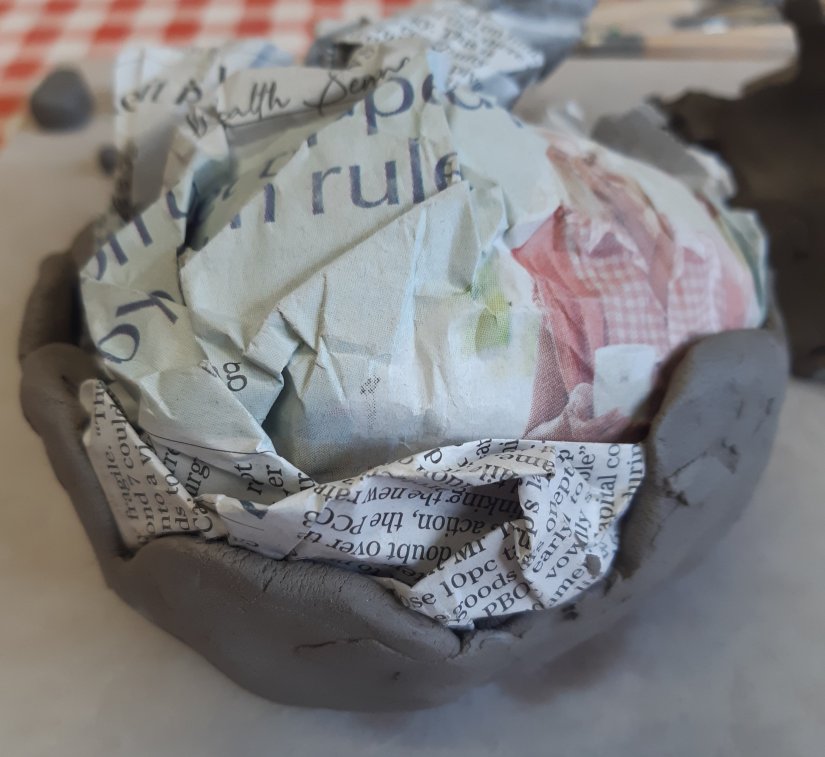
Our forma was a sphere which we made using one or two loosely scrunched up pieces of newspaper. We then created small flat pieces of clay with our fingers and added them around the newspaper, overlapping slightly and smoothing the pieces together. The idea is that if you made the item from solid clay it would take a very long time to dry out to ‘leather hard’ which is where it is suitable for putting in the kiln. By building around newspaper, the clay work is much thinner and as long as you add a hole into your item somewhere, it has a chamber inside for the air to get in. The heat of the kiln burns the newspaper away and you can tip out the ash and be left with a wonderful 3D design which is lightweight.

To begin, you take a piece of clay and form a small, flat round. Then, holding the newspaper sphere in your hand. You mold the shape onto the ball. You then continue to add small flat pieces around the newspaper and start to create the shape required for you object. As mine was to be a hedgehog, I began to manipulate into a kind of oval shape with a flattened base and then squeezed one end to create a snout shape.

The next step was to add a round hole on the base of the form which I did using a pointed metal tool and then dug out the clay using a looped piece. This is to let the air circulate around when the item is in the kiln and is essential to prevent the work from exploding! The hole won’t be seen as it is on the base of the work but I did try to make it nice and neat.

An air hole to allow the very hot air to circulate around the piece in the kiln

After adding a hole at the base and scratching in my initials, tutor’s initials and the session number so that my work is identifiable after firing, I made the features of the hedgehog i.e. a dog’s nose shape, some small balls for the eyes and four little feet. I create two circular indentations to place the eyes and then used the score and slip technique to attach them. If you want to see how ‘score and slip’ works click here for my previous post which contains a great link.

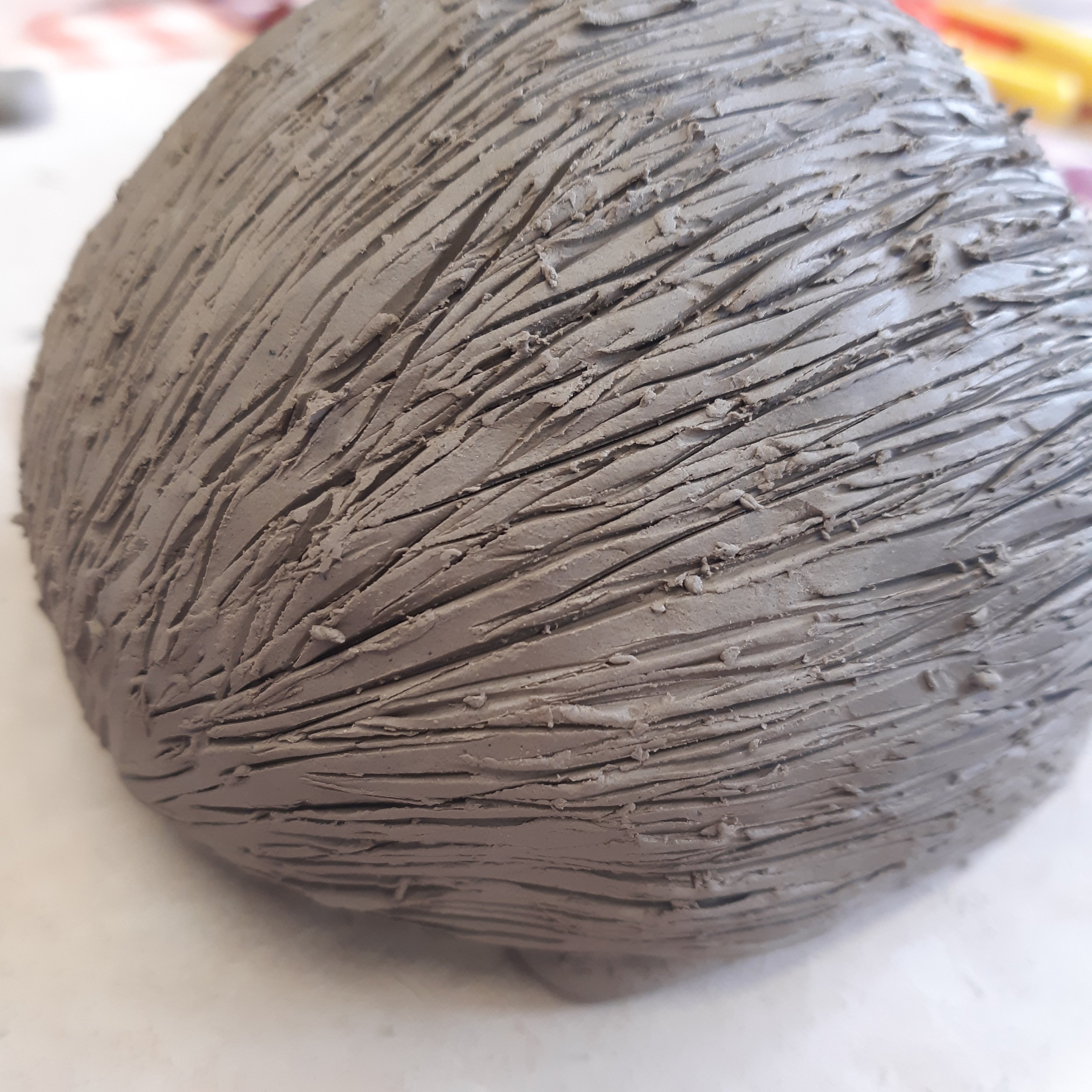
I was a little bit scared to add some texture to my design in case I messed it up, so I did a little practise on a small ball of clay first. Then, I added long, gentle cuts randomly all over the back of the hedgehog using a plastic knife from my modelling tools box.

Texture to create the idea of spines on the hedgehog’s back

Finally, made small snips with a pair of scissors in different places to add further texture and a spiny appearance. Again, I was frightened to do this, but I was pleased with the result in the end!

Here’s a front view of the spikes which I think look quite effective. The tutor said that when I add the glaze after he has been fired, it will go into the places where I have snipped and make different intensities of colour which will add to the effect and should look quite striking. I can’t wait to get started with this but he might take a while to dry out before he can go in the kiln. I’m also looking forward to glazing my little plant pot holder from a few weeks ago too.

I hope you’ve enjoyed seeing my hedgehog taking shape and liked reading about the process. If you ever get the chance to do a beginners ceramics course, I can definitely recommend it as it’s great to try something new and both the course participants and the tutor are lovely and so helpful. I always look forward to my time at the arts centre each week and find it really therapeutic in so many different ways.

Posted in art, creativity, mental health, Mindfulness, watercolour painting, wellbeing, wellness

Watercolour design pad: a simple red robin

A few weeks ago, I picked up a design pad containing line drawn images for watercolour painting. As I find drawing really difficult, I though this was an ideal way to practise my watercolouring skills without needing to draw my own pictures.

The pad contains 24 A4 size pages with 12 designs so you get two copies of each image. When I purchased it, I wondered why there was several of each image but as I messed up the first robin, I was glad of a second chance!

The pad contains animals and birds and one floral image.

I chose to start with the robin design as I love birds and we have had a robin visiting our garden each day for the past few weeks nibbling on the fat balls and seed mix I put out.

The paper in the pad doesn’t appear to be proper watercolour paper but I did find it easy to paint on and I was able to get the paper quite wet without it going soggy or wrinkling as it is quite dense.

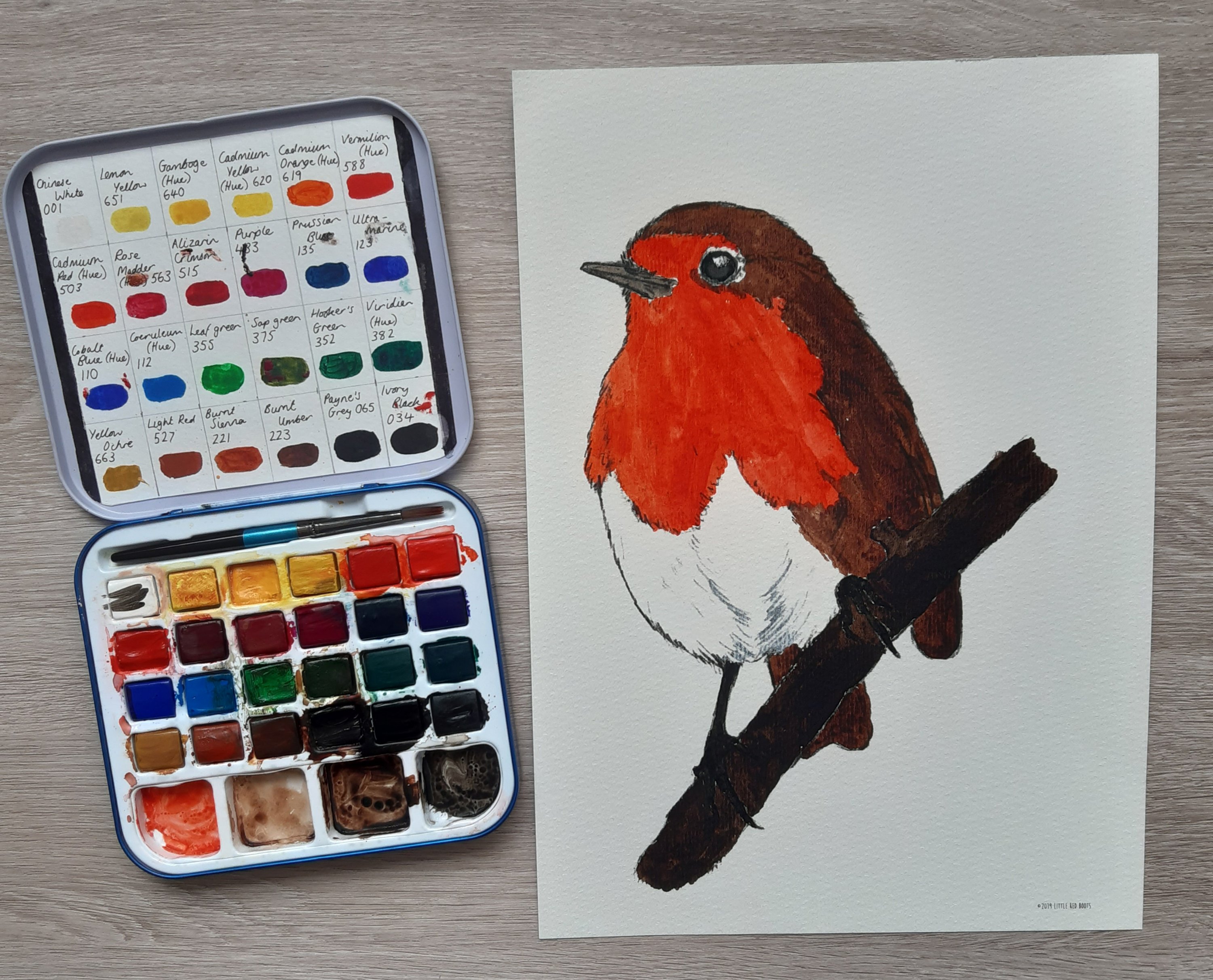
I thoroughly enjoyed having a few quiet hours mixing and applying the paint and was pleased with the results on my second attempt which you can see below. I might add some highlights to the robin’s feet using my Posca paint pen or a white gel pen but I’m waiting a while and may do a test on a piece of paper as I don’t want to spoil my work.

My finished robin and my very messy paint palette!

I’m trying to find more time for doing creative activities as a way of boosting my mental health and after I’d finished painting I felt so relaxed and happy with what I had achieved. If you love getting creative, I can well recommend doing a little watercolouring as a way to wind down after a busy day as a change from sitting watching TV or mindlessly perusing the internet on your phone.

If you live in the UK and are interested in buying the watercolour pad, I picked mine up in Aldi but have also seen it at a slightly higher price in The Range shop. If you want to find out more about my watercolour set, click here for my previous post.

Posted in art, creativity, Planning and journaling, watercolour painting

Setting up my bullet journal for October

Hi everyone. Hope you’re all well and enjoying the beginnings of Autumn. We’ve finally got some okay weather this morning so I’ve been able to take some bright enough photographs of my BuJo set up for next month and thought I would share them with you.

I decided to keep my spreads relatively simple and to a minimum this time as I found that I was tracking far too much in September and couldn’t keep up with it all and got quite overwhelmed. I’ve just done a quote page, a cover page which features a little watercolouring piece that I did, a double page monthly calendar and a planning page for my blog.

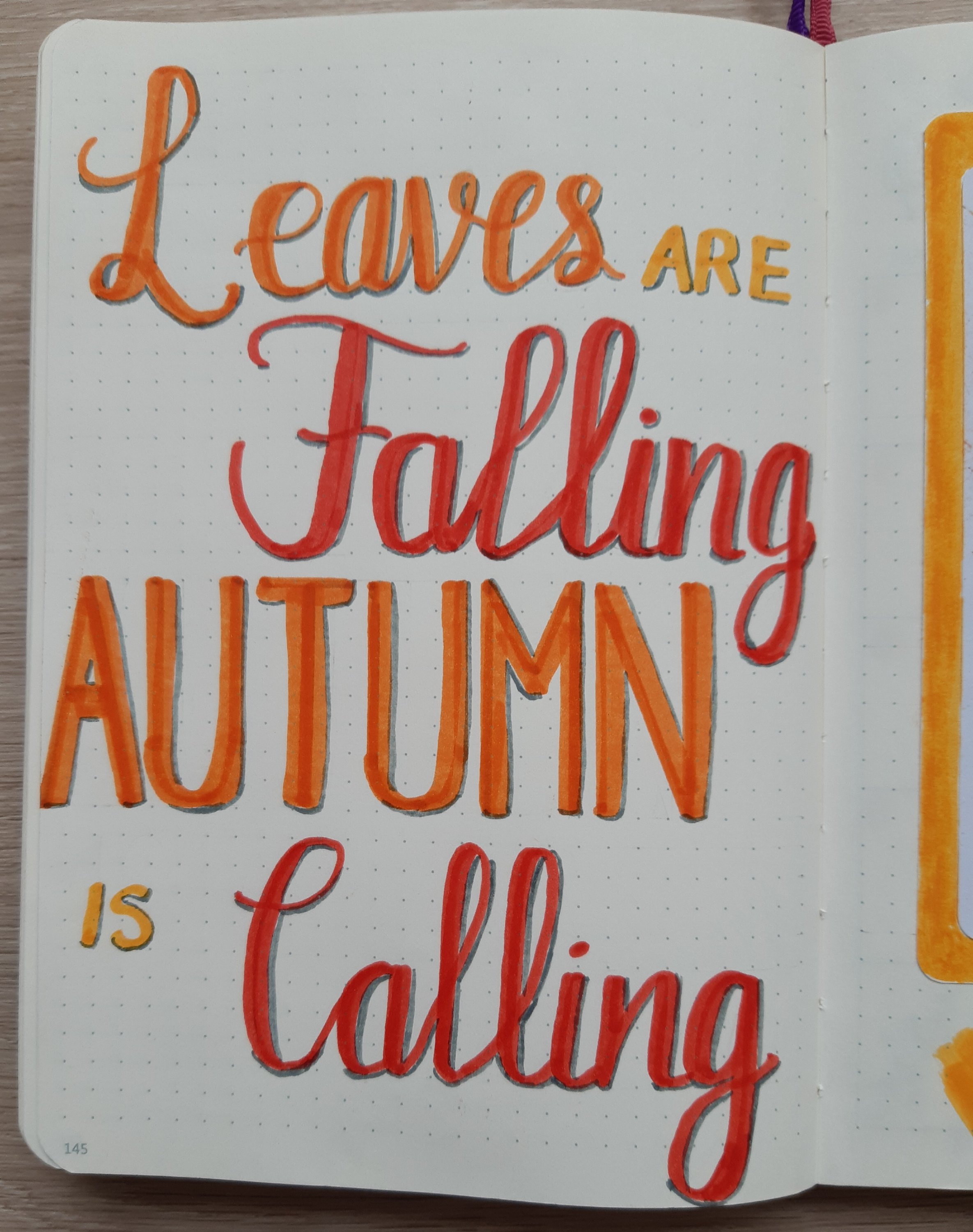
For my quote, I chose a simple Autumnal reference and as I was writing it, I had a vague feeling I’d used it before. I checked back in one of last year’s Bujo and there it was. I figured it didn’t matter and that I must really love it!

3 bright and juicy Crayola supertips plus a drop shadow using the grey tip of my Tombow dual brush pen

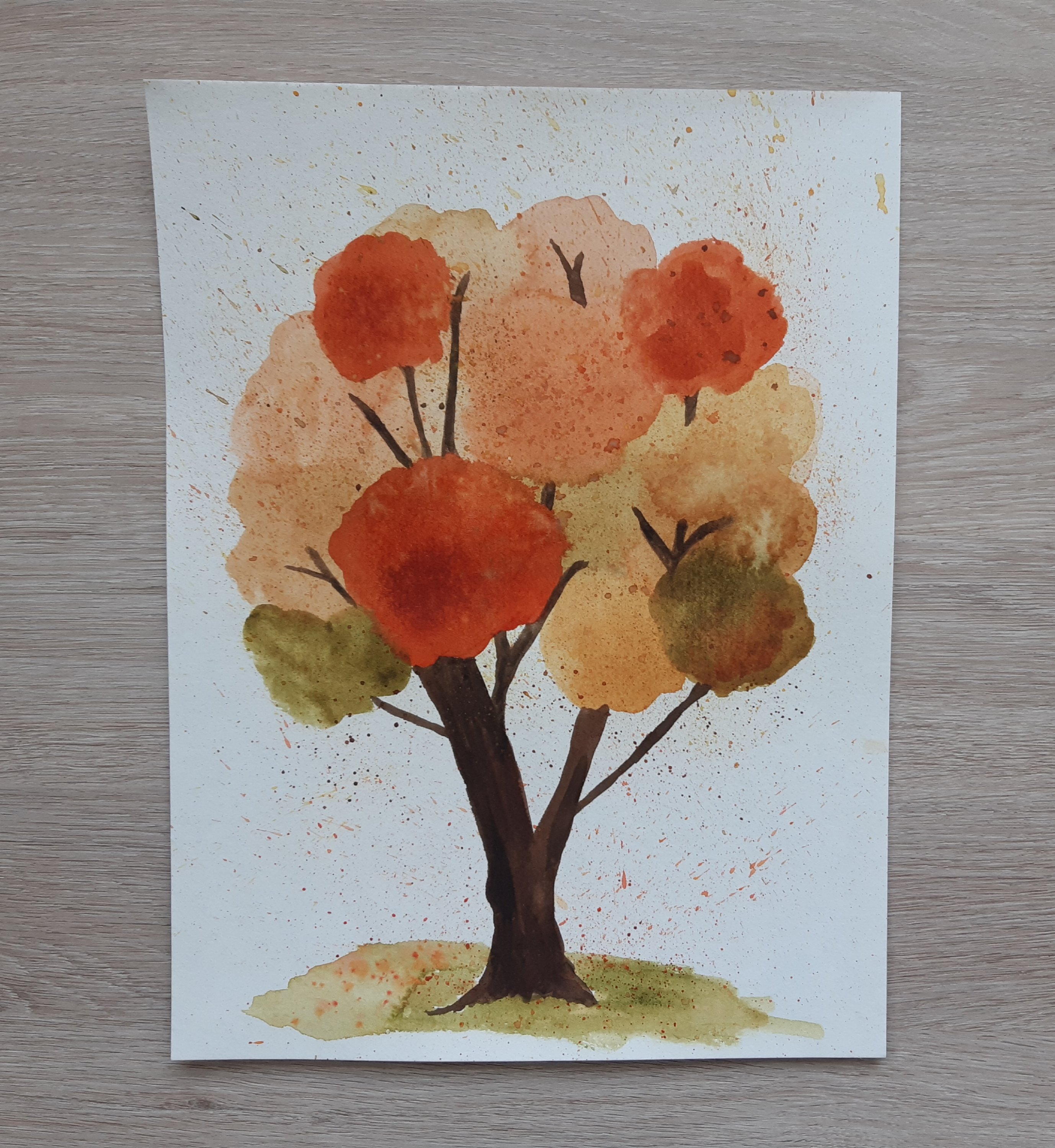
This watercolour was created using my new Daley Rowney Aquafine Travel Set. I followed an online tutorial and although the results don’t look the same as those done by the professional artist that created the step by step, I’m pleased with the results as I’m a total beginner. If you want to have a quick look at the tutorial, you can find it here.

Autumn tree produced on an A4 sheet from a watercolour pad

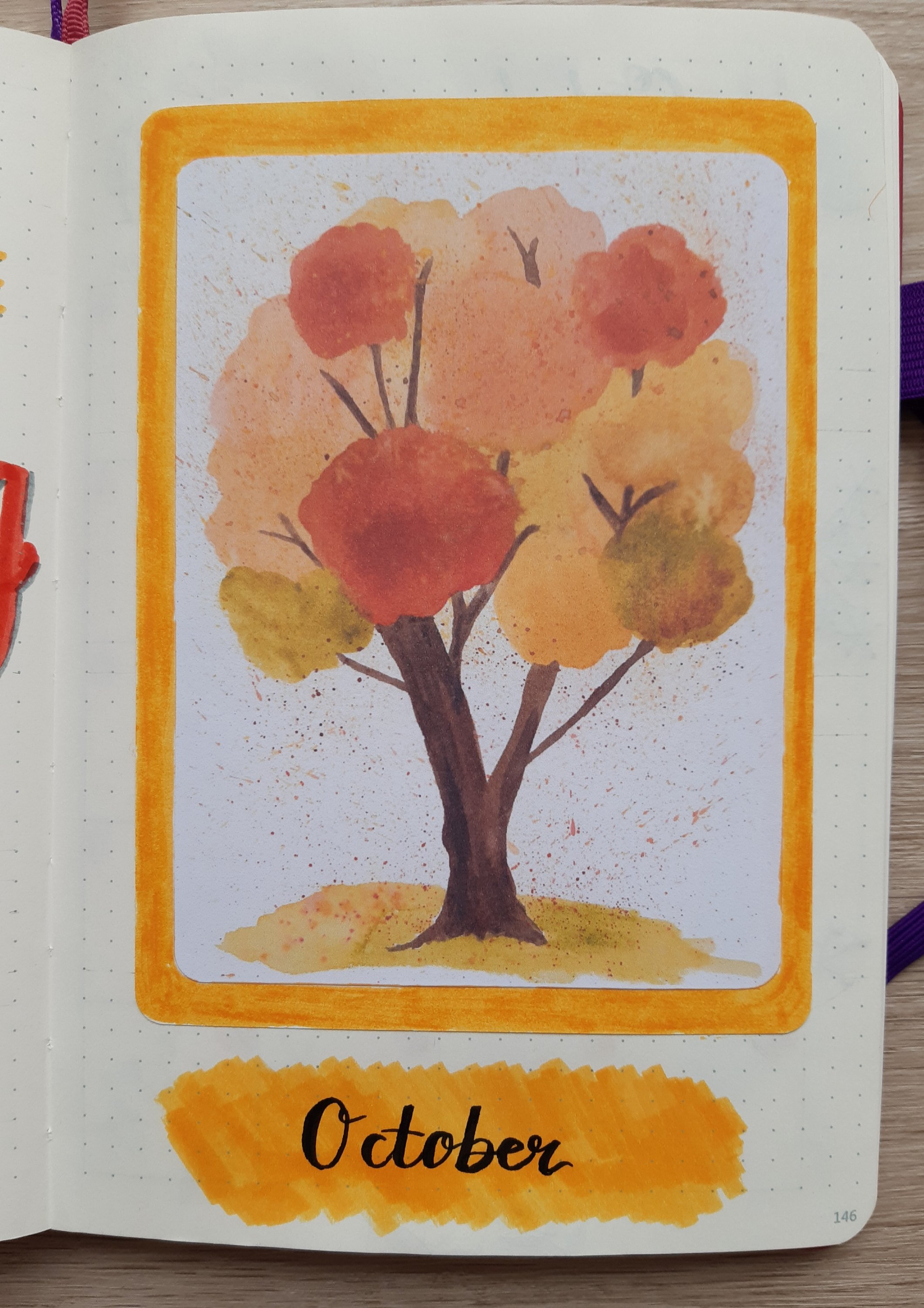
I then spent about two hours working out how to scan the image into a format that I could shrink to stick into my BuJo. After much perseverance (and a glass of wine which was most helpful ha ha!) I got it sorted. I ended up sticking a piece of paper over a mistake I made with my brush lettering but I think it looks okay now I’ve made it into a border for my picture.

October cover page

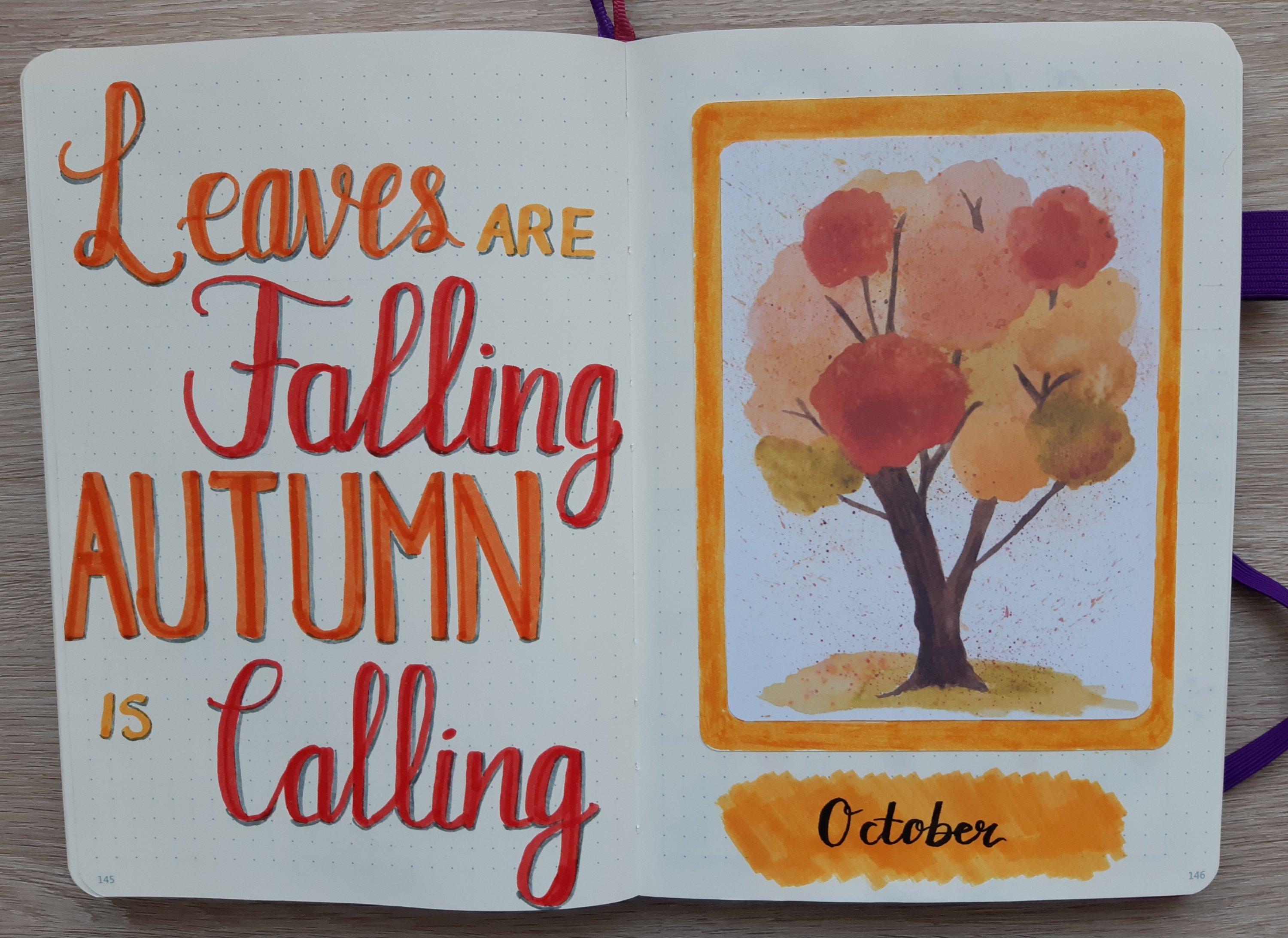
And here’s the two pages together. I think the bright colours look lovely. What do you think?

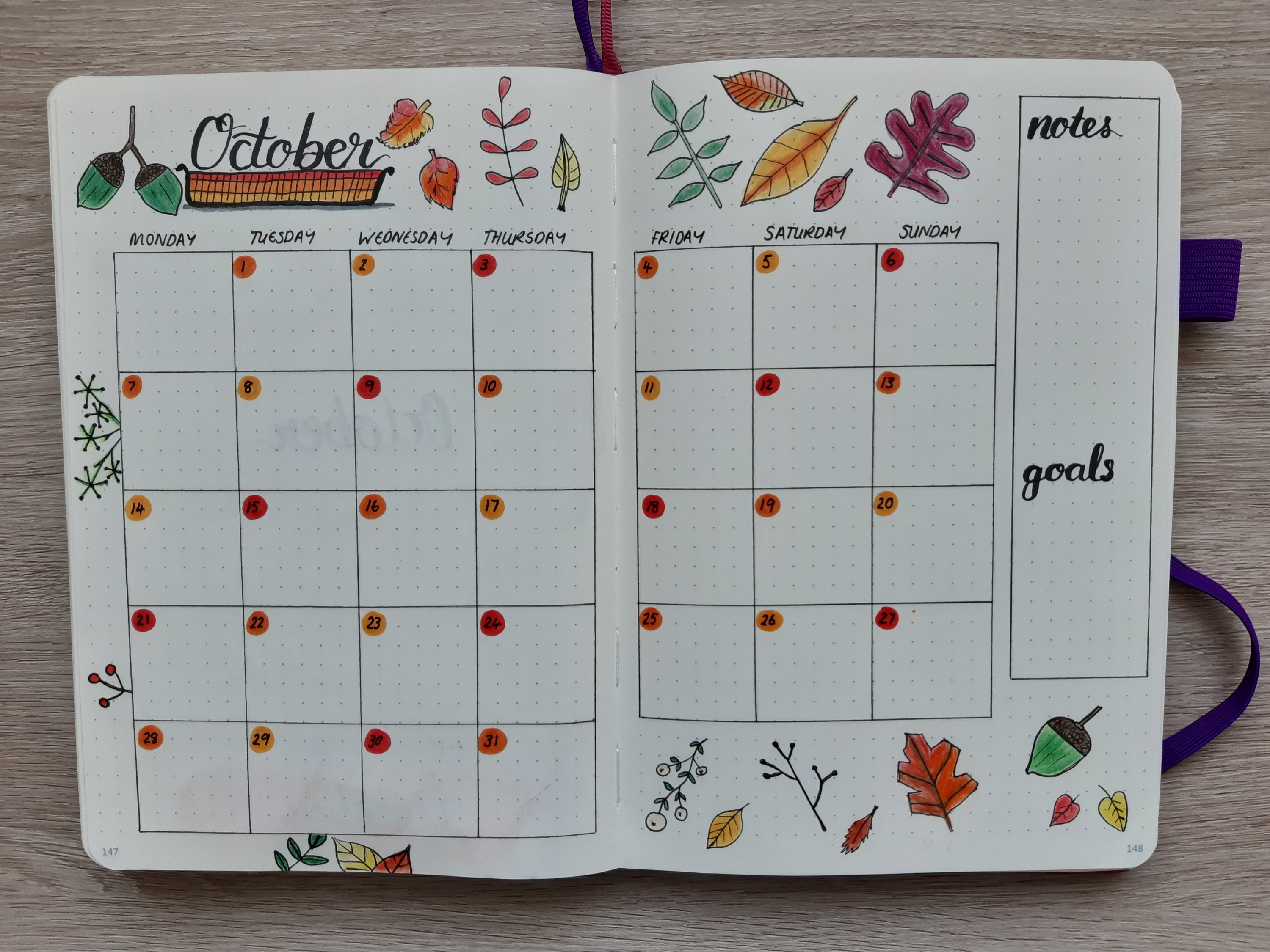
For my monthly calendar, I chose to decorate with some Autumn leaves and berries. I’m not wonderful at drawing but I think it looks okay. I used coloured pencils to shade them in but the only problem I seem to have it that when I write on the next few pages of my notebook the colour transfers. I’m not sure if there’s a solution to this, maybe I press on too hard? If anyone has any ideas, I would be grateful to hear them.

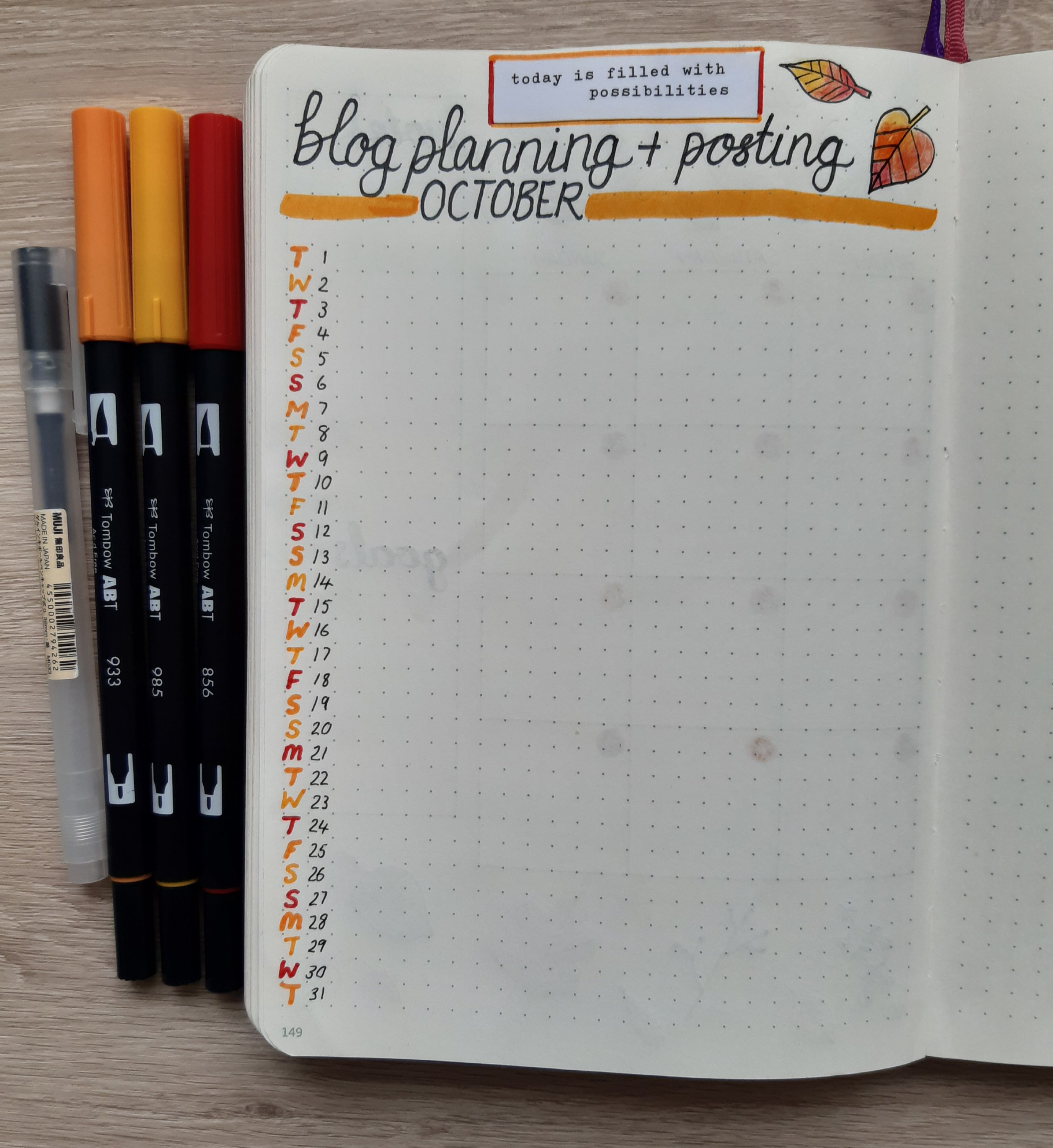
And finally, my blog planning page. On here I’m going to record days when I’m planning, reading researching as well as the titles of my actual posts.

I hope you’ve enjoyed looking at my spreads for October. I would love to hear about your chosen themes for the month and what you have planned for the Autumn. Let me know in the comments if you get the chance.

Posted in art, creativity

Ceramics for beginners: making a plant pot base

The finished pot, ready to be air dried and then fired in the kiln in about one week’s time

At the beginning of the month, I started a ceramics for beginners class. Working with clay is something I’ve been wanting to try for a while and I was so excited to find a fully funded course where I could develop the basic skills, have fun working on some exciting projects and meet some lovely people who enjoy getting creative.

Following on from week one which was our enrolment, paperwork and getting to know you session, we spent the second session learning the skills involved in creating a pinch pot, making spirals and using a press to form tiles. This week, we actually got to make a finished product that we could put in the kiln and then glaze. I decided to try my hand at making a small plant pot to put a potted succulent inside.

In order to make a nice and even pot, I decided to create a circular base and build up coils around the circumference. The previous week we’d learnt the score and slip technique which is used to join pieces of clay together. Click here to see a great tutorial I found online which shows this technique in action to make a simple clay pot.

The photograph below shows the circular piece which I created with a pastry cutter and the first rolled length of clay for the sides. After making these pieces, I then score lines around the edge of the base and along the thin roll of clay for my first layer. After the scoring, you dip your clay covered fingers in water and wet both pieces. The two pieces of clay are then pushed together. This creates a good join.

Scoring lines made using a plastic modelling tool

After making and adding each coil of clay, I blended them in to the base using my fingers to create smooth sides. This took me a long time but I was determined to get a good looking pot by the end of the three hour lesson!

Two coils of clay smoothed into the base to build up the sides
Four coils blended

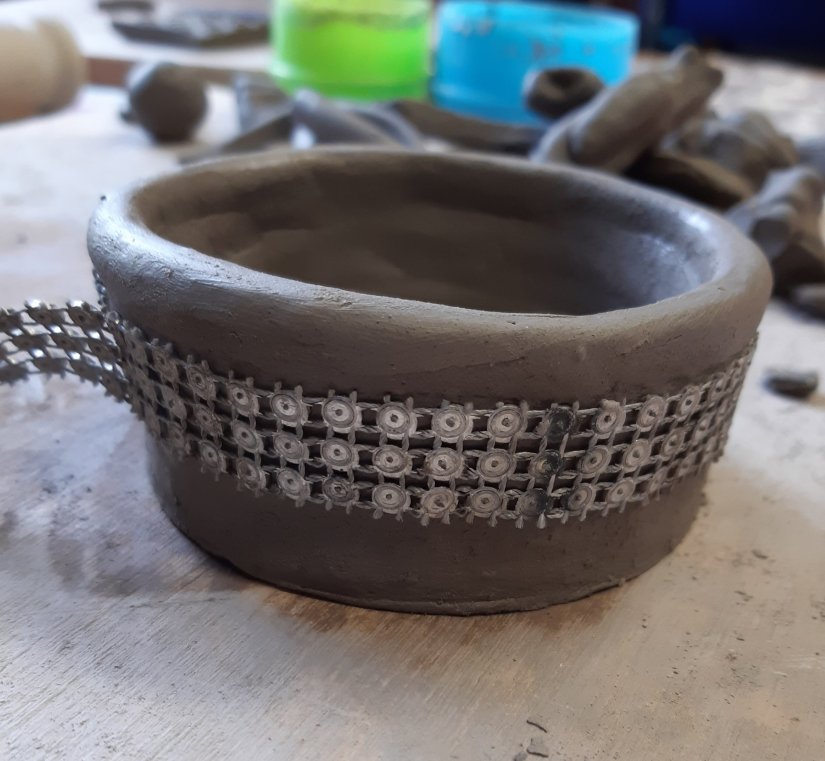
By the time I’d made four thin sausages of clay of the same width, scored and slipped each and blended them, I’d had enough of that technique and decided it was time to have some fun with adding texture. used a jewelled strip, wrapped it around gently pressed it in. I repeated this several times until I was happy with the effect.

Attaching a jewelled strip around the outside

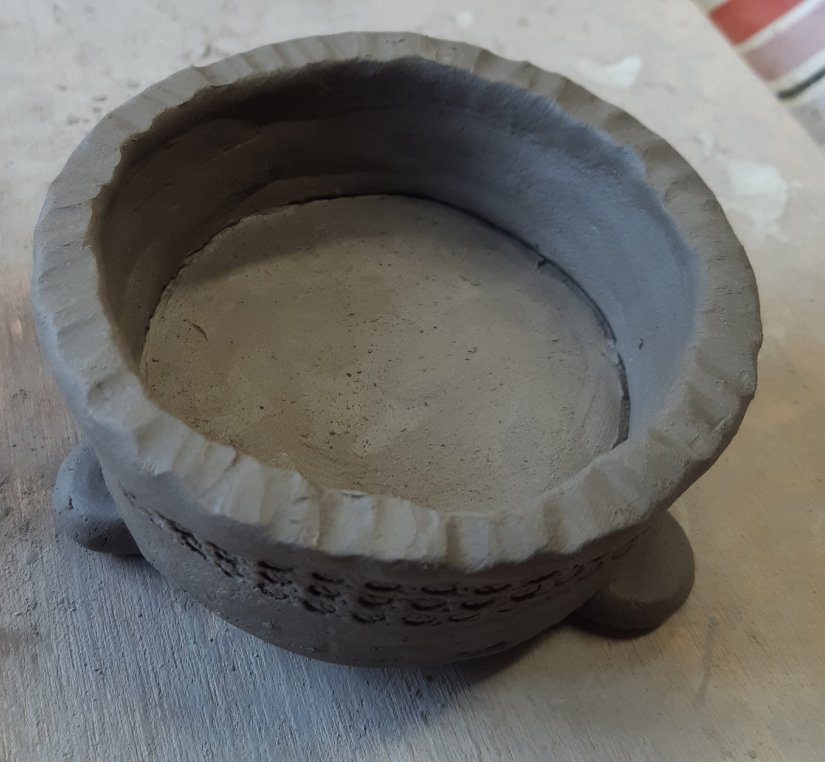
Finally, I created further texture around rim of the pot using a piece of metal dowel to make small dimples and added a trio of little feet (which I made prior to constructing the pot) to the design.

With added texture and some small feet added using the score and slip technique

And here’s my finished pot, ready to be left to air dry before going in the kiln. I’m quite pleased with the results as it’s the first pot I’ve ever made. I’m looking forward to glazing it in a few week’s time and just need to decide on a colour.

My finished pot!

Have you ever had a go at making anything with clay? If so, what did you make and did you enjoy it? I found it to be a wonderful and relaxing experience. I only used half of the clay that I was given for the session so the tutor wrapped some up in cling film for me to use at home. I’ve just ordered some modelling tools and I have plenty mark making craft materials in my stash to experiment with.

I hope you’ve enjoyed reading about my ceramic pot making experiences. Watch this space to see how it looks when it’s been glazed and re-fired. Hopefully I’ll be able to find the perfect potted succulent that fits inside.