Blog

Posted in Blogging, Planning and journaling

Currently… a little update on what I’m up to right now

I know I’ve been absent from my blog for a while but, as I’m now back enjoying writing again, I thought I’d do a little update on me and what I’m focusing on right now. It will be a useful reminder for myself to show how productive I’m being now I’ve got over my bout of poor mental health and it might also inspire you to do a currently list in your bullet journal or notebook or even on your blog.

Currently adjusting… to the situation we find ourselves in right now. Every day there are new recommendations advising of changes we need to make to help stop the spread of this awful virus. It’s stressful for everyone but we need to really focus in on all the positives and take extra good care of ourselves and others. Now is a time for solidarity and I’ve seen many examples of this over the weeks.

Currently buying… the essentials only. My husband and I haven’t done any panic buying and for a while I thought we were going to run out of toilet roll but for now we’re safe on that one! Phew! I’ve also bought a pair of yoga bricks and a strap to go with my yoga mat as my class has been cancelled for the foreseeable future. I’m determined to keep up my practice but as a complete beginner, I need some equipment to ensure I can do the poses but not over exert myself.

Currently cleaning… door handles, light switches, our stair rail and anything else that might help to get rid of germs. It’s worrying to note that COVID-19 can live on surfaces for up to 9 days but luckily there’s plenty of advice online about which surfaces of the home to pay attention to including this one here.

Currently enjoying… being able to get out into the garden to see the first few glimpses of Spring. I’ve been able to hang plenty of loads of washing on the line as it’s been breezy but sunny over the past few weeks. Lots of shoots are popping up and our daffodils are in full bloom right now. Unfortunately, the warm weather has helped the weeds to grow too so I now need to spend some time getting rid of them!

Currently exercising… to improve my fitness levels and strength. My weekly gym session and my yoga classes may be cancelled but I’m still trying to fit in lots of exercise. I’m currently going for a 30 minute walk each day and using YouTube videos to develop my yoga practise with the aid of my new equipment.

Currently learning… new brush lettering techniques whilst still practise the basics. I’ve turned to a copy of Simply Lettering that I bought a while back which includes a 20202 calendar with quotes for each month to copy. I’m a bit late with it I know as it’s nearly the end of March but I just finished it this morning and better late than never eh?!? I found the flourishes really difficult with being a leftie so if any of you left handers have any tips, I would welcome them!

Currently feeling inspired… to draw florals. Whilst perusing YouTube, I found a wonderful artist called Shayda who shows, step by step, how to draw a range of flowers. I’ve been having a go in my sketch book and, although my efforts don’t look as good as hers, I’m getting better with practise. You can find her YouTube channel here. She’s also a keen bullet journalist too and choses a floral theme each month. I also went with a flower theme in my BuJo for April with hibiscus.

Currently organising… my sock drawer! I’ve been a fan of the Konmari method for several years now so I’ve been folding and standing my clothes up for a long while now but I’ve always struggled with getting my socks to sit right. I’ve found a new way to fold them so they lie flatter and fold up more easily. I’ve even taken to giving them a quick iron although how long this will last I don’t know! If you want to know the secret to my perfect folding which differs from Marie Kondo’s suggestion, let me know in the comments and I’ll oblige and maybe even take a photo or two!

Currently planning… and setting goals. I kind of fell out of love with using my BuJo when I was poorly but I’m back to loving it all over again. Previously, I was just doing a monthly calendar, completely undecorated and then writing a very short to do list for each day on a piece of paper or in the notes App on my phone. Now, I’m doing a properly daily plan for tomorrow the night before and making lots of notes on future projects and things I’d like to try. I’m also setting a small number of goals for the month. It feels good to be back!

I hope you have enjoyed reading about what I’m currently up to. Let me know in the comments what’s taking up your time right now. Maybe you’ve discovered something new or gone back to something you used to enjoy doing now that social distancing has affected many of our routines.

Until next time, keep safe and well,

Posted in creativity, Planning and journaling

Setting up my bullet journal for April 2020 – Hellebores floral theme

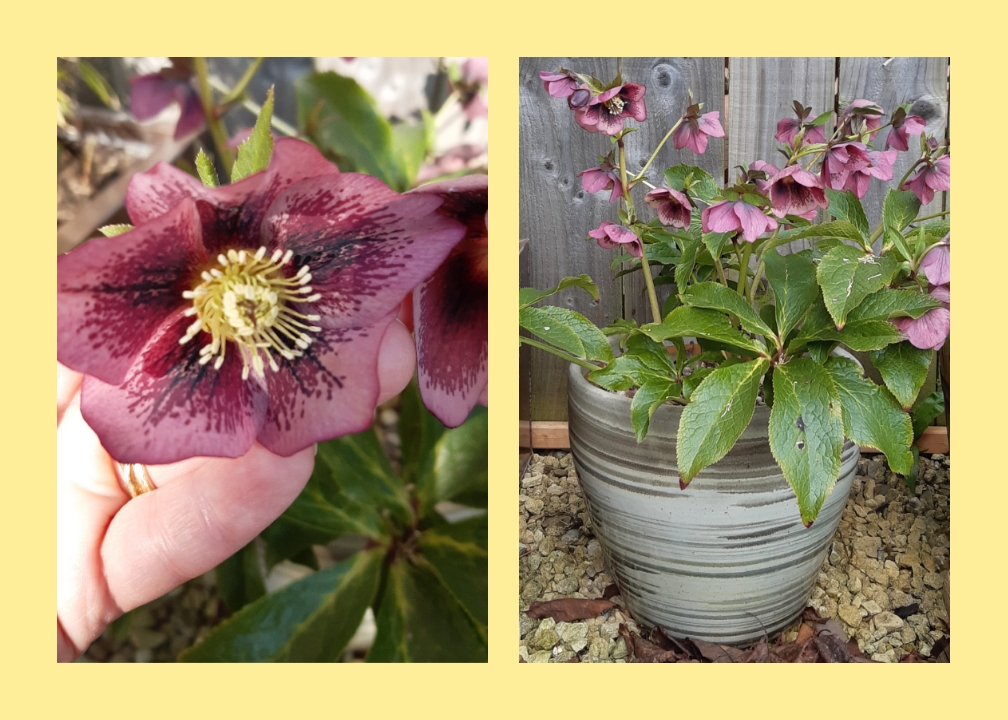
Hellebores in full bloom – March 26th 2020

For my bullet journal spreads for April 2020, I have taken inspiration from my own garden. This year, we transferred our hibiscus plant to a larger pot and it is now thriving and has so many flowers on it that it looks so pretty. I wanted to have a go at drawing the individual blooms and also the pot and plant. I hope my spreads inspire you to try out a nature theme this month too.

Drawing the flowers required a bit of research into drawing techniques but a quick Google search came up with a great tutorial that even I could follow with my limited sketching skills. Click here if you want to see how to create the basic shapes. For the colouring in of the individual flowers, I copied directly from my plant, but I relied on the demonstration to get the dimension and detail right.

I found this quote online and thought it was perfectly apt for me at the moment. I’m just starting to get better after a long spell of overwhelming anxiety and depression and with time and an increase to my medication I’m taking small steps towards the life I want. I accidentally stuck the piece of paper (which is incidentally covering my first version of writing the quote because I messed it up) on a bit wonky and couldn’t remove it as I used strong adhesive tape!

My April cover page is a simplified version of my actual hibiscus plant. I’ve drawn a smaller amount of leaves and a lot less blooms than there are in real life but I didn’t want to make the sketch too onerous. After drawing a rough image with pencil, I used a Unipin 0.2 black fineliner to outline the flowers, stems, leaves and pot and then coloured pencils from my WHSmiths set to do the shading. I’m quite pleased with the results although I think the leaves look a little un-natural as I made them a bit to uniform. Anyway, I’m just a beginner so there’s always something to learn!

My calendar page is a double spread as always, with boxes six dot spaces wide and tall. I like plenty of room to make note of each day’s events, including birthdays and appointments (although I just realised I probably won’t have any face to face contact with anyone this month due to COVID-19!). I’ve added a space for notes at the bottom in case I need to write about something at length.

I’m not tracking my habits this month as I don’t want to put the pressure on myself but I will be making sure to drink lots of water each day and need to keep applying moisturiser to my hands as they’re all dry and cracked from all of the handwashing. I’ll probably record my mood each day over the month but for this I’m going to be using the Bipolar Mood Scale chart to check that I’m not getting too hyperactive from trying to do too much in a bid to make up for all of the months I haven’t felt like doing anything.

I hope you’ve enjoyed looking at and reading about my April Bujo spreads. I’m excited to see what everyone else has chosen for their theme this month. Drop me a comment below if you’ve shared yours on Instagram, YouTube or on your blog and I’ll be sure to take a look. This social distancing has meant that many of us seem to have got our spreads drawn up well ahead of time – we’ve got to celebrate the positives, right?

Until next time, stay home, stay safe and stay well.

Posted in mental health, wellbeing, wellness

Monday Matters: Over 60 self care ideas and activities to keep you busy and mentally well when self isolating or social distancing

Photo credit: Samantha Gades, for Unsplash

The current UK government advice is to practise social distancing in order to minimise the spread of Coronavirus (COVID-19). With this in mind, I present over 60 ideas and activities to help you make the most of your social distancing or isolation time if you are still feeling fit and well. Hopefully, these activities will keep you safe but productive at the same time and encourage you to support yourself in staying mentally as well as physically well. Of course, some of the suggestions will be more suited to your lifestyle than others and some may just be completely inapplicable but hopefully you can use at least half of them so that’s over 30!

  1. Paint your nails or give yourself a manicure or pedicure
  2. Give positive feedback to someone (e.g. thank someone at the supermarket for doing a good job or write an email to someone who has shared a great article online)
  3. Wash your car (or get your husband to do it – that’ll be me then lol)
  4. Send a loved one a card through the mail telling them how much you care about them
  5. Organise your wardrobe
  6. Put some food out for the birds and watch them feed through the window
  7. Have a video call with a family member or friend
  8. Light a scented candle and meditate whilst watching the flame
  9. Research a topic of interest online – maybe make notes in your BuJo or other notebook
  10. Enjoy a long soak in the bath
  11. Do a jigsaw puzzle
  12. Start a craft project that you’ve been meaning to do for a while
  13. Peruse Amazon and download a new book for your Kindle
  14. Practise calligraphy
  15. Wash your hair and spend ages styling it to perfection
  16. Create an upbeat playlist of songs you love
  17. Take a free online class
  18. Watch a YouTube video that teaches you a new skill
  19. Walk barefoot on your lawn
  20. Listen to an audiobook
  21. Get out your photo albums and revisit happy times (or flick through old digital images on your mobile phone
  22. Snuggle up under a soft blanket and watch a movie
  23. Have a home pampering session e.g. put on a face mask
  24. Do some colouring in
  25. Shine your shoes
  26. Practise Yoga or Pilates (there are lots of videos on YouTube that show you how)
  27. Re-arrange the furniture in your house
  28. Do an observational drawing of something in your house
  29. Enjoy a cup of coffee or tea whilst reading this list and make plans for your day
  30. Write a nice comment on a website or blog
  31. Find a new recipe and try it out
  32. Write in your journal about how your day has been
  33. Play cards or a board game with a family member (or plan an online game whilst being in isolation from others)
  34. Join an online community on Facebook and start a discussion about one of your interests
  35. Buy yourself something nice online for home delivery
  36. Try out some new hairstyles
  37. Find some online journal prompts and do some writing
  38. Make up a poem about how your day has changed for the better since practising social distancing
  39. Learn about your family tree
  40. Savour a bar of chocolate
  41. Do a wordsearch, crossword or other word puzzle
  42. Make a gift for a family member or friend which you can leave on their doorstep
  43. Do some origami
  44. Visit Etsy and support a handmade business by choosing and buying a little treat for yourself or a loved one
  45. Make homemade pizza
  46. Sing in the shower
  47. Massage hand cream into your hands (particularly good if your hands are dry from all the handwashing)
  48. Play games on your tablet or phone (my current favourites are Angry Birds 2 and Candy Crush Saga)
  49. Share a photograph online of something new you’ve tried whilst self isolating
  50. Buy some new stationery from an online shop
  51. Spend an hour reading your favourite magazine with a hot or cold drink
  52. Make homemade bread
  53. Sit in your back garden tonight and do some stargazing
  54. Learn to juggle
  55. Give your muscles a good stretch
  56. Send a text message to a friend checking that they are safe and well
  57. Write a list of all the things that you are grateful for right now
  58. Make a list of reasons why you love your friend / partner and share it with them
  59. Spend time engaging in one of your long forgotten hobbies
  60. Watch a favourite movie and munch on some popcorn
  61. Do some embroidery or cross stitching
  62. Cuddle your pet and show them some love
  63. Enter an online competition
  64. Repair something in your house that you’ve been meaning to get around to fixing for months
  65. Have an indoor picnic in your house (put out a picnic mat or blanket and sit on the floor in your living room)
  66. Make some (virgin) cocktails (don’t forget to drink responsibly)
  67. Do a Sudoku
  68. Close your eyes and do 5 minutes of soothing breathing

I hope you’ve found at least some of these ideas useful. Let me know if you have other suggestions which I could add to the list.

Stay safe everyone and remember, just because you’re practising social distancing, doesn’t mean you need to isolate yourself from the world completely. As best as you can, and in a way that is safe, keep in touch with loved ones and most importantly, look after you!

Posted in compassion, life hacks, psychology, wellbeing

Monday matters: Procrastination and 10 ways to minimise it

The second instalment of my Monday Matters series is focused on procrastination, something which effects most, if not all of us on a fairly regular basis. In fact, studies have shown that around 20% of the population are chronic procrastinators! In this post, I will consider what procrastination is and why we procrastinate, the forms it takes, and most importantly, steps we can take to minimise it in a bid to become more productive and achieve our goals.

What is procrastination?

The act or habit of procrastinating is where we put off or delay doing something, in particular a task which is unpleasant or burdensome, but which really requires our immediate attention. It can take on many forms such as not tackling the pile of ironing you’ve been meaning to do for the past week, leaving a bill payment until the last minute, avoiding a difficult conversation with someone at work or telling yourself you’ll start developing a more healthy lifestyle starting next week. Whatever it looks like, procrastinating can pre-occupy our thoughts and be a cause of stress, anxiety and even depression. It can even take over our lives and have a huge negative impact on our future.

Signs of procrastination include filling your day with low priority tasks, leaving a high priority item on your ‘to do’ list for a long time (for example, if you use the bullet journal system, you may repeatedly migrate a particular item to the next day or following week), making endless cups of tea, coffee or snacks, reading emails lots of times but not actually actioning any of them, or waiting for the right time or the right mood to get started with something.

So, why do we procrastinate?

Procrastination is a voluntary and unnecessary delay in undertaking something, but most people struggle to control it. There can be different reasons for not undertaking a task and these generally relate to poor time management, fear of failure (or sometimes even success), lack of motivation related to low mood or an unrealistic view of the self.

For some of us, as we think about starting a task, we can develop feelings of anxiety about getting it done. This can then cause us to become overwhelmed and then avoidance starts. Not getting the task done then becomes a source of guilt and shame and these negative feelings create a never ending vicious cycle.

Perfectionists are also frequent procrastinators. Because they hold such high standards, they often fear being unable to complete a task perfectly, so end up put it off for as long as they possibly can. This performance related anxiety causes them to seek out much less threatening or ‘safer’ options.

How can we minimise the effects of procrastination?

The first step to minimise procrastination is to begin to be more self compassionate. Forgive yourself for procrastinating and try not to feel guilty about it. Accept that everyone procrastinates at times and it’s okay to do so. Also, remember that it is particularly common in people who suffer from issues with anxiety or low mood.

When you have developed more understanding towards yourself, you can then work on your ability to take responsibility for your actions (or inaction!) and begin to believe in your ability to make small changes to enable yourself to be more productive. Here are some ideas I’ve collected from my compassion group work and from my reading:

  1. Ignore your mood and just get started – it doesn’t matter if you feel like doing it or if it seems like the right time, some tasks just have to be done. And besides, it might take you less time than you expected or you might feel a whole lot better when you get it out of the way!
  2. Break a project down into small manageable steps that can be accomplished – just a little bit of progress towards a goal will help us to feel better about the task and increase our self esteem and motivation to continue.
  3. Do some planning – at the start of each day, create a timeline of how you intend to spend each hour and try to stick to it as best you can, for longer projects, set deadlines for each task. That way, if you don’t finish what you had planned for today or this week it will affect your future plans.
  4. Get the worst or hardest bit done first – as Mark Twain once said ‘If it is your job to eat a frog, it’s best to do it first thing in the morning. And if it’s your job to eat two frogs, it’s best to eat the biggest one first.’ By completing your most important task first you’ll have the satisfaction of this achievement which will hopefully provide you with the motivation to get even more done.
  5. Think about your use of language – use positive affirmations as a way forward e.g. I can eat healthily, rather than I need to go on a diet, I am someone who exercises rather than I want to do some exercise. This helps to change the distance between yourself and your behaviour.
  6. Set time limits and then reward yourself for sticking with it e.g. 40 minutes of work and then I’ll have coffee, a biscuit and 10 minutes catch up on Facebook, when I’ve tidied and cleaned the living room, I’ll sit back and watch my favourite TV show.
  7. Minimise distractions – put your phone in another room, turn off your notifications, close all of your social media and email tabs, work in a clean and clutter free environment. Choose a place where you are most likely to be productive. This could be your home, the library or a quiet café.
  8. Change your internal dialogue – instead of fixating on how much you dread a given task and forcing yourself to do it, try changing your mindset, deciding in advance that its completion will make you happy. Also, rather than using phrases such as “I need to…” and “I have to…” try changing to “I chose to…” or “I would like to…” as these imply that you have a choice and help you to feel empowered in making a decision to act.
  9. Let others know what your goals are – telling family and friends what you want to achieve can help in several ways. Firstly, it can hold you accountable, and secondly, they can offer you support and encouragement along the way.
  10. Remember, done is better than perfect – focus on just completing a task rather than getting hung up on minute details. Then you can celebrate the fact that it is finished. You can always go back to it to make improvements another time.

I hope you’ve found today’s blog post helpful in terms of developing your understanding of procrastination and how we can minimise its effects. If you have any more tips, please do share them in the comments.

Posted in art, creativity, watercolour painting

Back to basics: Watercolour techniques Days 1, 2 and 3. More colour mixing and layering

As the colour mixing chart took so long to complete, I left the rest of the lessons for Day 1 and combined them with Days 2 and 3 for a mammoth painting session. Although I enjoyed the actual painting I was spending more time trying to clean up my set of colour pans and washing out the mixing palettes so in the the end, I popped to The Range and bought some squeezy tubes and two more mixing trays. This meant I had exactly the same colours as the painting tutor and I could leave my dollops of colour in the palettes to use at a later time. I learnt lots more about mixing colours and had great fun trying out the different techniques.

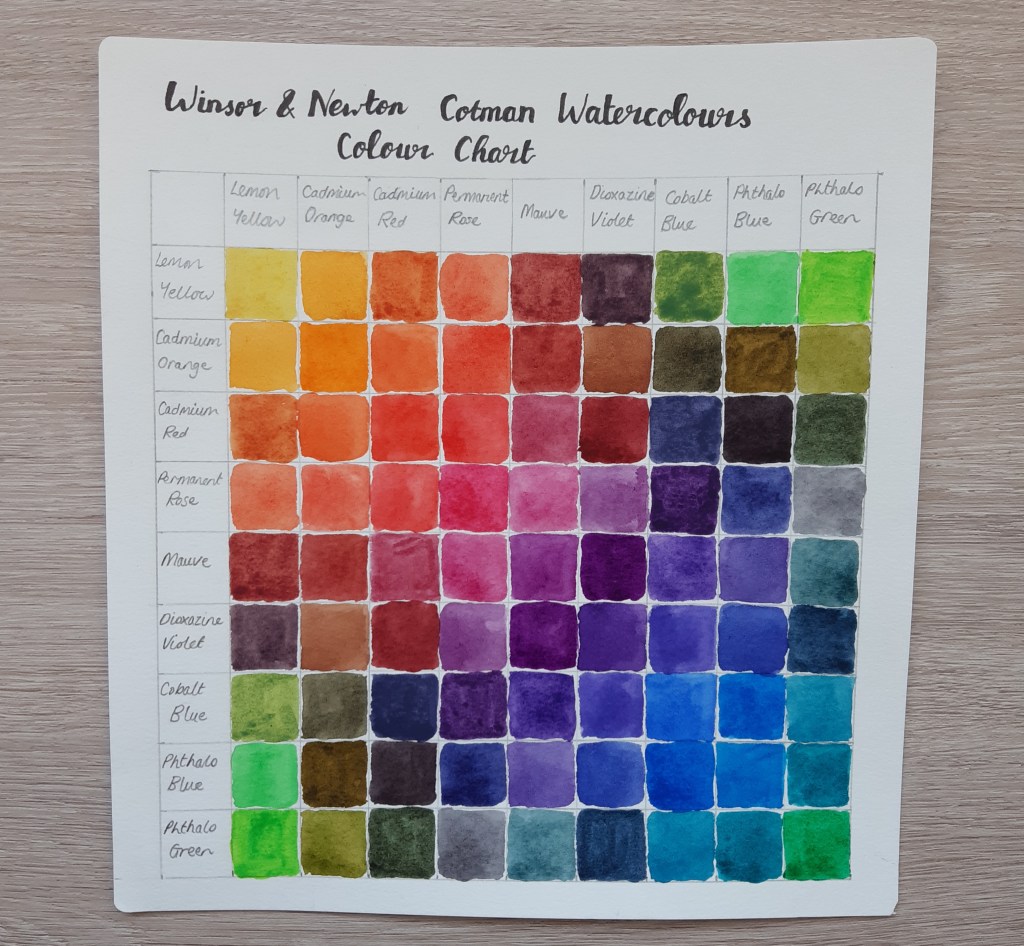
As I said in my first basic watercolour techniques post, the colour chart took me a long time to do, so although I watched all of the lessons for Day 1, I didn’t complete all of the practical tasks. When I got my new paints, I decided to make the chart again using the new colours so I could see how they would mix.

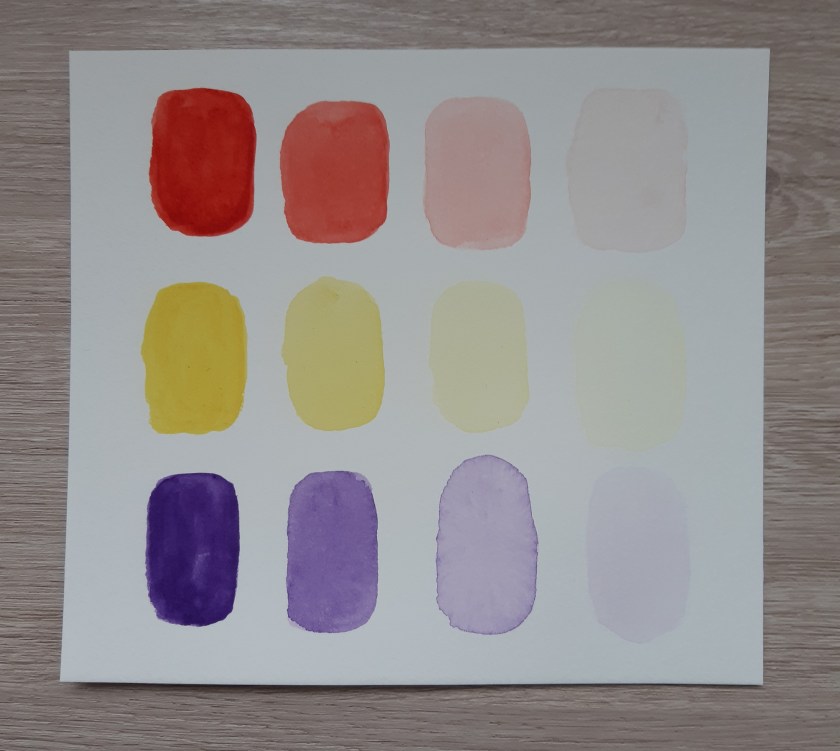
The second lesson was on colour value which basically means how light or dark a colour is. We learnt how to change the hue of a paint colour by gradually adding more water. Here are the results with different colours:

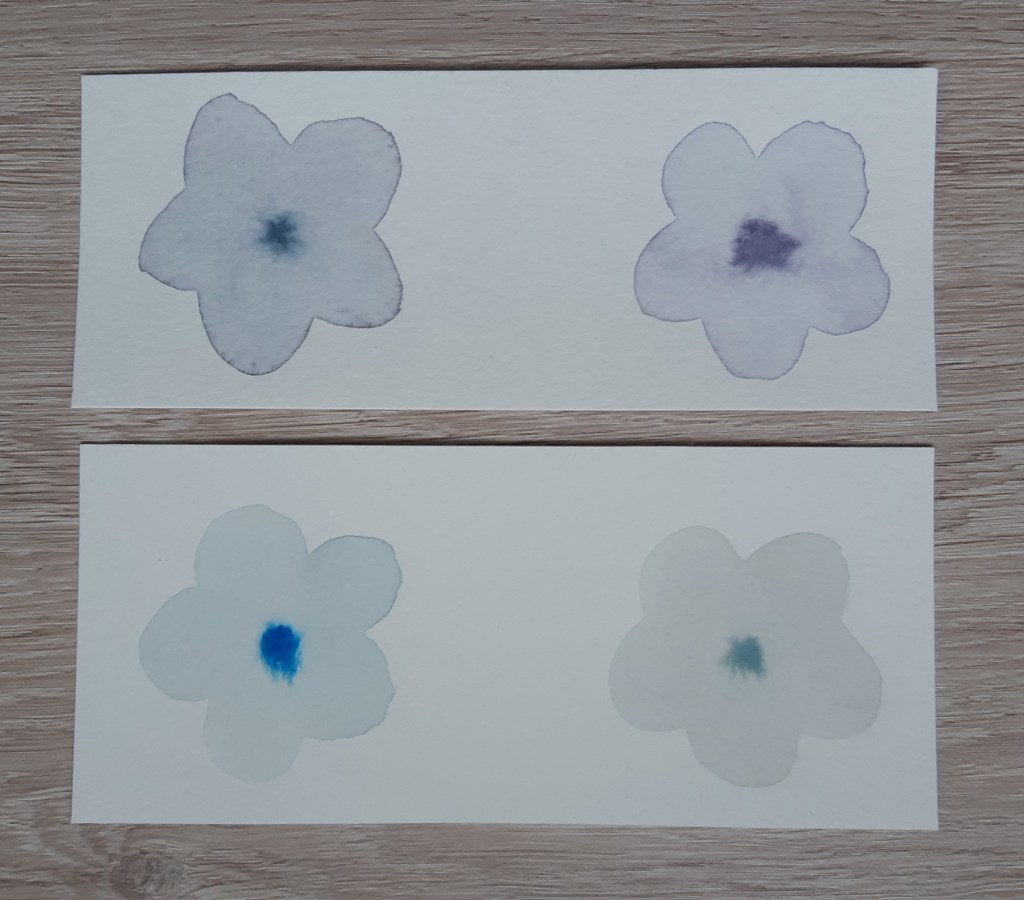
Finally, we learnt how to mix colours and dilute them to make almost black and white shades. The first two swatches were made by blending all of the different dark colours on my palette and tiny amounts of the warmer colours. It took a while to get the colour right but was worth persevering. Our teacher advised that these shades are softer than pure black and compliment the lighter shades that were going to be painting later on.

For almost white shades, we were taught to make a grey mixture and dilute it with lots of water to create super soft, pale tones. This then creates a very translucent colour which also shows the white of the paper. I made a couple of flower shapes to demonstrate and then added darker colour to the centre.

Day 2 was all about layering different colours. We started off by layering ‘wet into wet’ by tapping one colour into another. For this technique, we created a diluted colour swatch on our paper and then tapped another diluted colour into the corner of the swatch. This made the colour bleed into the first colour and created a lovely gradient effect. The trick was to ensure the paint was watery enough to create a glistening sheen on the paper when you tilted it in the light.

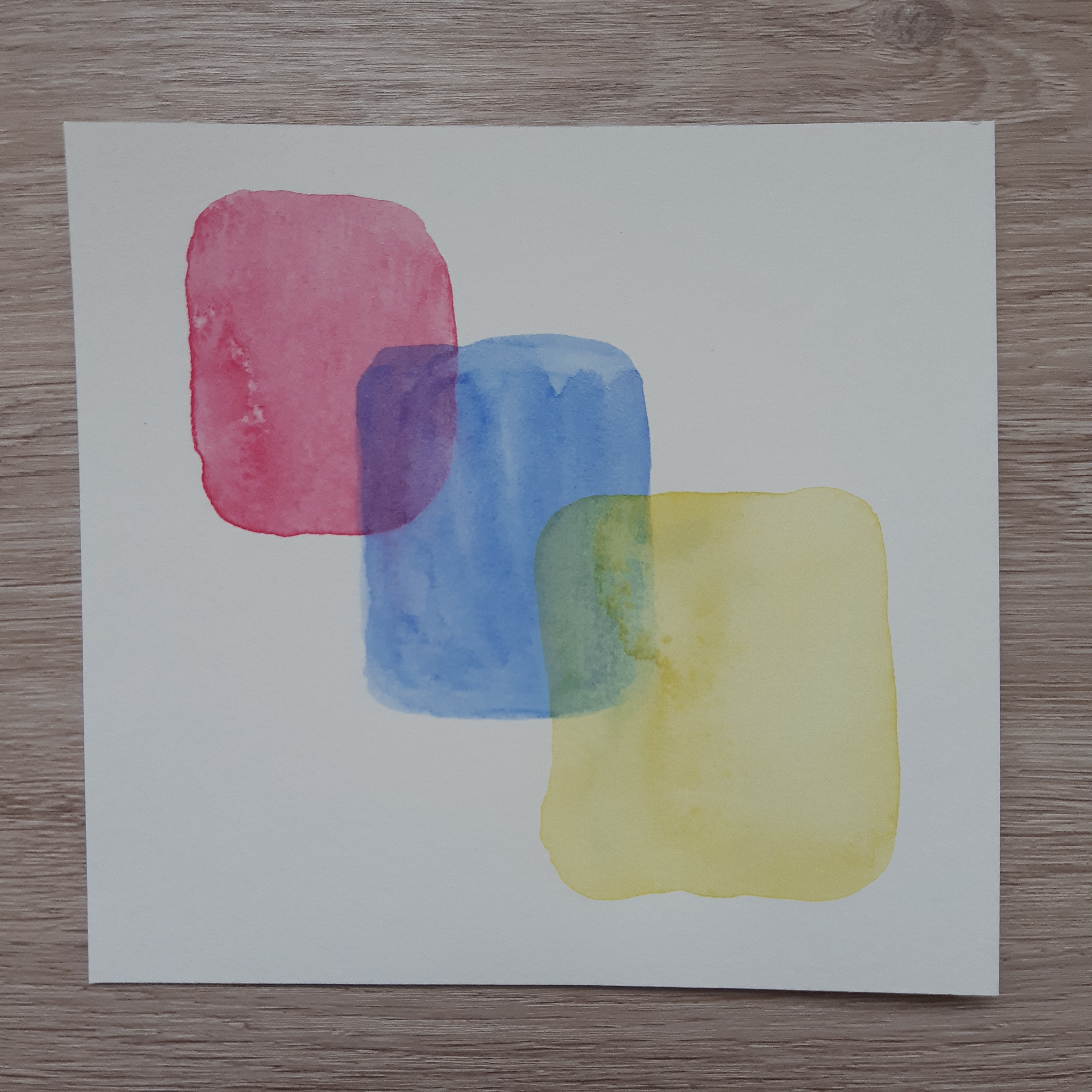
For the second lesson, we layered wet paint over dry. We started by making a colour swatch (permanent rose) on the paper and then left it to dry before adding a different colour (cobalt blue), slightly overlapping the first. We then let it dry again, before adding another colour (lemon yellow), overlapping the second. This allows you to create even more colour variations such as the purple and green which was created here:

On Day 3, we were introduced to colour bleeds. This involved adding a rectangular swatch of colour to your paper and then adding a second swatch right beside it whilst the paint is still wet and touching the tip of the brush to the first swatch. This makes the colours bleed into it each other and creates some wonderful effects. The amount of bleed is dependent upon how much water is used. As you can see, my yellow and red paints didn’t work as well as I didn’t use enough water.

I hope you’ve enjoyed looking at my water colour techniques work and maybe it has inspired you to have a go yourself. In the coming lessons were going to be using what we’ve learnt to create an abstract piece and then we’re going to learn how to create florals. I’m super excited to do some more.