Posted in goal setting, journalling, life hacks, lifestyle, meditation, Mindfulness, mindset, self care, Setting goals and intentions, wellbeing, wellness

Monday Matters: Discovering joy in every season of the year using The Happiness Year by Tara Ward

A few months ago, I was looking in the health and wellbeing section at Waterstones and came upon a beautifully illustrated book about finding joy throughout the year by trying out different seasonal activities. At the time, I didn’t purchase it, but I regretted my decision so I ordered it from an online retailer. When it arrived, I added it to the bookcase in my craft room as I was already in the process of reading about 8 different books which is a few too many even by my standards. I pulled it out a few days ago and there are some lovely activities inside in the section which I started with – Spring. I tried out the first exercise this morning and really enjoyed it so I thought I would give a short summary of the book and share that first prompt with you today.
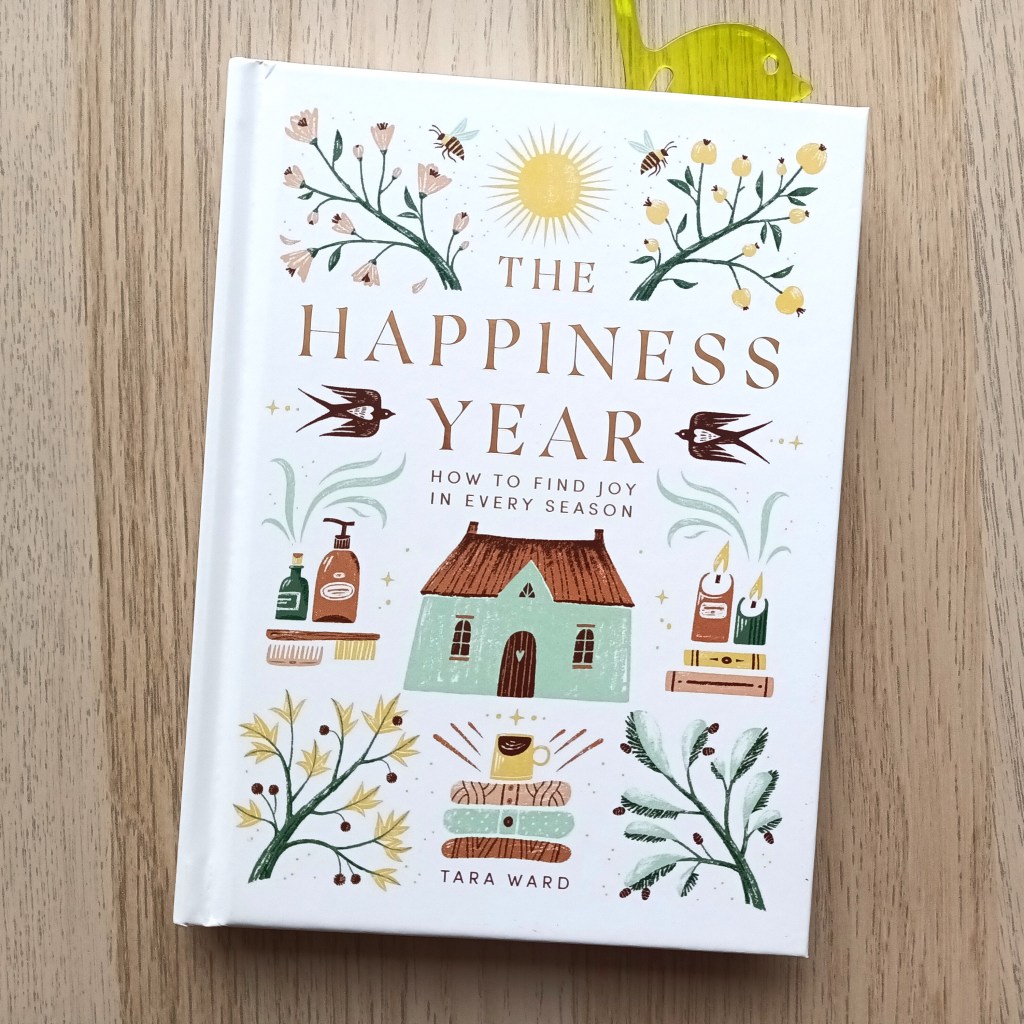
The Happiness Year: How to Find Joy In Every Season by Tara Ward

In the introductory section of the book, Tara discusses the aims of The Happiness Year and also talks about the emotion of happiness and the four positive chemicals that are released into your body when you’re happy – dopamine, oxytocin, serotonin and endorphins (referred to as DOSE throughout the book). She then goes on to explain how to use and enjoy the book.

The remainder of the book is split into four sections – Spring, Summer, Autumn and Winter and there are a collection of exercises provided in each which you can pick and choose from. In combination, they promise to help you in an holistic way – physically, mentally, emotionally and spiritually. Personally, I think I will probably try out all of the different activities and see which I prefer and benefit from the most.

Included within the book, there are journalling and brainstorming activities, meditations, physical exercises, goal setting and planning tasks, plus many more to explore and enjoy. You are also invited to complete them in a way that feels comfortable for you, taking into account individual differences and preferences.

So far, I’ve only read the Spring chapter in depth but I’ve had a good flick through all of the book and I can already see there are many exercises that will appeal.

Exploring your thoughts, feelings and ideas about Spring

As I said earlier, I completed the first activity this morning and I enjoyed it so much that I felt compelled to share it with you. I think this exercise would work well for each of the four seasons, not just Spring. Here’s a step by step explanation of what to do:

  • Take an A4 piece of paper and place it in front of you
  • Write the word SPRING in large letters at the bottom of the page
  • Close your eyes and take three deep, comfortable breaths to focus you in the present moment
  • Open your eyes and look at the word
  • What comes to mind when you think of Spring?
  • Write down everything which comes up for you
  • When you’ve run out of ideas, close your eyes again, breathe deeply and continue thinking about the season
  • Note down any further ideas or images which come to mind
  • When you feel you’ve finished, look over your sheet
  • What jumps out at you the most? Circle any words or phrases which particularly resonate or feel important to you. Are then any surprises?
  • What is the overriding emotion when you look at your words? Write that emotion or emotions at the top of the page.
  • Look through the words and make a list of those which generate feelings of happiness.

I hope you found this a helpful exercise and it reminded you about all of the lovely things which happen in the Springtime. I’ve included my sheet below, how does it compare to yours?

Photo credit: Laura Jones for Keeping It Creative

Final words…

If you enjoy mindful activities such as journalling, setting intentions, exploring the world using your five senses, breathwork, meditation and appreciating the simple things in life, I would definitely recommend checking out The Happiness Year. The book will help you find ways to appreciate and make the most of all of the things that each season has to offer you. You’ll also find a range of self care activities to increase your happiness levels by releasing a good ‘DOSE’ of positive chemicals. Let me know if you try the exercise outlined above and how it made you feel.

Posted in goal setting, life hacks, productivity, self care, Setting goals and intentions

Embrace Your Journey: Living Your Best Life and Achieving Your Goals – Guest post by Linda Chase

Image: Pexels

Today, I’m sharing a second great blog post written by Linda Chase of Able Hire, this time discussing strategies to help you cultivate your best life and meet with success as you make your way towards your hopes and dreams for the future. I’m sure you’ll like the content as much as I did and will pick up some useful tips as you read. Enjoy!


As we navigate through life, we are constantly exploring ways to enhance our journey. The journey to live our best life and achieve our dreams is a continuous process that requires commitment, resilience, and a balanced approach. Here, Keeping it Creative presents eight key strategies you can incorporate right now to help you lead a fulfilled life and accomplish your aspirations.

Build your confidence through fashion

Confidence is a fundamental ingredient for success, and one way to boost it is through your personal style. Fashion can be an expression of your personality, serving as a confidence booster. Dressing in a way that makes you feel good about yourself can have a significant impact on your self-assuredness.

Cultivate resilience

Life is full of challenges, but the way we perceive and respond to these difficulties greatly impacts our growth. Embrace challenges as opportunities for learning and self-improvement. Develop coping strategies, like mindfulness or journaling, to overcome setbacks and bounce back stronger than before.

Embrace Self-Care

In our pursuit of goals, we often neglect our physical, emotional, and mental well-being. Make self-care a priority. Incorporate regular exercise into your schedule, practice mindfulness, and cultivate healthy eating habits. Pursue things that make you happy! If you love art, check out the fun options on Keeping it Creative. These small actions can significantly improve your overall well-being and productivity.

Foster Positive Energy

It’s important to surround yourself with positivity as much as possible wherever you are. If your family, roommates, or coworkers seem stuck in a negative mindset, take time to talk through what is going on and make it right. Then, you can cleanse the space with naturopathic cleaning remedies to reset the energy. You can even smudge with sage if you desire. It is hard to be at your best when you are surrounded by negativity, so take control of the energy around you!

Develop a Growth Mindset

A growth mindset – the belief that you can learn, improve, and evolve – is crucial for personal development. See failures not as dead-ends but as stepping stones towards success. In fact, anxiety and stress can be positive motivators to get out of our comfort zone and do something amazing! Regularly seek out opportunities for growth and learning, and embrace change as a necessary part of the journey.

Stay Curious

Curiosity acts as a catalyst for creativity and innovation, driving us towards our objectives. By committing to daily learning, be it through reading a new book, enrolling in an online course, or delving into a fresh hobby, we stimulate our minds. This practice of maintaining an active and engaged mind is a testament to the power of curiosity in fueling our personal and professional growth.

Network with Like-Minded Individuals

Surround yourself with people who share your values and aspirations. Build a network of supportive, motivating individuals who inspire you to keep moving forward. Exchanging ideas, collaborating on projects, and supporting each other’s journeys can significantly contribute to your overall success.

Keep a Clean Home

The condition of your living environment is a reflection of your mental well-being, and an organised, clean space can positively influence your mood, enhancing productivity and promoting tranquility. Concurrently, setting clear, manageable objectives offers essential direction and focus in your life’s journey. Regularly taking time to declutter and re-organise your physical space is as crucial as periodically reviewing and adjusting your goals for maintaining motivation. Both practices ensure you’re on the right path towards achieving a harmonious mental state and accomplishing your aspirations. Get the most out of your cleaning efforts by taking advantage of resources like Cleaner Digs.

Foster Meaningful Connections

Cherishing our connections with loved ones greatly enhances our overall happiness. It’s essential to prioritise time for gatherings, providing opportunities to fortify bonds and create lasting memories. Embrace technology with a free invitation maker, which simplifies the process of planning both impromptu and scheduled events. You can create invitations by modifying templates and adding your own text.

Search for Joy and Meaning

Living your best life and achieving your goals is a journey of resilience, self-care, growth, curiosity, and supportive networks. By incorporating these eight key strategies into your life, you’re setting yourself up for success. Remember, it’s not about the destination, but the journey, and every step you take towards betterment is a step closer to living your best life and achieving your dreams.


So there you have it, eight wonderful strategies for living your best life and embracing your journey towards your goals. I particularly enjoyed learning more about the effect your physical environment can have on your mental wellbeing. As some of my readers will know, I’m currently in the process of decluttering my craft room and my goal is to have a neat and well-organised space which is a joy to work and craft in. I’ve realised that I would benefit from re-prioritising this aspiration as Linda has reminded me that it’s key to boosting my mood, being more productive and feeling in control.

Both Linda and I would love to hear your thoughts on today’s guest post, especially which points resonated with you the most, so feel free to drop a comment below.

Posted in mental health, Mindfulness, wellbeing, wellness

Monday Matters: Practical ways to improve your wellbeing by unlocking the power of the vagus nerve

NB: This post was originally published in September 2019 and updated for April 2023

In 2019, as part of my ongoing therapy, I attended a weekly compassion group where I met up with like-minded individuals to consider different aspects of wellbeing and a variety of techniques for improved mental health. For one of the sessions, we spent time learning about the vagus nerve and its impact on overall health. I must admit, I hadn’t previously heard of this important bundle of fibres so I was really interested to find out as much as I could (I love every opportunity to learn something new). So, in today’s post, I’ll look at what the vagus nerve is, what it does and ways in which you can stimulate it to support good mental health.

Introducing the vagus nerve (a.k.a. the tenth cranial nerve)

The vagus nerve is the longest of our cranial nerves (the ones which emerge straight from our brain) and controls our inner nerve centre. It oversees a range of crucial functions, communicating motor and sensory impulses to each organ of our body – namely our heart, lungs, upper digestive tract, and other organs of the chest and abdomen. The vagus nerve is critical to our overall health and it has been scientifically proven that stimulating this important bundle of motor and sensory fibres is key to reducing our stress, anxiety and anger levels.

So, enough of the science lesson, what are the practical ways that we can get this thing working to our advantage?

breathe deeply and slowly

Slow and deep breathing stimulates the vagus nerve in a way that can help reduce our heart rate and enable us to become more relaxed. That’s why focusing on your breath during mini meditations can be so soothing for us and is a key part of compassion based therapy. You can find out more about different types of breathing in this useful post from verywellmind, especially the diaphragmatic style which is also known as deep breathing.

exercise

Regular exercise such as a gentle walk or some simple stretches stimulates gut flow which is regulated by your vagus nerve. Why not combine your walk with getting in touch with nature so you can stimulate all of your senses and enjoy some peace and quiet at the same time?

have a good laugh

There’s a reason behind the popular saying ‘laughter is the best medicine’. Proper belly laughs are thought to be great for stimulating the vagus nerve. Why not try going to a comedy show, playing some humourous videos on YouTube or TikTok (haven’t ventured onto TikTok myself but I’m pretty sure there’s some funny content on there!) or watching an episode of your favourite funny TV series tonight? There’s even a thing called ‘laughter therapy’ according to a counsellor I used to see, although I’ve never tried it myself!

try getting yourself all cold!

Apparently any type of exposure to cold will increase vagus nerve activation. That’s why some people swear by having a cold shower first thing in the morning to get going! Personally I prefer a little cold water on my face or a nice cold glass of water to wake myself up but it’s entirely up to you how you expose yourself to a little bit of coldness!

Sing or chant

As a member of a choir, I love singing and find it really helps my wellbeing. Now I know why! Why not trying putting on your favourite music and singing along (and maybe do a little boogie as well for the exercise) to activate your vagus nerve? Chanting also works too so no wonder football fans feel so good when they shout for their team at matches.

Massage

A nice neck massage is a lovely way to stimulate the vagus nerve or why not try a foot massage to help lower your heart rate and blood pressure. I love it when my husband does a firm massage of my feet after a long day when we’re sat together watching TV. If you haven’t got an obliging partner, a session with a qualified masseuse makes a fantastic pampering treat if you can afford it.

Positive social contact

Being socially connected, be it with compassionate friends, family or even our beloved pets has been shown to help with emotional regulation though vagal stimulation. Make sure that you choose to spend time with kind hearted and thoughtful people to ensure a positive experience.

Reduce your consumption of junk food

I’m sure you already know that eating too much fatty stuff is bad for you but excess consumption of ‘junk food’ has been shown to reduce the sensitivity of your vagus nerve. The occasional treat is okay but try not to indulge too often.

Yoga and Tai Chi

The benefits of practises such as yoga and Tai Chi are well documented. They have both been shown to increase vagus nerve activity and your parasympathetic (also known as rest and digest) system in general. You can find many simple yoga sequences online and beginner classes of exercises are widely available if you want to make it a social event too.

And finally, try to make time to relax each and every day

It’s up to you what form that relaxation takes, a nice warm bath, a few uninterrupted chapters of your favourite novel, craft or art activities or settling down to watch a film. Find something relaxing to do each day will have a positive effect on your wellbeing by working your vagus nerve.

Final words…

I hope you’ve found today’s post interesting and have learnt something new. Let me know if you try any of the ideas and if they have a positive effect on your wellbeing as a result. I learnt so much during my compassion group therapy and I’m continuing to work hard to put things into practice to improve my wellbeing. Updating this has encouraged me to look back over the handouts we received to remind myself of the various ideas and techniques from the ten week course.

Until next time, look after yourself.

Posted in lifestyle, mental health, wellbeing, wellness

Monday Matters: Wheel of Wellness – Emotional

This week, as part of my series on the Wheel of Wellness, I’ll be covering the emotional segment. This section of the wheel is all about your feelings and includes how well you are able to identify, manage and engage with your emotions and how successfully you can deal with any emotional challenges which arise from time to time.

In the Oxford Dictionary online, emotion is defined in two ways:

  1. a strong feeling derived from one’s circumstances, mood or relationships with others.
  2. instinctive or intuitive feeling as distinguished from reasoning or knowledge.

Assessing your emotional wellness

The following are some signs of good emotional wellbeing that you can use to assess your current health in the area.

  • you feel good about yourself and who you are
  • you have feelings of contentment most of the time
  • you treat others well, showing them compassion and understanding (if you do this, you are most likely to treat yourself well, if you are critical of others, you will likely have a tendency to be harsh and critical towards yourself)
  • you feel you have a good support network e.g. you have friends / family or colleagues that you are able to open up to and a sense that there are people in your life who care about you
  • you are able to rest and relax (including being able to wind down for good sleep)
  • you are able to assert yourself, recognising that your opinions are valid and being able to say no when you need to without feeling guilty
  • you consider yourself to be someone who manage stress well
  • awareness of the main signs of poor emotional health – anger (which presents itself in various ways, including irritability, short temper, being argumentative), feeling hopeless (feeling low / depressed, helpless, worthless, seeing small things as ‘the end of the World’, not being able to see things are capable of change etc), losing interest in activities you used to enjoy, becoming socially distant, poor levels of productivity, blaming others for your mistakes and failings and repeatedly having trouble in relationships (friends, family and romantic partners)
  • flexibility – you are able to change and adapt well to different circumstances
  • you are able to name and embrace all of your emotions (such as sadness, anger, joy, fear, excitement etc) as a natural part of who you are (rather than suppressing or ignoring them
  • you lead a purposeful life (do you feel that you use your strengths to your advantage to make a difference?) (see my post on Occupational wellness for more on this)
  • you are grateful for many things in your life (particularly for people and situations in your life rather than just your possessions)
  • you value your experiences more than you value your possessions
  • you regularly engage in self-care activities such as doing activities which make you happy, using breathing techniques to help you stay calm or calm yourself when anxious, practising mindfulness, journalling about how you are feeling, showing yourself plenty of compassion, developing a regular meditation practice, scheduling ‘me time’ into your day, do something altruistic and explore how you feel as a result.

Some ideas for improving your emotional health

  1. Make sure you’ve got the basics right – eat healthily with occasional treats, get enough quality sleep, move your body on a daily basis and use vices in moderation (e.g. alcohol, social media, junk food etc). If you think you need to make changes in one or more of these areas, try setting yourself small, achievable targets and celebrate all of your achievements.
  2. Try CBT. If you think you need to learn more about your emotions and how they affect you, CBT (cognitive behavioural therapy) is really beneficial for many people. There are plenty of books on the subject but it’s best if you work through your particular issues with a trained therapist.
  3. Make use of self help resources. A book that I’m currently reading which I’m finding super useful is ‘Why has Nobody Told Me This Before’ by Dr Julie Smith. I spend around half an hour reading each morning after breakfast and I always have a Mildliner highlighter pen at hand to mark up anything which especially resonates with me. The website https://www.getselfhelp.co.uk/ has lots of resources which might prove to be useful too.
  4. Develop a daily reflective journalling habit – spending 5 or 10 minutes each evening recording how you feel your day went is a great way to record events and interactions with others and explore how they affected you emotionally. When you’ve finished writing, spend a few minutes considering what you wrote thinking about the decisions you made, whether the experience was positive or negative, what you can learn from what happened and what you might do differently next time.
  5. Become familiar with ‘Unhelpful thinking styles’ and use them to identify and rationalise particular thoughts you have. Type the above phrase into Google or YouTube to learn about them and consider which particularly resonate with you. Once you know about them, you’ll start to recognise them cropping up in your day-to-day life. You can then begin to challenge them and create more helpful alternatives (a trusted friend or therapist can help with this too).
  6. Be realistic when you’re not feeling 100% – There will be certain times of the year when you’re not feeling quite yourself, maybe you’re feeling under the weather, perhaps you’re stressed out at work or you’re planning an event or holiday which is taking up lots of your time and making you feel super busy. Or, like me, you might have a mood disorder which causes you periods of difficulty. Whatever the cause, it’s important to look after yourself during these times (ramp up the self care and self compassion) and definitely lower the expectations you place on yourself. Also, don’t be afraid to say no if you feel like something will be too much for you right now.
  7. Start a self-care routine for your emotions – this could include meditation, mindful movements or stillness, yoga, Pilates, stretches or different breathing exercises to calm your body and your mind. If you keep a bullet journal like me, a great idea is to create a page of self-care ideas (with pictures/doodles if you want) as a reminder of all of the things you can try.
  8. Remember some things are outside of your control – there are many things in life that happen to you which you can’t change e.g. the loss of a loved one, a global pandemic, a health diagnosis etc, but we can choose how we respond to those circumstances, e.g. by being kind, self-compassionate, hopeful and accepting.
  9. Reach out – if you’re feeling lonely, down or isolated, seek out supportive family members, friends, colleagues, online or in person support groups to let people know that you are struggling. Also, try to find out what is going on in your local community so you can seek out social connections. If the thought of social interactions makes you feel anxious right now, try to choose one of the options that feels easiest such as inviting a friend over for coffee or chatting to someone via text message or on the phone.
  10. Set clear boundaries and learn to say no. If you say yes to things that you really don’t feel like doing or you don’t have time for, it can lead to feelings of anger, resentment or overwhelm. In her book which I mentioned above, she explains about ‘people pleasing’ “We say yes when actually what we want and need is to say no. We feel resentful of being taken advantage of but unable to change it by asking for anything different. On the other hand, having clear boundaries makes you feel in control and is a way of showing yourself respect. Being assertive can be difficult for some of us, especially during periods of mental illness, so it’s a good idea to develop your skills when your mood is stable. Only say yes to what matters to you the most such as a get together with close family and friends, learning opportunities or new challenges at work which will further develop your skills or increase your knowledge (but not too far from your comfort zone!). There’s a wealth of information online about assertiveness (some better than others) so if you need help in this area or want to know more about what it means to be assertive, try checking out NHS resources such as this one which includes a very useful download, worksheets and information on www.getselfhelp.co.uk and this article from lifehack.org. Again, qualified CBT therapists can help with assertiveness too.
  11. Read up on emotional resilience – emotional resilience is the ability to adapt to stressful situations and cope with life’s ups and downs. You can learn about it and develop the associated skills in books, online, with a therapist or through doing a course at a local recovery college like I did.
  12. Go outside – studies have shown that being in nature has powerful effects on our mind, body and soul. There’s lots of ways to fit in some time outdoors including taking a walk in your lunchbreak, enjoying your morning coffee in the garden or wandering through your local park or woodland at the end of a busy day.

Final words…

Thank you for taking the time to read today’s blog post. I hope you have found it useful and are thinking about trying some of the ideas I mentioned. Let me know in the comments if you think your emotional health is quite strong or if you feel it’s an area you need to work on. As always, if you have any questions or anything to add, please do get in touch.

Posted in compassion, depression management, lifestyle, mental health, self care, wellbeing

Monday Matters: 7 ways to be kind to yourself when you’re struggling

In today’s Monday Matters post, I’m going to be talking about something which I believe many of us struggle with and that is self-kindness. At school, we’re taught to be kind, respectful, patient, forgiving and gentle with others but do we apply this same compassionate attitude to ourselves? I know I certainly don’t, and I also notice that I’m particularly harsh and critical when I’m struggling. So, here are some ways in which being kind to ourselves can help our mental health and 7 ways you can show yourself some kindness right now.

Benefits of self-kindness which are particularly relevant during periods of difficulty

  • better self-esteem
  • increased resilience
  • less self-criticism
  • increased self-acceptance
  • helps us cope better with stress
  • improved self-confidence
  • decreases anxiety and depression
  • helps us feel more optimistic

7 ways you can be kinder to yourself

Practise self-compassion

During times of difficulty, many of us tend to be really unkind to ourselves. We place unrealistic expectations upon ourselves, say engage in negative self talk, criticise ourselves when things don’t go right, place blame unfairly, find fault in what we do and fail to celebrate our achievements. Sounds pretty harsh right? And it makes us feel ten times worse than we already do. Instead, what we would really benefit from is practising self-compassion, where we offer ourselves warmth, gentleness, understanding, acceptance and empathy. A good way to do this is to imagine what you would say to a friend who was going through a period of difficulty and was dealing with the same issues that you are. Then apply that compassion to yourself. You can even take this a step further and write yourself a compassionate letter where you offer support and encouraging words and then read it back. You can find out more about the therapeutic benefits of writing here.

Focus on the good

When we’re struggling, we tend to get into a negative frame of mind. Try to break this by thinking about your positives. Here are some ideas for you to try:

Congratulate yourself on your achievements no matter how small – maybe you got dressed and went out for a walk, maybe you completed something from your to-do list or maybe you dealt with a difficult situation assertively. Just getting out of bed can be a huge achievement if you’re struggling with depression.

Use positive self-talk – I’ve written before about the impact that negative self talk can have on us and how we can reframe it. As part of being encouraging and supportive towards yourself, you can counteract negative thoughts with positive affirmations. Some examples are: I am kind to myself during difficult times, I am doing the best I can, I can get through this, I have the ability to cope, I am brave and strong.

Make an all about you list – things you’re good at, your best qualities, a ‘done list’ of all of the things you’ve achieved today/this week. Try writing a different list each day to really improve your relationship with yourself.

Nourish your body and your brain

When you’re struggling, it can be really tempting to reach for high calorie snacks full of sugar or fat and eat processed foods for your meals. The reason we crave these items is because they temporarily increase our mood boosting endorphins leaving us feeling happy, blissful, calm or soothed or provide you with a chemical sugar high. Unfortunately, these feelings don’t last and can lead to overeating and poor diet overall. And of course, an unhealthy diet can create all sorts of problems including reduced energy levels, weight gain, obesity, depression, weakened immune system and vitamin and mineral deficiencies. Be kind to yourself by focusing on eating a balanced diet which includes a variety of fresh fruit and vegetables.

Something that I find really helpful is to plan my meals in advance. This means that I’m more likely to eat healthily but also that I can ensure I’m eating a balance of different foods and a range of fruit and vegetables. And don’t forget, you are allowed a treat every now and again but it’s best if you really take your time eating it so you can savour the flavour and really appreciate it (search ‘mindful eating’ online for more info).

Get moving

When life is hard you might feel tired and lacking in energy and this might mean that even the though of exercise too much. But, something gentle, like a walk in your local park, ten minutes of basic stretching exercises or a short yoga session could make you feel so much better. Exercise releases feel good endorphins which help to boost your mood and if you engage in a mindful activity you will also be focusing on the present moment and forgetting about other concerns in your life which can lead to feelings of calm and relaxation.

Do something that brings you joy

Try to make it a habit to do something you love each day. Try to carve out at least half an hour for your own enjoyment. Here’s some ideas:

  • Hobbies – sewing, watercolour painting, papercrafting, drawing, playing a musical instrument, baking.
  • Outdoors – time in the garden, nature walk, sculpture trail, sit in the sunshine.
  • Retail therapy – a new houseplant, a scented candle, a pretty scarf, some sweets you haven’t had since childhood, some stationery.
  • Brain stimulation – crossword, word search, sudoku, jigsaw puzzle, board game.
  • Movement – yoga, stroll along the beach, mindful walking, dancing to some upbeat music, ten pin bowling, try out a team sport.
  • Socialise – coffee with a friend, take a class e.g. flower arranging, phone a relative.

If you’re struggling with depression right now, you might be thinking that nothing brings you joy at the moment so there’s little point in doing anything. However, research has found that if you do some of the things that you normally enjoy, you will still reap the benefits of the activity so try scheduling something in and then congratulate yourself for finding the motivation to do it.

Add some soothing activities to your day

When you’re struggling with your mental health or life is extremely busy and stressful, it’s a really good idea to plan something soothing to help yourself feel calm and relaxed. The activity you choose is very much a personal preference but you could try one or more or the following:

  • a hot bath with scented bath oil or a bath bomb
  • a foot massage with refreshing peppermint oil
  • read a book, under a blanket with optional hot chocolate
  • light a scented candle and watch the flame flicker
  • buy some flowers and spend time arranging them in a vase
  • cuddle something – a pet or a soft toy
  • watercolour painting or colouring in

Make good sleep a priority

A good night’s sleep benefits us in so many ways including better mood, more energy, improved cognition and stronger relationships with others. However, when we’re struggling, we’re likely to find that the quantity or quality of our sleep is affected so it’s important to take steps to fix it. This can include doing relaxing activities before bed (and avoiding known stimulants), spending time journalling about your day so you can process what’s happened and prepare yourself for tomorrow, and making sure your bedroom environment is just right. If sleep is an issue for you right now you might want to check out this blog post. Or, for really in depth look at sleep issues, the NHS has a long self help guide which can be accessed here.

Final words…

I hope that today’s blog post has been useful in providing you with some ideas about how you can be kinder to yourself. However, if the thought of doing all of these things seems a little overwhelming, trying choosing one suggestion which you think might make you feel a little better and start from there. Remember tiny steps can lead to a big impact.