Last month, we spent a lovely week in Faro, the capital of the Algarve region of Portugal. Whilst I usually do a double page traveler’s notebook spread each month, documenting the main highlights, when we go on holiday somewhere new, I will dedicate a whole notebook to the trip which includes journalling, lots of photographs, ephemera and general momentoes which can be stuck in. Today, I’m sharing how I prepare for my journal before I go and whilst away and I’m also including examples of double page spreads showing the different creative ways I document my holiday.
What I do prior to and whilst I’m away
So, let’s start with my preparations so that working on and completing my journal is much easier when I get back home. These are key to ensuring I have all the information and need and key details that I might otherwise have forgotten.
Before I head off on my holiday
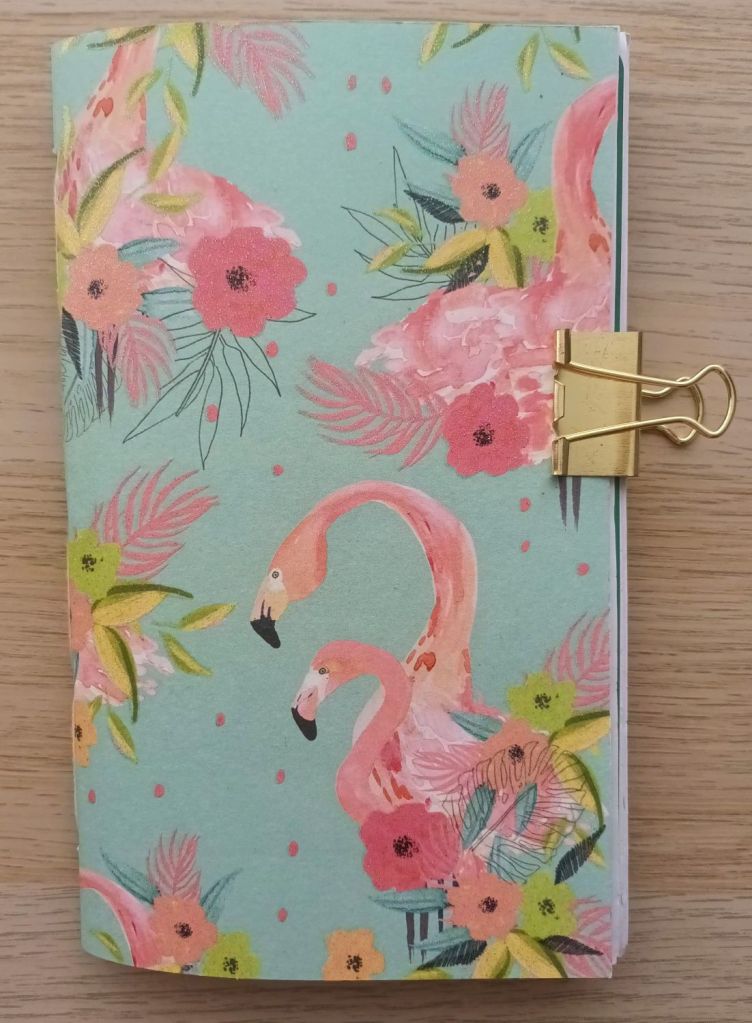
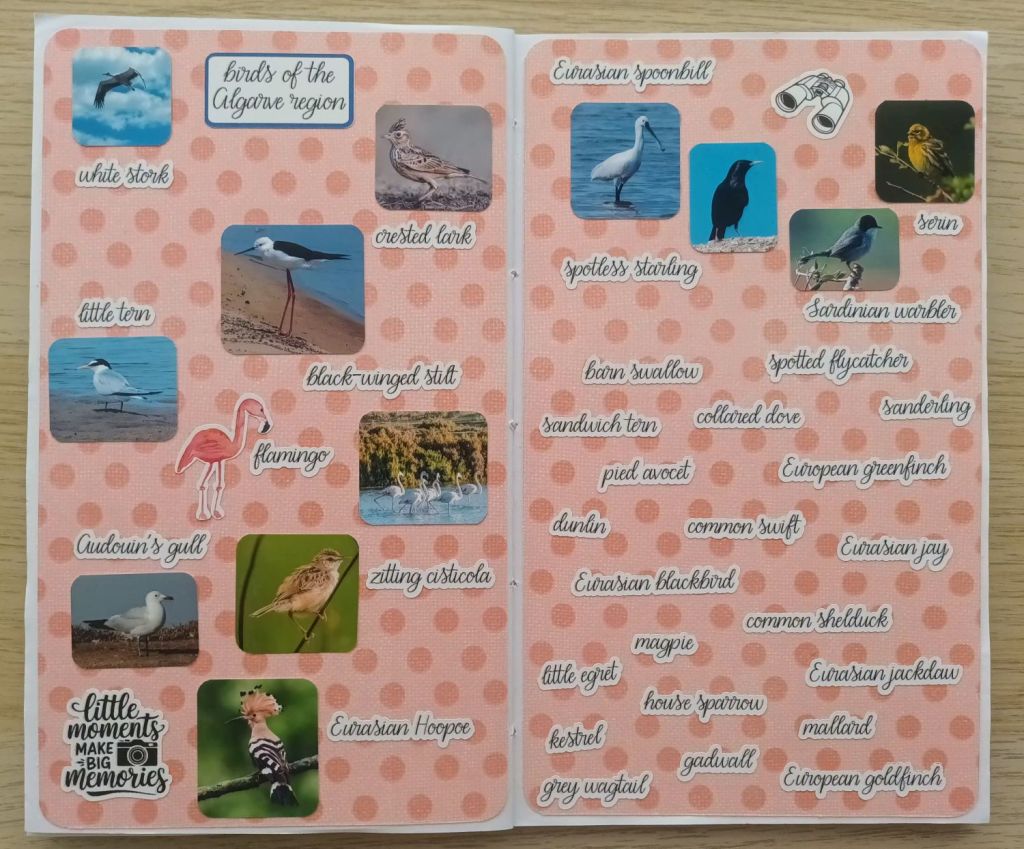
Before I go, I make the journal itself. I create a TN wide size insert choosing colours, patterns or images on the scrapbooking paper which suit my coming trip. So, for example, this time, I opted for a bright and cheerful flamingo, flower and leaf themed paper from the Paradise Crush collection of 12×12 papers (200gsm heavyweight cardstock even though referred to as paper). This was because I had read that there are flamingoes to be seen in the lagoon (Ria Formosa). I love selecting the cover paper myself and then hand-stitching blank white paper for the inside. I choose quite thin white paper so the journal doesn’t get so thick that it won’t close properly when I add to my pages.
Photo credit: Laura Jones for Keeping It Creative
Shortly before travel, I add a small notebook to my handbag and make sure I have a pen too. This is useful for writing details during my holiday so I don’t forget things when I return. Just a word of warning if you’re going on a flight though – be sure to select your pen carefully as the liquid ink in my V5 Pilot Hi-Tecpoint pen must have expanded whilst in the air and when I got it out to write with on arrival the pen came apart and I got covered in ink! Luckily, it was just my hands that got ink all over them, not my clothes.
The final thing I take with me is something to store ephemera (collectable bits and pieces) in. This time, I took a popper wallet and it came in very useful for keeping papers flat. I do wish I’d opted for a slightly bigger folder though as I had some bigger things that I had to fold up to ensure they fit.
During my holiday
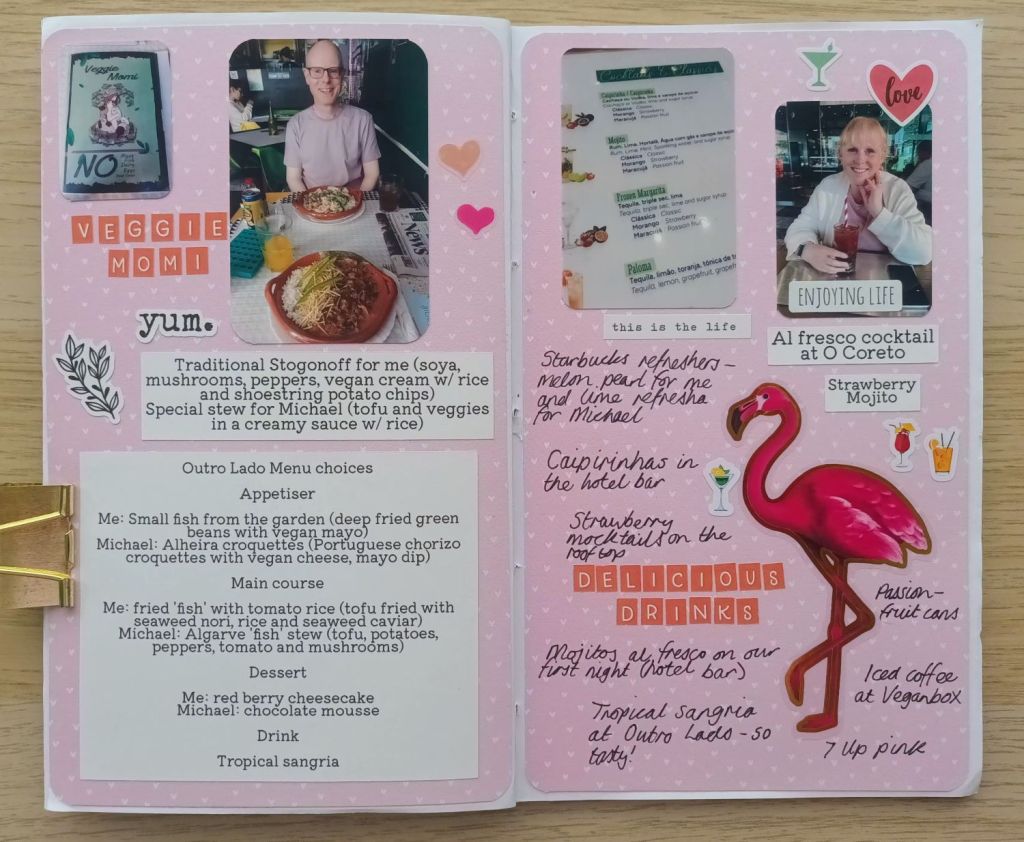
Notetaking Throughout the holiday, I make notes and reflect on my day. This is easy to do in the little notebook I mentioned earlier which comes with me wherever I go. This could include the name of a place we visited, my menu choices in a restaurant or cafe, timings of events during the day, a funny anecdote or how I felt in a particular place.
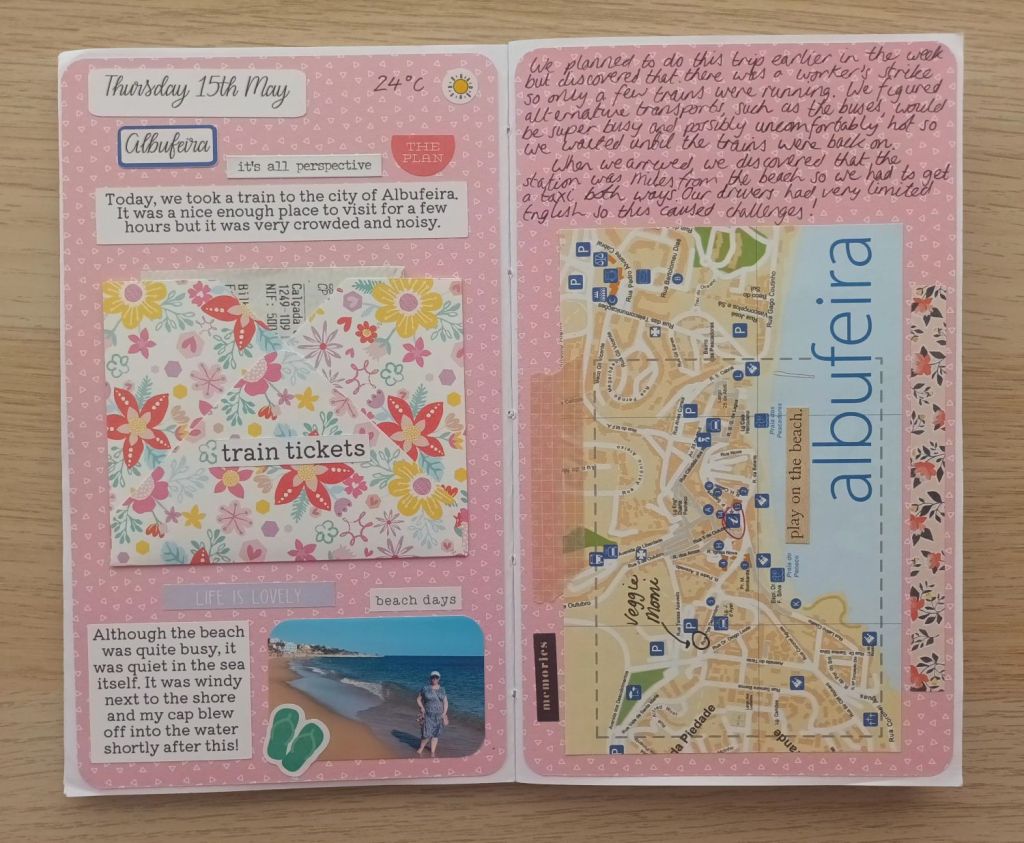
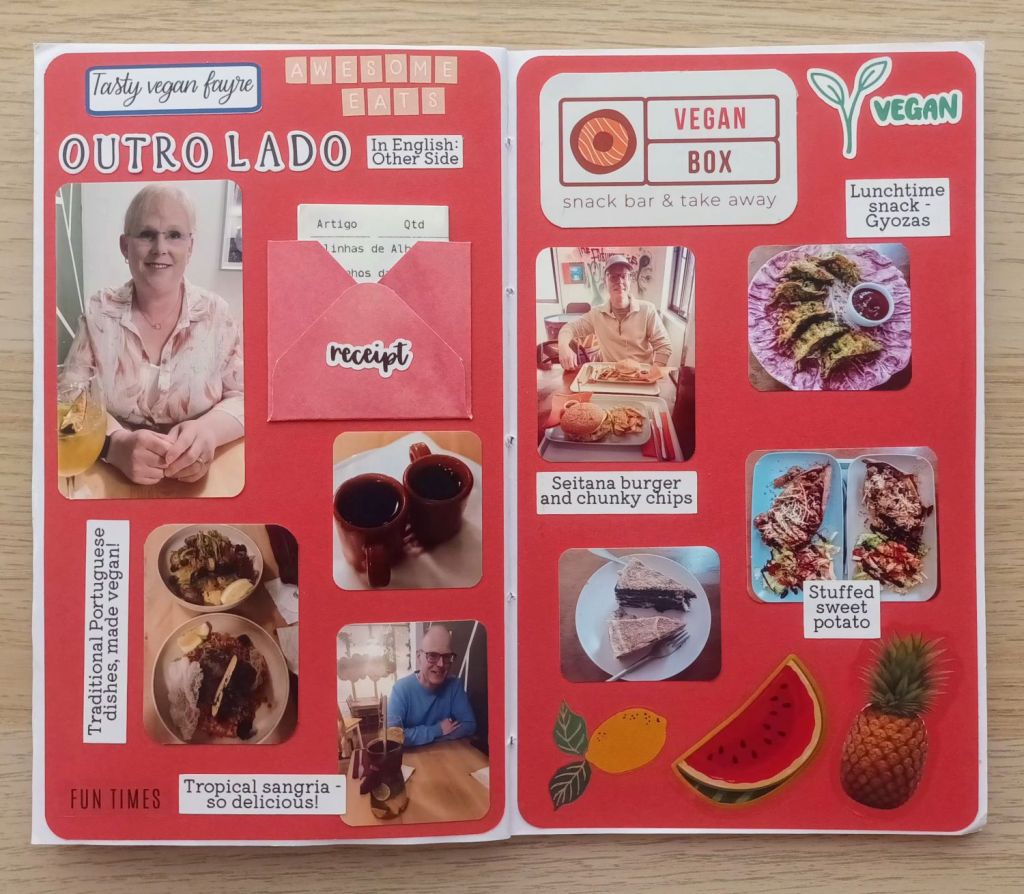
Taking photographs I take lots and lots of photographs whilst we’re away – better to have too many than not enough, right? However, for me, it’s not just about taking photos of each other and things my husband and I see or do, it’s also very much an aide memoire of various elements of our trip too. For example, when in Faro and on our day trips, I took photos of menus from the various eateries we went to, a screenshot of the weather for the week, close up shots of cocktail descriptions, shop fronts where I made my souvenir purchases and screenshots of locations of places we planned to go later on in the week. Also, talking of photos, I took my selfie stick so that we could take shots of the pair of us together rather than having to ask other tourists to take them for us.
Collecting ephemera In the traditional sense of memory keeping journalling, ephemera usually refers to stickers and die cut paper and card images which can be glue or stuck into the journal pages. However, for me, it means anything and everything which could be stuck in as a memory of our holiday. On our trip to Portugal, I collected and saved business cards for cafes and restaurants, maps picked up at the Tourist Information places, leaflets such as the one advertising our boat trip so I could cut out letters for titles, small images or bits of information, receipts from shops and eateries, paper tickets (e.g. entry to the cathedral and for our train ride to Albufeira), samples from paper bags we were given to house our souvenirs in and even the cup cover for our glasses in our hotel room. Some of the things I didn’t end up using but at least I was well prepared with paper goodies I did want to add. I also only used parts of my items sometimes, so, for example, I trimmed a large map down to fit on a double page spread and I cut the logo from a business card of a place called Veganbox we ate in a few times.
Creating my travel journal
It’s up to you how you do your journalling and the elements you include within the pages but here’s some ideas:
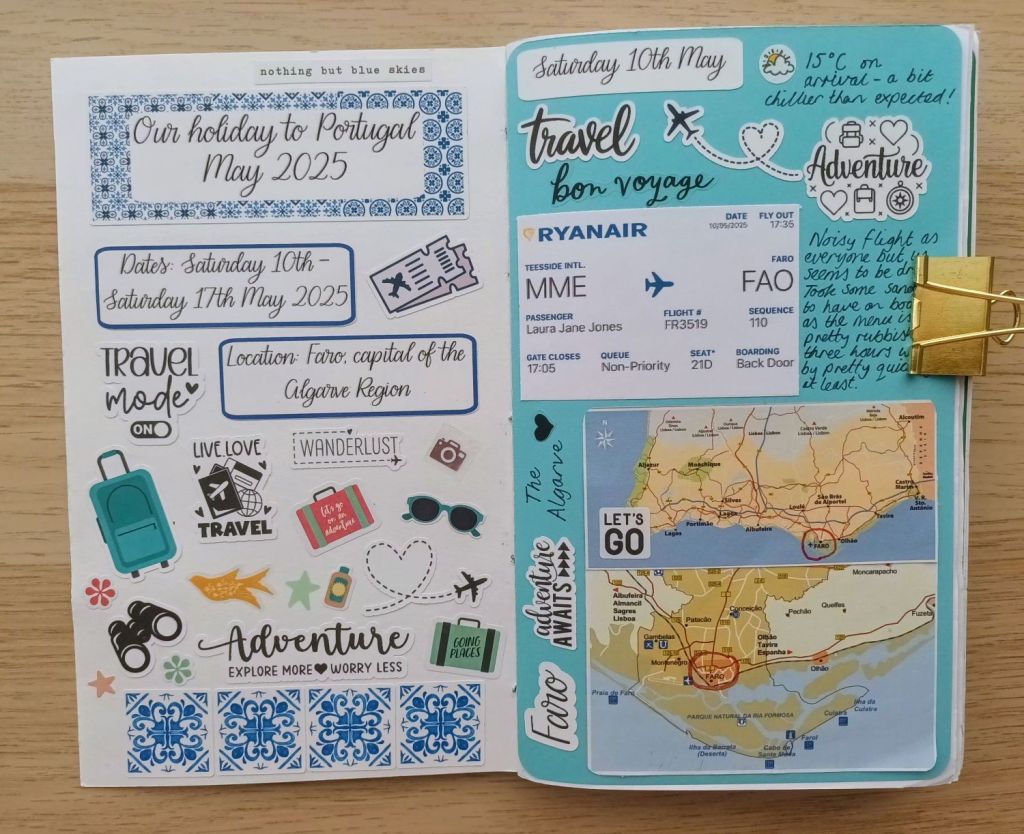
travel information including modes of transport and tickets
the weather whilst you’re away
places of special interest you visited
photos of the accommodation you stayed in
maps of the place you stayed and other areas that you visited
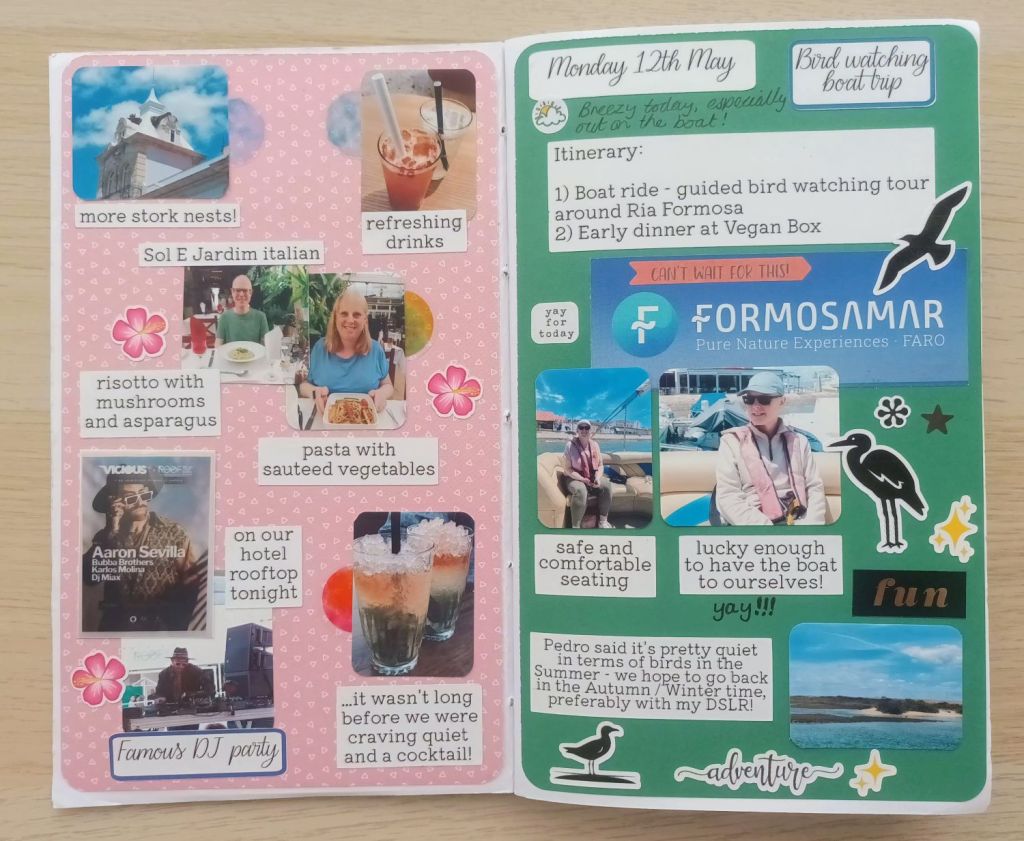
meals, snacks and drinks enjoyed plus related ephemera
photos of scenes, selfies, family, food and drinks enjoyed etc
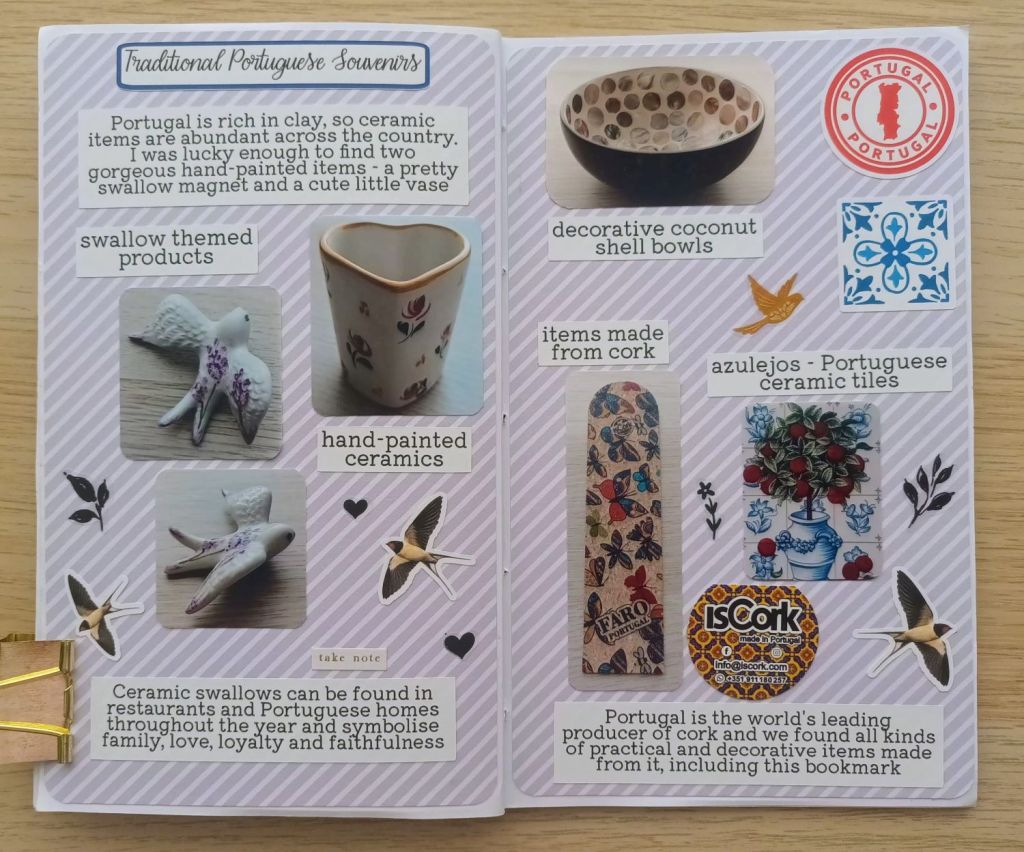
souvenirs and why you chose them
information about any traditions of the place / country you went to
an explanation of something new that you learned whilst you were there
activities you did and what you did to relax
Supplies that I find useful and you might too:
roller glue – I use tonnes of this stuff and have two rollers – permanent (to ensure things stick really well and removeable (for when I might want to reposition elements on a page)
stickers – from a variety of larger and small businesses online (purchased from Amazon or businesses such as Papermaze, or Etsy to support small UK sellers), or made myself in Cricut Design Space and printed and cut
We R Memory Keepers 1,2,3 punch board – for making the mini envelopes I included
Washi tapes – I have collected so many of these over the years and use them in my memory keeping as well as my bullet journal planner
Die cuts – I didn’t use any this time but small ones of these are useful as decor on pages
Pens – biros or gel ink and possibly coloured pens for writing straight into the journal
I’ll let the photos of my pages do the talking now but if you have any questions, feel free to get in touch with me.
Photo credit: Laura Jones for Keeping It Creative
Photo credit: Laura Jones for Keeping It Creative
Photo credit: Laura Jones for Keeping It Creative
Photo credit: Laura Jones for Keeping It Creative
Photo credit: Laura Jones for Keeping It Creative
Photo credit: Laura Jones for Keeping It Creative
Photo credit: Laura Jones for Keeping It Creative
Final words…
Times are certainly changing with creative journalling and memory keeping. A few years ago (maybe a few more!), everything used to be paper based, but now, many things that I would usually stick in to my journal, such as flight information, boarding passes, entry tickets to places and for excursions and so on are often completely digital. To make sure I can still include at least some of these, my husband has to screenshot the e-tickets on his phone and then forward the images to me in WhatsApp so I can print them off. It’s not the same, but at least it provides some sort of record and adds to the memories stored within my travel journals.
I hope you’ve enjoyed reading about my travel journalling process and seeing photos of my actual pages. There’s quite a lot of work involved in the journals I produce, but you could cut down the time involved by just adding photos and short captions. You could also choose to draw elements of what you see and do on your travels and this would be another lovely way to make the process both creative and therapeutic too.
Thanks for reading and I hope I’ve inspired you to create your own travel journal to document holidays (A.K.A. vacations),
Over the years, I’ve tried lots of different ways of creative journalling in Traveler’s Notebook inserts that I’ve purchased or made myself. I’ve loved completing different pages and layouts but I’ve often found myself trying to record too many different things in far too much depth. This has meant many collections of photos and ephemera in various bits and pieces of storage which never got journalled about (I didn’t even get started on them), half finished pages (often with photos and decor stuck in with spaces to journal about events and experiences and numerous blank pages (where I’ve penciled in what is to go on there) left to fill in later. It’s also been the case in the past that, during periods of bipolar illness, I’ve struggled to get motivated to do any journalling when depressed or taken on too much when I’m high, leading to tonnes of half finished or barely started creative projects.
Although my bipolar disorder is better managed now, and my mood is much more stable, I still wanted to find a way to record things whilst at the same time ensuring that journalling does not become too onerous a task. I think I’ve now found a method that works and I’m excited to share what this looked like for February this year.
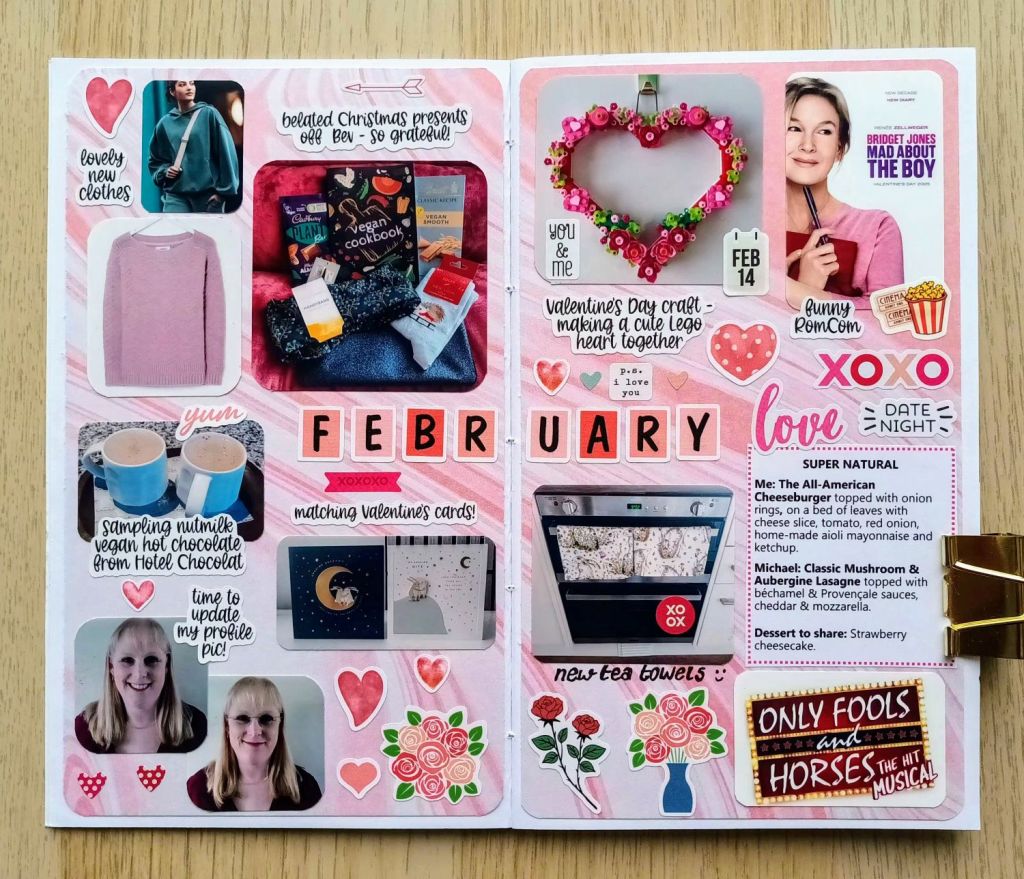
In January, I started a new TN wide journal insert as a memory keeping project for 2025 (and if it continues to work for me, beyond this). Each month, I intend to create a double page spread with the main highlights on including events, trips out, purchases and general happenings. I set up the pages at the beginning of the month with a background paper and the title and then work on filling it in just after the particular month has ended. Today I’m sharing my pages for February which I’ve just finished this week and a little explanation of how I set about doing them.
Monthly Highlights Journalling
The idea of doing monthly journalling came from Kelseyleigh over at My Abiding Journal on YouTube. She’s been doing summary spreads of each month for quite a few years now and I’ve picked up lots of tips and ideas from watching her videos so I definitely recommend subscribing to her channel and watching some from the archives as well as tuning in to the livestream of her process which offers so many ideas and the opportunity to purchase stickers to use if you join her on Patreon.
Personally, I’ve not joined Kelseyleigh’s paid tiers as I like to make my own stickers and ephemera using my Cricut machine. However, she has some lovely ideas for each month of the year and I think her members get to suggest ‘bucket list’ items for inclusion on her sheets.
A few tips for success
As well as picking up some tips from Kelseyleigh, I’ve also developed my own systems for collecting bits and pieces, photographs and ephemera. As a Canva Pro and Cricut Design Space user, I’ve also got into the habit of designing a set of stickers each month too. Here’s what I’ve learnt so far and what is working for me:
If you want to have a background to your pages like I have, it helps to choose a simple patterned paper and adhere it prior to doing your journalling. I’ve also found that adding the letters of the month using small stickers that I create using Cricut Design Space helps in seeing how much space you have to work with. If you don’t have alpha stickers, you could try hand lettering a title, stamping the letters or use a letter stencil, depending on your craft supplies and how you want your pages to look.
As you engage in different activities during the month, think about photos you could take (or source) which would provide a good record in your journal. For example, I’ve screenshot and then cropped online images of items I’ve purchased if I want to include a very small photograph of a product that I’ve been excited to buy. I’ve also tried to consider photos that I could take which aren’t too busy so as to be able to shrink them enough to add as part of multiple photos on my dedicated two page spread.
Throughout the month, consider items that you could stick into your journal (tip ins) for example a business card, parts of some packaging, your menu choices when you go out for a meal, a section of a leaflet or map etc.
Use a small envelope to collect mini photographs, patterned paper, tip ins (e.g. maps, business cards, packaging labels as mentioned above), stickers and ephemera for the month and store it in the back pocket of your BuJo or other planner.
Create a notes page in your journal or on your phone to store information about events and happenings you want to record, ideas for captions, stickers you want to add to fill spaces on your pages and any other creative thoughts you have during the month.
Create a folder on your phone to add any photos you want to use in your journalling. This means you don’t have to spend ages searching your photos, screenshots, downloads, uploads and other resources when the time comes to work on your pages.
Use Canva or the PicCollage app to add small photographs that can fit together to create a single image to print. I have a 4×6 and 6×4 inch template on Canva for this purpose as that’s the size that my Canon Selphy prints at.
Consider purchasing an instant photo printer such as a Selphy, Instax or Sprocket so you can easily add to your photo collection and make mini versions of images you want to include. Check online reviews for the pros and cons and different price points so you can choose the right one to suit your needs and budget. I have a Canon Selphy which I’ve been using for years but you might prefer photographs that have a sticky back so you can put them straight in to your journal without needing to cut them out and add adhesive.
My February highlights pages
As I’m currently trying out the monthly recording system, I’ve picked out a notebook that I had already made and which fits in to my Carpe Diem Traveler’s Notebook that I’ve been using for journalling for a few years. So far, I’ve found that not everything I want to record will fit into the double page spread in my TN wide insert but I want to trial using this size for the full year to see if I always have too much stuff to include. It’s helping me to decide which are the main highlights and is good at making me condense things down or just let a photo do the talking (wholeheartedly embracing the saying that a picture is worth a thousand words). I may, in future use a larger blank notebook but I need to make sure that I’m still able to fit in the time at the beginning of the next month to create the pages.
Photo credit: Laura Jones for Keeping It Creative
Final thoughts…
One of the main problems I’ve found with creative journalling is wanting to document all of my life in detail using photos captions and lengthy bits of writing. Although I love working on my pages, it’s impossible to cover everything and trying to can lead to lots of overwhelm and feeling like you can’t keep on top of it. Creative journalling should be an enjoyable experience and if it starts to stress you out, I think it’s really important to do some self reflection on why. Although I’ve only done January and February so far, the pages were a pleasure to work on and only took a few hours to finish. My only issue now is you decide which highlights to include and which to miss out.
If you’re struggling to keep up with your creative journalling and feel like you’re always behind and desperately trying to get up to date, monthly highlight journalling might be a good way forward. Also, there’s nothing to stop you doing an extra couple of pages if you want to document something like a wedding, birthday, holiday or other special event in more depth before returning to a double page per month.
I hope you’ve found today’s post useful and it has helped you to see the benefits of doing a monthly summary if you have minimal time to work on your spreads. If you would like me to share future finished pages please do let me know in the comments.
The Summer is here bringing sunshine and blue skies plus my three monthly life check in and a short update. I encourage all of my readers to give this a go, either as a blog post or handwritten in a journal. They’re great to look back on over the months and years to see how life changes.
Currently reading…
… 5 books at the same time! This is unusual for me as I usually read a fiction book on my Kindle in bed on a night and a non-fiction self development style book in the morning with my coffee but my Five Minute Journal weekly challenge last week was to revisit a previously loved book and I’ve been dipping in and out of two of Amy Tan and Abbey Sy books over the last couple of months. I’m enjoying all of my current reads:
The Midnight House by Amanda Geard
Walk: The Path to a More Mindful Life by Sholto Radford (re-read)
The Art of the Travel Journal by Abbey Sy
Twelve Moons: A Year Under a Shared Sky by Caro Giles (a beautifully poetic memoir)
Craft a Life You Love by Amy Tangerine
Currently creating…
… helpful BuJo spreads for our trip to Norfolk. So far, I have a map showing our route and estimated journey time (a screenshot from Google), information about our accommodation, a list of places to visit such as National Trust properties, wetland centres and the broads, plus veggie and vegan cafes and restaurants nearby. Next to create is my packing list which I hope to get done this afternoon.
Currently journalling…
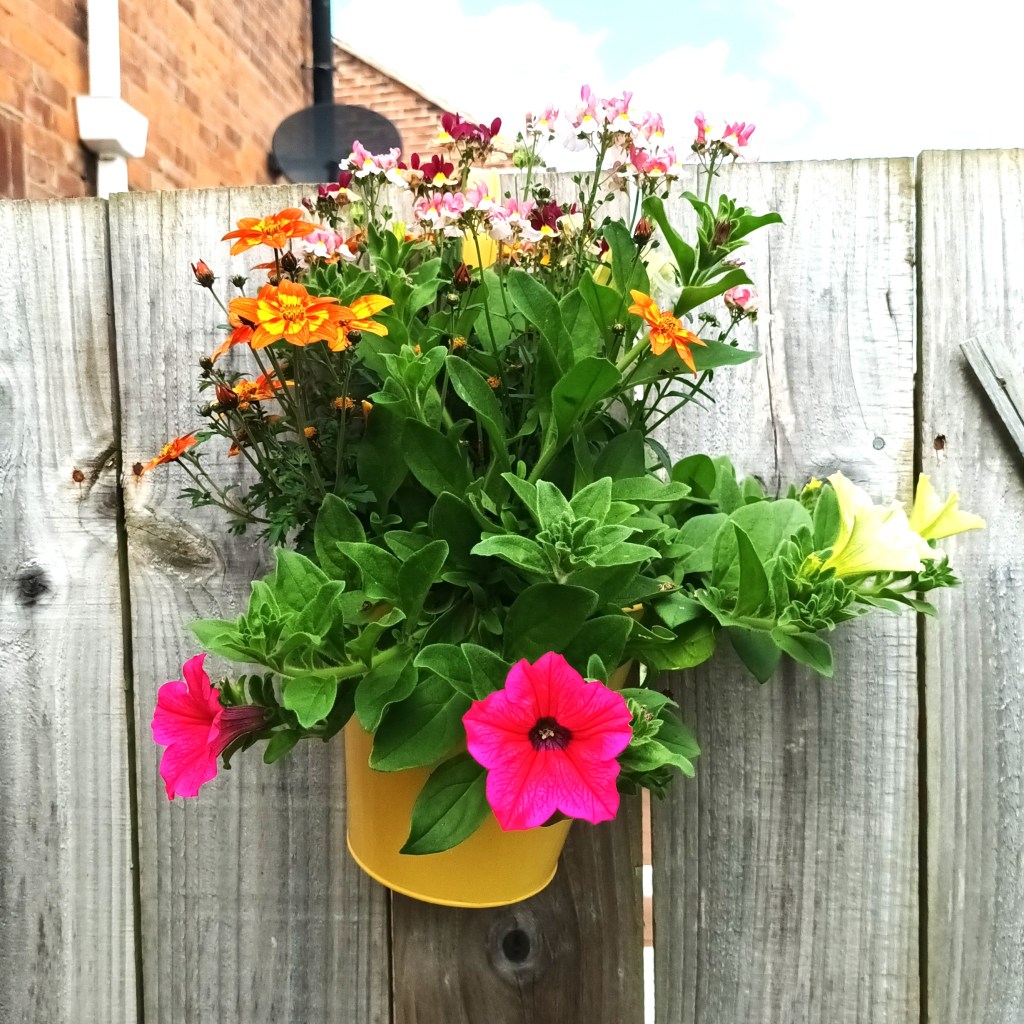
… in my handmade TN insert of a recent trip to Raby Castle for a walk around the grounds and deer park, photos of our new hanging basket and cute yellow hanging tin container, plus a bit about the sun and star necklace that I treated myself to with some of my wages from my uni work (I might have purchased it three weeks before I actually got paid!).
Currently enjoying…
… watching the wildlife in our back garden. Yesterday, there was a huge party of about 15 juvenile starlings on our lawn dipping their beaks in the grass searching for tasty morsels. Out new sunflower hearts seed feeder is very popular with the sparrows and the fat balls are a firm favourite with all of the birds. After dark, I love sitting on our bench, watching a pair of bats hoovering up months and occasionally I catch a glimpse of a visiting hedgehog crunching on his nightly saucer of biscuits. If the hog comes late, we can always check our wildlife cam footage the next day too.
Currently learning…
… more about gardening. So far, I’ve read up on plants for shady areas, how to deal with green and black fly without chemicals, how to grow my own rainbow chard and more about our recent plant purchases. There’s always lots more to learn and websites like the Gardeners’ World and RHS ones are full of helpful information. Also, my mum has been a keen gardener for many years now so has a wealth of experience to draw on to help us.
Currently eating…
… lots of salads and vegan poke bowls as it’s too warm to have the oven on. We had our first poke (pronounced poh-kay) bowl in Vienna and they’re amazing. Plus you can add a rainbow of veggies which makes them super healthy as well.
Currently drinking…
… Pimms and lemonade with fresh strawberries and pineapple mint from our garden. Well, when I say currently, I don’t mean I have a glass on the go right now at 2pm but later in the evening sat outside in the garden is perfect. I also love flavoured cider at this time of year and my favourites are Brother’s Toffee Apple and Strawberry & Lime from Aldi.
Final words…
That’s it for my life update. I hope you enjoyed reading what I’m currently up to. Let me know in the comments if you give this kind of journalling a go and where you choose to write your lists.
This year, as I’m in a good place with my mental health for the first Christmas in a while, I’ve decided to do another December Daily challenge. I made a TN style journal quite a few years ago and I found it really enjoyable. The finished booklet looks great, and I have loved looking through it this month as a wonderful reminder of the things we did in December 2018. I can’t wait to get started on my 2022 album but I’m trying to make sure I’m well prepared and have everything I need to meet with success. I was amazed by the array of YouTube videos which showed people still working on their 2021 album in September of this year – some of them with pages and pages still to complete! With this in mind, I decided to write today’s blog post which focuses on my top tips to make sure that the process goes smoothly and ultimately, that the challenge is completely by the end of the holiday season (or at least by the end of January 2023).
What is December Daily?
The idea for December Daily was created by Ali Edwards who is a designer, blogger, workshop instructor and author based in the USA. She has a passion for memory keeping, capturing everyday life with photographs, words and decorative elements. On her website she has this to say about the project:
December Daily® is a December mini-album project that documents the 25 days leading up to Christmas. The simple goal is to capture the spirit of December via one story per day.
Since 2007 this project has become one of the highlights of my year and a beautiful community of memory keepers has come together to share their December stories with one another. It’s an awesome way to document and celebrate the season.
Tips for a successful and fun December Daily
As part of the preparation for my 2022 December Daily, I’ve watched lots of inspirational videos, read bits and pieces about the project online in various blogs, and collected a number of tips and ideas. As I explained earlier, I’ve seen quite a number of YouTube videos of people still working on their album for 2021, despite the fact that we’re getting close to December 2022. If I was in this situation, I would be worrying that I’m never going to get there and may have already abandoned the project part way through (and likely with feelings of guilt about all the time and money I’d spent). So, below are my top tips for success, enjoyment and a timely completion.
Start by watching YouTube videos and reading blog posts for inspiration
You already know the main idea behind December Daily but there are so many different ways to approach the project. Well before the start of the month (I began in October!), it’s a good idea to watch a range of videos and read blog posts for inspiration and composition ideas. You’ll find that some creatives prepare a mini album before they begin, leaving space for photos and journalling, whilst others use a 6×8 D rings binder and make up the pages as they go. As well as seeing different layouts, you will also find many variations in shape and sizes of journal. There are pros and cons to all of the different methods, layouts and album sizes, and of course, there is the cost to consider – the more supplies you want to use and therefore need to purchase, the more expense involved.
When watching videos and reading blog posts, I like to make notes and sketch the detail of layout ideas so I can remember my favourites at a later date and seek inspiration from them if I get stuck. I’ve also collected lots of ‘story’ and photo ideas on Pinterest and then copied out my favourites in my bullet journal to refer to throughout the month. I only chosen prompts which are relevant to me and my family situation.
Consider which supplies you want
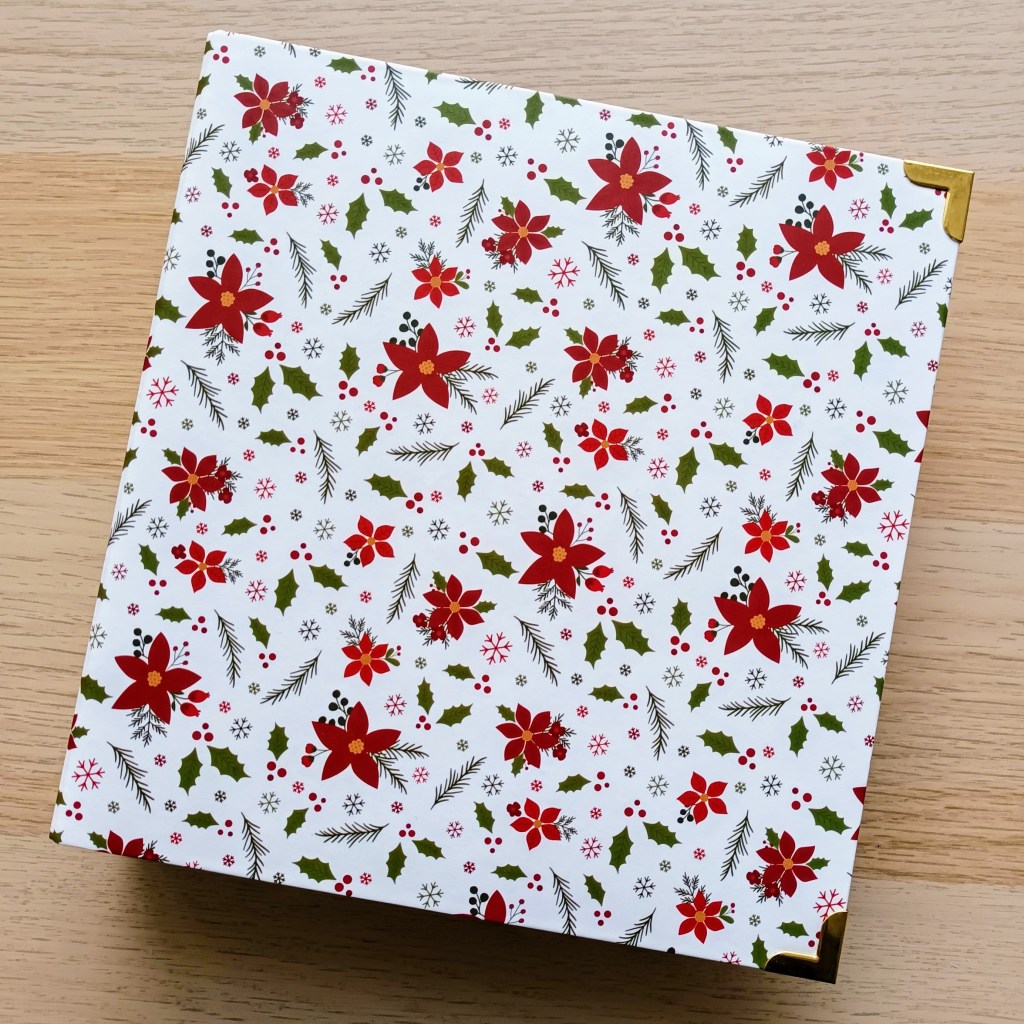
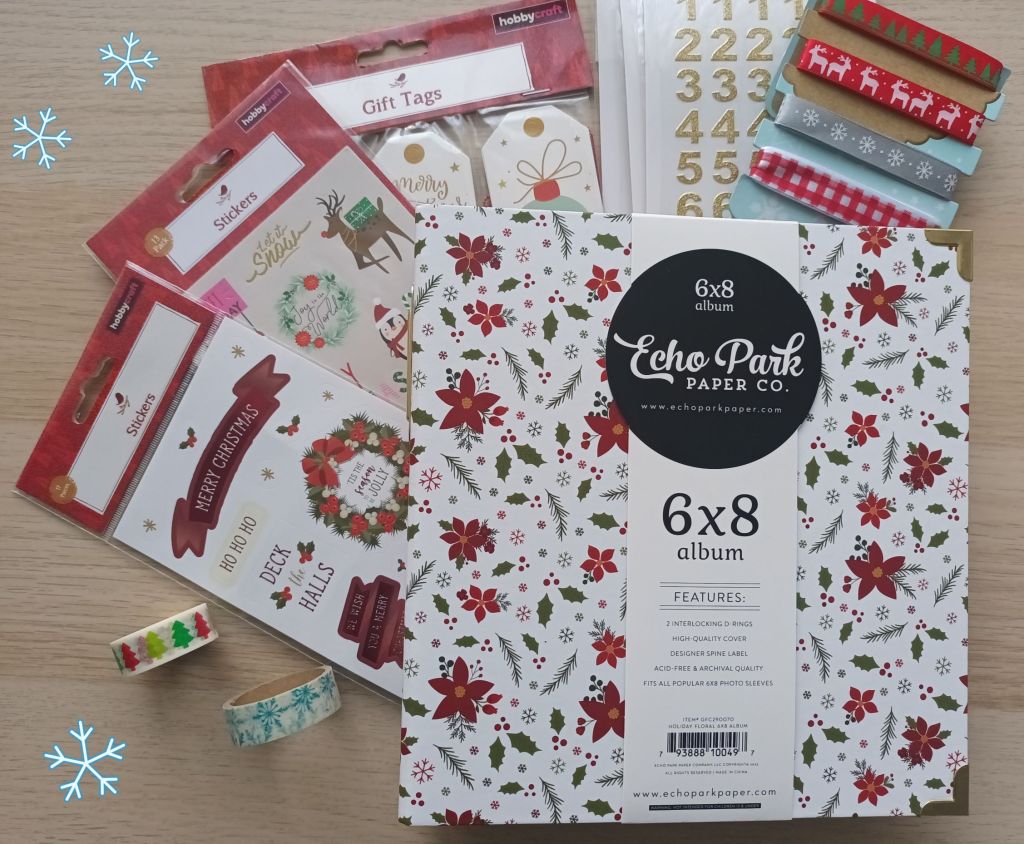
Before you embark on the project, think about what you might need to complete it. Doing the above should have helped but you might also want to sit down and create a list in preparation for purchasing items. For example, I decided I wanted to do a 6×8 album with some of the pages inside page protectors and some just reinforced with card. I also love the idea of lots of different layouts and photo sizes so I took this into consideration too, again making notes about my ideas. I ordered my album and page protectors pretty early on as when I looked at available options, I noticed some of the ones I liked were almost sold out as they had been released last year. I chose an Echo Park white album with poinsettias, holly, berries, snowflakes and spruce stems on and I still absolutely love it!
6×8 Album from a collection by Echo Park
Other items to think about could be Christmassy papers in 12×12 size or smaller, glittery number stickers for labelling each day, journalling cards, gift tags, stickers, washi tapes, ephemera, ribbons, twine for attaching tags, sequins for shaker pockets, glue sticks and tape runners, maybe even a fuse tool for sealing shaker pockets – the possibilities are endless.
I also made sure I ordered my supplies from a company based in the UK as I wanted to make sure my items were received quickly with no chance of being stung by customs fees. There are lots of resources on Ali’s own website which look amazing, but they would end up being very costly! Although I’m prepared to spend quite a bit on the project, I did create a fixed budget, so I don’t overspend.
Choose your main items from one designer collection
If you want all of your pages to go together really well, it’s best to have a specific colour palette and style throughout. An easy way to achieve this is to choose items from a particular collection or at least from a particular designer. For example, this year, all of my supplies (ordered online using the Craftie Charlie website) are from Carta Bella’s ‘Home For Christmas’ and ‘Happy Christmas’ collections. I also purchased a few bits and pieces from Hobbycraft a few months ago but if these don’t go with my new supplies, I’ll use them for decorating my bullet journal instead.
December Daily Supplies from Craftie Charlie
Think about creating some foundation pages
Before December begins, you might want to consider making some foundation pages. These are pages which are done in advance to give yourself a head start on the project. For example, you might create a cover page which includes a title and the year 2022. You might also have a go at making particularly crafty stuff pages and elements such as shakers (containing sequins or glitter), sewn materials or multi-layer bits and pieces,
You could also create a page which explains your reason why. This is short piece of journalling which says why you’re doing the project and what you hope to get out of it. Is it a way of recording your little one’s first Christmas? Is it a chance for you to have more fun this December? Is it a way of winding down each evening by doing some journalling or is it more of a photographic challenge for you? Again, this is totally personal to you. You might want to watch videos or read about what it means to others, but you may have completely different ideas and reasoning.
This year, as one of her foundation pages, Ali Edwards created a table of contents, and this idea appeals to me too so I might give it a go. You can view her first set up video here. I’ve subscribed so I can watch all of her videos as and when she shares her creative process.
Journal your experiences and how you feel in the moment
I’m going to carry around a very small notebook in my bag wherever I go during the month of December so I can make notes about my experiences and how I feel. This means that even if I don’t do the page for that day straightaway, I’ll still have a record of the key details and my emotions at the time. You could also create a page on your phone using an app such as Notion if you would rather write things down electronically. Also, make sure you take lots of photos so you have plenty to choose from – let your family and friends know about the project so they can help with image ideas.
Above all, have fun!
December Daily is potentially a wonderful and fun memory keeping challenge to do, but it won’t be if you get yourself stressed and worried about getting everything perfect! Remember, there are no right or wrong ways to go about it – it should be completely personal to you and as simple or creative as you want. You may use lots of photos and decorative elements, or you may just do a series of simple journal entries.
The holiday season can be incredibly busy and it’s important to find time each day for rest and relaxation. This may mean working on your daily entry in the evening to help you wind down, but alternatively, it could mean that you make up most or all of your album after Christmas, when you are able to devote a few hours each day to some enjoyable and mindful creating, working at your own pace. If you want to spend most of next year finishing your creative project and this is what would make you happiest, go for it! Whatever you do, keep it fun!
Final words…
I hope you’ve found today’s post useful, and the tips have helped you with preparing yourself for doing your own December Daily project. Let me know if you’re going to give it a go or if you’re taking part in another challenge for the festive season e.g. Blogmas where you try out new and fun things on your blog related to Christmas. Although I’m not doing Blogmas this year, I’ll hopefully find the time to do a few blog posts next month as well – I might even share a few of my favourite December Daily pages as I go along too.
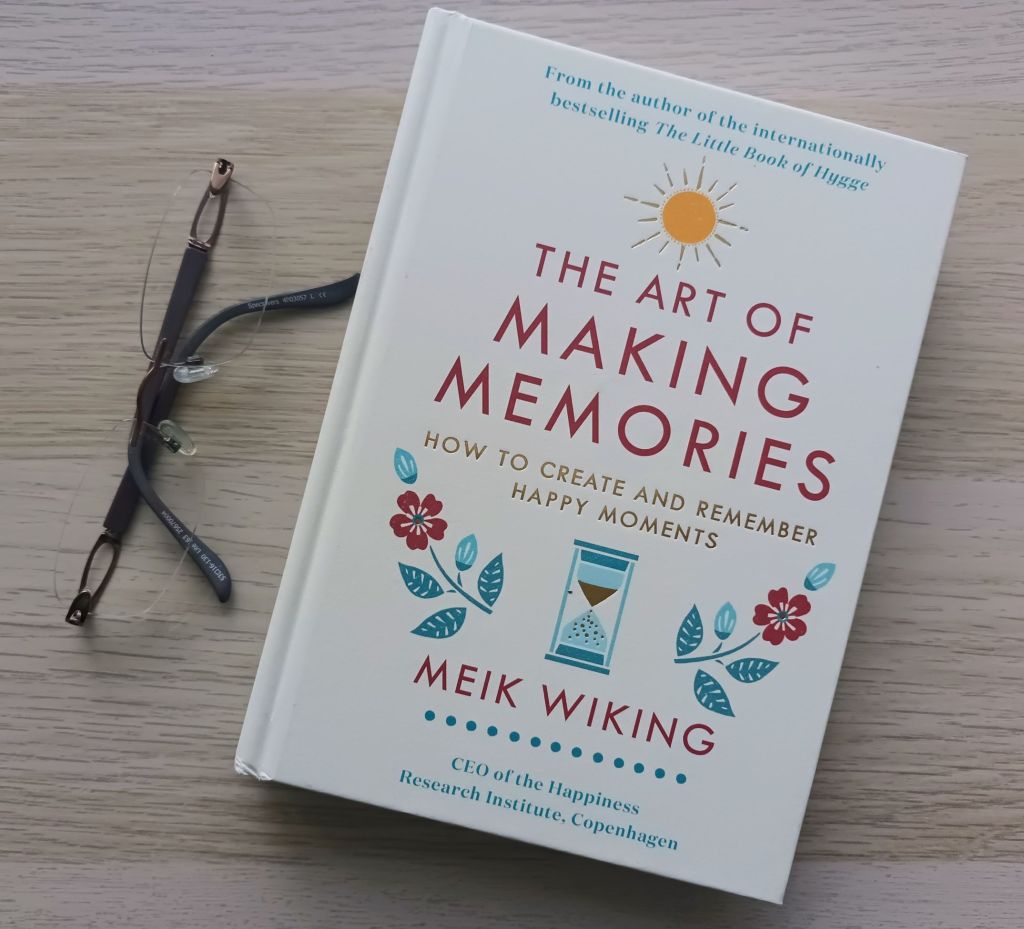
This month I finished reading The Art of Making Memories: How to create and remember happy moments by Meik Wiking. I actually started it last year, but I put it to one side and picked it up again around the middle of October. I’d forgotten many of the key points and ideas, so I re-started from the beginning and spent 20 minutes each morning, reading and highlighting. This has now become part of my early routine and takes place in a super comfortable chair by the window to give myself a good dose of natural light. And, as one of my current affirmations on my vision board is ‘I use self-development books to help me grow’, I’m working hard to apply my learning and decided it would be a good idea to share some of the ideas on here too. I’m also going to talk about some of my own suggestions for memory keeping such as journalling, photography, scrapbooking, memorabilia displays and memory boxes, plus a few more ideas I found online.
Why are memories important?
Rather than provide my own thoughts on the above question, I collected a few ideas from others to share:
Happy memories are essential to our mental health. They strengthen our identity, sense of purpose and relationships.
Rangan Chattergee
There are important moments that make up our life’s narrative. We remember the defining moments in our lives, the moments that made us who we are, the moments where we became who we hoped we could be.
Meik Wiking, The Art of Making Memories
I love those random memories that make me smile no matter what is going on in my life right now.
The moment may be temporary but the memory is forever.
Bud Meyer
‘Happy memories form the cornerstone of our identity, and can help with combating depression and loneliness,’ says Wiking. ‘They influence our happiness in the current moment, as well as providing a framework for our hopes and dreams about the future.’ Nostalgia makes us happy, increasing self-esteem and strengthening social connectedness, so the more vividly we remember the good times, the happier we are overall.
Meik Wiking
Memories are timeless treasures of the heart.
So how can we create a life full of happy memories to treasure?
Following extensive research conducted by the team at The Happiness Research Institute in Denmark, Meik came up eight keys ingredients for creating happy memories whether they’re of important events such as births and marriages, everyday events such as drinking good coffee and eating delicious cake in a cafe with a friend for the first time in ages, adventures such as moving to a new city, climbing a mountain or going abroad for the very first time or struggling to finish a big assignment but then being delighted with the feedback given by the course tutor. Here’s a brief explanation of each of these elements:
Unforgettable firsts
This is the idea that the very first time you experience something is likely to be remembered much better than subsequent very similar experiences. So, for example, you’re likely to remember your first time on an aeroplane, your very first pet, your first job, your first kiss etc. A great idea then, is to seek out new and novel experiences on a regular basis, the more extraordinary the better. You might like to schedule an evening in your diary or planner to find out what’s available to you and explore different options – you might organise a holiday, choose a new restaurant for a family meal (trying a new food or dish will make it even more memorable), sign up for an evening class (I recommend beginners ceramics) or plan to visit a museum is a nearby town or city.
Make it multisensory
In the classroom, during my years as a primary school teacher, one of the important ways of ensuring all children learnt well and enjoyed activities was to create multisensory experiences. These are the kinds of lessons which stay with them for years and they can still remember well after they’ve left school. This can be applied to memory making too. Don’t just experience things with your eyes, try to make sure you use all of your senses (not just sight) to take everything in. Consider if there are any particular aromas in the air, like the smell of freshly roasted coffee, the scent of cinnamon and winter spices in a pot pourri at Christmas time. Be still and listen for near and distant sounds (either pleasant or unpleasant) such as the drumming of a woodpecker in a faraway tree, the roar of the ocean or music drifting on the breeze. Take time to explore different textures such as soft knitted blankets as you get all cosy after a chilly winter walk, or smooth pebbles on the beach and you sit on the sand. Maybe as you relax and take everything in you become aware of a range of sensations, the chill of winter on your skin or the warmth of the Sun on your face in summer or the crunchy autumn leaves below your feet. Perhaps new or favourite tastes complete the scene -succulent strawberries, crunchy, salty popcorn, the sharp tang of the lemon slice in your chilled glass of Pimms and lemonade. And, as you attend to every detail of your experience, you’re engaging in one of the key aspects of mindfulness which is wonderful for your mental health too.
Pay full attention
It should come as no surprise that experiences are best remembered if you invest your complete attention on them. So, for example, if in the summer you went on a Sunday afternoon boat trip to see puffins, but you spend most of the time thinking about all of the work you have to do on Monday, you’re unlikely to remember key details like the warm sun as it sparkled on the water, the interesting facts the captain shared as you headed towards Coquet island, the joy of spying a line of cute seals bobbing in the water making sure that the boat didn’t get too close, the thousands of noisy puffins flying overhead and diving down into the water to catch sand eels, and the hundreds more birds basking in the warmth after a busy morning fishing. However, if you remain attentive during whole cruise, you’re likely to be able to recall all of the magical trip and how you felt for many years to come.
Keep it meaningful
Meaningful moments in your life are those which are of great significance or value to you, where positive emotions such as gratefulness, love, happiness, pride, warmth, peace and often, a sense of connection with loved ones is felt. These could be ‘big’ milestone moments such as finishing college or university, starting a new job, the day you got married, the birth of a child or buying your very first house. They could also be smaller events or happenings which are really important to you and your personal values, for example, for me as a wildlife and nature lover, sitting quietly with my husband in the hide at Kielder Forest, watching and listening to the woodland birds and then suddenly spotting a red squirrel taking a snack from a feeder is one of my favourite memories which I will cherish for a very long time. As well as making exciting plans to celebrate each of our birthdays and our wedding anniversary, my husband and I also make sure we schedule in plenty of other pleasurable activities and adventures for our weekends such as visits to nature reserves, riverside walks in different parts of the Northeast, trips to the theatre, lunches in various vegetarian cafes and overnight stays in quaint villages or vibrant cities.
The emotional highlighter pen
According to Meik, emotions act like a highlighter pen so experiences involving heightened emotions will stick fast in your memory. That’s why we never forget the exact details of times when we’ve felt really embarrassed (no matter how much we’d like to). ‘An emotional reaction will make experiences and moments more memorable, so the art of making memories means making the emotional highlighter pen work for you.’ This also works for exhilarating, joyful, scary, traumatic, sad and shocking events too. Next time you’re planning a holiday, try to add a few activities to the itinerary which are bound to be emotional highlights.
Peaks and struggles
Some of the milestones mentioned above such as completing your university degree, buying your first home or getting married are highly memorable events, but the struggles, stresses and hard work involved to get there is likely to be unforgettable too. There’s so much involved in planning your wedding day that working full time and having a long to do list of preparations months and weeks before can be so stressful and exhausting that when the day arrives it’s such a relief that it (mostly!) went to plan, and you can enjoy what should be one of the happiest occasions of your life.
Meik shares these happy memory tips:
save the best for last – e.g., if giving a few gifts to your partner for their birthday or Christmas, save the most precious / exciting one until the end, when creating a holiday itinerary, do something with the ‘wow’ factor on the last day etc.
make the journey part of the experience and try taking the long route – for example, go on a gentle and relaxing boat trip along the river to the other side of the city or hire a bike for the day to cycle around the various attractions, rather than jumping in a taxi.
plan something for your weekend that helps it to end on a high note
Share your memories as stories and regularly have ‘remember when…’ conversations
A memory model known as The Ebbinghaus Forgetting Curve shows that over time our retention of memories decline, unless we take action to keep them. Knowing about and understanding the forgetting curve can be important when we are trying to learn new skills or absorb vital information but how does it help us with remembering happy memories? Well, according to Meik, regularly sharing your happy moments with others as stories can help immensely. This could involve helping loved ones to hold on to past events by retelling anecdotes, having ‘remember when?’ conversations or even sharing funny or interesting experiences from your own childhood. Regularly reminiscing has also been shown to help combat memory loss as we get older too.
Outsourcing
The final ingredient for maintaining happy memories is to outsource them. In business, as some of you may know, this generally means asking a third party to take care of a particular job or task. In memory retention, however, we can outsource memories by taking photos, collecting mementoes, keeping a diary or journal or by sharing to social media, such as Instagram, Facebook or even a blogging platform.
Most of us take thousands of photos each year which are generally stored on our phones or online using ‘the cloud’. Flicking through these images can certainly spark memories but personally, I prefer to use a range of memory keeping strategies and I especially love creative journalling.
Memory keeping ideas
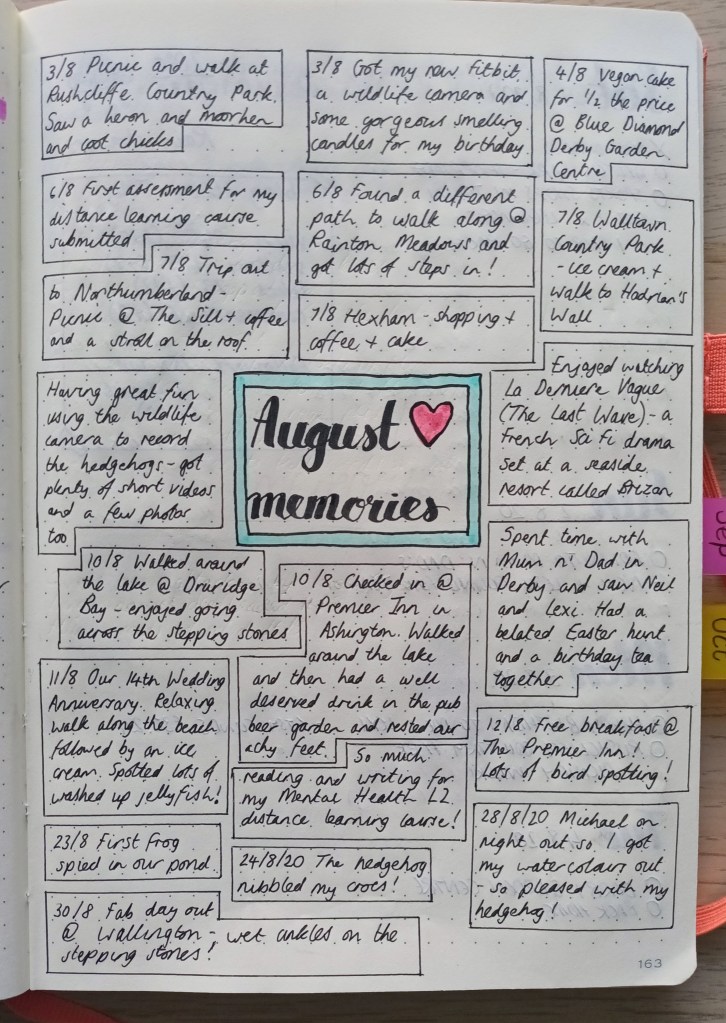
Monthly memory pages
I’ve created a few of these in my bullet journal to help me to remember what happened during the month. I’ve tried to summarise each event in a few lines so I can fit plenty of memories in. Some of them are dated, whereas others are just something that occurred over time such as watching a particular TV series.
Mementoes
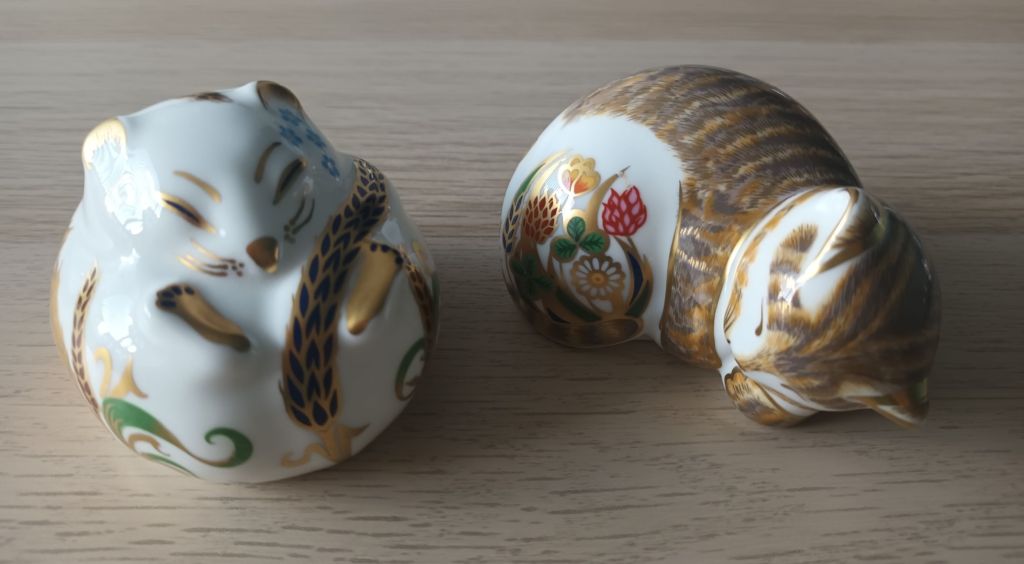
A memento can be defined as an object kept as a reminder of a person or past event. It can spark memories or feelings of happiness each time we see it. For example, when my nan passed away, my mum selected two ornaments from her Royal Crown Derby Cottage Garden Collection – a sleeping kitten and a cute little Dormouse, to give to me to keep. They remind me of my nan, her many ornaments which she had displayed around her home and my grandparents’ pet cat called Tibbles. Also, I like the animals which were chosen and the decor on each piece so they’re things that I’m happy to display in my own home.
Other mementoes you might consider include:
something from each of your holidays such as a fridge magnet
a photo in a frame of special occasions e.g., wedding days, child’s first day at school in uniform, the stunning view from a hill you walked up, the bespoke birthday cake that was made for someone’s 80th etc.
hand or footprint casts – you can even get one done of your pet’s paw!
your child’s first tooth
your child’s first artwork
a souvenir from some of your ‘firsts’ holidays e.g., a mini Eiffel Tower
newspaper clippings from something important to you that made the local news
Photographs
You’ve probably heard the adage ‘a picture is worth a thousand words’ which basically means that one single image can often convey multiple ideas, messages and meanings more effectively than a long verbal description can. Therefore, you could write pages and pages describing particular experiences in your life but sometimes, photographs can be enough to spark your memory. Similarly, if you selected a particular photograph from one of your albums (or located one on your phone) you could use it to tell someone else the story of that particular occasion or spend time recalling the event in detail with whoever you shared the moment with.
Set up a private social media account
Many of you will have an Instagram account which features carefully cropped photos with perfect lighting, filters, captions and emojis. This is the stuff you’re happy to share with people online for likes and comments. What Meik suggests is creating another account for everyday memories which might not be Instagram ready bits and pieces you want the whole world to see but are still part of your experience and would give you pleasure to look at.
Creative journalling
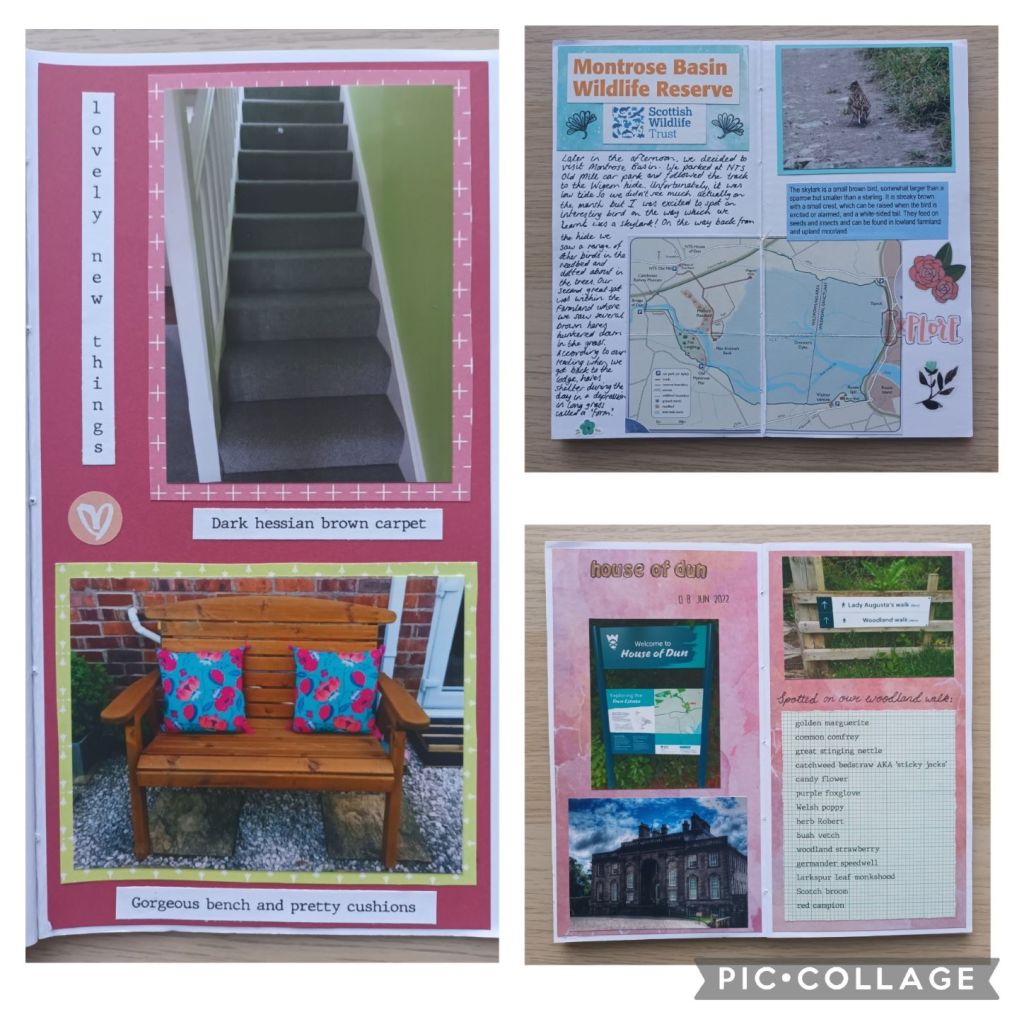
Personally, I like to combine lots of different memory keeping tools and techniques in my creative journals. I use a traveller’s notebook size and like to record days out, holidays, special events, clothing, accessory and home decor purchases, craft and art projects, wildlife sightings, new dishes, snacks and sweet treats tried, anything really, but especially new and novel experiences (as per Miek Wiking’s power of firsts). As well as including journaling and photographs in various sizes I also like to stick in related mementoes such as restaurant menus, tickets, receipts, packaging, lists of wildlife or nature spots – anything that adds to the memory.
December daily
December Daily is a project idea created by memory keeper, Ali Edwards and is a way of documenting the 25 days leading up to Christmas. A few years ago, I had a go at creating a Christmas journal using a range of papers I picked up from my local Lidl supermarket making my own traveler’s notebook size insert. I made a page or two for each day
This year, I’ve bought a Chistmassy 8×8 album and a range of different pocket pages which can be filled with photos, bits of journalling and anything which will spark off festive memories. I’m busy building a collection of stickers and ephemera to use and am enjoying watching different approaches to the project on YouTube. I’ve also printed off lots of different prompts I found online to make sure I record lots of different aspects of the month of December and don’t run out of ideas.
Memory playlists
I’ve not tried this one myself, but it sounds like a really nice idea. In January, you start a new personal playlist e.g. ‘Tunes of 2022’, to which you add your current favourite songs throughout the year and tracks which evoke particular memories. When you listen to your playlists you are transported back in time, recalling memories based on music. Although I’ve not specifically done this, I know that when certain songs come on the radio I’m reminded of nights out at university, hitting the dancefloor, writing out or printing lyrics and learning every single word to sing along, wedding night songs including our first dance, favourite bands and artists we’ve been to see, trips to the theatre, movies we’ve enjoyed and many other fun times throughout the years. In fact, I read some information online this afternoon which suggested that playlists can be a particularly useful tool to create for elderly loved ones to help elicit memories of times gone by.
1 second everyday – video journalling
This is a video recording app (1SE for short) which enables users to create a video journal by recording meaningful one second movies for a myriad of everyday aspects of their lives. Each short video is stitched together sequentially to create a seamless record. So, for example, you might create a series of video during the month of November featuring a book cover of a novel you’re particularly enjoying, the crashing waves at the beach whilst on an Autumnal walk, your nails after applying a pretty nail polish, a finished craft project, coffee and cake at a new cafe you’ve tried, the smile of a friend during a good catch up, the rain lashing against your window that started just after you got home, a new recipe that you’re about to give a go and all of the ingredients lined up along the countertop etc.
Line a day journal
This can be a spread you do in your bullet journal each month which you fill in each day or you can purchase a special notebook that usually has space to record five years’ worth of memories. Whichever format you choose, it is meant to be something that you can quickly complete at the end of each day to summarise things such as events, experiences, things you are grateful for, purchases made, something nice someone said, something kind you did for a friend or a stranger etc.
Final words…
I hope you’ve found today’s post interesting and useful and that it’s prompted you to think about the different ways in which you can create wonderfully happy memories, keep and cherish them. Some people prefer to keep digital records whilst others, like myself, prefer to create tangible journals which can be flicked through and talked about with family members or friends. If you’re interested in finding out more about making and remembering memories, I definitely recommend you check out Meik Wiking’s book. He’s recently re-released it under another name ‘Happy Moments: How to Create Experiences You’ll Remember for a Lifetime’ but the content is the same. I like to buy this kind of book rather than purchasing the e-version as then I can more easily highlight parts I particularly want to remember and then flick through the pages whenever I wish to.
Do you enjoy creating journals or photo albums full of happy memories or do you find yourself flicking through digital albums on your phone and thinking about how you should really print a few of the photos off in case you have an issue with your cloud storage one day?






 Keeping it creative