
Over the last few months, I’ve read a couple of books on the topic of manifestation – ‘Make It Happen – Manifest the life of your dreams’ by Jordanna Levin and ‘Manifest – 7 Steps to Living your Best Life by Roxie Nafousi. I found both of them really interesting and learnt a lot about the theories behind manifestation and things to work on to maximise your chances of creating the life of your dreams or your best life as mentioned in the titles. Today, I hope to provide a summary of the concept and my key take aways from both books so you can use the ideas to work on your goals for 2023.
Both authors talk about the success they’ve had with manifesting everything they’ve wanted in their lives so far and the steps they’ve taken to get there. They also discuss some of the struggles they’ve had in the past and how they’ve overcome them through the power of manifestation and making changes to their thoughts, feelings and attitude.
What is meant my manifestation?
There are various dictionary definitions available online, but, in short, to manifest is to make something happen. In today’s post though, I want to explore the idea that I believe was first discussed in detail by television writer, producer and author Rhonda Byrne in her documentary film and related book The Secret back in 2006 where she explained that ‘Manifesting is about breathing life into your goals through action, emotions and belief’.
Levin adds to this in her book by introducing her ‘Manifestation Equation’ which is states that:
Thoughts + Feelings + Actions + Faith = Successful Manifestation
and is based on four laws – The Law Of Attraction, The Law Of Vibration, The Law Of Action and The Law of Rhythm.
Whilst Nafousi, in her first of two books on the subject, describes manifesting as ‘a meeting of science and wisdom’ and ‘a philosophy to live by and a self-development practice to help you live your best life’.
Finding clarity
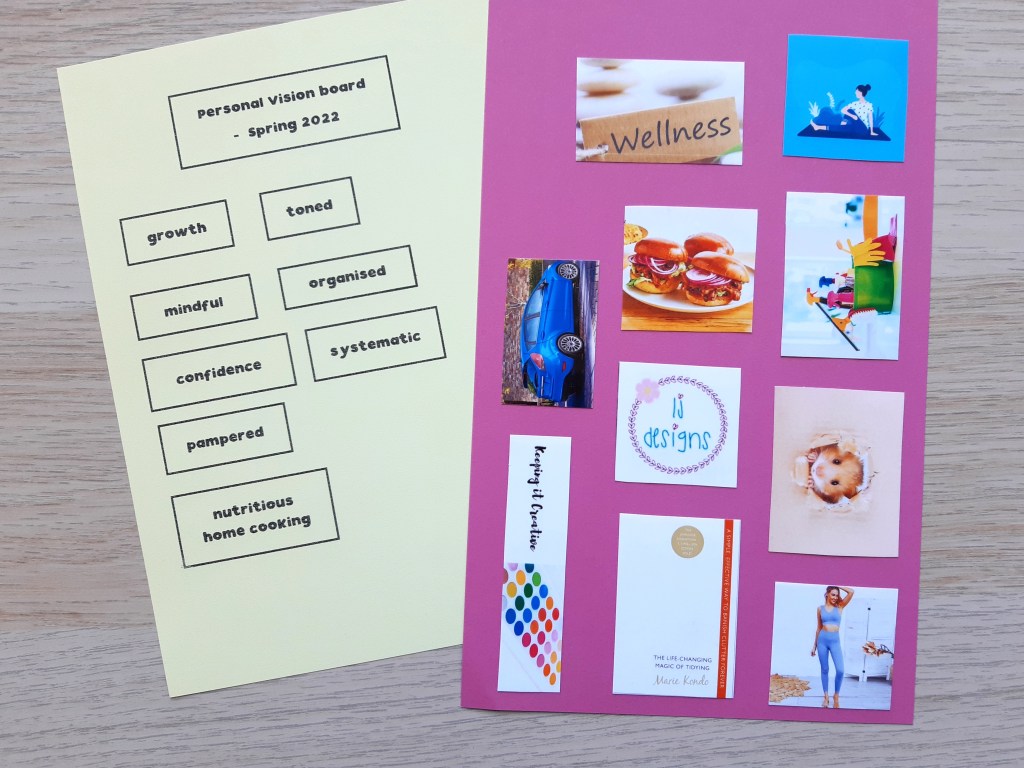
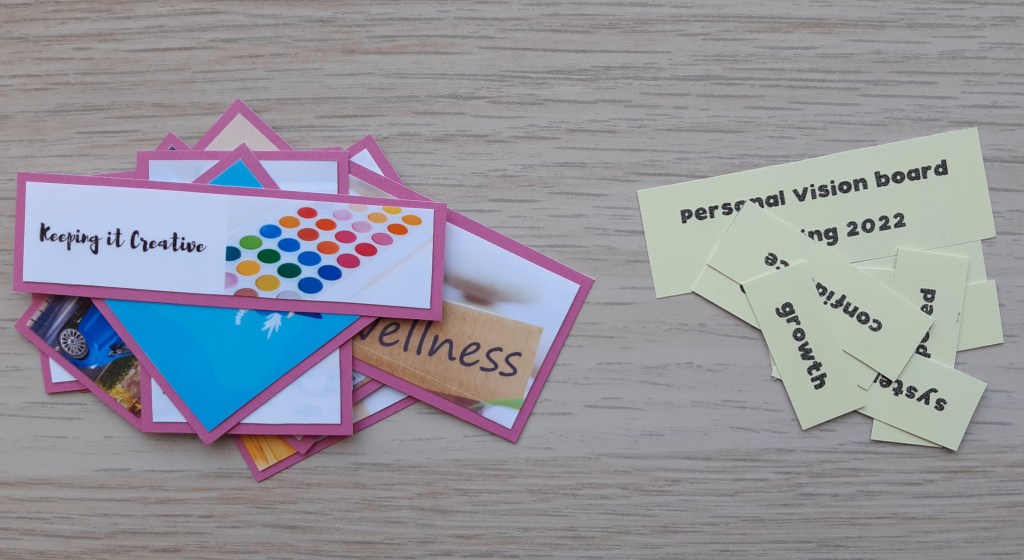
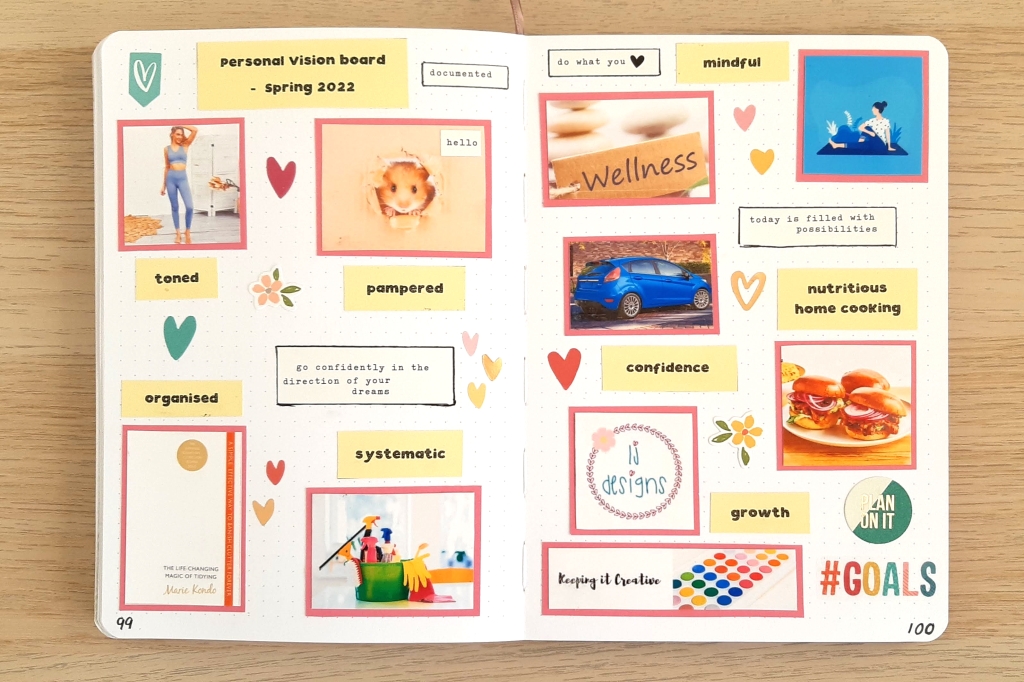
The first step of manifesting is to get clear on what you want you want from your life. As Nafousi states ‘…you can’t get to where you want to go if you don’t know where it is you are headed’. A helpful practice for this is to create a vision board filled with your intentions. This can be done digitally on your computer, or physically as a display, and commonly includes inspiring pictures and/or words representing your dreams and aspirations. If you prefer written methods, you might like to write a list in a special manifestation journal and expand on your intentions for each. Another option to try, is following a guided visualisation meditation specifically for manifestation, where you consider what you ideal life would look like and even more importantly, what it would feel like if you already had what you desire. There’s a range available online, some for a small cost and others free. You might also want to think about the kind of person you want to be or take time to explore your core values. Jordanna has two free PDF resources for this which include a comprehensive list of core values and a long list of personality traits. I found both to be extremely useful. Finally, using a Wheel of Life to explore where you are right now and where you wish to be in the future can also help you make plans and set intentions or goals.
Whatever methods you use to set your intentions, it’s recommended that you work on a small number – a maximum of five at a time can help to keep them powerful. Also, the advice is to write them in positive language, keep them short and to the point and use present tense e.g. I am well-organised and productive, I have a happy and healthy relationship with my partner, I feel full of vitality etc.
Take action
As well as thinking about and visualising what you want in your life, you should also be prepared to take action in order to make progress towards those things. As Levin says when describing the Law Of Action – ‘you must do the things and perform the actions necessary to achieve what you are setting out to do’. You play a vital role towards creating your future so you must work to make it happen! So, for example if you want to be happy and fulfilled at work, you might start by considering you current job situation and how you feel about it. You could then take some time to journal about what aspects you enjoy and which leave you feeling dissatisfied. Having considered this, it might lead to you identify potential changes you could make or help you to realise that it is time to move on and try somewhere else or a different role. You would then have to think about and perform the necessary actions to move things on.
Raise your vibration
The scientific principle known as the Law of vibration states that everything in the universe (objects, thoughts, emotions etc.) has energy and a vibrational frequency ( from high to low). With regard to manifesting, according to this law, we need to vibrate at a similar frequency to the things we are trying to attract and the best way to do this is to work on raising our vibe. High vibration emotions include unconditional love, joy, peace, gratitude, hope and optimism, whilst particularly low vibration emotions include jealousy, anger, fear and despair. But how can we work on raising our vibration so we resonate more of these positive emotions? Here’s some of what I learnt from my reading:
Let go of fear and doubt
One of a number of ways of working on raising our vibe is to let go of fear and doubt. If you believe that you are not worthy of what you want or that you are not capable of taking action and making changes then you are unlikely to manifest those things. On the other hand, if you have faith in your abilities and are optimistic about the future, you are ready to receive everything you desire because you believe you are worthy of it. This happens because our subconscious has the power to drive us towards our dreams but also has the power to hold us back.
Our fears and doubts show up in a number of different guises including worries and insecurities, limiting beliefs, feelings of unworthiness and a lack of trust in the universe to provide for us. These can not only sabotage our chances of manifesting, they can also stop us from being aspirational with our dreams and wishes too.
Of course, ridding ourselves of fears and doubts is not something that can be done overnight, especially as many of us have been accumulating them over many years. It takes constant work and commitment (what some practitioners call deep work). Self development is achieved over time and with perseverance. It might also involve working with a therapist, life coach or mentor. who can guide you on the way and teach you new techniques for managing your thoughts and emotions and working on limiting beliefs. The main ways forward include:
- exploring your thoughts and considering more realistic or alternative ways of looking at things (focusing on positive and empowering choices)
- being careful about our choice of language e.g. replacing if with when, talking about what we want rather than what we don’t want, choosing positive words such as I can…, I will… etc rather than negative statements such as I can’t…, It’s too hard etc.
- using positive mantras to repeat e.g. Life supports me in every possible way. I am thankful for the endless opportunities that come my way. Today I am the best version of myself. I’ll achieve everything I set out to do.
- practice visualisation – imagine what it would look like and what it would feel like if you were living a life in alignment with what you desire. This can be done as a meditation or if you prefer creative writing, you could journal what your day would be like if you were living your best life.
- cultivate self love and compassion – be kind to yourself and value your wellbeing. Celebrate achievements but also be patient and forgive yourself when needed. Believe in yourself and your ability to have success. Treat yourself as you would a good friend, offering support and encouragement.
Live in alignment
Another part of taking action is to align your behaviour with what you wish to manifest. It’s no good creating your vision on a board or just sitting there thinking about what you want for your like, you need to be proactive in your journey. As you work on banishing your fears and doubts, you will start to develop confidence in your abilities and this is when you can really push yourself and step out of your comfort zone. |Nafousi has this to say:
‘To manifest change, we must first create change. We must do something different, we must challenge our fears and doubts, we must act as our future self would act and we must show the universe how ready and willing we are to step into our power.’
A good way to do this is to behave the way your future self would. So, for example, if you want to be a tidy and well-organised person, you need to act like one. This could include regularly decluttering, making sure you have a place for everything and putting things away in that place when you’ve finished using them, creating a schedule for your day or writing to do lists to make sure you maximise your time, having a good sleep routine so you wake up feeling refreshed and ready to have a productive day, making tidying a priority and a habit which you see as important and of value. It could also include spending time researching and implementing habits of tidy and well-organised people and maybe asking for help and advice from friends who always have a neat and tidy home.
If you’re not sure what steps to take or changes you might need to make, Jordanna Levin’s book has chapters on different aspects of life which are full of ideas and exercises to try.
Develop an attitude of gratitude
Whilst you strive to manifest your intentions, it’s also important to be grateful for what you already have. As I’ve shared in several previous blog posts, gratitude is all about being thankful and showing appreciation for all of the things we have. Nafousi splits gratitude into three categories which I found particularly helpful – gratitude for the self, your life and the world. So, you can appreciate things about yourself such as your health, your ability to listen to others and your crafting skills. You can be thankful for what you have in your life such as a supportive partner, a beautiful home and a job you love. And, finally, you can feel grateful universal things such as good weather, connection with others and the wonder of nature.
Gratitude is a high-vibe emotion which is wonderful for your physical and mental health, your relationships, self esteem and sleep. Being grateful for things as they are now shows the world that when you do manifest something you what you want for yourself and your life, you will be super appreciative of it.
Gratitude journalling is something I do every day as part of my Five Minute Journal practice and it something that I feel really helps to develop those high vibe emotions we want to increase. I identify three things each morning to write about and then reflect on the highlights of my day (and what made these things possible) and what I’ve learnt in the evening. It doesn’t take long and it has the potential to make a huge difference to your life.
Use sources of envy to inspire you
When I was young, there seemed to be limited sources of envy. You might feel jealous of a school friend who got 10 out of 10 in her spelling test or your best mate who had pretty much every toy in the Argos catalogue / went on super expensive holidays / had a bedroom the size of the ground floor of your house or a garden full of expensive play equipment. Nowadays though, you can go on social media and be envious of the perfect lives of not only your friends, work colleagues and acquaintances, but also people you’ve never met who have the perfect Instagram feed / the energy to get up at 5 am and be super productive until 8pm / the healthiest body with flawless skin / the tidiest and most well-organised home with all the latest gadgets bought with their huge and effortless income – you get the idea. As Nafousi says in her first book ‘Social Media is a playground for comparison and a fertile land for envy to grow in’. She offers a few tips on how to manage things. One suggestion is to become more mindful of the content you engage with so that you choose only to read / explore content which you relate to, makes you feel good or inspires you in some way. You should also continue to work on removing your fears and doubts which are holding you back, some of which may present as envy and jealousy. Another potentially powerful idea is to recognise thoughts and feelings associated with low vibe emotions such as these and turn them into inspiration. So, rather than believing that they have things that you can’t have (scarcity mindset), you have the opportunity to reframe and choose to believe that you could have the same for yourself if you work hard (an attitude of abundance).
Trust that the universe has got your back
As part of your manifesting journey, you will meet challenges, difficulties and obstacles along the way. You have several choices when these tests turn up: 1) you could admit defeat, become impatient and decide you’re never going to get to where you want to be, believe you’ve failed, believe that other people have all the luck and let envy creep in basically, letting fear and doubt rule, or, 2) you could use these situations and obstacles in a more positive way to build your inner strength, resilience, courage and self belief to keep going and trust in the manifesting process. You might need to take action by do a bit of problem solving, trying different approaches, working things out by journalling how you feel, or using positive affirmations to remind yourself that you can and you will, but ultimately, if you have faith in yourself and the universe to provide for you then you can absolutely get there.
Final words…
Today’s blog post contains just a small part of what I’ve learnt about manifesting. If you want to find out more, then I particularly recommend Manifest: 7 Steps to Living Your Best Life by Roxie Nafousi as a succinct introduction and her more recent book Manifest: Dive Deeper to further your knowledge. Jordanna Levin’s book Make It Happen: Manifest the life of your dreams provides a much more indepth look into manifestation and also has lots of exercises to try. It also focuses on different aspects of life which you may want to work on as part of your manifesting journey.
I hope you have found the topic matter of manifestation interesting and something which is worth exploring further. As always, I would love to hear your thoughts or related comments.

 Keeping it creative