Posted in fitness, goal setting, lifestyle, mindset, Planning and journaling, wellbeing

Monday Matters: 4 tips for getting started on your fitness journey and staying motivated

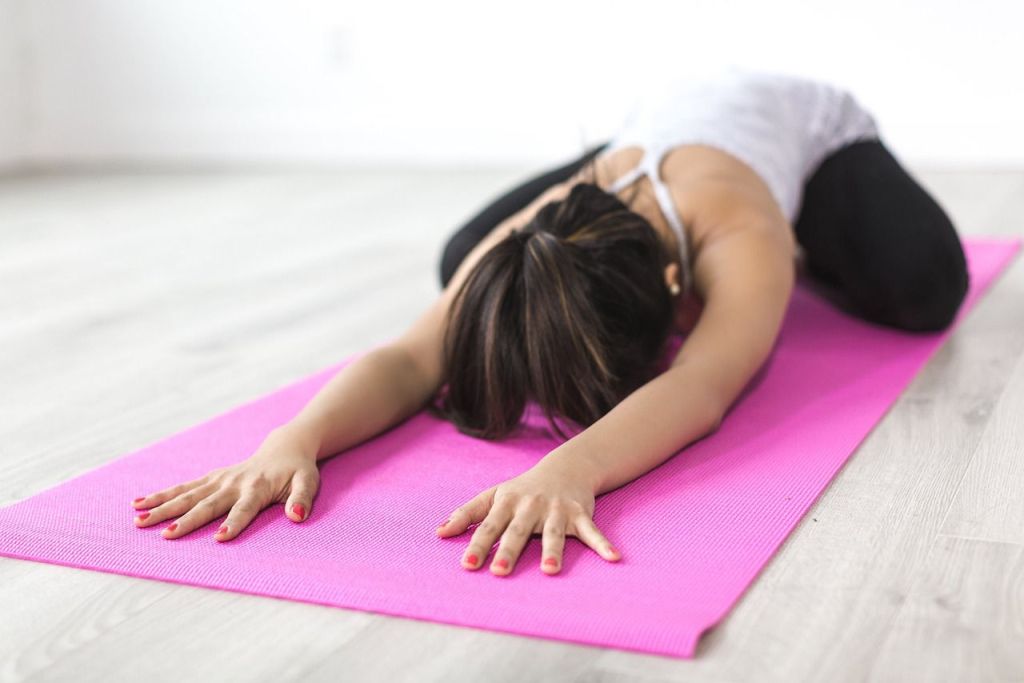
Image from Pixabay

Many of us, as part of our new year’s resolutions each year, set goals to get fit. We start off with good intentions, joining the gym or attending exercise classes but oftentimes, our motivation isn’t maintained and by February, our workouts have dwindled and other priorities have come to the fore. As someone who has been a member of a local gym for over a year and a half, with a routine that includes at least seven workouts per week, I thought I’d share a small number of tips to help you get started with your fitness journey and maintain the motivation to keep going. So, let’s get started…

Set clear goals

Some people set the vague goal ‘get fit’ without considering what that statement means to them, how they’re going to do it and why. A much better approach is to use the S.M.A.R.T. goals system. I wrote a really comprehensive blog post on this quite a while ago which includes some useful questions to consider to get you thinking about why the goal is important, what your life will look like when you reach your goal and how you will go about working towards it. I also provide an example, which, whilst not fitness related, should help you with goal setting and goal getting.

Using your bullet journal or a dedicated notebook for the particular goal or goal getting in general can provide a useful record of your intentions, how far you’ve come so far or a space to record your experiences, successes and difficulties along the way. It can also help with accountability.

Creating a vision board which focuses on your fitness goals and includes motivational images and positive phrases or quotes can also help towards manifesting the fitness lifestyle you desire. This can be created digitally and used as your screensaver on your computer or can be paper-based and maybe created using images and words cut out of health, fitness and wellbeing magazines.

Consider any clothing and equipment required

If you’re serious about increasing your fitness levels, purchasing some dedicated workout gear and some basic equipment can really help in terms of motivation. I got a number of outfits for my gym sessions and my weekend walks and I spent quite a while choosing items in my favourite colours which fit beautifully and make me feel confident and well supported. This included sports bras for my aerobic sessions, moisture wicking tops which don’t expose my skin during downward facing dog and leggings which are fitted but not too tight as to feel uncomfortable or roll down during my exercise routines. I also got several pairs of hiking shoes for winter walks and lots of layers for warmth whilst out in the countryside. I didn’t get everything straightaway but have built up my collection based on my changing needs as I try and love different forms of exercise.

As I practise Iyengar yoga, I’ve invested in a mat, blocks, bricks and a belt for my practice. I also use some of this equipment in my Pilates and legs, bums and tums classes too so figured it was a good investment. Although the gym provides bits and pieces for the sessions, I find having my own things beneficial and it also means, if I miss a class, I can find a workout on YouTube to do some exercise at home.

Create an active lifestyle

If getting fit and staying fit are important to you, you’ll need to create an active lifestyle where exercise becomes a key part of your daily routine and something which you enjoy and thrive on. Yes, there will be days when you don’t feel like it and have to push yourself to get your exercise gear on and do a session, or times when you recognise the need to have a rest if you feel under the weather or think you might have over-exerted yourself, but on the whole, you’ll feel motivated and ready to go. A huge part of this involves choosing forms of exercise that you love and make you feel good. For example, when I started exercising, I would go to the gym at least 3 times a week to work on the cardio machines and the resistance training machines. My routine gave me a good full body workout, but I much preferred the social element of going to classes, getting chatting to various others who enjoyed exercise and fitness and developing friendships over the weeks. I now go to at least one class everyday and use the gym occasionally. I still do activities which work my whole body and I have maintained my motivation for different forms of exercise over several years now.

Sometimes, on busy days, when I’m working at the university or I have other plans, I have to cancel one or more of my classes. However, I will always make time to fit in exercise, even if it’s just 20 minutes of stretching at home or a face paced walk in nature or around the block.

Having a back-up plan for when you haven’t got time to do an hour long class or your usual hour and a half in the gym can really help and writing it down in the aforementioned notebook or journal can keep you consistent. This could include having a bank of videos saved on YouTube that you dip into or a selection of infographics showing stretch routines on Pinterest. You might also schedule in an early morning walk as part of your routine for that day or plan a long hike for the weekend when you don’t have so many other commitments.

Cultivate a positive mindset

A positive mindset can help you celebrate your progress and achievements, assess and overcome any setbacks and maintain motivation. Rather than focusing on what you didn’t achieve in a given week, celebrate the workouts you did do and how you felt afterwards. Look for signs of improved strength, flexibility and stamina and write down these wins in your notebook or journal. Draw up a list of rewards such as new fitness gear, a fun activity that you haven’t done for ages or have been meaning to try e.g. canoeing, surfing, bowling, kite flying, frisbee etc. or a pretty decorative item for your home.

“Studies have shown that if you have a ‘growth mindset’ – the belief that your abilities and skills can be improved – then you will have more effective workouts.

Put simply – it’s positive thinking. Believe you can, and you will.” (Why your mindset matters article on Metro.co.uk.)

Final words…

I hope you’ve found today’s blog post beneficial and it has given you some beginner friendly ideas for starting out on your fitness journey and keeping up the good work. When you begin, you might like to try out lots of different exercise options and then modify your routine based on your preferences. I’ve found I love dance based aerobic classes like zumba and clubbercise, but also enjoy more mindful practices like yoga and Pilates too. In the future, I would like to include more targeted upper body exercises to increase my strength in this area, but for now, I’m happy with the way things are progressing in terms of my general fitness and core strength.

Let me know in the comments if you plan on working on fitness and exercise related goals for 2024 and what you’ve taken away from today’s article to help you on your journey. Alongside your plans, you might like to consider dietary tweaks too in a way which compliments your fitness lifestyle and ensures better physical and mental health overall, for now and in the future.

Posted in lifestyle, self care, wellbeing, wellness

Monday Matters: Ten ways to get yourself ready for the winter season

Photo credit: Alex Padurariu for Unsplash

According to some reading I did online, the date that winter starts depends on whether you are referring to the astronomical or meteorological winter. The astronomical calendar identifies the season in the UK as beginning on Friday 22nd December in 2023, but personally, I follow the meteorological definition which cites winter as beginning on the 1st December each year. Whichever date marks the beginning of winter for you, I think we can all agree that wintery weather is coming as fast as Christmas is creeping up on us. Whether you dread the icy cold temperatures, or look forward to cosying up in front of the fire in a thick jumper and chunky socks, I think today is the perfect time to talk about getting ourselves ready for the chilly season before it hits. Here’s my top 10 ways to get winter ready.

Check over your winter wear

Get out your super thick winter coat, your hats, scarves and gloves and check them over to see what condition they’re in. Do any of them need replacing? Are there perfectly serviceable items from last year that you didn’t wear which might need donating to charity or given to a friend who will show them more love? Are they washed (or spot cleaned if necessary) and ready to wear?

My husband and I have a small woven basket next to the front door to store our favourite accessories in so we can grab them and go without having to go upstairs to retrieve them before heading out. Other items are kept in drawers and our wardrobes tucked away until needed.

Think layers

As well as outer wear, what you put on underneath is super important too. For winter walks, I recommend searching out some base layers from an outdoors shop. Thermal vests are also a good option to keep you toasty. Longer socks (thermal or wool ones) can keep your feet and legs warm, whilst fleece lined items can be worn under your coat. Layered clothing is always the best idea for winter outings as you can always strip some of them off if you get too hot. There’s nothing worse than going out and feeling really cold, and then struggling to get yourself warm again when you return home.

Evaluate your footwear

Another key part of your winter wear, which I feel needs its own section, is your footwear. For indoors, I recommend cosy slippers with a good sole (IMO not those big, squishy, novelty ones where you’re in danger of falling down the stairs / slipping on the floor when you move around) or socks with gripper treads AKA non-slip soles. For outside, a decent pair of wellingtons is good for light, short walks in snowy conditions or torrential rain (not very comfy on long or difficult walks IMO), walking shoes and boots with good grip / extra traction for extensive walking in all kinds of weather, or, more dressy boots for days and nights out where you don’t plan on walking too far or the weather isn’t too bad (I still like mine to have some sort of grip on the soles). Personally, all of the above, apart from slippers are essentials for me, but it does, of course, depend on the types of weather you get in your location and what you intend to be doing in the winter months.

Make plans for warming meals

On super chilly days, I always crave warming meals such as soup, stew and wholesome pies plus hot favourites such as vegetable lasagne, butternut squash risotto and cauliflower cheese. Before the temperatures really drop, I like to spend time doing some meal planning in my bullet journal. This includes picking out some new recipes to try (both online and in recipe books and magazines, and also listing pantry essentials such as lentils, wholewheat pasta, canned soups, porridge oats, cocoa, plain flour etc. and seasonal fruit and vegetables (such as cranberries, pomegranates, satsumas, sweet potatoes, kale, broccoli and winter squash, which are really handy to reference when we create our weekly shopping lists.

In January, my husband and I take part in Veganuary, where you go vegan for the month (and potentially beyond) and, although it’s easier to find plant based options in the supermarkets these days, we still like to do some extra meal planning and search for some appropriate or adaptable recipes. There are loads of options on the Veganuary website but quite a few of the choices are spicy and I’m not good with this kind of food.

Choose some seasonal scents for your home

There are so many gorgeous scents to choose from this winter and you can also mix and match between a range of different fragranced items including candles, room sprays, pot pourri, reed diffusers and wax melts. Popular seasonal scents include cinnamon, pine, cedarwood, eucalyptus, juniper berries, sweet orange, clove and vanilla. I like to choose vegan options made of soy wax rather than those of animal origin and M&S have a great selection which smell wonderful. I also like purchasing from local small businesses on Etsy.

Protect and nourish your skin

There are two main things that dry your skin out in the winter time, one is the central heating and the other is the harsh weather. The central heating reduces the humidity in the air and affects how much moisture is present for the skin to absorb. Also, weather such as rain, wind and icy conditions zaps moisture from exposed areas of skin like your face, neck and hands, causing redness, dryness and other types of irritation.

At this time of year it helps to choose a richer moisturiser for face, hands and body. You should also try to make sure you apply it straight after washing or bathing. I also like to apply a thick layer of emollient cream to my hands and feet and then wear cotton gloves or socks overnight to really give the moisturiser time to be absorbed fully. Other ingredients which are super effective include shea butter, cocoa butter, rosehip oil and jojoba oil.

Using a humidifier in the home can also add moisture back into the air so it isn’t so dry. And don’t forget to hydrate from the inside too with plenty of fluids throughout the way.

Top up your Vitamin D

During the winter, natural light is in shorter supply and The Sun isn’t so strong. Also many of us spend more time indoors during the colder months. This can cause deficiencies in vitamin D which is important for healthy bones, a strong immune system, calcium absorption, brain health and our happiness levels. To ensure you’re getting enough of this important vitamin, you will need to make changes to your diet. This can involve making sure you eat foods which are rich in Vitamin D such as fish, seafood, eggs and fortified items such as cereal, plant based milks, some types of bread and even fruit juices. If you’re after a plant-based food, mushrooms are the best source. It’s also recommended that you take a daily multivitamin or vitamin powder (which you add water to). If you’re concerned you may have a vitamin deficiency, always consult your doctor or other medical professional for advice.

Equip your car

My husband and I were talking the other day about how much we hate driving in the dark. Unfortunately this, and misty or frozen windscreens are unavoidable at this time of year. Although it’s extremely difficult to avoid driving in the darkness, you can prepare for winter driving in other ways. Creating a kit which includes items such as de-icer, a scraper, small shovel, microfibre cloth, pocket torch and windscreen snow cover will be super useful for different kinds of weather. I also recommend having a warm, fleecy blanket and thick waterproof coat in the boot of your car, just in case.

The AA website has lots of extra winter advice which I’ve found really useful, so have a read through all of the information on this page to get yourself really clued up.

Be ready for potential power cuts

We’re all super reliant on technology these days but what’s the first thing you would need if your electricity went off due to a power cut? Candles (the unscented kind this time) and battery operated lights including a torch and maybe some of those little push on, push off LED lights. Again, creating a kit for use during an unplanned loss of power can be a great way to prepare. Your emergency kit might include wax candles (plus something to light them with) and/or battery operated varieties, LED push on lights, a small night light (for bedroom, landing or in the bathroom), a battery operated or wind up torch, spare batteries for the torch and any other battery operated items in your kit, a supply of bottled water, ready to eat food and the phone number of the Electricity Distribution Network Operator (DNO) – in the UK, this is the easy to remember 105 number but it’s best to have it written down in case you forget. You might also want to have things to keep you warm too such as a hot water bottle, handwarmers, a sleeping bag and a supply of blankets.

The Met Office website has additional information that you might find useful. Just remember to take the time to read it before you actually need it! If you’re not in the UK, I’m sure there will be similar information for your locality online.

Create a winter bucket list

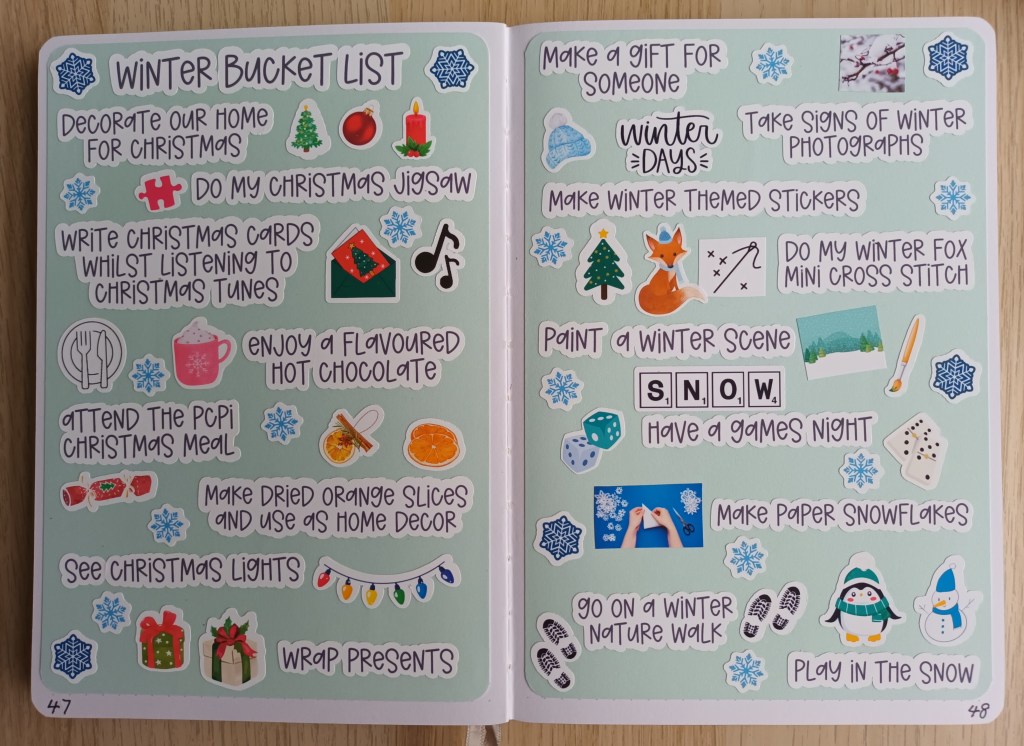
This September, I created an autumn bucket list. I made a two page spread in my bullet journal with items from the list and pictures to go with them. I then ticked off when I had achieved something. I also made an Autumn TN insert in which I’ve created pages with photographs, journalling, autumnal patterns, ephemera, and other decorative elements to show how I’ve achieved things from the list. I’ve enjoyed all of the above so much that I decided to repeat the process for the winter season. I’m really looking forward to getting started. Obviously, this is not a winter essential, but it’s great if you enjoy getting creative or you want to plan some new and different experiences for yourself and your family. I added stickers to mine made with my Cricut Joy.

Photo credit: Laura Jones, Keeping It Creative

Final words…

Whilst researching bits and pieces for today’s blog post, I also came across lots of useful information for older people on Age UK. There’s so much advice to read that I thought I’d just share the link for interested readers. One of the most important tips is to make sure you or your older relatives get yearly jabs such as the flu vaccine. Contrary to popular belief, the jab does not give the person flu, but has the potential to cause mild cold symptoms afterwards so maybe some basic over the counter cold medication could be purchased in preparation.

I hope you’ve found today’s blog post beneficial and it has given you some ideas on getting yourself and your home ready for winter. I look forward to hearing from you in the comments about whether or not you’re looking forward to the season and what your favourite things are about wintertime.

Posted in health, lifestyle, psychology, self care, wellbeing, wellness

Monday Matters: 9 signs you’re approaching burnout (and how to avoid it)

When I was teaching, I would regularly feel completely wiped out physically and mentally, and, for the first days of any holiday, whether it was half term, Easter, Christmas or the summer break, I would end up either ill or sleeping most of the time as my body and my mind couldn’t take any more.

The other week, I was listening to a group of pharmacy students at the University as they discussed their workloads and lifestyle choices because of how much they had to do. It reminded me of that feeling of never having enough time and the pressure and stress that came with it. So, today, I thought I’d talk about the signs which suggest you may be heading towards burnout (or are already there), and, perhaps more importantly, what you can do about it before you reach that stage.

What is burnout?

Burnout can be defined as a state of physical, mental and emotional exhaustion which can result from long-term or repeated bouts of stress. This could include, but is not limited to, working in a stressful or high pressured job, doing an intense amount of studying (e.g. for a degree course or post graduate qualification, or having a particularly demanding life circumstance such as being a single parent, caring for a loved one (such as a young person with special needs or an aging relative), having financial difficulties or worries related to job security, being involved in a house move, divorce or separation or trying to juggle too many responsibilities at once.

What are the main signs of burnout?

The signs of burnout differ depending on the individual but common signs to look out for include:

  • fatigue – constantly feeling tired, drained or exhausted
  • sleep issues e.g. insomnia, panicked night time waking, regularly getting less than 6 hours a night etc
  • frequent feelings of cynicism, anger, irritability and a pessimistic life outlook in general
  • poor immunity – resulting in regularly feeling under the weather or having frequent coughs, colds, sore throats etc
  • gastro-intestinal issues such as IBS, stomach upsets, sickness and diarrhea or unexplained abdominal pains
  • recurring headaches
  • poor concentration levels which may result in reduced efficacy or success at work, making careless mistakes, being easily distracted, struggling to maintain attention, trouble thinking clearly or making decisions, forgetfulness and poor working memory.
  • depressed mood which may cause tearfulness, sadness, feelings of emptiness, loss of interest or pleasure in things you once enjoyed, feeling worthless, suicidal ideation, a sense of isolation and inability to relate to others
  • feelings of anxiety such as restlessness, agitation, irritability, having a sense of dread or fearing the worst

How can I prevent burnout?

Educate yourself Learn about your current stresses and your coping strategies using ‘the stress bucket model’ that I discovered on Mental Health UK. You can download your own to fill in here. Make a list of helpful activities (known as taps in the example) and plan to do some of them each day to help you destress and unwind.

Prioritise self care You might not be able to remove the sources of stress you are dealing with right now, but you can make sure that self care becomes a non-negotiable part of each day. Try writing two lists – everyday (basic) self care that keeps you functioning each day e.g. keeping yourself hydrated, eating regular and nutritious meals, getting some exercise and taking regular work breaks, and ‘me time’ self care activities you find calming or relaxing e.g. having a walk in nature, quiet reading, taking a bubble bath, having some time away from your phone and social media, listening to music with your eyes closed, doing a mini meditation etc.

Learn to say no If you feel like you’re taking on too much to cope with, could it be that you are agreeing to requests or feeling obligated to doing things that are further adding to your stress? Although easier said than done, learning to say no can really help you to prioritise what matters to you or what you consider is absolutely essential for your health and wellbeing.

Accept that perfection is unachievable Perfectionism and the impossibly high standards that go with this trait can become overwhelming and will almost certainly lead to burnout. To manage this, take time to think about your current situation realistically and try to think positively about how well you are doing under the circumstances. Mantras such as ‘I can only do my best’, ‘done is better than perfect’, ‘nobody is perfect’ and ‘I don’t have to do things perfectly’ can help if said regularly.

Show some self-compassion If a friend was having to juggle all the commitments and responsibilities you’re currently facing, what would you say to make them feel better? A helpful exercise I learned in one my compassion group sessions is to write a letter offering sympathy, advice and support and post it to yourself or read it regularly. It might feel a little strange writing at first but it can really help.

Take a break from your devices After a particular busy or stressful day, you might be inclined to sit (or lie) on the sofa and mindlessly scroll through your phone or tablet. This might seem like a good way to relax at the time, but studies show that being addicted to our digital devices has a seriously negative impact on our mental and physical health, not to mention our productivity levels. Rather than constantly reaching for your phone, why not try a screen free hobby, for example, doing a mindful craft such as painting, drawing, sewing or knitting, doing puzzles such as jigsaws, crosswords, wordsearches or Sudoku which stretch your brain and help you relax at the same time or losing yourself in a good book or your favourite magazine.

Get organised Use your planner or calendar to map out your day and manage your schedule. Being organised can help you feel more in control and can also be a useful tool for identifying and planning for your priorities.

Practise mindfulness and meditation Mindfulness is a technique that involves paying attention to the current moment with non-judgmental awareness of our thoughts and feelings. Click here to read about five simple ways of incorporating mindfulness into you daily routine. Meditation, which is a key aspect of mindfulness practice, has been shown to combat potential burnout by lowering stress and anxiety levels, helping us to build resilience and coping skills, improving self- awareness and self-esteem, cultivating positive thoughts and emotions and boosting our ability to focus and concentrate on tasks. For ideas on how to get started, you might like to read this blog post which has beginner friendly suggestions and tips.

Reach out to others Sometimes, when struggling to cope with everything life is throwing at us, we start to believe we’re the only one who’s finding things difficult. Our thoughts and feelings can then lead us to withdraw from loved ones or isolate ourselves from others. However, this is the time when seeking out your support network can be most useful. Positive social interaction such as meeting a friend for coffee, taking a full lunch break with work colleagues or fellow students, or doing something fun with family members can help in a range of different ways such as providing a listening ear, support, sympathy and useful advice, taking your mind off your sources of stress or giving you the chance to do something enjoyable or relaxing.

Take steps to manage your sleep routine High stress levels can have a profoundly negative effect on your sleep. It’s really important to take steps to develop a relaxing evening routine which sets you up for a good night’s sleep. This wonderful article discusses the relationship between sleep and burnout and includes lots of useful tips for your day, evening and bedtime routine.

Final words…

For many of us, avoiding burnout isn’t easy and there are commitments in our busy lives which we can’t avoid or say no to. However, actively taking steps to combat the daily stresses in our lives by using some or all of the coping strategies above can really help. I think filling in the stress bucket would be a good first step in boosting self- awareness prior to making small lifestyle changes with a view to preventing burnout and generally improving health and wellbeing in the future. Let me know in the comments if you try out some of the ideas above and you find them beneficial.

Posted in lifestyle, mental health, self care, wellbeing

Monday Matters: 23 screen free ways to relax and recharge

This week, I’m sharing 23 ways to relax and recharge, which don’t involve scrolling on your phone, looking at things on your laptop, or staring at your TV screen. Why not make a list of your favourites in your bullet journal or notebook and choose one next time you need a break from modern day technology? (that’s every day for most of us!)

23 screen free activities to help you relax and recharge

  1. Try ‘Progressive muscle relaxation‘ This technique involves tensing and then relaxing your muscles one by one and is a great way to release tension. Check out this link for a straightforward explanation of how to do it.
  2. Curl up with a good book or magazine and a beverage of your choice Depending on the time of year and the weather, you might read outdoors in your garden or local park, in your favourite chair with an ice cold glass of water or under a blanket with a hot chocolate.
  3. Spend time in nature This is one of my favourite ways to relax at any time of year but the autumn months are particularly beautiful to be outdoors in a park, woodland or forest setting. Put your phone in your bag or coat pocket in case of emergencies and use your senses to explore your environment. As long as you’re suitably dressed for the weather, I can almost guarantee you’ll fall in love with the peace and quiet and feel restored afterwards.
  4. Connect with family or friends Choose to connect with people who make you feel good and whose company you enjoy. Activities could include meeting for coffee and cake, taking a walk in a scenic location, having lunch or an evening meal together in a restaurant or cafe or inviting people round for an informal dinner party (or takeaway if the thought of playing host for dinner fills you with dread!).
  5. Arrange a games evening Playing games can be great fun and are often so absorbing that you’ll completely forget about your to do lists and responsibilities for a while. My husband and I love Scrabble, Yahtzee, Rummikub and card games such as Gin rummy or Cribbage.
  6. Pamper yourself Depending on your preferences, this could involve a long soak in the bath, an invigorating shower and an all over body scrub, a face mask, a foot massage, manicure or pedicure or even a much needed lie in. See it as essential me time rather than self indulgence.
  7. Look through a photograph album My husband and I did this on our wedding anniversary last month and it brough back some really happy memories of our special day. It’s also nice to look at holiday photos through the years or albums showing your children growing up.
  8. Do some gardening Get some fresh air whilst giving your flower beds and pots some much needed attention. Even 20 minutes can make a real difference and leave you with an outdoor space to be proud of.
  9. Sharpen your mind with a puzzle Why not unwind with a word or number puzzle, a jigsaw or a brain teaser. I love wordsearches, Sudoku, 1000 piece jigsaw puzzles and letter arrangement games.
  10. Spend time with a pet Playing with or observing your furry four-legged friend is great for increasing your levels of seratonin and dopamine to calm and relax you. I love having snuggles with my hamster Millie, seeing her play in her digging tower or watching her collect treats which we hide around her cage.
  11. Make a foodie treat We often make dishes from scratch but these are generally main meals and often involve time and energy. Making something indulgent for dessert or as an afternoon snack with a cuppa is often easier and much quicker. One of my favourites is malteser tiffin and the hardest bit is leaving it in the fridge long enough to set properly!
  12. Enjoy a meal out with your partner, friends or family Letting someone else do the cooking for a change is a great way to rest and recharge. My husband and I love going for a vegetarian banquet at our favourite Asian fusion restaurant we try to make sure we focus on the food and the company by keeping our phones off the table.
  13. Make time for your hobbies Most of us have at least one hobby that we absolutely love but how regularly do you make time for yours? Doing something creative after a busy day is a wonderful way to unwind and leave you feeling relaxed and ready for bed.
  14. Focus on your breathing Have a look at this simple breathing technique (you don’t need to be feeling stressed to find it beneficial). When I first starting doing focused breathing and mini meditations, I found it really difficult to switch off, but now, after regular practise, it’s so much easier so don’t give up if your mind keeps bobbing about all over!
  15. Listen to music I love to just sit with my eyes closed and listen to my favourite classical pieces or songs. Immersing myself in the music or really tuning in to the lyrics allows my mind to switch off from everything else. The tunes don’t need to be relaxing or soothing ones – anything you enjoy will help you hold your focus.
  16. Do a meditative activity If you find sitting still to meditate difficult, doing a repetitive activity can help you reach a meditative state. Check out this post for 8 ideas to try.
  17. Journal your thoughts and feelings Journalling is a great way to clear your mind by putting things down on paper. You might want to write about how your day has gone, what you’re looking forward to in the future or how you feel you are progressing towards your current goals. If the thought of getting started seems a little taunting, journalling prompts are a great way to get ideas on what to write about.
  18. Switch to audio content Instead of scrolling through content on your phone, tablet or laptop and reading or watching videos, trying listening to audio content. This could be a podcast on a topic which interests you or an audiobook which you can listen to with your eyes closed.
  19. Do something fun which you used to enjoy as a child When I was young, phones and tablets didn’t exist and the only screen time I had each day was watching TV or playing games on our Commodore 64 (hand up if you remember this state of the art machine from the 80s!). Aside from these, we used to make our own entertainment, playing outdoor games, doing creative projects, building things out of Lego, making a den under the dining table or playing with toys such as skipping ropes, space hoppers, dolls and Transformers. Whatever you used to do as a kid, think about how adult you can do the same or similar and make some fun plans for the weekend. You might buy a stunt kite and take it to a local hill on a windy day or buy some bubble mix and have a competition to see how can make the best or biggest bubble.
  20. Sign up for an evening class A few years ago, I did a beginners photography course at my local college (which offered a qualification to go with it) and also a couple of ceramics classes where we made and glazed various clay creations. I thoroughly enjoyed all of these and it was great to meet and get to know like-minded individuals. The ceramics beginner and intermediate sessions were incredibly relaxing and it was so exciting seeing our items when they came out of the kiln. Wherever you live, there’s likely to be a range of creative classes in your local area and if not, you could get together with friends to try something new.
  21. Join a choir Group singing is a wonderful way to de-stress and feel part of the community. There will probably be a range of choirs and musical societies available to join depending on the type of music and songs you prefer. A small cost may be incurred but I know from my own experience it’s a small price to pay for something which is very therapeutic and creates a real high.
  22. Do something arty When we were young kids, most of us enjoyed art activities such as painting, drawing, making collages and constructing from junk materials. That’s because it was mainly about enjoying the creative process and experimenting with different techniques. As we get older, we tend to focus on the finished result and being happy with what we’ve made, rather than having fun as part of the process. So, get out your paints, markers, crayons, pencils and pens and simply explore and experiment.
  23. Be a tourist in your home town or city (or one nearby) You’ve probably already visited a few places and buildings in your local area but do you know their and how your town or city has developed over time? A quick check on Tripadvisor and I’ve discovered a number of ideas for places to go, activities to try and history to read up on where I live in Sunderland.

I hope you’ve found today’s blog post useful and it’s given you plenty of ideas for relaxing activities which offer much needed screen free time. I would love to know which one is your favourite and why. And if you don’t feel like you have a space in your day to fit in any of the above, is it because your diary is genuinely completely full or is it because mindlessly scrolling is taking over your life right now?

Posted in depression, mental health, productivity, Selling on Etsy, social media, wellbeing, wellness

Monday Matters: The Hidden Costs of Staying Informed: How the News Negatively Impacts Your Stress and Anxiety levels plus other aspects of your Mental and Physical Health

Last month, I met up with a few of my close friends for lunch and a good catch up. We had a lovely afternoon and there was so much to talk about. We reminisced about old times when we all worked together, talked about our recent holidays and plans for future breaks, shared what we’d been up to over the summer (and how fast the months were flying by) and commented on how children are so different from when we were young. As is often the case when the conversation is flowing, we spent some time chatting about current affairs local and national news. Sitting there listening and very occasionally contributing to the discussion, I realised that I knew much less about most of the topics than anyone else in our group. They seemed to know every detail about a particularly harrowing subject and had formed lots of opinions about all that they had read and heard. When I returned home, I mentioned this to my husband and considered why I was much less informed. I came to the conclusion that the main reason is that I firmly believe that over-consumption of news, particularly of the negative kind, seriously impacts my mental health and so I tend to avoid watching and reading too much. Today, I’d like to share what I have learnt from my online reading on this interesting and thought-provoking topic and present some strategies for avoiding ‘doomscrolling’ and managing your news consumption in general.

The concept of ‘doomscrolling’ and issues with easy access to news media

The term ‘doomscrolling’ came into regular use during the Coronavirus pandemic and is the act of spending an excessive amount of time reading and consuming large quantities of negative news online. This, coupled with 24 hour news channels on the TV, sensationalist headlines being so easily accessible and the negativity bias of media outlets can mean that the news is seriously harming your health and wellbeing. Some of the detrimental effects include:

  • increased anxiety levels
  • difficulty concentrating, completing tasks or relaxing
  • worsening symptoms of depression
  • elevated stress levels and trouble sleeping
  • obsessive worry and fear
  • gut and stomach problems
  • muscle tension and pain
  • poor productivity levels
  • feelings of helplessness or paranoia

So, why do people involve themselves in ‘doomscrolling’ and excessive negative news consumption?

According to my research there are several main reasons why people engage in this kind of behaviour:

  • having a natural negativity bias that makes them pay more attention to bad news than good news
  • wanting to feel in control and prepared for potential threats in a world that seems chaotic and uncertain
  • being addicted to the dopamine rush that comes from getting new information, even if it is negative
  • because they wrongly believe that they are keeping themselves safe by doing so

What strategies can I try to prevent ‘doomscrolling’ and over consumption of negative news media?

  • Limit your time Set a time limit for your news consumption and stick to it
  • Make use of mobile apps and your phone settings Use apps or tools that block or limit your access to social media or news sites
  • Look for the good news Seek out positive or uplifting stories that balance out the negative ones
  • Consider better alternatives Choose to engage in activities that make you happy, such as hobbies, exercise, meditation, or spending time with loved ones
  • Seek help or support Talk to a therapist or a trusted friend if you feel overwhelmed by the news or your emotions

Final words…

I hope you’ve found today’s post thought provoking and useful. Remember, staying informed is important in terms of feeling involved, knowledgeable and connected to others and is a valuable way to learn and grow. However, taking care of yourself is of equal importance so make sure you control your news consumption rather than letting it control you!

Wishing you good health and wellness,