Posted in fitness, life hacks, lifestyle, mental health, Mindfulness

Monday Matters: Why am I not losing weight despite working my ass off?

Those of you who regularly read my blog will know that my Monday Matters series is generally concerned with mental health and wellness. So, you might be thinking, how come this post has veered off that topic completely and is about weight loss, or more importantly lack of? Well, if you are trying to lose weight yourself through a combination of dietary changes and increasing your activity levels, you will know that when you step on the scales each week (or maybe even daily) to check your progress, it feels pretty rubbish if they read exactly the same as the previous time (or even worse, the number has crept up!). And the likelihood is, that this has a really negative affect on your mental health in terms of mood, confidence levels and motivation to keep going. So really, this post is totally on topic.

For the benefit of myself and any other readers who are working hard on their fitness and hoping to lose a few pounds on the way, here’s a collection of reasons why those scales might appear to be stuck and what you can do about it…

You’re not resting enough

I talked about the importance of rest days in my previous post here where I gave suggestions on how to create a workout for beginners but I didn’t know at the time that exercising too much could actually cause weight gain. Apparently, if you over exercise, your body can get stressed out and increase the production of cortisol (the stress hormone) which can contribute to you putting on weight. The solution for this one, is to make sure you incorporate rest days into your workout schedule where you don’t do any intense working out such as aerobic exercise or HIIT programmes (High Intensity Interval Training. Fitness experts recommend you train five days a week and have two rest days.

You’re not getting good quality sleep each night

Also related to rest is our sleep habits. If you’re not getting enough Zzzzzs then you’re not giving your body the chance to repair muscles and tissues. In fact, lack of sleep can also lower your metabolism which doesn’t help on the weight loss front either. Different people need different amounts of sleep to function well but you’ll know what feels right for you. I personally like to get between 7 and a half to 8 hours each night. If you’re struggling with getting good quality sleep, you can check out last Monday’s post in which I presented some ideas on how to get better kip.

Another issue with lack of sleep is that it can drastically affect your mood. If you’re sleep deprived, you can feel irritable, confused, depressed and lethargic the next day and this can reduce your general activity levels or make you reach for quick energy boost food and drinks which are often not healthy choices. As well as tracking your meals, you could also track your sleep and your mood to see how they affect each other and your food choices.

Your calorie intake is too high

According to dieticians, a woman needs to eat approximately 2000 calories to maintain her weight. For weight loss, you should be eating less than this each day. Obviously, this depends on age, weight and height as well as a range of other factors but the simple fact is that in order to drop some pounds, more calories need to be expended than are entering the body. I have a Fitbit which tells me how many calories I’ve burnt each day (usually around 2400 on an active day) but I really have no idea how many calories I have coming in because I don’t measure them. Some people swear by counting calories religiously but I think a better solution is to keep a food and drink diary so you can see exactly what you are consuming each day and how often you’re eating highly calorific items. This will help you examine your diet and can help you see if you’re making bad food choices or overeating.

Your calorie intake is too low

Conversely, it’s also possible to eat too little due to a highly restrictive diet and this causes you to go into starvation mode. The effective of this is that your body tries desperately to conserve energy which can prevent you from losing weight. A common symptom of starvation mode is that you feel extremely tired all the time which is certainly not good for your health. Again, I would recommend keeping a food diary so you can track how much fuel you are giving yourself each day. You should also check that you are getting a balanced diet and not avoiding any food groups. There’s lots of advice online about making sure you eat properly and as I’m no expert on the subject, I’ll just share this link from the NHS.

You’re eating and drinking ’empty’ calories

The source of the calories that you do take in is really important if you want to lose weight. If you are eating a drinking things that have little or no nutritional value then you may find that this is preventing weight loss or even causing you to gain. Food and drinks that contain a high level of solid fats or processed sugars are generally to blame. These are found in fast foods, pre-packaged desserts, fried foods, carbonated soft drinks, salted snacks, energy drinks and alcohol.

If you don’t want to deny yourself of these types of food and drinks altogether, you should at least make sure that they are the occasional treat and don’t feature too heavily in your diet. You should also try to balance them out with healthier choices and ensure you increase your activity levels accordingly. Keeping a food and drink diary can also help you to spot how often you are eating these types of items.

You’re focusing wholly on weight loss and ignoring other indicators of success

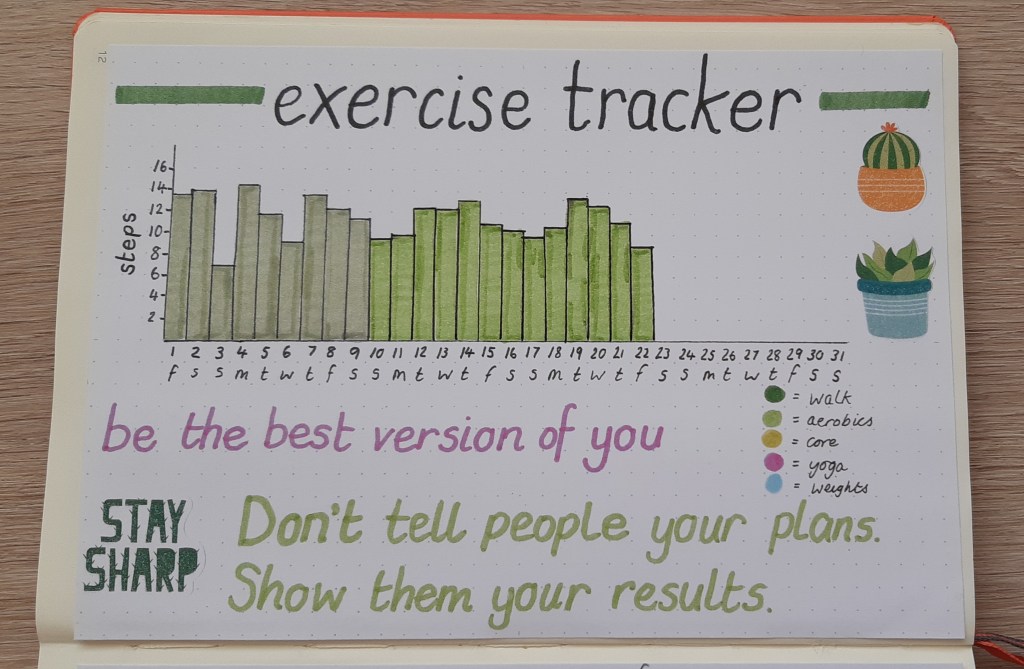
When you step on your bathroom scales you are simply learning how much you currently weigh. What you’re not finding out is how much of that weight is muscle, how much is fat, how much is water and how much is your bones and your bodily organs. So really, checking the scales is quite a limited way of discovering your progress and success levels. Therefore, if weighing yourself isn’t providing you with the motivation you need to stick with your current eating and exercise plan, you might be better off with a different approach. I’ve already shared my exercise tracker that I have as part of my bullet journal set up for May and I’ve really enjoyed filling it in and celebrating my achievements. Here’s the partially completely version (I moved BuJo part of the way through May so I photocopied them and stuck them in).
As well as monitoring your workouts, you could also find other ways to check in with yourself, for example, you could be more mindful of how your clothes feel and fit or you could do a pictorial record of what you look like each week in your exercise gear using your camera phone. You might also try setting yourself some performance related goals and congratulate yourself when you achieve them e.g. with a nice, bright workout top or some new leggings. My husband and I have both noticed positive changes with my body in terms of better posture from my yoga, toned muscles from my aerobics, weight training and targeted stretching and slimmer waistline and face.

If the scales are leaving you feeling discouraged, I also recommend writing some fitness related affirmations. They might not directly cause you to gain muscle and lose fat but they can be a great way to provide or increase motivation. Here’s some that I’ve recently added to my BuJo:

My overall health and mood are improving as a result of my increased exercise levels.

I enjoy working out and the energy it gives me.

My body is getting stronger, fitter and healthier every day.

I am proud of myself for exercising regularly.

You’re suffering from water retention

Water retention is when your body is failing to eliminate excess water. This can happen for a number of reasons and is particularly common in women at different times in their hormonal cycle (e.g. the week before your period). If you are being really careful about your diet and are exercising regularly but it’s having absolutely no effect, you may be carrying excess water weight. Physical signs of water retention include swelling e.g. of your ankles, breasts, fingers or stomach, puffy face, hips and abdomen and stiff joints.

Fluid retention can sometimes be caused by medication so if you think this might be the case, have a chat with your doctor about it. Other causes can be too much sitting about in one position so to combat this, try to get moving for a few minutes each hour (Fitbit watches are great for reminding you to move!).

You can also make dietary changes to reduce excess water, for example, increasing your intake of magnesium (found in whole grains and leafy green veg), vitamin B6 (found in bananas, potatoes and walnuts) and potassium (found in bananas, avocados and tomatoes).

You’re not staying hydrated

Talking of water, you need to make sure you’re getting plenty throughout the day so that you stay properly hydrated. Your body actually tends to store water when you’re dehydrated which can cause bloating and weight gain. You should try to drink at least two litres of water a day and more if you are doing intense exercise that causes you to sweat. You can also add hydrating foods to your diet – some of my favourites at this time of year include watermelon, strawberries, peaches and nectarines. Staying properly hydrated helps to flush out extra fluids and sodium from your body. It also helps you to avoid constipation which as well as being unpleasant can also cause extra pounds on the scales.

You’re eating mindlessly

Mindless eating is when you’re not giving your full attention to what you’re eating. This could be because you’re busy doing something at the same time e.g. watching a movie and snacking on crisps or chocolate or because you’ve let your attention wander to something else e.g. chores you need to do or what you want to do later in the day. Mindless eating can lead to overeating and the feeling of being ‘stuffed’ as you tend not to stop when you start to feel full.

The complete opposite of this is mindful eating which is where your attention is wholly focused on what you are consuming. If you are eating mindfully, your conscious of every bite or every sensation in your mouth until the point you swallow. This makes you eat more slowly as you savour each mouthful of your food. It also helps you to know when you are full and satisfied with what you’ve had which makes you more likely to stop before you become overly stuffed.

There are many ways that you can eat more mindfully. Always try to sit down for your meals, preferably at a table and away from any electronic devices. Spend some time appreciating what’s on your plate visually before you start to tuck in. Think about where different elements of your meal have come from and who has helped to make them available to you. Do you feel grateful for what you have to eat? When you start eating, go slow and take small bites, really savouring the taste and texture. Focus on enjoying each and every mouthful until you feel full.

Your medication is causing increased appetite

When I went through a bad spell with my mental health, I started to take two forms of anti-depressant medication alongside each other. One of these was Mirtazapine, and although my mood greatly improved, I found that I was constantly hungry even after eating a large meal, whereas before I had no appetite and lost weight. I’ve now stopped taking this particular drug as I watched my weight creeping up and didn’t want it to continue. When I talked to my doctor about it, he said that all antidepressants can cause these issues. According to my online research, when you start to feel better, things begin to become more pleasurable and this can include food. Now, I’m not going to stop taking my Citalopram and wouldn’t suggest you stop any medication which helps you but it is worth bearing in mind and monitoring your food intake closely.

A final recap

In summary, the key thing to focus on when trying to get fit and healthy is fat loss and developing a well defined and toned body. So, make sure you measure your progress in a range of different ways instead of just obsessing over your weight. Also try to ascertain if your calorie intake is less than your expenditure by doing some basic monitoring of your diet and finding out roughly how many calories you burn doing the different exercises in your weekly workouts.

Wishing you lots of success on your health and fitness journey, keep up the hard work!

Posted in compassion, mental health, Mindfulness, wellbeing, wellness

Monday Matters: Creating a W.R.A.P. Part 3

Over the past couple of weeks, I’ve been sharing my experiences of writing a Wellness Recovery Action Plan to support my mental health. In Part 1, I shared what a W.R.A.P. is and why it’s useful as well as how to create a wellness toolbox. In Part 2, I wrote about making a detailed list of adjectives to describe what you are like when you are feeling well and also how to make a maintenance plan of every day activities that help to keep you well. This week, the focus is on triggers and how to cope with them, plus creating a list of early warning signs of deteriorating mental health. Obviously, this is very personal to you as an individual but I hope by sharing some of my lists you get the idea so you can have a go at making your own.

Triggers (AKA Stressors)

Triggers in your life are external events or circumstances that make you feel uncomfortable. They can include situations in your work or personal life that you know tend to stress you out or upset you. Writing these triggers down won’t stop them from happening, but it can help us put coping methods and action plans in place for dealing with the emotions that are felt.

The following are some examples of my triggers so you can get the idea for making your own list:

spending too much time alone

criticism from others

being overly tired

family friction

making a mistake

not being listened to

change to routine

packing to go on holiday

mental health themes in TV dramas

feeling left out

being wrongly judged

My coping methods / action plan

Do everything on my daily maintenance plan – keep routines going

Pick out some activities from my wellness toolbox

Talk to a supportive person about what has happened

Turn negative self talk into positive

Use mindfulness techniques

Do some soothing rhythm breathing

Focus on tasks that are easy to do

Make lists e.g. a packing list for holidays

Early Warning Signs

For this part of the WRAP plan, you make a list of signs that tell you and others that you’re not feeling mentally well. This helps friends and family to look for signs of deterioration and is also good for sharing with medical professionals. For me personally, I have different signs depending on whether I’m starting to become depressed or anxious or developing hypermania.

Signs of depression and anxiety

loss of appetite / comfort eating

feeling tearful over things that wouldn’t usually affect me

lack of motivation

feeling tired even after lots of sleep

agitation

want to be alone

irritability

poor concentration

feeling worthless / helpless

Signs of hypomania

constant talking – unable to switch off

mind in overdrive

erratic driving

spending lots of money to fix things

hyperactivity

sleeplessness

agitation

irritability

flick from one task to another in a bid to get it all done

Coping methods / action plan

Do relaxation exercises – meditation, yoga etc.

Pick out some activities from my wellness tools

Tell someone I trust how I feel

Do everything on my daily maintenance list

Seek medical help

Get some exercise

Ask for support with household tasks

Challenge negative thoughts

Celebrate small achievements

Although I found these tasks difficult to do at the time as I was living with the depression and anxiety symptoms, I do think they are really useful lists to make. I also found it beneficial to talk with others about coping methods and get ideas from them too.

I hope you are finding these posts informative and useful. I really recommend creating your own WRAP either by yourself or with a loved one or therapist. Sitting down and really thinking about yourself and what you are like at different times can really help. Also if you can feel yourself becoming stressed or unwell, you can put things in place to help prevent you from becoming worse.

Of course, the current situation with the virus is a huge source of stress and worry so, now more than ever, we need to look after ourselves and ensure self care activities are high on our agenda. A lot of our routines and aspects of our daily lives have changed beyond our control and for many, this will be one of your main triggers so make sure you put things in place to help you cope.

Until next time, stay home and stay safe and well,

Posted in mental health, Mindfulness, wellbeing, wellness

Monday Matters: 8 Mindful and Meditative Activities to create calm

Photo credit: Kari Shea, Unsplash

Today’s Monday Matters post is all about engaging in mindful and meditative activities to achieve a relaxed state of mind and body. It aims to show you the benefits of being in the present moment whilst exploring ways of meditating that are more than just sitting still and focusing on the breath.

We’ve all heard of mindfulness and are probably aware of some of its benefits but if you were asked to explain what it actually means, you might struggle, so here’s a simple definition I found online:

a mental state achieved by focusing one’s awareness on the present moment, while calmly acknowledging and accepting one’s feelings, thoughts, and bodily sensations, used as a therapeutic technique.

Oxford dictionaries

In other words, it’s about consciously being aware of all that is going on for you mentally, physically and emotional at this present moment.

Similarly, meditation is a practice where we use a technique such as mindfulness or focusing the mind on an object, thought or activity to train attention and awareness in order to achieve mental clarity and an emotionally calm and stable state.

Both mindfulness and meditation require regular practise and you may have tried techniques before, found them difficult and decided it’s just not for you or too much like hard work. Some argue that they simply do not have time, but it’s my belief that busy individuals are those who would benefit most from the calm state which mindful and meditative activities bring.

When you say the word meditation to most people, it conjures up an image of sitting cross legged on the floor, with eyes closed, trying to empty the mind of all thought and action, possibly whilst repeating ‘ommm’. However, although this is one interpretation of meditating, it’s not the only way to be in a meditative state. Below are eight ideas for mindful activity based meditation that anyone can try.

Colouring in

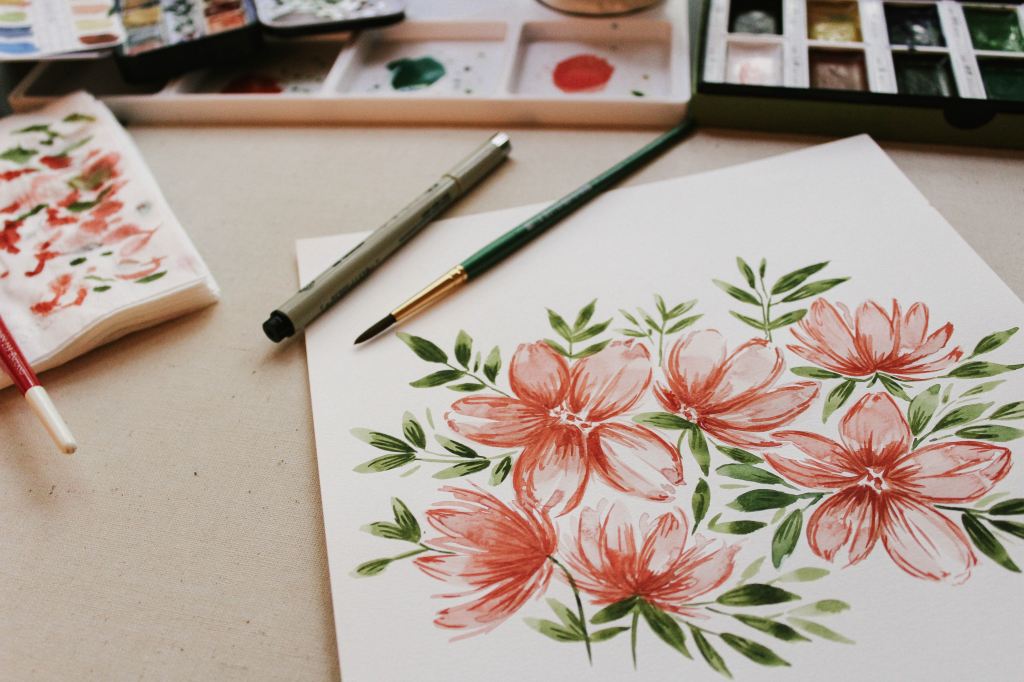
Colouring an image using coloured pencils, crayons, pastels or paints combines the benefits of meditation and art therapy to create a soothing and mindful activity. As well as stimulating the part of your brain responsible for creativity and logic, the concentration required helps to clear your mind in a way that has been shown to decrease your stress levels and lower your blood pressure.

Photo credit: cropped from an image by Crawford Jolly, Unsplash

Reading

When I’m feeling particularly anxious or stressed due to lots going on in my life, I find reading to be a great way to focus the mind away from sources of worry. I love to curl up on the sofa or relax on my bed and change the focus away from what’s going on in my world.

Photo credit: Lenin Estrada, Unsplash

Walking

I’ve mentioned before that I’m a big fan of walking in nature as a way to unwind and destress. A short walking meditation can be done anywhere, even in your own back garden or yard. The trick is to focus your mind on your body such as your posture before you begin, the placement of your feet as they touch the ground or surface you are walking on and the change in your balance as you move and really feel the connection. Begin by paying complete attention to each and every step you make noticing any physical changes in your body on the inside and, when you begin to feel a sense of calmness and relation, begin to turn your attention to your environment, noticing, for example, the temperature of the air on your skin or any sounds and sights which present themselves. In mindful, meditative walking, you’re have no place to get to so, your attention is purely on the sensations in your body and awareness of the environment around you. You accept the way things are without judgement or interpretation.

If you do find your mind wandering (maybe you begin to ruminate on something that has already happened this week or you find yourself starting to make plans for later in your day), then you can gently and kindly bring the focus back to the here and now and resume focusing on your breath and sensations experienced by your senses.

Photo credit: Dmitry Schemelev

Quiet Observation

This is one that can be done by looking out of your window at home or whilst wandering the garden. It requires you to choose a natural object from within your immediate environment, and focus all of your attention on it. So, for example, if you are looking out of the window you might watch a tree blowing in the breeze or the clouds in the sky. While outside, you might find a particularly interesting flower growing on a garden plant or you might see an insect hard at work. Spend a few minutes simply noticing your chosen object and focusing on every visual aspect of it, almost as though you are seeing it for the very first time. This quiet contemplation should create a sense of peacefulness and calm. Whilst you explore and allow yourself to be consumed by the presence of your focal piece of nature, you are connecting with its energies and its purpose within the world.

Photo credit: Marieke Tacken, Unsplash

Repetitive craft

Doing crafts such as knitting, crochet, cross stitch and other hobbies involving repetitive action can be great for helping you get into a meditative state. You can focus completely on the small movements you are making and bring your attention to the texture of your yarn, or fabric in your hands as you quietly observe your piece taking shape. You may find your breathing has slowed down without you even noticing as you concentrate on the task in hand.

Photo credit: Les Triconautes, Unsplash

Housework

In a previous blog post, I talked about using mindfulness techniques when you are ironing. The same can be applied to any type of housework that involves repetitive action. Moving the duster back and forth over surfaces or the mop over your kitchen floor can bring about a meditative state which can be calming and relaxing. Pay attention to all of the different sensations, using your five senses to focus in on all of the different elements of your task e.g. feel the cleaning cloth in your hand, think about the energy in your hand as you move over the surface, notice how the scent of the project you are using hits your nostrils, admire how shiny your furniture looks, etc. You might even find you’re enjoying the activity and it spurs you to do more!

Photo credit: Dan Gold, Unsplash

Gardening

The benefits of gardening on your mental health and wellbeing are often discussed by one of my favourite gardeners, Monty Don on Gardeners’ World. As well as feeling a great sense of achievement when you see how beautiful your environment looks, you can also use mindfulness techniques to truly benefit from the processes involved in making your garden look that way.

Before tending to your garden, spend some minutes really appreciating the natural space you find yourself in. Be grateful for what you have and if you’ve already made improvements, think about all you have achieved so far. Then, take your mind off any worries you have by using your senses as you work on planting, weeding, digging or whatever your chosen activity is. For example, if planting, spend time carefully choosing an appropriate location, evaluating where will work best. Then, pay attention to the physical effects on your body as you prepare the ground – is the soil compacted or is it easy to get your fork in? If using your hands, really think about how the earth feels. If there are any insects in the location, you might spend time observing as they go about their work. When adding your plant to the prepared space, really look at it as though examining it for the first time. Look at the colour and shape of the leaves then feel their texture. Explore if there is a scent to the plant itself or any flowers that are present. When you water it in, listen the sound of the water as it is sprinkled over the space. Finally, stand back and admire your hard work and evaluate its effect on your garden as a whole.

Photo credit: NeONBRAND, Unsplash

Yoga

As I’ve explained in a previous post, I have recently taken up an Iyengar yoga. The class takes place in the Arts and Wellbeing location where I previously did my ceramics sessions and I’m thoroughly enjoying it. This particular style of yoga involves the use of equipment such as foam bricks and pads and a fabric strap to allow you to comfortably get into the poses and stay in them whilst allowing your body to lengthen. There are many elements of the practise which I find meditative, and of course, a great deal of concentration is required to ensure you are performing the actions correctly and are stretching and lifting in all of the right places. Having aligned your body, you then focus on your breath which automatically seems to be calm and steady. The session even finishes with a relaxation pose and some soothing music which feels absolutely blissful.

At the moment, due to the lockdown with COVID-19, I am practising daily at home using YouTube videos, which, although not quite the same as a class where the teacher will provide extra equipment or correct your poses, is still enabling me to get into a relaxed state and enjoy the benefits. I do, however, look forward to resuming my class in the near future when it is safe to do so.

Photo credit: Dane Wetton, Unsplash

I hope you find these ideas useful and that my post will prompt you to try at least one of these mindful and meditative activities. It might be tempting to say that you are too busy to practise meditation, but if you become more mindful, and therefore present in the moment, as you go about your usual tasks each day, you will find that you really can reach a state of calm and become more relaxed.

Posted in compassion, life hacks, mental health, Mindfulness, Planning and journaling, Setting goals and intentions, wellbeing, wellness

Practical ways to declutter your overloaded mind

Photo credit: Element5 Digital, Unsplash

There are a plethora of books and articles both online and in print about the benefits of decluttering your possessions in order to simplify your life and create more order. However, it’s not just our homes which can become cluttered and cause feelings of overwhelm and low mood. Our minds are equally susceptible and can easily become overloaded with worries, stresses and all of those emotions that come from spinning too many plates. Today’s blog post looks at practical ways of managing this mental clutter to improve our wellbeing.

1. Identify your current priorities in life

A good place to start decluttering your mind is to spend some time quietly reflecting on your life right now. Start to consider how you currently spend your time and use your energy and then begin to think about how satisfied you are with this situation. If you find yourself wanting to implement some changes, try focusing your attention on how you would like to live or what your ideal day would look like. This can help you establish what’s really important to you and enable you to prioritize. For example, you may decide that you are neglecting to look after yourself properly and need to give self care more of a focus or you might want to spend more quality time with your partner, your family or your friends.

2. Set some goals and instil some habits

When you know what your priorities are, you can work on setting some goals and creating some habits which help you to achieve these. For example, if having more ‘me time’ is at the top of your list, you may decide that you want to spend one hour per week learning a new skill or taking a class. If having more time together with your family is an area you’d like to work on, you might schedule a regular movie night, games evening or brainstorm or list of ways you would like to have fun together in your bullet journal or notebook. If you do use a bullet journal and like to have a habit tracker as part of your weekly or monthly spreads, your goals can inform the habits you choose to include. For example, if having a tidy space to study or work is one of your desires, you might choose to have a habit such as ‘ten minute desk tidy’ at the end of each day.

3. Practise mindfulness

Mindfulness is the process of bringing one’s attention to the current moment and concentrating on the flow of our thoughts, emotions, what is going on around us and bodily sensations without judgement. It can help us to reduce the time we spend dwelling on past events (rumination) or becoming anxious about the future and help us to become more calm and compassionate towards ourselves. Becoming more mindful can help to declutter our minds of worries and anxieties by creating a more relaxed state of being.

4. Take time to breathe

A big part of mindfulness and self compassion is about taking time out. Our busy lives often create minds which are full of mental chatter which we find difficult to silence. We can all find time to settle our minds by taking the time to slow down and a great way to do this is by changing your focus to a more soothing activity such as rhythmic breathing or a mini meditation. If, like me, you have a bullet journal or planner, try scheduling time to have a break as part of your daily plans or add meditation to your habit tracker. By being more mindful and checking in with your body and how you are feeling, you can also more easily recognise when you might need to pause or slow down.

5. Getting it down on paper

Another really helpful way of clearing mental clutter is to write it all down. There are many different ideas for how to go about doing this but popular methods include doing a ‘brain dump’ or regularly engaging in reflective journaling. A brain dump is basically where you put everything that’s on your mind down on paper or into a digital document. How you spill the contents of your brain is up to you. Some people like to just scribble down their thoughts and feelings onto a page of their journal or onto any random piece of paper they have available whenever they have lots on their mind. Others prefer the regular practise of creating ‘morning pages‘ where they dedicate time each day to writing it all down as soon as they wake up. Personally, I like to add thoughts and ideas to my daily plans in my bullet journal and spend some time each evening, reflecting on how my day has gone and writing a few things down underneath my bulleted lists. If you want to find out more about the bullet journal method for organisation, I recommend visiting Ryder Carroll’s website here or reading his book which explains the method in detail.

For specific projects, you may find that creating some sort of visual way of organising helps to get your thoughts on paper in a logical way. A spider diagram, is a popular method and one which you may have used at school. Basically, you start by placing your main thought, idea or topic in the centre of the page and then you add branches from this when you think of subtopics. These subtopics can then be broken down further by more branches, creating a kind of spiders legs effect on the page. A quick ‘Google’ search online shows lots of examples of this technique which can be a helpful way of structuring all of the information in your mind.

6. Avoid information overload

This point is particularly relevant to our lives today in the digital age. With so much information at our finger tips online, especially through our use of various social media platforms, it can be very easy to become overwhelmed and feel like we are ready to explode. There are many ways to avoid overloading ourselves with information, including limiting the amount of time we spend online. Also, if you have already spent time assessing your current priorities, then you can use this to inform what you focus on. For example, at the beginning of the year, I decided that I wanted to improve my gardening know how, so I thought about the steps I would need to take to do this and then spent time and energy improving my knowledge through reading about the plants in our garden, finding seasonal gardening tips online and watching gardening programmes on the television. I then recorded my learning in a garden journal. Also, avoiding negative and unreliable media sources can help your online presence positive and informative. For example, I tend to stay away from sensationalised news articles and always try to turn off my notifications for Facebook, Instagram and Twitter for a while when I’m super busy.

7. Out of your mind and into your body

In a previous blog post, I talked about ways to stimulate your vagus nerve and included plenty of suggestions about how to use the power of this cranial nerve to stimulate your body and relax your mind. By moving our attention to our bodies and reconnecting to the world around us, we create much needed space in our minds which helps us to gain better mental clarity. Going out into the garden to feel the fresh air, listen to the birds or get some sunlight on our skin, taking a quiet stroll in the local park, or even just putting on a favourite song and singing out loud whilst having a quick boogie can all help.

8. Take some time to unwind

Your brain needs regular breaks to rest and recharge itself and so creating white space in your calendar or planner is a must. Spend some time away from your phone or tablet and do something relaxing which makes you feel happy. For me, a walk in nature, reading a book or doing something creative, such as painting or drawing are some of my favourite ways to unwind. I like to create pages in my bullet journal for self care and ‘me time’ activities so that when I’m feeling frazzled, I can get some inspiration for self soothing behaviours.

Photo credit: Victoria Bilsborough, Unsplash

I hope you have found today’s post useful and it has helped to provide inspiration on how you might take steps to declutter your busy and active mind. I would love to hear any others ideas that you find work really well for you at times when you’re feeling a little overwhelmed.

Posted in art, creativity, mental health, Mindfulness, watercolour painting, wellbeing, wellness

Watercolour design pad: a simple red robin

A few weeks ago, I picked up a design pad containing line drawn images for watercolour painting. As I find drawing really difficult, I though this was an ideal way to practise my watercolouring skills without needing to draw my own pictures.

The pad contains 24 A4 size pages with 12 designs so you get two copies of each image. When I purchased it, I wondered why there was several of each image but as I messed up the first robin, I was glad of a second chance!

The pad contains animals and birds and one floral image.

I chose to start with the robin design as I love birds and we have had a robin visiting our garden each day for the past few weeks nibbling on the fat balls and seed mix I put out.

The paper in the pad doesn’t appear to be proper watercolour paper but I did find it easy to paint on and I was able to get the paper quite wet without it going soggy or wrinkling as it is quite dense.

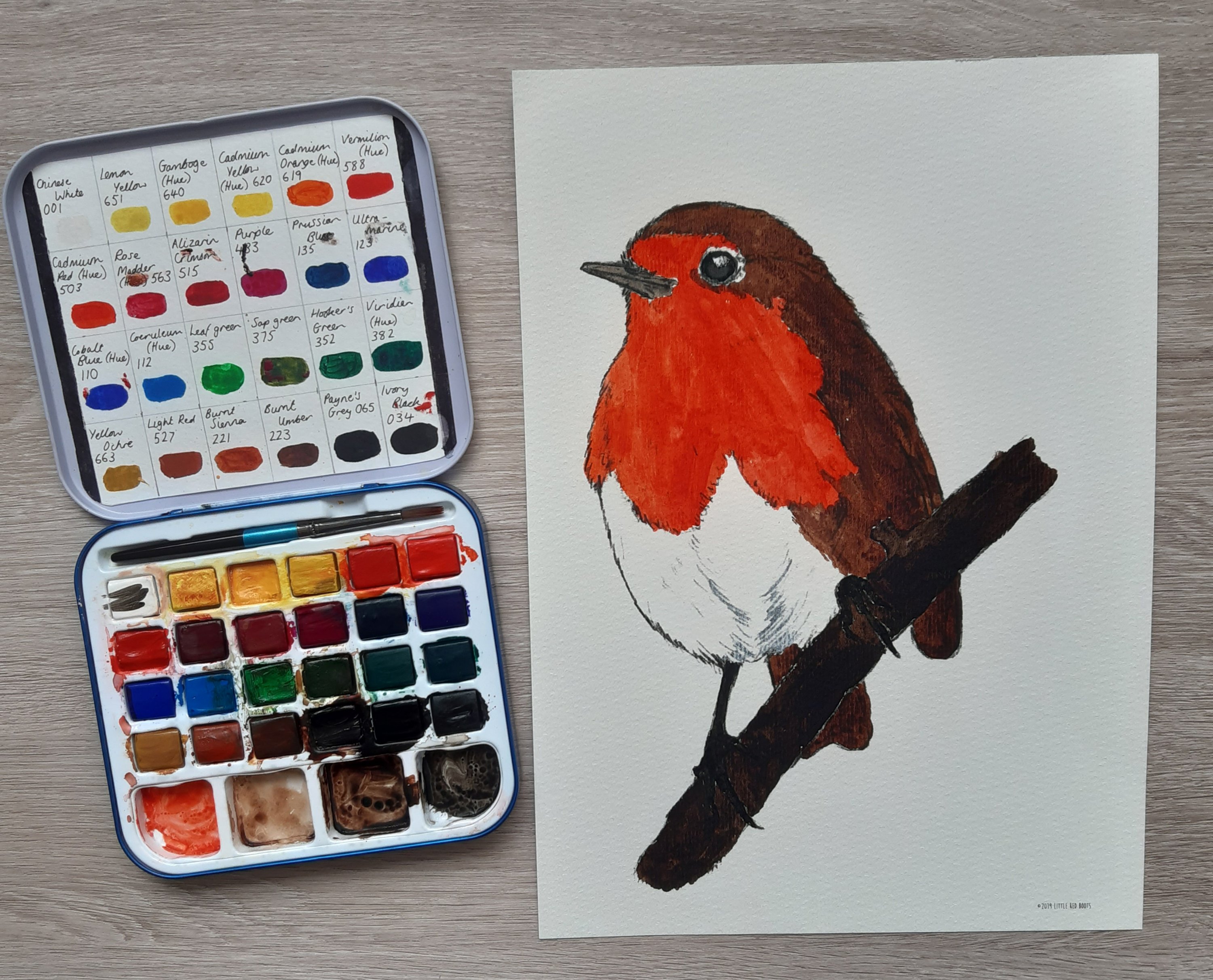
I thoroughly enjoyed having a few quiet hours mixing and applying the paint and was pleased with the results on my second attempt which you can see below. I might add some highlights to the robin’s feet using my Posca paint pen or a white gel pen but I’m waiting a while and may do a test on a piece of paper as I don’t want to spoil my work.

My finished robin and my very messy paint palette!

I’m trying to find more time for doing creative activities as a way of boosting my mental health and after I’d finished painting I felt so relaxed and happy with what I had achieved. If you love getting creative, I can well recommend doing a little watercolouring as a way to wind down after a busy day as a change from sitting watching TV or mindlessly perusing the internet on your phone.

If you live in the UK and are interested in buying the watercolour pad, I picked mine up in Aldi but have also seen it at a slightly higher price in The Range shop. If you want to find out more about my watercolour set, click here for my previous post.