A few months ago, I did a six week course at my local recovery college that focused on creating a Wellness Recovery Action Plan (W.R.A.P.). The concept of a W.R.A.P. was originally developed in 1997 by Mary Ellen Copeland and a group of like-minded mental health recovery advocates as a way of monitoring wellness and periods of difficulty, keeping yourself well and recording how you would like to be supported and by whom in the event of future issues.
At the time of attending the course, I was in a really bad place and found the sessions quite overwhelming and would end up in tears on a regular basis. However, I could still see the benefits of making a W.R.A.P. and completed all of the tasks and homework each week. I was really proud of myself for continuing to attend the group and now I’m well again, I would like to share my learning with you and discuss how you can go about making your own plan.
The first session of the course involved an introduction to the W.R.A.P. and discussion about how we were going to be supported in the creation of the document. We were given a handout so we could record our ideas each week and tailor our plan to suit our individual needs. If you would like to find out more about the plan from its original creator, you can click here to be taken to her website.
WRAP is a tool that can aid an individual’s recovery and its underpinning principles support the recovery approach. WRAP is a way of monitoring wellness, times of being less well and times when experiences are uncomfortable and distressing. It also includes details of how an individual would like others to support them at these different times.”
There are 5 main principles to the W.R.A.P. and these are:
Hope – that you will get well, stay well and go on to meet your dreams and goals
Personal responsibility – it’s up to you to decide what will most likely help to keep you well and who you would like to support you in order to give you the very best chance at staying well
Education – learning everything you can to enable you to make good decisions about your mental health and how you would like it to be managed
Self advocacy – making sure you have everything you need, want and deserve to support your wellness and recovery
Support – although it is primarily your job to ensure you stay well, the plan encourages you to accept that at times, you may need help and support with managing your mental health and that you can give selected others the chance to work with you to improve your quality of life
After learning about what W.R.A.P. is all about, we were set of the task of brainstorming ideas for a wellness toolbox. This was basically a list of things you enjoy doing which make you feel good. Mine included colouring in, painting, drawing, meditating, meeting a friend for coffee, reading, walking in nature, gardening and volunteering for a good cause. The benefit of working with a group of people who also struggle to maintain good mental health was that you could listen to suggestions from them and maybe try out some of their ideas if they appealed too.
For homework each week, we were invited to collect an item to bring in which could be put in a physical wellness tool box either as reminders of activities or to actually use to support your recovery or to keep yourself well. Ideas from myself and others included colouring in books, jigsaws, a scented candle, a chocolate bar, some bubble bath, photographs of loved ones (including pets!), memorabilia from special times and favourite books. The possibilities are endless!
I wrote a long list of ideas into a MS Word document and printed it off to put in a folder but you could also create a visual board using pictures collected from magazines or the internet or even do a Pinterest board. I think it’s a good idea to have a hard copy of your ideas so you can share it with people who support you in the maintenance of good mental health such as family members, friends or even your mental health professional or doctor.
I hope this has made you think about what you would include in your wellness toolbox. Let me know in the comments below what you find really beneficial for helping you personally to maintain good mental health – you never know, it might just provide me or someone else with an idea to try in the future.
Today, we hear from my friend Larissa who is a postgraduate student at our local university. I first met her at the compassion group which we both attended last year. I found her really lovely to talk to, so we swapped phone numbers and have stayed friends. We recently met for coffee and cake but I guess we won’t be seeing each other in person for a while now. Anyway, I’ll hand this post over…
Hi, I’m Larissa, a 21-year-old student living in Sunderland. In January I started a Masters Degree in Media Production, but obviously due to the global pandemic we’re all experiencing, I’m stuck at home.
How have my week days changed?
My weekdays have changed quite dramatically, before I was at University five days a week, learning production management, to use cameras, sound equipment and editing software. Now I have limited amounts of work I can do at home and most of my week days consist of playing Animal Crossing on my old Nintendo DS and trying out new vegan recipes.
I’ve also gone from seeing a twenty-plus group of friends and peers, to only seeing those within my household.
How have my weekends changed?
My weekends haven’t changed all too much in honesty, I do occasionally go out drinking on weekends when things are normal, but had been limiting how much I was anyway. However, recently myself and some friends had been having ‘Games Nights’, and I am missing getting together, relaxing and having a good laugh.
What’s one of the worst things about lockdown?
Undoubtedly, there were always going to be negatives about being in lockdown; most people don’t enjoy being stuck in their house, unable to leave. I had considered myself a home-bird until the UK’s lockdown began, but it has made me realise how much I enjoy the freedom of being able to leave my house and pop to see a friend, to the beach, to grab a coffee.
My mental health has also been negatively affected during lockdown; most people (including me) are likely experiencing anxiety regarding their own and other’s health, but personally I struggle with not being able to see my loved ones often (you might call me clingy), and as overwhelming as day-to-day life can prove to be, the lack of normal routine has left me feeling unmotivated and low.
What have you found to be positive about lockdown?
Of course it’s not all doom and gloom (although it’s okay if it feels that way at the moment), I feel there’s been an increase in community spirit, and lots of children in the area have been drawing and writing nice messages and sticking them up in their windows for everyone to see.
I’ve also started exercising daily, something I’d been meaning to get back into the habit of for months. Basically, I’ve had a lot of time to focus on practicing self-care and doing the things I enjoy such as:
-Meditation
-Sketching
-Writing (including this blog post, something I probably wouldn’t have been doing had I not been stuck indoors with all the free time in the world!)
-Gaming
-Cooking
-Spending time with my cat Loki
-Walking in nature (for the government approved one hour per day might I add)
I hope you and your loved ones are all staying safe and well. I know people are going through some horrific things collectively at the moment, but I suppose what I want to finish with, is use this time, if possible, to reconnect; whether that be with yourself, you loved ones, nature or whatever.
I hope you’ve enjoyed hearing about lockdown from the point of view of a student. I know Larissa is keeping in touch with people on Facebook, but it’s not quite the same as enjoying face-to-face contact time with friends and being with lots of other students during the week. Hopefully we can meet up for coffee and vegan cake again soon. Take care and message me any time,
Whilst in the shower this afternoon, I had an idea for some new blog posts which will help to document life during lockdown in response to COVID-19. I want to record how life is currently different from the perspective of different people in my life as everyone’s experience is unique and some individuals are coping with the situation much better than others. So, for this series of posts, I’m going to record how things are for me right now and then ask some of my family and friends how the lockdown has changed things for them and how they feel about it. I haven’t asked them yet, but I’m thinking of featuring guest posts from my husband, my mum, my eight year old niece, a friend who is at uni (or rather not at uni right now!) and one of my teacher friends who is mainly working from home).
I hope this idea appeals to you as much as it does to me and more importantly, fingers crossed the aforementioned family and friends are up for a bit of writing. I’ll start with me and hopefully everyone else will oblige me!
How have my week days changed?
As I run my own online business on Etsy (and this blog), I’m used to mainly being at home during the day, but also popping out to different places such as the post office, the shops and to my different classes at my local college and my yoga sessions at a wellbeing centre in the city centre. So, during the week, I’m usually mainly on my own between the hours of 8am – 5pm but do make sure I have some face to face interaction with others each day such as chatting to someone I see regularly in the park, catching up with the ladies who work in the shop which contains a post office where I hand in my shop orders, or talking to fellow students at my classes.
Now, I’m no longer home alone during the day, as my husband, Michael is working from home. I’ve lost my desk in my craft room as he needs to use it and I have to work either on the dining room table, or in the living room on the sofa with my laptop on my laptop tray. It’s nice to have him at home as I enjoy the company at lunchtime but most of the day, he’s hard at work on his laptop and I try to do things super quietly downstairs to avoid disturbing him.
As my classes at college, my access to the college gym and my yoga classes are all cancelled, I’m making sure I do at workout at home and go for a daily walk. I usually drive to a local park but we’ve been advised to avoid using our cars to go out for exercise, so I’m now walking around the block with my iPod playing some of my favourite tunes. I used to find my daily walk really relaxing and a great chance to get in touch with nature, but now, my walks are more stressful as I’m always on the look out for people coming towards me on the pavement so we can try to keep the recommended two metres distance. I’m also trying to interact with a range of people online in my Facebook groups and other online communities that I belong to. There’s lots of talk about how the virus is impacting on our lives but I try to avoid too many of these discussions as some of them can be quite negative and I’d rather focus on the positives of the situation.
Another of my social outlets which I’m really missing is my weekly choir session. As I’ve mentioned before, singing is really great for your wellbeing, but as well as this, I also miss the chance to interact with others which these times brought. I did sign up for Gareth Malone’s online choir but unfortunately the rehearsals are at 5.30pm when I’m usually making dinner for my husband and I.
How have my weekends changed?
My husband and I used to arrange at least one day out over the weekend which invariably included a picnic (sometimes in the car!) or a meal out, plus a trip to a different town (either for sightseeing or shopping), the seaside or a local nature spot. Now, we no longer do this and as the lockdown becomes stricter to ensure public safety, we are tending to stay at home almost all day. This has meant lots of time for DIY projects, gardening and housework. In the beginning we were going out for a walk somewhere different but now, as I mentioned before, we’ve been advised not to use our cars for leisure activities as popular tourist spots were getting too crowded and individuals were unable to maintain the safe distance.
What’s one of the worst things about the current lockdown?
I think one of the worst bits for me is the lack of real life social contact and interaction with others. Even when I was depressed and anxious, I still tried to make sure I spent time each day with other people. Luckily, I’ve come out of my bad patch and my mental health is much better. I’m just grateful that I am no longer struggling day-to-day as I think I would be finding this situation we find ourselves in a lot harder if I was like I have been for the last 5 months or so.
What have you found to be one of the positive things about the lockdown?
I’m loving seeing and hearing about how people are going out of their way to help and support others during this difficult time. It was so heart-warming when we and so many of our neighbours took to our door steps and front gardens to clap for the NHS and to show our thanks for their hard work. Also, lots of children in my local area have made beautiful rainbow pictures and displayed them in their windows with messages thanking NHS staff or reminding people to stay safe.
I hope you have enjoyed reading about my life during lockdown. All that remains for me to say is – stay safe, keep washing your hands, remain at home as much as you can and try to find little things to celebrate about the situation, even if there are lots of sad, worrying and negative aspects.
Today’s Monday Matters post is all about engaging in mindful and meditative activities to achieve a relaxed state of mind and body. It aims to show you the benefits of being in the present moment whilst exploring ways of meditating that are more than just sitting still and focusing on the breath.
We’ve all heard of mindfulness and are probably aware of some of its benefits but if you were asked to explain what it actually means, you might struggle, so here’s a simple definition I found online:
a mental state achieved by focusing one’s awareness on the present moment, while calmly acknowledging and accepting one’s feelings, thoughts, and bodily sensations, used as a therapeutic technique.
Oxford dictionaries
In other words, it’s about consciously being aware of all that is going on for you mentally, physically and emotional at this present moment.
Similarly, meditation is a practice where we use a technique such as mindfulness or focusing the mind on an object, thought or activity to train attention and awareness in order to achieve mental clarity and an emotionally calm and stable state.
Both mindfulness and meditation require regular practise and you may have tried techniques before, found them difficult and decided it’s just not for you or too much like hard work. Some argue that they simply do not have time, but it’s my belief that busy individuals are those who would benefit most from the calm state which mindful and meditative activities bring.
When you say the word meditation to most people, it conjures up an image of sitting cross legged on the floor, with eyes closed, trying to empty the mind of all thought and action, possibly whilst repeating ‘ommm’. However, although this is one interpretation of meditating, it’s not the only way to be in a meditative state. Below are eight ideas for mindful activity based meditation that anyone can try.
Colouring in
Colouring an image using coloured pencils, crayons, pastels or paints combines the benefits of meditation and art therapy to create a soothing and mindful activity. As well as stimulating the part of your brain responsible for creativity and logic, the concentration required helps to clear your mind in a way that has been shown to decrease your stress levels and lower your blood pressure.
Photo credit: cropped from an image by Crawford Jolly, Unsplash
Reading
When I’m feeling particularly anxious or stressed due to lots going on in my life, I find reading to be a great way to focus the mind away from sources of worry. I love to curl up on the sofa or relax on my bed and change the focus away from what’s going on in my world.
Photo credit: Lenin Estrada, Unsplash
Walking
I’ve mentioned before that I’m a big fan of walking in nature as a way to unwind and destress. A short walking meditation can be done anywhere, even in your own back garden or yard. The trick is to focus your mind on your body such as your posture before you begin, the placement of your feet as they touch the ground or surface you are walking on and the change in your balance as you move and really feel the connection. Begin by paying complete attention to each and every step you make noticing any physical changes in your body on the inside and, when you begin to feel a sense of calmness and relation, begin to turn your attention to your environment, noticing, for example, the temperature of the air on your skin or any sounds and sights which present themselves. In mindful, meditative walking, you’re have no place to get to so, your attention is purely on the sensations in your body and awareness of the environment around you. You accept the way things are without judgement or interpretation.
If you do find your mind wandering (maybe you begin to ruminate on something that has already happened this week or you find yourself starting to make plans for later in your day), then you can gently and kindly bring the focus back to the here and now and resume focusing on your breath and sensations experienced by your senses.
Photo credit: Dmitry Schemelev
Quiet Observation
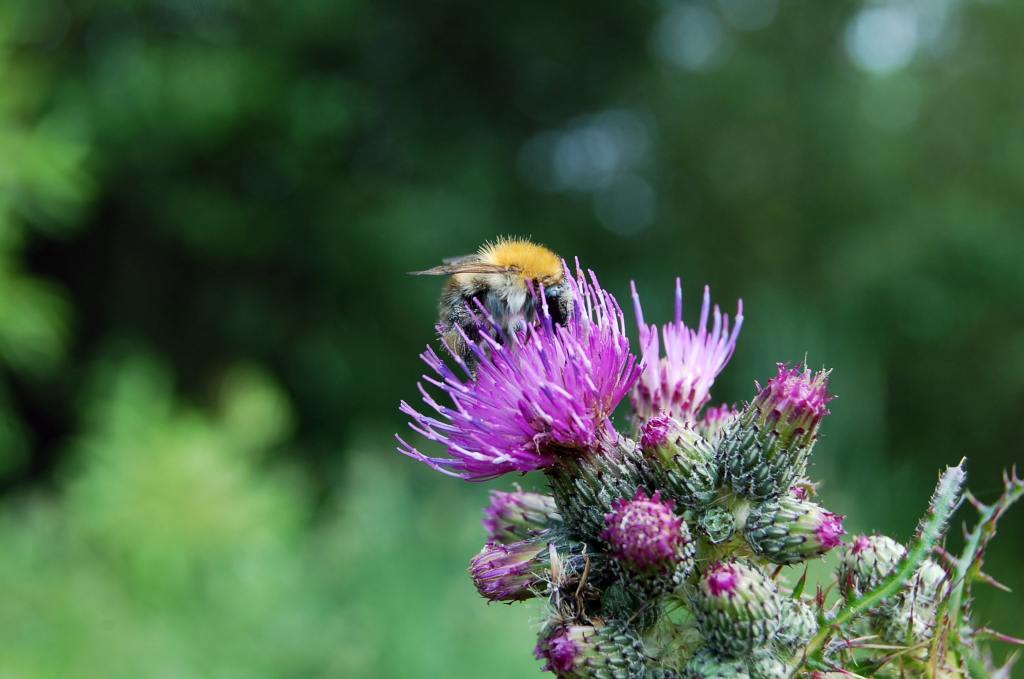
This is one that can be done by looking out of your window at home or whilst wandering the garden. It requires you to choose a natural object from within your immediate environment, and focus all of your attention on it. So, for example, if you are looking out of the window you might watch a tree blowing in the breeze or the clouds in the sky. While outside, you might find a particularly interesting flower growing on a garden plant or you might see an insect hard at work. Spend a few minutes simply noticing your chosen object and focusing on every visual aspect of it, almost as though you are seeing it for the very first time. This quiet contemplation should create a sense of peacefulness and calm. Whilst you explore and allow yourself to be consumed by the presence of your focal piece of nature, you are connecting with its energies and its purpose within the world.
Photo credit: Marieke Tacken, Unsplash
Repetitive craft
Doing crafts such as knitting, crochet, cross stitch and other hobbies involving repetitive action can be great for helping you get into a meditative state. You can focus completely on the small movements you are making and bring your attention to the texture of your yarn, or fabric in your hands as you quietly observe your piece taking shape. You may find your breathing has slowed down without you even noticing as you concentrate on the task in hand.
Photo credit: Les Triconautes, Unsplash
Housework
In a previous blog post, I talked about using mindfulness techniques when you are ironing. The same can be applied to any type of housework that involves repetitive action. Moving the duster back and forth over surfaces or the mop over your kitchen floor can bring about a meditative state which can be calming and relaxing. Pay attention to all of the different sensations, using your five senses to focus in on all of the different elements of your task e.g. feel the cleaning cloth in your hand, think about the energy in your hand as you move over the surface, notice how the scent of the project you are using hits your nostrils, admire how shiny your furniture looks, etc. You might even find you’re enjoying the activity and it spurs you to do more!
Photo credit: Dan Gold, Unsplash
Gardening
The benefits of gardening on your mental health and wellbeing are often discussed by one of my favourite gardeners, Monty Don on Gardeners’ World. As well as feeling a great sense of achievement when you see how beautiful your environment looks, you can also use mindfulness techniques to truly benefit from the processes involved in making your garden look that way.
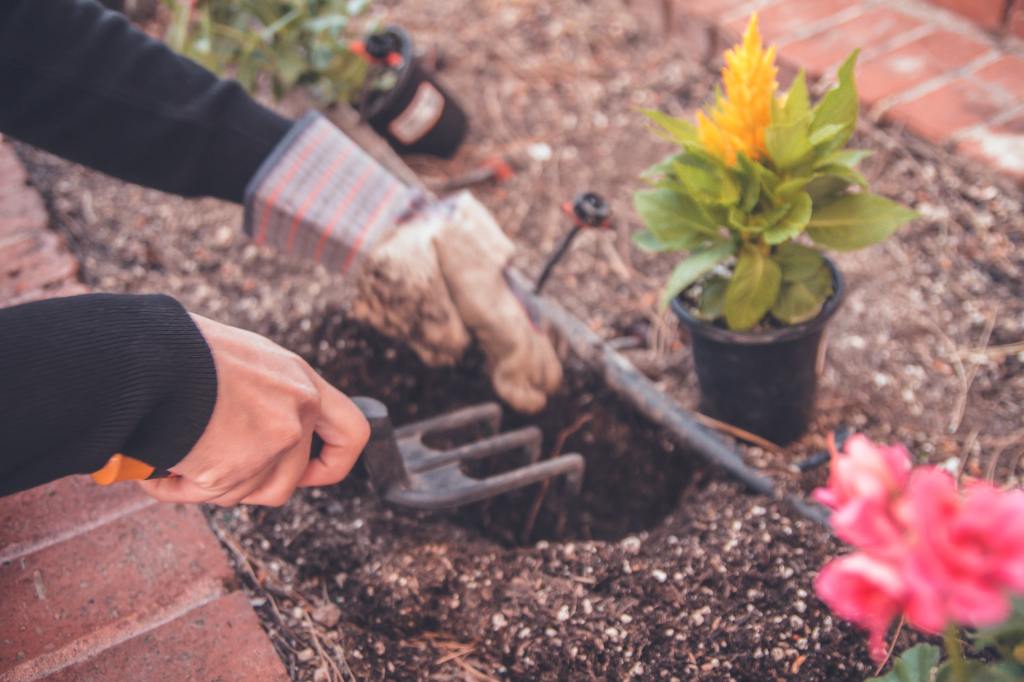
Before tending to your garden, spend some minutes really appreciating the natural space you find yourself in. Be grateful for what you have and if you’ve already made improvements, think about all you have achieved so far. Then, take your mind off any worries you have by using your senses as you work on planting, weeding, digging or whatever your chosen activity is. For example, if planting, spend time carefully choosing an appropriate location, evaluating where will work best. Then, pay attention to the physical effects on your body as you prepare the ground – is the soil compacted or is it easy to get your fork in? If using your hands, really think about how the earth feels. If there are any insects in the location, you might spend time observing as they go about their work. When adding your plant to the prepared space, really look at it as though examining it for the first time. Look at the colour and shape of the leaves then feel their texture. Explore if there is a scent to the plant itself or any flowers that are present. When you water it in, listen the sound of the water as it is sprinkled over the space. Finally, stand back and admire your hard work and evaluate its effect on your garden as a whole.
Photo credit: NeONBRAND, Unsplash
Yoga
As I’ve explained in a previous post, I have recently taken up an Iyengar yoga. The class takes place in the Arts and Wellbeing location where I previously did my ceramics sessions and I’m thoroughly enjoying it. This particular style of yoga involves the use of equipment such as foam bricks and pads and a fabric strap to allow you to comfortably get into the poses and stay in them whilst allowing your body to lengthen. There are many elements of the practise which I find meditative, and of course, a great deal of concentration is required to ensure you are performing the actions correctly and are stretching and lifting in all of the right places. Having aligned your body, you then focus on your breath which automatically seems to be calm and steady. The session even finishes with a relaxation pose and some soothing music which feels absolutely blissful.
At the moment, due to the lockdown with COVID-19, I am practising daily at home using YouTube videos, which, although not quite the same as a class where the teacher will provide extra equipment or correct your poses, is still enabling me to get into a relaxed state and enjoy the benefits. I do, however, look forward to resuming my class in the near future when it is safe to do so.
Photo credit: Dane Wetton, Unsplash
I hope you find these ideas useful and that my post will prompt you to try at least one of these mindful and meditative activities. It might be tempting to say that you are too busy to practise meditation, but if you become more mindful, and therefore present in the moment, as you go about your usual tasks each day, you will find that you really can reach a state of calm and become more relaxed.
The current UK government advice is to practise social distancing in order to minimise the spread of Coronavirus (COVID-19). With this in mind, I present over 60 ideas and activities to help you make the most of your social distancing or isolation time if you are still feeling fit and well. Hopefully, these activities will keep you safe but productive at the same time and encourage you to support yourself in staying mentally as well as physically well. Of course, some of the suggestions will be more suited to your lifestyle than others and some may just be completely inapplicable but hopefully you can use at least half of them so that’s over 30!
Paint your nails or give yourself a manicure or pedicure
Give positive feedback to someone (e.g. thank someone at the supermarket for doing a good job or write an email to someone who has shared a great article online)
Wash your car (or get your husband to do it – that’ll be me then lol)
Send a loved one a card through the mail telling them how much you care about them
Organise your wardrobe
Put some food out for the birds and watch them feed through the window
Have a video call with a family member or friend
Light a scented candle and meditate whilst watching the flame
Research a topic of interest online – maybe make notes in your BuJo or other notebook
Enjoy a long soak in the bath
Do a jigsaw puzzle
Start a craft project that you’ve been meaning to do for a while
Peruse Amazon and download a new book for your Kindle
Practise calligraphy
Wash your hair and spend ages styling it to perfection
Create an upbeat playlist of songs you love
Take a free online class
Watch a YouTube video that teaches you a new skill
Walk barefoot on your lawn
Listen to an audiobook
Get out your photo albums and revisit happy times (or flick through old digital images on your mobile phone
Snuggle up under a soft blanket and watch a movie
Have a home pampering session e.g. put on a face mask
Do some colouring in
Shine your shoes
Practise Yoga or Pilates (there are lots of videos on YouTube that show you how)
Re-arrange the furniture in your house
Do an observational drawing of something in your house
Enjoy a cup of coffee or tea whilst reading this list and make plans for your day
Write a nice comment on a website or blog
Find a new recipe and try it out
Write in your journal about how your day has been
Play cards or a board game with a family member (or plan an online game whilst being in isolation from others)
Join an online community on Facebook and start a discussion about one of your interests
Buy yourself something nice online for home delivery
Try out some new hairstyles
Find some online journal prompts and do some writing
Make up a poem about how your day has changed for the better since practising social distancing
Learn about your family tree
Savour a bar of chocolate
Do a wordsearch, crossword or other word puzzle
Make a gift for a family member or friend which you can leave on their doorstep
Do some origami
Visit Etsy and support a handmade business by choosing and buying a little treat for yourself or a loved one
Make homemade pizza
Sing in the shower
Massage hand cream into your hands (particularly good if your hands are dry from all the handwashing)
Play games on your tablet or phone (my current favourites are Angry Birds 2 and Candy Crush Saga)
Share a photograph online of something new you’ve tried whilst self isolating
Buy some new stationery from an online shop
Spend an hour reading your favourite magazine with a hot or cold drink
Make homemade bread
Sit in your back garden tonight and do some stargazing
Learn to juggle
Give your muscles a good stretch
Send a text message to a friend checking that they are safe and well
Write a list of all the things that you are grateful for right now
Make a list of reasons why you love your friend / partner and share it with them
Spend time engaging in one of your long forgotten hobbies
Watch a favourite movie and munch on some popcorn
Do some embroidery or cross stitching
Cuddle your pet and show them some love
Enter an online competition
Repair something in your house that you’ve been meaning to get around to fixing for months
Have an indoor picnic in your house (put out a picnic mat or blanket and sit on the floor in your living room)
Make some (virgin) cocktails (don’t forget to drink responsibly)
Do a Sudoku
Close your eyes and do 5 minutes of soothing breathing
I hope you’ve found at least some of these ideas useful. Let me know if you have other suggestions which I could add to the list.
Stay safe everyone and remember, just because you’re practising social distancing, doesn’t mean you need to isolate yourself from the world completely. As best as you can, and in a way that is safe, keep in touch with loved ones and most importantly, look after you!









 Keeping it creative