Posted in fitness, lifestyle, mental health, wellbeing, wellness

Monday Matters: 8 Mental Health Benefits of Exercise

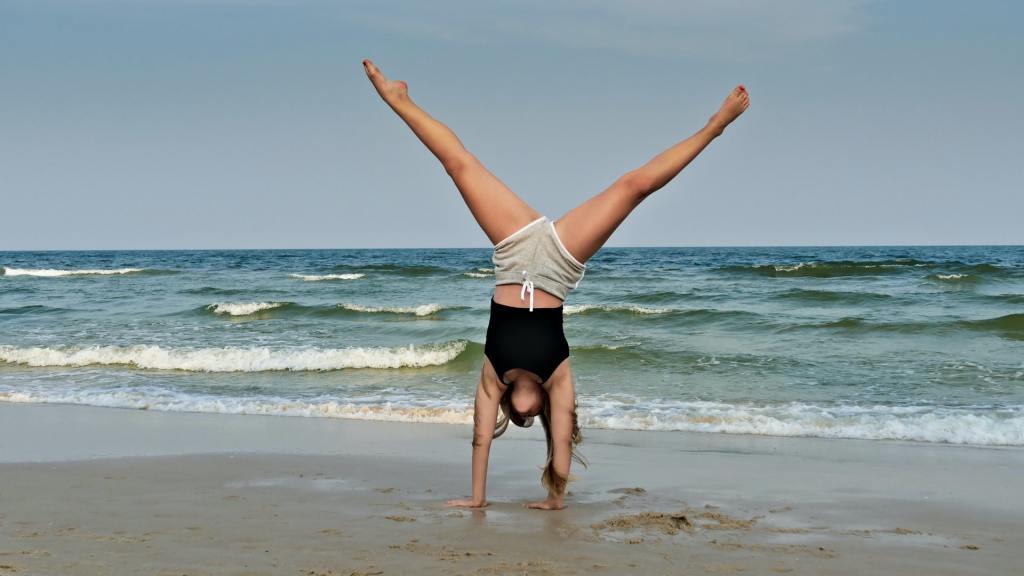
Photo credit: Bruce Mars, Unsplash

I’m sure we’re all well aware of the physical benefits of exercise such as strengthening our bodies, reducing fat, generally making ourselves more muscular and toned, plus reducing our chances of major illnesses such as heart disease, type 2 diabetes and some cancers. But, there are also lots of ways that exercise can boost your mental health too that you might not have even considered. As many of my followers will know, I recently upped my activity levels in a bid to get fit. You can see my workout record that I set up for May in my Bullet Journal here and ideas for creating a routine here. But it’s not just physical changes that I’m starting to notice, I’m also feeling so much better in terms of my general wellbeing, including my confidence levels. So, for today’s Monday Matters, I thought I’d do a little research into what I’m getting out of exercising in terms of my mental health and why it’s vital to keep going with my plan if I’m to reap all of the many rewards. Hopefully, this post will help to motivate you to fit in a little more exercise into your daily routine.

8 ways that exercise helps improve your mental wellbeing

1. increased energy levels

Finding time to get moving each day works wonders for your energy levels. This in turn, helps you to deal with all of the physical and mental aspects of your day and basically anything else that life throws at you. By getting some exercise in each day such as a gentle stroll around your local park (maintaining the recommended 2 metre social distance at all times) you’ll feel more alert and will get more done. This will increase feelings of achievement which is guaranteed to boost your mood.

2. better quality sleep

Recently, I’ve found that by the end of the day, I feel physically worn out and completely ready for bed (by 8pm actually, but I always manage to keep my eyes open until at least 9pm ha ha!). This is because research shows that although physical exercise boosts your energy levels for several hours after you have worked out, it also promotes good sleep. If you fall asleep quickly, you are less likely to start thinking things over in bed (ruminating) as you lie there and a decent night’s sleep will leave you feeling more refreshed and ready for action the next day.

3. reduced depression

Exercise is well known for releasing endorphins which are a group of hormones that are secreted into the brain and nervous system. These have been scientifically proven to enhance pleasure and reduce pain which of course helps combat depression. In fact, when I went to my doctor when I was struggling with depression, she asked if I was getting plenty of exercise and I was able to tell her that I was having a brisk walk each and every day. Also, if you do your workout outside, as long as you take appropriate measures to protect yourself from The Sun, you will also be boosting your Vitamin D levels which has also been shown to reduce depression.

4. reduced anxiety

As well as being shown to combat low mood, exercise has also been found to be great at alleviating anxiety. It is thought that one of the reasons for this is that moderately intense activity uses up excess adrenaline and helps to reduce anxious thoughts. Also, if you exercise mindfully, paying full attention to how your body feels, it allows you to switch off from stresses and worries.

5. emotional comfort and support

With the current lockdown, you are only allowed to exercise with family members that you live with, but getting a workout in can ordinarily be quite a social experience too. When I was attending my yoga class, I would chat to the instructor and the ladies before and after the class and we would even talk about the difficulties we were having with some of the poses and which were working our muscles really intensely. I also received lots of praise from my teacher, saying that she was impressed with my ability and that I didn’t seem like a beginner. This was a real boost to my self esteem and made me trying even harder. Support and encouragement when you are exercising is really good at keeping you motivated.

For now, smiling, saying good morning or hello to people you see when you’re out and about for your daily exercise can help you feel a connection to others and give you a little boost. You can even strike up a brief conversation about the weather as The British are fond of doing!

6. increased self esteem

Sticking to your exercise plan is great for your self esteem in a number of ways. I’ve found that as I’ve start to see improvements to my body, I’ve begun to develop a much better self image and this has been a huge boost to my confidence levels. I’m also really proud of myself for keeping up with my new routines and the support and encouragement from my husband has increased the feeling of positivity too.

7. a boost to your brain power

Aerobic or cardio exercise has been shown to keep your brain cells healthy and improve their connections. This has a positive impact on your cognitive functioning, giving you a better memory, greater ability to make decisions and an increased capacity for learning. This enables you to learn faster and more effectively and also has a positive impact on your concentration and general productivity levels.

8. increased confidence

Depression and anxiety have a tendency to completely wipe out our confidence levels and self belief. By setting small exercise goals and meeting them you can feel a sense of accomplishment and this will give you the confidence to set your sights even further and aim higher. This can have a knock on effect on other areas of your life too.

Photo credit: Dee @ Copper and Wild

As you can see, there are so many amazing mental health benefits to exercise which can increase your wellbeing just as much as your muscle tone and fitness levels. And research shows that you don’t have to be a complete workout fanatic to reap the benefits. Moderate exercise on a regular basis such as walking, cycling or even housework such as vacuuming, mopping and sweeping can work wonders too. I’m certainly going to keep up with my routines as I’m starting to look better on the outside and feel much better on the inside and my husband has noticed so many changes already.

Last night, Boris Johnson gave us updated recommendations about daily exercise in the UK. He has said that, from this coming Wednesday, we can, with caution and a continued focus on social distancing, spend as much time as we like outdoors in communal parks and gardens. We will also be able to drive to different destinations so that we can go to other beauty spots. This is good news in some ways but there are quite a few unanswered questions for me, such as whether car parks for forests and woods and gardens will be re-opening and even more importantly, if you are travelling a long way and maybe enjoying a picnic with your family, whether public conveniences will be available for use!

We will have to wait and see what happens I guess!

Posted in lifestyle, Planning and journaling, Setting goals and intentions, wellbeing, wellness

How to create a beginner’s workout routine and why rest days are an important part of your fitness practice

Photo credit: Zibik on Unsplash

If you read my post on my bullet journal set up for next month, you will have seen that I intend to start track my steps and workouts in a handy spread I created for the purpose. As this will start from tomorrow (can you believe it’s almost May already!), I thought I would do some research into creating a good workout routine that targets all of the body and includes all of the necessary elements to increase strength and fitness. And if I’m going to do all of this hard work reading up on creating a rounded routine I figured I should share it with you all in case you are wanting to improve your fitness levels too. Bear in mind this will be very much beginner level and also that I’m over 40 and therefore I have to take into account a little bit of bodily wear and tear! So, without further ado, I’ll jump right into it.

My first port of call was the NHS website as I figured that this was the most reliable source of information I could find. They present guidelines for all adults aged 19 to 64 and state the following

Adults should do some type of physical activity every day. Any type of activity is good for you. The more you do the better.

NHS Guidelines for 19 – 64 year olds

The NHS then goes on to state that the exercise should consist of strengthening exercises which work all of the major muscles (legs, hips, back, abdomen, chest shoulders and arms) at least twice a week plus at least 150 minutes of moderate intense activity or vigorous intensity activity for 75 minutes. Some examples of each intensity can be found below:

Moderate activity

a brisk walk

heavy cleaning (vacuuming, mopping etc)

mowing the lawn

cycling (light effort)

doubles tennis

water aerobics

dancing

swimming

gentle aerobics

Vigorous activity

hiking

jogging

tennis singles

fast bike riding

football game

basketball

running

energetic dancing e.g. Zumba, Clubbercise

This means that, for example, you could aim for 30 minutes of moderate activity 5 days a week or an intense exercise at least once a week plus shorter moderate activities. For my moderate intensity activity, I try to do a brisk(ish) walk almost every day and a beginners aerobics class for 30 minutes at least 3 times a week which starts of gentle and then gets a little more vigorous further in.

The website also says that we should reduce the amount of time spent sitting or lying down and break up long periods of not moving with some activity. This is where a Fitbit fitness tracker is useful because you can set it up to vibrate if you haven’t done 250 steps in the hour to remind you to move (it even tells you how many more steps you need sometimes!). In fact, at 10.50am as I sit here typing, my Alta HR has just vibrated so I paused and went for a short walk around the garden and popped up the stairs to deliver this morning’s post to my husband in my craft room. I also use the opportunity to do a few basic stretches, particularly of my neck.

If, like me, you are a beginner or are just getting back into a fitness routine, you should remember to take it gently at first, so no doing long, vigorous workouts and collapsing in a heap at the end! I found that when I started doing the aerobics sessions it was tempting to push myself too far in a bid to see faster results but this is certainly not to be recommended. Far better to push yourself a tiny bit harder each day and build up to more intense routines.

You can also find a list of very intense activities which are known as High Intensity Interval Training (HIIT). These are done in short bursts where you put in maximum effort followed by periods of rest. Just thinking about that has made me feel exhausted (ha ha!) and reminds me of when I once went to a spinning class and could barely drag my jelly legs off the stationary bike by the end!

For muscle strengthening, exercises such as yoga, pilates or Tai Chi are recommended but you could also try some heavy gardening such as digging when the weather allows. Lifting weights or using resistance bands are also good for developing muscle. Personally, as you will know if you follow my blog, I’m really getting into yoga and try to do at least 20 minutes per day. It may look easy with it being so slow but some of the poses can be really intense. There are so many benefits for body and mind with yoga and if you want to learn more, check out this post. I’ve even found some yoga routines online which target specific parts of the body so you can work on strengthening your back, upper body and even your core. This is one of my favourite YouTube channels right now.

Muscle strengthening

You can combine your moderate aerobic activity with your muscle strengthening routines or do them at different times or on different days depending on what suits you. I do my yoga and a walk in the morning and then do my aerobics in the afternoon but I’m finding that the bright afternoon sun is making my living room really hot so I may change this as the weather improves. After lockdown is over, I’m also hoping to do my hour long yoga session on a Friday at the wellbeing centre and also go to the gym for resistance work and some time on the treadmill, the bikes or stepper.

Remember to exercise safely

When you first start, it’s really important to ensure you are performing exercises correctly. That’s why I would recommend that you go to a class or seek the help and support of a fitness professional. I know, at the moment, due to lockdown and social distancing, doing this in person is not currently possible but there is advice to be found online on various websites and a whole array of YouTube videos from instructors. If your technique is poor, you won’t get the expected benefits of an exercise and it may even lead to pain or injury so please do make sure you workout safely.

Schedule in rest days

When you begin a new exercise regime and develop the motivation to stick to it, you can quickly become addicted to the rush of feel good endorphins that are released during moderate activity workouts. Also, when you start to see results in terms of better muscle tone and strength or weight loss, you may think that working out intensely every day is going to help speed up your progress. However, the opposite is in fact true. Taking regular breaks in the form of rest days is just as important as exercise as it allows your body to recover and repair. In fact, skipping rest days often leads to burnout or injury.

A rest day doesn’t mean you can’t do any exercise at all. It just means that you take it easy and avoid doing anything intense. A little light stretching or a gentle walk are absolutely fine. So, for example, I shall still be doing my yoga and getting outside for a nature walk each day but I won’t be doing my aerobics on at least two of the seven days. By building in rest time I’ll be feeling refreshed and ready to continue with the rest of my routine.

I hope you have found today’s post helpful. I’ve tried to put the key ideas in bold so that you could skim read if necessary. Let me know if this lockdown period has provided the encouragement for you to get fit or if you really need to up your activity levels but haven’t found the motivation to get started yet! (I know some people are struggling with fatigue right now due to the fact the situation is quite overwhelming and stressful). If you have any further ideas or advice for me in my journey to fitness, please feel free to share your suggestions.

Posted in lifestyle, lockdown

Managing life during lockdown: A guest post from a primary school teacher

Photo credit: Arnel Hasanovic on Unsplash

Today we hear from a lovely teacher friend of mine who has described the impact of lockdown on her personally. It has been really interesting for me to read, because, as you probably know if you follow my blog, I’m an ex primary school teacher myself. I hope you enjoy reading about her experiences of how day-to-day life has changed.

My name could be Louise, but it is not! I am a Y3 teacher at a school in a South coast resort.  Sounds idyllic?  Well, living near to the sea is wonderful, but for many of the children in my school, life is far from idyllic.  My heart was always to teach children for whom life was a struggle and that is certainly the case where I am.  Many people find it hard to believe that a town which has many extremely wealthy people and where many folk aspire to spend a long and happy retirement, should also have some of the most deprived, uncomfortable and antisocial wards of the UK. 

I have been a teacher for almost 20 years, coming into the profession after getting my own 3 sons and daughter through the pre-school years.   I have never aspired to senior leadership, but am currently leader of KS2 and maths in my school.

Weekday life – before and after lockdown

My usual school day starts at 6, but I often don’t leave for school till 7:40 when I leap on my trusty bike and cycle 6 miles across town.  I love that time because it is often the only time I have in a busy life to think! Once at school, I rush in, wash, change and switch the technology on.  By the time the children come in at 8:40, I am ready for them.  Mornings are maths and English, with a break in between.  English includes half an hour of reading and I, as maths lead, worry that there is an imbalance between the emphasis on English skills and the time given to maths.  My lunch time is generally spent marking at least the maths books, though I will have done some during the lesson, and preparing for the afternoon.  I rarely sit to eat in the staff room, but try to get in there to make a cup of tea, at least.  Two hours of topic lessons and spellings take us to clearing away and story time.  Having a younger class means the parents or carers often want to speak to me at the end of the school day, so it often takes time to get back to my room, where I then spend my time up till I am chucked out, making sure I am ready for the next day and that all marking etc is up to date.  In the evenings, I plan and prepare resources, except for Tuesdays when I have running club.  

Since lockdown, though, that has obviously changed.  Our school, like many, though not all, is still open to children of key workers and the vulnerable.  This latter category for us, is quite large, but not many have taken up the offer of coming in to school as yet.  However, as lockdown enters week 5, we have persuaded more to come into school.  This is a relief really, as there are some children about whom one worries when they are at home in a potentially volatile situation.  We have a rota of staff (teachers and TAs) who come in, usually for a couple of days at a time.  A member of SLT (Senior Learning Team) is on hand to deal with the overall admin of receiving and dismissing children, together with lunches and giving us all a break during the day when needed.  Our key worker children have parents who work in care homes or supermarkets, rather than hospitals.

Mornings now start with children washing hands, collecting their named trays and sitting in their assigned places.  At 9 we all do Joe Wicks PE – a chance for me to develop muscles I didn’t know I had, whilst the children (5 maximum in a room) claim it’s easy and bounce up and down, without putting much effort into their squats and lunges!  Over the Easter holidays, the days were filled with arts and craft activities, which I found hard as I have not got an artistic bone in my body.  In the afternoons we allowed the children time on ipads, playing games or doing some online learning set by their teachers.  Now it is term-time, the children all have work packs to get through in the mornings and something a little less onerous in the afternoon. The learning activities have all been set by their teacher and are mainly designed to prevent the pupils forgetting things rather than teaching them new concepts. We have had to use offline resources in the main as our children don’t have free access to laptops and computers.

On days when I am not in school, I have a long list of jobs to get through each week.  These involve setting the learning for the following week, giving feedback on the learning achieved so far.  That can be a nightmare as often parents will send a tiny photograph of the child’s book or sheet which cannot be read clearly enough to see if it is correct! Other tasks include writing reports and a lot of subject leader development jobs, including those I set myself!

The good thing about lockdown working is that I can choose the hours to suit myself.  So I am up later, I go for a run whilst it is daylight and can fit shopping, cleaning, washing  etc around my chosen work hours.  Although my children are all grown up, 2 of them still live at home with us, and our daughter was at home on holiday when we went into lockdown, so she is still with us.  It quickly became clear that shopping and cooking would work best if we all took the cooking in turns.  That has been great – trying the different foods my family make – although when shopping (my job) they do seem to provide me with a list of unusual ingredients to try and find! 

Weekends

Prior to lockdown, my big moan was that I had so little weekend time of my own.  Even with my careful planning and weeknight work, I would still have things to do for school.  That has been the biggest difference really in that I now have more of a difference between weekday and weekend life.  

Saturday morning was always an earlyish start to get to parkrun – our nearest is only a short walk away so no excuse really.  Early social distancing measures brought an end to parkrun and I am really looking forward to it starting up again, when life “gets back to normal”.  For now, my club has organised a challenge that is parkrun (5k related) and I am thrilled that on my 5k course, my daily exercise has paid off and I am now faster than I have ever been (by 1 second!).

The rest of Saturday would be a blur of housework, but I am now finding that is more often done during the week, freeing up time for me to spend on more relaxing pursuits, or gardening.  Sundays again would be more social with church at least once, or possibly a running race in the morning. 

With lockdown, church has continued, but online.  Skilled tech people are managing to record and meld together services including my husband and me leading some of the songs – all pre-recorded and then woven together.  I think technology has been a real boon in this period.  I love being able to talk to people on Zoom from our home, or participate in a virtual pub quiz etc.  Obviously, being with the people would be best, but when that cannot be done, this is a fantastic substitute.  

Sadly, my elderly parents have no internet, or TV, or computer, so their only way of reaching the outside world is through the telephone.  They are really struggling with the loss of independence and not being able to see people.  I find it so hard when I phone to hear my mum crying over the phone about the things that have gone wrong in the house, how she just wants to be able to buy her own food and so on.   And always at the back of my mind, is the dreaded thought that, at 88 and 90, they are extremely vulnerable should they pick up the dreaded infection.  They live 180 miles away, and never before has 180 miles felt so far.  

Overall, I think I prefer some aspects of life in lockdown because it gives me more time for the things that are important to me – family, faith and running.  However, I miss my wider family even though we didn’t get to see them that often, I think this experience has shown that they are important to me and I would like to be able to see them more.  I hope that when life opens up again, we will have a new normal that means work lives are adjusted so that there is a much better balance between having a life and working all life.

Thanks for reading!

A final word from me:

I’m so pleased that you took the time to share your experiences with us and give some insight into the life of a teacher before and after lockdown. It sounds like you are still extremely busy but I’m glad you have found some benefits to the situation. Thank you so much for your contribution and I hope you enjoyed getting down your thoughts in a slightly different way to what you are used to.

Posted in lifestyle, lockdown

Enduring lockdown: a guest post from my 8 year old niece

The UK has been in lockdown for a while now, forcing everyone who can stay home to do so. I asked some of my family and friends to write guest posts for my blog sharing how the government enforcement has affected them personally. You can read about my life here, my mum’s experiences here, my husband who is an office worker now working from home here and my university student friend’s point of view here. The next in the series is from my eight year old niece who has written down how the situation has affected her. It’s taken her a while to do this little job for me as she’s really not in work mode right now and writing is such a chore!

Boris Johnson announced that schools were going to be forced to close from Friday 28th March to all pupils except those from families of key workers and vulnerable children. This has meant that most school aged children are now being kept at home, many being looked after by parents who are working from home too. As far as I’m aware, a lot of mums and dads are attempting to home educate their kids as they’re worried about them missing out but I imagine it can’t be easy for them. My brother says that the school is providing activities but these are just to consolidate what has already been taught as you can’t expect parents to teach their children new things.

How my life has changed

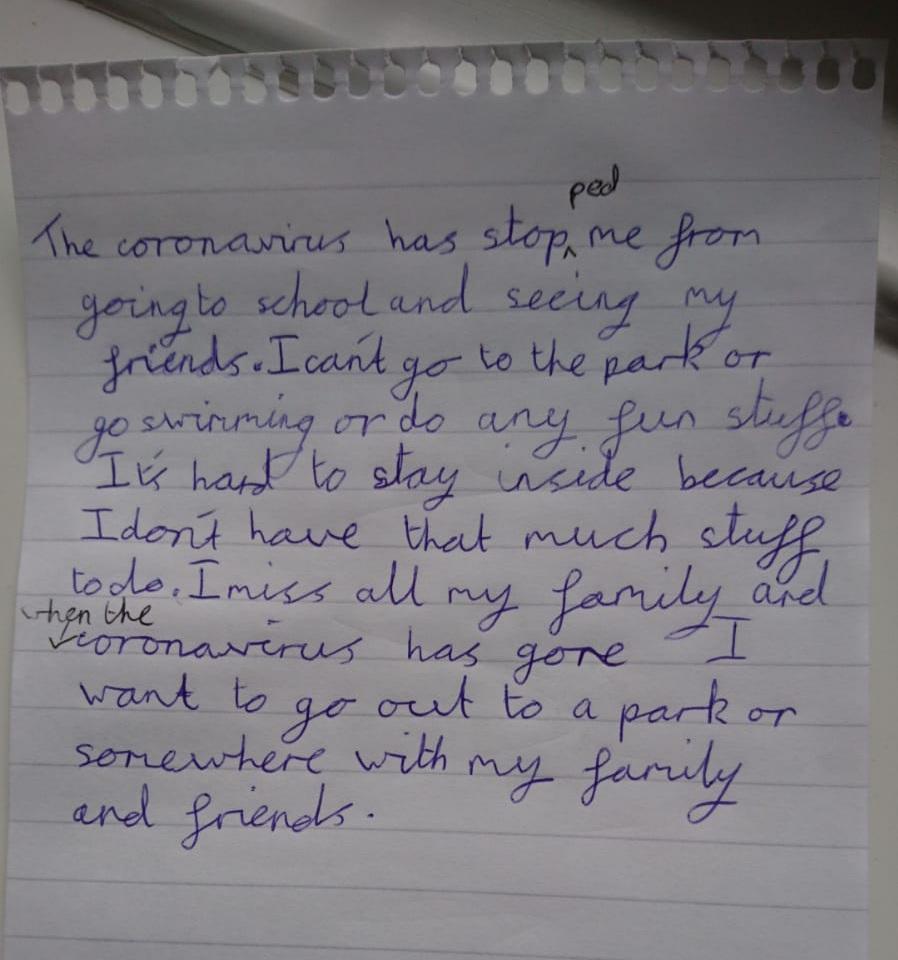
Hi everyone, my name is Lexi and I’m 8 years old. I’m Auntie Laura’s niece and my daddy is her brother. The coronavirus has stopped me from going to school and seeing my friends. I can’t go to the park or swimming or do any fun stuff. It’s hard to stay inside because I don’t have that much stuff to do. I miss all of my family and when the coronavirus has gone I want to go out to a park or somewhere with my family and friends.

Keep safe,

Love Lexi

And just in case you want to see how lovely her writing is and what a great speller she is, here’s the paper copy:

Thank you for sharing your thoughts Lexi. Hopefully lockdown will be over soon and your Auntie Laura and Uncle Michael can come for a visit and go out somewhere nice with you.

Posted in Blogging, creativity, lifestyle, mental health, Planning and journaling, wellbeing

Welcome to my second little space of the internet…

I already had my little Etsy shop for selling my cute planner supplies, but I also longed for a space in which to write down my thoughts about planning, journaling, goal setting and general wellbeing so this blog was born. When I first started (back in Spring 2018 I think), I knew absolutely nothing about blogging but over the last couple of years, I’ve spent time reading tips on Pinterest and on the various blogs I found so I’m now a little more clued up and thought I’d revamp my initial entry on what my site is all about.

Basically, my entries are a mixture of planning and journaling ideas and spreads, my experiences of trying out a range of crafts and creative activities and mental health and wellbeing tips that I’ve picked up over the years as I develop my ability to cope with my various difficulties. I hope you find my posts both inspirational and useful and enjoy reading them as much as I find pleasure in writing them.

JournalSpringPage
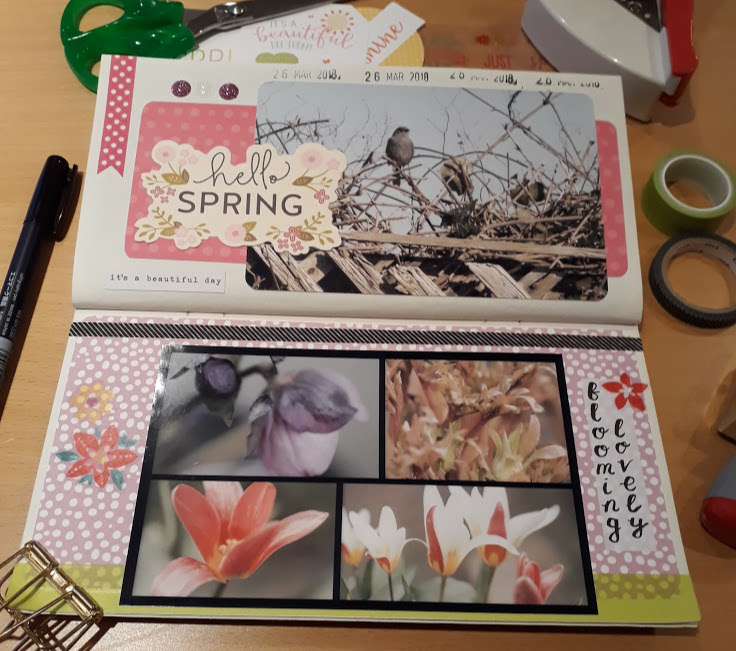
A couple of pages documenting first signs of Spring in my garden. Selphy photos of a dunnock on the fence and some buds and tulips. A range of bits from my journaling supplies.

Thanks for reading, liking, commenting and following!