Blog

Posted in lifestyle, productivity, Setting goals and intentions

Monday Matters: 7 benefits of decluttering and some ways to get started

Over the last few weeks, I’ve been making a start on decluttering and re-organising some parts of our home. So far, I’ve got rid of some unwanted clothes, purged my vast collection of magazines and begun the mammoth task of clearing out and re-organising my craft room. I have a lot of ‘stuff’ and, at times, the process has been overwhelming and stressful but I’m doing a little bit each day and slowly, I’m seeing the difference it’s making. For today’s Monday Matters, I thought I would consider some of the main benefits of decluttering your home as I feel that knowing the effects it can have on health and wellbeing will help me to keep going and also might encourage some of you to dedicate a small amount of time each week to tackle an area of your home or a particular type of clutter. I’ll also offer a few ways to get started including some ideas based on the popular ‘Kondo’ method.

So, let’s start with some of the main benefits which can make a real difference to your life…

  1. You’ll have more energy

A house full of clutter is very draining. There’s always things out of place and constantly seeing your stuff everywhere will likely consume your thoughts as soon as you enter your home or spend time in a particular room. Also, you’ll regularly have to make decisions about where to put things and this can cause stress and deplete your energy levels.

Clutter can make you feel both physically and mentally tired and can also prevent you from relaxing and replenishing your spent energy after a busy day. On the other hand, a tidy and clutter free home lowers stress levels as it is an inviting and calming place to be, where you can fully wind down.

2. Your sleep is likely to improve

A tidy and clutter free bedroom promotes peaceful sleep and allows you to switch off more easily. Whereas a cluttered environment fills the mind with uneasy thoughts and has been found to cause disrupted and less restful sleep. You might think it doesn’t matter if you have lots of stuff in your bedroom because you can’t see it when you turn out the light but your brain will be stimulated as soon as it sees the ‘chaos’ causing feelings of overwhelm and stress.

It’s best to make sure most of the items in your bedroom are put away and that a small number of carefully chosen objects are on display which reflect the style you want to achieve. So, for example, your bedside cabinet or table might have a pretty lamp, your Kindle or book and a single framed photograph.

3. You’ll feel more organised

Having an orderly home will mean that you can find things more easily. If all of your things have a particular home and similar items are grouped together, you’ll feel super organised and you’ll know exactly what you have and where each item is located. Less clutter will help you feel in control whereas an excess of stuff will have the opposite effect.

You’re also likely to feel extremely proud of your home and want to show it off!

4. Fewer allergens will be present

This is a really important one for me as I’m asthmatic and have a condition called allergic rhinitis which is triggered by dust and molds. If you have stuff everywhere, it’s very difficult to keep your home free from dust. Also a build up of clutter has been shown to contribute to poor ventilation in your rooms which can cause mold. Surfaces with only a select few items on them can really help reduce the number of allergens in the air and on your furniture which is great for anyone with asthma and other similar health conditions.

5. Cleaning and tidying will become a breeze!

Whilst I was struggling with depression and anxiety, my support worker helped me to plan some small housework tasks throughout the week to encourage me to contribute to the many chores involved in running a home so I was able to feel a sense of achievement. On one of the days, in my weekly plan, we decided that I would dust and vacuum our bedroom. When asked the next week how I’d got on, I mentioned that I’d got overwhelmed and upset because just tackling my dressing table had been a gargantuan task as there was so much clutter to clear before I even attempted to clean the dusty surface. I ended up just doing the dressing table and my chest of drawers when all of the other furniture really needed doing too.

Having less clutter will make keeping your home clean much easier and so much quicker. I’m not saying that dusting, vacuuming or mopping floors will become enjoyable, but it’s likely to be much less of a chore.

6. You’ll be more productive

If you want to get things done quickly and easily you need an environment with as few distractions as possible. This is why many offices have a tidy desk policy as it promotes efficiency and effectiveness at work. Less clutter in your home has the same impact. It means you can focus on the task at hand rather than being drawn towards your stuff which needs sorting out or has just become too much to deal with.

7. Overall, you’ll feel happier in your home

Clutter is known to fuel depression and anxiety as it promotes feelings such as sadness, stress, guilt, despair, shame or inadequacy. It can also make you feel embarrassed and apologetic if you have any visitors. A clutter free home, however, can have a really positive effect on our mood by freeing us of these negative emotions making us feel more content and generally happier.

As you can see, doing a spot of decluttering can really help improve your physical and mental health and generally make your home a more pleasant place to be. But, getting started isn’t easy, especially if you have a lot of stuff. Here’s a few suggestions to get you going…

Visualise what you want

Once you’ve committed to decluttering, try a little visualisation exercise. Think about your ideal lifestyle and create a picture in your mind of what it looks like. Also, imagine how decluttering will help you work towards or achieve this and how you will feel as a result of your improved home. Perhaps you’ll have a well-ordered space where everything is neat and tidy. Maybe you’ll feel more organised and happier. Or, you might be able to relax more easily when you finish work. You could even find that you have more time to do the things you love with the people you care about. Obviously, this will differ greatly depending on your personal goals and the lifestyle you want. You might even want to write down some of your ideas after visualising so you can re-read them to help you stay motivated. If you prefer pictorial representations, you could make a vision board for your bullet journal or to pin to your wall.

Dedicate some time

It’s a good idea to regularly schedule a block of time in your bullet journal or diary and think about what will work best for you and your lifestyle. You might choose 10 minutes and set a timer for a quick spot of decluttering or an hour on a Sunday afternoon if you want to tackle your entire wardrobe. If you have a family and the stuff doesn’t all belong to you, try to get everyone involved in the process ensuring everyone takes some responsibility and can reap the rewards too. Make sure, whatever timeframe you choose, you stick to it, just like you would any other commitment.

Start small

In her popular first book The Life-changing Magic of Tidying, Marie Kondo identifies a particular order to decluttering your home. She suggests starting with clothes and invites you to get all of your clothing together and work through it to decide what you want to keep based on if each item sparks joy. However, if you have lots and lots of clothes like I do, it might be worth starting much smaller. A good way is to categorise your clothing and just working on, for example, t-shirts or trousers. Working on a small number of items can help to prevent overwhelm and make the process less stressful.

Think about what bothers you the most

Although organising expert Marie Kondo suggests a set order for decluttering, you might want to start with something else or a particular space. For example, if the mess in your living room stresses you out when you sit down to watch TV, you might want to start with visible clutter in there. Or, if the state of your bedroom may be contributing to a less than restful sleep, you could tackle this first. Whatever would have the most impact, as long as it’s not too big a job, may be the best area to start.

Deal with visible clutter first

Also related to impact and choosing what to work on is visible clutter. You might have a cupboard under the stairs which is full of junk but does it bother you all the time or only when you need something from the back of it? You might be best off starting with your desk top, your dressing table, the top of your chest of drawers or floor space if you want to really see your progress. Then, when surfaces are cleared, you can tackle cupboards, drawers and cabinets.

Make a decision about the items you don’t want or need straight away

As soon as you’ve decided what to keep, including what sparks joy and which items are useful in your life right now, make plans for your discard pile. Some of your stuff will be fit for the bin (and you’ll wonder why you still have it!), some might be perfect for donating to charity, and a small number of items could potentially be sold on ebay (but only if you have the time to photograph and list them straightway and then deal with them once they sell / don’t sell). It’s really important to take action on the items immediately, so take the bin bag(s) out as soon as you can, place donations in a box and head straight for the charity shop that same afternoon and create your ebay listings as a matter of urgency. The quicker the items are gone, the sooner you can start enjoying the benefits.

Final words…

I hope you’ve enjoyed reading today’s Monday Matters post and it has prompted you to do some decluttering. Let me know in the comments if you’re already enjoying the benefits of less clutter or if you are keen to get started. It would also be great to hear any other tips you have for beginning the process.

Happy decluttering!

Posted in compassion, depression management, lifestyle, mental health, self care, wellbeing

Monday Matters: 7 ways to be kind to yourself when you’re struggling

In today’s Monday Matters post, I’m going to be talking about something which I believe many of us struggle with and that is self-kindness. At school, we’re taught to be kind, respectful, patient, forgiving and gentle with others but do we apply this same compassionate attitude to ourselves? I know I certainly don’t, and I also notice that I’m particularly harsh and critical when I’m struggling. So, here are some ways in which being kind to ourselves can help our mental health and 7 ways you can show yourself some kindness right now.

Benefits of self-kindness which are particularly relevant during periods of difficulty

  • better self-esteem
  • increased resilience
  • less self-criticism
  • increased self-acceptance
  • helps us cope better with stress
  • improved self-confidence
  • decreases anxiety and depression
  • helps us feel more optimistic

7 ways you can be kinder to yourself

Practise self-compassion

During times of difficulty, many of us tend to be really unkind to ourselves. We place unrealistic expectations upon ourselves, say engage in negative self talk, criticise ourselves when things don’t go right, place blame unfairly, find fault in what we do and fail to celebrate our achievements. Sounds pretty harsh right? And it makes us feel ten times worse than we already do. Instead, what we would really benefit from is practising self-compassion, where we offer ourselves warmth, gentleness, understanding, acceptance and empathy. A good way to do this is to imagine what you would say to a friend who was going through a period of difficulty and was dealing with the same issues that you are. Then apply that compassion to yourself. You can even take this a step further and write yourself a compassionate letter where you offer support and encouraging words and then read it back. You can find out more about the therapeutic benefits of writing here.

Focus on the good

When we’re struggling, we tend to get into a negative frame of mind. Try to break this by thinking about your positives. Here are some ideas for you to try:

Congratulate yourself on your achievements no matter how small – maybe you got dressed and went out for a walk, maybe you completed something from your to-do list or maybe you dealt with a difficult situation assertively. Just getting out of bed can be a huge achievement if you’re struggling with depression.

Use positive self-talk – I’ve written before about the impact that negative self talk can have on us and how we can reframe it. As part of being encouraging and supportive towards yourself, you can counteract negative thoughts with positive affirmations. Some examples are: I am kind to myself during difficult times, I am doing the best I can, I can get through this, I have the ability to cope, I am brave and strong.

Make an all about you list – things you’re good at, your best qualities, a ‘done list’ of all of the things you’ve achieved today/this week. Try writing a different list each day to really improve your relationship with yourself.

Nourish your body and your brain

When you’re struggling, it can be really tempting to reach for high calorie snacks full of sugar or fat and eat processed foods for your meals. The reason we crave these items is because they temporarily increase our mood boosting endorphins leaving us feeling happy, blissful, calm or soothed or provide you with a chemical sugar high. Unfortunately, these feelings don’t last and can lead to overeating and poor diet overall. And of course, an unhealthy diet can create all sorts of problems including reduced energy levels, weight gain, obesity, depression, weakened immune system and vitamin and mineral deficiencies. Be kind to yourself by focusing on eating a balanced diet which includes a variety of fresh fruit and vegetables.

Something that I find really helpful is to plan my meals in advance. This means that I’m more likely to eat healthily but also that I can ensure I’m eating a balance of different foods and a range of fruit and vegetables. And don’t forget, you are allowed a treat every now and again but it’s best if you really take your time eating it so you can savour the flavour and really appreciate it (search ‘mindful eating’ online for more info).

Get moving

When life is hard you might feel tired and lacking in energy and this might mean that even the though of exercise too much. But, something gentle, like a walk in your local park, ten minutes of basic stretching exercises or a short yoga session could make you feel so much better. Exercise releases feel good endorphins which help to boost your mood and if you engage in a mindful activity you will also be focusing on the present moment and forgetting about other concerns in your life which can lead to feelings of calm and relaxation.

Do something that brings you joy

Try to make it a habit to do something you love each day. Try to carve out at least half an hour for your own enjoyment. Here’s some ideas:

  • Hobbies – sewing, watercolour painting, papercrafting, drawing, playing a musical instrument, baking.
  • Outdoors – time in the garden, nature walk, sculpture trail, sit in the sunshine.
  • Retail therapy – a new houseplant, a scented candle, a pretty scarf, some sweets you haven’t had since childhood, some stationery.
  • Brain stimulation – crossword, word search, sudoku, jigsaw puzzle, board game.
  • Movement – yoga, stroll along the beach, mindful walking, dancing to some upbeat music, ten pin bowling, try out a team sport.
  • Socialise – coffee with a friend, take a class e.g. flower arranging, phone a relative.

If you’re struggling with depression right now, you might be thinking that nothing brings you joy at the moment so there’s little point in doing anything. However, research has found that if you do some of the things that you normally enjoy, you will still reap the benefits of the activity so try scheduling something in and then congratulate yourself for finding the motivation to do it.

Add some soothing activities to your day

When you’re struggling with your mental health or life is extremely busy and stressful, it’s a really good idea to plan something soothing to help yourself feel calm and relaxed. The activity you choose is very much a personal preference but you could try one or more or the following:

  • a hot bath with scented bath oil or a bath bomb
  • a foot massage with refreshing peppermint oil
  • read a book, under a blanket with optional hot chocolate
  • light a scented candle and watch the flame flicker
  • buy some flowers and spend time arranging them in a vase
  • cuddle something – a pet or a soft toy
  • watercolour painting or colouring in

Make good sleep a priority

A good night’s sleep benefits us in so many ways including better mood, more energy, improved cognition and stronger relationships with others. However, when we’re struggling, we’re likely to find that the quantity or quality of our sleep is affected so it’s important to take steps to fix it. This can include doing relaxing activities before bed (and avoiding known stimulants), spending time journalling about your day so you can process what’s happened and prepare yourself for tomorrow, and making sure your bedroom environment is just right. If sleep is an issue for you right now you might want to check out this blog post. Or, for really in depth look at sleep issues, the NHS has a long self help guide which can be accessed here.

Final words…

I hope that today’s blog post has been useful in providing you with some ideas about how you can be kinder to yourself. However, if the thought of doing all of these things seems a little overwhelming, trying choosing one suggestion which you think might make you feel a little better and start from there. Remember tiny steps can lead to a big impact.

Posted in life hacks, lifestyle, self care

Practical Tips for Coping with the Summer heat

The summer is now in full swing and we’ve recently seen plenty of sunshine. The hottest day this year so far in the UK was recorded on Saturday 17th July, with the temperature reaching 28C in Sunderland and even higher further south. Some people love the sun and cope really well with the heat and high humidity. Others find it more difficult, including those with very fair skin like myself, some people with long term health conditions and the elderly. With this in mind, today’s post gives some practical suggestions on how to cope when it gets a little too hot for your liking.

Keep yourself hydrated

The usual advice is to drink eight glasses (2 litres) of water per day. However, in the height of summer, we tend to sweat more so this should be increased by at least half a litre (two extra glasses). You should also ensure that you drink at regular intervals throughout the day. Signs of dehydration include excessive thirst, dry mouth, dizziness or light-headedness, fatigue, not needing the loo very often and dark coloured urine. Try not to let it get to this stage by carrying a bottle of water with you and taking regular sips. And if you’re not keen on water, trying making some fruity sugar free squash instead (our favourite is cherries and berries).

Choose your outfit with care

If you know you’re going to be out in the sun a lot, choose an outfit which is light coloured and loose fitting so that cool air has better access to your skin. To keep the sun off your face (and protect your hair and scalp), opt for a peaked cap or wide brimmed hat – again it’s best if this is a light colour because they reflect light and heat whereas dark colours absorb them.

Avoid the mid-day sun

The sun is strongest between 11am and 3pm so try to seek shade between these times. This could include using a parasol when out in the garden or sitting under a tree when enjoying a picnic. We like to take fold up chairs with us when we go out in the car so we can position them somewhere shady as picnic benches are generally in full sun.

Don’t overexert yourself

Avoid doing any intense workout during times when the temperature is high. If you must exercise outdoors, for example running or bike riding, try to do it early morning or early evening when it’s not so hot. Other vigorous activities such as moving furniture or heavy gardening are best left for another time too.

Stay cool indoors

If there’s a nice cool breeze, throw open your windows to let it in. Try to create what is known as a cross breeze by opening a windows on both sides of the house and leaving doors open to allow the air to circulate. For extra impact, trying using a fan or two as well. Closing the curtains or blinds in rooms that face the sun is helpful too.

Repurpose your hot water bottle

I found this tip online last week. You fill your hot water bottle with the usual amount of liquid but use cold water instead. Then, you pop it in the freezer a few hours before bed. You can either pop the bottle in your bed before you get in it or you can place it under your feet to help to regulate your body temperature. I wouldn’t recommend snuggling it like I do my hot water bottle though as it might be a bit too intense!

Go for cold meal options at home

Having hot meals which are done in the oven can make your home hot and the person cooking them. Cold meals such as salads are a much better option. There are so many different ones to choose from and it’s a good idea to make a meal ideas list and also to download some new recipes to try.

Apply ice or cold water

If you’re feeling uncomfortably hot, a great way to cool yourself down is to apply ice or cold water to your body’s cooling points. You’re probably already aware of your wrists as a good part of your body to hold under running cold water but other places to apply ice or something else cold include your neck, the inside of your elbows or knees,, the tops of your feet and your inner ankle. For a longer term cooling sensation, you could try using an ice pack (wrapped in a thin cloth) or a cooling gel pad, or you could plunge your feet into a bowl of cold water. A cool shower during the day can also help but it’s not a good idea to take a cold shower any time before bed as it can increase your energy levels which is unlikely to help you doze off!

Final words…

I hope you’ve found these tips for coping with the soaring temperatures helpful. If you have any further ideas, I would love to hear them in the comments. Of course, it goes without saying that however much you love or dislike the sun, you should always ensure that you use appropriate sun protection to stop yourself getting burnt. The recommended level in the UK is now a minimum of SPF 30 with at least 4-star UVA protection but this will obviously be higher in other countries. And don’t forget to apply it liberally and regularly too.

Keep cool and enjoy the rest of the summer!

Posted in art, Bullet journaling, compassion, mental health, Planning and journaling, watercolour painting, wellbeing

Monday Matters: Creating a ‘Words Of Encouragement’ spread to help you get through tough times

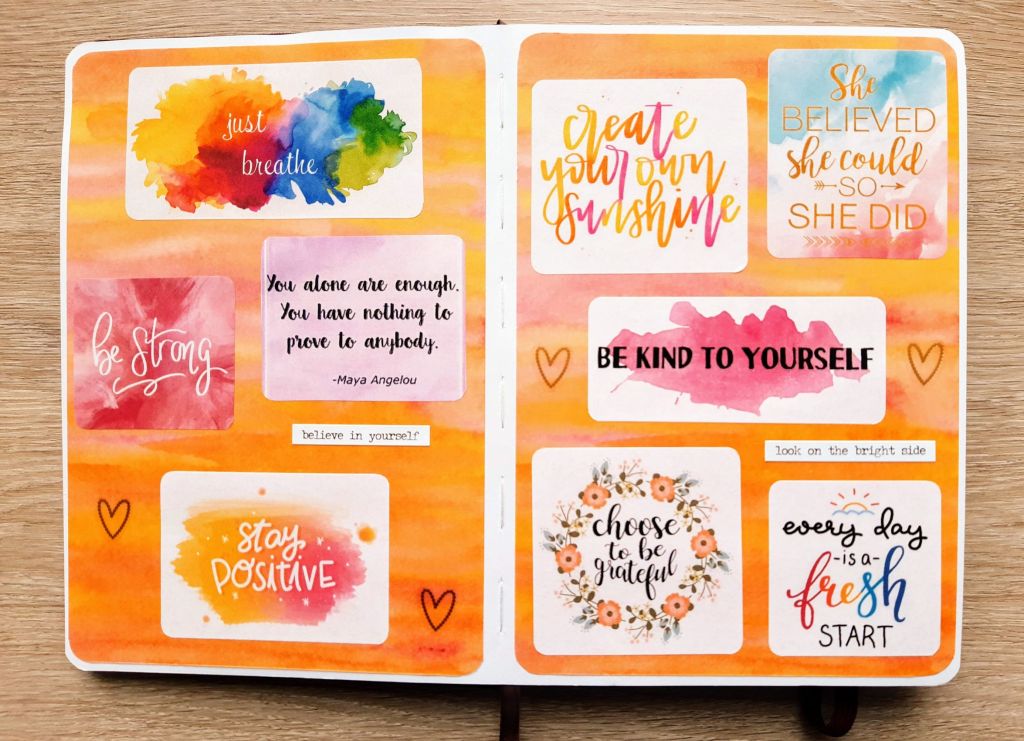
This month, I moved into a new bullet journal – a gorgeous handcrafted linen notebook from Notebook Therapy. The journal is completely blank so I set up the usual index, future log and grid spacing cheat sheet. Then I decided that I wanted to create a spread which was full of messages of support and encouragement to help me whilst I’m struggling with my mental health. The idea is that I read all of the positive content each morning a bit like you would a list of affirmations. It took me quite a while to make but I’m really pleased with how it turned out so I thought I’d share the results on here and talk a little about the process.

Creating the background

A watercolour wash

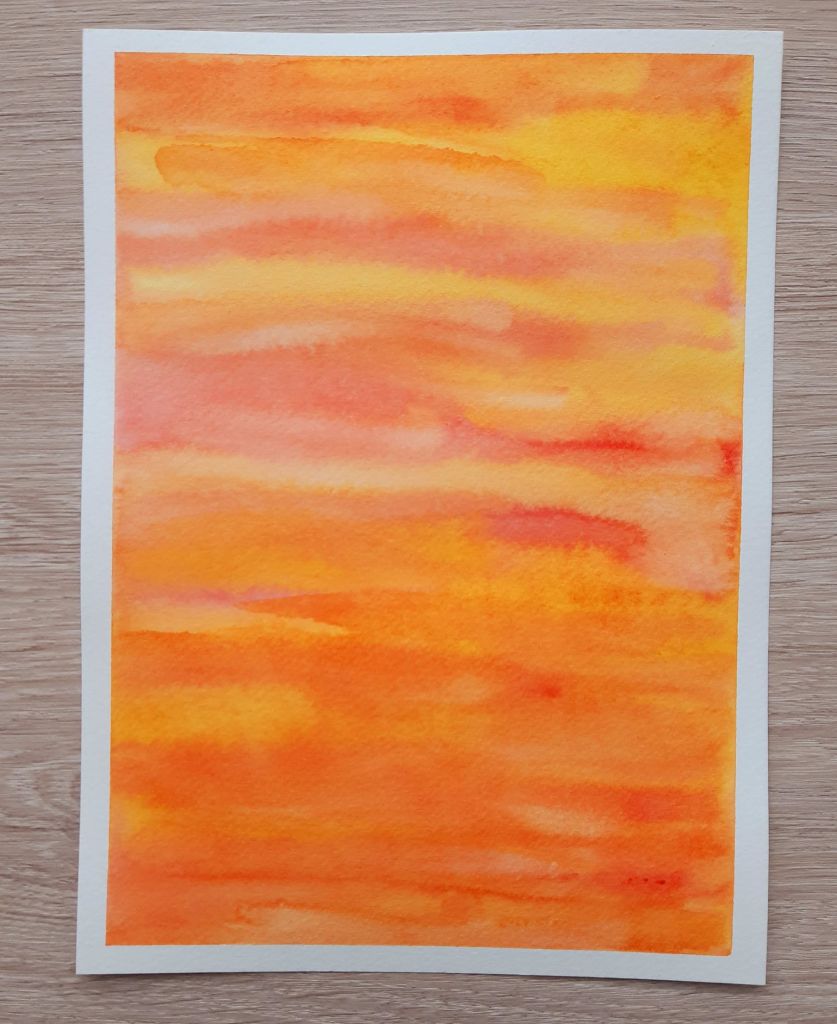
I wanted something bright and cheerful for the background so I decided to create a wet on wet variegated wash using just two of my Winsor & Newton Cotman watercolour tubes – cadmium red and gamboge yellow hue. I used an A5 piece of Aquafine smooth paper and taped the edges down so I got nice clean lines. After coating the paper with water, I swished the first colour back and forth from the top to the bottom, leaving gaps between the paint strokes. I then did the same with the second, filling in the gaps but also sweeping over the first colour slightly so that they nicely blended together. I was really pleased with the effect I achieved. When the paint was dry, I removed the tape and then scanned the piece in using my printer/scanner. I then printed it off twice, trimmed the papers so that they would fit perfectly in my bullet journal and stuck them in using double sided tape.

Finding the supportive messages

When I’d created my backgrounds and stuck them in, it was time to find some messages to stick on the pages. I spent a while thinking about what I’m struggling with at the moment and some words of positivity that I could focus on. So, for example, I’m being really hard on myself and self critical so I chose a ‘be kind to yourself’ message and a quote about being enough. Most of the images were found online by typing them into an image search (a lot of them are actually phone wallpapers cropped to size). I also got a few from a Tim Holtz Small Talk idea-ology sticker book but you could just as easily type onto plain paper and cut and stick them. I created a MS Publisher document to add the images to and cropped them and altered the size until they would all fit into the double page spread. I then printed them onto an A4 sticker sheet to make it easier to stick them in but you could easily use an A4 sheet of paper and cut them out using a paper trimmer.

What you choose to put in your spread or board would depend on the particular difficulties you’re facing. For example, you might need some confidence boosters, help with dealing with anxiety, messages to encourage you to manage your depression or some little reminders about positive body image and loving the skin you’re in. Here’s some ideas to get you started:

Confidence boosting – You’ve got this. You’re more powerful than you think. Inhale confidence. Exhale doubt. Believe in yourself. Self confidence is a super power. Once you start believing in yourself magic starts happening. I can and I will.

For dealing with anxiety – Everything is going to be alright. I can’t control everything and that’s okay. I am stronger than my struggles. Just breathe. My anxiety does not control me.

Managing depression – I am strong. I can get through this. Life is tough but so are you. Keep going. I’m enough. Stay positive. Choose to be grateful. Think positive and positive things will happen. Everything’s going to be okay.

Body positivity – Happy, beautiful and strong. Your body loves you. Love it back. My body. My goals. My happiness. Be kind to your body. All bodies are good bodies.

Final words

I made a spread in my bullet journal because it’s somewhere I look every day. However, if you’re not into bullet journaling, you could just as easily create a board out of a piece of coloured card to go up on your wall or some other place to look each morning. As an alternative to searching online, you might choose to use post it notes to write messages to yourself or cut small pieces of paper and use brightly coloured pens for your reminders. The most important thing is to make sure you look at what you’ve made frequently so you can try to take on board the supportive statements.

I hope you have found today’s post interesting and it’s inspired you to have a go at creating a similar ‘Words of encouragement’ spread. Let me know in the comments what you think you would benefit from telling yourself each day.

Posted in lifestyle, Planning and journaling, psychology, wellbeing

Monday Matters: 9 benefits of practising gratitude and how to get started today

Last year, I wrote a couple of blog posts about gratitude. One was about how I was practising gratitude despite the situation with COVID-19 and the local lockdowns that were being enforced, and the other presented a few ways in which you could start to practice being grateful. Today, I want to dive a little deeper into the core benefits of a daily gratitude practice and share ideas on ways you can get started with a view to make it part of your routine.

What is gratitude?

Gratitude is about being aware of and thankful for all of the positive things and situations in your life and their impact on you. It’s about regularly taking a moment to reflect on and appreciate what you have, even during particularly challenging times.

Finding gratitude is a skill that anyone can develop and there are so many benefits of a daily practice. Read on and you’ll see exactly why I’ve made it a habit and part of my nightly routine.

9 Benefits of practising gratitude

Makes us feel happier Gratitude encourages us to focus on the positives in our life, helping to reduce negative emotions such as anger, resentment and regret. It can also minimise feelings associated with depression such as sadness, worthlessness, self-hate and guilt.

Reduces stress High levels of stress can leave us feeling extremely tense, anxious, restless and overwhelmed. Luckily, cultivating feelings of gratitude is the perfect antidote. According to research, being more grateful lowers the stress hormone (cortisol) in our body, making us feel much calmer. It can also minimise negative self-talk which can help you to feel confident in dealing with everything life throws at you.

Improves our self-esteem One of the main things that ruins our self-esteem as adults is comparing ourselves with others in an unfavourable way. Instead of engaging in this destructive behaviour, try focusing on gratitude instead. Boost your self worth by thinking of all of your strengths and their impact on your day. Rather than feeling envious of or resentful towards others, try complementing them on their skills and be grateful for how they help you in your life.

Better sleep Finding time each evening to pause and reflect on what you’re grateful for helps you to end the day on a calm and more positive note. This can help you to wind down before bed and has been shown to improve sleep quality and quantity. If you’re really struggling with your sleep, I recommend doing some reflective journalling (see point number 1 of this post) before spending time filling in your gratitude log.

Improved physical health Those who practise gratitude have been shown to exercise more regularly and have medical check-ups more often. When we reflect on what we’re grateful for, we’re likely to show more appreciation towards good physical health and this can prompt us to take better care of ourselves.

Increases resilience We might have lots going on right now which is making life super tough for us, but practising gratitude can help us see the bigger picture, appreciating that we still have lots to be thankful for and assuring us that we have the ability to cope with what’s going on and get through it, coming out stronger on the other side.

Improves our romantic relationships Gratitude plays a key role in strengthening our loving relationships. By actively pay attention to the positive things that our partner does, we learn to appreciate them more, show our gratitude and give them thanks. Expressing your thankfulness is likely to motivate them to do more things to show they love and care about you. Also, when you feel gratitude towards your partner, the chance of you behaving in a positive, kind and caring way back is greatly increased.

Reduces materialism There’s strong evidence that being materialistic i.e. being overly concerned with material things rather than spiritual, intellectual and cultural values leaves a person feeling depressed and dissatisfied with life. Learning to be grateful for what you have reduces these feelings and increases happiness and life satisfaction.

Increases optimism Developing a daily gratitude practice can help you to become a more optimistic person by encouraging you to focus on what’s going right rather than dwelling on negative aspects of your life. If we perceive our current life to be good, we’ll start to believe that this will continue in the future.

My top tips for getting started

With this many benefits, you’ll probably want to get started straight away so here’s a mini guide to help you begin:

Keep it simple It’s best not to develop some elaborate routine that will become too onerous and make you feel like finding gratitude is a complete chore and one which you can’t keep up with. When I first started I made a simple ‘two line a day’ spread in my bullet journal and decided to come up with two or three things each day. This takes me less than 10 minutes each evening and things often pop into my head during the day which I want to add (a benefit of the practice being ingrained).

Choose your method of recording Think about what style of journal appeals to you most – would you prefer writing in your notebook or BuJo or are you happier writing notes on your phone using a dedicated app? I use my bullet journal but I have looked into a couple of apps for research, Gratitude App provides daily prompts and also challenges which run for between one and three weeks. Examples of prompts are ‘Why did you start gratitude journalling? Express gratitude to yourself for taking this step’ and ‘Express gratitude for the new beginnings life gives you’. This is good if you need a little help on the ideas front. The other app is Presently, which is a lot more simple and just gives you space to free write what you’re grateful for each day. Both apps offer alarm prompts as reminders to write.

Make it a habit I’ve written before about ways to cement habits but in brief, you need to start with a cue or trigger which reminds you to do your daily practice e.g. a time, such as 8pm (for which you can set an alarm) or before/after another habit such as when you’ve emptied the dishwasher, after dinner or before you settle down to watch TV. Then, you need to focus on the benefits you receive from the habit, so, for example, you might re-read this list, or, when you get established, you might reflect on how you feel as a result of practising e.g. calmer, happier or sleeping better.

Add a little variety Try to find different things to be grateful for each day and make sure you are really specific so you can see the impact of things in your life e.g. the sunshine because it dried my washing nicely, my ability to persevere with an arduous task until I got it finished, the reassuring words my friend said to give me the strength confidence to get through a difficult time etc.

Share your gratitude with your family and friends If I write about something my husband said or did which I’m grateful for, I tell him. This helps him to know that I don’t take him for granted and that I really do appreciate him. The same can be applied to other family members and friends.

Final words…

As you start to practise gratitude, remember it takes time and effort to make it a habit. Each evening, I like to read through all of the things I’ve listed so far that month as a positive reminder of all of the great things and experiences my life brings. And, I make sure that I express gratitude for the fact that I’ve kept going with my daily routine, even during tough times or when lack of motivation kicks in. Of course there have been a couple of days when I’ve been super busy and a change of routine has meant that my ‘two lines a day’ didn’t get filled in, but I’ve just accepted it and reflected on why it happened so that I can put in place strategies to ensure that not completing my gratitude practice doesn’t become a habit instead.