Bullet journal spreads, my experiences of trying out a range of craft activities and lots of wellbeing tips to help you get the best from life.
Author: Laura
A creative planning and journalling addict who lives in the North East of England, My current passions are my bullet journal, my Traveler's Notebook for memory keeping, my DSLR for taking nature photos, my new watercolour paints and my papercrafting supplies. I also own and run LJDesignsNE on Etsy where I sell pretty and functional goodies to fellow planner and journaling addicts.
Today marks the beginning of my new ‘Monday Matters’ feature in which I will present different ideas on how to live a happy life and increase your general wellbeing. My first post is on managing your emotions using self soothing activities and features lots of ideas for self care and relaxation.
Recent research by Professor Paul Gilbert, a psychologist who developed Compassion Focused Therapy argues that we have three emotional regulation systems in our brain, namely:
The threat system – for detecting danger, based on emotions of anxiety, anger or disgust.
The drive system – enabling us to have the motivation to do, achieve and acquire, sparking excitement.
The soothing system – helping us to manage stress, creating feelings of contentment, safety, trust and connection to others.
All three of these systems are important, but issues can arise when one system dominates. If threat presides, we end up feeling constantly anxious and worried. If we spend too much time in drive mode, we can become obsessed with being better and having more and this can lead to stress, perfectionism, burn out and depression. However, If we were always in soothing mode, we would never get anything done!
Many of us find that we have very active threat and drive systems but rarely use our soothing system. By investing time on activities which sooth us, we can greatly improve our wellbeing. Of course, what is considered to be soothing, depends on the individual but here’s a list I’ve collated to give you some ideas.
Wrap yourself up in a cosy blanket to enjoy your favourite warm drink
Light some scented candles or burn some oils and turn down the dimmer switch
Go to the park for a gentle stroll and feed the ducks
In hot weather, enjoy an ice cream, in colder weather, make some warming soup
Look at photographs from a happy event e.g. a holiday, your wedding, a celebration day.
Spend some time in nature e.g. woodland or a forest and look for signs of the current season, or do some ‘forest bathing’ (to find out more about this stress busting pastime click here. Of course you don’t need to book a holiday to try this technique out but you do need somewhere dry to lie and soak up the atmosphere).
Flick through your favourite magazine (I love Breathe magazine which is all about making time for yourself).
Set aside some creative time to enjoy your favourite craft such as sewing, card making or collage
Watch something funny, such as a romantic comedy or your favourite sitcom.
Run a warm bath and add bubbles or a bath bomb (I love the ones from Lush as they change the colour of the water and smell delicious)
Play some upbeat music and have a sing song and a dance
Go out in the warm sun and feel the heat on your face
Play with a pet (I love having snuggles with my hamster Kikki, when she lets me!)
Read some inspirational quotes or some positive affirmations (I like to write these in my BuJo)
Engage in rhythmic activities such as doing a jigsaw, colouring on or painting
Take your phone or camera out on a nature walk and take lots of pretty pictures of your surroundings
Lie on the grass and watch the clouds float by
Get yourself a drink and savour the temperature and flavour
Go bird or squirrel spotting in your local park
Enjoy a massage
I hope my post has given you some ideas to try. If you could spend 10 minutes, half an hour, a morning or afternoon doing something just for yourself, what would you choose?
For Day 2 of the free WordPress ‘Branding and growth’ course, the focus is on your brand and how your blog communicates what you are all about to visitors. It invites you to consider if the presentation of your site is consistent and focused and suggests you make one update to reinforce your brand.
I chose to make changes to my theme but discovered that my current choice had become obsolete and retired from service! Therefore, in the end, I looked at alternatives and decided on ‘Scratchpad’ which seemed to suit my requirements. As well as changing the theme, I also created a custom header using Canva and added a lovely brush font for the blog title. I’m quite pleased with how it looks and hopefully, it will give readers an idea of the focus of my posts.
There are lots more changes I would like to make but I need to do more reading before I start to add further customisation. I hope you like the changes I’ve made so far. I would be interested to know if you have used one of your own photographs as the image for your header or if you chose an image from a copywrite free site like I did. I’m hoping to have my own image in place at some point but it always seems to be too dark for taking indoor photographs at the moment and it’s only Autumn!
Today, I’m starting the free WordPress course on branding and growing your blog. I’ve just set myself some new goals which I’ve recorded in my BuJo but thought I would create a post identifying what they are and how I plan to go about achieving them so that you lot can have the chance to help and support me and hopefully cheer me on!
Goal 1: Establish a new weekly feature on my blog called Monday Matters and consistently post each week until at least the end of 2019
I generally schedule a blog post at the beginning of the week anyway so I thought it made sense to create a little more consistency. Hopefully, by writing my intention here it will help to keep myself accountable.
Goal 2: Publish a post at least twice a week for the next two months
This one is pretty self explanatory and with my new Monday feature, I just have one more to plan for each week.
Goal 3: Gain 20% more followers in the next three months
With consistent posting and improved branding which the free course should bring, hopefully this will happen! People have been really supportive so far and I’ve got some lovely comments and plenty of likes so I think other bloggers are enjoying my content.
Have you set any goals for your blog this month? If you have, I’d love to hear them and you can be sure I will cheer you on too! If you’re also doing the challenge you can find my post more easily if I tag it with #bloggingbranding apparently!
Last week in our ceramics for beginners class, we used a ‘forma’ as a basis for creating a 3D clay piece. I chose to make an ornamental hedgehog which I could have on display in my garden. In this blog post, I’m going to share the process and lots of photos I took illustrating this.
Hand built clay items, i.e. those where the clay is worked by hand and some simple tools, are usually made from slabs, coils, pinch pots or a combination of these three techniques. However, another technique is to use a ‘forma’ to support the making of a 3D object or sculpture.
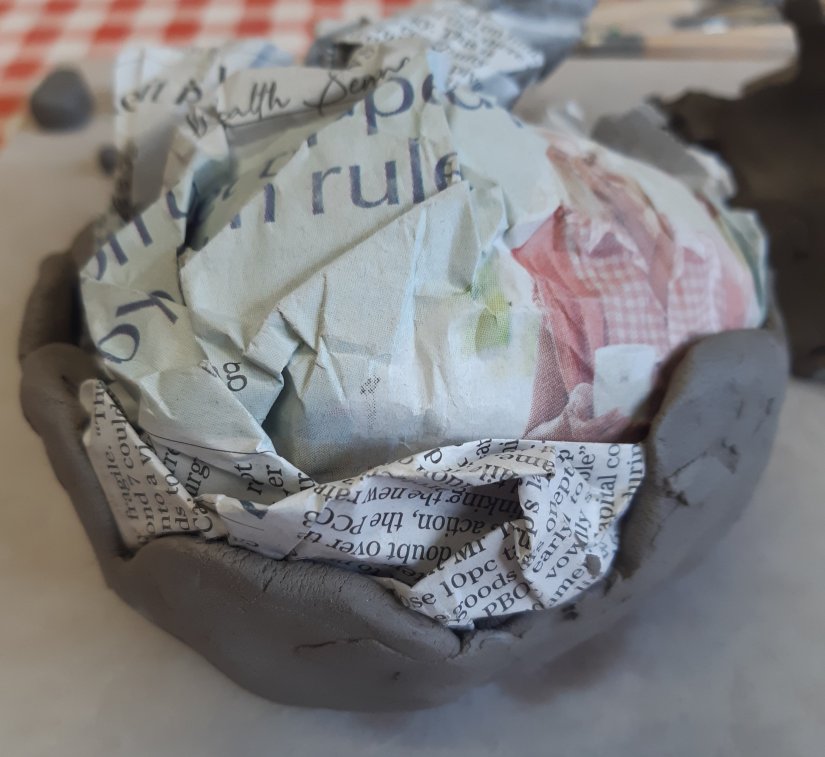
Our forma was a sphere which we made using one or two loosely scrunched up pieces of newspaper. We then created small flat pieces of clay with our fingers and added them around the newspaper, overlapping slightly and smoothing the pieces together. The idea is that if you made the item from solid clay it would take a very long time to dry out to ‘leather hard’ which is where it is suitable for putting in the kiln. By building around newspaper, the clay work is much thinner and as long as you add a hole into your item somewhere, it has a chamber inside for the air to get in. The heat of the kiln burns the newspaper away and you can tip out the ash and be left with a wonderful 3D design which is lightweight.
To begin, you take a piece of clay and form a small, flat round. Then, holding the newspaper sphere in your hand. You mold the shape onto the ball. You then continue to add small flat pieces around the newspaper and start to create the shape required for you object. As mine was to be a hedgehog, I began to manipulate into a kind of oval shape with a flattened base and then squeezed one end to create a snout shape.
Building a shape around the newspaper form
The next step was to add a round hole on the base of the form which I did using a pointed metal tool and then dug out the clay using a looped piece. This is to let the air circulate around when the item is in the kiln and is essential to prevent the work from exploding! The hole won’t be seen as it is on the base of the work but I did try to make it nice and neat.
An air hole to allow the very hot air to circulate around the piece in the kiln
After adding a hole at the base and scratching in my initials, tutor’s initials and the session number so that my work is identifiable after firing, I made the features of the hedgehog i.e. a dog’s nose shape, some small balls for the eyes and four little feet. I create two circular indentations to place the eyes and then used the score and slip technique to attach them. If you want to see how ‘score and slip’ works click here for my previous post which contains a great link.
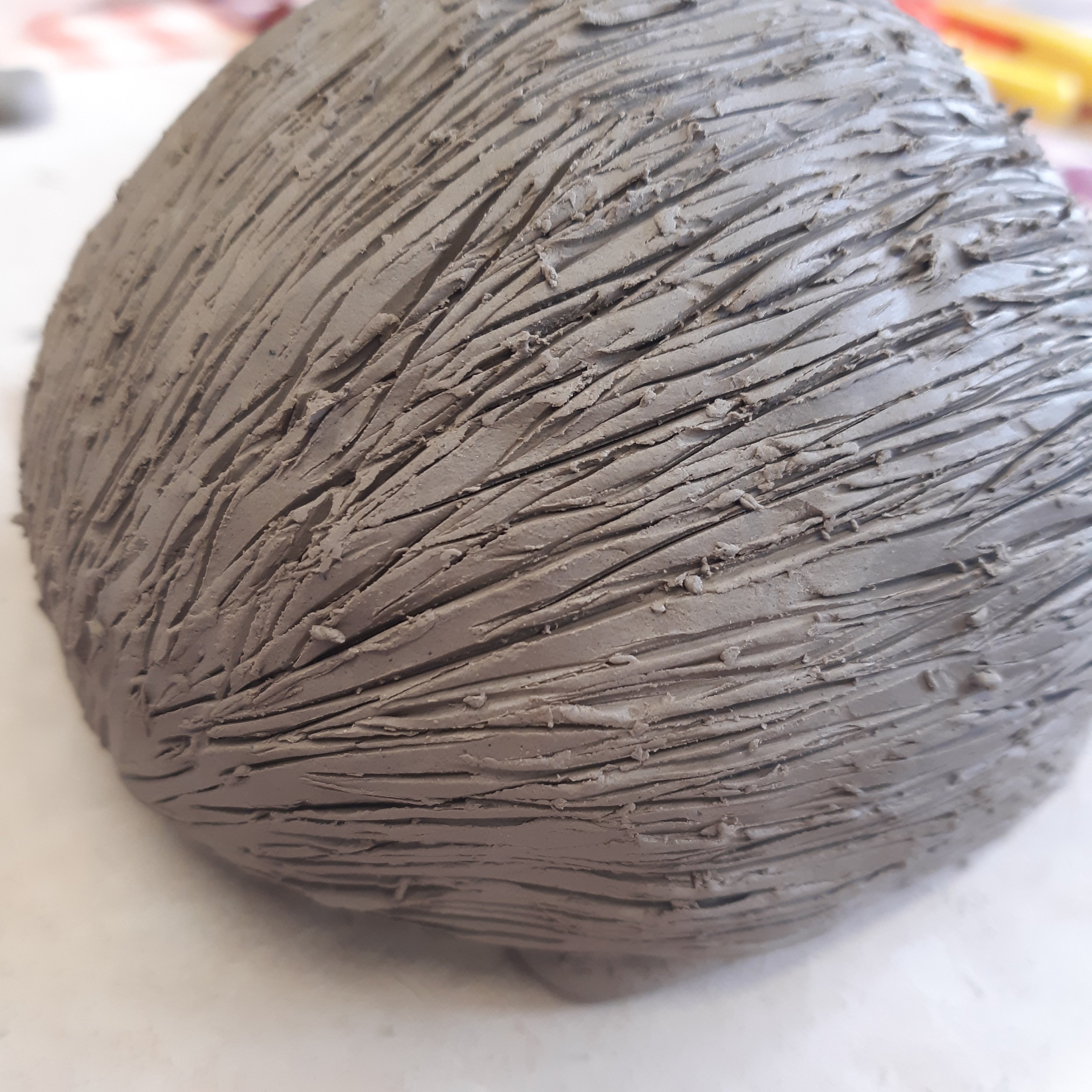
I was a little bit scared to add some texture to my design in case I messed it up, so I did a little practise on a small ball of clay first. Then, I added long, gentle cuts randomly all over the back of the hedgehog using a plastic knife from my modelling tools box.
Texture to create the idea of spines on the hedgehog’s back
Finally, made small snips with a pair of scissors in different places to add further texture and a spiny appearance. Again, I was frightened to do this, but I was pleased with the result in the end!
Here’s a front view of the spikes which I think look quite effective. The tutor said that when I add the glaze after he has been fired, it will go into the places where I have snipped and make different intensities of colour which will add to the effect and should look quite striking. I can’t wait to get started with this but he might take a while to dry out before he can go in the kiln. I’m also looking forward to glazing my little plant pot holder from a few weeks ago too.
I hope you’ve enjoyed seeing my hedgehog taking shape and liked reading about the process. If you ever get the chance to do a beginners ceramics course, I can definitely recommend it as it’s great to try something new and both the course participants and the tutor are lovely and so helpful. I always look forward to my time at the arts centre each week and find it really therapeutic in so many different ways.
There are a plethora of books and articles both online and in print about the benefits of decluttering your possessions in order to simplify your life and create more order. However, it’s not just our homes which can become cluttered and cause feelings of overwhelm and low mood. Our minds are equally susceptible and can easily become overloaded with worries, stresses and all of those emotions that come from spinning too many plates. Today’s blog post looks at practical ways of managing this mental clutter to improve our wellbeing.
1. Identify your current priorities in life
A good place to start decluttering your mind is to spend some time quietly reflecting on your life right now. Start to consider how you currently spend your time and use your energy and then begin to think about how satisfied you are with this situation. If you find yourself wanting to implement some changes, try focusing your attention on how you would like to live or what your ideal day would look like. This can help you establish what’s really important to you and enable you to prioritize. For example, you may decide that you are neglecting to look after yourself properly and need to give self care more of a focus or you might want to spend more quality time with your partner, your family or your friends.
2. Set some goals and instil some habits
When you know what your priorities are, you can work on setting some goals and creating some habits which help you to achieve these. For example, if having more ‘me time’ is at the top of your list, you may decide that you want to spend one hour per week learning a new skill or taking a class. If having more time together with your family is an area you’d like to work on, you might schedule a regular movie night, games evening or brainstorm or list of ways you would like to have fun together in your bullet journal or notebook. If you do use a bullet journal and like to have a habit tracker as part of your weekly or monthly spreads, your goals can inform the habits you choose to include. For example, if having a tidy space to study or work is one of your desires, you might choose to have a habit such as ‘ten minute desk tidy’ at the end of each day.
3. Practise mindfulness
Mindfulness is the process of bringing one’s attention to the current moment and concentrating on the flow of our thoughts, emotions, what is going on around us and bodily sensations without judgement. It can help us to reduce the time we spend dwelling on past events (rumination) or becoming anxious about the future and help us to become more calm and compassionate towards ourselves. Becoming more mindful can help to declutter our minds of worries and anxieties by creating a more relaxed state of being.
4. Take time to breathe
A big part of mindfulness and self compassion is about taking time out. Our busy lives often create minds which are full of mental chatter which we find difficult to silence. We can all find time to settle our minds by taking the time to slow down and a great way to do this is by changing your focus to a more soothing activity such as rhythmic breathing or a mini meditation. If, like me, you have a bullet journal or planner, try scheduling time to have a break as part of your daily plans or add meditation to your habit tracker. By being more mindful and checking in with your body and how you are feeling, you can also more easily recognise when you might need to pause or slow down.
5. Getting it down on paper
Another really helpful way of clearing mental clutter is to write it all down. There are many different ideas for how to go about doing this but popular methods include doing a ‘brain dump’ or regularly engaging in reflective journaling. A brain dump is basically where you put everything that’s on your mind down on paper or into a digital document. How you spill the contents of your brain is up to you. Some people like to just scribble down their thoughts and feelings onto a page of their journal or onto any random piece of paper they have available whenever they have lots on their mind. Others prefer the regular practise of creating ‘morning pages‘ where they dedicate time each day to writing it all down as soon as they wake up. Personally, I like to add thoughts and ideas to my daily plans in my bullet journal and spend some time each evening, reflecting on how my day has gone and writing a few things down underneath my bulleted lists. If you want to find out more about the bullet journal method for organisation, I recommend visiting Ryder Carroll’s website here or reading his book which explains the method in detail.
For specific projects, you may find that creating some sort of visual way of organising helps to get your thoughts on paper in a logical way. A spider diagram, is a popular method and one which you may have used at school. Basically, you start by placing your main thought, idea or topic in the centre of the page and then you add branches from this when you think of subtopics. These subtopics can then be broken down further by more branches, creating a kind of spiders legs effect on the page. A quick ‘Google’ search online shows lots of examples of this technique which can be a helpful way of structuring all of the information in your mind.
6. Avoid information overload
This point is particularly relevant to our lives today in the digital age. With so much information at our finger tips online, especially through our use of various social media platforms, it can be very easy to become overwhelmed and feel like we are ready to explode. There are many ways to avoid overloading ourselves with information, including limiting the amount of time we spend online. Also, if you have already spent time assessing your current priorities, then you can use this to inform what you focus on. For example, at the beginning of the year, I decided that I wanted to improve my gardening know how, so I thought about the steps I would need to take to do this and then spent time and energy improving my knowledge through reading about the plants in our garden, finding seasonal gardening tips online and watching gardening programmes on the television. I then recorded my learning in a garden journal. Also, avoiding negative and unreliable media sources can help your online presence positive and informative. For example, I tend to stay away from sensationalised news articles and always try to turn off my notifications for Facebook, Instagram and Twitter for a while when I’m super busy.
7. Out of your mind and into your body
In a previous blog post, I talked about ways to stimulate your vagus nerve and included plenty of suggestions about how to use the power of this cranial nerve to stimulate your body and relax your mind. By moving our attention to our bodies and reconnecting to the world around us, we create much needed space in our minds which helps us to gain better mental clarity. Going out into the garden to feel the fresh air, listen to the birds or get some sunlight on our skin, taking a quiet stroll in the local park, or even just putting on a favourite song and singing out loud whilst having a quick boogie can all help.
8. Take some time to unwind
Your brain needs regular breaks to rest and recharge itself and so creating white space in your calendar or planner is a must. Spend some time away from your phone or tablet and do something relaxing which makes you feel happy. For me, a walk in nature, reading a book or doing something creative, such as painting or drawing are some of my favourite ways to unwind. I like to create pages in my bullet journal for self care and ‘me time’ activities so that when I’m feeling frazzled, I can get some inspiration for self soothing behaviours.
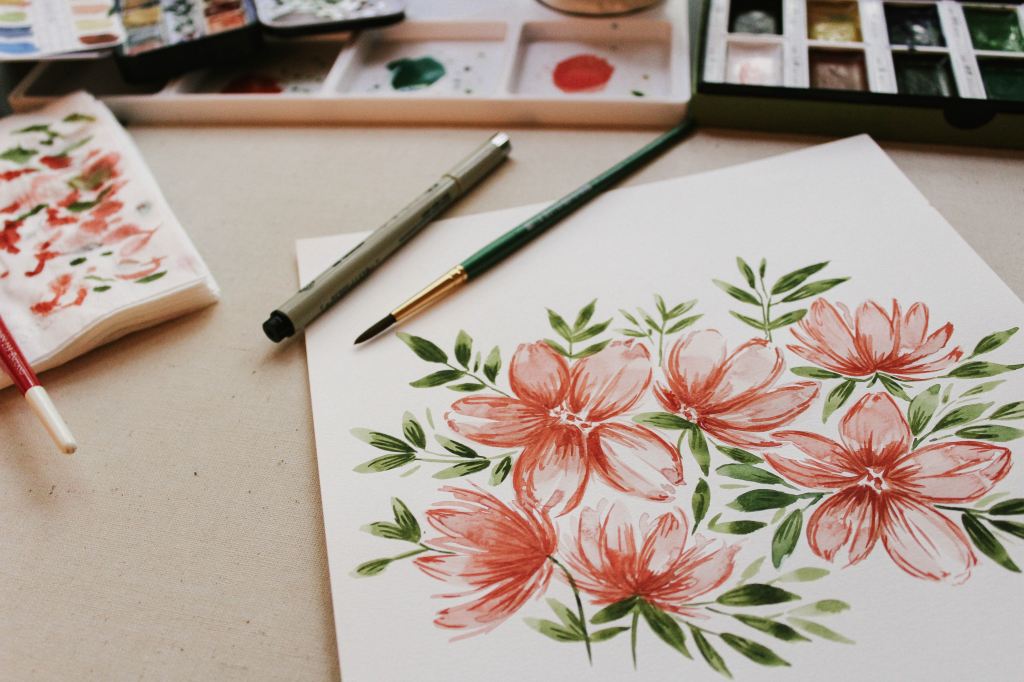
Photo credit: Victoria Bilsborough, Unsplash
I hope you have found today’s post useful and it has helped to provide inspiration on how you might take steps to declutter your busy and active mind. I would love to hear any others ideas that you find work really well for you at times when you’re feeling a little overwhelmed.