Posted in Anxiety management, Bipolar disorder, compassion, depression management, grief, life hacks, mental health, productivity, Uncategorized, wellbeing

Monday Matters: How writing a ‘done list’ can improve your wellbeing during periods of physical and/or mental illness

Welcome to my first blog post of 2025. Happy New Year to you all, and a special hello to my new followers! I hope you had a wonderful Christmas and are excited for what this year will bring.

My husband and I both enjoyed the festive period, which this year (make that last year!) was a double celebration as my brother and his partner got married a few days after Santa had been. The wedding was a joyous occasion and a great a chance to chat with family I hadn’t seen in a while too.

Whilst on the way back home, and with my husband doing the driving, I made the most of being in the passenger seat by reflecting on 2024 and thinking about what I would like to achieve in 2025. I also started to mentally compose a to-do list full of chores and more pleasurable activities to make the most of the remaining three days of the holiday. Little did I know that something would scupper my plans…

Bloody COVID-19 strikes again!

By the time we got back, we both had a bit of a sore throat, which I assumed was just a bit of dehydration from the long car journey. By New Year’s Eve, we felt absolutely dreadful, and so my husband did a test (just in case), and I’m sure you can all guess how that turned out! Needless to say, we’ve barely had the energy for basic self care, nevermind any chores, fun activities or creative pursuits.

We did, however, manage to  psych ourselves up enough to take a quick shower each day, despite how exhausted we were and, despite the fact that the powerful water raining down and massaging in my shampoo and conditioner brought actual pain to my scalp! – random covid symptom or what?????? And I’m so glad we did because this idea for a blog post was born – in fact, some of my best content and general epiphanies come to me whilst showering (anyone else??). 

Basically, I was busy thinking about how annoying it was that I was too exhausted to do anything and that being ill was a giant waste of time, and then I recalled that during my worst bipolar depressions, I still achieved a few things each day and tried my best to be kind to myself and celebrate small wins. To help me do this, I created something that I call a ‘done list’ and, although my illness was physical rather than mental on this occasion, I realised the same technique could be used to make myself feel better.

As everyone goes through ups and downs in life, I thought I’d share how my done list works. You might not need to apply the technique now, but it’s a lovely, self compassionate activity which you can store in your physical or metaphorical toolbox to use when needed such as when you’re sick or struggling with low mood. It can also be used when you’re not feeling under the weather, as a celebration of how productive you’ve been in general or as you work towards your goals for the week / month / year and so on.

In fact, as I sat on the sofa (on day 3 of COVID-19), soothing my throat with a warm drink, I actually started mentally creating one to help my husband and I feel a sense of achievement because I realised we actually did something that day despite feeling like crap.

So what’s a done list?

A done list, as the name suggests, is basically a list of things you’ve achieved that hour / day / week / fortnight / month / different time frame of your choosing, which can be tailored to how you’re feeling – both physically and mentally. So, for example, your list could look something like this:

Today’s done list

  • got out of bed (before 10am too!)
  • got dressed
  • brushed my teeth and washed my face
  • planned 3 things to do
  • made and ate a sandwich (even though I didn’t feel hungry)
  • worked on my jigsaw
  • watched TV for 1 hour (and managed to follow the storyline of the drama)

Or, if you’re not feeling too bad (in a bit more pain than usual, or a little tired maybe and not 100%), could include more taxing items such as those found in the list below:

Things I’ve done this week

  • washed the car
  • tidied my craft room
  • decluttered 20 items from craft room!
  • made 3 meals from scratch
  • 5 gentle workouts (2 x 20 mins yoga and 3 x 30 mins Pilates)
  • created a journalling page using my crafting stash

As you can see from the above, you can include super-minute achievements (or what would considered to be when well) or more ambitious ‘done’ items at other times. These ‘done’ tasks make a good record of how you’ve spent your time and can help you realise that, yes, you might be on top form, but you did make some progress or make a dent in your mental to do list (or physical one if you wrote a list when feeling productive and then things changed e.g. illness, upsetting life event, overwhelm etc).

If you’re still at work, but it’s been a struggle not to phone in sick, you could even include things that you achieved as part of your job, like biting your tongue at a comment made by a colleague or being assertive and saying no to your boss or team leader!

What are the main benefits of creating a ‘done list’?

These are the main benefits I’ve found of creating a done list, but you may be able to come up with more:

  • a visual reminder of what you’ve achieved in the chosen timeframe – the smaller the items are, the longer your list can be!
  • boosts your motivation to do more things (be careful not to do too much though as the last thing you want to do is make yourself feel worse)
  • acknowledges your small wins during difficult times

Final words…

I apologise if this is not new content and I’ve already written about a ‘done list’ before – I did trail through my posts in a bid to find out, and couldn’t pinpoint anything but I still have ‘COVID brain’. Hopefully I’ve shared something helpful which has given you a new string to your ‘wellbeing bow’, particularly if you have recurrent issues with your physical or mental health like I do. Doing a ‘done list’ can also be a great record of what you’ve achieved over a period of time, so can be a really useful tool for measuring productivity too. However you use it, I’m pretty sure it’ll make you feel a little more upbeat about things and your lists may even bring a smile to your face at a later date if you keep them in your planner and happen to flip back!

Thank you for reading and I wish you and your loved ones a happy and healthy 2025,

Posted in goal setting, journalling, life hacks, lifestyle, meditation, Mindfulness, mindset, self care, Setting goals and intentions, wellbeing, wellness

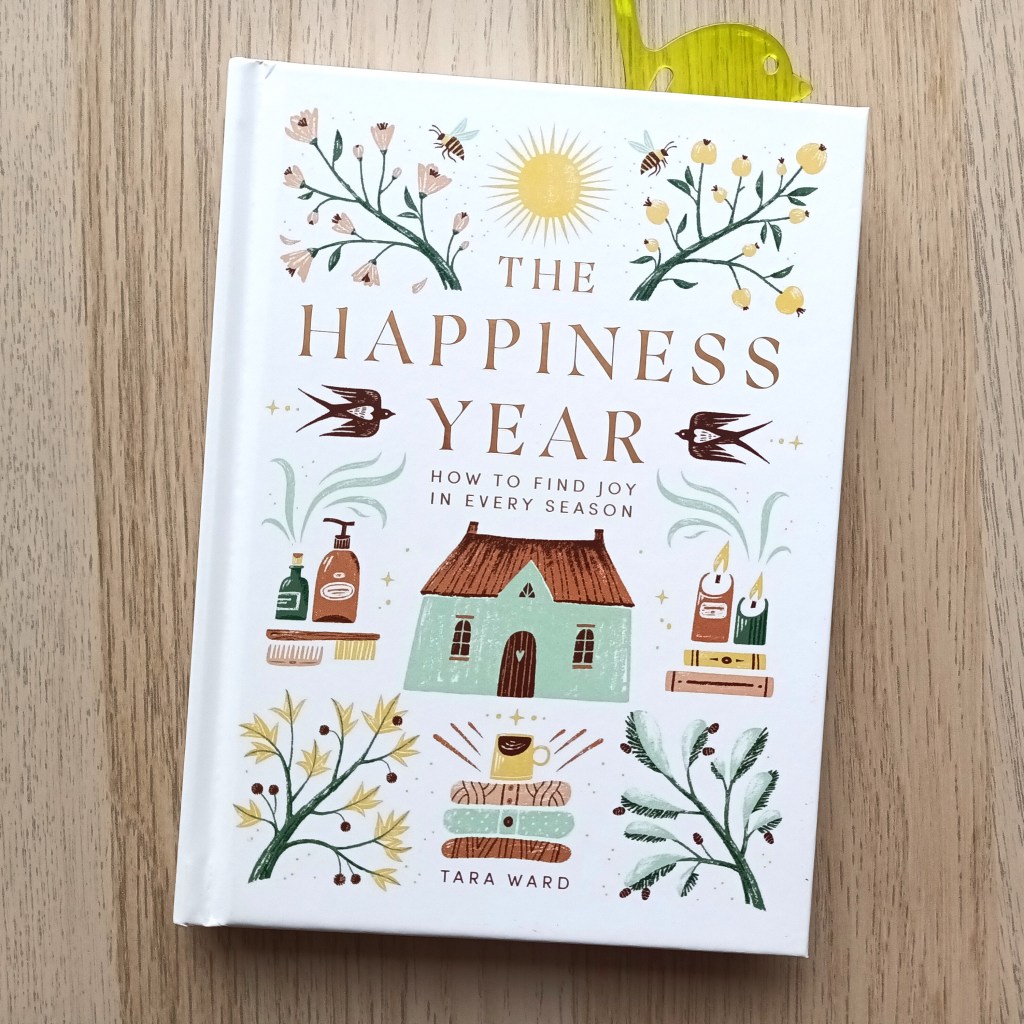
Monday Matters: Discovering joy in every season of the year using The Happiness Year by Tara Ward

A few months ago, I was looking in the health and wellbeing section at Waterstones and came upon a beautifully illustrated book about finding joy throughout the year by trying out different seasonal activities. At the time, I didn’t purchase it, but I regretted my decision so I ordered it from an online retailer. When it arrived, I added it to the bookcase in my craft room as I was already in the process of reading about 8 different books which is a few too many even by my standards. I pulled it out a few days ago and there are some lovely activities inside in the section which I started with – Spring. I tried out the first exercise this morning and really enjoyed it so I thought I would give a short summary of the book and share that first prompt with you today.

The Happiness Year: How to Find Joy In Every Season by Tara Ward

In the introductory section of the book, Tara discusses the aims of The Happiness Year and also talks about the emotion of happiness and the four positive chemicals that are released into your body when you’re happy – dopamine, oxytocin, serotonin and endorphins (referred to as DOSE throughout the book). She then goes on to explain how to use and enjoy the book.

The remainder of the book is split into four sections – Spring, Summer, Autumn and Winter and there are a collection of exercises provided in each which you can pick and choose from. In combination, they promise to help you in an holistic way – physically, mentally, emotionally and spiritually. Personally, I think I will probably try out all of the different activities and see which I prefer and benefit from the most.

Included within the book, there are journalling and brainstorming activities, meditations, physical exercises, goal setting and planning tasks, plus many more to explore and enjoy. You are also invited to complete them in a way that feels comfortable for you, taking into account individual differences and preferences.

So far, I’ve only read the Spring chapter in depth but I’ve had a good flick through all of the book and I can already see there are many exercises that will appeal.

Exploring your thoughts, feelings and ideas about Spring

As I said earlier, I completed the first activity this morning and I enjoyed it so much that I felt compelled to share it with you. I think this exercise would work well for each of the four seasons, not just Spring. Here’s a step by step explanation of what to do:

  • Take an A4 piece of paper and place it in front of you
  • Write the word SPRING in large letters at the bottom of the page
  • Close your eyes and take three deep, comfortable breaths to focus you in the present moment
  • Open your eyes and look at the word
  • What comes to mind when you think of Spring?
  • Write down everything which comes up for you
  • When you’ve run out of ideas, close your eyes again, breathe deeply and continue thinking about the season
  • Note down any further ideas or images which come to mind
  • When you feel you’ve finished, look over your sheet
  • What jumps out at you the most? Circle any words or phrases which particularly resonate or feel important to you. Are then any surprises?
  • What is the overriding emotion when you look at your words? Write that emotion or emotions at the top of the page.
  • Look through the words and make a list of those which generate feelings of happiness.

I hope you found this a helpful exercise and it reminded you about all of the lovely things which happen in the Springtime. I’ve included my sheet below, how does it compare to yours?

Photo credit: Laura Jones for Keeping It Creative

Final words…

If you enjoy mindful activities such as journalling, setting intentions, exploring the world using your five senses, breathwork, meditation and appreciating the simple things in life, I would definitely recommend checking out The Happiness Year. The book will help you find ways to appreciate and make the most of all of the things that each season has to offer you. You’ll also find a range of self care activities to increase your happiness levels by releasing a good ‘DOSE’ of positive chemicals. Let me know if you try the exercise outlined above and how it made you feel.

Posted in compassion, depression management, lifestyle, mental health, self care, wellbeing

Monday Matters: 7 ways to be kind to yourself when you’re struggling

In today’s Monday Matters post, I’m going to be talking about something which I believe many of us struggle with and that is self-kindness. At school, we’re taught to be kind, respectful, patient, forgiving and gentle with others but do we apply this same compassionate attitude to ourselves? I know I certainly don’t, and I also notice that I’m particularly harsh and critical when I’m struggling. So, here are some ways in which being kind to ourselves can help our mental health and 7 ways you can show yourself some kindness right now.

Benefits of self-kindness which are particularly relevant during periods of difficulty

  • better self-esteem
  • increased resilience
  • less self-criticism
  • increased self-acceptance
  • helps us cope better with stress
  • improved self-confidence
  • decreases anxiety and depression
  • helps us feel more optimistic

7 ways you can be kinder to yourself

Practise self-compassion

During times of difficulty, many of us tend to be really unkind to ourselves. We place unrealistic expectations upon ourselves, say engage in negative self talk, criticise ourselves when things don’t go right, place blame unfairly, find fault in what we do and fail to celebrate our achievements. Sounds pretty harsh right? And it makes us feel ten times worse than we already do. Instead, what we would really benefit from is practising self-compassion, where we offer ourselves warmth, gentleness, understanding, acceptance and empathy. A good way to do this is to imagine what you would say to a friend who was going through a period of difficulty and was dealing with the same issues that you are. Then apply that compassion to yourself. You can even take this a step further and write yourself a compassionate letter where you offer support and encouraging words and then read it back. You can find out more about the therapeutic benefits of writing here.

Focus on the good

When we’re struggling, we tend to get into a negative frame of mind. Try to break this by thinking about your positives. Here are some ideas for you to try:

Congratulate yourself on your achievements no matter how small – maybe you got dressed and went out for a walk, maybe you completed something from your to-do list or maybe you dealt with a difficult situation assertively. Just getting out of bed can be a huge achievement if you’re struggling with depression.

Use positive self-talk – I’ve written before about the impact that negative self talk can have on us and how we can reframe it. As part of being encouraging and supportive towards yourself, you can counteract negative thoughts with positive affirmations. Some examples are: I am kind to myself during difficult times, I am doing the best I can, I can get through this, I have the ability to cope, I am brave and strong.

Make an all about you list – things you’re good at, your best qualities, a ‘done list’ of all of the things you’ve achieved today/this week. Try writing a different list each day to really improve your relationship with yourself.

Nourish your body and your brain

When you’re struggling, it can be really tempting to reach for high calorie snacks full of sugar or fat and eat processed foods for your meals. The reason we crave these items is because they temporarily increase our mood boosting endorphins leaving us feeling happy, blissful, calm or soothed or provide you with a chemical sugar high. Unfortunately, these feelings don’t last and can lead to overeating and poor diet overall. And of course, an unhealthy diet can create all sorts of problems including reduced energy levels, weight gain, obesity, depression, weakened immune system and vitamin and mineral deficiencies. Be kind to yourself by focusing on eating a balanced diet which includes a variety of fresh fruit and vegetables.

Something that I find really helpful is to plan my meals in advance. This means that I’m more likely to eat healthily but also that I can ensure I’m eating a balance of different foods and a range of fruit and vegetables. And don’t forget, you are allowed a treat every now and again but it’s best if you really take your time eating it so you can savour the flavour and really appreciate it (search ‘mindful eating’ online for more info).

Get moving

When life is hard you might feel tired and lacking in energy and this might mean that even the though of exercise too much. But, something gentle, like a walk in your local park, ten minutes of basic stretching exercises or a short yoga session could make you feel so much better. Exercise releases feel good endorphins which help to boost your mood and if you engage in a mindful activity you will also be focusing on the present moment and forgetting about other concerns in your life which can lead to feelings of calm and relaxation.

Do something that brings you joy

Try to make it a habit to do something you love each day. Try to carve out at least half an hour for your own enjoyment. Here’s some ideas:

  • Hobbies – sewing, watercolour painting, papercrafting, drawing, playing a musical instrument, baking.
  • Outdoors – time in the garden, nature walk, sculpture trail, sit in the sunshine.
  • Retail therapy – a new houseplant, a scented candle, a pretty scarf, some sweets you haven’t had since childhood, some stationery.
  • Brain stimulation – crossword, word search, sudoku, jigsaw puzzle, board game.
  • Movement – yoga, stroll along the beach, mindful walking, dancing to some upbeat music, ten pin bowling, try out a team sport.
  • Socialise – coffee with a friend, take a class e.g. flower arranging, phone a relative.

If you’re struggling with depression right now, you might be thinking that nothing brings you joy at the moment so there’s little point in doing anything. However, research has found that if you do some of the things that you normally enjoy, you will still reap the benefits of the activity so try scheduling something in and then congratulate yourself for finding the motivation to do it.

Add some soothing activities to your day

When you’re struggling with your mental health or life is extremely busy and stressful, it’s a really good idea to plan something soothing to help yourself feel calm and relaxed. The activity you choose is very much a personal preference but you could try one or more or the following:

  • a hot bath with scented bath oil or a bath bomb
  • a foot massage with refreshing peppermint oil
  • read a book, under a blanket with optional hot chocolate
  • light a scented candle and watch the flame flicker
  • buy some flowers and spend time arranging them in a vase
  • cuddle something – a pet or a soft toy
  • watercolour painting or colouring in

Make good sleep a priority

A good night’s sleep benefits us in so many ways including better mood, more energy, improved cognition and stronger relationships with others. However, when we’re struggling, we’re likely to find that the quantity or quality of our sleep is affected so it’s important to take steps to fix it. This can include doing relaxing activities before bed (and avoiding known stimulants), spending time journalling about your day so you can process what’s happened and prepare yourself for tomorrow, and making sure your bedroom environment is just right. If sleep is an issue for you right now you might want to check out this blog post. Or, for really in depth look at sleep issues, the NHS has a long self help guide which can be accessed here.

Final words…

I hope that today’s blog post has been useful in providing you with some ideas about how you can be kinder to yourself. However, if the thought of doing all of these things seems a little overwhelming, trying choosing one suggestion which you think might make you feel a little better and start from there. Remember tiny steps can lead to a big impact.

Posted in compassion, life hacks, mental health, Mindfulness, Planning and journaling, Setting goals and intentions, wellbeing, wellness

Practical ways to declutter your overloaded mind

Photo credit: Element5 Digital, Unsplash

There are a plethora of books and articles both online and in print about the benefits of decluttering your possessions in order to simplify your life and create more order. However, it’s not just our homes which can become cluttered and cause feelings of overwhelm and low mood. Our minds are equally susceptible and can easily become overloaded with worries, stresses and all of those emotions that come from spinning too many plates. Today’s blog post looks at practical ways of managing this mental clutter to improve our wellbeing.

1. Identify your current priorities in life

A good place to start decluttering your mind is to spend some time quietly reflecting on your life right now. Start to consider how you currently spend your time and use your energy and then begin to think about how satisfied you are with this situation. If you find yourself wanting to implement some changes, try focusing your attention on how you would like to live or what your ideal day would look like. This can help you establish what’s really important to you and enable you to prioritize. For example, you may decide that you are neglecting to look after yourself properly and need to give self care more of a focus or you might want to spend more quality time with your partner, your family or your friends.

2. Set some goals and instil some habits

When you know what your priorities are, you can work on setting some goals and creating some habits which help you to achieve these. For example, if having more ‘me time’ is at the top of your list, you may decide that you want to spend one hour per week learning a new skill or taking a class. If having more time together with your family is an area you’d like to work on, you might schedule a regular movie night, games evening or brainstorm or list of ways you would like to have fun together in your bullet journal or notebook. If you do use a bullet journal and like to have a habit tracker as part of your weekly or monthly spreads, your goals can inform the habits you choose to include. For example, if having a tidy space to study or work is one of your desires, you might choose to have a habit such as ‘ten minute desk tidy’ at the end of each day.

3. Practise mindfulness

Mindfulness is the process of bringing one’s attention to the current moment and concentrating on the flow of our thoughts, emotions, what is going on around us and bodily sensations without judgement. It can help us to reduce the time we spend dwelling on past events (rumination) or becoming anxious about the future and help us to become more calm and compassionate towards ourselves. Becoming more mindful can help to declutter our minds of worries and anxieties by creating a more relaxed state of being.

4. Take time to breathe

A big part of mindfulness and self compassion is about taking time out. Our busy lives often create minds which are full of mental chatter which we find difficult to silence. We can all find time to settle our minds by taking the time to slow down and a great way to do this is by changing your focus to a more soothing activity such as rhythmic breathing or a mini meditation. If, like me, you have a bullet journal or planner, try scheduling time to have a break as part of your daily plans or add meditation to your habit tracker. By being more mindful and checking in with your body and how you are feeling, you can also more easily recognise when you might need to pause or slow down.

5. Getting it down on paper

Another really helpful way of clearing mental clutter is to write it all down. There are many different ideas for how to go about doing this but popular methods include doing a ‘brain dump’ or regularly engaging in reflective journaling. A brain dump is basically where you put everything that’s on your mind down on paper or into a digital document. How you spill the contents of your brain is up to you. Some people like to just scribble down their thoughts and feelings onto a page of their journal or onto any random piece of paper they have available whenever they have lots on their mind. Others prefer the regular practise of creating ‘morning pages‘ where they dedicate time each day to writing it all down as soon as they wake up. Personally, I like to add thoughts and ideas to my daily plans in my bullet journal and spend some time each evening, reflecting on how my day has gone and writing a few things down underneath my bulleted lists. If you want to find out more about the bullet journal method for organisation, I recommend visiting Ryder Carroll’s website here or reading his book which explains the method in detail.

For specific projects, you may find that creating some sort of visual way of organising helps to get your thoughts on paper in a logical way. A spider diagram, is a popular method and one which you may have used at school. Basically, you start by placing your main thought, idea or topic in the centre of the page and then you add branches from this when you think of subtopics. These subtopics can then be broken down further by more branches, creating a kind of spiders legs effect on the page. A quick ‘Google’ search online shows lots of examples of this technique which can be a helpful way of structuring all of the information in your mind.

6. Avoid information overload

This point is particularly relevant to our lives today in the digital age. With so much information at our finger tips online, especially through our use of various social media platforms, it can be very easy to become overwhelmed and feel like we are ready to explode. There are many ways to avoid overloading ourselves with information, including limiting the amount of time we spend online. Also, if you have already spent time assessing your current priorities, then you can use this to inform what you focus on. For example, at the beginning of the year, I decided that I wanted to improve my gardening know how, so I thought about the steps I would need to take to do this and then spent time and energy improving my knowledge through reading about the plants in our garden, finding seasonal gardening tips online and watching gardening programmes on the television. I then recorded my learning in a garden journal. Also, avoiding negative and unreliable media sources can help your online presence positive and informative. For example, I tend to stay away from sensationalised news articles and always try to turn off my notifications for Facebook, Instagram and Twitter for a while when I’m super busy.

7. Out of your mind and into your body

In a previous blog post, I talked about ways to stimulate your vagus nerve and included plenty of suggestions about how to use the power of this cranial nerve to stimulate your body and relax your mind. By moving our attention to our bodies and reconnecting to the world around us, we create much needed space in our minds which helps us to gain better mental clarity. Going out into the garden to feel the fresh air, listen to the birds or get some sunlight on our skin, taking a quiet stroll in the local park, or even just putting on a favourite song and singing out loud whilst having a quick boogie can all help.

8. Take some time to unwind

Your brain needs regular breaks to rest and recharge itself and so creating white space in your calendar or planner is a must. Spend some time away from your phone or tablet and do something relaxing which makes you feel happy. For me, a walk in nature, reading a book or doing something creative, such as painting or drawing are some of my favourite ways to unwind. I like to create pages in my bullet journal for self care and ‘me time’ activities so that when I’m feeling frazzled, I can get some inspiration for self soothing behaviours.

Photo credit: Victoria Bilsborough, Unsplash

I hope you have found today’s post useful and it has helped to provide inspiration on how you might take steps to declutter your busy and active mind. I would love to hear any others ideas that you find work really well for you at times when you’re feeling a little overwhelmed.

Posted in CBT, compassion, mental health, Mindfulness, psychology, wellbeing, wellness

Are you putting too much pressure on yourself? The unhelpfulness of ‘I should’ and ‘I must’ expectations

As part of my compassion group learning over the last few weeks, we’ve been looking unhelpful and more helpful thinking styles. I’ve previously talked about the psychology of using the term ‘I can’t’ (click here to read this post) when we really mean we find something difficult. In today’s wellbeing post, I’m going to focus on the pressure we put on ourselves using terms such as ‘I should’ and ‘I must’.

At the beginning of the year, I went through a really difficult patch with my mental health. I was suffering from debilitating anxiety and everything was a constant struggle. I was having panic attacks and my mood was very low. I spent a lot of time worrying that I wasn’t going to get better and found it extremely difficult to motivate myself to do anything but cry. I’m pleased to report that I’m now feeling much better and life is good. However, my improved mood and elevated motivation levels did start to cause a few issues with my self talk and my thinking and it is this which today’s post focuses on.

As soon as I started to feel better, I totally went into what is known as ‘drive mode’ and felt like I needed to make up for lost time by doing it all and not stopping. I had finally found the joy in achieving things in my day and my head was full of ideas and thoughts. I was writing huge to do lists and spent my time flitting from activity to activity in a frenzied way from when I got up at 6.00am to when I went to bed at 10pm. My head was filled with talk such as ‘I need to…’, ‘I have to…’ ‘I should…’ and all of the other terms associated with the intense desire to be productive and get a buzz from it.

The therapists in our compassion group helped us to see, however, that constantly being in drive mode and making these unrealistic assumptions of how to live can be really unhelpful. Terms such as I need to, I must, I have to and I should, put undue pressure on ourselves to perform and create expectations of ourselves that are very difficult to keep up with.

The effects of using these rigid terms have been studied by a number of psychologists and was a key part of the work of Albert Ellis. He coined the term ‘musterbation’ which has certainly stuck in my mind since reading about it online! The following quote I found online sums up the effects nicely:

“Musterbation” is a term coined by famed psychologist Albert Ellis to describe the phenomenon whereby people live by a set of absolute and unrealistic demands that they place on themselves, others and the world. For most of us, these rules come out in a series of should statements that we repeat to ourselves over and over again. These “should” and “shouldn’t” statements leave us feeling bad about ourselves because they set up standards that we cannot realistically meet. They also leave us feeling frustrated and hurt by others when they inevitably fail to fulfill our expectations. Recognizing this habit to set rules for yourself, others and the world gives you the opportunity to relieve some of the stress these messages cause. When dealing with “should” statements, it is important to keep in mind that while it may be nice to reach your goals and be treated the way you want all the time, we are human and live in an imperfect world. Therefore, the pressure to be anything all the time is more likely to cause harm than good.

Rowan Center BLOG, 2015.

If you would like to read more of their interesting article click here.

I’m now much more aware of when I’m using these terms (I haven’t stopped using them and I’m very much conditioned to their use, I’m just more mindful of when I do) and I try to reframe my thinking to be more helpful. This is taking time, but I do think it’s a really important step in increasing my good mental health. I’ve also noticed that my husband is fond of saying ‘I’ve got to…’ ‘I need to…’ and the like and so we laugh about it and then help each other to create more compassionate thoughts and beliefs too. Here are some examples and how I’ve re-articulated things:

  • I need to get rid of all of the weeds in the garden this week >>>> it would be great if I found some time this week to do a little bit of weeding as it would make the garden look a little nicer
  • I must take new and improved photographs of my products today >>>> If the lighting is okay today, I might take a few new photos of a couple of my products and upload them to Etsy
  • I really should get all of that washing done whilst the weather is okay >>>> it would be good if I did some washing this week as the basket is getting pretty full. I might do a load tomorrow and hang it out in the sunshine

You’ll notice that I’ve been more gentle and kind with my expectations too as another way of putting less pressure on myself. This is a big part of being more self compassionate which is what our wonderful therapy group is all about.

I hope you’ve found this blog post interesting and helpful. Maybe it’s made you think about the expectations you set and how you might re-frame your thoughts. Perhaps over the next week, you might notice yourself using ‘I must…’, ‘I need to…’ and ‘I should…’ a lot and you might try to be more mindful of what you say or think. It would be great if you let me know in the comments, but remember, you don’t ‘need to’ or ‘have to’, you just might like to or want to!

Much love and kindness.