Posted in compassion, mental health, Mindfulness, wellbeing, wellness

Monday Matters: Creating a W.R.A.P. Part 3

Over the past couple of weeks, I’ve been sharing my experiences of writing a Wellness Recovery Action Plan to support my mental health. In Part 1, I shared what a W.R.A.P. is and why it’s useful as well as how to create a wellness toolbox. In Part 2, I wrote about making a detailed list of adjectives to describe what you are like when you are feeling well and also how to make a maintenance plan of every day activities that help to keep you well. This week, the focus is on triggers and how to cope with them, plus creating a list of early warning signs of deteriorating mental health. Obviously, this is very personal to you as an individual but I hope by sharing some of my lists you get the idea so you can have a go at making your own.

Triggers (AKA Stressors)

Triggers in your life are external events or circumstances that make you feel uncomfortable. They can include situations in your work or personal life that you know tend to stress you out or upset you. Writing these triggers down won’t stop them from happening, but it can help us put coping methods and action plans in place for dealing with the emotions that are felt.

The following are some examples of my triggers so you can get the idea for making your own list:

spending too much time alone

criticism from others

being overly tired

family friction

making a mistake

not being listened to

change to routine

packing to go on holiday

mental health themes in TV dramas

feeling left out

being wrongly judged

My coping methods / action plan

Do everything on my daily maintenance plan – keep routines going

Pick out some activities from my wellness toolbox

Talk to a supportive person about what has happened

Turn negative self talk into positive

Use mindfulness techniques

Do some soothing rhythm breathing

Focus on tasks that are easy to do

Make lists e.g. a packing list for holidays

Early Warning Signs

For this part of the WRAP plan, you make a list of signs that tell you and others that you’re not feeling mentally well. This helps friends and family to look for signs of deterioration and is also good for sharing with medical professionals. For me personally, I have different signs depending on whether I’m starting to become depressed or anxious or developing hypermania.

Signs of depression and anxiety

loss of appetite / comfort eating

feeling tearful over things that wouldn’t usually affect me

lack of motivation

feeling tired even after lots of sleep

agitation

want to be alone

irritability

poor concentration

feeling worthless / helpless

Signs of hypomania

constant talking – unable to switch off

mind in overdrive

erratic driving

spending lots of money to fix things

hyperactivity

sleeplessness

agitation

irritability

flick from one task to another in a bid to get it all done

Coping methods / action plan

Do relaxation exercises – meditation, yoga etc.

Pick out some activities from my wellness tools

Tell someone I trust how I feel

Do everything on my daily maintenance list

Seek medical help

Get some exercise

Ask for support with household tasks

Challenge negative thoughts

Celebrate small achievements

Although I found these tasks difficult to do at the time as I was living with the depression and anxiety symptoms, I do think they are really useful lists to make. I also found it beneficial to talk with others about coping methods and get ideas from them too.

I hope you are finding these posts informative and useful. I really recommend creating your own WRAP either by yourself or with a loved one or therapist. Sitting down and really thinking about yourself and what you are like at different times can really help. Also if you can feel yourself becoming stressed or unwell, you can put things in place to help prevent you from becoming worse.

Of course, the current situation with the virus is a huge source of stress and worry so, now more than ever, we need to look after ourselves and ensure self care activities are high on our agenda. A lot of our routines and aspects of our daily lives have changed beyond our control and for many, this will be one of your main triggers so make sure you put things in place to help you cope.

Until next time, stay home and stay safe and well,

Posted in Planning and journaling, wellbeing, wellness

Grateful in April: being thankful for what I have despite the current circumstances

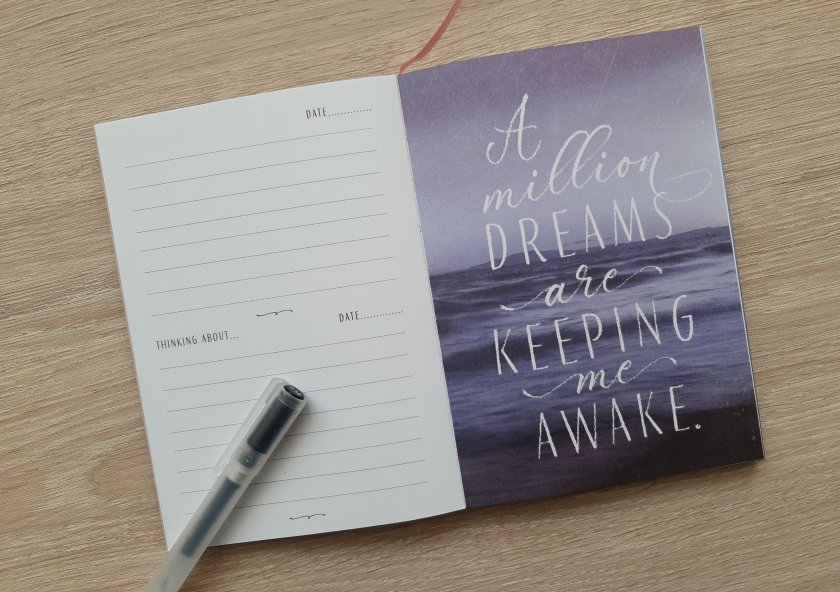
This month, as I mentioned in my vision board post, I want to focus on the positives in my life despite the awful situation that we as a nation find ourselves in currently. In order to do this, I decided to make a one-line-a-day gratitude log in my BuJo. I also remembered that I bought a little book from Paperchase a while back which is a little journal called ‘5 Minutes Before Bed’ and in it you record thoughts of the day. I hope my post will inspire you to do something similar and, with any luck, it might lift your spirits at this difficult time.

A quick check on the Paperchase website has shown me that the book is no longer available to buy but it would be really easy to do something similar in your bullet journal using sentence starters such as Today…, Thinking about…, Happy about… Dreaming about… etc. You could even add your own brush lettered messages and decorate them in different ways.

It might seem that, in the current situation, with Covid-19 and all of the anxiety and sadness it has brought, that there might not be much to feel grateful for right now. However, if you focus on thinking about the good things in your life, despite all the bad, you can definitely find at least one reason to be thankful each day. Here’s a list of some of what I’ve come up with this month so far, in no particular order:

I’m grateful for…

– The NHS staff who are working tirelessly and putting their lives on the line every day

– The bright sunshine and breeze which dried my washing on the line

– My husband for supporting me in everything I do and being so understanding

– The shop which was open and had an artist’s board and a flat wash brush so I could do my watercolour painting successfully

– The staff at my local supermarket who are working harder than ever to keep the shelves stocked and serve me with all of the items I need

– My little collection of gorgeously scented Body Shop soaps that have kept my hands clean

– The cute moorhen chicks in the park that brought a smile to my face

– The blog readers who enjoy my posts and give them a like or a comment

– The memories of days out in the past which I can talk about with my husband

– WhatsApp and Messenger so I can keep in touch with friends and family

– My hamster, Rosie for making me giggle with her antics

– The mental health nurse who listened so carefully during my telephone therapy and provided such helpful advice

– Watercolour painting tutorials on YouTube that I’ve used this month to develop my basic skills

– The funny clips about the current situation that have made me laugh out loud

– The kindness volunteers have shown to people in need at this time

I hope you have enjoyed reading my short list and it has made you think more positively about the current situation. I’m not saying life is all wonderful right now but there are so many things to be grateful for, including the fact that we’ve all come together to do our bit to stop the spread of this awful virus. I would really encourage you to write down or draw a gratitude list or do some reflective journaling each evening as a way of improving your mental health and wellbeing during this difficult time.

Keep safe and keep well everyone,

Posted in mental health, wellbeing, wellness

Monday Matters: Creating a W.R.A.P. Part 2

Last week, I introduced the idea of creating a Wellness Recovery Action Plan (W.R.A.P.) as a tool for monitoring your own mental health and keeping yourself as well as you can. I discussed what a W.R.A.P. is and went on to share the first step as the creation of a list of wellness tools i.e. things that you enjoy doing and that make you feel good. If you haven’t seen this initial post click here to read it before you learn what to do now. Today, I’m going on to the next step which focuses on what you are like when you are well and on listing daily maintenance tasks that you really need to do to keep yourself well.

Having drawn up your wellness tools, you’re invited to consider what you are like when you are feeling well. When I did this, I got really upset as it was a reminder of how I am when my mental health is good and I felt like I’d not seen the real Laura for such a long time. Now I’m back to feeling great, I can look at my list and celebrate who I am.

In as much detail as possible, you should make a list of how you feel when you are well. Here’s a few examples from my list so you can get the idea:

talkative

friendly

full of positivity

calm

productive

energetic

loving

decisive

assertive

good sense of humour

The idea behind doing this is so that you can spend some time really thinking about the kind of person you are when you’re feeling well and then you will be easily able to spot signs that you are starting to struggle and put steps in place to prevent decline in your mental health.

Having written your list, you should then go on to think about the things you need to do each day to keep yourself feeling well. What you note down here should be every day things that you must do to maintain a state of wellness. This is known as your ‘Daily Maintenance’ plan. Here are some of the things on my list but obviously yours may have different tasks and activities on depending on how you spend your time.

Daily Maintenance:

get up by 8am

have cereal, dried fruit and coffee for breakfast (or an alternative as a treat!)

take a vitamin tablet

check my plan for the day in my bullet journal

brush my teeth

shower

dry my hair and get dressed

Do yoga, some stretches or go for a walk

Do my morning activities

Have a healthy lunch

Do my afternoon activities

Make dinner and eat with my husband

Do a relaxing activity from my wellness toolbox list

Do chores e.g. dishwasher etc.

Make a plan for tomorrow in my BuJo

Relax

Take my medication

Go to bed by 11pm and enjoy at least 7 hours sleep

Obviously my plan changes depending on whether I’m attending classes or going out for the day, but it does give you a basic structure to your time and would be really helpful to refer to in order to keep yourself on track and productive. It’s also good to look at when you aren’t feeling so good as you can add small tasks to your notebook or bullet journal and celebrate the little successes in your day e.g. keeping yourself hydrated or doing a short household chore.

We were given a handout from the Recovery College in which to write down our lists but when I started to feel better, I made my own all bright and colourful pages using a MS Word document and then printed them out and put them in a folder. If you’re feeling particularly arty or love drawing, you could even create a pictorial list.

I hope you’ve found today’s post useful and that it has given you some insight into the usefulness of creating a W.R.A.P. If you have any questions, I would be happy to answer them in the comments.

Until next time, stay home and stay well,

Posted in life hacks, mental health, wellbeing, wellness

Monday Matters: Creating a Wellness Recovery Action Plan (W.R.A.P.) to support good mental health. Part 1.

A few months ago, I did a six week course at my local recovery college that focused on creating a Wellness Recovery Action Plan (W.R.A.P.). The concept of a W.R.A.P. was originally developed in 1997 by Mary Ellen Copeland and a group of like-minded mental health recovery advocates as a way of monitoring wellness and periods of difficulty, keeping yourself well and recording how you would like to be supported and by whom in the event of future issues.

At the time of attending the course, I was in a really bad place and found the sessions quite overwhelming and would end up in tears on a regular basis. However, I could still see the benefits of making a W.R.A.P. and completed all of the tasks and homework each week. I was really proud of myself for continuing to attend the group and now I’m well again, I would like to share my learning with you and discuss how you can go about making your own plan.

The first session of the course involved an introduction to the W.R.A.P. and discussion about how we were going to be supported in the creation of the document. We were given a handout so we could record our ideas each week and tailor our plan to suit our individual needs. If you would like to find out more about the plan from its original creator, you can click here to be taken to her website.

WRAP is a tool that can aid an individual’s recovery and its underpinning principles support the recovery approach. WRAP is a way of monitoring wellness, times of being less well and times when experiences are uncomfortable and distressing. It also includes details of how an individual would like others to support them at these different times.”

There are 5 main principles to the W.R.A.P. and these are:

Hope – that you will get well, stay well and go on to meet your dreams and goals

Personal responsibility – it’s up to you to decide what will most likely help to keep you well and who you would like to support you in order to give you the very best chance at staying well

Education – learning everything you can to enable you to make good decisions about your mental health and how you would like it to be managed

Self advocacy – making sure you have everything you need, want and deserve to support your wellness and recovery

Support – although it is primarily your job to ensure you stay well, the plan encourages you to accept that at times, you may need help and support with managing your mental health and that you can give selected others the chance to work with you to improve your quality of life

After learning about what W.R.A.P. is all about, we were set of the task of brainstorming ideas for a wellness toolbox. This was basically a list of things you enjoy doing which make you feel good. Mine included colouring in, painting, drawing, meditating, meeting a friend for coffee, reading, walking in nature, gardening and volunteering for a good cause. The benefit of working with a group of people who also struggle to maintain good mental health was that you could listen to suggestions from them and maybe try out some of their ideas if they appealed too.

For homework each week, we were invited to collect an item to bring in which could be put in a physical wellness tool box either as reminders of activities or to actually use to support your recovery or to keep yourself well. Ideas from myself and others included colouring in books, jigsaws, a scented candle, a chocolate bar, some bubble bath, photographs of loved ones (including pets!), memorabilia from special times and favourite books. The possibilities are endless!

I wrote a long list of ideas into a MS Word document and printed it off to put in a folder but you could also create a visual board using pictures collected from magazines or the internet or even do a Pinterest board. I think it’s a good idea to have a hard copy of your ideas so you can share it with people who support you in the maintenance of good mental health such as family members, friends or even your mental health professional or doctor.

I hope this has made you think about what you would include in your wellness toolbox. Let me know in the comments below what you find really beneficial for helping you personally to maintain good mental health – you never know, it might just provide me or someone else with an idea to try in the future.

Much love,

Posted in Blogging, productivity, wellbeing, wellness

Keeping my distance: Life during lockdown for an office worker

This morning I received an email from my husband with his contribution to my how life has changed during the pandemic series of guest posts. He is only upstairs, but as he’s working on his computer, he decided to quickly attach his MS Word document and forward it to me rather than asking me to read it on his screen. So without further ado, here’s his summary on things.

Since March 23rd, when Boris Johnson made his announcement about social distancing, we have been spending much more time at home. My wife, Laura asked me to document some of the things that have changed for me personally, so here goes.

The good aspects of the lockdown

I work as a materials planner for factory and my place of work is a 30 mile commute from home. This means I am usually out of the house for 10 hours each week day, leaving at 6.30am and returning home by 5pm. Since I am now working from home, I get to spend more time with Laura. I’m also saving lots of money on fuel as I buy approximately £35.00 worth of diesel each week.

I am spending most of my day working in Laura’s ‘craft room’ (although I do manage on my laptop for the first half hour, sat at the dining table downstairs so I don’t wake my wife up tapping away on the keys!). When Laura gets up (usually around 7.30 – 8am, I’m able to take my things upstairs and spread out on her large desk, making use of the very comfortable office chair and connecting my laptop and keyboard to a large monitor, kindly loaned by work so I can actually see what I am doing on the various emails and spreadsheets! We are lucky as, with the nature of our business, we still have plenty of orders and with the factory operating with less staff we are probably busier than usual, especially as we have issues with getting hold of the materials from different sources as our suppliers are self isolating too.

Although Laura and I have the chance to converse more during the day, our company is still really busy with production and I am always typing away, making calls and having meetings. The only time I really see Laura, when I’m hard at work, is when she brings me coffee (and sometimes a biscuit or two!).

When I was at the office, I used to mainly spend my lunchbreak still sat at my computer but now I’m able to stretch my legs and enjoy my lunch at the dining table so my wife and I can spend quality time together, something we would never be able to do usually. I can also have a pop out into the garden and check out all of our various plants and see what needs to be done out there in terms of weeding, mowing the grass, digging etc. At weekends, there are of course all those little jobs in the house or garden to finally tick off as we are spending much more time at home.

The not so good aspects of the lockdown

When I first started working from home, I only had my laptop and keyboard and could barely see what I was doing. The company decided to arrange for us to have a monitor to use at home as ours are affixed to our desks in the office but I had to wait a while for this to be arranged and ended up having neckache each day and everything seemed to take twice as long to do. I’m getting used to the new way of working now but tasks still take a little longer as you can’t just pop over to a colleague’s desk to check something with them like I would usually do.

Laura and I used to enjoy getting out at weekends. These days we can’t really go out, except to the supermarket, which is now a stressful experience, queuing outside, trying to keep your distance from other customers. Trying not to touch my face whilst in the shop, or feeling like I’m nagging Laura to do the same. Some essentials, such as bread or vegetables are often sold out, so you have to go to ANOTHER shop even though we have been advised to only go to one place! When we return from the supermarket, there’s all the hand washing to be done, which has been making my already cracked and sore hands much worse.

Lots of other things have changed besides, too numerous to mention, or even worth thinking about without being overwhelmed. The situation is ever changing, but for the right reasons and will help us come out of this faster with less lives lost. Stay kind, stay safe.

Michael

Thanks to my wonderful husband for sharing his experiences. I am sure others who work in an office have had similar issues with setting up their space at home, although many of you probably have less to do or have to complete tasks a little differently. Also, now I know how much money we save in fuel costs, I’m thinking of all of the things I could buy with that £35.00 each week!