Posted in wellbeing, wellness

Monday Matters: Creating a W.R.A.P. Part 4

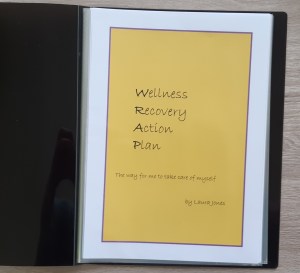
The cover I made for my file using MS Word

In this series, I’m breaking down the aspects involved in creating a Wellness Recovery Action Plan (W.R.A.P.) and sharing my experiences of the course I did at my local recovery college where I worked on my own individual plan. In Part 1, I talked about what a W.R.A.P. is and why they are helpful. I identified the main principles and introduced the idea of making a wellness toolbox to help you think about activities which you find help your mental health. In Part 2, the focus was on identifying what you are like when you are well and making a list of every day activities which you should do to keep yourself feeling well. For Part 3, we looked at the importance of recognising your triggers or stressors and creating a plan of methods for coping with these when they occur. We also considered our own personal warning signs that we are beginning to become unwell and I shared examples of my signs and actions for combatting these. Today, the focus is on signs of further decline when your coping methods and action plans are not helping you and simple steps you can take to remediate.

Sometimes, I find that even though I’m trying really hard to keep myself well, certain sets of circumstances or aspects of life cause my mental health to deteriorate. When I start to become depressed, it seems like nothing I can do will help and thoughts such as ‘I’m never going to get better’ kick in. Even though I’ve got through periods of depression and anxiety countless times before, I always panic that this is going to be the one time when I stay unwell indefinitely.

When I made my list of signs of decline, I was actually living that depressive and anxious side of my life so it was easy to write everything down but also quite upsetting. I also struggled to come up with coping methods and an action plan and this is where the support of the course facilitator at the college became so important. If you are struggling it’s really important to reach out for help. A family member, a close friend or a therapist can all help to provide objectivity and encouragement in finding a way forward.

Now I’m feeling stable, I have added to my list. In fact, I’ve turned it into two lists – one for times of depression and anxiety and the other for when I’m struggling with hypomania. Here are some examples that may help you get started with creating your own list or lists:

Depressive episodes

crying a lot

lack of motivation

avoid doing things

anxiety on waking

isolating myself

feeling hopeless

can’t see a way forward

rocking and pacing

fragile

lots of negative self talk

let things upset me that I wouldn’t ordinarily

feeling tired all of the time

sleeping in

very poor appetite – feeling sick

hopelessness

convinced I will never get better

Hypomania

erratic driving

spending money on unnecessary things

talking non-stop

not sleeping properly

taking on too much

jumping from one activity to another

thinking I’m superior / better than most

My coping methods / action plan

Go back to my wellness toolbox and choose self soothing and mindful activities

Do things ion my ‘Daily Maintenance’ list even though I don’t feel like doing them

Get some exercise – a gentle walk in nature

Do a meditative activity e.g. colouring in

Write a short action plan for each day

Try to celebrate small achievements

Write a done list of all of the things I have achieved each day e.g. had a shower, ate some lunch etc

I hope my posts are helping in terms of managing your mental health conditions and has shown how a Wellness Recovery Action plan can help with anxiety, depression and symptoms of bipolar illness. The fifth part will be about crisis planning which is particularly relevant for those of you who may struggle with manic episodes and severe periods of depression where someone else needs to take over your care. As my mood disorder is not as debilitating as this and I have learnt to manage hypomania and moderate depression, I did not fill in this part of the plan but I will still be sharing ideas for its completion.

Until next time,

Posted in mental health, wellbeing, wellness, yoga

Over 20 physical and psychological benefits of yoga that will help your body and your mind

As those of you who follow my blog will know, I started attending an Iyengar yoga for beginners class several months ago. After three sessions, the class was suspended due to Coronavirus and then shortly after that, the complete lockdown began. Keen to continue my practise, I’ve built up my collection of equipment and have found suitable classes on YouTube. I’m pleased to report that I’m doing at least 10 minutes of yoga every day and I’m reaping the physical and mental benefits already. So, in this post, I thought I’d share with you how yoga can transform your body and your mind. Please bear in mind that, although I have fully researched the article, most of what you read is my own limited experiences of practising and I am not an expert yogi!

Yoga is an ancient form of exercise that originated in India around 5,000 years ago. There are many different styles but all types focus on increasing strength and flexibility and breathe control in a way which boosts physical and mental wellbeing. The type of yoga that I practise is called Iyengar and this form places emphasis on detail, precision and alignment. When you begin, you are encouraged to use a variety of props such as bricks, blocks, blankets, a strap, a bolster and even a special yoga chair. This equipment is designed to assist you in your practice so you are able to form the asana (poses) correctly.

Although yoga is performed slowly and carefully, so won’t count as part of the recommended 150 minutes of moderate activity per week, it is an extremely good strengthening exercise with lots of benefits for your physical and mental health. This makes it an incredible worthwhile practice to adopt alongside more aerobic activities that get your heart rate up. It is also suitable for all ages and fitness levels. In fact, B.K.S. Iyengar who developed the Iyengar style, still practised for several hours per day when he was in his nineties, before his death at the grand old age of 95!

Physical Benefits of yoga

From the very first week that I went to my yoga class, I could feel my muscles getting a really good stretch in each pose. Now I’ve been practising for a few months, I’m beginning to develop increased flexibility throughout my body. I’m still using lots of equipment in my practice such as bricks, blocks, a strap and a bolster, but I’m able to push myself a little bit further each time as my muscles lengthen. Overall, my body feels a lot better and stronger already.

I’ve always suffered from back and neck pain since my teenage years and a physiotherapist that I went for a rotator cuff injury in my shoulder and sciatic pain identified bad posture as part of the problem. He suggested a variety of physio exercises but also said that in the long term working on my core strength by doing Pilates or yoga would really help. I’m now starting to find that I have much better posture and reduced pain in my body in general. I still suffer from neck and shoulder pain at times but I am hoping this will lessen with daily yoga practice.

A big part of yoga is a focus on the breath. When you bring attention to your breathing, you find that you take full and deep inhalations and exhalations and this can help to increase lung capacity and improve the function of your blood vessels which may lower blood pressure. As an asthma sufferer, I was pleased to learn that yoga can improve your breathing technique and develop your ability to control the depth of your breathing.

Although I’m having no trouble sleeping at the moment, I do tend to develop insomnia during times of high stress. I was pleased to read then, that yoga can promote better sleep and that people who practise some kind of meditation each day find they fall asleep quicker, stay asleep longer and have better quality sleep than those who don’t.

Many yoga poses, such as downward facing dog, have a weight bearing element to them and this has been shown to strengthen your bones and ward off osteoporosis. I find this particularly useful to know as weakening of the bones is very common as we get older, and it often effects women.

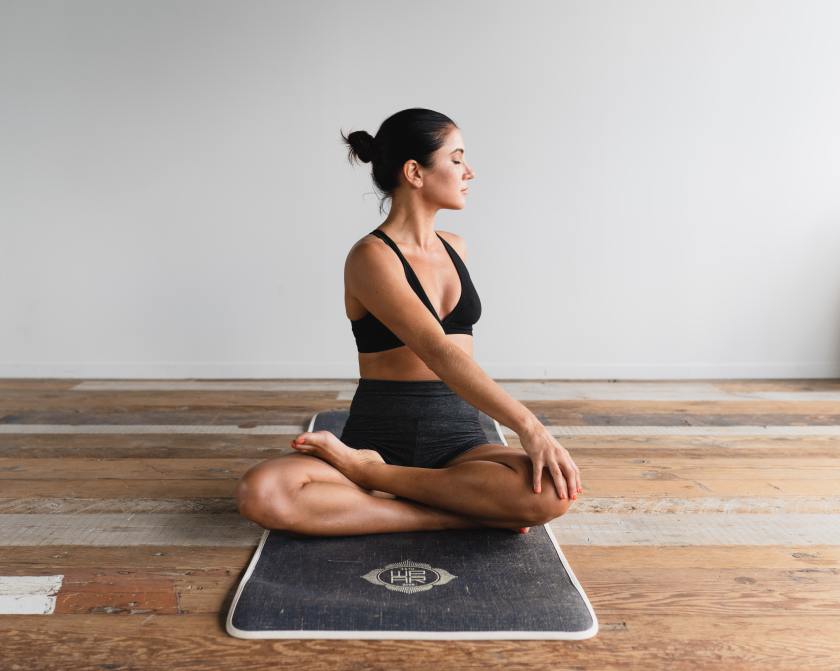
Photo credit: Form on Unsplash

Psychological benefits of yoga

Yoga not only transforms your body, it can also improve your mental health in so many ways too. Even after my very first class, I felt calm and relaxed and generally blissful. We did lots of strengthening and stretching poses and then for 10 minutes at the end of the session, the teacher put on some relaxing music and we did some restorative poses that were nice and easy to stay in whilst working on progressive muscle relaxation. The asana (postures) were so lovely that I didn’t want to move out of the final pose at the end!

When you are practising yoga, you are concentrating fully on each of the poses and the transition from one posture to another. You focus on your breath and the lengthening of various muscles, and this full awareness can be seen as a kind of movement based meditation and mindfulness practise. The benefits of meditation are backed by scientific study and include stress reduction and lower levels of anxiety, improved outlook on life and better self image.

As someone who suffers from repeated bouts of depression and anxiety, I was pleased to note that yoga is great for managing both conditions. People who consistently practise have been found to have increased serotonin levels (which contribute to wellbeing and happiness) and reduced cortisol levels (the body’s main stress hormone). In fact, during a telephone appointment with a mental health nurse last month, she suggested I give yoga a try as an adjunctive treatment – she was happy to hear that I’d already started to give it a go.

Yoga can also increase confidence levels and improve self esteem. It teaches us to slow down and pay attention to ourselves and the current moment. Doing this enables us to focus and find the mental clarity within us that we need to solve problems, make decisions and create improvements to our personal situations. This is in contrast to our modern society which encourages us to work harder and faster, buy more and consume more, compare ourselves to others and seek external validation for everything we do.

I hope today’s post has helped you develop a better understanding of yoga and the physical and mental benefits of the practice. Although there are no yoga classes in the UK and many other countries running currently due to the lockdown, I would recommend that you start to learn yoga by attending a class. This is so that the yogi (instructor) is available to correct your postures, give advice and supply extra equipment to help you if needed. When you have perfected particular asana, you can then start to practise them at home.

Let me know if you already regularly practise yoga and are thriving from the physical and mental benefits to your practise. If you haven’t given it a try before, I hope my post has given you the encouragement you need to give it a go.

Namaste,

Posted in compassion, mental health, Mindfulness, wellbeing, wellness

Monday Matters: Creating a W.R.A.P. Part 3

Over the past couple of weeks, I’ve been sharing my experiences of writing a Wellness Recovery Action Plan to support my mental health. In Part 1, I shared what a W.R.A.P. is and why it’s useful as well as how to create a wellness toolbox. In Part 2, I wrote about making a detailed list of adjectives to describe what you are like when you are feeling well and also how to make a maintenance plan of every day activities that help to keep you well. This week, the focus is on triggers and how to cope with them, plus creating a list of early warning signs of deteriorating mental health. Obviously, this is very personal to you as an individual but I hope by sharing some of my lists you get the idea so you can have a go at making your own.

Triggers (AKA Stressors)

Triggers in your life are external events or circumstances that make you feel uncomfortable. They can include situations in your work or personal life that you know tend to stress you out or upset you. Writing these triggers down won’t stop them from happening, but it can help us put coping methods and action plans in place for dealing with the emotions that are felt.

The following are some examples of my triggers so you can get the idea for making your own list:

spending too much time alone

criticism from others

being overly tired

family friction

making a mistake

not being listened to

change to routine

packing to go on holiday

mental health themes in TV dramas

feeling left out

being wrongly judged

My coping methods / action plan

Do everything on my daily maintenance plan – keep routines going

Pick out some activities from my wellness toolbox

Talk to a supportive person about what has happened

Turn negative self talk into positive

Use mindfulness techniques

Do some soothing rhythm breathing

Focus on tasks that are easy to do

Make lists e.g. a packing list for holidays

Early Warning Signs

For this part of the WRAP plan, you make a list of signs that tell you and others that you’re not feeling mentally well. This helps friends and family to look for signs of deterioration and is also good for sharing with medical professionals. For me personally, I have different signs depending on whether I’m starting to become depressed or anxious or developing hypermania.

Signs of depression and anxiety

loss of appetite / comfort eating

feeling tearful over things that wouldn’t usually affect me

lack of motivation

feeling tired even after lots of sleep

agitation

want to be alone

irritability

poor concentration

feeling worthless / helpless

Signs of hypomania

constant talking – unable to switch off

mind in overdrive

erratic driving

spending lots of money to fix things

hyperactivity

sleeplessness

agitation

irritability

flick from one task to another in a bid to get it all done

Coping methods / action plan

Do relaxation exercises – meditation, yoga etc.

Pick out some activities from my wellness tools

Tell someone I trust how I feel

Do everything on my daily maintenance list

Seek medical help

Get some exercise

Ask for support with household tasks

Challenge negative thoughts

Celebrate small achievements

Although I found these tasks difficult to do at the time as I was living with the depression and anxiety symptoms, I do think they are really useful lists to make. I also found it beneficial to talk with others about coping methods and get ideas from them too.

I hope you are finding these posts informative and useful. I really recommend creating your own WRAP either by yourself or with a loved one or therapist. Sitting down and really thinking about yourself and what you are like at different times can really help. Also if you can feel yourself becoming stressed or unwell, you can put things in place to help prevent you from becoming worse.

Of course, the current situation with the virus is a huge source of stress and worry so, now more than ever, we need to look after ourselves and ensure self care activities are high on our agenda. A lot of our routines and aspects of our daily lives have changed beyond our control and for many, this will be one of your main triggers so make sure you put things in place to help you cope.

Until next time, stay home and stay safe and well,

Posted in Planning and journaling, wellbeing, wellness

Grateful in April: being thankful for what I have despite the current circumstances

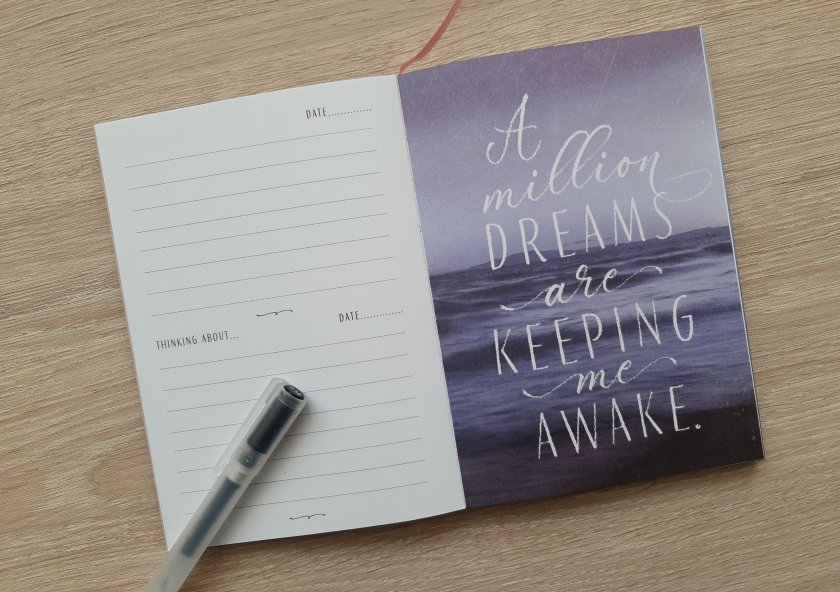
This month, as I mentioned in my vision board post, I want to focus on the positives in my life despite the awful situation that we as a nation find ourselves in currently. In order to do this, I decided to make a one-line-a-day gratitude log in my BuJo. I also remembered that I bought a little book from Paperchase a while back which is a little journal called ‘5 Minutes Before Bed’ and in it you record thoughts of the day. I hope my post will inspire you to do something similar and, with any luck, it might lift your spirits at this difficult time.

A quick check on the Paperchase website has shown me that the book is no longer available to buy but it would be really easy to do something similar in your bullet journal using sentence starters such as Today…, Thinking about…, Happy about… Dreaming about… etc. You could even add your own brush lettered messages and decorate them in different ways.

It might seem that, in the current situation, with Covid-19 and all of the anxiety and sadness it has brought, that there might not be much to feel grateful for right now. However, if you focus on thinking about the good things in your life, despite all the bad, you can definitely find at least one reason to be thankful each day. Here’s a list of some of what I’ve come up with this month so far, in no particular order:

I’m grateful for…

– The NHS staff who are working tirelessly and putting their lives on the line every day

– The bright sunshine and breeze which dried my washing on the line

– My husband for supporting me in everything I do and being so understanding

– The shop which was open and had an artist’s board and a flat wash brush so I could do my watercolour painting successfully

– The staff at my local supermarket who are working harder than ever to keep the shelves stocked and serve me with all of the items I need

– My little collection of gorgeously scented Body Shop soaps that have kept my hands clean

– The cute moorhen chicks in the park that brought a smile to my face

– The blog readers who enjoy my posts and give them a like or a comment

– The memories of days out in the past which I can talk about with my husband

– WhatsApp and Messenger so I can keep in touch with friends and family

– My hamster, Rosie for making me giggle with her antics

– The mental health nurse who listened so carefully during my telephone therapy and provided such helpful advice

– Watercolour painting tutorials on YouTube that I’ve used this month to develop my basic skills

– The funny clips about the current situation that have made me laugh out loud

– The kindness volunteers have shown to people in need at this time

I hope you have enjoyed reading my short list and it has made you think more positively about the current situation. I’m not saying life is all wonderful right now but there are so many things to be grateful for, including the fact that we’ve all come together to do our bit to stop the spread of this awful virus. I would really encourage you to write down or draw a gratitude list or do some reflective journaling each evening as a way of improving your mental health and wellbeing during this difficult time.

Keep safe and keep well everyone,

Posted in mental health, wellbeing, wellness

Monday Matters: Creating a W.R.A.P. Part 2

Last week, I introduced the idea of creating a Wellness Recovery Action Plan (W.R.A.P.) as a tool for monitoring your own mental health and keeping yourself as well as you can. I discussed what a W.R.A.P. is and went on to share the first step as the creation of a list of wellness tools i.e. things that you enjoy doing and that make you feel good. If you haven’t seen this initial post click here to read it before you learn what to do now. Today, I’m going on to the next step which focuses on what you are like when you are well and on listing daily maintenance tasks that you really need to do to keep yourself well.

Having drawn up your wellness tools, you’re invited to consider what you are like when you are feeling well. When I did this, I got really upset as it was a reminder of how I am when my mental health is good and I felt like I’d not seen the real Laura for such a long time. Now I’m back to feeling great, I can look at my list and celebrate who I am.

In as much detail as possible, you should make a list of how you feel when you are well. Here’s a few examples from my list so you can get the idea:

talkative

friendly

full of positivity

calm

productive

energetic

loving

decisive

assertive

good sense of humour

The idea behind doing this is so that you can spend some time really thinking about the kind of person you are when you’re feeling well and then you will be easily able to spot signs that you are starting to struggle and put steps in place to prevent decline in your mental health.

Having written your list, you should then go on to think about the things you need to do each day to keep yourself feeling well. What you note down here should be every day things that you must do to maintain a state of wellness. This is known as your ‘Daily Maintenance’ plan. Here are some of the things on my list but obviously yours may have different tasks and activities on depending on how you spend your time.

Daily Maintenance:

get up by 8am

have cereal, dried fruit and coffee for breakfast (or an alternative as a treat!)

take a vitamin tablet

check my plan for the day in my bullet journal

brush my teeth

shower

dry my hair and get dressed

Do yoga, some stretches or go for a walk

Do my morning activities

Have a healthy lunch

Do my afternoon activities

Make dinner and eat with my husband

Do a relaxing activity from my wellness toolbox list

Do chores e.g. dishwasher etc.

Make a plan for tomorrow in my BuJo

Relax

Take my medication

Go to bed by 11pm and enjoy at least 7 hours sleep

Obviously my plan changes depending on whether I’m attending classes or going out for the day, but it does give you a basic structure to your time and would be really helpful to refer to in order to keep yourself on track and productive. It’s also good to look at when you aren’t feeling so good as you can add small tasks to your notebook or bullet journal and celebrate the little successes in your day e.g. keeping yourself hydrated or doing a short household chore.

We were given a handout from the Recovery College in which to write down our lists but when I started to feel better, I made my own all bright and colourful pages using a MS Word document and then printed them out and put them in a folder. If you’re feeling particularly arty or love drawing, you could even create a pictorial list.

I hope you’ve found today’s post useful and that it has given you some insight into the usefulness of creating a W.R.A.P. If you have any questions, I would be happy to answer them in the comments.

Until next time, stay home and stay well,