Posted in goal setting, life hacks, lifestyle, Planning and journaling, productivity, Setting goals and intentions

Monday Matters: A guide to the Pomodoro Technique and how it’s helping me to increase my productivity

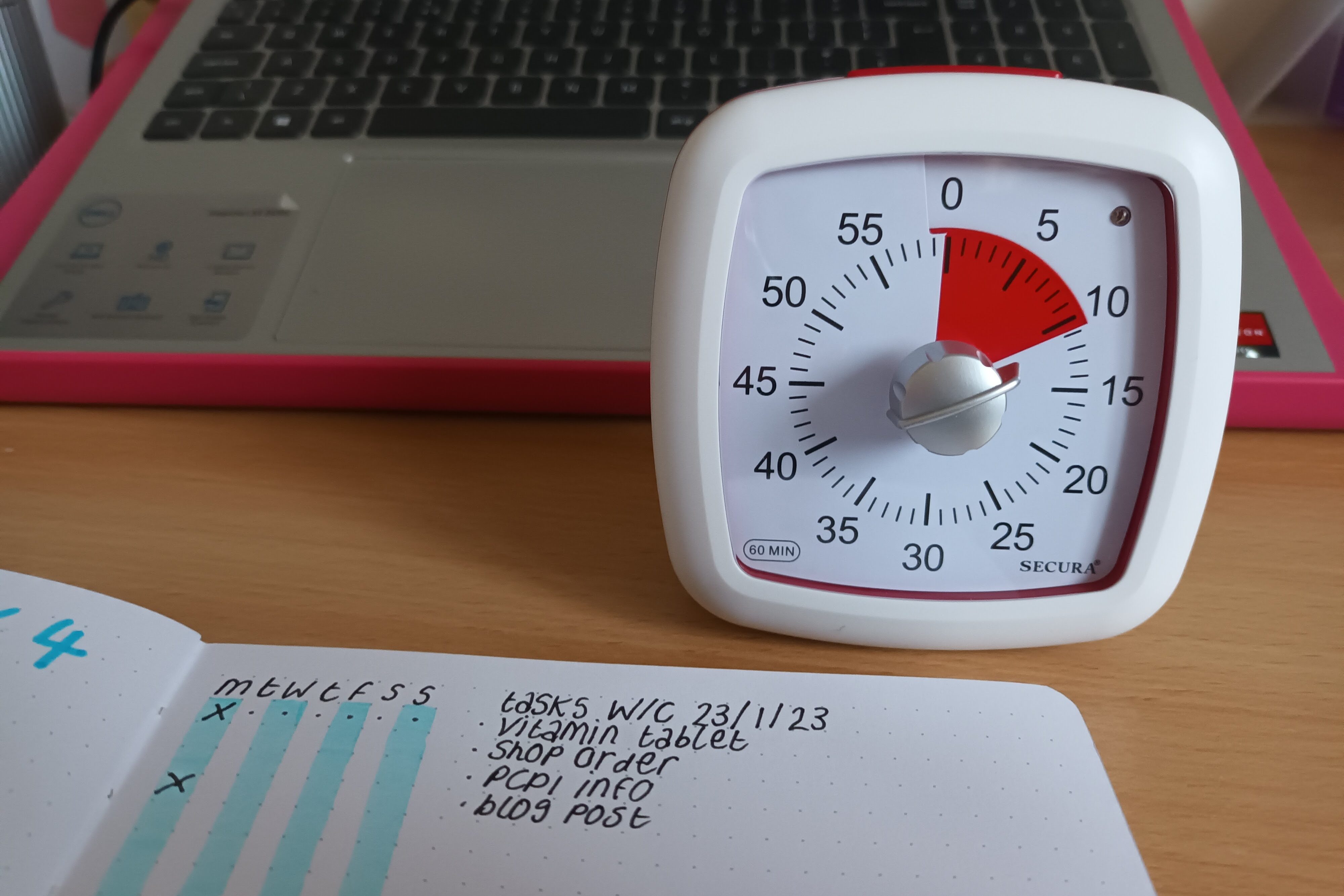
It’s been over two months now since I bought a countdown timer from Amazon to use for the Pomodoro Technique which aims to increase productivity. I already felt that I got plenty done each day but I loved the idea of breaking down work into intervals, having regular breaks and knowing how long I’d been hard at it for. I’ve been consistently using the time management method, apart from a week off for Christmas and I thought I’d share what it is and how I feel it’s helping me.

Those of you who have never heard of this technique may be wondering if it is named after a particular person, but you might be surprised to know that pomodoro is actually Italian for tomato. What does a tomato have to do with productivity? Read on and you’ll find out!

What is The Pomodoro Technique?

The Pomodoro Technique is a time management method which was developed by Italian Francesco Cirillo in the late 1980s. At this time, Cirillo was a university student and was struggling to stay focused on his studies. He challenged himself and posed the question ‘Can you stay focused for two minutes without distraction?’. To check if he could, he grabbed his countdown timer from the kitchen which was red and shaped like a pomodoro, or, in English, a tomato. He set the timer, and after two minutes of focused activity, the timer rang and he had achieved his mission. After this, he considered why the use of a timer had worked and he experimented with gradually upping the time and reducing it when it became too much. In the end, he decided that 25 minutes was perfect and that a short break (5 minutes) was required before continuing.

Cirillo carried on experimenting and came up with some basic principles. The timer was an important part but only one element of the method. He suggests the following:

  • Pick one task you want to work on.
  • Set your timer for 25 minutes and place it somewhere highly visible (so you can see how much time remains).
  • When the buzzer goes off, have a 5 minute break.
  • Repeat this with 3 more periods of 25 minutes and 5 minute breaks.
  • Mark each pomodoro with an X when you’ve completed it (this could be on a mini whiteboard, a post-it note or in your planner.
  • After 4 ‘pomodoros’ (work periods of 25 minutes and 5 minute breaks), take a longer break of 20-30 minutes.
  • Once your longer break is finished, go back to step 1.

But what if I have a really long project or lots of short tasks to do?

For complex projects, you should break things down into smaller actionable steps. This will help you avoid overwhelm and ensure you make good progress towards your end goal.

Any tasks which will take less than one pomodoro should be combined with other quick tasks. This might include a range of admin such as book a hairdressers appointment, reply to an email, making a shopping list for the supermarket and reviewing your bank statement.

If you finish your chosen task before the pomodoro timer rings, you should continue to use the rest of your time in a productive manner e.g. by going over what you’ve just learned, making a list of next steps, reading up on a related topic etc.

What should I do during my 5 minute breaks?

When the timer goes off, it’s sometimes tempting to continue working, especially if you’re in a flow state. However, taking breaks is really important if you want to stay productive. What you do during your short breaks is up to you but here are some suggestions that you might find helpful. For me, taking time away from screens such as my computer or my phone is super important and gives my eyes a good rest.

  • Do a short guided meditation
  • Get out in the garden and reap the benefits of fresh air
  • Do some stretches
  • Put on an upbeat track and dance about your kitchen / living room or anywhere with some space to move
  • Take a quick walk for a serotonin hit
  • Drink some water, squash or a flavoured tea
  • Sit in a comfy chair and read a good book
  • Do a mindful activity such as a spot of doodling, a word puzzle, jigsaw or some colouring in.
  • Listen to some music – trying closing your eyes so you really tune in.
  • Watch birds in your garden.

How is the Pomodoro Technique working for me so far?

So far, I’ve found the method to be incredibly effective. I bought my timer hoping that it might help in some small way but I didn’t realise how beneficial it would be as it’s such a simple idea. Here are some of the advantages I’ve experienced so far:

  • Makes it easy for me to get started. When you have a big project to do, it’s easy to get overwhelmed by its size and this can often lead to procrastination AKA putting things off. Contrary to popular belief, for most people, procrastinating is less about laziness and lack of self control, and more about fears of failure or feelings of self doubt. Knowing that I can do things in baby steps where I only have to do 25 minutes before being allowed a break is all the encouragement I need to get started.
  • Increasing my awareness of time. Using the timer makes you really aware of time going by and this encourages you to really focus in on your chosen tasks.
  • One thing at a time. The method encourages you to work on one specific task or a group of related tasks at one time and this helps to prevent the urge to multitask or context switching (where you jump from one task to another) which studies show is detrimental to productivity.
  • Great for avoiding distractions. In some ways, 25 minutes feels like plenty of time but if you don’t use it wisely, it can soon be gone. Because of this, I’ve taken steps to avoid anything which might interrupt my work flow. Depending on the type of work I’m doing, this might include putting my mobile phone in another room, adopting pen and paper methods for recording, switching off notifications and playing background music to block out other sounds.
  • Encourages me to plan my day. Before you start work, you’re encouraged to plan your tasks in advance. This helps you to decide what you want to get done, at what time and how long you think an activity is likely to take. At the end of your working day, you can evaluate your progress and consider if you overestimated or underestimated how much time tasks took. This can then inform your future planning.
  • Ensures I take regular breaks. Taking regular mental breaks from your work helps you to stay focused and remain efficient and productive during your 25 minute time blocks. If you’re working at a desk, it’s really beneficial to get up and move around as this improves your circulation and helps to combat fatigue.
  • Helps me maintain motivation. Seeing the time counting down on the timer in front of you is great for ensuring you work at a good pace. Also, after each session, I mark my progress in my bullet journal and this in itself makes me feel good and gives me the encouragement I need to keep going.
  • Encourages me to be self-evaluative. On days when I feel like I haven’t been super productive, despite using the Pomodoro Technique, I always question why. Common culprits include distractions from notifications or social media (especially if I’m researching something online), working in an untidy environment (meaning I can’t find things I needed) not taking my 5 minute break (or unconsciously extending them), deviating from my plan when I get back to work (because I found something else much more appealing, or when taking a break, engaging in something which didn’t allow me to relax and recharge (e.g. reading news articles online). When I’ve established what the issues are, I can develop strategies to combat them.

Final words…

I hope you have found today’s blog post useful, especially if you are looking for ways to beat procrastination, become more time savvy, and generally work more productively each day. If you want to know even more about the Pomodoro Technique you will find Francesco Cirillo’s book available in e-book format or paperback on Amazon. Also, feel free to ask any questions you may have in the comments and if you already use the Pomodoro Technique, let me know how it’s working out for you.

Posted in Bullet journaling, lifestyle, Planning and journaling, Setting goals and intentions

Monday Matters: Choosing your Word Of The Year and setting some related intentions

Photo credit: Laura Jones for Keeping It Creative

A few days ago, I watched a YouTube video from content creator and maker Emma at Plan Inspire Create. It was all about selecting a word of the year, thinking about different meanings for the word and setting some intentions for the year based on the term. As I was watching, I was aware that we are almost half way through January, which might seem a little bit late for such an activity but, then I thought about the fact that there are still eleven and a half months remaining, so plenty of time to set intentions and live by the selected word. Today I’m going to share tips for choosing your word and ways in which you can set aims with regard to different aspects of your life. I’ll share my word of the year and the bullet journal spreads where I explore the term in depth.

Choosing your word

Personally, my ideal word, ‘create’ popped into my head straight away and I was brimming with ideas to bring into fruition. However, if you’re in need of some inspiration, you may want to look at lists and select words which seem appealing. A good way of doing this is to pop on Pinterest and search ‘Word of the Year’. It’s important not to rush the process as there are likely to be a number of words which resonate and feel like they might be the one. When I need help deciding, I create a list of words which have potential and then take time to consider each one before making my choice.

After choosing my word, I used letter stamps and one of my new embossing powders (which I got from my lovely friend Bev) to create shiny letters which I then cut out individually. I also used smaller letter stamps to create a ‘Word of the year’ title. These are going to be used in a dedicated bullet journal spread where I explore what the word means and my intentions for living by it. This will create a record which I can refer back to regularly. I’ve already shared my vision board for the first quarter of the year and this shows some of the ways I’m focusing on being creative too.

Look how many times I used my chosen word in the above paragraphs and you’ll see why I selected it!

Considering different meanings of your word

Emma recommended a website called WordHippo which has a ‘thesaurus and word tools for your creative needs’. I found it really useful for considering different meanings for my word and synonyms too. I copied down the particularly relevant definitions/contexts and also made a note of similar words to use in my BuJo spreads. I was amazed by how much information I took from the site.

Create

  • To bring into existence
  • To design with a new shape or form
  • To be creative or imaginative
  • To start or establish
  • To cause or bring about through action
  • To take the first step into something

I created a list of synonyms and used Word It Out to make a word cloud:

I love creating word clouds and I like to print them and stick them in my bullet journal.

Setting some intentions relating to your chosen word

To help you set intentions you can refer to the segments of The Wheel Of Life or The Wheel Of Wellness as your categories or create your own based on the areas of your life that you feel need most work. I decided to combine ideas from both wheels and create a few of my own titles. The following should help you with setting up yours based on your chosen word. You might also find information from WordHippo useful too.

Health and fitness

  • Continue to eat a balanced diet, keep up with getting plenty of active minutes each day and maintain a good sleep routine so that I have plenty of energy for creative persuits.
  • Practice self care to maintain good mental health e.g. engage in mindful activities and find ways to relax each evening and on weekends.

Financial

  • Set aside some money each month for creative projects.
  • Try to use the craft materials I already have rather than buying new things.
  • Continue to make myself available for PCPI work so I have income to use for creative resources.

Family and friends

  • Meet regularly with Bev so we can share the results of our creative endeavours, celebrate our achievements, offer praise, encouragement and ideas.

Contribution / giving

  • Post regularly on my blog sharing motivational and inspirational content related to my bullet journal, living your best life and being productive
  • Continue to consider how I’m making a difference to the students I work with – find ways to record experiences in my journal

Physical environment

  • Make tidying and organising my craft room a priority so I know where materials and tools are and have room to work on creative activities.
  • Use my garden journal to identify tasks for the different months, record new plants and include photos to document changes over time.

Social connection

  • Create opportunities to connect with others through shared passions e.g. animal welfare, nature, crafting, blogging, fitness, bullet journalling
  • Be open to all types of PCPI work and consider how my roles are helping others in their chosen profession

Passion

  • Continue to choose a highlight for my day so that I have dedicated time each week to focus on journalling, blogging and particular creative projects I’m currently working on.
  • Make time to regularly think about my progress towards goals and how I am living my life in a way that reflects my word of the year and my personal values.

Emotional

  • Create balance between the different aspects of my life and regularly check in with how I’m feeling.
  • Remember that my energy levels are lower at certain times of year and ensure that I don’t take on too much to retain emotional wellness.
  • Assess how I’m coping with changes and any challenges.

Marriage

  • Find opportunities for new experiences with my husband. Harness the power of firsts to create happy memories together.
  • Find a different vegetarian/vegan recipe each week and enjoy the experience of creating dishes together in the kitchen.

Final words

I hope that today’s blog post has been helpful and encouraged you to take steps to create a life you love. If you prefer to work with images more than words, you could even create a vision board of pictures which represent how you would like to instill your word of the year. Let me know in the comments if you’ve chosen a word for 2023 and what it is.

Wishing you everything you hope for,

Posted in bullet journal, Bullet journaling, lifestyle, Planning and journaling, productivity, Setting goals and intentions

Monday Matters: How to create and use a vision board so it actually works

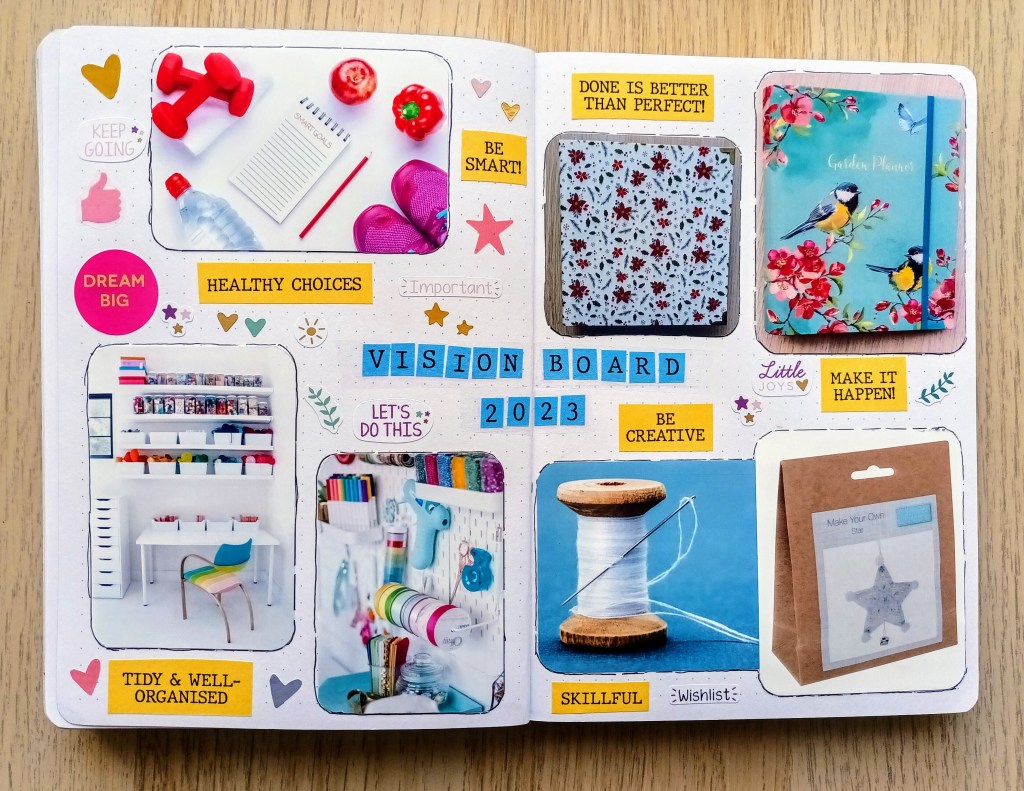
My vision board for the start of 2023

I’ve created quite a few vision boards over the last few years and some of them have worked better than others. Often, I find I have manifested some of the things I’ve visualised for myself, whilst other dreams have been forgotten or have not totally come into fruition. Before I create a new board in my bullet journal, I always reflect on the previous one, thinking about which of my desires and goals have been met, which I’ve made progress towards and which either didn’t come true or are no longer in line with what I want for my life. Today, I thought I’d share some of my best tips for creating a vision board and ways in which you can use yours as an effective tool for manifestation.

What is a vision board?

In brief, a vision board is a visual representation of goals you want to work towards to create your ideal life. This can include inspiring images, text which states what you desire for yourself and also messages to yourself such as affirmations and motivational phrases and words. Vision boards can be created in a range of different formats and some of these are discussed a little later.

What do we mean by manifestation?

Put simply, manifestation is the act of materialising or bringing into fruition you deepest wishes, desires and dreams, so they become your true reality. So, for example, you might wish to be a more organised person and this could be shown in your home and work systems, the way you manage your time, the plans you put in place, your goals and priorities, your decision making skills, your self awareness and ability to evaluate your situation etc. There are a number of ways of manifesting the above and creating a vision board can be a really geat tool if you use it properly and effectively.

Where to begin

Before you even start creating your vision board, you need to get clear on what you want to prioritise for yourself right now and in the future. A good way to do this is to schedule some time to quietly think about and evaluate your current life with a view to considering plans to work towards a few goals and small changes that will help you on your way towards your dream life. The following journalling prompts and questions which I’ve collected from a range of sources and created myself will encourage this. You don’t need to answer them all, but they should help you orientate your thinking and ease you into contemplation, evaluation and reflection mode. I recommended writing down some or all of your responses (preferably on paper rather than using a tech device) as part of the process because this enables you to slow down and carefully consider things.

  • What did I do last year that made me happy? Why did these things make me feel this way?
  • In which ways was I successful in 2022? Which goals did I meet? How did I effectively deal with problems which came my way?
  • What was my greatest accomplishment of the year? How has thinking about this helped with my self worth and feelings of purposefulness?
  • What challenges did I face last year? What did I learn as a result?
  • What kind of self care activities did I regularly engage in? (if any) Which of these would I like to continue with or do more of? Which new self care activities might I like to try in 2023?
  • What did I spend too much time and energy on in 2022? As a result, what would I like to do differently in 2023? How might I go about this? Do I need to learn something new or create some sort of plan of action?
  • What is a new skill I learnt last year? Which skill / skills would I like to learn or develop in 2023?
  • Name 5 of your core values e.g. positivity, helping others, social connection, looking after the environment, growth, adventure etc. Am I living in alignment with these? What changes would I like to make in relation to my values and beliefs?
  • Do I feel in control of my life right now or do I feel like others are controlling it for me? Are there any changes I wish to make as a result of my answer?
  • When do I feel most fulfilled? Why?
  • What do I want to leave behind in 2022? This could be anything – an attitude, a toxic relationship, poor self image, negative thinking, lack of self compassion, saying ‘yes’ when you really want to say no, being overworked and underpaid etc
  • What do I want to take forward into 2023? (What do I want to continue doing? How do I want to continue being? Which goals do I want to continue to work towards? etc)
  • What new practices / attitudes / ways of being / skills etc do I want for myself for 2023? How might I implement these? (e.g. do some self development reading, work with a therapist, change up my routines, attend a class or do some distance learning, place more emphasis / importance on something etc)
  • What limiting beliefs am I holding on to? Why? How can I work on changing my beliefs about myself / others / the world? (This might be something that you need help and support with, in which case, seeking out therapist or life coach can be really helpful)
  • What does success look and feel like to you? Why?
  • If you change one thing about your working life to make it better, what would it be? What impact do you feel this would have?
  • How do you respond to criticism? Do you feel this is helpful / unhelpful or could be improved in some way?
  • What qualities do you admire in other people?
  • Is there a skill you have always wanted to master? What could you do to make a start with this?
  • What bad habits would you like to break?
  • What new habits would you most like to instill?
  • What would you like to be doing in 5 years time? Why?
  • Who could support you in working towards the different goals you are considering?

Another activity which you might like to try is filling in a ‘wheel of life’ or ‘life balance wheel’ to assess how balanced the different aspects of your life are. There are lots of resources online for this, including blanks which you can print off. Commonly used categories are:

  • Career / business
  • Health/fitness
  • Spirituality
  • Fun & recreation
  • Finances
  • Giving / contribution
  • Personal growth and development
  • Significant other / marriage / romance
  • Physical environment (home/office)
  • Family & friends

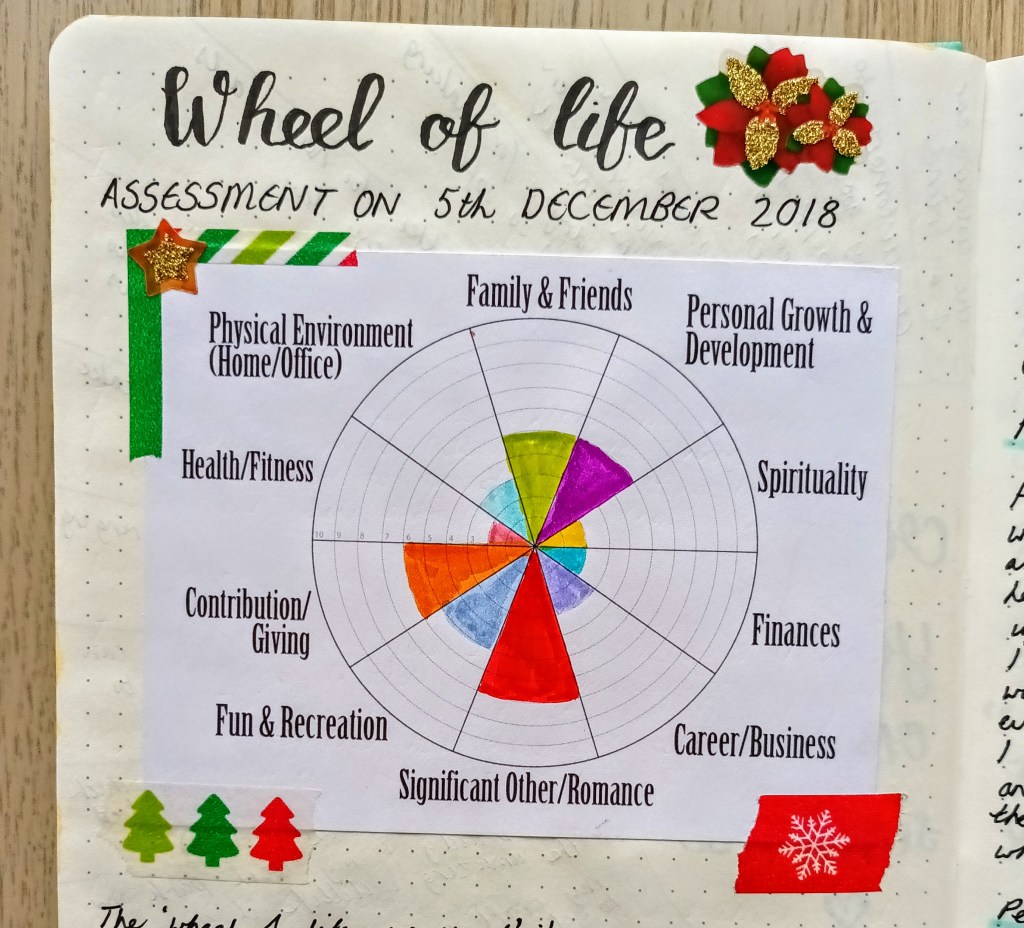
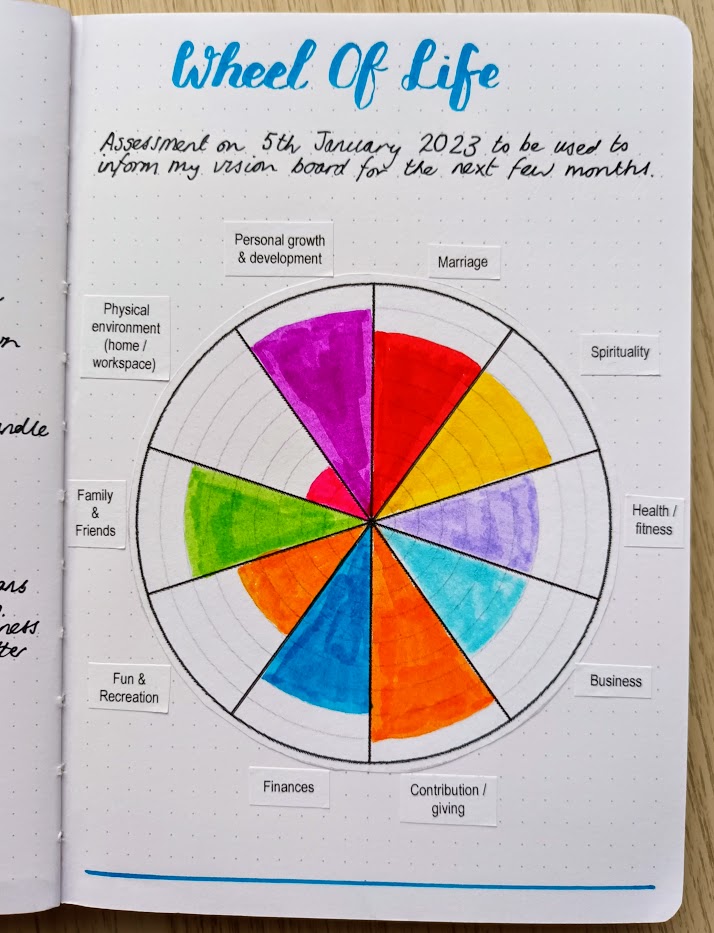
The category names can be tweaked to make them personal to you, so, for example, I would have marriage as a category, would choose business rather than career and have physical environment labelled with home / workspace. The idea is that you evaluate the aspects and give yourself a score out of 10 for each. This is mine from 2018 and it’s amazing to see how things have changed for me since then.

My wheel from the end of 2018 which I found in an old Bullet Journal

My new Wheel of Life!

When you’ve finished your wheel of life, you should see some categories that might benefit from a little bit (or a lot!) of work in order to level them up. For example, in mine, upgrading of the physical environment part of my life is my priority and I’m going to start with the part of my home that I spend most time in.

Personally, I prefer to work on tweaking things for the better rather than having grand ideas which are miles away from my current life. So, for example, if one of my current desires for myself was to have a healthy body and mind, I would think about things I could put in place to work towards this with small and achievable being the key words such as exercising for 30 minutes each day, making sure I eat at least 5 fruit and vegetables, having a balanced plate for my meals and doing at least half an hour of mindful activity each afternoon or evening or scheduling in other regular self care activities. This makes more sense than choosing what for me would be unreasonable goals such as losing loads of weight (unmeasurable), being a size 8 (not going to happen anywhere in the near future if ever,), eating a diet with no foodie treats (unmanageable) and spending two hours in the gym every day of the week (too high expectations).

One little word

Another idea you could try is to use a word to orientate you for the year / month / quarter. This was a tradition coined by Ali Edwards and is described on her website as ‘a word to focus on, to live with, to investigate, to write about, to craft with, and to reflect upon as I go about my daily life’. There are literally hundreds of words you could choose and if you want some inspiration, you’re welcome to check out my Pinterest board.

Vision board format

There are lots of different ways of making a vision board and some may be more appealing to you than others, so start asking yourself a few questions about what would work best for you and would be highly visible each day. Ideas include:

  • A vision board Pinterest board on your computer
  • A large A3 / A2 wall display which can easily be seen in a room of your choice
  • A collection of pictures and words added to a blank page in Canva and then used as your desktop on your personal/work laptop
  • Pictures and words surrounding the mirror where you do your hair/make up each day
  • An A4 sheet stuck onto your fridge with a magnet
  • A double page spread in your notebook or bullet journal

Whatever style you choose, it definitely needs to be one that you’re going to look at on a daily basis. It’s no good creating a vision board in a beautiful notebook and then placing it on a shelf to collect dust – that’s not going to help you manifest anything!

Collect your words and pictures

When you’ve become clear about what you want for yourself right now and have decided on an appropriate format, you can start to collect images and words which reflect this. There are a few different ways you can do this – you could get together some wellbeing related magazines, flick through them and cut out words and images which resonate or you could use Google or Pinterest and search for words and images related to your core values and ways of living you want to move towards. So, for example, if you want to increase the time you spend outdoors in nature, you might search for ‘woodland’, ‘outdoors’, ‘countryside’ or ‘walks in nature’ and then collect images that are the most visually appealing to you. I find it’s best to choose one image and a few words to represent each of your visions. You could even add an affirmation for each such as ‘I am a tidy and well-organised person’, I always take time to look after myself’, ‘I can do anything I put my mind to’, I dream. I believe, I receive. Personally, I like to type out words and phrases on my laptop, but an alternative method is to use letters and phrases from magazines in a kind of ransom note style!

Whilst collecting your words and pictures, try to avoid picking too many things to work on as this is the fastest route to overwhelm and lack of clarity. For my last vision board, I chose just five things to work on and a few mindsets which will help me progress. I selected two motivational images for ‘tidy and organised’ as this is my number one priority and what I want to spend the most time on. As you can see from my vision board at the start of today’s post, I print my photos on glossy photo paper (using my Canon Selphy) and try to choose images which really pop and little bits of décor here and there to try to make my board attractive to look at. If you love the way your vision board turned out, you’re much more likely to want to look at it every day and it’s more likely to inspire you to take action to reach your goals.

A few hints and tips to ensure your vision board works

For a vision board to be classed as working, it needs to be helping to motivated you to work towards your goals and to provide inspiration to keep you heading in the right direction. As I said earlier, I’ve had mixed success with mine through the years and have definitely learnt what helps and what hinders me in making progress. Here’s some tips and tricks which will hopefully help you manifest effectively:

Focus on one thing at a time. Take a look at your vision board and decide which item you are most drawn to right now. This could be something you feel would be easy to implement as a great way to get you started or it could be something which you believe would have most impact. For example, if I had a tidy and well organised craft room, it would certainly make it easier to do my current creative craft project and find and make a start on one of my sewing kits. You can still do things which contribute towards achieving your other goals but try to make one element your priority for the next few weeks or month.

Devote time (at least 5 minutes every day) to look at and think about your vision board. You could also try closing your eyes to visualise what you want for yourself and how you would feel / act / think if a particular vision became your reality. Research shows that visualisation is a powerful tool for manifestation.

Ensure that any goals you set as a result of your vision for the next month / quarter / year are SMART. Make them:

  • Specific
  • Measurable
  • Achievable
  • Realistic
  • Timely

Use the acronym to help you flesh out each of your goals and identify some steps to success. This might take a while – another reason why it’s best to work on one aspect of your vision board at a time.

To help you to instill new habits and or break old ones, try reading up on habit formation. I’m currently reading James Clear’s Atomic Habits and making notes on what I’ve learnt but there are plenty of online resources available too.

Schedule in time to reflect on what’s working, what’s not and your progress each week. If things aren’t working, consider why not and then think of new things you could try. How could you increase your progress? Might you need to create smaller steps and celebrate the tiny achievements to spur you on? Will scheduling in blocks of time each day to work towards your current focus help?

Try creating a ‘highlight‘ each day which will lead you towards your goal. This is a method discussed in the book Make Time by Jake Knapp & John Zeratsky and involves choosing a single activity to prioritise and protect in your daily calendar. When you are engaging in activity for your daily highlight, try to rid your space of distractions so you can really focus on the task at hand.

Don’t be afraid to make updates as you go. You can add things, remove things, tweak things or even start again from scratch if necessary. It’s your vision board and if you decide that one of your images just isn’t inspiring you or that a motivational quote someone shared on Instagram is perfect for your needs – make the necessary changes and hopefully reap the rewards!

When motivation does dwindle, go back and look at your journalling that you did at the beginning of the progress and re-read the answers you wrote to particularly pertinent questions. This should provide you with your ‘reasons why’ and help you to get back on track.

Final words…

I hope that today’s blog post has encouraged you to have a go at creating a vision board for yourself which will help you work towards your goals and desires and ultimately work on designing a life which matches your core values and helps you manifest the aspirations you have for yourself. Wishing you lots of success with meeting your goals for 2023.

Posted in goal setting, lifestyle, Planning and journaling, Setting goals and intentions

Monday Matters: An introduction to the lunar cycle and using its magic to transform yourself and your life

Last month, I mentioned that I’d started to learn about the moon cycle, the impact it can have on mind and body and how we can work with the energy of the moon to make positive changes to ourselves and our lives. I’ve now finished reading my book, the bestselling Lunar Living by Kirsty Gallagher and feel ready to share a basic introduction to this spiritual practice which makes use of some of my favourite transformative strategies such as making vision boards, setting goals and intentions, creating affirmations, shadow work, reflecting on what you are grateful for and journalling your thoughts, feelings and ideas for self-improvement.

The basic premise

Rather than setting new year’s resolutions at the beginning of the year and forgetting about them by the end of January, working with the power of the moon and her phases involves practices such as regularly reflecting on what you want, setting intentions and working on creating an action plan that helps you to manifest your desires each month. It also includes regularly assessing your progress, thinking about things that are standing in your way and what you can do about these barriers. By doing this, you become clearer about what you see as important to you and what you want to prioritise in your life (based on your values, wants and needs), whilst having a framework of guidance which teaches you what, specifically, to focus on during each phase of the moon to fully utilise her lunar magic. And, of course, by spending time thinking about and visualising your goals along with using supportive and encouraging affirmations, research has shown that these desired results are more likely to come into fruition.

Although I’ve only recently begun to use the moon and her phases as a guide, I’ve always recognised the importance of setting aside time to slow down and reflect on my life including the aspects I want to work on and changes and improvements I would like to make. I’ve regularly made vision boards for my personal life and also one for my business which I have on display in my craft room / office. I’ve also done plenty of journaling about my progress towards goals and any difficulties I’ve faced, plus written my own affirmations to repeat each day. What I found particularly interesting was how, according to ‘moon magic’, our energy levels change throughout the cycle, meaning that there are optimum times for self-care, resting and recharging, periods of great wisdom and clarity which enable us to set our intentions and make plans for working on them, higher energy times when we can celebrate our achievements and show gratitude for what we have in our lives whilst also evaluating our position with a view to recognising what is holding us back and then finally, opportunities for releasing and letting go ready to start the new cycle.

The quote below, which I’ve taken from Kirsty’s book, also emphasizes the control we have over our lives if we tune in to the cyclic and flowing nature of life.

Lunar Living brings us home to ourselves, our dreams and visions and goals, month after month. Working with the magic of the moon is a tool of immense self-awareness, self-care, nourishment, empowerment, manifestation and purpose.

Kirsty Gallagher, Lunar Living

Waxing and waning moon – the science bit

The moon is always whole in the sky but the part that we can see changes throughout each month according to the position of The Sun. When the moon is waxing, the illuminated part is getting bigger in the sky. The moon appears to grow until it becomes full – when the whole of its shape can be seen clearly. Following a full moon, the moon begins to wane, which means the visible surface area gets smaller and smaller until it can no longer been seen in the sky. When the moon is completely invisible it is referred to as a new moon.

The eight phases of the lunar cycle

The new moon marks the beginning of the lunar cycle and is often referred to as the first phase. Throughout the month, our view of the moon changes and we describe this using eight phases or shapes as follows:

  • new moon
  • waxing crescent
  • first quarter
  • waxing gibbous
  • full moon
  • waning gibbous
  • last quarter (also known as third quarter)
  • waning crescent

The New Moon

As I said earlier, this is generally considered to be the first moon phase and is a time for new beginnings and starting afresh. Energy levels will be low right now so it’s important to take time to rest and do self-care activities (I like to write a list of these in my bullet journal that I can choose from). Tune in to your inner world with some quiet meditation and reflective journalling. Set goals and intentions for the weeks ahead, visualising and imagining your inner desires, hopes and dreams. You might also like to spend a few hours creating a vision board of images and words which represent the direction you wish to take as inspiration and motivation. Another good activity is to create a small number of affirmations (3 is ideal) which are based on your intentions and use them daily during the waxing moon. Some examples could be:

  • I release what no longer serves me to make space for new beginnings
  • I am successful and fill my potential
  • I am grateful for everything I have in my life right now

The waxing crescent moon

Spend time looking at your vision board, visualising and contemplating what life will feel like when your hopes and dreams become a reality. Depending on how much work is involved in reaching your goals, you might just choose one or two of your intentions to focus on, writing them down clearly and succinctly. Start to make plans and points of action to work towards your intention(s) – try identifying and writing down small and achievable steps to help you on your way. Gather the necessary resources and gain the knowledge you need to enable you to make a start. Water your seeds of intention and repeat your affirmations daily.

The first quarter

Pause and take stock – are you moving in the right direction towards the intention(s) that you are currently focusing on? Do you need to tweak your plans? Recommit to your visions and dreams and continue with the strength and determination that this moon phase brings. Be open to whatever comes your way. Face adversity with a resolute mind – you can do this! Think about any challenges you are facing – what are they teaching you? Remember, the moon doesn’t do the work for you, it merely guides you on your way and gives you the energy you need to get to where you want to be.

Waxing gibbous moon

The moon is now almost full and becoming more so each night. This is a time of high energy which helps you give that final push towards your goal(s), making the last steps needed to get there. Meditate and reflect on the process so far – what is working? what isn’t? what last minute changes might you need to make? Continue documenting the process in your journal. Practice patience and trust in your ability to succeed.

Full Moon

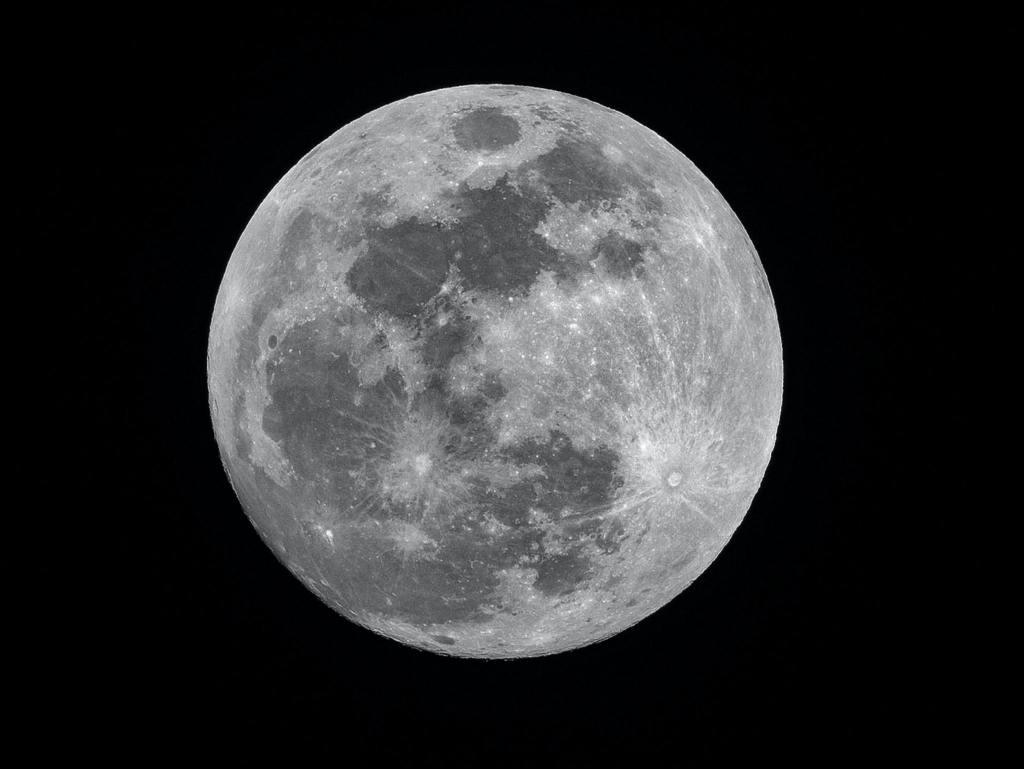
Photo credit: Mike Petrucci for Unsplash

The moon is completely full in the sky once again – if it’s a clear night go outside and bathe in her light. This is the time of the month where your energy levels are at their peak. If you’ve been working hard towards your goal(s) you should feel a huge sense of achievement. Remember to celebrate every single one of your successes no matter how small. If some things have stood in your way and held you back, make a list of them and think about what you want to let go of or release as the moon wanes. Remember, some new moon intentions take time and lots of work, but as long as you’re heading in the right direction and are trying to increase your awareness of what needs to change then this is a huge positive. Use the full moon creative energy and vibes combined with your intuition to reflect, evaluate progress and maybe come up with new ideas and ways of working.

There are some interesting full-moon rituals in Kirty’s book which sound like they could be really helpful and I’m definitely going to try them at this point in the next cycle.

Waning gibbous moon

This is the start of the second half of the cycle, when the moon loses a little of her fullness each night. Continue to develop your understanding of what holds you back and begin the process of releasing them. Consider your experiences so far and think about what you can learn from them. Are there any difficult conversations that you need to have with particular individuals to discuss what you have learnt, how you feel about something or any changes you intend to make and why.

Last quarter

The last quarter moon falls exactly one week after the full moon. This is the time to work on things you want to release to make way for new beginnings. Think about what or who is holding you back such as illness, negative people or situations, bad habits, self-doubts, fears, procrastination, people pleasing or unclear boundaries etc. Currently, your energy levels will be getting lower so your attention should be directed inwardly so you can rest and quietly reflect on everything that has happened in the process so far.

Waning crescent

The waning crescent is considered to be the last phase of the moon. This is when a small slither of moon is visible in the sky and it is nearly time for a new moon. During this phase, you should consider if there is anything else that does not serve you which you need to release in preparation to start anew. This is a time to slow down, rest and refresh. You might also begin to contemplate what you would like to focus on next.

And then it’s back round to the new moon to continue the cycle.

This is just a small part of what I learnt from reading Kirsty’s book. I also developed my knowledge of the 12 signs of the zodiac and their impact on the moon. According to Kirsty,

Each zodiac sign brings different influences, lessons, opportunities, challenges, positive and testing aspects, traits and a different focus and life area into the moonlight. This helps us to keep flowing with the rhythm of life as we use the different energies, characteristics and symbols of each sign to help us explore, heal and delve deeper into the relevant areas in our own lives.

Kirsty Gallagher, Lunar Living, 2020.

Final words…

I must admit that life has kind of got in the way of some aspects of using the magic of the moon this month as my husband and I went away for a short holiday and I’ve had lots going on in my life. However, I have been working towards my goals and I have made progress, I just haven’t documented it or reflected on how I’m doing. I think it might be time to create a new vision board which includes the spiritual practices I hope to develop so that following the lunar cycle becomes part of my focus every day. I think I might also benefit from setting aside a small amount of time each evening to check in with myself and consider how things are going – creating a dedicated space in my bullet journal would aid this and adding the activity to my running task list for each day of the week will help to cement the habit. Kirsty includes some questions to reflect on during each phase and these would be really useful to answer as part of my journalling. I definitely think if you’re interested in learning more than the very basics of moon magic, then her book is well worth a read and a good one to regularly refer to as you develop your practice.

Previously I’ve been rather skeptical about the information contain in horoscopes and the idea of The Zodiac but I’m trying to be more open-minded with this too. I would love to hear from anyone who is involved in using the lunar cycle to good effect and also anyone who has doubts or reservations about the ideas contained in today’s post.

Posted in Bullet journaling, goal setting, Health and Nutrition, Planning and journaling, Setting goals and intentions

Monday Matters: A mini guide to keeping a food journal to help with diet and weight loss

Earlier this month, I talked about how I might start a food journal to help me track my eating and drinking. Before starting, I researched the benefits of this practice and spent time learning about what I should include. A number of studies have shown that people who keep a food journal or diary are more likely to be successful in losing weight and keeping it off. According to my reading, the simple act of recording everything that you eat and drink each day can help you consume less calories and make healthier choices which aids weight loss.

What are the benefits of keeping a food journal?

Writing down what you eat and drink and how you feel at regular points during the day can help in a number of ways including:

  • Increased awareness of what you eat
  • Shows you how much you eat and drink in a typical day
  • Highlights reasons why you eat and drink e.g. boredom, stress, mid-afternoon slump, feeling sad etc
  • Begin to see if you’re eating too little or too much
  • Able to roughly track your calorie consumption and make comparisons between this and calories burnt each day
  • Able to check hydration levels – some people mistake thirst for hunger
  • Increased mindfulness i.e. awareness of eating, drinking and any patterns
  • Able to see where you could tweak your diet to make it more healthy and balanced

What do I need to start a food journal?

As many of you will know, I prefer pen and paper methods so I decided to use my bullet journal to record everything. I kept it simple with a title and a bit of washi tape and I used double page spreads to give me plenty of writing room. Any notebook and pen will do but it’s helpful if it’s something you can take out with you in your bag so you can record on the go – recording everything at the end of a long and busy day is quite an onerous task!

If you prefer to keep digital records you could create journalling pages in Notion or MS Word on your phone or tablet. You could also set up a simple spreadsheet to include date, time, foodstuff and how you’re feeling. Another option is to use an app like My Fitness Pal which can help you measure calorie consumption – beware though that it will keep trying to persuade you to sign up for a free trial or pay a monthly fee! I tried logging things on My Fitness Pal to see if I liked it and I found it really quick and easy. You can scan the barcode on your food packets and it shows the calorie content. You can also see and record other nutritional information but some details are only accessible on the paid for premium version.

Tips for getting the most out of your food journal

  • Log absolutely everything you eat and drink even if it’s something small or very low in calories e.g. one biscuit, a square of chocolate or a single boiled sweet. In doing this, you’ll have a full picture of your current diet.
  • When you log a food or drink, consider why you are eating and how you’re feeling e.g. a glass of wine to wind down after a long and busy day, feeling shattered etc.
  • Make sure you record how specific foods are cooked e.g. boiled, fried, roasted, steamed etc.
  • Include information about dressings, sauces and toppings and the amount e.g. 2 tsps of French dressing on salad.
  • Think about adding information about where you’re eating / drinking and who you are eating with e.g. at the dining table with family, at my desk, in XX restaurant, in a café with my partner etc.
  • Jot down what you are doing at the time e.g. watching TV, at the computer, having a catch up with a friend etc.
  • Be really specific about the type of drinks e.g. half a pint of beer, caramel macchiato, small mug, 200ml of orange juice etc.
  • Don’t forget to include alcoholic beverages and the amount e.g. one shot glass of vodka with 100ml of coke etc.
  • Think about logging the calories of meals at a restaurant if this information is on the menu, or check out the packaging of foodstuffs and drinks consumed at home.
  • Write down if you get any cravings and if you gave in to them or distracted yourself with an activity.
  • Note down how hungry you are when you eat.
  • Record your food and drink as soon as possible after eating/drinking so you don’t forget things. If you use a notebook or paper and don’t want to take it out with you, try making a quick note on your phone to transfer to your journal when you get home.

Analysing your food and drink log

Once you’ve recorded your food and drink for 5 days or so, consider what it tells you. So, for example:

  • Am I getting my five portions of fruit and veg each day?
  • How healthy is my diet overall?
  • Does my diet include wholegrains?
  • Does my mood affect my eating and drinking habits?
  • How balanced is my diet – am I eating too much or too little of something?
  • Do I have snacks and how healthy are they?
  • Am I paying full attention when I eat or am I often busy doing something else? (how mindful am I?)
  • Which areas of my diet could be improved upon? e.g. I could eat more vegetables, I could cut down on takeaways and try to do more cooking from scratch, I could eat a piece of fruit as a snack instead of a chocolate bar in the afternoon etc.

Setting some healthy eating goals

When you’ve identified areas for improvement, you could have a go at setting a couple of healthy eating goals for yourself. I recommend using the SMART framework for this so you can measure your progress easily. So, for example, when I was depressed, I struggled to eat breakfast and got into the habit of having a bowl of Crunchy Nut Cornflakes each morning as they’re easy to eat. When I started to feel better, I continued to eat this cereal as it had become a habit and one which I enjoyed. My husband suggested I try eating a healthier cereal every other day so I’m now having a portion of Shreddies four days a week. Here’s how it looks using the SMART goal system:

S = specific. Eat a wholegrain cereal every other day – a portion of Shreddies (or possibly Weetabix as an even better alternative according to someone in the know about healthy eating)

M = measurable. Does my food journal show that I’m doing this consistently?

A = achievable. Start small, do it every other day for the time being. Eating wholegrain cereal every day will make it a lot harder and I might start craving the Crunchy Nut Cornflakes and give up!

R = relevant. Does it fit with what I want in my life? Yes, I want to break the habit of eating a sugary cereal each day. I also want to tweak my diet to make it more healthy.

T = timely. Do the above consistently for two weeks to meet the initial goal and then increase to wholegrain cereal 5 days + a week.

Other goals include breaking the habit of having a packet of sweets every Friday / Saturday and finding alternative and less calorific desserts for during the week. I intend to work towards a couple of goals at a time so that I don’t feel that I’m denying myself too much.

Final words…

Although keeping a food and drink journal can be really helpful for improving your diet and eating more healthily, I wouldn’t recommend keeping records in the long term as it can be a time consuming habit to continue and you don’t want to feel like it’s a huge chore with no benefit. After 3 or 4 days, you should start to see patterns and be able to identify a few tweaks you could make to your diet to aid weight loss and ensure better balance between the different food groups and recommended consumption of foods in the different groups such as fruit and vegetables, protein and carbohydrates. For further information about your daily eating and drinking habits, you might want to consider logging things for a couple of weeks and setting yourself some mini goals to work towards.

I had a meeting this week with one of the weight management team ladies and she suggested some ideas for tweaking my diet to increase my success. She also mentioned that she didn’t advocate calorie counting or weighing food in the long term, instead she suggested educating myself about different foods and drinks using the traffic light system on packets and developing better understanding about portion size.

Nutritional information on the Shreddies packet

Let me know in the comments if keeping a food and drink log is something you’ve done in the past, considered doing or something you definitely want to try. If you’ve given it a go, I would love to hear about your experiences whether positive or negative.

In the end, I decided that I actually prefer using the My Fitness Pal app for recording as it’s much quicker than writing it all down. I’m still learning how to use all the features but so far I’ve managed to sync my Fitbit with the app and I’ve found that you can search for recipes you found online and retrieve the nutritional information (although you can’t include any changes you made to the ingredients.

Screenshot of my diary on My Fitness Pal

Thank you for reading,