Last month, I met up with a few of my close friends for lunch and a good catch up. We had a lovely afternoon and there was so much to talk about. We reminisced about old times when we all worked together, talked about our recent holidays and plans for future breaks, shared what we’d been up to over the summer (and how fast the months were flying by) and commented on how children are so different from when we were young. As is often the case when the conversation is flowing, we spent some time chatting about current affairs local and national news. Sitting there listening and very occasionally contributing to the discussion, I realised that I knew much less about most of the topics than anyone else in our group. They seemed to know every detail about a particularly harrowing subject and had formed lots of opinions about all that they had read and heard. When I returned home, I mentioned this to my husband and considered why I was much less informed. I came to the conclusion that the main reason is that I firmly believe that over-consumption of news, particularly of the negative kind, seriously impacts my mental health and so I tend to avoid watching and reading too much. Today, I’d like to share what I have learnt from my online reading on this interesting and thought-provoking topic and present some strategies for avoiding ‘doomscrolling’ and managing your news consumption in general.
The concept of ‘doomscrolling’ and issues with easy access to news media
The term ‘doomscrolling’ came into regular use during the Coronavirus pandemic and is the act of spending an excessive amount of time reading and consuming large quantities of negative news online. This, coupled with 24 hour news channels on the TV, sensationalist headlines being so easily accessible and the negativity bias of media outlets can mean that the news is seriously harming your health and wellbeing. Some of the detrimental effects include:
increased anxiety levels
difficulty concentrating, completing tasks or relaxing
worsening symptoms of depression
elevated stress levels and trouble sleeping
obsessive worry and fear
gut and stomach problems
muscle tension and pain
poor productivity levels
feelings of helplessness or paranoia
So, why do people involve themselves in ‘doomscrolling’ and excessive negative news consumption?
According to my research there are several main reasons why people engage in this kind of behaviour:
having a natural negativity bias that makes them pay more attention to bad news than good news
wanting to feel in control and prepared for potential threats in a world that seems chaotic and uncertain
being addicted to the dopamine rush that comes from getting new information, even if it is negative
because they wrongly believe that they are keeping themselves safe by doing so
What strategies can I try to prevent ‘doomscrolling’ and over consumption of negative news media?
Limit your time Set a time limit for your news consumption and stick to it
Make use of mobile apps and your phone settings Use apps or tools that block or limit your access to social media or news sites
Look for the good news Seek out positive or uplifting stories that balance out the negative ones
Consider better alternatives Choose to engage in activities that make you happy, such as hobbies, exercise, meditation, or spending time with loved ones
Seek help or support Talk to a therapist or a trusted friend if you feel overwhelmed by the news or your emotions
Final words…
I hope you’ve found today’s post thought provoking and useful. Remember, staying informed is important in terms of feeling involved, knowledgeable and connected to others and is a valuable way to learn and grow. However, taking care of yourself is of equal importance so make sure you control your news consumption rather than letting it control you!
Some of us look forward to Autumn and the prospect of wearing warm clothes, spending cosy evenings in watching great TV and snuggling up with a hot drink and a good book. For others, it is less appealing, signifying fewer daylight hours and colder temperatures. However you feel about the coming months, here are five ways to get yourself ready for the season and plan some enjoyable and mood boosting activities.
Do some seasonal meal planning
In the Summer time, we tend to opt for lighter meals such as salads and juicy, fresh fruits such as watermelon, strawberries, mango, peaches, nectarines and raspberries. However, as we head into Autumn we start to crave heartier meals and warming foods such as soups, stews, pies, risottos, curries, root veggies (e.g. sweet potato, onion, turnip, leek, swede, parsnip, carrot and celeriac) plus other wholesome favourites (e.g. squashes, cauliflower, broccoli, kale, cabbage and chard), seasonal fruits (e.g. apples, pears, cranberries, elderberries, damsons and plums) wholegrains (e.g. wholemeal pasta, brown rice, quinoa, oats, bulgur wheat and wholemeal breads) and legumes (e.g. beans, chickpeas, lentils and soybeans).
As we head towards the new season, I like to use a page in my bullet journal to make a list of warming dishes that we already enjoy and will want to make again this year. I’ll also spend some time searching recipes books and online resources such BBC Good Food, Olive Magazine, National Trust, Sainsburys Magazine and Tesco Real Food for some new ideas to try, marking pages with Post-it index tabs and sharing webpages to Notion to place in my recipes section.
Prepare your home
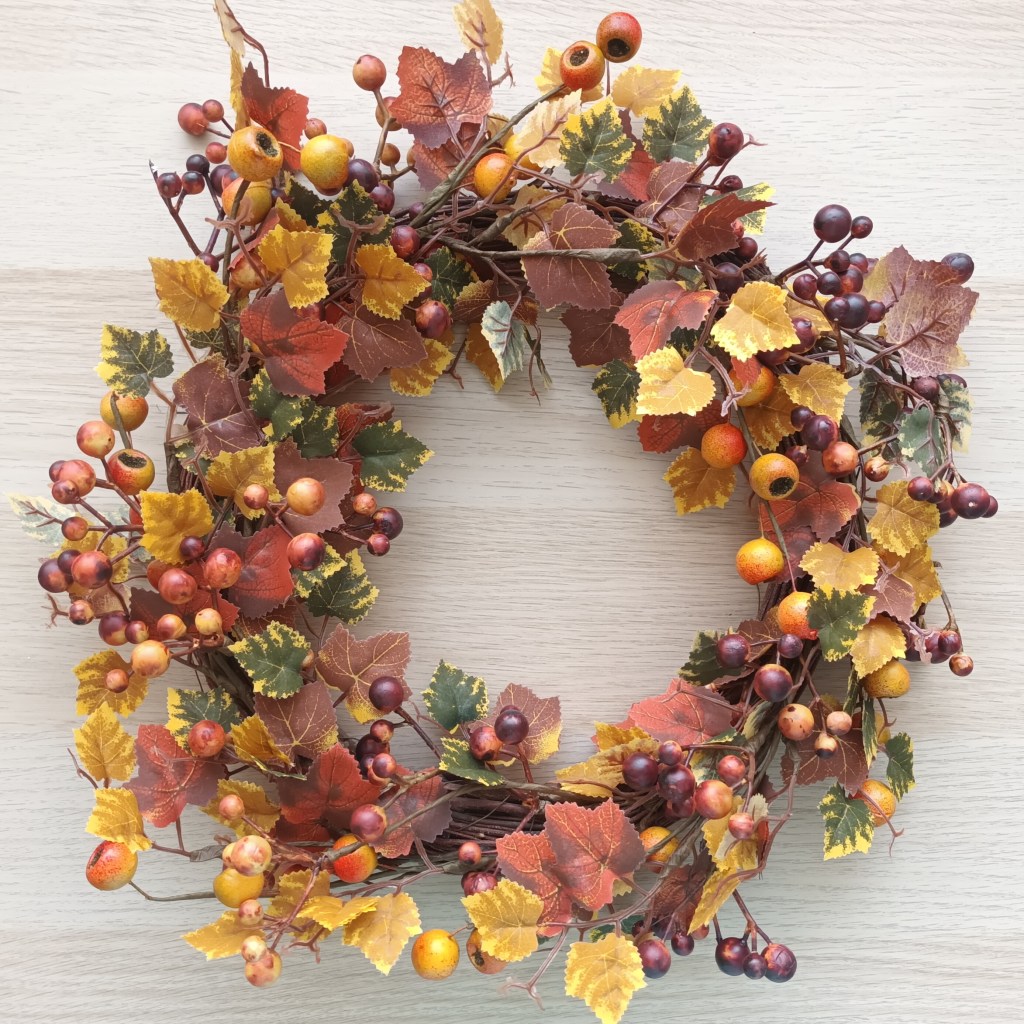
This year I’ve treated myself to a beautiful Autumn wreath for our front door and added to my little collection of decorative pumpkins with some small plush ones I found in Hobbycraft. I’m really looking forward to putting them on display.
As well as changing up your decor, here’s some other ways to get your home ready for the autumn season:
sort out your wardrobe and drawers -remove vest tops, shorts, cropped trousers, summer skirts and dresses, thin jackets, caps, sunhats and summer swimwear and put them into storage to make room for thicker coats, jumpers, cardigans, tights, thicker trousers, jeans, hats, scarfs and gloves. Consider donating anything which hasn’t been worn in a while.
deep clean your home – we often associate spring with the time to clean but the autumn season is ideal too. Search ‘fall deep cleaning checklist’ on Pinterest for comprehensive lists of what to tackle.
swap your thin summer duvet for a slightly thicker one and layer with a blanket at the bottom of the bed or place on a chair for chillier nights.
add layers of soft furnishings such as throws and blankets to your sofa and chairs. You might also like to transform your space with new cushion covers in autumnal colours such as deep oranges, rich reds, golden browns, plum tones, muddy greens and mustard yellow.
treat yourself to a new home fragrance such as a candle, reed diffuser, pot pourri or air freshener. Popular scents for autumn include cinnamon, apple, amber, pine, cedarwood and spiced pumpkin.
Go outside
As temperatures start to drop and it gets a bit wet out there, it can be tempting to stay indoors, but Autumn is a beautiful time of year and, as long as you dress appropriately for the weather ( e.g. layers, waterproof coat, wellies, comfortable shoes or boots etc.) nothing beats a wonderful, mindful walk, appreciating all that nature has to offer.
My husband and I try to plan to go somewhere different each weekend, choosing a scenic location such as a forest, park, garden or woodland where we can completely immerse ourselves in the atmosphere. Here’s a few suggestions for making the most of your time outdoors:
use all of your senses to really appreciate the environment you’re in, pause regularly to notice the sights, sounds, smells, textures and maybe even tastes if you take a warm drink or a snack with you!
take your camera along to record some of your nature spots such as trees changing colour, different types of fungi, squirrels collecting nuts, the sun peeping through the branches of a tree, moss and lichen, fallen leaves on the ground, flowing water, nuts and berries, different views etc
collect autumn things such as acorns, conkers, different shapes, sizes and colours of leaves, pine cones, sycamore seeds, feathers etc
find a place to rest (preferably somewhere quiet and peaceful to sit or stand depending on the weather), take a few deeper, calming breathes before closing your eyes to. Take time to really appreciate the various sounds of nature, bodily sensations such as the sun, wind or rain on your face or the feel of your clothes against you skin and how you are feeling right now
when you get home, try doing some reflective journalling about today’s walk and how you feel about the Autumn season – the things you love and the things you don’t
Make the most of the light
As well as scheduling in time for walks in nature, try to find other ways of soaking up as much of the autumn light as you can. This might mean slightly changing your routine and going to bed a little earlier so you can enjoy the morning sunshine, taking your lunch outside or going for a short mid-day walk, moving your chair or workspace to a sunny spot in your home or using mirrors to reflect sunlight from your windows.
Autumn is also the best season to watch beautiful sunrises and see spectacular and vivid sunsets. Plus, there are many physical and mental health benefits including better sleep, improved immune system, stress reduction, boosted mood, appetite regulation, feelings of gratitude and the chance to slow down and focus on the here and now.
Make an Autumn bucket list
This is something I did in my bullet journal a good few years ago now and it’s something I’m going to create again this year to make sure I get the most out of the season. Some ideas to add off the top of my head include:
photograph signs of autumn e.g. changing leaves, squirrels storing nuts for the winter, fungi in the woods, crunchy fallen leaves, squashes appearing in the supermarket
go on a woodland walk
buy or make a piece of Autumn décor for your home
visit a pumpkin patch (book early as it’s a popular activity)
learn more about the science of leaves changing colour
do an Autumn craft – I plan to make an Autumn leaf garland using cardstock and my Cricut Joy and hope to create some Autumn ephemera for my TN journal too
develop a collection of squash recipes and try out at least two of them
Final words…
I hope you’ve found today’s post useful and it has given you some ideas on how to prepare for the changing season. If you have a tendency to feel anxious or down about the advent of autumn, maybe it’s time to work on reframing your outlook and start thinking about all the things there are to look forward to like beautiful walks in nature, wonderful wildlife to spot such as squirrels collecting nuts, noisy, honking geese in a large v in the sky heading south, new arrivals to the UK including fieldfares, redwings and waxwings, plus waterbirds like barnacle geese, water pipits, pochards and pintails, starling murmurations and rutting deer, wearing warm clothes and snuggling up under blankets, creating a cosy atmosphere in your home, eating comfort foods like soups, stews, crumbles and pies, plus lots of gripping TV dramas to binge watch.
Wishing you all a fantastic and fun-filled Autumn season,
This blog post first appeared here in March 2019 when my chosen word of the year was resilience and I was spending a good deal of time reading articles and books to help me improve mine. I hope my updated post proves useful to anyone looking for a few ideas on the topic to support their good mental health.
What do we mean by the term ‘resilience’?
Resilience can be defined as the ability to cope with and rise from all of the challenges, problems and set-backs that life throws at us and come back stronger. When we develop our skills and personal strength in this area, we are able to handle our difficulties more easily and this can improve our overall mental health.
The following ideas were collected at a time when I was in a good place and have helped me during periods of depression and low mood. I hope you find them useful too. Even if you are in a period of good mental health right now, it can be useful to learn ways to develop your resilience for times in the future when you may need a boost.
Try to remain optimistic
It can be difficult to remain optimistic when faced with challenges in life but maintaining a hopeful outlook is an important part of resilience. Try to have a positive mindset and encourage thinking such as ‘it’s not the end of the world’ and ‘things will get better’. Remember that set backs are temporary and remind yourself that you are strong and that you have the skills and abilities to face your difficulties.
When negative thoughts pop into your head, try to replace them with something more positive such as ‘I have lots of friends who will support me through this’, ‘I am good at solving problems’, ‘I never give up’, ‘I am good at my job’ etc. Also, choose to see challenges and bad experiences as an opportunity to learn. Ask yourself ‘What can I learn from this situation?’, ‘What is this trying to teach me?’ ‘What positives can I take from my experience?’.
Mindfulness
Mindfulness is all about awareness in the present moment – our thoughts and feelings and the world around us. It involves the use of techniques such as meditation, breathing and stretching exercises and can help you to stay calm and in control of your emotions.
When practising mindfulness you begin to notice how thoughts come and go in your mind. You learn to accept these thoughts without judgement and develop your ability to let them go. In addition, you are able to tune in to what your body is telling you and notice signs of stress and anxiety so that you can release tension as you meditate.
Support Network
It’s really important to have people who you can turn to at times of need. Building and nurturing constructive relationships with positive and supportive friends, family and colleagues is an essential part of wellbeing and staying resilient. They can provide a listening ear, positive encouragement, advice or help you celebrate your achievements. Having a good support system in place has also been shown to boost self esteem, confidence and better self image.
If you feel you need to widen your support network, there are many opportunities to do so either in your local community or through online groups. Try your local library, community centre or college for clubs and classes or try to find out about volunteering opportunities in your fields of interest.
A resilient body
We’ve all heard the expression ‘healthy body, heathy mind’ and keeping yourself well is another key part of resilience. Try to eat regularly and make sure you get plenty of good for you fruit and veggies in your diet. Find a type of exercise that you enjoy (personally, I love countryside walks and dancing), and schedule in a time for this each day. Also, remember to take time out to relax and recharge. It’s not self indulgent to schedule in some me time each day, it’s a key part of coping with our busy and stressful lives.
Good sleep is also vital for a healthy lifestyle and better mental health. Try to develop a good relaxation routine each evening – listen to some calming music, dim the lights, meditate or have a warm bath. Many people recommend writing in a journal as a way of putting the day to rest so that you don’t have lot of thoughts buzzing around in your head when you climb into bed. If you want to learn more about this technique click here.
Ideas to try in your bullet journal
Create a positive affirmations page and read them every morning. Examples of affirmations include ‘I am strong’, ‘I see the bright side in all situations’, ‘I radiate positive energy’.
Add some of your favourite positive quotes to your weekly plan.
Write a list of ways to reward yourself for your achievements such as ‘have a relaxing bubble bath’, ‘paint your nails’, ‘buy yourself some planner stickers’, ‘treat yourself to your favourite bar of chocolate’ etc.
Practise gratitude by keeping a ‘one line a day’ log where you write in something you are grateful for on that day. You can include anything you want such as ‘the helpful magazine article I read yesterday’, ‘a kind text from my friend’, ‘3 new shop orders today’, ‘the lovely feedback I received’ etc
Make a ‘Things That Make Me Happy’ page and use it to remind you of all the good things in your life.
Produce a list of creative activities that you enjoy and find the time to schedule at least one of them into your busy week. Getting involved in art and creative tasks has been proven to reduce stress and it’s another mindful activity which can provide a welcome distraction from negative thoughts or anxieties.
Keep a daily journal in which you evaluate your day. It will help you to focus on the positives and any challenges that you met. You can also use your journaling as a space to assess your issues and any ideas you may have for solving them.
Final words…
I hope you have found these tips useful and will try out some of the ideas in your notebook or bullet journal. Of course sometimes, during periods of depression, it is really difficult to see a way forward back to better mental health and it may be that if you’re really struggling, the help of a trained therapist might be the best form of help. I have found CBT style therapy particularly useful in the past and still apply what I’ve been taught over the years. Skills associated with resilience take time to develop but I believe that everyone has the capacity to learn.
As I shared in a previous post, I’ve started using The Five Minute Journal morning and evening as a way to be more grateful, live with intention, remain positive and just generally have a good day, every day, no matter what. One of the prompts for early morning is to decide on three things that would make today great and list them. At first, when I started using the journal, the temptation was to just write my ‘must do’s’ from my ever lengthening to-do list as a way of being and feeling super productive. However, what I think is much more valuable (and a key idea with the book) is to think about ways in which you can upgrade your day by considering things such as be present (mindfulness), doing things that really matter to you (based on your core values + current goals and intentions) and finding time for or creating habits which give your body and mind what they really need to improve both your physical and mental health and therefore your general wellbeing. So, today, I’m going to share nine ways to improve your day by figuring out your current priorities, doing things that align with your core values, instilling positive habits, re-phrasing self talk and making meaningful progress towards your short term / medium term / life goals, desires and intentions.
Of course, I do realise that, every now and then, events happen in our day which contribute to uncomfortable emotions such as those associated with anger, fear, sadness and disgust and that sometimes, it becomes difficult to remain positive or optimistic. However, I hope that by sharing these suggestions, I will be helping you to learn simple ways to create high vibe states such as peace, joy, gratitude, enthusiasm, optimism, hope and happiness and recognise the effect that these can have on your day. As you create and maintain healthier habits, you should also notice that you spend less time dwelling on negative events and situations and more time celebrating the positives and recognising all that is good in your life.
Today, I’m sharing nine ways to improve your day-to-day but I’m sure, when you think about it, you’ll be able to come up with many more ideas for upgrading from an okay day, to one which leaves you feeling satisfied that you’re living your best life.
Be present
Being present is a state of mindfulness where we slow down and bring awareness to what is right in front of us and what is happening in the current moment. By focusing on the here and now, we’re not dwelling on the past (sometimes referred to as rumination) or worrying about the future. This can help us feel calmer and more relaxed. It can also have a positive impact on our relationships, make it easier for us to manage stress and relieve mental health symptoms such as anxiety and depression.
Bringing you attention to and staying in the current moment is a skill that everyone can develop but it does take a lot of practice and can, at times, be really difficult. However, it’s definitely worth persevering if you want to experience the above benefits. To get started, give this blog post a read.
Consider what really matters and take action
Have you ever sat down and seriously reflected on what really matters to you right now? If you haven’t, I can highly recommend taking some time to do this as it can provide a useful starting point to help you decide where to make changes in your life for the better. I find that the best way to do this is to look at a comprehensive list of personal, professional or core values and make a note of those which particularly resonate most with you. Then, when you’ve selected those which matter the most, you can either continue to make time for these things, think about new habits to work on instilling or work on better aligning your behaviour to fit with your current priorities. So, for example, you might decide that having fun with your partner is really important to you and something you want to make more time for in your relationship. Then, you might list fun activities you’ve enjoyed in the past e.g. going to a comedy show, playing mini golf, spending the day at the seaside paddling in the sea, building sandcastles and eating ice cream, and some you’d like to try in the future e.g. canoeing, a Segway tour, exploring the night sky at an observatory, taking a road trip to somewhere new or go camping.
Get your body moving.
I’m sure you already know the benefits of exercise for your mind and body but adding movement to your day doesn’t necessarily mean hitting the gym for an hour. Here’s some quick and easy ways to raise your pulse rate:
check out this webpage for some easy stretches you can do in the morning before you even leave your bed
put on your favourite upbeat track and dance around your bedroom / kitchen / living room
take a quick power walk around the block in your lunch break
find a 10 minute ‘no equipment’ exercise routine on YouTube to have a go at. Add those you enjoy to your favourites.
Do some gentle stretching exercises throughout your day to ease tension and improve your circulation, flexibility, blood flow and posture. Try focusing on areas of your body where you typically hold tension such as your neck, shoulders and upper back. The NHS website has plenty of ideas – try searching ‘NHS flexibility’.
Do a little cleaning, tidying or decluttering
Doing a little bit of cleaning, tidying or decluttering each day can provide a real mood boost and a sense of satisfaction when you admire what you’ve achieved. It doesn’t have to be a long or arduous task, but just taking five or ten minutes can make a difference. You might give your kitchen worktops a deep clean, choose just one drawer or shelf in your kitchen to re-organised or decide to check through your make up bag for products which are past their best or haven’t been used in a while. Over time, these short, focused ‘projects’ will help you to create and maintain a home that you’re super proud of and, if you want an easy way to measure your progress, I recommend taking a quick before and after snap on your phone so you can see what a difference you’ve made – you could even store the ‘after’ photos in a digital folder called ‘my lovely home’!
Practice gratitude
I’ve talked about the importance of being grateful for the things and people you have in your life in a number of previous blog post and the benefits of a daily gratitude practice are well documented. The morning part of The Five Minute Journal asks you to record three things that you are grateful for and, I’ve found that I know find it so easy to fill in. I also find myself expressing my gratitude in my thoughts throughout the day on a regular basis. So, for example today, I was a little annoyed that I had to get the washing off the line as it started raining as soon I’d finished hanging it out but I was glad I had to because it rained much heavier whilst I was at my Zumba class. I was also grateful that I’d made the decision to pop on my raincoat to wear to the gym as the rain became torrential before the end of my class.
If you want to start a gratitude practice but you’re not sure how, check out this blog post which gives my best tips as well as discussing the benefits of developing a consistent daily habit.
Learn something new
Making time in your routine to learn something new each day is not only a wonderful workout for your brain, it’s also an effective way of reducing stress and calming your body down. Acquiring new information on a topic of interest or developing your skills in a particular area promotes self- improvement and personal growth and can really boost your self esteem and confidence. What you set out to learn and how you do it is really up to you but it’s a good idea to spend some time quietly thinking about subjects of interest and jotting them down in a notebook e.g. money management, particular hobbies, creative writing and animal welfare, things you’d like to know more about e.g. eco friendly cleaning solutions, a particular country or place you’d love to visit, British history, and skills you’d like to work on e.g. cooking, drawing, leadership, time-management and so on. Once you’ve done this, you can then schedule time for learning and begin to collect a bank of useful resources e.g. books, online articles, videos, in person or online classes etc.
Replace ‘I have to…’ with ‘I get to…’ and consider other aspects of your self talk
On the subject of being grateful for what you have, another way you can work on altering your mindset in a positive way is to begin to notice when ‘I have to…’ pops into your head and change it to ‘I get to…’ So, rather than saying ‘I have to go to work’, you would rephrase it as ‘I get to go to work’ focusing on the fact that you have the opportunity rather than it being an obligation.
In a similar vein, statements such as ‘I need to…’, ‘I have to…’ or ‘I should…’ can create pressure and an expectation to perform, whereas better self talk could include ‘I would like to…’, ‘I might…’ or ‘it would be good if…’ e.g. rather than ‘I need to get that washing up done because it’s piling up’ you could say ‘It would be good if I did the washing up now so that the kitchen is clean and tidy for making dinner’. (Find out more by reading this blog post from a few years back.)
Find time for things you love
I believe that setting aside time to do something you love each day is super important if you want to feel a sense of satisfaction with your life. Again, writing down activities you enjoy or get value from and recording a short explanation of why can help. Here’s some examples from my personal list to give you some ideas:
bird watching
nature walks
reading health and wellbeing magazines
watching psychological thrillers on TV (or reading them on my Kindle)
playing card and board games
making sweet treats such as flapjack, cookies or cupcakes
doing 1000 piece jigsaws
playing Angry Birds 2, Candy Crush and Word Cookies on my tablet
hand lettering with my brush pens
painting my nails
using my watercolours
Avoid distractions and information overload
My final tip for making the most of your time and having a great day, is to minimise sources of distraction and develop ways to prevent information overload. I would say that the most common source of distraction and productivity killer comes from modern technology and presents itself in the form of notifications such as text messages, emails or social media happenings (such as tweets, status updates on Facebook, Instagram stories and photo shares, YouTube video postings and so on) and often a combination of all three. I don’t consider myself an expert on avoiding such distractions but this is what I’m trying at the moment:
two email addresses – one for work related emails for my Etsy shop, blog and university work with notifications for messages from actual people (rather than organisationd) going to my Fitbit watch during the day, the other for all other emails such as those from businesses with notifications turned off. If I’ve placed an online order and want to track progress, I just use the search facility to find the relevant information.
keep my phone in another room whilst I’m working (whether that’s on my shop, my blog, gardening, housework etc)
turning off social media notifications and then setting aside a small amount of time each day to ‘check in’
avoiding looking at my phone during my 5 minute Pomodoro Technique breaks
In terms of information overload, there are some useful tips contained in this blog post including how to consider the type of content you wish to engage depending on your current priorities.
Final words…
I’ve found The Five Minute Journal really useful in helping me to decide what my priorities are for that particular day and in thinking about what would turn my week days and weekend days from just okay or average to great or amazing. Whether you use this journal system or not, spending a few minutes each morning in mindful contemplation in relation to the above can make such a difference to your day.
I hope you have taken away something useful from your reading and I would love to hear any thoughts or additional ideas you may have in the comments.
NB: This post was originally published in September 2019 and updated for April 2023
In 2019, as part of my ongoing therapy, I attended a weekly compassion group where I met up with like-minded individuals to consider different aspects of wellbeing and a variety of techniques for improved mental health. For one of the sessions, we spent time learning about the vagus nerve and its impact on overall health. I must admit, I hadn’t previously heard of this important bundle of fibres so I was really interested to find out as much as I could (I love every opportunity to learn something new). So, in today’s post, I’ll look at what the vagus nerve is, what it does and ways in which you can stimulate it to support good mental health.
Introducing the vagus nerve (a.k.a. the tenth cranial nerve)
The vagus nerve is the longest of our cranial nerves (the ones which emerge straight from our brain) and controls our inner nerve centre. It oversees a range of crucial functions, communicating motor and sensory impulses to each organ of our body – namely our heart, lungs, upper digestive tract, and other organs of the chest and abdomen. The vagus nerve is critical to our overall health and it has been scientifically proven that stimulating this important bundle of motor and sensory fibres is key to reducing our stress, anxiety and anger levels.
So, enough of the science lesson, what are the practical ways that we can get this thing working to our advantage?
breathe deeply and slowly
Slow and deep breathing stimulates the vagus nerve in a way that can help reduce our heart rate and enable us to become more relaxed. That’s why focusing on your breath during mini meditations can be so soothing for us and is a key part of compassion based therapy. You can find out more about different types of breathing in this useful post from verywellmind, especially the diaphragmatic style which is also known as deep breathing.
exercise
Regular exercise such as a gentle walk or some simple stretches stimulates gut flow which is regulated by your vagus nerve. Why not combine your walk with getting in touch with nature so you can stimulate all of your senses and enjoy some peace and quiet at the same time?
have a good laugh
There’s a reason behind the popular saying ‘laughter is the best medicine’. Proper belly laughs are thought to be great for stimulating the vagus nerve. Why not try going to a comedy show, playing some humourous videos on YouTube or TikTok (haven’t ventured onto TikTok myself but I’m pretty sure there’s some funny content on there!) or watching an episode of your favourite funny TV series tonight? There’s even a thing called ‘laughter therapy’ according to a counsellor I used to see, although I’ve never tried it myself!
try getting yourself all cold!
Apparently any type of exposure to cold will increase vagus nerve activation. That’s why some people swear by having a cold shower first thing in the morning to get going! Personally I prefer a little cold water on my face or a nice cold glass of water to wake myself up but it’s entirely up to you how you expose yourself to a little bit of coldness!
Sing or chant
As a member of a choir, I love singing and find it really helps my wellbeing. Now I know why! Why not trying putting on your favourite music and singing along (and maybe do a little boogie as well for the exercise) to activate your vagus nerve? Chanting also works too so no wonder football fans feel so good when they shout for their team at matches.
Massage
A nice neck massage is a lovely way to stimulate the vagus nerve or why not try a foot massage to help lower your heart rate and blood pressure. I love it when my husband does a firm massage of my feet after a long day when we’re sat together watching TV. If you haven’t got an obliging partner, a session with a qualified masseuse makes a fantastic pampering treat if you can afford it.
Positive social contact
Being socially connected, be it with compassionate friends, family or even our beloved pets has been shown to help with emotional regulation though vagal stimulation. Make sure that you choose to spend time with kind hearted and thoughtful people to ensure a positive experience.
Reduce your consumption of junk food
I’m sure you already know that eating too much fatty stuff is bad for you but excess consumption of ‘junk food’ has been shown to reduce the sensitivity of your vagus nerve. The occasional treat is okay but try not to indulge too often.
Yoga and Tai Chi
The benefits of practises such as yoga and Tai Chi are well documented. They have both been shown to increase vagus nerve activity and your parasympathetic (also known as rest and digest) system in general. You can find many simple yoga sequences online and beginner classes of exercises are widely available if you want to make it a social event too.
And finally, try to make time to relax each and every day
It’s up to you what form that relaxation takes, a nice warm bath, a few uninterrupted chapters of your favourite novel, craft or art activities or settling down to watch a film. Find something relaxing to do each day will have a positive effect on your wellbeing by working your vagus nerve.
Final words…
I hope you’ve found today’s post interesting and have learnt something new. Let me know if you try any of the ideas and if they have a positive effect on your wellbeing as a result. I learnt so much during my compassion group therapy and I’m continuing to work hard to put things into practice to improve my wellbeing. Updating this has encouraged me to look back over the handouts we received to remind myself of the various ideas and techniques from the ten week course.






 Keeping it creative