Posted in lifestyle, Planning and journaling, productivity, Setting goals and intentions

Monday Matters: What is the ‘WOOP technique’ and how can it help you achieve your dreams?

This week, I wanted to write a post about goal setting and fulfilling your dreams. I talked last week about the power of positive affirmations in developing confidence in your ability, but is telling yourself you are something such as successful, confident or happy enough to achieve in a particular aspect of your life? Whilst perusing the Internet for inspiration for my chosen focus, I came across something I’d never heard of before called WOOP. I’m willing to bet that a lot of my readers might not have heard of it either, so today’s Monday Matters is going to be an introduction to the principles behind this fascinating and scientifically researched idea, which to me, makes a lot of sense and might need more consideration.

What is WOOP?

WOOP, which stands for Wish, Outline, Obstacle, Plan, is a scientifically based principle developed by German academic and psychologist Gabriele Oettingen. Her research has focused on ‘how people think about the future and how this impacts cognition, emotion and behaviour’ (Wikipedia). Gabriele has found that if we just dream or fantasise about something we want, our brains tend to think we have already attained what we desire and this can make us relax and prevent us from actually achieving our goals. She talks about two processes that we need to go through for the WOOP strategy to take effect, namely mental contrasting and implementation intentions (MCII for short). Basically, this means focusing on the contrast between the positive aspects of your desired goal and the barriers (negative aspects / obstacle / internal struggle) of you actually achieving your goal or wish. So, the WOO bit is the contrast as you imagine / visualise how wonderful it would be to fulfil your wish and then conversely, look at what might stop you. Thinking about both of these helps to motivate your self conscious to do something about the issue you face. The P part is the implementation intentions as you are coming up with a plan of actions and thoughts to work against your obstacle.

Gabriele and her team have spent 20 years fully researching and investigating goal achievement and the effects of mental contrasting and implementation intentions with studies including participants of different ages and backgrounds. The results of their work, has lead them to create WOOP as a framework for implementing change. The process has been found to be affective at helping people improve their social behaviour, health and academic performance. Examples of these scientific studies can be found online if you want to find out more.

Creating a WOOP

Wish Gabriele says that it is vitally important to give yourself some mental space in which to think about and imagine what you wish for yourself right now. You should dedicate some calm and uninterrupted time where you can specifically focus on your immediate wish for this present moment. Clearing your mind of everything else is essential so that you can dedicate your attention to working on your WOOP.

You may find that many wishes come into your mind, but you need to select the one that is most important to you and is challenging but do-able at the same time. Wishes can be about anything you want, your relationships, your job, your education, your health and fitness, whatever is important to you right now.

When you’ve decided on your wish, you should try to come up with 3 to 6 words to summarise it. I found this part really difficult as I’m very good at saying in 50 words what could be shrunken down to 5 but it’s important to be concise so you should really take your time to think.

Outcome When you have outlined your wish, you need to imagine what it would feel like if it came true (you might like to close your eyes for this bit so you can create an image of your life). Think about what the very best outcome would be and describe it in a small number of words (approximately 3 or 4 is a good number).

Obstacle Next, you need to think really carefully about what holds you back from achieving that wish. In other words, what is the main obstacle? For this, you should focus on an inner obstacle, i.e. something in you that is preventing you from realising your wish. You might find here, that you start to think of external obstacles such as other people or situations which you find yourself in but it’s important that you try to concentrate on yourself as it is much easier to create changes within yourself. Again, you could close your eyes and allow yourself to come up with a vivid image.

Plan When you’ve identified your main obstacle, you need to come up with a plan to overcome it. Again, you should try to summarise thoughts or actions in 3 to 6 words. Keep these in mind, whilst you create an If… then plan. Take your obstacle words and put them after the If. Then, place the thought or action after the ‘then…’. You can then recite your If… then plan a few times.

An example

Here’s an example from my own life. I’m now pretty good at doing yoga every day but there are always occasions when I don’t feel like doing it or think of other things I would prefer to do.

  • Goal: Yoga for 20 minutes every day
  • W: daily yoga practise for 20 minutes
  • O: Strength. Good posture. Mindfulness.
  • O: Don’t feel like it. Don’t bother.
  • P: If I don’t feel like it… then I’ll put my workout gear on, get out my mat and then remind myself of the many mental and physical benefits of practising.

Some other WOOP ideas

  • In bed by 10pm every night.
  • Be more productive.
  • Get a new job.
  • Find my soulmate.
  • Stop eating unhealthy snacks.
  • Read a self help book.
  • Meditate for 10 minutes each morning.
  • Finish a project before the weekend.

You might find the process a little tricky at first, but once you’re proficient in WOOP, you can apply it to so many situations – daily tasks, habits you want to instil, projects you want to complete or whatever you want really! Also, you will likely get much better at summarising and getting to the crux of the matter in terms of your inner obstacle which will help you develop solutions more quickly.

The WOOP app

When I visited the website for WOOP, I discovered that there’s a free APP available, so I thought I would download it and see how it works. As well as giving an introduction to WOOP, it also guides you though the process of creating WOOPs for professional, health and interpersonal wishes.

The app guides you through each WOOP by giving you a number of prompts. You can choose a timeframe from 24 hours or 1 month or you can select not to have a time frame. The app gives you limited characters in which to compose your wish, outcome, obstacle so as to encourage you to keep it brief but I can imagine it’s quite frustrating if you feel like you can’t condense it down that much. It also asks you to take your time with thinking about each step of WOOP and if you click through the steps too quickly, it will warn you that you are going too fast! If you like having things noted down on your phone, then I think you would benefit from using the app, but personally, I prefer to write things in my BuJo and have a notes page to refer to, to help me create my WOOPs.

That’s all for my introduction to using the WOOP technique for setting goals and creating a plan to achieve them. If you want to learn more about WOOP and watch a great video introduction, visit woopmylife.org Here you can also find the link for the mobile app and a free printable to help guide you through the process.

Posted in lifestyle, mental health, productivity, psychology, wellbeing

Monday Matters: The power of positive affirmations and how to create your own

Today’s Monday Matters blog post is all about the helpfulness of positive affirmations and how you can write your own tailor made statements to re-wire your brain and start working towards the life you want. It discusses different types of affirmations which can help develop your body confidence, increase your self belief, encourage you to reach your goals, enable you to accept yourself and others and be grateful for what you have whilst working towards what you want. It also answers questions about how to choose specific affirmations, how to get them to work, how to word them for maximum effectiveness and how to use affirmations when you are struggling with your mental health. Finally, towards the end of the article, I include some of my current affirmations and why I chose them so you can see for yourself how powerful they are for me and can be for you.

What are positive affirmations and how do they work?

Affirmations are phrases which we repeat to ourselves either out loud or in our thoughts. They can be absolutely anything, sometimes good, for example I am great at my job, I can do this etc. but quite often can be bad, unhelpful or completely self-critical, for example, I’m so stupid, I always get things wrong etc. Positive affirmations, though, have the aim of over-riding negative beliefs and negative self-talk and creating positivity and a much better mind set. When said regularly, they can change your thoughts, your way of thinking and how you feel about yourself and life in general. They work by re-wiring your brain to think good things about the world and your place in it.

Different types of affirmations

There are lots of different types of affirmations to choose from and it all depends what you want to focus on. For example, you might want to improve your body confidence, become more successful, increase your happiness levels, be more accepting of yourself or others, combat fear, anxieties or insecurities, lose weight, be more resilient, celebrate your good points etc. Whatever you want in your life or for yourself, there are positive statements to help you.

So, how do I go about creating my own positive affirmations that work?

First of all, you need to think about what you want to see in your life right now. Maybe you want to be more confident and assertive at work. Perhaps you are keen to be more grateful or more positive. Or, you might want to practise self love and kindness. Jot down what’s important to you at the moment or create some goals that you want to work on and start to think about the kind of affirmations that would reflect these ideas.

Key features of good affirmations:

  1. Present tense e.g. I am relaxed and calm, I am worthy of self care and compassion, I take things one step at a time. This makes sure that they are powerful as they are about the here and now.
  2. Short and to the point. This makes them easier to say and easier to remember as you go about your day.
  3. Full of positivity. Try to avoid using negative vocabulary. E.g. rather than ‘I am not anxious’, you could write ‘I am calm and relaxed’. Instead of writing ‘I don’t eat junk food’ you might go for ‘I eat a balanced and healthy diet’.
  4. Powerful and emotional words. Try to use the best emotive vocabulary to can think of e.g. Everything in my life is wonderful, I am an amazing writer, I am incredibly proud of all that I achieve in my life etc.
  5. Make use of your own voice. You can find a wide array of affirmations online e.g. on Pinterest and Instagram. Some of them, you will be immediately attracted to the idea of but if you do use or adapt them, make sure that the vocabulary used is the kind of thing that you would like to say to yourself and that the words within the statement are part of your personal vocabulary e.g. It’s no good saying ‘I am a highly motivated person’ if you would usually use the term ‘hard worker’.
  6. Believability. If you want your affirmations to work, you need to create statements that you can readily believe in. For example, it’s no good writing one that says ‘I am super fit’ if you are only just beginning your fitness journey. It’s better to create something that says where you are at right now or where you can feasibly be soon if you improve your confidence levels e.g. ‘I am getting stronger and fitter every day’ or ‘My fitness levels are improving each day’. Rather than ‘I am always confident at speaking to an audience’ you could try ‘My confidence in presenting my ideas to others is getting so much better.’

Consistency is key with getting your affirmations to manifest positive change in your life so make sure you say them regularly. Add them to your morning routine and assess the effect that they are having as part of a reflection process in the evening. You might even do some journalling on them in your bullet journal or other planner.

How to use positive affirmations to get you through a mental health bad patch

As some of my regular readers will know, I have suffered from episodes of anxiety and depression throughout my adult life and know how easy it is to get into a very negative mindset when you are struggling. I also know that that at times of really low mood, it is super hard to find anything positive to think let alone say out loud. However, if you at least try to treat yourself with kindness and compassion and accept where you are right now, you can find ways to come out of your mental health blip. In the past, I’ve used a small number of positive affirmations, chosen and written with the help of my wonderfully supportive husband, which have helped me and kept my mind focused on resilience and recovery. Below is the page which I produced in my bullet journal at a time in the past when I was having a hard time.

As you can see, they generally focus on accepting myself for who I am, recognising that I have it within me to get better and knowing that I am loved by others. Now, I know at the time, I found it difficult to say these affirmations and I remember tears forming as I read through them the first few times, but it did get easier after a while and I can confirm that I was strong enough, the bad patch did pass and I did get through it and come out of the other side. I’m not saying that the affirmations were the main reason that I got better but they certainly helped with the recovery process, a lot!

Some tips for creating positive affirmations when life is hard:

  • Think about the negative thoughts that enter your mind or negative self talk that you find yourself saying and try to turn it around e.g. ‘I’m so weak and pathetic’ could become ‘I am brave and strong’, ‘I’m never going to get better’ could be re-written as ‘This feeling will pass’. ‘I can’t do this any more’ can be changed to ‘I have the ability to cope’.
  • Check out Pinterest and look for affirmations which suit your current situation e.g. search affirmations for self love and kindness if you find yourself saying nasty things about yourself, look for confidence building affirmations if you find yourself lacking in this area right now.
  • Think about how unique you are and what is special about you. Ask for help on this if you need to from family members or friends. Write down your qualities in first person e.g. I am creative, I am kind to others, I always try my best etc.

Some of my current positive affirmations and why I chose them

  • I run a successful Etsy shop and customers love my products and personalised service. This one was chosen because I regularly have moments of self doubt when I haven’t had many orders, when my visitor count in low or I don’t get any feedback for a while.
  • Readers enjoy my blog posts and find them interesting and insightful. One to remind me that people like the content on my blog and I should keep going with it because I love writing it and I’m really passionate about making it a success.
  • I accept myself. Although I’m always working on self development stuff and new ways to manage my mental health, it’s really important that as I do this, I accept the way I am right now, just as others do.
  • My body is getting stronger and more toned every day. I’ve got a few affirmations related to fitness on my list right now and this is because I’ve recently be getting myself a little upset and disheartened about the fact that I haven’t really lost any weight despite working really hard. Both my husband and I have noticed my body changing and really toning up so this is a little reminder to myself to keep going.

I hope you have found today’s post useful and it has provided you with the encouragement needed to have a go at creating your own positive affirmations. Let me know in the comments what you want to work on right now and maybe share a couple of affirmations that you think you should add to your list.

Posted in Etsy shop, Selling on Etsy, Small business

Behind the scenes – Etsy seller: How I go about adding new items to my shop

It’s been a while since I’ve added some new items to my Etsy shop and today I’ve listed three new charms so I thought I’d share some behind the scenes steps I take for adding things including deciding on what I want in my shop, making purchases from suppliers, getting the charms or paper goodies ready to be photographed, editing the images and creating the actual listings.

These days, my most popular items are my charms so I mainly concentrate on these although I still have ring bound planner dividers, dashboards and page markers available to purchase. The charms I choose are mainly related to nature but I also select items which I think will be popular at the time or will be classics which I will have in my shop long term.

Ideas for charms can strike at any time so I make a note in my bullet journal daily records as soon as I can and then I transfer to a dedicated spread containing all of my initial ideas. Of course, not all of them come into fruition as I have to do a bit of research on availability. If I’m not feeling particularly inspired, I will just spend half an hour or so checking what my usual suppliers have in their stock – this is particularly easy to do on Etsy as new items of my favourite sellers are shown on my shop homepage without me having to do anything!

When I select and purchase items (after checking the photos and descriptions really carefully), I make notes on the key features of the charms in my BuJo e.g. size, materials, keywords to describe them etc. which helps me when I get round to listing them. I also write down the keywords I used to actually search for the products as this is gives me ideas for what to use in my listings. Finally, I note how many of each item purchased and total price including shipping so I can make an informed decision about pricing when I come to listing.

I usually photograph the charms and edit in bulk to make the process more efficient. Today I’ve photographed three charms and have taken at least 8 images of each in different orientations. I wait until the afternoon to do a shoot as the lighting in my living room is better then. I also need to wait for a day when it is fine but isn’t too bright so that I can get decent photos. I also need to get changed into a plain white or cream top if I’m photographing charms with them being highly reflective to minimise reflections on the silver or gold! ( I have a small collection of assigned photography tops for this purpose would you believe). The background of my charms is actually a laminate floor tile with a slate effect and I think it provides a good contrast to my charms and adds a nice bit of texture.

To minimise the editing of my photographs, I shoot (warning – technical photography speak coming up – please read as ‘shoot in a way that makes good photographs’ and move on to the next paragraph if you don’t wanna hear the specifics ha ha!) with the 4:3 aperture on my DSLR (as this is what Etsy wants the size of photographs to be) and try alter the F stop to a size which allows plenty of light to hit the lens but still allows the customer to see all of the detail in the charm.

I’ve got the listing process down to a fine art and my newer products are listed using a set template (which I have saved as a MS Word document) that doesn’t take long to edit for each item. The creation of tags is different for each charm and I need to think hard about what people might type into the search box if they were looking for a product like mine. There are programs you can use to help you but they cost money and I would rather not reduce my profits by purchasing one of them.

I tend to share my new products via Instagram and on my shop Facebook page but this is something I need to become more consistent at. I’m not so good at advertising my things and tend to rely on customers searching for them on the Etsy App rather than showing people my products. I need to work on my social media presence and will probably add a target to my business goals for next month.

As you can see, there’s lots involved in running an Etsy shop if you want good photographs of items that sell. When I first began as a seller three years ago, I thought it would be quick and easy but it’s actually very time consuming. I’ve got quicker at doing things with practise but I still put lots of effort in each week. I have enjoyed having customers from all over the globe and it’s so lovely when they come back to my little shop again again so all the hard work is worth it.

Posted in art, lifestyle, mental health, wellbeing

Monday Matters: The Wild Remedy – a book which explores the relationship between connection to nature and improved mental health

Today’s Monday Matters post is a little different in that it focuses on a book which I’ve recently started reading after hearing Chris Packham praising it on Springwatch last month. ‘The Wild Remedy – how nature mends us’ is the published diary of a naturalist, writer and illustrator called Emma Mitchell who has found herself better able to manage her mental health since she moved to live in the English Countryside and began to spend more time in nature.

Emma suffers from depression and finds that she particularly struggles in the winter months when the light is poor and the few colours to be seen outdoors are particularly drab. She describes her battle with Seasonal Affective Disorder and talks about how she has to force herself to interact with nature in any way she can in an attempt to lift her spirits. Her diary documents her highs and lows throughout the year and her experiences of the natural world in the different seasons. I have found her prose to be a complete joy to read and over the last few days I’ve devoured her writing and delighted in her photographs, drawings and watercolour work.

Whilst out on her walks, Emma absorbs herself in her surroundings and seeks out the beauty of flora and fauna and seasonal changes. She often collects wild flowers, leaves, berries and evidence of birds who have visit the area in the form of different feathers or pieces of eggshell. She also takes photographs of the scenery as evidence of the simple but wonderful sights of her visits to a range of natural environments. This immersion is a kind of mindful practise and one which helps her to become rejuvenated and happier.

When Emma returns home, she is able to study her finds and can search for them in one of her treasured wild flower books to learn more about a particular species. She also regularly makes photographic records so she is able to enjoy the beauty of these natural objects again and again. Emma is also a very creative person and she often produces detailed line sketches or small watercolour paintings which she finds very soothing for her mind. She includes her art work and photographs throughout her diary as a pictorial record of the nature calendar.

In the introduction to the book, the author describes a variety of research which has considered the effects of nature on the body and the mind. Walking in green spaces and observing natural landscapes has been shown to alleviate symptoms of anxiety and depression by causing a drop in the levels of cortisol (the stress hormone) in our bodies and releasing seretonin (the feel good chemical) into our brains. Also blood pressure decreases and pulse rates slow which has a positive effect on your physical and mental health.

Further discussion of recent scientific research shows numerous other ways that being in close contact with nature is good for our health. For example, many plant species produce compounds and oils known as phytoncides and when these are inhaled, they have a positive impact on our immune, hormonal, circulatory and nervous systems. We don’t have to actively go around sniffing different greenery either. Just been amongst trees and bushes regularly is enough to enjoy these health benefits. If you add in a good walk, especially in the sunshine, you will likely find your mood lifting due to raised seretonin levels and the release of feel good endorphins from the exercise.

I’ve read almost all of Emma’s book over the last few days and I’m looking forward the last few chapters. Her diary entries are beautifully written and you really feel as though you are there with her due to her delightful descriptions. Her field photographs and flat lay shots of her nature finds are so inspiring and are guaranteed to make you want to take out your camera to create some similar images.

A stunning two page spread of a range of wild flowers Emma collected on her walk

Emma is also an illustrator and an array of line drawings and hand painted watercolours are included throughout the pages. Although I couldn’t match her art work, I am keen to use my pencils, fineliners and paints to have a go at creating my own records of nature spotted within my back garden and whilst out on my walks.

Emma’s watercolour of a house sparrow which was a regular visitor to her garden feeding station

I’ve mentioned before the meditative and calming affects that drawing and painting can have and how this helps the body and the mind. Emma describes how the repetitive process of creating her nature images and not focusing too much on the results is as much of a boost for her as the walk itself.

I highly recommend ‘The Wild Remedy’ if you want to learn more about how nature can support good mental health or if, like me, you have a keen interest in the natural world. Although I find that I need medication to keep my depression and anxiety at bay and that regular talking therapies are required to help me learn strategies for managing my condition on a day-to-day basis, I think nature has so much to offer too and also plays its part in my mental wellbeing. I make sure I either go out for a walk in the park or local woodland each day or spending time tending to my garden and I encourage you to find the time to do the same.

Posted in bullet journal, gardening, Planning and journaling

Useful gardening spread ideas for your bullet journal

As I was setting up my bullet journal spreads for June 2020, I decided that I would really like to begin to record key information about our garden including new plants, veggies we’re growing this year, plants which are thriving and which are not and why, plus sketches of our front and back spaces. I debated creating a separate garden journal but in the end I decided just to dedicate some pages each month within my planner so that everything about my life and our home and garden is all in one place. Before deciding on some layouts for my gardening spreads, I trawled Instagram, Pinterest and various websites for ideas. I found some really great spreads and took inspiration from them to set up my own.

I decided that over the next couple of months, I would like to create the following:

  • Jobs for each month – split into general tasks, flowering plant care, veggies and notes.
  • Information cards for new plants and our potted herbs
  • Photos of our actual plants in flower each month
  • Gardening quotes and motivationals
  • Wildlife spotted in the garden – with sketches
  • Plants to encourage wildlife
  • Birds in the garden – sketches and info
  • Aerial drawings of our different planting / garden areas

Garden tasks

There are lots of jobs for us to do in June but we’ve ticked off quite a few of them already. We certainly won’t be needing to water the garden or mow the lawn right now as it’s very wet out there because we’ve had rain showers for the last week or so. I intend to create one of these spreads each month using information collated from various websites.

I finished off the information cards for all of the plants that we’ve bought so far and also created some for our garden herbs. I’m hoping to get a few more different herbs soon so I’ve left some room for those on the spread too. The layout of these pages was inspired by the work of Emma at http://emusing-emma.blogspot.com who shared her houseplant information cards which she produced in her BuJo (direct link here). Make sure you check out her website if you love looking at ideas for your own bullet journal.

Information cards for different plants

I showed the beginnings of this type of spread in my June plans but I have since added some more drawings and information. I’ve also created some cards for the herbs we have in our containers. Again, my inspiration for these layouts was from Emma over at http://emusing-emma.blogspot.com/ The specific bullet journal spreads can be seen if you check out this link but I think all of her blog is well worth a look if you are like me and enjoy using a bullet journal and also love to get creative.

Garden related quotes and motivationals

I’ve recently written a blog post about the health benefits of gardening and the opportunity to practise mindfulness whilst you are spending time in your outdoor space. As part of the article, I included some quotes about gardening. I found some more quotes whilst I was perusing the internet so I decided to handwrite some of them in my BuJo. These were written with my lovely left handed Lamy fountain pen which flows beautifully!

Wildlife friendly planting

We’re really keen to encourage wildlife into our garden and already have a bird feeding station, two bird baths, a bug hotel which my husband made and a small pond. We also like to have lots of plants which attract bees and butterflies so I decided to create a spread of wildlife friendly shrubs and flowers. We have some of these already but I have red valerian on my wishlist for the front garden.

Bird’s Eye View’ of our garden areas

This is the first of my aerial view sketches of areas of our outside space. Just this one section took me a while to draw and add some colour and it’s not even to scale! I decided to use coloured pencils to shade around the outside of the shapes denoting our containers so that I could remember which of our pots we used for each of the plants. I’m going to aim to have all of my garden sections drawn out in my BuJo by the end of next month – let me know if you want to see the rest and I’ll do my best to take some decent photos when we have some brighter weather.

Wildlife spots

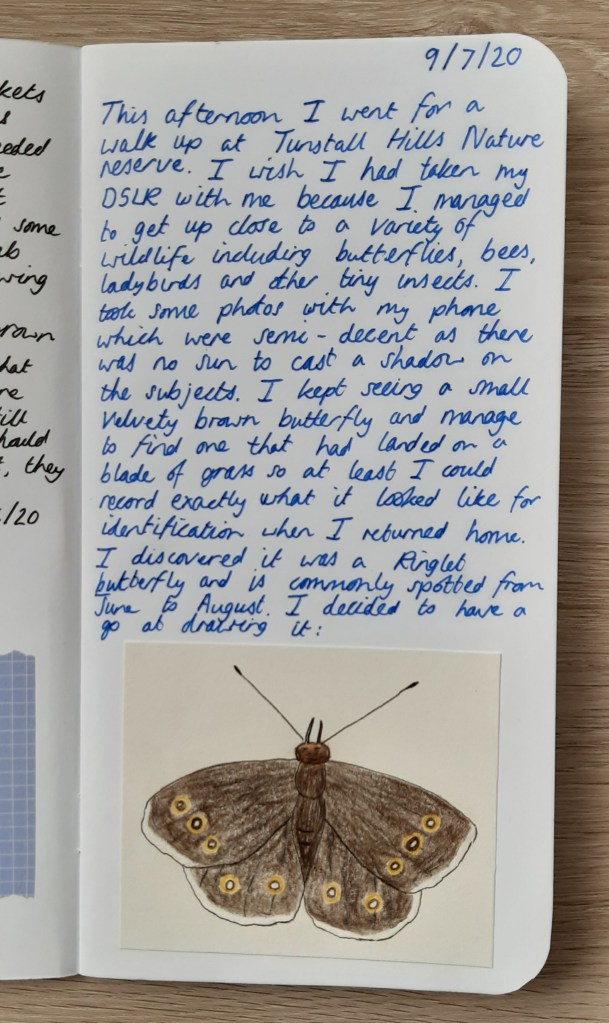
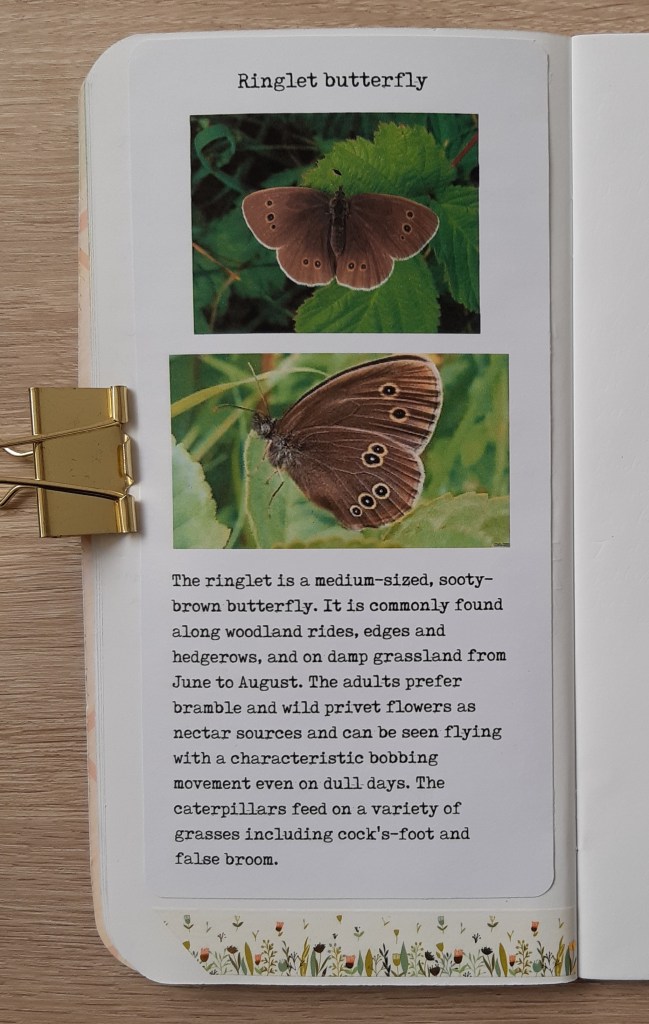
These pages are going to have little sketches of minibeasts which have been spotted in our garden and key information about them collected from a variety of sources. My spread is completely blank at the moment as I want to capture the bugs with my macro lens and at the moment, it’s too wet and drizzly to go out!

Birds in the garden

We get plenty of birds in our garden, particularly in the Springtime so I thought I’d create some pages in which to include sketches of our visitors and some information about them. I decided to do the actual drawings in my sketchbook and then transfer the pictures over to my bullet journal by scanning them on my scanner and then printing them off. This has lots of benefits – it means I can make several attempts at them if necessary, I can use decent quality drawing paper and I won’t end up getting pencil smudges in my BuJo. I’m yet to start my sketches yet but hope to be able to share some soon. As I’m typing a goldfinch has just landed on our sunflower seed feeder. It’s the first one I’ve actually seen visit our feeding station this year. We have two seed feeders containing niger seeds and a tiny seed mix specifically for finches and typically, it hasn’t gone for either of those – maybe collecting tiny seeds is too much effort in the pouring rain!

Do you keep a garden journal or do you just keep the little plant label information things from the pots like we’ve done previously? Have you got a dedicated notebook or do you prefer to produce spreads in your main planner? I would love to hear about the kinds of records you keep and if they’ve particularly helped you with your garden.

Happy gardening!