
According to some reading I did online, the date that winter starts depends on whether you are referring to the astronomical or meteorological winter. The astronomical calendar identifies the season in the UK as beginning on Friday 22nd December in 2023, but personally, I follow the meteorological definition which cites winter as beginning on the 1st December each year. Whichever date marks the beginning of winter for you, I think we can all agree that wintery weather is coming as fast as Christmas is creeping up on us. Whether you dread the icy cold temperatures, or look forward to cosying up in front of the fire in a thick jumper and chunky socks, I think today is the perfect time to talk about getting ourselves ready for the chilly season before it hits. Here’s my top 10 ways to get winter ready.
Check over your winter wear
Get out your super thick winter coat, your hats, scarves and gloves and check them over to see what condition they’re in. Do any of them need replacing? Are there perfectly serviceable items from last year that you didn’t wear which might need donating to charity or given to a friend who will show them more love? Are they washed (or spot cleaned if necessary) and ready to wear?
My husband and I have a small woven basket next to the front door to store our favourite accessories in so we can grab them and go without having to go upstairs to retrieve them before heading out. Other items are kept in drawers and our wardrobes tucked away until needed.
Think layers
As well as outer wear, what you put on underneath is super important too. For winter walks, I recommend searching out some base layers from an outdoors shop. Thermal vests are also a good option to keep you toasty. Longer socks (thermal or wool ones) can keep your feet and legs warm, whilst fleece lined items can be worn under your coat. Layered clothing is always the best idea for winter outings as you can always strip some of them off if you get too hot. There’s nothing worse than going out and feeling really cold, and then struggling to get yourself warm again when you return home.
Evaluate your footwear
Another key part of your winter wear, which I feel needs its own section, is your footwear. For indoors, I recommend cosy slippers with a good sole (IMO not those big, squishy, novelty ones where you’re in danger of falling down the stairs / slipping on the floor when you move around) or socks with gripper treads AKA non-slip soles. For outside, a decent pair of wellingtons is good for light, short walks in snowy conditions or torrential rain (not very comfy on long or difficult walks IMO), walking shoes and boots with good grip / extra traction for extensive walking in all kinds of weather, or, more dressy boots for days and nights out where you don’t plan on walking too far or the weather isn’t too bad (I still like mine to have some sort of grip on the soles). Personally, all of the above, apart from slippers are essentials for me, but it does, of course, depend on the types of weather you get in your location and what you intend to be doing in the winter months.
Make plans for warming meals
On super chilly days, I always crave warming meals such as soup, stew and wholesome pies plus hot favourites such as vegetable lasagne, butternut squash risotto and cauliflower cheese. Before the temperatures really drop, I like to spend time doing some meal planning in my bullet journal. This includes picking out some new recipes to try (both online and in recipe books and magazines, and also listing pantry essentials such as lentils, wholewheat pasta, canned soups, porridge oats, cocoa, plain flour etc. and seasonal fruit and vegetables (such as cranberries, pomegranates, satsumas, sweet potatoes, kale, broccoli and winter squash, which are really handy to reference when we create our weekly shopping lists.
In January, my husband and I take part in Veganuary, where you go vegan for the month (and potentially beyond) and, although it’s easier to find plant based options in the supermarkets these days, we still like to do some extra meal planning and search for some appropriate or adaptable recipes. There are loads of options on the Veganuary website but quite a few of the choices are spicy and I’m not good with this kind of food.
Choose some seasonal scents for your home
There are so many gorgeous scents to choose from this winter and you can also mix and match between a range of different fragranced items including candles, room sprays, pot pourri, reed diffusers and wax melts. Popular seasonal scents include cinnamon, pine, cedarwood, eucalyptus, juniper berries, sweet orange, clove and vanilla. I like to choose vegan options made of soy wax rather than those of animal origin and M&S have a great selection which smell wonderful. I also like purchasing from local small businesses on Etsy.
Protect and nourish your skin
There are two main things that dry your skin out in the winter time, one is the central heating and the other is the harsh weather. The central heating reduces the humidity in the air and affects how much moisture is present for the skin to absorb. Also, weather such as rain, wind and icy conditions zaps moisture from exposed areas of skin like your face, neck and hands, causing redness, dryness and other types of irritation.
At this time of year it helps to choose a richer moisturiser for face, hands and body. You should also try to make sure you apply it straight after washing or bathing. I also like to apply a thick layer of emollient cream to my hands and feet and then wear cotton gloves or socks overnight to really give the moisturiser time to be absorbed fully. Other ingredients which are super effective include shea butter, cocoa butter, rosehip oil and jojoba oil.
Using a humidifier in the home can also add moisture back into the air so it isn’t so dry. And don’t forget to hydrate from the inside too with plenty of fluids throughout the way.
Top up your Vitamin D
During the winter, natural light is in shorter supply and The Sun isn’t so strong. Also many of us spend more time indoors during the colder months. This can cause deficiencies in vitamin D which is important for healthy bones, a strong immune system, calcium absorption, brain health and our happiness levels. To ensure you’re getting enough of this important vitamin, you will need to make changes to your diet. This can involve making sure you eat foods which are rich in Vitamin D such as fish, seafood, eggs and fortified items such as cereal, plant based milks, some types of bread and even fruit juices. If you’re after a plant-based food, mushrooms are the best source. It’s also recommended that you take a daily multivitamin or vitamin powder (which you add water to). If you’re concerned you may have a vitamin deficiency, always consult your doctor or other medical professional for advice.
Equip your car
My husband and I were talking the other day about how much we hate driving in the dark. Unfortunately this, and misty or frozen windscreens are unavoidable at this time of year. Although it’s extremely difficult to avoid driving in the darkness, you can prepare for winter driving in other ways. Creating a kit which includes items such as de-icer, a scraper, small shovel, microfibre cloth, pocket torch and windscreen snow cover will be super useful for different kinds of weather. I also recommend having a warm, fleecy blanket and thick waterproof coat in the boot of your car, just in case.
The AA website has lots of extra winter advice which I’ve found really useful, so have a read through all of the information on this page to get yourself really clued up.
Be ready for potential power cuts
We’re all super reliant on technology these days but what’s the first thing you would need if your electricity went off due to a power cut? Candles (the unscented kind this time) and battery operated lights including a torch and maybe some of those little push on, push off LED lights. Again, creating a kit for use during an unplanned loss of power can be a great way to prepare. Your emergency kit might include wax candles (plus something to light them with) and/or battery operated varieties, LED push on lights, a small night light (for bedroom, landing or in the bathroom), a battery operated or wind up torch, spare batteries for the torch and any other battery operated items in your kit, a supply of bottled water, ready to eat food and the phone number of the Electricity Distribution Network Operator (DNO) – in the UK, this is the easy to remember 105 number but it’s best to have it written down in case you forget. You might also want to have things to keep you warm too such as a hot water bottle, handwarmers, a sleeping bag and a supply of blankets.
The Met Office website has additional information that you might find useful. Just remember to take the time to read it before you actually need it! If you’re not in the UK, I’m sure there will be similar information for your locality online.
Create a winter bucket list
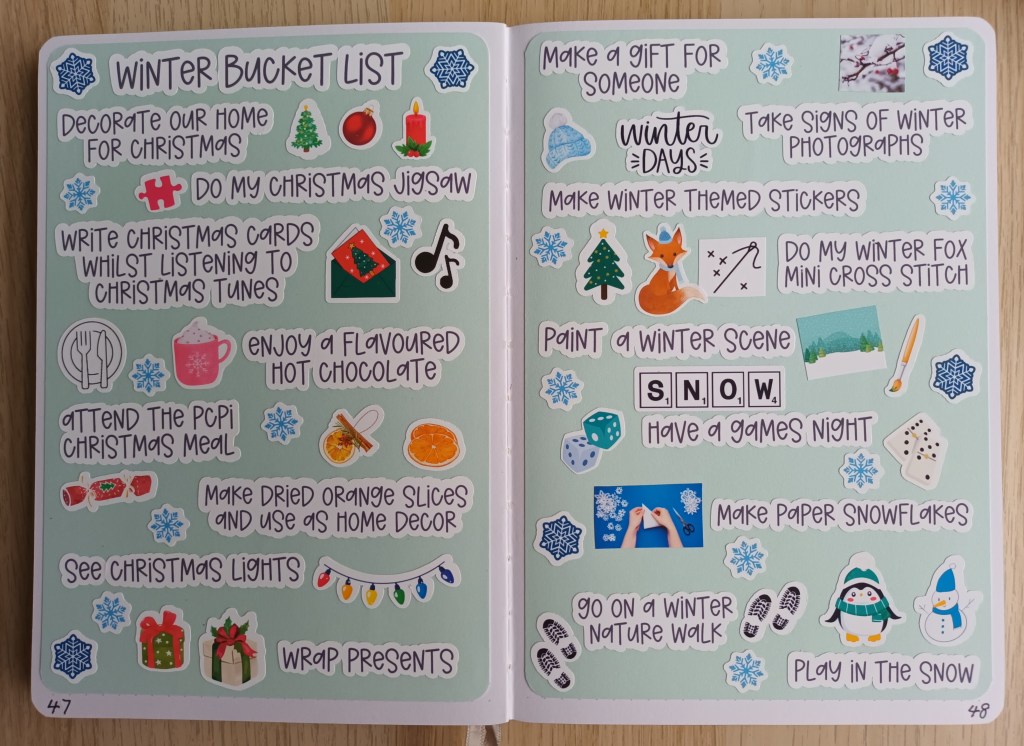
This September, I created an autumn bucket list. I made a two page spread in my bullet journal with items from the list and pictures to go with them. I then ticked off when I had achieved something. I also made an Autumn TN insert in which I’ve created pages with photographs, journalling, autumnal patterns, ephemera, and other decorative elements to show how I’ve achieved things from the list. I’ve enjoyed all of the above so much that I decided to repeat the process for the winter season. I’m really looking forward to getting started. Obviously, this is not a winter essential, but it’s great if you enjoy getting creative or you want to plan some new and different experiences for yourself and your family. I added stickers to mine made with my Cricut Joy.
Final words…
Whilst researching bits and pieces for today’s blog post, I also came across lots of useful information for older people on Age UK. There’s so much advice to read that I thought I’d just share the link for interested readers. One of the most important tips is to make sure you or your older relatives get yearly jabs such as the flu vaccine. Contrary to popular belief, the jab does not give the person flu, but has the potential to cause mild cold symptoms afterwards so maybe some basic over the counter cold medication could be purchased in preparation.
I hope you’ve found today’s blog post beneficial and it has given you some ideas on getting yourself and your home ready for winter. I look forward to hearing from you in the comments about whether or not you’re looking forward to the season and what your favourite things are about wintertime.


 Keeping it creative