

In our current society, information overload has become a real issue for many, if not all of us and one which can seriously impact our mental and physical health and general wellbeing. In today’s Monday Matters, I’m going to consider what is meant by the term, discuss ways in which an information-rich environment can affect us and present 5 ways you can make it easier to deal with.
Put simply, information overload is when we are faced with so much information (much of it irrelevant to us) that our brains become overstimulated and we find it impossible to fully process it all. If I were to make a list of all of the types of information we’re bombarded with every day for most of us it would include texts, emails, news articles, search engine results, news broadcasts, advertisements: online – via banners, pop ups, game and social media interruptions, on TV, radio and on billboards, notifications from social media, the stuff we read as we mindlessly scroll through the aforementioned social media, telephone calls, radio shows, TV programmes, blog articles, discussions in meetings, with customers, colleagues or other acquaintances – the list goes on and you’re probably exhausted after reading just this sentence. All of this can lead to feelings of overwhelm, stress, inadequacy, anxiety, confusion, exhaustion and a general lack of control. It can also result in physical health symptoms such as headaches, increased blood pressure, vision problems and insomnia. It can affect our work quality, decision making, memory, efficiency, self esteem, confidence and sleep.
With that list of unwanted side effects of information overload, it’s pretty vital that we find ways to cope with and control what we consume each day. Hopefully the following tips will help.
Make your morning routine tech free
When I say tech free, I don’t mean giving up on using your alarm clock to wake up, lights to see clearly, or your heating to keep yourself warm, but avoiding the use of communication devices such as your phone, tablet, laptop and TV can help make your morning routine both mindful and productive but also a relaxing and stress free one. On my best days, I will wake up using my new Sunrise alarm clock (so I don’t immediately have to pick up my phone) and fill in my 5 minute journal. I’ll then make myself a healthy breakfast of wholewheat cereal with soya milk, a piece of fruit, a glass of squash to take my morning medications and my first cup of coffee of the day. Whilst eating and drinking, I try to focus on being mindful, showing gratitude for what I’m consuming, thinking about the nutritional content and how this will fuel my body, and not allowing anything to distract me from the process. Next, whilst I’m finishing my coffee, I begin reading, highlighting and completing journalling tasks in my current non-fiction book. At the moment I’m reading Manifest by Roxie Nafousi and I have the hardback edition which feels good in my hands and makes it much easier to mark important points, annotate or complete tasks. My reading lasts for around 20 minutes and is another quiet, slow and relaxed element of my routine. Finally, I’ll get myself ready in the usual way by showering, brushing my teeth, washing my face and doing my skincare before starting on my tasks for the day.
As I said earlier, the above is followed on my best days when my morning routine is a mindful and relaxing start to my day. However, on some days (thankfully not very often since evaluating and making changes), I will pick up my phone, check notifications from in the night, view the content from these, look through my emails, go on YouTube to see if there’s any new videos from vloggers I subscribe to and then watch the content, check the news, pop on Facebook to wish friends or family members a happy birthday (and then start looking at my feed) before taking a second to breathe and think about all of the ideas, things on my to do list and random stuff which is filling my mind from all of the information I’ve already consumed before I’ve even finished my coffee (which I’ve probably barely even tasted!). So, which routine would you prefer to give you a good start to your day?
Of course, I’m not saying that my personal routine would suit everyone, and I’m conscious that some of you will have responsibilities towards others or an early work start, but I think we can all benefit from a calmer, more peaceful and mindful start to our day.
Think about the content you wish to engage with and why
There are certain types of information which we have little or no control over. For example you might tire of listening to your boss and other members of senior management talking about targets or sending you long-winded emails, your colleagues might frustrate you by regularly interrupting you from your flow of work to ask questions etc. but you can’t really tell them that you’re going to ignore them for a week and stop attending meetings because you’re trying to feel less overwhelmed by all of the information you consume (well you could but I’m pretty sure you would be waving bye bye to your job pretty soon). However, outside of work, we can generally make choices and set boundaries which help to limit our exposure to information. Here’s some ideas to think about:
Focus on your current interests Choose content from a reliable source which is relevant to your current interests. For example, you might read non-fiction texts and watch videos about watercolour painting because it’s something you enjoy doing in your free time and want to get better at. You might search for Pinterest content which shows Spring outfit and fashion ideas because you want some ideas on how to update your wardrobe. Or, you might search online for exercise ideas from qualified instructors which focus on building core strength because you’ve heard it will help to improve your posture and make you more toned.
Consider your goals Think about your current aspirations, desires and goals to help you decide what kind of information will benefit you in the long term. For example, if you want to work on creating a vegetable garden so you can enjoy your homegrown produce in your meals, you will probably want to read articles in magazines or online from from reputable sources such as Gardener’s World or RHS. You might also plan to watch YouTube videos for planting tips or buy a comprehensive guide to making the most of your plot. The key is to live in alignment with your current priorities whilst making choices which reflect you values and beliefs.
Ignore information and media content which doesn’t make you feel good Think about the effect certain information has on your mood. For example, if reading and watching local or national news makes you feel sad, angry, frustrated or anxious, try to limit your exposure or try avoiding it for a while and see how you feel (if there’s anything major happening in the world or your local community, you’re certain to hear about it somewhere and then you can find out more if you need to). If looking at your friend’s social media feed makes you feel inadequate and as though your life is uninteresting and uneventful, try giving it a miss for a while. Similarly, if you follow content creators on YouTube who always appear to be super-organised, productive and well put together and it makes you feel like your life is an absolute mess or that you’re a domestic slattern, it might be time to unsubscribe.
Remember, social media is designed to be addictive The designers of social media platforms and the teams running them want you to spend hours scrolling and thrive on the fact that you keep coming back for more. That’s why it’s so hard to cut down or stop. In their book Make Time, Jake Knapp and John Zeratsky refer to these apps, and other sources of ever updating information, as infinity pools, which provide constant distraction from what we would actually like to focus our time on each day. If you struggle with productivity issues or decisions about what to prioritise in your life, their book is well worth a read. For now, try spending a little time reflecting on your current social media usage, asking yourself questions such as:
- How do I feel after using (insert S.M. platform)? Why?
- What times of day do I find myself using S.M.?
- How much of my time per day / week is spent on S.M.? (Some mobile phones can track this for you and compare your usage over consecutive weeks)
- What impact does my S.M. usage have on my mental health? Do I feel more connected with others who share my interests or inspired by the content I consume? Alternatively, does it leave me with feelings of isolation, inadequacy, dissatisfaction, loneliness (and anything else that makes you uncomfortable)?
- Would I describe my social media habits as unhealthy? e.g. is it the first thing I think about when I wake up or do I scroll just before or in bed and end up not being able to sleep?
Make a plan to take control of the information you choose to consume before it takes control of you!
Turn off your notifications and alerts
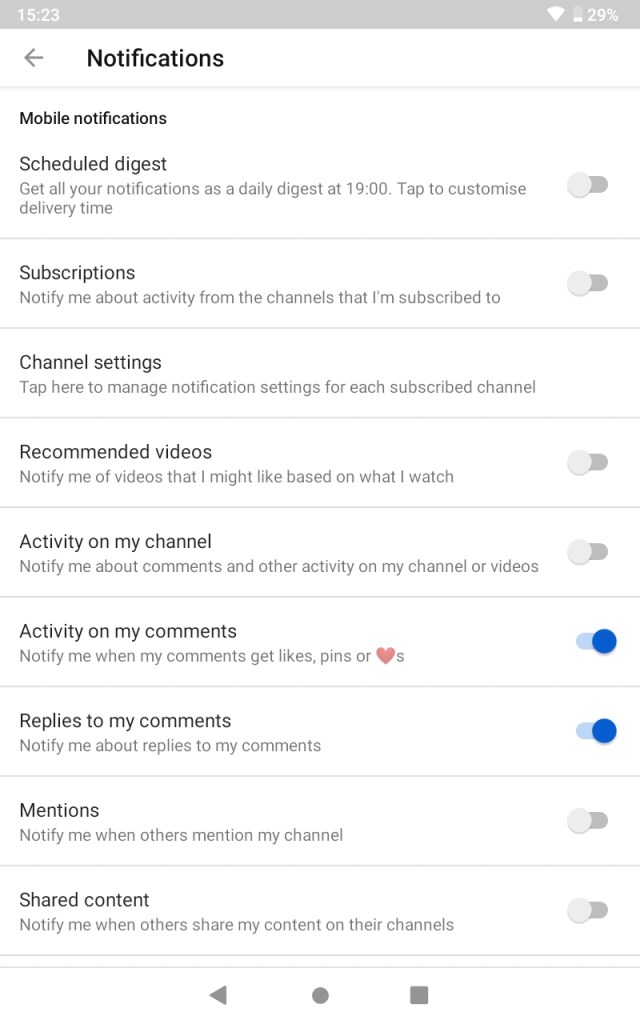
One of the easiest and most effective ways to reduce the volume of information that comes your way is by turning off notifications and alerts from the various social media platforms and apps you use. Again, you should think about whether the notifications and alerts are a distraction or are useful for you. So, for example, I have a star gazing app and I quite like the messages I’m sent a few times a week which tell me about particular celestial bodies that can be viewed that night and opening the app shows us where to find them in the sky. I also get an alert which reminds me to fill in by Bipolar mood tracker each evening as it’s important for me to see what affect different events or activities have on my mood and wellbeing. Of my two email accounts, one is for professional and important stuff like work related opportunities, Etsy shop sales or messages from customers etc., whilst the other is for all the random marketing emails from various shops and companies which I don’t want to be notified of throughout the day. For online orders that I’ve placed, I’ve found there is the option on Yahoo Mail to received notifications of dispatch and delivery information. I’m not quite sure how it works but I presume it searches for key words within the emails.
The second thing you can do is go into your phone settings and set up a ‘do not disturb’ when you are busy (which you turn off at a time of your choosing) and a sleeping schedule which means that after a selected time in the evening and before a chosen time in the morning, your phone does not send notifications of any kind. You can alter this so that alarms can still go off if you need any reminders. For example, I have an alarm set to remind me to take my evening medications and another one to remind me to book my exercise class for the next week when it gets to 10.15pm (annoyingly, if I don’t book straightaway the class fills up with 1 minute of going live!).
Take a break (away from social media)
I’ve discussed before how I use the Pomodoro technique to be productive during the day but one of the most important aspects of the method is taking regular breaks. It’s tempting to check in with social media at these times but I make a point of doing something different so I’m not still looking at a screen and I don’t end up losing track of time. Some ideas for activities to do in your break include:
- get outside or open a window and inhale some fresh air
- do a mini meditation
- listen to some music with your eyes closed or have a little boogie
- make a hot or cold drink
- enjoy a healthy snack
- read a book or magazine
- do some doodling / colouring in
- do some stretches
- declutter your workspace
Do a brain dump
If you feel like you’re drowning in thoughts, feelings, ideas and to-dos, it’s a good idea to get it all out on paper. This is the idea behind a ‘brain dump’, where you free write everything that is currently on your mind onto a blank sheet in a format of your choosing – in long hand, note form, spider diagram style etc. and it can be a powerful way to relieve stress. When you’ve finished, you can decide what to do with all the information – do you need to add something to your calendar or schedule in a time to explore further? might you need to add a few things to your to do list for the next week? would you benefit from talking to someone about how you’re feeling? maybe you need to seek out some positive news stories or make plans for a self care day or a weekend away?
Final words…
I hope you have found today’s tips helpful and feel inspired to try some of them as a way to improve your health and wellbeing. If you do give any of the suggestions a go, I would love to hear how you get on. I know that it can be tempting to consume as much information as you can through the fear of missing out (FOMO) but remember that a lot of what’s out there is neither useful, helpful, relevant or worthy of your time so try and adopt the joy of missing out (JOMO) approach instead!



 Keeping it creative