Posted in compassion, meditation, Mindfulness, wellbeing, wellness

Monday Matters: 5 Easy ways to Practice Mindfulness every day

When practiced regularly, mindfulness can have a really positive impact on our mental health, reducing feelings of depression, anxiety and stress. In today’s post, I’m going to share five simple ways to incorporate mindful activities into your day so you can enjoy the many benefits mindfulness brings.

What exactly is mindfulness?

There are lots of explanations and definitions available online but I particularly like this one from the Oxford dictionary:

a mental state achieved by focusing one’s awareness on the present moment, while calmly acknowledging and accepting one’s feelings, thoughts, and bodily sensations, used as a therapeutic technique.

Oxford online dictionary

Basically, mindfulness is about paying attention to the here and now, showing curiosity about what’s going on in a non-judgmental way. That’s not to say that as soon as you start practicing the various techniques that your mind won’t wander, it will, and that’s completely okay. But as you get used to paying attention in a range of simple ways, you’ll likely find it becomes easier.

So here are five ideas for practicing mindfulness every day that anyone can try.

Choose an activity you do each day and really pay attention

A great way to get started with mindfulness is to choose one activity that you do every day and bring moment to moment awareness each time you do it. Examples of suitable activities could be: drinking your cup of coffee or tea first thing in the morning, brushing your teeth, taking a shower, washing your face, getting dressed, driving to work. Whichever activity you choose, focus on knowing what you’re doing as you’re actually doing it, and what you are thinking and feeling from moment to moment too. At first, you’ll likely find that your mind wanders quite frequently, but if it does, gently bring yourself back to the present moment. With time, you’ll find it gets easier to remain mindful.

Connect with each of your five senses

Using your senses – touch, taste, smell, sight and hearing is a great way to focus on what’s happening right now. You can either spend time exploring each one in turn or pick a particular sense to focus on in a given moment. So, for example, you might sit quietly at home curled up in your chair with a coffee, smelling the aroma, being warmed by the heat of the mug. You might then close your eyes and tune in to sounds within the room such as the clock ticking, and far away sounds such as a dog barking. As you open your eyes, you might change your focus to the colour of your drink or the patterns on your mug, before taking a sip and savouring the flavour. At another time during your day, you might focus in on just one of your senses. So, during your daily shower, you might choose to focus on smell, inhaling the scent of your shampoo, shower gel or soap and your conditioner and really appreciating each one. By doing this you will be immersed in your current experiences rather than dwelling on past events or getting stressed about all of the things you have to get done before bedtime.

The following mindful activity is also a good one to do when you’re feeling anxious to help distract from negative thoughts, judgements and physical sensations associated with a tense body.

  • Close your eyes or lower your head and soften your gaze. Take some slow and deep breaths in and out.
  • Open your eyes and take your focus outside of your body. Find the following:

5 things you can see.

4 things you can hear.

3 things you can touch.

2 things you can smell.

1 thing you can taste.

Focus on your breathing

Breathing is a key part of mindfulness practice as it’s something we do naturally out of necessity. There are many online exercises which focus on the breath such as alternate nostril breathing, square or box breathing and equal breathing where you focus on making the inhalation the same length as the exhalation, but the technique which I find easiest and most comforting is soothing rhythm breathing, which I was taught as part of my compassion group sessions a few years ago.

  • Sit comfortably in your chair with both feet on the ground and your hands resting in your lap.
  • Close your eyes or direct your gaze downwards – whichever feels most comfortable.
  • Gently bring your focus to your breathing feeling the ribcage expanding as the air coming in to your lungs and leaving your body as you exhale.
  • Try breathing a little faster or slower until you find a breathing pattern that feelings soothing and comforting.
  • Focus on the breath as it comes in and leaves your body. You might like to notice the sensation of cool air entering your nose and warm air leaving.
  • Turn your attention to your body. Sensing the weight of your body resting in the chair feeling relaxed and supported. Feel your feet touching the floor beneath you.
  • If your mind wanders, notice what has happened and gently bring the focus back to your breath. Even if your mind is bobbing about all over the place, just accept what is happening without judgement and come back to the breath.
  • As you bring the exercise to a close, gently wiggle your fingers and toes and bring the focus back to the room around you.

To ensure you commit to this short meditative practice each day, you might find it helpful to make an appointment with yourself in your bullet journal or diary e.g. 5 minutes after you’ve eaten your breakfast or as an end of the day thing to encourage restful sleep. Again, this breathing exercise is also helpful to calm yourself down in moments of anxiety.

Engage in mindful walking

Whatever the weather, cold, warm, rainy, bright sunshine, cloudy, try to find 10 or 15 minutes each day to go for a mindful walk outside. Take time to pay attention to the different aspects of your experience. Start by exploring how your body feels when you’re walking – your feet as they make each step, your legs as they move you forwards, your arms as the swing by your sides. Next, tune in to what’s going on around you using all of your senses – perhaps you can hear traffic in the distance or a bird singing, maybe you can see the sun shining through the trees, perhaps you can smell the damp earth. Be open to whatever you notice, wherever you are and whatever happens. Try to fully immerse yourself in the here and now. As you end your walk, bring your attention back to how you feel as a result of your practice.

If you want to read about mindful walking in more depth, I wrote a whole blog post on it last year which can be found here.

Be totally present during conversations

All too often during conversations, we’re either multi-tasking or our mind wanders so we’re not paying full attention. However, being fully present has so many benefits for the speaker and the listener. Not only will you both feel valued, you’ll have a better understanding of the other person’s needs and any information that you impart is likely to be comprehended more easily. You’ll also likely improve both your communication skills and your relationship with the other person whether you’re talking to a friend, colleague or family member.

If you want to be more mindful in conversations, the first step is to notice when your mind wanders and, without judgement (no berating yourself for being a terrible listener!), bring your attention back. Try to resist the temptation to make excuses for being distracted such as “I was bored by what they were saying”, “I’ve got so much to do I couldn’t wait for them to finish” or “they were just repeating themselves”. Just remember that mindfulness takes practice and you are just learning but it will get easier with time.

In today’s busy world, multitasking is very tempting and often encouraged, but studies have shown that humans aren’t really capable of focusing on more that one task at a time, and in actual fact, what happens is our brain constantly switches between the different demands on our attention. If you want to be full focused on a conversation, try to put distractions aside. Put your mobile phone away in your bag, close your emails, avoid looking at what others are up to or what’s happening elsewhere by facing and looking at the participants. Really listen with interest to what the other person or people are saying using gestures such as a nod of the head, a smile or an “I understand” as appropriate. Think about the words they are using, their tone of voice, body language and emotions to really comprehend what they’re saying. Let the other person finish before you contemplate what they have said and offer a response.

Being a mindful communicator takes practice and isn’t always easy, but it’s a great skill to have and can be really useful in social settings as well as work situations.

Final words…

Although in today’s post I’ve presented a number of simple ways in which you can start to be more mindful every day, mindfulness in itself is not always easy to master. It might be helpful to remember that it’s not all about being perfectly present at all times – it’s a way of slowing down and making a conscious decision to notice our thoughts, emotions and the world around us, intentionally accepting things as they are right now without judgement. Being mindful can help us to enjoy life, understand ourselves better and reduce stress. It’s something that everyone can try and, when practiced consistently, has been shown to have positive effects on our physical and mental health, happiness, work and relationships.

Feel free to let me know in the comments how you get on and if you have any questions, I’ll be more than happy to answer them if I can, or direct you to further resources which you may find useful.

Until next time,

Posted in lifestyle, meditation, mental health, Mindfulness, wellbeing, wellness

Monday Matters: A mini guide to walking mindfully

Photo credit: Stanislav Vlasov for Unsplash

Walking has to be my favourite form of exercise and it’s something I do each day. Sometimes my walk is for a particular purpose, for example, heading to the post office with shop orders or running another errand, but mostly, my trips out are simply for the pleasure of getting outdoors and appreciating what’s there. Both are good exercise, but the later is best for body and mind.

For me, there are two types of mindful walking – one, which I was introduced to in my mindfulness classes, is a kind of meditation where the primary focus is on observing the bodily sensations of walking, the other is where you connect with your environment, paying attention to what is going on around you, using all of your senses to fully immerse yourself. Both forms of mindful walking have their benefits and I will consider each of them here as you might like to try them both.

A mindful walking meditation

Many people think that meditation is all about sitting still and trying to empty the mind. This is not the case. Rather, meditation is a set of techniques that involve focusing the attention on a particular object, thought or activity with a view to achieving heightened awareness and a sense of clarity, peace and stability. Examples include seated practices such as breathing exercises, visualisations, body scans and sound baths where instruments are used to focus the mind. Others involve movement, for example yoga, tai chi and mindful walking.

A mindful walking meditation is typically done in a small space and is taken at a slow, careful pace. You might choose to walk up and down your back garden (or in square shapes depending on the layout of your plot) or back and forth along your hallway. Anywhere where you can fit in around 10-15 paces and which is relatively peaceful so you won’t be easily disturbed. You can walk barefoot or wearing light shoes. Once you’ve decided upon your walking space, you bring your complete attention and awareness to the process of walking:

  • Start by bringing your attention to your feet. Notice any sensations there before you begin.
  • Take slow, small and intentional steps.
  • Have your hands clasped behind your back, by your sides or swinging gently – do whatever feels most comfortable for you.
  • Focus on each and every part of your step – the lifting of your foot, moving the foot forward, the placing of the heel on the ground followed my the rest of the sole and then placing your weight on it ready to move your other foot.
  • At the end of your path, pause briefly before intentionally making a 90˚ or 180˚ turn.
  • As you walk, you can focus your attention on one particular aspect of your walking e.g. your breath as it comes in and out of your body, the movement of your feet or legs, the contact of your feet on the ground, the balance of your body as it moves.
  • If your mind starts to wander, notice what has happened and then kindly and gently bring you focus back to your walking.
  • You can also incorporate a mental mantra to help you maintain focus. I like this one: Breathing in: ‘In the here’. Breathing out: ‘In the now’.
  • There isn’t a set length of time you should do your walking meditation for but around 10 minutes should be enough time to reap the benefits.

If practised consistently, walking meditations are excellent for your wellbeing. They can help to reduce anxiety and depression, improve sleep, increase blood circulation, aid digestion, improve balance and even boost creativity.

Walking mindfully

If you’re off out for a longer walk somewhere, maybe around your local park, through woodland or forest, or even just for a wander around your local neighbourhood, you can still practise mindfulness techniques but in a slightly more relaxed way than the above meditation.

Defined as ‘a mental state achieved by focusing one’s awareness on the present moment, while calmly acknowledging and accepting one’s feelings, thoughts, and bodily sensations…’ (Oxford Dictionaries), the practice of mindfulness has so many benefits including:

  • improved awareness of the world around us
  • an ability to find joy in the present moment
  • better appreciation of what we have
  • feeling calmer and happier
  • more compassionate towards ourselves
  • developing a more positive mindset
  • better able to deal with difficult and unhelpful thoughts
  • a higher level of self awareness

The present moment is filled with joy and happiness. If you are attentive, you will see it.

Thich Nhat Hanh

Here are some wonderful ways of combining mindfulness and walking:

Checking in with your body As you embark on your walk, try spending some time exploring what’s going on for your body right now. Is it feeling stiff? Do you have any tightness or tense areas in your muscles? Are you standing upright with an open chest or are you a little slouched? Are your feet ready for a little exercise or are they already aching from a previous walk? Try to approach this in a non-judgemental way, for example if your back feels a little sore, just accept that this is the case rather than labelling it as bad and berating yourself for slouching whilst you were working at your desk.

Observing the act of walking Just like in the walking meditation, you might spend a few minutes getting curious about how you’re moving and what happens with your feet as you take those first steps. This could include thinking about which part of your foot makes contact with the ground first, how you distribute your body weight as you walk, what you do with your arms as you walk e.g. are they stuffed in your pockets or swinging gently by your sides. Do any tense areas of your body seem to ease as you walk? etc. Again, try to avoid judging your walking technique or labelling any sensations in your body as bad.

Adopting the beginner’s mind A key element of mindfulness is having what is known as a beginner’s mind. With this approach, you let go of any previously held ideas or preconceptions about what you might experience and become open to whatever happens, seeing things with a fresh pair of eyes. So, for example, on my walk in the park this morning, I could have thought about it being the same old park, with the same old water and the same old trees and bushes. Instead, I really engaged with the experience, noticing a cute baby rabbit munching on the grass, a squirrel leaping onto a tree with fright as I approached, the freshly painted benches, pairs of mallards hanging out together near the pond and a tree covered in pretty white blossom. In this way, the same walk can be very different each time and bring new joys and experiences.

Acceptance Another aspect of mindfulness is acceptance and seeing things as they really are, rather than trying to change things. This too can be applied to our walks. If, for example, you are out for a walk and the weather changes and it starts to rain, the temptation might be to grumble, hunch your shoulders, speed up your pace and try to get to somewhere warm and dry. Alternatively, you could accept the weather for what it is, observing the change of the light, the colours of the sky, the sounds of the rain on the ground or on your umbrella or coat, and maybe even enjoy the experience of the cool water on your skin or the droplets as they form of the end of your nose.

Use your senses As you walk, really tune in to the experience using your sense of touch, sound, sight, smell and even taste. So, for example, during a walk along the beach you might explore how the sand feels beneath your bare feet or what happens when your shoe takes a step. You might really listen to the sound of the waves crashing or watch the sun glinting on the water. You could savour the flavour of a cool ice cream or recognise how you can also taste the salty seaweed strewn all around. The alarming cries of gulls might take you by surprise but then fade into the background as you hear a couple of children giggling as they create a giant sandcastle. You might roll up your trousers ready for a dip in the freezing cold sea and let out a little squeal as the tide washes over your feet. Wherever you go on your walk, there are so many different experiences to be had and if you take the time to appreciate them all, I can almost guarantee that there’s lots of fun to be had as you explore. A great way to ensure you make the most of your time is to tap into a child-like sense of curiosity and wonder – explore and appreciate all of the little things no matter now many times you’ve seen or experienced them before – pick up a shell or a feather and look at all of the intricate patterns on it, watch the babbling brook, focusing in on how it travels over the pebbles and rocks and trying to spot any birds visiting the water.

Appreciating the different seasons It’s Spring at the moment in the UK and the perfect time to look out for signs of the season. From March, you might see snowdrops, catkins dangling from the trees, leaf buds forming, toads making their journey to the pond, pretty scented blossom and newborn lambs. You might hear pattering rain, the wind gusting through the trees, birds singing, sheep bleating, buzzing bees or the quiet tinkling of a stream. In Summer, you can look out for trees in full leaf creating a canopy over the woodland floor, the bright sunshine peeping through the gaps, meadow flowers such as buttercups, yarrow, cornflowers and poppies laced with pretty butterflies and ladybirds. Even on a walk around your local area, there’s so much to experience – the faint sound of a lawn mower or the smell of freshly cut grass, the cooing of wood pigeons, fledglings learning to fly a robin singing in a tree, the high pitched screech of swifts soaring in the sky or something rustling in a neighbourhood front garden. There are yet more experiences to be had in Autumn and Winter, and as long as you dress appropriately for the weather, any time is a good time for a nice, refreshing walk. At different times of year, consider the position of The Sun at different times of day, the effect the weather has on rivers and streams – sometimes almost flooding the banks, bursting and gushing with water, yet at other times almost dry and how the earth changes from being dried and cracked in the Summertime to soggy, leaf filled and musty smelling in the Autumn.

Reflection At the end of your walk, either pausing on a bench, in the car or when you get back home, try taking the time to reflect on the experience, bringing to mind everything that you noticed and all of the different experiences you had. You might also want to think about how you feel – perhaps more relaxed, energised or ready for a nice sit down to rest your weary feet.

Final words…

During the lockdown period, many of us have found ourselves going for walks more often, developing a love of the great outdoors and appreciating the benefits it brings to the mind, body and soul. We’re now seeing other leisure opportunities opening back up such as non-essential retail, cafes, bars and restaurants, and although it’s nice to have access to these, nothing beats some time out in the fresh air connecting with nature. Any brisk walk is good for your physical health but add mindfulness into the mix and your mental health can benefit in so many ways too.

Posted in lifestyle, meditation, Mindfulness, wellbeing, wellness

Monday Matters: 10 practical tips for starting an effective daily meditation practice

This month, I decided to implement a daily meditation routine and have spent some time researching how to get the most out my mindful minutes and encourage consistency. Today’s Monday Matters post shares some tips on creating an effective daily practise and how the different types of meditation can have a positive impact on your life.

Photo credit: Ben White for Unsplash

Why meditate?

Research has shown that there are a huge number of benefits of regular meditation for mind and body. Some of the main positives are:

  • Improves your self esteem and confidence and increases your levels of optimism
  • Helps you sleep better
  • Can make you more productive
  • Improves your brain function
  • Helps you appreciate your life more
  • Increases your attention span
  • Provides a sense of calm, peace and balance
  • Reduces pain and improves the immune system
  • Makes you feel more energetic, creative and spontaneous
  • Helps to control your thoughts
  • Decreases depression and anxiety
  • Reduces cravings such as for junk food, alcohol and cigarettes
  • Lowers blood pressure
  • Increases compassion towards yourself and others

but there are many more and once you start to fit meditation in your life, you will soon reap the rewards.

How can I fit meditation into my busy life?

When I attended a mindfulness class through wellbeing services a few years back, everyone talked about how wonderfully calm and relaxed they felt after each meditation. Yet, when asked if they’d used the CD full of mindful practises at home over the rest of the week, most of the participants said that they didn’t have time! However, with the benefits listed above, surely taking ten minutes each day to meditate is worth fitting in to your schedule? I bet if I’d asked the attendees if they’d had time to mindlessly scroll through social media for half hour they would offer a different response. Hopefully the following tips will help to commit more easily.

10 tips for starting a daily meditation practice

  1. Start small Like with any new habit, it’s best to start small and create a mini goal to work towards such as to meditate for a few minutes each day. There are plenty of 5 minute meditations on YouTube to choose from and a variety of different apps which offer free trials.
  2. Make it a routine There are some things you do automatically every day without thinking e.g. brushing your teeth, taking your mediation, applying your make up etc. These tasks have become a routine and you can easily add meditation to this list too. I recommend choosing a set time and sticking to it. I like to do mine first thing in the morning before I start work and then I can be sure it doesn’t get bumped off my to-do list. You could choose last thing before bed if you want to get all relaxed ready for sleep. Find out more about the science and practice of creating habits here.
  3. Choose a comfortable place Where you meditate is up to you but try to pick a place where you will not be distracted and feel at ease (not too relaxed that you begin to feel sleepy though!). You can sit in a comfortable chair, curled up on your sofa, on a cushion cross-legged on the floor or even lie on your bed. You can also use props such as a cushion, bolster or blanket to help you get nice and snug.
  4. Try out different meditations to help you with different aspects of your life There are so many kinds of meditations available – breathing, gratitude, compassion, confidence, focus etc. Think about what you’d most like to instil in your life right now and work from there.
  5. Use guided meditations at first When I first tried meditation a fair few years ago, I used to think it was all about just sitting their cross legged and completely emptying your mind. I used to get really frustrated and eventually decided it was impossible and wasn’t for me. Now I use the audio tracks from the class I attended as well as the Calm app and short guided sessions on FitBit premium. I have a free trial for both apps and I particularly love using my FitBit app as it logs all of my sessions for me so I can check my progress and how consistent I’m being.
  6. Journal about your experiences Take time to reflect on your practice, what went well, what you struggled with, how you felt during and after, if you came up with excuses to miss your session and why this might have happened etc. If you felt really relaxed, it helped you have a more productive day or you enjoyed a wonderful night’s sleep, celebrate your achievements and use them to motivate you to continue. If you found it really difficult to switch off and ended up feeling really frustrated, think about what you could do differently next time or accept that it is all part of the learning process and it will become easier with time. Or, if you forgot to do your daily meditation this time, how could you make sure you stick with it? Could you set an alarm or get a reminder from the app you are trying out? Might you attach the practise to another of your daily routines e.g. do your session straight after your morning cup of coffee?
  7. Remember repetitive activities can be meditative too If you find you’re struggling with just sitting and meditating, remember meditation is all about attention and awareness and you might find that doing a mindful activity such as colouring in is much easier for you. I wrote a post full of ideas earlier this year which you can find here. Movement meditations are also an option such as tai chi, yoga or mindful walking.
  8. Be kind to yourself Remember to treat yourself with compassion as you develop your practice. Accept that it might not be easy at first and that your mind will keep wandering. Know that it’s okay to find it difficult and you’re not doing it wrong (try not to judge yourself). Just bring your mind gently and kindly back to your breathe and start again.
  9. Apply your mindful practice to other activities Meditation is all about focus and so is a kind of mindfulness that can be applied throughout your day. For example, when you shower, really concentrate on what you’re doing and how it feels, use your senses to immerse your thoughts in your experience – inhale the scent of your shower gel, observe the water running down your tiles or the screen, listen to the sounds the water makes as it hits the bath or the shower tray. You can even get into a meditative state as you do your daily chores as I explained in this blog post.
  10. Use a habit tracker (but keep it simple) If you’re a bullet keen bullet journalist like me, you probably know all about habit trackers and have seen many examples on Instagram and Pinterest. Habit trackers are great for monitoring your progress and consistency and keeping you motivated. However, if you add too many habits, the filling in process can become an onerous task and you are likely to get sick of colouring in boxes, adding dots, ticks or crosses. I recommend tracking a very small number of habits and only choosing one or two new ones to focus on and selecting other things that you want to become more consistent with.

So that’s it, lots of reasons to add meditation to your daily routine and my top 10 practical tips for beginners that will hopefully help you develop a successful meditation habit that you can stick with. Let me know in the comments if starting a daily practice is something you’re interested in and today’s blog post has either given you the motivation to get started. If it has, I hope you are soon on your way to enjoying the benefits for body and mind.

Until next time,

Posted in lifestyle, mental health, Mindfulness, wellbeing, wellness

Monday Matters: Introducing Friluftsliv and how to reap the benefits of this popular Norwegian practice

Photo credit: Scott Goodwill for Unsplash

If you are a regular reader of my blog, you will know how much I love the great outdoors and how enjoyable I find spending time in nature. It’s really beneficial for my mental health and I try to make getting outside a big part of my daily self care routine. I’m sure most of you have heard of the Danish concept of Hygge (hue-gah) which is loosely translated as a feeling of peaceful cosiness and makes you think of soft and snuggly blankets, a flickering fire or the soft glow of candles. But, you may not have heard of the idea of Friluftsliv, and neither had I until last week. In a nutshell, it’s all about living an outdoorsy life and is a popular practice in Norway, which incidentally is consistently ranked as one of the happiest countries in The World. Today’s Monday Matters introduces you to Friluftsliv and considers some ways in which you can adopt its principles into your life wherever you may live.

The term Friluftsliv, which is apparently pronounced free-loofts-liv, was coined by writer Henrik Ibsen back in 1859 and is made up of the Norwegian words for free, air and life and can loosely be translated as open-air living. Although it might be difficult to remember the name, the concept is luckily a lot easier to grasp. Not only is Friluftsliv about spending time outdoors, it’s also about being mindful of our personal experiences, feeling a connection with the natural world and appreciating all that it has to offer no matter what the season or what the weather brings. The benefits of all three of these have been widely studied and are known to be wonderful for our physical and mental wellbeing.

Having been mainly stuck inside for most of our time due to lockdown restrictions, many of us are now experiencing a strong desire to go out on long walks, sit in the sunshine and enjoy the fresh air of our outdoor spaces both near and far in any way we can. Now that we can drive to a range of locations and facilities in parks and other green spaces are starting to open up, it’s becoming a little easier to relax and enjoy nature. Obviously, we still have to be aware of others and stick with the social distancing recommendation of two metres where possible but we are able to find moments of peace and quiet now.

Photo credit: Toomas Tartes for Unsplash

You might not have immediate access to fjords, mountains and rural hideouts but we can all incorporate elements of Friluftsliv in our lives and feel its rejuvenating effects. Here are some ideas that you might like to try:

Find out what your local area has on offer

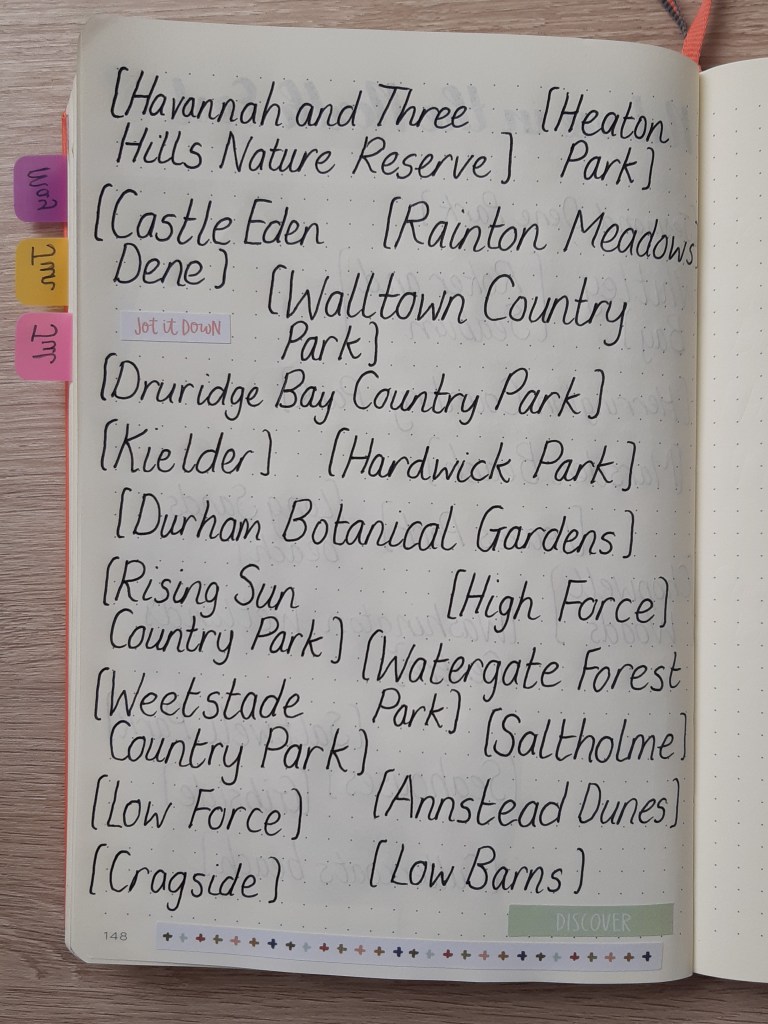
If you type in search terms such as ‘nature reserves’ or ‘places to walk’ and the name of your local area into Google you should be able to find lots of opportunities to enjoy the great outdoors. I started by search in Tyne And Wear and then expanded to the whole of the North East of England and wrote down a range of ideas in my bullet journal. Some of the places we have been to many times before, whilst others might be good for the future. I just wrote the name down for now but will of course need to check out any facilities and if they are currently open as there are still social distancing measures in place.

Be in the moment

One of the key elements of Friluftsliv is mindfulness and there are so many benefits of being in the moment and forgetting all about the stresses and strains of modern day life. As you enjoy your chosen outdoor space, try bringing your attention to your breathing, noticing the sensations as you inhale and exhale, thinking about the processes involved and the key part that trees play. Next, explore your immediate environment using your senses. Maybe you can hear birdsong or trickling water, perhaps you can feel a gentle breeze ruffling your hair or the smell of damp leaves. Really take the time to appreciate all that nature has to offer us. Perhaps find a spot to sit to a while and observe all of the different colours. Maybe you will have the chance to watch different birds and animals as they go about their daily lives. You might like to try going back to this same location at different times of year and noticing changes in the seasons. As you really concentrate on what is happening right now, you’re likely to be filled with a sense of calm and peacefulness. Just let it wash over you and enjoy the simple pleasures of life.

Photo credit: Kalen Emsley for Unsplash

All weather experiences

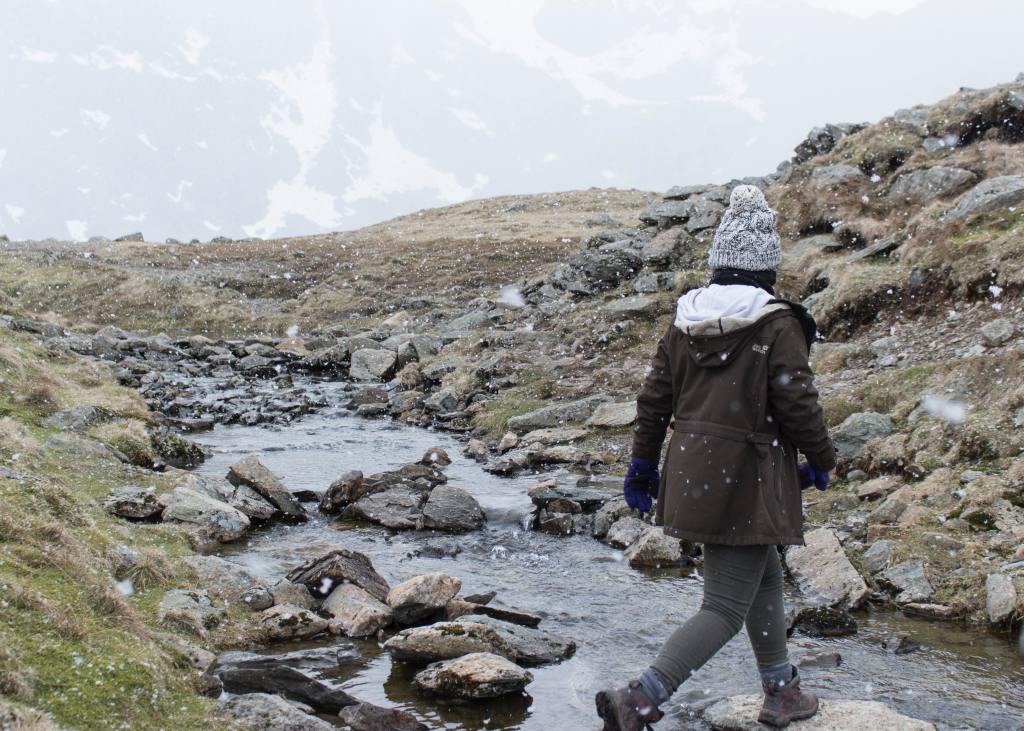
The UK has very changeable weather and you never know quite what to expect. It’s approaching the end of July and as I write this it is raining really heavily. You might think that it’s ‘stopping in’ weather and you could describe it as ‘a miserable day’ but as long as you dress appropriately, a nice walk can really help to lift the spirits. I’m not suggesting you take yourself out in the middle of a thunderstorm or a harsh gale, but a little rain, the crunch of snow underfoot in winter or a chilly wind in Spring or Autumn is perfectly fine with the right clothes and accessories. I’ve lost count of how many knitted hats and scarves I have in my drawer and I love wearing them all. I’ve also got plenty of sun hats and caps too to protect myself from The Sun and they’re all chosen for their bright and cheery colours and patterns.

Photo credit: Matt Heaton for Unsplash

Enjoy a nature holiday

As I mentioned in one of my earlier posts, our holiday abroad for this year has been postponed until next year but that doesn’t mean we can’t enjoy a nice break here in the UK. We’ve been to some amazing places in the countryside and some of our favourites have been staying in log cabins in forests and woodland. The idea of going camping (or glamping) also really appeals as I love the idea of being surrounded by nature. There are also self catering cottages in more rural locations which can be used as a base for walking holidays.

Photo credit: Michael D. Beckwith for Unsplash

Take up a new outdoor hobby

There are lots of hobbies you might like to consider that encourage you to go outdoors. I love taking my camera out and about with me to capture signs of the seasons such as Autumnal berries, squirrels gathering nuts for the winter, blackbirds searching for tasty worms on our lawn, blue tits collecting nesting materials and new buds developing on the trees. Sometimes I just absorb nature and use my senses to explore, whilst at other times I like recording my finds in photographs. I also often take my binoculars out and about with me so I can do a little birdwatching either at nature reserves or in woodland areas. Hiking or cycling are some other great pursuits as you can enjoy the psychological benefits and have a wonderful workout too.

Photo credit: Steve Harris for Unsplash

Picnics and alfresco dining

We like to take any chance we can in the Spring and Summer to enjoy picnics by the coast, at a nature reserve or in a country park or garden. The car boot always has a folded blanket and a couple of folding chairs in so we’re always prepared whether there are purpose build benches or not. We’ll often take a book or magazine with us too for when we’ve finished eating. Our garden patio also has a table and chairs with a parasol so that we can eat our lunch or dinner outside when it is fine.

Try a little skychology

I love looking at the ever changing sky during the day, first thing when the Sun is rising, in the evening at Sunset and at night to see the twinkling stars. Skychology is a relatively new term which recognises that looking up and noticing what’s going on up there has the potential to make you feel calm, connected and present. My husband I regularly sit out in the garden after dark (sometimes with a glass of wine) and find it really peaceful. In fact, much to our excitement, we actually spotted an inquisitive hedgehog one night and have started putting out food in the form of special biscuits which we picked up in a local garden centre. We’ve seen at least two different ones now (one was much smaller) and we were amazed how noisy they are when they’re eating and wandering around. The little one snuffled its way to our wildlife pond for a thirsty drink too!

Photo credit: Diego PH for Unsplash

Snatches of outdoor time

I’m lucky enough to work from home and can sit at my dining table for a direct view of our garden and can pop outside for a quick stretch whenever I want. I can also go out for a walk around the block or drive to a local park or a woodland area. But, if we make it a priority, we can all find a little time to spend outdoors at least a few times a week if not every day. Maybe just enjoying your morning cup of coffee or your breakfast in your garden first thing or taking a stroll through your local park when you finish work. For me, finding time to get outdoors is so vital for my wellbeing that it has become part of my daily routine.

Digital detox

Finally, it’s also a really good idea to take a break from social media and your phone for a while to encourage complete relaxation. If you can’t bear to leave your smart devices at home, try burying them in the bottom of your bag and avoid looking at them for a few hours. A lot of quite remote places have no signal anyway!

Final words…

I hope you’ve enjoyed learning about Friluftsliv and are keen to incorporate elements of it into your life. Let me know in the comments how you plan to embrace nature in the future or what you enjoy doing in the great outdoors. There’s so many wonderful things to see out there that once you start, you’ll soon crave your nature fix every day!

Bye for now,

Posted in lifestyle, mental health, wellbeing, wellness

Monday Matters: 6 Ways to Ensure a Positive Social Media Experience

Photo credit: Georgia de Lotz for Unsplash

The negative effects of social media are well documented and there’s a lot of evidence from a variety of studies about it being detrimental to our wellbeing causing issues such as anxiety, depression, loneliness and low self esteem. However, I believe it is perfectly possible to have a positive and rewarding experience online if you moderate the time you spend and are mindful of how you engage. Today’s Monday Matters post focuses on things to consider and strategies to adopt to help you get benefit from social media whilst sheltering yourself from the more negative aspects of exposure.

Limit your time

I think most of us will agree that we spend far too long on social media each day and that a lot of that time is taken over by mindless scrolling. A study I found online suggested that 30 minutes a day is ample time to spend catching up on various platforms yet a different study found that the average is nearly two hours! If you think social media is taking up too much of your precious time then it probably is and it might be a good idea to schedule a specific time to check in. So, for example, you could decide 6.30pm until 7pm is a good time but make sure you check in again and decide if this amount and time is working for you.

It’s also a good idea to avoid social media later in the evening as it can affect the quality of your sleep. The light on your phone or tablet has been shown to reduce melatonin, the hormone that controls your sleep cycle. Also, some online content can cause something called ‘cognitive arousal’ which basically means you get wound up when you should be winding down!

Try turning off your notifications

A good idea for controlling the time spent is to turn off your notifications for the different platforms, as I find, when they pop up on your phone or tablet, particularly if the notification is accompanied by a sound, that’s often all that’s needed to send you down the social media rabbit hole! For example, I recently changed my notifications for YouTube as I was getting so many messages about new videos on channels I subscribe to and suggested videos I should watch that I was totally developing FOMO (Fear Of Missing Out) syndrome. Now, the only time I’m notified is if someone likes or loves a comment I left or replies to it. I may even turn the likes and loves off at some point too!

A screen shot of my current YouTube settings

Be wary of emotive language

Since starting my own business, I’ve become super aware of the use of emotive language to get you to click. You may be familiar with ‘click bait’ which can be defined as ‘content whose main purpose is to attract attention and encourage visitors to click on a link to a particular web page’ but there are more subtle ways of getting you to click too. Just two minutes on Pinterest and you will see pins containing phrases such as ‘Must have…’ ‘…you’ll definitely want to bookmark’, ‘…beyond brilliant’, ‘How I tripled my blog traffic…’, ’31 lazy ways…’ etc etc. Again, this plays on your FOMO to make you want to click and save the pins for later. I wrote a blog post about avoiding Pinterest some while ago and my time away was due to the fact that I felt it was having a detrimental effect on my wellbeing and making me feel really overwhelmed.

I’ve recently become really aware of how my local newspaper use language on Twitter to get you to check out their webpage. A lot of their tweets start with ‘Shocking’, ‘Exclusive’, ‘Disgusting’ and other similar emotive words and when you click to find out more, it’s just the same old stuff that you really didn’t need to know about. I know they have to sell their stories, but again, it’s another way of getting you to spend time interacting with content that has the potential to wind you up or makes you feel overly anxious or get you feeling down about the state of the world or your locality.

We can all do without too much negative press right now and in my opinion, reducing your exposure or at least being wary of its affect should be a top priority, particularly if you are prone to anxiety or depression or are currently struggling with your mental health. There are a lot of articles online and in magazines about the affect of watching too much Coronavirus news and The WHO (World Health Organisation) have some great advice related to social media and news in relation to mental health.

Be mindful of your personal experiences

To have a happy social media experience, I think it’s really important that you are mindful of how much time you are spending and the effect that it has on your mood and your general productivity levels. If you often find yourself feeling a little bit rubbish, lacking in motivation, tired or completely down, then you may need to evaluate what you’re looking at and why it’s making you feel like this. For example, if looking at beautiful bullet journal spreads on Instagram leaves you feeling like your own BuJo is completely inadequate and that you are rubbish at drawing, lacking in creativity or doing it all wrong, then maybe it’s time to take a break or stop the mindless scrolling – remember the most popular content will be at the top of your feed and as the platform is mainly about aesthetic beauty you’re going to see flawless images which are likely to be highly edited. On the other hand, if you are left feeling highly motivated, creative or on a high, then you might consider social media to be a good mood booster and a wonderful way of helping you to be productive.

Stop the comparison

We all have issues with comparing ourselves to others at times, often in an unfavourable way, but social media often makes things worse, particularly for young people. Not only are you exposed to a huge volume of information from different posters but what you’re seeing is often only half of the picture (or maybe even less) and often heavily edited to show things in the best light. The ability to follow, like and love may also contribute to feelings of self doubt or worthlessness as you reflect on why others have more followers than you or why some friends are getting more likes and loves.

In order to break the comparison habit I think the first step is to recognise that you are doing it and then to realise that it isn’t helpful and is likely to be having a really big effect on you mentally and not in a good way either. When you begin to realise this, you can start to make changes to what you choose to view and your perception of the content that you consume.

A lot of what is presented on social media is advertising and presents an amazing lifestyle, glossy hair and flawless make up coupled with a perfect body, bang on trend outfits and stylish accessories to match. The danger with this is that we start to beat ourselves up as we don’t meet the same standards. What I try to do is reflect on how ads work and remember that they are very good at persuading you to want what is presented and feel that you are incomplete until you have it. I like to assess how clever they are and how far from reality they are. I’m not saying that I don’t get swayed by adverts, we all do but I think being more mindful helps.

It’s also good to remember that what you see online is in digital format and is often altered using filters, photo editors and Photoshop. In fact, the photograph may have been taken literally hundreds of times until the right angle and best lighting conditions are achieved too. So basically, what you are seeing is not really as it seems. The people in these images may seem full of confidence and joy but underneath they might be struggling with lack of self esteem and loneliness or finding aspects of their life really difficult right now.

Evaluate what you get out of being present on social media

There are lots of benefits of using social media such as keeping in touch with friends, being part of an online community, learning new things, hearing a range of perspectives on a topic, keeping you informed, getting help and advice, and fun or entertainment. In fact, being present on social media has been shown to help people feel more connected and useful as they feel they are positively impacted on the lives of others. It’s a good idea to sit down and think about what you personally get out of your experience and the impact it has on your life.

If there are particular apps that you feel aren’t doing you any favours, don’t be frightened to delete them or take a break until you are in a better headspace or in a different mood. I know that my social media experience depends a lot on how I’m coping day-to-day and if I’m struggling with anxiety and depression, I tend to keep my distance from Facebook, Instagram and Pinterest as they only make me feel worse. When I’m feeling happy and in a good place mentally, I enjoy looking at a range of content and it makes me feel motivated to make changes and improve my life. However, I still need to be mindful as I can start to feel overwhelmed and try to change too much all at once in a bid to get a perfect life (which by the way is completely unobtainable)!

Final thoughts

Social media plays a big part in our modern lives and there’s no changing that. Having a happy experience is all about developing your awareness of the positive and negative aspects and being mindful of how your time online is affecting your wellbeing. I hope today’s post has given you some things to think about and will bring about some changes for the good if you feel that is what is required.

Happy surfing!