Posted in mental health, relationships, wellbeing, wellness

Monday Matters: 5 Great Ways To Expand Your Social Circle

Social connection is a key part of good mental health and wellbeing, but, making new friends and acquaintances can often feel much more difficult as we get older. So, today, I’m sharing 5 ways in which you can widen your social circle so as to easily enjoy a diverse range of relationships and hopefully find some good friends along the way.

Volunteer

Volunteering for a cause that you are passionate about can be a great way to meet people with similar interests and core values. I used to volunteer for the RSPB and, although I worked alone in my particular role, our team used to meet up for regular social events where birds and wildlife were one of our many topics of conversation.

There are tonnes of different ways to volunteer but here are some ideas to get you started:

  • work for a local food bank
  • help out at a local animal shelter
  • become a gardener at a nearby National Trust place
  • if you live by the coast, get involved in a beach clean up
  • support your local hospital trust
  • become a youth mentor
  • assist at a local charity shop
  • join The British Red Cross

Get a pet dog

Now, I haven’t tried this one myself as my husband is allergic to dogs, but I do know that taking your pet for a walk in your local park or just around the block is a guaranteed way of meeting others and potentially building friendships. Whilst your mutt says hello to other dogs he or she meets along the way, you’ll likely find yourself chit chatting with their owner, firstly about your dogs, but then, often widening the conversation to a topic of your choosing. And, in all likelihood, you’ll bump into each other again another time, and if you enjoyed chatting before, you’ll probably find yourself talking to one another again.

Become part of an online community

One of my favourite ways to connect with like-minded individuals is on a virtual basis through joining groups on Facebook. Wherever your interests lie, there’s likely to be a related group that you can try out. I’m a member of all kinds of groups including Ethical Hamster Care, Angry Birds 2 Gamers, Dolphin Spotting NE From your Facebook homepage, just click the fifth icon in the middle section of the upper bar and either peruse available groups using the discover button or search for topics of interest using key words.

Attend a class or workshop

Signing up for a class or workshop is a great way to meet new people with similar interests. I’ve done a number of different short courses over the years including two ceramics classes (beginners and intermediate), photography for beginners, Tai Chi, The Wheel of Wellness, Mindfulness and aromatherapy. I met people of all different ages and backgrounds and I’ve stayed in touch with some of them since finishing.

Join the gym

I’ve been a member of my local gym for a few years now and I’ve met so many people who share my interest in keeping fit and maintaining good wellbeing. I’ve found that in the gym itself, people don’t tend to make conversation but in the classes that I go to, there’s plenty of chatter before the activity starts and as we pack away our equipment. There’s also a cafe where I go and at least a handful of participants grab a coffee together afterwards.

Final words…

I hope you’ve found today’s post beneficial and it has given you some ideas about how you can grow your social circle. I would love to hear in the comments of any stories you would be happy to share about different ways in which you’ve made new friends and acquaintances as an adult.

Posted in Bipolar disorder, mental health, mental illness, physical health, relationships, wellbeing, wellness

The Good, the Bad and the Ugly of Hypomania in Bipolar Disorder, including my personal experience

Right now, I’m going through a period of hypomania as part of my bipolar disorder. It seems to have been brought on by Covid-19 because, despite feeling awful physically, my mind was racing and I was getting less than 4 hours sleep in total. Desperately craving some calm to help myself recover from my temporary illness, I turned to a packet containing medication I was given when I was getting used to my bipolar meds namely Diazepam. I thought as I recovered from the virus, things would settle down but so far, as I write this post, they haven’t. I’m trying desperately to do mindful activities to help myself get back to a stable state (what I would usually describe as my ‘normal’) but it’s proving difficult and I’m worrying that I’m going to get worse.

As part of my hypomanic episode, I’ve got literally hundreds of ideas for blog posts, creative pursuits, ways to improve my life and things I absolutely need to start doing. In some ways this is good as, before Christmas, I was struggling with tiredness and didn’t want to do as much with my day and worries that I was becoming depressed filled my mind. However, being ‘high’ means I’m constantly adding to my to do list (or my ‘must do’ list as it feels) and I find myself working on ‘projects’ until late evening and not wanting to stop. And then, surprise surprise, my mind is full of stuff and I’m struggling to switch off when my husband and I settle down to watch TV and I’m finding sleep just will not come.

My husband is still feeling tired from Covid and by the end of the working day, he’s exhausted and finding it difficult to listen and pay attention to my constant witterings. You see, when my mind is full of thoughts and ideas, I get verbal diarrhoea which is not good news for me or my husband – I can’t stop talking and I talk so fast that he can’t keep up. Even my text messages become long and waffly! And if my husband asks a question that has already been answered or he’s failed to compute something I’ve said, I’ll become irritated and short with him.

Talking of being irritated. I’m getting annoyed with all kinds of people and things. A slow driver in front of me on the way to the supermarket. Someone who doesn’t say thanks when I let them pull out. Ink on my hand because of being a leftie. The queue at the post office meaning I have to wait to collect my Amazon order. Having a headache because I’ve failed to drink enough water during the day. The list goes on, and on, and on!

I’ve also noticed that I’m buying more ‘stuff’ in a bid to improve my life. Luckily, I don’t struggle with mania (as I have bipolar 2) so I won’t make huge purchases like a brand new car or an expensive holiday, but things become much more attractive when I’m high. I was in TKMaxx a few days ago, and the more I looked around, the more I wanted things and so I made my purchases (a new pen pot, a cute bird mobile phone holder and 2 gorgeous sky blue matching chopping boards) and swiftly left the shop. My husband will never say no to something that I really want and it makes me feel guilty afterwards when I’m back to my ‘normal’ stable self and our expenses for the month are way more than usual.

These are a few of the difficulties I face which could be described as ‘bad’, but what about the ugly? By ugly, I don’t of course, mean that I turn into a grotesque monster who people can’t stand to look at. I’m really referring to the effects that hypomania can have on character, traits or behaviour. For example, I can have a short temper and might raise my voice to my husband in frustration for being too slow to answer a question, forgetting something, not getting ready to go out fast enough or for asking me to repeat something I’ve said (when talking at speed and not stopping). I might also make comments about someone that I would consider to be nasty at any other time. Or my inflated ego might make me believe that I’m superior to others and that I could do a better job than them. Although I may or may not say things out loud, I don’t want to be someone who voices or thinks horrible things.

In the past, when I was on a high dose of antidepressants and no mood stabiliser, I would sometimes believe I was better than every teacher in the school and that they weren’t as dedicated as me because they took a proper lunchbreak or left before the school closed at 6pm. I would also often speak in a way which to others, might sound like I was full of my own self-importance. Then, I would rush around trying to do everything at once in a bid to maintain the illusion that I was the best! Needless to say, after trying to keep going and going like a Duracell Bunny, I would inevitably crash and either become physically unwell, mentally exhausted or depressed.

Before my diagnosis, I would go through lengthy periods of depression where I had no confidence in myself and got anxious and cried on a daily basis. I also sought reassurance from my husband constantly. However, when going through a period of hypomania, I genuinely believed that I didn’t need anyone’s help and support and that I no longer needed a husband / family / friends for encouragement, support or just to be there. Especially as everyone and everything seemed to irritate or anger me.

Over the years, I’ve learn to apply strategies to calm myself down and the medication I take helps immensely. However, I will never be cured so I am learning to live with my relatively recently diagnosed illness (even though I believe I’ve had the condition since my late teens) and my husband is incredibly patient with me and supports me in any way he can. Whether I listen to his advice or not depends on my mood! However, I’m grateful to have found someone so wonderful to share my life with and put up with my changing moods.

Final words…

I’m hoping that today’s post has given you an insight into the effects that hypomania can have on an individual. I believe it’s important for everyone to know a little bit about it as it’s likely that most people will know someone who is bipolar, even if they’re not aware of an individual’s diagnosis. If any of the writing doesn’t make sense, it will be because most of the above was written at 4am on my phone whilst I sat downstairs frustrated that my mind wouldn’t rest!

It’s taken me at least a week to finish and publish the above and I’m pleased to say that things are starting to settle down. I’m no longer taking diazepam for sleep and my mind has started to calm down a little. I still have lots of ideas and projects but I’m trying to make sure I only work on those which add value to my life. I’m also adopting the done is better than perfect way of doing things. Hopefully, I’ll continue to head in the right direction towards ‘stable’ a term I’m trying to use to describe my state rather than ‘normal’.

If you would like to know more about bipolar disorder and how it affects individuals or you suspect a love one may have the condition, the NHS website has pages of really useful information, including more detail about its presentation . Although symptoms different from person to person, there are set list of signs which are likely to be visible.

Thanks for reading!

Posted in Anxiety management, Bipolar disorder, compassion, depression management, grief, life hacks, mental health, productivity, Uncategorized, wellbeing

Monday Matters: How writing a ‘done list’ can improve your wellbeing during periods of physical and/or mental illness

Welcome to my first blog post of 2025. Happy New Year to you all, and a special hello to my new followers! I hope you had a wonderful Christmas and are excited for what this year will bring.

My husband and I both enjoyed the festive period, which this year (make that last year!) was a double celebration as my brother and his partner got married a few days after Santa had been. The wedding was a joyous occasion and a great a chance to chat with family I hadn’t seen in a while too.

Whilst on the way back home, and with my husband doing the driving, I made the most of being in the passenger seat by reflecting on 2024 and thinking about what I would like to achieve in 2025. I also started to mentally compose a to-do list full of chores and more pleasurable activities to make the most of the remaining three days of the holiday. Little did I know that something would scupper my plans…

Bloody COVID-19 strikes again!

By the time we got back, we both had a bit of a sore throat, which I assumed was just a bit of dehydration from the long car journey. By New Year’s Eve, we felt absolutely dreadful, and so my husband did a test (just in case), and I’m sure you can all guess how that turned out! Needless to say, we’ve barely had the energy for basic self care, nevermind any chores, fun activities or creative pursuits.

We did, however, manage to  psych ourselves up enough to take a quick shower each day, despite how exhausted we were and, despite the fact that the powerful water raining down and massaging in my shampoo and conditioner brought actual pain to my scalp! – random covid symptom or what?????? And I’m so glad we did because this idea for a blog post was born – in fact, some of my best content and general epiphanies come to me whilst showering (anyone else??). 

Basically, I was busy thinking about how annoying it was that I was too exhausted to do anything and that being ill was a giant waste of time, and then I recalled that during my worst bipolar depressions, I still achieved a few things each day and tried my best to be kind to myself and celebrate small wins. To help me do this, I created something that I call a ‘done list’ and, although my illness was physical rather than mental on this occasion, I realised the same technique could be used to make myself feel better.

As everyone goes through ups and downs in life, I thought I’d share how my done list works. You might not need to apply the technique now, but it’s a lovely, self compassionate activity which you can store in your physical or metaphorical toolbox to use when needed such as when you’re sick or struggling with low mood. It can also be used when you’re not feeling under the weather, as a celebration of how productive you’ve been in general or as you work towards your goals for the week / month / year and so on.

In fact, as I sat on the sofa (on day 3 of COVID-19), soothing my throat with a warm drink, I actually started mentally creating one to help my husband and I feel a sense of achievement because I realised we actually did something that day despite feeling like crap.

So what’s a done list?

A done list, as the name suggests, is basically a list of things you’ve achieved that hour / day / week / fortnight / month / different time frame of your choosing, which can be tailored to how you’re feeling – both physically and mentally. So, for example, your list could look something like this:

Today’s done list

  • got out of bed (before 10am too!)
  • got dressed
  • brushed my teeth and washed my face
  • planned 3 things to do
  • made and ate a sandwich (even though I didn’t feel hungry)
  • worked on my jigsaw
  • watched TV for 1 hour (and managed to follow the storyline of the drama)

Or, if you’re not feeling too bad (in a bit more pain than usual, or a little tired maybe and not 100%), could include more taxing items such as those found in the list below:

Things I’ve done this week

  • washed the car
  • tidied my craft room
  • decluttered 20 items from craft room!
  • made 3 meals from scratch
  • 5 gentle workouts (2 x 20 mins yoga and 3 x 30 mins Pilates)
  • created a journalling page using my crafting stash

As you can see from the above, you can include super-minute achievements (or what would considered to be when well) or more ambitious ‘done’ items at other times. These ‘done’ tasks make a good record of how you’ve spent your time and can help you realise that, yes, you might be on top form, but you did make some progress or make a dent in your mental to do list (or physical one if you wrote a list when feeling productive and then things changed e.g. illness, upsetting life event, overwhelm etc).

If you’re still at work, but it’s been a struggle not to phone in sick, you could even include things that you achieved as part of your job, like biting your tongue at a comment made by a colleague or being assertive and saying no to your boss or team leader!

What are the main benefits of creating a ‘done list’?

These are the main benefits I’ve found of creating a done list, but you may be able to come up with more:

  • a visual reminder of what you’ve achieved in the chosen timeframe – the smaller the items are, the longer your list can be!
  • boosts your motivation to do more things (be careful not to do too much though as the last thing you want to do is make yourself feel worse)
  • acknowledges your small wins during difficult times

Final words…

I apologise if this is not new content and I’ve already written about a ‘done list’ before – I did trail through my posts in a bid to find out, and couldn’t pinpoint anything but I still have ‘COVID brain’. Hopefully I’ve shared something helpful which has given you a new string to your ‘wellbeing bow’, particularly if you have recurrent issues with your physical or mental health like I do. Doing a ‘done list’ can also be a great record of what you’ve achieved over a period of time, so can be a really useful tool for measuring productivity too. However you use it, I’m pretty sure it’ll make you feel a little more upbeat about things and your lists may even bring a smile to your face at a later date if you keep them in your planner and happen to flip back!

Thank you for reading and I wish you and your loved ones a happy and healthy 2025,

Posted in compassion, mental health, physical health, wellbeing, wellness

Monday Matters: The benefits of engaging in small acts of kindness, plus some RAK ideas for you to try this week

Most of us are familiar with the abbreviation RAK i.e. Random Acts of Kindness and are likely to have given or received one or more of these over the course of the year. Kindness from another, whether they’re a complete stranger, an acquaintance or someone much closer has the potential to brighten our day, make us feel good inside, change our mindset, and even restore our faith in humanity. But, as well as this, research shows that helping others is wonderful for our mental health and wellbeing, so it has huge benefits for the giver too. Today, I thought I’d discuss some of the benefits of doing things for others and also list a few easy and low cost RAK ideas that you might like to give a try.

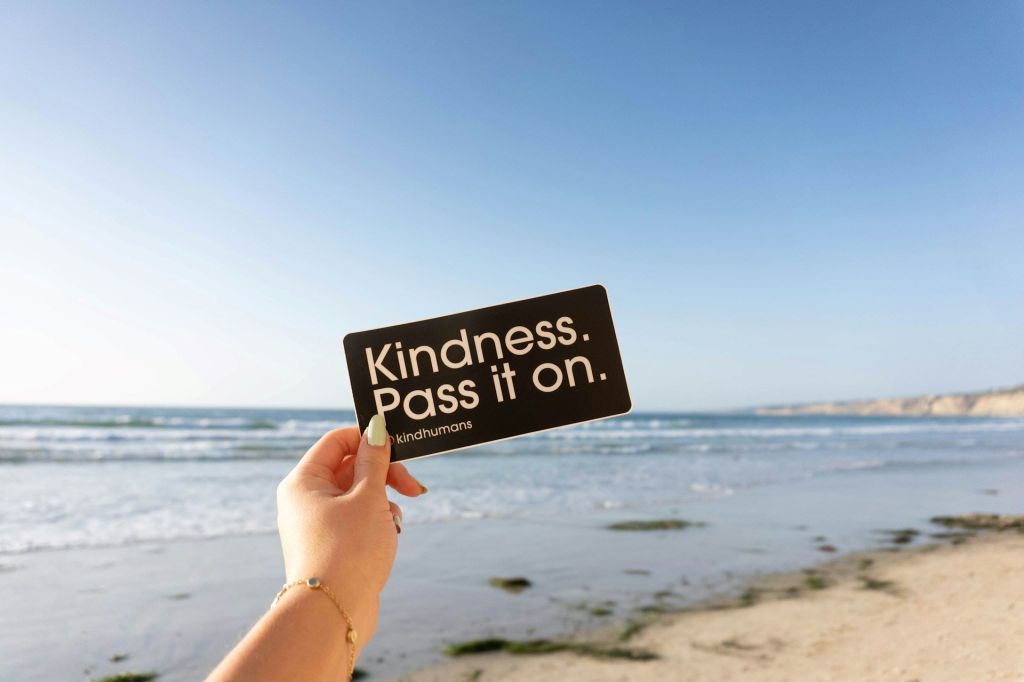
Photo from a selection on Unsplash

Releases positive ‘feel good’ chemicals

Acts of kindness towards others has been scientifically studied and the research shows that not only do they have the potential to make the recipient feel warm and fuzzy inside, they also release dopamine, serotonin and oxytocin (feel good hormones) in the giver, creating feelings of euphoria which have been described as a ‘helpers high’.

Reduces stress levels

On the subject of feel good chemicals, the release of oxytocin (sometimes referred to as the love hormone) has also been shown to counteract the production of stress hormones like cortisol. As well as creating calm, lower stress levels can also help with physical ailments that are often precipitated or aggravated by stress such as headaches, back pain, neckache, stomach complaints, poor immunity, low energy levels and fatigue, sleeplessness or insomnia.

Increases positive emotions and mood

On a similar theme, small acts of kindness towards others can brighten our mood and make us feel much more positive in general. When we regularly engage in good deeds, it increases positive emotions in us such as contentment, happiness and joy. It can also boost our self-esteem and generally make us feel more optimistic.

Reduces negative emotions

In addition, with being filled with positivity will naturally reduce negative emotions and feelings such as anger, sadness, anxiety, depression, discontent and loneliness. Obviously, it’s normal to feel some of the above at times, but kindness towards others can help to put you in a positive frame of mind and stop negativity from taking over.

Creates a chain reaction

When the recipient of your RAK experiences the feelings of happiness it creates, it’s likely to inspire them to do something kind for someone else and this kindness can then be paid forward, creating a chain reaction. Here’s a video you might like to watch which shows a kindness being paid forward – yes, it’s not necessarily a true to real life situation, but I think it provides a heartwarming illustration.

Creates a real sense of belonging and reduces feelings of isolation

Finally, being kind towards our partner, children, other family members, work colleagues, neighbours and even strangers helps us to feel a deep social connection and trust in others. This can lead to better relationships and the belief that we are a key part of the workplace and local community. It can also reduce feelings of social isolation and loneliness in ourselves and the individuals who receive our kind acts.

Some RAK to try today

Some of the RAKs involve a small financial outlay, but there are also many free ideas too. I’ve tried to include a wide mix of suggestions, so hopefully there’s something there for all of my readers.

  • feed the birds in your garden or local park (please avoid giving bread to ducks though as it isn’t healthy for them)
  • buy a treat for your pet and watch them enjoy it
  • hold the door open for someone
  • help a person who is carrying a heavy load
  • buy a bunch of flowers for someone who’s having a hard time
  • thank your server for being attentive when out for a meal
  • go for a nature walk and say ‘good morning’ or offer a friendly ‘hello’ and a smile to everyone you meet
  • donate some unused items to charity
  • compliment someone on their choice of outfit or accessories for the day
  • leave a surprise somewhere for a friend, family member or complete stranger to find e.g. put a post it note in your child’s school lunchbox saying ‘I love you’ or ‘I hope you’re having a nice day’, paint a pebble with a bright rainbow and leave it at the base of a tree in the woods, hide your partner’s favourite chocolate bar in their bag etc.
  • if someone is popping out for lunch and it’s raining, lend them your umbrella
  • put an item or two in a food bank
  • let someone who has a small number of items go before you in the supermarket
  • show your appreciation for a fitness instructor whose classes you particularly enjoy
  • offer to get groceries for an elderly neighbour or someone who is sick
  • donate old magazines to be put in a waiting room e.g. at a doctor’s or dental surgery
  • bake cookies for your work colleagues
  • if someone is new to your gym class, your place of work or somewhere else you go regularly, find opportunities to get to know them and ask them how they’re finding things
  • when out and about for the day somewhere, offer to take a photograph for an individual, couple or family so that they can all be in the shot
  • create a wildlife friendly area in your garden, for example, by scattering wildflower seeds, putting up a bug hotel or allowing leaves to pile up in a corner
  • write a list of things you love about your partner, child, friend or work colleague and share it with them
  • leave a nice comment on a blog post, YouTube video or picture shared on Instagram
  • leave a positive review for a small business who have given particularly good service
  • give a book to a friend you think might enjoy it
  • send a surprise gift in the post to a loved one
  • donate to your favourite charity
  • offer some helpful advice to a member of an online group you belong to
  • let someone out in front of you when driving in heavy traffic
  • call or text a friend you haven’t spoken to in a while
  • send an interesting online article to a friend or family member you think might benefit from or enjoy it
  • offer a lift to someone
  • write a summary about a place you’ve visited on TripAdvisor so that other potential similar visitors know what to expect if they go
  • message an author to say how much you enjoyed their first / latest book
  • post a good news story on social media
  • make a self care package to give to someone you think would benefit from it
  • take part in a community litter pick
  • stop and take time to talk to a neighbour – even if you’re super busy!
  • give up your seat on public transport to someone who needs it more than you
  • volunteer your time for example, to walk a neighbour’s dog, to do some babysitting for a friend of family member, to go to the shops for someone, to help teach someone a skill such as reading, knitting, sewing, crochet or computing

Final words…

As you go about your day today, try to think of at least one way you can make a difference to someone. It doesn’t matter how small your gesture of kindness is or whether it is costly (financially or time wise) or not. One you get started with offering random acts of kindness, you’ll find that more and more opportunities and ideas will present themselves, making it easier and easier by the day.

After giving or receiving a RAK, why not do a short amount of journalling about it in a notebook to explore the positive effects it has had. Alternatively, you could create a short post about it on Facebook, explaining how you felt afterwards and celebrating kindness towards others. You might even prompt someone else to think about what they could do to help another person in their life.

Posted in mental health, Mindfulness, mindset, psychology, self care, wellbeing, wellness

Monday Matters: 8 ways to instantly boost your mood

Sometimes, no matter how positive you feel when you wake up, particular events, issues, frustrations and even certain people’s attitudes can put a dampener on things and leave you feeling deflated. You probably wish you hadn’t let these parts of your day affect you as much as they have but it’s a natural part of life to experience ups and downs. When low mood strikes, there are a number of ways in which you can help yourself to feel better. Today, I’m sharing 8 tried and tested ideas which I’ve found helpful and I promise none of them include eating a gigantic bar of chocolate or any other highly calorific item!

Get out in nature

If you’ve been following my blog for a while, you’ll know that I’m a big fan of getting out in nature, whether that’s spending some time in my garden, heading to my local woodland park or even going to the beach to walk on the sand or paddle in the sea. It doesn’t have to be for long – just a few minutes of fresh air can make the world of difference to how you feel.

Listen to some upbeat tunes (even better, dance and sing too)

I first wrote about the benefits of listening to music back in 2021 and, as part of the post, I shared a page I’d created in my bullet journal with a mood boosting playlist. Musical taste is incredibly personal but choosing some upbeat songs to boogie, sing and listen along to can put you in a much better frame of mind. Here’s some ideas for uplifting tracks to find on YouTube, Apple Music or whatever happens to be your favourite resource to listen to through headphones or to blast out through your speakers (if it won’t disturb anyone):

  • Can’t Stop The Feeling By Justin Timberlake
  • I Got a Feeling By The Black Eyed Peas
  • Happy By Pharrell Williams
  • 22 By Taylor Swift
  • Walking On Sunshine By Katrina & The Waves
  • Song 2 By Blur
  • Love Shack By B-52s
  • Roar By Katy Perry
  • Sweet Child O’ Mine by Guns N’ Roses
  • Good Feelin’ By Flo Rida
  • Watermelon Sugar By Harry Styles
  • Dance Monkey By Tones And I
  • Groove Is In The Heart By Deee-lite
  • Blinding Lights By The Weeknd
  • Havana By Camila Cabello Feat. Young Thug

Whatever your favourite style of music, jot down an uplifting songs list or create a track list on your device and keep it in a memorable location (either on paper or digitally) to refer to when you need it.

Get moving

On the subject of moving our body, as an alternative to dancing along to your favourite tracks, you could also explore other forms of exercise in a bid to boost your mood. Any type of physical activity that raises your heart rate has been shown to release endorphins in the body. These hormones and neurotransmitters, which have been described as ‘a natural high’, will have you feeling better in minutes. Here’s some fun / invigorating summer time activities to try:

  • Spend some time in your garden pulling weeds, breaking up compacted soil in your borders, cutting your lawn, deadheading faded blooms, pruning bushes and shrubs, checking for hidden pests and watering thirst plants with a heavy watering can.
  • Get your bike out of the garage, dust it off and head to a trail of your choice. I like to go to the coast as it’s a straight stretch of cycle path which is wide enough for if I get the wobbles but if you search ‘easy bike rides near me’ you can explore different options available to you in your locality.
  • Play a game or do a physical activity that you used to enjoy as a kid – frisbee, bouncing a ball off a wall / bat / the ground,
  • Clean and or tidy your desk / room / house, then sit back and enjoy the feeling that comes with a neat and dust free space.
  • Take a brisk walk around the block and see if you can notice anything new or different – maybe someone in your immediate area has painted their fence, changed their car, got a new pet, weeded their driveway etc. Maybe the council has added a new sign, planted some young trees or mown the grass in another street. If you can’t see anything that’s changed, maybe you could think of some changes you would like to make if you were in charge!

Soak up some sunshine

Sunlight is a natural source of Vitamin D which has been scientifically proven to regulate your mood. If it’s a nice day, get your sunglasses and some sun protection on and feel the warmth on your skin. I like to sit on our bench or one of our patio chairs in the garden and close my eyes for some mindful listening to accompany the experience. This is a great way to get into a meditative state as it gives you something to focus on and minimises the change of your mind wandering towards the major or minor irritations I mentioned previously. In the summer, there’s generally lots of daytime sounds whether it’s someone mowing the lawn, children laughing, birds tweeting or even distant traffic noises.

What a video of something cute or funny

Open up YouTube on your phone or computer and search for cute or funny videos of, plus the name of your favourite pet or animal. Anyone who’s been following my blog for a while is likely to know my animal of choice is a Syrian hamster, but I can guarantee that there are videos out there to suit all whether that’s woodland birds, different pets or even more unusual choices like sealions, squirrels, polar bears or hedgehogs.

Dig out your photograph albums

Looking back at old photographs (and/or journals if you do memory keeping like I do) is a great way to bring to mind happy memories of exciting life events, people in your life (past and present) and places you’ve been. And if you’re one of those people who rarely print your images off, why not flick through those on your phone and select some to add to an album later. Taking time on your own to quietly sit and view several years worth of photographs can be very therapeutic, as can sharing them with loved ones either in person or by contacting them via phone, WhatsApp, email or even letter (pretty paper optional!).

Practise gratitude

Grab a piece of paper or your journal and make a list of five small things you’re grateful for in your life right now. Research shows that a consistent gratitude practice has so many health and wellbeing benefits so give it a try starting today and see how it makes you feel. Check out this blog post to learn more.

Make a list of things you love about yourself

Whilst you’ve got a pen and paper to hand, here’s another positive exercise to try. Write a title ‘Things I love about myself’ at the top of the page and then make a list of your best qualities. This could include physical aspects such as your smile, your lovely, long locks, your clear skin and healthy looking nails, your character traits, e.g. kindness, good analytical skills, reliability, optimism and so on, and things you’re really good at like cooking, motivating yourself, helping others, solving problems etc. Once you written as much as you can right now, try displaying your list somewhere so you can refer to it when you need a mood boost, or add to it when something comes to mind.

Inhale an uplifting scent

If you know anything about aromatherapy, you’ll probably be aware that some scents are thought to be uplifting and mood boosting. I have a few little essential oil bottles which I got from the Body Shop in strawberry, raspberry and exotic which I love to inhale at any given opportunity. My scents of choice are fruity smells but below are a list of classic options which I collected from various websites via Google.

  • vanilla
  • peppermint
  • jasmine
  • citrus scents including orange, lemon and grapefruit
  • juicy fruits like peaches, pear and pineapple
  • relaxing scents like lavender, ylang, ylang and chamomile
  • spicy scents such as ginger, cinnamon and clove
  • fresh forest options such as pine and eucalyptus

Of course, it’s important to experiment and see which you prefer (and think about the mood you want to create such as uplifting or relaxing) but these should get you started with that. As you learn more about aromatherapy, you might like to try combining scents to create your perfect mood booster!

Final words…

I hope you’ve found today’s post beneficial and the ideas will motivate you to be pro-active next time you find yourself in a funk or stressed by particular events in your day. If I haven’t shared your favourite way to uplift your mood, or relax when tensions are high, feel free to add it in the comments as it may help someone else to manage their mood in the future along with my ideas.

Thanks for reading and I’ll be back with another wellbeing post very soon,