Posted in life hacks, psychology, relationships

Monday Matters: A beginners guide to ‘pebbling’ to strengthen your relationships

Up until an hour ago (well as I write this anyway), I had never even heard of the term ‘pebbling’, which, according to an online article, is a very commonly used social media hashtag and a popular practice among us all (I must live under a rock which has no WiFi!). Despite this, as I perused the online article, I realised that I’ve engaged in pebbling with colleagues, friends, family and my husband many times, without knowing there was an actual name for it. If you’re unfamiliar with pebbling or the associated hashtag which is (apparently) currently flooding TikTok along with other social media platforms, or if you’d like to know more, I encourage you to read on…

The word pebbling was, in fact, originally used to described a romantic gesture that has been happening for decades, amongst gentoo penguins. During the breeding season, as part of their courtship ritual, male penguins carefully select and present a perfectly shiny and beautiful pebble to their prospective mate as a sign of their worthiness as a love interest and suitability to lifetime commitment (gentoos are usually monogamous). If the female is impressed by the aforementioned, she will place the gifted item as the foundation stone of her nest. Then, in return, she will present her own carefully chosen, smooth and highly polished specimen to her mate as a form of non-verbal communication.

Photo from a selection of free images on Unsplash curated by Derek Oyen

Now, I’m not about to suggest that you head off to the beach in a bid to find your own perfect little stone to woo potential partners with, but you can certainly apply the principles of pebbling by offering a small, inexpensive (or free) gift to demonstrate your feelings towards someone or to simply show them that you care, whether that’s as a family member, a friend, a colleague or as evidence that you like or admire them. I’ve written before on my blog about love languages with one of them being focused on receiving gifts, but, to be honest, I can’t think of anyone who wouldn’t appreciate a little, thoughtful something-or-other from someone else (as long as they consent to it or it would be considered a nice surprise anyway!).

The thing with the gentoo penguins and their pebble giving is that there’s no financial cost, and the emphasis is wholly on spending quality time carefully selecting something that they feel that the recipient would really appreciate. And this act of ‘pebbling’ can be applied to human gift giving as well – including the non-verbal element if you so wish. Think inexpensive or free items that will bring a little spark of joy to both the giver and the receiver, and you can’t go wrong.

So, what kind of things could you give as a token gift?

What you choose will completely depend on your chosen recipient but, here’s some ideas for you to consider:

  • A virtual gift with a ‘saw this and thought of you’ message attached e.g. their favourite pet or animal doing something amusing, a meme that just says it all or says it better than you possibly could (pebbling is very popular with neuro-divergent individuals who may struggle to say something heartfelt or thoughtful in words).
  • A link to an article you’ve read online (or a newspaper / magazine cutting) that you think would interest them or is on a topic which you think they would love to learn more about.
  • Some flowers picked from your garden which you think would cheer them up or make their day.
  • A photograph of you and a friend that you found from a while back as you were scrolling through your Google albums on your phone. This could be forwarded somehow, shared on social media e.g. their ‘wall’ on Facebook or printed and delivered in some way.
  • A pretty greetings card in which you let the person know that you are thinking about them or really appreciate them
  • Something to represent an ‘inside joke’ that you reckon would bring a smile or make someone giggle
  • A multipack of chocolate or sweets that you share with a couple of your closest colleagues.
  • Pass on a book (or a personal recommendation of one) that you’ve read and think they would enjoy too.
  • Pop out to your local bakery on a Sunday morning to get pastries for a leisurely breakfast with your partner, flat mate or kids
  • Buy a subject specific magazine for your significant other e.g. computing, gardening, crafting, wildlife etc
  • Pick up a little personalised item for them e.g. pen, pencil, keyring etc e.g. from a garden centre or gift shop (or, if you have a Cricut machine, add their name to an inexpensive plain or patterned notebook)
  • Bake some biscuits or cupcakes and bring them to the office to share with your colleagues (sometimes the recipient might be more than one person)
  • Buy a small box of individually wrapped chocolates (e.g. Cadburys Heroes, Celebrations, Roses or Quality Street) and let everyone you work closely with choose their favourite to enjoy with a coffee at breaktime.
  • Visit your local pet store to find a treat for your pet or pets – who says that penguins should be the only non-human animal to perform loving acts! Or, if you don’t have your own pet, why not pick up a treat to give to someone you like who does have their own cherished animal (thanks to my husband’s ex work colleague who provided the inspiration for this one – Aggie the hamster was very grateful for the cupcake shaped biscuits!)
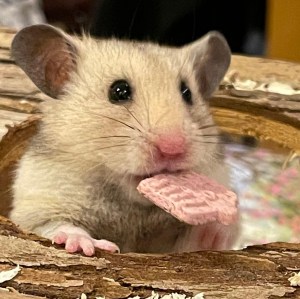
Aggie in her digging tower where her treat was hidden!

Final words…

I hope you’ve enjoyed reading today’s post and it’s given you a good overview of the origins of ‘pebbling’ and examples of different small gifts you can give to show affection or care. I’m sure most of us have engaged in the act pebbling many times in the past and I would love to hear some of your favourites in the comments.

Happy pebbling!

Posted in psychology, relationships

Monday Matters: Seven ways to bring more romance into your relationship

Photo from Canva Pro

At the start of a relationship, we’re usually very keen to show how much we care for or love our partner. However, sometimes, as the years go by, we can take each other for granted and romance and affection can become less prevalent. Today, I’m sharing seven ways to keep the romance alive in your relationship however long you’ve been together.

Make time for your partner

Back when you started dating, you would arrange to see each other, carving out time in your diary and getting together as frequently as you could, whilst your relationship bloomed. As you make the commitment to live together or get married, have children (or a pet like my husband and I) setting aside time for one another is still just as important if your relationship is to stay strong. Some couples, especially those with kids, arrange date nights so that they can have a quiet evening with just the two of them together. This helps them to reconnect, communicate freely without interruption and have some fun.

Personally, my husband and I can enjoy hamster free time as we wish and regularly go out on a weekend to places of interest such as nature reserves, local woodland and forests for walks or to cities for shopping, coffee and cake or lunches in vegetarian or vegan cafes. We also often go out for a meal and occasionally for a few cocktails, to the cinema to watch a film or to the theatre in the evening for further quality time together.

Try new things together

Sharing new experiences together can help you feel a closer bond to your partner. This might include starting a new hobby, attending a class, or doing something that has been on your (real or virtual) bucket list for a while.

As part of my Autumn bucket list this year, I decided I would like for us to visit a pumpkin patch at a farm we pass on our way to Hexham. My husband booked us tickets which cost a few pounds each and the plan was to go there for 11am and then continue on to Hexham to have lunch in one of our favourite veggie cafes, do a little bit of shopping and then have a walk in the country park there. I took my DSLR with me and took lots of photographs at the farm of the various pumpkins and squashes, plus some snaps of the decor. We also had a little look in the shop and visited the tea rooms to check out what was available to eat should we wish to go there again.

We spent just over an hour at Brockbushes and it was so much fun wandering around the muddy fields and choosing a few squashes to buy to take home. It was lovely seeing lots of young and older children picking their own pumpkins and filling their little wheelbarrows. We both took plenty of photos of the scenery and each other and I intend to do some journalling about the experience to go in one of my traveller’s notebooks to spark memories of how much we enjoyed ourselves. I also got a couple of bits of autumnal home decor from the shop which are now on display in a couple of houseplant pots. Again, these will serve as a reminder of our time at the pumpkin patch.

Give small gifts and surprise them

Obviously, I’m not talking vastly expensive little gifts that leave you out of pocket for this one. Just small tokens of appreciation which you know they will love. For example, last month, I made my husband a personalised mug. The mug itself was 60p from ASDA and the vinyl for the message was a few £s but I spent ages in Cricut Design Space choosing fonts, making the decals the correct size and thinking about which colour vinyl he would like best. Surprises could include bringing them breakfast in bed, leaving a love note for them to find, bring home or cook a meal for them.

Photo credit: Laura Jones for Keeping It Creative

Show your appreciation with compliments

Who doesn’t secretly love compliments and crave words of encouragement that they’re doing okay as a husband/wife/partner? Try to cultivate the habit of saying nice things to your partner each day which affirm your love, show your appreciation and demonstrate that their efforts haven’t gone un-noticed. For example, you might tell them that an item of clothing really suits them, that their hair is looking good, you love their sense of humour or that their ability to make you feel calmer during periods of stress or anxiety is so helpful. Or, you might thank them for doing a particularly mundane household task that has been on your to-do list for a while. You don’t have to shower them with compliments all the time, else they might think you’re after something ha ha! but just a couple of niceties each morning or evening will certainly make a difference.

Listen attentively

During a conversation or when they are talking about their day, remember to give them your full attention, maintain eye contact and make relevant comments to show you are listening carefully. Even if you’re tired, or the topic of conversation doesn’t particularly interest you, show you care by really tuning in.

This can also be applied if you go out together somewhere for the day, for coffee, lunch or dinner . Try to resist the temptation to check your phone or show more interest in what other people are doing, whilst half heartedly listening as there’s nothing worse than feeling like your partner is distracted or not enjoying your company.

Show physical affection

Physical affection shouldn’t be limited to the bedroom. Hold hands when you’re out and about, snuggle up together whilst you watch TV, kiss them when they or you get home and when either of you leave in the morning, share hugs regularly to demonstrate your romantic feelings for them. Again, this is probably something you did all the time when you first got together but often, over the years, can dwindle or stop.

Know your partner’s love language

The idea of love languages was first identified in a book by Gary Chapman, a marriage counsellor, back in 1990, who identified five ways that romantic partners can express and experience love. Knowing you and your partner’s preferences can be super useful as it can help you demonstrate your love in a way that they will really appreciate and vice versa. The 5 love languages are:

  • Words of affirmation
  • Quality time
  • Physical touch
  • Acts of service
  • Receiving gifts

I’m sure you can see how these relate to the tips above, but this article goes into more depth on finding your language, and that of your partner, and gives some wonderful examples of ways in which you can show how much you care for them. Incidentally, love languages can also be applied to platonic relationships too as you will see in the webpage.

Final words…

Whether you want to up the romance in your relationship, or want to check you’re doing everything you can to show your partner you love them with all of your heart, I hope you’ve found today’s blog post an informative and useful read. Let me know in the comments what your love language is (or if you sway towards several of them) and if you share the same as your partner or if theirs is different.