
Over the past few years, I’ve been having intermittent issues with ankle pain and stiffness. Six months ago, I finally sought medical advice and had an x-ray which came back as normal, and an MRI which showed mild arthritis in my right ankle. As part of my treatment plan, I’ve also been seeing an MSK (Musculoskeletal) specialist and he performed basic examinations, made the MRI referral and offered his advice going forward. I learned that my general ankle strength was very good, but my balance was quite poor for my age which is he suggested might be contributing to the issues I’m experiencing.
I was advised to keep going with my current workout routines (phew!) but add in a range of basic standing on one leg exercises to work on my balance. I have been doing this consistently for a while now but when I asked the specialist if there was anything else I could try, it was suggested that, as a way of keeping it fun and interesting, I could invest in a balance board. I ordered one that same afternoon and have enjoyed using it daily.
Today, I thought I’d share what a balance board is, how an individual can benefit from its use and my own experiences of adding a mini session on mine as a (mainly) consistent daily habit. If this is something that would interest you or it’s made you think about how good or bad you are at being able to balance, I hope you enjoy the post!
What is a balance board?
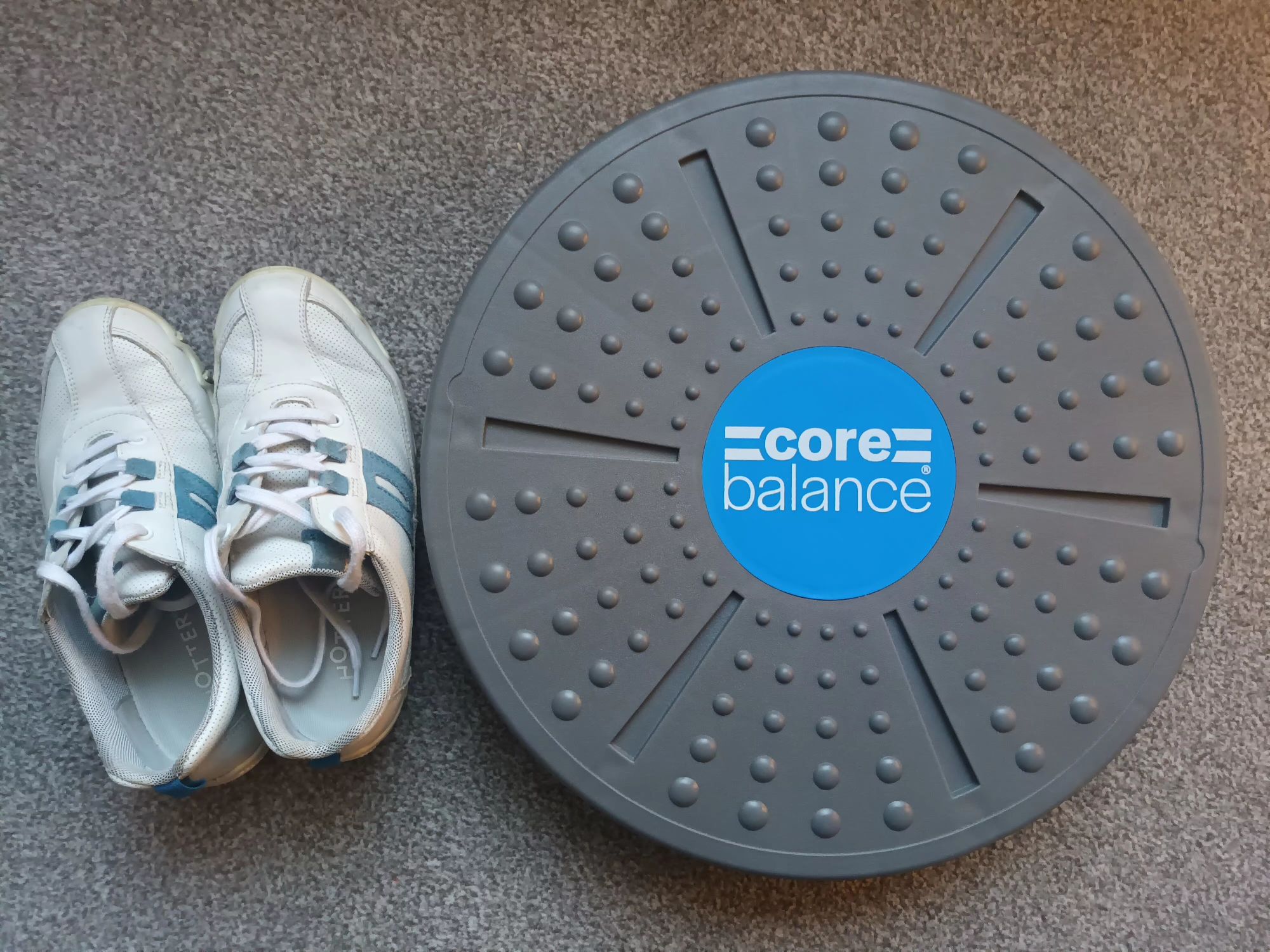
A balance board (AKA a wobble board) is an inexpensive piece of exercise equipment made from wood or plastic, which typically consists of a circular top with a non-slip textured surface, mounted on a spherical base. When stood on, it allows you to move side to side, forwards and backwards or tilted in a circle (AKA around the world).
The benefits of using a balance board
After purchasing my balance board, I decided to do a little more research into the benefits of regular use both in terms of improving balance and working on other aspects of fitness and general wellbeing.
Improved balance
This is obviously what I purchased mine for and my online reading suggests that it is considered its primary use. Not only does it help to improve your ability to balance, it can also work on your stability, coordination and proprioception which in a nutshell means the internal system responsible for spatial awareness and balance – sounds good to me and that they were originally developed for rehab following ankle injuries.
Better core strength
I already do a Legs, Bums and Tums class at the gym and my regular Pilates and yoga sessions are good for my core too but I was pleased to read that using a balance board can help in this area too. I’ve found that I automatically suck my tummy in whilst using the board and even 10 minutes of this is bound to increase muscle tone!
Better posture
As well as improving core muscles, standing up as tall and straight as possible aids my ability to balance on the board so, along with my Pilates classes and advice from MSK, my mini workout is helping me to develop better posture. This is good news for my back as I no longer slouch in my chair or hunch over, so I’m getting much less back pain that I have in the past.
Enhanced coordination
As we age, coordination becomes more difficult and can result in difficulties with every day movements, including walking. Better balance and co-ordination can help to prevent injuries caused by slips, trips and falls. It can also help with gross and fine motor movements associated with every day living.
Better ankle strength
Balance boards were originally developed for rehab following ankle injuries as they’re great for strengthening your ankle muscles, which a quick Google and a little help from A.I. informs me that we have ten of – you learn something new every day and all that! The MSK specialist said that my ankle strength is good but there’s no harm at all in making it even better! Poor ankle strength is associated with easily going over on one of your ankles (something which used to happen to me quite regularly), chronic discomfort in the area, swelling, pain and tenderness, plus load bearing difficulties. Ankle instability is often apparent in individuals who are overweight, take part in sporting activities such as competitive ballet or dancing, running or other athletics. It’s also often an issue for the elderly.
It’s fun!
This one, I can confirm (for me anyway), is definitely true. I haven’t got board (ha ha – spelling error intended) of it yet and I’ve been mainly doing a few minutes each day – except when I was away at Christmas (I would have needed a roof rack to transport it!) and when my Covid sickness was at its worst. If you want to give this piece of workout equipment a go, I can recommend it wholeheartedly. There are loads of other ways to use the board too and you can find a wealth of different exercises online. However, for now at least, I’m sticking with the basics!
Final words…
I’m really enjoying using my balance board and it has now become a key part of my daily routine. I tend to spend about five to ten minutes using it each time as I’ve found that if I use it for too long, it can aggravate my ankles and cause pain or discomfort. I may be able to do more as my ankles get used to it but I’m pretty sure just a mini workout is going to be beneficial.

 Keeping it creative